Historical information
During periods of harsh persecution, Hmong women developed a way to record their history by weaving it directly into their clothing.
Called "pajntaub" , which means "flower cloth", and it was traditionally practiced only by the women of the community.
Using a variety of complex stitching techniques, they created intricate geometric patterns. These designs were not just for decoration on clothes, collars and baby carriers.
At times when their own language was suppressed, these symbols served as a form of communication and cultural documentation, with history hidden in the very pleats of their skirts.
This tradition took on a new powerful meaning in the late 1970's after the wars in Southeast Asia.
Forced into refugee camps in Thailand, Hmong women began creating "story cloths". These were larger tapestries that documented their lives, their traditions, and their harrowing journey from their homelands to the camps.
These story cloths became a way to tell the world what had happened to them . They also became a vital source of income, sometimes selling for just one dollar, which helped families survive in the camps.
Hmong Archives; Library of Congress.
Physical description
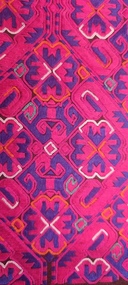
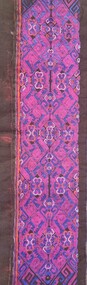
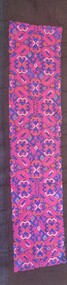
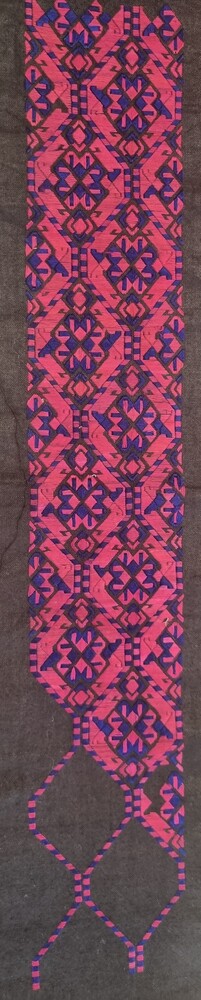
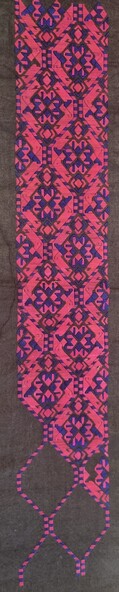
Hill Tribe clothing panel in progress in fuchsia pinks and royal blue, with white, green, orange highlights. Embroidered in buttonhole stitch and satin stitch filling.
Worked on black even weave linen.