

Historical information
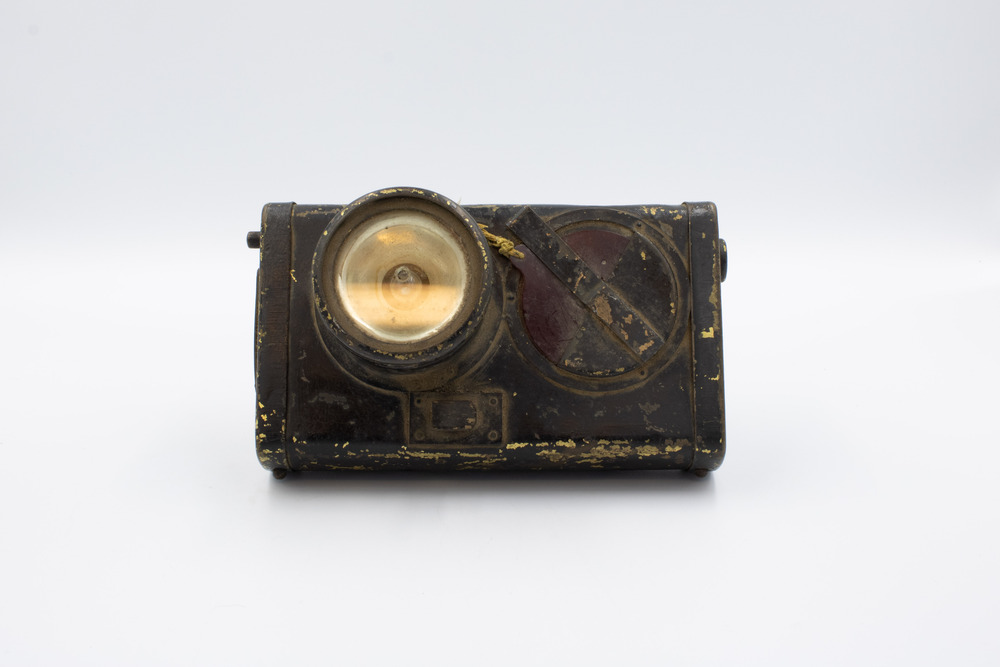
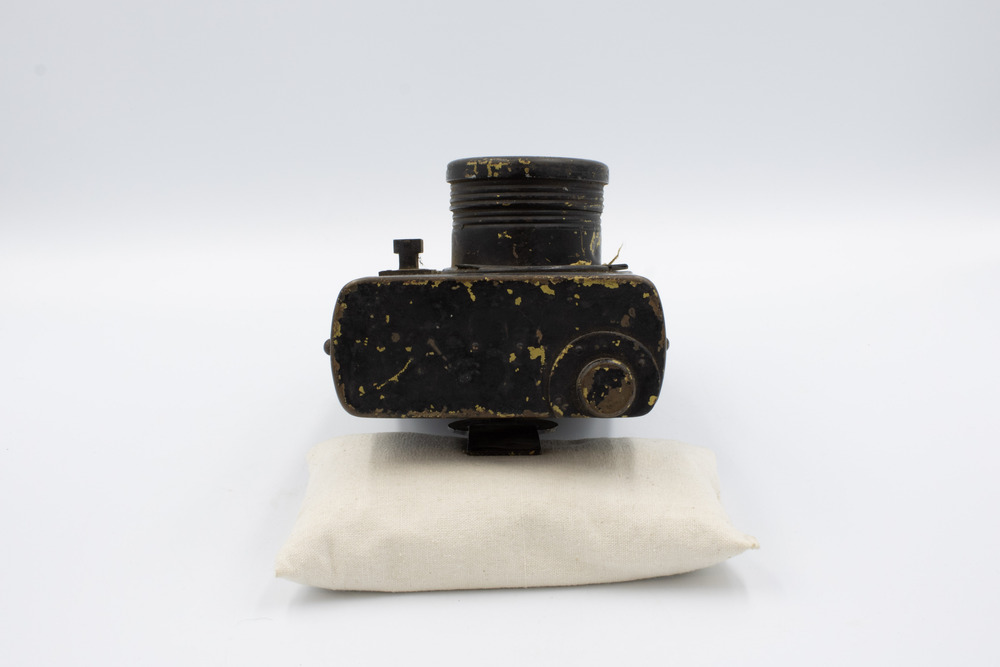
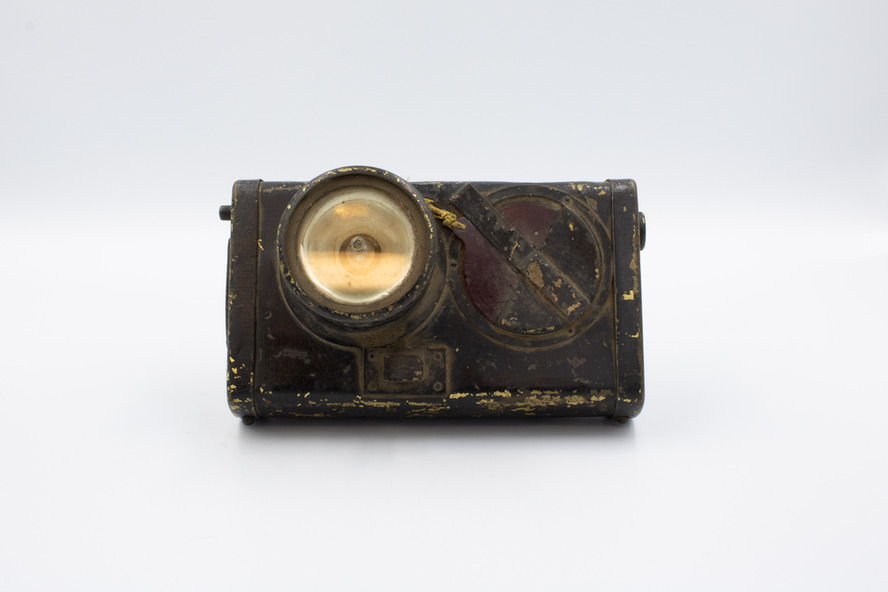
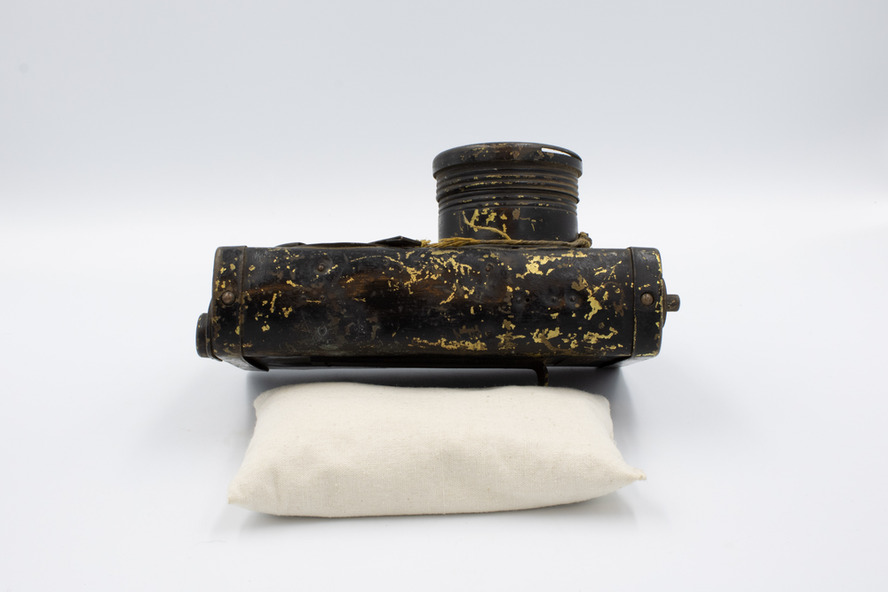
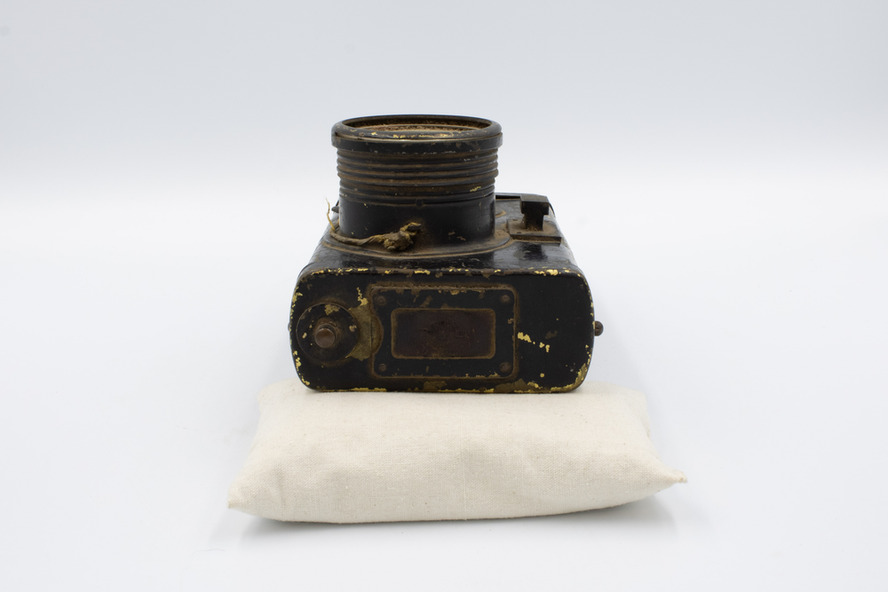
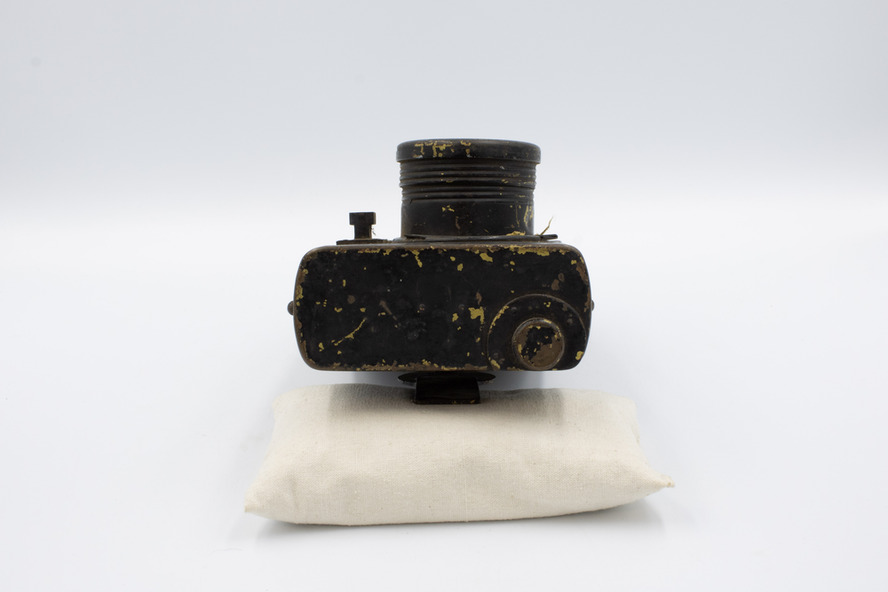
This electric torch, likely manufactured in 1923, was used in WWII trenches as a way to signal allies using morse code. A small button underneath a thin leather panel on the left face of the lamp would have been used to turn the bulb on and off in quick succession, allowing for messages to be transmitted. The panel of red plastic could be placed over the lense of the lamp, causing it to emit red light as the longer wavelength prevents it from being visible at longer distances as opposed to standard yellow light.
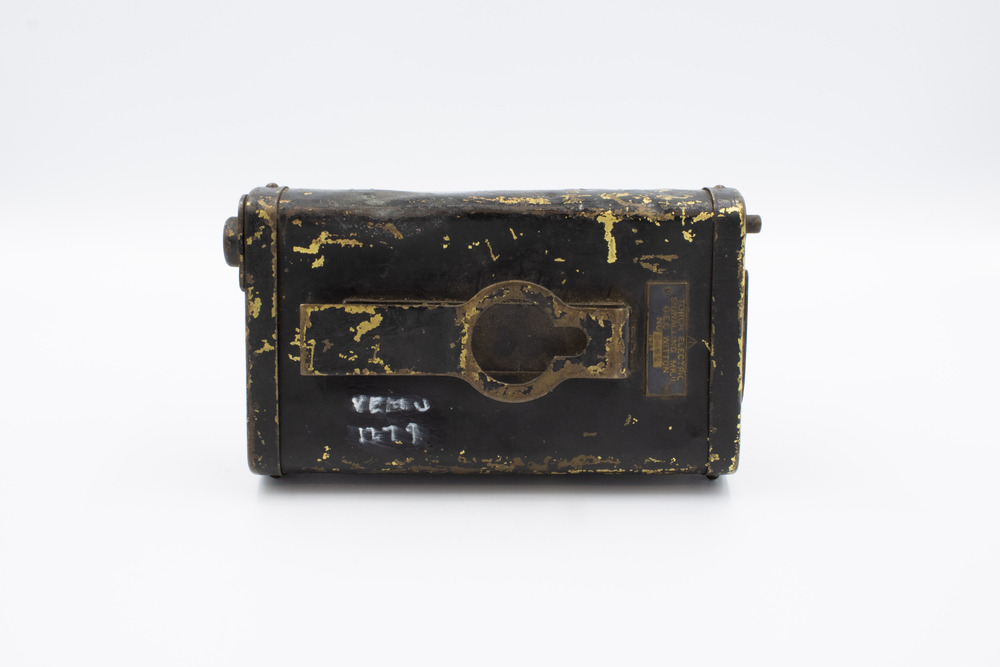
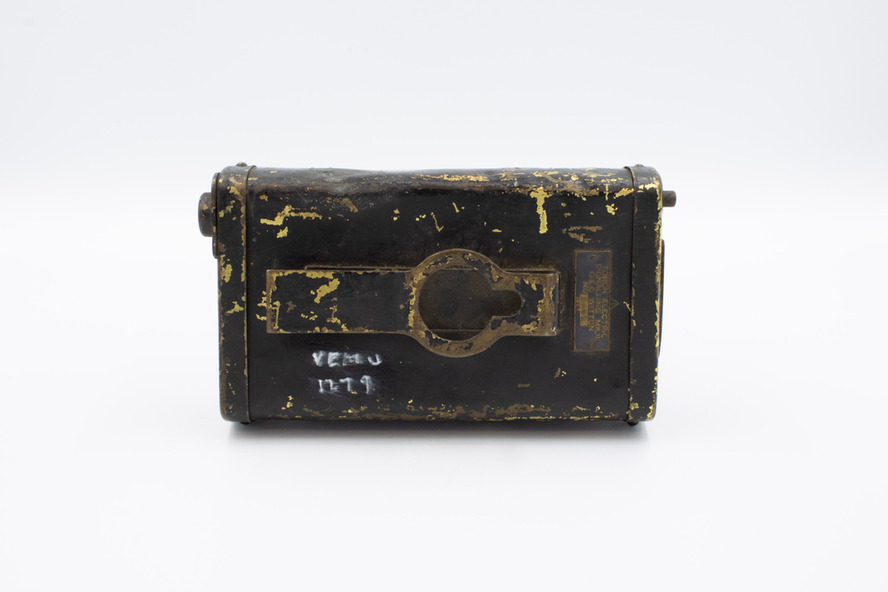
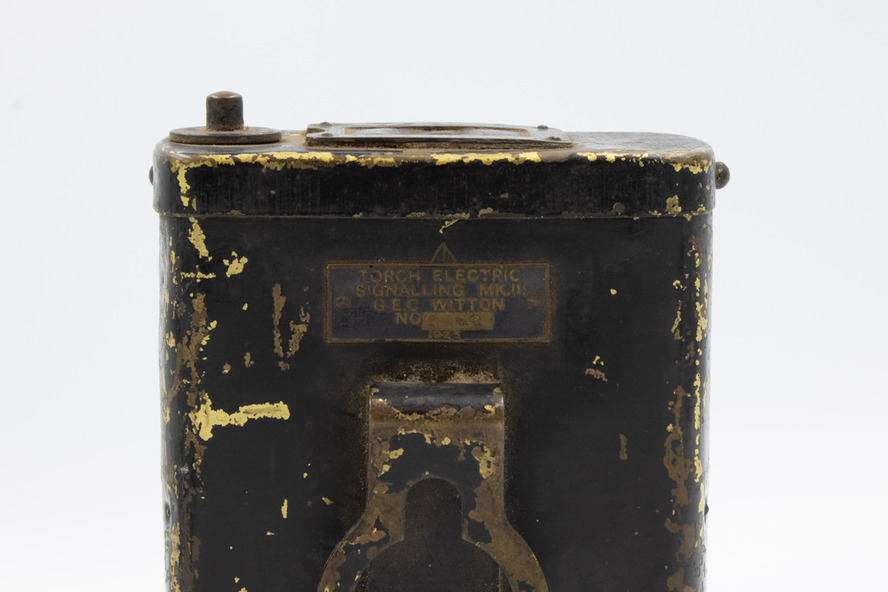
The hook on the front face of the lamp allowed a bayonet to be attached by its handle, and the clip on the rear is likely to allow it to be worn on a belt.
British manufacturing firm General Electric Company (G.E.C) Mitton was one of several producing similar models of signalling lamp at this time and they were heavily involved in supporting the war effort.
Significance
This item demonstrates one of the many ways soldiers in Australia were able to communicate without the use of radio transmission and over distances without detection, a key aspect of wartime engineering and electronics development.
Physical description
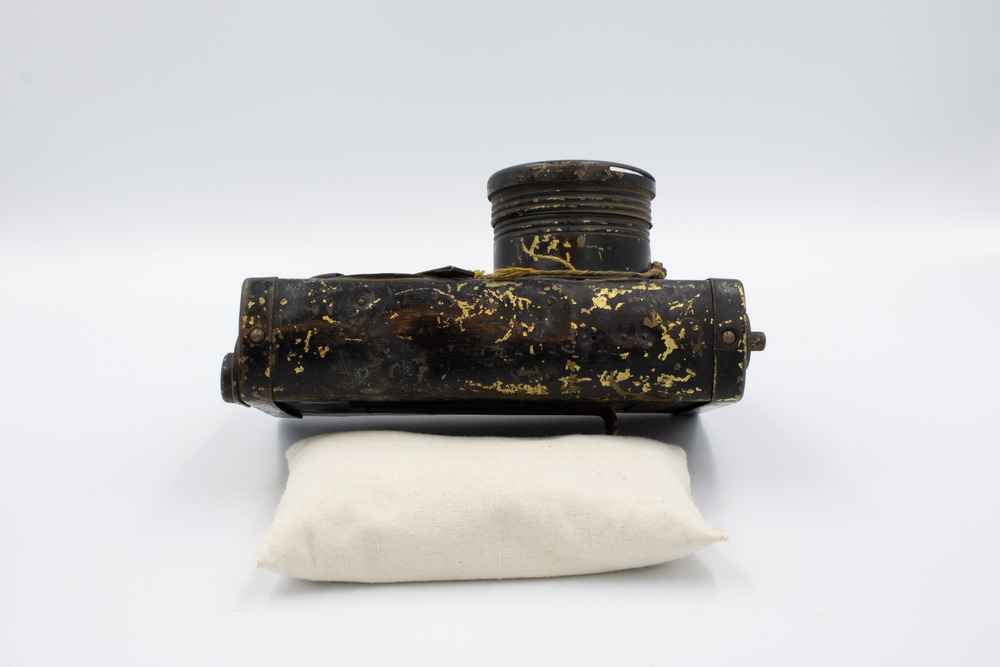
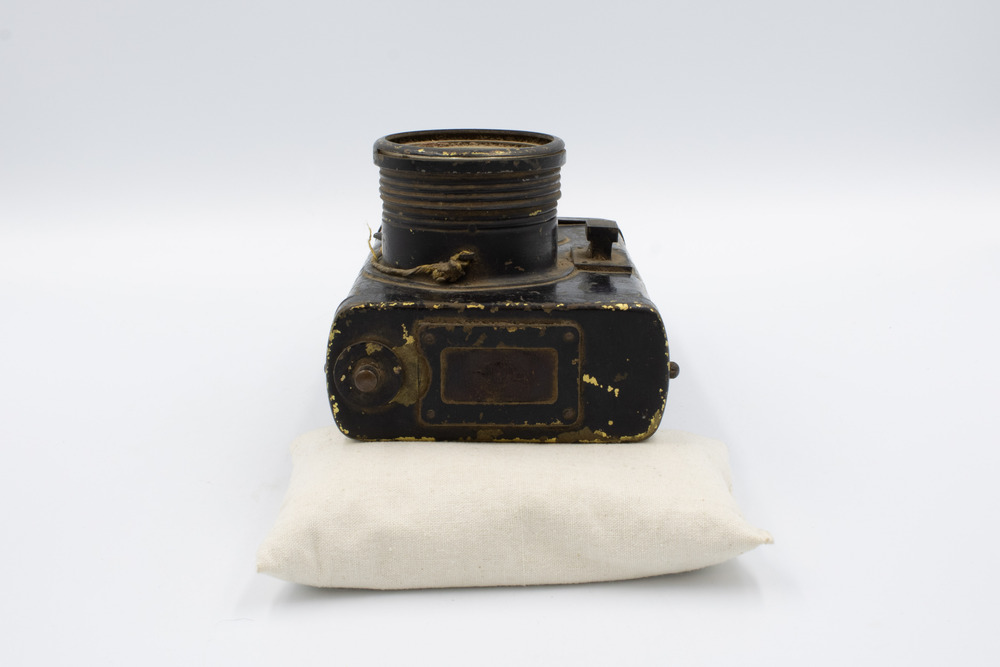
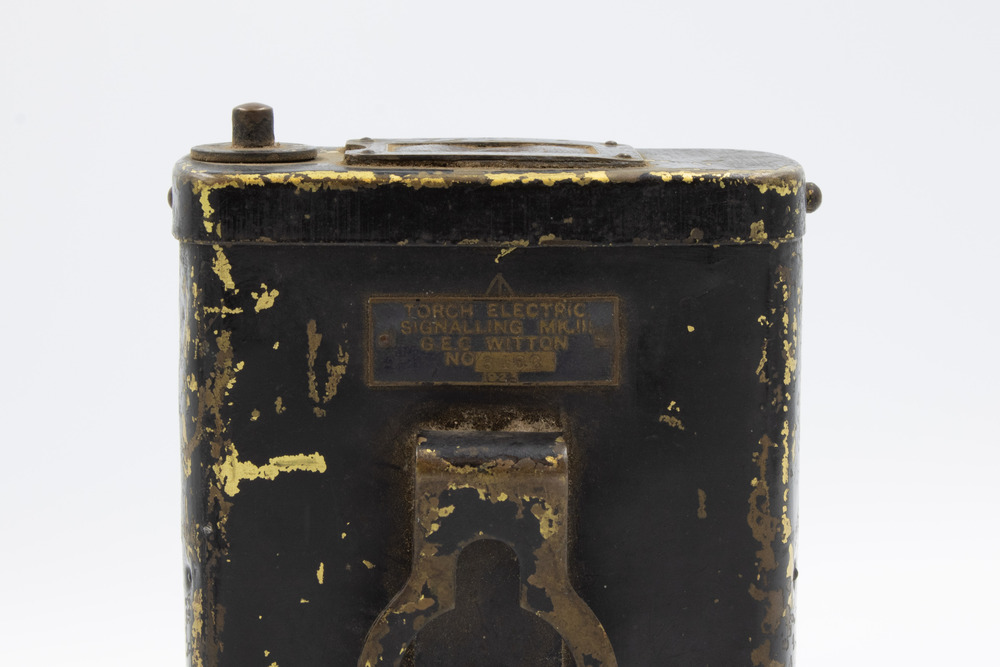
This signalling lamp is of a rectangular shape with a cylindrical protrusion on its front, similar to that of a camera lense. Within the cylinder is a small light bulb and a panel of glass encloses it. To the right of the cylinder, a circular piece of translucent red plastic rests within a metal casing and is attached to the cylinder with a short piece of string. Below the cylinder is a small hook. On the lamp's rear is a large metal clip, and a small plate with an engraving upon it. The left side of the lamp includes a small, thin panel of leather under which rests a button.
Inscriptions & markings
Rear, on metal plate: "TORCH ELECTRIC / SIGNAL MK.III / G.E.C. WITTON / NO 3462 / 1923"