


Historical information
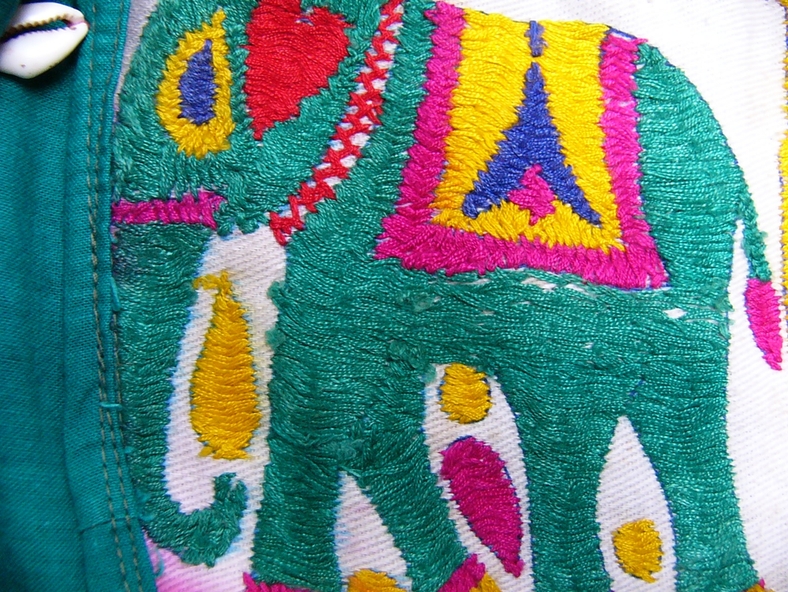
Traditional Banjara, Kuchi tribal hand embroidery from Gujarat or Rajasthan, India.
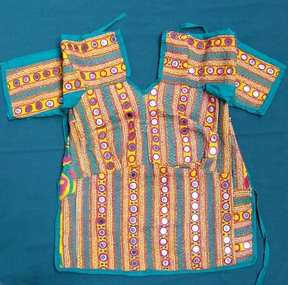
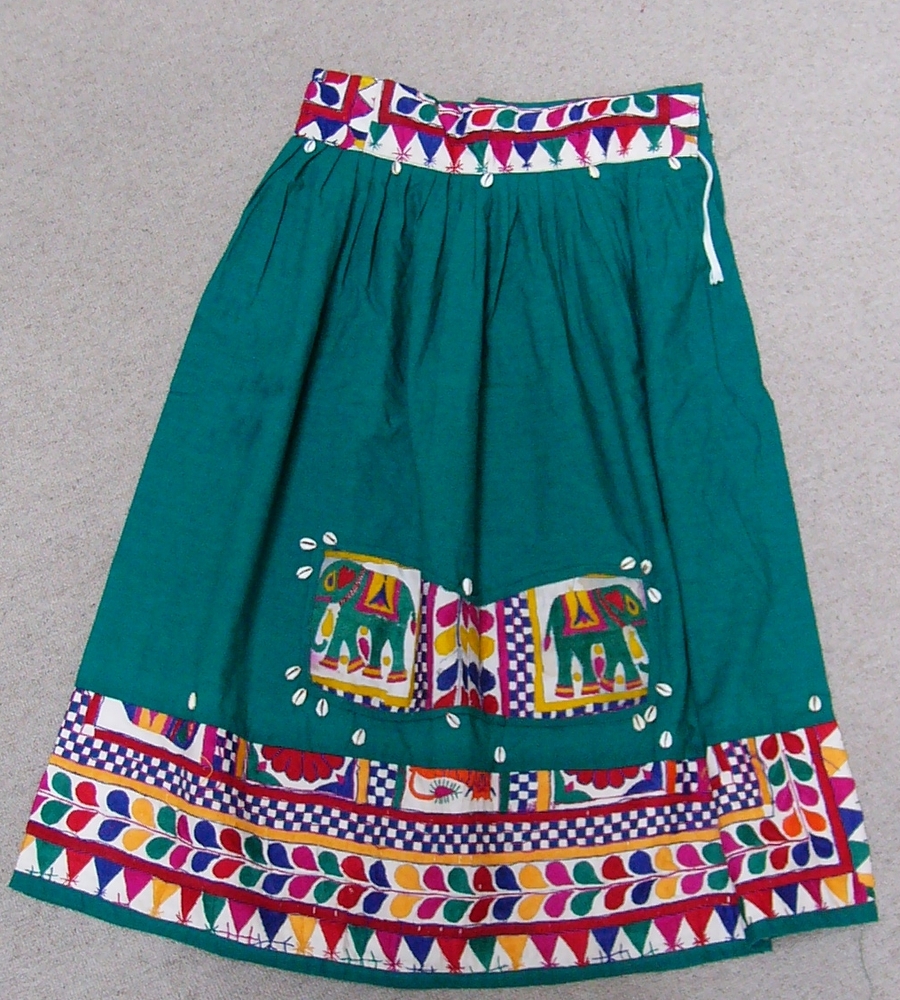
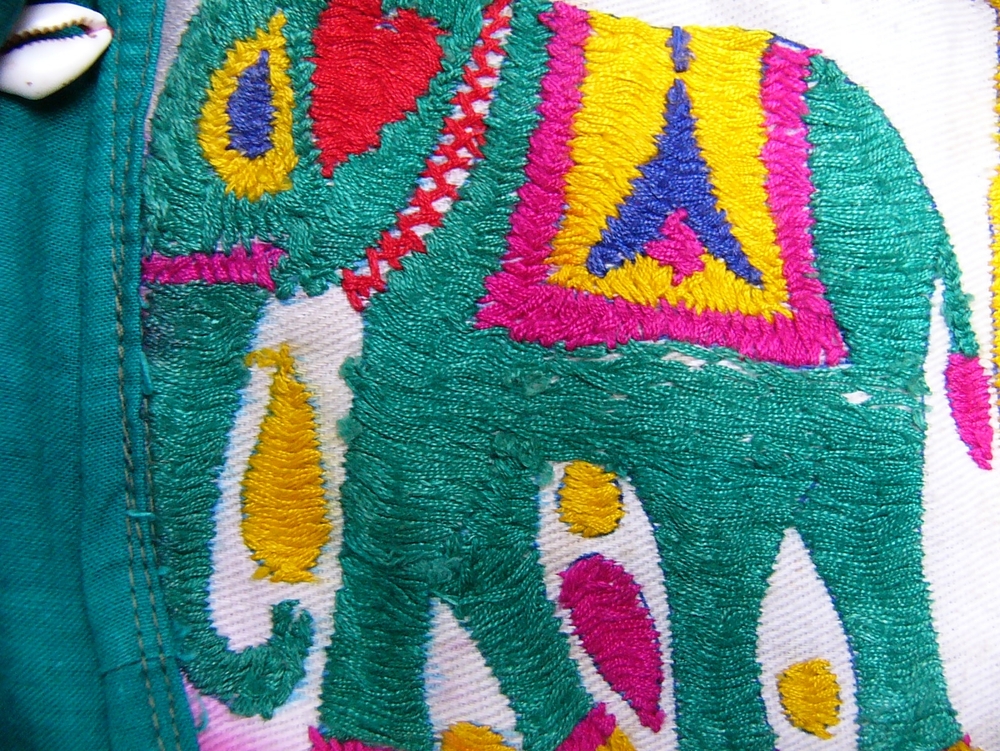
Intricate multi-coloured thread stripes, traditional cowrie shell additions.
In nomadic and pastoral communities of Kutch, Gujarat (such as the Rabari, Ahir and Mutwa tribes), cowrie shells - locally known as kaudi or kodi - hold practical, structural and deeply spiritual functions within Kutchi textile history.
Spiritual protection - open landscapes of the desert made nomadic tribes feel vulnerable to unseen negative energies or envy (nazar). The slit of the cowrie shell resembles an open eye, it was believed to act as an amulet that watches back - stitched into garments the shells are meant to confuse, absorb, or deflect the 'evil eye' away from the wearer.
They are strategically stitched into vulnerable, high movement zones: waistband and hemlines - act as protective spiritual barriers.
Around the neckline, back closures and under the bust - guard a woman's reproductive health and vital energy.
Heavily encrusted cowrie garments are traditional staples for brides and married women, symbolizing blessings for a fruitful marriage, healthy lineage, and safe childbearing.
Physical description
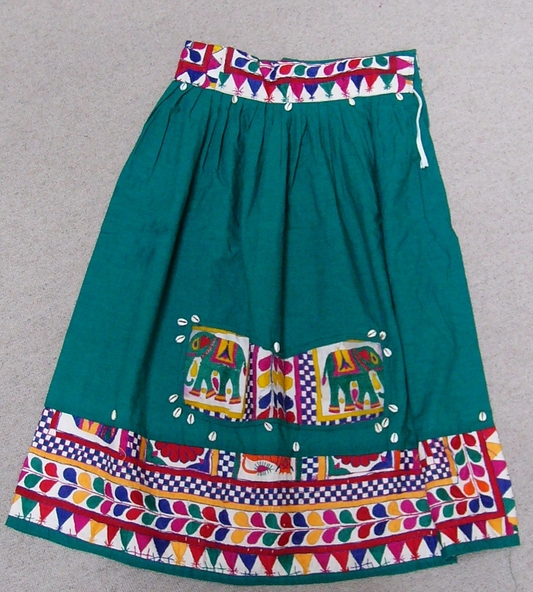
Bright green cotton fabric. Skirt has waist band and border embroidered in red, pink, blue and yellow. Cowrie shells are placed at intervals.