

Historical information
These pocket knives were recovered from the wreck of the Loch Ard, on the southwest coast of Victoria and donated by a friend of the diver.
Flagstaff Hill Maritime Museum and Village already have several other pocket knives that have been recovered from the wreck of the Lock Ard as well as a large collection of pocket knives recovered from the wreck of the Schomberg which sank in 1855 off Peterborough on the Shipwreck Coast of Victoria. Although the metal components have suffered crustation and corrosion damage, their wooden handles are in fairly good condition considering they were under the sea for about one hundred years.
Pocket knives were widely available in Australia during the late 1800's. They were useful for a variety of everyday tasks and were compact and practical - being designed to be easily carried in a pocket.
Many of the pocket knives coming out to Australia from England were made in Sheffield (the centre of English cutlery manufacturing) which was renowned for quality steel and skilled workmanship. Sheffield makers produced some of Britain's most respected pocket knives throughout the 19th and 20th centuries. Due to the encrustation and corrosion on these four pocket knives, it is not possible to identify their maker.
The ship Loch Ard was built on the River Clyde in Scotland in 1873 for the prestigious Loch Line of colonial clipper ships, designed for the Australian run. It sailed from England on 1st March 1878 carrying 37 crew, 17 passengers and a load of cargo. The general cargo reflected the affluence of Melbourne at the time. On board were straw hats, umbrellas, perfumes, clay pipes, pianos, clocks, confectionary, linen and candles, as well as a heavier load of railway irons, cement, lead and copper. There were items included that were intended for display in the Melbourne International Exhibition in 1880 - a diverse general cargo ranging from luxury items to bulk railway iron.
On 1 June 1878, emerging from fog and hearing too late the sound of breakers against the tall limestone cliffs, the vessel struck the southern foot of Mutton Bird Island and sank in 23 metres of water. Of the fifty-four people on board only two survived, one young male crewman, Tom Pearce, and one young female passenger, Eva Carmichael.
Ten days after the Loch Ard tragedy, salvage rights to the wreck were sold at auction for £2,120. Cargo valued at £3,000 was salvaged and placed on the beach, but most washed back into the sea when another storm developed. The wreck of Loch Ard still lies at the base of Mutton Bird Island. Much of the cargo has now been salvaged and some was washed up into what is now known as Loch Ard Gorge. Cargo and artefacts have also been illegally salvaged over many years before protective legislation was introduced.
One of the most unlikely pieces of cargo to have survived the shipwreck was a Minton porcelain peacock - one of only seven in the world. The peacock was destined for the Melbourne International Exhibition in 1880. It had been well packed, which gave it adequate protection during the violent storm. Today, the Minton peacock can be seen at the Flagstaff Hill Maritime Museum in Warrnambool. From Australia's most dramatic shipwreck it has now become Australia's most valuable shipwreck artefact and is one of very few 'objects' on the Victorian State Heritage Register.
Significance
Flagstaff Hill’s collection of artefacts from LOCH ARD is significant for being one of the largest collections of artefacts from this shipwreck in Victoria. It is significant for its association with the shipwreck, which is on the Victorian Heritage Register (VHR S417). The collection is significant because of the relationship between the objects, as together they have a high potential to interpret the story of the LOCH ARD.
The LOCH ARD collection is archaeologically significant as the remains of a large international passenger and cargo ship. The LOCH ARD collection is historically significant for representing aspects of Victoria’s shipping history and its potential to interpret sub-theme 1.5 of Victoria’s Framework of Historical Themes (living with natural processes). The collection is also historically significant for its association with the LOCH ARD, which was one of the worst and best known shipwrecks in Victoria’s history.
Physical description
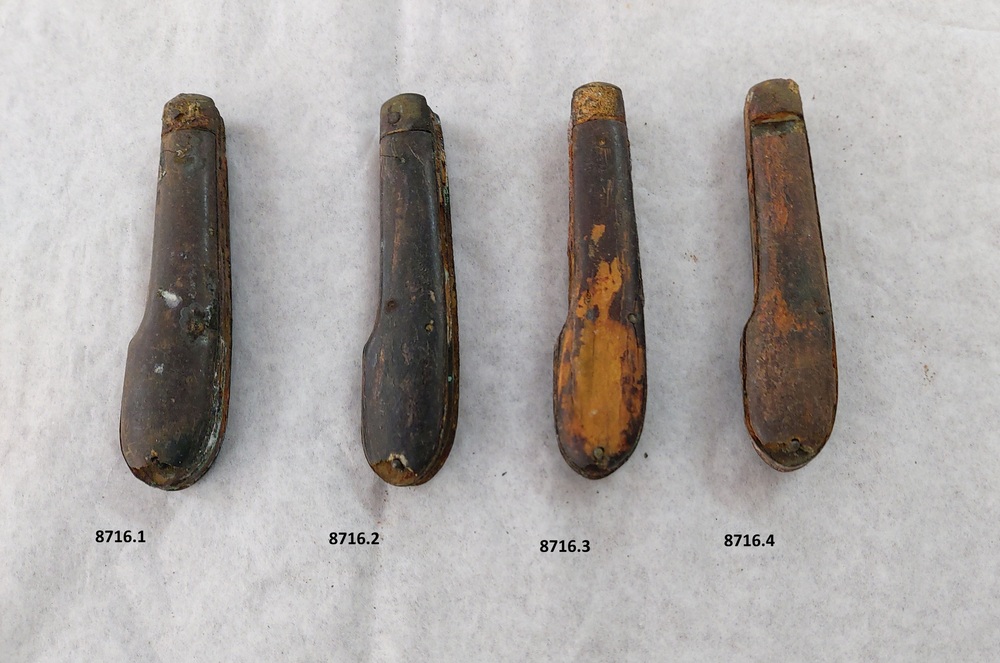
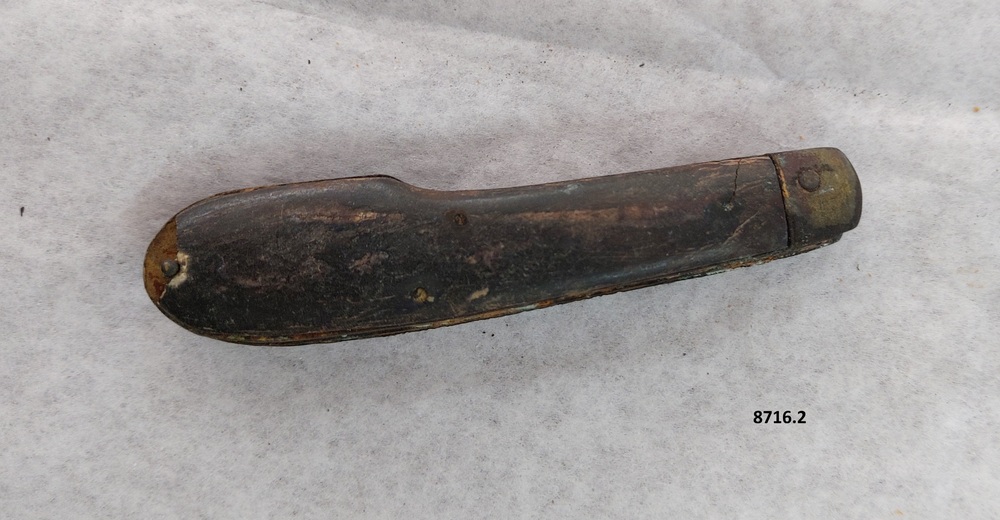
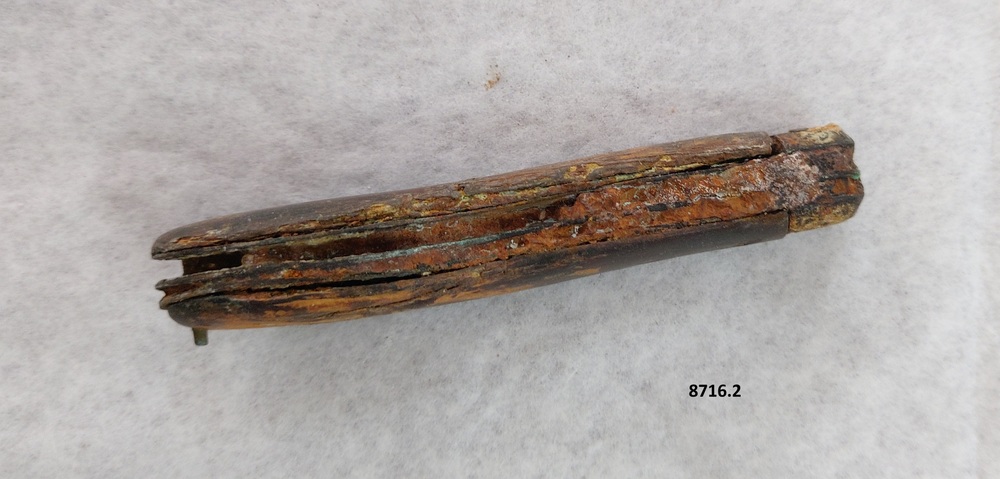
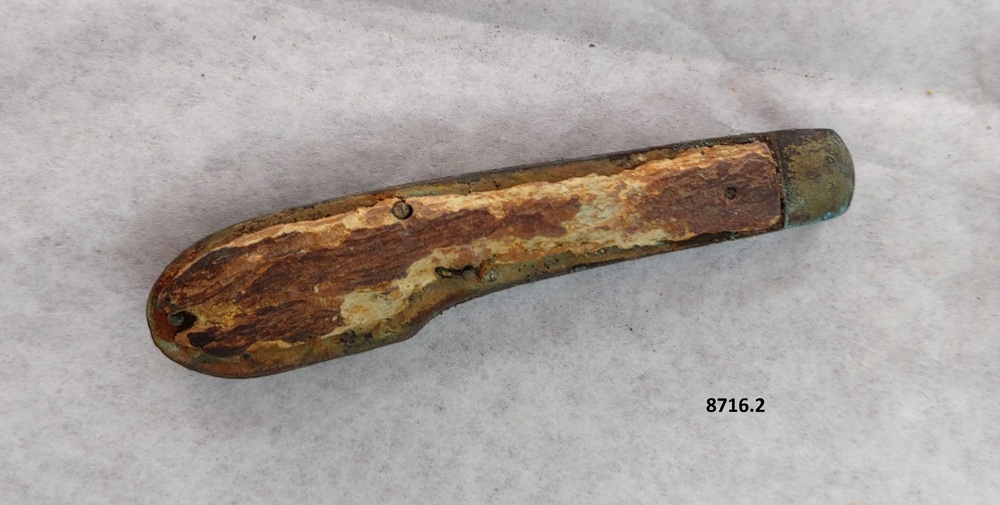
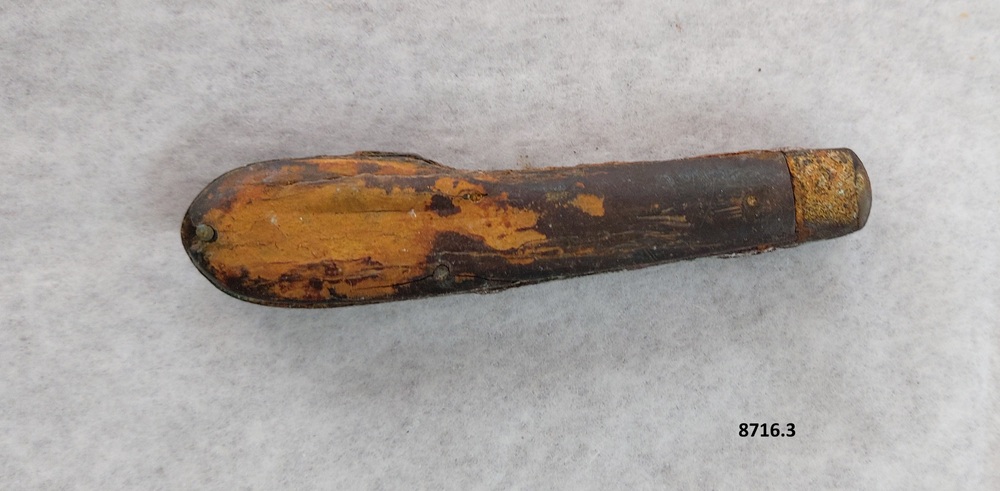
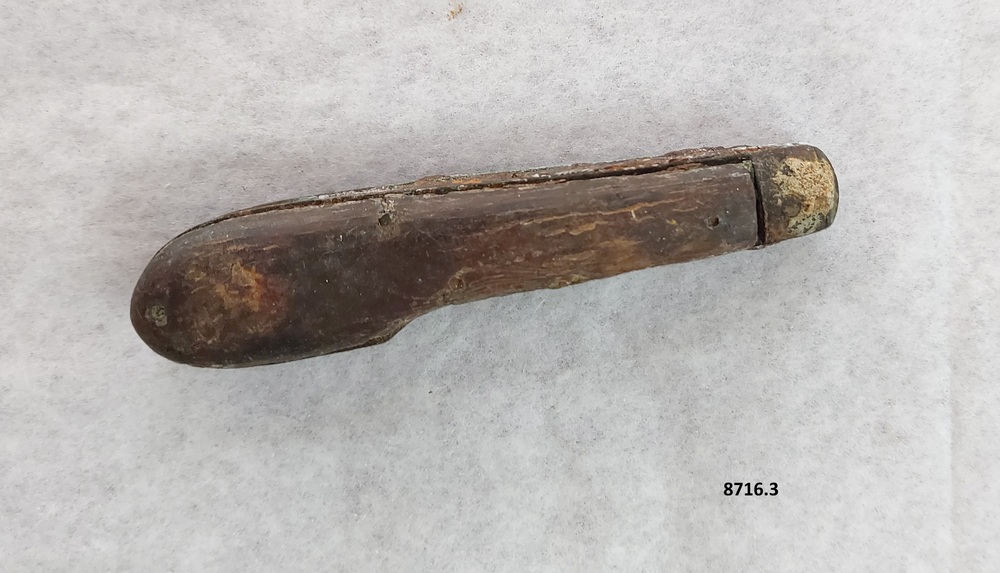
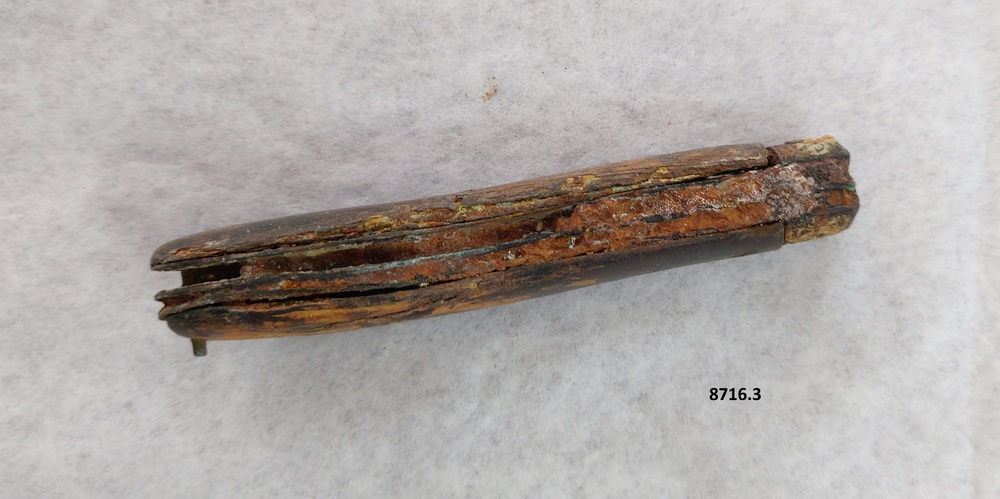
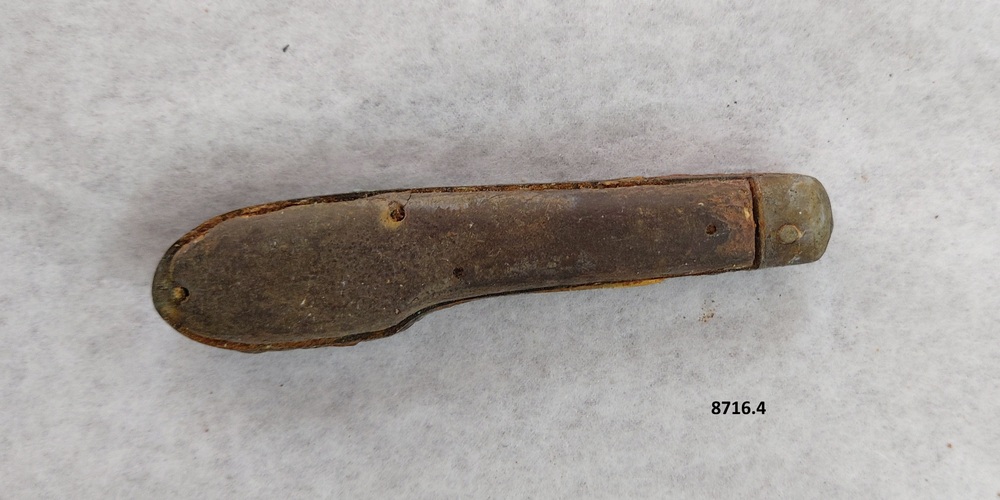
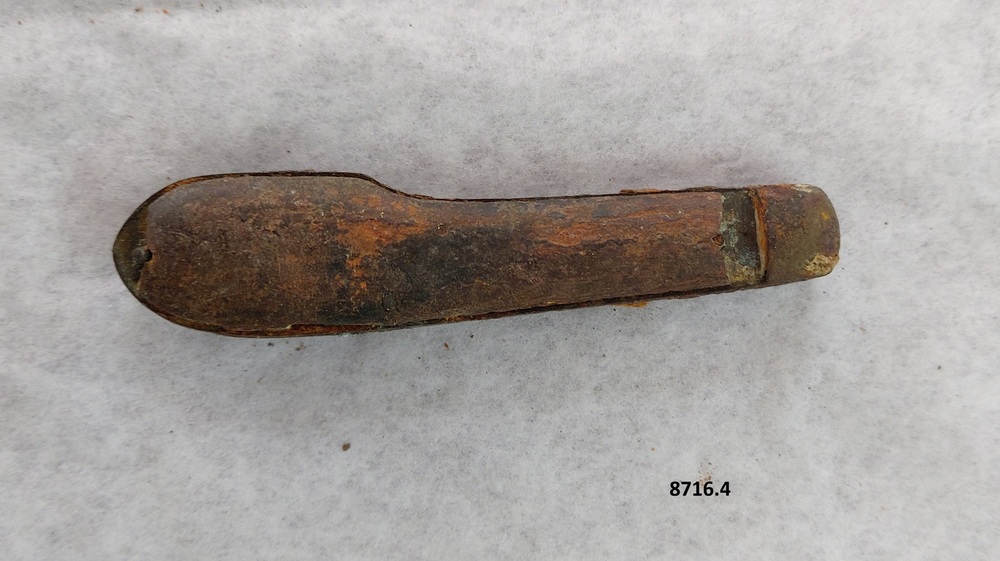
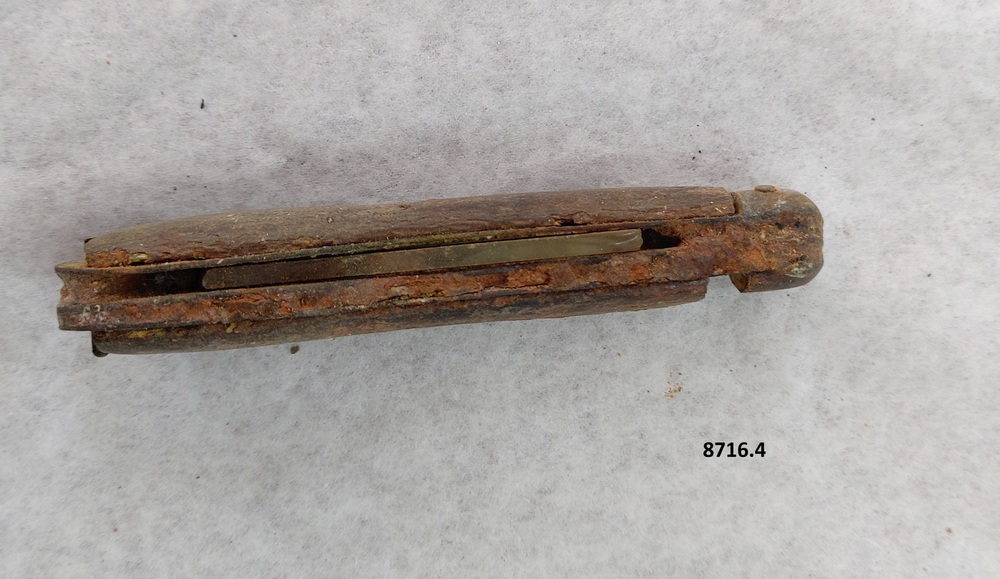
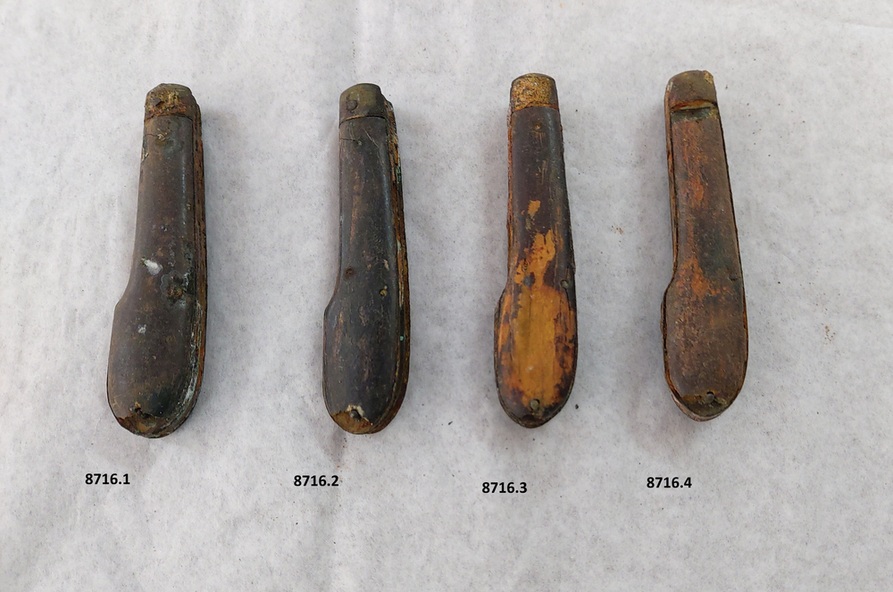
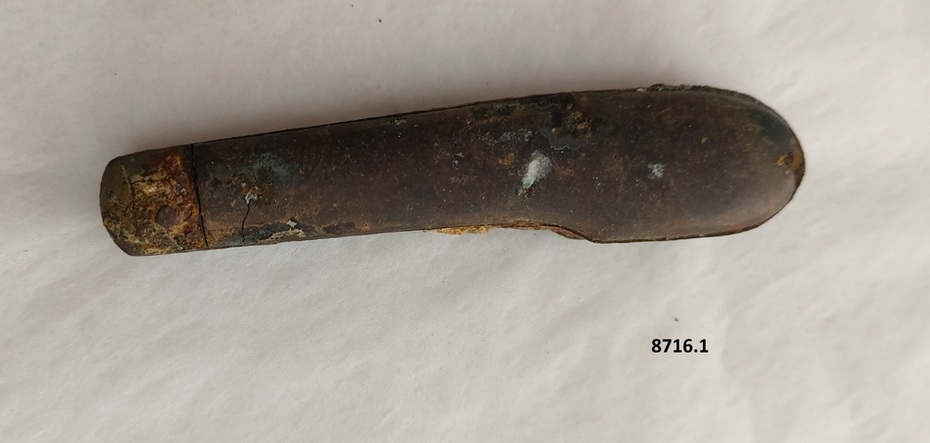
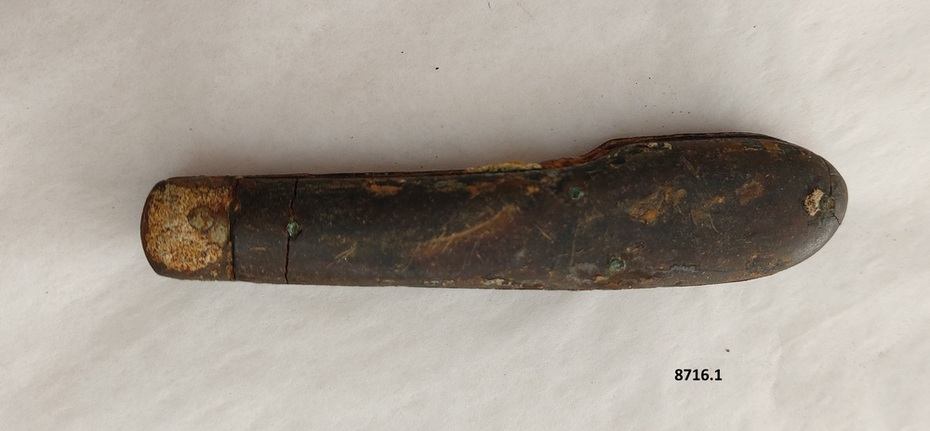
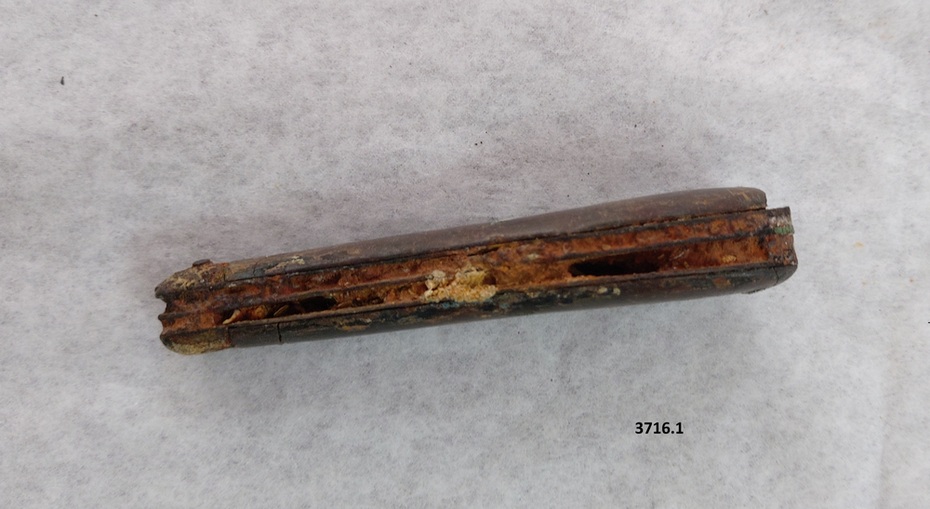
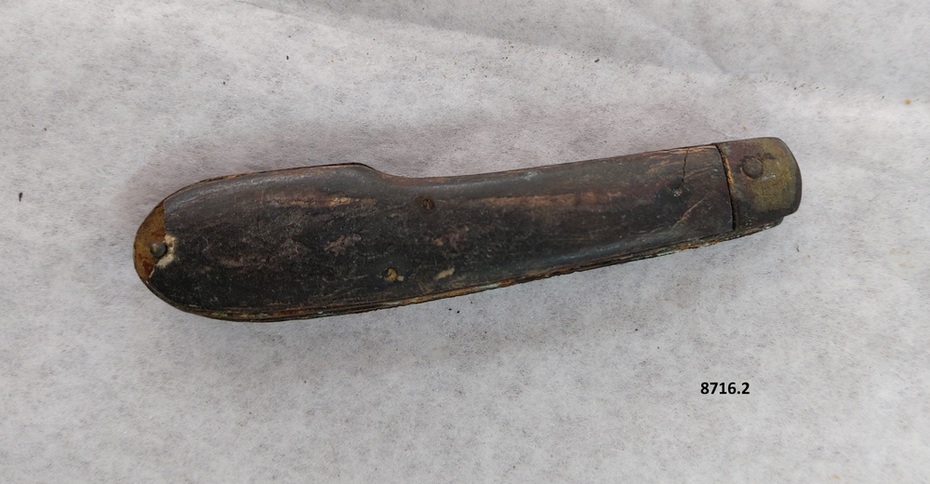
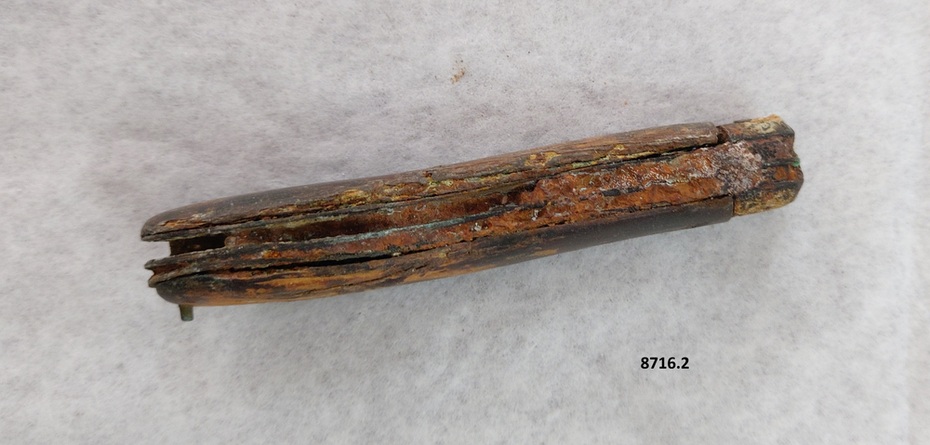
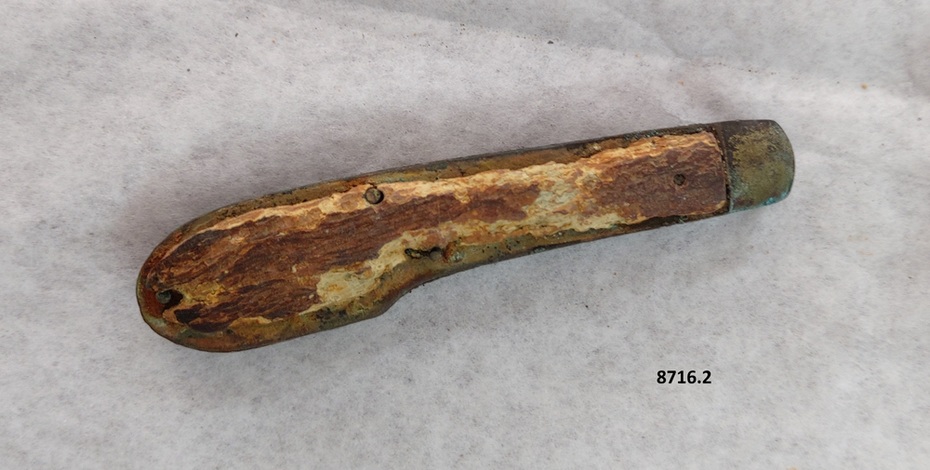
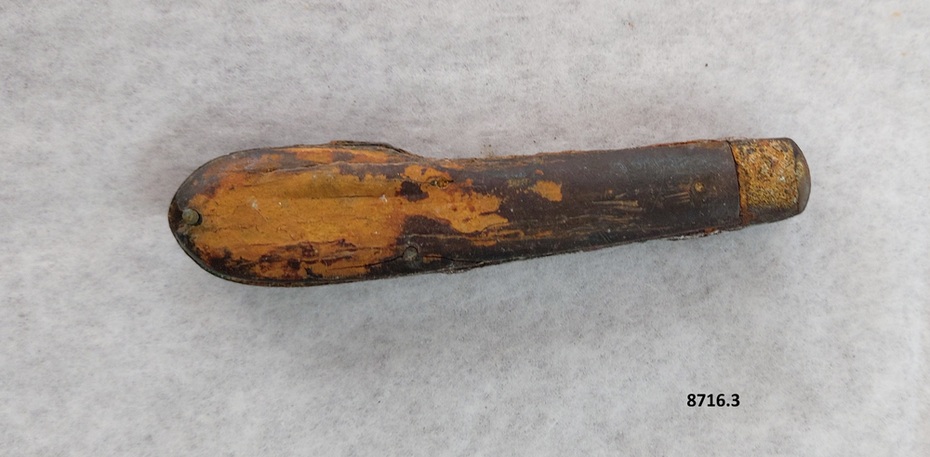
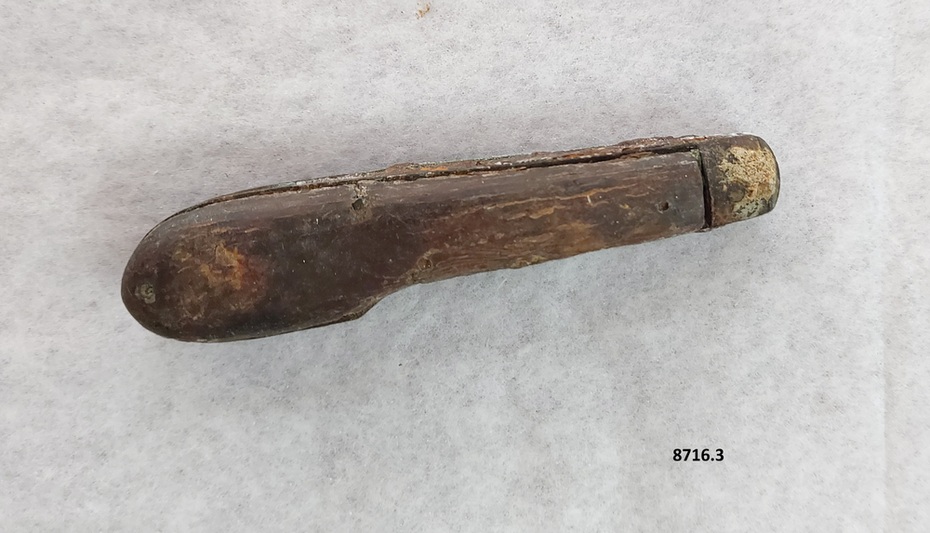
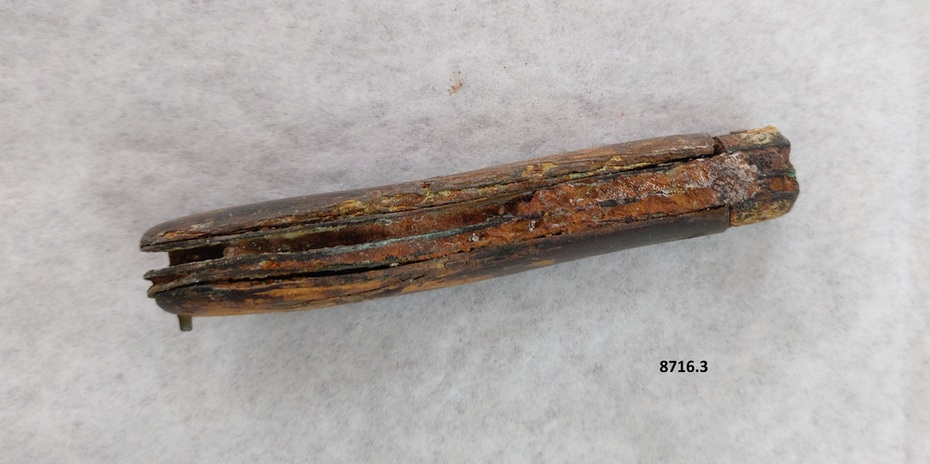
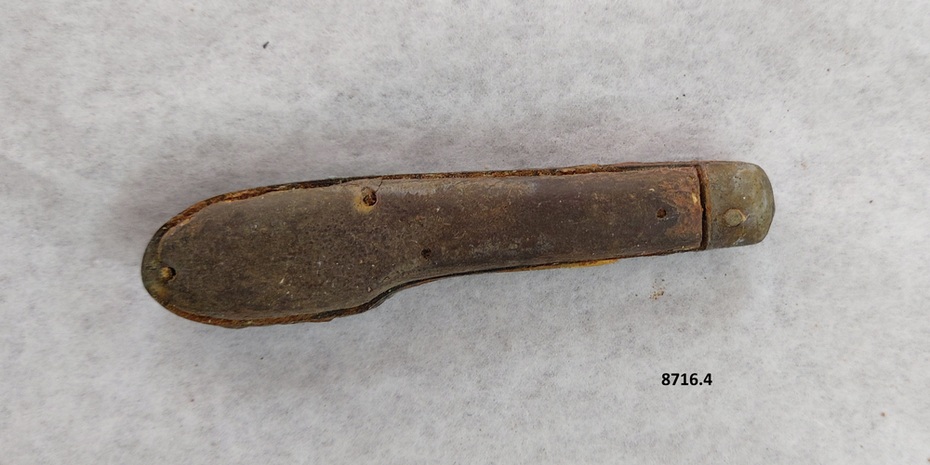
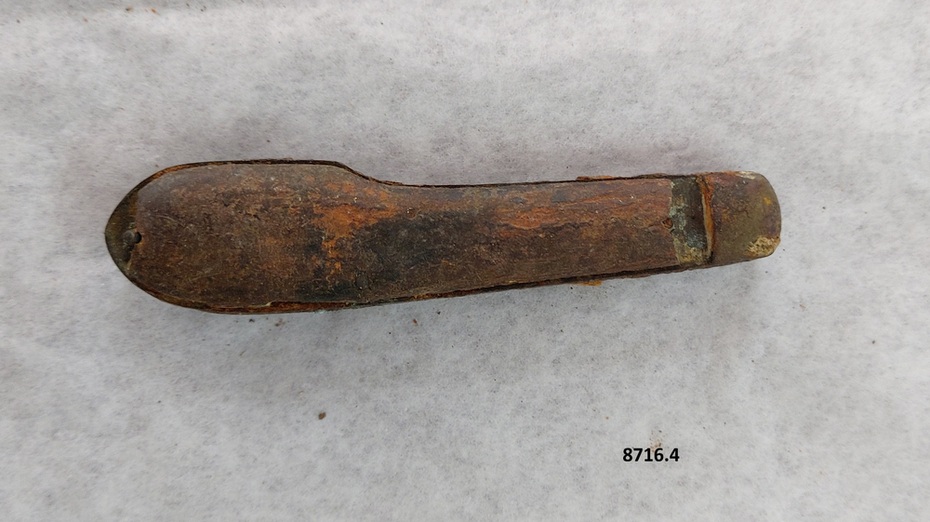
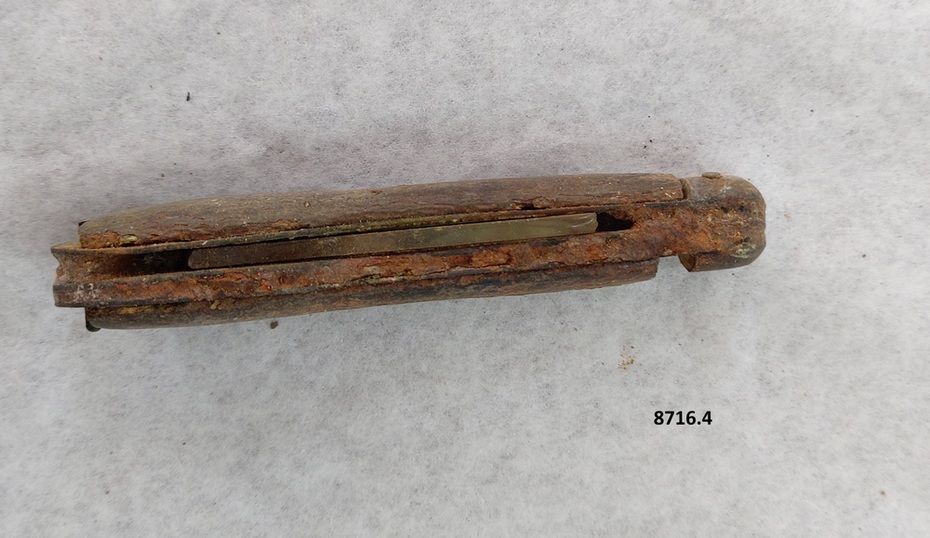
Four pocket knives salvaged from the wreck of the Loch Ard. They all appear to have been of the same design - with a wooden handle, a metal cap and two blades, but due to being under water for some time, are now have different degrees corrosion and encrustation.
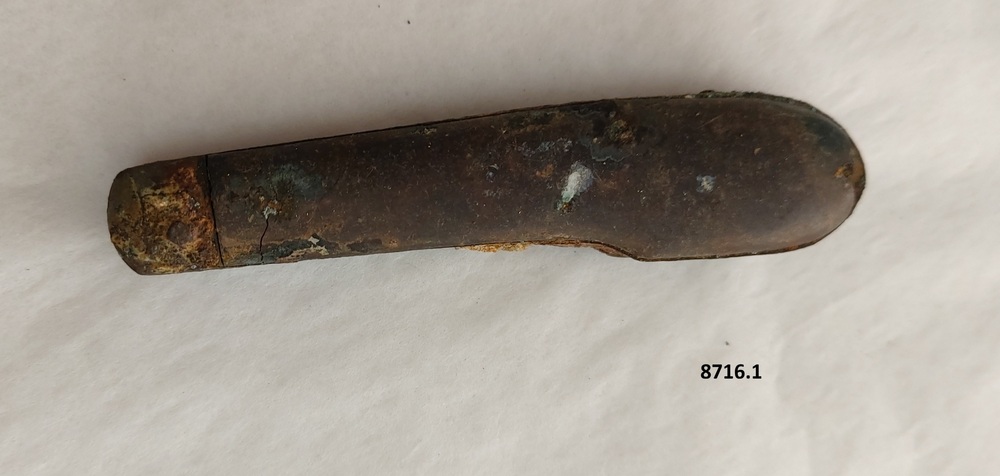
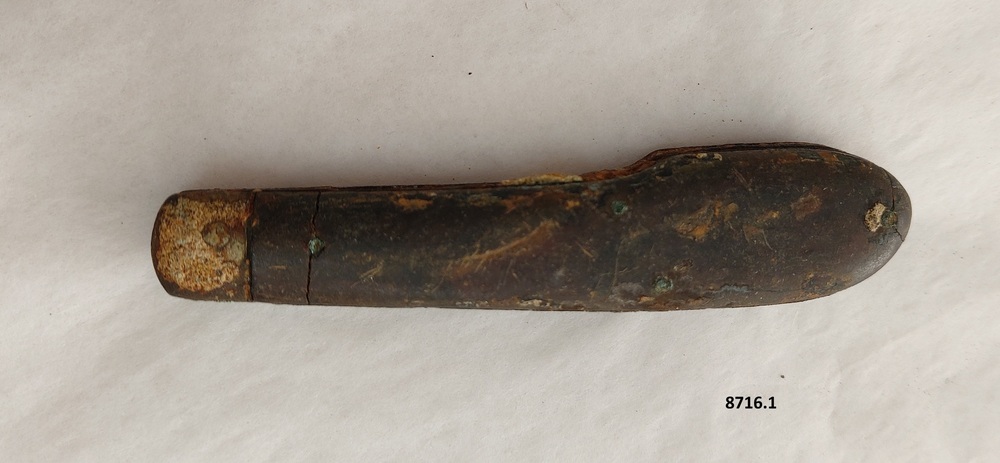
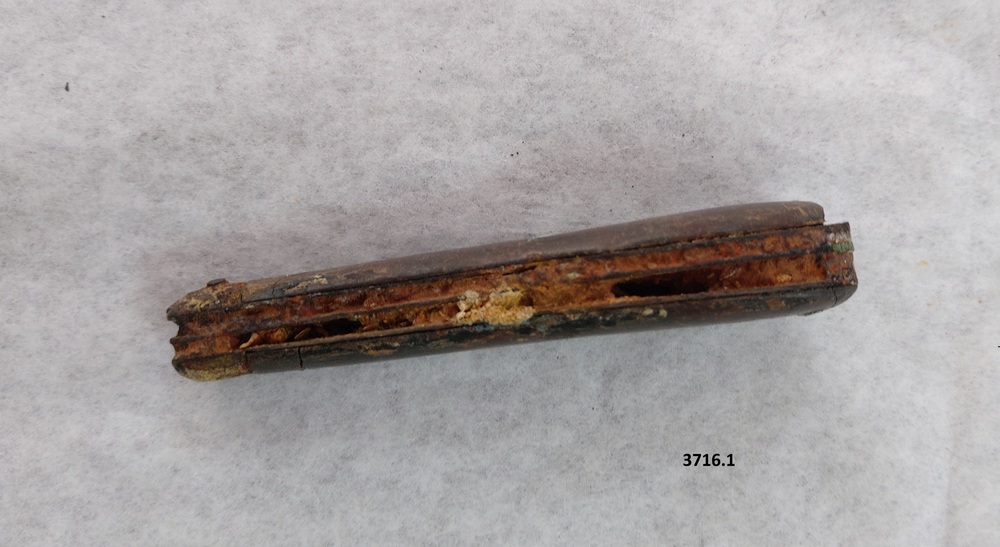
Pocket knife 8716.1 has a wooden handle which is wide at the bottom and narrow near the metal top. It is encrusted between the blade and the case and has some rust inside.
The wooden handle on pocket knife 8716.2 has been worn away on one side exposing a bleached wood underneath. The blades have also been extensively corroded, leaving two open gaps where they would have been. The metal cap appears to have a "b" or a "q" engraved into it.
Pocket knife 8716.3 shows some degradation of one side of the wooden handle (with bleached tan coloured wood showing) and the blades are encrusted and corroded.
Pocket knife 8716.4 has chips off both sides of the wooden handle and glass has been inserted into one of the knife spaces. The other space with the metal blade is encrusted and rusty.
Inscriptions & markings
Pocket knife 8716.2 - "b" or "q'.