

Historical information
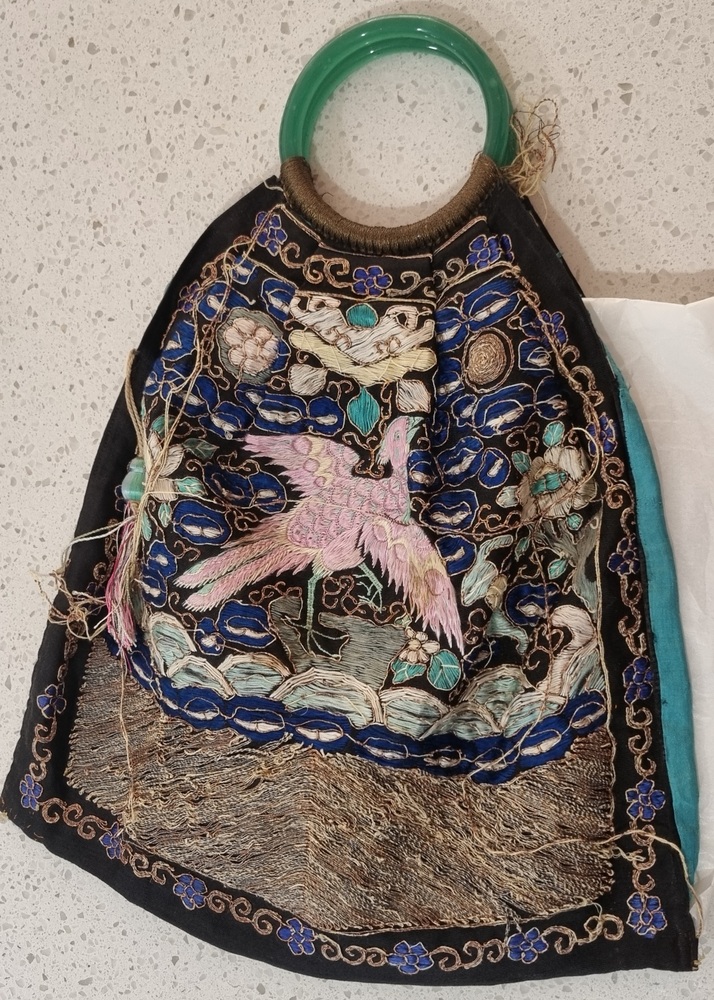
During the late 19th and early 20th century, the badges were prized collector items for wives of western diplomats stationed in Peking or Shanghai, and missionaries throughout China. The western collectors in old China not only framed the beautiful badges and hung them on walls, thus preserving them for future generations, but made evening purses of them. They put them under glass-covered serving trays, made decorative boxes adorned by them, and other imaginative items. They were most innovative with the regal badges that had been displayed with great pride by mandarin on the black silk surcoats worn over the colorful dragon robes on all official occasions in the court of the last emperors and empresses of China.
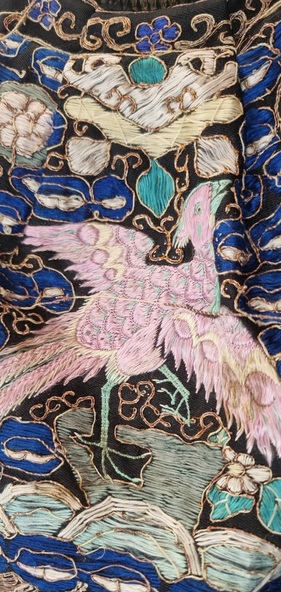
Two groups of men achieved badges, civil and military. Each category had nine ranks. The civil rank badges feature birds for identification, and the military utilize animals, both real and mythological.
The first civil examination was generally taken at approximately age 18. Those who passed were awarded the Flower of Talent or Hsiu-ts’ai title and were entitled to wear the ninth rank badge, the Paradise Flycatcher. This would be equivalent to receiving our Bachelor of Arts degree.
Physical description
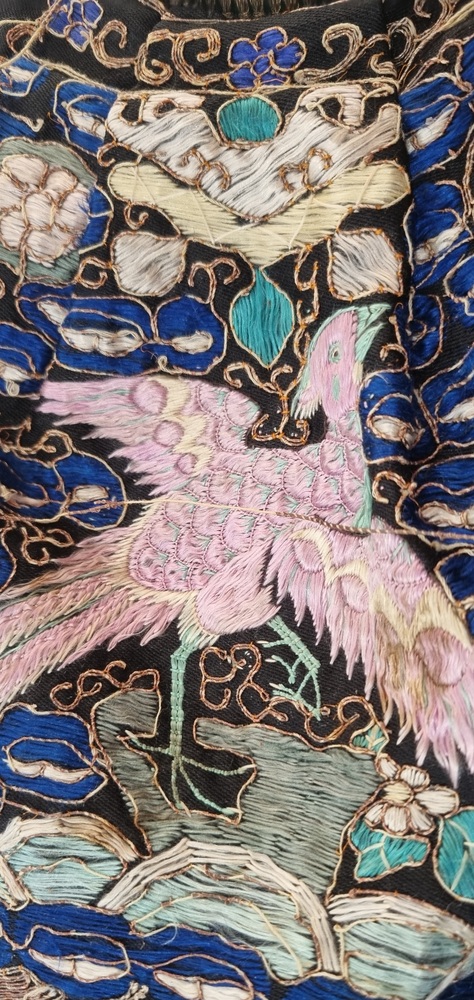
Silk embroidery on silk fabric. Originally a Chinese Civil Rank Badge, repurposed into a bag. Satin stitch and metallic thread couching. Embroidery in pale mauve, aqua, blue and cream. Central panel has a bird with wings outstretched.
Metal thread is used to attach to green Peking glass handles.
Internal lining is degraded teal silk.