



Historical information
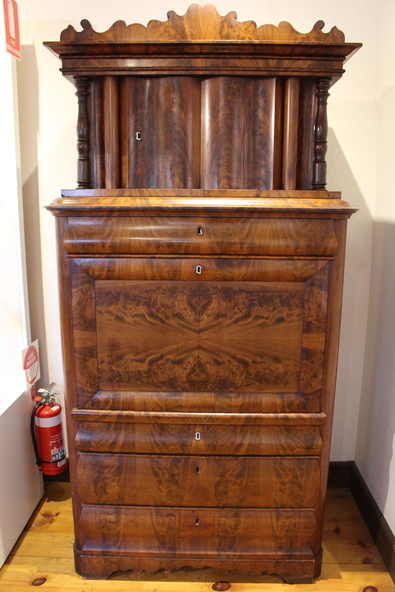
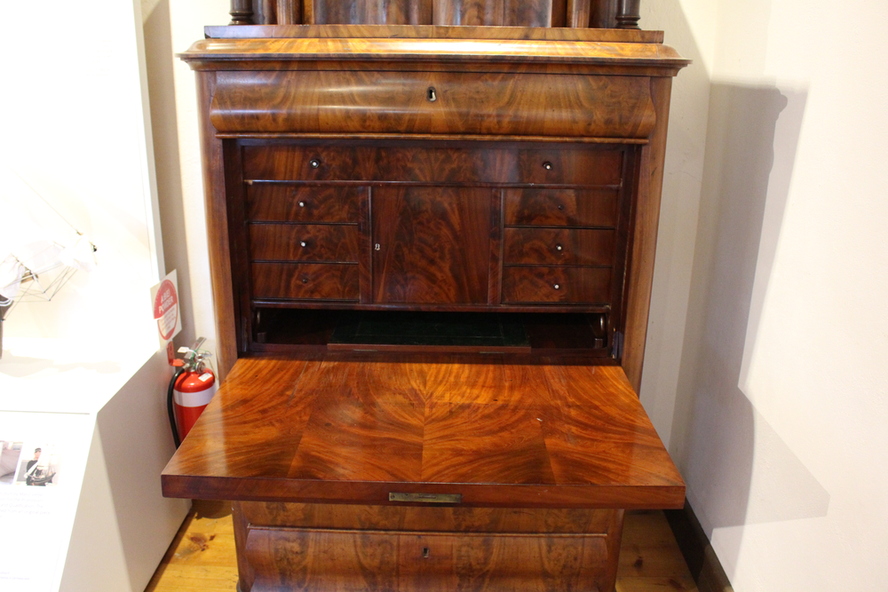
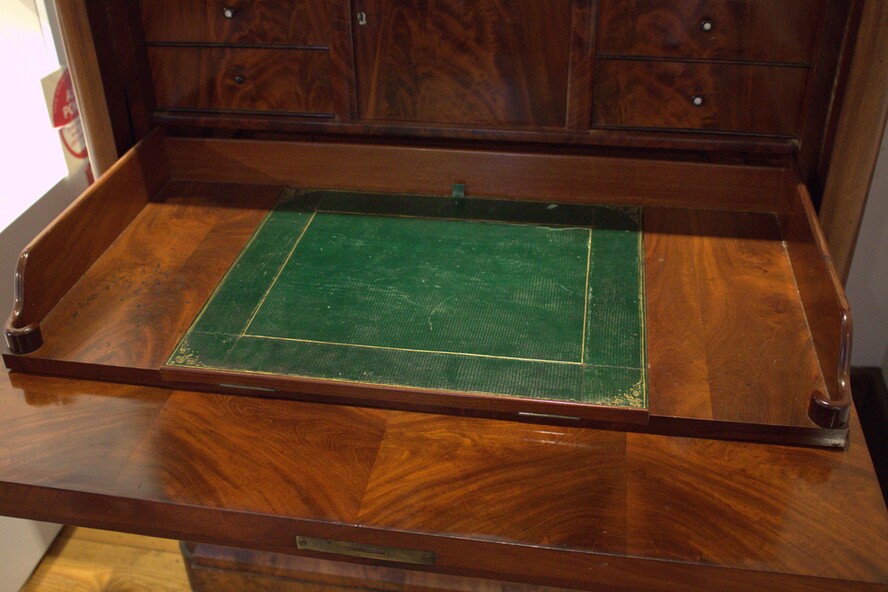
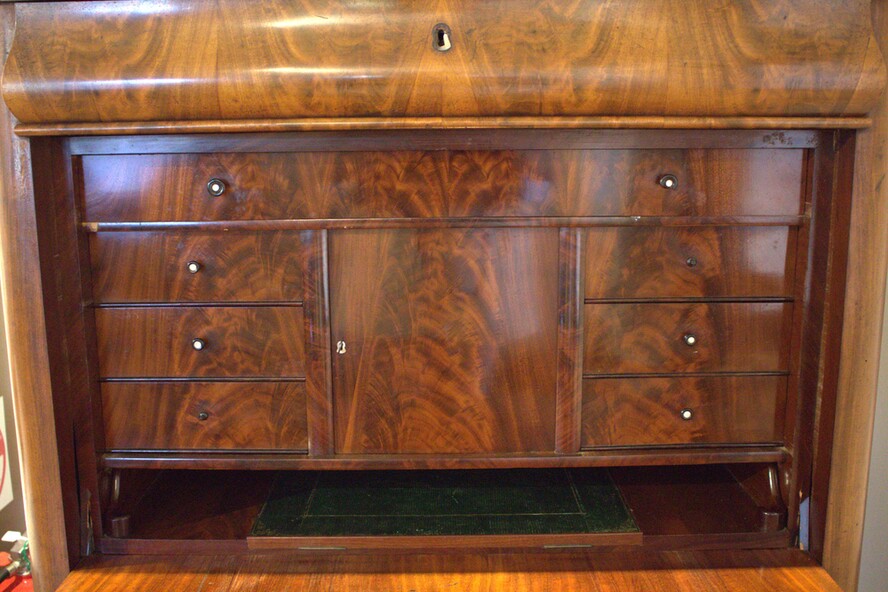
This 19th-century German secretaire is a refined example of the Biedermeier style, valued for its restrained elegance, high-quality craftsmanship, and practical, compartmentalised interior. Made with fine veneers, typically cherry or walnut, over a sturdy timber carcass, Biedermeier secretaires represent an important era of German domestic design that emphasised order, utility, and tasteful simplicity.
Its significance to Ziebell’s Farmhouse Museum is elevated by its direct association with Christian Ziebell, who returned to Germany in 1855 after having settled in Westgarthtown and brought the secretaire back to Melbourne by ship.
As a personally selected furnishing, it reflects both Christian’s continued connection to his homeland and the aspirations of a settler family building comfort, status, and familiarity in a new country.
The secretaire contributes meaningfully to the interpretation of German migrant domestic life, craftsmanship, and transnational identity, offering tangible insight into what the Ziebell family valued and chose to carry across the world.
