



Historical information
Dr Michele Matthews has been a local and social historian for nearly three decades since she first used correspondence held by the then Bendigo City Council for her Honours thesis. She is an ardent advocate for the use of local history records to tell Victorian and Australian history from a grassroots perspective. Michele’s MA thesis, ‘A forgotten “Father” of Federation: Sir John Quick 1852‑1911’ (2003), and her PhD thesis, ‘Survivors, schemes, Samaritans and shareholders: the impact of the Great Depression on Bendigo and District 1925‑1935’ (2007), both drew heavily on Bendigo and district records.
Physical description
Michele Matthews Collection: PHD Research - Article "The name behing the street" - The Bendigo Miner Thursday Nov 22, 2007 by Jim Evans
This item includes the following document:
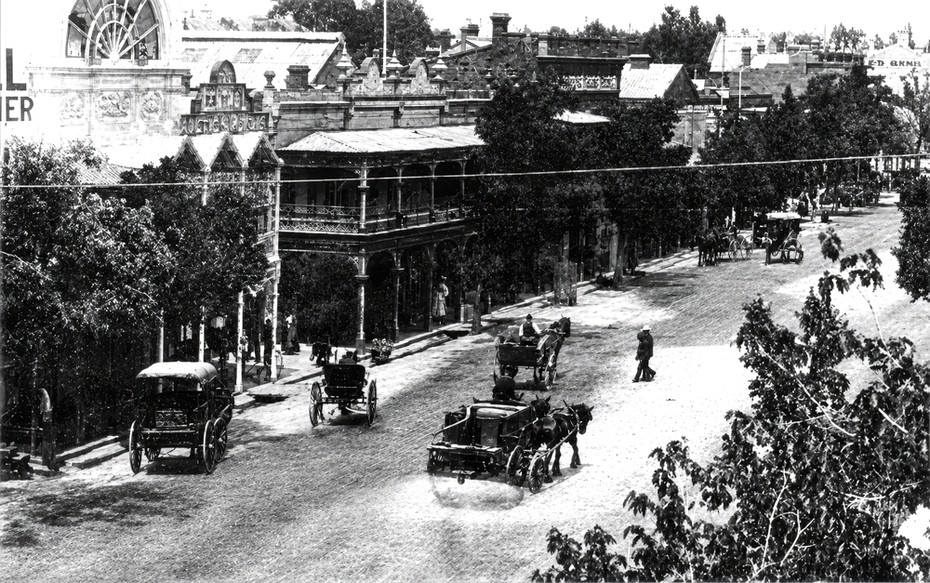
8672.89a Black and White Photo of Hargreaves Street in 1908 - Scanned from the article
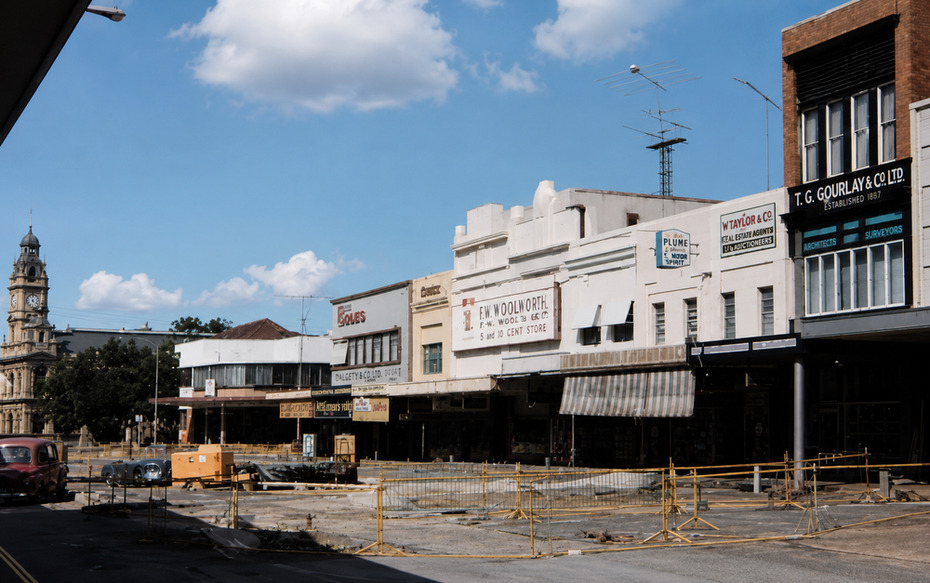
8672.89b Construction of Hargreaves Mall in Feb 1982 Colour Photo - Scanned from the article
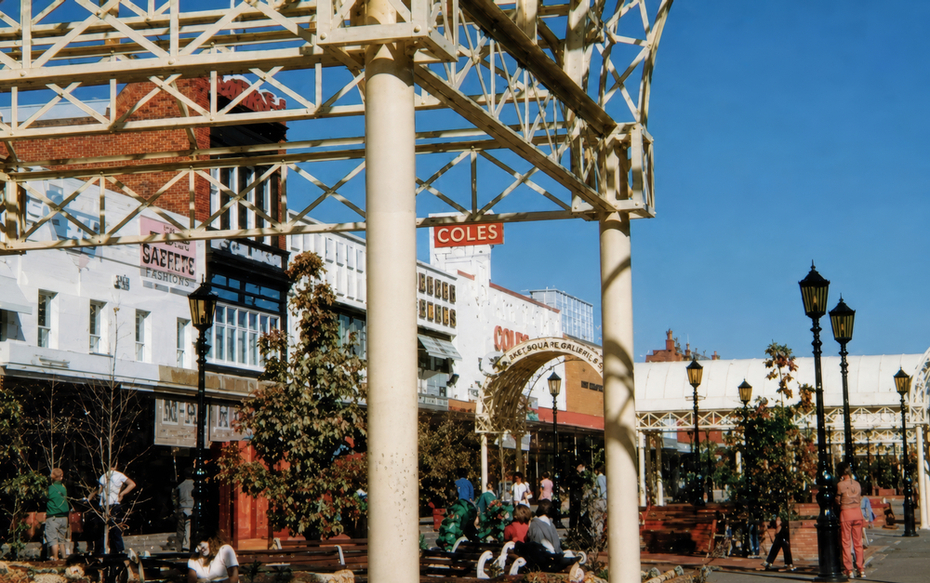
8672.89c The Mall that was opened in 1982, colour photo scanned from the article
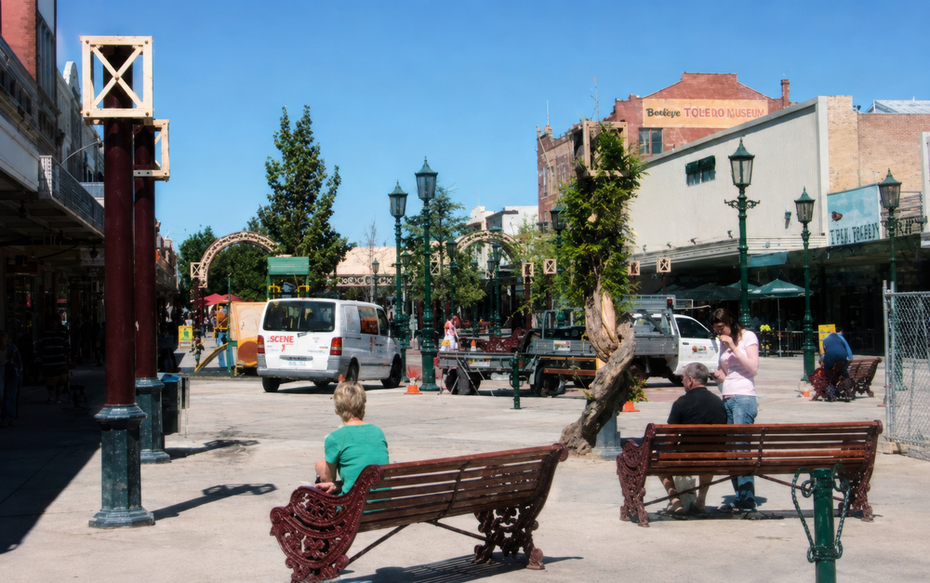
8672.89d The Mall as it is today in 2007, colour photo scanned from the article
8672.89e The Article itself
"The name behind the street" - The Bendigo Miner Thursday Nov 22, 2007 The article describes the history and significance of Hargreaves Street in Bendigo, comparing its early development with its later transformation into the Hargreaves Mall. It explains that the current redevelopment plans echo an earlier project completed 25 years prior, when part of Hargreaves Street was converted into a pedestrian mall.
A major focus of the article is the origin of the street's name. It notes that the correct spelling is Hargreaves, not Hargraves, despite the latter being common elsewhere in Australia. Local historian Rita Hull explains that the street was named after Edward Hammond Hargreaves, who was long credited with sparking Australia's first gold discovery. However, the article also presents a more nuanced historical view, suggesting that Hargreaves' reputation may have exceeded his actual contribution.
The article recounts Hargreaves' involvement in the Australian gold rush. After unsuccessful attempts at prospecting in California and New South Wales, he returned to Sydney seeking government support and later claimed to have discovered a goldfield near Bathurst. It also explains that other prospectors, particularly John Lister and James Tom, had already located gold in the area, leading some historians to argue that Hargreaves received disproportionate recognition because of his ability to promote the discovery and secure official backing.
The final section returns to Bendigo and the evolution of Hargreaves Street. It highlights photographs documenting the street's history, including a 1908 streetscape, images of the construction of Hargreaves Mall in February 1982, and the completed mall after its opening in May 1982. The article notes that the oldest photograph depicts the site where the mall now stands and describes features such as a horse-drawn water cart used to suppress dust on the unsealed road. It concludes by encouraging readers to learn more about the street's heritage through the Bendigo Historical Society's self-guided tours and publications.
