

Historical information
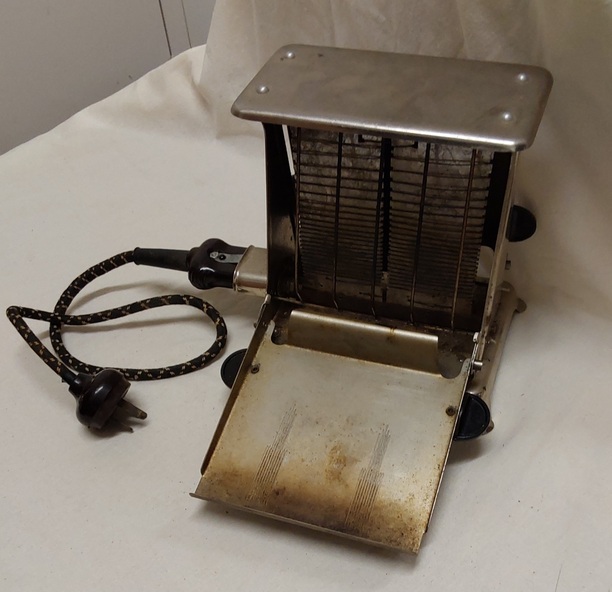
The vintage Hecla toaster is an iconic piece of Australian kitchen manufacturing history. Produced by Hecla Electrics Pty Ltd—founded in Melbourne in the early 1900s—these toasters were renowned for their durable, utilitarian design. The bread is placed inside the door, then closed to toast. Because the bread required a manual flip, they are widely remembered for demanding constant supervision to prevent burning. Unlike modern disposable appliances, vintage Heclas were engineered to last. They utilized easily replaceable Nichrome wire elements on mica sheets, allowing users to buy parts from local stores and fix them at home.
Physical description
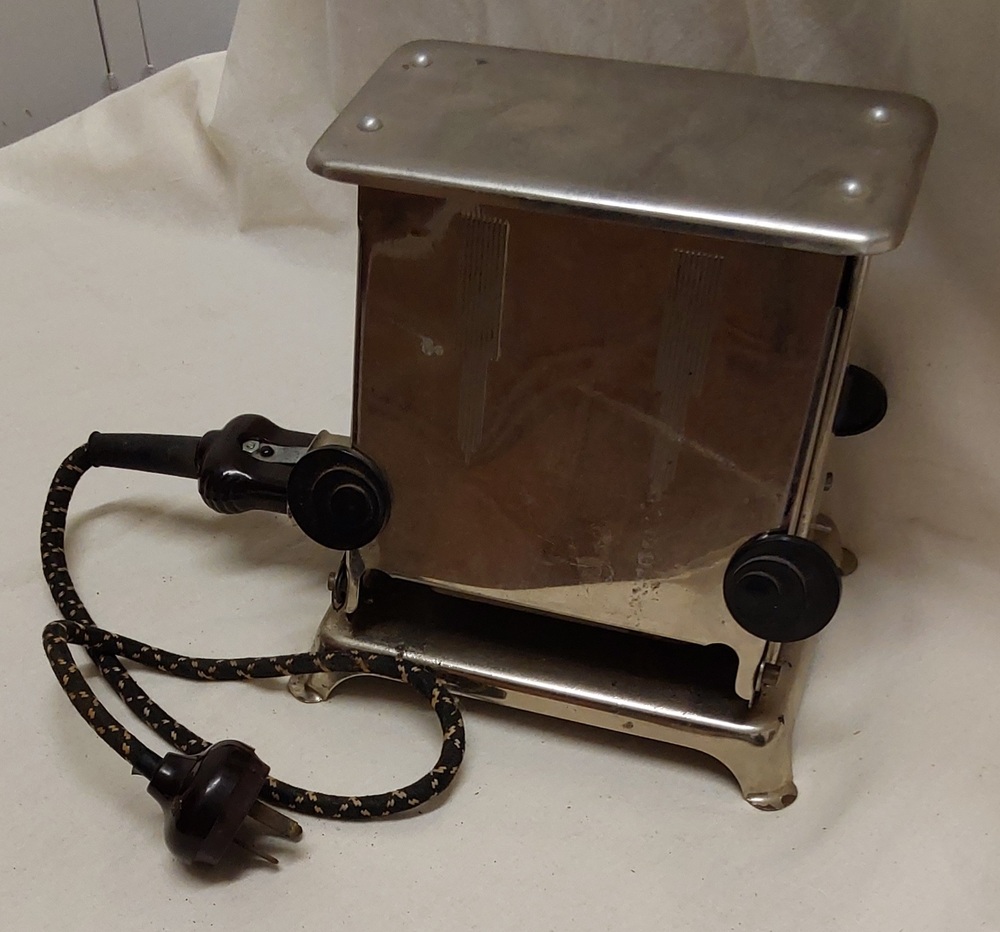
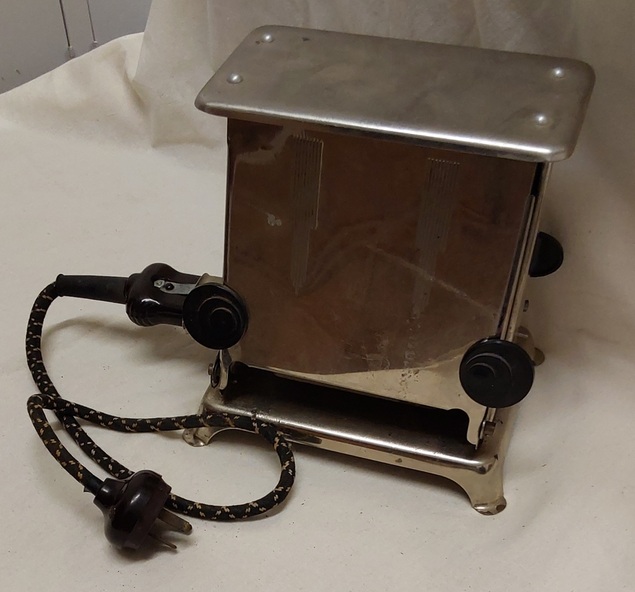
A vintage Hecla chrome plated steel two slice electric toaster on a footed base. It has two side-loading flip-down doors on either side with two small round black bakelite handles. There is a lined pattern on each door. The top is flat with no toast rack. The bread is placed inside the door, then closed to toast. When toasted on one side the door is opened and the toast is manually flipped to toast the other side. It has a black and tan patterned cotton thread covered removable electrical cord which has three prongs on a black plug. On one side of the toaster is a metal protruding plug for the two pronged cord to attach to. The glowing heating element inside is called the Nichrome wire which is typically wrapped back and forth across thin, flat sheets of mica, a naturally occurring heat-resistant mineral that serves as an electrical insulator.
Inscriptions & markings
'Volts Hecla Watts 230 Cat No. 14690. Submitted to Electrical Approvals Board Reference "AJ/Ao/01 SECV Manufactured in Australia
Connection inscription - 'E. H. Dixon Cat. Earth. 5 Amps. 250V'.
Three prong plug inscription - ' 53. 250V. 10A. On top 'RC' letters intertwined as a symbol.