

Historical information
This is a collection of photographs depicting the development of Warrnambool's Harbour in Lady Bay from the early 1850's through to the turn of the 20th century. They have all been mounted on buff coloured card with two holes punched into the left hand side - seemingly taken from an album.
In the 1800's ships sailing from England to Australia began using Bass Strait as a faster route to Melbourne. Small navigation errors led to many tragic shipwrecks. From 1848, lighthouses were operating along Victoria's southern coast as a guide for sailors. Coastal towns such as Warrnambool grew but there were many shipwrecks in the area with some even stranded in Lady Bay. A jetty was built in 1850 and a flagstaff to guide seafarers was placed up high on what became known as Flagstaff Hill.
Warrnambool was officially made a Port of Entry in 1855 and by the 1870's had become the dominant port in the Western District. By the late 1800's the Port of Warrnambool was a busy port with the creation of two jetties serving regular coastal traffic for both passengers and cargo. In 1859 the first Government - built lifeboat arrived and a shed was soon built to house it. This was followed in 1864 by a rocket house to safely store the Rocket Rescue equipment.
The Breakwater was built between 1874 and 1890 and in 1878 the lifeboat house and rocket house were moved to the Breakwater area. Sadly, due to an increasing problem with the silting in the bay, by the 1890's only smaller vessels could navigate the harbour.
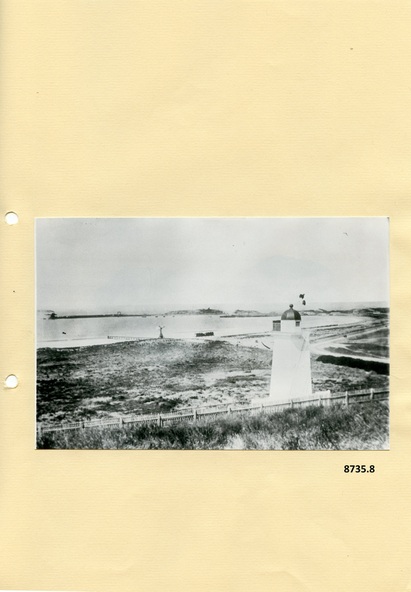
In November 1857 the Victorian Government recommended that Warrnambool Harbour have beacons and two lighthouses to guide vessels into and out of the Harbour safely. The original Lighthouse Complex was built on Middle Island in 1858 - 1859. The white light of the Middle Island lighthouse was to be used for the first time on September 1st, 1859. The red light of the Beach Lighthouse, a wooden obelisk structure, was first operated on March 25th, 1860, but in 1868 this light was discontinued due it being too low. The whole complex was then transferred to Flagstaff Hill in 1871.
Significance
These photographs are a significant visual documentation of the early development of Warrnambools Lady Bay as a coastal trading and seafaring port.
Physical description
A set of ten photographs mounted on buff coloured card with two holes punched in each one. Seven photographs are black and white and three (of watercolour paintings) are coloured. They all depict scenes of Lady Bay in Warrnambool from its earliest era through to the end of the 19th century.
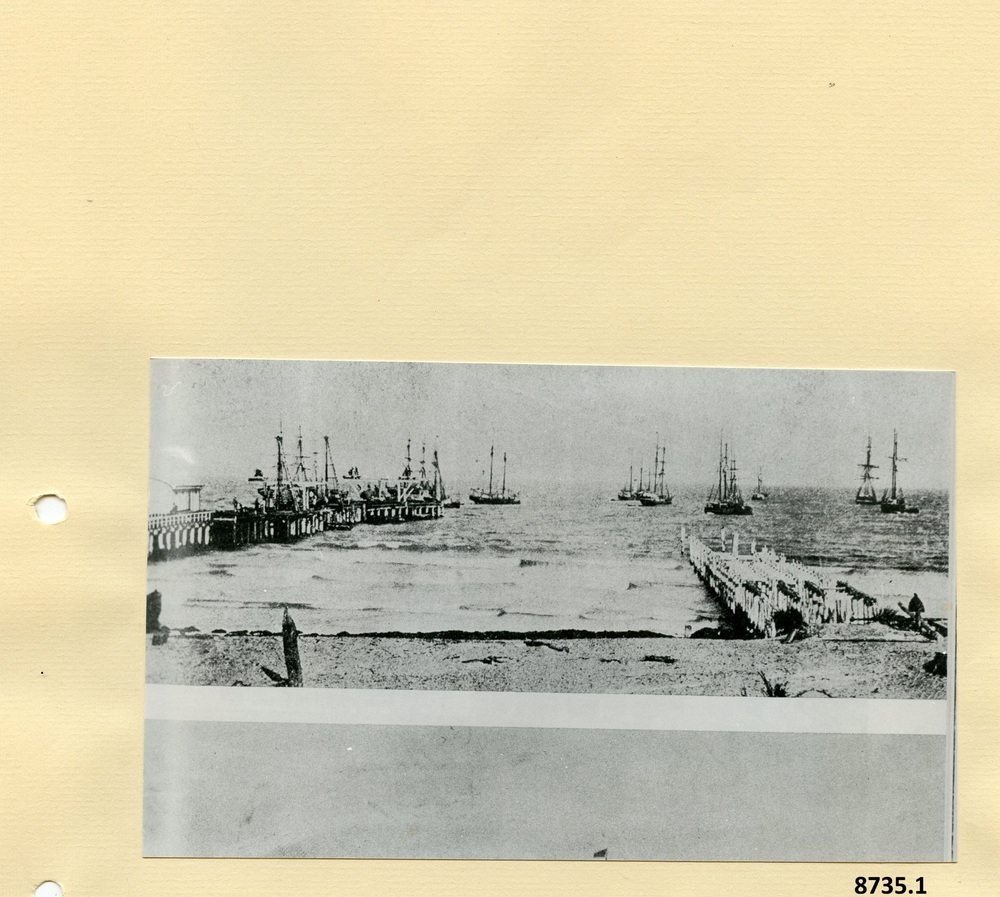
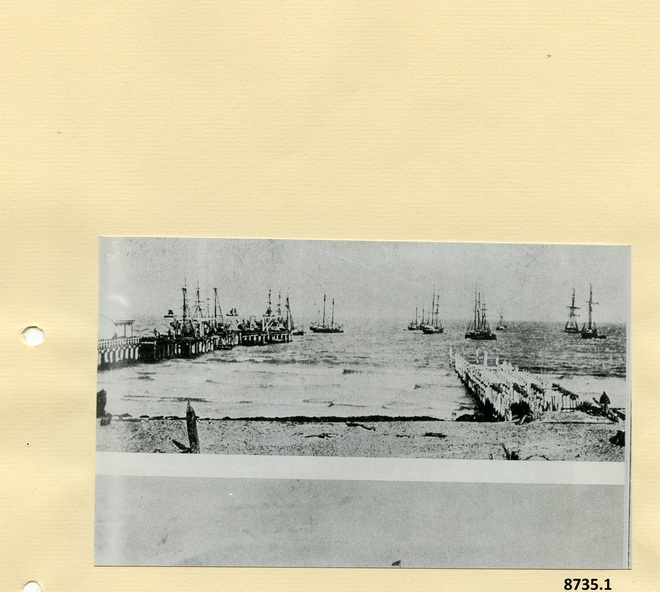
8735.1is a black and white photograph showing the two early jetties in Lady Bay (circa 1859 - 1870's) with numerous sailing vessels either moored at the longer jetty or at anchor nearby in Lady Bay. The lifeboat house can be seen on the left of the photo on the longer jetty.
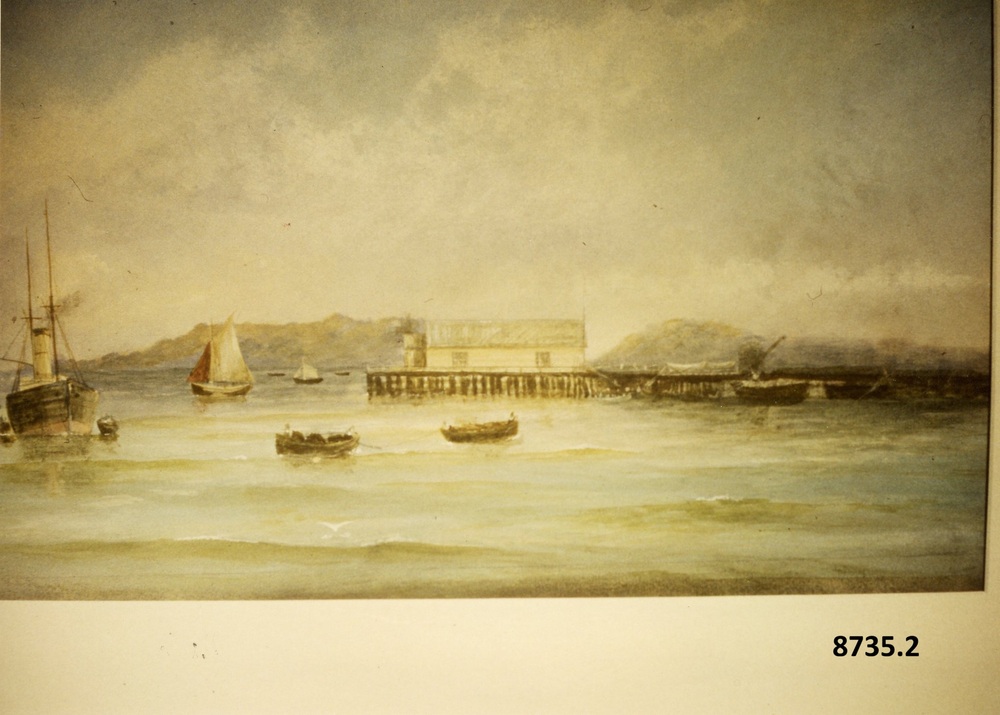
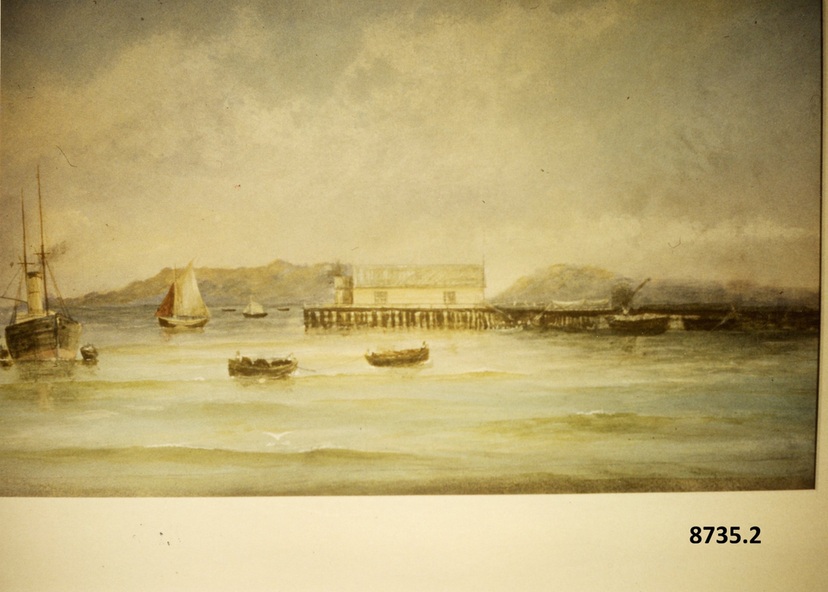
8735.2 is a coloured photograph of a watercolour painting by an unknown artist showing a light coloured building or shed on one of the early jetties in Lady Bay (circa 1859). A steamer is anchored on the left of the picture and numerous small craft (row boats and small sailing boats) are dotted around. Middle Island and Merri Island appear to be in the background.
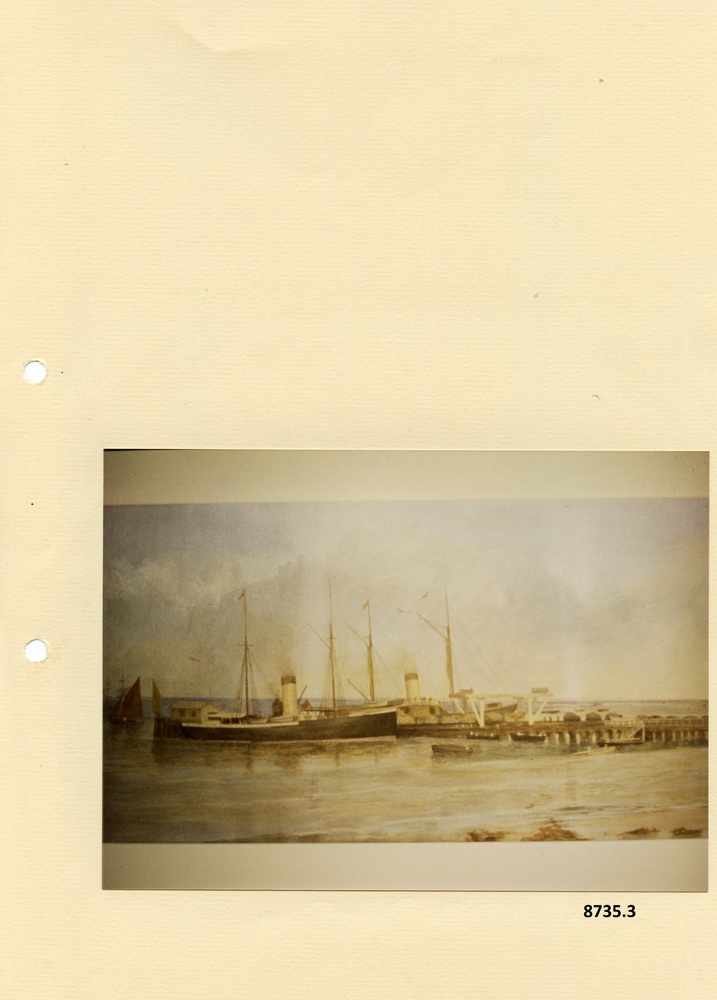
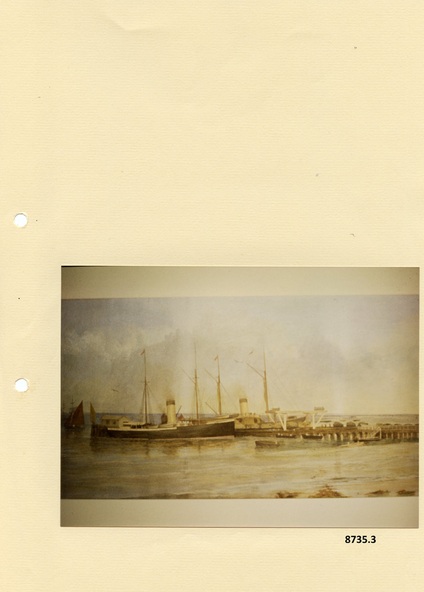
8735.3 is a coloured photograph of a watercolour painting by an unknown artist showing two large steamers tied up at what was the early Breakwater in Lady Bay, Warrnambool (circa 1874 - 1890). A small white building or shed can be seen at the end of the jetty and several small boats are nearby. A large sailing ship can just be seen on the left edge of the painting.
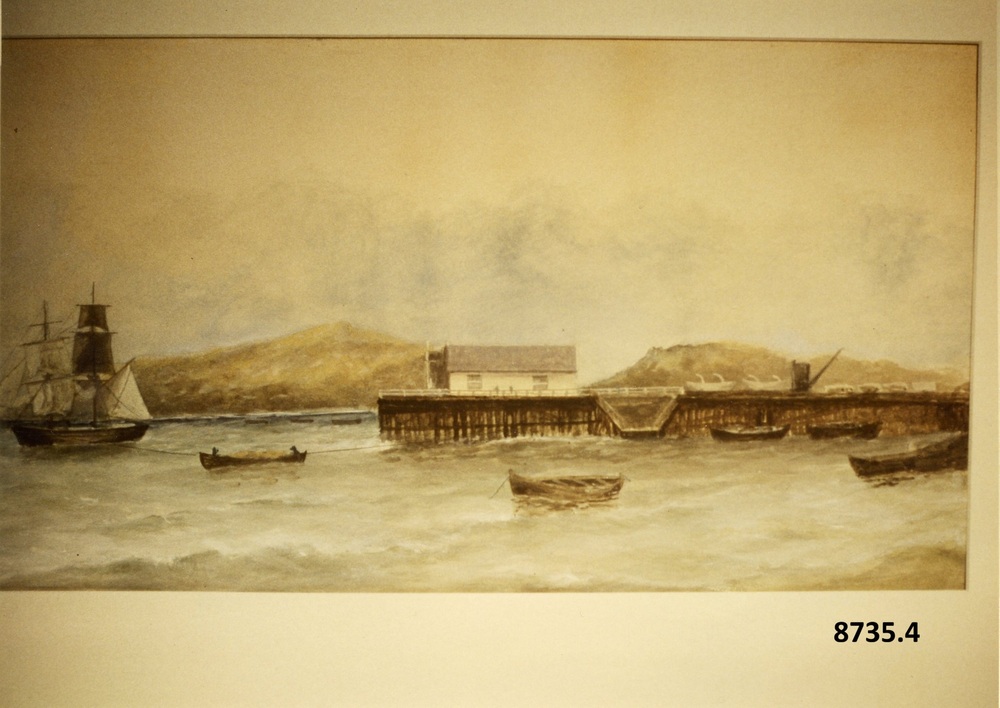
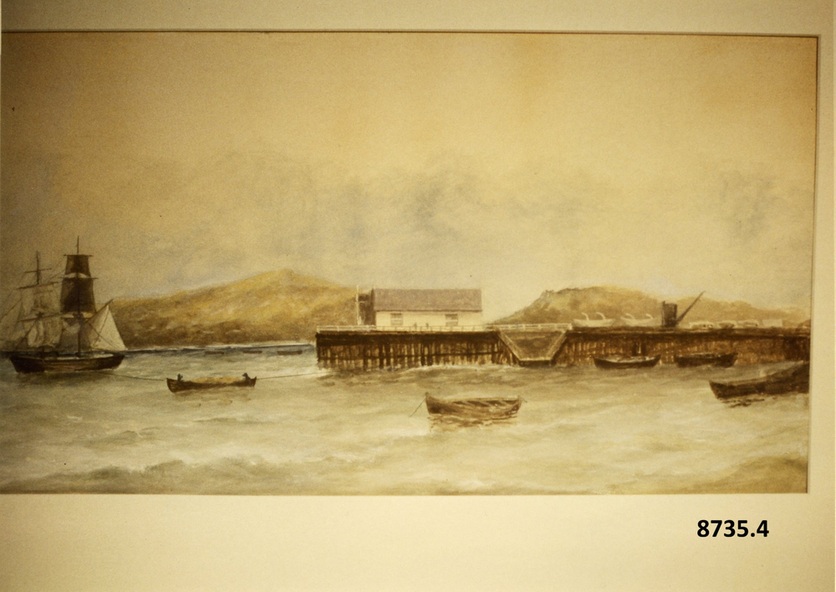
8735.4 is a coloured photograph of a watercolour painting by an unknown artist of one of the early jetties in Lady Bay, Warrnambool (circa 1859) with a building or shed and a crane. Several small rowboats are anchored nearby. Middle Island and Merri Island are in the background. This painting is very like 8735.2.
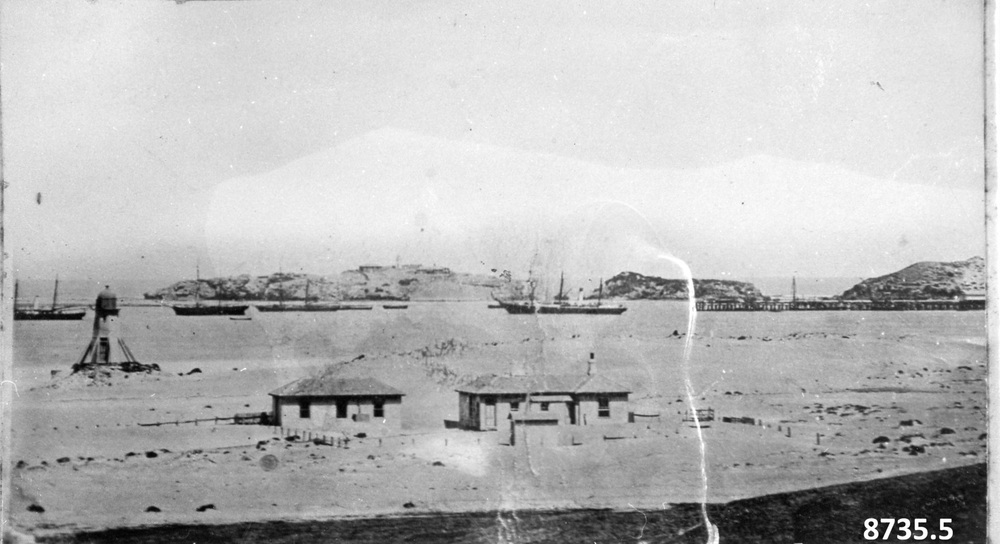
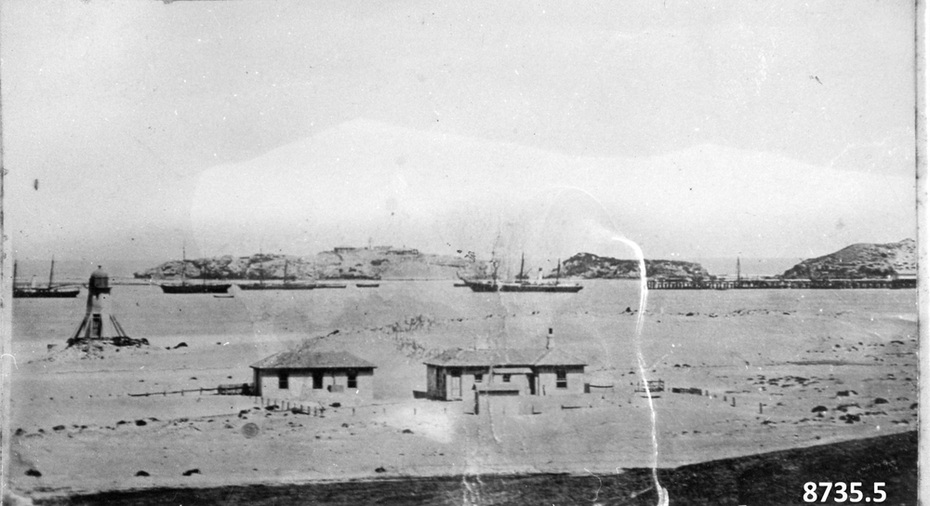
8735.5 is a black and white photo of Lady Bay, Warrnambool circa 1860's. The early lighthouse and cottage complex can be faintly seen on Middle Island with the Beach Lighthouse (the wooden obelisk) and several buildings (including the Customs House) in the foreground. The main jetty (built in the 1850's) is on the righthand side and there are at least four ships anchored in the Bay.
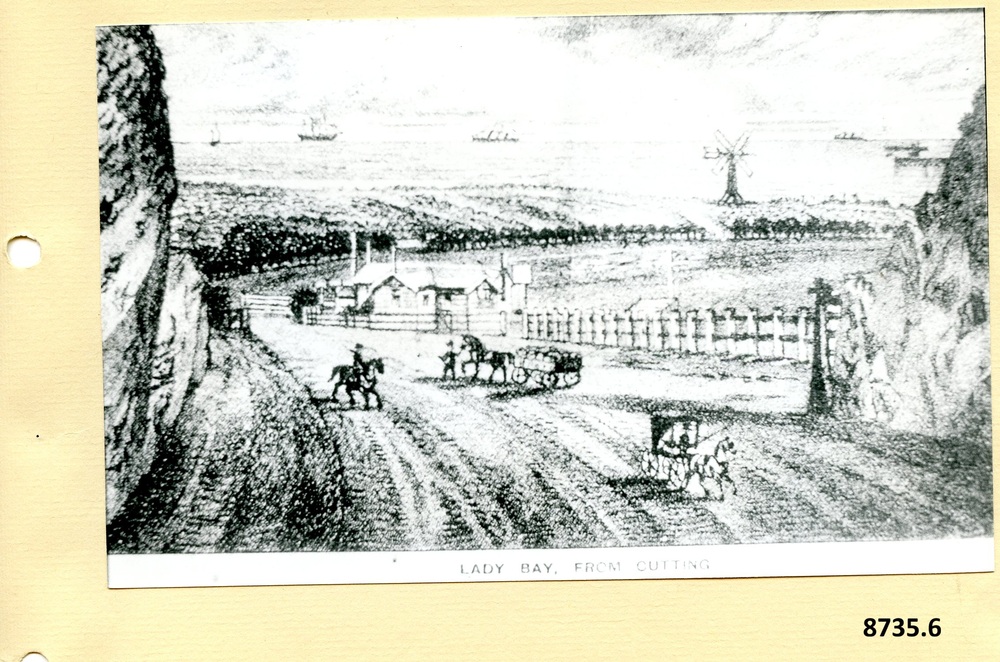
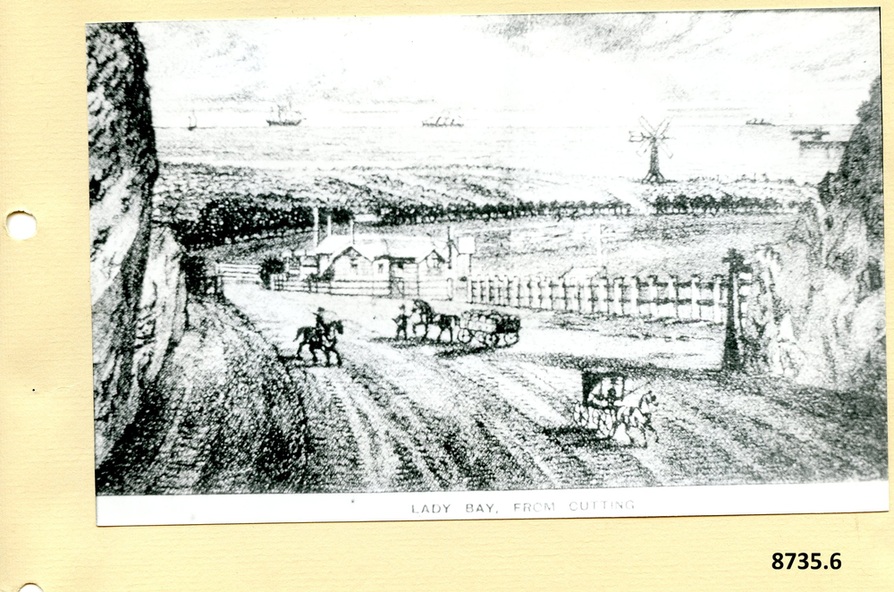
8735.6 is a black and white photograph of an etching (possibly printed in a newspaper in the 1860's) of Warrnambool's Lady Bay and the road running through "The Cutting" leading down to the beach. It shows a horseman, a man with a horse and dray and a horse and carriage travelling along the road. In the background is an early windmill and five ships anchored in the Bay.
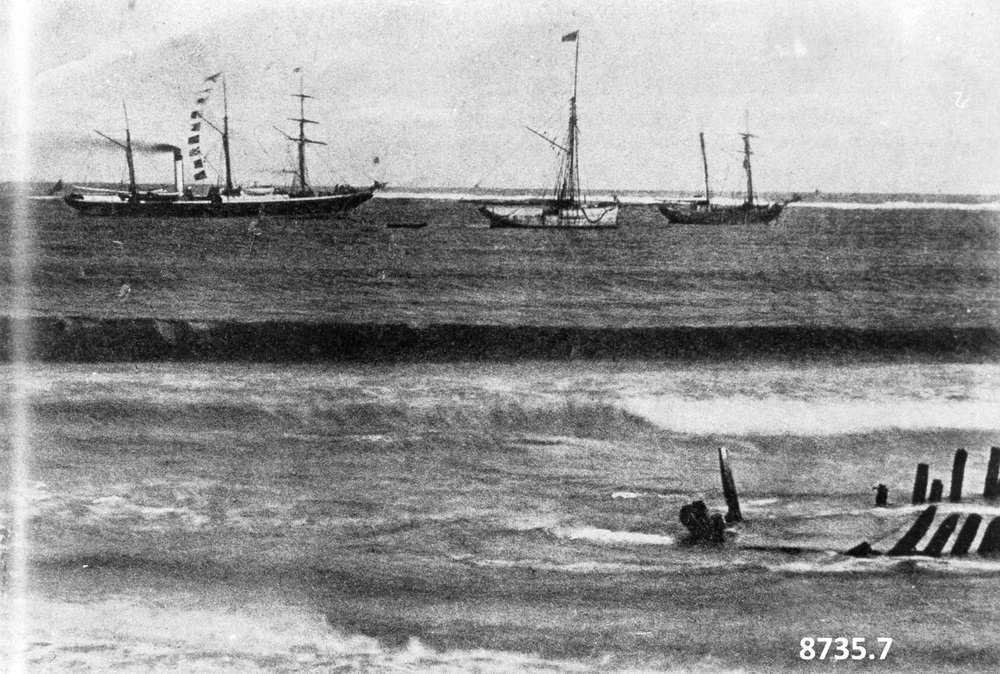
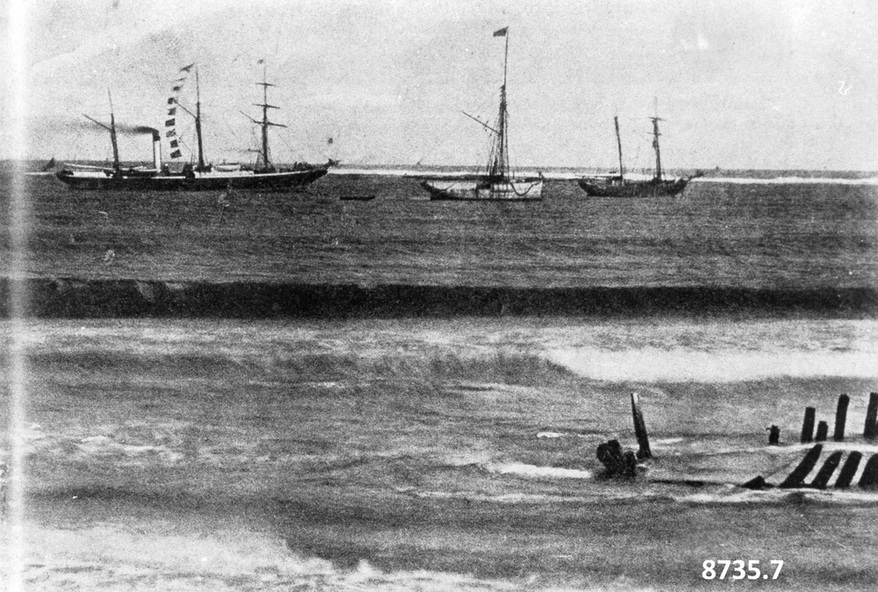
8735.7 is a black and white photo of Lady Bay, Warrnambool showing a steamship and three smaller sailing ships at anchor. The wreck of the "Enterprise" is in the foreground.
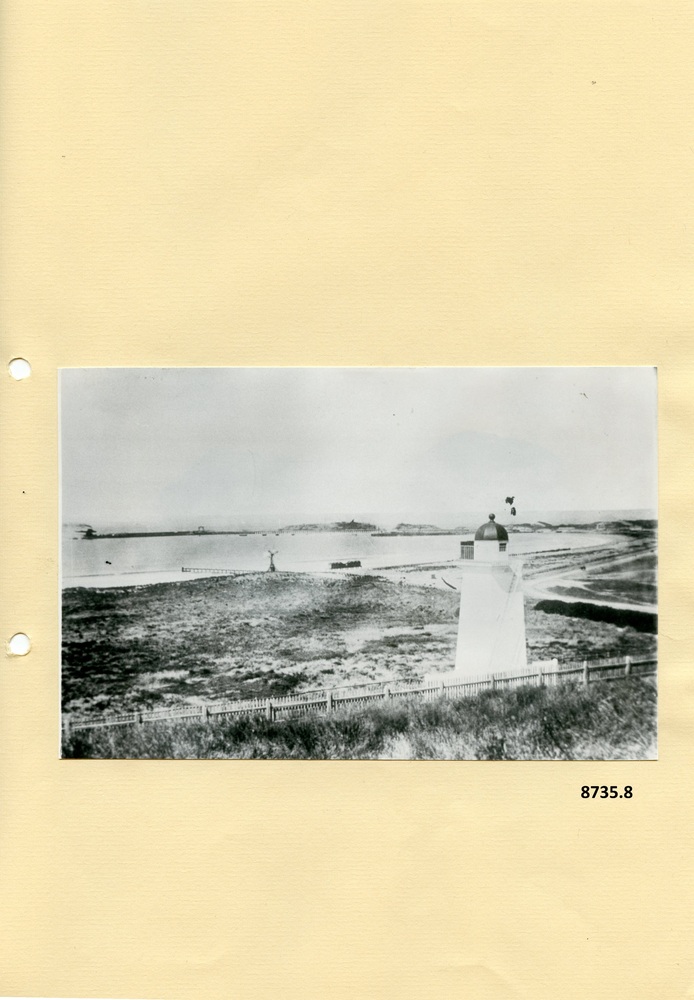
8735.8 is a black and white photograph of Lady Bay, Warrnambool taken from Flagstaff Hill (circa 1870's - 1890's) showing the main lighthouse (which had been moved to Flagstaff Hill in 1871) and Lady Bay with its wooden windmill. In the distance is the newly built Breakwater, the Causeway and the two islands. The old jetty and several buildings are on the righthand side.
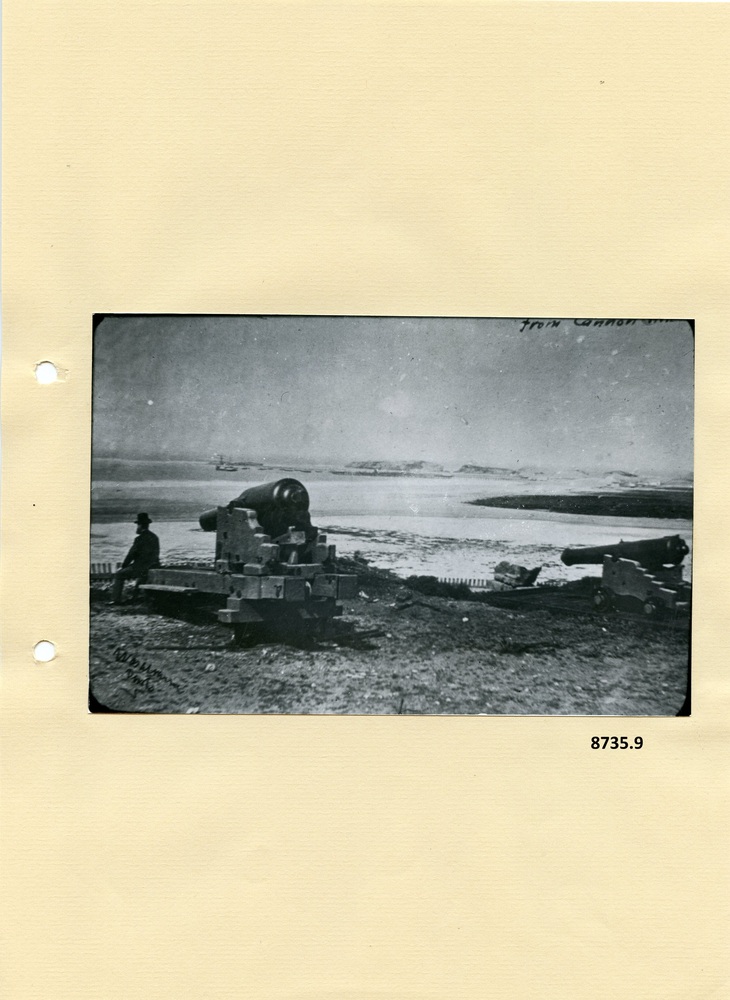
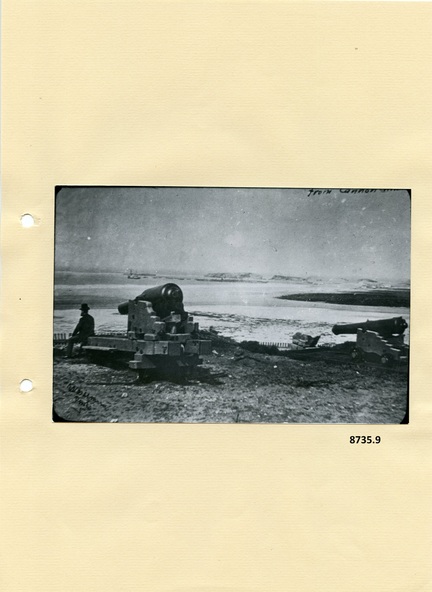
8735.9 is a black and white photograph taken in 1878 of two cannons belonging to the local Artillery Corp set up on Cannon Hill overlooking Lady Bay, Warrnambool. An unknown man is sitting on the wooden carriage. Middle Island and Merri Island are in the background.
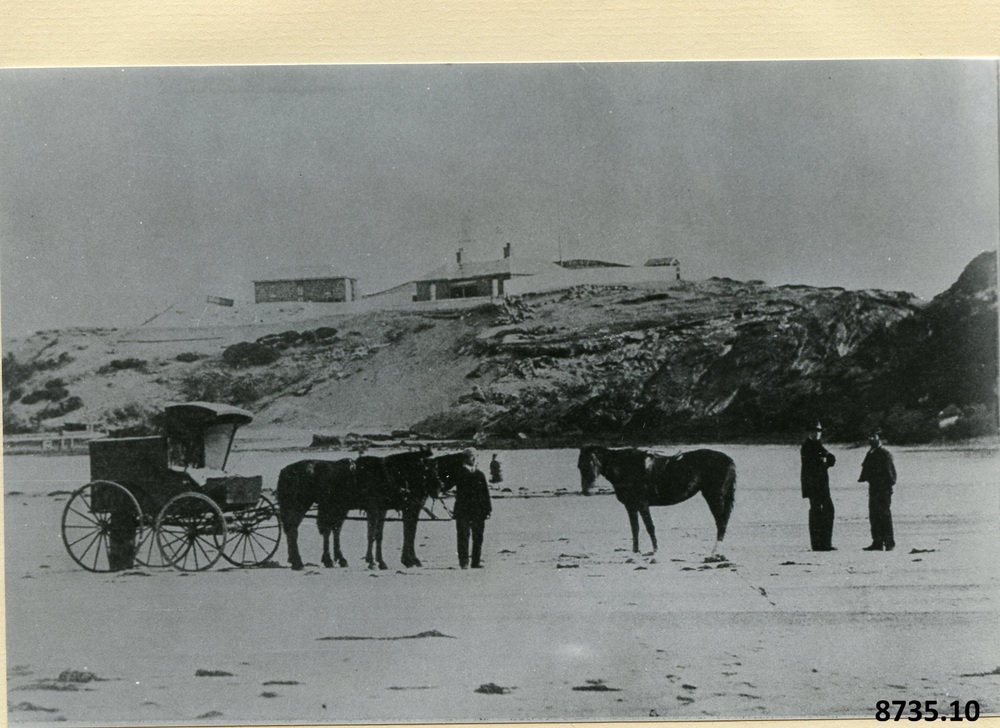
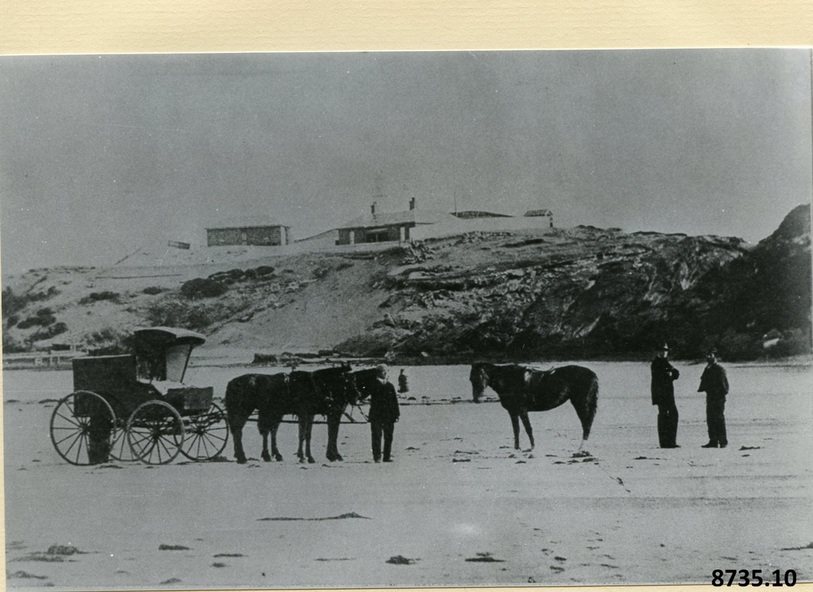
8735.10 is a black and white photograph of the Lighthouse Keeper's cottage on Middle Island, Warrnambool (circa 1860's). On the sand in front of the island is a horse and carriage and a riding horse with three men and a smaller figure.
Inscriptions & markings
8735.6 - "LADY BAY, FROM CUTTING"
Subjects
- warrnambool,
- flagstaff hill maritime museum and village,
- great ocean road,
- shipwreck coast,
- lady bay,
- breakwater,
- warrnambool jetty,
- lighthouse,
- watercolour painting,
- sailing ships,
- middle island,
- merri island,
- the cutting,
- beach lighthouse,
- steamship,
- early warrnambool,
- cannon hill,
- middle island lighthouse
References
- Warrnambool Breakwater, Viaduct and Harbour Description of the importance of the Warrnambool Harbour and surrounds on the Victorian Heritage Register (VHR) number H2124