Historical information
Arpillera are brightly colored, three-dimensional patchwork tapestries and textile pictures created predominantly by working-class women (arpilleristas).
The word comes from the Spanish term for the rough burlap or hessian sacking (often made from flour, potato, or sugar sacks) used as a backing material. They feature fabric scraps, embroidery, wool, and small 3D figures like dolls.
Pinochet Regime (1973–1990): They gained international fame in Chile during General Augusto Pinochet's military dictatorship.
The Catholic Church Role: Organized under the protection of the Vicariate of Solidarity (Vicaría de la Solidaridad) and the Catholic Church, these workshops offered a safe space for women to process grief, share stories, and earn a vital source of income after their husbands, sons, or fathers were forcibly disappeared (los desaparecidos).
A "Fabric Newspaper": Because public gatherings were banned and traditional media was heavily censored, women used these textiles to document state atrocities, poverty, soup kitchens, forced disappearances, and human rights abuses.
International Smuggling: Finished pieces were secretly rolled up and smuggled out of Chile in diplomatic or traveler luggage to be sold abroad, raising global awareness and funding for the resistance movement.
Significance
They tell of the maker's lives and the traumatic events experienced by these mothers, wives and sisters of the victims.
Physical description
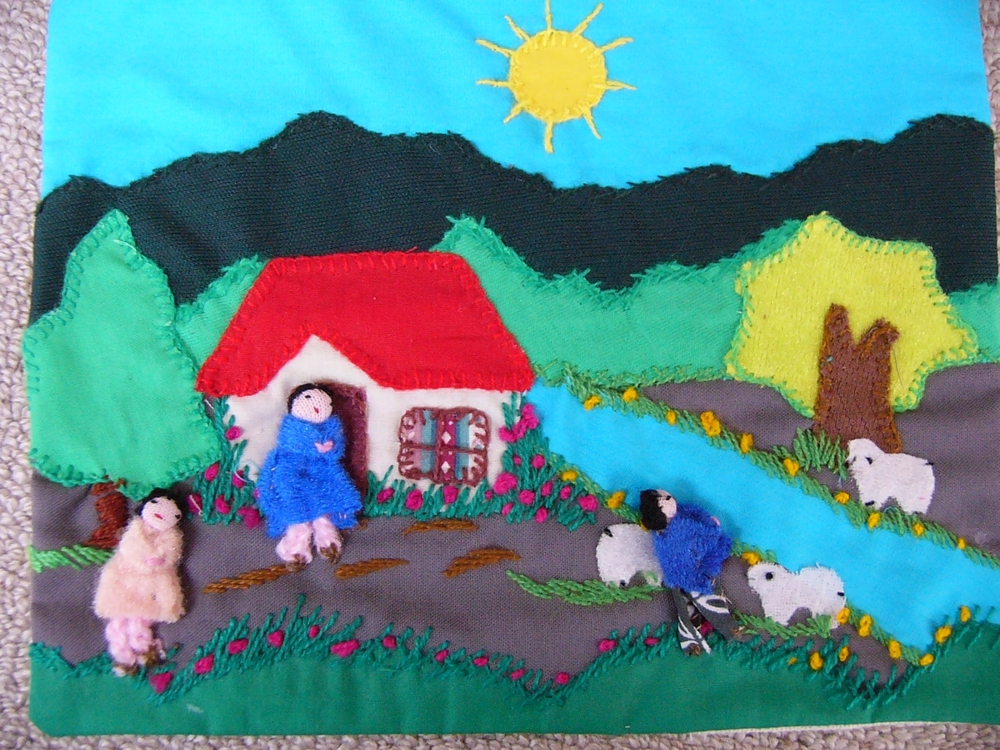
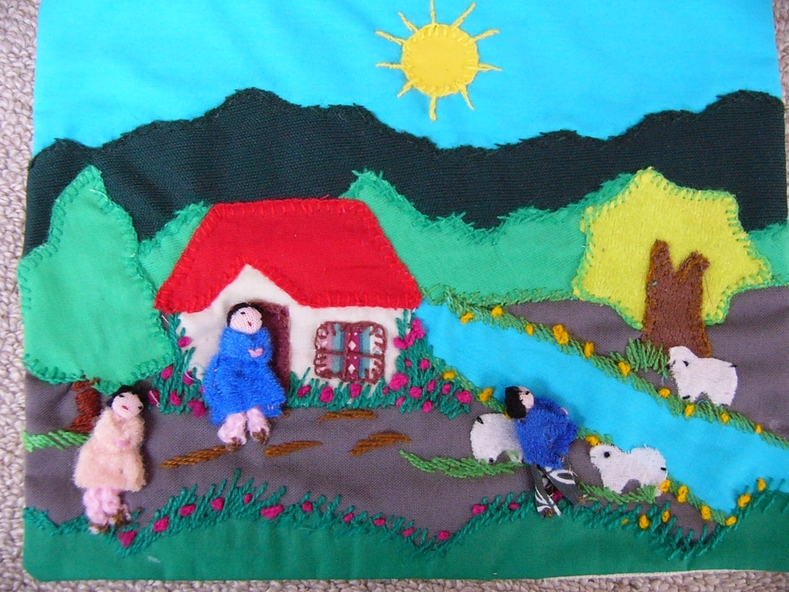
This piece depicts a brightly coloured scene with a house, people and sheep in appliqué and embroidery.