



Historical information
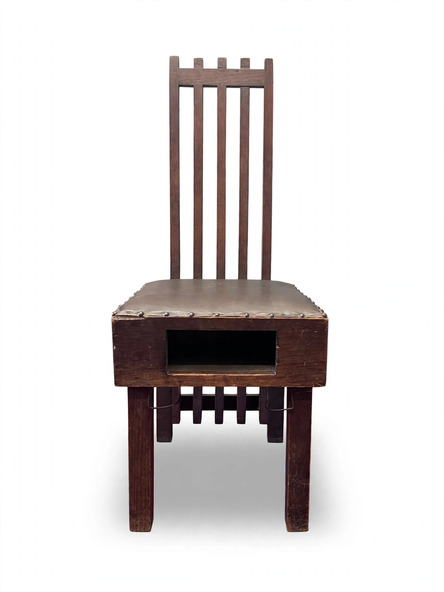
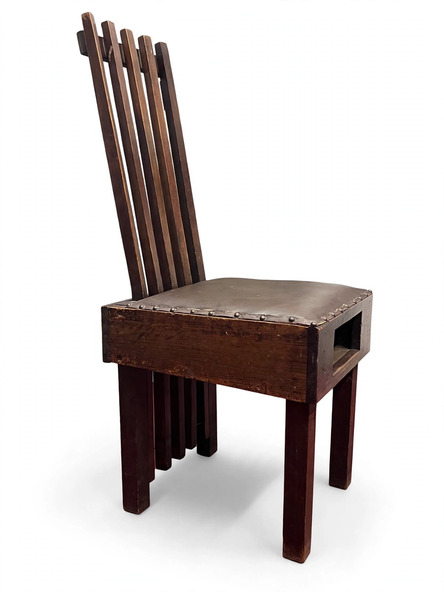
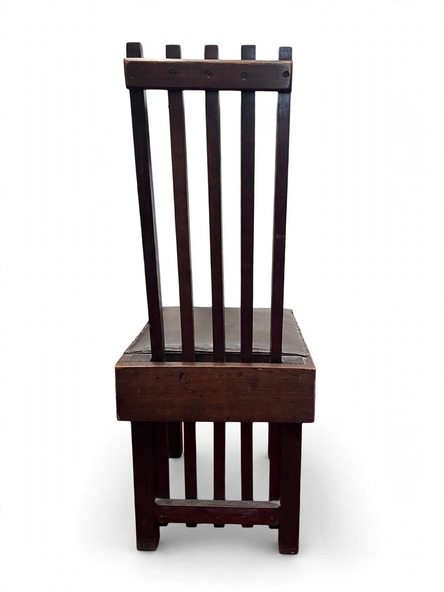
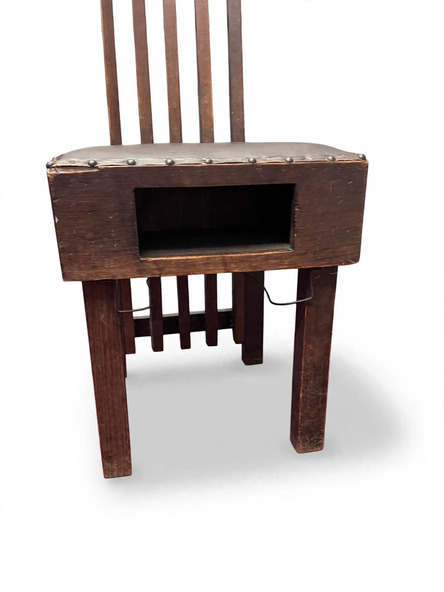
This is early 20th century functionalist furniture, designed as part of a room, not as a standalone piece. The plain timber frame, the slatted back, the leather seat and the built-in storage for books and a hat are typical of post First World War Australian design, where furniture was expected to be practical, durable and honest about its materials, and where architects often designed the furniture for a room as well as the room itself. The hymn-book aperture and the hat holder are not decoration — they are the design, shaped by how the room was actually going to be used.
Significance
.Aesthetically the chair is significant as an intact example of Eric Nicholls’s furniture design, with its slatted back, studded leather seat, book aperture and hat holder all surviving together. Historically it is significant as a chair from the Men’s Fellowship Room at the Kew Methodist Church, a room on the Victorian Heritage Register. It documents the Fellowship Room as a complete designed interior, and the social life of the church — men meeting together, with hymn books and hats needing a place to go.
Physical description
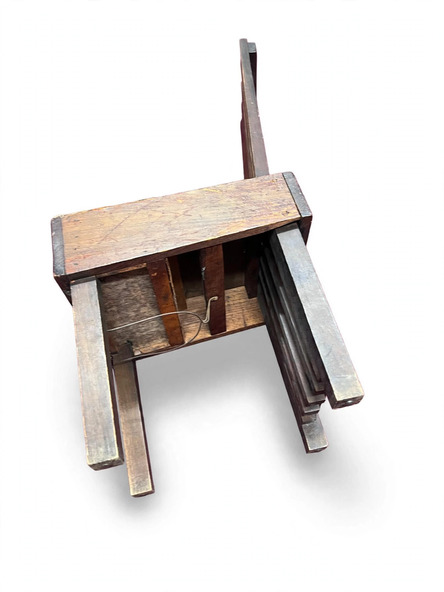
This timber chair with a high back of vertical slats, a leather upholstered seat with studded edges, and splayed legs. Under the seat is an open aperture — a rectangular opening designed to hold hymn books and similar material, so they could be kept with the chair and out of the way. Underneath the seat are metal elements — a light metal frame and rods — designed to hold a hat, so a hat could be tucked under the chair during meetings and services. The chair is otherwise plain and functional, with no applied decoration, and the timber, leather and metal are all visible as the design.
References
- Former Methodist Men's Fellowship Hall / David White ISBN/ISSN: ISSN 0155-1337 KHS Newsletter No.131, June 2020
