
Showing 784 items matching "perspectives"
-
 The Beechworth Burke Museum
Audio - Oral History, Jennifer Williams, Mrs Margaret Galbriath, 24th May 2000
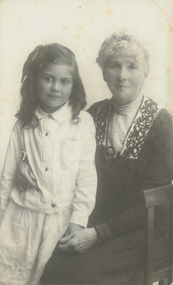
... Margaret has some insights into the local area during the Depression from the perspective of a store owner, as well as the presence of 'tramps' in the town, and Chinese immigrants in the community. ...Margaret has some insights into the local area during the Depression from the perspective of a store owner, as well as the presence of 'tramps' in the town, and Chinese immigrants in the community. ...Mrs Margaret Galbraith was born in Beechworth in 1913 on the 5th February. Her parents immigrated to Australia in 1910 from England. Her father was killed after being thrown from a cart in 1912, and her mother eventually purchased the general store in which she worked from the Ladson family. Margaret has some insights into the local area during the Depression from the perspective of a store owner, as well as the presence of 'tramps' in the town, and Chinese immigrants in the community. She speaks a lot about her mother who was a very strong woman. She retired at 80. Margaret married a Ladson in Melbourne and had children. She lived at 47 Finch Street, Beechworth. This oral history recording was part of a project by Jennifer Williams in 2000 to capture the everyday life and struggles in Beechworth during the 20th century. This project involved recording 70 oral history stories on cassette tapes of local Beechworth residents, which were then published in a book called Listen to What they Say: Voices of 20th Century Beechworth. The cassettes were digitised in 2021 with funds made available by the Friends of Bourke.Mrs Margaret Galbraith's account of her life in Beechworth and the local area during the 20th century is historically and socially significant to the cultural heritage of the region. She details important historical events and hardships in the region's history that had a lasting local, regional and national impact, including Australia during war time, the Great Depression, immmigration, economic struggles, and women's societal roles in a rural area. This oral history account is socially and historically significant as it is a part of a broader collection of interviews conducted by Jennifer Williams which were published in the book 'Listen to what they say: voices of twentieth-century Beechworth.' While the township of Beechworth is known for its history as a gold rush town, these accounts provide a unique insight into the day-to-day life of the town's residents during the 20th century, many of which will have now been lost if they had not been preserved.This is a digital copy of a recording that was originally captured on a cassette tape. The cassette tape is black with a horizontal white strip and is stored in a clear, flat, plastic, rectangular container. It holds up to 40 minutes of recordings each sideMrs Margaret Galbraithlisten to what they say, ladson, oral history, bourke museum, beechworth, galbraith, margaret galbraith, general store -
 Bayside Gallery - Bayside City Council Art & Heritage Collection
Painting - oil and acrylic on canvas, Robert Kelly, Chinaman's Creek, 2016
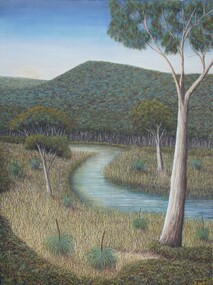
... Using traditional Western painting techniques, Kelly records the underlying spirit of the Peninsula from a Wathaurong perspective. Chinaman’s Creek in Capel Sound (Rosebud West) was an important watercourse that originally ran from Wonga (Arthur’s Seat) down through Tootgarook Swamp into Port Phillip Bay. ...Using traditional Western painting techniques, Kelly records the underlying spirit of the Peninsula from a Wathaurong perspective. Chinaman’s Creek in Capel Sound (Rosebud West) was an important watercourse that originally ran from Wonga (Arthur’s Seat) down through Tootgarook Swamp into Port Phillip Bay. ...Bob Kelly paints landscapes of culturally significant sites along the Mornington Peninsula and depicts these locations as he imagines they originally were before colonisation. Using traditional Western painting techniques, Kelly records the underlying spirit of the Peninsula from a Wathaurong perspective. Chinaman’s Creek in Capel Sound (Rosebud West) was an important watercourse that originally ran from Wonga (Arthur’s Seat) down through Tootgarook Swamp into Port Phillip Bay. It was a great fresh water and food source and home for many Boonwurrung people. Since settlement over 170 years ago, the creek has been drained, blocked, reconstructed and damaged. Kelly depicts a lush green landscape in which the clean creek water winds through the surrounding vegetation of spinifex grasses and gum trees, the background hills are abundant with trees, untouched from man's intervention. Using painstaking detail, Kelly records each blade of grass and ripple on the surface of Chinaman’s Creek. His attention to detail serves to powerfully reimagine this important cultural site, returning it to its former pristine state, and reinvigorating its role as a key place of sustenance for the Indigenous populations of the Peninsula. Chinaman's Creek was a finalist in the 2017 Bayside Acquisitive Art Prize.oil and acrylic on canvaslandscape, creek, trees, chinaman's creek, painting, indigenous, robert kelly, bayside acquisitive art prize, bob kelly, wathaurong, rosebud, arthur's seat, tootgarook swamp, port phillip bay, boonwurrung -
 Federation University Art Collection
Work on paper - Digital Prints, Gilson, Deanne, 'Wadawurrung Axe Heads 1-4' by Deanne Gilson, 2011
... Her work also explores the matriarchal role through her feminist perspectives, looking at the history of marriage and the oppressive function it has played within her family. ...Her work also explores the matriarchal role through her feminist perspectives, looking at the history of marriage and the oppressive function it has played within her family. ...Dr Deanne GILSON (1967- ) Country: Wadawurrung Deanne Gilson is a Federation University alumni, and an award-winning multi-disciplinary artist. Her practice draws its inspiration from ‘Ancestral marks’ and design on cultural objects found in museum archives and family oral histories. Deanne’s practice seeks to interrogate the colonial legacy of settlement and the western hegemonic systems of class, race and representation in historical photographs that were imposed on her Ancestors. Her work also explores the matriarchal role through her feminist perspectives, looking at the history of marriage and the oppressive function it has played within her family. Deanne has completed the following educationala achievements. 2014 – 2015 Masters by Research (Visual Art), Deakin University Geelong 2013 Graduate Diploma in Education Secondary, Federation University 2011 Certificate IV in Aboriginal Contemporary Art & Craft 2010 Cultural Heritage Management Course, Lakes Entrance 1 Week 2007 – 2010 Graduated, Bachelor of Visual Arts with Honours, University of Ballarat 1984 Diploma of Art, School of Mines & Industries TAFE This item is part of the Federation University Art Collection. The Art Collection features over 2000 works and was listed as a 'Ballarat Treasure' in 2007.This work depicts an axehead found on Wadawurrung country and is a responce to workign alongside archeologists untertaking land surveys of her ancestral lands and the visual documentaiton of artefcts.art, artwork, deanne gilson, gilson, wadawurrung, stone axe, aboriginal, alumni -
University of Melbourne, Burnley Campus Archives
Plan, 36 Railway Ave, Armadale, 1991-1997
... (Also see B11.0775.) (7) 33 Railway Ave (sic), Colour photographs pasted on paper. (8) Marli Draper - Site Inventory and Analysis, Concept Plan, Preliminary Plan, Perspective Feature Bed. (Also see B11.0773). (9) Cowan (Creations) - Site Inventory and Analysis, Concept Plan, Preliminary Plan, Assessment, 30.05.1994. (10) McRae (Designs) - Site Inventory and Analysis, Preliminary Main Plan, Concept Plan, Section View to Tussock Grass and Eucalyptus, 30.05.1997 - 01.06.1997. (11) Leah Syme - Site Inventory and Analysis....(Also see B11.0775.) (7) 33 Railway Ave (sic), Colour photographs pasted on paper. (8) Marli Draper - Site Inventory and Analysis, Concept Plan, Preliminary Plan, Perspective Feature Bed. (Also see B11.0773). (9) Cowan (Creations) - Site Inventory and Analysis, Concept Plan, Preliminary Plan, Assessment, 30.05.1994. (10) McRae (Designs) - Site Inventory and Analysis, Preliminary Main Plan, Concept Plan, Section View to Tussock Grass and Eucalyptus, 30.05.1997 - 01.06.1997. (11) Leah Syme - Site Inventory and Analysis. 36 Railway Ave, Armadale Plan ...Sets of plans for a Residential Garden produced by students for an assignment. (1) Tracing paper and paper copies site plan sketch. (2) Janine Bugg - Assessment Preliminary Plan, Concept Plan, Site Inventory and Analysis, Site Elevation A, Section Elevation B dated 26.05.1994. (3) Carmen Skrobonja - Assessment Main Plan & Section Elevation, Concept Plan dated 31.05.1991. (4) G. Mutimer - Preliminary Plan, Section Elevation, May 1994. (5) Melissa King - Assessment, Site Inventory & Analysis, Site Concept Plan, Preliminary Main Plan, Section Elevation, May 1997. (6) Jim Despotellis - Site Inventory & Analysis, Concept Plan, Preliminary landscape Design, 25.04.1994 - 15.05.1995. (Also see B11.0775.) (7) 33 Railway Ave (sic), Colour photographs pasted on paper. (8) Marli Draper - Site Inventory and Analysis, Concept Plan, Preliminary Plan, Perspective Feature Bed. (Also see B11.0773). (9) Cowan (Creations) - Site Inventory and Analysis, Concept Plan, Preliminary Plan, Assessment, 30.05.1994. (10) McRae (Designs) - Site Inventory and Analysis, Preliminary Main Plan, Concept Plan, Section View to Tussock Grass and Eucalyptus, 30.05.1997 - 01.06.1997. (11) Leah Syme - Site Inventory and Analysis.armadale, janine bugg, carmen skrobonja, melissa king, jim despotellis, marli draper, leah syme, g. mutimer, students, assignments -
 Flagstaff Hill Maritime Museum and Village
Book - Reference Book/History, Henry Smith Williams, The Historians History of the World Vol 7 set 1 - Edited by Henry Smith Williams L.L.D, 1908
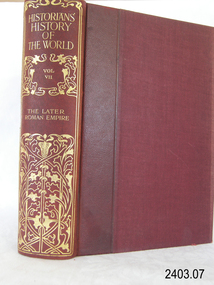
... This volume is notable for its heavy reliance on the works of Edward Gibbon (filtered through Williams' 1908 perspective), as well as Byzantine chroniclers like Procopius....This volume is notable for its heavy reliance on the works of Edward Gibbon (filtered through Williams' 1908 perspective), as well as Byzantine chroniclers like Procopius. ...The 1908 edition of The Historians' History of the World is a monumental work of Edwardian scholarship, representing a specific era of "universal history" where the goal was to synthesise all human knowledge into a single narrative. Volume 7 shifts the narrative from the fall of the Roman Republic and the early Empire (covered in Vol. 5 and 6) into the complex era of the later Roman Empire and the rise of the Early Byzantine Empire.Book is part of a 25 volume set with red cloth bindings and gold filigree design to rib. non-fictionThe 1908 edition of The Historians' History of the World is a monumental work of Edwardian scholarship, representing a specific era of "universal history" where the goal was to synthesise all human knowledge into a single narrative. Volume 7 shifts the narrative from the fall of the Roman Republic and the early Empire (covered in Vol. 5 and 6) into the complex era of the later Roman Empire and the rise of the Early Byzantine Empire.flagstaff hill, warrnambool, shipwrecked-coast, flagstaff-hill, flagstaff-hill-maritime-museum, maritime-museum, shipwreck-coast, flagstaff-hill-maritime-village, the historians history of the world, henry smith williams l.l.d. -
 Federation University Historical Collection
Poster, Fed Pride Poster, 2022
... We know that diversity – having access to and embracing difference in backgrounds, perspectives, knowledge and skills – gives our university a breadth that supports innovation and the highest quality of thinking. ...We know that diversity – having access to and embracing difference in backgrounds, perspectives, knowledge and skills – gives our university a breadth that supports innovation and the highest quality of thinking. ...FedPride 2021-2024 is a comprehensive strategy, aimed at achieving best inclusive practice in every area of university life: from recruitment and enrolment, to our culture, campuses, how we engage with the communities where our campuses are located and importantly through our curriculum and research. We know that diversity – having access to and embracing difference in backgrounds, perspectives, knowledge and skills – gives our university a breadth that supports innovation and the highest quality of thinking. It enriches us as individuals and as a community. FedPride has a particular focus on our staff and students being able to bring their whole selves to university life. When we feel safe, included and celebrated, we contribute freely and with enthusiasm and bring the best of ourselves to work and study. FedPride is an intersectional strategy, in that the rights, inclusion and access of people from diverse cultural backgrounds, people with disability and Aboriginal and Torres Strait Islander Peoples are held as core to every impact area. FedPride 2021–2024 has been developed with consultation across the University. The strategy is led by the FedPride Steering Group and implemented and monitored by the Implementation Group. Reports to measure progress will be provided annually for the Vice-Chancellor’s Senior Team. FedPride is endorsed by the Vice-Chancellor and the Vice-Chancellor’s Senior Team.A3 poster publicising Fed Pride. This poster was displayed at all Federation University posters in 2022.fed pride, equity -
 Flagstaff Hill Maritime Museum and Village
Book - Literary Work, Henry Wardsworth Longfellow, The Poetical Works of Henry Wadsworth Longfellow, (short title on cover is ‘Longfellow’s Poetical Works’), 1877
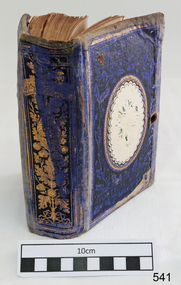
... The books condition is fragile from a handling perspective, but stable in terms of further deterioration. ...The books condition is fragile from a handling perspective, but stable in terms of further deterioration. ...This well-produced but water-damaged book of Longfellows Poetry, was part of the former Warrnambool Mechanics Institute Library and Museum collection. The custody of this collection was assumed by Flagstaff Hill Maritime Village in the 1970s. Supporting provenance indicates the book was retrieved from the sea at Loch Ard Gorge soon after the shipwreck of the same name in June 1878. This book was given to the Warrnambool Museum curator Joseph Archibald by its finder, the Warrnambool Standard editor Henry Davis in October 1883. A letter from Mr Davis describing the poignant circumstances of his discovery is also in the Flagstaff Hill collection. A transcript of this letter is displayed next to the book in the Great Circle Gallery at the Maritime Village (reg. no. 2292). The story behind this book prompted Mr Archibald to write to the sole surviving female passenger from the LOCH ARD, Eva Carmichael, asking if the book was hers. Miss Carmichael replied by handwritten letter in January 1884, advising that the volume of poems did not belong to her: “We had a ‘Longfellow’, but our book had a green cover”. This letter is also in the Flagstaff Hill collection (reg. no. 2290.4).The book is rare as it has survived a shipwreck in relatively good condition. It is an example of personal possessions carried by a shipboard passenger in the 1870s. It holds significance for its connection to the renowned poet, Henry Wardsworth Longfellow. The book is important for its probable association with the wreck of the vessel Loch Ard in 1878. The LOCH ARD shipwreck is of State significance and is listed on the Victorian Heritage Register S417. A volume of poetry by Henry Wadsworth Longfellow. It is bound in blue-purple cloth on thick board, with black lettering and curling-vine design, framed by gold border. In the centre of the front cover is a raised smooth-white ellipse with crimped edges, now worn bare but with traces of an original brightly coloured floral design. This white centre of supple leather is also framed by a decorative gold border. The upper case lettering on the front cover reads ‘Longfellow’s Poetical Works’. The edges of the blue material are faded and worn. The pages are corrugated by water damage but their original gold-edged condition is still evident. The front and back covers are scored with singed holes approximately 1.5cm diameter, situated about the centre edge of each side and in roughly corresponding positions. These holes may be from an original book-latch or fastening. However they have since been damaged by a hot piercing object, which has blackened the holes and extended the damage into the enclosed pages. The spine of the book features a stylised oak tree in gold, rising from bared roots to serrated leaves and acorns. The letters “LON[DON]” at the top of the spine and “W.P.NI[MM]O” at the bottom. The book cover has separated from the majority of stitched pages, along with a number of title pages, which are now loosed from the binding. The books condition is fragile from a handling perspective, but stable in terms of further deterioration. ‘Inscribed “Loch Ard June 1 1878” in pencil within ― believed to be a salvage from the shipwreck’ (Mechanics Institute Library auditor, June 1996).warrnambool, shipwrecked-coast, flagstaff-hill, flagstaff-hill-maritime-museum, longfellow’s poems, loch ard, eva carmichael, warrnambool mechanics institute library, warrnambool museum, joseph archibald, henry davis, william p. nimmo, poetry, heny longfellow, henry wadsworth longfellow, poetical works, 1870s, 1877, longfellow’s poetical works -
 Victorian Aboriginal Corporation for Languages
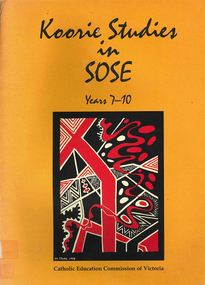
Book, Catholic Education Commission of Victoria, Koorie studies in SOSE : years 7-10, 2001
... Aboriginal Studies Policy Statement of Victorian Aboriginal Education Association Incorporated (VAEAI) National Principles and Guidelines for Aboriginal Studies and Torres Strait Islander Studies, K-12 Principles for the Introduction of Aboriginal Perspectives in the Curriculum of the Catholic School (Catholic Education Commission of Victoria Policy 1.3, 1987) Section 3. ...Aboriginal Studies Policy Statement of Victorian Aboriginal Education Association Incorporated (VAEAI) National Principles and Guidelines for Aboriginal Studies and Torres Strait Islander Studies, K-12 Principles for the Introduction of Aboriginal Perspectives in the Curriculum of the Catholic School (Catholic Education Commission of Victoria Policy 1.3, 1987) Section 3. ...Section 1. Notes on the use of this resource Section 2. Policy support statements. Aboriginal Studies Policy Statement of Victorian Aboriginal Education Association Incorporated (VAEAI) National Principles and Guidelines for Aboriginal Studies and Torres Strait Islander Studies, K-12 Principles for the Introduction of Aboriginal Perspectives in the Curriculum of the Catholic School (Catholic Education Commission of Victoria Policy 1.3, 1987) Section 3. Language, culture and viewpoint: issues of terminology Section 4. Units of work Unit 1. Koorie people of south-east Australia: a contemporary view Unit 2. On sacred ground Unit 3. Koorie life in the pre-contact era Unit 4. Mulla Meea-Baa Gnuenjall: a long time ago, and today Unit 5. The land we share: human stories in the environment Unit 6. Frontier wars Unit 7. Aboriginal mission stations and reserves in Victoria Unit 8. Land, law and indigenous Australians Section 5. Directory of indigenous organisations and affiliated groups/?agencies. National organisations Victorian organisations Catholic Education Commission of Victoria Indigenous Education personnel Organisations within regions of the Archdiocese of Melbourne Organisations within regions of the Ballarat Diocese Organisations within regions of the Sale Diocese Organisations within regions of the Sandhurst Diocese Cultural centres/?camps across Victoria.maps, b&w photographsvaeai, history, curriculum development, koorie studies, catholic education commission of victoria, secondary school education, -
 City of Ballarat
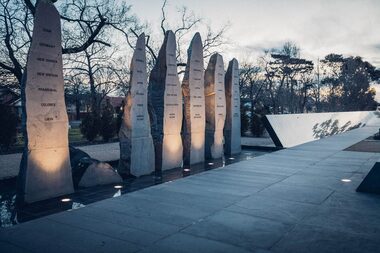
Artwork, other - Public Artwork, Ex-Prisoners of War Memorial by Peter Blizzard, 2004
... The long pathway of the monument is designed to create a visual perspective of the large distances that Australians travelled to the various conflicts. ...The long pathway of the monument is designed to create a visual perspective of the large distances that Australians travelled to the various conflicts. ...This memorial designed by Peter Blizzard is dedicated to more than 36,000 Australian men and women were held captive as prisoners by the enemy during the Boer War, World War 1, World War 2 and the Korean War. This memorial honours and names them, the names are etched into the black granite wall adjacent to the pathway. Water springs from beneath the 'Lest We Forget' stone then flows down the wall into the narrow watercourse in front of the first group of names and into the reflective pool, then continues past the second group of names. Finally it disappears under the pathway, returning to its source under the 'Lest We Forget' stone to start the journey again. Water symbolizes the essential nature of man, sacrifice, suffering, spirituality, healing, cleansing, birth and re-birth. The memorial is created from natural materials and is designed to be in harmony with the Ballarat Botanical Gardens, and to create a sense of timeless, dignity and respect. The long pathway of the monument is designed to create a visual perspective of the large distances that Australians travelled to the various conflicts. The paving is shaped like railway sleepers in recognition of the role that railways and railway journeys were relevant to many prisoners of war. The Memorial was declared the first military memorial of national significance located outside Canberra in 2008. Dedication services are held at the memorial on the Sunday closest to 6th of February, ANZAC day and on Remembrance Day. The memorial is of historical and aesthetic importance to the people of BallaratMonument made from carved bluestone, water feature and flagsInscribed with the names of 36,000 Australian men and women were held captive as prisoners by the enemy during the Boer War, World War 1, World War 2 and the Korean War. The listing is by surname and initials and shown by war.prisoners of war, boer war, world war 1, world war 2, korean war, lest we forget, peter blizzard -
Bialik College
Mixed media (Item) - 2008 Edge Multimedia Festival
... The 6 secrets were: Magic A different perspective Inside out Going green Melting It's in the eyes. ...The 6 secrets were: Magic A different perspective Inside out Going green Melting It's in the eyes. ...Photographs from a multimedia festival held at Bialik College in 2008. As part of the Information Technology program, teacher Brendan Cohen, shared work from students throughout the week. Please contact [email protected] to request access to this record.Edge [indistinct] 2008 CT Week at Bialik College We had an explosive and wonderful ICT week with our Multimedia Festival, The Edge, at Bialik. Our media Teacher, Brendan Cohen, displays student work in Flash, Adobe Premiere assignments, and photography. Each year level is shown the program and each morning teachers view samples of the work during morning briefing. The wondrous thing was a 6in6 contest in photography. 6 photos from each group were submitted, all taken as originals. Special effects could be gathered from internet sources. For example, one student put fire in the lenses of the subjectís dark glasses. The 6 secrets were: Magic A different perspective Inside out Going green Melting It's in the eyes. The second contest was to create a DVD cover for a movie of your life. One boy took 6 closeups of his face and manipulated them beautifully. Then he took another photo and merged all of them. It was extraordinary and the outputs were stunning. The energy all week was high. The second part of our ICT Multimedia Festival was a contest where students could submit an image file. ìCreate a DVD cover of a movie of your life.î Here is the winning entry. I asked Mikey to change his name on the cover in order to protect his identity. This he did. 2000s, 2008, bialik college, technology, media, photography -
 Bendigo Military Museum
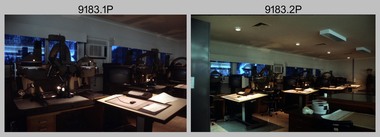
Photograph - AUTOMAP 2 Production and Digital Topographic Data - Army Survey Regiment, Fortuna, Bendigo, c1990
... They are part of the Army Survey Regiment’s Collection. .1) - Photo, colour, c1990, AUTOMAP 2 Wild B8 Aviograph stereoplotter. .2) - Photo, colour, c1990, Four Wild B8 Aviograph stereoplotters, data storage tapes in foreground. .3) - Photo, colour, c1990, AUTOMAP 2 Graphic Edit Workstation. .4) - Photo, colour, c1990, AUTOMAP 2 - cultural digital data. .5) - Photo, colour, c1990, AUTOMAP 2 - drainage and cultural digital data. .6) - Photo, colour, c1990, AUTOMAP 2 - drainage and cultural digital data, enlargement of previous view. .7) - Photo, colour, c1990, AUTOMAP 2 - contour digital data. .8) - Photo, colour, c1990, AUTOMAP 2 - contour digital data with coloured elevation tints. .9) & .10) - Photo, colour, c1990, AUTOMAP 2 - perspective view of 3D digital terrain model. .11) & .12) - Photo, colour, c1990, AUTOMAP 2 – low profile view of 3D digital terrain model. .13) & .14) - Photo, colour, c1990, AUTOMAP 2 – line of sight view sheds from defined point. .15) & .16) - Photo, colour, c1990, AUTOMAP 2 – analytical hill shading samples generated from 3D digital terrain model....They are part of the Army Survey Regiment’s Collection. .1) - Photo, colour, c1990, AUTOMAP 2 Wild B8 Aviograph stereoplotter. .2) - Photo, colour, c1990, Four Wild B8 Aviograph stereoplotters, data storage tapes in foreground. .3) - Photo, colour, c1990, AUTOMAP 2 Graphic Edit Workstation. .4) - Photo, colour, c1990, AUTOMAP 2 - cultural digital data. .5) - Photo, colour, c1990, AUTOMAP 2 - drainage and cultural digital data. .6) - Photo, colour, c1990, AUTOMAP 2 - drainage and cultural digital data, enlargement of previous view. .7) - Photo, colour, c1990, AUTOMAP 2 - contour digital data. .8) - Photo, colour, c1990, AUTOMAP 2 - contour digital data with coloured elevation tints. .9) & .10) - Photo, colour, c1990, AUTOMAP 2 - perspective view of 3D digital terrain model. .11) & .12) - Photo, colour, c1990, AUTOMAP 2 – low profile view of 3D digital terrain model. .13) & .14) - Photo, colour, c1990, AUTOMAP 2 – line of sight view sheds from defined point. .15) & .16) - Photo, colour, c1990, AUTOMAP 2 – analytical hill shading samples generated from 3D digital terrain model. ...This collection of 16 photos of map production on the AUTOMAP 2 computer-based system in Air Survey and Cartographic Squadrons, was most likely taken in 1990. The AUTOMAP 2 system was an upgrade to the AUTOMAP 1 system, comprising Intergraph graphic edit workstation terminals networked to VAX 750/785 main frame computers. Unlike AUTOMAP 1, operators could display digital topographic features on monitors for editing. Successful adaptation of this system meant RASvy was at the forefront of digital mapping/cartographic systems in Australia and overseas. The system comprised Input (Wild B8 Aviograph feature extraction) Raster Scanning (digitising from compilation sheets, Graphic Edit (cartographic completion) and Plot Verification Sub Systems. The system was operational from 1984 to its ‘Newheart’ upgrade in 1993. Throughout its life, the system was progressively refined with productivity gains, achieved from award winning technical development in-house by talented and innovative Army Survey Regiment personnel. Refer to Item 6223.23P for more photos of the AUTOMAP 2 System and examples of topographic digital data. Additional information on topographic digital data and its use in military operations is provided in the video included in Item 6010 titled An Introduction to Topographic Mapping circa 1991.This is a set of 16 photograph of AUTOMAP 2 production at the Army Survey Regiment at Fortuna, Bendigo, c1990. The photographs are on 35mm colour positive film and scanned at 2400 dpi. They are part of the Army Survey Regiment’s Collection. .1) - Photo, colour, c1990, AUTOMAP 2 Wild B8 Aviograph stereoplotter. .2) - Photo, colour, c1990, Four Wild B8 Aviograph stereoplotters, data storage tapes in foreground. .3) - Photo, colour, c1990, AUTOMAP 2 Graphic Edit Workstation. .4) - Photo, colour, c1990, AUTOMAP 2 - cultural digital data. .5) - Photo, colour, c1990, AUTOMAP 2 - drainage and cultural digital data. .6) - Photo, colour, c1990, AUTOMAP 2 - drainage and cultural digital data, enlargement of previous view. .7) - Photo, colour, c1990, AUTOMAP 2 - contour digital data. .8) - Photo, colour, c1990, AUTOMAP 2 - contour digital data with coloured elevation tints. .9) & .10) - Photo, colour, c1990, AUTOMAP 2 - perspective view of 3D digital terrain model. .11) & .12) - Photo, colour, c1990, AUTOMAP 2 – low profile view of 3D digital terrain model. .13) & .14) - Photo, colour, c1990, AUTOMAP 2 – line of sight view sheds from defined point. .15) & .16) - Photo, colour, c1990, AUTOMAP 2 – analytical hill shading samples generated from 3D digital terrain model.There are no annotations.royal australian survey corps, rasvy, army survey regiment, army svy regt, fortuna, automap 2 -
 Tatura Irrigation & Wartime Camps Museum
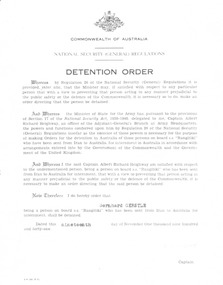
Document and CD - Biography, Mary Henderson Gerstle et al, Bernhard Hermann Gerstle, 2013
... Other material includes Gerstle family history from the perspective of Bernhard's sister & family, who remained in Stuttgart; background on the Gerstle family's Russian origins; and a biography of Oskar Speck, famous kayaker, amongst other things, who was interned along with Bernhard & who became good friends with the family; a brief historical background of the Allied forces/Persia invasion; and extracts of Tatura Camp 3 internee Helga Griffin's book, "Sing Me That Lovely Song Again". ...Other material includes Gerstle family history from the perspective of Bernhard's sister & family, who remained in Stuttgart; background on the Gerstle family's Russian origins; and a biography of Oskar Speck, famous kayaker, amongst other things, who was interned along with Bernhard & who became good friends with the family; a brief historical background of the Allied forces/Persia invasion; and extracts of Tatura Camp 3 internee Helga Griffin's book, "Sing Me That Lovely Song Again". camp 1 tatura loveday world-war-two internment-camps Folder: Bernhard Hermann Gerstle/ Gerstle Family/ Loveday and Tatura Internment Camps 1941-1946/ Sydney 1946-1978/ Compiled by Mary Henderson 2013 CD: BH Gerstle; 1941 - Interned by British/ 1941-1946 - Internee at Loveday SA, Tatura VIC/ Sydney 1946-1978. ...Bernhard Gerstle & his family (parents & siblings) were German nationals working in Tehran, Iran upon the outbreak of World War II. In 1941, after the installation of a pro-British ruler to the Persian throne, all German nationals were targeted as threats to national security. The women and children evacuated to Stuttgart, Germany via Turkey, while the men were handed over to British forces. Bernhard was taken by ship (the SS Rona) to Bombay & then to Australia (on the SS Rangitiki). He was then marched in to Loveday internment camp 10, South Australia. In January 1945 the German & Italian internees at Loveday were transferred to Tatura Camp 1. Bernhard remained there until after the war & his eventual release, on 29th August 1946. Bernhard chose & was granted permission to remain in Australia post-war, as did many civilian internees, after their examination by a Committee of Inquiry which investigated their political leanings & other criteria for their supposed suitability as Australian residents. The biography also recounts his employment post-war, marriage in 1952 & his later naturalisation as an Australian citizen. Other material includes Gerstle family history from the perspective of Bernhard's sister & family, who remained in Stuttgart; background on the Gerstle family's Russian origins; and a biography of Oskar Speck, famous kayaker, amongst other things, who was interned along with Bernhard & who became good friends with the family; a brief historical background of the Allied forces/Persia invasion; and extracts of Tatura Camp 3 internee Helga Griffin's book, "Sing Me That Lovely Song Again". Black plastic A4 display folder. CD soft case with CD. Folder contains printed biographical information regarding Bernhard Hermann Gerstle. CD contains copies of same documents and also copies of photographs of Bernhard & the Gerstle family. Folder: Bernhard Hermann Gerstle/ Gerstle Family/ Loveday and Tatura Internment Camps 1941-1946/ Sydney 1946-1978/ Compiled by Mary Henderson 2013 CD: BH Gerstle; 1941 - Interned by British/ 1941-1946 - Internee at Loveday SA, Tatura VIC/ Sydney 1946-1978. camp 1, tatura, loveday, world-war-two, internment-camps -
 Returned Nurses RSL Sub-branch
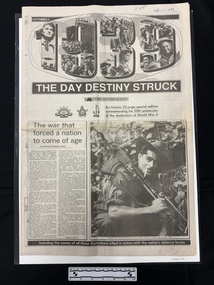
Newspaper - Newspaper liftout, Alan Howe et al, 'The day destiny struck', 'The war that forced a nation to come of age', 'The week before the world went mad', '1939 - 1945 An Australian perspective', 'The Australians killed in action in World War II : while serving with the nation's defence forces' & 'Curtin's turn to America and the reshaping of Australia...', 19890902
... 'The day destiny struck', 'The war that forced a nation to come of age', 'The week before the world went mad', '1939 - 1945 An Australian perspective', 'The Australians killed in action in World War II : while serving with the nation's defence forces' & 'Curtin's turn to America and the reshaping of Australia...'...'The week before the world went mad' (article & photos p2) - Six sections on what was happening that week prior to war declared in Sydney, Melbourne, Adelaide, Brisbane, Perth and Hobart. '1939 - 1945 An Australian perspective' (article & timeline with captioned images and photos p3-8) - by Christine McGee - Article provides timeline of events at a personal/local through to national and international, influences and politics, statistics, and information on various fronts of battle from 03/09/1939 - 02/09/1945. ...'The day destiny struck', 'The war that forced a nation to come of age', 'The week before the world went mad', '1939 - 1945 An Australian perspective', 'The Australians killed in action in World War II : while serving with the nation's defence forces' & 'Curtin's turn to America and the reshaping of Australia...' ...Newspaper lift-out commemorating 50 years since the declaration of WWII. 'The war that forced a nation to come of age' (article p1 and continued on p22) - by Professor Manning Clark - Article provides political background within Australia to armed forces and WWII. 'The week before the world went mad' (article & photos p2) - Six sections on what was happening that week prior to war declared in Sydney, Melbourne, Adelaide, Brisbane, Perth and Hobart. '1939 - 1945 An Australian perspective' (article & timeline with captioned images and photos p3-8) - by Christine McGee - Article provides timeline of events at a personal/local through to national and international, influences and politics, statistics, and information on various fronts of battle from 03/09/1939 - 02/09/1945. Nursing mentioned on p6, there is a photo of a group of women in uniform walking towards the camera and the caption mentions the sinking of the Centaur, loss of 11 of 12 nurses aboard, and how 55 nurses were decorated and 82 mentioned in dispatches. 'The Australians killed in action in World War II : while serving with the nation's defence forces' (roll of honour list p9-21) - Official roll of honour for those who died between 3 September 1929 and 30 June 1947. Includes amendments. People are listed with their units surname followed by initials. 'Curtin's turn to America and the reshaping of Australia...' (article p22) - by Paul Kelly - Article looks at the circumstances and key people involved in the moving of ties away from Britain towards the United States. A large black and white newspaper lift-out with the cover showing the numerals 1939 filled with photos collaged together, several large headlines and subtitles, one article with two columns and a large captioned photo of a man in uniform with a gun on his shoulder, cigarette in his mouth, wearing a hat. Inside is a mix of articles, a timeline with photos and captions, a list of those who died with the unit they served and more photos and articles on the back cover.'WWII' [blue ink top of cover] 'Sept.2.3 1989' [blue ink top of cover]world war two, wwii, ww2, commemorative, timeline, australia -
 Returned Nurses RSL Sub-branch
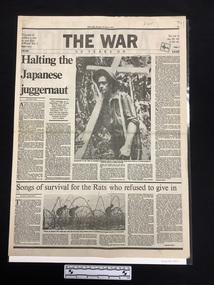
Newspaper - Newspaper liftout, Alan Howe, 'The War : 50 years on', 'Halting the Japanese juggernaut', 'Songs of survival for the Rats who refused to give in', 'A chronicle of conflict', 'Death, glory and faulty strategies in the fight for supremacy at sea', 'The day the horror hit home' & 'The vital build-up in air power', 19890902
... 'The week before the world went mad' (article & photos p2) - Six sections on what was happening that week prior to war declared in Sydney, Melbourne, Adelaide, Brisbane, Perth and Hobart. '1939 - 1945 An Australian perspective' (article & timeline with captioned images and photos p3-8) - by Christine McGee - Article provides timeline of events at a personal/local through to national and international, influences and politics, statistics, and information on various fronts of battle from 03/09/1939 - 02/09/1945. ...'The week before the world went mad' (article & photos p2) - Six sections on what was happening that week prior to war declared in Sydney, Melbourne, Adelaide, Brisbane, Perth and Hobart. '1939 - 1945 An Australian perspective' (article & timeline with captioned images and photos p3-8) - by Christine McGee - Article provides timeline of events at a personal/local through to national and international, influences and politics, statistics, and information on various fronts of battle from 03/09/1939 - 02/09/1945. ...Newspaper lift-out commemorating 50 years since the declaration of WWII. 'The war that forced a nation to come of age' (article p1 and continued on p22) - by Professor Manning Clark - Article provides political background within Australia to armed forces and WWII. 'The week before the world went mad' (article & photos p2) - Six sections on what was happening that week prior to war declared in Sydney, Melbourne, Adelaide, Brisbane, Perth and Hobart. '1939 - 1945 An Australian perspective' (article & timeline with captioned images and photos p3-8) - by Christine McGee - Article provides timeline of events at a personal/local through to national and international, influences and politics, statistics, and information on various fronts of battle from 03/09/1939 - 02/09/1945. Nursing mentioned on p6, there is a photo of a group of women in uniform walking towards the camera and the caption mentions the sinking of the Centaur, loss of 11 of 12 nurses aboard, and how 55 nurses were decorated and 82 mentioned in dispatches. 'The Australians killed in action in World War II : while serving with the nation's defence forces' (roll of honour list p9-21) - Official roll of honour for those who died between 3 September 1929 and 30 June 1947. Includes amendments. People are listed with their units surname followed by initials. 'Curtin's turn to America and the reshaping of Australia...' (article p22) - by Paul Kelly - Article looks at the circumstances and key people involved in the moving of ties away from Britain towards the United States. A large black and white newspaper lift-out with the cover showing the numerals 1939 filled with photos collaged together, several large headlines and subtitles, one article with two columns and a large captioned photo of a man in uniform with a gun on his shoulder, cigarette in his mouth, wearing a hat. Inside is a mix of articles, a timeline with photos and captions, a list of those who died with the unit they served and more photos and articles on the back cover.'WWII' [blue ink top of cover] 'Sept.2.3 1989' [blue ink top of cover]world war two, wwii, ww2, commemorative, timeline, australia -
 Sunshine and District Historical Society Incorporated
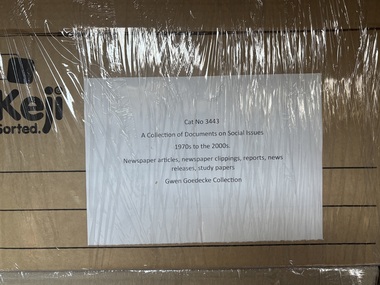
Archive - Gwen Goedecke Collection - A Collection of documents on Social Issues
... FOLDERS: |Employment|Education|Violence|Childcare Services|Divorce/Old Age/Victorian Caregiver's Association|Families/ The Institute of Family Studies (including newsletters, discussion and study papers)|Socialism|Social Welfare|Poverty |PUBLICATIONS: |Royal Commission on Human Relationships, Final Report Vol 5 - Commonwealth of Australia 1977|Possibilities for Social Welfare in Australia - Commonwealth of Australia 1975|Social Welfare Research Centre Newsletter - Number 8 - 1983|Social Justice Consultative Council Department of the Premier and Cabinet, Melbourne 1992|Voluntary Associations and Funding Issues Working Party - Lost Sleep Over Government Funding - 5 Case Studies - Victoria 1979|Government of Victoria - Submission to the Senate Standing Committee on Social Welfare concerning Homeless Youth Melbourne 1981|Victorian Council of Social Service - Passing the Buck - A Victorian Perspective on Federal Responsibility 2 copies - 1982|Social Welfare Research Bulletin No 1 - Australian Government Social Welfare Commission - 1975|FACS - The Victorian Family & Community Service Programme What is it about? ...Gwyneth 'Gwen Goedecke' collection FOLDERS: |Employment|Education|Violence|Childcare Services|Divorce/Old Age/Victorian Caregiver's Association|Families/ The Institute of Family Studies (including newsletters, discussion and study papers)|Socialism|Social Welfare|Poverty |PUBLICATIONS: |Royal Commission on Human Relationships, Final Report Vol 5 - Commonwealth of Australia 1977|Possibilities for Social Welfare in Australia - Commonwealth of Australia 1975|Social Welfare Research Centre Newsletter - Number 8 - 1983|Social Justice Consultative Council Department of the Premier and Cabinet, Melbourne 1992|Voluntary Associations and Funding Issues Working Party - Lost Sleep Over Government Funding - 5 Case Studies - Victoria 1979|Government of Victoria - Submission to the Senate Standing Committee on Social Welfare concerning Homeless Youth Melbourne 1981|Victorian Council of Social Service - Passing the Buck - A Victorian Perspective on Federal Responsibility 2 copies - 1982|Social Welfare Research Bulletin No 1 - Australian Government Social Welfare Commission - 1975|FACS - The Victorian Family & Community Service Programme What is it about? ...Gwyneth 'Gwen Goedecke' collectionFOLDERS: |Employment|Education|Violence|Childcare Services|Divorce/Old Age/Victorian Caregiver's Association|Families/ The Institute of Family Studies (including newsletters, discussion and study papers)|Socialism|Social Welfare|Poverty |PUBLICATIONS: |Royal Commission on Human Relationships, Final Report Vol 5 - Commonwealth of Australia 1977|Possibilities for Social Welfare in Australia - Commonwealth of Australia 1975|Social Welfare Research Centre Newsletter - Number 8 - 1983|Social Justice Consultative Council Department of the Premier and Cabinet, Melbourne 1992|Voluntary Associations and Funding Issues Working Party - Lost Sleep Over Government Funding - 5 Case Studies - Victoria 1979|Government of Victoria - Submission to the Senate Standing Committee on Social Welfare concerning Homeless Youth Melbourne 1981|Victorian Council of Social Service - Passing the Buck - A Victorian Perspective on Federal Responsibility 2 copies - 1982|Social Welfare Research Bulletin No 1 - Australian Government Social Welfare Commission - 1975|FACS - The Victorian Family & Community Service Programme What is it about? - Department of Community Welfare Services, Victoria - 1979| FACS - The Victorian Family & Community Service Programme What is it about? - Department of Community Welfare Services, Victoria (Second Draft) - 1979| Australian Government Social Welfare Commission Annual Report - 1973|Australian Government Commission of Inquiry into Poverty - Study of the Heidelberg Community - 1976|Victorian Emergency Relief Committee findings/report- March 1982|Monday on a Shoestring - a resource guide for low-income people in the West - 1997 -
 Federation University Historical Collection
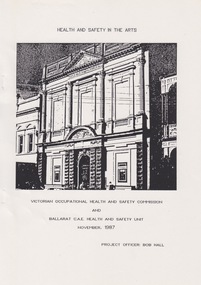
Document - Document - Booklet, VIOSH: VIOSH Commission and Ballarat College of Advanced Education Health and Safety Unit: Health and Safety in the Arts, Bob Hall, 1987
... As a non-artist it is hard to attempt to describe the artists' perspective of their working environment. Within the artistic community there is a great concern for individuality and this is expressed in the artists' work. ...As a non-artist it is hard to attempt to describe the artists' perspective of their working environment. Within the artistic community there is a great concern for individuality and this is expressed in the artists' work. ...Victorian Institute of Occupational Safety and Health (VIOSH) Australia is the Asia-Pacific centre for teaching and research in occupational health and safety (OHS) and is known as one of Australia's leaders on the field. VIOSH has a global reputation for its innovative approach within the field of OHS management. VIOSH had its first intake of students in 1979. At that time the Institution was known as the Ballarat College of Advanced Education. In 1990 it became known as Ballarat University College, then in 1994 as University of Ballarat. It was 2014 that it became Federation University. VIOSH Australia students are safety managers, senior advisors and experienced OHS professionals. They come from all over Australia and industry. Students are taught active research and enquiry; rather than textbook learning and a one-size fits all approach. VIOSH accepts people into the Graduate Diploma of Occupational Hazard Management who have no undergraduate degree - on the basis of extensive work experience and knowledge. The stimulus for this project to investigate health and safety in art teaching and to suggest cost effective control measures, arose from concerns that had been expressed by some members of staff within the Arts Faculty at the Ballarat College of Advanced Education about aspects of health and safety at their workplace. As a non-artist it is hard to attempt to describe the artists' perspective of their working environment. Within the artistic community there is a great concern for individuality and this is expressed in the artists' work. The need for flexibility and spontaneity is a vital and intuitive part of the artistic environment. Consequently codes and standards of practice that would restrict this environment ethic are unlikely to be viewed favourably by artists. Comments made by Bob Hall; Project Officer BCAESixty pages stapled together. Type written with illustrations relevant to safety issues. Front has clear perspex sheetviosh, victorian institute of occupational safety and health, bob hall, project officer, commission, ballarat college of advanced eucation, health and safety in the arts, control measures, codes and standards of practice, chemical environment, protective equipment, management of environment, noise, machines, temperature control -
 Federation University Historical Collection
Photograph - Photograph - Colour, VIOSH: Reducing Back Injuries and Energy Costs of Shearing through the Development of Practical Modifications to Shed Layout, 1995-1997
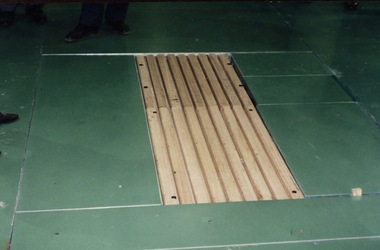
... The study set up a number of focus groups in the Ballarat area, New South Wales and Western Australia to gather different inputs and perspectives on causes of injuries. Groups represented were shearers, doctors, farmers and shearing shed designers. ...The study set up a number of focus groups in the Ballarat area, New South Wales and Western Australia to gather different inputs and perspectives on causes of injuries. Groups represented were shearers, doctors, farmers and shearing shed designers. ...Victorian Institute of Occupational Safety and Health (VIOSH) Australia is the Asia-Pacific centre for teaching and research in occupational health and safety (OHS) and is known as one of Australia's leaders in the field. VIOSH has a global reputation for its innovative approach within the field of OHS management. VIOSH had its first intake of students in 1979. At that time the Institution was known as the Ballarat College of Advanced Education. In 1990 it became known as Ballarat University College, then in 1994 as University of Ballarat. It was 2014 that it became Federation University. VIOSH Australia students are safety managers, senior advisors and experienced OHS professionals. They come from all over Australia and industry. Students are taught active research and enquiry; rather than textbook learning and a one-size fits all approach. VIOSH accepts people into the Graduate Diploma of Occupational Hazard Management who have no undergraduate degree - on the basis of extensive work experience and knowledge. A project titled "Reducing Back Injuries and Energy Costs of Shearing Through the Development of Practical Modifications to Shed Layout" was funded by Worksafe Australia. The budget was $101,170. VIOSH Australia collaborated with the School of Human Movement and Sports Science to look for ways to reduce muscle injuries associated with shearing. The study set up a number of focus groups in the Ballarat area, New South Wales and Western Australia to gather different inputs and perspectives on causes of injuries. Groups represented were shearers, doctors, farmers and shearing shed designers. Shed design was a principal factor with the emphasis on minimising body twisting associated with catching and releasing sheep, removal of floor obstructions along path between pen and release, battens oriented along direction of drag and slope in pens.Colour photographs - postcard and A5 - relating to reducing back injuries and Energy Costs of Shearing.viosh, victorian institute of occupational safety and health, worksafe australia, back injuries, shearing sheds, shearers, school of human movement and sports science, ballarat, new south wales, western australia, doctors, farmers, shed designers -
 Federation University Historical Collection
Photograph - Photograph - Colour, VIOSH: Shearing Shed Demonstrations - Collaboration with School of Human Movement and Sports Science; ways to reduce muscle injuries - 1994-1997
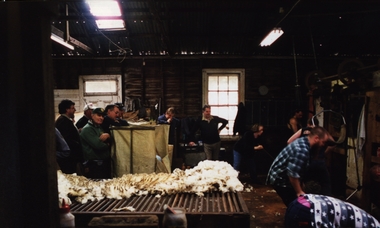
... The study set up a number of focus groups in the Ballarat area, New South Wales and Western Australia to gather different inputs and perspectives on causes of injuries. Groups represented were shearers, doctors, farmers and shearing shed designers. ...The study set up a number of focus groups in the Ballarat area, New South Wales and Western Australia to gather different inputs and perspectives on causes of injuries. Groups represented were shearers, doctors, farmers and shearing shed designers. ....Victorian Institute of Occupational Safety and Health (VIOSH) Australia is the Asia-Pacific centre for teaching and research in occupational health and safety (OHS) and is known as one of Australia's leaders in the field. VIOSH has a global reputation for its innovative approach within the field of OHS management. VIOSH had its first intake of students in 1979. At that time the Institution was known as the Ballarat College of Advanced Education. In 1990 it became known as Ballarat University College, then in 1994 as University of Ballarat. It was 2014 that it became Federation University. VIOSH Australia students are safety managers, senior advisors and experienced OHS professionals. They come from all over Australia and industry. Students are taught active research and enquiry; rather than textbook learning and a one-size fits all approach. VIOSH accepts people into the Graduate Diploma of Occupational Hazard Management who have no undergraduate degree - on the basis of extensive work experience and knowledge. A project titled "Reducing Back Injuries and Energy Costs of Shearing Through the Development of Practical Modifications to Shed Layout" was funded by Worksafe Australia. The budget was $101,170. VIOSH Australia collaborated with the School of Human Movement and Sports Science to look for ways to reduce muscle injuries associated with shearing. The study set up a number of focus groups in the Ballarat area, New South Wales and Western Australia to gather different inputs and perspectives on causes of injuries. Groups represented were shearers, doctors, farmers and shearing shed designers. Shed design was a principal factor with the emphasis on minimising body twisting associated with catching and releasing sheep, removal of floor obstructions along path between pen and release, battens oriented along direction of drag and slope in pens.Thirty-one colour photographs on inside a shearing shedviosh, victorian institute of occupational safety and health, 1995-1997, shearing shed layout, worksafe australia, school of human movement and sports science, shearers, doctors, farmers, muscle injuries, university of ballarat, student activity -
 Eltham District Historical Society Inc
Audio - Audio Recording, Katherine Sheedy, Interview: Russell Yeoman, 25 March 2024
... Russell discussed his arrival in Eltham in the 1960s, working as an engineering and then town planner for the shire, changes in Eltham over time including from a town planning perspective, the unique character of Eltham and challenges this led to, the book Pioneers & Painters, forming the Shire of Eltham Historical Society, the Local History Centre, and what is unique about Eltham....Russell discussed his arrival in Eltham in the 1960s, working as an engineering and then town planner for the shire, changes in Eltham over time including from a town planning perspective, the unique character of Eltham and challenges this led to, the book Pioneers & Painters, forming the Shire of Eltham Historical Society, the Local History Centre, and what is unique about Eltham. ...NILLUMBIK SHIRE COUNCIL ORAL HISTORY PROJECT Interview: Russell Yeoman Date: Monday 25 March 2024 Place of Interview: Russell’s home in Eltham Interviewer: Katherine Sheedy; Way Back When Consulting Historians In 2023 Nillumbik Shire Council agreed to support two Oral History projects associated with local history groups within the shire. One project was training sessions for group members on undertaking oral history recordings, which occurred in November 2023. The other project involved a professional historian recording two selected history group members, which occurred in March 2024. The interviews were undertaken by Katherine Sheedy of Way Back When Consulting Historians. Russell Yeoman, a life member of the Eltham District Historical Society, first came to Eltham in 1964 when he was employed in Engineering and later as a Town Planner with the former Shire of Eltham. Following Council amalgamation and the establishment of the new Shire of Nillumbik (December 1994), Russell carried over to Nillumbik for a brief period. Russell was a founding member of the Shire of Eltham Historical Society in 1967 which following Council amalgamation was renamed the Eltham District Historical Society. Russell is the Society Secretary and has held that volunteer position for more than 55 years. Russell discussed his arrival in Eltham in the 1960s, working as an engineering and then town planner for the shire, changes in Eltham over time including from a town planning perspective, the unique character of Eltham and challenges this led to, the book Pioneers & Painters, forming the Shire of Eltham Historical Society, the Local History Centre, and what is unique about Eltham.audio recording, eltham, eltham district historical society, oral history, russell yeoman -
 Eltham District Historical Society Inc
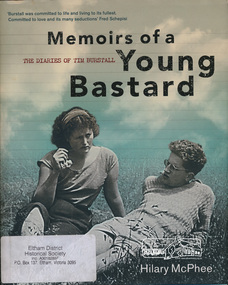
Book, Miegunyah Press, Memoirs of a Young Bastard: the diaries of Tim Burstall compiled by Hilary McPhee, 2012
... He has an eye for the telling detail, an unerring ear for cant and pomposity and, most endearingly, an ability to mock himself-always from the perspective of a bloke of his generation. Source: Publisher...He has an eye for the telling detail, an unerring ear for cant and pomposity and, most endearingly, an ability to mock himself-always from the perspective of a bloke of his generation. Source: Publisher diary motion picture director film director author ISBN 9780522858143 xxiv, 343 p., [18] p. of plates : ill., maps, ports., facsims. ; 27 cm. ...Diaries of Tim Burstall November 1953 to December 1954. Tim Burstall lived in Eltham. Tim Burstall, the celebrated director of Stork, Alvin Purple and numerous other definitive 'ocker' comedies, is credited with shaking the moribund Australian film industry out of its torpor. But long before that, in the early 1950s, he began keeping a diary to record the world of the group of 'arties' and 'intellectuals' he was living among in Eltham, then a rural area outside Melbourne, where cheap land was available for mudbrick houses and studios, and where suburban rigidities could be mercilessly flouted. Burstall was in his mid-twenties, with two young sons and an open marriage with his wife, Betty. Eager to become a writer, to go against the grain, he kept a record almost daily-of the parties and the talk in pubs and studios, about art and politics and sex, of Communist Party branch meetings and film societies, of political rallies and the first Herald Outdoor Art Show. Somehow, while holding down a public relations job in the Antarctic Division and juggling his love affairs and obsession with the beautiful, brainy Fay, he wrote 500 words almost every day. Betty, according to the diaries, kept the show on the road, feeding friends after the pub, milking goats and working in her pottery making bowls and mugs, which Tim sometimes decorated at weekends. These Memoirs of a Young Bastard, as Burstall dubbed himself and them, are among the most evocative Australian diaries of modern times. Burstall can write. He has an eye for the telling detail, an unerring ear for cant and pomposity and, most endearingly, an ability to mock himself-always from the perspective of a bloke of his generation. Source: Publisherxxiv, 343 p., [18] p. of plates : ill., maps, ports., facsims. ; 27 cm.ISBN 9780522858143diary, motion picture director, film director, author -
 Federation University Art Collection
Work on paper - Printmaking - Multiplate Etching, Dean Bowen, 'The Car Park' by Dean Bowen, 1994
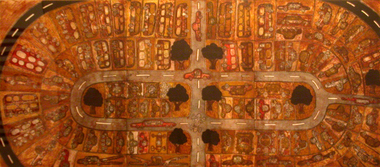
... Not that he presumes anything of the Aboriginal experience or imagery (indeed, that it is unconscious is probably the only reason it works), such qualities are nevertheless present. The aerial perspective, for example, is so like the Aboriginal system of painting song lines and dreaming tracks from above. ...Not that he presumes anything of the Aboriginal experience or imagery (indeed, that it is unconscious is probably the only reason it works), such qualities are nevertheless present. The aerial perspective, for example, is so like the Aboriginal system of painting song lines and dreaming tracks from above. ...Dean BOWEN (1957 -) Born Maryborough, Victoria Dean Bowen's work combines humour and gentle irony with technical proficiency to explore the world around him. 'The car park epitomises qualities found in the best of his post 1990 work. Born out of the daily grind of stop-start commuting by car along Melbourne's Punt Road to and from his former workplace, the feeling of this large work (just over two metres long) is of duality. On the one hand there is the crowded chaos of a relentless number of cars choking the roads; on the other, order is imposed in his aerial view of cars 'parked' around intersecting roads as well as the actual charting of roads and interstitial spaces. Zooming in as though from above, cars are alternately cross-sectioned and flattened in outline. Despite his denial that there is nothing reminiscent of Aboriginal art in this work, to the onlooker there are quite a number of similarities. Not that he presumes anything of the Aboriginal experience or imagery (indeed, that it is unconscious is probably the only reason it works), such qualities are nevertheless present. The aerial perspective, for example, is so like the Aboriginal system of painting song lines and dreaming tracks from above. And as seen in the famous 'X ray' paintings of Arnhem Land, his cars and buildings are cross-sectioned to reveal the objects (usually humans) within. The impression of Aboriginally is further given by his use of earthy browns and by the outlining of shapes (cars, roads, trees).' (Susan McCulloch) This work was selected by the Art Acquisitions Committee (1995) to be placed in the 1870 Founders Hall at Mt Helen Campus. The Federation University Art Collection features over 2000 works and was listed as a 'Ballarat Treasure' in 2007.A multiprint etching depicting a carpark that won the 1994 Fremantle Print Award;Edition 12/20art, artwork, dean bowen, bowen, etching, multi-plate etching, printmaking, printmaking etching, carpark -
 Federation University Historical Collection
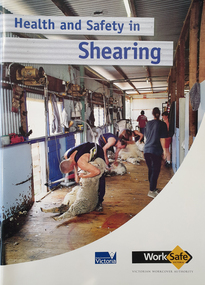
Booklet - Booklet - Safety, Worksafe Victoria, VIOSH: Victorian Workcover Authority; "Health and Safety In Shearing, 2001", 2001
... The study set up a number of focus groups in the Ballarat area, New South Wales and Western Australia to gather different inputs and perspectives on causes of injuries. Groups represented were shearers, doctors, farmers and shearing shed designers. ...The study set up a number of focus groups in the Ballarat area, New South Wales and Western Australia to gather different inputs and perspectives on causes of injuries. Groups represented were shearers, doctors, farmers and shearing shed designers. ...Victorian Institute of Occupational Safety and Health (VIOSH) Australia is the Asia-Pacific centre for teaching and research in occupational health and safety (OHS) and is known as one of Australia's leaders on the field. VIOSH has a global reputation for its innovative approach within the field of OHS management. VIOSH had its first intake of students in 1979. At that time the Institution was known as the Ballarat College of Advanced Education. In 1990 it became known as Ballarat University College, then in 1994 as University of Ballarat. It was 2014 that it became Federation University. VIOSH Australia students are safety managers, senior advisors and experienced OHS professionals. They come from all over Australia and industry. Students are taught active research and enquiry; rather than textbook learning and a one-size fits all approach. VIOSH accepts people into the Graduate Diploma of Occupational Hazard Management who have no undergraduate degree - on the basis of extensive work experience and knowledge. A project titled "Reducing Back Injuries and Energy Costs of Shearing Through the Development of Practical Modifications to Shed Layout" was funded by Worksafe Australia. The budget was $101,170. VIOSH Australia collaborated with the School of Human Movement and Sports Science to look for ways to reduce muscle injuries associated with shearing. The study set up a number of focus groups in the Ballarat area, New South Wales and Western Australia to gather different inputs and perspectives on causes of injuries. Groups represented were shearers, doctors, farmers and shearing shed designers. Shed design was a principal factor with the emphasis on minimising body twisting associated with catching and releasing sheep, removal of floor obstructions along path between pen and release, battens oriented along direction of drag and slope in pens. A full set of photographs relating to the is Item 26841.Soft covered booklet featuring the coloured image of a stand of shearers. viosh, viosh australia, occupational health & safety, shearing, workcover, shearing sheds, bob cameron, minister for workcover, 2001, back injury, item 26841, shearers, farmers, doctors, floor obstructions -
 Eltham District Historical Society Inc
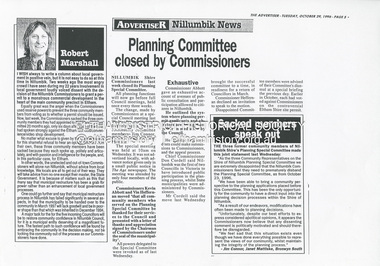
Document - News Clipping, Advertiser, Planning Committee closed by Commissioners, Advertiser, October 29, p5, 1996
... The article includes a joint statement from all three sacked members in which they state they have been able to bring a community perspective to the planning applications placed befopre the committee which has resulted in modifications to planning decisions. ...The article includes a joint statement from all three sacked members in which they state they have been able to bring a community perspective to the planning applications placed befopre the committee which has resulted in modifications to planning decisions. ...Nillumbik Commissioners used 'reserve power's to permit a controversial Shell service station and Hungry Jack's restaurant development at the former Eltham Shire Office site at 895 Main Road. More than 200 people attended the Council meeting in the public gallery and protested at the decision. 32 personal submissions were made to Council's Planning Special Committee meeting whose members vioted 3-2 against the development. The Committee consisted of the three Nillumbik Commissioners and three community members (Jim Connor, Bronwyn South and Janet Mattiske). Chief Commissioner Don Cordell, a former Shell employee excused himself from voting and the three communbity memebrs voted against the submission. The other two commissioners, Vin Heffernan and Kevin Abbott voted against it. They then immediately closed the meeting and opened a Council meeting lasting just seconds to use special reserve powers to overturn the decision. Subsequent to this the Commissioner run Council held a special meeting on Wednesday, October 23, 1996 where Commissioners Kevin Abbott and Vin Heffernan thanked all three community members of the Planning Special Committee and advised that their powers had been revoked. The article includes a joint statement from all three sacked members in which they state they have been able to bring a community perspective to the planning applications placed befopre the committee which has resulted in modifications to planning decisions. The members stated that "unfortunately, despite our best efforts to express considered apolitical opinions, it appears the Commissioners believe that any dissenting comment is politically motivated, and should therefore be disregarded." "We feel sad that this situation exists even though we have done everything possible tio represent the views of our community, whilst maintaining the integrity of the planning process."The demolition of the former Shire of Eltham offices and proposed sale and development driven by the Commissioners for Nillumbik Shire Council brought the community together in substantial protest at the infrigement of ratepayers democratic say in local government and ciommunity assets combined with protests about inappropraite development of Eltham's Gateway. This issue led to the formation of the Eltham Community Action Group which still operates strongly today (2023) on behalf of the community to ensure appropriate development within the community.895 main road, commissioners, dallas price homes, development application, eltham hub, hungry jacks, nillumbik shire council, re-zoning, shell service station, town planning, eltham gateway, eltham gateway action group, eltham shire offices, shillinglaw farm, jim connor collection, dallas howgate, nillumbik planning special committee, jim connor, bronwyn south, janet mattiske, don cordell, vin heffernan, kevin abbott -
 Eltham District Historical Society Inc
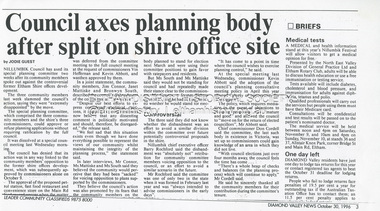
Document - News Clipping, Jodie Guest, Council axes planning body after split on shire office site, Diamond Valley News, October 30, p3, 1996
... The article includes a joint statement from all three sacked members in which they state they have been able to bring a community perspective to the planning applications placed befopre the committee which has resulted in modifications to planning decisions. ...The article includes a joint statement from all three sacked members in which they state they have been able to bring a community perspective to the planning applications placed befopre the committee which has resulted in modifications to planning decisions. ...Nillumbik Commissioners used 'reserve power's to permit a controversial Shell service station and Hungry Jack's restaurant development at the former Eltham Shire Office site at 895 Main Road. More than 200 people attended the Council meeting in the public gallery and protested at the decision. 32 personal submissions were made to Council's Planning Special Committee meeting whose members vioted 3-2 against the development. The Committee consisted of the three Nillumbik Commissioners and three community members (Jim Connor, Bronwyn South and Janet Mattiske). Chief Commissioner Don Cordell, a former Shell employee excused himself from voting and the three communbity memebrs voted against the submission. The other two commissioners, Vin Heffernan and Kevin Abbott voted against it. They then immediately closed the meeting and opened a Council meeting lasting just seconds to use special reserve powers to overturn the decision. Subsequent to this the Commissioner run Council held a special meeting on Wednesday, October 23, 1996 where Commissioners Kevin Abbott and Vin Heffernan thanked all three community members of the Planning Special Committee and advised that their powers had been revoked. The article includes a joint statement from all three sacked members in which they state they have been able to bring a community perspective to the planning applications placed befopre the committee which has resulted in modifications to planning decisions. The members stated that "unfortunately, despite our best efforts to express considered apolitical opinions, it appears the Commissioners believe that any dissenting comment is politically motivated, and should therefore be disregarded." "We feel sad that this situation exists even though we have done everything possible tio represent the views of our community, whilst maintaining the integrity of the planning process."The demolition of the former Shire of Eltham offices and proposed sale and development driven by the Commissioners for Nillumbik Shire Council brought the community together in substantial protest at the infrigement of ratepayers democratic say in local government and ciommunity assets combined with protests about inappropraite development of Eltham's Gateway. This issue led to the formation of the Eltham Community Action Group which still operates strongly today (2023) on behalf of the community to ensure appropriate development within the community.895 main road, commissioners, dallas price homes, development application, eltham hub, hungry jacks, nillumbik shire council, re-zoning, shell service station, town planning, eltham gateway, eltham gateway action group, eltham shire offices, shillinglaw farm, jim connor collection, dallas howgate, nillumbik planning special committee, jim connor, bronwyn south, janet mattiske, don cordell, vin heffernan, kevin abbott -
 Melbourne Tram Museum
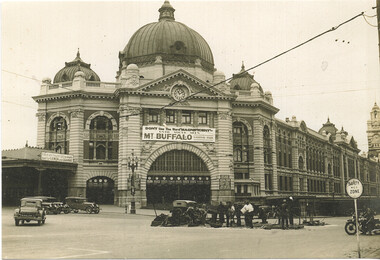
Photograph - Trackwork at Flinders and Swanston Sts, c1930
... It also makes sense from a work perspective, as this would be the least disruptive time to perform maintenance on the H crossing at this location." ...It also makes sense from a work perspective, as this would be the least disruptive time to perform maintenance on the H crossing at this location." ...Black and white photograph showing a group of men working on the tracks at the corner of Flinders and Swanston Sts, c1930. In the background is the Flinders St station building advertising the Mt Bufalo chalet. The railways took over the operation of the chalet in Oct. 1924, see reference. Notes from RJ 1/8/2027 T'he motorcycle on the right is a BSA single 1928-32 – this was the most popular type of motorcycle in Melbourne at this time. The car turning left into St Kilda Rd is a Ford Model A coupe 1928-31. The safety zone sign was introduced by the MCC circa 1927. The ad for the Orange and Lemon fruit juice indicates that the photo was taken between Nov 1926 and 1935 – when the fruit juice bar on the concourse of the station was rebranded as the Health Drink Stall – that was when they broadened the offerings from just freshly squeezed Lemon or Orange juice to coffee and other beverages. Nowadays it would be a Boost Juice. Unfortunately, the detail isn’t good enough for the large American saloon in front of the station – all I can tell is that it is American. If there was more detail of the grille I could do better – it might be a Dodge, though I can’t say for certain – but I’m not sure it would give a narrower date range. Therefore, the date range is 1928-35, but I would plump for 1929 or 1930, primarily due to the lack of newer cars. Thus, the maintenance work is just maintenance work – not involved with the conversion from cable to electric traction. My guess it is a Sunday morning (11:10 am) due to the lack of traffic and trams and people – Sunday morning trams weren’t brought in until 4 Oct 1936 – and any other day there would be hordes of people at this time of day. It also makes sense from a work perspective, as this would be the least disruptive time to perform maintenance on the H crossing at this location." Yields information about track work at the intersection of Flinders and Swanston Sts, c1926?Black and white photograph with a plain back, copy print.tramways, swanston st, flinders st, track work -
 Flagstaff Hill Maritime Museum and Village
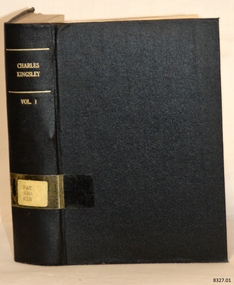
Book - Letters/Journals, Charles Kingsley, Charles Kingsley: His Letters and Memories of His Life Vol 1, 1879
... Primarily, this work is a biography of Charles Kingsley; however, it should be noted that because his wife, Fanny, curated the correspondence and carefully edited the narrative, her voice, perspective and devotion permeate the entire work. ...Primarily, this work is a biography of Charles Kingsley; however, it should be noted that because his wife, Fanny, curated the correspondence and carefully edited the narrative, her voice, perspective and devotion permeate the entire work. ...The focus of this book is not a standard biography written by an outside observer; it is a life story told through letters and personal journals. The volume is seamlessly woven together with editorial commentary by Kingsley’s widow, Frances "Fanny" Grenfell. Because this is Volume 1, it covers the first half of Charles Kingsley's life. It documents his childhood, his time at Cambridge University, and his intense courtship of Fanny. His early career as an Anglican clergyman in the rural parish of Eversley is covered, alongside his rise to national prominence in the late 1840s and 1850s as a social reformer. The text highlights his role in the Christian Socialist movement and his writing under the pen name "Parson Lot" to advocate for the working class. It also explores the writing and reception of his famous early novels, such as Alton Locke and Yeast, which tackled themes of poverty and systemic inequality.Charles Kingsley: His Letters and Memories of His Life Vol 1 Author: Charles Kingsley Edited by his wife ( Frances "Fanny" Grenfell) Publisher: C Kegan Paul & Co Date: 1879 Further Information: Sixth Abridged Editionnon-fictionThe focus of this book is not a standard biography written by an outside observer; it is a life story told through letters and personal journals. The volume is seamlessly woven together with editorial commentary by Kingsley’s widow, Frances "Fanny" Grenfell. Because this is Volume 1, it covers the first half of Charles Kingsley's life. It documents his childhood, his time at Cambridge University, and his intense courtship of Fanny. His early career as an Anglican clergyman in the rural parish of Eversley is covered, alongside his rise to national prominence in the late 1840s and 1850s as a social reformer. The text highlights his role in the Christian Socialist movement and his writing under the pen name "Parson Lot" to advocate for the working class. It also explores the writing and reception of his famous early novels, such as Alton Locke and Yeast, which tackled themes of poverty and systemic inequality.flagstaff hill, warrnambool, shipwrecked coast, flagstaff hill maritime museum, maritime museum, shipwreck coast, flagstaff hill maritime village, great ocean road, book, pattison collection, warrnambool library, warrnambool mechanics’ institute, ralph eric pattison, corangamite regional library service, warrnambool city librarian, mechanics’ institute library, victorian library board, warrnambool books and records, warrnambool children’s library, charles kingsley: his letters and memories of his life vol 1, frances "fanny" grenfell, mrs kingsley -
 Eltham District Historical Society Inc
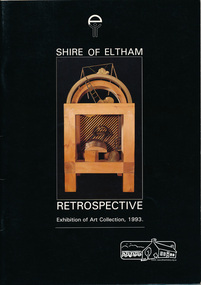
Book, Shire of Eltham Retrospective exhibition of art collection, 1993, 1993
... Contents: List of illustrations, From the Shire President, Historical background, current perspective and catalogue of art collection. ...Contents: List of illustrations, From the Shire President, Historical background, current perspective and catalogue of art collection. This includes over 100 items. ...Contents: List of illustrations, From the Shire President, Historical background, current perspective and catalogue of art collection. This includes over 100 items. Book produced to accompany exhibition held at the Eltham Community and Reception Centre, Main Road Eltham June 26 - July 4 1993. "This exhibition celebrates two aspects of the art collection of the Shire of Eltham. There is the work which shows the love of Eltham and the environment, and work which deals with much broader concerns" Artists include: Helen Aitken-Kuhnen, David Armfield, Brian Armstrong, Alan Baker, Yvonne Ball, Piers Bateman, Julie Begg, Judith Ben-Meir, Yvonne Birch, The Bodford Collection, Janet Boddy, Deidre Boeyen, Ian Bow, David Benchley, Don Brown, Gilbert Buchanan, Paul Cavell, Patty Chandler, Rosalie Cogan, Scott Joseph Cowcher, Augustine Dall'Ava, Greg Daly, Simon Dattner, Peter Day, Domenico de Clario, Robert Delves, Joh Ebeli, Mark Edgoose, Graham Fransella, Ernest Fries, Edward Ginger, Peter Glass, Drew Gregory, Alison Hann, Tony Harkin, Wendy Henderson, Stephen Hughes, Lindsay Imbandarinja, John Irving, Hilary Jackman, Jill Kahans, William Kelly, Margot Knox, Margot Kroyer-Pederson, Anne Kueffer, Bruno Leti, Kevin Lincoln, Paul Margocsy, Alan Martin, Barry Mills, Simon Barley, Jenni Mitchell, David Moore, Barbara Munro, Ewald Namatjira, Norma Neil, Mark Page, Herman Pekel, Shane Pickett, Anthony Pryor, Clifton Pugh, Lynn Quintal, Giuseppe Raneri, Ken Robb, John Serle, Marjorie Shattock, Leslie Sinclair, Matcham Skipper, Myra Skipper, Sonia Skipper, Harris Smith, Eric Stephenson, Adriane Strampp, Marian Sussex, Tony Trembath, George Turcu, John Wakefield, Peter Wallace, Ray Walsh, Michael Wilson, Walter Withers, Vic Wood, Doug Wright, Romana Favier Zorzut, Renier Zusters.Softcover . Includes separate sheet of paper printed on both sides: "catalogue supplement" and "errata"shire of eltham art collection -
 Puffing Billy Railway
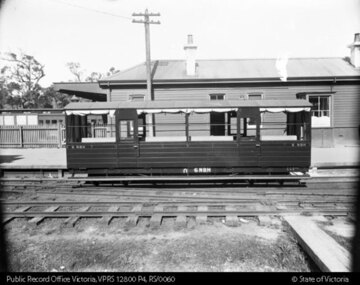
6 NBH - Passenger Carriage - Excursion Car, 9/ 7/1900
... PRO photos NBH CLASS CARRIAGE No.6 CARRIAGE NARROW GAUGE PERSPECTIVE VIEW PRO Photo RS 0059 http://wiki.prov.vic.gov.au/thumbs/12800-P0004-000007-010t.jpg NBH CLASS CARRIAGE No.6 CARRIAGE NARROW GAUGE SIDE VIEW PRO Photo RS 0060 http://wiki.prov.vic.gov.au/thumbs/12800-P0004-000007-020t.jpg NBH CLASS CARRIAGE No.6 NARROW GAUGE PICNIC TRUCK INTERIOR PRO Photo RS 0062 http://wiki.prov.vic.gov.au/thumbs/12800-P0004-000007-040t.jpg...PRO photos NBH CLASS CARRIAGE No.6 CARRIAGE NARROW GAUGE PERSPECTIVE VIEW PRO Photo RS 0059 http://wiki.prov.vic.gov.au/thumbs/12800-P0004-000007-010t.jpg NBH CLASS CARRIAGE No.6 CARRIAGE NARROW GAUGE SIDE VIEW PRO Photo RS 0060 http://wiki.prov.vic.gov.au/thumbs/12800-P0004-000007-020t.jpg NBH CLASS CARRIAGE No.6 NARROW GAUGE PICNIC TRUCK INTERIOR PRO Photo RS 0062 http://wiki.prov.vic.gov.au/thumbs/12800-P0004-000007-040t.jpg Historic - Victorian Railways Narrow Gauge - Passenger Rolling Stock: Excursion Car puffing billy railway nbh narrow gauge victorian railways excursion car 6NBH 6 NBH - Passenger Carriage - Excursion Car made of wrought iron and timber 6 NBH - Passenger Carriage - Excursion Car Victorian Railways - Newport Workshop ...6NBH - Excursion Car NBH SECOND-CLASS EXCURSION CAR. The H was recognising their use for "Holiday" traffic. 15 of these cars were built in 1919 and numbered 1-15. Two more were built in 1981, and numbered 16 & 17. Two extended versions for wheelchair passengers were built in 1981 & 1983. These were numbered 51 & 52 - a separate number series due to the different type of vehicle. Six, numbered 18-23, were built in 1997-98. These had steel frames, padded seats, and a wide "window sill". At first glance they look the same as the previous NBHs. There are other minor construction differences due to the use of steel framing. 18NBH entered traffic 19/4/1997; 19NBH on 5/12/1997; 20NBH on 19/12/1997, the others added in 1998. VR Service History : 9/ 7/1900 NWS Built new as 46 NQR converted & renumbered to 12/ 4/1919 - To NBH 6. VR Service History NQR 46.VA - 9/ 7/1900 NWS Built new - 12/ 4/1919 - To NBH 6.VA - *NBH 6.VA - circa 1919 - Reference Photo SL20 p20 / 6/1928 - Modified AC Malco BO circa 1955 - Condemned - / 5/1967 BEL Photograph #9.2: part view Puffing Billy Service History or Notes 12 Apr 1919 - Nos 1 to 6 NBH (new) delivered to UPPER FERN TREE GULLY after this date. PRO photos NBH CLASS CARRIAGE No.6 CARRIAGE NARROW GAUGE PERSPECTIVE VIEW PRO Photo RS 0059 http://wiki.prov.vic.gov.au/thumbs/12800-P0004-000007-010t.jpg NBH CLASS CARRIAGE No.6 CARRIAGE NARROW GAUGE SIDE VIEW PRO Photo RS 0060 http://wiki.prov.vic.gov.au/thumbs/12800-P0004-000007-020t.jpg NBH CLASS CARRIAGE No.6 NARROW GAUGE PICNIC TRUCK INTERIOR PRO Photo RS 0062 http://wiki.prov.vic.gov.au/thumbs/12800-P0004-000007-040t.jpgHistoric - Victorian Railways Narrow Gauge - Passenger Rolling Stock: Excursion Car6 NBH - Passenger Carriage - Excursion Car made of wrought iron and timber6NBHpuffing billy railway, nbh, narrow gauge, victorian railways, excursion car -
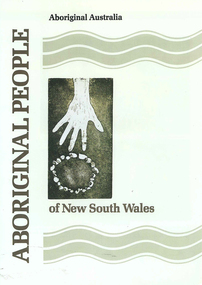 Victorian Aboriginal Corporation for Languages
Book, Aboriginal Community Elders Service et al, Aboriginal elders' voices : stories of the "tide of history" : Victorian Indigenous elders' life stories &? oral histories, 2003
... This aspect provides an historical perspective, encouraging a deeper understanding of the Elders' stories. ...This aspect provides an historical perspective, encouraging a deeper understanding of the Elders' stories. ...This book is a collection of Victorian Indigenous Elders' life stories and oral histories. The Elders share their stories in an attempt to ensure that both sides of Australia's history are finally heard. These stories tell of cultural resistance on missions, of defying assimilation laws, of forever moving around to save children from the welfare. They document the development of both fringe and urban communities and work in the Aboriginal rights movement. They clarify the ways in which these experiences have affected the individual authors along with the indigenous population in general. Also included in the book is a brief history and analysis of the legislation, policies, attitudes and strategies that have affected the lives of the authors and their families since colonisation. This aspect provides an historical perspective, encouraging a deeper understanding of the Elders' stories. Reconciliation can only eventuate with an understanding gained from hearing and including the voices of Indigenous Australians. Contents: The writing team Indigenous elders: keepers of knowledge; custodians of land and culture Aboriginal lands Missions and reserves Growing up running from the welfare /? Aunty Olive Jackson Respecting our Elders /? Aunty Lola James If your mother didn't tell you, then your grandmother did! /? Uncles Les Stewart Don't dwell on trouble /? Aunty Audrey Critch There are my people /? Aunty Gwen Nelson We were all cousins, more or less /? Aunty Iris Lovett-Gardiner Aboriginality is about culture, not colour /? Aunty Dianne Phillips Take up the opportunities we struggled to make /? Aunty Frances Gallagher Home /? Aunty Eileen Alberts We were supposed to forget our Aboriginality /? Aunty Gwen Garoni Not enough heart to say sorry? /? Uncle Brian Kennewell-Taylor Learning from indigenous elders: Keeping the traditions, keeping the culture strong; Since time immemorial; Invasion: the tide ran red; The flood of legislation; Stolen children; Cultural resistance: holding on to children traditions and land; Organised resistance: a movement is born; The 1950s: community resistance to race laws; The price of assimilation; The Aboriginal rights movement; After the flood: self-determination; Turning the tide Bibliography Appendix. Cultural custodianship: developing an indigenous methodology.maps, colour illustrations, b&w photographswiradjuri, victorian indigenous elders, oral histories, yorta yorta, dja dja wurrung, language maps, victorian missions and reserves, lake condah, framlingham, coranderrk, ramahyuck, lake tyers, wahgunyah, cummeragunja, moonahcullah, balranald, ebenezer, maloga, acheron -
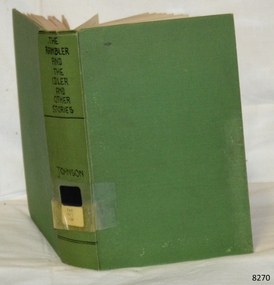 Flagstaff Hill Maritime Museum and Village
Book - Periodical Essays, Dr. Samuel Johnson et al, The Rambler, The Idler, The Adventurer & The Connoisseur, 1876
... They provide a brilliant, firsthand window into Georgian London’s coffee-house culture, its class anxieties, shifting moral perspectives, and the everyday observations of the era's greatest sharp-witted minds. movements, like Mechanics' Institutes. ...They provide a brilliant, firsthand window into Georgian London’s coffee-house culture, its class anxieties, shifting moral perspectives, and the everyday observations of the era's greatest sharp-witted minds. ...This single 1876 volume combines four of the most influential weekly and semi weekly periodical essay series of the mid-18th century. Despite the phrasing of the era, these are not fiction stories or novels. They are periodical essays brief, single-topic pieces written to critique, educate, and entertain 18th-century readers. The collection covers three themes: morality and human nature, with a focus on reflections relating to the disappointments of life, the inevitability of death, managing one's passions, and the search for true happiness, featuring mainly in The Rambler; social satire and manners, with lighthearted and witty take downs of London high society, modern trends, vanity, and standard eccentric characters of the town; and literary criticism, with essays that analyse contemporary poetry and the theatre, along with the evolving English language.Hard cover book,The Rambler & The Idler Author: Dr. Samuel Johnson, Mr. Town, John Hawkesworth Publisher: William P Nimmo, 14 King William St, The Strand, London. W1. Date: 1876 Further Information: The flyleaf reads The Rambler and the Idler. By Samuel Johnson. The Adventurer. By John Hawkesworth. The Connoisseur. By (Mr. Town Pen Name) Green Cloth hardcover with a green spine and lettering in black texter. The spine has a Library label with an inscription.non-fictionThis single 1876 volume combines four of the most influential weekly and semi weekly periodical essay series of the mid-18th century. Despite the phrasing of the era, these are not fiction stories or novels. They are periodical essays brief, single-topic pieces written to critique, educate, and entertain 18th-century readers. The collection covers three themes: morality and human nature, with a focus on reflections relating to the disappointments of life, the inevitability of death, managing one's passions, and the search for true happiness, featuring mainly in The Rambler; social satire and manners, with lighthearted and witty take downs of London high society, modern trends, vanity, and standard eccentric characters of the town; and literary criticism, with essays that analyse contemporary poetry and the theatre, along with the evolving English language.flagstaff hill, warrnambool, shipwrecked coast, flagstaff hill maritime museum, maritime museum, shipwreck coast, flagstaff hill maritime village, great ocean road, book, pattison collection, warrnambool library, warrnambool mechanics’ institute, ralph eric pattison, corangamite regional library service, warrnambool city librarian, mechanics’ institute library, victorian library board, warrnambool books and records, warrnambool children’s library, the rambler and the idler, john hawkesworth., mr. town, samuel johnson
