
Showing 677 items matching " french history"
-
 Unions Ballarat
The man who is France (Don Woodward Collection), Clark, Brigadier Stanley, 1960
... Presidents - France - Biography...History...BTLC Ballarat Trades Hall ballarat trades and labour council de Gaulle, Charles Politics and government - France Military - World War II Presidents - France - Biography History - France Biography Dewey decimal code in white on the spine. ...Biography of Charles de Gaulle. From Brittanica online: "Charles de Gaulle, in full Charles André Joseph Marie de Gaulle, (born November 22, 1890, Lille, France—died November 9, 1970, Colombey-les-deux-Églises), French soldier, writer, statesman, and architect of France’s Fifth Republic." More at this URL: https://www.britannica.com/biography/Charles-de-Gaulle-president-of-FranceHistory and politics - France. Biographical interest - de Gaulle.Book; 202 pages. Cover: blue background; gold lettering; author's name and title.Dewey decimal code in white on the spine. Purple stamp, "Advertiser Newspapers Library, ANL". Dewey decimal code inside cover. Blue ink, indecipherable (initials?). Blue ink, "18/9 APC".btlc, ballarat trades hall, ballarat trades and labour council, de gaulle, charles, politics and government - france, military - world war ii, presidents - france - biography, history - france, biography -
Unions Ballarat
Book - Letters from a miner in Australia
... Autobiographical interest. gold mining gold rush fauchery antoine btlc ballarat trades and labour council correspondence australian history-1950s ballarat photography travel An account of Melbourne and the Victorian goldfields during the 1950s gold rush. The book includes experiences as a miner, as a storekeeper in the goldfields and, briefly, as owner of a French cafe in Melbourne. ...An account of Melbourne and the Victorian goldfields during the 1950s gold rush. The book includes experiences as a miner, as a storekeeper in the goldfields and, briefly, as owner of a French cafe in Melbourne.Hardback with dustjacket; yellow background; black lettering; 105 pages. An account of Melbourne and the Victorian goldfields during the 1950s gold rush. The book includes experiences as a miner, as a storekeeper in the goldfields and, briefly, as owner of a French cafe in Melbourne.gold mining, gold rush, fauchery antoine, btlc, ballarat trades and labour council, correspondence, australian history-1950s, ballarat, photography, travel -
 Merbein District Historical Society
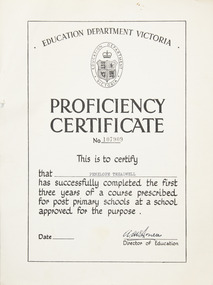
Certificate - Proficiency Certificate
... Front education department Victoria logo in oval with coat of arms and crown Proficiency certificate NO 107909 This is to certify that Penelope Treadwell has successfully completed the first three years of a course prescribed for post primary schools at a school approved for the purpose director of education Back the candidate has completed a course of study in the following subjects with results as indicated English pass, algebra pass, geometry pass, geography pass, general science pass agricultural science, French credit pass , German, Latin, history pass, social studies , musical appreciation, art credit pass, shorthand, home management including cookery, needle work credit pass, crafts, woodwork, metalwork, blacksmithing, mechanical drawing, physical education pass. ...Proficiency certificate Education Penelope Treadwell proficiency certificate Front education department Victoria logo in oval with coat of arms and crown Proficiency certificate NO 107909 This is to certify that Penelope Treadwell has successfully completed the first three years of a course prescribed for post primary schools at a school approved for the purpose director of education Back the candidate has completed a course of study in the following subjects with results as indicated English pass, algebra pass, geometry pass, geography pass, general science pass agricultural science, French credit pass , German, Latin, history pass, social studies , musical appreciation, art credit pass, shorthand, home management including cookery, needle work credit pass, crafts, woodwork, metalwork, blacksmithing, mechanical drawing, physical education pass. ...Proficiency certificate A4 certificate No 107909Front education department Victoria logo in oval with coat of arms and crown Proficiency certificate NO 107909 This is to certify that Penelope Treadwell has successfully completed the first three years of a course prescribed for post primary schools at a school approved for the purpose director of education Back the candidate has completed a course of study in the following subjects with results as indicated English pass, algebra pass, geometry pass, geography pass, general science pass agricultural science, French credit pass , German, Latin, history pass, social studies , musical appreciation, art credit pass, shorthand, home management including cookery, needle work credit pass, crafts, woodwork, metalwork, blacksmithing, mechanical drawing, physical education pass. education, penelope treadwell, proficiency certificate -
Whitehorse Historical Society Inc.
Document, Motor Cycle Climb and mud bash|A Walk down memory lane|An early glimpse of Royton Street, 1994
... History of Royton Street, East Burwood and its neighbourhood from the 1930's to the present. Motor Cycles Hartwell Motor Cycle Club Holland Road Burwood East Eley Road Burwood East Burwood East State School No 454 Royton Street Burwood East Walford Family Orchards Cooinda Court Burwood East Market Gardens East Burwood Methodist Church French Joseph A Black Roy Rescheck Family French Harry W Crow Ernie McLean Leckie Newbigin Family Royton Street Burwood East No 30 Hele Family French Family Carrol Family Tally Ho Post Office Walford Family Hartwell Motor Cycle Club. ...Hartwell Motor Cycle Club.Hartwell Motor Cycle Club. The East Burwood section of its run comprised Holland road, Burwood Road and Ely Road. It was very steep and muddy. Description of a walk along Burwood Road to Middleborough Road in 1929 - 30. History of Royton Street, East Burwood and its neighbourhood from the 1930's to the present.Hartwell Motor Cycle Club. motor cycles, hartwell motor cycle club, holland road, burwood east, eley road, burwood east, burwood east state school no 454, royton street, burwood east, walford family, orchards, cooinda court, burwood east, market gardens, east burwood methodist church, french, joseph a, black, roy, rescheck family, french, harry w, crow, ernie, mclean, leckie, newbigin family, royton street, burwood east, no 30, hele family, french family, carrol family, tally ho post office, walford family -
Whitehorse Historical Society Inc.
Document - Report, Frank Isaac White, 01/06/1997
... A year 10 history assignment by Luther Collage white frank isaac menin road south military cemetry ww1 war memorials Coppola Monica Halliday Park Photocopy of a Luther Collage assignment on visits to war memorials and an investigation of Frank Isaac White, a name on the Mitcham War Memorial. White served in Egypt and France ...Photocopy of a Luther Collage assignment on visits to war memorials and an investigation of Frank Isaac White, a name on the Mitcham War Memorial. White served in Egypt and France,. Maps show the route of his journeys including a period in hospital in England. Information is given about soldiers living conditions and his role as a artillery man. He was killed in Belgium on 20th September 1917 and buried in the Menin Road South Cematery at Ypres. Photographs of the cemetary are included and of his grave.white, frank isaac, menin road south military cemetry, ww1, war memorials, coppola monica, halliday park -
 Whitehorse Historical Society Inc.
Medal, C. 1919
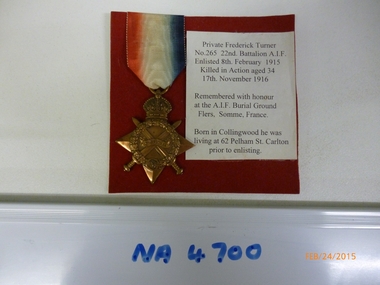
... Branch closed early 2014. military history army numismatics medals - military as above 1914-15 Star Medal with attached ribbon sitting on a red felt square with information as follows:|'Private Frederick Turner; No. 265 22nd Battalion AIF Enlisted 8th February 1915; Killed in Action aged 34; 17th November 1916.|'Remembered with Honour at the A.I.F. Burial Ground, Flers, Somme, France ...W.W.I. Star Medal awarded to Private Frederick Turner.|From the Returned Services League, Mitcham Sub - Branch located at 26 McDowall Street Mitcham, cnr Harrison Street. Branch closed early 2014.1914-15 Star Medal with attached ribbon sitting on a red felt square with information as follows:|'Private Frederick Turner; No. 265 22nd Battalion AIF Enlisted 8th February 1915; Killed in Action aged 34; 17th November 1916.|'Remembered with Honour at the A.I.F. Burial Ground, Flers, Somme, France.|'Born in Collingwood, he was living at 62 Pelham Street, Carlton prior to enlisting..as abovemilitary history, army, numismatics, medals - military -
 Whitehorse Historical Society Inc.
Memorabilia - Army Tankard
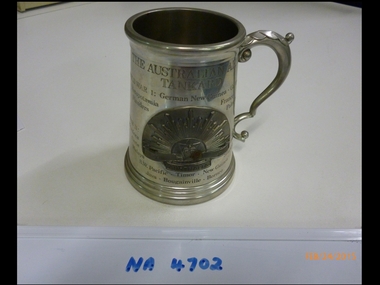
... From the Returned Services League, Mitcham Sub-Branch, 26 McDowall Street, Mitcham, cnr Harrison Street when it closed early 2014. military history army metalcraft pewterware The Australian Army Tankard, World War I, World War I, Mesopotamia, Flanders, German New Guinea, Gallipoli, France, Palestine, World War II, North Africa, Crete, Malaya, S.W. ...Tankard to commemorate conflicts in which the Australian Army has been involved since and including World War I. From the Returned Services League, Mitcham Sub-Branch, 26 McDowall Street, Mitcham, cnr Harrison Street when it closed early 2014.Australian Army Tankard with Australian rising sun badge on front. Tankard is made of pewter with a glass base. On the tankard all the conflicts that the Australian fought in are commemorated from World War I to Vietnam.The Australian Army Tankard, World War I, World War I, Mesopotamia, Flanders, German New Guinea, Gallipoli, France, Palestine, World War II, North Africa, Crete, Malaya, S.W. Pacific, Timor, New Guinea, Java, Bougainville, Borneo, Greece, Syria, Singapore, South Africa, Korea, Malaya, Vietnam.military history, army, metalcraft, pewterware -
 Whitehorse Historical Society Inc.
Article - School Project, Memories of an Australian Soldier - Charles Samuel Hall, 1/06/1997 12:00:00 AM
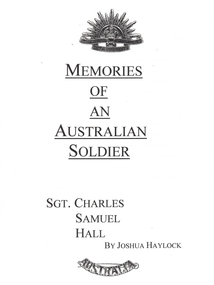
... history project by Joshua Haylock, describing several war memorials and researching the story of Sergeant Charles Samuel Hall whose name appears on the Mitcham War Memorial. He served at Gallipoli and on the Western Front but contracted tuberculosis and died at the Australian Military Hospital, Harefield Park in Middlesex. The report includes information about tuberculosis and relates the disease to the conditions in Gallipoli and in France...history project by Joshua Haylock, describing several war memorials and researching the story of Sergeant Charles Samuel Hall whose name appears on the Mitcham War Memorial. He served at Gallipoli and on the Western Front but contracted tuberculosis and died at the Australian Military Hospital, Harefield Park in Middlesex. The report includes information about tuberculosis and relates the disease to the conditions in Gallipoli and in France ...Photocopy of Luther College Year 10 history project by Joshua Haylock, describing several war memorials and researching the story of Sergeant Charles Samuel Hall whose name appears on the Mitcham War Memorial. He served at Gallipoli and on the Western Front but contracted tuberculosis and died at the Australian Military Hospital, Harefield Park in Middlesex. The report includes information about tuberculosis and relates the disease to the conditions in Gallipoli and in France. A report on the Battle of Pozieres is included. 70p. Maps. Photographs.hall, charles samuel, world war 1914-1918. battle of poziers, war memorials -
 Clayton RSL Sub Branch
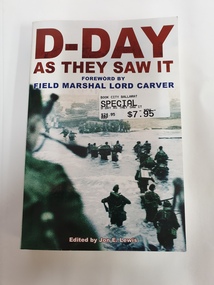
soft cover non-fiction book, D-Day As They Saw It, 1994
... Published to celebrate the 60th anniversary of the Normandy landings, highlights of this unique collection include the break-out from Omaha beach as told by the GI who led it, a French housewife's story of what it was like to wake up to the invasion, German soldiers' accounts of finding themselves facing the biggest seaborne invasion in history, a view from the command post by a member of Eisenhower's staff, combat reports, diaries and letters of British veterans of all forces and services, and accounts of the follow-up battle for Normandy, one of the bloodiest struggles of the war...Published to celebrate the 60th anniversary of the Normandy landings, highlights of this unique collection include the break-out from Omaha beach as told by the GI who led it, a French housewife's story of what it was like to wake up to the invasion, German soldiers' accounts of finding themselves facing the biggest seaborne invasion in history, a view from the command post by a member of Eisenhower's staff, combat reports, diaries and letters of British veterans of all forces and services, and accounts of the follow-up battle for Normandy, one of the bloodiest struggles of the war Foreword by Field Marshall Lord Carver soft cover book D-Day As They Saw It. soft cover non-fiction book ...The extraordinary and compelling story of June 6, 1944 and the battle for Normandy is told here through first-hand testimonies from civilians and soldiers on both sides. D-Day: As They Saw It features classic accounts by soldiers such as Rommel and Bradley, together with frontline reports by some of the world's finest authors and war correspondents, including Ernest Hemingway and Alan Melville. Published to celebrate the 60th anniversary of the Normandy landings, highlights of this unique collection include the break-out from Omaha beach as told by the GI who led it, a French housewife's story of what it was like to wake up to the invasion, German soldiers' accounts of finding themselves facing the biggest seaborne invasion in history, a view from the command post by a member of Eisenhower's staff, combat reports, diaries and letters of British veterans of all forces and services, and accounts of the follow-up battle for Normandy, one of the bloodiest struggles of the warForeword by Field Marshall Lord Carversoft cover book -
 Clayton RSL Sub Branch
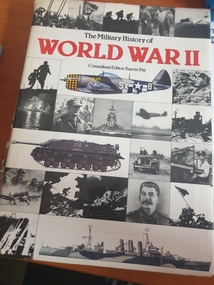
hard cover non-fiction book, The Military History of World war II, Temple Press Aerospace
... Prelude to conflict -- Blitz in the West -- Britain alone -- Italy falters -- Hitler strikes South -- Enter Rommel -- Barbarossa -- The War against Japan -- The onslaught continues -- From Moscow to the Crimea -- Turning point in the desert -- Stalingrad to Kursk -- Victory in the desert -- The Convoy battles -- Hitting back against the Japanese -- The Italian armistice -- To the Gustav Line -- Approaches to the Philippines -- War over the Reich -- The invasion of France -- Destruction of the Army Group Centre -- The Seine to Arnhem -- The Empire's last throw -- Victory in Italy -- The end in Europe -- Victory over Japan Inscription on the first page "To Dad Happy Birthday, with love Jenny xxx 1987" Glued into the same front page is an article cut from the AFR Dec 22-27 2011. hard cover non-fiction book maps and diagrams The Military History of World war II hard cover non-fiction book ...Prelude to conflict -- Blitz in the West -- Britain alone -- Italy falters -- Hitler strikes South -- Enter Rommel -- Barbarossa -- The War against Japan -- The onslaught continues -- From Moscow to the Crimea -- Turning point in the desert -- Stalingrad to Kursk -- Victory in the desert -- The Convoy battles -- Hitting back against the Japanese -- The Italian armistice -- To the Gustav Line -- Approaches to the Philippines -- War over the Reich -- The invasion of France -- Destruction of the Army Group Centre -- The Seine to Arnhem -- The Empire's last throw -- Victory in Italy -- The end in Europe -- Victory over Japanhard cover non-fiction book maps and diagramsInscription on the first page "To Dad Happy Birthday, with love Jenny xxx 1987" Glued into the same front page is an article cut from the AFR Dec 22-27 2011. -
 Lilydale RSL Sub Branch
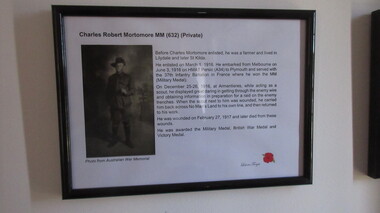
Photograph, Charles Robert Mortomore MM (632) (Private)
... France where he won the MM (Military Medal). On December 25-26, 1916 at Armentieres, while acting as a scout, he displayed great daring in getting through the enemy wire and obtaining information in preparation for a raid on the enemy trenches. When the scout next to him was wounded, he carried him back across NO Mans Land to his own line, and then returned to his work. He was wounded on February 27,1917 and later died from these wounds. He Was awarded the Military Medal, British War Medal and Victory Medal. Framed photocopy of photograph and precis of military service history ...Before Charles Mortomore enlisted he was a farmer and lived in Lilydale and later St Kilda. He enlisted on March 1, 1916. He embarked from Melbourne on June 3, 1916 on HMAT Persic (A34) to Plymouth and served with the 37th Infantry Battalion in France where he won the MM (Military Medal). On December 25-26, 1916 at Armentieres, while acting as a scout, he displayed great daring in getting through the enemy wire and obtaining information in preparation for a raid on the enemy trenches. When the scout next to him was wounded, he carried him back across NO Mans Land to his own line, and then returned to his work. He was wounded on February 27,1917 and later died from these wounds. He Was awarded the Military Medal, British War Medal and Victory Medal.Framed photocopy of photograph and precis of military service history of Charles Robert Mortomore MM (632) (Private) -
 Lilydale RSL Sub Branch
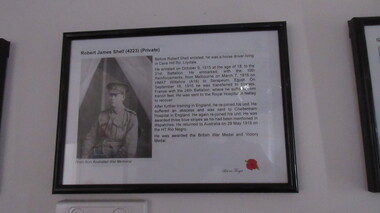
Photograph, Robert James Shell (4223) (Private)
... France with the 24th Battalion, where he suffered from trench feet. He was sent to the Royal Hospital in Netley to recover. After further training in England, he re-joined his unit. He suffered an abscess and was sent to Cheltenham Hospital in England. He again re-joined his unit. He was awarded three blue stripes as he had been mentioned in dispatches. He returned to Australia o 29th. May 1919 on HT Rio Negro. He was awarded the British War Medal and Victory Medal. (see context) Framed photocopy of photograph and precis of service history ...Before James Shell was enlisted he was a horse driver living in Cave Hill Rd, Lilydale. He enlisted on October 9, 1915 at the age of 18, to the 21st Battalion. He embarked with with the10th Reinforcements from Melbourne on March 7,1916 on HMAT Wiltshire (A18) to Serapeum, Egypt. On September 16, 1916 he was transferred to Etaples, France with the 24th Battalion, where he suffered from trench feet. He was sent to the Royal Hospital in Netley to recover. After further training in England, he re-joined his unit. He suffered an abscess and was sent to Cheltenham Hospital in England. He again re-joined his unit. He was awarded three blue stripes as he had been mentioned in dispatches. He returned to Australia o 29th. May 1919 on HT Rio Negro. He was awarded the British War Medal and Victory Medal. Framed photocopy of photograph and precis of service history of Robert James Shell.(see context) -
 Surrey Hills Historical Society Collection
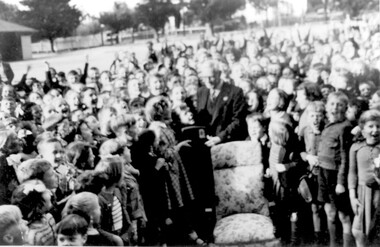
Photograph - Retirement of Mr John Clough as Head Teacher of Surrey Hills Primary School, 1948
... history in the education department. He was born in Eaglehawk in 1889; married Lily Carpenter in 1915 and died in Camberwell in 1952. He served in France...history in the education department. He was born in Eaglehawk in 1889; married Lily Carpenter in 1915 and died in Camberwell in 1952. He served in France ...John Spencer Clough was the Head Teacher at Surrey Hills during the Depression and the Second World War years. He had a long history in the education department. He was born in Eaglehawk in 1889; married Lily Carpenter in 1915 and died in Camberwell in 1952. He served in France during the First World War. He enlisted in 1915 (SERN 5671) aged 26; occupation school teacher. Electoral rolls place him at the following places as a school teacher: 1912 - Sea View, Warragul 1913 - Leongatha 1914, 1915, 1916 - Carpendeit 1919 - Portland 1922 - Scarsdale 1925, 1926 - Werribee 1928 - Echuca 1931 - Ballarat 1935 - living Wattle Valley Road, Camberwell. At Surrey Hills he was succeeded by Mr Lewis Wheeler. The girl presenting Mr Clough with his retirement gift was Margaret Haines who made the presentation on behalf of the students. A B&W photo of an elderly gentleman surrounded by children. He is wearing a suit and tie and a girl is presenting him with what looks to be a radio. There is a chair with floral covering central to the photo and the gentleman is standing behind it. The background is consistent with a school playground.Number in pencil on the rear - SH1150surrey hills state school, surrey hills primary school, margaret haines, margaret dowsett, john clough, john spencer clough, education, schools -
 Surrey Hills Historical Society Collection
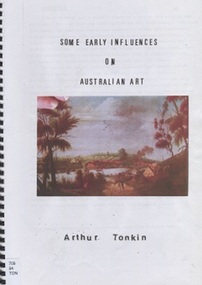
Book, Some early influences on Australian Art
... A history compiled by SHHS member, Arthur Tonkin. artists (Mr) Theodore Brooke Hansen (Mr) Thomas Watling J A horrocks (Mr) S T Gill (Mr) Conrad Martens (Mr) Sydney Parkinson (Mr) John Lewin (Mr) Augustus Earle (Mr) Wilbraham frederick evelyn Liardet buxtons gallery (Mr) Walter withers (Mr) Giroloma ballatti Nerli (Mr) Joseph Lycett (Mr) John Glover (Mr) Thomas Bock (Mr) Thomas wainwright (Mr) george french Angus (Mr) William Blandowski (Mr) Gerard Kreft (Mr) Eugene von guerard (Mr) Ludwig Becker (Mr) William Strutt (Mr) Thomas Clark (Mr) Robert Dowling (Mr) Tom Roberts (Mr) Fred McCubbin (Mr) Louis Abrahams (Mr) Charles Condor (Mr) David Davies (Mr) Herbert Daly R E Falls (Mr) Douglas Richardson Although there was painting from the very early years of Australian settlement, for some time the artists experienced trouble with reproducing Australian conditions. ...Although there was painting from the very early years of Australian settlement, for some time the artists experienced trouble with reproducing Australian conditions. It has taken an input of many artists from many places to form what has become "Australian Painting". A history compiled by SHHS member, Arthur Tonkin.Although there was painting from the very early years of Australian settlement, for some time the artists experienced trouble with reproducing Australian conditions. It has taken an input of many artists from many places to form what has become "Australian Painting". A history compiled by SHHS member, Arthur Tonkin.artists, (mr) theodore brooke hansen, (mr) thomas watling, j a horrocks, (mr) s t gill, (mr) conrad martens, (mr) sydney parkinson, (mr) john lewin, (mr) augustus earle, (mr) wilbraham frederick evelyn liardet, buxtons gallery, (mr) walter withers, (mr) giroloma ballatti nerli, (mr) joseph lycett, (mr) john glover, (mr) thomas bock, (mr) thomas wainwright, (mr) george french angus, (mr) william blandowski, (mr) gerard kreft, (mr) eugene von guerard, (mr) ludwig becker, (mr) william strutt, (mr) thomas clark, (mr) robert dowling, (mr) tom roberts, (mr) fred mccubbin, (mr) louis abrahams, (mr) charles condor, (mr) david davies, (mr) herbert daly, r e falls, (mr) douglas richardson -
 Mont De Lancey
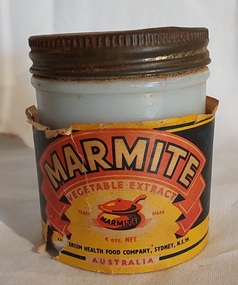
Container - Marmite Jar, Sanitarium Health Food Company
... Marmite's history begins with the discovery that brewer's yeast could be concentrated, bottled, and eaten, by German scientist Justus von Liebig in the late 19th century. The Marmite Food Extract Company was formed in 1902 in England, and the spread was named after a French cooking pot, "marmite". ...Marmite's history begins with the discovery that brewer's yeast could be concentrated, bottled, and eaten, by German scientist Justus von Liebig in the late 19th century. The Marmite Food Extract Company was formed in 1902 in England, and the spread was named after a French cooking pot, "marmite". ...Marmite's history begins with the discovery that brewer's yeast could be concentrated, bottled, and eaten, by German scientist Justus von Liebig in the late 19th century. The Marmite Food Extract Company was formed in 1902 in England, and the spread was named after a French cooking pot, "marmite". Sanitarium later obtained rights to distribute Marmite in New Zealand and Australia in 1908, eventually manufacturing a modified version under license. Today, Marmite remains a popular, albeit divisive, food spread, with a "love it or hate it" reputation. A small white glass Marmite jar with a rusted screw top metal lid. It has a loose blue, yellow and red paper label around the jar with Marmite vegetable Extract printed in yellow on a red back ground banner. There is a small red outline illustration of a lidded pot below. Instructions for use is printed on the back of the label.'Marmite Vegetable Extract Trade Mark 4oz net. Sanitarium Health Food Company, Sydney, NSW.'containers, food containers, marmite, foodstuffs, spreads -
 Mont De Lancey
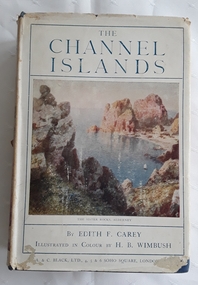
Book, Edith F. Carey et al, The Channel Islands, 1924
... Travel books Books Channle Islands History An up-to-date account of The Channel Islands to sketch out the history of Jersey, Guernsey, Alderney and Sark, pointing out a few of the many legends and traditions associated with them, the storm and stress through which they have battled, some of the remnants of feudalism which they have managed to preserve, and certain conspicuous men and women who once lived in them. Mr Wimbush has painted them as they are - these delectable fragments of France ...An up-to-date account of The Channel Islands to sketch out the history of Jersey, Guernsey, Alderney and Sark, pointing out a few of the many legends and traditions associated with them, the storm and stress through which they have battled, some of the remnants of feudalism which they have managed to preserve, and certain conspicuous men and women who once lived in them. Mr Wimbush has painted them as they are - these delectable fragments of France.A blue self patterned hardcover non fiction book with the title printed in gold lettering: Channel Islands Edith. Carey (author), Henry Wimbush (illustrator) and the publisher A&C Black at the bottom.It has a damaged white paper dustjacket with the same information printed in blue lettering as well as a coloured illustration of The Sister Rocks, Alderney in a blue lined frame. The back of the jacket has a list of Books and Postcards on the Channel Islands with details and prices. There is an inscription on the right hand endpapers written in faded black ink. Opposite the tile page is a frontispiece coloured illustration of St. Peter-Port, Guernsey, from the Pool. There are several coloured illustrations throughout the book.p.226non-fictionAn up-to-date account of The Channel Islands to sketch out the history of Jersey, Guernsey, Alderney and Sark, pointing out a few of the many legends and traditions associated with them, the storm and stress through which they have battled, some of the remnants of feudalism which they have managed to preserve, and certain conspicuous men and women who once lived in them. Mr Wimbush has painted them as they are - these delectable fragments of France.travel books, books, channle islands, history -
 Mont De Lancey
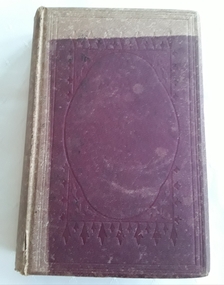
Book, Ferdinand Brock Tupper, Esq, The History of Guernsey and its Bailiwick; with occasional Notices of Jersey, 1976
... History of Guernsey and its Bailiwick; With Occasional Notices of Jersey. The Bailiwick of Guernsey is comprised of the Islands of Guernsey, Alderney, Sark and Herm. Situated 10 to 30 miles off the north-west coast of France ...This book is The History of Guernsey and its Bailiwick; With Occasional Notices of Jersey. The Bailiwick of Guernsey is comprised of the Islands of Guernsey, Alderney, Sark and Herm. Situated 10 to 30 miles off the north-west coast of France, the Channel Islands are not part of the United Kingdom. They are dependent territories of the British Crown, as successor to the Dukes of Normandy.A faded, damaged burgundy colour hardcover book with an embossed self pattern on the cover. It's title: The History of Guernsey is printed in gold lettering on the spine with the author's surname Tupper, Second Edition, London and the publisher Simpkin, Marshall at the bottom. Protecting each black and white illustration is a tissue paper page. Pp. 596. At the back there is an Appendix and Index.non-fictionThis book is The History of Guernsey and its Bailiwick; With Occasional Notices of Jersey. The Bailiwick of Guernsey is comprised of the Islands of Guernsey, Alderney, Sark and Herm. Situated 10 to 30 miles off the north-west coast of France, the Channel Islands are not part of the United Kingdom. They are dependent territories of the British Crown, as successor to the Dukes of Normandy.history, history of guernsey, ancient history -
 Kilmore Historical Society
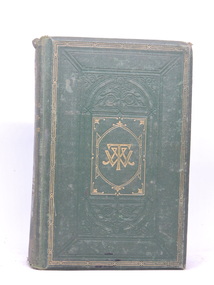
Burlesques, 1869
... Rebecca and Rowena. The History of the next French Revolution. Cox's Diary. Short stories by W.M. ...Rebecca and Rowena. The History of the next French Revolution. Cox's Diary. Short stories by W.M. ...Novels by eminent hands. Jeam's Diary. Adventures of Major Gahagan. A Legend of the Rhine. Rebecca and Rowena. The History of the next French Revolution. Cox's Diary. Short stories by W.M. Thackaray.Green cloth-covered hardcover book with gold decoration to front, spine and rear. Faded and marked spine, wear to cover edges and top & bottom of spine. Moderate foxing to pages. Rear cover detaching. 448 pp. Fair condition.P.1 '341', crossed out. Kilmore Mechanics Institute stamp. Title page '29'.adult fiction, kilmore mechanics institute library. -
 University of Melbourne, Burnley Campus Archives
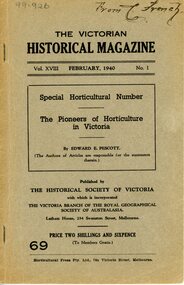
Article, E. E. Pescott, The Pioneers of Horticulture in Victoria, 1940
... Special Horticultural Number of "The Pioneers of Horticulture in Victoria" pioneers horticulture victoria victorian historical magazine e e pescott c french camellias t c cole history of horticulture in australia Copy 1:To my old pal Charle French with the author's best wishes Ed. ...Special Horticultural Number of "The Pioneers of Horticulture in Victoria"2 copies devoted to "The Pioneers of Horticulture in Victoria" by Edward E. Pescott, in The Victorian Historical Magazine, Vol. XVIII, No. 1, Feb. 1940. 1 copy from C. French , first Victorian Government Entomologist has an inscription inside from C. French. Taped inside the cover is a page from, "The Australian Garden Lover," handwritten "Jan 1 1958." The article is entitled, "Camellias," and describes the work of T. C. Cole and his sons in propagating camellias, anbd his role in the foundation of Burnley Gardens. The other copy includes a copy of the Royal Horticultural Society of Victoria News Letter No. 65, May 1963 with an inscription about the Speaker's (Jack Cato) great grandfather, Copy 1:To my old pal Charle French with the author's best wishes Ed. E. Pescott 19.4.40. Copy 2: Mr Cato's gr-grandfather introduced apples to Tas. from the Chilterns and from S Africa en route.pioneers, horticulture, victoria, victorian historical magazine, e e pescott, c french, camellias, t c cole, history of horticulture in australia -
University of Melbourne, Burnley Campus Archives
Document - Notes, Thomas.H. Kneen, Historical Notes, 1990
... history...c french...Kneen on early history of Burnley, mainly from C. French's letters. Notes taken from earlier notes written by E. ...thomas h. kneen charles french t h kneen notes history victorian horticultural society the horticultural society of victoria history c french Handwritten notes by T.H. ...Handwritten notes by T.H. Kneen on early history of Burnley, mainly from C. French's letters. Notes taken from earlier notes written by E. E. Pescott (Principal) for Mr Jessep (Principal).thomas h. kneen, charles french, t h kneen, notes, history victorian horticultural society, the horticultural society of victoria, history, c french -
 University of Melbourne, Burnley Campus Archives
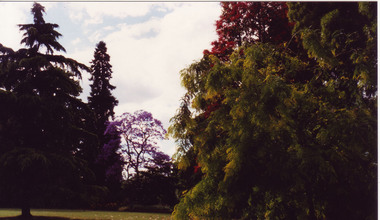
Photograph - Colour print, Peter Esdale, Some of the Oldest Trees at Burnley, 1991
... French (see archives). Various statements about the date of planting have been made, based on oral history." ...French (see archives). Various statements about the date of planting have been made, based on oral history." ...Note by T.H. Kneen 18 March 1992, "The Californian Redwood left of the Jacaranda was planted in 1857 according to correspondence received from Charles French (see archives). Various statements about the date of planting have been made, based on oral history." It is now known that the tree was actually planted a bit later, 1861.Colour photograph taken by P. Esdale for consideration for inclusion in, "Green Grows Our Garden," A.P. Winzenried. View of large old trees taken from the Administration Building looking towards the Shady Garden. Jacaranda in flower. Reverse of photograph showing sketch in pen.On reverse, "Some of the oldest trees at Burnley (Jacaranda) → sketch of 2 trees. Both believed to be planted in 1851."green grows our garden, a.p. winzenried, trees, jacaranda, californian redwood, charles french, garden view -
 Ringwood RSL Sub-Branch
Badge, Battle of Verdum WW1
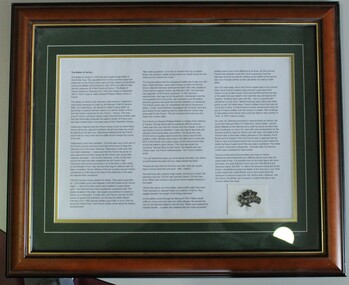
... history of Verdun in WW1. Included in the frame is a badge from thr City of Verdun in France....history of Verdun in WW1. Included in the frame is a badge from thr City of Verdun in France. ...Framed text with history of Verdun in WW1. Included in the frame is a badge from thr City of Verdun in France. -
 Melbourne Legacy
Booklet, Red Letter Day. Fin de la Guerre! Souvenir, 1918
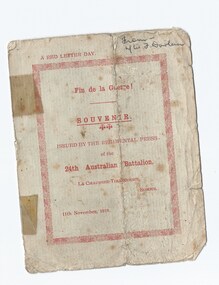
... French have a keen admiration. Hundreds of these souvenirs have been posted by the troops to their relatives and friends at home." An item from Legatee Frank Doolan, who was on the archive committee and made attempts to collate the history of Legacy. ...French have a keen admiration. Hundreds of these souvenirs have been posted by the troops to their relatives and friends at home." An item from Legatee Frank Doolan, who was on the archive committee and made attempts to collate the history of Legacy. ...A souvenir to commemorate the end of the war published by the 24th Battalion Press in both English and French. From an article in the Red and White Diamond edition from Xmas 1918 that mentions the souvenir: "A souvenir of Armistice Day was issued by our Battalion press at La Chausse-Tirancourt, and a copy was presented to every household in those villages, where our troops were billeted at that time. The souvenirs were handed over, in the name of the C.O., to the Maire, who passed them on to the residents, who received them as a token of the sincere friendship which was stimulated by our stay in that district, and also as a keepsake from Australian soldiers, for whom the French have a keen admiration. Hundreds of these souvenirs have been posted by the troops to their relatives and friends at home." An item from Legatee Frank Doolan, who was on the archive committee and made attempts to collate the history of Legacy. A record of publications made for the troops in World War 1. The founding members of Legacy would have been familiar with items like this as they fought in the first World War. Many of the founding Legatees were from the 24th Battalion.A souvenir published to commemorate the end of the World War 1.From L/tee F. Doolan in black pen.world war one, souvenir, 24th battalion -
 Melbourne Legacy
Photograph, Anzac commemoration for students 1945, 1945
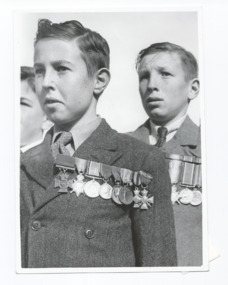
... France in 1918. 1/2 page' in blue pen. Was in an envelope with other photos and programmes from different School Student ceremonies. Labelled S15 in red pen it was part of an old archive numbering system, that showed there has been efforts in the past to collect, order and save items of Legacy's history....France in 1918. 1/2 page' in blue pen. Was in an envelope with other photos and programmes from different School Student ceremonies. Labelled S15 in red pen it was part of an old archive numbering system, that showed there has been efforts in the past to collect, order and save items of Legacy's history. ...A Legacy ceremony at the Shrine of Remembrance. One of the annual "Anzac Commemoration Ceremony for Students" events, usually held just prior to ANZAC Day. The ceremony provides a valuable opportunity for students to gain an appreciation of the Anzac spirit, the significance of the Shrine and the meaning of Anzac Day. This is a close up photo of the son of soldier wearing his fathers medals, at the service in 1945 (see also 01193). It is the son of Lieut. G Ingram, a VC medal recipient.A record of a ceremony for school students at the Shrine.Black and white photo a boy wearing his fathers medals at an Anzac Commemoration Ceremony for students at the Shrine in 1945.Photo is stamped with purple copyright stamp of The Argus with identifying number, U-1673 in pencil. Also 'Anzac Eve 24th April 1945' and 'Ingram VC's son' in pencil. There are marks for cropping and dimensions for reprinting in a newsletter. A paper label says: ' 18. The son of Lieut. G.M. Ingram, Victoria Cross, wears his father's decoration awarded in France in 1918. 1/2 page' in blue pen. Was in an envelope with other photos and programmes from different School Student ceremonies. Labelled S15 in red pen it was part of an old archive numbering system, that showed there has been efforts in the past to collect, order and save items of Legacy's history.anzac commemoration for students, wreath laying ceremony, vc medal, ingram -
 Melbourne Legacy
Document - Past presidents, Myd Lewis: Personal History. Legacy (L8)
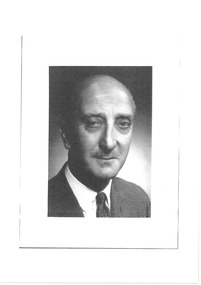
... Hugh Myddelton Lewis ('Myd') (1911-1995) wrote a brief account of his association with Melbourne Legacy which is more an explanation of the work of Legacy than a personal history and completely omits to mention that he was President in 1969 and held both an OBD and a Croix de Guerre and twice mentioned in Despatches. He served in the British Army Royal Artillery in the Western Desert from 1939-41 and in France and Germany from 1944-1946, leaving the army in 1955 with the rank of Colonel and moving to Melbourne in 1958. ...Hugh Myddelton Lewis ('Myd') (1911-1995) wrote a brief account of his association with Melbourne Legacy which is more an explanation of the work of Legacy than a personal history and completely omits to mention that he was President in 1969 and held both an OBD and a Croix de Guerre and twice mentioned in Despatches. He served in the British Army Royal Artillery in the Western Desert from 1939-41 and in France and Germany from 1944-1946, leaving the army in 1955 with the rank of Colonel and moving to Melbourne in 1958. ...Hugh Myddelton Lewis ('Myd') (1911-1995) wrote a brief account of his association with Melbourne Legacy which is more an explanation of the work of Legacy than a personal history and completely omits to mention that he was President in 1969 and held both an OBD and a Croix de Guerre and twice mentioned in Despatches. He served in the British Army Royal Artillery in the Western Desert from 1939-41 and in France and Germany from 1944-1946, leaving the army in 1955 with the rank of Colonel and moving to Melbourne in 1958. In civilian life he worked as the Manager of Public Affairs with C.R.A. until retiring in 1973. During this time he worked tirelessly for Legacy on many committees and was Chairman of the Co-ordinating Council from 1974-1976.Legacy is identified as 'one of the most important influences' for three decades of his life. Another example of the exceptional men who served as Melbourne Legacy Presidents.White A4 x 2 pages with black type.Hand written in black biro: 'L8/16' Hand written in blue biro: 'Myd Lewis 29/10/97(?)' (illegible initials)past presidents, history -
 Melbourne Legacy
Photograph, Jack Cato, 'Digger', 1932
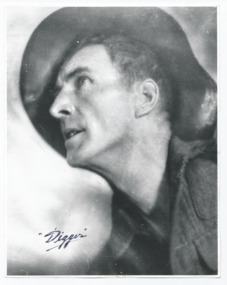
... history for an official archive project - see items 01400 to 01404). Pat Hanna was an entertainer, comedian, artist and producer of reveues, plays and movies. One of his first revues was performed just after the armistice in France...history for an official archive project - see items 01400 to 01404). Pat Hanna was an entertainer, comedian, artist and producer of reveues, plays and movies. One of his first revues was performed just after the armistice in France ...An iconic image of a soldier, eyes raised to the sky, taken by photographer Jack Cato in 1932. He used the artist/entertainer Pat Hanna as a model in the photoshoot. Pat wrote down his experience in a moving two page document 'The Story Behind the Picture', it tells how he was moved to imagine the action in France when posing. The image is described as the portrait of a soldier, eyes raised to the sky. This portrait is a study which is called 'The spirit of Anzac' or 'The Digger'. Pat Hanna, said he tried to recreate the "look something between fear and defiance which we have all seen so often, and which will always remain in my memory as typical of our gallant old cobbers 'the Diggers'". A colour image is held in the AWM collection. The photo was stored with other items including a letter to Frank (possibly L/- Frank Doolan who was making an attempt to collect items relevant to Legacy's history for an official archive project - see items 01400 to 01404). Pat Hanna was an entertainer, comedian, artist and producer of reveues, plays and movies. One of his first revues was performed just after the armistice in France. His popular stage show was 'Diggers' that performed in many towns in Australia post-war and adapted into a film in 1931. He was born George Patrick Hanna, 18 March 1888 in Whitianga, New Zealand and served in the First World War, was a founding member of Melbourne Legacy and was involved with Legacy for many years.Pat Hanna was a founding member of Melbourne Legacy and an artist and producer. Legacy kept some of his works in the archive.Black and white photo of Pat Hanna as a 'Digger' and a two page recollection of the photoshoot with Jack Cato.Handwritten on photo 'Digger' in black ink in Pat Hanna's handwriting. Handwritten on reverse " 'The Digger', sometimes called 'The spirit of Anzac' / photo Jack Cato / model -Pat Hanna" in black ink. Typed on a paper note 'Spirit of Anzac / Pat Hanna'. Stamped with copyright of The Age in blue ink.hanna, solider, portrait -
 Melbourne Legacy
Drawing, A Toast
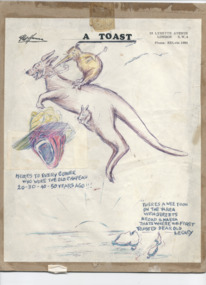
... history for an official archive project - see items 01400 to 01403). Pat Hanna was an entertainer, comedian, artist and producer of reveues, plays and movies. One of his first revues was performed in France...history for an official archive project - see items 01400 to 01403). Pat Hanna was an entertainer, comedian, artist and producer of reveues, plays and movies. One of his first revues was performed in France ...A drawing done by artist Pat Hanna and sent to friends at Legacy. He was living in London at the time and drew this on his letterhead. It was stored with other items including a letter to Frank in 1972 (possibly L/- Frank Doolan who was making an attempt to collect items relevant to Legacy's history for an official archive project - see items 01400 to 01403). Pat Hanna was an entertainer, comedian, artist and producer of reveues, plays and movies. One of his first revues was performed in France just after the armistice. A popular stage show was 'Diggers' that performed around Australia post-war and adapted to film in 1931. He was asked to pose for photographer Jack Cato for the iconic image of a digger shown in 01400. He was born George Patrick Hanna, 18 March 1888 in Whitianga, New Zealand and served in the First World War, was a founding member of Melbourne Legacy and was involved with Legacy for many years. Pat Hanna was a founding member of Melbourne Legacy and an artist and producer. Legacy kept some of his works in the archive.Drawing of a kangaroo and kiwi from Pat Hanna on his letterhead pasted onto brown cardboard. Also a digger's face, a rising run and maps of Australia and New Zealand.Handwritten in the drawing 'Heres to every cobber who wore the old chapeau, 20 - 30 - 40 - 50 years ago!!!' and 'There's a wee toon on the Yarra with streets broad and narra that's where we first toasted dear old Legacy.'hanna, founding legatee -
 Melbourne Legacy
Drawing, Caricature by Pat Hanna, 1955
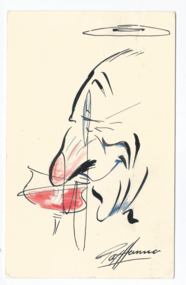
... history for an official archive project - see items 01400 to 01403). Pat Hanna was an entertainer, comedian, artist and producer of revues, plays and movies. One of his first revues was performed just after the armistice in France...history for an official archive project - see items 01400 to 01403). Pat Hanna was an entertainer, comedian, artist and producer of revues, plays and movies. One of his first revues was performed just after the armistice in France ...A drawing done by artist Pat Hanna and sent to friends at Legacy as a postcard. It could be a self portrait or a caricature of another Legatee. It was stored with other items including a letter to Frank (L/- Frank Doolan who was making an attempt to collect items relevant to Legacy's history for an official archive project - see items 01400 to 01403). Pat Hanna was an entertainer, comedian, artist and producer of revues, plays and movies. One of his first revues was performed just after the armistice in France. A popular stage show was 'Diggers' that performed around Australia post-war it was adapted into a film in 1931. He was asked to pose for photographer Jack Cato for the iconic image of a digger shown in 01400. He was born George Patrick Hanna, 18 March 1888 in Whitianga, New Zealand and served in the First World War, was a founding member of Melbourne Legacy and was involved with Legacy for many years.Pat Hanna was a founding member of Melbourne Legacy and an artist and producer. Legacy kept some of his works in the archive.Cartoon drawing of a man with a monocle, signed Pat Hanna on a postcard.Post card is addressed to 'President and Legatees, Legacy Club, Market St, Melbourne' in blue ink. It is postmarked 29 December 1955 in Melbourne and an Australian 3d postage stamp. Also handwritten is 'Cartoon card by Pat Hanna 1955' in blue pen.hanna, founding legatee -
 Melbourne Legacy
Drawing, Card players drawn by Pat Hanna, 1955
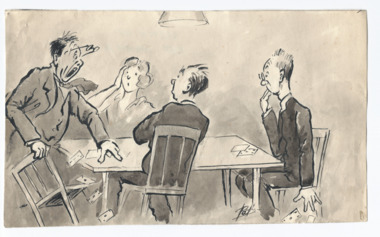
... history for an official archive project - see items 01400 to 01404). Pat Hanna was an entertainer, comedian, artist and producer of reveues, plays and movies. One of his first revues was performed in France...history for an official archive project - see items 01400 to 01404). Pat Hanna was an entertainer, comedian, artist and producer of reveues, plays and movies. One of his first revues was performed in France ...A cartoon drawing done by artist Pat Hanna and sent to friends at Legacy. It looks like a funny caption is missing from the drawing. It was stored with other items including a letter to Frank (possibly L/- Frank Doolan who was making an attempt to collect items relevant to Legacy's history for an official archive project - see items 01400 to 01404). Pat Hanna was an entertainer, comedian, artist and producer of reveues, plays and movies. One of his first revues was performed in France just after the armistice. A popular stage show was 'Diggers' that performed around Australia post-war and adapted into a film in 1931. He was asked to pose for photographer Jack Cato for the iconic image of a digger shown in 01400. He was born George Patrick Hanna, 18 March 1888 in Whitianga, New Zealand and served in the First World War, was a founding member of Melbourne Legacy and was involved with Legacy for many years.Pat Hanna was a founding member of Melbourne Legacy and an artist and producer. Legacy kept some of his works in the archive.Cartoon drawing of a four people playing cards signed Pat (Hanna).Signed 'Pat'hanna, founding legatee, cartoon -
 Melbourne Legacy
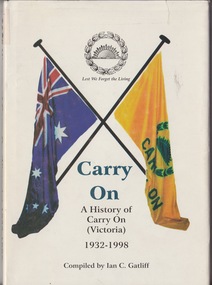
Book, Carry On. A History of Carry On (Victoria) 1932 - 1998, 1998
... history of the Carry On Club which was set up in 1932 along similar lines to Legacy. Their main focus is to help with the care for veterans and their dependents. The founder was WL Hawkins (1861-1969), who served in the First AIF in 1915 and saw active service in France. ...history of the Carry On Club which was set up in 1932 along similar lines to Legacy. Their main focus is to help with the care for veterans and their dependents. The founder was WL Hawkins (1861-1969), who served in the First AIF in 1915 and saw active service in France. ...The book is about the history of the Carry On Club which was set up in 1932 along similar lines to Legacy. Their main focus is to help with the care for veterans and their dependents. The founder was WL Hawkins (1861-1969), who served in the First AIF in 1915 and saw active service in France. He attained the rank of Lieutenant. With the economic collapse of 1929 he saw a need to help the many unemployed ex-servicemen. He discussed his ideas with Stan Savige of Legacy. Liaison between Carry On and the other ex-service organisations continues to the present day.A record of the founding of the Carry On Club and its history to 1998.Green cloth hardcover book x 80 pages about the history of Carry On, with a white paper dustcover with flags.Flyleaf is inscribed as a gift to Melbourne Legacy from the president and members of the Carry On Club in 1999.carry on club, history, hawkins
