
Showing 983 items matching " tributors"
-
 National Wool Museum
Film - 16o8, Abha Gupta, Streamline Media and Communications Group Pty Ltd, 2025
... Artist Statement: ‘16o8' collection by designer Abha Gupta pays tribute to the historic moment when the British first arrived in India, a pivotal event that reshaped the country's fashion landscape for over two centuries. ...Artist Statement: ‘16o8' collection by designer Abha Gupta pays tribute to the historic moment when the British first arrived in India, a pivotal event that reshaped the country's fashion landscape for over two centuries. ...One of three We The Makers videos commissioned by the Programs and Education department at the National Wool Museum to assist in learning and engagement alongside the We The Makers Sustainable Fashion Prize 2025 exhibition at the National Wool Museum. The films feature artist interviews from three finalists from We the Makers, providing insights into their personal influences, the motivations behind their material choices and the impact of culture on artistic practice. This film features designer Abha Gupta and her work '1608'. Artist Statement: ‘16o8' collection by designer Abha Gupta pays tribute to the historic moment when the British first arrived in India, a pivotal event that reshaped the country's fashion landscape for over two centuries. She launched this collection under her brand name, ‘Antiek East’. Designed under the mentorship of RMIT professor Blake Barns, the collection draws inspiration from the era of British colonisation, reflecting its profound influence on Indian fashion history. Drape suit jacket in the collection is meticulously handwoven and handmade by local artisans using natural fibres, embodying a commitment to traditional craftsmanship. Beyond creating aesthetically compelling garments, ‘16o8’ project served as a catalyst for social impact. By prioritising fair wages and opportunities for marginalised communities, she uplifted artisans and craftspeople, embedding sustainability across all levels and stages of her endeavour. This commitment not only resonated through the ethical sourcing of materials but also through the conscientious production practices that minimise environmental impact. Circular design principles guided the approach of this project, emphasising materials that are biodegradable and minimise environmental impact. Natural dyeing processes not only uphold traditional craftsmanship but also reduce harmful chemical runoff into ecosystems. By choosing sustainable fabrics and methods, the project aimed to create garments that are not only beautiful but also ethically and environmentally sound.Three minute eighteen second digital video with audio. abha gupta, fashion, designer, film, we the makers, sustainability, textiles -
 Old Colonists' Association of Ballarat Inc.
F.J. Williams' Home, Charles Anderson Grove
... .- Ballarat Old Colonists Benefit BALLARAT.— High tribute to the good citizenship of Mr. and Mrs. ....- Ballarat Old Colonists Benefit BALLARAT.— High tribute to the good citizenship of Mr. and Mrs. ...The Old Colonists' Association Ballarat Inc. is a not for profit charitable organisation providing accommodation for elderly people. It manages a 27 Home retirement village at Charles Anderson Grove Ballarat. Accommodation is offered at significantly below market rates. It has been providing low cost accommodation to the elderly since the 1920s. The Association Council overseas the running of this facility on a voluntary basis. "GIFT COTTAGES.- Ballarat Old Colonists Benefit BALLARAT.— High tribute to the good citizenship of Mr. and Mrs. F. J. Williams, now of Melbourne, and Mr. S. Clark, of Ballarat. was paid by a representative gathering at Gillies-street on Thursday afternoon, when the two cottages respectively presented by them for the use of old and indigent colonists were handed over to the council of the Ballarat Old Colonists' Association. The cottages are handsome brick structures, modern in design and equipment, and cost about £650 each. Mr. A. H. Nevett, president of the Ballarat organisation, expressed the gratification of the association at the commencement of a scheme of cottages for old colonists, which had been the aim of the association for many years. Mr. Williams said that when in Ballarat he had been in many public movements as President of South-street and president of the amalgamtion (sic) movement, but in giving this cottage for the use of the old people he had established a tangible and definite link between himself and Ballarat. Similar sentiments were expressed by Mr. Clark, who said his benefaction had given him a great and genuine pleasure. Both donors were warmly thanked on be half of citizens generally by the mayor (Cr. A. E. Nicholson). At subsequent social gathering appropriate toasts were honored, and assurances were given that the association's scheme for 50 gift cottages on the lines of Melbourne would be furthered by several in the not far distant future. (The Age, 30 October 1925.)ballarat old colonists' club, old colonists' association, s. clark, f.j. williams, charles anderson grove, philanthropy -
 Falls Creek Historical Society
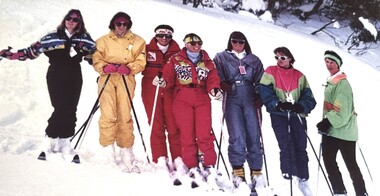
Photograph - Falls Creek Ski School - Ladies Group
... The women’s program still operates at Falls Creek and is a "heartfelt tribute to the memory of Mim Sodergren, a beloved 1980s instructor and mentor who tragically lost her life in the Thredbo landslide in 1997. ...The women’s program still operates at Falls Creek and is a "heartfelt tribute to the memory of Mim Sodergren, a beloved 1980s instructor and mentor who tragically lost her life in the Thredbo landslide in 1997. ...MIM SODERGREN and the WOMEN'S SKI PROGRAM The Women's Ski Program at Falls Creek and Thredbo was initiated in the mid 1980s. One of the most popular instructors involved in this program was Mim (Mariam) Sodergren. Mim developed innovative, specialized ski programs for women and children in both Australia and the United States. She and her husband Mike originated from Tahoma, California, USA. They spent 17 years of their lives without a summer, working as ski instructors in Lake Tahoe during the northern winters, and then they’d head off to Falls Creek and Thredbo in Australia. Mim and Mike Sodergren were both inspiring instructors at Falls Creek Snowsports School, dedicated to education and had a deep-seated passion for fostering an inclusive Snowsports community. Tragically Mim and Mike were among the 18 people killed 30 July 1977 in Thredbo, Australia, when a landslide tore through Thredbo’s ski resort village and demolished two staff lodges. In 1997 the Australian Professional Snowsport Instructors (APSI) established the Sodergren scholarships in memory of Mim and Mike. The Sodergren Scholarship recognises the rising potential of Snowsport instruction within Australian ski resorts and allows the recipients to further their professional development by providing all training free of charge for one season. The women’s program still operates at Falls Creek and is a "heartfelt tribute to the memory of Mim Sodergren, a beloved 1980s instructor and mentor who tragically lost her life in the Thredbo landslide in 1997. Designed by women, for women, and inspired by the enduring passion of Mim and her partner, Mike, who was also an instructor, this program is a wonderful opportunity to learn to ski in a friendly and supportive environment, just as Mim envisioned." (Falls Creek Website 2024). Mike’s Men’s Ski Program at Falls Creek is also named in honour of Mike Sodergren.These photos are significant because they commemorate an innovative ski instructor lost through the tragedy at Thredbo in 1997.Two colour photos showing groups of women participating in the Ladies' Group at Falls Creek in the 1980s, as well as a photo of Mim and Mike Sodergren. Image 1 Left to right: Leonie Docking, Carol Bartholomew, Mim Sodergren, Blanche Spargo, Jane Zagorski, Rosanne Osborn and Di Mashford Image 2 Left to right : Pat Smart, Blanche Spargo, Margaret Smith, Pam Mero, Iris Jones, Jennifer Reuter, Lee Lowther, Jane Zagorski, Mim Sodergren Image 3: Mim and Mike Sodergrenwomen's ski program, falls creek ski school, mim sodergren -
 Bendigo Historical Society Inc.
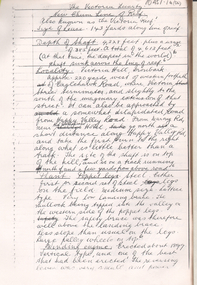
Document - Albert Richardson Collection: Victoria Quartz Mine, New Chum Line, Albert Richardson, Unknown
... Information includes depth of shaft, size of lease, locality, early history, gold obtained, Duke of Edinburgh mine and the Duchess Tribute. e. Seven page document (copy) detailing information on the South New Moon, Garden Gully reef. ...Information includes depth of shaft, size of lease, locality, early history, gold obtained, Duke of Edinburgh mine and the Duchess Tribute. e. Seven page document (copy) detailing information on the South New Moon, Garden Gully reef. ...Albert Richardson, a local historian, wrote widely on the gold mines of Bendigo. The mining documents in this collection are representative of the information he gathered and recorded on many of the mines on the field. The locations of the mines discussed by Albert Richardson in the reports, are detailed below: Victoria Quartz Gold Mine: located on Victoria Hill, Ironbark, 'Approximately 220 yards west of western footpath of Eaglehawk Road, where Victoria Street terminates and slightly to the south of the imaginary extension of that Street'. United Hustlers and Redan Gold Mine: ' The area includes Holdsworth Road, Holmes Road, Havillah Road and Wood's Street in the North Bendigo, Long Gully area. Main or 'Redan' shaft, approx 155 yards west from the western edge of Holmes Road and about 200 yards north from the edge of Havilah Road' United Devonshire Gold Mine, Eaglehawk: 'Approximately 176 yards south-east of the intersection of Victoria Street and Upper Road, on south-western side'. South New Moon Gold Mine: ' one mile north from Eaglehawk post Office, on reaching Hodgsons Street, continue straight on and over the hill' Collection of Bendigo mining company reports researched and handwritten by Albert Richardson: a. Five page handwritten document (copy) detailing key information regarding the Victoria Quartz Gold Mine, Victoria Hill, Ironbark. Sections include: depth, engine house, blacksmith's shop, mine dams, early history, gold yielded and references. b. One page handwritten document (copy) detailing information on the Red, White and Blue Extended on the Sheepshead line of reef, including dates of operation, sill of shaft, depth of shaft, production, Legal Manager. c. Seven page handwritten document (copy) detailing information on the United Hustlers and Redan Mine on the Hustlers' line of reef. Information includes: depth of shafts - Main or Redan and South or K.K., locality, poppet heads, engine house, winding engine, air compressor, boilers, fuel, winding ropes. The early history of the mine and dates of operation are discussed. d. Six page handwritten document (copy) detailing information on the United Devonshire Gold Mine on the New Chum line of reef. Information includes depth of shaft, size of lease, locality, early history, gold obtained, Duke of Edinburgh mine and the Duchess Tribute. e. Seven page document (copy) detailing information on the South New Moon, Garden Gully reef. Two front pages typed and remaining pages handwritten. Information includes: locality, plant (original company) and plant (new company. Lancashire boilers, air compressor and winding engine are described. Handwritten on 10451.14e ' typed at Mines Dept'. victoria quartz gold mine, new chum line of reef, shaft, locality, poppet legs, engine house, blacksmith, mine dams, early history, gold production, united devonshire gold mine, mine sill, duke of edinburgh mine, red white and blue extended, south new moon, garden gully reef -
 Bendigo Historical Society Inc.
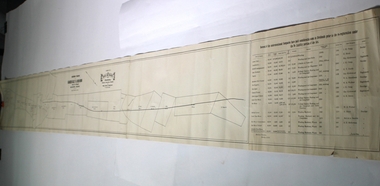
Plan - Garden Gully and New Moon Lines of Reef, J.B. Young, lithographer, Unknown
... Plan shows mines along the reef lines with distance in yards of each claim - from SSW direction: Golden Pyke Company, McDuff Amalgamated, Constellation Company, Virginia Company, Specimen Hill Company, New Hopeful, New Argus Company, Clarence Company, North Argus Company, South New Moon Company, New Moon Company, Suffolk Tribute Company, North New Moon Company, New Moon Consolidated Company, New Moon United Company, Adelaide New Moon Company, J. ...gold mining gold Margaret Roberts Collection Garden Gully New Moon reef lines Golden Pyke Company McDuff Amalgamated Constellation Company Virginia Company Specimen Hill Company New Hopeful New Argus Company Clarence Company North Argus Company South New Moon Company New Moon Company Suffolk Tribute Company North New Moon Company New Moon Consolidated Company New Moon United Company Adelaide New Moon Company J. ...Printed on buff coloured light paper, written on top centre of plan: ' Northern Portion of Garden Gully & New Moon Line of Reefs, Eaglehawk, Bendigo, Scale 8 chains to an inch'. Printed on right hand side of reef names: ' Issued by Wood And McNair, Sharebrokers, Beehive Chambers, Bendigo and High Street, Eaglehawk. J.B. Young, Lith. Bendigo.' On far right hand end of map, a table of information headed ' Several of the undermentioned Companies have paid considerable sums in Dividends prior to the re-registration under the No Liability portion of the Act'. Table contains information on the name of Company; No. of shares; nominal capital,; Capital called up; call per share; dividends; machinery; present depth of shaft; bottom plat; Legal Managers; address. On bottom of table, 'Beehive Chambers, Bendigo 6/8/03'. Plan shows mines along the reef lines with distance in yards of each claim - from SSW direction: Golden Pyke Company, McDuff Amalgamated, Constellation Company, Virginia Company, Specimen Hill Company, New Hopeful, New Argus Company, Clarence Company, North Argus Company, South New Moon Company, New Moon Company, Suffolk Tribute Company, North New Moon Company, New Moon Consolidated Company, New Moon United Company, Adelaide New Moon Company, J. Davies, Day & Co., (lease applied for by P. Booth), P. Booth, D. Murdoch, J. Mani, F. Bassett and R. Bassett. Mine map is part of the Margaret Roberts Collection. gold mining, gold, margaret roberts collection, garden gully, new moon, reef lines, golden pyke company, mcduff amalgamated, constellation company, virginia company, specimen hill company, new hopeful, new argus company, clarence company, north argus company, south new moon company, new moon company, suffolk tribute company, north new moon company, new moon consolidated company, new moon united company, adelaide new moon company, j. davies, day & co., (lease applied for by p. booth), p. booth, d. murdoch, j. mani, f. bassett and r. bassett. -
 Bendigo Historical Society Inc.
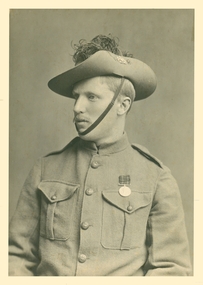
Document - Arthur T. Pattinson, 1962
... The statue, which is in bronze, is mounted on a massive granite base, on the foot of which is the following inscription: — "Bendigo's tribute to the memory of the Australian soldiers who, in the South African war of 1899 - 1902 gave their lives for Queen and Empire. ...The statue, which is in bronze, is mounted on a massive granite base, on the foot of which is the following inscription: — "Bendigo's tribute to the memory of the Australian soldiers who, in the South African war of 1899 - 1902 gave their lives for Queen and Empire. ...10570 South African (Boer) War Memorial Bendigo. The monument commemorates those who died in service or were killed in action while serving in the South African (Boer) War. It is a bronze statue of a soldier on a granite base. Leader (Melbourne), 19 November 1904. “There was a large assemblage on the afternoon of 11th November, when the ceremony of unveiling the soldiers' memorial statue was performed by Brigadier-General Gordon in the presence of a muster of branches of the defence forces. The statue, which is in bronze, is mounted on a massive granite base, on the foot of which is the following inscription: — "Bendigo's tribute to the memory of the Australian soldiers who, in the South African war of 1899 - 1902 gave their lives for Queen and Empire. The statue was modelled by Mr. J. Walker, a young Bendigonian, who has been studying for two or three years under Mr. A. T. Woodward art instructor at the local school of mines.“ Ola Cohn recalled in her autobiography meeting John Walker as a sculpture student at the Bendigo School of Mines and that he had later received the commission for the Boer War Memorial although she neglects to mention its location. John Walker was born in Bendigo and first studied sculpture at the Bendigo School of Art. Walker, then went to England to study at the Royal College of Art London, and in Paris at the Académie Colarossi and Julian Academy. John Walker worked as a sculptor in both Bendigo and West Brunswick before turning to chicken farming in the Bendigo suburb of White Hills. The photo of A. T. Pattinson was taken by George Leake Massingham, a professional photographer, who had seven children, one of whom died at birth. After arriving in Australia from England, he established himself as a travelling photographer, an occupation he continued after his marriage. He travelled throughout country Queensland, Victoria and New South Wales, setting up studios along the way. The family ended up moving with him, travelling to Sydney, Narrandera, Bendigo, Newtown, Geelong and Deniliquin. Correspondence re Boer War Memorial Bendigo Boer War Memorial Bendigo. Letters and photo from and to Mrs Wilson, eldest daughter of Mr Arthur T. Pattinson who was a model for the Boer War sculpture. 10570a A black and white photo of Trooper Arthur T. Pattinson restored by BHS Volunteers. 10570b The original photo as sent by Mrs Wilson to Harold Curnow (Bendigo Historical Society) in 1962. The photo is mounted on heavy brown cardboard and has an old catalogue number of "P680" inscribed on it. The cardboard is torn and held together with sticky tape. On the front in italics is printed G.L. Massingham, Bendigo. 10570c Notes on the rear of the photo from Mrs Wilson state that "the photo is of Arthur T. Pattinson (Rusty), an Australian Light Horse trooper who served in the Boer War. The Boer War Memorial in Pall Mall Bendigo represents a trooper on guard. The sculptor was Jack Walker who used Pattinson as a model, and it is regarded as an excellent likeness." 10570d A letter from Harold Curnow back to Mrs Wilson on Jan 4th, 1963, acknowledging receipt of the photo and a letter received, noting the significance of the historical information. 10570e Handwritten letter 29/11/1962 from Mrs Wilson to Mr Curnow introducing herself as Mr. Pattinson's eldest daughter and answering the letter he wrote to her father. She mentions the bad health of her parents. Arthur modelled for the statue at least two to three times per week in a studio on the top floor of a building in Bull St. He was the original model to the best of her knowledge. Another model possibly Mr P. Handmear may have sat as a model for renovations (*). The rifle was a light horse rifle issued to Pattinson as he was still serving in 1904. Arthur and Handmear were boys together and very close. * Note - the plaster model was repaired prior to casting in metal. 10570f An obituary notice: 18/11/64 "On Nov. 17 at Frankston, Emma, wife of the late A. T. Pattinson (Rusty), late of Bendigo. 10570g Letter Nov. 20th, 1962, from Harold Curnow to Mr Arthur T. Pattinson, Kent St., Mornington, Vic. "Dear Mr Pattinson, Last week your brother, Brit., whom I have known for many years, supplied the Bendigo Advertiser with some interesting information regarding your role as the model for the late Jack Walker when he was making the statue for the Boer War Memorial here. Yesterday however, another claimant to the distinction of being the model was advanced in the Bendigo Advertiser by Mr Richard Marshall, of Moran Street, Bendigo who said that the soldier's model was Phillip Handmear. I understand that your brother has sent the newspaper cuttings on to you. When he called to see me yesterday, he suggested that I write to you for further particulars. Can you recall the discussion you had with Jack Walker when he approached you about acting as the model and do you remember how many times you posed for him, and whether the work was done in the house, in the yard, or in one of the outbuildings at Moran Street? In short, any details at all. At this point in time we are considering an interesting facet in Bendigo's history, so any seemingly unimportant incidents could really be useful if we knew about them. Have you any old newspaper cuttings mentioning your name in connection with the memorial? Do you remember any remarks that passed between you and Jack Walker during the long sessions you must have put in on this work? This could be very important. And do you recall where the rifle came from? Did you or Jack Walker borrow it from the military authorities? Back in 1934 Jack Walker recalled having had to pull the plaster model down and remake it when he discovered it was slightly off-balance and was slowly toppling forward. He told me he had to get his model to pose again. Do you know anything about this? Could it have been that he got Mr. Handmear in for the final stage of the work? That, of course, would apply only if you were not available. Incidentally, I never heard of Mr Handmear until I saw his name in yesterday's "Advertiser". In any case I intended contacting your brother or you to enquire whether any member of your family has an old photograph of you in your Boer War uniform, that is, one taken about the time of or just after the Boer War. I am sure that members of the Bendigo Branch of the Royal Historical Society would be most interested to see it. I hope you will have the time and inclination to consider the many points I have raised in this letter because the subject has aroused a lot of interest in Bendigo. Hoping you are well and quite as active as you wish, I remain, with all good wishes, Yours sincerely, Harold Curnow". john walker, jack walker, boer war memorial bendigo, arthur pattinson, soldiers' memorial bendigo -
 Charlton Golden Grains Museum Inc
Photograph, c.1990
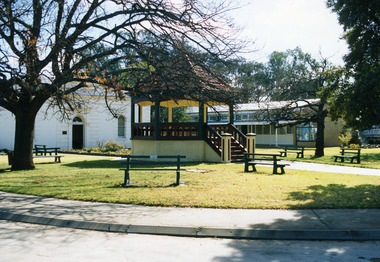
... ### Benjamin Green and the Charlton Band Rotunda The **Ben Green Memorial Rotunda**, located in Elliott Gardens, stands as a tribute to one of Charlton’s most active citizens. ...### Benjamin Green and the Charlton Band Rotunda The **Ben Green Memorial Rotunda**, located in Elliott Gardens, stands as a tribute to one of Charlton’s most active citizens. ...### Benjamin Green and the Charlton Band Rotunda The **Ben Green Memorial Rotunda**, located in Elliott Gardens, stands as a tribute to one of Charlton’s most active citizens. **Benjamin Green** was a solicitor who practiced law in the town from 1895 until his death in 1923. During his 28 years in the community, he held leadership roles in many of the organizations that shaped the town’s infrastructure and social life. #### Professional and Civic Work Green was a key figure in establishing essential services for Charlton. He was one of the originators of the **Electric Light and Power Company** and served as the solicitor for the **Water Trust**. His commitment to education was shown through his work as a "prime mover" in the creation of the **Charlton Higher Elementary School**. His community involvement also included: * **Sport:** He introduced golf to Northern Victoria and founded the **Charlton Golf Club** in 1900, serving as its President until his death. He also founded the **Plumpton and Open Coursing Club**. * **Veterans:** He took a strong interest in the welfare of returned soldiers and donated **£100** toward the town's war memorial. * **Culture:** He was an active member of the **Mechanics Institute**. #### The Memorial Rotunda When Green passed away in 1923, a public fund was started to build a band rotunda for outdoor music recitals in his memory. The structure was designed and built by **Folliott Gilmore**, a local builder and timber merchant. It was officially dedicated by his friend **Frank Tate**, the Victorian Director of Education. #### Historical Celebrations The rotunda became a central point for major community events. During a "Back-to-School" celebration held during Show Week, the town was decorated with **12,000 handmade paper flowers** created by local women’s organisations. These flowers covered the rotunda, the bridge, and the town entrances. The event was a significant historical bridge for the town; it was attended by nine original students who had attended Charlton's first **"bark hut" school** in 1875, allowing them to see the modern developments Green had helped achieve. Standard colour photographcharlton, elliott gardens, rotunda, parks, mechanics institure, golden grains museum, green ben -
 Melbourne Royal
Award - Trophy, GARRYOWEN PERPETUAL TROPHY FOR BEST EQUESTRIENNE TURNOUT, 1934
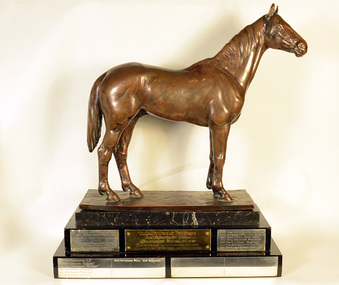
... (Sun, Sydney, Sunday 1 April 1934, p. 4) Began with a fire This trophy began as a tribute to a brave woman who risked and lost her life trying to rescue her horses and dog from a fire in 1934. ...(Sun, Sydney, Sunday 1 April 1934, p. 4) Began with a fire This trophy began as a tribute to a brave woman who risked and lost her life trying to rescue her horses and dog from a fire in 1934. ...The Garryowen Perpetual Trophy is awarded annually to the winner of one of the most prestigious equestrienne events in Australia, the Garryowen Equestrienne Turnout. The competition is named after three-time Royal Melbourne Show champion saddle horse, GARRYOWEN, whose owner Violet Murrell died tragically whilst trying to save GARRYOWEN from a stable fire in 1934. A Heroine of Racing Mrs Violet Murrell of Melbourne, was a heroine who died trying to save her horses when the racing stables burned. The reason for her rescue attempt was twofold; she was both trying to retrieve an asset and was rescuing an animal from its agony. The heart of the racing world in Melbourne went out to Murrell and trainers, jockeys, and stable-boys came in crowds to her funeral. 'In the racing stables, in truth, the horse and the man are part of each other; and Mrs Murrell's name, with the manner of her death, will live as a tradition in the fraternity of men and horses to which she belonged'. (Sun, Sydney, Sunday 1 April 1934, p. 4) Began with a fire This trophy began as a tribute to a brave woman who risked and lost her life trying to rescue her horses and dog from a fire in 1934. It has become the premier turnout event for horsewomen in Australia. The idea came from a gathering at the Police Depot in St Kilda Road Melbourne, where friends of Violet discussed how to remember her and her beloved horse GARRYOWEN. The event was first staged at the 1934 Royal Melbourne Show. The public, through the Sporting globe newspaper, contributed to the cost of buying the 12 inch bronze statuette which is a perpetual trophy. The winner is also presented with a blue sash fastened with a small photograph of Mrs Murrell riding GARRYOWEN. Jockey, jumper, show ring rider Violet Murrell was 29 years old when she died. She had a career as a flat-race jockey riding and winning against men. She was also a successful jumps jockey. (Mandy Bede)A bronze horse statuette mounted on a slab of marble and a wooden base with metal plates.trophy, horses in action, horses, melbourne royal horses in action competition, prizes, turnout, blue ribbon competitions, murrell, violet murrell, garryowen, garryowen perpetual trophy, garryowen equestrienne turnout -
 Bendigo Historical Society Inc.
Plan - New Moon Co
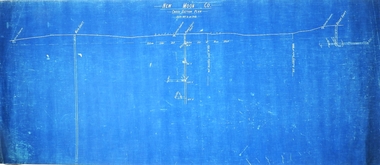
... From 1878 to 1890 had been lean years for the company when many calls were made to shareholders, while for a period of 6 years the mine was let tributors who crushed 6417 tons for 415 0zs ... dividends were paid from 1892 to 1913 ... mine closed down in 1917 Apart from public crushing, the company crushed 545,289 tons of stone during its existence, all dug from its own mine ... yielded 230,601 ozs of gold, and paid shareholders the sum of £377,400. ...From 1878 to 1890 had been lean years for the company when many calls were made to shareholders, while for a period of 6 years the mine was let tributors who crushed 6417 tons for 415 0zs ... dividends were paid from 1892 to 1913 ... mine closed down in 1917 Apart from public crushing, the company crushed 545,289 tons of stone during its existence, all dug from its own mine ... yielded 230,601 ozs of gold, and paid shareholders the sum of £377,400. ...This mine was in Sailors Gully; the closest intersection Growler and Crook Streets. The most successful mine of the Moon Reef was the New Moon Company. The mine commenced operations in 1867, their claim being south and adjoining the Robin Hood Co. Capital consisted of 16 shares of £75 each. In a short time, after only £160 had been called up, payable quartz from a depth of 173 feet enabled dividends of £2,778 ... In 1870 a registered company was formed with capital of £24,000 ... There were two shafts on the lease, each 280 feet in depth, while work had commenced on a new engine shaft and the erection of a winding plant. The company purchased the Robin Hood's lease and plant in 1878. The Robin Hood shaft became the New Moon main shaft and was eventually deepened to 2,400 feet. The New Moon Company was re-registered in 1886 as a No Liability Company with capital of £12,000 ... and the mine developed into one of the best-managed and most economically worked mines on the Bendigo goldfield ... This company, at the close of 1906 declared its 200th dividend ... From 1878 to 1890 had been lean years for the company when many calls were made to shareholders, while for a period of 6 years the mine was let tributors who crushed 6417 tons for 415 0zs ... dividends were paid from 1892 to 1913 ... mine closed down in 1917 Apart from public crushing, the company crushed 545,289 tons of stone during its existence, all dug from its own mine ... yielded 230,601 ozs of gold, and paid shareholders the sum of £377,400. The former great mine was taken over by the Bendigo Amalgamated Company from 1917 to 1922. It was re-opened in 1928 only to close in 1932 Later, cyaniders treated the sand, and this great dump was removed from its original position and dumped across the road into Napoloen Gully, where it buried the site of the New Moon Company's original, as it was better known, south shaft. Source: https://www.mindat.org/loc-98781.htmlDrawn on blue waxed paper, white text, plan of New Moon mine. Written on top of plan: ' New Moon Co., cross section plan' '40ft to an inch' Marked on plan 'Paddy's Gully, Centre Country. Plan forms part of the Margaret Roberts Collection.gold mining, gold, bendigo, new moon co, sailors gully, moon reef line -
 Charlton Golden Grains Museum Inc
Photograph - Rotunda, c.1990
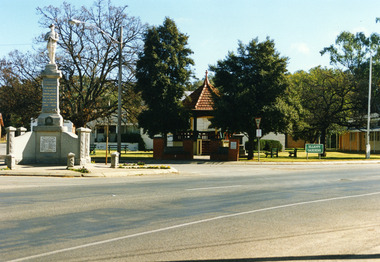
... . ### Benjamin Green and the Charlton Band Rotunda The **Ben Green Memorial Rotunda**, located in Elliott Gardens, stands as a tribute to one of Charlton’s most active citizens. .... ### Benjamin Green and the Charlton Band Rotunda The **Ben Green Memorial Rotunda**, located in Elliott Gardens, stands as a tribute to one of Charlton’s most active citizens. ...Granite War monument to the left, Brick rotunda in the center within Elliot Garden, Sign reads Elliot Gardens. The War monument unveiled by Premier Sir William McPherson KCMG on June 23rd 1923. Elliot Gardens named to honor General Harold 'Pompey" Elliot, named in 1940. ### Benjamin Green and the Charlton Band Rotunda The **Ben Green Memorial Rotunda**, located in Elliott Gardens, stands as a tribute to one of Charlton’s most active citizens. **Benjamin Green** was a solicitor who practiced law in the town from 1895 until his death in 1923. During his 28 years in the community, he held leadership roles in many of the organizations that shaped the town’s infrastructure and social life. #### Professional and Civic Work Green was a key figure in establishing essential services for Charlton. He was one of the originators of the **Electric Light and Power Company** and served as the solicitor for the **Water Trust**. His commitment to education was shown through his work as a "prime mover" in the creation of the **Charlton Higher Elementary School**. His community involvement also included: * **Sport:** He introduced golf to Northern Victoria and founded the **Charlton Golf Club** in 1900, serving as its President until his death. He also founded the **Plumpton and Open Coursing Club**. * **Veterans:** He took a strong interest in the welfare of returned soldiers and donated **£100** toward the town's war memorial. * **Culture:** He was an active member of the **Mechanics Institute**. #### The Memorial Rotunda When Green passed away in 1923, a public fund was started to build a band rotunda for outdoor music recitals in his memory. The structure was designed and built by **Folliott Gilmore**, a local builder and timber merchant. It was officially dedicated by his friend **Frank Tate**, the Victorian Director of Education. #### Historical Celebrations The rotunda became a central point for major community events. During a "Back-to-School" celebration held during Show Week, the town was decorated with **12,000 handmade paper flowers** created by local women’s organisations. These flowers covered the rotunda, the bridge, and the town entrances. The event was a significant historical bridge for the town; it was attended by nine original students who had attended Charlton's first **"bark hut" school** in 1875, allowing them to see the modern developments Green had helped achieve. Colour photograph of the Granite War monument to the left, Brick rotunda in the center within Elliot Garden, Sign reads Elliot Gardens.war memorial, elliott gardens, charlton, halls, parks, reserves -
 Charlton Golden Grains Museum Inc
Photograph, c.1980
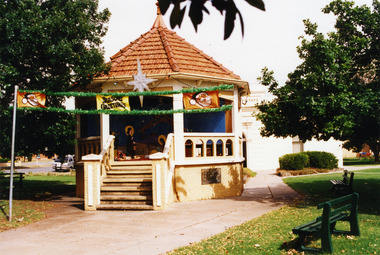
... . ### Benjamin Green and the Charlton Band Rotunda The **Ben Green Memorial Rotunda**, located in Elliott Gardens, stands as a tribute to one of Charlton’s most active citizens. .... ### Benjamin Green and the Charlton Band Rotunda The **Ben Green Memorial Rotunda**, located in Elliott Gardens, stands as a tribute to one of Charlton’s most active citizens. ...Band Rotunda in gardens erected in 1926 in memory of Benjamin Green (Charlton benefactor and solicitor). Red tiled roof and brick base. Steps lead up to the base. ### Benjamin Green and the Charlton Band Rotunda The **Ben Green Memorial Rotunda**, located in Elliott Gardens, stands as a tribute to one of Charlton’s most active citizens. **Benjamin Green** was a solicitor who practiced law in the town from 1895 until his death in 1923. During his 28 years in the community, he held leadership roles in many of the organizations that shaped the town’s infrastructure and social life. #### Professional and Civic Work Green was a key figure in establishing essential services for Charlton. He was one of the originators of the **Electric Light and Power Company** and served as the solicitor for the **Water Trust**. His commitment to education was shown through his work as a "prime mover" in the creation of the **Charlton Higher Elementary School**. His community involvement also included: * **Sport:** He introduced golf to Northern Victoria and founded the **Charlton Golf Club** in 1900, serving as its President until his death. He also founded the **Plumpton and Open Coursing Club**. * **Veterans:** He took a strong interest in the welfare of returned soldiers and donated **£100** toward the town's war memorial. * **Culture:** He was an active member of the **Mechanics Institute**. #### The Memorial Rotunda When Green passed away in 1923, a public fund was started to build a band rotunda for outdoor music recitals in his memory. The structure was designed and built by **Folliott Gilmore**, a local builder and timber merchant. It was officially dedicated by his friend **Frank Tate**, the Victorian Director of Education. #### Historical Celebrations The rotunda became a central point for major community events. During a "Back-to-School" celebration held during Show Week, the town was decorated with **12,000 handmade paper flowers** created by local women’s organisations. These flowers covered the rotunda, the bridge, and the town entrances. The event was a significant historical bridge for the town; it was attended by nine original students who had attended Charlton's first **"bark hut" school** in 1875, allowing them to see the modern developments Green had helped achieve. Standard colour photo, not mounted.charlton, rotunda, elliott gardens, green b, mechanics institure -
 Wangaratta RSL Sub Branch
Newspaper - Newspaper Articles, 1940
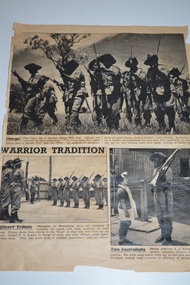
... - image of members of the aboriginal group carrying out a baton charge Article Two - Officer's Tribute - image of aborigines at Wangaratta carry out ceremony of changing of the guard Article Three - Two Australians - image of Shirley Anderson, 8, of Wangaratta frequently entertains Diggers, singing and dancing. ...- image of members of the aboriginal group carrying out a baton charge Article Two - Officer's Tribute - image of aborigines at Wangaratta carry out ceremony of changing of the guard Article Three - Two Australians - image of Shirley Anderson, 8, of Wangaratta frequently entertains Diggers, singing and dancing. ...Article One - Charge! - image of members of the aboriginal group carrying out a baton charge Article Two - Officer's Tribute - image of aborigines at Wangaratta carry out ceremony of changing of the guard Article Three - Two Australians - image of Shirley Anderson, 8, of Wangaratta frequently entertains Diggers, singing and dancing. She visits camp nearly every day to chat with guard on duty. Aboriginal soldiers formed a special all volunteer platoon at No 9 Camp Wangaratta in Victoria from late 1940 until February 1941. No 9 Camp was set up at the Wangaratta Showgrounds to allow the formation of the 2/24th Australian Infantry Battalion prior to leaving for Egypt. Major Joseph Albert Wright a WW1 Light Horse veteran was in charge of this platoon the only Aboriginal squad in the Australian Military Forces at that time. The soldiers from Lake Tyers enlisted at Caulfield between June and July 1940 include Harold Cornelius HAYES VX 48217 DOB 2/4/1916 Enlisted 25/7/40 Discharged 22/3/1941 Edward FOSTER VX48218 DOB 25/5/1921 Enlisted 25/7/1940 Discharged 22/3/1941 Noel Ernest HOOD VX48194 DOB 3/1/1919 Enlisted 25/7/1940 Discharged 22/3/1941 Edward Leslie MULLETT VX48199 DOB 30/6/1910 Enlisted 25/7/1940 Discharged 22/3/1941 Samuel Richard RANKIN VX48201 DOB 23/7/1910 Enlisted 25/7/1940 Discharged 22/3/1941 Stewart HOOD VX47351 DOB 23/1/1903 Enlisted 18/7/1940 Discharged 22/3/1941 William GORRIE VX48208 DOB 22/11/1921 Enlisted 25/7/1940 Discharged 22/3/1941 David John MULLETT VX48195 DOB 10/6/1919 Enlisted 25/7/1940 Discharged 22/3/1941 Arthur Alexander (Tom?) MULLETT VX48198 DOB 25/11/1914 Enlisted 25/7/1940 Discharged 22/3/1941 Images relates to the "special platoon" based at No 9 Camp Wangaratta as being the Australian Army's first all Aboriginal Unit formed in 1940. The soldiers were all volunteers mainly from Lake Tyers in Victoria. In addition to normal army training they performed guard duty at the Army Hospital and Camp. They formed the Gum Leaf Band and led the troops at community singing and assisted in Methodist Church services. Three black and white newspaper articles adhered to cream paperWarrior Tradition Written in blue ink 28/12/1940no 9 camp wangaratta, aboriginal platoon -
 Melbourne Legacy
Album - Photo album, A record of comradeship activities, 1970s-1980s
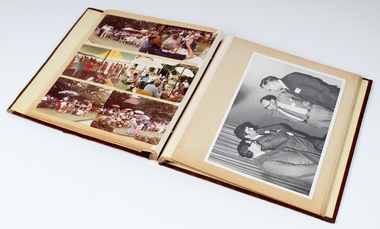
... At the 1981 comradeship Christmas party, the held a 'this is your life' tribute to President Ken Green....At the 1981 comradeship Christmas party, the held a 'this is your life' tribute to President Ken Green. The Comradeship photo album was put together by the Comradeship committee and records events that Legatees did and places they lived or visited. ...This album of Comradeship activities was compiled by Legatee Fred Holdsworth. It contains photographs, newspaper cuttings and ephemera relating to various “Comradeship” activities (social gatherings) held throughout the 1970s and early 1980s. Items included various events legatees participated in. First few pages had photos from a gathering at Cruden Farm on 15 May 1977. Cruden Farm was owned by Elisabeth Murdoch, the mother-in-law of Legatee Geoff Handbury. It appears there was a kite flying contest. Names are not listed. Three photos were from Queensland where Legatee Wal Escott had retired at Mundoona apartments, Noosa Heads, one photo shows him with Lorna Grimwade on 6/10/1979. There is a black and white photo of Max Armstrong, Rex Hall, Harry Burton, Warren Hardy riding horses in the Anzac Day march. The year is not known but an accompanying newspaper article mentions that they had been riding every year for 13 years on horses loaned by the police mounted branch. The newspaper clipping shows another photo of the four. A photo of seven legatees including David Carter were at the Numurkah Annual meeting in 1978. There are 8 photos of a gathering of Legatees and their wives at Stanhope in 1979. A photo of a Christmas party at Chaucers in 1979 was missing from the page, it has shown Choirmaster Reg Thomson and Choristers; Rob Allison, Bruce Hall, Les Patch, Bill Seager, David Syme and Ron Austin; with the M.C. being Fred Holdsworth. There was a trip to a trout farm in Alexandra Yea area in February 1978. At a comradeship evening there a photos showed the Comradeship committee of Harold Berg, John Cooper and Fred Holdsworth. Also photos from Anzac Night in 1980 and 1981. Plus other gathering at people's homes. A black and white photo of men in formal black tie, is from a night at the Windsor Hotel to farewell Sit Thomas White to become Australia's High Commissioner in London. Left to right are Sir Archie Michaelis, Sir John Latham, Sir Thomas White, Lt Col Donovan Joynt and Sir Stanley Savige. At the 1981 comradeship Christmas party, the held a 'this is your life' tribute to President Ken Green.The Comradeship photo album was put together by the Comradeship committee and records events that Legatees did and places they lived or visited. Some appear to be trips to visit other Legatees living overseas and social occasions held in different places. It shows the bond that Legatees have with each other.Brown vinyl photo album. The front cover is embellished with a double gold border. The album contains thirty pages bearing both colour and black and white photographs as well as newspaper clippings from various “Comradeship” events during the 1970s and 1980s.Inside cover - “A record of Comradeship activities / Fred Holdsworth” ? First page - “AT CRUDEN PARK / 15 May 1977” Third page - “CHAMP THE KITE MAN” Fourth page - “THE SHRINE 1977” / “THE CHAMP” / “REX” Fifth page - “Lorna Grimwade/ + Wal Escott/ at Noosa Heads, Q. / 6/10/79” Sixth page - “Max Armstrong, Rex Hall, Harry Burton, Warren Hardy” Seventh page - “Numurkah Annual 1978” / “ANZAC Night 1973” Eighth page - “STANHOPE 1979” Ninth page - “THE CHRISTMAS CHORISTERS at CHAUCERS CANTERBURY 1979.” / “FEARLESS FREDS FAMOUS FOLLIES. CHOIRMASTER. Reg Thomson. CHORISTERS. Rob Allison. Bruce Hall. Les Patch. Bill Seager. David Syme. Ron Austin. / M.C. Fred Holdsworth.” Tenth page - “ALEXANDRA YEA / ~ / FEBRUARY 1978” Eleventh page - “COMRADESHIP HIERARCHY 1979 / HAROLD BERG / DEP CHAIRMAN / JOHN COOPER / CHAIRMAN / FRED HOLDSWORTH / TREASURER” Twelfth page - “ANZAC NIGHT / ~ / 1980” Eighteenth page - “ANZAC NIGHT - 1981” Nineteenth page - “ANZAC NIGHT -1981” Twenty Second - “THIS IS YOUR LIFE / 1981 comradeship/ christmas party” comradeship, events, legatee event -
 Mission to Seafarers Victoria
Journal (item) - Periodicals-Annual, Shiplovers' Society of Victoria, The Annual Dog Watch
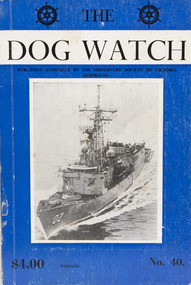
... Bonwick - 57 The Dog Watch -- A Tribute to S. A. E. Strom - C. E. - - 58 Behind the Scenes of Captain's Courageous - Capt. ...Bonwick - 57 The Dog Watch -- A Tribute to S. A. E. Strom - C. E. - - 58 Behind the Scenes of Captain's Courageous - Capt. ...This journal provides the reader with glimpses of the adventures and hardships of a seaman's life. Many of the stories are of sailing ships.Contributes to our knowledge of the importance of shipping and places on record those stories of the sea which would otherwise be lost.Contents Foreword - His Excellency Rear Admiral Sir Brian Murray, K.C.M.G., A.O., K.St.J. - 5 Editorial - Joyce M. B. Lambert - 7 Thirty Years at Garden Island - Illingworth Mackay - 11 Swedish Christmas in New Guinea Waters - Joyce M. B. Lambert - 26 A Gentlemen's Disagreement - Capt. W. Sheffield-Williamson - 34 Around the Horn in "Falls of Clyde" - Capt. Frederick S. Moody, Jnr. - 37 Off the Beaten Track - Mrs. Mary Mithassel - 46 Greek Determination - W. P. Shemmeld - 51 Wharf Cats and Psychology - J.M.B.L. - 56 The Sailor's Wife - C. E. Bonwick - 57 The Dog Watch -- A Tribute to S. A. E. Strom - C. E. - - 58 Behind the Scenes of Captain's Courageous - Capt. Fred Klebingat - 63 Human Error - R. N. Thiele -66 Pay Up - Alex Duffield - 70 Letters from the Barque "Garthneill" Apprentice Colin Goss - 73 Drake and his Treasure - Captain R. G. Edwards - 82 The Story of Two Dogs - Captain Laurie Gibson - 87 Adventure and Misadventure - K. S. Bull - 93 Moonstruck - Captain P. J. Elsey - 96 Confirmation of the Flood? - Doctor J. C. Anderson - 98 The "Scottish Glens" - Captain W. J. Cowling - 100 'Couta Boats at the "Cliff" - Tim Phillips - 107 "Marco Polo" - Extracts - 111 Sailors at Westminster Abbey - E. Harper - 115 Book Reviewssailing ships, steamships, shipping, seafaring life, shiplovers' society of victoria, dog watch -
 Eltham District Historical Society Inc
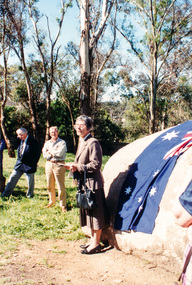
Photograph, Mary Owen, granddaughter of Walter Withers, unveiling the commemorative plaque on Walter Withers Rock at the corner of Bible and Arthur Streets, Eltham, 13 Oct 1990, 13/10/1990
... Her speech provided an interesting personal perspective on Withers and is repeated in full here: I feel somewhat overwhelmed by the responsibility of paying tribute to the man you have all come to honour today. ...Her speech provided an interesting personal perspective on Withers and is repeated in full here: I feel somewhat overwhelmed by the responsibility of paying tribute to the man you have all come to honour today. ...[from EDHS Newsletter No. 75, November 1990:] WALTER WITHERS PLAQUE At long last we have unveiled our plaque in the Walter Withers Reserve. The function was attended by a number of members and friends of the Society and descendants of the Withers family. Following the unveiling, the group proceeded to the Eltham Shire Office for afternoon tea and a small exhibition of Withers' paintings arranged by Andrew Mackenzie. The unveiling was performed by Mary Owen, a grand-daughter of Walter Withers. Her speech provided an interesting personal perspective on Withers and is repeated in full here: I feel somewhat overwhelmed by the responsibility of paying tribute to the man you have all come to honour today. I have the feeling that most of you probably know more about him and his work than I do. Walter Withers died nearly seven years before I was born and so I never knew him. Sadly, although other members of his family inherited some of his talent, I was not among them and I know very little about art. This is doubly hard to bear because my husband had some ability to draw and my second daughter also has some talent in this direction. My children are all artistic - mostly in the field of music inherited partly from their father - a Welshman who sang like a Welshman - and partly from my grandmother, Fanny Withers who, I believe was no mean pianist. However all this talent gave me a miss and for many years I felt a complete ignoramus in the fields of the arts. It was not until I was nearly fifty years old that I walked into a gallery in Brisbane and, as I wandered around the room, suddenly one picture leapt at me and I knew instantly that it had been painted by my grandfather. I had never seen the picture before and it gave me quite a shock to find that I had recognized the style of painting. I realized then that I had absorbed more than I realized simply by living with pictures and with people who painted them and talked about their painting and the painting of others. When I was a child I sometimes spent school holidays with my Aunt Margery Withers and her husband, Richard McCann. Aunt Marge painted me several times but I'm afraid I was a restless subject and used to sit reading a book and look up grudgingly when she wanted to paint my eyes. During the September holidays my aunt and uncle were busy preparing paintings far the annual exhibition of the Melbourne Twenty Painters, to which they both belonged. I remember how important I used to feel when they took me along to the Athenaeum Gallery on the Friday night before the opening to help hang their pictures. There were many artists there but the two I remember are perhaps surprisingly both women: Miss Bale and Miss Tweddle. I remember how cold it used to be up in that gallery at night. They used to heat water on a gas ring to make tea and Aunt Marge used to bring sandwiches and fruit for our evening meal. Everyone seemed to be poor in those days and no-one dreamed of going out for a meal. It was a case of make-do - even to cutting down frames to fit pictures or cutting pictures to fit the frames. They had to use the same frames from year to year if the pictures didn't sell. The opening was an exciting event for me. I felt I was privileged to meet important people - people who knew a lot more than I - and Uncle Dick would get quite merry after a couple of the tiny sweet sherries which were always distributed. I realise now that quite a lot of "art talk" rubbed off on me during my visits to the Athenaeum and during my stays with my aunt and uncle. I suspect that much of our most useful learning comes this way and those of us who have had the privilege of associating with artists, writers, philosophers and other thinkers have a richness in our lives of which we may be unaware. Walter Withers was a prolific painter and, although he painted for love of it, I suspect that the need to provide for his family drove him, like Mozart, to greater efforts than he might otherwise have achieved. Reading old letters and articles about the Heidelberg artists, I have come to realize something of the constant strain placed on many of them - particularly Withers and McCubbin - by poverty and the need to make ends meet. Withers was ever conscious of the need to provide for his wife and his five children and there are touching letters to his wife, regretting that he was not able to earn more for them. In addition to his painting, he worked hard at teaching and illustrating and, as he grew older, the strain began to tell and his health deteriorated. He seems never to have had a very strong constitution and suffered from rheumatism, which must have made painting quite painful at times. His eldest daughter, Gladys, was eventually confined to a wheelchair with rheumatoid arthritis and I have a tendency to arthritis myself, so I am particularly aware of what this could have meant to him. Recently I found a short letter written by my mother to her mother, Fanny Withers on the anniversary of her father's birthday in 1919, in which she said: "Poor old Dad, I often think now what a lot he must have suffered. His life was too hard and too strenuous for him. He had too many chick-a-biddies, I think. He wasn't equal to so much town life and train journeys with so many delicacies as he had. Since I have been ill, I have realised what he must have felt like.” He certainly drove himself to produce. He travelled all over Victoria by train, buggy, bicycle and on foot and for a time he travelled from Eltham to Melbourne every day by train, although later he lived in Melbourne during the week and only returned to Eltham for the weekends. My mother died seven years after her father's death, when my twin sisters were 10 days old and I was 16 months. So I never knew my mother or my grandfather. But my two aunts, Gladys and Margery, sometimes took me to stay with Gan Withers at Southernwood in Bolton Street . No cars in those days and it seemed a very long hot and dusty walk from the Station. Three memories remain with me of Southernwood. One is the well at the back which I found quite terrifying; the second is Gan killing a snake - even more terrifying. She was a formidable woman, my grandmother and a great ally and support to her husband. I think she was the business end of the partnership. The third memory of Southernwood is my grandfather's studio – down what seemed like a toy staircase inside the room. This and the big walk-in fireplace stayed in my mind from the age of about six until I saw them again about forty years later when the house was being used as a Sunday School. I just wish that money could be found to purchase this old house for the City of Eltham so that a permanent museum could be established in memory of a man who did so much to put Eltham on the map of art history. Recently I have become interested in family history and spent some time in England, Ireland and Wales looking for traces of my ancestors. I realized then how important it is to have records of people who have contributed to our society. We forget so soon and it is amazing how often, within two generations, names, dates and many details are forgotten. We are fortunate that so many of Walter Withers' works have been bought by galleries and that people like Andrew Mackenzie have taken the trouble to search out people who knew him and to write about him and his work. And I am very grateful to the Historical Society of Eltham for recognizing the importance of having a permanent tribute in Eltham to the contribution made by Walter Withers, who loved Eltham so much and who has assured this lovely district a place in the annals of history. I am indebted to Kathleen Mangan; the daughter of another famous Australian painter , Fred McCubbin, - featured in The Age this morning (thanks again to Andrew Mackenzie) for the most apt tribute to Walter Withers. Kathleen is not well and she rang me a couple of days ago, regretting that she could not be present today “to pay tribute” as she said, “to Walter Withers for I always think Walter Withers is the spirit of Eltham.” Thank you, Kathleen. And now I have much pleasure in unveiling the plaque commissioned by the Eltham Historical Society from Bob McLellan of Charmac Industries to commemorate the life and work of Walter Withers, the spirit of Eltham. Mary Owen, 13 October 1990.Three colour photographswalter withers rock, walter withers reserve, mary owen -
 Eltham District Historical Society Inc
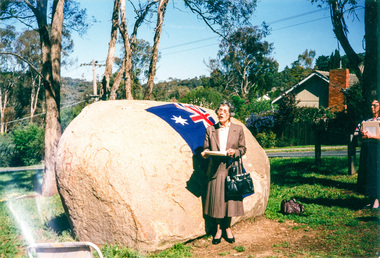
Photograph, Mary Owen, granddaughter of Walter Withers, unveiling the commemorative plaque on Walter Withers Rock at the corner of Bible and Arthur Streets, Eltham, 13 Oct 1990, 13/10/1990
... Her speech provided an interesting personal perspective on Withers and is repeated in full here: I feel somewhat overwhelmed by the responsibility of paying tribute to the man you have all come to honour today. ...Her speech provided an interesting personal perspective on Withers and is repeated in full here: I feel somewhat overwhelmed by the responsibility of paying tribute to the man you have all come to honour today. ...[from EDHS Newsletter No. 75, November 1990:] WALTER WITHERS PLAQUE At long last we have unveiled our plaque in the Walter Withers Reserve. The function was attended by a number of members and friends of the Society and descendants of the Withers family. Following the unveiling, the group proceeded to the Eltham Shire Office for afternoon tea and a small exhibition of Withers' paintings arranged by Andrew Mackenzie. The unveiling was performed by Mary Owen, a grand-daughter of Walter Withers. Her speech provided an interesting personal perspective on Withers and is repeated in full here: I feel somewhat overwhelmed by the responsibility of paying tribute to the man you have all come to honour today. I have the feeling that most of you probably know more about him and his work than I do. Walter Withers died nearly seven years before I was born and so I never knew him. Sadly, although other members of his family inherited some of his talent, I was not among them and I know very little about art. This is doubly hard to bear because my husband had some ability to draw and my second daughter also has some talent in this direction. My children are all artistic - mostly in the field of music inherited partly from their father - a Welshman who sang like a Welshman - and partly from my grandmother, Fanny Withers who, I believe was no mean pianist. However all this talent gave me a miss and for many years I felt a complete ignoramus in the fields of the arts. It was not until I was nearly fifty years old that I walked into a gallery in Brisbane and, as I wandered around the room, suddenly one picture leapt at me and I knew instantly that it had been painted by my grandfather. I had never seen the picture before and it gave me quite a shock to find that I had recognized the style of painting. I realized then that I had absorbed more than I realized simply by living with pictures and with people who painted them and talked about their painting and the painting of others. When I was a child I sometimes spent school holidays with my Aunt Margery Withers and her husband, Richard McCann. Aunt Marge painted me several times but I'm afraid I was a restless subject and used to sit reading a book and look up grudgingly when she wanted to paint my eyes. During the September holidays my aunt and uncle were busy preparing paintings far the annual exhibition of the Melbourne Twenty Painters, to which they both belonged. I remember how important I used to feel when they took me along to the Athenaeum Gallery on the Friday night before the opening to help hang their pictures. There were many artists there but the two I remember are perhaps surprisingly both women: Miss Bale and Miss Tweddle. I remember how cold it used to be up in that gallery at night. They used to heat water on a gas ring to make tea and Aunt Marge used to bring sandwiches and fruit for our evening meal. Everyone seemed to be poor in those days and no-one dreamed of going out for a meal. It was a case of make-do - even to cutting down frames to fit pictures or cutting pictures to fit the frames. They had to use the same frames from year to year if the pictures didn't sell. The opening was an exciting event for me. I felt I was privileged to meet important people - people who knew a lot more than I - and Uncle Dick would get quite merry after a couple of the tiny sweet sherries which were always distributed. I realise now that quite a lot of "art talk" rubbed off on me during my visits to the Athenaeum and during my stays with my aunt and uncle. I suspect that much of our most useful learning comes this way and those of us who have had the privilege of associating with artists, writers, philosophers and other thinkers have a richness in our lives of which we may be unaware. Walter Withers was a prolific painter and, although he painted for love of it, I suspect that the need to provide for his family drove him, like Mozart, to greater efforts than he might otherwise have achieved. Reading old letters and articles about the Heidelberg artists, I have come to realize something of the constant strain placed on many of them - particularly Withers and McCubbin - by poverty and the need to make ends meet. Withers was ever conscious of the need to provide for his wife and his five children and there are touching letters to his wife, regretting that he was not able to earn more for them. In addition to his painting, he worked hard at teaching and illustrating and, as he grew older, the strain began to tell and his health deteriorated. He seems never to have had a very strong constitution and suffered from rheumatism, which must have made painting quite painful at times. His eldest daughter, Gladys, was eventually confined to a wheelchair with rheumatoid arthritis and I have a tendency to arthritis myself, so I am particularly aware of what this could have meant to him. Recently I found a short letter written by my mother to her mother, Fanny Withers on the anniversary of her father's birthday in 1919, in which she said: "Poor old Dad, I often think now what a lot he must have suffered. His life was too hard and too strenuous for him. He had too many chick-a-biddies, I think. He wasn't equal to so much town life and train journeys with so many delicacies as he had. Since I have been ill, I have realised what he must have felt like.” He certainly drove himself to produce. He travelled all over Victoria by train, buggy, bicycle and on foot and for a time he travelled from Eltham to Melbourne every day by train, although later he lived in Melbourne during the week and only returned to Eltham for the weekends. My mother died seven years after her father's death, when my twin sisters were 10 days old and I was 16 months. So I never knew my mother or my grandfather. But my two aunts, Gladys and Margery, sometimes took me to stay with Gan Withers at Southernwood in Bolton Street . No cars in those days and it seemed a very long hot and dusty walk from the Station. Three memories remain with me of Southernwood. One is the well at the back which I found quite terrifying; the second is Gan killing a snake - even more terrifying. She was a formidable woman, my grandmother and a great ally and support to her husband. I think she was the business end of the partnership. The third memory of Southernwood is my grandfather's studio – down what seemed like a toy staircase inside the room. This and the big walk-in fireplace stayed in my mind from the age of about six until I saw them again about forty years later when the house was being used as a Sunday School. I just wish that money could be found to purchase this old house for the City of Eltham so that a permanent museum could be established in memory of a man who did so much to put Eltham on the map of art history. Recently I have become interested in family history and spent some time in England, Ireland and Wales looking for traces of my ancestors. I realized then how important it is to have records of people who have contributed to our society. We forget so soon and it is amazing how often, within two generations, names, dates and many details are forgotten. We are fortunate that so many of Walter Withers' works have been bought by galleries and that people like Andrew Mackenzie have taken the trouble to search out people who knew him and to write about him and his work. And I am very grateful to the Historical Society of Eltham for recognizing the importance of having a permanent tribute in Eltham to the contribution made by Walter Withers, who loved Eltham so much and who has assured this lovely district a place in the annals of history. I am indebted to Kathleen Mangan; the daughter of another famous Australian painter , Fred McCubbin, - featured in The Age this morning (thanks again to Andrew Mackenzie) for the most apt tribute to Walter Withers. Kathleen is not well and she rang me a couple of days ago, regretting that she could not be present today “to pay tribute” as she said, “to Walter Withers for I always think Walter Withers is the spirit of Eltham.” Thank you, Kathleen. And now I have much pleasure in unveiling the plaque commissioned by the Eltham Historical Society from Bob McLellan of Charmac Industries to commemorate the life and work of Walter Withers, the spirit of Eltham. Mary Owen, 13 October 1990.Two colour photographswalter withers rock, walter withers reserve, mary owen -
 Bendigo Historical Society Inc.
Document - The Victorian Country Volleyball Council Miscellaneous Items, 1989-2012
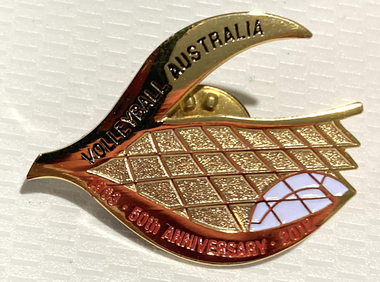
... Back Row L-R: Ann Mansfield, Diane Brown, Sharyn Wiebe, Rosie Punton, Front Row L-R Lyn Wingrave, Sharyn Weibe, Jill Crossley (nee Grieve,)with coach John Bullen 11171.27h Eric Hayman Past Chairman of Volleyball Victoria, a tribute by Life member Murray Mansfield, written in July 2002 after his death. ...Back Row L-R: Ann Mansfield, Diane Brown, Sharyn Wiebe, Rosie Punton, Front Row L-R Lyn Wingrave, Sharyn Weibe, Jill Crossley (nee Grieve,)with coach John Bullen 11171.27h Eric Hayman Past Chairman of Volleyball Victoria, a tribute by Life member Murray Mansfield, written in July 2002 after his death. ...Volleyball has been played in regional Victoria since the early-1960’s. During those early days, most competitions, like the founders of our great sport, were run by, or in conjunction with, the YMCA. Competitions were running at the Ballarat School of Mines and the YMCA’s of Bendigo, Geelong and Warrnambool. In August 1966, an invitation was extended by the Victorian Amateur Volleyball Association to play in the first State-wide event at Monash University. Geelong and Bendigo accepted the invitation with Melbourne represented by Sisu. For Bendigo players at least, this was the first exposure to ‘international rules’, which prevented upward scoops with open hands, introduced an action called a ‘dig’ and seemed to penalise most overhead actions using the fingers as ‘double hits’! Over the next few years, the sport expanded through the YMCA movement with weekly competitions starting up in Ararat, Warrnambool and Latrobe Valley. The Victorian Regional Council of YMCA’s proposed the first Victorian YMCA Championship in Warrnambool on 30th March 1968 with an entry fee of $4.00 per team. The sport continued to grow with additional regional associations affiliating with the Victorian Amateur Volleyball Association (now VVI) who provided the coaching and refereeing assistance needed to raise the standard of play. In 1970, the YMCA Championships started to give way to the Victorian Country Championships with the first ever event held in Bendigo. In 1973, a re-organisation of the VAVA saw the proposal to create separate Victorian Country and Metropolitan Volleyball Councils. The VCVC was established in 1974 and took over the organisation of the Victorian Country Championships. For the next 10-12 years, the Country Championships grew in stature with the inclusion of two divisions for open men and women and junior divisions for boys and girls. Representative teams successfully contested Australian Country Championships between Victoria, South Australia and New South Wales on several occasions. In October 1985, the VCVC voluntarily wound up the Council and handed the responsibility for the Country Championships back to Volleyball Victoria, who by that time had full-time State Executive and Coaching Directors. Since that time, the Long Weekend in June has continued to be the date of the major annual volleyball event for most regional associations, even though in 1986 the Junior Country Championships were wound up in favour of state and national schools events. A number of regional associations have ceased to exist, as have a number of regional tournaments. Regional leagues were created in both the Gippsland and Central, North-West regions, with Gippsland the only one to survive. Some associations have successfully competed in the State League competitions at various times. Following the experience gained by a number of regional administrators working on the Sydney Olympic Games, a proposal to revamp the Victorian Country Championship was put to VVI in early 2002. Later that year, the Volleyball Victoria Country Championships Commission was formed to implement the recommendations of the review and take control of the event into the future. These championships now provide regional players and officials an opportunity to participate in a consistently well-managed event, using many international protocols and a high standard of presentation. Without doubt, this event now ranks as one of the best volleyball events in Australia. Source: 2022 Country Championship regulations The management of the Country Championships by the Victorian Country Championship Commission certainly achieved the objective of raising the standard of presentation, and delivering a consistently high quality event. However, the demands on Host Associations began to take their toll, with several Associations declining the opportunity to host the event due to the high workload. Similarly, the workload of the volunteer Commissioners also took its toll, with the Commission unable to fill casual vacancies. In 2023, the Commission handed the organisation of the Championships back to VVI, who with paid staff, were better equipped to manage the event.This item contains The Victorian Country Volleyball Council Miscellaneous Items; it includes the following items: 11171.27a Australian Volleyball Federation 50th Anniversary Commemorative Pin - Presented to Malcolm Qualtrough in 2012 11171.27b Australian Volleyball Federation 50th Anniversary Celebration Booklet 2012 11171.27c Bendigo Volleyball Association 50th Anniversary Booklet created by Bronwyn James 1964 - 2014 11171.27d Bendigo Volleyball in the beginning by Murray Mansfield 11171.27e Deputy Leader of the Australian Senate, and President of Volleyball Victoria Inc., Senator Stephen Conroy presenting Life Membership Award to Malcolm Qualtrough, April 2011 11171.27f The Mayor of Bendigo Councillor Rod Fyffe at the 50th Anniversary of the Country Volleyball Championships in 2019, with Geoff Rietschel, the Executive Officer of Volleyball Victoria Inc. 11171.27g Bendigo representative country volleyball team reunion. Back Row L-R: Ann Mansfield, Diane Brown, Sharyn Wiebe, Rosie Punton, Front Row L-R Lyn Wingrave, Sharyn Weibe, Jill Crossley (nee Grieve,)with coach John Bullen 11171.27h Eric Hayman Past Chairman of Volleyball Victoria, a tribute by Life member Murray Mansfield, written in July 2002 after his death. Eric had been identified as a potential Chairman of the Victorian Amateur Volleyball Association (VAVA). He had an engineering background, and was Managing Director of Hayman Reece, a name synonomous with caravanning and towing aids. After his retirement, Eric continued to maintain a small engineering workshop at his home in Malvern, complete with lathe, welders, grinders and other equipment which shared the garage with his beloved Rolls Royce and motor cycle. 11171.27i Bendigo Volleyball association 50th Anniversary Function Video on USB Stick - Contact the BHS for details or view on YouTube - See Link Belowvictorian country volleyball council, vcvc, victorian amateur volleyball association, volleyball victoria -
 Bendigo Historical Society Inc.
Document - LONG GULLY HISTORY GROUP COLLECTION: GUIDE TO SOME FAMOUS MINES
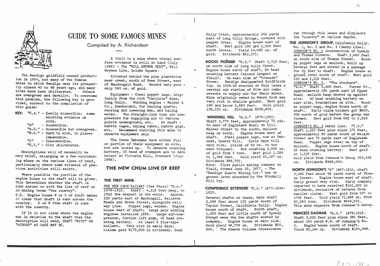
... North of Staley,The Duke of Edinburgh, New St Mungo, Duchess Tribute, South Devonshire, Duchess of Edinburgh, Princess Alexandra, West United Devonshire, Hopewell, Phoenix. ...North of Staley,The Duke of Edinburgh, New St Mungo, Duchess Tribute, South Devonshire, Duchess of Edinburgh, Princess Alexandra, West United Devonshire, Hopewell, Phoenix. ...Three pages titled Guide to Some Famous Mines. Compiled by A Richardson. Each mine is listed as on the reef it is situated on. Reefs are The New Chum Line of Reef and the Garden Gully Line of Reefs, and the Devonshire Group. Mentioned is the mine's location, depth of shaft, poppet legs, machinery, location of engine house, gold yield, dividends and owners of mine. The mines are: The New Chum Line of Reef. The New Chum Railway, Kochs Pioneer, Windmill Hill, Confidence Extended, Johnson's No 1, Johnson's No2, Johnson's No 3, North Johnson's, Princess Dagmar, Golden Age, Johnson's Reef Extended, Golden Pyke, Constellation, Great Northern, Virginia, Specimen Hill United, New Argus, Clarence United, North Argus, South New Moon, New Chum Hill, The New Chum and Victoria, Catherine Reef United. Garden Gully Line of Reefs. The Great Southern, Ulster United, Londonderry, South Garden, The Sea Amalgamated, Garden Gully United, Victory and Pandora, Unity Mine, Carlisle United, Cornish United, Eureka Extended, South Belle Vue United, Shenandoah, Shamrock, New Chum Consolidated, New Chum United, Lansell's 222, Rae's Open Cut, Great Central Victoria, Victoria Consols, The Ironbark, Hercules and Energetic, Pearl, The Devonshire Group. North of Staley,The Duke of Edinburgh, New St Mungo, Duchess Tribute, South Devonshire, Duchess of Edinburgh, Princess Alexandra, West United Devonshire, Hopewell, Phoenix. Yhe Mungo Mines. Unicorn, South St Mungo, Lady Barkly, The St Mungo, Sadowa, Eastwood. Snobs Hill Group. The Ellenborough, The Belmont and Saxby, York and Durham, The Acadia, William's United, The Victoria Hill - Ironbark, The North Old Chum, Lansell's Big 180, Ballerstadt's Open-Cut and The Victoria Quartz.bendigo, history, long gully history group, the long gully history group - guide to some famous mines, a richardson, the new chum railway, kochs pioneer, windmill hill, confidence extended, johnson's no 1, johnson's no2, johnson's no 3, north johnson's, princess dagmar, golden age, johnson's reef extended, golden pyke, constellation, great northern, virginia, specimen hill united, new argus, clarence united, north argus, south new moon, new chum hill, the new chum and victoria, catherine reef united, the great southern, ulster united, londonderry, south garden, the sea amalgamated, garden gully united, victory and pandora, unity mine, carlisle united, cornish united, eureka extended, south belle vue united, shenandoah, shamrock, new chum consolidated, new chum united, lansell's 222, rae's open cut, great central victoria, victoria consols, the ironbark, hercules and energetic, pearl, the duke of edinburgh, new st mungo, duchess tribute, south devonshire, duchess of edinburgh, princess alexandra, west united devonshire, hopewell, phoenix, unicorn, south st mungo, lady barkly, the st mungo, sadowa, eastwood, the ellenborough, the belmont and saxby, york and durham, the acadia, william's united, the victoria hill - ironbark, the north old chum, lansell's big 180, ballerstadt's open-cut, the victoria quartz -
Bendigo Historical Society Inc.
Document - Amy Huxtable - Report from the Interim Memorial Committee on a fitting recognition, and a further report on a subsequent public meeting called by the Mayor of Bendigo, 31 Mar 1980
... This Bendigo manufactured seat was a fitting tribute to one ofBendigo's most loved and esteemed citizens. ...This Bendigo manufactured seat was a fitting tribute to one ofBendigo's most loved and esteemed citizens. ...Amy Huxtable was born at Cheltenham in 1918, to Robert Henry Huxtable and Violet a Dagg. Her father was an installer for an oil company and travelled the State. taking his family with him. She completed her education at the Bendigo High School and later attended the Bendigo Business College, becoming an expert shorthand writer. Her first position was as a copy writer with Radio 3BO, in the mid 1930s. She worked with an advertising agency in Melbourne and then with the Age,newspaper. In 1953, Miss Huxtable was appointed temporarily to succeed Miss E B Millane as social editress of the Bendigo Advertiser, during the latter's absence abroad. In 1956, Amy travelled abroad and on her return in 1957 was appointed permanently as Women's editor, a position she held for twenty-three ears. During her early years with The Advertiser she wrote under the name Toora, but in later years her own name became widely known. Miss Huxtable was well known both in her professional capacity and through a interest and involvement in community activites. She was life governor of the Bendigo Hospital, the Bendigo Home for the Aged, and Mirridong Home for the Blind, she was a member of Soroptimist International and the Business and Professional Women's Club. Amy was also a tireless worker for the spastic society and a strong supporter of the YWCA. When Amy Huxtable died at Mt AJvernia Hospital on 16 January 1980 Mayor Campbell ordered the city flag to be flown at half-mast. "Lowering the flag is the least we can do for such a lady" Cr Campbell said. Douglas Lockwood, editor of the Bendigo Advertiser said, "She was a devot d colleague who gave her craft and her newspaper the kind of service which identified a rare and generous spirit." She was a true professional who decided to make Bendigo her home. More than 300 people packed St Paul's Church for her funeral ervice the bell tolled as the casket was carried from the church. At a ceremony in the Conservatory Gardens on No ember 22 1981 The Amy Huxtable Memorial Committee presented to the City of Bendigo, a garden seat in memory of the late Miss Huxtable. This Bendigo manufactured seat was a fitting tribute to one ofBendigo's most loved and esteemed citizens. All Miss Huxtable's Advertiser articles were microfilmed and presented to the Library by the above committee. Amy Huxtable - Report from the Interim Memorial Committee Public Meeting on a fitting recognition; and a further report on a subsequent public meeting called by the Mayor of Bendigo This is an eight page pdf document. The report contains: * The purpose of the meetings * Suggested ideas for recognition * The final suggestions * Details of those who attend the public meeting history, amy huxtable, bendigo, amy huxtable memorial committee -
Bendigo Historical Society Inc.
Document - Apologies and other correspondence for the public meeting called by the Mayor of Bendigo on a fitting recognition for the life of Amy Huxtable, 1980
... This Bendigo manufactured seat was a fitting tribute to one ofBendigo's most loved and esteemed citizens. ...This Bendigo manufactured seat was a fitting tribute to one ofBendigo's most loved and esteemed citizens. ...Amy Huxtable was born at Cheltenham in 1918, to Robert Henry Huxtable and Violet a Dagg. Her father was an installer for an oil company and travelled the State. taking his family with him. She completed her education at the Bendigo High School and later attended the Bendigo Business College, becoming an expert shorthand writer. Her first position was as a copy writer with Radio 3BO, in the mid 1930s. She worked with an advertising agency in Melbourne and then with the Age,newspaper. In 1953, Miss Huxtable was appointed temporarily to succeed Miss E B Millane as social editress of the Bendigo Advertiser, during the latter's absence abroad. In 1956, Amy travelled abroad and on her return in 1957 was appointed permanently as Women's editor, a position she held for twenty-three ears. During her early years with The Advertiser she wrote under the name Toora, but in later years her own name became widely known. Miss Huxtable was well known both in her professional capacity and through a interest and involvement in community activites. She was life governor of the Bendigo Hospital, the Bendigo Home for the Aged, and Mirridong Home for the Blind, she was a member of Soroptimist International and the Business and Professional Women's Club. Amy was also a tireless worker for the spastic society and a strong supporter of the YWCA. When Amy Huxtable died at Mt AJvernia Hospital on 16 January 1980 Mayor Campbell ordered the city flag to be flown at half-mast. "Lowering the flag is the least we can do for such a lady" Cr Campbell said. Douglas Lockwood, editor of the Bendigo Advertiser said, "She was a devot d colleague who gave her craft and her newspaper the kind of service which identified a rare and generous spirit." She was a true professional who decided to make Bendigo her home. More than 300 people packed St Paul's Church for her funeral ervice the bell tolled as the casket was carried from the church. At a ceremony in the Conservatory Gardens on No ember 22 1981 The Amy Huxtable Memorial Committee presented to the City of Bendigo, a garden seat in memory of the late Miss Huxtable. This Bendigo manufactured seat was a fitting tribute to one ofBendigo's most loved and esteemed citizens. All Miss Huxtable's Advertiser articles were microfilmed and presented to the Library by the above committee. Apologies and other correspondence for the public meeting called by the Mayor of Bendigo on a fitting recognition for the life of Amy Huxtable. There are eight pages of documents: * Apologies from Grace A. Craig and husband representing the Bendigo Business and Professional Women's Club, * Bendigo Trust letter correcting who represented them at the meeting from Mrs Myra Potter, Executive Officer, * Report from the first and second meetings of the Amy Huxtable Memorial Interim Committee, * Apology from Norma Young for the next committee meeting suggesting an appeal be launched if funds are not found for the memorial, * City of Bendigo Parks and Gardens letter 29 May 1980 giving permission for a memorial seat to be erected, * Interim committee report Thursday 5th June 1980, * July 1980 letter of thanks to the Mayor Cr R.L. Campbell from the Bendigo Advertiser Editor Douglas Lockwood, * Advertising brochure for a Cast Iron Lacework seat, * Report of the Memorial Committee heldon 24th July 1980 at the Bendigo Advertiser offices. * Letter from Miss Norma Young - a suggested seat design * July 1980 letter apology to the Mayor Cr R.L. Campbell from the Bendigo Advertiser Editor Douglas Lockwood, history, amy huxtable, bendigo, amy huxtable memorial committee -
Bendigo Historical Society Inc.
Document - Invitations to the Amy Huxtable Memorial Lunches and History Awards, 1994-1997
... This Bendigo manufactured seat was a fitting tribute to one ofBendigo's most loved and esteemed citizens. ...This Bendigo manufactured seat was a fitting tribute to one ofBendigo's most loved and esteemed citizens. ...Amy Huxtable was born at Cheltenham in 1918, to Robert Henry Huxtable and Violet a Dagg. Her father was an installer for an oil company and travelled the State. taking his family with him. She completed her education at the Bendigo High School and later attended the Bendigo Business College, becoming an expert shorthand writer. Her first position was as a copy writer with Radio 3BO, in the mid 1930s. She worked with an advertising agency in Melbourne and then with the Age,newspaper. In 1953, Miss Huxtable was appointed temporarily to succeed Miss E B Millane as social editress of the Bendigo Advertiser, during the latter's absence abroad. In 1956, Amy travelled abroad and on her return in 1957 was appointed permanently as Women's editor, a position she held for twenty-three ears. During her early years with The Advertiser she wrote under the name Toora, but in later years her own name became widely known. Miss Huxtable was well known both in her professional capacity and through a interest and involvement in community activites. She was life governor of the Bendigo Hospital, the Bendigo Home for the Aged, and Mirridong Home for the Blind, she was a member of Soroptimist International and the Business and Professional Women's Club. Amy was also a tireless worker for the spastic society and a strong supporter of the YWCA. When Amy Huxtable died at Mt AJvernia Hospital on 16 January 1980 Mayor Campbell ordered the city flag to be flown at half-mast. "Lowering the flag is the least we can do for such a lady" Cr Campbell said. Douglas Lockwood, editor of the Bendigo Advertiser said, "She was a devot d colleague who gave her craft and her newspaper the kind of service which identified a rare and generous spirit." She was a true professional who decided to make Bendigo her home. More than 300 people packed St Paul's Church for her funeral ervice the bell tolled as the casket was carried from the church. At a ceremony in the Conservatory Gardens on No ember 22 1981 The Amy Huxtable Memorial Committee presented to the City of Bendigo, a garden seat in memory of the late Miss Huxtable. This Bendigo manufactured seat was a fitting tribute to one ofBendigo's most loved and esteemed citizens. All Miss Huxtable's Advertiser articles were microfilmed and presented to the Library by the above committee. Invitations to the Amy Huxtable Memorial Lunches and presentation of the Memorial History Awards - three invitations from the Bendigo Historical Society to attend the luncheons at Dudley House, 60 View Street Bendigo.history, amy huxtable, bendigo, amy huxtable memorial history awards -
Bendigo Historical Society Inc.
Document - Amy Huxtable Memorial History Prize Winners, 1992-93
... This Bendigo manufactured seat was a fitting tribute to one ofBendigo's most loved and esteemed citizens. ...This Bendigo manufactured seat was a fitting tribute to one ofBendigo's most loved and esteemed citizens. ...Amy Huxtable was born at Cheltenham in 1918, to Robert Henry Huxtable and Violet a Dagg. Her father was an installer for an oil company and travelled the State. taking his family with him. She completed her education at the Bendigo High School and later attended the Bendigo Business College, becoming an expert shorthand writer. Her first position was as a copy writer with Radio 3BO, in the mid 1930s. She worked with an advertising agency in Melbourne and then with the Age,newspaper. In 1953, Miss Huxtable was appointed temporarily to succeed Miss E B Millane as social editress of the Bendigo Advertiser, during the latter's absence abroad. In 1956, Amy travelled abroad and on her return in 1957 was appointed permanently as Women's editor, a position she held for twenty-three ears. During her early years with The Advertiser she wrote under the name Toora, but in later years her own name became widely known. Miss Huxtable was well known both in her professional capacity and through a interest and involvement in community activites. She was life governor of the Bendigo Hospital, the Bendigo Home for the Aged, and Mirridong Home for the Blind, she was a member of Soroptimist International and the Business and Professional Women's Club. Amy was also a tireless worker for the spastic society and a strong supporter of the YWCA. When Amy Huxtable died at Mt AJvernia Hospital on 16 January 1980 Mayor Campbell ordered the city flag to be flown at half-mast. "Lowering the flag is the least we can do for such a lady" Cr Campbell said. Douglas Lockwood, editor of the Bendigo Advertiser said, "She was a devot d colleague who gave her craft and her newspaper the kind of service which identified a rare and generous spirit." She was a true professional who decided to make Bendigo her home. More than 300 people packed St Paul's Church for her funeral ervice the bell tolled as the casket was carried from the church. At a ceremony in the Conservatory Gardens on No ember 22 1981 The Amy Huxtable Memorial Committee presented to the City of Bendigo, a garden seat in memory of the late Miss Huxtable. This Bendigo manufactured seat was a fitting tribute to one ofBendigo's most loved and esteemed citizens. All Miss Huxtable's Advertiser articles were microfilmed and presented to the Library by the above committee. Amy Huxtable Memorial History Prize Winners for 1992 as announced in 1993 by the Bendigo Historical Society, Dudley House, View Street, Bendigo. * First Prize - Michael Jaeger. Paper: A reconstruction of the landscape of a portion of the Parish of Runnymede, Northern Plains, Victoria. * Highly Commended - Mrs Jeanette Margison. Paper: A review of pre-federation and post federation education, and the transitional changes that took place.history, amy huxtable, bendigo, amy huxtable memorial history awards -
Bendigo Historical Society Inc.
Document - Amy Huxtable Memorial History Prize Winner as awarded by the Latrobe University Bendigo Campus, 1999
... This Bendigo manufactured seat was a fitting tribute to one ofBendigo's most loved and esteemed citizens. ...This Bendigo manufactured seat was a fitting tribute to one ofBendigo's most loved and esteemed citizens. ...Amy Huxtable was born at Cheltenham in 1918, to Robert Henry Huxtable and Violet a Dagg. Her father was an installer for an oil company and travelled the State. taking his family with him. She completed her education at the Bendigo High School and later attended the Bendigo Business College, becoming an expert shorthand writer. Her first position was as a copy writer with Radio 3BO, in the mid 1930s. She worked with an advertising agency in Melbourne and then with the Age,newspaper. In 1953, Miss Huxtable was appointed temporarily to succeed Miss E B Millane as social editress of the Bendigo Advertiser, during the latter's absence abroad. In 1956, Amy travelled abroad and on her return in 1957 was appointed permanently as Women's editor, a position she held for twenty-three ears. During her early years with The Advertiser she wrote under the name Toora, but in later years her own name became widely known. Miss Huxtable was well known both in her professional capacity and through a interest and involvement in community activites. She was life governor of the Bendigo Hospital, the Bendigo Home for the Aged, and Mirridong Home for the Blind, she was a member of Soroptimist International and the Business and Professional Women's Club. Amy was also a tireless worker for the spastic society and a strong supporter of the YWCA. When Amy Huxtable died at Mt AJvernia Hospital on 16 January 1980 Mayor Campbell ordered the city flag to be flown at half-mast. "Lowering the flag is the least we can do for such a lady" Cr Campbell said. Douglas Lockwood, editor of the Bendigo Advertiser said, "She was a devot d colleague who gave her craft and her newspaper the kind of service which identified a rare and generous spirit." She was a true professional who decided to make Bendigo her home. More than 300 people packed St Paul's Church for her funeral ervice the bell tolled as the casket was carried from the church. At a ceremony in the Conservatory Gardens on No ember 22 1981 The Amy Huxtable Memorial Committee presented to the City of Bendigo, a garden seat in memory of the late Miss Huxtable. This Bendigo manufactured seat was a fitting tribute to one ofBendigo's most loved and esteemed citizens. All Miss Huxtable's Advertiser articles were microfilmed and presented to the Library by the above committee. Amy Huxtable Memorial History Prize Winner as awarded by the Latrobe University Bendigo Campus, thank you letter from the Bendigo Historical Society to the University and also an enclosed letter to Ms Maree Edwards, the winner of the prize.history, amy huxtable, bendigo, amy huxtable memorial history awards -
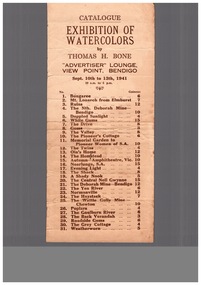 Bendigo Historical Society Inc.
Document - Catalogue for an Exhibition of Watercolors by Thomas H. Bone, 1941
... This Bendigo manufactured seat was a fitting tribute to one ofBendigo's most loved and esteemed citizens. ...This Bendigo manufactured seat was a fitting tribute to one ofBendigo's most loved and esteemed citizens. ...Amy Huxtable was born at Cheltenham in 1918, to Robert Henry Huxtable and Violet a Dagg. Her father was an installer for an oil company and travelled the State. taking his family with him. She completed her education at the Bendigo High School and later attended the Bendigo Business College, becoming an expert shorthand writer. Her first position was as a copy writer with Radio 3BO, in the mid 1930s. She worked with an advertising agency in Melbourne and then with the Age,newspaper. In 1953, Miss Huxtable was appointed temporarily to succeed Miss E B Millane as social editress of the Bendigo Advertiser, during the latter's absence abroad. In 1956, Amy travelled abroad and on her return in 1957 was appointed permanently as Women's editor, a position she held for twenty-three ears. During her early years with The Advertiser she wrote under the name Toora, but in later years her own name became widely known. Miss Huxtable was well known both in her professional capacity and through a interest and involvement in community activites. She was life governor of the Bendigo Hospital, the Bendigo Home for the Aged, and Mirridong Home for the Blind, she was a member of Soroptimist International and the Business and Professional Women's Club. Amy was also a tireless worker for the spastic society and a strong supporter of the YWCA. When Amy Huxtable died at Mt AJvernia Hospital on 16 January 1980 Mayor Campbell ordered the city flag to be flown at half-mast. "Lowering the flag is the least we can do for such a lady" Cr Campbell said. Douglas Lockwood, editor of the Bendigo Advertiser said, "She was a devot d colleague who gave her craft and her newspaper the kind of service which identified a rare and generous spirit." She was a true professional who decided to make Bendigo her home. More than 300 people packed St Paul's Church for her funeral ervice the bell tolled as the casket was carried from the church. At a ceremony in the Conservatory Gardens on No ember 22 1981 The Amy Huxtable Memorial Committee presented to the City of Bendigo, a garden seat in memory of the late Miss Huxtable. This Bendigo manufactured seat was a fitting tribute to one ofBendigo's most loved and esteemed citizens. All Miss Huxtable's Advertiser articles were microfilmed and presented to the Library by the above committee. Catalogue for an Exhibition of Watercolors by Thomas H. Bone. Held in the Advertiser Lounge, View point, Bendigo Sept 10th to the 13th, 10am to 5pm. A list of 31 watercolours.history, amy huxtable, bendigo, watercolour exhibition bendigo -
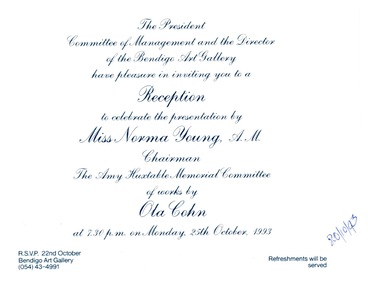 Bendigo Historical Society Inc.
Document - Invitation to a Presentation of Works by Ola Cohn from the Bendigo Art Gallery on behalf of the Amy Huxtable Memorial Committee, 25 Oct 1993
... This Bendigo manufactured seat was a fitting tribute to one ofBendigo's most loved and esteemed citizens. ...This Bendigo manufactured seat was a fitting tribute to one ofBendigo's most loved and esteemed citizens. ...Amy Huxtable was born at Cheltenham in 1918, to Robert Henry Huxtable and Violet a Dagg. Her father was an installer for an oil company and travelled the State. taking his family with him. She completed her education at the Bendigo High School and later attended the Bendigo Business College, becoming an expert shorthand writer. Her first position was as a copy writer with Radio 3BO, in the mid 1930s. She worked with an advertising agency in Melbourne and then with the Age,newspaper. In 1953, Miss Huxtable was appointed temporarily to succeed Miss E B Millane as social editress of the Bendigo Advertiser, during the latter's absence abroad. In 1956, Amy travelled abroad and on her return in 1957 was appointed permanently as Women's editor, a position she held for twenty-three ears. During her early years with The Advertiser she wrote under the name Toora, but in later years her own name became widely known. Miss Huxtable was well known both in her professional capacity and through a interest and involvement in community activites. She was life governor of the Bendigo Hospital, the Bendigo Home for the Aged, and Mirridong Home for the Blind, she was a member of Soroptimist International and the Business and Professional Women's Club. Amy was also a tireless worker for the spastic society and a strong supporter of the YWCA. When Amy Huxtable died at Mt AJvernia Hospital on 16 January 1980 Mayor Campbell ordered the city flag to be flown at half-mast. "Lowering the flag is the least we can do for such a lady" Cr Campbell said. Douglas Lockwood, editor of the Bendigo Advertiser said, "She was a devot d colleague who gave her craft and her newspaper the kind of service which identified a rare and generous spirit." She was a true professional who decided to make Bendigo her home. More than 300 people packed St Paul's Church for her funeral ervice the bell tolled as the casket was carried from the church. At a ceremony in the Conservatory Gardens on No ember 22 1981 The Amy Huxtable Memorial Committee presented to the City of Bendigo, a garden seat in memory of the late Miss Huxtable. This Bendigo manufactured seat was a fitting tribute to one ofBendigo's most loved and esteemed citizens. All Miss Huxtable's Advertiser articles were microfilmed and presented to the Library by the above committee. Invitation to a Presentation of Works by Ola Cohn from the President, Committee of Management and the Director of the Bendigo Art Gallery and the Amy Huxtable Memorial Committee. Two copies of a printed formal invitation to a reception to celebrate the presentation by Miss Norma Young A.M., Chairman of the Committee at 7.30 pm at the Bendigo Art Gallery.history, amy huxtable, bendigo, ola cohn, norma young bendigo, bendigo art gallery -
 Bendigo Historical Society Inc.
Document - Amy Huxtable Memorial Committee Receipts, 1980 to 1983
... This Bendigo manufactured seat was a fitting tribute to one ofBendigo's most loved and esteemed citizens. ...This Bendigo manufactured seat was a fitting tribute to one ofBendigo's most loved and esteemed citizens. ...Amy Huxtable was born at Cheltenham in 1918, to Robert Henry Huxtable and Violet a Dagg. Her father was an installer for an oil company and travelled the State. taking his family with him. She completed her education at the Bendigo High School and later attended the Bendigo Business College, becoming an expert shorthand writer. Her first position was as a copy writer with Radio 3BO, in the mid 1930s. She worked with an advertising agency in Melbourne and then with the Age,newspaper. In 1953, Miss Huxtable was appointed temporarily to succeed Miss E B Millane as social editress of the Bendigo Advertiser, during the latter's absence abroad. In 1956, Amy travelled abroad and on her return in 1957 was appointed permanently as Women's editor, a position she held for twenty-three ears. During her early years with The Advertiser she wrote under the name Toora, but in later years her own name became widely known. Miss Huxtable was well known both in her professional capacity and through a interest and involvement in community activites. She was life governor of the Bendigo Hospital, the Bendigo Home for the Aged, and Mirridong Home for the Blind, she was a member of Soroptimist International and the Business and Professional Women's Club. Amy was also a tireless worker for the spastic society and a strong supporter of the YWCA. When Amy Huxtable died at Mt AJvernia Hospital on 16 January 1980 Mayor Campbell ordered the city flag to be flown at half-mast. "Lowering the flag is the least we can do for such a lady" Cr Campbell said. Douglas Lockwood, editor of the Bendigo Advertiser said, "She was a devot d colleague who gave her craft and her newspaper the kind of service which identified a rare and generous spirit." She was a true professional who decided to make Bendigo her home. More than 300 people packed St Paul's Church for her funeral ervice the bell tolled as the casket was carried from the church. At a ceremony in the Conservatory Gardens on No ember 22 1981 The Amy Huxtable Memorial Committee presented to the City of Bendigo, a garden seat in memory of the late Miss Huxtable. This Bendigo manufactured seat was a fitting tribute to one ofBendigo's most loved and esteemed citizens. All Miss Huxtable's Advertiser articles were microfilmed and presented to the Library by the above committee. Amy Huxtable Memorial Committee Receipts for 1980 to 1983. ANZ passbook included and breakdown of the costs and donations for the Amy Huxtable memorial seat which is opposite the former Bendigo Advertiser office in Pall Mall, Bendigo.history, amy huxtable, bendigo, amy huxtable memorial committee -
 Bendigo Historical Society Inc.
Document - Amy Huxtable Memorial Committee Receipts, 1980
... This Bendigo manufactured seat was a fitting tribute to one ofBendigo's most loved and esteemed citizens. ...This Bendigo manufactured seat was a fitting tribute to one ofBendigo's most loved and esteemed citizens. ...Amy Huxtable was born at Cheltenham in 1918, to Robert Henry Huxtable and Violet a Dagg. Her father was an installer for an oil company and travelled the State. taking his family with him. She completed her education at the Bendigo High School and later attended the Bendigo Business College, becoming an expert shorthand writer. Her first position was as a copy writer with Radio 3BO, in the mid 1930s. She worked with an advertising agency in Melbourne and then with the Age,newspaper. In 1953, Miss Huxtable was appointed temporarily to succeed Miss E B Millane as social editress of the Bendigo Advertiser, during the latter's absence abroad. In 1956, Amy travelled abroad and on her return in 1957 was appointed permanently as Women's editor, a position she held for twenty-three ears. During her early years with The Advertiser she wrote under the name Toora, but in later years her own name became widely known. Miss Huxtable was well known both in her professional capacity and through a interest and involvement in community activites. She was life governor of the Bendigo Hospital, the Bendigo Home for the Aged, and Mirridong Home for the Blind, she was a member of Soroptimist International and the Business and Professional Women's Club. Amy was also a tireless worker for the spastic society and a strong supporter of the YWCA. When Amy Huxtable died at Mt AJvernia Hospital on 16 January 1980 Mayor Campbell ordered the city flag to be flown at half-mast. "Lowering the flag is the least we can do for such a lady" Cr Campbell said. Douglas Lockwood, editor of the Bendigo Advertiser said, "She was a devot d colleague who gave her craft and her newspaper the kind of service which identified a rare and generous spirit." She was a true professional who decided to make Bendigo her home. More than 300 people packed St Paul's Church for her funeral ervice the bell tolled as the casket was carried from the church. At a ceremony in the Conservatory Gardens on No ember 22 1981 The Amy Huxtable Memorial Committee presented to the City of Bendigo, a garden seat in memory of the late Miss Huxtable. This Bendigo manufactured seat was a fitting tribute to one ofBendigo's most loved and esteemed citizens. All Miss Huxtable's Advertiser articles were microfilmed and presented to the Library by the above committee. Amy Huxtable Memorial Committee Receipts for 1980. Envelope included and breakdown of the costs and donations for the Amy Huxtable memorial seat which is opposite the former Bendigo Advertiser office in Pall Mall, Bendigo.history, amy huxtable, bendigo, amy huxtable memorial committee -
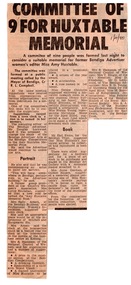 Bendigo Historical Society Inc.
Article - Amy Huxtable Memorial Committee - Newspaper Articles, 1980-81
... This Bendigo manufactured seat was a fitting tribute to one ofBendigo's most loved and esteemed citizens. ...This Bendigo manufactured seat was a fitting tribute to one ofBendigo's most loved and esteemed citizens. ...Amy Huxtable was born at Cheltenham in 1918, to Robert Henry Huxtable and Violet A Dagg. Her father was an installer for an oil company and travelled the State. taking his family with him. She completed her education at the Bendigo High School and later attended the Bendigo Business College, becoming an expert shorthand writer. Her first position was as a copy writer with Radio 3BO, in the mid 1930s. She worked with an advertising agency in Melbourne and then with the Age,newspaper. In 1953, Miss Huxtable was appointed temporarily to succeed Miss E B Millane as social editress of the Bendigo Advertiser, during the latter's absence abroad. In 1956, Amy travelled abroad and on her return in 1957 was appointed permanently as Women's editor, a position she held for twenty-three ears. During her early years with The Advertiser she wrote under the name Toora, but in later years her own name became widely known. Miss Huxtable was well known both in her professional capacity and through a interest and involvement in community activites. She was life governor of the Bendigo Hospital, the Bendigo Home for the Aged, and Mirridong Home for the Blind, she was a member of Soroptimist International and the Business and Professional Women's Club. Amy was also a tireless worker for the spastic society and a strong supporter of the YWCA. When Amy Huxtable died at Mt AJvernia Hospital on 16 January 1980 Mayor Campbell ordered the city flag to be flown at half-mast. "Lowering the flag is the least we can do for such a lady" Cr Campbell said. Douglas Lockwood, editor of the Bendigo Advertiser said, "She was a devot d colleague who gave her craft and her newspaper the kind of service which identified a rare and generous spirit." She was a true professional who decided to make Bendigo her home. More than 300 people packed St Paul's Church for her funeral ervice the bell tolled as the casket was carried from the church. At a ceremony in the Conservatory Gardens on No ember 22 1981 The Amy Huxtable Memorial Committee presented to the City of Bendigo, a garden seat in memory of the late Miss Huxtable. This Bendigo manufactured seat was a fitting tribute to one ofBendigo's most loved and esteemed citizens. All Miss Huxtable's Advertiser articles were microfilmed and presented to the Library by the above committee. Amy Huxtable Memorial Seat - Bendigo Conservatory Gardens. Four Newspaper articles from the Bendigo Advertiser: 2808.7a Article entitled " Committee of 9 for Huxtable Memorial 1/4/1980". Describes how the Mayor of Bendigo called for a committee to consider a suitable memorial to Amy, the former Bendigo Advertiser women's editor. Also mentions a portrait to be painted and hung in a prominent location, perhaps the Advertiser Office. There were a number of other suggestions to honour her including a book to be produced containg Miss Huxtable's numerous history articles. 2808.7b A public notice 21/11/1981 from Miss N Young, President, Amy Huxtable Memorial Committee, inviting people to the presentation of the Amy Huxtable Memorial Seat to the City of Bendigo at the Conservatory Gardens on Sunday Nov 22 1981 2808.7c Article contains a photo of the seat being installed by the Superintendant of Bendigo Parks and Gardens Andrew Taylor, and the deisgner, President of the Memorial Committee Bill Delecca. It acknowledges the seat was bought by the Committee and the Business and Professional Women's Club. 2808.7d Article advising that the Bendigo City Council had granted approval for the seat.history, amy huxtable, bendigo, amy huxtable memorial committee, bendigo professional women's club, bendigo conservatory gardens -
Bendigo Historical Society Inc.
Document - Amy Huxtable Memorial Committee - Letters to the State Library Victoria and the City of Bendigo, 1984
... This Bendigo manufactured seat was a fitting tribute to one ofBendigo's most loved and esteemed citizens. ...This Bendigo manufactured seat was a fitting tribute to one ofBendigo's most loved and esteemed citizens. ...Amy Huxtable was born at Cheltenham in 1918, to Robert Henry Huxtable and Violet A Dagg. Her father was an installer for an oil company and travelled the State. taking his family with him. She completed her education at the Bendigo High School and later attended the Bendigo Business College, becoming an expert shorthand writer. Her first position was as a copy writer with Radio 3BO, in the mid 1930s. She worked with an advertising agency in Melbourne and then with the Age,newspaper. In 1953, Miss Huxtable was appointed temporarily to succeed Miss E B Millane as social editress of the Bendigo Advertiser, during the latter's absence abroad. In 1956, Amy travelled abroad and on her return in 1957 was appointed permanently as Women's editor, a position she held for twenty-three ears. During her early years with The Advertiser she wrote under the name Toora, but in later years her own name became widely known. Miss Huxtable was well known both in her professional capacity and through a interest and involvement in community activites. She was life governor of the Bendigo Hospital, the Bendigo Home for the Aged, and Mirridong Home for the Blind, she was a member of Soroptimist International and the Business and Professional Women's Club. Amy was also a tireless worker for the spastic society and a strong supporter of the YWCA. When Amy Huxtable died at Mt AJvernia Hospital on 16 January 1980 Mayor Campbell ordered the city flag to be flown at half-mast. "Lowering the flag is the least we can do for such a lady" Cr Campbell said. Douglas Lockwood, editor of the Bendigo Advertiser said, "She was a devot d colleague who gave her craft and her newspaper the kind of service which identified a rare and generous spirit." She was a true professional who decided to make Bendigo her home. More than 300 people packed St Paul's Church for her funeral ervice the bell tolled as the casket was carried from the church. At a ceremony in the Conservatory Gardens on November 22 1981 The Amy Huxtable Memorial Committee presented to the City of Bendigo, a garden seat in memory of the late Miss Huxtable. This Bendigo manufactured seat was a fitting tribute to one ofBendigo's most loved and esteemed citizens. All Miss Huxtable's Advertiser articles were microfilmed and presented to the Library by the above committee. Amy Huxtable Memorial Committee - Ten pages of correspondence - Letters to the State Library Victoria and the City of Bendigo, along with invitations to attend the opening of the new City of Bendigo Library. * Letter to the Chief Librarian Latrobe St Library, Melbourne 16/8/1984 advising of thanks for the microfilms of historical articles by the late Miss Amy Huxtable, now complete. * Letter to the Executive Officer City of Bendigo 16/8/1984 advising that the committee would like to present the microfilm's to the new city library about to be opened. * Letter from the Town Clerk and Chief Executive Officer 7/9/1984 advising that the Council had resolved to accept the microfilm's at the opening. * Letter from the Town Clerk and Chief Executive Officer 1/10/1984 advising hat provision would be made at the opening of the library for the presentation of the microfilms. * Letter from the Town Clerk and Chief Executive Officer 1/10/1984 contains an invitation to Miss Norma Young and Guest to attend the opening. * Letter from the Committee to the council 8/10/84 advising the Miss Yound and her gues Mrs V. Cattanach accept the invitation. * Letter from the Town Clerk and Chief Executive Officer 8/10/1984 advising the time of the presentation. * Letter from Norma Young to her committee 8/10/84 advising of presentation. * Notice 30/10/84 from the committee advising that a microfilm of over 350 of Amy's historical articles from the Bendigo Advertiser will be presented to the Library on 3/11/1984. * Library opening programme 2/11/84 history, amy huxtable, bendigo, amy huxtable memorial committee, amy huxtable microfilms, amy huxtable historical articles -
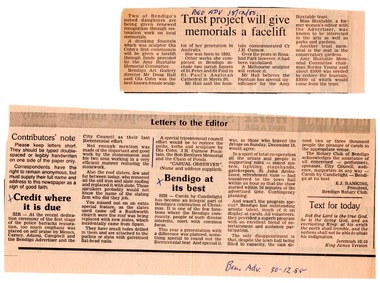 Bendigo Historical Society Inc.
Document - Amy Huxtable Memorial Committee - Newspaper Articles and letters to the Bendigo Art Gallery, 1985 - 1988
... This Bendigo manufactured seat was a fitting tribute to one ofBendigo's most loved and esteemed citizens. ...This Bendigo manufactured seat was a fitting tribute to one ofBendigo's most loved and esteemed citizens. ...Amy Huxtable was born at Cheltenham in 1918, to Robert Henry Huxtable and Violet A Dagg. Her father was an installer for an oil company and travelled the State. taking his family with him. She completed her education at the Bendigo High School and later attended the Bendigo Business College, becoming an expert shorthand writer. Her first position was as a copy writer with Radio 3BO, in the mid 1930s. She worked with an advertising agency in Melbourne and then with the Age,newspaper. In 1953, Miss Huxtable was appointed temporarily to succeed Miss E B Millane as social editress of the Bendigo Advertiser, during the latter's absence abroad. In 1956, Amy travelled abroad and on her return in 1957 was appointed permanently as Women's editor, a position she held for twenty-three ears. During her early years with The Advertiser she wrote under the name Toora, but in later years her own name became widely known. Miss Huxtable was well known both in her professional capacity and through a interest and involvement in community activites. She was life governor of the Bendigo Hospital, the Bendigo Home for the Aged, and Mirridong Home for the Blind, she was a member of Soroptimist International and the Business and Professional Women's Club. Amy was also a tireless worker for the spastic society and a strong supporter of the YWCA. When Amy Huxtable died at Mt AJvernia Hospital on 16 January 1980 Mayor Campbell ordered the city flag to be flown at half-mast. "Lowering the flag is the least we can do for such a lady" Cr Campbell said. Douglas Lockwood, editor of the Bendigo Advertiser said, "She was a devot d colleague who gave her craft and her newspaper the kind of service which identified a rare and generous spirit." She was a true professional who decided to make Bendigo her home. More than 300 people packed St Paul's Church for her funeral ervice the bell tolled as the casket was carried from the church. At a ceremony in the Conservatory Gardens on No ember 22 1981 The Amy Huxtable Memorial Committee presented to the City of Bendigo, a garden seat in memory of the late Miss Huxtable. This Bendigo manufactured seat was a fitting tribute to one ofBendigo's most loved and esteemed citizens. All Miss Huxtable's Advertiser articles were microfilmed and presented to the Library by the above committee. Amy Huxtable Memorial Committee - Newspaper Articles and letters to the Bendigo Art Gallery 2808.9a First Article: Bendigo Advertiser article 18/12/1985 on "two of Bendigo's noted daughters , Ola Cohn and Amy Huxtable" Describes the restoration of the Ola Cohn drinking fountain in Rosalind Park, and the installation of the Amy Huxtable Memorial Seat in the Conservatory Gardens. Second Article: Bendigo Advertiser Letters to the Editor Column 30/12/1988 paragraph entitled "Credit where it is due: "A special tricentennial council effort would be to restore the paths, kerbs and sculpture by Ola Cohn, J H Curnow Fountain, the Bob Brothers Memorial and the Chain of Ponds" (Rosalind Park) 2808.9b Seven Pages of letters: 1. To Mrs Thelma Dingle from Doug Hall, Bendigo Art Gallery Director 30/1/1986 regards the Amy Huxtable committee funding the restoration of the Ola Cohn Fountain by sculptor Mr Marc Clark. 2. From the Amy Huxtable Committee 24/3/1986 back to the Art Gallery explaining that the committee leftover funds be given to the art Gallery to go towards the restoration of the Oal Cohn Fountain. 3. From the Art Gallery to Miss N D young, Amy Huxtable Committee 3/4/1986 thanking the committee for the funds. 4. From the committee to the Mayor and Councillors, Bendigo City, 4/2/1987 asking for an update on the project. 5. Copy of above letter. 6. From the City of Bendigo to the Committee 17/2/1987, advising of progress on the restoration of the fountain. 7. From Norma Young to the Bendigo Advertiser Letters to the Editor, advising of progress on the Ola Cohn Sculpture and the J H Curnow Fountain restoration. history, amy huxtable, bendigo, amy huxtable memorial committee, bendigo conservatory gardens, ola cohn, j h curnow fountain
