
Showing 1394 items matching " burn "
-
 Bendigo Historical Society Inc.
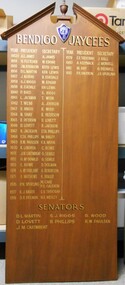
Honour Board - Bendigo Jaycees Roll of Honour
... Fletcher, 1955 J.M Atkinson, 1956 D.L Martin, 1957 J. Burns, 1958 S.J Biggs, 1959 B. Eskdale, 1960 P.Bird, 1961 L. ...Fletcher, 1955 J.M Atkinson, 1956 D.L Martin, 1957 J. Burns, 1958 S.J Biggs, 1959 B. Eskdale, 1960 P.Bird, 1961 L. ...Jaycees (Junior Chamber) was a prominent young professional and leadership development organisation in the mid-20th century. Like many other chapters, the Bendigo chapter was involved in local community projects and networking. A large wooden board with decorative top with sloping corners. On the top, in the middle, is a small wooden urn. Under the urn is a blue and silver enamelled shield that reads 'Member of Junior Chamber Of Commerce JCI'. The board lists, in gold writing, the dates, presidents and secretaries of the Bendigo Jaycees and at the bottom, a separate list of senators. Presidents: 1952/53 A.E James, 1954 H. Fletcher, 1955 J.M Atkinson, 1956 D.L Martin, 1957 J. Burns, 1958 S.J Biggs, 1959 B. Eskdale, 1960 P.Bird, 1961 L. Jackman, 1962 T.Webb, 1963 R.Angus,1964 N. Shay, 1965 R. Paterson, 1966 D. Lovett, 1967 R. Jackson, 1968 E.T.A Phillips, 1969 R.W. Paulsen, 1970 K. Lindrea, 1971 J.M Cartwright, 1972 G McDonald, 1973 C. Rowe, 1974 G. McFarlane, 1975 A. Mathews, 1976 P.N. Spurling, 1977 K. J. Baker, 1978 D.R Dolman, 1979 E.R. Trevorah, 1980 A Kelynack, 1981 M. Ray, 1982 P.R.Gaudion. Secretaries: 1952/53 A James, 1954 W. Edgar, 1955 Keith Lewis, 1956 Ken Lewis, 1957 B. Eskdale, 1958 W. Edgar, 1959 Ken Lewis, 1960 S. Biggs, 1961 T.Webb, 1962 A. Johnson, 1963 R. Wood, 1964 R. Paterson, 1965 D. Lovett, 1966 R. Jackson, 1967 E.T A Phillips, 1968 M. Bailey, 1969 F. A Musk, 1970 C. Rowe, 1971 G. Searle, 1972 G. Searle, 1973 D. Dolman, 1974 G. Robinson, 1975 K. Baker, 1976 M. Cake and P.R. Gaudion, 1977 E.R Trevorah, 1978 N. R. Mesley, 1979 J. Ball, 1980 J. Morvell, 1981 G. Browell, 1982 J. R. Spurling Senators D.L Martin, D. Lovatt, J.M Cartwright, S.J. Biggs, B. Phillips, R.Wood, R. W. Paulsenbendigo jaycees, bendigo service clubs, jaycees -
 Eltham District Historical Society Inc
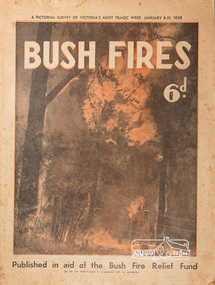
Magazine, Sun News-Pictorial, Bush Fires: A pictorial survey of Victoria's most tragic week, January 8-15, 1939, 1939
... In the fiery eight days, from Sunday to Sunday, at least sixty-six men, women and children have lost their lives in forest fires, or have succumbed to burns and shock; many others have died from heat; and several serious cases of burns are being treated in hospitals. ...In the fiery eight days, from Sunday to Sunday, at least sixty-six men, women and children have lost their lives in forest fires, or have succumbed to burns and shock; many others have died from heat; and several serious cases of burns are being treated in hospitals. ...THE WEEK REVIEWED (Article; Bush Fires: A pictorial survey of Victoria's most tragic week, January 8-15, 1939. Published in aid of the Bush Fire Relief Fund by the Sun News-Pictorial in co-operation with its newsagents, pp2-3) THE fiercest bush fires Australia has known since its discovery are quiescent at the moment, and Victoria, in the comparative coolness of the change which came with rain on Sunday night, has begun·to count its losses. In the fiery eight days, from Sunday to Sunday, at least sixty-six men, women and children have lost their lives in forest fires, or have succumbed to burns and shock; many others have died from heat; and several serious cases of burns are being treated in hospitals. Two babies in Narrandera district have died, and ten others are in hospital, because of milk soured by the record temperatures of those eight days. Forest damage totals at least a million pounds, and incalculable damage has been done to the seedlings which were to have been the forests of the future. Water conservation will be seriously affected by the silting-up of reservoirs and streams from which protective timber has been taken by the all-engulfing flames. More than a thousand houses have been destroyed, and these, with 40 mills, and schools, post-offices, churches, and other buildings, represent a loss of at least half a million. At least 1500 are homeless. For their aid, money raised in appeals has now passed the £50,000 mark, and the biggest relief organisation ever set up in peace time has swung into operation. The First Hint Victoria's first hint of what was to come appeared on Sunday, January 8, when most parts of the State awoke to find a blistering day awaiting. At 12.20 p.m., when the thermometer reached its highest for the day, 109.6 degrees, the first fire victims were at that moment going to their death on a bush track five feet wide off the main road to Narbethong. They were the forestry officers Charles Isaac Demby and John Hartley Barling, who went to warn Demby of his danger when he parted from his companions, and was himself surrounded by the treacherous fire. It was not until 8 o'clock next morning that the tragic news was flashed throughout the State. Searchers found the two charred bodies close together, one seeking protection in the nook of two logs. Barling's watch had stopped at 1.20. In the meantime, tragedy was spreading its cloak. By Monday, big fires were raging at Toolangi, Erica, Yallourn, Monbulk, Frankston, Dromana, Drouin South, Glenburn, and Blackwood, with smaller outbreaks at many other centres. In the ensuing week, while women and children were evacuated as fast as the flames would permit, Erica-scene of the 1926 fire disaster-thrice escaped doom by a change of wind. Indeed, those who have been in the fire country these past days say that the numbers of times a change of wind has saved towns from destruction is amazing. In the towns they speak of miracles. Monday's Miracles The escapes from Monett's Mill at Erica and from the Hardwood Company's Mill at Murrindindi, near where Demby and Barling went to their death, were Monday's miracles. Twenty came out alive from each mill. At the first a 60ft. dugout provided an oven-like refuge; at the second, 12 women and children survived in the smoke-filled gloom of a three-roomed cottage while their eight men, their clothes sometimes afire, poured water on the wooden walls. Three houses out of ten remained when the fire had passed. Record Temperatures Sunday had been the hottest Melbourne day for 33 years; Monday dropped to a 76.1 degree maximum; but Tuesday dawned hotter than ever, the mercury reaching 112.5. By now rumor was racing ahead of fact; whole towns were being reported lost; the alarm was raised for scores of missing persons. But fact soon overtook rumor, and within a few days the staggering toll began to mount to a figure beyond the wildest imaginings of the panic-stricken. Six died from heat on this torrid Tuesday, and the fires spread in a wide swathe from south-west to north-east across the State. Fish died in shallow streams. A curtain of smoke hid the sky from all Victoria, and hung far out to sea. It alarmed passengers on ships. On the Ormonde, on the voyage to Sydney from Burnie, women ran on deck, believing fire had broken out in the hold. Days later the smoke reached New Zealand. In Melbourne thousands of fire-volunteers were leaving in cars: vans, motor-buses-anything reliable on wheels-to aid the country in its grim fight. In the fires at Rubicon and. Narbethong, seventeen were facing death this day. But not till Wednesday, when Melbourne breathed again in a cool change, while the country still sweltered in temperatures up to 117 degrees, did the news come through the tree blocked roads. A woman and her little daughter, trapped on the road, were among those who died. Their bodies, and those of menfolk with them, were found strewn out at intervals along the road, where the furnace of the surrounding fire had dropped them in their tracks as they ran. Twelve died at a Rubicon mill, five on the road at Narbethong. At Alexandra, not far distant, a baby was born while the fires raged, and stretcher-bearers brought in the injured. On Thursday the State Government voted £5000 for the relief of fire victims. The Governor (Lord Huntingfield) and the Lord Mayor (Cr. Coles) visited some of the stricken areas, and dipped into their pockets personally. Later, the City Council, too, voted £5000. Friday, The 13th Friday, the Thirteenth, justified its evil name. A blistering northerly came early in the morning, presaging destruction, and forcing the mercury to a new record of 114 degrees. Racing fires killed at least ten in those terrible 12 hours. Four children were engulfed in the furnace at Colac. Panic drove them, uncontrollable, into the smoke-filled road when the fire raced down behind their home. They choked to death. In other parts fires were joining to make fronts of scores of miles. Kinglake was being menaced on two fronts, £60,000 worth of timber was going up in smoke in Ballarat district. Warburton was surrounded. Residents at Lorne, favoured resort, were being driven to the sea-front by a fire which destroyed at least 20 homes. Healewille. with flames visible from the town at one stage, was in a trough between two fires which burned four guest-houses, seven homes and left its surrounding beauty-spots wastes of bowed-over, blackened tree-fern fronds; with its famous Sanctuary, however, intact. Most of Omeo was destroyed this black day: Noojee. while 200 residents crouched in the river, was being reduced to a waste of buckled iron and smoking timber; Erica was once again saved by a change of wind. Beneath a pall of smoke, the Rubicon victims were buried at Alexandra. Friday night and the early hours of Saturday saw the streets of beleagured towns strewn with exhausted fire-fighters. Their flails beside them, ready for the next call, they lay where exhaustion overtook them-on footpaths, beside lamp-posts, in gutters, in cars, under trucks. Saturday's dawn brought clear skies and lower temperatures in many parts, and from the burnt-out areas came a great rush of tragic reports. The death-roll rushed past the fifty mark with incredible speed. Some had been trapped on roads, others at mills; some, after burying their treasures, had clung too long to the places they had made their homes for many years. Four men lost their lives because one went back for his dog. By Sunday, when the first of the saving rain came, nearly another score of names had been added to the list.Newspaper magazine, 48 pages (incl. covers). Fully digitised and searchable PDFPublished in aid of the Bush Fire Relief Fund by the Sun News-Pictorial in co-operation with its newsagents.bushfires, 1939 bushfires, black friday, warrandyte -
 Flagstaff Hill Maritime Museum and Village
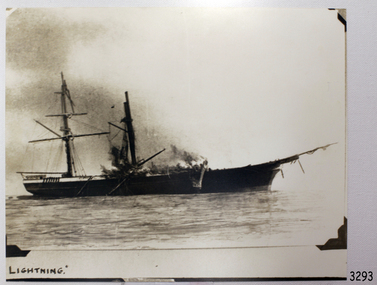
Photograph, Lightning, 31st October 1869
... This photograph shows the remains of the clipper ship LIGHTNING as it continues to burn to its end in Corio Bay, Geelong, 31st October 1869. ...This photograph shows the remains of the clipper ship LIGHTNING as it continues to burn to its end in Corio Bay, Geelong, 31st October 1869. ...This photograph shows the remains of the clipper ship LIGHTNING as it continues to burn to its end in Corio Bay, Geelong, 31st October 1869. The American clipper ship LIGHTNING was a 3 masted, fully rigged extreme clipper ship. She was commissioned by James Baines, of the Black Ball Line in Liverpool, England, during the time of the Australian Gold Rush for the trade of passengers and cargo between England and Australia. Her cargo listed early consignments of livestock and animals, including rabbits sent to Thomas Austin of Barwon Park, Winchelsea, Victoria. The LIGHTNING was built in 1854 by shipbuilder Donald McKay, of East Boston, USA. She was described as spacious and comfortable, and one of the smartest ships known. The LIGHTNING set many speed records for her sea crossings, and became one of the most famous of the racing clippers and one of the fastest ever launched. In 1854, with Captain ‘Bully’ Forbes and Mate ‘Bully’ Bragg, LIGHTNING made the return trip from Melbourne to Liverpool in only 64 days, 3 hours and 10 minutes; a record for all time. Captain Enright became the new Master of LIGHTNING soon afterwards. He has been described as one of the finest mariners in the Australian trade. One of Captain Enright’s innovations was to publish a ship’s paper called The Lightning Gazette. (Captain Forbes had left to captain the SCHOMBERG.) In January 1855 Capt. Enright sailed the LIGHTNING from Liverpool with over 700 passengers and returned home carrying gold as her cargo. In 1857, for a very brief time under Capt. Byrne the LIGHTNING was used as a troop ship, taking British officers and soldiers, stores and ammunition, to fight in India. In 1859 she then returned to her run between Liverpool and Melbourne, apart from 1867 when she made a special trip between Melbourne and Port Chalmers in New Zealand. In 1869 the LIGHTNING was sold to Thomas Harrison of Liverpool, and she continued to sail for the Black Ball Line. Master of LIGHTNING, Captain Henry Jones, sailed her to Geelong in October 1869, and whilst docked, he had her loaded with a cargo of wool, copper, wire, tallow and other goods. At about 1am on 31st October 1869, whilst still docked and fully laden, a fire was noticed on the LIGHTNING. Efforts to extinguished the fire were unsuccessful, so she was towed to the shoals in Corio Bay, where she eventually sank, losing all cargo but no lives. The area is now known as Lightning Shoals. The LIGHTNING is listed on the Victorian Heritage Register VHR S415. She is historically significant for being one of the fastest wooden ships ever built, the first clipper built in the USA for British owners and being the worst shipping disaster in Geelong's history. It spent its whole career carrying cargo and immigrants from England to Australia.Black and white photograph of the burning of the sailing ship LIGHTNING, 31st October 1869 in Corio Bay, Geelong. The photograph shows the ship with only 2 masts remaining, still billowing smoke. Below the photograph is the photograph's title.Title hand written 'LIGHTNING"flagstaff hill, warrnambool, shipwrecked-coast, flagstaff-hill, flagstaff-hill-maritime-museum, maritime-museum, shipwreck-coast, flagstaff-hill-maritime-village, sailing ship lightning, extreme clipper ship, american clipper ship, record breaking clipper ship, james baines, black ball line, donald mckay shipbuilder, captain ‘bully’ forbes, australian immigration, liverpool to melbourne migration, captain enright, captain byrne, captain henry jones, corio bay geelong, lightning shoals geelong, rabbits introduced to australia, burning of the lightning, historic photograph of shipwreck lightning -
 Flagstaff Hill Maritime Museum and Village
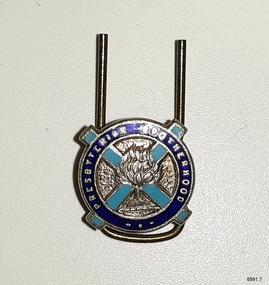
badge - Presbyterian Brotherhood badge, 1920s to 1940s
... The logo describes the Biblical account of the prophet Moses, who saw the miracle of a bush on fire that did not burn and heard the voice of God giving his instructions. ...The logo describes the Biblical account of the prophet Moses, who saw the miracle of a bush on fire that did not burn and heard the voice of God giving his instructions. ...This badge is one of a set of badges collected by Dr W R Angus from the organisations in which he was involved. The set of badges is now part of Flagstaff Hill’s comprehensive W.R. Angus Collection, donated by the family of Dr W R Angus, surgeon and oculist. The badge represents the Australian Presbyterian Brotherhood. The Presbyterian church has used the burning bush logo from the 1800s. The logo describes the Biblical account of the prophet Moses, who saw the miracle of a bush on fire that did not burn and heard the voice of God giving his instructions. The light blue cross symbolises the origin of the Australian Presbyterian church, the Church of Scotland, which is Presbyterian. Its flag is blue with a white 'x' and a burning bush symbol in the centre. Dr William Roy Angus was of Scottish heritage. He sailed overseas to further his studies at Edinburgh Royal Infirmary and in 1928, was awarded FRCS (Fellow from the Royal College of Surgeons), Edinburgh, Scotland. He was e Presbyterian and treated Sunday as a Sabbath, a day of rest. He would visit three or four country patients on a Sunday, taking his children along ‘for the ride’ and visiting with him. Sunday evenings he would play the pianola and sing Scottish songs to his family. In 1928, Dr Angus was a Flying Doctor in the A.I.M. (Australian Inland Ministry) Aerial Medical Service, which was established by the Presbyterian Church in that year. The W.R. Angus Collection includes historical medical equipment, surgical instruments and material belonging to Dr Edward Ryan and Dr Thomas Francis Ryan, (both of Nhill, Victoria) and Dr Angus’ own belongings. The Collection’s history spans the medical practices of the two Doctors Ryan, from 1885-1926 plus that of Dr Angus, up until 1969. It includes historical medical and surgical equipment and instruments from the doctors Edward and Thomas Ryan of Nhill, Victoria. Dr Angus married Gladys in 1927 at Ballarat, the nearest big city to Nhill where he began as a Medical Assistant. He was also Acting House surgeon at the Nhill hospital where their two daughters were born. During World War II He served as a Military Doctor in the Australian Defence Forces. Dr Angus and his family moved to Warrnambool in 1939, where Dr Angus operated his own medical practice. He later added the part-time Port Medical Officer responsibility and was the last person appointed to that position. Both Dr Angus and his wife were very involved in the local community, including the planning stages of the new Flagstaff Hill and the layout of the gardens there. Dr Angus passed away in March 1970.This badge is significant for connecting Doctor Angus with organisations that he supported. The badge also associates Dr Angus with the history of the Presbyterian Church in Australia, showing the historic logo of the burning bush and the Scottish flag. The W.R. Angus Collection is significant for still being located at the site it is connected with, Doctor Angus being the last Port Medical Officer in Warrnambool. The Collection includes historical medical objects that date back to the late 1800s.Badge; a round badge with a blue enamel outer border in front of a light blue enamel ‘x’. A silver logo is on top of the 'X'. There is a silver inscription around the outer circle. It is the badge of the Presbyterian Brotherhood of Australia.This badge is part of a set of badges collected by Dr W R Angus. the set represents organisations that he was involved in, and is part of the W.R. Angus Collection.On the dark blue border: “PRESBYTERIAN BROTHERHOOD’ Logo [a bush on fire] a 'burning bush'flagstaff hill, warrnambool, maritime village, maritime museum, shipwreck coast, great ocean road, w.r. angus, badge, organisation badge, flagstaff hill maritime museum and village, badges, buttons, lapel badge, religious badge, denominational badge, presbyterian church, presbyterian brotherhood, hat pin, flying doctor, scottish heritage, w.r. angus collection -
 Melton City Libraries
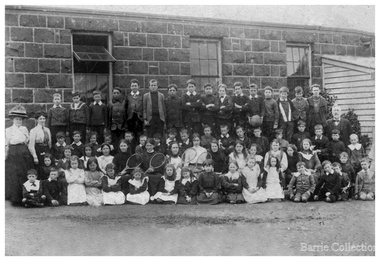
Photograph, 'Melton State School 430 Class Photo, 1916
... Labourer 6-11 May 1906 Toolern Neal Margaret, daughter of John 4-3 April 1902 Barrie, Essie (not found), Myra daughter of Wm Henry 7-6 May 1905 Werribee Wilson, Lila daughter of Alfred George Farmer 6- Jan 1907 Robinson, Florence daughter of Thomas 5-10 Mar 1908 Burns, Caroline James 4-10 Mar 1907 Trewin, (Lena) Emily daughter of Thomas. ...Labourer 6-11 May 1906 Toolern Neal Margaret, daughter of John 4-3 April 1902 Barrie, Essie (not found), Myra daughter of Wm Henry 7-6 May 1905 Werribee Wilson, Lila daughter of Alfred George Farmer 6- Jan 1907 Robinson, Florence daughter of Thomas 5-10 Mar 1908 Burns, Caroline James 4-10 Mar 1907 Trewin, (Lena) Emily daughter of Thomas. ...Head Teacher Thomas Lang Miss Silke, Miss Lang Back Row L – R 1-16 Jongebloed, Julius son of Gottfried. Storekeeper 5-1 Jan 1907 Manning, Eric Frederick son of Thomas Hotelkeeper. 4-6 1906 not named Dodemaide - ? Raleigh, Albert son of Oliver. Hawker 5-11 1904 Whiteside, Thomas son of Edward 5-6 1904 7. not named 8. not named 9. not named 10. not named 11. not named Jongebloed, Claus could be Augustus 19-10-06 April 1911 Coburn not named Whiteside, Albert Ernest son of Alexander. Labourer 4-11 Oct 1905 16. not named 2nd Back Row L-R No 1-18 1. not named 2. not named McGuire, Leopold son of John. Carpenter 22-2-03 Jan 1911 MC 23/11/15 Dodemaide, ? 5. not named 6. not named Whittington, Henry son of Wm. Blacksmith. 17-4-05 Jan 1910. MC 74845 Coburn, Albert, son of Fredr. 4-8 July 1904 not named Wickham, Edward son of George. Carpenter. 7-4 July 1908 26/1/1916 11. not named Wickham, George son of George. Carpenter 7-4 July 1908 26/11/1915 not named not named Dodemaide ? 16…not named Watson, Donald son of Alexr. 6-5-05 1911 Trewin, James son of Willm. James 31-3-03 1910 2nd Front Row L –R No 1-14 not named McGuire, Monica, daughter of John Carpenter 22-4 Jan 1909 St Ambrose Brunswick ? McLennan, Bella McDonald Gladys, daughter of Donald 6-2 1906 Riddell, Annie daughter of Joseph 6-3 July 1903 Minns, Chesney daughter of Fredk. 5-5 Sept 1904 Watts, Alice daughter of James. Labourer 6-11 May 1906 Toolern Neal Margaret, daughter of John 4-3 April 1902 Barrie, Essie (not found), Myra daughter of Wm Henry 7-6 May 1905 Werribee Wilson, Lila daughter of Alfred George Farmer 6- Jan 1907 Robinson, Florence daughter of Thomas 5-10 Mar 1908 Burns, Caroline James 4-10 Mar 1907 Trewin, (Lena) Emily daughter of Thomas. Farmer 10-3 Jan 1904 Jessie McLellan daughter of Duncan Farmer 5-11-07 1912 ? Head Teacher Thomas Lang, Miss Silke, Miss Lang and a group of students in front of one of the school buildings. education, local identities -
 Falls Creek Historical Society
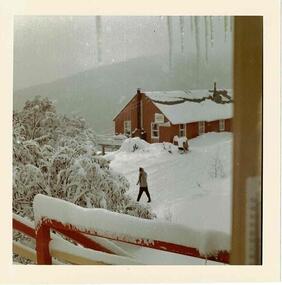
Photograph - Norma Tullo's ski lodge, Falls Creek
... The original lodge was burned down in 1952 and a new one built the following year. ...The original lodge was burned down in 1952 and a new one built the following year. ...These photos are part of the Fred Griffith Collection. Frederick Charles “Fred” Griffith was born in Albury, NSW on 2 March 1910. Educated in Albury and Geelong Grammar. Beginning in 1927 he spent many years working first as a jackeroo and on a range of prominent pastoral and merino stud properties in NSW and Queensland. In 1935 he repurchased his former family property “Toonallook", Bowna, NSW and developed it to be the largest Romney Marsh stud in the world, exporting rams to Argentina. He introduced many innovative practices on his property including rabbit control measures and aerial crop dusting. He was an active member of the Albury Show Society and in 1949 established the Albury Sheep Show. Fred was also the Albury representative on the Graziers’ Association Council for over 30 years. He became a life member of both the Albury and Commercial Clubs. Fred’s greatest hobby was snow skiing. His first visit to the snow was to Kosciusko in 1919. The Albury Ski Club was formed in 1935 and Fred was an inaugural member. In 1949 they were granted a site at Falls Creek to build their own lodge. Fred guaranteed the Club for finance from the Bank of NSW. The first portion of the prefabricated building was constructed in Albury. It was transported to Falls Creek on the back of Fred’s truck and erected in one day. This was the bathroom section and the rest was completed in 1950. The original lodge was burned down in 1952 and a new one built the following year. In 1955, Fred also built the Bowna Lodge for his family in partnership with David Fairbairn. He became head of the North Eastern District Skiing Association (N.E.D.S.A.) and successfully applied to run the Australian Ski Championships. Fred also inaugurated children’s races at Falls Creek and ran them for about 20 years. He also formed the company “Falls Creek Ski Tows”. In 1956 Fred along with a group of key people selected the site for Thredbo Village. Fred and his brother sold Toonallook in sections between 1951 and 1974. He moved to Albury and set up as a landscape gardener and fencing contractor. After a serious work accident, Fred retired in 1985 and moved to Rosebud, Victoria where he died on 19 August 1992. Norma Tullo was an internationally recognised Australian fashion designer who loved to relax at the four bedroom, Tyrolean - style, stone ski-lodge lodge built by Norma and her husband at Falls Creek in 1963. She passed away in February 2019. These images are part of an important collection donated by Fred Griffith which document Falls Creek in the 1950s & 1960sA collection of colour images of the ski lodge owned by Norma Tullo at Falls Creekfalls creek, falls creek lodges, norma tullo -
 Embroiderers Guild, Victoria
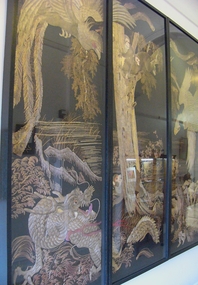
Textile - Japanese Triptych Screen, Late 18th- Early 19th C Edo Period
... Symbolism: Unlike the Western phoenix, the ho-o does not burn up and rise from ashes. It is a peaceful, divine spirit that appears only to mark times of peace, virtue, or the birth of a just ruler. ...Symbolism: Unlike the Western phoenix, the ho-o does not burn up and rise from ashes. It is a peaceful, divine spirit that appears only to mark times of peace, virtue, or the birth of a just ruler. ...The ho-o bird (hōō or 鳳凰) is a legendary, phoenix-like creature from East Asian mythology, originating from the Chinese fenghuang. The name comes from Japanese, where hō represents the male bird and ō represents the female bird, symbolizing yin and yang harmony. Symbolism: Unlike the Western phoenix, the ho-o does not burn up and rise from ashes. It is a peaceful, divine spirit that appears only to mark times of peace, virtue, or the birth of a just ruler. Appearance: Traditional descriptions combine parts of many animals, featuring the beak of a rooster, head of a pheasant, neck of a snake, and tail of a peacock. Its feathers display five sacred colors (red, yellow, blue, white, and black). Eventually the two creatures merged into one and their combined name was used. The combined creature is still considered to be female, and is often partnered with the tatsu, which is considered to be male. The hōō is one of the most revered and holiest animals in Japan. Second only to the kirin in terms of power, it is the most sacred bird in the Japanese pantheon. Japanese dragon, known as ryū or tatsu (龍 or 竜), is a legendary, serpentine water deity in Japanese mythology and folklore. Physical Appearance: Body: Long, scaly, and snake-like without wings. Claws: Typically depicted with three toes on each foot (distinguishing them from Chinese five-clawed and Korean four-clawed variants). Features: Horns, long whiskers or a beard, and a fierce expression. Movement: Associated with water, oceans, rain, and clouds rather than fire-breathing. Meaning and Symbolism: Water and Weather: Viewed as benevolent water gods controlling rainfall, rivers, and tides. Wisdom and Power: Symbolize strength, protection, and good fortune. Imperial Lineage: Ancient legends state that Japan's imperial family descends from sea deities and dragon royalty like Ryūjin . A Japanese monkey (saru, 猿) in traditional or decorative embroidery symbolizes protection, good luck, cleverness, and the removal of evil. Core Meanings of the Monkey : Warding off evil: Historically, the monkey was viewed as a protector against demons and bad luck. Japanese macaques act as divine messengers in certain Shinto shrines (like the Hie Shrine). Fertility and safe birth: Ancient Japanese clay monkey amulets were used to pray for healthy children and easy childbirth, a meaning that carried into traditional folk textiles and garments. Mischief and playfulness: On a lighter note, single playful monkeys represent cleverness, agility, and lighthearted joy.Large Japanese metal thread screen depicting dragons, ho-o birds and monkeys.embroidery, japanese screen, metal work, surface stitchery -
 Clunes Museum
Financial record - RECEIPTS
... WHYTE - BOOTMAKER - OCT 1908 J. BURN SADDLER - JAN 1905 FURTHER ASSORTED HANDWRITTEN RECEIPTS FOR VARIOUS SERVICES AND PURCHASES TO THE FAWCETT FAMILY. ...WHYTE - BOOTMAKER - OCT 1908 J. BURN SADDLER - JAN 1905 FURTHER ASSORTED HANDWRITTEN RECEIPTS FOR VARIOUS SERVICES AND PURCHASES TO THE FAWCETT FAMILY. ...J.S.MULCAHY (2) JULY 1895 - SEPT 1896 J.F.WILSON (3) OCT 1897 - JAN 1902 and E. WILSON (1) NOV 1908 W.J. COCKING JAN 1895 W. BLACKBAND (4) JAN 1897 - JULY 1912 W. TURNBULL (4) AUG 1893 - OCT 1908 G G SIMONS (5) JULY 1895 - MAY 1910 R. GEORGE & SON (7) - OCT 1895 - JAN 1903 W. BARKELL (3) NOV 1907 - DEC 1911 H. BOCKHOLT (4) JUN 1902 - MAY 1912 BROADBENT BROS & CO. - DEC 1901 CLUNES PRESERVING COMPANY (2) 17 MAR 1897 & 1 DEC 1897 W. COOPER - 15 NOV 1898 C.H. CORFIELD FEB 189? C & J FAWCETT (2) AUG 1909 & FEB 1911 A. J. GIDDINGS PRINTER - 1 OCT 1910 J. HERON & CO. IRONMONGERS - 15 OCT 1898 JACKSON & SONS - 1 DEC 1904 RICHARD LEAN STOREKEEPER - JULY 1906 JOHN LEMMON HARNESS MAKER (2) - MAR 1901 MAR 1905 JAMES LISTON DRAPER (3) JUL 1896 - OCT 1908 LUFF BROTHERS MERCHANTS - NOV 1898 M. MCDONALD - APR 1899 PITCHER & SON STOCK AGENT - FEB 1899 J.W. PRESTON (3) - JUN 1900 - JUN 1912 ROBINS & PAYNE (2) JUN 1904 & DEC 1911 P. ROWE - SEPT 1899 J. SPIVEY 17 NOV 1897 G. STARK - GROCER (3) DEC 1901 - APR 1905 W.H. STAVELY - MAR 1903 T. THOMAS TAILOR - FEB 1900 WALLIS & GIDDINGS PRINTERS - OCT 1904 F.W. WEICKHARDT IRONMONGER (2) APR 1911 & APR 1912 J. FRANZ WEICKHARDT - BAKER - JUN 1899 D. WHYTE - BOOTMAKER - OCT 1908 J. BURN SADDLER - JAN 1905 FURTHER ASSORTED HANDWRITTEN RECEIPTS FOR VARIOUS SERVICES AND PURCHASES TO THE FAWCETT FAMILY. RECEIPTS ISSUED BY CLUNES BUSINESSES TO THE FAWCETT FAMILY FOR GOODS AND SERVICES INCLUDING BLACKSMITH, BOOTS AND SHOES, BAKER, GROCER, BOOKSELLER AND STATIONERS , PRODUCE, TOOLS AND IMPLEMENTS, BETWEEN 1893 AND 1912fawcett family, mulcahey, wilson, cocking, blackhard, turnbull, symons, weickhardt -
 Federation University Historical Collection
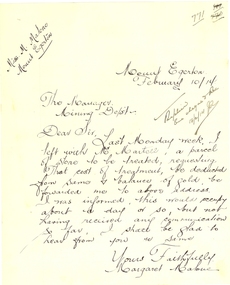
Letter - Correspondence, Margaret Malone, Letter regarding gold assay from Mount Egerton Mine, 10/02/2014
... By chewing a small piece of the clay he firmly believes that he "cured himself of heart burn." "All That Glistens" There is more in Miss Malone's mining than meets the eye, however. ...By chewing a small piece of the clay he firmly believes that he "cured himself of heart burn." "All That Glistens" There is more in Miss Malone's mining than meets the eye, however. ...Margaret Malone was associated with a kaolin mine at Mount Egerton. WOMAN WHO MANAGES A MINE Works With A Vision (By a Special Corespondent) BALLARAT, August 22.—Like a Heroine in a Bret Harte story of the Soaring: Forties Miss Margaret Malone, the only woman mine manager in Australia, has lived most of her life in an atmosphere where hope springs eternal in the gold-seeking breast. Forty years ago her father gave up farming to seek the elusive mineral near Ballarat. "One day my mother went for a walk along the Gordon-Egerton road and picked up a pebble with a few specks of gold in it," she told an interviewer yesterday, recounting the early history of the nine she now runs at Egerton. "Dad said, There must be more where that came from,' and hopefully sank a shaft. Our hopes were dashed, however, when he found only white clay. No one realised then the value of the disappointing looking white stuff which was all that Dad could find from every shaft he sank. At last be gave up the search, and the kaolin remained untouched." Later an Englishman from a pottery town in the old country urged Mr. Malone to try and sell his clay, and he sent some to the Bendigo potteries, but nothing came of it, and it was left to Miss Malone, after her father's death, to start on her unusual career by finding purchasers in Sydney and Melbourne for her clay, and herself working the mine. Strenuous Work "Mine managing is strenuous work in more ways than one," she admitted. "I have, to go down my mine daily, ad sometimes have to descend perpendicular ladders for about 150 ft. to reach areas being worked. I have to be my own manager, she explained, "because it is necessary to teach the men I employ the methods of grading clays." A New Cure She is convinced that a number of uses for kaolin, apart from pottery, soap and drugs, are yet to be discovered. "One of my employees has already found a new use for it," she said, "although scarcely one to be generally recommended, perhaps. By chewing a small piece of the clay he firmly believes that he "cured himself of heart burn." "All That Glistens" There is more in Miss Malone's mining than meets the eye, however. The actual working of the field and the substantial profit she makes on it do not fill her days. Always before her - dangles the compelling vision that caused her father, in his day, to give up farming to seek for gold. "All the time I am getting my clay dug," she confessed, "1 am watching for the colour of gold. One of these days I may strike it." WOMAN WHO MANAGES A MINE Works With A Vision (By a Special Corespondent) BALLARAT, August 22.—Like a Heroine in a Bret Harte story of the Soaring: Forties Miss Margaret Malone, the only woman mine manager in Australia, has lived most of her life in an atmosphere where hope springs eternal in the gold-seeking breast. Forty years ago her father gave up farming to seek the elusive mineral near Ballarat. "One day my mother went for a walk along the Gordon-Egerton road and picked up a pebble with a few specks of gold in it," she told an interviewer yesterday, recounting the early history of the nine she now runs at Egerton. "Dad said, There must be more where that came from,' and hopefully sank a shaft. Our hopes were dashed, however, when he found only white clay. No one realised then the value of the disappointing looking white stuff which was all that Dad could find from every shaft he sank. At last be gave up the search, and the kaolin remained untouched." Later an Englishman from a pottery town in the old country urged Mr. Malone to try and sell his clay, and he sent some to the Bendigo potteries, but nothing came of it, and it was left to Miss Malone, after her father's death, to start on her unusual career by finding purchasers in Sydney and Melbourne for her clay, and herself working the mine. Strenuous Work "Mine managing is strenuous work in more ways than one," she admitted. "I have, to go down my mine daily, ad sometimes have to descend perpendicular ladders for about 150 ft. to reach areas being worked. I have to be my own manager, she explained, "because it is necessary to teach the men I employ the methods of grading clays." A New Cure She is convinced that a number of uses for kaolin, apart from pottery, soap and drugs, are yet to be discovered. "One of my employees has already found a new use for it," she said, "although scarcely one to be generally recommended, perhaps. By chewing a small piece of the clay he firmly believes that he "cured himself of heart burn." "All That Glistens" There is more in Miss Malone's mining than meets the eye, however. The actual working of the field and the substantial profit she makes on it do not fill her days. Always before her - dangles the compelling vision that caused her father, in his day, to give up farming to seek for gold. "All the time I am getting my clay dug," she confessed, "1 am watching for the colour of gold. One of these days I may strike it." (WOMAN WHO MANAGES A MINE Works With A Vision (By a Special Corespondent) BALLARAT, August 22.—Like a Heroine in a Bret Harte story of the Soaring: Forties Miss Margaret Malone, the only woman mine manager in Australia, has lived most of her life in an atmosphere where hope springs eternal in the gold-seeking breast. Forty years ago her father gave up farming to seek the elusive mineral near Ballarat. "One day my mother went for a walk along the Gordon-Egerton road and picked up a pebble with a few specks of gold in it," she told an interviewer yesterday, recounting the early history of the nine she now runs at Egerton. "Dad said, There must be more where that came from,' and hopefully sank a shaft. Our hopes were dashed, however, when he found only white clay. No one realised then the value of the disappointing looking white stuff which was all that Dad could find from every shaft he sank. At last be gave up the search, and the kaolin remained untouched." Later an Englishman from a pottery town in the old country urged Mr. Malone to try and sell his clay, and he sent some to the Bendigo potteries, but nothing came of it, and it was left to Miss Malone, after her father's death, to start on her unusual career by finding purchasers in Sydney and Melbourne for her clay, and herself working the mine. Strenuous Work "Mine managing is strenuous work in more ways than one," she admitted. "I have, to go down my mine daily, ad sometimes have to descend perpendicular ladders for about 150 ft. to reach areas being worked. I have to be my own manager, she explained, "because it is necessary to teach the men I employ the methods of grading clays." A New Cure She is convinced that a number of uses for kaolin, apart from pottery, soap and drugs, are yet to be discovered. "One of my employees has already found a new use for it," she said, "although scarcely one to be generally recommended, perhaps. By chewing a small piece of the clay he firmly believes that he "cured himself of heart burn." "All That Glistens" There is more in Miss Malone's mining than meets the eye, however. The actual working of the field and the substantial profit she makes on it do not fill her days. Always before her - dangles the compelling vision that caused her father, in his day, to give up farming to seek for gold. "All the time I am getting my clay dug," she confessed, "1 am watching for the colour of gold. One of these days I may strike it." (Adelaide Observer, 31 August 1929.)Hand written letter from Margaret Malone of the Mount Egerton Mine.Mount Egerton Mine February 10/14 The Manager Mining Dept Dear Sir, Last Monday week, I left with Mr Martell, a parcel of stone to be treated, requesting that cost of treatment, be deducted from some and balance of gold be forwarded me to above address. I was informed, this would occupy about a day or so, but not having received any communication so far, I shall be glad to hear from you are same. Yours faithfully Margaret Malonemargaret malone, female mine manager, kaolin, mount egerton, women -
 Bendigo Military Museum
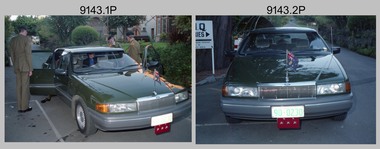
Photograph - CGS LTGEN Coates and RSM-A WO1 Wendt Visit to the Army Survey Regiment, Fortuna, Bendigo, 1990
... Unidentified aide de camp officer, 2IC MAJ Duncan Burns in background. .31) - Photo, colour, 1990. ...Unidentified aide de camp officer, 2IC MAJ Duncan Burns in background. .31) - Photo, colour, 1990. ...This set of 43 photographs was taken in August 1990 during the Australian Army Chief of the General Staff (CGS) and Regimental Sergeant-Major of the Australian Army (RSM-A) visit to the Army Survey Regiment, Fortuna, Bendigo. Lieutenant General Henry John Coates AC MBE was a senior officer in the Australian Army who served as Chief of the General Staff from 1990 to 1992. RSM-A WO1 Kevin ‘Lofty’ Wendt OAM BEM was the 2nd RSM to be appointed to the position of RSM-A, the most senior Warrant Officer position in the Australian Army. His appointment was from 1987 to 1990. The name of the CGS’s aide de camp officer is unknown. The CGS and RSM-A visit to the Army Survey Regiment is covered on page 145 of Valerie Lovejoy’s book 'Mapmakers of Fortuna – A history of the Army Survey Regiment’ ISBN: 0-646-42120-4. See Item 6154.6P for additional photos taken during the visit.This is a set of 43 photographs taken on the occasion of the Chief of the General Staff - Lieutenant General Henry John Coates AC MBE visit to the Army Survey Regiment, Bendigo in August 1990. Colour photographs are on 35mm negative film and scanned at 2400 dpi. They are part of the Army Survey Regiment’s Collection. .1) - Photo, colour, 1990. Arrival of the CGS at Fortuna Villa. L to R: unidentified RACT driver, CO LTCOL Rene van den Tol., unidentified aide de camp officer. .2) - Photo, colour, 1990. The CGS’s staff car, noting the 3 stars on red plate below the number plate. .3) - Photo, colour, 1990. Partners accompanying the tour delegation arrive at Fortuna Villa. Mrs Ruth van den Tol is 2nd from right, remainder unidentified. .4) - Photo, colour, 1990. The visitors gather at Fortuna Villa’s front steps. L to R: unidentified (x2), RSM-A WO1 Kevin ‘Lofty’ Wendt OAM BEM, unidentified (x2), Mrs Ruth van den Tol, unidentified. In background L to R: CGS LTGEN John Coates AC MBE, CO LTCOL Rene van den Tol. .5) - Photo, colour, 1990. The visitors gather at Fortuna Villa’s front steps. L to R: RSM WO1 Neville Stone, unidentified, RSM-A WO1 Kevin ‘Lofty’ Wendt OAM BEM, Mrs Ruth van den Tol, unidentified (x2). .6) - Photo, colour, 1990. The visitors gather at Fortuna Villa’s front steps. L to R: unidentified, RSM-A WO1 Kevin ‘Lofty’ Wendt OAM BEM, Mrs Ruth van den Tol, unidentified (x4). In background – RSM WO1 Neville Stone. .7) - Photo, colour, 1990. The visitors gather at Fortuna Villa’s front steps. L to R: RSM WO1 Neville Stone. unidentified, RSM-A WO1 Kevin ‘Lofty’ Wendt OAM BEM, unidentified (x4). Mrs Ruth van den Tol. .8) - Photo, colour, 1990. At Fortuna Villa’s front steps. L to R: RSM WO1 Neville Stone. RSM-A WO1 Kevin ‘Lofty’ Wendt OAM BEM. .9) - Photo, colour, 1990. CO LTCOL Rene van den Tol at left invites CGS LTGEN John Coates AC MBE to sign the Visitors’ Book outside the Messes. .10) - Photo, colour, 1990. Production Control Office. L to R: CO LTCOL Rene van den Tol, CAPT Roger Hancock, CGS LTGEN John Coates AC MBE, WO1 Colin Cuskelly. .11) - Photo, colour, 1990. Fortuna Villa Historic Tour. Unidentified visitors in the entrance foyer guided by CPL Le-Anne (Smallshaw) Shirley at far right. Mrs Ruth van den Tol faces the camera. .12) - Photo, colour, 1990. Descending the external stairway L to R: 2IC Maj Duncan Burns, CGS LTGEN John Coates AC MBE, unidentified aide de camp officer, CO LTCOL Rene van den Tol. .13) - Photo, colour, 1990. Air Survey Squadron brief L to R: LT Simon Buckpitt, OC MAJ Peter Clark, CO LTCOL Rene van den Tol, CGS LTGEN John Coates AC MBE, unidentified aide de camp officer. .14) - Photo, colour, 1990. Air Survey Squadron tour. CGS LTGEN John Coates AC MBE watches as CPL Darren Wilkinson operates a B8 stereo plotter on the AUTOMAP 2 system. .15) - Photo, colour, 1990. Air Survey Squadron tour. CGS LTGEN John Coates AC MBE views stereo aerial photography on a Wild B8 stereo plotter. .16) - Photo, colour, 1990. Air Survey Squadron tour. L to R: SSGT Andy Boath guides the CGS LTGEN John Coates AC MBE’s operation of a Wild B8 stereo plotter fitted with dual optics on the AUTOMAP 2 system. .17) - Photo, colour, 1990. Air Survey Squadron tour. L to R: SSGT Andy Boath explains a AUTOMAP 2 system feature coding menu to the CGS LTGEN John Coates AC MBE next to a Wild B8 stereo plotter. .18) - Photo, colour, 1990. Air Survey Squadron tour. L to R: SPR Paula (Golding) Brinsmead explains off-table map editing procedure to RSM-A WO1 Kevin ‘Lofty’ Wendt OAM BEM. RSM WO1 Neville Stone stands on the background. .19) - Photo, colour, 1990. Air Survey Squadron tour. L to R: SPR Paula (Golding) Brinsmead explains off-table map editing procedure to RSM-A WO1 Kevin ‘Lofty’ Wendt OAM BEM. .20) - Photo, colour, 1990. Cartographic Squadron brief. L to R: CGS LTGEN John Coates AC MBE, CAPT Dave McLachlan, CO LTCOL Rene van den Tol. .21) - Photo, colour, 1990. Cartographic Squadron tour. SPR Ian Baldwin demonstrates AUTOMAP 2 system cartographic editing on a Graphic Editing Workstation. Standing L to R: CAPT Dave McLachlan, CGS LTGEN John Coates AC MBE, CO LTCOL Rene van den Tol. .22) - Photo, colour, 1990. Cartographic Squadron tour. AUTOMAP 2 system cartographic editing demonstrated on a Graphic Editing Workstation. Standing L to R: LT Steve Hledik, unidentified aide de camp officer CAPT Dave McLachlan, 2IC MAJ Duncan Burns, CGS LTGEN John Coates AC MBE. .23) - Photo, colour, 1990. Lithographic Squadron brief. L to R: OC MAJ Bob Coote, CGS LTGEN John Coates AC MBE. .24) - Photo, colour, 1990. Lithographic Squadron tour. Aerial photograph film processing brief. L to R: CGS LTGEN John Coates AC MBE. OC MAJ Bob Coote, LT Marty Lyons in background. .25) - Photo, colour, 1990. Lithographic Squadron tour. Map separation film processing brief. L to R: OC MAJ Bob Coote, CGS LTGEN John Coates AC MBE. .26) - Photo, colour, 1990. Lithographic Squadron tour. Production of an orthophotomap proof brief. L to R: CGS LTGEN John Coates AC MBE. OC MAJ Bob Coote .27) - Photo, colour, 1990. Lithographic Squadron tour. KLIMCH large format camera brief. L to R: CGS LTGEN John Coates AC MBE, WO1 Bill Jones. .28) - Photo, colour, 1990. Lithographic Squadron tour. KLIMCH large format camera brief. L to R: CO LTCOL Rene van den Tol, CGS LTGEN John Coates AC MBE. .29) - Photo, colour, 1990. Lithographic Squadron tour. KLIMCH large format camera brief. L to R: CGS LTGEN John Coates AC MBE, WO1 Bill Jones, SPR Gavin Craggs. .30) - Photo, colour, 1990. Lithographic Squadron tour. Film enlargement/reduction process brief. L to R: WO1 Bill Jones, CGS LTGEN John Coates AC MBE, OC MAJ Bob Coote. Unidentified aide de camp officer, 2IC MAJ Duncan Burns in background. .31) - Photo, colour, 1990. Lithographic Squadron tour. Colour topographic map proof production brief. L to R: OC MAJ Bob Coote, CGS LTGEN John Coates AC MBE, WO1 Bill Jones. .32) - Photo, colour, 1990. Lithographic Squadron tour. L to R: CGS LTGEN John Coates AC MBE, OC MAJ Bob Coote. .33) - Photo, colour, 1990. Lithographic Squadron entrance. L to R: RSM WO1 Neville Stone, RSM-A WO1 Kevin ‘Lofty’ Wendt OAM BEM, unidentified, WO2 Rob Bogimul. .34) - Photo, colour, 1990. Lithographic Squadron entrance. L to R: RSM-A WO1 Kevin ‘Lofty’ Wendt OAM BEM. .35) - Photo, colour, 1990. Lithographic Squadron entrance. L to R: RSM-A WO1 Kevin ‘Lofty’ Wendt OAM BEM, WO2 Rob Bogimul. .36) - Photo, colour, 1990. Lithographic Squadron entrance. L to R: RSM WO1 Neville Stone, RSM-A WO1 Kevin ‘Lofty’ Wendt OAM BEM, WO2 Rob Bogimul. .37) - Photo, colour, 1990. Lithographic Squadron tour. Print Room introductions. L to R: in background – WO2 Rob Bogimul, Unidentified aide de camp officer. In foreground - CGS LTGEN John Coates AC MBE, OC MAJ Bob Coote, WO2 Jeff Willey, 2IC MAJ Duncan Burns. .38) & .39) - Photo, colour, 1990. Lithographic Squadron. RSM-A WO1 Kevin ‘Lofty’ Wendt OAM BEM addresses Army Survey Regiment personnel in the Print Room. .40) - Photo, colour, 1990. Lithographic Squadron. Presentation of the Army Survey Regiment unit plaque. L to R: RSM-A WO1 Kevin ‘Lofty’ Wendt OAM BEM, RSM WO1 Neville Stone. .41) to .43) - Photo, colour, 1990. Lithographic Squadron. RSM-A WO1 Kevin ‘Lofty’ Wendt OAM BEM addresses Army Survey Regiment personnel in the Print Room..1P to .43P – Not annotated. Stored with ‘CMDR 3MD Visit Mar 90’ film negative sleeve sets.royal australian survey corps, rasvy, army survey regiment, army svy regt, fortuna -
 Ringwood and District Historical Society
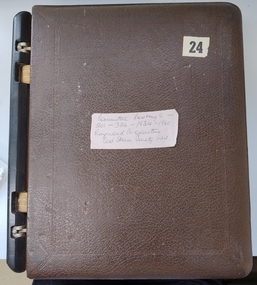
Administrative record - Minute Book, Ringwood Cool Stores Co-operative Society Ltd - Minutes Book 1934 to 1960 in Kalamazoo Binder
... The original key is lost, but RDHS Archivist Nevelle Burns made up two replacement keysm to allow the Pages to be removed for scanning. ...The original key is lost, but RDHS Archivist Nevelle Burns made up two replacement keysm to allow the Pages to be removed for scanning. ...A large brown Kalamazoo binder containing Minutes of the society from 1934 through to its winding up in 1960. The binder is opened with a key to insert or remove pages. The original key is lost, but RDHS Archivist Nevelle Burns made up two replacement keysm to allow the Pages to be removed for scanning. Once scanned the pages were reinsrted and the key used to close and lock the binder. The scanned minutes are in VC items 11221 to 11234 (2 years per item). VC Item 11235 is the Auction Catalogue associated with the closure of the Coolstores in 1960. This minute book was Item 24 at an Auction and was donated to RDHS (donor unknown). Key to VC Records of Scanned Minutes from Bound Kalamazoo Minute Book (VC 11220): VC ID Identification_Title 11221 Ringwood Cool Stores Co-operative Society Ltd - Minutes Book-Minutes 1934-1935 11222 Ringwood Cool Stores Co-operative Society Ltd - Minutes Book-Minutes 1936-1937 11223 Ringwood Cool Stores Co-operative Society Ltd - Minutes Book-Minutes 1938-1939 11224 Ringwood Cool Stores Co-operative Society Ltd - Minutes Book-Minutes 1940-1941 11225 Ringwood Cool Stores Co-operative Society Ltd - Minutes Book-Minutes 1942-1943 11226 Ringwood Cool Stores Co-operative Society Ltd - Minutes Book-Minutes 1944-1945 11227 Ringwood Cool Stores Co-operative Society Ltd - Minutes Book-Minutes 1946-1947 11228 Ringwood Cool Stores Co-operative Society Ltd - Minutes Book-Minutes 1948-1949 11229 Ringwood Cool Stores Co-operative Society Ltd - Minutes Book-Minutes 1950-1951 11230 Ringwood Cool Stores Co-operative Society Ltd - Minutes Book-Minutes 1952-1953 11231 Ringwood Cool Stores Co-operative Society Ltd - Minutes Book-Minutes 1954-1955 11232 Ringwood Cool Stores Co-operative Society Ltd - Minutes Book-Minutes 1956-1957 11233 Ringwood Cool Stores Co-operative Society Ltd - Minutes Book-Minutes 1958-1959 11234 Ringwood Cool Stores Co-operative Society Ltd - Minutes Book-Minutes 1960 including windup of the Society Label on cover reading "Committee Meetings - 201 -374 1934-1960. Ringwood Co-operative Cool Stores Society Ltd"coolstores -
 Flagstaff Hill Maritime Museum and Village
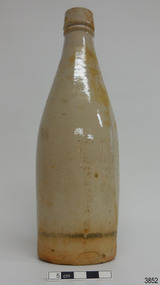
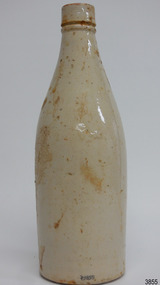
Ceramic - Stoneware Bottle, Dundas Pottery, Late 1800s to early 1900s
... In 1875, Miller, in partnership with John Young, leased part of Caledonian Pottery, naming it Crown Pottery, however, it burned down in 1879. In the early 1880s, Young extended the pottery and named it Milton Pottery. ...In 1875, Miller, in partnership with John Young, leased part of Caledonian Pottery, naming it Crown Pottery, however, it burned down in 1879. In the early 1880s, Young extended the pottery and named it Milton Pottery. ...This bottle was made in Scotland and recovered decades later from a shipwreck along the coast of Victoria. It may have been amongst the ship's cargo, its provisions or amongst a passenger's personal luggage. It is now part of the John Chance collection. Stoneware bottles similar to this one were in common use during the mid-to-late 19th century. They were used to store and transport. The bottles were handmade using either a potter's wheel or in moulds such as a plaster mould, which gave the bottles uniformity in size and shape. The bottle would then be fired and glazed in a hot kiln. Makers often identified their bottles with the impression of a small symbol or adding a colour to the mouth. The manufacturer usually stamped their bottles with their name and logo, and sometimes a message that the bottle remained their property and should be returned to them. The bottles could then be cleaned and refilled. DUNDAS POTTERY WORKS - The Dundas Pottery works were established in 1828 by William Johnstone in partnership with John Forsyth and John Mc Coll. Located where the Forth and Clyde Canal joined the Monkland Canal, North of Glasgow. Johnstone sold the pottery in 1835 to Robert Cochran and James Couper. Mc Coll was retained as manager until 1837when in 1839 Cochran & Couper sold the pottery and purchased the St Rollex Glass Works. George Duncan took over briefly but died in 1841, with the pottery possibly being run by his widow Helen and a potter named Alexander Paul. James Miller was the manager at the time and he bought the pottery in 1856, in partnership with John Moody. Miller's long and careful stewardship of the pottery saw success from the export market which allowed him to purchase the North British pottery in 1867 until 1874 when it was sold. In 1875, Miller, in partnership with John Young, leased part of Caledonian Pottery, naming it Crown Pottery, however, it burned down in 1879. In the early 1880s, Young extended the pottery and named it Milton Pottery. Miller’s son, James W., became a partner in Milton pottery in 1905. James Miller Snr died in 1905 and the company continued as a limited liability company, being sold to the Borax Consolidation Ltd in 1929, but it was unsuccessful and Possil pottery purchased some of the company's equipment before it finally closed in 1932. From 1828 until the James Miller period of circa 1856, the pottery produced salt-glazed stoneware for the local industrial trade; mainly bottles and drain pipes. James Miller produced various bottles, whisky and acid jars, casks, butter crocks, jam jars and domestic wares in Bristol glaze. He streamlined the water filter manufacturing, which had become a specialty of the pottery, and a dedicated section of the pottery was created solely for their production, which was exported worldwide. This stoneware bottle is historically significant for its manufacture and use in the late 19th to the early 20th century. This bottle is historically significant for its connection with the well-known stoneware manufacturers, Dundas Pottery of Glasgow, Scotland. The bottle is also significant as it was recovered by John Chance, a diver, from a wreck on the coast of Victoria in the 1960s-70s. Items that come from several wrecks along Victoria's coast have since been donated to the Flagstaff Hill Maritime Village’s museum collection by his family, illustrating this item’s level of historical value. Bottle, salt glazed stoneware, beige, sealed with wax, discolouration above base. Inscriptions stamped near base. Stamp: [symbol of concentric ovals], text within the symbol "PORT DUNDAS POTTERY COY." and "GLASGOW". Stamp:[Symbol - square with short vertical line in centre of base line] flagstaff hill, warrnambool, flagstaff hill maritime museum, maritime museum, shipwreck coast, flagstaff hill maritime village, great ocean road, shipwreck artefact, stoneware, ironstone, pottery, bottle, port dundas pottery, glasgow, john chance, antique bottle, william johnstone -
 Flagstaff Hill Maritime Museum and Village
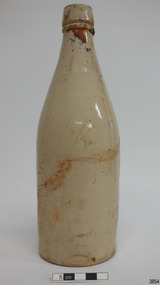
Ceramic - Stoneware Bottle, Dundas Pottery, Late 1800s to early 1900s
... In 1875, Miller, in partnership with John Young, leased part of Caledonian Pottery, naming it Crown Pottery, however, it burned down in 1879. In the early 1880s, Young extended the pottery and named it Milton Pottery. ...In 1875, Miller, in partnership with John Young, leased part of Caledonian Pottery, naming it Crown Pottery, however, it burned down in 1879. In the early 1880s, Young extended the pottery and named it Milton Pottery. ...This bottle was made in Scotland and recovered decades later from a shipwreck along the coast of Victoria. It may have been amongst the ship's cargo, its provisions or amongst a passenger's personal luggage. It is now part of the John Chance collection. Stoneware bottles similar to this one were in common use during the mid-to-late 19th century. They were used to store and transport. The bottles were handmade using either a potter's wheel or in moulds such as a plaster mould, which gave the bottles uniformity in size and shape. The bottle would then be fired and glazed in a hot kiln. Makers often identified their bottles with the impression of a small symbol or adding a colour to the mouth. The manufacturer usually stamped their bottles with their name and logo, and sometimes a message that the bottle remained their property and should be returned to them. The bottles could then be cleaned and refilled. DUNDAS POTTERY WORKS - The Dundas Pottery works were established in 1828 by William Johnstone in partnership with John Forsyth and John Mc Coll. Located where the Forth and Clyde Canal joined the Monkland Canal, North of Glasgow. Johnstone sold the pottery in 1835 to Robert Cochran and James Couper. Mc Coll was retained as manager until 1837when in 1839 Cochran & Couper sold the pottery and purchased the St Rollex Glass Works. George Duncan took over briefly but died in 1841, with the pottery possibly being run by his widow Helen and a potter named Alexander Paul. James Miller was the manager at the time and he bought the pottery in 1856, in partnership with John Moody. Miller's long and careful stewardship of the pottery saw success from the export market which allowed him to purchase the North British pottery in 1867 until 1874 when it was sold. In 1875, Miller, in partnership with John Young, leased part of Caledonian Pottery, naming it Crown Pottery, however, it burned down in 1879. In the early 1880s, Young extended the pottery and named it Milton Pottery. Miller’s son, James W., became a partner in Milton pottery in 1905. James Miller Snr died in 1905 and the company continued as a limited liability company, being sold to the Borax Consolidation Ltd in 1929, but it was unsuccessful and Possil pottery purchased some of the company's equipment before it finally closed in 1932. From 1828 until the James Miller period of circa 1856, the pottery produced salt-glazed stoneware for the local industrial trade; mainly bottles and drain pipes. James Miller produced various bottles, whisky and acid jars, casks, butter crocks, jam jars and domestic wares in Bristol glaze. He streamlined the water filter manufacturing, which had become a speciality of the pottery, and a dedicated section of the pottery was created solely for their production, which was exported worldwide. This stoneware bottle is historically significant for its manufacture and use in the late 19th to the early 20th century. This bottle is historically significant for its connection with the well-known stoneware manufacturers, Dundas Pottery of Glasgow, Scotland. The bottle is also significant as it was recovered by John Chance, a diver, from a wreck on the coast of Victoria in the 1960s-70s. Items that come from several wrecks along Victoria's coast have since been donated to the Flagstaff Hill Maritime Village’s museum collection by his family, illustrating this item’s level of historical value.Bottle, salt glazed stoneware, beige, sealed with wax, some discolouration above base. Inscription stamped near base..Stamp: [symbol of concentric ovals], text within the symbol "PORT DUNDAS POTTERY COY." and "GLASGOW". Stamp:[Symbol - square with short vertical line in centre of base line]flagstaff hill, warrnambool, flagstaff hill maritime museum, maritime museum, shipwreck coast, flagstaff hill maritime village, great ocean road, john chance, shipwreck artefact, stoneware, ironstone, pottery, bottle, port dundas pottery, glasgow, antique bottle, william johnstone -
 Flagstaff Hill Maritime Museum and Village
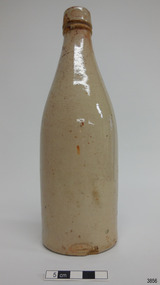
Ceramic - Stoneware Bottle, Dundas Pottery, Late 1800s to early 1900s
... In 1875, Miller, in partnership with John Young, leased part of Caledonian Pottery, naming it Crown Pottery, however, it burned down in 1879. In the early 1880s, Young extended the pottery and named it Milton Pottery. ...In 1875, Miller, in partnership with John Young, leased part of Caledonian Pottery, naming it Crown Pottery, however, it burned down in 1879. In the early 1880s, Young extended the pottery and named it Milton Pottery. ...This bottle was made in Scotland and recovered decades later from a shipwreck along the coast of Victoria. It may have been amongst the ship's cargo, its provisions or amongst a passenger's personal luggage. It is now part of the John Chance collection. Stoneware bottles similar to this one were in common use during the mid-to-late 19th century. They were used to store and transport. The bottles were handmade using either a potter's wheel or in moulds such as a plaster mould, which gave the bottles uniformity in size and shape. The bottle would then be fired and glazed in a hot kiln. Makers often identified their bottles with the impression of a small symbol or adding a colour to the mouth. The manufacturer usually stamped their bottles with their name and logo, and sometimes a message that the bottle remained their property and should be returned to them. The bottles could then be cleaned and refilled. DUNDAS POTTERY WORKS - The Dundas Pottery works were established in 1828 by William Johnstone in partnership with John Forsyth and John Mc Coll. Located where the Forth and Clyde Canal joined the Monkland Canal, North of Glasgow. Johnstone sold the pottery in 1835 to Robert Cochran and James Couper. Mc Coll was retained as manager until 1837when in 1839 Cochran & Couper sold the pottery and purchased the St Rollex Glass Works. George Duncan took over briefly but died in 1841, with the pottery possibly being run by his widow Helen and a potter named Alexander Paul. James Miller was the manager at the time and he bought the pottery in 1856, in partnership with John Moody. Miller's long and careful stewardship of the pottery saw success from the export market which allowed him to purchase the North British pottery in 1867 until 1874 when it was sold. In 1875, Miller, in partnership with John Young, leased part of Caledonian Pottery, naming it Crown Pottery, however, it burned down in 1879. In the early 1880s, Young extended the pottery and named it Milton Pottery. Miller’s son, James W., became a partner in Milton pottery in 1905. James Miller Snr died in 1905 and the company continued as a limited liability company, being sold to the Borax Consolidation Ltd in 1929, but it was unsuccessful and Possil pottery purchased some of the company's equipment before it finally closed in 1932. From 1828 until the James Miller period of circa 1856, the pottery produced salt-glazed stoneware for the local industrial trade; mainly bottles and drain pipes. James Miller produced various bottles, whisky and acid jars, casks, butter crocks, jam jars and domestic wares in Bristol glaze. He streamlined the water filter manufacturing, which had become a speciality of the pottery, and a dedicated section of the pottery was created solely for their production, which was exported worldwide.This stoneware bottle is historically significant for its manufacture and use in the late 19th to the early 20th century. This bottle is historically significant for its connection with the well-known stoneware manufacturers, Dundas Pottery of Glasgow, Scotland. The bottle is also significant as it was recovered by John Chance, a diver, from a wreck on the coast of Victoria in the 1960s-70s. Items that come from several wrecks along Victoria's coast have since been donated to the Flagstaff Hill Maritime Village’s museum collection by his family, illustrating this item’s level of historical value.Bottle, salt glazed stoneware, beige, part sealed with wax and cork, very little discolouration. Inscriptions stamped near base.Stamp: [symbol of concentric ovals], text within the symbol "PORT DUNDAS POTTERY COY." and "GLASGOW". Stamp:[Symbol - square with short vertical line in centre of base line]flagstaff hill, warrnambool, flagstaff hill maritime museum, maritime museum, shipwreck coast, flagstaff hill maritime village, great ocean road, john chance, shipwreck artefact, stoneware, ironstone, pottery, bottle, port dundas pottery, glasgow, antique bottle, william johnstone -
 Flagstaff Hill Maritime Museum and Village
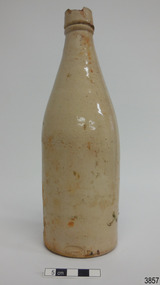
Ceramic - Stoneware Bottle, Dundas Pottery, Late 1800s to early 1900s
... In 1875, Miller, in partnership with John Young, leased part of Caledonian Pottery, naming it Crown Pottery, however, it burned down in 1879. In the early 1880s, Young extended the pottery and named it Milton Pottery. ...In 1875, Miller, in partnership with John Young, leased part of Caledonian Pottery, naming it Crown Pottery, however, it burned down in 1879. In the early 1880s, Young extended the pottery and named it Milton Pottery. ...This bottle was made in Scotland and recovered decades later from a shipwreck along the coast of Victoria. It may have been amongst the ship's cargo, its provisions or amongst a passenger's personal luggage. It is now part of the John Chance collection. Stoneware bottles similar to this one were in common use during the mid-to-late 19th century. They were used to store and transport. The bottles were handmade using either a potter's wheel or in moulds such as a plaster mould, which gave the bottles uniformity in size and shape. The bottle would then be fired and glazed in a hot kiln. Makers often identified their bottles with the impression of a small symbol or adding a colour to the mouth. The manufacturer usually stamped their bottles with their name and logo, and sometimes a message that the bottle remained their property and should be returned to them. The bottles could then be cleaned and refilled. DUNDAS POTTERY WORKS - The Dundas Pottery works were established in 1828 by William Johnstone in partnership with John Forsyth and John Mc Coll. Located where the Forth and Clyde Canal joined the Monkland Canal, North of Glasgow. Johnstone sold the pottery in 1835 to Robert Cochran and James Couper. Mc Coll was retained as manager until 1837when in 1839 Cochran & Couper sold the pottery and purchased the St Rollex Glass Works. George Duncan took over briefly but died in 1841, with the pottery possibly being run by his widow Helen and a potter named Alexander Paul. James Miller was the manager at the time and he bought the pottery in 1856, in partnership with John Moody. Miller's long and careful stewardship of the pottery saw success from the export market which allowed him to purchase the North British pottery in 1867 until 1874 when it was sold. In 1875, Miller, in partnership with John Young, leased part of Caledonian Pottery, naming it Crown Pottery, however, it burned down in 1879. In the early 1880s, Young extended the pottery and named it Milton Pottery. Miller’s son, James W., became a partner in Milton pottery in 1905. James Miller Snr died in 1905 and the company continued as a limited liability company, being sold to the Borax Consolidation Ltd in 1929, but it was unsuccessful and Possil pottery purchased some of the company's equipment before it finally closed in 1932. From 1828 until the James Miller period of circa 1856, the pottery produced salt-glazed stoneware for the local industrial trade; mainly bottles and drain pipes. James Miller produced various bottles, whisky and acid jars, casks, butter crocks, jam jars and domestic wares in Bristol glaze. He streamlined the water filter manufacturing, which had become a specialty of the pottery, and a dedicated section of the pottery was created solely for their production, which was exported worldwide.This stoneware bottle is historically significant for its manufacture and use in the late 19th to the early 20th century. This bottle is historically significant for its connection with the well-known stoneware manufacturers, Dundas Pottery of Glasgow, Scotland. The bottle is also significant as it was recovered by John Chance, a diver, from a wreck on the coast of Victoria in the 1960s-70s. Items that come from several wrecks along Victoria's coast have since been donated to the Flagstaff Hill Maritime Village’s museum collection by his family, illustrating this item’s level of historical value.Bottle, salt glazed stoneware, beige, sealed with cork, no discolouration . Inscriptions stamped near base.Stamp: [symbol of concentric ovals], text within the symbol "PORT DUNDAS POTTERY COY." and "GLASGOW". Stamp:[Symbol - square with short vertical line in centre of base line]flagstaff hill, warrnambool, flagstaff hill maritime museum, maritime museum, shipwreck coast, flagstaff hill maritime village, great ocean road, john chance, shipwreck artefact, stoneware, ironstone, pottery, bottle, port dundas pottery, glasgow, antique bottle, william johnstone -
 Flagstaff Hill Maritime Museum and Village
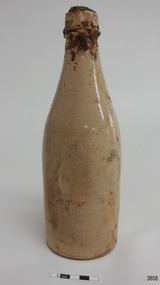
Ceramic - Stoneware Bottle, Dundas Pottery, Late 1800s to early 1900s
... In 1875, Miller, in partnership with John Young, leased part of Caledonian Pottery, naming it Crown Pottery, however, it burned down in 1879. In the early 1880s, Young extended the pottery and named it Milton Pottery. ...In 1875, Miller, in partnership with John Young, leased part of Caledonian Pottery, naming it Crown Pottery, however, it burned down in 1879. In the early 1880s, Young extended the pottery and named it Milton Pottery. ...This bottle was made in Scotland and recovered decades later from a shipwreck along the coast of Victoria. It may have been amongst the ship's cargo, its provisions or amongst a passenger's personal luggage. It is now part of the John Chance collection. Stoneware bottles similar to this one were in common use during the mid-to-late 19th century. They were used to store and transport. The bottles were handmade using either a potter's wheel or in moulds such as a plaster mould, which gave the bottles uniformity in size and shape. The bottle would then be fired and glazed in a hot kiln. Makers often identified their bottles with the impression of a small symbol or adding a colour to the mouth. The manufacturer usually stamped their bottles with their name and logo, and sometimes a message that the bottle remained their property and should be returned to them. The bottles could then be cleaned and refilled. DUNDAS POTTERY WORKS - The Dundas Pottery works were established in 1828 by William Johnstone in partnership with John Forsyth and John Mc Coll. Located where the Forth and Clyde Canal joined the Monkland Canal, North of Glasgow. Johnstone sold the pottery in 1835 to Robert Cochran and James Couper. Mc Coll was retained as manager until 1837when in 1839 Cochran & Couper sold the pottery and purchased the St Rollex Glass Works. George Duncan took over briefly but died in 1841, with the pottery possibly being run by his widow Helen and a potter named Alexander Paul. James Miller was the manager at the time and he bought the pottery in 1856, in partnership with John Moody. Miller's long and careful stewardship of the pottery saw success from the export market which allowed him to purchase the North British pottery in 1867 until 1874 when it was sold. In 1875, Miller, in partnership with John Young, leased part of Caledonian Pottery, naming it Crown Pottery, however, it burned down in 1879. In the early 1880s, Young extended the pottery and named it Milton Pottery. Miller’s son, James W., became a partner in Milton pottery in 1905. James Miller Snr died in 1905 and the company continued as a limited liability company, being sold to the Borax Consolidation Ltd in 1929, but it was unsuccessful and Possil pottery purchased some of the company's equipment before it finally closed in 1932. From 1828 until the James Miller period of circa 1856, the pottery produced salt-glazed stoneware for the local industrial trade; mainly bottles and drain pipes. James Miller produced various bottles, whisky and acid jars, casks, butter crocks, jam jars and domestic wares in Bristol glaze. He streamlined the water filter manufacturing, which had become a specialty of the pottery, and a dedicated section of the pottery was created solely for their production, which was exported worldwide.This stoneware bottle is historically significant for its manufacture and use in the late 19th to the early 20th century. This bottle is historically significant for its connection with the well-known stoneware manufacturers, Dundas Pottery of Glasgow, Scotland. The bottle is also significant as it was recovered by John Chance, a diver, from a wreck on the coast of Victoria in the 1960s-70s. Items that come from several wrecks along Victoria's coast have since been donated to the Flagstaff Hill Maritime Village’s museum collection by his family, illustrating this item’s level of historical value.Bottle, salt glazed stoneware, beige, large chip on lip of bottle. Inscription stamped near base.Stamp: [symbol of concentric ovals], text within the symbol "PORT DUNDAS POTTERY COY." and "GLASGOW". Stamp:[Symbol - square with short vertical line in centre of base line]flagstaff hill, warrnambool, flagstaff hill maritime museum, maritime museum, shipwreck coast, flagstaff hill maritime village, great ocean road, john chance, shipwreck artefact, stoneware, ironstone, pottery, bottle, port dundas pottery, glasgow, antique bottle, william johnstone -
 Flagstaff Hill Maritime Museum and Village
Ceramic - Stoneware Bottle, Dundas Pottery, Late 1800s to early 1900s
... In 1875, Miller, in partnership with John Young, leased part of Caledonian Pottery, naming it Crown Pottery, however, it burned down in 1879. In the early 1880s, Young extended the pottery and named it Milton Pottery. ...In 1875, Miller, in partnership with John Young, leased part of Caledonian Pottery, naming it Crown Pottery, however, it burned down in 1879. In the early 1880s, Young extended the pottery and named it Milton Pottery. ...This bottle was made in Scotland and recovered decades later from a shipwreck along the coast of Victoria. It may have been amongst the ship's cargo, its provisions or amongst a passenger's personal luggage. It is now part of the John Chance collection. Stoneware bottles similar to this one were in common use during the mid-to-late 19th century. They were used to store and transport. The bottles were handmade using either a potter's wheel or in moulds such as a plaster mould, which gave the bottles uniformity in size and shape. The bottle would then be fired and glazed in a hot kiln. Makers often identified their bottles with the impression of a small symbol or adding a colour to the mouth. The manufacturer usually stamped their bottles with their name and logo, and sometimes a message that the bottle remained their property and should be returned to them. The bottles could then be cleaned and refilled. DUNDAS POTTERY WORKS - The Dundas Pottery works were established in 1828 by William Johnstone in partnership with John Forsyth and John Mc Coll. Located where the Forth and Clyde Canal joined the Monkland Canal, North of Glasgow. Johnstone sold the pottery in 1835 to Robert Cochran and James Couper. Mc Coll was retained as manager until 1837 when in 1839 Cochran & Couper sold the pottery and purchased the St Rollex Glass Works. George Duncan took over briefly but died in 1841, with the pottery possibly being run by his widow Helen and a potter named Alexander Paul. James Miller was the manager at the time and he bought the pottery in 1856, in partnership with John Moody. Miller's long and careful stewardship of the pottery saw success from the export market which allowed him to purchase the North British pottery in 1867 until 1874 when it was sold. In 1875, Miller, in partnership with John Young, leased part of Caledonian Pottery, naming it Crown Pottery, however, it burned down in 1879. In the early 1880s, Young extended the pottery and named it Milton Pottery. Miller’s son, James W., became a partner in Milton pottery in 1905. James Miller Snr died in 1905 and the company continued as a limited liability company, being sold to the Borax Consolidation Ltd in 1929, but it was unsuccessful and Possil pottery purchased some of the company's equipment before it finally closed in 1932. From 1828 until the James Miller period of circa 1856, the pottery produced salt-glazed stoneware for the local industrial trade; mainly bottles and drain pipes. James Miller produced various bottles, whisky and acid jars, casks, butter crocks, jam jars and domestic wares in Bristol glaze. He streamlined the water filter manufacturing, which had become a speciality of the pottery, and a dedicated section of the pottery was created solely for their production, which was exported worldwide.This stoneware bottle is historically significant for its manufacture and use in the late 19th to the early 20th century. This bottle is historically significant for its connection with the well-known stoneware manufacturers, Dundas Pottery of Glasgow, Scotland. The bottle is also significant as it was recovered by John Chance, a diver, from a wreck on the coast of Victoria in the 1960s-70s. Items that come from several wrecks along Victoria's coast have since been donated to the Flagstaff Hill Maritime Village’s museum collection by his family, illustrating this item’s level of historical value.Bottle, salt glazed stoneware, beige, sealed with cork and wax, discolouration on upper part. Inscription stamped near base.Stamp: [symbol of concentric ovals], text within the symbol "PORT DUNDAS POTTERY COY." and "GLASGOW". Stamp:[Symbol - square with short vertical line in centre of base line]flagstaff hill, warrnambool, flagstaff hill maritime museum, maritime museum, shipwreck coast, flagstaff hill maritime village, great ocean road, john chance, shipwreck artefact, stoneware, ironstone pottery, bottle, port dundas pottery, glasgow, antique bottle, william johnstone -
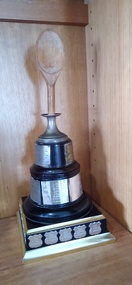 Peterborough History Group
Souvenir - Fred Moore Wooden Spoon Trophy
... Chirnside, 1980 WR Jamieson D Calvert, 1981 M Fogarty T Durham, 1982 R Chirnside D Moyle, 1983 T Durham L Cummins, 1984 K Moore P Gray ,1985 I chalingsworth N Kirby, 1986 L Brown C McKenzie, 1987 N Porteous J Gilder, 1988 J Porteous D Morrison, 1989 S Wilkinson T Calvert, 1990 N Gransmaa B Richmond, 1991 K Moore J Pangrazio, 1992 J Fullerton- Healy H McFarlane, 1993 H McCulloch and J Kelly, 1994 A McQueen HW Ryan, 1995 K Reggall J Agar, 1996 Deb Bradshaw D Howe, 1997 J Wilson C Emerson, 1998 N Porteous J Dyson, 1999 G McFeeter K Wallice, 2000 Anthony bell Di Whittaker, 2001 T Smith J Irvine, 2002 Patrick Moore Jill Wilson, 2003 D Howe M Watson, 2004 J Porteous D Fisher, 2005 S Heatherly R Densley, 2006 A Finlay G Burns, 2007 A Campbell M Valmorbida, 2008 S Paton J Austin, 2009 C Ross T Dean, 2010 C McPherson A Cooper, 2011 R Lidgerwood Z Baker, 2012 N Robinson T Custance, 2013 D Hay CW Richmond, 2014 E Chartres A Littlechild, 2015 T Clark M Pithie, 2016 A Campbell J Roxburgh, 2017 P devilee S Borghero, 2018 A Austin H Cumming, 2019 J Brown F Devilee, 2020 R Bell O Wilson, 2021 P Moore S Towell,....Chirnside, 1980 WR Jamieson D Calvert, 1981 M Fogarty T Durham, 1982 R Chirnside D Moyle, 1983 T Durham L Cummins, 1984 K Moore P Gray ,1985 I chalingsworth N Kirby, 1986 L Brown C McKenzie, 1987 N Porteous J Gilder, 1988 J Porteous D Morrison, 1989 S Wilkinson T Calvert, 1990 N Gransmaa B Richmond, 1991 K Moore J Pangrazio, 1992 J Fullerton- Healy H McFarlane, 1993 H McCulloch and J Kelly, 1994 A McQueen HW Ryan, 1995 K Reggall J Agar, 1996 Deb Bradshaw D Howe, 1997 J Wilson C Emerson, 1998 N Porteous J Dyson, 1999 G McFeeter K Wallice, 2000 Anthony bell Di Whittaker, 2001 T Smith J Irvine, 2002 Patrick Moore Jill Wilson, 2003 D Howe M Watson, 2004 J Porteous D Fisher, 2005 S Heatherly R Densley, 2006 A Finlay G Burns, 2007 A Campbell M Valmorbida, 2008 S Paton J Austin, 2009 C Ross T Dean, 2010 C McPherson A Cooper, 2011 R Lidgerwood Z Baker, 2012 N Robinson T Custance, 2013 D Hay CW Richmond, 2014 E Chartres A Littlechild, 2015 T Clark M Pithie, 2016 A Campbell J Roxburgh, 2017 P devilee S Borghero, 2018 A Austin H Cumming, 2019 J Brown F Devilee, 2020 R Bell O Wilson, 2021 P Moore S Towell,. ...The Fred Moore trophy is held on Australia Day long weekend. This trophy commemorates the losers, ie the highest score of the day over 12 holes. It began in 1967, and continues. Believed to be donated by Bill Cumming to honour the effort of the players. The event is a non handicap game, so anyone can play, not necessarily golfers. It is still quite a coveted prize. The names on this trophy are not generally found on any other trophies! 1967 L Gatenby G Irvine, 1968 F McIntosh D Morrison, 1969 R Richmond J Wilson, 1970 S Cumming D Urquhart, 1971 S Wilcocks M Koser, 1972 J Murnane D Urquhart, 1973 a. Urquhart P Calvert, 1974 D Mercer A Richmond, 1975 J chirnside D Urquhart, 1976 D McKenzie E Stansfield, 1977 R.A.G Chirnside J Jamison, 1978 T Durham A affleck, 1979 R Grice J.A.S. Chirnside, 1980 WR Jamieson D Calvert, 1981 M Fogarty T Durham, 1982 R Chirnside D Moyle, 1983 T Durham L Cummins, 1984 K Moore P Gray ,1985 I chalingsworth N Kirby, 1986 L Brown C McKenzie, 1987 N Porteous J Gilder, 1988 J Porteous D Morrison, 1989 S Wilkinson T Calvert, 1990 N Gransmaa B Richmond, 1991 K Moore J Pangrazio, 1992 J Fullerton- Healy H McFarlane, 1993 H McCulloch and J Kelly, 1994 A McQueen HW Ryan, 1995 K Reggall J Agar, 1996 Deb Bradshaw D Howe, 1997 J Wilson C Emerson, 1998 N Porteous J Dyson, 1999 G McFeeter K Wallice, 2000 Anthony bell Di Whittaker, 2001 T Smith J Irvine, 2002 Patrick Moore Jill Wilson, 2003 D Howe M Watson, 2004 J Porteous D Fisher, 2005 S Heatherly R Densley, 2006 A Finlay G Burns, 2007 A Campbell M Valmorbida, 2008 S Paton J Austin, 2009 C Ross T Dean, 2010 C McPherson A Cooper, 2011 R Lidgerwood Z Baker, 2012 N Robinson T Custance, 2013 D Hay CW Richmond, 2014 E Chartres A Littlechild, 2015 T Clark M Pithie, 2016 A Campbell J Roxburgh, 2017 P devilee S Borghero, 2018 A Austin H Cumming, 2019 J Brown F Devilee, 2020 R Bell O Wilson, 2021 P Moore S Towell,.The trophy is important because it represents the fact that its a fun, all inclusive day celebrating the Peterborough Golf Club, members and non members, winners and losers!Wooden spoon mounted in a plinth, with metal name plates around the base. the original base was round, with one round base added, and a square base added, to provide more space for the names.Name and dates inscribed on nameplatesgolf, golf tournaments, peterborough golf club, fred moore trophy -
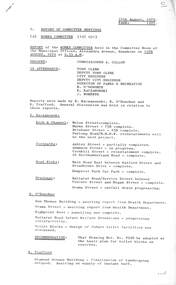 Sunshine and District Historical Society Incorporated
Administrative record - City of Sunshine - Commissioner Mr Alexander Alex George Gillon Collection 1976 - 1982 - Report of committee meetings 14th August 1979, City of Sunshine, 14th August 1979
... Report of Committee Meetings 14th August 1979 Report of the Works Committee Kerb & Channel Melon Street Completed Kerb & Channel Burns Street 75% Completed Kerb & Channel Brisbane Street 85% Completed Kerb & Channel Furlong Road M.M.B.W, Reinstatements will be next project Footpath Ashley Strteet Partially Completed Footpath Adamson Street In Progress Footpath Cornhill Street Reinstatement Completed Footpath 24 Northumberland Road Completed Road Works Main Road East between Watford Street and Stradbroke Drive Completed Road Works Dempster Park Car Park Completed Drainage Ballarat Road Service Road between Vincent Street and Hogan Street Completed Orama Street Outfall Drain Progressing Bon Thomas Reserve Building Awaiting Report from Health Department Orama Street Awaiting Report from Health Department Highpoint West Panelling Now Completed Ballarat Road Infant Welfare Centre Extensions Progressing Toilet Blocks Design of Future Toilet Facilities was Discussed Diamond Avenue Building Finalisation of Landscaping Delayed due to Supply of Instant Turf Bon Thomas Reserve Landscaping Drainage, Sand Pits and Concrete Edging Completed Street Treets Bult Planting in Southern, River and Central Wards Completed. ...Melon Street Braybrook Burns Street Maidstone Brisbane Street Albion Furlong Road Sunshine North Ashley Strteet Adamson Street Cornhill Street Northumberland Road Main Road East Watford Street Stradbroke Drive Dempster Park Phoenix Street Ballarat Road Vincent Street Hogan Street Deer Park Orama Street Bon Thomas Reserve Quinn Street Ballarat Road Infant Welfare Centre Diamond Avenue Albanvale Report of Committee Meetings 14th August 1979 Report of the Works Committee Kerb & Channel Melon Street Completed Kerb & Channel Burns Street 75% Completed Kerb & Channel Brisbane Street 85% Completed Kerb & Channel Furlong Road M.M.B.W, Reinstatements will be next project Footpath Ashley Strteet Partially Completed Footpath Adamson Street In Progress Footpath Cornhill Street Reinstatement Completed Footpath 24 Northumberland Road Completed Road Works Main Road East between Watford Street and Stradbroke Drive Completed Road Works Dempster Park Car Park Completed Drainage Ballarat Road Service Road between Vincent Street and Hogan Street Completed Orama Street Outfall Drain Progressing Bon Thomas Reserve Building Awaiting Report from Health Department Orama Street Awaiting Report from Health Department Highpoint West Panelling Now Completed Ballarat Road Infant Welfare Centre Extensions Progressing Toilet Blocks Design of Future Toilet Facilities was Discussed Diamond Avenue Building Finalisation of Landscaping Delayed due to Supply of Instant Turf Bon Thomas Reserve Landscaping Drainage, Sand Pits and Concrete Edging Completed Street Treets Bult Planting in Southern, River and Central Wards Completed. ...Report of Committee Meetings 14th August 1979 Report of the Works Committee Kerb & Channel Melon Street Completed Kerb & Channel Burns Street 75% Completed Kerb & Channel Brisbane Street 85% Completed Kerb & Channel Furlong Road M.M.B.W, Reinstatements will be next project Footpath Ashley Strteet Partially Completed Footpath Adamson Street In Progress Footpath Cornhill Street Reinstatement Completed Footpath 24 Northumberland Road Completed Road Works Main Road East between Watford Street and Stradbroke Drive Completed Road Works Dempster Park Car Park Completed Drainage Ballarat Road Service Road between Vincent Street and Hogan Street Completed Orama Street Outfall Drain Progressing Bon Thomas Reserve Building Awaiting Report from Health Department Orama Street Awaiting Report from Health Department Highpoint West Panelling Now Completed Ballarat Road Infant Welfare Centre Extensions Progressing Toilet Blocks Design of Future Toilet Facilities was Discussed Diamond Avenue Building Finalisation of Landscaping Delayed due to Supply of Instant Turf Bon Thomas Reserve Landscaping Drainage, Sand Pits and Concrete Edging Completed Street Treets Bult Planting in Southern, River and Central Wards Completed. West Ward Progressing Tree Maintenance 50% Complete Dempster Park Practice Wickets Being Prepared for Laying of Synthetic Surface Report of Finance Committee Meeting Report of the Town Clerk Printing of Sunshine and District Historical Society Book Award Matters Leases Report of the Senior Health Surveyor Sanitary Contract Report of the Municipal Recreation Officer Holiday Programmes Finance 1979 Report of the City Engineer Outdoor Staff Request for Travelling Allowance for Use of Private Vehicles Capital Works Programme 1979/80 & 1980/81melon street, braybrook, burns street, maidstone, brisbane street, albion, furlong road, sunshine north, ashley strteet, adamson street, cornhill street, northumberland road, main road east, watford street, stradbroke drive, dempster park, phoenix street, ballarat road, vincent street, hogan street, deer park, orama street, bon thomas reserve, quinn street, ballarat road infant welfare centre, diamond avenue, albanvale -
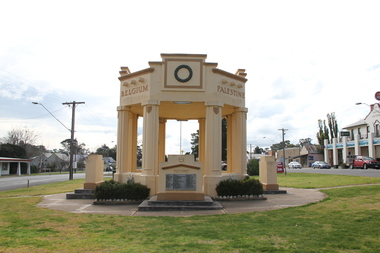 Ballarat Heritage Services
Photograph - Photograph - Colour, L.J. Gervasoni, Avoca War Memorial, 2011, 06/08/2011
... Brown J.A. Brown J.N. Burns W. Dobley L. Driver W.H. Evans C.G.H. ...Brown J.A. Brown J.N. Burns W. Dobley L. Driver W.H. Evans C.G.H. ...The monument commemorates those from Avoca who have served in the various conflicts in which Australia has been involved. It was dedicated on18 November 1921. The memorial was later rededicated in 1988 to also remember those who served in the Second World War. During the First World War, 137 men from the Avoca area volunteered for the armed services and of this number 29 were killed. A plaque, unveiled in 1984, commemorates Sergeant Lewis McGee V.C who enlisted from Avoca in World War One. Colour photograph of the Avoca World War One. The Memorial is an octagonal building of rendered brick supported on eight columns with rounded engaged columns on the central section of each. At the top of the rounded section is a shield decoration. World War One Fallen Auls A. Beavis J. Beer C. Brown J.A. Brown J.N. Burns W. Dobley L. Driver W.H. Evans C.G.H. Fish W. Harrowfield N. Henderson J.H. Henry C.A. Howell T.P. Kiehl A. Lambert S. Lansdell H. Livingstone J. McArdle J.E.F. McDowell W.R. Oppy W. Rowlands W. Rowlands H. Smith S.W. Summers D.L. Templeton C. Turpin H. Willmott C. Wrigley F. Yates L.R. World War One Honour Roll Anderson N.W. Armstrong H.M. Barry R.E. Beavis JOHN. Blain J. Bowen L. Bradley H.J. Brazil F. Brereton W.C. Brereton C. Brown H. Burke J.F. Burke P. Burnett W. Cain H.C. Calnan C. Chandler R.W. Chandler H. Chaplan W. Coates E. Cross F. Cross C. Crute A.T. Cullip C. Daly J. Derrick E.A. Diamond C.P. Doodt D. Doodt C. Douglas J.O. Ebeling C. Elliot T. Elliot N. Elliot W.N. Ford H. Fraser D.C. French W. French W.H. French C. Garner J. Gee J. Gee F.R. Gibson C.A. Golder A. Golder F. Gollop H. Gouce W. Greenwood H. Greenwood W. Harbour H.J.H. Harris N. Harrow R. Harrowfield B. Hellings D. Henderson C. Henderson J.J. Henderson T.A. Hilderbrand W. Holland H.S. Hughes W. Jardine J.W. Jardine W.E. Jardine J.A. Johnson G. Johnson W. Johnson REG. Johns Kitchen G.R. Laidlow R.T. Larkins James. Leyden J.M. Leyden P.J. Lindsay F. Lyons P.L. McEwan F. McVicar F.C. McVicar A.A. Mitchell T.T. Moodie A. Nicholson E. Porter A.B. Randall W. Redpath S. Reeves H. Reid E. Resuggan A. Robinson R.W. Samers V. Scott R.V. Sims H.L. Stavely W. Torney S. Williams H. Willmott H. Wilmott D. Wilson B.C. Wilson A. Wiltshire C. Witherden T. Witherden D. Yates J.O. Young F. Johnson F. Kitchell P. Kitchen A.L.avoca, avoca war memorial -
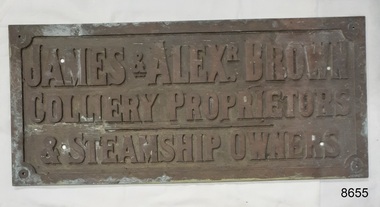 Flagstaff Hill Maritime Museum and Village
Plaque - Nameplate, James & Alexander Brown, 1849 – 1931
... The advertising claimed that their Pelaw Main coal was the famous household coal that met the highest test in Australia and burned bright and clean. Domestic customers could purchase the coal at the wharf or pay for delivery. ...The advertising claimed that their Pelaw Main coal was the famous household coal that met the highest test in Australia and burned bright and clean. Domestic customers could purchase the coal at the wharf or pay for delivery. ...This is one of two cast brass nameplates of James & Alexander Brown in our collection. The Newcastle, NSW, firm was renowned for its coal mining and exporting business established in colonial Australia in 1843. The firm had an office in Melbourne and sold coal for commercial use and from the Wharf for the domestic market. The coal was then distributed along the southwest coast of Victoria in steamships or steam packets and into the regional areas of Victoria by cart and wagon. In 1890 there was a strike of coal workers but the Geelong Advertiser, September 1, 1890, announced that “a firm of coal merchants only recently received some large cargoes from Newcastle”. This supply of coal could have originated at the colliery of James & Alexander Brown. About James & Alexander Brown: - James (1816-1894), John (1823-1846) and Alexander Brown (1827-1877) migrated with their parents from Scotland to Sydney, Australia, in 1842. The next year James leased land and was assisted by his brothers Alexander and John in mining coal in the area near Maitland. The market was very competitive, with the government controlling prices. James was instrumental in a legal battle that resulted in the introduction of open competition for coal mining. James and Alexander had become business partners by 1852 and moved south of Newcastle where they established and worked a profitable mining enterprise. Their assets by 1857 included a ships’ chandlery, a fleet of steamships and an overseas trading business. They were the first firm to import rum, sugar and coffee into Newcastle. By 1892 they were exporting coal to New Zealand, China, North America, and various colonial ports. They had elaborate workshops to service their own steam engines and steamships. They were the first to use a steam collier vessel in Australian waters and they set up the second tug boat in Newcastle, the beginning of being owners of many more tug boats and performing a towing business. By 1868 James & Alexander Brown was the largest coal producer in the colony. James focused on managing the colliery and Alexander on overseas trade. It was estimated that the firm had produced over eight per cent of coal in New South Wales by 1914. James & Alexander Brown advertised in the Melbourne Herald in the early 1900s and kept an office at Queen Street, Melbourne as well as at the Wharf, stating their telephone numbers for both places. The coal was available for ‘Immediate Delivery’ for household and industrial purposes. The advertising claimed that their Pelaw Main coal was the famous household coal that met the highest test in Australia and burned bright and clean. Domestic customers could purchase the coal at the wharf or pay for delivery. Commercial customers could load their purchases into their steamships or wagons for further distribution into regional Victoria. After James’s death in 1894 his son John managed the firm, which was also known as J & A Brown. John passed away in 1930 and his sons took over. In 1931 the firm amalgamated with Abermain Seaham and the new name was J & A Brown & Abermain Seaham Collieries Ltd. commonly abbreviated to JABAS, which merged with Caledonian Collieries Ltd in 1960 and Coal & Allied Industries Ltd. was formed. The pair of nameplates is significant for its connection with the firm James & Alexander Brown. The firm was established in 1845 and became one of the largest collieries in colonial Australia. It was involved in trading within Australia and overseas. James was involved in the introduction of open competition for coal mining prices. They were the first to use a steam colliery in Australian waters and the first to import goods such as rum, sugar and coffee into New South Wales. The firm had a Melbourne office in the early 1900s, selling and distributing coal throughout Victoria, which likely included the Port of Warrnambool, which opened in 1890. The nameplates are likely to have originated from the Melbourne location.Brass Entrance Name Plate, one of a pair. Eight holes are formed through the plate; one in each corner, and four more holes are within the inscription area. The cast plate has three rows of text with the company’s name and type of business. The plate was owned by James & Alex. Brown. "JAMES & ALEXR. BROWN / COLLIERY PROPRIETORS / & STEAMSHIP OWNERS"flagstaff hill, warrnambool, maritime museum, maritime village, great ocean road, shipwreck coast, nameplate, james & alexander brown, j & a brown, james & alexr brown, colliery proprietors, steamship owners, ship chandlers, coal mine, coal export, australian import, australian export, newcastle, colliers, coastal trade, steamships -
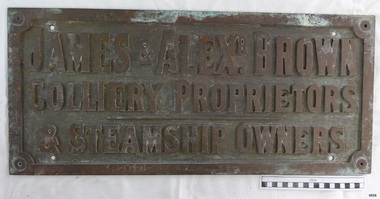 Flagstaff Hill Maritime Museum and Village
Plaque - Nameplate, James & Alexander Brown, 1849 – 1931
... The advertising claimed that their Pelaw Main coal was the famous household coal that met the highest test in Australia and burned bright and clean. Domestic customers could purchase the coal at the wharf or pay for delivery. ...The advertising claimed that their Pelaw Main coal was the famous household coal that met the highest test in Australia and burned bright and clean. Domestic customers could purchase the coal at the wharf or pay for delivery. ...This is one of two cast brass nameplates of James & Alexander Brown in our collection. The Newcastle, NSW, firm was renowned for its coal mining and exporting business established in colonial Australia in 1843. The firm had an office in Melbourne and sold coal for commercial use and from the Wharf for the domestic market. The coal was then distributed along the southwest coast of Victoria in steamships or steam packets and into the regional areas of Victoria by cart and wagon. In 1890 there was a strike of coal workers but the Geelong Advertiser, September 1, 1890, announced that “a firm of coal merchants only recently received some large cargoes from Newcastle”. This supply of coal could have originated at the colliery of James & Alexander Brown. About James & Alexander Brown: - James (1816-1894), John (1823-1846) and Alexander Brown (1827-1877) migrated with their parents from Scotland to Sydney, Australia, in 1842. The next year James leased land and was assisted by his brothers Alexander and John in mining coal in the area near Maitland. The market was very competitive, with the government controlling prices. James was instrumental in a legal battle that resulted in the introduction of open competition for coal mining. James and Alexander had become business partners by 1852 and moved south of Newcastle where they established and worked a profitable mining enterprise. Their assets by 1857 included a ships’ chandlery, a fleet of steamships and an overseas trading business. They were the first firm to import rum, sugar and coffee into Newcastle. By 1892 they were exporting coal to New Zealand, China, North America, and various colonial ports. They had elaborate workshops to service their own steam engines and steamships. They were the first to use a steam collier vessel in Australian waters and they set up the second tug boat in Newcastle, the beginning of being owners of many more tug boats and performing a towing business. By 1868 James & Alexander Brown was the largest coal producer in the colony. James focused on managing the colliery and Alexander on overseas trade. It was estimated that the firm had produced over eight per cent of coal in New South Wales by 1914. James & Alexander Brown advertised in the Melbourne Herald in the early 1900s and kept an office at Queen Street, Melbourne as well as at the Wharf, stating their telephone numbers for both places. The coal was available for ‘Immediate Delivery’ for household and industrial purposes. The advertising claimed that their Pelaw Main coal was the famous household coal that met the highest test in Australia and burned bright and clean. Domestic customers could purchase the coal at the wharf or pay for delivery. Commercial customers could load their purchases into their steamships or wagons for further distribution into regional Victoria. After James’s death in 1894 his son John managed the firm, which was also known as J & A Brown. John passed away in 1930 and his sons took over. In 1931 the firm amalgamated with Abermain Seaham and the new name was J & A Brown & Abermain Seaham Collieries Ltd. commonly abbreviated to JABAS, which merged with Caledonian Collieries Ltd in 1960 and Coal & Allied Industries Ltd. was formed. The pair of nameplates is significant for its connection with the firm James & Alexander Brown. The firm was established in 1845 and became one of the largest collieries in colonial Australia. It was involved in trading within Australia and overseas. James was involved in the introduction of open competition for coal mining prices. They were the first to use a steam colliery in Australian waters and the first to import goods such as rum, sugar and coffee into New South Wales. The firm had a Melbourne office in the early 1900s, selling and distributing coal throughout Victoria, which likely included the Port of Warrnambool, which opened in 1890. The nameplates are likely to have originated from the Melbourne location.Brass Entrance Name Plate, one of a pair. Eight holes are formed through the plate; one in each corner, and four more holes are within the inscription area. The cast plate has three rows of text with the company’s name and type of business. The plate was owned by James & Alex. Brown. "JAMES & ALEXR. BROWN / COLLIERY PROPRIETORS / & STEAMSHIP OWNERS"flagstaff hill, flagstaff hill maritime museum and village, warrnambool, maritime museum, maritime village, great ocean road, shipwreck coast, nameplate, james & alexander brown, j & a brown, james & alexr brown, colliery proprietors, steamship owners, ship chandlers, coal mine, coal export, australian import, australian export, newcastle, colliers, coastal trade, steamships -
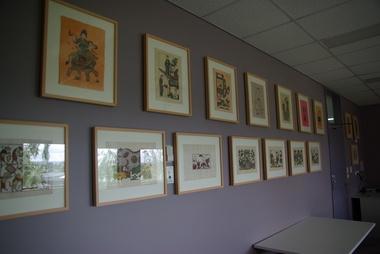 Federation University Art Collection
Print - Printmaking, Artwork from Dong Ho Village, c1970-2010
... For instance, the red colour is taken from red gravel in Thiên Thai Mountain, while the black comes from charcoal of burned bamboo leaves. The hand carved woodblock is applied with paint and pressed on a sheet of paper like a stamp. ...For instance, the red colour is taken from red gravel in Thiên Thai Mountain, while the black comes from charcoal of burned bamboo leaves. The hand carved woodblock is applied with paint and pressed on a sheet of paper like a stamp. ...Dong Ho is on the Duong River in Bắc Ninh Province, Vietnam. The woodcut painting (Tranh khắc gỗ dân gian Dong Ho is a line of Vietnamese folk painting originating in Dong Ho village. The traditional themes of Dong Ho painting are good luck signs, historical figures, folk allegories, popular stories, and social commentaries. Elements of everyday life are well integrated in Dong Ho paintings to express the thoughts and wishes of people. (Wikipedia - https://en.wikipedia.org/wiki/%C4%90%C3%B4ng_H%E1%BB%93_painting, accessed 11 April 2017.) Craftsmen in Dong Ho use a special type of paper named giấy điệp. The bark of dó tree, which normally is grown in Tuyên Quang Province, is soaked in water for months, then mixed with powders of seashells (sò điệp), which is the origin of the paper's name, and glutinous rice to make sheets of paper. The s seashell and glutinous rice results in paper with an exotic sparkling hard background which is able to conserve the durability of colours. The colours are refined from natural materials which are easily found in Vietnam. For instance, the red colour is taken from red gravel in Thiên Thai Mountain, while the black comes from charcoal of burned bamboo leaves. The hand carved woodblock is applied with paint and pressed on a sheet of paper like a stamp. The process is repeated with different colours until the craftsman is satisfied with the outcome. One woodcut is for outline and several others are for each colour printed. The finished picture is covered with a layer of rice paste (hồ nếp) to strengthen the durability of its illustration and colours and afterwards dried under the sun. From beginning to end the process takes six to seven months. (Wikipedia - https://en.wikipedia.org/wiki/%C4%90%C3%B4ng_H%E1%BB%93_painting, accessed 11 April 2017.) The tradition of Đông Hồ painting dates back to the 11th century during the reign of the Lý Dynasty. Originally, Đông Hồ paintings were made with black-and-white prints of woodcuts, but from the 15th century, different colours were introduced by craftsmen in the village. As a village specialized in making woodcuts and paintings, almost all Đông Hồ villagers were involved in the manufacturing of paintings from carving the woodblocks, producing điệp papers, obtaining natural colours to creating new themes, and printing.(Wikipedia - https://en.wikipedia.org/wiki/%C4%90%C3%B4ng_H%E1%BB%93_painting, accessed 11 April 2017.) Before 1945 over 150 families in Đông Hồ village were making pictures, but the tradition has rapidly faded. Villagers can no longer make a living based on this production so only a few households in the village still make pictures, while many others have switched to producing joss paper and votive paper object.(Wikipedia - https://en.wikipedia.org/wiki/%C4%90%C3%B4ng_H%E1%BB%93_painting, accessed 11 April 2017.)Asian ArtA framed collection of work by children from Dong Ho Village, Vietnam.dong ho, vietnam, woodcut, printmaking, dong ho art, dong ho painting, dong ho village, vietnam. -
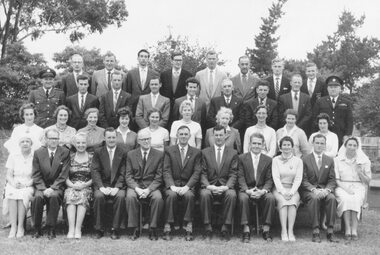 Ringwood and District Historical Society
Photograph, Peter Payens, Ringwood Council Staff when Ringwood was declared a city in March, 1960
... Dept.), Jim Johnson (Rates), Les Steeth (Dog Ranger), Billy Duff (Hall Kpr). Clarrie Burns (Works Supt.), Keith Gore (Ch. Hall Kpr).Second row up from bottom - Marg McAdam (Health Ctre), Gwen Collocott (Rates - Accts. ...Dept.), Jim Johnson (Rates), Les Steeth (Dog Ranger), Billy Duff (Hall Kpr). Clarrie Burns (Works Supt.), Keith Gore (Ch. Hall Kpr).Second row up from bottom - Marg McAdam (Health Ctre), Gwen Collocott (Rates - Accts. ...Black and White Photograph (2copies) and list of staff names. Catalogue card reads, '1960. Council Staff when Ringwood was declared a city, March 1960'. One copy has stamp of "Peter Payens of Ringwood Studios". Second copy has stamp of Brian Pump. On separate typed sheet: Typed below photograph, "Ringwood City Council Staff - 1960". Typed sheet in sleeve lists the staff in photograph and reads, "Photograph of Town Hall staff taken on the occasion of Ringwood being proclaimed a CITY 1960. Standing (back row left to right) Robert Moore (Rates Office), James Allen (Health Inspt), Robert Glassford (Eng. Asst.), James Rouse (Rates), Howard Tyrell (Dept. City Engr.), Jozsef Benzinger (Supt. Parks & Gdns.), David Wilson (Eng.) and Jeffrey Porter (Eng.). Second Row down, Wally Ross (Traffic Insp), Murray Jones (Eng.), Jim Clerk (Bldg. Insp.), Ernie Dall (Bld. Dept.), Jim Johnson (Rates), Les Steeth (Dog Ranger), Billy Duff (Hall Kpr). Clarrie Burns (Works Supt.), Keith Gore (Ch. Hall Kpr).Second row up from bottom - Marg McAdam (Health Ctre), Gwen Collocott (Rates - Accts. Machinist), Mabs Cleverly (Sec. D.T.C.), June Eyres (Steno), Nancy Gibson (H. Help), Judy Hubbard (Steno), Hazel Lyons (Sec. C/Eng.), Wilhelmina van Wijngaarden, (rates), Sr. Hildebard Weinroider (Health Care), Maureen Charlwood (Telephonist).Bottom row - Sr. Edna Ahlslton (Health Care), Lindsay Ewart (Rate Colltr), Jean Matthews (Sec. T/C.), Vic Faravoni (D.T.C.), Dr. Wm. Hewitt (Med.O.Health), Fred Dwerryhouse (Town Clerk), Alan Robertson (City Eng.), Ray Forde (Con.Eng.), Kit Gurling (typist/engrs.), Des Steele (Bldg.Suryor), Sr. Linda Turnley (Health Centre-H'mont). -
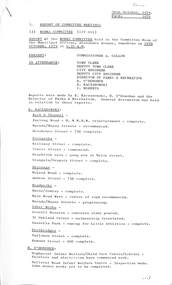 Sunshine and District Historical Society Incorporated
Administrative record - City of Sunshine - Commissioner Mr Alexander Alex George Gillon Collection 1976 - 1982 - Report of Committee Meetings 30th October 1979, City of Sunshine, 30th October 1979
... Albans Completed Drainage Andrew Street Sunshine Completed Roadwork Burns Street / Sonley Street Completed Roadwork Main Road West St. ...Albans Completed Drainage Andrew Street Sunshine Completed Roadwork Burns Street / Sonley Street Completed Roadwork Main Road West St. ...Report of Committee Meetings 30th October 1979 Report of the Works Committee Meeting Kerb & Channel Furlong Road Sunshine North Reinstatement Completed Kerb & Channel Mernda Street & Mayne Street Sunshine West Recommenced Kerb & Channel Holehouse Street Sunshine North 75% Complete Footpath Kellaway Street Maidstone Completed Footpath Yewers Street Sunshine Commence Footpath Braybrook Area Gang now in Melon Street Footpath Glengala Road / Gregory Street Completed Drainage McLeod Road St. Albans Completed Drainage Andrew Street Sunshine Completed Roadwork Burns Street / Sonley Street Completed Roadwork Main Road West St. Albans Centre of Road Recommenced Roadwork Mernda Street & Mayne Street Sunshine West Progressing Other Work Scovell Reserve Concrete Slab Poured Other Work 31 Oakland Street Naturestrip Reinstated Other Work Sassella Park Run up for Deer Park Little Athletics Centre Completed Footbridge Yallourn Street Completed Footbridge Esmond Street 90% Complete Highpoint West Infant Welfare Child Care Centre Painting and Electrical Work Commenced Highpoint West Library Painting and Electrical Work Commenced Ballarat Road Infant Welfare Centre Inspection Completed Some Minor Works Outstanding Depot Amenities Block Work Nearing Completion Public Toilets Deer Park Letter of Approval Received from Health Department Tree Maintenance Talmage Street Albion Progressing Report of the Finance Committee Meeting Report of the Town Clerk Outstanding Rates Estimates 1979/80 Sunshine View Estate Stage 2 Drainage Report of the City Engineer & Planner Staff Reclassifications Rates, Sanitary & Interest Statement as at 30th September 1979 Rates, Sanitary & Interest Statement as at 30th September 1979 Analysis of Accounts Outstanding Rates, Sanitary & Interest Statement as at 30th September 1979 Progressive Analysis Accounts Outstandingfurlong road, sunshine north, mernda street, mayne street, sunshine west, holehouse street, kellaway street, yewers street, melon street, braybrook, glengala road, gregory street, mcleod road, st. albans, andrew street, burns street, sonley street, maidstone, main road west, scovell reserve, scovell crescent, oakland street, maribyrnong, deer park little athletics centre, sassella park, deer park, station road, yallourn street, esmond street, ardeer, highpoint west infant welfare child care centre, highpoint west library, rosamond road, ballarat road infant welfare centre -
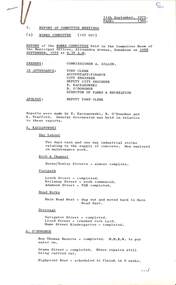 Sunshine and District Historical Society Incorporated
Administrative record - City of Sunshine - Commissioner Mr Alexander Alex George Gillon Collection 1976 - 1982 - Reports of committee meetings 11th September 1979, City of Sunshine, 11th September 1979
... Reports of Committee Meetings 11th September 1979 Report of the Works Committee Day Labour Two Days Rain & One Day Industrial Strike Kerb & Channel Burns Street & Sonley Street Almost Complete Footpath Lynch Street Completed Footpath Kellaway Street Work Commenced Footpath Adamson Street 85% Completed Road Works Main Road West Dug out and moved back to Main Road East Drainage Navigator Street Completed Drainage Lloyd Street Crush Rock Laid Drainage Hume Street Kindergarten Completed Bon Thomas Reserve Completed M.M.B.W. to put water on Orama Street Completed, minor repairs still be carried out Highpoint West Schedule to finish in 8 weeks Ballarat Road I.W.C. ahead of schedule by 3 - 4 weeks Depot Amenities Building Expected to be completed with 3 - 4 weeks Discussions were held on a plan for basic sports grounds pavilions instead of tin sheds Diamond Avenue Pre-School Centre Landscaping delayed Landscaping at other centres ready to go Tree Planting completed Tree Pruning 89% complete Emergency Work and other Tree Maintenance Work to be done All Ovals have been aerated in past week with fertilizer Report of the Finance Committee Report of Town Clerk Use of Council Vehicles Rate Payments Report of the City Librarian Workroom Backlog Central Library Report of the City Engineer & Planner Bon Thomas Reserve Proposition for the Partial Initial Development Report of the Agenda & Forward Planning Committee Meeting Report of the Chief Health Officer Sanitary Contract Report of the City Engineer & Planner Planning Permit Application Extension of Existing Pavilion (Place of Assembly) Kinder Smith Reserve Lily Street Braybrook Planning Permit Application Railways Siding Wright Street Sunshine Robert Barrett Reserve Sewerage Facilities...Burns Street Sonley Street Maidstone Lynch Street Sunshine Kellaway Street Adamson Street Braybrook Main Road West Main Road East St. ...Reports of Committee Meetings 11th September 1979 Report of the Works Committee Day Labour Two Days Rain & One Day Industrial Strike Kerb & Channel Burns Street & Sonley Street Almost Complete Footpath Lynch Street Completed Footpath Kellaway Street Work Commenced Footpath Adamson Street 85% Completed Road Works Main Road West Dug out and moved back to Main Road East Drainage Navigator Street Completed Drainage Lloyd Street Crush Rock Laid Drainage Hume Street Kindergarten Completed Bon Thomas Reserve Completed M.M.B.W. to put water on Orama Street Completed, minor repairs still be carried out Highpoint West Schedule to finish in 8 weeks Ballarat Road I.W.C. ahead of schedule by 3 - 4 weeks Depot Amenities Building Expected to be completed with 3 - 4 weeks Discussions were held on a plan for basic sports grounds pavilions instead of tin sheds Diamond Avenue Pre-School Centre Landscaping delayed Landscaping at other centres ready to go Tree Planting completed Tree Pruning 89% complete Emergency Work and other Tree Maintenance Work to be done All Ovals have been aerated in past week with fertilizer Report of the Finance Committee Report of Town Clerk Use of Council Vehicles Rate Payments Report of the City Librarian Workroom Backlog Central Library Report of the City Engineer & Planner Bon Thomas Reserve Proposition for the Partial Initial Development Report of the Agenda & Forward Planning Committee Meeting Report of the Chief Health Officer Sanitary Contract Report of the City Engineer & Planner Planning Permit Application Extension of Existing Pavilion (Place of Assembly) Kinder Smith Reserve Lily Street Braybrook Planning Permit Application Railways Siding Wright Street Sunshine Robert Barrett Reserve Sewerage Facilitiesburns street, sonley street, maidstone, lynch street, sunshine, kellaway street, adamson street, braybrook, main road west, main road east, st. albans, navigator street, maribyrnong, lloyd street, deer park, hume street, bon thomas reserve, quinn street, orama street, ballarat road, diamond avenue pre-school centre, diamond avenue, albanvale, kinder smith reserve, lily street, wright street, robert barrett reserve, rosamond road -
 Sunshine and District Historical Society Incorporated
Archive - H.V McKay Bulk Store
... |Letter to Brimbank City Council suggestion to use the Bulk Store as a youth centre|Letter to Norman Carlton at Sunshine and District Historical Society from Brimbank Council 8 September 2003|Letter from National Trust to Historical Buildings Council dated 5 March 1987|Report for submission in support of the Proposed demolition of Registered Historic Buildings for Former Bulk Store and Former Power Station Prepared for Burns Bridge Australia on behalf of Woolworths Pty Ltd|Letter to Heritage Victoria from Frank Ford dated 23 September 1997 pointing out structural reports and Brimbank Councils position and cultural significance of the Bulk Store Building|Handwritten Notes about Bulk Store 12 December 1997|Handwritten Notes about Bulk Store 15 December 1997|Handwritten Notes about Bulk Store 25 January 1998|Handwritten Notes about Bulk Store 29 January 1998|Various correspondence of City of Sunshine Councillors touring interstate for ideas of shopping malls...|Letter to Brimbank City Council suggestion to use the Bulk Store as a youth centre|Letter to Norman Carlton at Sunshine and District Historical Society from Brimbank Council 8 September 2003|Letter from National Trust to Historical Buildings Council dated 5 March 1987|Report for submission in support of the Proposed demolition of Registered Historic Buildings for Former Bulk Store and Former Power Station Prepared for Burns Bridge Australia on behalf of Woolworths Pty Ltd|Letter to Heritage Victoria from Frank Ford dated 23 September 1997 pointing out structural reports and Brimbank Councils position and cultural significance of the Bulk Store Building|Handwritten Notes about Bulk Store 12 December 1997|Handwritten Notes about Bulk Store 15 December 1997|Handwritten Notes about Bulk Store 25 January 1998|Handwritten Notes about Bulk Store 29 January 1998|Various correspondence of City of Sunshine Councillors touring interstate for ideas of shopping malls HV McKay Bulk Store Archive H.V McKay Bulk Store ...Newspaper Article Messenger 8 January 1998 titled Saved by change of heart|Newspaper Article The Advocate 29 July 1998 titled Eyesore or piece of history|Newspaper Article titled Bulk Store is meaningless Shirley A Strossa|Newspaper Article Advocate 22 July 1998 titled Bulk Store dissent|Petition Sunshine Harvester factory Buildings Form|Historic Building Act 1981 Permit 12470 Massey Ferguson Complex|Letter from Melbourne's Living Museum of the West Incorporated 5 January 1995 expressing objection to Mr Ray Tonkin Historic Buildings Council|Newspaper Article Sunshine Advocate 25 January 1995 titlled It's our heritage|Letter to Historic Buildings Council Hearing of Application 14 February 1995|Notes Submission to hearing of Historic Building Council on 14th February 1995|Notice informing public in 1995|Flyer titled Save Our Bulk Store Building|Flyer titled Why was saving the HV McKay Bulk Store|Flyer titled The Bulk Store must be saved|Written submissions on behalf of the applicant 12 April 1995|Newspaper Article Independent 25 April 1995 titled Demolition Bid|Historical Buildings Council 1994 to 1995 Annual Report|Newspaper Article Advocate 26 April 1995 titled Surprise Appeal Woolworths seeks nod to demolish buildings|Submission in the matter of the Historic Building Act 1981 and Burns Bridge Australia on behalf of Fabcot to demolish two brick buildings on the former Massey Ferguson site 12 April 1995|Letter to Historic Building Council 1 May 1995 S&DHS opposes the further application by Burns Bridge Australia for a permit to demolish two Sunshine Harvester Factory Building namely the bulk store and the electrical power house|Letter from Department of Planning and Development to Fabcot Pty Ltd 18 May 1995 regarding Massey Ferguson Complex Devonshire Road Sunshine encloses permit allowing the demoltition of the substation powerhouse building|Newspaper Article Brimbank Independent 23 May 1995 titled Compromise Breatkthrough for harvester site complex|Newspaper Article The Advocate 24 May 1995 titled Harvester building must be retained|Letter to Historic Buildings Council 24 August 1995 raising concerns|Newspaper Article The Times 30 August 1995 titled Woolworths unveils $70m Sunshine plan|Newspaper Article The Advocate 4 June 1997 titled Reaping the benefits|Letter to Heritage Victoria 23 September 1997 oppose Application from Amanda Johns of Minter Ellison for a permit to demolish the building|Letter from Melbourne's Living Museum of the West Incorporated 9 October 1997 expressing concern to S&DHS|Letter to Brimbank City Council 20th October 1997 S&DHS to draw certain matters to your attention|Newspaper Article The Advocate 29 October 1997 titled Renewed bid to Demolish Eyesore|Newspaper Article Brimbank Independent 4 November 1997 titled Fomer council blamed for McKay buildings disrepair The Sunshine factory was the birthplace of the basic award wage in Australia|Newspaper Article Brimbank Messenger 11 November 1997 titled Demolition threat on historic building|Newspaper Article Brimbank Independent 11 November 1997 titled Council waits for Heritage Victoria report before decision on Bulk Store threat|Newspaper Article The Age 13 November 1997 titled Past harvest of labor struggle and victory|Newspaper Article The Advocate 19 November 1997 titled Protecting our history|Letter from Adminstrative Appeals Tribunal 25 November 1997 advising hearing date|Letter to Adminstrative Appeals Tribunal 4 December 1997 Community & S&DHS objections to the demolition|Newspaper Article The Advocate 10 December 1997 titled Cinema Chaos|Newspaper Article The Age 15 December 1997 titled Rallying to maintain a little ray of Sunshine|Newspaper Article The Advocate 17 December 1997 titled Bulk Store Victory|Newspaper Article The Advocate 17 December 1997 titled McKay store fails to rate|Letter to Heritage Victoria from Beauchamp Consulting Engineers recommended repair method for the Former Massey Ferguson Bulk Store|Newspaper Article Brimbank Independent 17 February 1998 titled Bulk Store to be saved|Collection of documents of Gwen Goedecke regarding saving the Bulk Store|Advertising Melbourne's first 20 screen megaplex Village Cinemas|Blank Application to add building to the register of Historic buildings|Typed report from Beauchamp Consulting Engineers for Recommended Repair Method for Bulk Store|Typed report from Speroulla Christodoulou to Trades Hall Council regarding developer Woolworths want to demolish the Bulk Store building including all newspaper articles|Newspaper Article Brimbank Independent 26 January 1999 Funding Rejection for bulk store plans|Typed report The Story of How the Bulk Store was saved|Notice HV McKay Electrical Power House and Bulk Store|Typed report Why was saving the HV McKay Bulk Store so important?|Letter to Brimbank City Council suggestion to use the Bulk Store as a youth centre|Letter to Norman Carlton at Sunshine and District Historical Society from Brimbank Council 8 September 2003|Letter from National Trust to Historical Buildings Council dated 5 March 1987|Report for submission in support of the Proposed demolition of Registered Historic Buildings for Former Bulk Store and Former Power Station Prepared for Burns Bridge Australia on behalf of Woolworths Pty Ltd|Letter to Heritage Victoria from Frank Ford dated 23 September 1997 pointing out structural reports and Brimbank Councils position and cultural significance of the Bulk Store Building|Handwritten Notes about Bulk Store 12 December 1997|Handwritten Notes about Bulk Store 15 December 1997|Handwritten Notes about Bulk Store 25 January 1998|Handwritten Notes about Bulk Store 29 January 1998|Various correspondence of City of Sunshine Councillors touring interstate for ideas of shopping mallsh.v. mckays, sunshine harvester works, bulk store -
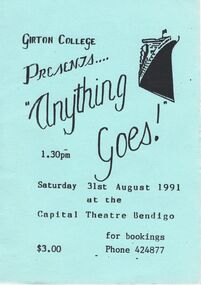 Bendigo Historical Society Inc.
Document - GIRTON COLLEGE PRESENTING ANYTHING GOES, CAPITAL THEATRE BENDIGO, 27 August, 1991
... Cast: John Elder, Genevieve Gilbert, Scott Williams, Amber McDonald, Brendon Marshall, Kaye Porter, Lok Thornton, Anna Ledwich, Jason Burns, Simon Evans, Sarah Tweed, Amelia Doble, Jane Phillips, Linden Whiting, David Pearse, Jenni Rosen, Nick Evans. ...Cast: John Elder Genevieve Gilbert Scott Williams Amber McDonald Brendon Marshall Kaye Porter Lok Thornton Anna Ledwich Jason Burns Simon Evans Sarah Tweed Amelia Doble Jane Phillips Linden Whiting David Pearse Jenni Rosen Nick Evans. ...Girton College Presenting Anything Goes, Capital Theatre Bendigo. a/ Flyer: 1.30pm Saturday 31st August 1991. $3.00 Bookings 42 4877. b/ Girton College Presents ''Anything Goes!'' 27th, 28th August, Capital Theatre, Bendigo. The Plot. Cast: John Elder, Genevieve Gilbert, Scott Williams, Amber McDonald, Brendon Marshall, Kaye Porter, Lok Thornton, Anna Ledwich, Jason Burns, Simon Evans, Sarah Tweed, Amelia Doble, Jane Phillips, Linden Whiting, David Pearse, Jenni Rosen, Nick Evans. Girls: Louisa Dalley, Caroline Davey, Allisa Gullan, Adam Middlemis, Alistair Hampton, Jarrod Harris, Adrian Currie, Mark Tierney, Ben Brown, James Brook, Georgia Laughton, Carolyn Macdonald, Lachlan King, Luke Tracey, Sally Branson, Michael Elphinstone, Natalie Lawson, Tanya Kairn, Matthew Evans, Sally Thorn, Emma Chuck, Natalie Davey, Geraldine Carney, Henry Chan, Rossetti Luk, Kelly Chuck, Corinne McAlpine, Tania Ray, Sally Morris, Rachel Roberts. Dancers: Rachel Campbell, Alisa Gullan, Kate Harris, Carolyn Macdonald, Rachel Millar, Jane Phillips, Carlie Sutton, Linden Whiting, Lisa Owen, Kim Davis. Sound: Bronwyn Letts, Anthea Moncrieff. Technical Lighting Spot: Davydd Griffiths, Matthew Whiting. Backstage: Emma Goulding, Dallas Anson, Sarah Carlile, Alix Osborn, Matthew Williams, Michael Porter, Kasie Watson, Alexandra Hocking, Nerida Clark, Lisa Bibby, Sher Anson, Emma Toon, Mandi Smith. Production Mrs R Pedersen, Mr R Cooke, Matthew Tilling, Michael Chittick, Mrs K Branson, Mrs A Leech with year 9 Design Students. Mr L Young, Mrs R Pederson, Mrs J Whiting, Brenda Macdonald, Pam Sutton, Mrs S Draffin, Kara Draffin, Miss M Somerville, Mr S Jackson, Mrs S Neale, Adelle Middlemis, Moira Christie, Wendy McKinlay, Shona Christie, Mrs V Jackman. Orchestra: Mr R Cooke, Maria Ciancio, Grant Welling, Susannah Breaden, Meredith Cox, Kylie Smith, Jane Davies, Jeremy Breaden, Mal Hausler, Norm Gray, Kevin Kieley, Neil Bassett, Kevin Simmonds, Betty Higgs, John Snowdon, Peter Stewart. We gratefully acknowledge the assistance of: Keith Macdonald, Macdonald's Spring Gully Nursery. Graham & Irene Keogh, Limerick Tavern. Ashman's Formal Hire. Program produced by Ms S Albion. Program designed by Jason Williams, Lok Thornton and Matt Robinson. Graphics by Broughton Snell and Amber McDonald. C & d/Tickets no.s K8 & K9, Girton College Presents Anything Goes! 7.30pm, Wednesday 28th August 1991 at the Capital Theatre Bendigo Adult $6 Conc. $3.entertainment, theatre, anything goes, girton college presenting anything goes, capital theatre bendigo. a/ flyer: 1.30pm 31st august 1991. $3.00 bookings 42 4877. b/ girton college presents ''anything goes!'' 27th, 28th 1991, capital theatre, bendigo. the plot. cast: john elder, genevieve gilbert, scott williams, amber mcdonald, brendon marshall, kaye porter, lok thornton, anna ledwich, jason burns, simon evans, sarah tweed, amelia doble, jane phillips, linden whiting, david pearse, jenni rosen, nick evans. girls: louisa dalley, caroline davey, allisa gullan, adam middlemis, alistair hampton, jarrod harris, adrian currie, mark tierney, ben brown, james brook, georgia laughton, carolyn macdonald, lachlan king, luke tracey, sally branson, michael elphinstone, natalie lawson, tanya kairn, matthew evans, sally thorn, emma chuck, natalie davey, geraldine carney, henry chan, rossetti luk, kelly chuck, corinne mcalpine, tania ray, sally morris, rachel roberts. dancers: rachel campbell, alisa gullan, kate harris, carolyn macdonald, rachel millar, jane phillips, carlie sutton, linden whiting, lisa owen, kim davis. sound: bronwyn letts, anthea moncrieff. technical lighting spot: davydd griffiths, matthew whiting. backstage: emma goulding, dallas anson, sarah carlile, alix osborn, matthew williams, michael porter, kasie watson, alexandra hocking, nerida clark, lisa bibby, sher anson, emma toon, mandi smith. production mrs r pedersen, mr r cooke, matthew tilling, michael chittick, mrs k branson, mrs a leech with year 9 design students. mr l young, mrs r pederson, mrs j whiting, brenda macdonald, pam sutton, mrs s draffin, kara draffin, miss m somerville, mr s jackson, mrs s neale, adelle middlemis, moira christie, wendy mckinlay, shona christie, mrs v jackman. orchestra: mr r cooke, maria ciancio, grant welling, susannah breaden, meredith cox, kylie smith, jane davies, jeremy breaden, mal hausler, norm gray, kevin kieley, neil bassett, kevin simmonds, betty higgs, john snowdon, peter stewart. we gratefully acknowledge the assistance of: keith macdonald, macdonald's spring gully nursery. graham & irene keogh, limerick tavern. ashman's formal hire. program produced by ms s albion. program by jason williams, lok thornton and matt robinson. graphics by broughton snell and amber mcdonald. c & d/tickets no.s k8 & k9, 7.30pm, 28th august 1991 adult $6 conc. $3. -
 Narre Warren and District Family History Group
Book, Narre Warren & District Family History Group Inc, Casey Cardinia Collection - Cranbourne Information File
... Agatha’s Celebrating 25 years as a parish 16 Nov 1999 Kelly’s the place for top service 03 Feb 2000 Harrison, Tommy – district mourns a racing legend 03 Sep 2003 Cranbourne Cemetery – clearing an eyesore 04 Apr 2001 Cranbourne Cemetery – a quaint resting place 10 Feb 2005 Mary Morriss celebrates 102nd birthday 11 Feb 1999 Bruce Smith – Cranbourne saddler 01 Oct 2003 Cranbourne Racing – where it all began 24 Mar 2005 Probus honours life members, Cam, Bolt, Burns & Dahlenburg 09 Mar 2000 Joseph Scerri profile 1 Sep 2021 Martello’s Magical Journey - John Martello 7 Jan 2010 Tragic Loss - Timothy Voigt 22 Apr 2015 Tracing History’s Heroes - Cranbourne WW1 Soldiers 22 Apr 2015 Farmer a Survivor of Two Wars - Edward Savage 27 Oct 2016 Dicky a Man of the People - Richard Custerson 27 Feb 2014 Golden Anniversary, by Two- Chapman & Giles 28 Feb 2008 Plaque Commemorates Lifetime of Service - Walter Kelly 23 Aug 2017 Loads of Character - Cranbourne Football Club 20 Jul 2017 Normie was our Mr Chips - Norm Avard 13 Sep 2018 Unloved Heritage Sie “Devaluing Homes” - Alarah Estate UNKNOWN Piece of 1890 History - Church of England Vicarage UNKNOWN St John’s Community Centre - pamphlet 7 Sep 2016 Ron’s Passionate About the Great Game - Ron Roberts 22 Apr 1953 Cranbourne Folk 18 Nov 2015 Oldie is a Goodie - Mike Hall 8 Apr 2020 Estate Once a Rural Showpiece - Hayton Park 14 Nov 2018 Drinks at the Old Church 7 Nov 2019 Willo Power Wins - Craig Williams 23 Feb 2011 Cranbourne to Mark its 150th 23 Feb 2011 Four Generations of Family History 6 Nov 2019 30 Years to 1989. 20 Years to 1999. 10 Years to 2009 22 Apr 2004 Preserving Anzac Tradition 9 May 2024 Read All About Meteorite 25 July 2024 Tributes to Former MP - Jude Perera 1 Aug 2024 Hundreds Honour Jude - Jude Perera 28 Jan 2026 Long-Time CFA Veteran Receives Top Honour 7 May 2025 Golden Olympian’s Tribute...Agatha’s Celebrating 25 years as a parish 16 Nov 1999 Kelly’s the place for top service 03 Feb 2000 Harrison, Tommy – district mourns a racing legend 03 Sep 2003 Cranbourne Cemetery – clearing an eyesore 04 Apr 2001 Cranbourne Cemetery – a quaint resting place 10 Feb 2005 Mary Morriss celebrates 102nd birthday 11 Feb 1999 Bruce Smith – Cranbourne saddler 01 Oct 2003 Cranbourne Racing – where it all began 24 Mar 2005 Probus honours life members, Cam, Bolt, Burns & Dahlenburg 09 Mar 2000 Joseph Scerri profile 1 Sep 2021 Martello’s Magical Journey - John Martello 7 Jan 2010 Tragic Loss - Timothy Voigt 22 Apr 2015 Tracing History’s Heroes - Cranbourne WW1 Soldiers 22 Apr 2015 Farmer a Survivor of Two Wars - Edward Savage 27 Oct 2016 Dicky a Man of the People - Richard Custerson 27 Feb 2014 Golden Anniversary, by Two- Chapman & Giles 28 Feb 2008 Plaque Commemorates Lifetime of Service - Walter Kelly 23 Aug 2017 Loads of Character - Cranbourne Football Club 20 Jul 2017 Normie was our Mr Chips - Norm Avard 13 Sep 2018 Unloved Heritage Sie “Devaluing Homes” - Alarah Estate UNKNOWN Piece of 1890 History - Church of England Vicarage UNKNOWN St John’s Community Centre - pamphlet 7 Sep 2016 Ron’s Passionate About the Great Game - Ron Roberts 22 Apr 1953 Cranbourne Folk 18 Nov 2015 Oldie is a Goodie - Mike Hall 8 Apr 2020 Estate Once a Rural Showpiece - Hayton Park 14 Nov 2018 Drinks at the Old Church 7 Nov 2019 Willo Power Wins - Craig Williams 23 Feb 2011 Cranbourne to Mark its 150th 23 Feb 2011 Four Generations of Family History 6 Nov 2019 30 Years to 1989. 20 Years to 1999. 10 Years to 2009 22 Apr 2004 Preserving Anzac Tradition 9 May 2024 Read All About Meteorite 25 July 2024 Tributes to Former MP - Jude Perera 1 Aug 2024 Hundreds Honour Jude - Jude Perera 28 Jan 2026 Long-Time CFA Veteran Receives Top Honour 7 May 2025 Golden Olympian’s Tribute Casey Cardinia Collection - Cranbourne Information File Book Narre Warren & District Family History Group Inc. ...Folder containing a table of contents and various newspaper clippings and other information pertaining to the Cranbourne area. The date the articles were published, and title of articles are listed below. Dec 1997 St. Agatha’s Celebrating 25 years as a parish 16 Nov 1999 Kelly’s the place for top service 03 Feb 2000 Harrison, Tommy – district mourns a racing legend 03 Sep 2003 Cranbourne Cemetery – clearing an eyesore 04 Apr 2001 Cranbourne Cemetery – a quaint resting place 10 Feb 2005 Mary Morriss celebrates 102nd birthday 11 Feb 1999 Bruce Smith – Cranbourne saddler 01 Oct 2003 Cranbourne Racing – where it all began 24 Mar 2005 Probus honours life members, Cam, Bolt, Burns & Dahlenburg 09 Mar 2000 Joseph Scerri profile 1 Sep 2021 Martello’s Magical Journey - John Martello 7 Jan 2010 Tragic Loss - Timothy Voigt 22 Apr 2015 Tracing History’s Heroes - Cranbourne WW1 Soldiers 22 Apr 2015 Farmer a Survivor of Two Wars - Edward Savage 27 Oct 2016 Dicky a Man of the People - Richard Custerson 27 Feb 2014 Golden Anniversary, by Two- Chapman & Giles 28 Feb 2008 Plaque Commemorates Lifetime of Service - Walter Kelly 23 Aug 2017 Loads of Character - Cranbourne Football Club 20 Jul 2017 Normie was our Mr Chips - Norm Avard 13 Sep 2018 Unloved Heritage Sie “Devaluing Homes” - Alarah Estate UNKNOWN Piece of 1890 History - Church of England Vicarage UNKNOWN St John’s Community Centre - pamphlet 7 Sep 2016 Ron’s Passionate About the Great Game - Ron Roberts 22 Apr 1953 Cranbourne Folk 18 Nov 2015 Oldie is a Goodie - Mike Hall 8 Apr 2020 Estate Once a Rural Showpiece - Hayton Park 14 Nov 2018 Drinks at the Old Church 7 Nov 2019 Willo Power Wins - Craig Williams 23 Feb 2011 Cranbourne to Mark its 150th 23 Feb 2011 Four Generations of Family History 6 Nov 2019 30 Years to 1989. 20 Years to 1999. 10 Years to 2009 22 Apr 2004 Preserving Anzac Tradition 9 May 2024 Read All About Meteorite 25 July 2024 Tributes to Former MP - Jude Perera 1 Aug 2024 Hundreds Honour Jude - Jude Perera 28 Jan 2026 Long-Time CFA Veteran Receives Top Honour 7 May 2025 Golden Olympian’s Tributenon-fictioncranbourne (vic.), tommy harrison -
 Sunshine and District Historical Society Incorporated
Administrative record - City of Sunshine - Commissioner Mr Alexander Alex George Gillon Collection 1976 - 1982 - Proposed works to 30th September 1979, City of Sunshine, 30th September 1979
... Albans Drainage Mitchell Street Maidstone Curtin Street Maidstone Macedon Street Maidstone Burns Street Maidstone Thompson Street Maidstone Wallace Street Maidstone Carlyle Street Maidstone Forrest Street Albion Fisher Street Maidstone Lindenow Street Maidstone Smith Street Maidstone Sunshine Avenue St. ...Albans Drainage Mitchell Street Maidstone Curtin Street Maidstone Macedon Street Maidstone Burns Street Maidstone Thompson Street Maidstone Wallace Street Maidstone Carlyle Street Maidstone Forrest Street Albion Fisher Street Maidstone Lindenow Street Maidstone Smith Street Maidstone Sunshine Avenue St. ...Proposed works to 30th September 1979 Footpath Geelong Road (Burgess Street to Paw Paw Road) Brooklyn Northumberland Road Sunshine North Furlong Road South Side Sunshine North Moama Street Both Sides Braybrook Sunshine Road (Wiltshire's) Tottenham Raleigh Road (Rosamond Eastwards) Maribyrnong West Road (East Side) Maribyrnong Hampstead Road (Richards Street to Emu Road) Maidstone Dickson Street Sunshine Main Road East (Sections) Norwood Street (West Side) Albion Gunneah Street (North Side) Albion Lawson Street Albion Coolamon Street Albion Bezentine Street Albion Hamel Street Albion Mailey Street (Collenso Street to Links Street) Sunshine West Ashley Street (South Road to Hampden Street) Lynch Street Sunshine Kellaway Street (Sections) Maidstone Ballarat Road (North Side) Havelock Street to Churchill Avenue (Sections) Maidstone Yewers Street Sunshine Matthews Street (Kingaroy Street to Cornwall Road) Sunshine Station Road (Ballarat Road to Witton Street) Deer Park Sun Crescent (South Side) Anderson Road to Watt Street Sunshine Robinson Road (East Side) Ballarat Road to Winslow Crescent Deer Park Burnewang Street (Adelaide Street to Hutchinson Street) Albion Kerb and Channel Curtin Street Maidstone McIntyre Road (South of Bridge) Sunshine North Macedon Street (South Side) Maidstone Burns Street (Richelieu Street to Thompson Street) Maidstone Thompson Street (Ballarat Road to Norfolk Street) Maidstone Wallace Street Maidstone Carlyle Street Maidstone Fisher Street Maidstone Lindenow Street Maidstone Smith Street Maidstone Navigator Street Maribyrnong Dickson Street Sunshine Sun Crescent (Watt Street to Graham Street) Sunshine Oakwood Road Albanvale Station Road (Gladstone Street to Neale Road) Deer Park King Edward Avenue (Sydney Street to Anderson Road) Albion Anderson Road (West Side Ridley Street to King Edwards Avenue) Albion Ballarat Road (Marylands Street to Adelaide Street) Albion Brisbane Street (Wyalong Street to Dubbo Street) Albion Burnewang Street (North Side) Albion Forrest Street (Kororoit Street to Adelaide Street) Albion Hilma Street (Sections) Sunshine West Lynch Street (East Side Oemga Street to Ballarat Road) Sunshine Willey Street Sunshine North Lodden Street Sunshine North Holehouse Street Sunshine North Rufford Street Sunshine North Cresford Street Sunshine North McLeod Street Sunshine North Wyalong Street (South Side Albury Street to Brisbane Street) Albion Dubbo Street Albion Robinsons Road (Ballarat Road to Winslow Crescent) Deer Park Roadworks Oakwood Road Albanvale Ballarat Service Road at Wasley Street Dempster Street Tottenham Berkshire Road (Bunnett Street to Cumberland Road) Sunshine North Station Road (Gladstone Street to Neale Road) Deer Park McIntyre Road (South of Bridge) Sunshine North King Edward Avenue (Sydney Street to Anderson Road) Albion Mitchell Street (Ashley Street to Churchill Avenue) Maidstone Gooding Street St. Albans Ballarat Service Road (Marylands Street to Adelaide Street) Albion Forrest Street (Kororoit Street to Adelaide Street) Albion Sun Crescent (Watt Street to Anderson Road) Sunshine Robinsons Road (Ballarat Road to Winslow Crescent) Deer Park St. Albans Road (Furlong Road to Southern Boundary of Vinidex) St. Albans Drainage Mitchell Street Maidstone Curtin Street Maidstone Macedon Street Maidstone Burns Street Maidstone Thompson Street Maidstone Wallace Street Maidstone Carlyle Street Maidstone Forrest Street Albion Fisher Street Maidstone Lindenow Street Maidstone Smith Street Maidstone Sunshine Avenue St. Albans Boundary Road Brooklyn Ashley Street Maidstone Chewton Street Maidstone Duke Street Sunshine Robinson Road Deer Park Sunshine Road Tottenham city of sunshine, alexander "alex" george gillon, geelong road, northumberland road, furlong road, moama street, sunshine road, raleigh road, west road, hampstead road, dickson street, main road east, norwood street, gunneah street, lawson street, coolamon street, bezentine street, hamel street, mailey street, ashley street, lynch street, kellaway street, ballarat road, yewers street, matthews street, station road, sun crescent, robinson road, burnewang street, curtin street, mcintyre road, macedon street, burns street, thompson street, wallace street, carlyle street, fisher street, lindenow street, smith street, navigator street, oakwood road, king edward avenue, anderson road, brisbane street, forrest street, hilma street, willey street, lodden street, holehouse street, rufford street, cresford street, mcleod street, wyalong street, dubbo street, robinsons road, dempster street, berkshire road, mitchell street, gooding street, st. albans road, sunshine avenue, boundary road, chewton street, duke street, wiltshire files, brooklyn, sunshine north, braybrook, tottenham, maribyrnong, sunshine, albion, albavale, maidstone, deer park
