
Showing 1547 items matching "aboriginal australians -- victoria -- criminal justice system. | prisoners"
-
 Red Cliffs Military Museum
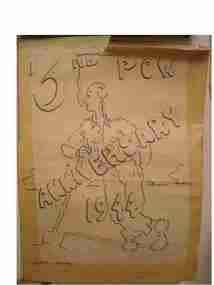
Menu, POW Dinner Menu 1944, 1944 (exact)
... ...prisoner......prisoner...(Blue) Roddy VX8007 Collection of world war prisoner roddy a j blue menu war11 notsch 1944 stalag xv111a Front page: 3rd POW/ Anniversary/ 1944/ Bottom Left corner: Notsch 10811/GW Page 1: MENU/ Hors-d'oeuores/Soup./ Consomme Minestrone Tomato Bouillon/ Fish/ Whiting Dover Soles Oysters./ Emtree/ Roast beef and Yorkshire Pudding/ Roast Pork and White sauce./ Grilled chops and peas./ Dessert. ...Forms part of the A.J. (Blue) Roddy VX8007 Collection2 sheets of card used to make a menu, hand sketched xartoon on front in grey lead and ink of soldier leaning on a shovel. Inside is two menus. One is the ideal menu the second is the real menu, (Very Humerous) all hand written in ink. Brought home from POW camp by A.J. (Blue) Roddy VX8007Front page: 3rd POW/ Anniversary/ 1944/ Bottom Left corner: Notsch 10811/GW Page 1: MENU/ Hors-d'oeuores/Soup./ Consomme Minestrone Tomato Bouillon/ Fish/ Whiting Dover Soles Oysters./ Emtree/ Roast beef and Yorkshire Pudding/ Roast Pork and White sauce./ Grilled chops and peas./ Dessert. Peach Melba Fruit Salad and Cream/ Carlton Puding, Apple pie and Cream/ Ice Cream/ Coffee.// Page 2: Menu/ Horses Manoeures/ Etwas./ Yeatecomme,Tinned Tomato Bully./ Tons of it./ Salmon Red. Salmon Pink. Sardines Varied./ Enter./ Roast Bully and "Bengers" Yorkshire Pudding./ Roast Meat Roll and Horse radish sauce/ Garlic sausage Grilled spick and Etwas./ Desserted./ Rice Custard, custard,/ Fruit salad and klim, Notsch duff./ Currant Pudding and custard./ Cold klim./ Coffee - if lucky tea./ Captivity Plonk./ K.G.H. Schnapps, Soft Drinks/ Beer cocktails.of, world, war, prisoner, roddy, a j blue, menu, war11, notsch, 1944, stalag, xv111a -
 Red Cliffs Military Museum
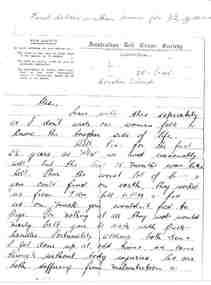
Letter
... ...prisoner of war...Japanese soldier Teruo Nakamura was discovered in the Morotai jungle in 1974, as one of the WWII Japanese soldiers who held out subsequent to the Japanese military's surrender. 2 pow morotri island morotai island world war prisoner of war australian red cross society Added to head of letter at a later date is inscription ' First letter written home for 3 1/2 years'.Top left hand- FOR SAFETY/ IN YOUR LETTERS DO NOT REFER TO:-/ The name of your ship or other ships in the convoy, or its escorts. ...Letter written from (unknown) POW imprisioned by the Japanese on Morotai Island from 1942 - 1945 to (unknown) friend. Descriptive of life and treatment in POW camp. The island was captured by the Japanese in early 1942. Morotai's southern plain was taken by American forces in September 1944 during the Battle of Morotai, and used as a staging point for the Allied invasion of the Philippines in early 1945, and of Borneo in May and June of that year. Japanese soldier Teruo Nakamura was discovered in the Morotai jungle in 1974, as one of the WWII Japanese soldiers who held out subsequent to the Japanese military's surrender.Photocopy of letter, 4 pages, originally written in ink on (unofficial) Australian Red Cross form.Added to head of letter at a later date is inscription ' First letter written home for 3 1/2 years'.Top left hand- FOR SAFETY/ IN YOUR LETTERS DO NOT REFER TO:-/ The name of your ship or other ships in the convoy, or its escorts./The date of sailing, ports of call, or probable destination./ The description of troops, their loca-/tion or any other information/ which, if intercepted, would be of/ value to the enemy. In your Top right hand- Australian Red Cross Society/ (UNOFFICIAL)/ 25-8-45/ (added at later date 'Morotri Island')/ Alex, Have witten this especially/ as i don't wish our women folk to know the tougher side of life./Well Alex for the first/ 2 1/2 years as POWs we lived reasonably/ well, but the last 15 months was like /hell. Heres the worst lot of b-s/ you could find on earth, they worked /us from 7AM till 6 PM, & fed/ us on muck you wouldn't feed to/ Pigs. I'm nothing at all they would 2, pow, morotri island, morotai island, world war, prisoner of war, australian red cross society -
 Australian Commando Association - Victoria
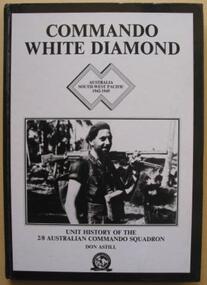
Book, Commando White Diamond: Unt History of the 2/8th Australian Commando Squadron
... Once patrols had gathered information, they were free to make a ‘strike’ against the Japanese by setting an ambush or taking a prisoner. These raids were very effective, as they forced the Japanese to deploy troops to their rear areas, removing men from the front created by the infantry. ...The detailed history of the No.8 Independent Commando Company during World War II. Plastic protective cover over the book. The 2/8th Independent Company was formed at Wilson’s Promontory, Victoria, in July 1942 and travelled to Yandina, in Queensland, in September. While the other seven independent companies saw action in the islands off Australian and in New Guinea, the 2/8th spent most of the next two years based at Adelaide River, in the Northern Territory. While it was in the Territory, the independent companies underwent a series of reorganisations and the name of the 2/8th was changed from the 2/8th Independent Company to the 2/8th Cavalry (Commando) Squadron. This name was later simplified to just commando squadron. In July 1944, after years of waiting, the squadron left the Territory and sailed from Townsville to Lae, via Milne Bay. While at Lae, the squadron received an intake of 70 men from the 2/8th from the 2/3rd, 2/5th and 2/6th Cavalry (Commando) Squadrons, many of whom were veterans of the earlier New Guinea campaigns. Their experience was no doubt a useful reserve that would have been called upon during the 2/8th’s subsequent campaign in Bougainville. Others though, were able to implement some of their commando training when a small group from the 2/8th they made a secret landing on New Britain. Towards the end of the 1944 the 5th Division was preparing to make a landing at Jacquinot Bay in New Britain. Part of these preparations included landing a small group of officers from the division at Jacquinot Bay to make a secret reconnaissance of the potential landing site. As Jacquinot Bay was still in Japanese controlled territory, ‘C’ Troop from the 2/8th provided the protection for the reconnaissance party by establishing a position on the beach and by patrolling the surrounding country. Everything went well and the 5th Division later landed at Jacquinot Bay in November. The squadron too was on the move, and in October it sailed to Torokina, the main Australian base on Bougainville, where it joined the II Australian Corps. The campaign on Bougainville was dived into three areas, the Central, Northern and Southern Sectors. The 2/8th served in the latter two areas. The 2/8th made the first move of the Australian campaign in the Northern Sector, by patrolling from Torokina to Kuraio Mission and Amun once a week. The squadron did this from the second week of November unit the second week of December. The 2/8th was then transferred to the Southern Sector. The main battle for Bougainville was fought in the Southern Sector, as the 3rd Division advanced towards Buin – the main Japanese base on the island. As the division’s infantry brigades advanced along the coast, the 2/8th’s task was to protect their flank by conducting forward reconnaissance patrols, harassing the Japanese with raids and ambushes and conducting a form of guerrilla warfare. The squadron had a long campaign. For nine months, from the end of December until August 1945, the troopers were in action the whole time. After securing the Jaba River, they moved inland, first to Sovele Mission, then the villages of Opai, Nihero and Morokaimoro. They had reached Kilipaijino by the end of the war. Each village taken became a patrol base. Patrols were usually limited to two sections, although up to six sections could be operating at a time. Patrols generally lasted four to six days, but nine-day patrols were not unknown. The squadron collected and collated track information, terrain reports and located the enemy. Once patrols had gathered information, they were free to make a ‘strike’ against the Japanese by setting an ambush or taking a prisoner. These raids were very effective, as they forced the Japanese to deploy troops to their rear areas, removing men from the front created by the infantry. Following Japan’s surrender and the end of the war, the ranks of the squadron thinned quickly as men were discharged or were transferred to other units. For those who were left, the squadron returned to Australia at the end of December. In mid January 1946, at Liverpool, the 2/8th Commando Squadron was disbanded.non-fictionThe detailed history of the No.8 Independent Commando Company during World War II. Plastic protective cover over the book. The 2/8th Independent Company was formed at Wilson’s Promontory, Victoria, in July 1942 and travelled to Yandina, in Queensland, in September. While the other seven independent companies saw action in the islands off Australian and in New Guinea, the 2/8th spent most of the next two years based at Adelaide River, in the Northern Territory. While it was in the Territory, the independent companies underwent a series of reorganisations and the name of the 2/8th was changed from the 2/8th Independent Company to the 2/8th Cavalry (Commando) Squadron. This name was later simplified to just commando squadron. In July 1944, after years of waiting, the squadron left the Territory and sailed from Townsville to Lae, via Milne Bay. While at Lae, the squadron received an intake of 70 men from the 2/8th from the 2/3rd, 2/5th and 2/6th Cavalry (Commando) Squadrons, many of whom were veterans of the earlier New Guinea campaigns. Their experience was no doubt a useful reserve that would have been called upon during the 2/8th’s subsequent campaign in Bougainville. Others though, were able to implement some of their commando training when a small group from the 2/8th they made a secret landing on New Britain. Towards the end of the 1944 the 5th Division was preparing to make a landing at Jacquinot Bay in New Britain. Part of these preparations included landing a small group of officers from the division at Jacquinot Bay to make a secret reconnaissance of the potential landing site. As Jacquinot Bay was still in Japanese controlled territory, ‘C’ Troop from the 2/8th provided the protection for the reconnaissance party by establishing a position on the beach and by patrolling the surrounding country. Everything went well and the 5th Division later landed at Jacquinot Bay in November. The squadron too was on the move, and in October it sailed to Torokina, the main Australian base on Bougainville, where it joined the II Australian Corps. The campaign on Bougainville was dived into three areas, the Central, Northern and Southern Sectors. The 2/8th served in the latter two areas. The 2/8th made the first move of the Australian campaign in the Northern Sector, by patrolling from Torokina to Kuraio Mission and Amun once a week. The squadron did this from the second week of November unit the second week of December. The 2/8th was then transferred to the Southern Sector. The main battle for Bougainville was fought in the Southern Sector, as the 3rd Division advanced towards Buin – the main Japanese base on the island. As the division’s infantry brigades advanced along the coast, the 2/8th’s task was to protect their flank by conducting forward reconnaissance patrols, harassing the Japanese with raids and ambushes and conducting a form of guerrilla warfare. The squadron had a long campaign. For nine months, from the end of December until August 1945, the troopers were in action the whole time. After securing the Jaba River, they moved inland, first to Sovele Mission, then the villages of Opai, Nihero and Morokaimoro. They had reached Kilipaijino by the end of the war. Each village taken became a patrol base. Patrols were usually limited to two sections, although up to six sections could be operating at a time. Patrols generally lasted four to six days, but nine-day patrols were not unknown. The squadron collected and collated track information, terrain reports and located the enemy. Once patrols had gathered information, they were free to make a ‘strike’ against the Japanese by setting an ambush or taking a prisoner. These raids were very effective, as they forced the Japanese to deploy troops to their rear areas, removing men from the front created by the infantry. Following Japan’s surrender and the end of the war, the ranks of the squadron thinned quickly as men were discharged or were transferred to other units. For those who were left, the squadron returned to Australia at the end of December. In mid January 1946, at Liverpool, the 2/8th Commando Squadron was disbanded. -
 Flagstaff Hill Maritime Museum and Village
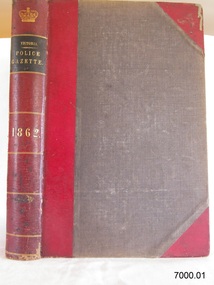
Administrative record - Reference Sociology/History, John Ferres, Government Printer, Victoria Police Gazettes for 1862, 1862
... Inclusions in this weekly publication were people wanted for questioning in relation to various crimes, prisoners discharged from city or country gaols, extracts from Police Gazettes in New South Wales, South Australia, Queensland, Tasmania, New Zealand, and occasionally overseas countries, as well as extracts from the Hobart Town Gazette listing escaped convicts and the person to whom they were assigned. ...The Victoria Police Gazette was a confidential, internal publication of the Victoria Police, issued to inform police officers, court and justice officials, and government departments about matters relevant to policing across the colony. It commenced in December 1853 and was initially published weekly by the Victoria Police. It was distributed each week to city and rural police stations and to government offices and newspaper publishers. Inclusions in this weekly publication were people wanted for questioning in relation to various crimes, prisoners discharged from city or country gaols, extracts from Police Gazettes in New South Wales, South Australia, Queensland, Tasmania, New Zealand, and occasionally overseas countries, as well as extracts from the Hobart Town Gazette listing escaped convicts and the person to whom they were assigned. There was also a "Missing Friends" section, where most people listed were not criminals but were sought by police so relatives, old friends, or government officials could renew contact with them. In addition, there was a record of deserted wives and children, listing the offender's name, birthplace, age, occupation, last known area of residence, likely future movements and known relatives. There was also a section on court lists, warrants issued, appointments and staffing changes within the police service, arrest and discharge records with physical descriptions, and lists of pastoralists with descriptions of their livestock brands.Hard Bound Volume. Victorian Police Gazettes for 1862 Author: Institutional Government Publication Publisher: John Ferres, Melbourne Date: 1862 Further Information: Compilation of Weekly Victorian Police Gazettes for 1862 in a hard bound volume with red spine and red corner reinforcing. Front panel grey coloured lettering in gilt with gilt banding to spine. Inside is twelve issues of the Police Gazettes for 1862.non-fictionThe Victoria Police Gazette was a confidential, internal publication of the Victoria Police, issued to inform police officers, court and justice officials, and government departments about matters relevant to policing across the colony. It commenced in December 1853 and was initially published weekly by the Victoria Police. It was distributed each week to city and rural police stations and to government offices and newspaper publishers. Inclusions in this weekly publication were people wanted for questioning in relation to various crimes, prisoners discharged from city or country gaols, extracts from Police Gazettes in New South Wales, South Australia, Queensland, Tasmania, New Zealand, and occasionally overseas countries, as well as extracts from the Hobart Town Gazette listing escaped convicts and the person to whom they were assigned. There was also a "Missing Friends" section, where most people listed were not criminals but were sought by police so relatives, old friends, or government officials could renew contact with them. In addition, there was a record of deserted wives and children, listing the offender's name, birthplace, age, occupation, last known area of residence, likely future movements and known relatives. There was also a section on court lists, warrants issued, appointments and staffing changes within the police service, arrest and discharge records with physical descriptions, and lists of pastoralists with descriptions of their livestock brands.warrnambool, shipwrecked-coast, flagstaff-hill, flagstaff-hill-maritime-museum, maritime-museum, shipwreck-coast, flagstaff-hill-maritime-village, shipwrecked-artefact, book, victoria police gazette 1862, victoria police gazette, warrnambool books and records, great ocean road -
 Eltham District Historical Society Inc
Document (Item) - Article, The Eltham Roll of Honour: Second World War, 9 Aug 2020
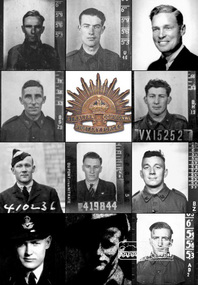
... ...prisoner of war (pow)...Lt., 410262 (KIA 5 Apr 1945, Varrelbusch, Germany) FIELD, Kevin Francis, Pte., VX144763 (KIA 28 Jun 1945, Bougainville, PNG) BUTHERWAY, Jack Herbert, Pte, VX37645 (DOD 8 Jul 1945, Borneo) eltham war memorial roll of honour second world war eltham eltham roll of honour shire of eltham 2/4 field workshop 22 independent brigade group ordnance workshop a.i.f. australian army ordnance corps australian corps of electrical and mechanical engineers changi falkiner street florence mary butherway jack herbert butherway prisoner of war (pow) ranau number 1 jungle camp sandakan death march singapore thomas james butherway vx37645 2/2 field company 6th division abington annie castledine arthur frederick castledine george ernest castledine greece jean simonson lower plenty old eltham road royal australian engineers vx10044 sapper g. e. castledine 2/23 bn derril gahan house main road rats of tobruk studley manston gahan tobruk vx48379 3 squadron r.a.a.f. aboukir alamein memorial beulah alice (simpson) rutter bir el gubbi broken hill aero club david rutter egypt hubert rutter libya yarra braes 2/21 bn 23rd australian infrantry brigade 8th division alfred charles clerke ambon island battle of ambon bidgeland park estate inga caroline (nicholls) clerke inga mary nicholls laha airfield nora ann clerke rose matilda clerke vx23112 william charles clerke 2/14 bn 2/16 bn 21st brigade 7th division cuthbert douglas dunlop gona gona war cemetery henry street janet dunlop kokoda track new guinea palestine papua new guinea port moresby (bomana) war cemetery reuben cuthbert dunlop syria vx15252 10 operational training unit 410236 ada (key) ingram berkshire bomber command england group no. 91 john ingram lester neil ingram longworth n.1374 r.a.a.f. r.a.f. r.a.f. abington research (vic.) whitley v bomber 419844 514 bomber squadron emmerich germany gordon stanley mclean ji-g2 kleve lancaster lm735 lucy mclean mount pleasant road r.a.f. waterbeach reichswald forest war cemetery stanley mclean 2/10 ordnance workshops albert feldbauer eltham cricket association eltham girls club frank street henry feldbauer jessie margarette feldbauer june feldbauer ken ingram margaret (feldbauer) ingram montmorency imperials research cricket club research state school sandakan number 1 camp sandakan number 2 camp theodore albert feldbauer valerie (feldbauer) waller violet amelda (teagle) feldbauer vx51733 247 ‘china-british’ squadron caithness cloppenburg donlad hemphill rutter essen gloucester hanover war cemetery hanover-limmer british military cemetery holten-lochem oldenburg r.a.f. castletown r.a.f. station lealing stoppenburg typhoon ib jp443 typhoon ib sw526 15th australian infantry brigade 1940 cup 3rd division 57th/60th bn best and fairest bougainville island buin road mary field mayona road mivo river mobiai river montmorency vx144763 william field Word/PDF document file The Eltham Roll of Honour: Second World War Document Article ...Information regarding the circumstances of the eleven men of the Shire of Eltham who died serving their country in the Second World War and for whom the Eltham War Memorial was dedicated. Their names are listed on the Eltham Roll of Honour in order of rank. The image portrayed shows the eleven men (left to right, top to bottom) by date of fatality: CASTLEDINE, George Ernest, Spr., VX10044 (KIA 18 Apr 1941, Greece) GAHAN, Studley Manston, Capt., VX48379 (KIA 17 May 1941, Tobruk, Libya) RUTTER, David, Flying Off., 833 (400833) (KIA 9 Dec 1941, Bir El Gubbi, Libya) CLERKE, Alfred Charles, Cpl., VX23112 (KIA 2 Feb 1942, Laha, Ambon Island) DUNLOP, Cuthbert Douglas, Sgt., VX15252 (KIA 22 Nov 1942, Gona, New Guinea) INGRAM, Lester Neil, Flt. Sgt., 410236 (DOD 22 Apr 1943, Longworth, England) McLEAN, Stanley, Flt. Sgt., 419844 (KIA 7 Oct 1944, Emmerich, Germany) FELDBAUER, Theodore, Sgt., VX51733 (DOD 27 Mar 1945, Borneo) RUTTER, Donald Hemphill, Flt. Lt., 410262 (KIA 5 Apr 1945, Varrelbusch, Germany) FIELD, Kevin Francis, Pte., VX144763 (KIA 28 Jun 1945, Bougainville, PNG) BUTHERWAY, Jack Herbert, Pte, VX37645 (DOD 8 Jul 1945, Borneo)eltham war memorial, roll of honour, second world war, eltham, eltham roll of honour, shire of eltham, 2/4 field workshop, 22 independent brigade group ordnance workshop, a.i.f., australian army ordnance corps, australian corps of electrical and mechanical engineers, changi, falkiner street, florence mary butherway, jack herbert butherway, prisoner of war (pow), ranau number 1 jungle camp, sandakan death march, singapore, thomas james butherway, vx37645, 2/2 field company, 6th division, abington, annie castledine, arthur frederick castledine, george ernest castledine, greece, jean simonson, lower plenty, old eltham road, royal australian engineers, vx10044 sapper g. e. castledine, 2/23 bn, derril, gahan house, main road, rats of tobruk, studley manston gahan, tobruk, vx48379, 3 squadron r.a.a.f., aboukir, alamein memorial, beulah alice (simpson) rutter, bir el gubbi, broken hill aero club, david rutter, egypt, hubert rutter, libya, yarra braes, 2/21 bn, 23rd australian infrantry brigade, 8th division, alfred charles clerke, ambon island, battle of ambon, bidgeland park estate, inga caroline (nicholls) clerke, inga mary nicholls, laha airfield, nora ann clerke, rose matilda clerke, vx23112, william charles clerke, 2/14 bn, 2/16 bn, 21st brigade, 7th division, cuthbert douglas dunlop, gona, gona war cemetery, henry street, janet dunlop, kokoda track, new guinea, palestine, papua new guinea, port moresby (bomana) war cemetery, reuben cuthbert dunlop, syria, vx15252, 10 operational training unit, 410236, ada (key) ingram, berkshire, bomber command, england, group no. 91, john ingram, lester neil ingram, longworth, n.1374, r.a.a.f., r.a.f., r.a.f. abington, research (vic.), whitley v bomber, 419844, 514 bomber squadron, emmerich, germany, gordon stanley mclean, ji-g2, kleve, lancaster lm735, lucy mclean, mount pleasant road, r.a.f. waterbeach, reichswald forest war cemetery, stanley mclean, 2/10 ordnance workshops, albert feldbauer, eltham cricket association, eltham girls club, frank street, henry feldbauer, jessie margarette feldbauer, june feldbauer, ken ingram, margaret (feldbauer) ingram, montmorency imperials, research cricket club, research state school, sandakan number 1 camp, sandakan number 2 camp, theodore albert feldbauer, valerie (feldbauer) waller, violet amelda (teagle) feldbauer, vx51733, 247 ‘china-british’ squadron, caithness, cloppenburg, donlad hemphill rutter, essen, gloucester, hanover war cemetery, hanover-limmer british military cemetery, holten-lochem, oldenburg, r.a.f. castletown, r.a.f. station lealing, stoppenburg, typhoon ib jp443, typhoon ib sw526, 15th australian infantry brigade, 1940 cup, 3rd division, 57th/60th bn, best and fairest, bougainville island, buin road, mary field, mayona road, mivo river, mobiai river, montmorency, vx144763, william field -
 Bendigo Military Museum
Clothing - LOIN CLOTH - POW
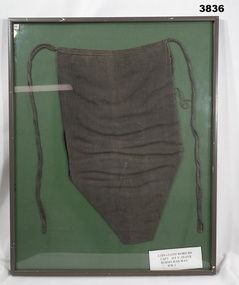
... Prisoner of War...See Catalogue no. 2725 for medal details and his service record. Prisoner of War Burma Railway World War Two Capt D.F.V. ...Loin cloth worn by Capt D.F.V. Hufer who was a P.O.W. on the Burma Railway during WW2. See Catalogue no. 2725 for medal details and his service record.Navy coloured cotton cloth with two cotton strings for tying around a person's waist. The item is displayed over green card under glass in a rectangular metal frame.On a rectangular white card inside the frame: 'Loin cloth worn by Capt D.F.V. Hufer Burma Railway WW2'prisoner of war, burma railway, world war two, capt d.f.v. hufer -
 Bendigo Military Museum
Newspaper - RED CROSS BULLETINS, Prisoner of War, October 1945
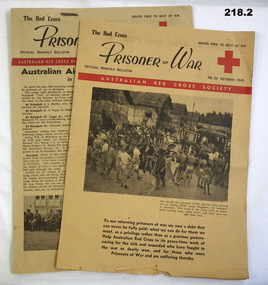
... Prisoner of War....Red Cross Bulletins, news re returning POW’s for next of kin. medicine - first aid - societies documents - newspapers 2 Red Cross news bulletins, Print in black, a Red Cross in top corner, one red stripe across page, Official monthly editions, free to next of Kin. Prisoner of War. Newspaper RED CROSS BULLETINS ...Red Cross Bulletins, news re returning POW’s for next of kin.2 Red Cross news bulletins, Print in black, a Red Cross in top corner, one red stripe across page, Official monthly editions, free to next of Kin.medicine - first aid - societies, documents - newspapers -
 Colac RSL Sub Branch
Medal - Carter William Lester, 1/4/25
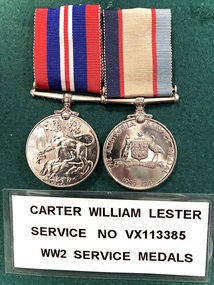
... WILLIAM LESTER CARTER william lester carter service no vx113385 place of birth Penshurst Vic Date of Enlistment 16 oct 1942 Locality of Enlistment Terang Vic Place of Enlistment Infield NSW Next of kin mother Florence Carter Date of Discharged 05 Dec 1945 Rank GUNNER Posting at discharge 16 Ifield Regiment Prisoner of War no Honours for Display Nill WW2 SERVICE MEDALS Medal Carter William Lester ...WILLIAM LESTER CARTERwilliam lester carter service no vx113385 place of birth Penshurst Vic Date of Enlistment 16 oct 1942 Locality of Enlistment Terang Vic Place of Enlistment Infield NSW Next of kin mother Florence Carter Date of Discharged 05 Dec 1945 Rank GUNNER Posting at discharge 16 Ifield Regiment Prisoner of War no Honours for Display Nillww2 service medals -
 Waverley RSL Sub Branch
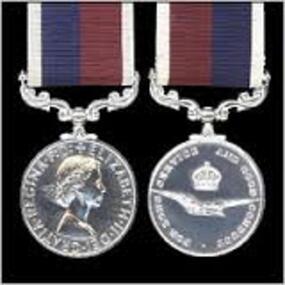
R.A.A.F. Long Service Medal
... It served in the Middle East and Africa, from Cairo across North Africa, to Italy, and eventually back to England to treat returned prisoners of war. GPCAPT Norman Andrews The growth and development of the RAAF Dental Branch owes a debt to one man in particular, GPCAPT Norman Andrews. ...Awarded to Alan Bowers (A236814) who was a R.A.A.F. dental mechanic who serverd during WWII including service in Darwin, and then continued in the R.A.A.F. for some years after the end of WWII The Royal Australian Air Force (and all Commonwealth Air Forces) Long Service and Good Conduct Medal: Awarded to NCOs and ORs of the RAAF (RAF, RCAF etc) for 15 years service. A cupro-nickel plated medal, the obverse features the sovereign's head, the reverse features the crown and eagle emblem of the RAAF (and RAF). Officers are eligible for the award provided they have served a minimum 12 years in the ranks. The riband is dark blue and maroon with white edges. This medal ceased to be awarded in Australia in 1975 when it was replaced by the National Medal (and sbsequently the DFSM and DLSM) in the Australian system of honours and awards. http://www.heritagemedals.com.au/medals-1/service-long-service/air-force-long-service-and-good-conduct-medal.html History of the RAAF Dental Branch It took six years following the formation of the RAAF in 1921 for the first Dental Clinic to be established at Point Cook, Victoria. On 10th June 1927 Flying Officer James Carl Rosenbrock commenced work as an RAAF Dental Officer for the FlyingTraining School at Point Cook. As personnel numbers were still relatively small, Rosenbrock was also responsible for the dental care of all Victorian RAAF units, which involved treating members at 1AD Laverton, as well as Air Force Headquarters at Victoria Barracks in Melbourne. As Army Dental Officers were currently caring for RAAF personnel at Richmond, NSW, the Senior Dental Officer of the 3rd Military District in Victoria (SDO 3MD) requested through the military board that a similar arrangement be established, where that the newly appointed RAAF Dentist provide part time dental services to the Army units stationed at Queenscliff. This was seen as an effective reciprocal arrangement, with both units having a Dental Officer in attendance for, in total, around 3-4 weeks a year. Rosenbrock continued to serve as the sole RAAF Dental Officer until the middle of 1933, when the Air Board asked for his service to be terminated following ‘behaviour unbecoming of a RAAF officer'. He had borrowed several sums of money, of around 40 Pounds or so, from junior ranks on base (as well as from the Regimental Sergeant Major) and had failed to pay the money back. He was replaced by a fellow Victorian, FLGOFF Norman Henry Andrews, on the 18th Sep 1933, who went on to become our first Director of Dental Services, and was instrumental in establishing the organisations and conditions of the Branch that are still present today. Through a fair amount of persistence and hard work on the part of Norman Andrews, the RAAF Dental Branch began to expand from 1937, with the introduction of 2 additional positions, at RAAF station Richmond, and at the FlyingTraining School at Point Cook. This gave the RAAF 3 uniformed Dental Officers, which was expanded to 5 in the months leading up to WW2. 4 of these Dental Officers were based in Victoria and 1 at Richmond, with the other two RAAF units being cared for by the Army (as in the case of Pearce in WA) or by civilians (as in Darwin). With the sudden increase in RAAF personnel required at the outbreak of WW2, the number of RAAF Dental Officers increased dramatically, from 5 in 1939, 28 in 1940, 64 in 1941, 147 in 1942, 193 in 1943, 219 in 1944, and peaking at 227 in 1945. RAAF Dental Officers were required to work in a variety of locations, both in and out of Australia. Between 1940 and 1942 a massive construction programme occurred, with new dental clinics being established around Australia. Priority was given to aircrew training units in order to get these personnel dentally fit for operational deployment, but Dental Officers could equally find themselves posted to recruit depots, fixed stations, medical clearance stations, mobile dental sections, and RAAF and civilian hospitals. RAAF Dental Officers were posted to the large dental centres at Ascot Vale (Vic) and Bradfield Park (NSW) when first appointed, where they received military and clinical training, before being deployed to their needed location. Mobile Dental Units When Japan entered the war in 1941, the rapid deployment of troops to northern operational areas with less than ideal dental fitness was extremely high. As a result, the RAAF deployed a range of mobile dental units, either alone or with medical sections, to support the increasing number of isolated deployed personnel within Australia and overseas. There were three types of mobile unit used: a. Mobile Dental Unit – relied on using either a semi-trailer to get around or by building a surgery directly on to the truck chassis, and installing hydraulic chairs, units, x-rays, and laboratory equipment. They were able to move around between small units, such as RAAF radar stations, where they could plug into the local power supply and work immediately. b. Transportable Dental Units – used for stops of longer duration, where field equipment was carried in panniers from one unit to another by road or rail and housed in whatever accommodation was available at the destination. They were often carried within Australia on Tiger Moths and Dakota aircraft. c. Itinerant Dental Units – in some areas, the dental equipment was installed at the RAAF unit and the Dental Officer and their staff would travel from unit to unit, using the equipment available at each location. RAAF Dental BadgeAs the war developed in Europe, it soon became obvious that the RAF Dental support was not capable of supporting the increasing numbers of RAAF aircrew that were being sent for service with the RAF, with only enough Dental Officers available to provide one to every 2000 men ( instead of the preferred 1 to 600). As a result, the RAAF provided a mobile dental unit, fitted out in a caravan and pulled by a Ford V8 Coupe, to travel around England in support of RAAF personnel at various squadrons. Some degree of tact was needed to ensure that the RAF did not take this as a comment on the treatment they were providing, but it proved successful in maintaining a satisfactory state of dental fitness in RAAF personnel, and a second mobile unit was soon dispatched. They were also set up with a laboratory on board as well as the surgery, which was a major difference between the RAF and RAAF, as the RAF did not provide dentures for their troops (the RAAF would, providing they had served for 6 years). In 1943 the RAF was no longer able to provide Dental support to Australian troops in the Middle East, which resulted in the need for a transportable dental unit to be deployed from Australia. It functioned in a similar manner to the RAF, by moving from one squadron to another. It served in the Middle East and Africa, from Cairo across North Africa, to Italy, and eventually back to England to treat returned prisoners of war. GPCAPT Norman Andrews The growth and development of the RAAF Dental Branch owes a debt to one man in particular, GPCAPT Norman Andrews. As the second RAAF Dental Officer to enlist on 18 Sep 1933, Andrews became the principal architect of the structure and organisation of the RAAF Dental Branch leading up to and during WW2. Until early 1940, the RAAF Dental Branch was administered by the Director of Medical Services (Air), which placed it under the control of the Army Medical staff. The Army would provide their Inspector of Dental Services for advice whenever needed. In April 1940, the RAAF Medical service separated from the Army, resulting in the control of the RAAF Dental Branch shifting back to the RAAF. Andrews became the first Director of Dental Services, when the position was created in 1943 as recognition of the higher profile the Dental Branch was now playing in the RAAF Medical service. Until this time, Andrews's title had been as the Dental Staff Officer to the RAAF Medical Service. Andrews was responsible for the establishment of the war-time structure of the Dental service, establishing new dental centres at all major bases, creating mobile and transportable dental units, ensuring the continual growth of the Branch, maintaining professional development of staff through the establishment of a professional journal, and by organising renowned lecturers to speak at RAAF bases. He also believed in visiting as many dental units as possible to see for himself what conditions were like and to talk first-hand to staff in remote units. His itinerary during the war years, both in and out of Australia, shows a large number of trips in a variety of modes of transport in order to reach remote areas where units were serving. He was promoted to GPCAPT in July 1944, as the numbers of Dental Officers soon peaked at 227 towards the end of the war (1 GPCAPT, 9 WGCDRs, 60 SQNLDRs, and 157 FLTLTs). After the war, with the reduction in RAAF personnel required in uniform, the Dental Branch also reduced its numbers significantly. By 1947 there were only 18 Dental Officers serving (many part-time), with 1 GPCAPT, 1 WGCDR, 10 SQNLDRs, and 6 FLTLTs, and only 13 by 1950. With the decrease in Branch personnel numbers, the ‘powers to be' saw fit to reduce the Director of Dental Service rank to WGCDR, and as a result Norman Andrews found that in order to continue serving in the RAAF he would have to wear a reduced rank. This appears to have been a contributing factor in his decision to discharge at the relatively early age of 43 and accept an administrative job as Director of the Victorian Government's School Dental Service. Norman Andrews holds the proud honour of being the founder of the RAAF Dental Branch, which during the war was instrumental in educating servicemen of the importance of dental health and maintaining the dental fitness of troops in a variety of areas. Dental Orderlies (Assistants) The dental orderly mustering was first introduced in 1937. Until that time, medical orderlies were assigned to assist the Dental officer with their duties. As early as 1931 it had been noted by both RAAF and Army Dental Officers working in Victoria and Richmond that a lot of the troubles they were having would be solved by appointing a permanent Dental Orderly. Often they would find that the medical orderly they were assigned was a different one each day, and as a result the administration and work in general was very inefficient. By 1937, with the increase in Dental Officers to 3, it was realised that a Dental Orderly mustering needed to be created. Dental Mechanics/Technicians Before WW2, dental laboratory work was provided by civilian laboratories, as most RAAF units were stationed around metropolitan areas. At this time, service personnel were still required to pay for their own dentures, unless they had served for six years or had their dentures damaged during performance of their duties. In July 1940, mainly in response to the development of more remote RAAF dental units and the increasing demand for dental prostheses, the Dental Mechanic mustering was established. Unfortunately there was a very limited pool of civilian dental mechanics to recruit from, and as a result the RAAF set up a training school at Laverton (which was later moved to Ascot Vale) in June 1941 which conducted an intensive 6 month course in Dental mechanics. Dental mechanics were quickly in demand. In all fixed and mobile dental units at least 1 Mechanic was supplied for each Dental Officer, and indeed the RAAF supplied Dental Mechanics throughout all its deployments, something the RAF were unwilling, or unable, to do. Two grades of dental mechanic existed: the Senior Mechanic (with the rank of NCO), who was competent in all phases of laboratory work; and the Junior Mechanic, who could only handle routine work and not more advanced denture work. The progression to Senior required a further trade test in techniques including setting up, clasp-forming, casting and backing teeth. During the course of the War, two special courses were held for Mechanics. The first, directed at senior mechanics so that they could instruct others, was in 1942 when Acrylic Resin was first introduced as a denture base material, as an alternative to the current option of vulcanite. Later, towards the end of the War, a ‘refresher' course was provided for those that had served for the greatest period of time in order to allow them retraining in techniques that they had not practised during their service and which were common in civilian life. This included cast base dentures, crowns and bridges, partial dentures, and retainers. Towards the end of the War, a course was held with WAAAF trainees to train them as Mechanics. However, as the War was soon to end they never had the opportunity to progress within the mustering to become Senior Mechanics. The RAAF Dental Branch has survived 75 years of turbulence, with reviews of its viability occurring regularly every few years from as early as 1937. The Branch continues to provide excellent service to the ADF community and, despite reduced manpower, will continue to play an important role in Air Force Health operations. http://www.defence.gov.au/health/about/docs/RAAFDental.pdf40cm cupro-nickel plated medal, the obverse features the sovereign's head, the reverse features the crown and eagle emblem of the RAAF (and RAF). A23814 BOWERS.A. A. F.r.a.a.f long service medal, r.a.a.f good conduct, r.a.a.f. dental service medal -
 Waverley RSL Sub Branch
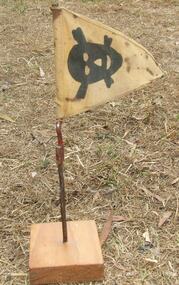
Minefield Warning Flag
... In all, some 36,000 Italian prisoners were taken. The victory at Bardia enabled the Allied forces to continue the advance into Libya and ultimately capture almost all of Cyrenaica. ...German Luftwaffe (Land Forces) minefield warning flag from WWII.originally intended to be gas markers, rather than mines, but as it turned out, the use changed .they were mounted on a red metal pole & there were 12 to a set in a leather pack. This Flag was presented to the Treasurer of Waverley RSL. It is a souvenir from Bardia in Libya The Battle of Bardia was fought over three days between 3 and 5 January 1941, as part of Operation Compass, the first military operation of the Western Desert Campaign of the Second World War. It was the first battle of the war in which an Australian Army formation took part, the first to be commanded by an Australian general and the first to be planned by an Australian staff. Major General Iven Mackay's 6th Division assaulted the strongly held Italian fortress of Bardia, Libya, assisted by air support and naval gunfire, and under the cover of an artillery barrage. The 16th Infantry Brigade attacked at dawn from the west, where the defences were known to be weak. Sappers blew gaps in the barbed wire with Bangalore torpedoes and filled in and broke down the sides of the anti-tank ditch with picks and shovels. This allowed the infantry and 23 Matilda II tanks of the 7th Royal Tank Regiment to enter the fortress and capture all their objectives, along with 8,000 prisoners. In the second phase of the operation, the 17th Infantry Brigade exploited the breach made in the perimeter, and pressed south as far as a secondary line of defences known as the Switch Line. On the second day, the 16th Infantry Brigade captured the township of Bardia, cutting the fortress in two. Thousands of prisoners were taken, and the Italian garrison now held out only in the northern and southernmost parts of the fortress. On the third day, the 19th Infantry Brigade advanced south from Bardia, supported by artillery and the Matilda tanks, now reduced in number to just six. Its advance allowed the 17th Infantry Brigade to make progress as well, and the two brigades reduced the southern sector of the fortress. Meanwhile, the Italian garrisons in the north surrendered to the 16th Infantry Brigade and the Support Group of the British 7th Armoured Division outside the fortress. In all, some 36,000 Italian prisoners were taken. The victory at Bardia enabled the Allied forces to continue the advance into Libya and ultimately capture almost all of Cyrenaica. In turn this would lead to German intervention in the fighting in North Africa, changing the nature of the war in that theatre. Bardia boosted the competence and reputation of the Australian Army. Perhaps most important of all, it raised confidence in the possibility of an ultimate Allied victory around the world, which would lead to the Lend-Lease Act being passed in the United States http://en.wikipedia.org/wiki/Battle_of_BardiaCloth Flag bearing a skull and cross Bones on a metal spike mounted on a square varnished wooden basebardia, land mine, marker flag, minefield, mustard gas -
 Bendigo Military Museum
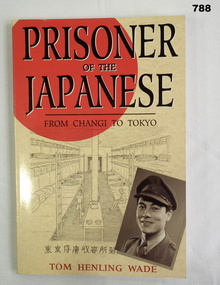
Book, Tom Henling Wade et al, Prisoner of the Japanese From Changi to Tokyo, 1994
... Prisoner of the Japanese From Changi to Tokyo...Top left has a large Japanese sun symbol, bottom right has B&W photo of a British officer Prisoner of the Japanese From Changi to Tokyo Book BOOK Tom Henling Wade Kangaroo Press Pty Ltd Australian Print Group ...186 page cut edged paperback book with B&W photos, drawings and maps. Front cover has drawing of the inside of a POW hut with Japanese characters beneath. Top left has a large Japanese sun symbol, bottom right has B&W photo of a British officer"John W Toon OAM 8th Div AASC" "Donated by Bendigo YMCA"books- military history, internment - japan -
 Bendigo Military Museum
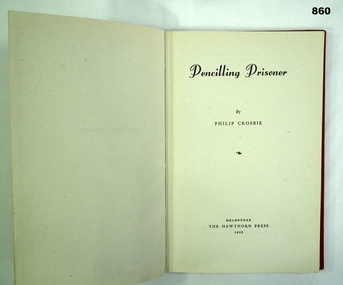
Book, Philip Crosbie, Penciling Prisoner, 1955
... Penciling Prisoner...books military history On fly leaf: Green Whitcombe & Tomps sticker Inside fly leaf: Donated by Bgo Y Mens Club Red, hard cover book, title & author in black lettering on spine. 195 pages, 1 page of illustrations. Penciling Prisoner Book BOOK Philip Crosbie Hawthorn Press Pty Ltd ...Red, hard cover book, title & author in black lettering on spine. 195 pages, 1 page of illustrations.On fly leaf: Green Whitcombe & Tomps sticker Inside fly leaf: Donated by Bgo Y Mens Clubbooks, military, history -
 Bendigo Military Museum
Book, Penciling Prisoner, 1955
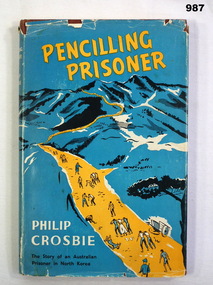
... Penciling Prisoner....Illustrated - black and white photos and maps. Penciling Prisoner. Book BOOK ...Hard cover book with dust cover. Dust cover - blue background, Image of snow covered dark hills. Orange road in centre. Writing in yellow and black ink. Book - brown buckram. Pages - 195. Illustrated - black and white photos and maps. books-military-history, books-biography-pows -
 Warrnambool and District Historical Society Inc.
Document - Bert's Diary Bertie Ernest Albert Henderson, Circa 1916
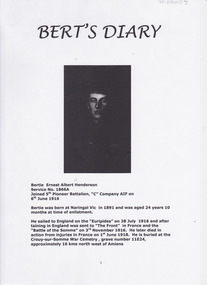
... From a population of fewer than five million, 416,809 men enlisted, of which over 60,000 were killed and 156,000 wounded, gassed, or taken prisoner.* Australian War Memorial Website Bertie Henderson was but one of these casualties and this diary gives an insight into the life of the average soldier. ...Bertie Ernest Albert Henderson was born at Naringal in 1891 and was 24 at the time of enlistment. He fought in France and died from injuries in France on June 1, 1918. The entries relate to matters which relate to military procedures and duties, places visited in France and England, time spent at the front and on leave.For Australia, as for many nations, the First World War remains the most costly conflict in terms of deaths and casualties. From a population of fewer than five million, 416,809 men enlisted, of which over 60,000 were killed and 156,000 wounded, gassed, or taken prisoner.* Australian War Memorial Website Bertie Henderson was but one of these casualties and this diary gives an insight into the life of the average soldier. He records events from the mundane to conditions common to the war experience. Front page has photograph and typed enlistment details, followed by copy of enlistment paper and numerous pages of typed diary entries dated from July 1916. Other entries give day only with no year. Back cover has basic family tree.warrnambool, naringal, ernest albert henderson, 5th pioneer batallion, world war 1, amiens, crouy-sur somme -
 Eltham District Historical Society Inc
Book, Eltham amnesty : twenty-five years / Kenneth Eric Eckersall, 2002
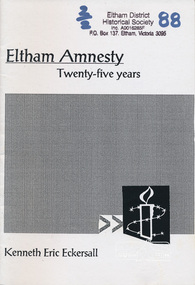
... ...political prisoners...This booklet documents its first 25 years. amnesty international (eltham group) political prisoners Paperback; iv, 27 p. ; 21 cm. Eltham amnesty : twenty-five years / Kenneth Eric Eckersall. ...The Eltham Branch (North East Metro Group) of Amnesty International was formed in 1977. This booklet documents its first 25 years.Paperback; iv, 27 p. ; 21 cm.amnesty international (eltham group), political prisoners -
 J. Ward Museum Complex
Functional object - Old Ararat Gaol - Padlock
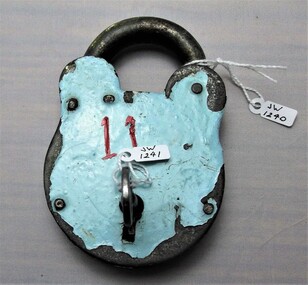
... ...prisoner......prisoner...The padlock give a conceptual understanding of functional objects used in early Victorian goldfield gaols. gaol incarceration goldfields prisoner #11 in red paint. Padlock with cracked blue enamel paint. ...The padlock give a conceptual understanding of functional objects used in early Victorian goldfield gaols. Padlock with cracked blue enamel paint. Attached functional key Object #1241 Five screws on front - nine screws on back#11 in red paint. gaol, incarceration, goldfields, prisoner -
 J. Ward Museum Complex
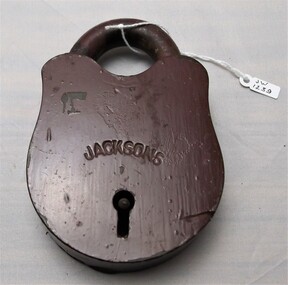
Functional object, Old Ararat Gaol - Padlock
... ...prisoner......prisoner...This padlock provides conceptual knowledge regarding the padlocks used in Victorian goldfield gaols. gaol prisoner padlock "JACKSONS" engraved in arch across keyhole. ...This padlock provides conceptual knowledge regarding the padlocks used in Victorian goldfield gaols. Brass padlock under brown paint. Dents and scratches. No key. Open shackle. "JACKSONS" engraved in arch across keyhole. Smeared fingerprints in paint. gaol, prisoner, padlock -
 J. Ward Museum Complex
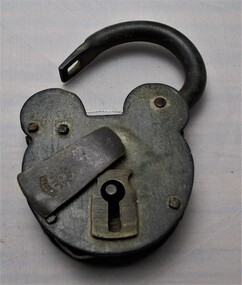
Functional object - Old Ararat Gaol - Padlock with no key
... ...prisoner......prisoner...This padlock is significant in its interpretative abilities of showing what equipment was used in containing prisoners on the Victorian goldfield. gaol prison prisoner padlock Two engravings on keyhole latch - the word "SECURE" and a twelve prong star or flower. ...This padlock was used on the cells of Old Ararat Gaol in the 1800's. This padlock is significant in its interpretative abilities of showing what equipment was used in containing prisoners on the Victorian goldfield. Metal gaol padlock with open hinged clasp. Front view of open padlock with hinged keyhole cover with two engravings. Five bolts. Back view of padlock with 12 bolts. Large dent at the base. Two bolts on each side. Scratches and dents from repeated usage. Some spots of corrosion.Two engravings on keyhole latch - the word "SECURE" and a twelve prong star or flower.gaol, prison, prisoner, padlock -
 J. Ward Museum Complex
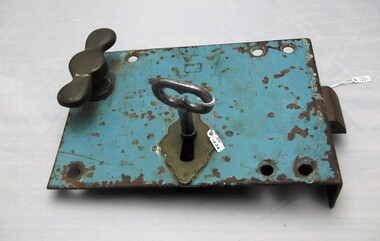
Functional object - Old Ararat Gaol - Latch Bolt Door Lock
... ...prisoner......prisoner...The lock is significant in that it is a good example of equipment used to restrain 1800's prisoners. locks gaol prison prisoner Door lock with separate access knob and functional key The plate contains both metal and brass. ...This door lock is a good example of the locks used within Goldfield gaols in the 1800's.The lock is significant in that it is a good example of equipment used to restrain 1800's prisoners.Door lock with separate access knob and functional key The plate contains both metal and brass. The Rose has cracked blue enamel paint and has five small bolts and six bolt holes. The access knob is functional The side contains a functioning bolt latch and two bolt holes.locks, gaol, prison, prisoner -
 B-24 Liberator Memorial Restoration Australia Inc
Oral History, Alan Scarlett Story, 2014
... He was also air-crew during the repatriation of former World War II prisoners or war in 1945. Black and white print of a B-24 Liberator at the top of the page. ...Alan Scarlett was in the RAAF from 18/08/1943 until February 1946 and was a B-24 Liberator gunner between the end of 1943 and September 1945 with 21 Squadron.The oral history of Alan Scarlett is of historical significance because it provides a first hand account of the individual's experience during World War II as a member of the RAAF who trained at Tocumwal, Nhill and Leyburn. He saw active service in the Pacific conflict from Fenton and Morotai as a gunner on a B-24 Liberator. He was also air-crew during the repatriation of former World War II prisoners or war in 1945.A4 paper hand written transcript of 5 pagesBlack and white print of a B-24 Liberator at the top of the page. Werribee Liberator Restoration Visit. Neerim Men's Shed. Sunday 16th March 2014. -
 Monbulk RSL Sub Branch
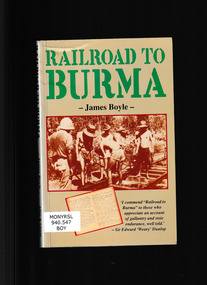
Book, Allen & Unwin, Railroad to Burma, 1990
... Japan - prisons and prisoners of war...Japan - prisons and prisoners of war Burma - Thailand Railway A 25 year old Australian, James Boyle, was one of thousands of prisoners of war who worked in inhuman conditions to build the Thailand/Burma railway. ...A 25 year old Australian, James Boyle, was one of thousands of prisoners of war who worked in inhuman conditions to build the Thailand/Burma railway. He was determined to record his experiences and thos of his mates - at the limits of human endurance.Index, ill, maps, p.198.A 25 year old Australian, James Boyle, was one of thousands of prisoners of war who worked in inhuman conditions to build the Thailand/Burma railway. He was determined to record his experiences and thos of his mates - at the limits of human endurance.japan - prisons and prisoners of war, burma - thailand railway -
 Monbulk RSL Sub Branch
Book, Panther, Empire of the sun, 1985
... World war 1939 – 1945 - Prisons and prisoners - Japanese...world war 1939-1945 - fiction World war 1939 – 1945 - Prisons and prisoners - Japanese The heartrending story of British boy Jim's four year ordeal in a Japanese prison camp during the second world war. ...The heartrending story of British boy Jim's four year ordeal in a Japanese prison camp during the second world war. Based on J. G. Ballard's own childhood, this is the extraordinary account of a boy's life in Japanese-occupied wartime Shanghai--a mesmerising, hypnotically compelling novel of war, of starvation and survival, of internment camps and death marches. It blends searing honesty with an almost hallucinatory vision of a world thrown utterly out of joint. Rooted as it is in the author's own disturbing experience of war in our time, it is one of a handful of novels by which the twentieth century will be not only remembered but judged.p.351.fictionThe heartrending story of British boy Jim's four year ordeal in a Japanese prison camp during the second world war. Based on J. G. Ballard's own childhood, this is the extraordinary account of a boy's life in Japanese-occupied wartime Shanghai--a mesmerising, hypnotically compelling novel of war, of starvation and survival, of internment camps and death marches. It blends searing honesty with an almost hallucinatory vision of a world thrown utterly out of joint. Rooted as it is in the author's own disturbing experience of war in our time, it is one of a handful of novels by which the twentieth century will be not only remembered but judged. world war 1939-1945 - fiction, world war 1939 – 1945 - prisons and prisoners - japanese -
 Monbulk RSL Sub Branch
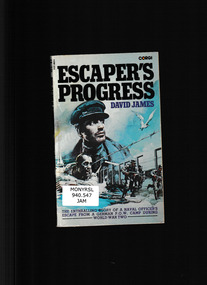
Book, Corgi, Escaper's progress, 1978
... prisoners of war - Germany - Escapes...prisoners of war - Germany - Escapes World war 1939 – 1945 - Prisons and prisoners – Germany David James was serving in Motor Gun Boats when he was captured in February 1943. ...David James was serving in Motor Gun Boats when he was captured in February 1943. Imprisoned initially in Dulag Marlag, he immediately decided to escape. In December 1943 he succeeded in escaping disguised as an officer of the Royal Bulgarian Navy. He was captured while attempting to board a ship at Lubeck.Undeterred, in February 1944 he broke out again, this time dressed as a Swedish sailor. He eventually succeeded in reaching Stockholm after two and a half days in a ship's engine room.maps, p.157.non-fictionDavid James was serving in Motor Gun Boats when he was captured in February 1943. Imprisoned initially in Dulag Marlag, he immediately decided to escape. In December 1943 he succeeded in escaping disguised as an officer of the Royal Bulgarian Navy. He was captured while attempting to board a ship at Lubeck.Undeterred, in February 1944 he broke out again, this time dressed as a Swedish sailor. He eventually succeeded in reaching Stockholm after two and a half days in a ship's engine room. prisoners of war - germany - escapes, world war 1939 – 1945 - prisons and prisoners – germany -
 Monbulk RSL Sub Branch
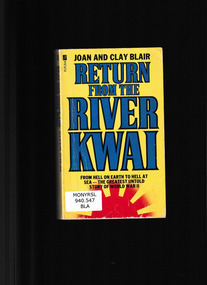
Book, Futura Publications, Return from the river Kwai, 1980
... World war 1939 – 1945 - Prisons and prisoners - Japanese...World war 1939 – 1945 - Prisons and prisoners - Japanese Burma - Thailand Railway 2000 survivors of the Burma railway were sent to Japan but their ship was sunk by an american submarine. ...2000 survivors of the Burma railway were sent to Japan but their ship was sunk by an american submarine.Index, ill, maps, p.320.non-fiction2000 survivors of the Burma railway were sent to Japan but their ship was sunk by an american submarine.world war 1939 – 1945 - prisons and prisoners - japanese, burma - thailand railway -
 Monbulk RSL Sub Branch
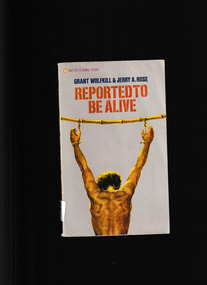
Book, Simon, Reported to be alive, 1965
... Prisoners of war - Abuse of - United States...Prisoners of war - Abuse of - United States Vietnam war - 1961-1975 An American news photographer is held in brutal captivity for fifteen months by Communist Pathet Lao - and for his courage is awarded the Medal of Freedom by President John F. ...An American news photographer is held in brutal captivity for fifteen months by Communist Pathet Lao - and for his courage is awarded the Medal of Freedom by President John F. Kennedyp.350.non-fictionAn American news photographer is held in brutal captivity for fifteen months by Communist Pathet Lao - and for his courage is awarded the Medal of Freedom by President John F. Kennedyprisoners of war - abuse of - united states, vietnam war - 1961-1975 -
 Monbulk RSL Sub Branch
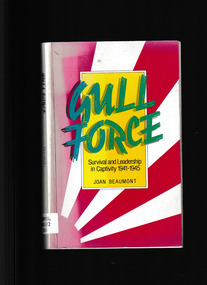
Book, Allen & Unwin, Gull Force : Survival and Leadership in Captivity 1941-1945, 1988
... World war 1939 – 1945 - Prisons and prisoners - Japanese...World war 1939 – 1945 - Prisons and prisoners - Japanese Prison camp - Ambon The captivity experiences of Gull Force taken prisoner by the Japanese in Ambon in 1942 Index, bib, ill, map, p.220. ...The captivity experiences of Gull Force taken prisoner by the Japanese in Ambon in 1942Index, bib, ill, map, p.220.non-fictionThe captivity experiences of Gull Force taken prisoner by the Japanese in Ambon in 1942world war 1939 – 1945 - prisons and prisoners - japanese, prison camp - ambon -
 Monbulk RSL Sub Branch
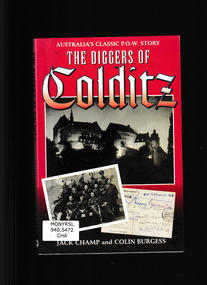
Book, Kangaroo Press, Diggers at Colditz, 1997
... World war 1939 – 1945 - Prisons and prisoners – Germany...World war 1939 – 1945 - Prisons and prisoners – Germany World War 1939-1945 - Personal narratives - Australia On June 23 1943 Lieutenant Jack Champ of the 2nd/6th Australian Infantry Battalion was marched into one of the most famous prisoner-of-war camps in Germany. ...On June 23 1943 Lieutenant Jack Champ of the 2nd/6th Australian Infantry Battalion was marched into one of the most famous prisoner-of-war camps in Germany. Known then as Oflag IVC, it is now better know as Colditz. By the end of the war there were nineteen Australians in Colditz, and this is the first book to look at life there specifically from their point of view. It was a very special camp. It was designed to retain under escape-proof conditions, a select group of Allied prisoners who had already escaped from other camps and who had been recaptured whilst still in occupied territory. Having seen action in the Western Desert and in Greece, Jack Champ had been captured by the Germans in 1941. He was, however, a reluctant prisoner and took part in two escapes from different POW camps, one of which was a mass break-out of sixty officers through a tunnel that had taken weeks to make. Although the guards frequently outnumbered prisoners, there were more escapes from Colditz than from any other prison of comparable size during both World Wars. In this vivid book Jack Champ and Colin Burgess explain what it was like to be a prisoner in Nazi Germany. It is a curious blend of brutality and humanity, of routines and dreams, and occasional and dramatic excitement as men tried to turn those dreams into the reality of freedom.Index, ill, maps, p.224.non-fictionOn June 23 1943 Lieutenant Jack Champ of the 2nd/6th Australian Infantry Battalion was marched into one of the most famous prisoner-of-war camps in Germany. Known then as Oflag IVC, it is now better know as Colditz. By the end of the war there were nineteen Australians in Colditz, and this is the first book to look at life there specifically from their point of view. It was a very special camp. It was designed to retain under escape-proof conditions, a select group of Allied prisoners who had already escaped from other camps and who had been recaptured whilst still in occupied territory. Having seen action in the Western Desert and in Greece, Jack Champ had been captured by the Germans in 1941. He was, however, a reluctant prisoner and took part in two escapes from different POW camps, one of which was a mass break-out of sixty officers through a tunnel that had taken weeks to make. Although the guards frequently outnumbered prisoners, there were more escapes from Colditz than from any other prison of comparable size during both World Wars. In this vivid book Jack Champ and Colin Burgess explain what it was like to be a prisoner in Nazi Germany. It is a curious blend of brutality and humanity, of routines and dreams, and occasional and dramatic excitement as men tried to turn those dreams into the reality of freedom.world war 1939 – 1945 - prisons and prisoners – germany, world war 1939-1945 - personal narratives - australia -
 Monbulk RSL Sub Branch
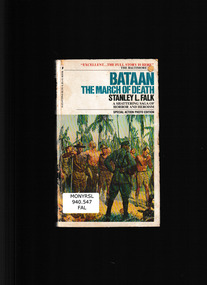
Jove Books, Bataan : the march of death, 1984
... World war 1939 – 1945 - Prisons and prisoners - Japanese...World war 1939 – 1945 - Prisons and prisoners - Japanese Atrocities - Japan The story of the infamous Bataan death march Index, ill, map, p.242. ...The story of the infamous Bataan death marchIndex, ill, map, p.242.non-fictionThe story of the infamous Bataan death marchworld war 1939 – 1945 - prisons and prisoners - japanese, atrocities - japan -
 Monbulk RSL Sub Branch
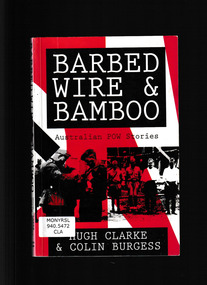
Book, Hugh V. Clarke and Colin Burgess, Barbed wire and bamboo : Australian POWs in Europe, North Africa, Singapore, Thailand and Japan, 1993
... World war 1939 – 1945 - Prisons and prisoners - Japanese...World war 1939 – 1945 - Prisons and prisoners - Japanese World war 1939 – 1945 - Prisons and prisoners – Germany A collection of stories of capture, imprisonment and escape in World War I and II. ...A collection of stories of capture, imprisonment and escape in World War I and II. Covering experiences in Europe and in South East Asia, the book presents contrasting PoW experiences - of daring escapes from Colditz Castle, and of endurance and slow suffering in Japanese camps.Ill, maps, p.159A collection of stories of capture, imprisonment and escape in World War I and II. Covering experiences in Europe and in South East Asia, the book presents contrasting PoW experiences - of daring escapes from Colditz Castle, and of endurance and slow suffering in Japanese camps.world war 1939 – 1945 - prisons and prisoners - japanese, world war 1939 – 1945 - prisons and prisoners – germany -
 Monbulk RSL Sub Branch
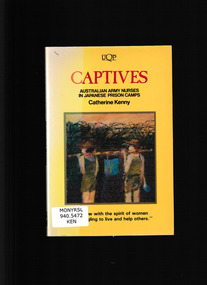
Book, University of Queensland Press, Captives: Australian Army Nurses in Japanese Prison Camps, 1986
... World war 1939 – 1945 - Prisons and prisoners - Japanese...World war 1939 – 1945 - Prisons and prisoners - Japanese Australian Army Nursing Service The story of the experiences of Australian Army nurses as Japanese prisoners of war Index, ill, p.162. ...The story of the experiences of Australian Army nurses as Japanese prisoners of warIndex, ill, p.162.non-fictionThe story of the experiences of Australian Army nurses as Japanese prisoners of warworld war 1939 – 1945 - prisons and prisoners - japanese, australian army nursing service
