
Showing 2296 items matching "a taylor"
-
 Eltham District Historical Society Inc
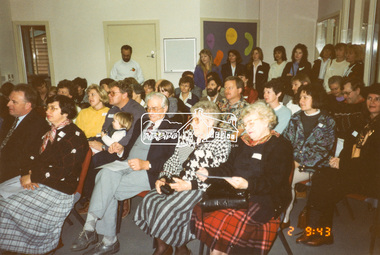
Opening of Meruka Childcare Co-operative, Meruka Park, 5 Meruka Dr, Eltham, April 1994
... North, a violinist with the then Melbourne Symphonic Orchestra, and Monsieur Leon Lambert, a French architect, who later designed the Glaciarium Ice Skating Rink, purchased three available farms, Looker's, Wright's and Taylor's, approximately 60 acres, the area running along the creek and being bordered by the present day Ryans Road, Karingal Drive and Sherbourne Road. ...North, a violinist with the then Melbourne Symphonic Orchestra, and Monsieur Leon Lambert, a French architect, who later designed the Glaciarium Ice Skating Rink, purchased three available farms, Looker's, Wright's and Taylor's, approximately 60 acres, the area running along the creek and being bordered by the present day Ryans Road, Karingal Drive and Sherbourne Road. ...In 1919 J.B. North, a violinist with the then Melbourne Symphonic Orchestra, and Monsieur Leon Lambert, a French architect, who later designed the Glaciarium Ice Skating Rink, purchased three available farms, Looker's, Wright's and Taylor's, approximately 60 acres, the area running along the creek and being bordered by the present day Ryans Road, Karingal Drive and Sherbourne Road. The farms were used for orchards and market gardens. Leon Lambert designed and built two homes on the farm site, one for the North family, ‘Tralford’, and the other, ‘Glen Ellen’, for himself and his wife. The homes were considered as "brother and sister" and they each included in their design an identical bay window in the main living area. "Glen Ellen" originally comprised kitchen, lounge room, inglenook, dining room, bath room and sleepout. Although the home has been extended over the years, much of the original architecture has been retained including timber panelling and three fireplaces. The land was subdivided in approximately 1966 with "Glen Ellen" retaining approximately one half acre of land fronting Meruka Drive. The property then passed from the Charleston family to Gerald and Margaret Sutton in 1976 and again was sold in 1980 and lastly sold again in 1994. The Norths named their house 'Tralford'. According to Marjorie North, the name Meruka was suggested by Alan Gardner and so was apparently not used by the North family. The name appears to be of Indian origin and its connection with the land is not known. ‘Tralford’ stayed in the North family for many years. Eltham Council acquired the house to create Meruka Park. The house was used for some years by the Council as a community arts facility and as emergency accommodation. It fell into disrepair and was demolished about 1990. The Meruka Child Care Centre has been built on the site and incorporates some of the architectural features of the old house. The Co-op was opened in April 1994. The original drive flanked by large old cypress trees remains. These trees are considered to be of local heritage significance and for this reason Meruka Park is covered by a Heritage Overlay under the Nillumbik Planning Scheme. Part of the park has been preserved as habitat for rare local flora. LL's house, named ‘Glen Ellen’, remains in a well-preserved state and fronts Meruka Drive.eltham, meruka child care co-operative, meruka house, meruka park, cr. peter graham, peter staples, richard allen, sheryl garbutt, bill penrose -
 Eltham District Historical Society Inc
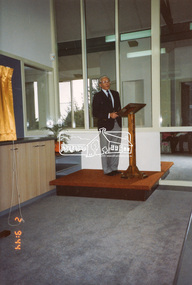
Opening of Meruka Childcare Co-operative, Meruka Park, 5 Meruka Dr, Eltham, April 1994
... North, a violinist with the then Melbourne Symphonic Orchestra, and Monsieur Leon Lambert, a French architect, who later designed the Glaciarium Ice Skating Rink, purchased three available farms, Looker's, Wright's and Taylor's, approximately 60 acres, the area running along the creek and being bordered by the present day Ryans Road, Karingal Drive and Sherbourne Road. ...North, a violinist with the then Melbourne Symphonic Orchestra, and Monsieur Leon Lambert, a French architect, who later designed the Glaciarium Ice Skating Rink, purchased three available farms, Looker's, Wright's and Taylor's, approximately 60 acres, the area running along the creek and being bordered by the present day Ryans Road, Karingal Drive and Sherbourne Road. ...In 1919 J.B. North, a violinist with the then Melbourne Symphonic Orchestra, and Monsieur Leon Lambert, a French architect, who later designed the Glaciarium Ice Skating Rink, purchased three available farms, Looker's, Wright's and Taylor's, approximately 60 acres, the area running along the creek and being bordered by the present day Ryans Road, Karingal Drive and Sherbourne Road. The farms were used for orchards and market gardens. Leon Lambert designed and built two homes on the farm site, one for the North family, ‘Tralford’, and the other, ‘Glen Ellen’, for himself and his wife. The homes were considered as "brother and sister" and they each included in their design an identical bay window in the main living area. "Glen Ellen" originally comprised kitchen, lounge room, inglenook, dining room, bath room and sleepout. Although the home has been extended over the years, much of the original architecture has been retained including timber panelling and three fireplaces. The land was subdivided in approximately 1966 with "Glen Ellen" retaining approximately one half acre of land fronting Meruka Drive. The property then passed from the Charleston family to Gerald and Margaret Sutton in 1976 and again was sold in 1980 and lastly sold again in 1994. The Norths named their house 'Tralford'. According to Marjorie North, the name Meruka was suggested by Alan Gardner and so was apparently not used by the North family. The name appears to be of Indian origin and its connection with the land is not known. ‘Tralford’ stayed in the North family for many years. Eltham Council acquired the house to create Meruka Park. The house was used for some years by the Council as a community arts facility and as emergency accommodation. It fell into disrepair and was demolished about 1990. The Meruka Child Care Centre has been built on the site and incorporates some of the architectural features of the old house. The Co-op was opened in April 1994. The original drive flanked by large old cypress trees remains. These trees are considered to be of local heritage significance and for this reason Meruka Park is covered by a Heritage Overlay under the Nillumbik Planning Scheme. Part of the park has been preserved as habitat for rare local flora. LL's house, named ‘Glen Ellen’, remains in a well-preserved state and fronts Meruka Drive.eltham, meruka child care co-operative, meruka house, meruka park, cr. john cohen -
 Eltham District Historical Society Inc
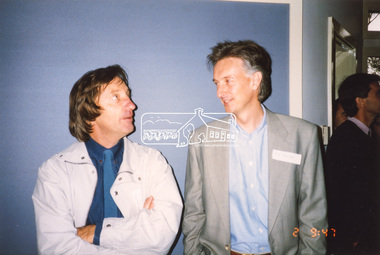
Opening of Meruka Childcare Co-operative, Meruka Park, 5 Meruka Dr, Eltham, April 1994
... North, a violinist with the then Melbourne Symphonic Orchestra, and Monsieur Leon Lambert, a French architect, who later designed the Glaciarium Ice Skating Rink, purchased three available farms, Looker's, Wright's and Taylor's, approximately 60 acres, the area running along the creek and being bordered by the present day Ryans Road, Karingal Drive and Sherbourne Road. ...North, a violinist with the then Melbourne Symphonic Orchestra, and Monsieur Leon Lambert, a French architect, who later designed the Glaciarium Ice Skating Rink, purchased three available farms, Looker's, Wright's and Taylor's, approximately 60 acres, the area running along the creek and being bordered by the present day Ryans Road, Karingal Drive and Sherbourne Road. ...In 1919 J.B. North, a violinist with the then Melbourne Symphonic Orchestra, and Monsieur Leon Lambert, a French architect, who later designed the Glaciarium Ice Skating Rink, purchased three available farms, Looker's, Wright's and Taylor's, approximately 60 acres, the area running along the creek and being bordered by the present day Ryans Road, Karingal Drive and Sherbourne Road. The farms were used for orchards and market gardens. Leon Lambert designed and built two homes on the farm site, one for the North family, ‘Tralford’, and the other, ‘Glen Ellen’, for himself and his wife. The homes were considered as "brother and sister" and they each included in their design an identical bay window in the main living area. "Glen Ellen" originally comprised kitchen, lounge room, inglenook, dining room, bath room and sleepout. Although the home has been extended over the years, much of the original architecture has been retained including timber panelling and three fireplaces. The land was subdivided in approximately 1966 with "Glen Ellen" retaining approximately one half acre of land fronting Meruka Drive. The property then passed from the Charleston family to Gerald and Margaret Sutton in 1976 and again was sold in 1980 and lastly sold again in 1994. The Norths named their house 'Tralford'. According to Marjorie North, the name Meruka was suggested by Alan Gardner and so was apparently not used by the North family. The name appears to be of Indian origin and its connection with the land is not known. ‘Tralford’ stayed in the North family for many years. Eltham Council acquired the house to create Meruka Park. The house was used for some years by the Council as a community arts facility and as emergency accommodation. It fell into disrepair and was demolished about 1990. The Meruka Child Care Centre has been built on the site and incorporates some of the architectural features of the old house. The Co-op was opened in April 1994. The original drive flanked by large old cypress trees remains. These trees are considered to be of local heritage significance and for this reason Meruka Park is covered by a Heritage Overlay under the Nillumbik Planning Scheme. Part of the park has been preserved as habitat for rare local flora. LL's house, named ‘Glen Ellen’, remains in a well-preserved state and fronts Meruka Drive.eltham, meruka child care co-operative, meruka house, meruka park, rob hauser -
 Eltham District Historical Society Inc
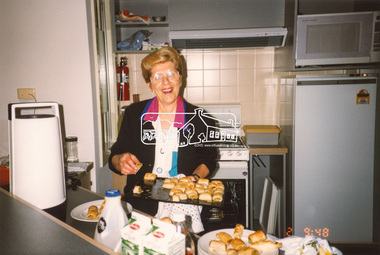
Opening of Meruka Childcare Co-operative, Meruka Park, 5 Meruka Dr, Eltham, April 1994
... North, a violinist with the then Melbourne Symphonic Orchestra, and Monsieur Leon Lambert, a French architect, who later designed the Glaciarium Ice Skating Rink, purchased three available farms, Looker's, Wright's and Taylor's, approximately 60 acres, the area running along the creek and being bordered by the present day Ryans Road, Karingal Drive and Sherbourne Road. ...North, a violinist with the then Melbourne Symphonic Orchestra, and Monsieur Leon Lambert, a French architect, who later designed the Glaciarium Ice Skating Rink, purchased three available farms, Looker's, Wright's and Taylor's, approximately 60 acres, the area running along the creek and being bordered by the present day Ryans Road, Karingal Drive and Sherbourne Road. ...In 1919 J.B. North, a violinist with the then Melbourne Symphonic Orchestra, and Monsieur Leon Lambert, a French architect, who later designed the Glaciarium Ice Skating Rink, purchased three available farms, Looker's, Wright's and Taylor's, approximately 60 acres, the area running along the creek and being bordered by the present day Ryans Road, Karingal Drive and Sherbourne Road. The farms were used for orchards and market gardens. Leon Lambert designed and built two homes on the farm site, one for the North family, ‘Tralford’, and the other, ‘Glen Ellen’, for himself and his wife. The homes were considered as "brother and sister" and they each included in their design an identical bay window in the main living area. "Glen Ellen" originally comprised kitchen, lounge room, inglenook, dining room, bath room and sleepout. Although the home has been extended over the years, much of the original architecture has been retained including timber panelling and three fireplaces. The land was subdivided in approximately 1966 with "Glen Ellen" retaining approximately one half acre of land fronting Meruka Drive. The property then passed from the Charleston family to Gerald and Margaret Sutton in 1976 and again was sold in 1980 and lastly sold again in 1994. The Norths named their house 'Tralford'. According to Marjorie North, the name Meruka was suggested by Alan Gardner and so was apparently not used by the North family. The name appears to be of Indian origin and its connection with the land is not known. ‘Tralford’ stayed in the North family for many years. Eltham Council acquired the house to create Meruka Park. The house was used for some years by the Council as a community arts facility and as emergency accommodation. It fell into disrepair and was demolished about 1990. The Meruka Child Care Centre has been built on the site and incorporates some of the architectural features of the old house. The Co-op was opened in April 1994. The original drive flanked by large old cypress trees remains. These trees are considered to be of local heritage significance and for this reason Meruka Park is covered by a Heritage Overlay under the Nillumbik Planning Scheme. Part of the park has been preserved as habitat for rare local flora. LL's house, named ‘Glen Ellen’, remains in a well-preserved state and fronts Meruka Drive.eltham, meruka child care co-operative, meruka house, meruka park, irene bogle -
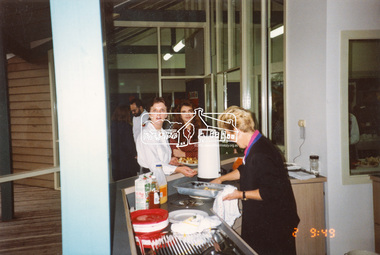 Eltham District Historical Society Inc
Opening of Meruka Childcare Co-operative, Meruka Park, 5 Meruka Dr, Eltham, April 1994
... North, a violinist with the then Melbourne Symphonic Orchestra, and Monsieur Leon Lambert, a French architect, who later designed the Glaciarium Ice Skating Rink, purchased three available farms, Looker's, Wright's and Taylor's, approximately 60 acres, the area running along the creek and being bordered by the present day Ryans Road, Karingal Drive and Sherbourne Road. ...North, a violinist with the then Melbourne Symphonic Orchestra, and Monsieur Leon Lambert, a French architect, who later designed the Glaciarium Ice Skating Rink, purchased three available farms, Looker's, Wright's and Taylor's, approximately 60 acres, the area running along the creek and being bordered by the present day Ryans Road, Karingal Drive and Sherbourne Road. ...In 1919 J.B. North, a violinist with the then Melbourne Symphonic Orchestra, and Monsieur Leon Lambert, a French architect, who later designed the Glaciarium Ice Skating Rink, purchased three available farms, Looker's, Wright's and Taylor's, approximately 60 acres, the area running along the creek and being bordered by the present day Ryans Road, Karingal Drive and Sherbourne Road. The farms were used for orchards and market gardens. Leon Lambert designed and built two homes on the farm site, one for the North family, ‘Tralford’, and the other, ‘Glen Ellen’, for himself and his wife. The homes were considered as "brother and sister" and they each included in their design an identical bay window in the main living area. "Glen Ellen" originally comprised kitchen, lounge room, inglenook, dining room, bath room and sleepout. Although the home has been extended over the years, much of the original architecture has been retained including timber panelling and three fireplaces. The land was subdivided in approximately 1966 with "Glen Ellen" retaining approximately one half acre of land fronting Meruka Drive. The property then passed from the Charleston family to Gerald and Margaret Sutton in 1976 and again was sold in 1980 and lastly sold again in 1994. The Norths named their house 'Tralford'. According to Marjorie North, the name Meruka was suggested by Alan Gardner and so was apparently not used by the North family. The name appears to be of Indian origin and its connection with the land is not known. ‘Tralford’ stayed in the North family for many years. Eltham Council acquired the house to create Meruka Park. The house was used for some years by the Council as a community arts facility and as emergency accommodation. It fell into disrepair and was demolished about 1990. The Meruka Child Care Centre has been built on the site and incorporates some of the architectural features of the old house. The Co-op was opened in April 1994. The original drive flanked by large old cypress trees remains. These trees are considered to be of local heritage significance and for this reason Meruka Park is covered by a Heritage Overlay under the Nillumbik Planning Scheme. Part of the park has been preserved as habitat for rare local flora. LL's house, named ‘Glen Ellen’, remains in a well-preserved state and fronts Meruka Drive.eltham, meruka child care co-operative, meruka house, meruka park, irene bogle -
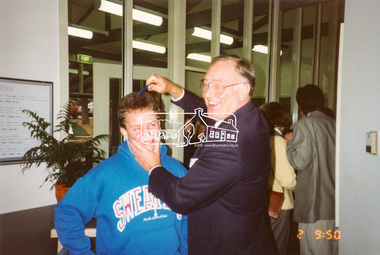 Eltham District Historical Society Inc
Opening of Meruka Childcare Co-operative, Meruka Park, 5 Meruka Dr, Eltham, April 1994
... North, a violinist with the then Melbourne Symphonic Orchestra, and Monsieur Leon Lambert, a French architect, who later designed the Glaciarium Ice Skating Rink, purchased three available farms, Looker's, Wright's and Taylor's, approximately 60 acres, the area running along the creek and being bordered by the present day Ryans Road, Karingal Drive and Sherbourne Road. ...North, a violinist with the then Melbourne Symphonic Orchestra, and Monsieur Leon Lambert, a French architect, who later designed the Glaciarium Ice Skating Rink, purchased three available farms, Looker's, Wright's and Taylor's, approximately 60 acres, the area running along the creek and being bordered by the present day Ryans Road, Karingal Drive and Sherbourne Road. ...In 1919 J.B. North, a violinist with the then Melbourne Symphonic Orchestra, and Monsieur Leon Lambert, a French architect, who later designed the Glaciarium Ice Skating Rink, purchased three available farms, Looker's, Wright's and Taylor's, approximately 60 acres, the area running along the creek and being bordered by the present day Ryans Road, Karingal Drive and Sherbourne Road. The farms were used for orchards and market gardens. Leon Lambert designed and built two homes on the farm site, one for the North family, ‘Tralford’, and the other, ‘Glen Ellen’, for himself and his wife. The homes were considered as "brother and sister" and they each included in their design an identical bay window in the main living area. "Glen Ellen" originally comprised kitchen, lounge room, inglenook, dining room, bath room and sleepout. Although the home has been extended over the years, much of the original architecture has been retained including timber panelling and three fireplaces. The land was subdivided in approximately 1966 with "Glen Ellen" retaining approximately one half acre of land fronting Meruka Drive. The property then passed from the Charleston family to Gerald and Margaret Sutton in 1976 and again was sold in 1980 and lastly sold again in 1994. The Norths named their house 'Tralford'. According to Marjorie North, the name Meruka was suggested by Alan Gardner and so was apparently not used by the North family. The name appears to be of Indian origin and its connection with the land is not known. ‘Tralford’ stayed in the North family for many years. Eltham Council acquired the house to create Meruka Park. The house was used for some years by the Council as a community arts facility and as emergency accommodation. It fell into disrepair and was demolished about 1990. The Meruka Child Care Centre has been built on the site and incorporates some of the architectural features of the old house. The Co-op was opened in April 1994. The original drive flanked by large old cypress trees remains. These trees are considered to be of local heritage significance and for this reason Meruka Park is covered by a Heritage Overlay under the Nillumbik Planning Scheme. Part of the park has been preserved as habitat for rare local flora. LL's house, named ‘Glen Ellen’, remains in a well-preserved state and fronts Meruka Drive.eltham, meruka child care co-operative, meruka house, meruka park, cr bob manuell, matthew rodscholler -
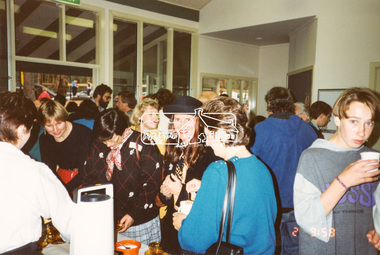 Eltham District Historical Society Inc
Opening of Meruka Childcare Co-operative, Meruka Park, 5 Meruka Dr, Eltham, April 1994
... North, a violinist with the then Melbourne Symphonic Orchestra, and Monsieur Leon Lambert, a French architect, who later designed the Glaciarium Ice Skating Rink, purchased three available farms, Looker's, Wright's and Taylor's, approximately 60 acres, the area running along the creek and being bordered by the present day Ryans Road, Karingal Drive and Sherbourne Road. ...North, a violinist with the then Melbourne Symphonic Orchestra, and Monsieur Leon Lambert, a French architect, who later designed the Glaciarium Ice Skating Rink, purchased three available farms, Looker's, Wright's and Taylor's, approximately 60 acres, the area running along the creek and being bordered by the present day Ryans Road, Karingal Drive and Sherbourne Road. ...In 1919 J.B. North, a violinist with the then Melbourne Symphonic Orchestra, and Monsieur Leon Lambert, a French architect, who later designed the Glaciarium Ice Skating Rink, purchased three available farms, Looker's, Wright's and Taylor's, approximately 60 acres, the area running along the creek and being bordered by the present day Ryans Road, Karingal Drive and Sherbourne Road. The farms were used for orchards and market gardens. Leon Lambert designed and built two homes on the farm site, one for the North family, ‘Tralford’, and the other, ‘Glen Ellen’, for himself and his wife. The homes were considered as "brother and sister" and they each included in their design an identical bay window in the main living area. "Glen Ellen" originally comprised kitchen, lounge room, inglenook, dining room, bath room and sleepout. Although the home has been extended over the years, much of the original architecture has been retained including timber panelling and three fireplaces. The land was subdivided in approximately 1966 with "Glen Ellen" retaining approximately one half acre of land fronting Meruka Drive. The property then passed from the Charleston family to Gerald and Margaret Sutton in 1976 and again was sold in 1980 and lastly sold again in 1994. The Norths named their house 'Tralford'. According to Marjorie North, the name Meruka was suggested by Alan Gardner and so was apparently not used by the North family. The name appears to be of Indian origin and its connection with the land is not known. ‘Tralford’ stayed in the North family for many years. Eltham Council acquired the house to create Meruka Park. The house was used for some years by the Council as a community arts facility and as emergency accommodation. It fell into disrepair and was demolished about 1990. The Meruka Child Care Centre has been built on the site and incorporates some of the architectural features of the old house. The Co-op was opened in April 1994. The original drive flanked by large old cypress trees remains. These trees are considered to be of local heritage significance and for this reason Meruka Park is covered by a Heritage Overlay under the Nillumbik Planning Scheme. Part of the park has been preserved as habitat for rare local flora. LL's house, named ‘Glen Ellen’, remains in a well-preserved state and fronts Meruka Drive.eltham, meruka child care co-operative, meruka house, meruka park, cr pam sladden, mandy press -
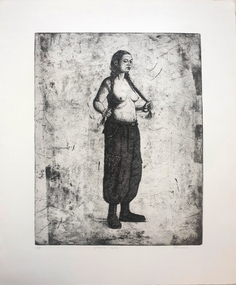 Federation University Art Collection
Work on paper - Etching, Graeme Drendel, Strong Girl by Graeme Drendel
... At Melbourne Graeme chose Printmaking as his major working with Printmaking lecturers Stephen Spurrier and Jim Taylor, and drawing with John Neeson. After teaching for several years, Graeme undertook a life changing and extensive travelling tour throughout Italy, United Kingdom and United States at which time he decided he would always depict the human figure. ...At Melbourne Graeme chose Printmaking as his major working with Printmaking lecturers Stephen Spurrier and Jim Taylor, and drawing with John Neeson. After teaching for several years, Graeme undertook a life changing and extensive travelling tour throughout Italy, United Kingdom and United States at which time he decided he would always depict the human figure. ...Graeme DRENDEL (02 July 1953- ) Born Ouyen, Victoria Graeme Drendel is a key Australian figurative painter and printmaker who is known for his 'enigmatic works depicting figures of solitude and introspection.' (Gavin Fry) His works are often set in isolated landscapes and situations, and his powerful images most often relate to the human condition. Becoming the first member of his family to undertake tertiary studies Graeme Drendel received a studentship to study Secondary Art and Craft Teaching. Country students could undertake their first two years study at Ballarat or Bendigo Art Schools. Graham studied at the Ballarat Teacher' College and Ballarat School of Mines in 1971 and 1972 before completing the course at Melbourne State College in 1974 While studying in Ballarat Graeme lived in the student departmental hostel 'Beaufort House, and had many formational experiences during his first foray outside of the Mallee. At Ballarat Graeme Drendel became aware of the painter Gareth Sansom who lectured at Ballarat Teachers' College. Although not directly taught by Sansom Graeme was drawn to the immediacy of his work. At Melbourne Graeme chose Printmaking as his major working with Printmaking lecturers Stephen Spurrier and Jim Taylor, and drawing with John Neeson. After teaching for several years, Graeme undertook a life changing and extensive travelling tour throughout Italy, United Kingdom and United States at which time he decided he would always depict the human figure. Recognised for his intelligent observations of the human condition, Graeme’s art invites contemplation and reveals the humour of everyday life. As a prolific user of sketchbooks Graeme Drendel records close observations, which often inform his paintings. Graeme Drendel is a regular finalist in the Archibald Portrait Prize, Sulman Prize, Paul Guest Prize, and in 2022 he won the prestigious Doug Moran National Portrait Prize with his portrait of fellow artist Lewis Miller. In 2021 he received a Federation University Distinguished Alumni Award. This work is one of a substantial body of limited edition prints donated by the artist to Federation University in 2022 covering work from Graeme Drendel's earliest years as a student, through to more recent etchings. A etching of a woman with hair braids.graeme drendel, printmaking -
 Federation University Art Collection
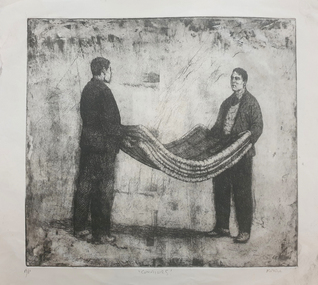
Work on paper - Etching, Graeme Drendel, 'Carriers' by Graeme Drendel
... At Melbourne Graeme chose Printmaking as his major working with Printmaking lecturers Stephen Spurrier and Jim Taylor, and drawing with John Neeson. After teaching for several years, Graeme undertook a life changing and extensive travelling tour throughout Italy, United Kingdom and United States at which time he decided he would always depict the human figure. ...At Melbourne Graeme chose Printmaking as his major working with Printmaking lecturers Stephen Spurrier and Jim Taylor, and drawing with John Neeson. After teaching for several years, Graeme undertook a life changing and extensive travelling tour throughout Italy, United Kingdom and United States at which time he decided he would always depict the human figure. ...Graeme DRENDEL (02 July 1953- ) Born Ouyen, Victoria Graeme Drendel is a key Australian figurative painter and printmaker who is known for his 'enigmatic works depicting figures of solitude and introspection.' (Gavin Fry) His works are often set in isolated landscapes and situations, and his powerful images most often relate to the human condition. Becoming the first member of his family to undertake tertiary studies Graeme Drendel received a studentship to study Secondary Art and Craft Teaching. Country students could undertake their first two years study at Ballarat or Bendigo Art Schools. Graham studied at the Ballarat Teacher' College and Ballarat School of Mines in 1971 and 1972 before completing the course at Melbourne State College in 1974 While studying in Ballarat Graeme lived in the student departmental hostel 'Beaufort House, and had many formational experiences during his first foray outside of the Mallee. At Ballarat Graeme Drendel became aware of the painter Gareth Sanson who lectured at Ballarat Teachers' College. Although not directly taught by Sansom Graeme was drawn to the immediacy of his work. At Melbourne Graeme chose Printmaking as his major working with Printmaking lecturers Stephen Spurrier and Jim Taylor, and drawing with John Neeson. After teaching for several years, Graeme undertook a life changing and extensive travelling tour throughout Italy, United Kingdom and United States at which time he decided he would always depict the human figure. Recognised for his intelligent observations of the human condition, Graeme’s art invites contemplation and reveals the humour of everyday life. As a prolific user of sketchbooks Graeme Drendel records close observations, which often inform his paintings. Graeme Drendel is a regular finalist in the Archibald Portrait Prize, Sulman Prize, Paul Guest Prize, and in 2022 he won the prestigious Doug Moran National Portrait Prize with his portrait of fellow artist Lewis Miller. In 2021 he received a Federation University Distinguished Alumni Award. This work is one of a substantial body of limited edition prints donated by the artist to Federation University in 2022 covering work from Graeme Drendel's earliest years as a student, through to more recent etchings. A etching of two men carrying a mattress.graeme drendel, printmaking, mattress -
 Federation University Art Collection
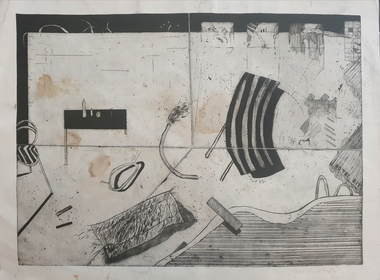
Work on paper - Etching, Graeme Drendel, 'Pool' by Graeme Drendel, 1974
... At Melbourne Graeme chose Printmaking as his major working with Printmaking lecturers Stephen Spurrier and Jim Taylor, and drawing with John Neeson. After teaching for several years, Graeme undertook a life changing and extensive travelling tour throughout Italy, United Kingdom and United States at which time he decided he would always depict the human figure. ...At Melbourne Graeme chose Printmaking as his major working with Printmaking lecturers Stephen Spurrier and Jim Taylor, and drawing with John Neeson. After teaching for several years, Graeme undertook a life changing and extensive travelling tour throughout Italy, United Kingdom and United States at which time he decided he would always depict the human figure. ...Graeme DRENDEL (02 July 1953- ) Born Ouyen, Victoria Graeme Drendel is a key Australian figurative painter and printmaker who is known for his 'enigmatic works depicting figures of solitude and introspection.' (Gavin Fry) His works are often set in isolated landscapes and situations, and his powerful images most often relate to the human condition. Becoming the first member of his family to undertake tertiary studies Graeme Drendel received a studentship to study Secondary Art and Craft Teaching. Country students could undertake their first two years study at Ballarat or Bendigo Art Schools. Graham studied at the Ballarat Teacher' College and Ballarat School of Mines in 1971 and 1972 before completing the course at Melbourne State College in 1974 While studying in Ballarat Graeme lived in the student departmental hostel 'Beaufort House, and had many formational experiences during his first foray outside of the Mallee. At Ballarat Graeme Drendel became aware of the painter Gareth Sanson who lectured at Ballarat Teachers' College. Although not directly taught by Sansom Graeme was drawn to the immediacy of his work. At Melbourne Graeme chose Printmaking as his major working with Printmaking lecturers Stephen Spurrier and Jim Taylor, and drawing with John Neeson. After teaching for several years, Graeme undertook a life changing and extensive travelling tour throughout Italy, United Kingdom and United States at which time he decided he would always depict the human figure. Recognised for his intelligent observations of the human condition, Graeme’s art invites contemplation and reveals the humour of everyday life. As a prolific user of sketchbooks Graeme Drendel records close observations, which often inform his paintings. Graeme Drendel is a regular finalist in the Archibald Portrait Prize, Sulman Prize, Paul Guest Prize, and in 2022 he won the prestigious Doug Moran National Portrait Prize with his portrait of fellow artist Lewis Miller. In 2021 he received a Federation University Distinguished Alumni Award. This work is one of a substantial body of limited edition prints donated by the artist to Federation University in 2022 covering work from Graeme Drendel's earliest years as a student, through to more recent etchings. An etching of a pool and surrounding objects such as chairs and towels. This work was completed during Graeme Drendel's final year at Melbourne State College where he was studying Secondary Art and Craft Teaching and majoring in Printmaking.graeme drendel, printmaking -
 Bendigo Military Museum
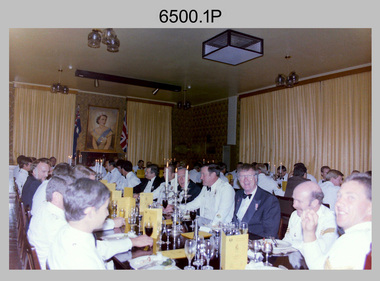
Photograph - 4th Field Survey Squadron Formal Dinner, Keswick Barracks, Adelaide SA, 1986
... Head table facing camera L to R: Jorge Gruszka - CO Army Svy Regt , Don Taylor - OC, Darby Munro - Tech WO, Bill Griggs - SSM, Geoff Briggs, George Ricketts, unidentified RSM Keswick Barracks. ...Head table facing camera L to R: Jorge Gruszka - CO Army Svy Regt , Don Taylor - OC, Darby Munro - Tech WO, Bill Griggs - SSM, Geoff Briggs, George Ricketts, unidentified RSM Keswick Barracks. ...This is a set of 11 photographs of a 4th Field Survey Squadron Officers, Warrant Officers and Sergeants Formal Dinner held at Keswick Barracks, Adelaide SA in 1986. On this occasion WO1 Alex ‘Darby’ Munro and WO1 Geoff Briggs were farewelled. WO1 Munro retired from the Australian Regular Army after 30 years of service. WO1 Geoff Briggs continued his service and retired in 1991. It is apparent there were visiting personnel from the Army Survey Regiment and other unidentified units. See item 6501.35P for black & white photos taken at the dinner.This is a set of 11 photographs of a 4th Field Survey Squadron Officer, Warrant Officer and Sergeant’s Formal Dinner held at Keswick Barracks, Adelaide SA in 1986. The colour photographs are on 35mm negative film and are part of the Army Survey Regiment’s Collection. The photographs were scanned at 96 dpi. .1) - Photo, colour, 1986. Facing camera L to R: unidentified, Stevo Hinic, unidentified (x3), Bob Mason - Army Svy Regt’s RSM, unidentified, John Harrison, Roger Rees, Mick Hogan. .2) - Photo, colour, 1986. Facing camera L to R: unidentified, Malcolm Hentschel, unidentified, Bob Mason - Army Svy Regt’s RSM, unidentified, John Harrison, Roger Rees, Mick Hogan. Facing away from camera L to R: unidentified (x2), George Timmins. .3) - Photo, colour, 1986. Head table facing camera L to R: Ian Rose, Jorge Gruszka (Army Svy Regt’s CO), Don Taylor - OC, Darby Munro - Tech WO, Bill Griggs - SSM, Geoff Briggs, George Ricketts, unidentified RSM Keswick Barracks. .4) - Photo, colour, 1986. Left side of table: unidentified officer. Right side of table L to R: behind candles – Phil Smalley, Bob Mills, unidentified, Bob Garritty, Ian Rose. .5) - Photo, colour, 1986. Left table facing away from camera: Russell ‘Rusty’ Williams, unidentified. Left table facing camera L to R: unidentified, Peter Imeson, Dave Stephenson, Alan Brown, Bob Rogister, Wally Chilcott, unidentified, Barry Lutwyche OAM, Neil Jones, Bob Dickkenberg. .6) - Photo, colour, 1986. Head table facing camera L to R: Jorge Gruszka - CO Army Svy Regt , Don Taylor - OC, Darby Munro - Tech WO, Bill Griggs - SSM, Geoff Briggs, George Ricketts, unidentified RSM Keswick Barracks. Wearing suit in foreground - Bob Dickkenberg. .7) - Photo, colour, 1986. Left table facing away from camera: unidentified (x3), Gary Warnest, Ross Jenkins, Bruce ‘Stretch’ Gordon, unidentified (x2). Left table facing camera L to R: Bill Tewson, Peter Imeson, Dave Stephenson, Alan Brown, Bob Rogister, Wally Chilcott. .8) - Photo, colour, 1986. Left table facing camera L to R: Alan Brown, Bob Rogister, Wally Chilcott, unidentified, Barry Lutwyche OAM, Neil Jones, Bob Dickkenberg. .9) - Photo, colour, 1986. Facing away from camera: Dave Stephenson, unidentified (x2). Facing camera L to R: unidentified, Tony Gee, Brett ‘Dutchy’ Van Leeuwen, Bruce ‘Stretch’ Gordon, Ross Jenkins, Gary Warnest, unidentified (x2), Ray Sargeant, Stu Symonds. .10) - Photo, colour, 1986. Facing away from camera: Mick Hogan, Roger Rees, unidentified. Facing camera L to R: unidentified stewards (x2), unidentified (x2), Allan Adsett, Terry Lord, unidentified, Simon Reynolds – steward, George Timmins. .11) - Photo, colour, 1986. Head table L to R: Geoff Briggs, George Ricketts, unidentified RSM Keswick Barracks. Facing away from camera: unidentified, Neil Jones, remainder unidentified. Facing camera L to R: Steve Cooper, Darcy Patrick, Russell ‘Rusty’ Williams, John Scharber, Tony Gee, Brett ‘Dutchy’ Van Leeuwen..1P to .11P – There are no personnel identified. ‘1986 Formal Dinner’ annotated on negatives sleeve.royal australian survey corps, rasvy, 4 fd svy sqn -
 Flagstaff Hill Maritime Museum and Village
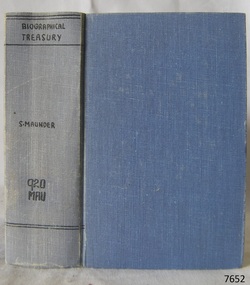
Book - Biography, Samuel Maunder, The Biographical Treasury, 1851
... In August of that year, he bought the two shops and goods of William Taylor and set up his publishing house there at 39 Paternoster Row. ...In August of that year, he bought the two shops and goods of William Taylor and set up his publishing house there at 39 Paternoster Row. ...Samuel Maunder (1785–1849) was an English writer and composer of many works. this new edition was printed after his death. The work consists of notices of the Lives of Eminent Persons of all ages and nations from the earliest period to the present times. The book is part of Flagstaff Hill's ‘Pattison Collection’, a collection of books and records that was originally owned by the Warrnambool Mechanics’ Institute, which was founded in Warrnambool in 1853. By 1886 the Warrnambool Mechanics’ Institute (WMI) had grown to have a Library, Museum and Fine Arts Gallery, with a collection of “… choice productions of art, and valuable specimens in almost every branch and many wonderful national curiosities are now to be seen there, including historic relics of the town and district.” It later included a School of Design. Although it was very well patronised, the lack of financial support led the WMI in 1911 to ask the City Council to take it over. In 1935 Ralph Pattison was appointed as City Librarian to establish and organise the Warrnambool Library as it was then called. When the WMI building was pulled down in 1963 a new civic building was erected on the site and the new Warrnambool Library, on behalf of the City Council, took over all the holdings of the WMI. At this time some of the items were separated and identified as the ‘Pattison Collection’, named after Ralph Pattison. Eventually the components of the WMI were distributed from the Warrnambool Library to various places, including the Art Gallery, Historical Society and Flagstaff Hill. Later some were even distributed to other regional branches of Corangamite Regional Library and passed to and fro. It is difficult now to trace just where all of the items have ended up. The books at Flagstaff Hill Maritime Village generally display stamps and markings from Pattison as well as a variety of other institutions including the Mechanics’ Institute itself. The publisher firm, Longmans, Green & Co, was originally founded in 1724 in London by Thomas Longman under the name Longman. In August of that year, he bought the two shops and goods of William Taylor and set up his publishing house there at 39 Paternoster Row. The shops were called Black Swan and Ship, and it is said that the 'ship' sign was the inspiration for Longman's Logo. After many changes of name and management, the firm was incorporated in 1926 as Longmans, Green & Co. Pty Ltd. The firm was acquired by Pearson in 1968 and was known as Pearson Longman or Pearson PLC. The book has additional importance for its connection to the Pattison Collection, which, along with other items at Flagstaff Hill Maritime Village, was originally part of the Warrnambool Mechanics' Institutes’ Collection. The Warrnambool Mechanics’ Institute book collection has historical and social significance for its strong association with the Mechanics Institute movement and its important role in people's intellectual, cultural and social development throughout the latter part of the nineteenth century and the early twentieth century. The collection of books is a rare example of an early lending library and its significance is enhanced by the survival of an original collection of many volumes. The Warrnambool Mechanics' Institute’s publication collection is of both local and state significance.The Biographical Treasury: A Dictionary of Universal Biography Author: Samuel Maunder Publisher: Longman, Brown, Green & Longmans Date: 1851(a new edition) Blue fabric hardcover book with inscriptions on cover, stickers and a stamp.Painted on Spine "920 MAU" Pastedown front endpaper has sticker from Warrnambool Public Library Front loose endpaper has a sticker from Corangamite Regional Library Service Stamp: "WARRNAMBOOL MECHANICS' INSTITUTE"warrnambool, shipwrecked-coast, flagstaff-hill, flagstaff-hill-maritime-museum, maritime-museum, shipwreck-coast, flagstaff-hill-maritime-village, shipwrecked-artefact, pattison collection, warrnambool library, warrnambool mechanics’ institute, ralph eric pattison, corangamite regional library service, warrnambool city librarian, mechanics’ institute library, victorian library board, warrnambool books and records, warrnambool children’s library, great ocean road, the biographical treasury, samuel maunder, longman brown green and longmans -
 Vision Australia
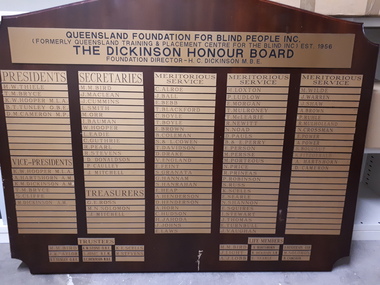
Photograph - Image, The Dickinson Honour Board
... Trustees: M.M. Bird, F.R. Taylor, B.T. Tunley OBE, K.W. Stone OBE, S. ...Trustees: M.M. Bird, F.R. Taylor, B.T. Tunley OBE, K.W. Stone OBE, S. ...This board was created to honour the work undertaken to administrate the Foundation by it's board and voluntary members. It is inscribed as follows: "The Queensland Foundation for Blind People Inc, (formerly the Queensland Placement & Training Centre for the Blind Inc) est. 1956. The Dickinson Honour Board. Foundation Director - H.C. Dickinson M.B.E. Presidents: H.W. Thiele, T.M.Bryce, K.W. Hooper MLA, B.T. Turnley OBE, D.M. Cameron MP. Vice-Presidents: K.W. Hooper MLA, A. Hartshorn AM, K.M. Dickinson AM, T.M. Bryce, S. Cliffe, M. Dickinson AM. Secretaries: M.M. Bird, J. Maclean, J. Cummins, L. Smith, M. Orr, I. Bauman, W. Hooper, L. Eadie, C. Guthrie, R. Pearl, R. Stevens, D. Donaldson, P. Caulley, J. Mitchell. Treasurers: G.E. Ross, M.N. Solomon, J. MItchell. Meritorious Service: C. Alroe, J, Ball, E. Bebb, T. Blackford, C. Boyle, T. Boyle, E. Brown, B. Coleman, S & L Cowen, T. Davidson, D. Drake, V. England, F. Feint, S. Granata. G. Hannam, S. Hanarahan, E. Heap, A. Henderson, D. Henderson, A. Horn, C. Hudson, H. Jahoda, J. Johns, E. Laws, M. Loxton, P. Ludlow, E. Morgan, T. Mulroney, T. McLearie, R. Newitt, N. Noad, D. Pauls, B & E Perry, E. Person, M. Persse, M. Porteous, N. Price, R. Prineas, P. Robinson, S. Russ, K. Scells, E. Searle, N. Shannon, E. Squires, I. Stewart, J. Thomas, E. Turnball, J. Vaughan, M. Wilde, J. Warren, J. Shaw, A. Brown, P. Ruhle, R. Mulholland, N. Crossman, E. Power, A. Power, S. Boucat, K. Fitzgerald, A. Hartshorn, D. Cameron. Trustees: M.M. Bird, F.R. Taylor, B.T. Tunley OBE, K.W. Stone OBE, S. Jones BEM, H.C. Dickinson MBE, K.E. Scells, R. Stevens Life Members: M.M. Bird, J. Light, A.J Lobb, A. Hartshorn, M. Dickinson AM, E. Searle, D. Henderson OAM, M. Solomon, D, Cameron Board with rows of etched platesroyal blind foundation of queensland, nameplates -
 Port Fairy Historical Society Museum and Archives
Photograph
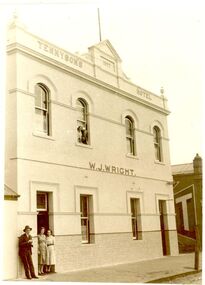
... In 1854 John Walwyn Taylor moved from the Sally Ann to take over, and remained there until 1857, when he moved to his new hotel The Star of the West built on the old Sally Ann site. ...In 1854 John Walwyn Taylor moved from the Sally Ann to take over, and remained there until 1857, when he moved to his new hotel The Star of the West built on the old Sally Ann site. ...The small building on the left is the Farmers Inn, and was built about 1849, when James Brown became the first licensee. In 1854 John Walwyn Taylor moved from the Sally Ann to take over, and remained there until 1857, when he moved to his new hotel The Star of the West built on the old Sally Ann site. John Wall then became the new licensee of the Farmers Inn. In 1876 his wife Bridget made an application for the license to be transferred to her as “her husband suffered from rheumatism, and there were certain other reasons why the license should be transferred to her hands”. The Bench wondered about creating a precedence of granting a license to a married woman, who was living with her husband, (licenses were only granted to the widows of licensees at that time), so the application was postponed for 14 days, but eventually Mrs Wall won her case. In 1882 Patrick Tennyson took over the lease of the Farmer’s Inn and applied to change the name to Tennyson’s Hotel. In 1885 he bought the freehold in the Great Land Sale for £780. 12s. 8d., and in December, carried out extensive renovations. The local press reported that “the rooms were quite tasteful, the Billiard room commodious and well ventilated, and that the old hotel had not looked so good for years”. The double storied part of the hotel was added in 1893. Patrick Tennyson had a colourful career. He was born in Charlemont, County Armagh in 1846. When he was 21, he served as a papal guard at the Vatican for 2 years and then entered the Marist Brothers novitiate in Beauchamps. In 1872 he was one of three brothers to accompany Brother Ludovic to Sydney; he was then aged 23. After 5 years he withdrew from the Congregation and moved to Victoria, where he took up teaching, first at Rosedale near Sale, then at Crossley, by which time he was married to Anne White. They had eight children, three dying in infancy. Eight months after he took over the Farmers’ Inn, he was elected to the Borough Council, and served as Mayor in 1897. His great interest was sport, was Secretary of the Race Club for 20 years and supported the local Football Club by donating a silver cup for local competitions. Patrick Tennyson died in 1904. The hotel continued under various licensees until it burned down in 1977 under the name of “The Fishermen’s Arms”. Well known main street hotel no longer exists Sepia photograph of 2 story building with tiled wainscoting male and 2 females in doorway and 2 females in window upstairshotel, building, sackville street, patrick tennyson, w.j.wright -
 Mission to Seafarers Victoria
Journal (item) - Periodicals-Annual, Shiplovers' Society of Victoria, The Annual Dog Watch
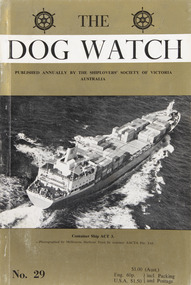
... Bull - 31 Monkey Business - Constance Gurd Taylor - 37 The s.s. Great Britain Comes Home - L. ...Bull - 31 Monkey Business - Constance Gurd Taylor - 37 The s.s. Great Britain Comes Home - L. ...This journal provides the reader with glimpses of the adventures and hardships of a seaman's life. Many of the stories are of sailing ships.Contributes to our knowledge of the importance of shipping and places on record those stories of the sea which would otherwise be lost.Contents Foreword - P. C. Kelly, F.C.I.T. - 9 The Pamir's Last Australian Voyage - Ross Osmond - 13 Store of the "Wyatt Earp" - - 19 The Old Ship - C. E. Bonwick - 24 Rescue From Skull Rock - Jane Brett Hilder, F.R.G.S - 25 The End of H.M.A.S. Canberra - D. J. Bull - 31 Monkey Business - Constance Gurd Taylor - 37 The s.s. Great Britain Comes Home - L. W. Rogers - 41 Pearling Off the Aru Islands - Capt. W. J. Cowling - 47 The Wreck of the Jane Lovett - J. M. MacKenzie - 59 Captain Dale's Torpedo - C. Halls - 61 After Thoughts - - 71 Two Incidents - 73 More Light On The Early P.P. Pilots - 74 Lighthouses of U.S.A. - N. S. Smith - 78 Voyage In The s.s. Orange Branch -- 1918 - I. L. Barton - 85 A Dramatic Rescue - - 98 A New Record Discovered In Australia / America Passages - W. G. Watson - 99 Some Highlights of Western Ports Maritime History - Arthur E. Woodley - 103 Going To Sea In The Last Of The British Sailing Ships - Lionel Adams - 108 More About Willemein - E. W. R. Peterson - 119 Piracy On The China Coast - Capt. W. E. Eglen - 123 Book Reviews - - 125 Glossary - - 129sailing ships, steamships, shipping, seafaring life, shiplovers' society of victoria, dog watch -
 Wodonga & District Historical Society Inc
Photograph - Send off for Alexander Frederick Reid OBE, MBE, 1956
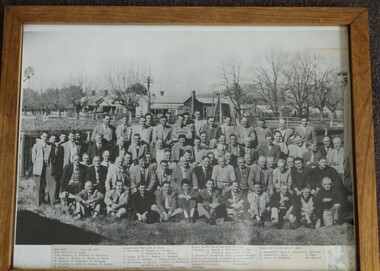
... Odgers, C. Whitehead, G. Taylor, J. Muir, P. McDonald, W. Riley, A. Thompson, K. ...Odgers, C. Whitehead, G. Taylor, J. Muir, P. McDonald, W. Riley, A. Thompson, K. ...Alex Reid was born in 1891 and began work on the Victorian Railways in 1907. He enlisted with the A.I.F in 1915. He served in Egypt and the Suez Canal but was discharged on medical grounds having contracted typhoid and dysentery. In 1917 he re-enlisted in the Anzac Light Horse. On his return to England, he survived the torpedoing of HMAT Ballarat and then served in France. On discharge from the army, Alex returned to the Victorian Railways and transferred to Wodonga. He was employed driving the “Spirit of Progress” and remained as “Driver in Charge” until his retirement in 1956. Alex was awarded the MBE in 1951 and the OBE in 1963 for his tireless efforts on behalf of Returned Servicemen and their families. He continued to work as a welfare officer for the RSL. As well as continued service to the RSL, Alex served as a member of the Wodonga High School advisory committee for 35 years and sat on the bench in the Wodonga Court for 15 years in his capacity as Justice of the Peace. Alexander Frederick Reid O.B.E died in Wodonga on 7 January 1979.This image represents a farewell work function for an outstanding member of the Wodonga community.A large black and white framed photo of a group of men attending a send off function in Wodonga in 1956.Alex Reid send off 1955 Back Row L to R Stan Warnock, F. Fulford, W. McEachern, S. Egan, P. Doolan, K. Moore, A. Smyth, M. Seymour, W. McAnanly, M. Flanagan, L. Gregson, L. Snow, H. Fraser, R. Cooper, W. Squires Second Back Row L to R K. Williams, W. Toomey, K. Coleman, F. Thistleton, K. Ziebell, P. Gough (S.M), C. Hughes, F. Dempsey, C. Craig, W. Baldock, J. Robinson, W. Odgers, C. Whitehead, G. Taylor, J. Muir, P. McDonald, W. Riley, A. Thompson, K. Robinson, B. Strachan, W. Walsh, T. Willoughby Seated second Row L to R J. Schmidt, A. Wagner, J. O’Donnell, J. Dawe, F. Leitch, J. Anderson, T. Brown, A. Elvish, F. Boadle, A. Reid, J. Draper (Police). N. Davey, F. Caine (P), A. Padgett, L. Burroughs (P), B. Saul, F. Weatherall, H. Binder, D. Sutton, T. Cosgriff, C. Clancy, ? , M. Nowadice, J. Karugan Front Row Seated L to R D. Shannon, S. Cuper, L. Cheesley. C. Williams, L. Madgeric, V. Snow. ?, A. Beach, L. Cross, C. McNamara, ? , Don Shepard.alexander frederick reid, eminent wodonga residents, ww1 veterans wodonga, hmat ballarat -
 Sunshine and District Historical Society Incorporated
Archive - Nettlefolds Collection, Various
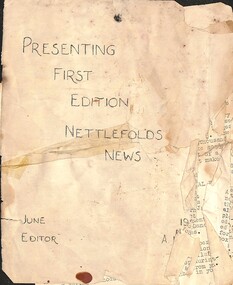
... Centre Row (L-R) - Dave Picken, ?, Eric Taylor, Jack Davey, ? Front row (L-R) - Harry Taylor, Taylor, Jim Allen, Tom Higgins, Rex Halles 659.22 - Nettlefolds Collection - Picnic C1940's Front (Adults) - 5 Marj Grimley, 12 Yvonne Chenery, 13 (In Front) Dot Legg, 13 (In Front) Thelma Legg, 17 Phoebe Holden, 18 Evelyn Nankervis 2nd Row - 6 Nancy Drennan, 7 Margaret Picken, 14 Laurie Finn, 15 Florrie Finn, 18 Maude Noble, 23 Mary Holden, 30 Jessie Hoskins, 34 Lil Scoble, 37 Kitty Marsh, 38 Des Taafe, Right End Joyce Scobie, Bill Sloman, Kate Sloman, Irene Scoman, Alf Gayle 3rd Row - 3 Ivan Carland. 19 Jean Wittingha, 21 Alf Stark, 26 Bob Cornish 4th Row - 9 Jim Campbell, 10 Florrie Holden, 11 Arch Noble 659.22 - Nettlefolds Collection - Picnic C1940's Names 659.23 - Missing 659.24 - Missing 659.25 - Nettlefolds Collection - Picnic 659.26 - Nettlefolds Collection - Entertainment Night 659.27 - Nettlefolds Collection - Picnic...Centre Row (L-R) - Dave Picken, ?, Eric Taylor, Jack Davey, ? Front row (L-R) - Harry Taylor, Taylor, Jim Allen, Tom Higgins, Rex Halles 659.22 - Nettlefolds Collection - Picnic C1940's Front (Adults) - 5 Marj Grimley, 12 Yvonne Chenery, 13 (In Front) Dot Legg, 13 (In Front) Thelma Legg, 17 Phoebe Holden, 18 Evelyn Nankervis 2nd Row - 6 Nancy Drennan, 7 Margaret Picken, 14 Laurie Finn, 15 Florrie Finn, 18 Maude Noble, 23 Mary Holden, 30 Jessie Hoskins, 34 Lil Scoble, 37 Kitty Marsh, 38 Des Taafe, Right End Joyce Scobie, Bill Sloman, Kate Sloman, Irene Scoman, Alf Gayle 3rd Row - 3 Ivan Carland. 19 Jean Wittingha, 21 Alf Stark, 26 Bob Cornish 4th Row - 9 Jim Campbell, 10 Florrie Holden, 11 Arch Noble 659.22 - Nettlefolds Collection - Picnic C1940's Names 659.23 - Missing 659.24 - Missing 659.25 - Nettlefolds Collection - Picnic 659.26 - Nettlefolds Collection - Entertainment Night 659.27 - Nettlefolds Collection - Picnic 17 Photos and 8 other documents (25 in total) giving an overall picture of the Nettlefolds manufacturing complex on the corner of Ballarat and McIntyre roads. ...659.01 - Nettlefolds Collection - Presenting First Edition Nettlefolds News June 1954 659.02 - Nettlefolds Collection - Nettlefolds News 659.04 - Nettlefolds Collection - Ajax Fasteners 25 Year Club Dinner 1982 659.05 - Nettlefolds Collection - Crossthreads Newsletter Issue 4 Vol 2 October 1975 659.06 - Nettlefolds Collection - Plate Fasteners By Nettlefolds 659.07 - Nettlefolds Collection - Factory 659.08 - Nettlefolds Collection - Manufacturing Workshop 659.09 - Nettlefolds Collection - Factory 659.10 - Nettlefolds Collection - Staff In Front Of Factory 659.11 - Nettlefolds Collection - Electrical Switchboard 659.12 - Nettlefolds Collection - Manufacturing Workshop 659.13 - Nettlefolds Collection - Manufacturing Workshop 659.14 - Nettlefolds Collection - Manufacturing Workshop 659.15 - Nettlefolds Collection - Staff In Front Of Office Front Lying - Arch Noble, Jack Davey, ? 2nd Row Sitting - 2 Jack O'Haloran, 3 Mona Tribe, 8 Dave Picken, 10 Alf Stark, 13 Tom Clayton 3rd Row Sitting - 3 Mrs Campbell, 4 Jim Campbell, 6 Bill Norton, 8 Nicholls, 10 Meridith, 12 Stokes, 12 Florrie Holden, 13 Mary Holden 4th Row - 6 Charlie Jones, 11 Ron Marsh, 12 Elsie Quick, 14 Ada Clayton, 15 Frank Smith, 17 Jack McGovern 5th Row - 6 Olive Heiffer, 7 Annie Heiffer, 8 Maude Heiffer, 9 Joyce Scobie, 11 Phoebe Holden, 17 Lil Scobie, 18 Lois Carter 659.16 - Nettlefolds Collection - Picnic Early 1940's Sitting - Jean Lowe, Florrie Holden, Gladys Craddock Kneeling - Alf Stark, Jim Allen, Frank Smith, Ossie Dwyer, Arch Noble Standing - ?, ?, Nicholls. Jim Campbell, Elgar, Bill Norton, David Milburn, Ivan Carland (Last in row) 659.17 - Nettlefolds Collection - Seaford Picnic Front Sitting Right - 1 Arch Noble, 2 Jack Davey 2nd Row - 6 Myrtle Craddock 3rd Row - 8 Saliba, 12 Mary Holden, 13 Phoebe Holde, 14 Jean McInstosh 4th Left Post - Olive Heiffer, Maude Heiffer, Annie Heiffer, 8 Kitty Hand Standing Under Roof - 7 Margaret Picken, 12 Len Duxson 659.18 - Nettlefolds Collection - Sports & Social Club Dance 1937 Front - 3rd from right Maud Heiffer Front - ?, ?, Jack Davey (Centre), Arch Noble, Maud Noble 3rd Row - 3 Beau McPherson, 11 Myrtle Craddock Back Row - 12th from right Ann Heiffer, (Towards Left) Ron Duxon (Prominent) 659.19 - Nettlefolds Collection - Soccer Team 659.20 - Nettlefolds Collection - Soccer Team 659.20 - Nettlefolds Collection - Soccer Team Names Back Row (L-R) - Pop Davies, Arch Noble, Laurie Finn, ?, ? Centre Row (L-R) - Dave Picken, ?, Eric Taylor, Jack Davey, ? Front row (L-R) - Harry Taylor, Taylor, Jim Allen, Tom Higgins, Rex Halles 659.22 - Nettlefolds Collection - Picnic C1940's Front (Adults) - 5 Marj Grimley, 12 Yvonne Chenery, 13 (In Front) Dot Legg, 13 (In Front) Thelma Legg, 17 Phoebe Holden, 18 Evelyn Nankervis 2nd Row - 6 Nancy Drennan, 7 Margaret Picken, 14 Laurie Finn, 15 Florrie Finn, 18 Maude Noble, 23 Mary Holden, 30 Jessie Hoskins, 34 Lil Scoble, 37 Kitty Marsh, 38 Des Taafe, Right End Joyce Scobie, Bill Sloman, Kate Sloman, Irene Scoman, Alf Gayle 3rd Row - 3 Ivan Carland. 19 Jean Wittingha, 21 Alf Stark, 26 Bob Cornish 4th Row - 9 Jim Campbell, 10 Florrie Holden, 11 Arch Noble 659.22 - Nettlefolds Collection - Picnic C1940's Names 659.23 - Missing 659.24 - Missing 659.25 - Nettlefolds Collection - Picnic 659.26 - Nettlefolds Collection - Entertainment Night 659.27 - Nettlefolds Collection - Picnicnettlefolds, ballarat road, sunshine north -
 Bendigo Military Museum
Photograph - Bones Day – Army Survey Regiment Verses RAAF School of Radio at Laverton, Victoria, 1967
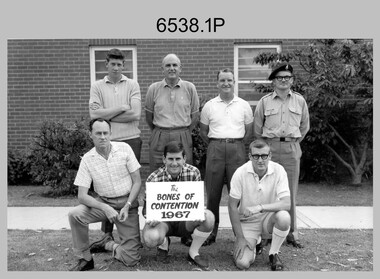
... Front row: Paddy Strunks, Don Taylor, unidentified (x2), Warren Chadwick. .6) - Photo, black & white, 1967, ASR Basketball Team Back row L to R: Tom Royal, Geoff Wasser, Gordon Lowery. ...Front row: Paddy Strunks, Don Taylor, unidentified (x2), Warren Chadwick. .6) - Photo, black & white, 1967, ASR Basketball Team Back row L to R: Tom Royal, Geoff Wasser, Gordon Lowery. ...These seven photographs were taken at Bones Day, an annual sports competition between the Army Survey Regiment and the RAAF School of Radio at Laverton in 1967. The two units took turns each year to host the event. The day competition usually comprised basketball, cricket, cross country, golf, sailing, squash, softball, tennis, touch football, rifle shooting, tug-of-war and volleyball. The “big bone” trophy comprising a large bone from a beast housed inside a wooden framed glass case, was awarded to the winner of the day competition. The evening competition often included darts, carpet bowls, hookey, quoits and billiards/snooker. The “little bone” (a mounted chicken bone) was the consolation trophy awarded to the winner of the evening competition. The 3-hour bus trip for the visiting unit on their return was typically very raucous. The history of the Bones Day competition is best described in the booklet titled - Bones of Contention Souvenir Program. 1965. Refer to Item 6267.These seven photographs were taken at Bones Day, an annual sports competition between the Army Survey Regiment and the RAAF School of Radio at Laverton in 1967. The photographs were printed on photographic paper and are part of the Army Survey Regiment’s Collection. The black and white photographs were scanned at 300 dpi. .1) - Photo, black & white, 1967, Golf. ASR Team Back row L to R: Graeme Jeffers, CO LTCOL John Nolan, unidentified, Ace Evans. Front row L to R: unidentified (x2), Stan Vote. .2) - Photo, black & white, 1967, ASR Rifle Shooting Team Back row L to R: Ian ‘Lofty’ Turner, Bill Van Mallenstein, Daryl Hockings CSM, Geoff Haynes, unidentified (x2). Front row L to R: Rob Bridge, Con Tsakalos, unidentified UK exchange officer. .3) - Photo, black & white, 1967, ASR Tennis Team L to R: unidentified, Kalen Sargeant, unidentified, Marj Knight. .4) - Photo, black & white, 1967, ASR Squash Team – Back row L to R: unidentified (x2), Bob Williams, Peter Saunders. Front row L to R: L.D. Clayden, Loretta Hall. .5) - Photo, black & white, 1967, ASR Cricket Team: Back row: unidentified, Bruce Whitecross, Wally Herbst, unidentified (x4). Front row: Paddy Strunks, Don Taylor, unidentified (x2), Warren Chadwick. .6) - Photo, black & white, 1967, ASR Basketball Team Back row L to R: Tom Royal, Geoff Wasser, Gordon Lowery. Front row L to R: unidentified, John McCulloch, Ken ‘Sluggo’ Slater. .7) - Photo, black & white, 1967, ASR Tug-of-War Team Back row unidentified (x4), Tom Pattison, Geoff Wasser, Evan Giri. Front row L to R: unidentified, Ken ‘Sluggo’ Slater, unidentified (x3)..1P to .7P –No personnel are identified.royal australian survey corps, rasvy, army survey regiment, army svy regt, fortuna, bones day -
 Bendigo Military Museum
Photograph - Army Survey Regiment Freedom of Entry Parade, Bendigo CBD, 1990
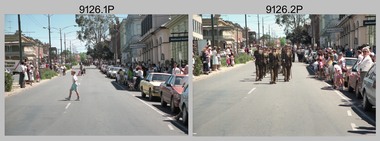
... L to R: unidentified (x2), WO2 Mick Flynn, WO2 Steve Hansen, MAJ Neil Taylor, remainder unidentified. .23) - Photo, colour, 1990. ...L to R: unidentified (x2), WO2 Mick Flynn, WO2 Steve Hansen, MAJ Neil Taylor, remainder unidentified. .23) - Photo, colour, 1990. ...The Freedom of Entry to the City on the 26th of October 1990 was an honour first conferred by the Bendigo City Council to the Army Survey Regiment in 1970. This was the fifth time the unit exercised its freedom of marching into the city with swords drawn, bayonets fixed and drums beating. The honour is usually bestowed upon local regiments, in recognition of their dedicated service, and it is common for military units to periodically exercise their freedom by arranging a parade through the city. The event began with a ceremonial parade at the Queen Elizabeth II Oval. The RAAF Central Command Band provided the music at the parade. After formal inspections of the troops, the Army Survey Regiment saluted as it marched past the Reviewing Officer - Mayor of Bendigo Councillor James Douglass, military dignitaries and guests. Led by the Regiment’s CO – LTCOL Rene van den Tol, the unit marched down View St, along Pall Mall and to Gaol Rd. Regiment members were treated to a civic reception at the City Hall after the ceremony. The Regiment also exercised its Freedom of Entry with anniversary parades in 1977, 1980, 1985, 1992 and 1996. See items 9124.28P and 9125.54P for additional sets of photos taken at the event. The formal booklet covering the event is catalogued under item 9123.This set of 24 photographs of the Army Survey Regiment were taken at the Freedom of Entry parade, held at the City of Bendigo’s Queen Elizabeth Oval (QEO) on the 26th of October 1990. The colour photographs are on 35mm negative film and scanned at 2400 dpi. They are part of the Army Survey Regiment’s Collection. .1) - Photo, colour, 1990. The Army Survey Regiment marches down View St towards Pall Mall. .2) - Photo, colour, 1990. The Army Survey Regiment marches down View St towards Pall Mall. L to R: 2IC MAJ Duncan Burns, CO LTCOL Rene van den Tol, MAJ Bob Williams. .3) - Photo, colour, 1990. The Army Survey Regiment marches down View St towards Pall Mall. L to R: 2IC MAJ Duncan Burns, CO LTCOL Rene van den Tol, MAJ Bob Williams, RSM WO1 Neville Stone. .4) - Photo, colour, 1990. The RAAF Central Command Band marches down View St towards Pall Mall led by L to R: Drum Major Warrant Officer E. Hayward and Deputy Music Director Flying Officer S. Wright. WO1 Rowan Gillies at fat left. .5) - Photo, colour, 1990. City Marshall – Superintendent D.R. Mansell standing at the ready in Charing Cross, to challenge the entry of the Army Survey Regiment at the bottom of View St. .6) - Photo, colour, 1990. The Army Survey Regiment at the halt in View St ready to exercise its right to pass through the City of Bendigo. L to R: 2IC MAJ Duncan Burns, CO LTCOL Rene van den Tol, ADJT CAPT Peter Parkes. .7) - Photo, colour, 1990. The Army Survey Regiment salutes parade dignitaries as it marches down Pall Mall past the dias. L to R: CO LTCOL Rene van den Tol, 2IC MAJ Duncan Burns, MAJ Bob Williams. At the dias L to R: City of Bendigo Chief Executive Officer - Mr. R. J. Burton, Reviewing Officer: City of Bendigo Mayor - Councillor James Douglass, Parade Host -D-SVY COL Don Swiney MBE. .8) - Photo, colour, 1990. The RAAF Central Command Band salutes parade dignitaries as it marches down Pall Mall past the dias. L to R: Drum Major Warrant Officer E. Hayward and Deputy Music Director Flying Officer S. Wright. .9) - Photo, colour, 1990. Air Survey Squadron salutes parade dignitaries as it marches down Pall Mall past the dias. L to R: LT Craig Hersant, OC MAJ Peter Clark, LT Simon Buckpitt, WO1 Allan Hancox, SGT Max Watson, remainder unidentified. .10) - Photo, colour, 1990. Cartographic Squadron salutes parade dignitaries as it marches down Pall Mall past the dias. L to R: LT Garret Addison, OC MAJ Neil Taylor, CAPT Dave McLachlan, LT Steve Hledik, WO1 Graham Ragless, SSGT Graham Johnston, SSGT Dennis Learmoth, SPR Cam Bramich, remainder unidentified. .11) - Photo, colour, 1990. Lithographic Squadron salutes parade dignitaries as it marches down Pall Mall past the dias. L to R: LT Marty Lyons, OC MAJ Bob Coote, SGT Steve Burke, SGT Brian Paul, LT Derek Bell, WO2 Rob Bogumil, SPR Doug Whiteside, remainder unidentified. .12) - Photo, colour, 1990. Air Survey Squadron marches down Pall Mall towards Gaol Rd. L to R: LT Craig Hersant, OC MAJ Peter Clark, LT Simon Buckpitt, WO1 Allan Hancox, SGT Max Watson, remainder unidentified. .13) to .15) - Photo, colour, 1990. The RAAF Central Command Band marches down Gaol Rd. L to R: Drum Major Warrant Officer E. Hayward and Deputy Music Director Flying Officer S. Wright. .16) - Photo, colour, 1990. Air Survey Squadron marches down Gaol Rd. L to R: LT Craig Hersant, OC MAJ Peter Clark, SPR Ian Baldwin, LT Simon Buckpitt, WO1 Allan Hancox, SGT Max Watson, remainder unidentified. .17) - Photo, colour, 1990. Cartographic Squadron marches down Gaol Rd. L to R: LT Garret Addison, OC MAJ Neil Taylor, CAPT Dave McLachlan, CPL Guenther Ebenwaldner, SGT Doug Carswell, LT Steve Hledik, WO1 Graham Ragless, SSGT Graham Johnston, SSGT Dennis Learmoth, SPR Cam Bramich, remainder unidentified. .18) - Photo, colour, 1990. Lithographic Squadron marches down Gaol Rd. L to R: OC MAJ Bob Coote, LT Marty Lyons, SGT Steve Burke, SGT Brian Paul, SSGT Peter Imeson, SPR Shane Campbell, LT Derek Bell, WO2 Rob Bogumil, SPR Doug Whiteside, SPR Scott Cameron, remainder unidentified. .19) - Photo, colour, 1990. Headquarters Squadron in Gaol Rd stands at ease. Right marker SGT Chris Edwards 6th from left, OC MAJ Ray Redman at far right, remainder unidentified. .20) - Photo, colour, 1990. Army Survey Regiment in transit. L to R: unidentified, CAPT Noel ‘Nesty’ Coulthard, unidentified, LT Simon Buckpitt. .21) - Photo, colour, 1990. Civic reception at the City Hall after the ceremony. .22) - Photo, colour, 1990. Civic reception at the City Hall after the ceremony. L to R: unidentified (x2), WO2 Mick Flynn, WO2 Steve Hansen, MAJ Neil Taylor, remainder unidentified. .23) - Photo, colour, 1990. Civic reception at the City Hall after the ceremony. L to R: WO2 Steve Hansen, WO2 Rhys De Laine, unidentified (x4), WO2 Alan Virtue. .24) - Photo, colour, 1990. Civic reception at the City Hall after the ceremony. L to R: unidentified, CO LTCOL Rene van den Tol, Chief Superintendent F. Fox.No personnel or civilians are identified. ‘Freedom of Entry Parade ‘90’ is annotated on plastic negative sleeve.royal australian survey corps, rasvy, army survey regiment, army svy regt, fortuna -
 Flagstaff Hill Maritime Museum and Village
Functional object - Travel Trunk, 1890-1920
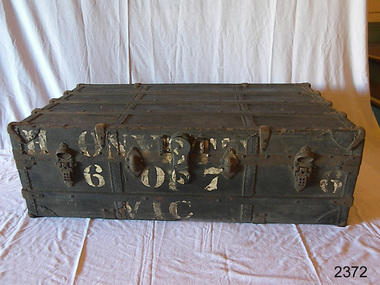
... There were hundreds of trunk manufacturers in the United States and a few of the larger and well-known companies were Rhino Trunk & Case, C.A. Taylor, Haskell Brothers, Martin Maier, Romadka Bros, Goldsmith & Son, Crouch & Fitzgerald, M. ...There were hundreds of trunk manufacturers in the United States and a few of the larger and well-known companies were Rhino Trunk & Case, C.A. Taylor, Haskell Brothers, Martin Maier, Romadka Bros, Goldsmith & Son, Crouch & Fitzgerald, M. ...Steamer trunks (named after their location of storage in the cabin of a steamship, or "steamer") which are sometimes referred to as flat-tops, first appeared in the late 1870s, although the greater bulk of them date from the 1880–1920 period. They are distinguished by either their flat or slightly curved tops and were usually covered in canvas, leather or patterned paper and about (36 cm) tall to accommodate steamship luggage regulations. Steamer trunks were originally called a cabin trunk. An orthodox name for this type of trunk would be a "packer" trunk, but since it has been widely called a steamer for so long, it is now a hallmark of the style. A trunk, also known as a travel trunk, is a large cuboid container designed to hold clothes and other personal belongings. They are most commonly used for extended periods away from home. Trunks are differentiated from chests by their more rugged construction due to their intended use as luggage, instead of storage. Among the many styles of trunks, there are Jenny Lind, Saratoga, monitor, steamer or Cabin, barrel-staves, octagon or bevel-top, wardrobe, dome-top, barrel-top, wall trunks, and even full dresser trunks. These differing styles often only lasted for a decade or two and along with the hardware can be extremely helpful in dating an unmarked trunk. Although trunks have been around for thousands of years in China and elsewhere, the most common styles seen and referred to today date from the late 18th century to the early 20th century when they were supplanted in the market by the cost-effective and lighter suitcase. There were hundreds of trunk manufacturers in the United States and a few of the larger and well-known companies were Rhino Trunk & Case, C.A. Taylor, Haskell Brothers, Martin Maier, Romadka Bros, Goldsmith & Son, Crouch & Fitzgerald, M. M. Secor, Winship, Hartmann, Belber, Oshkosh, Seward, and Leatheroid. One of the largest American manufacturers of trunks at one point the Seward Trunk Co. of Petersburg, Virginia still makes them for school and camp, and another company Shwayder Trunk Company of Denver, Colorado would eventually become Samsonite. Another is the English luxury goods manufacturer H.J. Cave trading since 1839. Their Osilite trunk was used by such famous customers as T.E. Lawrence and Ruth Vincent Some of the better known French trunk makers were Louis Vuitton, Goyard, Moynat, and Au Départ. Only a few remain with the most prominent US company being Rhino Trunk and Case, Inc who probably manufacture more trunks than any company in the world.A snapshot into our social history regards how travel was undertaken over a hundred years ago and how people travelled so differently than today as they often packed for extended travel on ships. Travel then was so different with people having to pack a very large wardrobe of clothes to last for some time possibly for months overseas. The subject item looks like it was of military issue and was used for travel during the first world war by a military man from Victoria and was one of six similar trunks. This assessment is based on the type of locks used the trunk itself could have been made in America or Britain as the locks used in both countries came from American lock makers.Trunk wooden large covered with leather wood cleats and brass locks, also unreadable tableIn white paint "H Onvett, 6 of 7 and bottom right of front the number 6 (Owner)flagstaff hill, warrnambool, shipwrecked-coast, flagstaff-hill, flagstaff-hill-maritime-museum, maritime-museum, shipwreck-coast, flagstaff-hill-maritime-village, trunk -
 Flagstaff Hill Maritime Museum and Village
Functional object - Steamer Trunk, 1880-1925
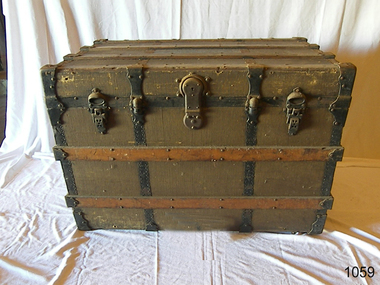
... There were hundreds of trunk manufacturers in the United States and a few of the larger and well-known companies were Rhino Trunk & Case, C.A. Taylor, Haskell Brothers, Martin Maier, Romadka Bros, Goldsmith & Son, Crouch & Fitzgerald, M. ...There were hundreds of trunk manufacturers in the United States and a few of the larger and well-known companies were Rhino Trunk & Case, C.A. Taylor, Haskell Brothers, Martin Maier, Romadka Bros, Goldsmith & Son, Crouch & Fitzgerald, M. ...Steamer trunks (named after their location of storage in the cabin of a steamship, or "steamer") which are sometimes referred to as flat-tops, first appeared in the late 1870s, although the greater bulk of them date from the 1880–1920 period. They are distinguished by either their flat or slightly curved tops and were usually covered in canvas, leather or patterned paper and about (36 cm) tall to accommodate steamship luggage regulations. Steamer trunks were originally called a cabin trunk. An orthodox name for this type of trunk would be a "packer" trunk, but since it has been widely called a steamer for so long, it is now a hallmark of the style. A trunk, also known as a travel trunk, is a large cuboid container designed to hold clothes and other personal belongings. They are most commonly used for extended periods away from home. Trunks are differentiated from chests by their more rugged construction due to their intended use as luggage, instead of storage. Among the many styles of trunks, there are Jenny Lind, Saratoga, monitor, steamer or Cabin, barrel-staves, octagon or bevel-top, wardrobe, dome-top, barrel-top, wall trunks, and even full dresser trunks. These differing styles often only lasted for a decade or two and along with the hardware can be extremely helpful in dating an unmarked trunk. Although trunks have been around for thousands of years in China and elsewhere, the most common styles seen and referred to today date from the late 18th century to the early 20th century when they were supplanted in the market by the cost-effective and lighter suitcase. There were hundreds of trunk manufacturers in the United States and a few of the larger and well-known companies were Rhino Trunk & Case, C.A. Taylor, Haskell Brothers, Martin Maier, Romadka Bros, Goldsmith & Son, Crouch & Fitzgerald, M. M. Secor, Winship, Hartmann, Belber, Oshkosh, Seward, and Leatheroid. One of the largest American manufacturers of trunks at one point the Seward Trunk Co. of Petersburg, Virginia still makes them for school and camp, and another company Shwayder Trunk Company of Denver, Colorado would eventually become Samsonite. Another is the English luxury goods manufacturer H.J. Cave trading since 1839. Their Osilite trunk was used by such famous customers as T.E. Lawrence and Ruth Vincent Some of the better known French trunk makers were Louis Vuitton, Goyard, Moynat, and Au Départ. Only a few remain with the most prominent US company being Rhino Trunk and Case, Inc who probably manufacture more trunks than any company in the world.A snapshot into our social history regards how travel was undertaken over a hundred years ago and how people travelled so differently than today as they often packed for extended travel on ships. Travel then was so different with people having to pack a very large wardrobe of clothes to last for some times months overseas.Trunk rectangular with wood ribs and metal strips for reinforcing. Covered with canvas and has 3 locking devices. Also has leather handles at ends.On lock inscription Eagle lock Co.flagstaff hill, warrnambool, shipwrecked-coast, flagstaff-hill, flagstaff-hill-maritime-museum, maritime-museum, shipwreck-coast, flagstaff-hill-maritime-village -
 Eltham District Historical Society Inc
Photograph, Jim Connor, Eltham - Montmorency Uniting Church, 810 Main Rd, Eltham, 10 July 2023
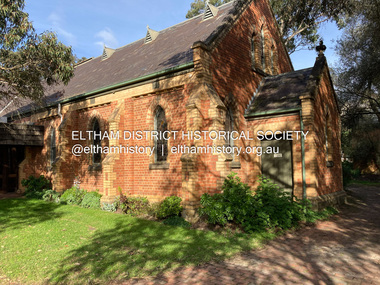
... Church member George Stebbing built the church, the foundations were constructed with stone from the walls of the first Eltham State Primary School (No. 209) building which collapsed in 1874 and were purchased by Robert David Taylor. Stebbing was also responsible for building St Margaret’s Church and Shillinglaw Cottage. ...Church member George Stebbing built the church, the foundations were constructed with stone from the walls of the first Eltham State Primary School (No. 209) building which collapsed in 1874 and were purchased by Robert David Taylor. Stebbing was also responsible for building St Margaret’s Church and Shillinglaw Cottage. ...Located on the corner of Main Road and John Street, the church first served the community as the Eltham Wesleyan Church since 1881. It became the Eltham Methodist Church in 1902, the year it united with the Primitive Methodists. Eltham Wesleyans first worshipped together in the home of William and Mary Crozier, on 24 acres bounded by Mount Pleasant Road and Pitt Street. From there they moved to a slab and bark hut in 1855 (this later served as the first school run by David Clark prior to the building of a new school in Dalton Street) and the members then built a chapel in 1858 on Lot 20, Henry Street (later to become the Rechabite Hall and Eltham Public Hall). The present church on John Street was designed by architects Crouch and Wilson in the Early English Gothic style with biochrome brick window frames, buttress heads and pinnacle. Church member George Stebbing built the church, the foundations were constructed with stone from the walls of the first Eltham State Primary School (No. 209) building which collapsed in 1874 and were purchased by Robert David Taylor. Stebbing was also responsible for building St Margaret’s Church and Shillinglaw Cottage. The Roll of Honour, which presently hangs in the church hall (which also doubles as the Opportunity Shop) lists 27 members of the congregation who served in the First World War, 11 of whom never returned. The red-brick Church Hall was opened in 1931 and in 1971 further additions linked the hall and church, including a foyer, vestry, meeting room and toilets reflecting the Eltham style of that time with its simplicity, extensive clear glass, reused baked clay-bricks from the 1881 church, heavy ceiling beams and compressed straw ceiling. On June 26, 1977, the church became part of the new Uniting Church in Australia consisting of the former Methodist and Congregational and most of the Presbyterian Churches. Following of declining numbers of worshippers, the church merged with the Montmorency Uniting Church on June 23, 1996. In 2023 the Uniting church approved a plan to renovate the church. It is understood that the historic church and the hall will be retained, and the building added in 1971 is to be demolished, to make way for a new purpose-built Opportunity shop. The proposed areas to be demolished include the current foyer, toilets, crèche, etc, including the area between the hall and the former RSL. Works are expected to commence mid to late July 2023. The Society was invited by a church member to take photographs of these areas to document them prior to demolition works commencing. Ref: “Nillumbik Now and Then” by Marguerite Marshall (2008)jim connor collection, 2023-07-10, eltham-montmorency uniting church, john street, methodist church, opportunity shop, uniting church, uniting church hall -
 Eltham District Historical Society Inc
Photograph, Liz Pidgeon, Public Records Office Victoria (PROV) visit to Eltham Justice Precinct, 20 Apr 2018
... Vicki Ward, MP for Eltham, presented the seven volumes for 1858-1863 along with the complete set of digital files to Mr. David Taylor, Community Archives Manager and Mr. Charlie Farrugia, Senior Collection Advisor, Public Record Office Victoria....Vicki Ward, MP for Eltham, presented the seven volumes for 1858-1863 along with the complete set of digital files to Mr. David Taylor, Community Archives Manager and Mr. Charlie Farrugia, Senior Collection Advisor, Public Record Office Victoria. ...The original Shire of Eltham was founded in 1871. Prior to its founding, the district was managed by the Eltham District Road Board, which was established in 1856. The initial rate assessment commenced in 1857 for the year ending October 14, 1858. The honour of being recorded with the first assessment went to a farm of 110 cultivated acres at Lower Plenty, owned by John Porter and occupied by Albert Baines. It was assessed at 6d/acre providing for a rate income of £2 15s. In July 2017, officers at Nillumbik Shire Council discovered some early Eltham Road District Assessment books and donated them to the Eltham District Historical Society. The seven volumes were the district’s first six years of rate assessments. This was a unique and significant record of early settlers in the pre-Shire of Eltham. They immediately became one of the oldest and most valuable items in our collection. An article on page 5 in the Eltham and Whittlesea Shires Advertiser, Friday, 21 November, 1941 titled: ‘District’s Early History‘ states: “The first rate book which is still in existence at the Shire Office is for the year ending October 14, 1858 and is probably the best record possible to indicate the development of the district. At the time properties were rated as follows: Cultivated land. 6d. per acre; pasture land, 1d. per acre: estimated annual value of buildings, etc., 6d in the (pound). The total amount of rate recorded for the year was £153/14/8. Properties were described as being situated at Lower Plenty, Yarra Yarra, Eltham, Lower Eltham, Kangaroo Ground, Yarra Flats, Diamond Creek and the Yarra.” Given the precious nature of this collection, priority was given to digitise the rate books and place them in suitable archival storage to minimise further handling. Subsequent discussion amongst our Collections team arrived at the conclusion that the most appropriate home for this valuable record was the Public Record Office Victoria (PROV), the archive of the State Government of Victoria and who are charged with archiving and caring for all Government related records. An approach was made to PROV who confirmed these records would complete their collection of rate assessment books for Eltham. At a small ceremony held Friday, April 20 at the Local History Centre, Eltham, members of the Society and our Collections team, along with Ms. Vicki Ward, MP for Eltham, presented the seven volumes for 1858-1863 along with the complete set of digital files to Mr. David Taylor, Community Archives Manager and Mr. Charlie Farrugia, Senior Collection Advisor, Public Record Office Victoria.Born Digitalassessment ledger, donation, eltham courthouse, eltham road district, local history centre, public records office victoria (prov), rate books, eltham district road board -
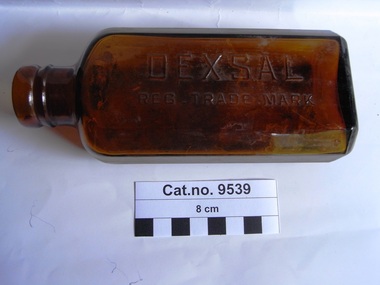 Coal Creek Community Park & Museum
Domestic object - Glass Bottle, c.1934 - c.1975
... Bickford & Sons, 1867 - 1930 Felton Grimwade & Co, - 1930 Taylor-Elliotts Ltd, ? - 1930 Duerdin and Sainsbury Ltd, ? ...Bickford & Sons, 1867 - 1930 Felton Grimwade & Co, - 1930 Taylor-Elliotts Ltd, ? - 1930 Duerdin and Sainsbury Ltd, ? ...TROVE : The Australian Women's Weekly (1933-1982), Wednesday 22 January, 1964, p.32, Advertising. Dexsal, containing 34% pure medicinal glucose for nausea . sick headache . mild indigestion . over indulgence . in food or drink . biliousness . acidity . heartburn . periodic upsets. Directions one or two teaspoons in a tumbler of cold water and drink during effervescence. May be taken as often as desired. Keep tightly capped. Net contents 4 ozs. Reg. VIC 2102, 758. Manufactured by Drug Houses of Australia. For your family - pick the simplest way to settle 'upset tummy' - double-acting DEXSAL The simplest - and safest - because it's formulated wholly and solely to settle upset tummy, nothing else. It contains no pain killer, which can so often set up an excess-acid reaction in the stomach. The lively, sparkling drink of Dexsal dissolved in water is safe. Simply-formulated Dexsal acts in two ways: brings quick, direct relief to upset tummy discomforts or sick feelings and, simultaneously, restores your lost energy. That's because Dexsal contains 34 % medicinal glucose - the energy-builder that quickly restores your natural vitality. Take care of your family, when upset-tummy strikes, with the lively Dexsal drink - the simplest way to settle tummy upsets. (N.B. Children love the fresh tingly-taste of Dexsal) Double-acting Dexsal quickly relieves: . Ordinary indigestion . Sick headache . Heartburn . Nausea . Acidity . Periodic upsets . Biliousness . Over-eating or . Car and travel sickness drinking Safe for alt the family. And especially recommended for expectant mothers. DEXSAL A product of Drug Houses of Australia. Drug Houses of Australia Ltd. (DHA) was established in 1930 after the amalgamation of several proprietary medicine companies, including Felton Grimwade & Co. and Duerdin & Sainsbury Ltd. In 1974 the decision was made, after suffering from enormous financial losses, to break up the company and sell it. Several sections of the company became Felton Grimwade & Bickford Pty Ltd. Timeline of amalgamations 1855 - 1867 Youngman McCann & Co, 1863 - 1930 A. M. Bickford & Sons, 1867 - 1930 Felton Grimwade & Co, - 1930 Taylor-Elliotts Ltd, ? - 1930 Duerdin and Sainsbury Ltd, ? - 1930 Elliott Brothers Limited, - 1930 Rocke Thompsitt, 1863 - 1930 A. M. Bickford & Sons, 1867 - 1930 Felton Grimwade & Co.' 1902 - 1930 Felton Grimwade & Bickford Ltd, 1930 - 1974 Drug Houses of Australia Ltd (DHA), c. 1974 - Felton Grimwade & Bickfords Pty Ltd. Large clear amber glass bottle, rectangular in section with angled corners, wide neck. Embossed text on large side panel, numeral on corner panel near base, monogram, letters and numerals on base.On side panel 'DEXSAL REG. TRADE MARK'. On corner panel near base '4'. On base the letter 'g' or numeral '9' on its side, AGM monogram, 'F397' over '4' , A space then the letter 'M'.dexsal, medicine, drug houses of australia -
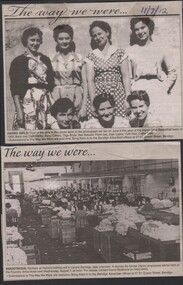 Bendigo Historical Society Inc.
Newspaper - Skidmore Collection: Hanro staff at work newspaper cuttings from Bendigo Advertiser, 1947
... Skidmore Collection: newspaper cuttings of Hanro staff members featured in the Bendigo Advertiser's column "The Way We were" 11109.24a 1955 Back row: Cath Heffer, Beryl Climes, Olga Boyle, Bev Bassett; front row: Joan Lyons, Cath Kerr, Cathy Quin 11109.24b Workers at the Hanro Knitting Mill in Bendigo (date unknown) 11109.24c Five workers at the Hanro Knitting Mill (date unknown) 11109.24d Hanro workers packaging products at the Hanro knitting Mill (date unknown) 11109.24e Five ex-workers meet for a reunion of Hanro Knitting Mill workers (date unknown) 11109.24f A Buck's Party / gathering at the old band rooms on Eaglehawk Road circa 1959, prior to one (not identified) gets married Standing: Don Mannix, Barry Bowater, Russell main, Jim Harding, Lyle Makeham, Ron Runnalls, Geoff Christie, Ken Bruechert, Graham Nielson and Snow Cunningham; Kneeling: Bill Banks, Allan Johnson and Ray Taylor 11109.24g Seven female designers take a break at the Hanro Sales Conference in 1955; Beck Row: Shirley Morgan, Joyce Aldridge, Clarice, Johnson and Lena Johnson; Front Row: Iris Brereton, Shirley Kelly, & Evonne Meldrum 11109.24h Hanro workers relax in the canteen during the early 1950s 11109.24i Win Perrin packs a garment in the Hanro Stock Room (date unknown) 11109.24j B&W photo - Mrs Butler uses a basic pattern made of heavy paper in her design work, She is working on a cardigan No. 340, which won a wool award (date unknown) 11109.24k An undated phot shows materials in readiness for the building of the Hanro Knittiong Mills on Hargreaves Street 11109.24l & M Two B&W photos notes as Designers and Cutters at Hanro knitting Mills (March 1947 or 1949). ...Social history of knitting mills in Bendigo staff reunion Hanro staff at work Skidmore Collection: newspaper cuttings of Hanro staff members featured in the Bendigo Advertiser's column "The Way We were" 11109.24a 1955 Back row: Cath Heffer, Beryl Climes, Olga Boyle, Bev Bassett; front row: Joan Lyons, Cath Kerr, Cathy Quin 11109.24b Workers at the Hanro Knitting Mill in Bendigo (date unknown) 11109.24c Five workers at the Hanro Knitting Mill (date unknown) 11109.24d Hanro workers packaging products at the Hanro knitting Mill (date unknown) 11109.24e Five ex-workers meet for a reunion of Hanro Knitting Mill workers (date unknown) 11109.24f A Buck's Party / gathering at the old band rooms on Eaglehawk Road circa 1959, prior to one (not identified) gets married Standing: Don Mannix, Barry Bowater, Russell main, Jim Harding, Lyle Makeham, Ron Runnalls, Geoff Christie, Ken Bruechert, Graham Nielson and Snow Cunningham; Kneeling: Bill Banks, Allan Johnson and Ray Taylor 11109.24g Seven female designers take a break at the Hanro Sales Conference in 1955; Beck Row: Shirley Morgan, Joyce Aldridge, Clarice, Johnson and Lena Johnson; Front Row: Iris Brereton, Shirley Kelly, & Evonne Meldrum 11109.24h Hanro workers relax in the canteen during the early 1950s 11109.24i Win Perrin packs a garment in the Hanro Stock Room (date unknown) 11109.24j B&W photo - Mrs Butler uses a basic pattern made of heavy paper in her design work, She is working on a cardigan No. 340, which won a wool award (date unknown) 11109.24k An undated phot shows materials in readiness for the building of the Hanro Knittiong Mills on Hargreaves Street 11109.24l & M Two B&W photos notes as Designers and Cutters at Hanro knitting Mills (March 1947 or 1949). ...Social history of knitting mills in Bendigo Skidmore Collection: newspaper cuttings of Hanro staff members featured in the Bendigo Advertiser's column "The Way We were" 11109.24a 1955 Back row: Cath Heffer, Beryl Climes, Olga Boyle, Bev Bassett; front row: Joan Lyons, Cath Kerr, Cathy Quin 11109.24b Workers at the Hanro Knitting Mill in Bendigo (date unknown) 11109.24c Five workers at the Hanro Knitting Mill (date unknown) 11109.24d Hanro workers packaging products at the Hanro knitting Mill (date unknown) 11109.24e Five ex-workers meet for a reunion of Hanro Knitting Mill workers (date unknown) 11109.24f A Buck's Party / gathering at the old band rooms on Eaglehawk Road circa 1959, prior to one (not identified) gets married Standing: Don Mannix, Barry Bowater, Russell main, Jim Harding, Lyle Makeham, Ron Runnalls, Geoff Christie, Ken Bruechert, Graham Nielson and Snow Cunningham; Kneeling: Bill Banks, Allan Johnson and Ray Taylor 11109.24g Seven female designers take a break at the Hanro Sales Conference in 1955; Beck Row: Shirley Morgan, Joyce Aldridge, Clarice, Johnson and Lena Johnson; Front Row: Iris Brereton, Shirley Kelly, & Evonne Meldrum 11109.24h Hanro workers relax in the canteen during the early 1950s 11109.24i Win Perrin packs a garment in the Hanro Stock Room (date unknown) 11109.24j B&W photo - Mrs Butler uses a basic pattern made of heavy paper in her design work, She is working on a cardigan No. 340, which won a wool award (date unknown) 11109.24k An undated phot shows materials in readiness for the building of the Hanro Knittiong Mills on Hargreaves Street 11109.24l & M Two B&W photos notes as Designers and Cutters at Hanro knitting Mills (March 1947 or 1949). Rear row: Elsie Treloar, Annette Hogan, Nell Wesley, Iris Mills, Bonnie Enderlin, Norma Treloar & Lena Horston. Front Row: Norma Scott, Norma Treloar, Shirley Mills, Rose Mills, & Shirley Kellystaff reunion, hanro staff at work -
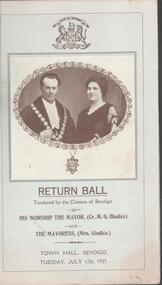 Bendigo Historical Society Inc.
Document - TOWN HALL, RETURN BALL, 17 June, 1923
... J Denton (Treasurer), A M Poole, T Pritchard, A B Wood, W Jeffrey, W H Taylor, F Monaghan, H S Marks, H W Tilley, F Cambridge, H Newman, E A Sayer, H Whitelock, W Currie, W T Patten, J. ...J Denton (Treasurer), A M Poole, T Pritchard, A B Wood, W Jeffrey, W H Taylor, F Monaghan, H S Marks, H W Tilley, F Cambridge, H Newman, E A Sayer, H Whitelock, W Currie, W T Patten, J. ...Town Hall, Return Ball. Tendered by the Citizens of Bendigo to His Worship the Mayor, (Cr. M G Giudice) and The Mayoress, (Mrs. Giudice.) Town Hall, Bendigo. Tuesday, July 17th, 1923. Menu, Dindon Roti. Jambon de York. Canard Roti. Salad a la Francaise. Haricot Verts. Pommes de Terre a L;Anglaise. Trifle a L'Espangnole. Charlotte Russe. Crème aux Fraisee. Salade aux Fruits. Gelee au Madere. Meringues a'la Crème. Patrisserie. Gateau Assorties. Olive Farcies aux Anchois. Pailles au Parmeson. Amande a la Diable. Gingembre. Raisins. Café. The Oyster Soup will be served in Basement after Second Supper. Favaloros, Caterers. Wine List. Irvine's Great Western Champagne (Special Reserve.) Seppelt's. Penfold's. Max Cohn's. Port. Sherry. Claret. Burgundy. Muscat. Hock. Chablis. Planet. Old Scotch Whisky. Ales and Stout-Bendigo United and Cohn Bros. Aerated Waters and Cordials. Cigars Cigarettes. Toasts. His Majesty the King. - By the Chairman, 'Our Guests,' (The Mayor & Mayoress Cr & Mrs. M G Giudice.) by the Chairman. Where're they met a stranger; there they left a friend. Response by The Mayor. 'The Chairman Citizens Return Ball Committee,' (Cr E M Vains) By the Mayor. Response by the Chairman. The Citizen's Return Ball, Executive Committee - Cr E M Vains (Chairman), Mr. J Denton (Treasurer), A M Poole, T Pritchard, A B Wood, W Jeffrey, W H Taylor, F Monaghan, H S Marks, H W Tilley, F Cambridge, H Newman, E A Sayer, H Whitelock, W Currie, W T Patten, J. J. Caldwell, G H Dare, J H Sievers, F Ferguson, G J C Maxwell. F T Amer & T R J Brown; Hon. Secs. City of Bendigo logo is at the top on the front cover and an oval picture of the Mayor and Mayoress below it.Cambridge Press, Bendigoevent, entertainment, return ball, town hall -
 Victorian Aboriginal Corporation for Languages
Book, Aboriginal Community Elders Service et al, Aboriginal elders' voices : stories of the "tide of history" : Victorian Indigenous elders' life stories &? oral histories, 2003
... Uncle Brian Kennewell-Taylor Learning from indigenous elders: Keeping the traditions, keeping the culture strong; Since time immemorial; Invasion: the tide ran red; The flood of legislation; Stolen children; Cultural resistance: holding on to children traditions and land; Organised resistance: a movement is born; The 1950s: community resistance to race laws; The price of assimilation; The Aboriginal rights movement; After the flood: self-determination; Turning the tide Bibliography Appendix. ...Uncle Brian Kennewell-Taylor Learning from indigenous elders: Keeping the traditions, keeping the culture strong; Since time immemorial; Invasion: the tide ran red; The flood of legislation; Stolen children; Cultural resistance: holding on to children traditions and land; Organised resistance: a movement is born; The 1950s: community resistance to race laws; The price of assimilation; The Aboriginal rights movement; After the flood: self-determination; Turning the tide Bibliography Appendix. ...This book is a collection of Victorian Indigenous Elders' life stories and oral histories. The Elders share their stories in an attempt to ensure that both sides of Australia's history are finally heard. These stories tell of cultural resistance on missions, of defying assimilation laws, of forever moving around to save children from the welfare. They document the development of both fringe and urban communities and work in the Aboriginal rights movement. They clarify the ways in which these experiences have affected the individual authors along with the indigenous population in general. Also included in the book is a brief history and analysis of the legislation, policies, attitudes and strategies that have affected the lives of the authors and their families since colonisation. This aspect provides an historical perspective, encouraging a deeper understanding of the Elders' stories. Reconciliation can only eventuate with an understanding gained from hearing and including the voices of Indigenous Australians. Contents: The writing team Indigenous elders: keepers of knowledge; custodians of land and culture Aboriginal lands Missions and reserves Growing up running from the welfare /? Aunty Olive Jackson Respecting our Elders /? Aunty Lola James If your mother didn't tell you, then your grandmother did! /? Uncles Les Stewart Don't dwell on trouble /? Aunty Audrey Critch There are my people /? Aunty Gwen Nelson We were all cousins, more or less /? Aunty Iris Lovett-Gardiner Aboriginality is about culture, not colour /? Aunty Dianne Phillips Take up the opportunities we struggled to make /? Aunty Frances Gallagher Home /? Aunty Eileen Alberts We were supposed to forget our Aboriginality /? Aunty Gwen Garoni Not enough heart to say sorry? /? Uncle Brian Kennewell-Taylor Learning from indigenous elders: Keeping the traditions, keeping the culture strong; Since time immemorial; Invasion: the tide ran red; The flood of legislation; Stolen children; Cultural resistance: holding on to children traditions and land; Organised resistance: a movement is born; The 1950s: community resistance to race laws; The price of assimilation; The Aboriginal rights movement; After the flood: self-determination; Turning the tide Bibliography Appendix. Cultural custodianship: developing an indigenous methodology.maps, colour illustrations, b&w photographswiradjuri, victorian indigenous elders, oral histories, yorta yorta, dja dja wurrung, language maps, victorian missions and reserves, lake condah, framlingham, coranderrk, ramahyuck, lake tyers, wahgunyah, cummeragunja, moonahcullah, balranald, ebenezer, maloga, acheron -
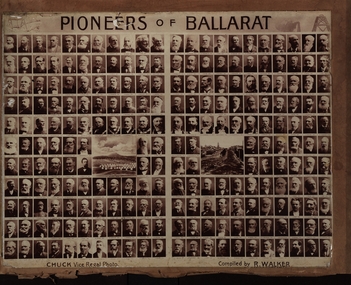 Federation University Historical Collection
Photograph, Pioneers of Ballarat
... ...J. Taylor...Johnston; W. Johnston; W. Taylor; J. Knoth; J. Davey; G. Smith; N. Kent; E.O. ...Johnston W. Johnston W. Taylor J. Knoth J. Davey G. Smith N. Kent E.O. ...The Pioneers of Ballarat may have been created to the Ballarat Old Colonists' Association and the reunions held by the early Ballarat pioneers. The dates given after the pioneers time is their date of arrival into the colony.Photograph showing numerous portraits of men who were considered Pioneers of Ballarat as complied by R. Walker and produced by Chuck Vice Regal Photo. The men depicted are: J. Smith; W. Gay; W. Downie; G. Goddard; B. Varcoe; A.F. Seidal; Loius Balhausen; J. McKenzie; William irwin; M. Box; Thomas Bath; James Oddie; William Tulloch; J.W. Graham; J. Ward; W. Curnow; R.J. Binder; F.J.L. Turner; W. Eyres; C.A. Welch; B. Welch; G. Welch; J. Lake; H. Smith; J. King; R.T. Wreford; Ernest Balhausen; J. Ward; T. Trengrove; J. Truswell; J. Taylor; W. Seeley; J.P. Murray; Hon. David Ham; Andrew Anderson; E. McCartney; J.H. Smith; Joseph Edward Cowley; A. Jones; W.H. Furness; F.N. Martin; James Anderson; G. Becher; James Meek; T. Hawkins; P. Drummond; C. Barker; J. Malcolm; R. Brown; G. Tupper; A. Rose; W. Pinkerton; A. Clinton; A. Sheppard, F.C. Downes; J.A. Blight; J. Blight; T. Blight; J. Richardson; C.W. Toy; W.C. Elder; E. Towl; S. Walker; W.P. Martin; J.T Langley; J.A. Abramowitch; R, Allan; S.W. Woodward; G. Hunt; J. Bishop; F.L. Graham; R. Graham; W. A.G. Fraser; J. Davies; J. Paterson; B.G. Tucker; E. McElroy; W.H. Burton, T.C. Coates; J. Williams; J.P. Roberts; J. Ritchie; T.W. White; J. F. Harvey; Natale D'Angri; D. McCallum; W. Chisholm; P. Kohl; J. Moncrief; J.P. Marshall; R.U. Nicholls; G.L. Holthouse; C. Gray; W. Gale; James Long; Theo Williams; J.R. Ellsworth; W. Scott; Henry Josephs; D. Cooke; William Little; T.H. Thompson; E. Morey; J.G. McDonald; C.C. Shoppee; G. Douglas; W. H. Ellis; W. Hicks; J. Cameron; W. B. Koppers; F. Marendez; G. Herrmann; J. Kelly; E. Jermyn; P. Murray; P. Gay; D. McNaught; T.D. Wanliss; G. Lord; H. Glenny; J. Trethowan; J. Blandford; J. Goujon; W. Coad; A. Colliver; J. Nunn; J. Munro; W.C. Burbidge; J. Jarvie; C. Ferguson; C. Morris; J. Russell; J. Phillips; J. Coghlan; R. Clark; Thomas Stoddart; M. Wasley; B. Retallack; John Reid; M.C. Carey; P. Maloney; E. Newman; J. Lamb; J,. Pryor; J. Gibson; James Mitchell; J. Rowe; James Vallins; A. Roxburgh; A. Cant; O. Thomas; J.Y. McDonald; W.M. Acheson; A. Jack; R. Gibbings; E.W. Chamberlain; J.H. Ellsworth; J. Falconer; G.G. Lorimer; James M. Bickett; T. Sayle; Andrew McIntyre; W. Hambley; K. Coutts; T. Muir; R. Scott; G. Leach; E. Richards; R. Hearn; J. Hughan; D. Miliani; E. Parr; J. T. Irving; W.G. Williams; J. Marks; J. Darby; T. Ray; D. McKenzie; James Robson; J. Robson; J. Moore; J. Murphy; Robert M. Serjeant; C. Ford; E.E. Campbell; P. Folland; P.J. Rickard; A. McVitty; B. Angwin; J.T. Sleep; M.P. Whiteside; W. Curtis; H. Crisp; E. Major; R. Pearce; J. Waller; G. Waller; G. Abrams; J. McIntyre; J. Johnston; W. Johnston; W. Taylor; J. Knoth; J. Davey; G. Smith; N. Kent; E.O. Witherden; J.B. Cathcart; W.H. Harrow; G. Evans; L. Ure; W.T. Glen; T. Dickinson; D. Hughes; J. Strickland; J. Hillman; E. Jackson; R.J. Walker; D. Gunn; R.J. Gullan; T. McManamy; A. Gray; James trembath; W. Porter; J. Showman; C. Walker; J. Bowman; W.B. McDonald; P. Jago; J. Stout pioneers, ballarat, chuck, chuck vice regal photo, r. walker, ballarat pioneers, pioneers of ballarat, j. smith, w. gay, w. downie, g. goddard, b. varcoe, a.f. seidal, loius balhausen, j. mckenzie, william irwin, m. box, thomas bath, james oddie, william tulloch, j.w. graham, j. ward, w. curnow, r.j. binder, f.j.l. turner, w. eyres, c.a. welch, b. welch, g. welch, j. lake, h. smith, j. king, r.t. wreford, ernest balhausen, t. trengrove, j. truswell, j. taylor, w. seeley, j.p. murray, hon. david ham, andrew anderson, e. mccartney, j.h. smith, joseph edward cowley, a. jones, w.h. furness, f.n. martin, james anderson, g. becher, james meek, t. hawkins, p. drummond, c. barker, j. malcolm, r. brown, g. tupper, a. rose, w. pinkerton, a. clinton, a. sheppard, f.c. downes, j.a. blight, j. blight, t. blight, j. richardson, c.w. toy, w.c. elder, e. towl, s. walker, w.p. martin, j.t langley, j.a. abramowitch, r, allan, s.w. woodward, g. hunt, j. bishop, f.l. graham, r. graham, w. a.g. fraser, j. davies, j. paterson, b.g. tucker, e. mcelroy, w.h. burton, t.c. coates, j. williams, j.p. roberts, j. ritchie, t.w. white, j. f. harvey, natale d'angri, d. mccallum, w. chisholm, p. kohl, j. moncrief, j.p. marshall, r.u. nicholls, g.l. holthouse, c. gray, w. gale, james long, theo williams, j.r. ellsworth, w. scott, henry josephs, d. cooke, william little, t.h. thompson, e. morey, j.g. mcdonald, c.c. shoppee, g. douglas, w. h. ellis, w. hicks, j. cameron, w. b. koppers, f. marendez, g. herrmann, j. kelly, e. jermyn, p. murray, p. gay, d. mcnaught, t.d. wanliss, g. lord, h. glenny, j. trethowan, j. blandford, j. goujon, w. coad, a. colliver, j. nunn, j. munro, w.c. burbidge, j. jarvie, c. ferguson, c. morris, j. russell, j. phillips, j. coghlan, r. clark, thomas stoddart, m. wasley, b. retallack, john reid, m.c. carey, p. maloney, e. newman, j. lamb, j, . pryor, j. gibson, james mitchell, j. rowe, james vallins, a. roxburgh, a. cant, o. thomas, j.y. mcdonald, w.m. acheson, a. jack, r. gibbings, e.w. chamberlain, j.h. ellsworth, j. falconer, g.g. lorimer, james m. bickett, t. sayle, andrew mcintyre, w. hambley, k. coutts, t. muir, r. scott, g. leach, e. richards, r. hearn, j. hughan, d. miliani, e. parr, j. t. irving, w.g. williams, j. marks, j. darby, t. ray, d. mckenzie, james robson, j. robson, j. moore, j. murphy, robert m. serjeant, c. ford, e.e. campbell, p. folland, p.j. rickard, a. mcvitty, b. angwin, j.t. sleep, m.p. whiteside, w. curtis, h. crisp, e. major, r. pearce, j. waller, g. waller, g. abrams, j. mcintyre, j. johnston, w. johnston, w. taylor, j. knoth, j. davey, g. smith, n. kent, e.o. witherden, j.b. cathcart, w.h. harrow, g. evans, l. ure, w.t. glen, t. dickinson, d. hughes, j. strickland, j. hillman, e. jackson, r.j. walker, d. gunn, r.j. gullan, t. mcmanamy, a. gray, james trembath, w. porter, j. showman, c. walker, j. bowman, w.b. mcdonald, p. jago, j. stout, john smith -
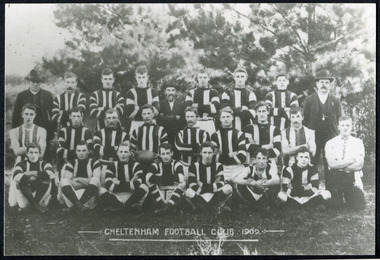 City of Moorabbin Historical Society (Operating the Box Cottage Museum)
Photographs, x 3 Black & White Cheltenham Football Club 1909,1913, 1946, 20thC
... . / Front Row - Clark Taylor, J.Slade, N.Niel, J.Brooks, T,Butler, H.Hosking, C.Hacusler, E.Hornibrook, W.Briggs, B.Russell, L.Biehl, / W Rippon.... / Front Row - Clark Taylor, J.Slade, N.Niel, J.Brooks, T,Butler, H.Hosking, C.Hacusler, E.Hornibrook, W.Briggs, B.Russell, L.Biehl, / W Rippon 3x Black & White photographs of the players in the Australian Rules Cheltenham Football Club 1909, 1913 and 1946 extra photo of Peter Box Folio 10 MAV 01059 Photographs, x 3 Black & White Cheltenham Football Club 1909,1913, 1946 ...Known as the Rosellas, the early Cheltenham Football Club sides began playing on a regular basis in 1890, and would travel long distances by steam train to play country teams, such as Ballarat where they would arrive at their destination, play the match, socialize then return to the station. Opposition players and supporters would give three hearty cheers on their departure. The Cheltenham home games were played on a paddock on the corner of Park and Charman roads in Cheltenham. In 1907 the Cheltenham progress committee made an application to the board of land works for land in Weatherall Road for recreational service to the public. That application was received and granted, then developed where Cheltenham Recreational Reserve now stands. The land in the early days was virgin bush and the response for voluntary help to clear the area was outstanding. Nearly all the market gardeners in the district along with horses, ploughs, axes, shovels completely cleared the area in three weeks. The Moorabbin council then leveled the playing area and erected a post and rail fence around the ground. Pine tree shrubs were then planted on the west side of the ground. The ground was opened in 1909 and the first Cheltenham side entered in the newly formed Federal Football Association along with seven other foundation members, Mordialloc, Mentone, Moorabbin, Frankston, Glenhuntly, Elsternwick, and Ellindale. The grand final for that year, 1909 was a hard encounter between Cheltenham and Ellindale with Cheltenham coming out victors, thus becoming the inaugural Federal Football Association premiers. Cheltenham went onto win five senior premierships in the Federal Football Association by the end of the 1920s, they won the flags in 1909, 1911, 1913, 1922 and 1925, with the late Percy Woff playing in all 5 premiership sides and was captain in 1922. 1928 saw the start of an outstanding career from our oldest living player Tom Connor. Cheltenham continued to win premierships in the 1920’s and 1930’s with juniors taking out the 1929 and 1933 flags, under the guidance of Woff, and that continued in 1934 when Cheltenham took out the 1st XVIII and 2nd XVIII premierships. Cheltenham produced its only Brownlow medallist in Peter Box who played in the late 1940s, before going to Footscray where he became a champion. The 3rd XVIII went through the season undefeated in 1974 winning the premiership, with Trevor Barker a key player before going to St Kilda the following year. The club won three senior premierships under coach Barry White in 1992, 1993 and 1995. ( from CFNC website 2019) Cheltenham Football Club was formed 1890 and succeeded in winning many Premierships as a member of the Federal Football Association, Outstanding players Peter Box Brownlow Medalist 1956 Footscay VFL, , Trevor Barker and Kevin Roberts St Kilda VFL.3x Black & White photographs of the players in the Australian Rules Cheltenham Football Club 1909, 1913 and 1946 extra photo of Peter Box Folio 10 MAV 01059a) CHELTENHAM FOOTBALL CLUB 1909 Cheltenham Football Club 1909. Back row: A Chandler, committee member; R. Robertson, back-pocket; J. Harris, half back flank; J Adams, ruck and forward-pocked; M. J. Monk, club president; L. Woff, back-pocket; W. Adams, ruck and back-pocket; P. Woff, rover and forward-pocket; A Monk, committee member. Middle row: W. Hore, back pocket and ruck; A. Towns, half-forward flank; W. Carson, full back; F. Andrews, captain-half forward flank; H. Butler, centre half back; J. Warburton, centre half-forward; A. Slater, half-back flank; F. Fisher, half-forward flank; C. Sherwood, trainer. Front Row: G Gouldthorpe, wing; H. King, full-forward; W. Johnston, ruck and forward-pocket; P Spears, rover and forward-pocket; F. Bichl, wing; A. Bichl. rover and forward-pocket; F. Butler, centre player. Courtesy, Lionel Seal. ( from CFC website 2019) b) CHELTENHAM 1913 PREMIERS c) CHELTENHAM -1946 / Back row - J. Fisher, G.Corrigan, N.Hocking, F.Virtue, R.Craven, L.Baker, M.Blundell / 2nd Row - J.Phillips, T.Connor, E.Hawkins, A.Blakely, G.Baker, A.Dark, J.Barker, D.Craven, J.Pickering, P.Cameron,/ W.Hicks, G.Hoskings, R.Beihl, A.Hubbard, R.Kier, C.Russell. / Front Row - Clark Taylor, J.Slade, N.Niel, J.Brooks, T,Butler, H.Hosking, C.Hacusler, E.Hornibrook, W.Briggs, B.Russell, L.Biehl, / W Ripponcheltenham football club, australian rules football, victorian football association, victorian football league, smith j l; smith mary ann, stanley helen, , chaff cutter, horse drawn carts, toll gates brighton, motor cars 1900, steam engines, early settlers, bentleigh, parish of moorabbin, city of moorabbin, county of bourke, moorabbin roads board, shire of moorabbin, henry dendy's special survey 1841, were j.b.; bent thomas, o'shannassy john, king richard, charman stephen, highett william, ormond francis, maynard dennis, market gardeners, vineyards, orchards, cheltenham, two acre village, holloway josiah,, woff percy, connor tom, box peter, barker trevor, white barry, browlow charles, -
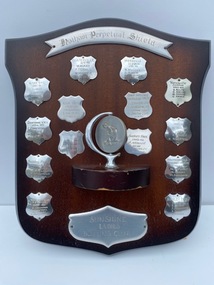 Sunshine and District Historical Society Incorporated
Award - Sunshine Ladies Bowling Club - Hotham Perpetual Shield, Pitcher Products Pty Ltd
... Robertson|Drumcondra, Geelong: 1987-88 - M. Morris, N. Taylor, B. Parry, M. Dodgson|Yarraville, Seddon, 1988-89 - E. ...Robertson|Drumcondra, Geelong: 1987-88 - M. Morris, N. Taylor, B. Parry, M. Dodgson|Yarraville, Seddon, 1988-89 - E. ...Hotham Perpetual Shield (Custom Board) Mission Brown with 14 yearly plaques 1981 - 1994/95Hotham Perpetual Shield Sunshine Ladies Bowling Club|Coatesville, 11/2/81 - M. McKay, R. Tidball, M. Hughes, B. Cleeve|Yarraville, Seddon, 1981-82 - N. Massey, B. Askew, M. Hammond, M. Baker|Yarraville, Seddon, 1982-83 - V. Rolfe, D. Brook, M. Harris, G. Hayes|Altona, W.M.C., 1983-84 - J. Lawley, J. Johnston, L. Bardsley, R. Hunter|Sunshine, V.R.I, 1984-85 - E. Cameron, D. Duffy, M. Holden, M. Dickson|Buckley Park, 1985-86 - R. Windover, A. Naughton, P. Drummond, K. Stirling|Sunshine, 1986/87 - M. Baylis, K. Lopenz, V. Drake, H. Robertson|Drumcondra, Geelong: 1987-88 - M. Morris, N. Taylor, B. Parry, M. Dodgson|Yarraville, Seddon, 1988-89 - E. Granger, M. Campbell, M. Short, V. Fletcher|Buckley Park, 1989-90 - B. Armour, N. Ballantine, B. Kean, J. Riddell|Keilor, 1990/91 - I. Robson, J. McNamara, E. Haeberle, J. Pemberthy|Comp, Geelong, Thornbury 1991/92 - H. Davies (TH), M. Warren (G), D. Dunn (Bel), H. Smith (EP)|Buckley Park, 1993-94 - B. Armour, B. Kean, M. Swinney, J. Turner|Keilor, 1994/95 - C. Dobson, I. Robson, E. Haeberle, J. Knightsunshine ladies bowling club, bowling, memento
