
Showing 2909 items matching "1816-1905."
-
 Linton and District Historical Society Inc
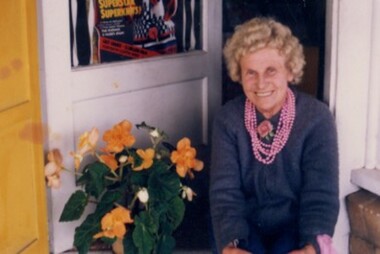
Photograph, Carrie Murrell outside Murrell's Newsagency, Linton
... Carrie Rogers Murrell, b.1905 at Daylesford, was a daughter of William Murrell and his wife Lily, née Clarke/Young. ...Carrie Rogers Murrell, b.1905 at Daylesford, was a daughter of William Murrell and his wife Lily, née Clarke/Young. ...Carrie Rogers Murrell, b.1905 at Daylesford, was a daughter of William Murrell and his wife Lily, née Clarke/Young. She was a grand-daughter of Ambrose and Mary Murrell. Carrie Murrell attended Linton State School, completing Grade 8 in 1n 1918. She then assisted her father in the Linton newsagency, before taking over as its manager, a role she enjoyed for some seventy years. In 1932 she moved the business from its site on the west side of Sussex Street to the east side, into a shop next to the Railway Hotel that had previously been run as a shoe shop by Dan Cornish. This shop remained as the Linton Newsagency until Carrie retired. It is now used as a private residence. Carrie Murrell died in 1998.Colour photo of Murrell's Newsagency, Miss Murrell seated in front doorway.carrie murrell, linton newsagency -
 Linton and District Historical Society Inc
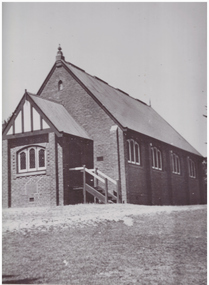
Photograph, Methodist Church, Grantley Street, Linton
... This building was still in use at the time of the Methodist Church Jubilee in 1910, however around 1905 a fund was established to build a new brick church (pictured), which was opened in 1913. ...This building was still in use at the time of the Methodist Church Jubilee in 1910, however around 1905 a fund was established to build a new brick church (pictured), which was opened in 1913. ...Methodist Church meetings and services are known to have been held in tents on the Lintons diggings from the late 1850s. A small wooden church was built in in 1858-59 in Sussex Street, Linton (near where Shepherd's store was located). Sunday School meetings began there in November 1859. By 1860 the church building was considered too small. The land was sold to Mr. Brewer, and the building was removed to a site in Grantley Street and enlarged. Shortly after this, it was decided to build a new church, a wooden structure which was opened in 1861. This building was still in use at the time of the Methodist Church Jubilee in 1910, however around 1905 a fund was established to build a new brick church (pictured), which was opened in 1913. This building was sold and became a private residence about 1979.Black and white photograph of brick church building, leadlight windows in three sections at front and alongside. Sets of steps leading to doors on both sides of church front entrance porch.methodist church linton -
 Linton and District Historical Society Inc
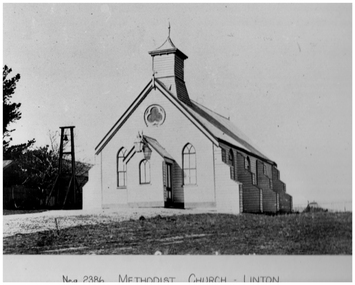
Photograph, Methodist Church, Linton, Timber Construction, Opened 1861
... This building (pictured) was still in use at the time of the Methodist Church Jubilee in 1910, however around 1905 a fund was established to build a new brick church which was opened in 1913. ...This building (pictured) was still in use at the time of the Methodist Church Jubilee in 1910, however around 1905 a fund was established to build a new brick church which was opened in 1913. ...Methodist Church meetings and services are known to have been held in tents on the Lintons diggings from the late 1850s. A small wooden church was built in in 1858-59 in Sussex Street, Linton (near where Shepherd's store was located). Sunday School meetings began there in November 1859. By 1860 the church building was considered too small. The land was sold to Mr. Brewer, and the building was removed to a site in Grantley Street and enlarged. Shortly after this, it was decided to build a new church, also of timber construction, which was opened in 1861. This building (pictured) was still in use at the time of the Methodist Church Jubilee in 1910, however around 1905 a fund was established to build a new brick church which was opened in 1913. This brick building was sold and became a private residence about 1979.Black and white photograph which has been printed as a post card. The photograph shows a timber church which has a kind of turret, and side buttresses. Bell tower on left of picture. Large lamp hanging from entrance porch.methodist church linton, postcards -
 Kew Historical Society Inc
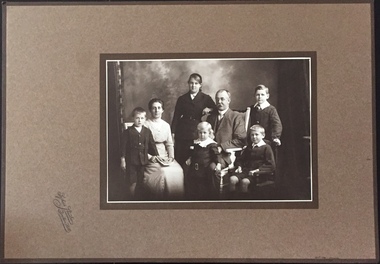
Photograph - The Weir family of Broken Hill, Sykes Studio, c.1914
... George Weir attained national prominence in the mining industry, becoming General Manager of the North Broken Hill Silver Mining Company in 1903 (later renamed North Broken Hill Mining Company 1905-12, and North Broken Hill Ltd 1912-1988), and subsequently President of the Mine Owners Association. ...George Weir attained national prominence in the mining industry, becoming General Manager of the North Broken Hill Silver Mining Company in 1903 (later renamed North Broken Hill Mining Company 1905-12, and North Broken Hill Ltd 1912-1988), and subsequently President of the Mine Owners Association. ...An item forming part of a collection of costumes, photographs and documents relating to the Weir family who lived in the mansion originally named Illapa, 84 Princess Street, Kew, from c.1917 to 1950. This historically significant collection includes items relating to both George Weir (1866-1937) and his wife Edith Mary Weir (1867-1948). George Weir attained national prominence in the mining industry, becoming General Manager of the North Broken Hill Silver Mining Company in 1903 (later renamed North Broken Hill Mining Company 1905-12, and North Broken Hill Ltd 1912-1988), and subsequently President of the Mine Owners Association. He was to remain General Manager of North Broken Hill Ltd until his retirement in 1926.Important group family photograph, taken in Broken Hill, of the two Weir parents and their children. Another aspect of the photograph is that it is revealing about fashion and the tastes of the period.Studio portrait of George and Edith Weir and their five children, taken by a photographer of the Sykes Studio in Broken Hill, New South Wales. The members of the family are from left to right: Cecil Rigby Weir (1904-1983), Edith Mary Weir (nee Betteridge) (1867-1948), Edith Rigby Weir (1899-1981), John Rigby Weir (1910-1971), George Weir (1866-1937), Horace Rigby Weir (1907-1988), and George Rigby Weir (1901-1927). [John Rigby Weir was the father of the donor]weir collection, george weir, horace rigby weir, george rigby weir, john rigby weir, edith rigby weir, edith mary weir (nee betteridge), sykes studio -- broken hill -
 Kew Historical Society Inc
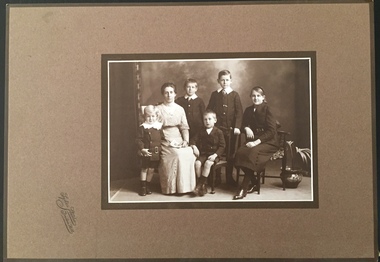
Photograph - The Weir family of Broken Hill, Sykes Studio, c.1914
... George Weir attained national prominence in the mining industry, becoming General Manager of the North Broken Hill Silver Mining Company in 1903 (later renamed North Broken Hill Mining Company 1905-12, and North Broken Hill Ltd 1912-1988), and subsequently President of the Mine Owners Association. ...George Weir attained national prominence in the mining industry, becoming General Manager of the North Broken Hill Silver Mining Company in 1903 (later renamed North Broken Hill Mining Company 1905-12, and North Broken Hill Ltd 1912-1988), and subsequently President of the Mine Owners Association. ...An item forming part of a collection of costumes, photographs and documents relating to the Weir family who lived in the mansion originally named Illapa, 84 Princess Street, Kew, from c.1917 to 1950. This historically significant collection includes items relating to both George Weir (1866-1937) and his wife Edith Mary Weir (1867-1948). George Weir attained national prominence in the mining industry, becoming General Manager of the North Broken Hill Silver Mining Company in 1903 (later renamed North Broken Hill Mining Company 1905-12, and North Broken Hill Ltd 1912-1988), and subsequently President of the Mine Owners Association. He was to remain General Manager of North Broken Hill Ltd until his retirement in 1926.Important group family photograph, taken in Broken Hill, of Edith Mary Weir and her children. Another aspect of the photograph is that it is revealing about fashion and the tastes of the period.Studio portrait of Edith Mary Weir and her five children, taken by a photographer of the Sykes Studio in Broken Hill, New South Wales. The members of the family are from left to right: John Rigby Weir (1910-1971), Edith Mary Weir (nee Betteridge), Cecil Rigby Weir (1904-1983), Horace Rigby Weir (1907-1988), George Rigby Weir (1901-1927), and Edith Rigby Weir (1899-1981). [John Rigby Weir was the donor's father].Stykes Studio / Broken Hillweir collection, george weir, horace rigby weir, george rigby weir, john rigby weir, edith rigby weir, edith mary weir (nee betteridge), sykes studio -- broken hill -
 Kew Historical Society Inc
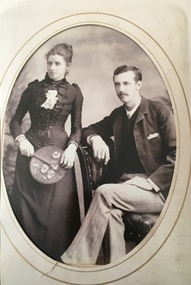
Photograph - George and Edith Weir, Yeomans Studio, 1891
... George Weir attained national prominence in the mining industry, becoming General Manager of the North Broken Hill Silver Mining Company in 1903 (later renamed North Broken Hill Mining Company 1905-12, and North Broken Hill Ltd 1912-1988), and subsequently President of the Mine Owners Association. ...George Weir attained national prominence in the mining industry, becoming General Manager of the North Broken Hill Silver Mining Company in 1903 (later renamed North Broken Hill Mining Company 1905-12, and North Broken Hill Ltd 1912-1988), and subsequently President of the Mine Owners Association. ...An item forming part of a collection of costumes, photographs and documents relating to the Weir family who lived in the mansion originally named Illapa, 84 Princess Street, Kew, from c.1917 to 1950. This historically significant collection includes items relating to both George Weir (1866-1937) and his wife Edith Mary Weir (1867-1948). George Weir attained national prominence in the mining industry, becoming General Manager of the North Broken Hill Silver Mining Company in 1903 (later renamed North Broken Hill Mining Company 1905-12, and North Broken Hill Ltd 1912-1988), and subsequently President of the Mine Owners Association. He was to remain General Manager of North Broken Hill Ltd until his retirement in 1926.An early studio portrait of Edith Mary Weir (nee Betteridge) & George Weir c. 18/11/1891. The family story is that the photograph was taken by Yeomen photographers, of Burke St East, Melbourne about the time of their wedding prior to sailing on a ketch to Strachan, Tasmania.Print copy of an oval studio portrait of George Weir and Edith Mary Betteridge. In the portrait, George is seated while Edith stands to his right, holding a cockade fan.weir collection, george weir, horace rigby weir, george rigby weir, john rigby weir, edith rigby weir, edith mary weir (nee betteridge) -
 Department of Energy, Environment and Climate Action
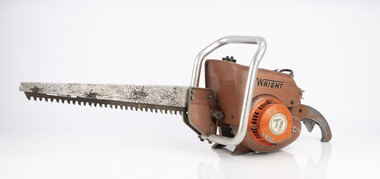
Wright Reciprocating Saw
... Continuous cutting chain was patented in 1905 by Samuel Bens of San Francisco, while the first portable chainsaw was developed and patented in 1918 by Canadian millwright James Shand. ...Continuous cutting chain was patented in 1905 by Samuel Bens of San Francisco, while the first portable chainsaw was developed and patented in 1918 by Canadian millwright James Shand. ...Continuous cutting chain was patented in 1905 by Samuel Bens of San Francisco, while the first portable chainsaw was developed and patented in 1918 by Canadian millwright James Shand. But the main advancements of modern petrol chainsaws occurred in Europe in the 1920s and 30s where Andreas Stihl is often hailed as the "father of the chainsaw" After the second world war lighter materials, metal alloys and improved engine designs revolutionised the logging and timber industry. This Wright Reciprocating Saw was made in Sheboygan, Wisconsin, between 1960 and 1962. Its a Rare GS-5020A model. It has a 7.06 cu. in. (115.7 cc), two-stroke motor, which weighed 25 lbs. (11.3 kg) complete. The blade doesn't stop reciprocating when the saw is running because it's attached directly to the crankshaft. There is no clutch system.Reciprocating Saw.forests commission victoria (fcv), forest harvesting, hand tools -
 Federation University Historical Collection
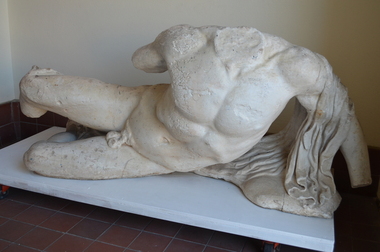
Sculpture - Plaster Replica (from original by Pheidias, 438 BCE-432 BCE), The river god Ilissos (possibly), c 1920 (from original 438 BCE-432 BCE)
... The items were sold to the British Museum in 1816 and have remained there ever since. The original "Ilissos" was located on the west pediment of the Parthenon in Greece, and was created in c435 BC. ...The items were sold to the British Museum in 1816 and have remained there ever since. The original "Ilissos" was located on the west pediment of the Parthenon in Greece, and was created in c435 BC. ...This ‘heroic size’ reclining figure is a copy made from one of The Parthenon Sculptures currently housed at The British Museum, and thought to represent the river-god Ilissos. This piece was part of the Ballarat Technical Art School's collection of reference for art studies, and became affectionately known as 'Hercules' by subsequent student cohorts. The cast was likely made by Brucciani and Co. London, and part of a consignment delivered to the School during the 1920s. This cast replicates one of a number of relics acquired by Thomas Bruce, seventh Earl of Elgin and ambassador to Turkey, (Lord Elgin) in Athens in the early 19th century. (Hence, these works were sometimes collectively referred to as the Elgin Marbles). Ownership of the artefacts, once part of the 2,500-year-old Parthenon temple, is disputed by Greece. It maintains that Elgin removed them illegally while the country was under Turkish occupation as part of the Ottoman Empire. The items were sold to the British Museum in 1816 and have remained there ever since. The original "Ilissos" was located on the west pediment of the Parthenon in Greece, and was created in c435 BC. It is unknown if the statue was in position or had already fallen when removed from the Parthenon by Elgin. The Royal Academy London also holds a copy of this plaster cast. The Ballarat Technical Art School boasted a well-stocked Antique Room replete with plaster copies of classical, Renaissance and Gothic sculptural examples, which were used as drawing props by students. The school inherited some casts from its predecessor institutions, and further consignments were purchased during the 1920s, including full length, bust and relief figures, as well as dozens of ornamental and architectural casts. Unfortunately, much of the collection was lost or destroyed in the late 1950s.Quality examples of heroic sized plaster replicas are now rare, as many plaster collections were destroyed or lost when the copy of antique examples fell out of favour with art schools.Plaster cast used during Drawing classes at the Ballarat Technical Arts School. It is likely a headless depiction of the river god Ilissos.hercules, ballarat technical art school, elgin marbles, plaster, plaster cast, figure of a river god, parthenon marbles, ilissos, copy, drawing the human figure from cast, drawing from the antique, visual arts -
 Flagstaff Hill Maritime Museum and Village
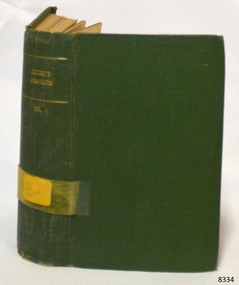
Book - Ancient Political Speeches/Reference, William Tegg, Select Orations of Cicero, 1853
... His textbooks were so popular that they were regularly reprinted and pirated by British publishers. William Tegg (1816–1895) was a prominent London publisher who took over the prolific printing business of his father, Thomas Tegg, after his death in 1845. ...His textbooks were so popular that they were regularly reprinted and pirated by British publishers. William Tegg (1816–1895) was a prominent London publisher who took over the prolific printing business of his father, Thomas Tegg, after his death in 1845. ...This book is not regarded as a novel rather as an educational anthology of classical political and legal speeches. Select Orations of Cicero is a curated collection of speeches delivered by the famous Roman statesman, orator, and philosopher Marcus Tullius Cicero during the 1st century BCE. Instead of just presenting the raw Latin text, this specific volume features an extensive English commentary, explanatory footnotes, and historical, geographical, and legal indexes compiled by Charles Anthon. It was designed primarily as a prestigious schoolbook and university textbook, helping 19th-century students translate the Latin while fully understanding the complex political backstabbing and legal systems of ancient Rome. Some of Cicero's orations include his famous exposure of a conspiracy to overthrow the Roman government, his prosecution of the notoriously corrupt governor of Sicily, and a masterclass in legal defense regarding a high-profile political murder.The Select Orations of Cicero Author: Charles Anthon Publisher: William Tegg & Co Date: 1853 Further Information: Olive green cloth hardcover with a spine lettering in gold . The spine has a label with an Library inscription.non-fictionThis book is not regarded as a novel rather as an educational anthology of classical political and legal speeches. Select Orations of Cicero is a curated collection of speeches delivered by the famous Roman statesman, orator, and philosopher Marcus Tullius Cicero during the 1st century BCE. Instead of just presenting the raw Latin text, this specific volume features an extensive English commentary, explanatory footnotes, and historical, geographical, and legal indexes compiled by Charles Anthon. It was designed primarily as a prestigious schoolbook and university textbook, helping 19th-century students translate the Latin while fully understanding the complex political backstabbing and legal systems of ancient Rome. Some of Cicero's orations include his famous exposure of a conspiracy to overthrow the Roman government, his prosecution of the notoriously corrupt governor of Sicily, and a masterclass in legal defense regarding a high-profile political murder.flagstaff hill, warrnambool, shipwrecked coast, flagstaff hill maritime museum, maritime museum, shipwreck coast, flagstaff hill maritime village, great ocean road, book, pattison collection, warrnambool library, warrnambool mechanics’ institute, ralph eric pattison, corangamite regional library service, warrnambool city librarian, mechanics’ institute library, victorian library board, warrnambool books and records, warrnambool children’s library, select orations of cicero, thomas tegg, cicero -
 Wodonga & District Historical Society Inc
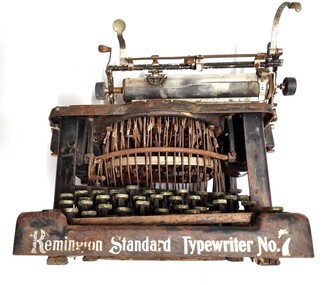
Functional object - Remington Standard Typewriter No. 7, Wyckhoff, Seamans & Benedict, c1900
... Remington and Sons which was founded in 1816 in Ilion, New York. After the American Civil War, the company diversified into farm implements, sewing machines and typewriters. ...Remington and Sons which was founded in 1816 in Ilion, New York. After the American Civil War, the company diversified into farm implements, sewing machines and typewriters. ...The Remington Typewriter Company originated from the firearms manufacturer E. Remington and Sons which was founded in 1816 in Ilion, New York. After the American Civil War, the company diversified into farm implements, sewing machines and typewriters. Remington started production of their first typewriter on 1st March 1873 with their first commercially successful typewriter, the Sholes & Glidden being produced in 1874. Key milestones include the 1878 Remington No. 2 which was the first typewriter to have both upper and lowercase. They were also the first typewriters to feature the QWERTY keyboard layout. E. Remington and Sons sold the typewriter division to Wyckoff, Benedict, and Seamans, who formed the Remington Typewriter Company in 1886. In 1927 a further merger created the company Remington Rand. It later became one of the biggest computer manufacturers in the United States. Production of Remington typewriters eventually ceased after a 1986 merger that formed the Unisys Corporation. The Remington Standard No.7 typewriter was manufactured by Wyckhoff, Seamans & Benedict of Ilion, New York, U.S.A. Remington typewriters were originally made by the Remington Typewriter Company but in 1893 Wyckhoff, Seamans & Benedict obtained sole distribution rights for Remington typewriters and sole manufacturing rights in 1896. It is an up strike class typewriter in which the typebars rest in a semicircular vertical type basket and rotate upwards to strike the paper and platen from below. As a result the printed characters are not immediately visible to the operator. The platen had to be pivoted upwards and backwards for the operator to check their work. Remington persisted with the upstrike design until 1908 when they introduced the Model 10 which was a visible writer where the work could be seen as it was typed.This item is significant because typewriters such as were used widely throughout businesses in Wodonga and internationally.A Remington upstrike typewriter. It features a black-finished metal frame with gold decoration. Type-bars are arranged in a vertical circular basket with cylindrical platen on top. The 1.5 inch (38 mm) ribbon carried between spools on horizontal axes. QWERTY keyboard with 42 keys in four rows, including one shift key. Keys are circular, with black lettering on a light background. Black spacebar along front of keyboard.On trade mark To Save Time is to Lengthen Life" Standard Remington On frame below keyboard, in gold lettering: "Remington Standard Typewriter No. 7typewriter, remington type writers -
 Ringwood and District Historical Society
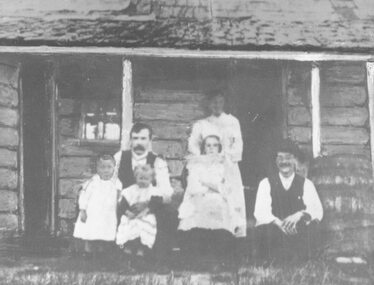
Photograph, Britten Family and home. Warrandyte Road, Ringwood. c1907
... Written on rear of small photograph: "Wm Grace (1876), James Claridge (1880s) C.G. Britten (1905). All occupied this cottage on site now Church of England vicarage, Warrandyte Rd. ...Written on rear of small photograph: "Wm Grace (1876), James Claridge (1880s) C.G. Britten (1905). All occupied this cottage on site now Church of England vicarage, Warrandyte Rd. ...Black and white photograph of family group at rear of house. (2 copies- 1 large, 1 small). Small copy mounted on cardboard backing.Typed under large photograph, "Britten Family and home (site became Church of England, Warrandyte Road). Note log walls and rain-water barrel at this pioneer home. c 1907." Written on rear of small photograph: "Wm Grace (1876), James Claridge (1880s) C.G. Britten (1905). All occupied this cottage on site now Church of England vicarage, Warrandyte Rd. Ringwood. Group from left. C.G. Britten holding daughter (Muriel) with son (Reg) on his right. His wife (nee Ethel Banks, Claridges' granddaughter) at rear with her sister in front, and brother Wally on extreme right. (Back of house)." -
 Kiewa Valley Historical Society
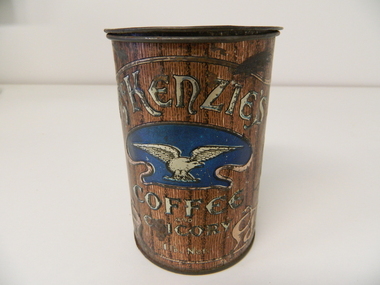
Can McKenzie's Coffee, mid to late 1900's
... On the other side "COFFEE & CHICORY" underneath "Guaranteed under the Victorian Pure Food Act 1905" "No. 1000 guaranteed under the Pure Food Act 1908, N.S.W. by Jas F. ...On the other side "COFFEE & CHICORY" underneath "Guaranteed under the Victorian Pure Food Act 1905" "No. 1000 guaranteed under the Pure Food Act 1908, N.S.W. by Jas F. ...This tin which once contained coffee with chicory was purchased in a period when the importation of coffee beans into Australia was quite expensive and to counter that local distributors of coffee mixed it with Chicory, a blended coffee, flavoured slightly milder depending on the amount of coffee(percentage) per serve. This provided a cheaper cup of "coffee" drink. This mixture was a spin off from the 1930's Great Depression and the naval blockages of World War II (imports from India and other regional coffee growers) and the scarcity of secure ship supplies. As supplies became more secure "pure" coffee as a drink became available at reasonable costs. This "insignificant" coffee/chicory tin is very significant as it demonstrates that the Kiewa Valley was becoming more accessible to reliable coffee supplies and general food items.This was brought about through reliable roads and an ever increasing population The need for travelling supply caravans to the area, and with the establishment of grocery stores in Tawonga and Mount Beauty the supply of previously "hard to get" groceries vanished. This transition was precipitated by the SEC Vic Hydro Scheme of the 1940's to 1960's which increased the valley population two fold.This container of McKenzie's Coffee and Chicory is made from pressed steel and has a tight fitting lid (steel with a protruding lip to allow finger pressured removal). The tin has one pressed seem (holding the cylinder together). The backdrop of the outside of the tin is "grained" brown painted with dark brown (worn) lettering and central between McKenzie's/Coffee is a figure of an eagle with its wings outstretched. All the letters and figure have been embossed into the tin surface. The weighted contents are listed at a capacity of 1Ib Net.On one side (front) "McKenzie's Coffee and Chicory 1lb Net". On the other side "COFFEE & CHICORY" underneath "Guaranteed under the Victorian Pure Food Act 1905" "No. 1000 guaranteed under the Pure Food Act 1908, N.S.W. by Jas F. McKenzie & Co. Pty Ltd., No. 1000." "No 22 Guaranteed under the Food and Drugs Act 1910 by Jas F. McKenzie Pty. Ltd No. 22 (Tasmania)." Further "No. 1000 Guaranteed under the Health Acts by Jas. F McKenzie & Co. Pty Ltd No. 1000 (Queensland) "Containing not less than 50 percent of coffee." And at the bottom Jas.F. McKENZIE & Co. Pty Ltd Melbourne and Sydney"tin food/drink mild steel containers, food/drink storage containers -
 Eltham District Historical Society Inc
Document - Property Binder, 58 Park Road, Eltham (previously 967 Main Road, Eltham), 17 Mar 1992
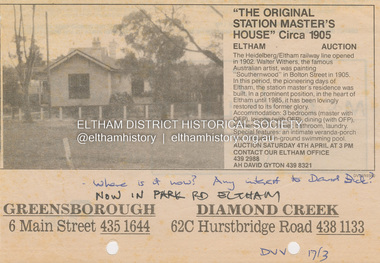
... The Original Station Master's House, Circa 1905, Eltham Auction; Diamond Valley News, March 17, 1992 The advertisement states the house is circa 1905 which is approximately correct. ...The Original Station Master's House, Circa 1905, Eltham Auction; Diamond Valley News, March 17, 1992 The advertisement states the house is circa 1905 which is approximately correct. ...The Original Station Master's House, Circa 1905, Eltham Auction; Diamond Valley News, March 17, 1992 The advertisement states the house is circa 1905 which is approximately correct. When the railway first came to Eltham in 1902 there was no appointed Stationmaster. The Guard on the train was the general oddsbody who did everything including sell tickets and station master duties. There was some discontent about this situation. It was probaly a few years before a permanent stationmaster was appointed but no reference to that has yet come to light. The house form photos dated in 1983 certainly had the appearance of an Edwardian style (1901-1910). The advertisement also states the house was in the centre of Eltham till 1985 before it was shifted from its original site to 58 Park Road.. The auction date is scheduled for Saturday April 4th - which would have been 1992. Essentially the house was sold in 1986 for $1 to save it from demolition and was then relocated to 58 Park Road. A Bill McGilvray was Stationmaster and lived in the house in the 1960s. A check of the 1968 Electoral Roll (via Ancestry) shows William John McGillivray, Station Master at the Station Residence, Eltham. Also at the same address in 1968, Marjorie Jean McGillivray, home duties, Station Residence, Eltham and Dianne Marjorie McGillivray, teacher, Main Road, Eltham. From the available records digitised, William first appears at the Station Residence in 1963. William and family were still in the residence in 1977 but by 1980 William, still Station Master, was living in Bible Street, so not sure who was in residence if anyone between 1980-1986. A property report shows the site at 58 Park Road was sold in 1983 and the relocated house on the site was then sold in 1992, then 2000 and most recently in April 2022. 58 park road, 967 main road, auction, auction sale, businesses, eltham, eltham railway station, houses, main road, park road, property, real estate advertisement, station masters house, station master's house eltham -
 Eltham District Historical Society Inc
Photograph, Watson's Eltham Hotel on the Melbourne Road, Eltham, 1908
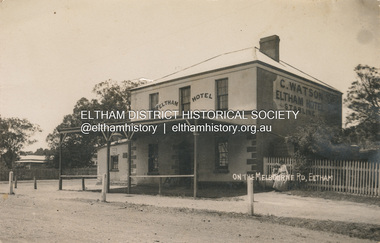
... France followed suit in 1904, Germany and Australia in 1905, and the United States in 1907. - Frost, Lenore; Dating Family Photos 1850-1920; Valiant Press Pty. ...France followed suit in 1904, Germany and Australia in 1905, and the United States in 1907. - Frost, Lenore; Dating Family Photos 1850-1920; Valiant Press Pty. ...The Eltham Hotel was opened in 1854 situated on the south east corner of Main Road (Maria Street) and Pitt Street. Post card dated Eltham 2.1.1908 sent to Mr C. Watson "Malvale" Mardan Inscribed "Wishing you a Brigt and Happy New Year from Florrie" Most likley sent by Florence May Shillinglaw to sister Carrie Watson and new brother-in-law Christopher Watson - The Watsons married in 1907 View looking south on Main Road towards Pitt Street and Watson's Eltham Hotel on left. At this time, the hotel was run by Christopher Watson Jnr. Carrie Shillinglaw had recently married his son, Christopher. Ultimately the hotel would pass to his youngest son, Herbert James (Jim) Watson who demolished the original building in 1925 and erected a new modern building on the same site that remains in present time though modified several times over the years. See also EDHS_00133 POSTCARD 1905-1940s Like the carte-de-visite, postcards enjoyed a collecting craze by large numbers of people, and were often kept in albums through which the interested visitor could browse. Postcards were posted or exchanged in huge numbers. Postal authorities in Australia only allowed the private printing of postcards from 1898. At this time the back of the card was reserved for the address and postage stamp, and the front was used for the message and a picture. In 1902 British authorities allowed a "divided back", so that the left side could be used for the message, the right side for the address and stamp, and the whole of the front was devoted to the picture. France followed suit in 1904, Germany and Australia in 1905, and the United States in 1907. - Frost, Lenore; Dating Family Photos 1850-1920; Valiant Press Pty. Ltd., Berwick, Victoria 1991marg ball collection, postcard, eltham hotel, florence may bunker (nee shillinglaw) (1886-1969), main road, pitt street, caroline (carrie) watson (nee shillinglaw 1876-1956), christopher watson, 1908 -
 Surrey Hills Historical Society Collection
Photograph, Kleinert family at 34 Union Road, Surrey Hills
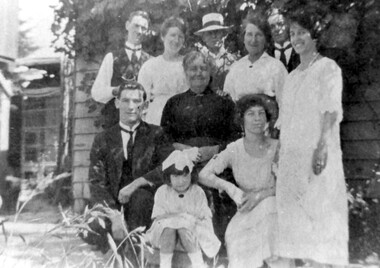
... The house was built in 1905 and was the home of William and Emily Kleinert from 1905. ...The house was built in 1905 and was the home of William and Emily Kleinert from 1905. ...William Kleinert (Friedrich John Wilhem Kleinert) made wine from the grapes he grew. The house was built in 1905 and was the home of William and Emily Kleinert from 1905. William was a coach-builder, wheelwright and blacksmith. He moved from Prahran to Surrey Hills. His son Ernest worked with him as a coach painter and also worked as a painter undertaking intricate hand painting on early cars. Their other son Martin played for the Surrey Hills Football Club. In return for the support given to the club by Mrs Emily Kleinert, it built a rotunda in South Surrey Park as a memorial to her. Alan Holt research: Lot 6 was sold to Martin Klienert by Karl Richter in 1860 together with a portion of another adjacent lot. From 1860-1885 Martin worked it as a market garden leasing some land for grazing when it was not required for gardening. He died in 1898. In a formal document, William declared he was the son of Martin "who purchased land in 1860, died in 1898 and the land has been continually occupied by father and family since. It has been cultivated as a market garden; when not being used for gardening it was let for cultivation and grazing." William died in 1939 and the property passed to his sons Martin and Ernest. The Kleinert land extended from Union Road to Essex Road. They ran horses, ducks and fowls and Emily Kleinert grew flowers. The Kleinert property later became the South Surrey Park. The family sold the land to the Camberwell Council in the 1950s. Ernest and Ida Kleinert lived on the corner of Scotsdale and Warrigal Roads. The donor of the photo Nada Harris, nee Kleinert, was Ernest and Ida's daughter. Ida lived to a good age (> 93 years) and in later life lived in Burwood.Black and white photo of a group of men and women posed against the backdrop of a timber house. Immediately behind the group is a large grape vine and drying racks can be seen to the left of the picture. The group is identified as: Standing L to R: Ernest Kleinert, Rose Kleinert, William and Emily Kleinert, ? (unidentified), Ida Kleinert (nee de Vasey) Seated (L to R): Martin Kleinert, Nada Kleinert (daughter of Ernest and Ida and 1st grand-daughter of William and Emily), great-grandmother Maria Radford, Ivy Kleinert.surrey hills football club, blacksmiths, wheelwrights, coachbuilders, harris, rotunda, william kleinert, vineyard, ernest kleinert, rose kleinert, ida kleinert (mrs), ida de vasey (miss), martin kleinert, nada kleinert (miss), ivy kleinert (miss), friedrich john wilhem kleinert, emily florence radford (miss), maria dina radford (mrs), maria dina aylwin (miss) -
 Bendigo Historical Society Inc.
Document - MERLE BUSH COLLECTION: CUTTINGS, RECEIPTS AND VARIOUS ITEMS
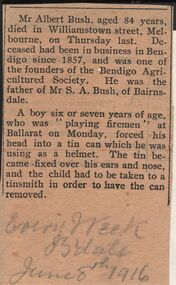
... Certificate of Vaccination for Muriel Bush, daughter of A Bush , 1897; 11.handwritten copy of letter regarding appointment of Executor to will (addressed to Albert Bush), September 1905....Certificate of Vaccination for Muriel Bush, daughter of A Bush , 1897; 11.handwritten copy of letter regarding appointment of Executor to will (addressed to Albert Bush), September 1905. Document MERLE BUSH COLLECTION: CUTTINGS, RECEIPTS AND VARIOUS ITEMS ...Collection of Merle Bush Ephemera - cuttings, letters etc relating to Bush family; 1. obituary Albert Bush , Bairnsdale Advertiser 6th June 1916; 2. Obit Albert Bush ''Every Week'' (Bairnsdale), June 8th, 1916; 3.Retirement of C R Stilwell, 1899; 4. Balance Sheet (single page handwritten) June 1st 1916; 5.Handwritten details of children born to Albert Bush - 1860 - 1878; 6. Receipt for purchase of ''Villa Abbey Lieux'' (1921) on letterhead of Stan Hall, Furniture New and Second-hand, Hargreaves St. (725 Pounds); 7.signature of A Bush (dated 1851?); 8.receipt for Federal Palace Hotel accommodation October 1902; 9. Receipt for purchase of Ladies cycle 1909 and guarantee; 10. Certificate of Vaccination for Muriel Bush, daughter of A Bush , 1897; 11.handwritten copy of letter regarding appointment of Executor to will (addressed to Albert Bush), September 1905.person, individual, bush collection - personal -
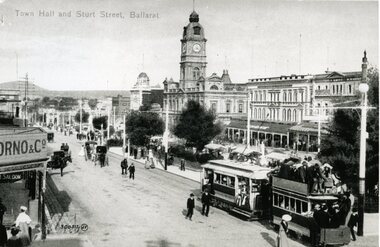 Ballarat Tramway Museum
Postcard - Folder set, William. F. Scott, Doveton St. and Sturt St, c2000
... Photo appears to be taken soon after opening of the electric trams, as the tram does not have any destination box above the driver. Possibly summer 1905/1906. Numerous people in the street, some horse drawn vehicles in the photograph. ...Photo appears to be taken soon after opening of the electric trams, as the tram does not have any destination box above the driver. Possibly summer 1905/1906. Numerous people in the street, some horse drawn vehicles in the photograph. ...Demonstrates aspects of Ballarat tramway operation with horse tram trailers, - copy of a postcard photograph.B&W print of an ESCo tram just past the intersection of travelling east along the north side of Sturt. Steet towing a heavily laden horse tram as a trailer. Photo appears to be taken soon after opening of the electric trams, as the tram does not have any destination box above the driver. Possibly summer 1905/1906. Numerous people in the street, some horse drawn vehicles in the photograph. Shows buildings along the south side of Sturt St. and part of the verandah of the building at the NE corner of Doveton St. Horse Trailer No. 4 In top of image are the words "Town Hall and Sturt Street, Ballarat" Two copies Larger version than normal, obtained by Bill Scott for publication. For a list and description of the same base image see Archives file - "Notes on ESCo Tram towing a heavily loaded trailer" See Reg Item 4370i1 for a colour postcard.On rear of copy 1, "WFS Collection" in ink and on rear of Copy2 - "William F Scott" address label and "WF Scott collection" in ink.trams, tramways, esco, horse trams, postcards, doveton st, sturt st, tram 8, tram 2 -
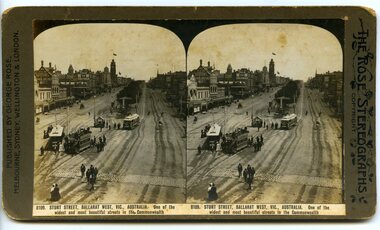 Ballarat Tramway Museum
Photograph - Stereo Pair, Rose Stereograph Co
... Photographed and published by Geo Rose. Possibly around 1905. Has caption "Sturt St, Ballarat West, Vic., Australia. ...Photographed and published by Geo Rose. Possibly around 1905. Has caption "Sturt St, Ballarat West, Vic., Australia. ...Stereo pair of photos, black and white, a street scene at Sturt St, Grenville St, with a ex horse tram, now trailer being shunted between two electric tramcars, mounted onto heavy card. Photographed and published by Geo Rose. Possibly around 1905. Has caption "Sturt St, Ballarat West, Vic., Australia. One of the widest and most beautiful streets in the Commonwealth". Has Rose logo on the right hand side. Trams No. 19 (Toastrack) and 17 featured in the photograph. Detail image as scanned by Frank Stamford July 2005, i3. Purchased via eBay site - see attached sheets and packing slip. Purchased 19/07/05 for A$58.90 excluding postage, from Michael Allen Antiques, 987 Stanley St East, East Brisbane, Qld 4169. eBay sheets and envelope with worksheet file. See also Reg Item7097 for another reproduction.trams, tramways, esco, grenville st, trailers, sturt st, horse trams, stereo photograph -
 Kew Historical Society Inc
Archive (Sub-series) - Subject File, BRYAN, Cr. Henry & Family, 1958
... Bryan at Parkdale in 1924, photocopied funeral notices, a photograph of the Bryan grave at the Boroondara General Cemetery, a photocopy of the Bryan Family Tree, two letters from Edna Fryer recalling her life in Kew, copies of photographs of Thomas Henry Bryan (1868-1924), John Bryan (1841-1912) and Sarah Bryan nee Chambers (1840-95), Henry Thomas Bryan’s children - Harold George Bryan (1896-1956), John Alfred Edmund Bryan (1897-1984), Norman Arthur Bryan (1898-1964), and Edna May Bryan (1905-1991), copies of the certificates of marriage of John Bryan and Sarah Chambers (1867) and Henry Thomas Bryan and Edith Ripper (1895). ...Bryan at Parkdale in 1924, photocopied funeral notices, a photograph of the Bryan grave at the Boroondara General Cemetery, a photocopy of the Bryan Family Tree, two letters from Edna Fryer recalling her life in Kew, copies of photographs of Thomas Henry Bryan (1868-1924), John Bryan (1841-1912) and Sarah Bryan nee Chambers (1840-95), Henry Thomas Bryan’s children - Harold George Bryan (1896-1956), John Alfred Edmund Bryan (1897-1984), Norman Arthur Bryan (1898-1964), and Edna May Bryan (1905-1991), copies of the certificates of marriage of John Bryan and Sarah Chambers (1867) and Henry Thomas Bryan and Edith Ripper (1895). ...Various partiesReference, Research, InformationSecondary Values (KHS Imposed Order)Subject file containing genealogical research into the ancestors and descendants of Cr Henry T “Harry” Bryan of 124 Princess Street, Kew. The file also includes a photocopy of the report of the Coronial Inquest into the death by drowning of Cr. Bryan at Parkdale in 1924, photocopied funeral notices, a photograph of the Bryan grave at the Boroondara General Cemetery, a photocopy of the Bryan Family Tree, two letters from Edna Fryer recalling her life in Kew, copies of photographs of Thomas Henry Bryan (1868-1924), John Bryan (1841-1912) and Sarah Bryan nee Chambers (1840-95), Henry Thomas Bryan’s children - Harold George Bryan (1896-1956), John Alfred Edmund Bryan (1897-1984), Norman Arthur Bryan (1898-1964), and Edna May Bryan (1905-1991), copies of the certificates of marriage of John Bryan and Sarah Chambers (1867) and Henry Thomas Bryan and Edith Ripper (1895).bryan family, residents -- families -- kew (vic)bryan family, residents -- families -- kew (vic) -
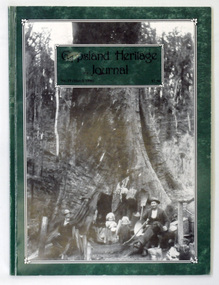 Orbost & District Historical Society
Journal, Gippsland Heritage Journal, March 1996
... Nicholas Penny ring-barked the tree in 1905, with it being 130 feet high with the top broken off. ...Nicholas Penny ring-barked the tree in 1905, with it being 130 feet high with the top broken off. ...The main photo is by Max Lowenhardt and shows John Green, Mrs Eva Penny (inside the tree and hardly visible) nursing Charlie, May, George and Nicolas Penny. Colin Silcock wrote of the tree on p.39 that the family lived int he hollowed-out butt for nine months in 1906-1907. It was 20 feet across at floor level with 12 feet of head room inside. Nicholas Penny ring-barked the tree in 1905, with it being 130 feet high with the top broken off. The fires the following year destroyed the tent in which he was living and hollowed out the tree. After "making a few alterations" Penny moved in and brought his wife and children across from Outtrim. They later built a more permanent home. The tree was destroyed in the 1926 bushfires. (ref Linda Barraclough)This magazine is a useful reference on Gippsland history.A 64 pp magazine, titled Gippsland Heritage Journal. It has a dark green cover with a photograph of the "Penny Tree" . The magazine is dated March 1996 and cost $7.50. It contains stories and photographs on the history of Gippsland.There is a library bar code on the outside back cover.gippsland-heritage-journal penny-tree history-gippsland -
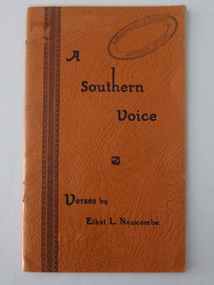 Warrnambool and District Historical Society Inc.
Book, A Southern Voice, 1941
... Dr Frederick Newcombe died in India in 1905 and Ethel Newcombe spent the greater part of her later life in Melbourne. ...Dr Frederick Newcombe died in India in 1905 and Ethel Newcombe spent the greater part of her later life in Melbourne. ...This book of verses has been written by Ethel Lucy Newcombe (nee Forrester) The daughter of Lucy Sorrell and James William Forrester, she was born in 1874 in Warrnambool. As a Matriculated student she taught at the Warrnambool St. John’s Hall Private School for Girls in the 1890s. The proprietor of this school was her friend, Grace Newcombe and Ethel Forrester, especially talented in literature and music, composed a Cantata, ‘Austral’s Sunny Year’ for the annual school concert in 1898. In 1902 Ethel Forrester married Dr Frederick Newcombe (Grace’s brother), a medical missionary in India. His father Ebenezer Newcombe was well-known in Warrnambool as a timber and hardware businessman. Dr Frederick Newcombe died in India in 1905 and Ethel Newcombe spent the greater part of her later life in Melbourne. She died in 1971. The identity of Arthur, the recipient of the book, is not known. This book is of considerable interest because it was written by Ethel Newcombe who was born and educated in Warrnambool and the book is thus is associated with both the Forrester and the Newcombe families in Warrnambool early in the 20th century This is a soft cover book of 32 pages. The cover is dark orange in colour and has dark blue lettering on the front cover with ornamental scroll work on the left margin of the front cover. The book has three blue stamps of the Warrnambool & District Historical Society and the inscription on the first page is handwritten in black ink. The book has been stapled with metal staples but the staples have been removed. ‘To Arthur, with the writer’s best wishes, Xmas 1941, Ethel L. Newcombe’ newcombe family, warrnambool, forrester family. warrnambool, st. john’s hall school, warrnambool, ethel newcombe, history of warrnambool, australian literature -
 Warrnambool and District Historical Society Inc.
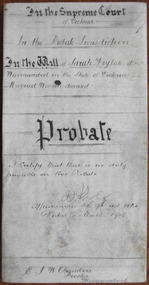
Document - Sarah Fry Probate 1905, 1906
... Tait collection: item 27 of 62 This document contains details on the will and probate of Sarah Fry who died in Warrnambool in March 1905 at the age of 47. She was the daughter of Edmund and Jane Lord and came to Australia with her parents and some of her siblings aboard the Electric in 1869. ...Document Sarah Fry Probate 1905 ...Tait collection: item 27 of 62 This document contains details on the will and probate of Sarah Fry who died in Warrnambool in March 1905 at the age of 47. She was the daughter of Edmund and Jane Lord and came to Australia with her parents and some of her siblings aboard the Electric in 1869. In 1888 she married Francis Joseph Fry, a Warrnambool plasterer. Sarah Fry left real estate to the value of £450 and personal estate to the value of £202. The beneficiaries of her will were her husband, Francis and her three children, Sarah, James and Doris. The lawyer Ernest Chambers had offices in Warrnambool, Koroit and Port Fairy at the end of the 19th century and the beginning of the 20th century. He had this document in his possession and it was passed down to successive lawyers occupying the legal premises in Kepler Street where it was located in 2014 and handed over to the Warrnambool and District Historical Society. This document is of interest as it contains information on the will and probate of Sarah Fry, a resident of Warnambool in the late 19th century and early 20th century. It will be useful for researchers.This is a 1906 cream-coloured parchment sheet folded in two with handwritten material on three sides. Three of the pages are ruled with black ink. There is a seal of the Supreme Court of Victoria attached with a blue ribbon and a red stamp of the Master-in-Equity of the Supreme Court. The document includes the will and probate details of Sarah Fry, a married woman from Warrnambool. All the pages are somewhat stained but one page is very grubby. In the Supreme Court of Victoria; In the Probate Jurisdiction; In the Will of Sarah Fry late of Warrnambool in the State of Victoria Married Woman deceased.ernest chambers, sarah fry, warrnambool, tait collection -
 Emerald Museum & Nobelius Heritage Park
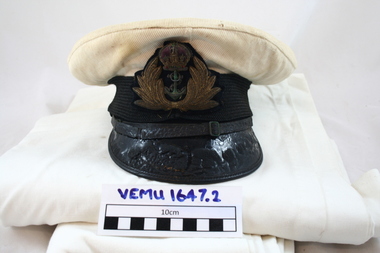
Memorabilia - Personal Objects of Dr. Ian Stephen MacLeod Murphy
... Dr Ian Stephen MacLeod Murphy (1905-1981) studied at Geelong College (1919-1922) and then Melbourne University (1929-1937). ...Dr Ian Stephen MacLeod Murphy (1905-1981) studied at Geelong College (1919-1922) and then Melbourne University (1929-1937). ...Dr Ian Stephen MacLeod Murphy (1905-1981) studied at Geelong College (1919-1922) and then Melbourne University (1929-1937). He enlisted in the Royal Australian Navy in 1939 and served as a navy surgeon for the duration of World War II. He moved to Emerald in 1947 after running a successful medical practice in Hampton, with the intention of retiring and breeding turkeys. But Emerald and the surrounding districts had no doctor, so for the next 34 years, Dr. Murphy provided tireless medical care to the local community. Dr Murphy was awarded the British Empire Medal in 1977 for devotion to the health of the community. He died in 1981 at the age of 76 years and a Memorial Fund was set up in his name to provide support for local students studying Medicine. This collection of memorabilia of the life of Dr Murphy was donated by his nephew, Rod Usher.These objects belonged to Emerald's first and much-loved GP and represent significant events in his life.VEMU1647.1 Rowing Cap - Geelong College VEMU1647.2 Naval Cap - Royal Australian Navy Commander or Captain WW2 VEMU1647.3 Tin Army Helmet WW2 VEMU1647.4 Mug Intercollegiate Boat Race VEMU1647.5 Mug Ballarat Hospital Medico's VEMU1647.6 Pocket Badge Royal Melbourne Hospital Surgeon VEMU1647.7 Pieces of Shrapnel which hit I.S. Murphy on head VEMU1647.8 Medical Registration Certificate 22.12.1937 VEMU1647.9 Geelong College Flag VEMU1647.10 Rudder Ormond College Students Club 1931 Cox I.S.Mc. Murphy VEMU1647.11 Wooden Shield Geelong College 1921-1922 VEMU1647.12 Program from Scotts Hotel VEMU1647.13 Paperwork Celebration Dinner at Emerald Country Club for New Year Honour.dr. murphy, emerald, world war ii, british empire medal, geelong college, melbourne university -
 Emerald Museum & Nobelius Heritage Park
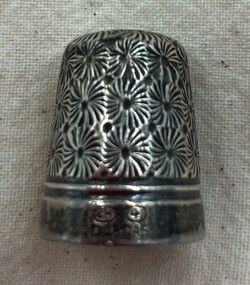
Domestic object - Thimble, Charles Horner, Early 20th century
... This particular thimble was made by Charles Horner post 1905 and is part of a thimble collection which was owned by Kallista woman, Beryl Collett (1925-2018). ...This particular thimble was made by Charles Horner post 1905 and is part of a thimble collection which was owned by Kallista woman, Beryl Collett (1925-2018). ...Thimbles have long been used as a shield for the fingertip when hand sewing In the Victorian period, an ornate silver thimble would be given as an engagement gift, but silver proved too soft for withstanding pins. In 1885, Charles Horner patented a new silver thimble with a steel core which became the Dorcas thimble and enabled a functional but still decorative thimble. This particular thimble was made by Charles Horner post 1905 and is part of a thimble collection which was owned by Kallista woman, Beryl Collett (1925-2018). Some may have originally belonged to her mother (Hettie Collett nee Thorn) who was a talented milliner and from whom Beryl first learnt her considerable handicraft skills. These thimbles form part of a large and varied range of objects which were either collected by or made by Beryl. This varied thimble collection has been collected during the long lifetime of a local woman who enjoyed needlework and lacemaking.Silver thimble with a dense floral design on the side and top of thimble. Plain band around rim of thimble. Markings indicate it is a Size 4, Charles Horner thimble.Bottom band imprinted: 'CH 4 / DORCAS'. beryl collett, hettie collett, thimbles, charles horner -
 Emerald Museum & Nobelius Heritage Park
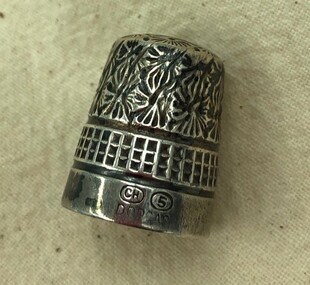
Domestic object - Thimble, Charles Horner, Early 20th century
... This particular thimble was made by Charles Horner post 1905. The thimble collection was owned by Kallista woman, Beryl Collett (1925-2018). ...This particular thimble was made by Charles Horner post 1905. The thimble collection was owned by Kallista woman, Beryl Collett (1925-2018). ...Thimbles have long been used as a shield for the fingertip when hand sewing In the Victorian period, an ornate silver thimble would be given as an engagement gift, but silver proved too soft for withstanding pins. In 1885, Charles Horner patented a new silver thimble with a steel core which became the Dorcas thimble and enabled a functional but still decorative thimble. This particular thimble was made by Charles Horner post 1905. The thimble collection was owned by Kallista woman, Beryl Collett (1925-2018). Some may have originally belonged to her mother (Hettie Collett nee Thorn) who was a talented milliner and from whom Beryl first learnt her considerable handicraft skills. These thimbles form part of a large and varied range of objects which were either collected by or hand-made by Beryl and which have been donated to the Museum. This varied thimble collection has been collected during the long lifetime of a local woman who enjoyed needlework and lacemaking.Silver thimble with a floral decorative design on top and side of thimble. Underneath that is a band of a pattern of repeated squares. Around the rim is a plain band with manufacturer's imprint. Markings indicate it is a Size 5, Charles Horner thimble.On bottom band imprinted: 'CH 5 / DORCAS'. beryl collett, hettie collett, thimbles, charles horner -
 Warrnambool and District Historical Society Inc.
Functional object - Silver Card Case (Holmes), Mid 20th century
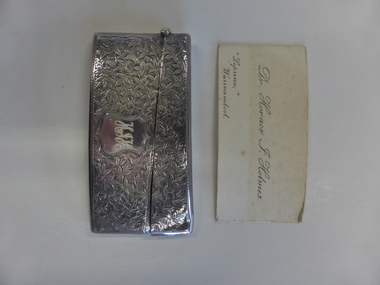
... He came to Warrnambool in 1905, taking over the practice of Dr Fleetwood at ‘Ierne’, at the corner of Spence and Kepler Streets. ...He came to Warrnambool in 1905, taking over the practice of Dr Fleetwood at ‘Ierne’, at the corner of Spence and Kepler Streets. ...The owner of this card case was Dr Horace Holmes who was a doctor in Warrnambool for over 40 years. Dr Holmes (1877-1959) was born in Tasmania and completed a medical course at Melbourne University. He came to Warrnambool in 1905, taking over the practice of Dr Fleetwood at ‘Ierne’, at the corner of Spence and Kepler Streets. In 1906 he built a new home at the corner of Liebig Street and Raglan Parade and moved his practice there in 1912 (today this building is the Warrnambool Medical Clinic). Dr Holmes was an honorary Medical Officer at the Warrnambool Hospital. He retired in 1939 selling his practice to Dr Berryman but came out of retirement and practised as a locum until 1944. His interests included rowing golf, bowls and fishing. In the 1950s he lived at ‘Leprena’ in Canterbury Road. He was a foundation member of the Warrnambool Rotary Club. This is a most significant item as it belonged to a prominent local doctor, Dr Horace Holmes. It also has considerable social significance as it is an example of the practice of past times of carrying calling cards and the silver case is a sign of the affluence of the owner. This is a silver card case, heavily embossed, with a slightly curved shape and a hinged lid. It has the initials ‘HIH’ engraved in a shield on the front of the case. It contains nine calling cards (Dr Horace Holmes, Warrnambool). These are made of light card with printing in black on a white background. The cards are somewhat marked and discoloured. Case: ‘HIH’ Cards: ‘Dr. Horace I. Holmes, Leprena, Warrnambool’card case, dr horace holmes, warrnambool -
 Emerald Museum & Nobelius Heritage Park
Certificate - Medical Registration Certificate, 1937
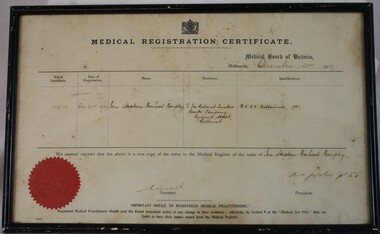
... Ian Stephen MacLeod Murphy (1905-1981) was awarded a Medical Registration Certificate on Dec 22, 1937, by the Medical Board of Victoria. ...Ian Stephen MacLeod Murphy (1905-1981) was awarded a Medical Registration Certificate on Dec 22, 1937, by the Medical Board of Victoria. ...Dr. Ian Stephen MacLeod Murphy (1905-1981) was awarded a Medical Registration Certificate on Dec 22, 1937, by the Medical Board of Victoria. The certificate was sent to Ballarat where he was interning. Dr Murphy had studied Medicine at Melbourne University (1929-1937). In World War II, he served with the Royal Australian Navy (1939-1945) He moved to Emerald in 1947 after running a successful medical practice in Hampton, with the intention of retiring and breeding turkeys. But Emerald and the surrounding districts had no doctor, so for the next 34 years, the well-loved Dr. Murphy provided medical care to Emerald and local districts. He was awarded the British Empire Medal in 1977 for devotion to the health of the community. He died in 1981 at the age of 76 years and a Memorial Fund was set up in his name to provide support for local students studying Medicine.Dr Murphy was Emerald's first resident doctor from 1947 until 1981 and was greatly respected and loved by the community.Medical Registration Certificate for Ian Stephen MacLeod Murphy enclosed behind glass in thin, black frame. On back of frame a sticker: 'Stansfield & Smith / 327 Sturt St / Ballarat / Picture Framers etc' dr. murphy, emerald, medical registration certificate, university of melbourne -
 Emerald Museum & Nobelius Heritage Park
Flag - School flag, Early 20th century
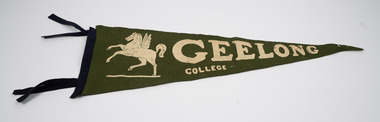
... The former owner of this flag, Dr Ian Stephen MacLeod Murphy (1905-1981), studied at Geelong College (1919-1922) and then Melbourne University (1929-1937). ...The former owner of this flag, Dr Ian Stephen MacLeod Murphy (1905-1981), studied at Geelong College (1919-1922) and then Melbourne University (1929-1937). ...The former owner of this flag, Dr Ian Stephen MacLeod Murphy (1905-1981), studied at Geelong College (1919-1922) and then Melbourne University (1929-1937). He enlisted in the Royal Australian Navy in 1939 and served as a navy surgeon for the duration of World War II. He moved to Emerald in 1947 after running a successful medical practice in Hampton, with the intention of retiring and breeding turkeys. But Emerald and the surrounding districts had no doctor, so for the next 34 years, Dr. Murphy provided tireless medical care to the local community. Dr Murphy was awarded the British Empire Medal in 1977 for devotion to the health of the community. He died in 1981 at the age of 76 years and a Memorial Fund was set up in his name to provide support for local students studying Medicine. This school flag is part of a collection of memorabilia donated to the Museum by Dr Murphy's nephew.This flag belonged to Emerald's first and much-loved GP and is connected to his school days at Geelong College.Long triangular flag of dark green felt with navy ties at the end.On L front of flag: Pegasus (mythological winged horse) logo; 'GEELONG / COLLEGE'dr. murphy, emerald, world war ii, british empire medal, geelong college, melbourne university -
 Ballarat Tramway Museum
Photograph - Black & White Photograph/s, ESCo tram No. 8 in Wendouree Parade, c1913
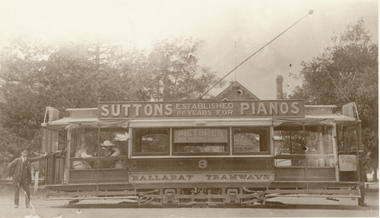
... The tram began its life as a Sydney C class tram possibly No. 16 being sold to Ballarat in 1905....The tram began its life as a Sydney C class tram possibly No. 16 being sold to Ballarat in 1905. Yields information about former Sydney C class tram after its sale to Ballarat in 1905. trams tramways ESCo Suttons Pianos Ballarat tram 8 Black and white (slightly sepia toned) photo. ...Photo of ESCo No. 8 - side on view of tram. Has Driver standing by front of tram, a person, possibly conductor standing by rear, though tram set up for one man operation. Good detailed side view of tram, showing arrangements of blinds, seats etc. Has "Suttons Pianos" advertisement on side and "Pictures Coliseum tonight" ad on the inside middle window. Tram has been converted to have windscreens. Three ladies on the front seat section of the tramcar. Date unknown. Post 1912. Tram still has magnetic brakes. The step section by the seats has not been covered over with sheet metal to prevent people standing on the steps, as shown in later photographs. Photo taken in Wendouree Parade with the Garden's Kiosk in the background. The tram began its life as a Sydney C class tram possibly No. 16 being sold to Ballarat in 1905.Yields information about former Sydney C class tram after its sale to Ballarat in 1905.Black and white (slightly sepia toned) photo.trams, tramways, esco, suttons pianos, ballarat, tram 8 -
 Puffing Billy Railway
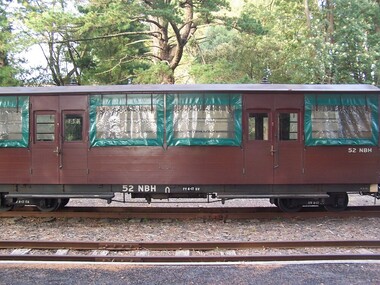
52 NBH - Passenger Carriage - Excursion Car for wheelchairs, 1983
... 52NBH - Excursion Car for wheelchairs - specially built for Wheelchair access allowing it to carry 24 passengers or 20 passengers and 3 wheelchairs, or 16 passengers & 6 wheelchairs Puffing Billy Service History or Notes Coupled Length 31 feet 4 inches (9550 mm) Width 6 feet 3 inches (1905 mm) Height 9 feet 2 inches (2794 mm) Weight 8 tons Capacity 24 passengers, or 20 passengers and 3 wheelchairs, or 16 passengers and 6 wheelchairs Number Built 2 In use 2 In 1981 the first of two extended NBHs with provision for wheelchair passengers (double door access and fold-up seats) was built, the second following in 1983. ...52NBH - Excursion Car for wheelchairs - specially built for Wheelchair access allowing it to carry 24 passengers or 20 passengers and 3 wheelchairs, or 16 passengers & 6 wheelchairs Puffing Billy Service History or Notes Coupled Length 31 feet 4 inches (9550 mm) Width 6 feet 3 inches (1905 mm) Height 9 feet 2 inches (2794 mm) Weight 8 tons Capacity 24 passengers, or 20 passengers and 3 wheelchairs, or 16 passengers and 6 wheelchairs Number Built 2 In use 2 In 1981 the first of two extended NBHs with provision for wheelchair passengers (double door access and fold-up seats) was built, the second following in 1983. ...52NBH - Excursion Car for wheelchairs - specially built for Wheelchair access allowing it to carry 24 passengers or 20 passengers and 3 wheelchairs, or 16 passengers & 6 wheelchairs Puffing Billy Service History or Notes Coupled Length 31 feet 4 inches (9550 mm) Width 6 feet 3 inches (1905 mm) Height 9 feet 2 inches (2794 mm) Weight 8 tons Capacity 24 passengers, or 20 passengers and 3 wheelchairs, or 16 passengers and 6 wheelchairs Number Built 2 In use 2 In 1981 the first of two extended NBHs with provision for wheelchair passengers (double door access and fold-up seats) was built, the second following in 1983. These were numbered 51 & 52 - a separate number series because of their length made them different from the other NBHs. May 2016 - In for repairs to the roofHistoric - Puffing Billy Railway Narrow Gauge - Passenger Rolling Stock: Excursion Car specially built for Wheelchairs access52 NBH - Excursion Car for wheelchairs - specially built for Wheelchair access allowing it to carry 24 passengers or 20 passengers and 3 wheelchairs, or 16 passengers & 6 wheelchairs made of wrought iron and timber52NBHpuffing billy, pbr, rolling stock , 52 nbh, narrow gauge - passenger rolling stock: excursion car for wheelchair
