
Showing 2478 items matching " ireland."
-
 Bendigo Historical Society Inc.
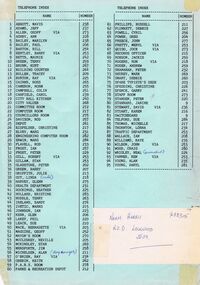
Document - BENDIGO SALEYARDS COLLECTION: TELEPHONE INDEX
... BENDIGO Council cattle markets Bendigo Saleyards Collection - Telephone Index Abbott Mavis Adams Jeff Allen Geoff Ashby Ann Bailey Marilyn Bailey Paul Barton Bill Bentley Barry Betts Maurie Breen Terry Bruhn Kurt Bullen Tracey Burton Ray Cairns Ross Cameron Norm Campbell Colin Canfield Carol Davison Rod Eisfelder Christine Elvey Marg Erwin Marg Flavell Rod Frost Ian Frost Peter Gill Robert Gillam Stan Gladstone Peter Green Barry Griffith Julie Guy Linda Harvey Glenn Hockings Heather Holland Kristine Huddle Terry Ireland Sandy Ivetic Marko Johnson Ian Kerr Glen Lakey Phil Leach Sue Mace Bernadette Maguire Geoff McCluskey Neville McKindley Stan Mensforth Jim Michelson Alan O'Brien Ray Oberin Keith Phillips Russell Plumkett Debbie Powell Cyril Power Reg Preece John Pretty Meryl Quigg Jock Robson Jackie Rogers Ron Rosen Andrew Shanahan Peter Shurey Mark Smart Debbie Spedding Christine Spence Garry Standen Peter Stannard Janine Stewart David Stuart Karen Telford Sue Thomas Michelle Thornton Lorna Wallace Ian Williams Kaye Wilson John Wood Craig Wrigley Neal Yanner Ken Young Alan Young Daryl Norm Harris Typed blue page titled Telephone Index. ...Typed blue page titled Telephone Index. It has the name and number of various people and offices. Piece of white paper attached has the name , address and number of Norm Harris. Also two blank pages ruled into columns for Agents, Cows & Calves, Springing Heifers, Steers and Unjoined Heifers.bendigo, council, cattle markets, bendigo saleyards collection - telephone index, abbott mavis, adams jeff, allen geoff, ashby ann, bailey marilyn, bailey paul, barton bill, bentley barry, betts maurie, breen terry, bruhn kurt, bullen tracey, burton ray, cairns ross, cameron norm, campbell, colin, canfield carol, davison rod, eisfelder christine, elvey marg, erwin marg, flavell rod, frost ian, frost peter, gill robert, gillam stan, gladstone peter, green barry, griffith julie, guy linda, harvey glenn, hockings heather, holland kristine, huddle terry, ireland sandy, ivetic marko, johnson ian, kerr glen, lakey phil, leach sue, mace bernadette, maguire geoff, mccluskey neville, mckindley stan, mensforth jim, michelson alan, o'brien ray, oberin keith, phillips russell, plumkett debbie, powell cyril, power reg, preece john, pretty meryl, quigg jock, robson jackie, rogers ron, rosen andrew, shanahan peter, shurey mark, smart debbie, spedding christine, spence garry, standen peter, stannard janine, stewart david, stuart karen, telford sue, thomas michelle, thornton lorna, wallace ian, williams kaye, wilson john, wood craig, wrigley neal, yanner ken, young alan, young daryl, norm harris -
 Bendigo Historical Society Inc.
Document - FRANK CUSACK: 'THE GERMAN CONTRIBUTION TO EARLY BENDIGO'
... BENDIGO Mining early German history German Diggers Diamond Hill Mangurang Mexican enclave at Eaglehawke Irish town Back Creek Ironbark Gully White Hills Georg Bruhn Menge Jacob Brahe. ...'The German Contribution to Early Bendigo' ( 23rd Feb) 1986 lecture by Frank Cusack on the occasion of the 130th anniversary of the first Lutheran service in Bendigo). Origins of the large flow of Germans to the goldfields (failure of liberalism at home; conscription threat). Mention of George Bruhn, Menge (opal discoverer), Jacob Brahe; Ballerstedt; Wittscheibe; Schlemm; Ernst Mueller; Morris Collman; Louis Samuels; Gustave Adolphus Hugo Thureau; Backhaus; Pastor Friedrich Leypoldt; various German vignerons; ''The Hamburg'' (hotel); ''The Berlin'' (hotel); ''The European'' (hotel); Deutsche Verein; Paul Bucholz; Herr Gollmick; Early architects - Getzschmann, Bosselmann, Nicolai, Emil Mauermann, Friedrich Lehmann; Medical people - Dr Barnett; , Dr Landvoigt. Dr Sandner Snr.; others - Conrad Meyerhoff (patent gold cradle), Benno Sluytmann (first electricity plant in Bendigo), Gustavus con Tempsky (re Burke & Wills expedition), Ludwig Becker (Burke & Wills expedition); Josef Von St. Nicolai (Freemasonry); Captain Von Paleski.bendigo, mining, early german history, german diggers, diamond hill, mangurang, mexican enclave at eaglehawke, irish town, back creek, ironbark gully, white hills, georg bruhn, menge, jacob brahe. old bendigo cemetery. -
 Bendigo Historical Society Inc.
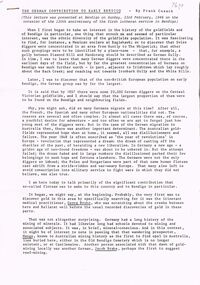
Document - FRANK CUSACK: 'THE GERMAN CONTRIBUTION TO EARLY BENDIGO'
... BENDIGO Mining early German history German Diggers Diamond Hill Mangurang Mexican enclave at Eaglehawke Irish town Back Creek Ironbark Gully White Hills Georg Bruhn Menge Jacob Brahe. ...'The German Contribution to Early Bendigo' ( 23rd Feb) 1986 lecture by Frank Cusack on the occasion of the 130th anniversary of the first Lutheran service in Bendigo). Origins of the large flow of Germans to the goldfields (failure of liberalism at home; conscription threat). Mention of George Bruhn, Menge (opal discoverer), Jacob Brahe; Ballerstedt; Wittscheibe; Schlemm; Ernst Mueller; Morris Collman; Louis Samuels; Gustave Adolphus Hugo Thureau; Backhaus; Pastor Friedrich Leypoldt; various German vignerons; ''The Hamburg'' (hotel); ''The Berlin'' (hotel); ''The European'' (hotel); Deutsche Verein; Paul Bucholz; Herr Gollmick; Early architects - Getzschmann, Bosselmann, Nicolai, Emil Mauermann, Friedrich Lehmann; Medical people - Dr Barnett; , Dr Landvoigt. Dr Sandner Snr.; others - Conrad Meyerhoff (patent gold cradle), Benno Sluytmann (first electricity plant in Bendigo), Gustavus con Tempsky (re Burke & Wills expedition), Ludwig Becker (Burke & Wills expedition); Josef Von St. Nicolai (Freemasonry); Captain Von Paleski.Frank Cusackbendigo, mining, early german history, german diggers, diamond hill, mangurang, mexican enclave at eaglehawke, irish town, back creek, ironbark gully, white hills, georg bruhn, menge, jacob brahe. old bendigo cemetery. -
 Glen Eira Historical Society
Article - COANE, JOHN MONTGOMERY
... ... Ireland...Victorian Institute of Surveyors County Donegal Ireland Mordialloc Ballyshannon Mines Department Sludge Abatement Board Coane Henry Edward Surveyors Engineers Land Surveyors Board Coane Henry James J.M. and H.E. ...This file contains one item about Coane and his family: 1/A one page extract from The Australian Dictionary of Biography Vol. 8 page 35 on John Montgomery Coane, Surveyor and Consulting Engineer, his partnership with George Hudson and later when his two sons joined the business. It details many of the projects he designed for rural Victoria and New South Wales and his other areas including Consulting to The Pacific Phosphate Co. Ltd of London and to the City of Brighton where he lived.coane john montgomery, blacker’s orchard & cannery co., victorian institute of surveyors, county donegal, ireland, mordialloc, ballyshannon, mines department sludge abatement board, coane henry edward, surveyors, engineers, land surveyors board, coane henry james, j.m. and h.e. coane, coane jane nee montgomery, coane john montgomery junior, victorian education department, australian roads, collas emma anna hunt, books, grant george hudson, coutie b.m., state electricity of victoria, melbourne, epsom racecourse, racecourses, brighton, city of brighton, brighton re-adaptation society, brighton cemetery, cemeteries, southern roger j, australian dictionary of biography vol. 8, early settlers -
 Bendigo Historical Society Inc.
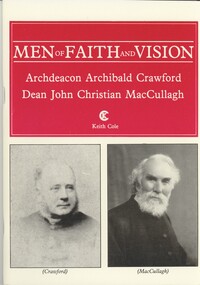
Book - MEN OF FAITH AND VISION, c1989
... CHURCH History anglican church Archdeacon Archibald Crawford 1815-1890 Ministry in Ireland Migration to Australia Castlemaine John Maccullagh Men of Faith and Vision. ...Men of Faith and Vision. Archdeacon Archibald Crawford, Dean John Christian MacCullagh. Publisher Keith Cole Publication. Printed by D G Walker Pty Ltd, Railway Place, Bendigo Victoria 3550. 52 pages. Photographs and illustrations. Signed by Keith Cole. With Indexchurch, history, anglican church, archdeacon archibald crawford, 1815-1890, ministry in ireland, migration to australia, castlemaine, john maccullagh -
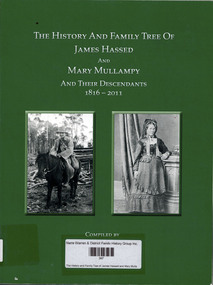 Narre Warren and District Family History Group
Book, The History and Family Tree of James Hassed and Mary Mullampy and thier descendants: 1816 - 2011, 2011
... During the many times he spent with Nana Patty he found that she was writing to the Bradshaw family in Ireland, Nana Patty's mother was Mary Bradshaw, who migrated to Australia in 1885 as a young lady along with five of her brothers. ...The editor's interest in the Hassed Family goes back many years to the time when he first met his wife, Elaine Patricia Cox, daughter of Leonard and Helen (Nellie) Cox (nee Morris). Over the years he got to know and love her Nan Patty, "Patricia Honora Morris" (nee Hassed) and her extended family. During the many times he spent with Nana Patty he found that she was writing to the Bradshaw family in Ireland, Nana Patty's mother was Mary Bradshaw, who migrated to Australia in 1885 as a young lady along with five of her brothers. Mary Bradshavv spent several years in Queensland with her brother John Bradshaw, before moving to Bullengarook, Victoria to stay with her Auntie Eliza Coffey (McInerney), who was a sister of Mary Bradshaw's mother Honora Bradshaw (nee McInerney). Eliza and her husband Thomas Coffey had a farm next to the Hassed farm in Bullengarook, Thomas had died in 1885 and Mary came to help on the farm, it was not too long before Mary met Michael Hassed next door, eventually marrying Michael in 1893.non-fictionThe editor's interest in the Hassed Family goes back many years to the time when he first met his wife, Elaine Patricia Cox, daughter of Leonard and Helen (Nellie) Cox (nee Morris). Over the years he got to know and love her Nan Patty, "Patricia Honora Morris" (nee Hassed) and her extended family. During the many times he spent with Nana Patty he found that she was writing to the Bradshaw family in Ireland, Nana Patty's mother was Mary Bradshaw, who migrated to Australia in 1885 as a young lady along with five of her brothers. Mary Bradshavv spent several years in Queensland with her brother John Bradshaw, before moving to Bullengarook, Victoria to stay with her Auntie Eliza Coffey (McInerney), who was a sister of Mary Bradshaw's mother Honora Bradshaw (nee McInerney). Eliza and her husband Thomas Coffey had a farm next to the Hassed farm in Bullengarook, Thomas had died in 1885 and Mary came to help on the farm, it was not too long before Mary met Michael Hassed next door, eventually marrying Michael in 1893.mary mullampy, keilor (vic.), bullengarook (vic.), james healy, sarah hassed, james hassed, richard hassed, jemima mcintosh, michael hassed, mary bradshaw, ann hassed, mary anne hassed, ellen o'donnell, edward hassed -
 Narre Warren and District Family History Group
Book, Bev Rasker, Nilon family. Michael Nilon and his family in Australia, 2000
... As we say in Irish'Molann an obair an fear' Sean Neylon, Kilkee, Co Clare Ireland. November 2000 Nilon family. Michael Nilon and his family in Australia. ...In the early 19th Century rural Ireland was experiencing severe economic and social problems Population continued to grow as couples married at 16 or 17 and proceeded to have an average of 9 children. At the bottom end of the social scale labourers and the very smallest of farmers were in dire poverty. For the more comfortable farmers with 20 acres or so circumstances were better as they were in a position to grow additional crops which generated extra valuable income. Crop failures in 1822 and 1837 and again in 1845 to 1848 brought about unendurable hardship and famine. It was against this backdrop that Michael Neylon (Nilon) left his native Benvoran, Kilmurry McMahon Co Clare in search of opportunity and a better life. Now Beverley Rasker (nee Nilon) has fully researched his arrival in Australia in 1841 and she has taken up his story and that of his many descendants. Having communicated with Beverley for some time, I eventually had the pleasure of meeting her in September 2000, during her 2nd trip to Ireland in connection with her research. She has now put together an excellent record of interesting and informative material, which indeed makes us all proud of the achievements of the Neylon (Nilon) family. As we say in Irish'Molann an obair an fear' Sean Neylon, Kilkee, Co Clare Ireland. November 2000non-fictionIn the early 19th Century rural Ireland was experiencing severe economic and social problems Population continued to grow as couples married at 16 or 17 and proceeded to have an average of 9 children. At the bottom end of the social scale labourers and the very smallest of farmers were in dire poverty. For the more comfortable farmers with 20 acres or so circumstances were better as they were in a position to grow additional crops which generated extra valuable income. Crop failures in 1822 and 1837 and again in 1845 to 1848 brought about unendurable hardship and famine. It was against this backdrop that Michael Neylon (Nilon) left his native Benvoran, Kilmurry McMahon Co Clare in search of opportunity and a better life. Now Beverley Rasker (nee Nilon) has fully researched his arrival in Australia in 1841 and she has taken up his story and that of his many descendants. Having communicated with Beverley for some time, I eventually had the pleasure of meeting her in September 2000, during her 2nd trip to Ireland in connection with her research. She has now put together an excellent record of interesting and informative material, which indeed makes us all proud of the achievements of the Neylon (Nilon) family. As we say in Irish'Molann an obair an fear' Sean Neylon, Kilkee, Co Clare Ireland. November 2000michael nilon, bolong (nsw), cootamundra (nsw) -
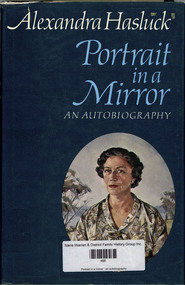 Narre Warren and District Family History Group
Book, Alexandra Hasluck, Portrait in a mirror : an autobiography, 1981
... In her autobiography she brings her discerning eye to bear on her own ancestors, and with vivid sketches of her English, Irish and Scottish forebears portrays what she regards as the typical experiences of British settlers. ...Alexandra Hasluck is well-known as one of a distinguished group of female historians who have done so much, by their perceptive biographies, to enlarge our knowledge of the characters of our history. In her autobiography she brings her discerning eye to bear on her own ancestors, and with vivid sketches of her English, Irish and Scottish forebears portrays what she regards as the typical experiences of British settlers. The same observing eye and mind follow her basically happy childhood and youth in Western Australia to becoming herself a 'Governor's Lady'. She married Paul Hasluck, then sub-editor on the West Australian newspaper. When he entered the diplomatic sphere she moved with him to Canberra and her descriptions of life in war-time Canberra and later in America, are enlivened by humorous sketches of people and events which few people have been fortunate enough to experience. These opportunities increased when, on their return to Australia, her husband became a member of Parliament and a Cabinet Minister in Sir Robert Menzies' Government, first as Minister for Territories and later as Foreign Minister. Both positions provided them with many new experiences: of journeys to the remoter parts of Australia and New Guinea in his responsibility for Territories and, later, as Foreign Minister, of visits to the capitals of the world, meeting most of the great men of our time. Even wider vistas opened when her husband became Governor General of Australia and the observing historian was able to record characteristically life at Government House with its constant stream of visitors colouring its own equally interesting inner life. Portrait in a Mirror is not only a fascinating story but also a remarkable self-portrait, told through letters diaries and speeches as well as her own commentaries ot a watching woman: a dispassionate observer of the famous people and great events of her time, who was unaffected by her varying environments and remained, as she had begun, a typical scion of that early colonial stock - intelligent, literate, strongly-opinioned - and staunchly Australian. (Cover)non-fictionAlexandra Hasluck is well-known as one of a distinguished group of female historians who have done so much, by their perceptive biographies, to enlarge our knowledge of the characters of our history. In her autobiography she brings her discerning eye to bear on her own ancestors, and with vivid sketches of her English, Irish and Scottish forebears portrays what she regards as the typical experiences of British settlers. The same observing eye and mind follow her basically happy childhood and youth in Western Australia to becoming herself a 'Governor's Lady'. She married Paul Hasluck, then sub-editor on the West Australian newspaper. When he entered the diplomatic sphere she moved with him to Canberra and her descriptions of life in war-time Canberra and later in America, are enlivened by humorous sketches of people and events which few people have been fortunate enough to experience. These opportunities increased when, on their return to Australia, her husband became a member of Parliament and a Cabinet Minister in Sir Robert Menzies' Government, first as Minister for Territories and later as Foreign Minister. Both positions provided them with many new experiences: of journeys to the remoter parts of Australia and New Guinea in his responsibility for Territories and, later, as Foreign Minister, of visits to the capitals of the world, meeting most of the great men of our time. Even wider vistas opened when her husband became Governor General of Australia and the observing historian was able to record characteristically life at Government House with its constant stream of visitors colouring its own equally interesting inner life. Portrait in a Mirror is not only a fascinating story but also a remarkable self-portrait, told through letters diaries and speeches as well as her own commentaries ot a watching woman: a dispassionate observer of the famous people and great events of her time, who was unaffected by her varying environments and remained, as she had begun, a typical scion of that early colonial stock - intelligent, literate, strongly-opinioned - and staunchly Australian. (Cover)autobiography, alexandra hasluck, paul hasluck, governor-general -
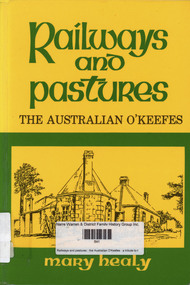 Narre Warren and District Family History Group
Book, Mary Nanette Healy, Railways and pastures : the Australian O'Keefes : a tribute to their pioneering efforts, 1988
... O'Keefe Family Edward O'Keefe Ellen O'Keefe Andrew O'Keefe Mary O'Keefe railways A story of an Irish family migrating to Australia in 1854. ...A story of an Irish family migrating to Australia in 1854. They took on many ventures between 1854 and 1904.non-fictionA story of an Irish family migrating to Australia in 1854. They took on many ventures between 1854 and 1904.o'keefe family, edward o'keefe, ellen o'keefe, andrew o'keefe, mary o'keefe, railways -
 Narre Warren and District Family History Group
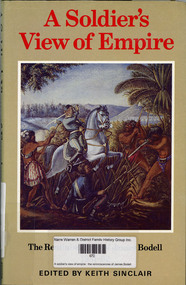
Book, James Bodell, A soldier's view of empire : the reminiscences of James Bodell, 1831-92, 1982
... At sixteen he enlisted in the army and was sent first to Ireland, then slowly recovering from the great potato famine, and then to Hong Kong, where most of his regiment died of malaria or other tropical diseases. ...James Bodell was born in 1831 near Nottingham, the son of poor parents. At sixteen he enlisted in the army and was sent first to Ireland, then slowly recovering from the great potato famine, and then to Hong Kong, where most of his regiment died of malaria or other tropical diseases. He bought himself out of the army and went to Van Doiemen's Land (later Tasmania) where he kept a hotel, but eventually became disgusted with the atmosphere of a recent convict settlement. In 1856 he moved to Victoria, where the great gold rush had begun, prospered, but finally lost his money in unwise speculation during a period of excessive drinking. In 1863 he volunteered to serve in New Zealand in the Maori wars. Discharged in 1866, he was given a town lot of land as well as farming land by the government at the town of Tauranga, where he was an outstanding pioneer, making money and becoming Mayor. He later made two return trips to England to visit his family in Leicester. In about 1881 he began to write his reminiscences, an ambitious undertaking for a man with so little formal education, and in 1978, on the death of one of his English descendants, the original manuscript was offered to the Bodley Head for publication. It has been edited by Keith Sinclair and presents a unique picture of how the British Empire was colonised and what life in the British army of the time was like. This is a frank, often amusing and colourful account of the Empire seen from below. (Inside cover)non-fictionJames Bodell was born in 1831 near Nottingham, the son of poor parents. At sixteen he enlisted in the army and was sent first to Ireland, then slowly recovering from the great potato famine, and then to Hong Kong, where most of his regiment died of malaria or other tropical diseases. He bought himself out of the army and went to Van Doiemen's Land (later Tasmania) where he kept a hotel, but eventually became disgusted with the atmosphere of a recent convict settlement. In 1856 he moved to Victoria, where the great gold rush had begun, prospered, but finally lost his money in unwise speculation during a period of excessive drinking. In 1863 he volunteered to serve in New Zealand in the Maori wars. Discharged in 1866, he was given a town lot of land as well as farming land by the government at the town of Tauranga, where he was an outstanding pioneer, making money and becoming Mayor. He later made two return trips to England to visit his family in Leicester. In about 1881 he began to write his reminiscences, an ambitious undertaking for a man with so little formal education, and in 1978, on the death of one of his English descendants, the original manuscript was offered to the Bodley Head for publication. It has been edited by Keith Sinclair and presents a unique picture of how the British Empire was colonised and what life in the British army of the time was like. This is a frank, often amusing and colourful account of the Empire seen from below. (Inside cover)james bodell, maori wars -
 Narre Warren and District Family History Group
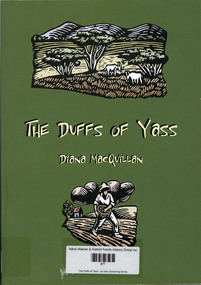
Book, Diana MacQuillan, The Duffs of Yass : an Irish pioneering family, 2003
... (FamilySearch catalogue) The Duffs of Yass : an Irish pioneering family Book Diana MacQuillan ...James Duff, son of John Duff and Dora Connell, was born circa 1826 in County Kildare, Ireland. He married Maria Matilda Torpey, daughter of John Torphey and Bridget O'Heir, in 1863 in Yass, New South Wales. They had twelve children. He died in 1896. Includes Evans, Eyre, Gower, Hall, Johns, Little, Pearson and related families. Includes bibliographical references and index. (FamilySearch catalogue)non-fictionJames Duff, son of John Duff and Dora Connell, was born circa 1826 in County Kildare, Ireland. He married Maria Matilda Torpey, daughter of John Torphey and Bridget O'Heir, in 1863 in Yass, New South Wales. They had twelve children. He died in 1896. Includes Evans, Eyre, Gower, Hall, Johns, Little, Pearson and related families. Includes bibliographical references and index. (FamilySearch catalogue)james duff, catherine josephine buckmaster, maria matilda torpey, yass (nsw) -
 Narre Warren and District Family History Group
Book, Debbie McMahon, The Life of Thomas and Catherine McMahon in Australia, 1997
... Thomas McMahon Catherine McMahon August Krueger Margaret Reeves William McMahon Ellen Jane McDermott Eva Caroline Grenville The story of siblings Thomas and Catherine McMahon who left Ireland for Australia in 1859. The book explores their journey, where they settled, who they married and their children. ...The story of siblings Thomas and Catherine McMahon who left Ireland for Australia in 1859. The book explores their journey, where they settled, who they married and their children.Blue cover with black border and text. Six pages.non-fictionThe story of siblings Thomas and Catherine McMahon who left Ireland for Australia in 1859. The book explores their journey, where they settled, who they married and their children. thomas mcmahon, catherine mcmahon, august krueger, margaret reeves, william mcmahon, ellen jane mcdermott, eva caroline grenville -
 Narre Warren and District Family History Group
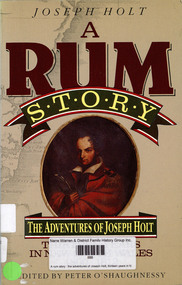
Book, Joseph Holt et al, A rum story : the adventures of Joseph Holt, thirteen years in New South Wales (1800-12), 1988
... Miles Byrne Governor Macquarie Tells us the story of Irish Joseph Holt's 13 years in New South Wales 1800 -12 A rum story : the adventures of Joseph Holt, thirteen years in New South Wales (1800-12) Book Joseph Holt Peter O'Shaughnessy Kangaroo Press ...Tells us the story of Irish Joseph Holt's 13 years in New South Wales 1800 -12non-fictionTells us the story of Irish Joseph Holt's 13 years in New South Wales 1800 -12miles byrne, governor macquarie -
 Narre Warren and District Family History Group
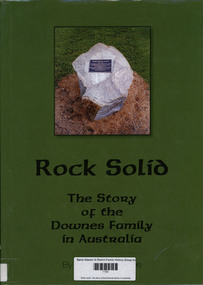
Book, Graham Downes, Rock solid : the story of the Downes family in Australia, 2013
... Ellen Goodwin A genealogical and historical account of the Downes family, tracing their roots from Ireland to Australia. The book explores the life of Timothy Downes (1794–1894) and his descendants, detailing their experiences, challenges, and contributions to Australian society. ...A genealogical and historical account of the Downes family, tracing their roots from Ireland to Australia. The book explores the life of Timothy Downes (1794–1894) and his descendants, detailing their experiences, challenges, and contributions to Australian society. It includes maps, portraits, and genealogical tables to provide a comprehensive view of the family's journey.144, 187 pages : illustrations, maps, portraits, genealogical tables ; 30 cmnon-fictionA genealogical and historical account of the Downes family, tracing their roots from Ireland to Australia. The book explores the life of Timothy Downes (1794–1894) and his descendants, detailing their experiences, challenges, and contributions to Australian society. It includes maps, portraits, and genealogical tables to provide a comprehensive view of the family's journey.timothy downes (c1794-1894), downes family, st. james (vic.), ellen goodwin -
 Narre Warren and District Family History Group
Book, Haydn John Smith, Flynn Family of Haddon, 1983
... Laurence Flynn Bridget Baker Laurence John Flynn Elizabeth Hayden his small booklet tells us the story of the Flynn and Baker families journey from Ireland to Australia Flynn Family of Haddon Book Haydn John Smith ...his small booklet tells us the story of the Flynn and Baker families journey from Ireland to Australianon-fictionhis small booklet tells us the story of the Flynn and Baker families journey from Ireland to Australia laurence flynn, bridget baker, laurence john flynn, elizabeth hayden -
 Narre Warren and District Family History Group
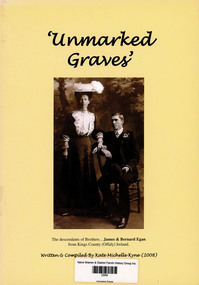
Book, Kate Michelle Kyne, Unmarked Graves, 2008
... This book tells us the story of the Egan Family who came to Australia from Kings County Ireland. Unmarked Graves Book Kate Michelle Kyne ...This book tells us the story of the Egan Family who came to Australia from Kings County Ireland.non-fictionThis book tells us the story of the Egan Family who came to Australia from Kings County Ireland.james egan, bernard egan, kings county (offaly) (irl.) -
 Narre Warren and District Family History Group
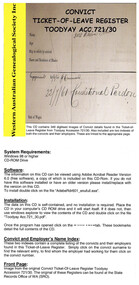
CD, W.A. Genealogical Society, Inc, Convict ticket-of-leave register, Toodyay Acc. 721/30, 2004
... Eighteen years later the last convict transport, the Hougoumont, arrived with 280 convicts, mostly Irish political prisoners, making a total of nearly 10,000 convicts arriving in the colony. ...Convict ticket-of-leave register, Toodyay Acc. 721/30 The Swan River Colony, founded in 1829, as a free settlement needed an injection of capital and an increase in population if it was to thrive. In late 1849 a petition signed by prominent settlers, requesting that male convicts be sent to the Swan River, was submitted to the colonial office. This request was welcomed and transportation officially began to Western Australia in 1850. The first convict ship, the Scindian, arrived at Fremantle on June 1 carrying 75 convicts and a small group of Enrolled Pensioner Guards and their families. Eighteen years later the last convict transport, the Hougoumont, arrived with 280 convicts, mostly Irish political prisoners, making a total of nearly 10,000 convicts arriving in the colony. This availability of cheap labour resulted in many convicts being granted their 'ticket-of-leave' before their sentences had expired, which allowed private settlers to employ them. To facilitate the distribution of working men throughout the settlement, hiring depots were established in key town and country areas. Ticket-of-leave men could not leave their assigned district without permission; had to carry their 'ticket' with them at all times and produce it to any official on demand; as well as lodge an official form with the local magistrate on January 1 and July 1 every year which detailed residence, employer and rate of pay. On the positive side, ticket of leave men were able to choose their own employer and even work for themselves. They could also marry with permission of the authorities and even own land. At the end of their sentences, ex-convicts or 'expirees' were given their freedom, although those with life or long-term sentences were often granted Conditional Pardons, which conferred most of the benefits of freedom but did not allow them to return to England. The movement of convicts around the colony is preserved in the many surviving convict registers which are now kept in the State Records Office of WA . These registers list the names of employers and the dates convicts were employed, and detail the rates of pay and any brushes the convict had with authorities. Many of the employers were themselves 'ticket-of-leave' men, expirees or conditional pardon men. One of the convict hiring depots was at Toodyay and two registers from this institution for the period 1862 to 1870 have been archived in the State Records Office at Accession Number 721, volumes 30 and 31. The impact these men had on the infant colony can best be guessed from the statistical data available from official records. In 1850 there were only 5,000 residents in the colony, but at the end of the convict period the number had risen to 25,000. While some convicts emigrated to other parts of Australia after receiving their conditional pardons, the majority stayed in Western Australia. Some had their families join them from the United Kingdom, while others married the young women who came out on the 'Bride Ships'. Over the years family historians' research into their forebears' convict origins have shown the profound influence these men have had on the development of the State of Western Australia and the districts in which they worked, settled and raised their families.1 optical discnon-fictionConvict ticket-of-leave register, Toodyay Acc. 721/30 The Swan River Colony, founded in 1829, as a free settlement needed an injection of capital and an increase in population if it was to thrive. In late 1849 a petition signed by prominent settlers, requesting that male convicts be sent to the Swan River, was submitted to the colonial office. This request was welcomed and transportation officially began to Western Australia in 1850. The first convict ship, the Scindian, arrived at Fremantle on June 1 carrying 75 convicts and a small group of Enrolled Pensioner Guards and their families. Eighteen years later the last convict transport, the Hougoumont, arrived with 280 convicts, mostly Irish political prisoners, making a total of nearly 10,000 convicts arriving in the colony. This availability of cheap labour resulted in many convicts being granted their 'ticket-of-leave' before their sentences had expired, which allowed private settlers to employ them. To facilitate the distribution of working men throughout the settlement, hiring depots were established in key town and country areas. Ticket-of-leave men could not leave their assigned district without permission; had to carry their 'ticket' with them at all times and produce it to any official on demand; as well as lodge an official form with the local magistrate on January 1 and July 1 every year which detailed residence, employer and rate of pay. On the positive side, ticket of leave men were able to choose their own employer and even work for themselves. They could also marry with permission of the authorities and even own land. At the end of their sentences, ex-convicts or 'expirees' were given their freedom, although those with life or long-term sentences were often granted Conditional Pardons, which conferred most of the benefits of freedom but did not allow them to return to England. The movement of convicts around the colony is preserved in the many surviving convict registers which are now kept in the State Records Office of WA . These registers list the names of employers and the dates convicts were employed, and detail the rates of pay and any brushes the convict had with authorities. Many of the employers were themselves 'ticket-of-leave' men, expirees or conditional pardon men. One of the convict hiring depots was at Toodyay and two registers from this institution for the period 1862 to 1870 have been archived in the State Records Office at Accession Number 721, volumes 30 and 31. The impact these men had on the infant colony can best be guessed from the statistical data available from official records. In 1850 there were only 5,000 residents in the colony, but at the end of the convict period the number had risen to 25,000. While some convicts emigrated to other parts of Australia after receiving their conditional pardons, the majority stayed in Western Australia. Some had their families join them from the United Kingdom, while others married the young women who came out on the 'Bride Ships'. Over the years family historians' research into their forebears' convict origins have shown the profound influence these men have had on the development of the State of Western Australia and the districts in which they worked, settled and raised their families.western australia, convicts western australia, toodyay registers -
 Alfred Hospital Nurses League - Nursing History Collection
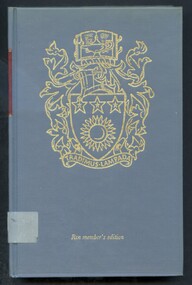
Book - Illustrated book, Gerald Bowman, The lamp and the book: the story of the Rcn, 1916-1966, 1967
... of significance to the AHNL as it is a history of the development of nursing as a profession Royal College of Nursing National Council of Nurses of Great Britain and Northern Ireland History of the Royal College of Nursing 1916-1966 At the bottom right of the front end-page is a printed black and white donation sticker: black Maltese cross in circle, "This book was donated to Alfred Archival Association Nursing Division by'. ...History of the Royal College of Nursing 1916-1966Illustrated book with clear protective cover. The book has a grey cover. on the front is the coat of arms of the Royal College of Nursing and the words ' Rcn members edition' both embossed in gilt. Title, on a maroon background under author's name, and above publishers name, all embossed in gilt on spinenon-fictionHistory of the Royal College of Nursing 1916-1966royal college of nursing, national council of nurses of great britain and northern ireland -
 Alfred Hospital Nurses League - Nursing History Collection
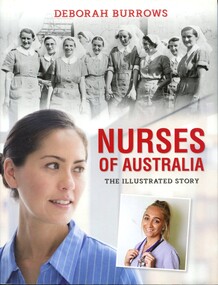
Book - Illustrated book, Deborah Burrows 1959, Nurses of Australia: The illustrated story, 2018
... It would take the arrival of a group of dedicated Irish nuns, followed by Florence Nightingale-trained nurses - and decades of constant and continuing campaigning - to transform nursing into what it is today: the most trusted profession in Australia. ...From the First Nation caregivers who healed, birthed and nursed for millennia to the untrained and ill-equipped convict men and women who cared for the sick in the fledgling colony of New South Wales, nursing has been practised in Australia since the beginning. It would take the arrival of a group of dedicated Irish nuns, followed by Florence Nightingale-trained nurses - and decades of constant and continuing campaigning - to transform nursing into what it is today: the most trusted profession in Australia. Nurses will recognise their own lived experience in stories about training days, nurses' quarters, changing uniforms, changing roles, the arrival of male nurses and current pathways to nursing. Produced in collaboration with the Australian College of Nursing and the Congress of Aboriginal and Torres Strait Islander Nurses and Midwives, with additional information provided by the Australian Nursing and Midwifery Federation, this is the story of nursing in Australia.Illustrated book. Title and authors name printed on front cover and spine (red ink on front and white ink on red background on spine) Background of front cover has three photographs: black and white photograph of a group of nurses (Malaya 1941 group portrait of Australian Army Nursing Service nurses of the 2/4th Casualty Clearing Station), colour photo of a nurse looking over her shoulder, and a coloured photo of an Indigenous nurse. The back cover has a summary of the book along with four coloured photographs: Portrait of a nun with constitution and quill (Sister Mary Augustine Aikenhead by Nicholas Joseph Cowley), A nurse in uniform with veil (Vivian Bull winkel 1941), an indigenous woman (Lois O'Donoghue) an enrolled nurse (Samuel Yenui)non-fictionFrom the First Nation caregivers who healed, birthed and nursed for millennia to the untrained and ill-equipped convict men and women who cared for the sick in the fledgling colony of New South Wales, nursing has been practised in Australia since the beginning. It would take the arrival of a group of dedicated Irish nuns, followed by Florence Nightingale-trained nurses - and decades of constant and continuing campaigning - to transform nursing into what it is today: the most trusted profession in Australia. Nurses will recognise their own lived experience in stories about training days, nurses' quarters, changing uniforms, changing roles, the arrival of male nurses and current pathways to nursing. Produced in collaboration with the Australian College of Nursing and the Congress of Aboriginal and Torres Strait Islander Nurses and Midwives, with additional information provided by the Australian Nursing and Midwifery Federation, this is the story of nursing in Australia.nurses-australia-history, nursing-australia-history -
Glen Eira Historical Society
Newspaper - GLENHUNTLY
... Kendall Press Norman Carol Ormond East Primary School Norman Stuart Norman Cameron Estrella Kindergarten Solway Primary School Higgins Electorate Committee Higgins Area Finance Committee National Stationers and Office Suppliers Association Oakleigh Chamber of Commerce Anti-C3 Action Group (ACTAG) Haywood Don Ireland Jim Ramsay Jim Gardner Barry Sessler Kurt Thompson Lindsay Booran Holden Glenhuntly Road Caulfield Newspaper GLENHUNTLY ...This file contains one item pertaining to Glenhuntly: 1/A copy of the 11/1981, Vol. 1, No. 1 edition (that is, the first edition) of the Glenhuntly News, a local newspaper. Each of its 8 pages except pages 6 and 8 contain material of relevance to Glen Eira. Page 1 features 3 items: an article about the action taken in the wake of a fire occurring at Glenhuntly Primary School on 29/10/1981, a short article about Caulfield resident’s misuse of rubbish bins, and an article (continued on page 7) about the beautification of the Koornang Road Shopping Centre. Page 2 features 2 items: an advertisement for Homestead Handyman Hardware, and an article in which the Liberal candidate for the seat of Glenhuntly, Peter Norman, comments on the State Government’s decision not to extend trading hours for large retailer. Page 3 features 4 items: 2 advertisements for volunteer work for the regional branch of the Liberal Party, an article about the many difficulties people face using an underpass at a railway crossing in North Road, and an article describing the aims of the newly-established newspaper itself. Pages 4 and 5 feature 1 item: an article about Peter Norman; his life, work and opinions. Page 6 features 1 item: an article(continued on page 7) by three American children – Anita, Fabos and Adrian (surnames unspecified) – detailing their visit to Melbourne. There does not appear to be anything of relevance to Glen Eira. Page 7 features 5 items: the continuations of the articles from pages 1 and 6, an advertisement for a pool party for young Caulfield/Glenhuntly Liberals, an advertisement for an antiques sale, and an article about the establishment of a technical school on the site of former Holmesglen Construction Factory in Malvern (not relevant to Glen Eira). Page 8 features 2 items: an article about the three certificates the Royal Life Saving Society of Australia offers children for swimming competency, and an advertisement for an automobile called the Gemini Sandpiper II. Neither is relevant to Glen Eira). Numerous black and white photographs throughout the newspaper illustrate the subjects at hand.‘glenhuntly news’, glenhuntly primary school, primary schools, fires, dolphin bill, st anthony’s school, dalton des, caulfield south primary school, gardenvale central primary school, norman peter, rubbish bins, koornang road shopping centre, carnegie neighbourhood study, car parks, caulfield city council, homestead handyman hardware, hardware stores, liberal party, railway crossings, north road, ormond railway station, strong chris mr., kendall press, norman carol, ormond east primary school, norman stuart, norman cameron, estrella kindergarten, solway primary school, higgins electorate committee, higgins area finance committee, national stationers and office suppliers association, oakleigh chamber of commerce, anti-c3 action group (actag), haywood don, ireland jim, ramsay jim, gardner barry, sessler kurt, thompson lindsay, booran holden, glenhuntly road, caulfield -
Glen Eira Historical Society
Article - MCKINNON
... McKinnon Cribben John Crop Production Markets Farmers Elster Creek McMillan Archibald Thomas Street Centre Road Wheatley Road Vineyards South Road Ormond Brighton Moorabbin Irish Immigrants Bentleigh Priests Hanrahan Pierce Hanrahan Johanna Caroll Michael Caroll Catherine Howes Eliza Howes John Howes Edward Shanahan Denis Shanahan Ellen Gould James Gould Catherine Howes George Bignell Road Jasper Road Tucker Road McGuiness Family Quinn Family Halinan Family Malane Family Inns The Gardeners Arms McKinnon Hotel Bent James Bent Thomas Tickets of Leave Murray Road Were Nicholas Sargood Family Ripponlea Mansions Elsternwick St. ...Brief typed history of McKinnon settlement taken from Moorabbin A Pictorial History 1862-1994 by John Cribben. Includes photocopied pages of railway gates, five land estate flyers and an article from the McKinnon Progress, undated.mckinnon, cribben john, crop production, markets, farmers, elster creek, mcmillan archibald, thomas street, centre road, wheatley road, vineyards, south road, ormond, brighton, moorabbin, irish, immigrants, bentleigh, priests, hanrahan pierce, hanrahan johanna, caroll michael, caroll catherine, howes eliza, howes john, howes edward, shanahan denis, shanahan ellen, gould james, gould catherine, howes george, bignell road, jasper road, tucker road, mcguiness family, quinn family, halinan family, malane family, inns, the gardeners arms, mckinnon hotel, bent james, bent thomas, tickets of leave, murray road, were nicholas, sargood family, ripponlea, mansions, elsternwick, st. stephens’ common school, church of england, school houses, evelyn street, st. john’s anglican church, telegraph offices, post offices, state schools, manchester road, north road, nicholls buildings, rivers frank, rivers ray, shops, pridgeon mr., elm grove, sobrin mr., clark misses, greaves bakery, armitage mrs., rout mr., tunnicliffe mrs., lance’s milk bar, johnson’s hardware shop, stiringer mrs., white horrie, robinson’s, mcinnerney’s flower shop, jean darling’s cakes, wyles jim, mckinnon progress association, glen orme avenue, ormond theatre, theatres, lester harry, the plaza, railway crossing, railway gates, wright street, nichols l., builders, pine grove, halls, st. elmo estate, patterson station estate, patterson road, brewer road, purton road, clee hill estate, railway park, hawthorn grove, wattle grove, elm grove, learys estate, manchester road, selkirk avenue, masters estate, lancaster street, moylan street, moorabbin railway crossing -
Glen Eira Historical Society
Document - Uniting Church Archives, Orrong Road, 78-66, Elsternwick
... Architect Gothic Revival Architecture Bluestone Architectural Features McCallum Alex Monuments and Memorials Oakleigh Arthur Stained Glass Cato Methodist Ladies College Orrong Road Uniting Church Cato Parish Chapels Architects Crouch T.J. Builders Ireland and Newton Ward Norma Religious Structures and Establishments Point Nepean Road Catterall John Daniel George Cook R. ...Five documents about the history of Elsternwick Methodist Church: 1/Two copy of the Centenary History of Orrong Road Uniting Church 14 November 1887-14 November 1987 by Norma Ward. Includes a list of Ministers, supernumeries and members of the male choir. 2/Handwritten updated history by N. Ward. 3/Roneoed copy of history of church by Betty Snowball dated 1978. 4/Caulfield Conservation study by Andrew Ward dated January 1995. 5/Printed extract of minutes dated 28/10/1927, 20/01/1928, 04/04/1928 and 07/06/1928. Details include the design of windows, placement in church, cost incurred of windows, the unveiling of windows, who by and appointment of committee to solicit donations to reduce debt reduction.methodist church, orrong road, elsternwick, snowball betty, foundation stones, campbell james, sunday school, halls, organs, leadlight, cato college, crouch t.j., architect, gothic revival architecture, bluestone, architectural features, mccallum alex, monuments and memorials, oakleigh arthur, stained glass, cato methodist ladies college, orrong road uniting church, cato parish, chapels, architects, crouch t.j., builders, ireland and newton, ward norma, religious structures and establishments, point nepean road, catterall john, daniel george, cook r. osborne, williams spencer, eggleston j., symons f., clergy, johns w.t., knuckey h.m., mitchells a.h., webster n.d.l., butcher t.w., cocks w.h., arthur g.t., warren j.e., williams r., hooper r.e., allen h.f., bennett m.m., walklate c.j., elliot n., hull j.e., chadwick r.j., roberts v., johnson l., coombe m., prior family, prisk family, mclaughlin family, searls family, bartrop family, orames fred, peverill family, brown family, crave e.s., bremer family, lambert family, grimwood family, kenny joe, wilson family, furlong family, oakley r. mck., holt vera, holt thelma, towans furniture removal, bouchier miss, trevena miss, matthews g.f., whitbourn m.j., penhallbrick family, searls beat, charlesworth albert, adams percy, leather tom, crone ted, hill herb, clubs and associations, staniland grove, beck family, rogers family, phillips family, kent family, kemp family, oakley family, bowden family, whiteside jack, bond family, beddoe bob, aston family, eddy r.d., marshman family, blackie family, kerr family, crellin family, towan family, curtis family, clarks, vivian george, lansell family, carmichael family, bright family, borcher family, albury family, cole family, semmens family, symons family, crowe e.s., hill bert, ward les., marriott jack, mcdonald malcolm, frost charles, macalese jack – entertainer ventriloquist, dunnachie frank, fletcher jack, gamley doug sen., old aubrey, gregory fred, roach family, grimwood family, hill frank, hill alan, sprott norm, guard w.h. rev., wellard ralph, bower wally, dunstan bert, hill herb, proctor keith – organist, gamley doug, slate tiles, rowan street, builders, jones and co., elsternwick uniting church – st. john’s, glenhuntly road, fijian assembly of god, victorian synod of the uniting church, plaques, memorials, mcoakley r. mrs., mcoakley r. mr., pensford mr., davies f.e. mr., brooks robinson and co., eddy r.d., whitborn m.j. mrs., whitborn g.f., tarah mr., arthur w. rev., biddoe mr., davies mr., crow mr. -
Glen Eira Historical Society
Ephemera - Carnegie Cricket Club
... E. Caulfield South Ireland P. McDougall C. J. Burke S. Pert R. ...This file contains nineteen Carnegie Cricket Club season match cards owned by the club’s Honorary Secretary for 1930-1931, and life member, Mr. T. E. S. Ash. The cards encompass the years from 1930-1931, 1936-1938, 1940-1941, 1943-1951 and 1952-1960. Each of the match cards list the office bearers for the year as well as the club’s fixtures. Some contain handwritten annotations by Mr. Ash as to the outcomes of the matches.ash mr., shelton j. n., reid s. h., price c., harratt f., stevenson h., donaldson t., walker a., cakebread e., gregg r., tebbs j., tempany t., quinn p., price f., lonch w., newing s., henderson e., reader a., larter f. t., harwood h., ash t. e. s., neerim road, bone j., jenner t., paul j., richards u., diamond c., mckee w., reid s. h., robertson g., sherwood j., tyers s. w., allaway j. e., clarke t. b., goldman a., jukes a., spencer w., beaumont c., carnegie, wishart g., bone r., boxshall k., cameron h., johnson a., hubbard l., larter f., price c. l., moore d., allaway e., ash t., louch w. h., goodall m., reid g., graham j., reid m., wilde w., willison p., murrumbeena, henty street, crussell j. a., williams h., allan p., pooley p. c., greig g., pierce l., caples r. w., newbury c. j., chamberlain a., cusack r., driver w. j., mau r., moore d. c., wishart m., pummeroy k., bailey f. i., brown r. w., whelan j. g., parker c., rofe r., wilkins d., dann e., tebbs j. (junior), yenden road, loush w., neville street, williams r. h., greenway a., lewis j., rolfe d., saunders r., wishart d., st. anthony, glenhuntly, stocks w., christie a., greenway a. e., caulfield south, ireland p., mcdougall c. j., burke s., pert r. g. a., mimosa road, carn. soc., carnegie socials, caulfield sth, ormond a, sweetnam r. w., price f. n., bone r. n., burke s. r., mcintosh a., ormond, caulfield east, ormond park, murrumbeena c, murrumbeena d, elsternwick, murrumbeena e, carnegie soldiers, mccarron a., newbury c. r., middleton j., o’connor j., cakebread j., morton l., lyons street, mckinnon, carnegie traders, bone r. j., north road, caul. f’balls, caulfield north, clarke t., whitelaw w., sweetman r. w., jury j., macfarlan i., daniells j. (senior), price r., bull a. j., tranmere avenue, wakeman o. w., coorigil road, bailey i., james p. c., ormond b, james p., pert r., green w., knox h., reid street, caulfield, heib j., price v. j., elliot a., phillips n., wilde w. j., cusack s., tyers n. s., hender b., george d., ford j., castles p., rolfe d. h., cusack r. s., gamble h., louch w. h., pearce e., koornang road, koornan road, harrington a., somerville h. j., grange road, sutherland m., bent street, rowland s., chestnut street, ariadne avenue, rankin ian, caulfield city, carnegie r. s. l., caulfield foot, murrumbeena foot, whitelaw m., chilvers r., kennedy d., mclatchie h., murrumbeena z, ormond c. of c., murrumbeena b, bentleigh, crussell j., mckee g., andrews e. j., andrews n., somerville h., moonya road, murrumbeena park, sweetnan r. w., hubbard l. c., harwood h. j., wilkins d. (senior), sporting clubs, cricket, clubs and associations, volunteers -
 Sandhurst Diocese Historical Commission
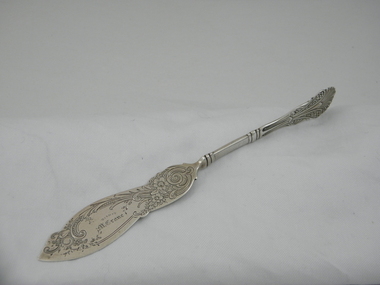
Knife, Circa 1870 - 1900
... The knife is significant because it belonged to the first Bishop of Sandhurst, Martin Crane. Irish born Crane was an Augustinian priest before being ordained in 1874. ...Martin Crane was the first Bishop of Sandhurst. 1874 - 1901. The knife was probably a gift and is engraved on the front with his name. Martin Crane was a progressive leader in Sandhurst and built many new schools and churches in the Diocese. The knife is significant because it belonged to the first Bishop of Sandhurst, Martin Crane. Irish born Crane was an Augustinian priest before being ordained in 1874. Crane was Bishop of Sandhurst for 27 years. Elaborately engraved sterling silver knife. Floral, leafy design. Probably a cheese or butter knife. The handle sits 90 degrees to the knife blade. This a part of a cutlery set. Bishop. M. Crane. Engraved on the front of knife. Silversmith's name/symbol engraved on the back of knife blade. Sterling. P??? engraved on the back of knife blade. knife, silverplate, cutlery, catholic clergy -
 Ballarat and District Irish Association
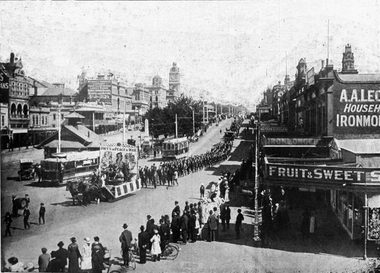
Image, St Patrick's Day Parade, Ballarat, 1916, 1916
... A vote of thanks to the chair concluded the meeting." Ballarat Irish St Patrick's Day St Patrick's Day March Ballarat Hager Kennelly Henneberry O'Loughlin Kierce White Ward Morrisey Fraser Hussy Shelly Kelly Spring Coglan Foley Brophy Black and white photographic reproduction of the 1916 St Patrick's Day March in Sturt Street, Ballarat. ...St Patrick's Day is celebrated on 17 March. A St Patrick's Day March was held in Ballarat. According to the Ballarat Courier of 03 February 1916 a festival was organised in Ballarat to celebrate St Patrick's Day: "ST PATRICK'S DAY FESTIVAL - There was an excellent attendance last night at St. Patrick's Hall to make a rangments for the annual celebration of St. Patrick's Day Festival. Mr A. W. Hager occupied the chair. The date allotted by the V.R.C. committee, Friday, 24th March, was accepted, and the festival will take place on that date, with the usual race meeting on the Miners' Racecourse, and entertainment at Her Majesty's Theatre in the evening. The secretary was instructed to appeal for the hearty co-operation of the different societies, and to ask for a holiday on 24th March. The amount of stakes and the racing programme were left in the hands of racing committee, whose report will be dealt with at the next meeting. The following officials were appointed to carry out the celebrations:--Chairman, Very Rev. Father Kennelly; vice-chairmen, Rev. Father Henneberry, T. J. O'Loughlin, and A. W. Hager; general manager, Mr M. Newton; Secretary; Mr F. T. Kierce; treasurer, Mr William White; collecting secretaries, Revs. Fathers Kennelly and Henneberry; entertainment. Mesers D. J.Ward, J. Morrisey, Fraser Hussy, Chris Hager, Shelly, Dr Spring, Dr Kelly, J.J. Coglan, P. Thornton, Jasper Coghlan, Jas Early; finance committee, Revs. Kennelly, Henneberry, Messrs White, T. Foley, Dr Spring, Brophy, Shelley. All present with power to add wore appointed a general committee. A vote of thanks to the chair concluded the meeting."Black and white photographic reproduction of the 1916 St Patrick's Day March in Sturt Street, Ballarat. A band leads the parade, a horse drawn float carries a banner "Unity of Peace & War" with hundreds following as part of the parade. ballarat irish, st patrick's day, st patrick's day march, ballarat, hager, kennelly, henneberry, o'loughlin, kierce, white, ward, morrisey, fraser, hussy, shelly, kelly, spring, coglan, foley, brophy -
 Ballarat and District Irish Association
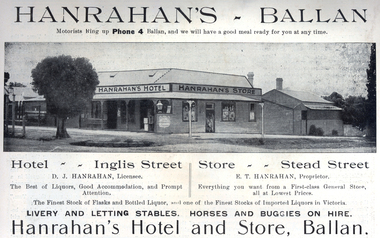
Image, Ballarat Courier, Hanrahan's Hotel, Ballan, 1916, 1916
... Hanrahan's Store offered "everything you want from a first-class General Store, all at lowest prices." Ballarat Irish Hanrahan Hanrahan's Hotel Hanrahan's Store Ballan stables horses buggies Advertisement for Hanrahan's Hotel at Ballan. ...D.J. Hanrahan was the Licensee of Hanrahan's Hotel and E.T. Hanrahan was the proprieter of Hanrahan's Store. The hotel supplied the best of liquors, good accommodation and prompt attention. It offered livery and letting stables, and horses and buggies on hire. According to the advertisement Hanrahan's had one of the finest stocks of imported liquors in Victoria. Hanrahan's Store offered "everything you want from a first-class General Store, all at lowest prices."Advertisement for Hanrahan's Hotel at Ballan. The advertisement features a photograph of a weatherboard building on the corner of Inglis Street and Stead Street in Ballan. The lamp legally required at the front of licensed premises is present.ballarat irish, hanrahan, hanrahan's hotel, hanrahan's store, ballan, stables, horses, buggies -
 Ballarat and District Irish Association
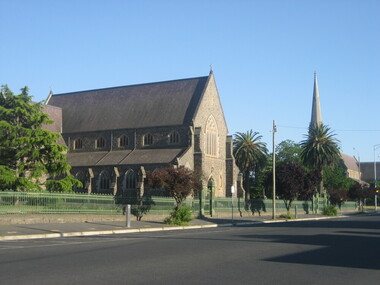
Photograph - Colour, Clare Gervasoni, St Patrick's Cathedral, Ballarat, 2007, 20/11/2007
... loadref=9 Ballarat Irish St Patrick St Patrick's Cathedral St Patrick's Cathedral Ballarat church gothic bluestone A series of coloured digital photographs showing the bluestone church known as St Patrick's Cathedral, Ballarat. ...St Patrick's Cathedral first conducted services from 1851 onwards, the parish of Ballarat was instituted in 1852.The first Parish Priest was Father Matthew Downing,who selected in 1853 the two acres site for this church which was granted under a crown Grant in 1855. The style of the church is early Gothic from the era of Edward the 1st in the 13th Century. (http://www.ballarat.catholic.org.au/parishes/default.cfm?loadref=93, accessed 13 November 2013) Bishop James Alipius Goold OSA (Bishop of Melbourne) celebrated Mass in St Patrick's Ballarat on Sunday November 8th 1863. The Bishop had laid the foundation stone for the Church in 1858 and by November 1863 the Church was sufficiently completed to be used on a regular basis. (http://stpatscathedral.weebly.com/, accessed 13 November 2013) See http://www.ballarat.catholic.org.au/aboutus/default.cfm?loadref=9 A series of coloured digital photographs showing the bluestone church known as St Patrick's Cathedral, Ballarat.ballarat irish, st patrick, st patrick's cathedral, st patrick's cathedral ballarat, church, gothic, bluestone -
 Ballarat and District Irish Association
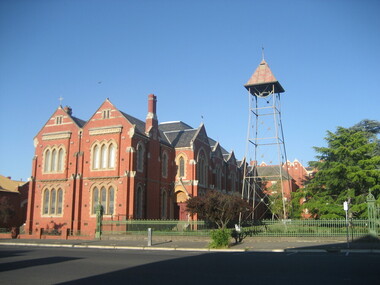
Photograph - Colour, Clare Gervasoni, St Patrick's Cathedral Hall, Ballarat, 2007, 20/11/2007
... (http://stpatscathedral.weebly.com/cathedral-hall--presbytery.html, accessed 13 November 2013. Ballarat Irish St Patrick's Cathedral Hall Cathedral Hall Ballarat bell bell tower A series of colour digital photographs showing a large red brick hall associated with St Patrick's Cathedral, Ballarat. ...St Patrick's Cathedral Hall was erected in 1900 to the architectural plans of Clegg, Kell and Miller. The builder was Peter Bodger. The Cathedral Hall is a massive structure in the Gothic manner, with slender proportions and Gothic window detailing. The main hipped roof of the hall is intersected on both sides by four gables, and the front ridge is intersected by two further gables to form the street elevation. Internally the hall resembles many town halls except for the two tiers of Gothic windows and the manner in which the ceiling curves downward towards the walls. Pointed Gothic windows on the upper level intersect the curved ceiling in a simple groined junction. The plaster ceiling is coffered by intersecting beams, while a central skylight floods the hall with natural light. Other features of note are the ridging on the front gables, and the iron bell tower framed in steel angles and braced with criss-crossed rods, complete with a huge wheel and a great bell. St Patrick's Hall demonstrates a notable application of decorative schemes, particularly its highly decorated ceiling which has few parallels amongst other church halls in Victoria. The hall is in an important location as part of St Patrick's complex, as well as part of the group of churches which include St Andrew's Kirk and the former Baptist Church, opposite in Dawson Street. (http://stpatscathedral.weebly.com/cathedral-hall--presbytery.html, accessed 13 November 2013.A series of colour digital photographs showing a large red brick hall associated with St Patrick's Cathedral, Ballarat. The bell tower is situated to the right of the hall.ballarat irish, st patrick's cathedral hall, cathedral hall ballarat, bell, bell tower -
 Ballarat and District Irish Association
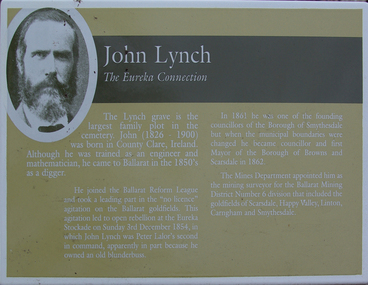
Photograph - Colour, John Lynch, Smythesdale Cemetery, 2013
... Ballarat Irish John Lynch Lynch Smythesdale Smythesdale Cemetery gravestone John Lynch, Smythesdale Cemetery, 2013 Photograph - Colour ...ballarat irish, john lynch, lynch, smythesdale, smythesdale cemetery, gravestone -
 Ballarat and District Irish Association
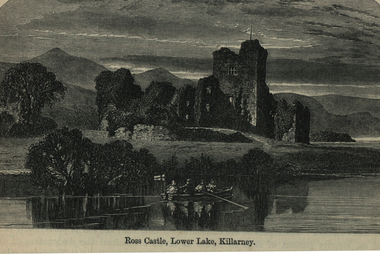
Image, Ross Castle, Lower Lake, Killarney, c1864
... (http://www.killarneynationalpark.ie/Ross%20Castle/Ross%20Castle.htm) Ballarat Irish Ross Castle Lower Lake Killarney Image of a boat being rowed on a lake in front of Ross Castle, Lower Lake, Killarney. ...Ross Castle sits on the edge of Killarney's lower lake and was built by O'Donoghue Mór in the 15th century. The Castle came into the hands of the Brownes who became the Earls of Kenmare and owned an extensive portion of the lands that are now part of Killarney National Park . Legend has it that O'Donoghue still exists in a deep slumber under the waters of Lough Leane. On the first morning of May every seven years he rises from the lake on his magnificent white horse and circles the lake. Anyone catching a glimpse of him is said to be assured of good fortune for the rest of their lives. The large rock at the entrance to the bay is known as O'Donoghue's prison. Ross Castle was the last stronghold in Munster to hold out against Cromwell. It was eventually taken by General Ludlow in 1652. (http://www.killarneynationalpark.ie/Ross%20Castle/Ross%20Castle.htm)Image of a boat being rowed on a lake in front of Ross Castle, Lower Lake, Killarney.ballarat irish, ross castle, lower lake, killarney
