
Showing 26 items matching " army cartographic unit"
-
 Bendigo Historical Society Inc.
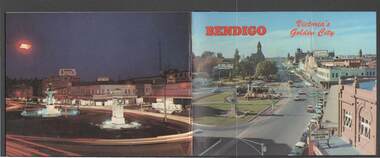
Book - BENDIGO: VICTORIA'S GOLDEN CITY
... ... Army Cartographic Unit...BENDIGO Tourism photographs of bendigo icons Bendigo - Victoria's Golden City Fortuna Shamrock Hotel Gold Mines Hotel City Hall Post Office Law Courts Home for the Aged Victoria's 'White House' Sacred Heart Cathedral St Paul's Specimen Cottage Log Lock-up Chinese Joss House Charing Cross Cenotaph Alexandra Fountain Centra Deborah Gold Mine Army Cartographic Unit Miner's Cottage Harvey Town Victoria Hill Look-out Tower Rosalind Park Conservatory Gardens Conservatory Bendigo Pottery Bendigo Municipal Offices Bendigo Institute of Technology Mt Alvernia Hospital Cobb & Co Coach R Class Locomotive Bendigo Railway Station Bendigo Tramcar Lake Weeroona Lake Eppalock Pumping Station Art Gallery Historical Museum Eaglehawk Melville's Caves Whitehall Cenotaph Nucolorvue Productins Pty Ltd National Library of Australia Nucolorvue Productions Pty Ltd Coloured booklet of various scenes and buildings in and around Bendigo, titled Bendigo Victoria's Golden City. ...Coloured booklet of various scenes and buildings in and around Bendigo, titled Bendigo Victoria's Golden City. The front cover has a scene of Charing Cross looking towards Pall Mall. Inside the front cover is a very brief history and some Historical Buildings are mentioned. They are: Fortuna, Shamrock Hotel, Gold Mines Hotel, City Hall, Post Office, Law Courts, the Home for the Aged, Sacred Heart Cathedral, St. Paul's, Specimen Cottage, Log Lock-up and the Chinese Joss House. The coloured pictures inside are: The Central Deborah Gold Mine, Fortuna, Miner's Cottage, The Gold Mines Hotel, Victoria Hill, Bendigo Law Courts, Eaglehawk Log Lock-up, Look-out Tower Rosalind Park, Alexandra Fountain - Charing Cross, Conservatory Gardens with Law Courts in background, Inside the Conservatory, Bendigo Home & Hospital for the Aged - Victoria's 'White House', Sacred Heart Cathedral, Chinese Joss House, Chinese Joss House - Interior of the Main Temple, Bendigo Pottery - Potter at work, Bendigo Municipal Offices, Bendigo Institute of Technology at Flora Hill, Mt. Alvernia Hospital, Cobb & Co Coach, R Class Locomotive, Bendigo Tramcar, Lake Weeroona and Lake Eppalock Pumping Station. Some more attractions are mentioned inside the back cover. On the back cover is the Cenotaph - the only scale replica of the Whitehall Cenotaph - and Alexandra Fountain by night.Nucolorvue Productions Pty Ltdbendigo, tourism, photographs of bendigo icons, bendigo - victoria's golden city, fortuna, shamrock hotel, gold mines hotel, city hall, post office, law courts, home for the aged, victoria's 'white house', sacred heart cathedral, st paul's, specimen cottage, log lock-up, chinese joss house, charing cross, cenotaph, alexandra fountain, centra deborah gold mine, army cartographic unit, miner's cottage, harvey town, victoria hill, look-out tower rosalind park, conservatory gardens, conservatory, bendigo pottery, bendigo municipal offices, bendigo institute of technology, mt alvernia hospital, cobb & co coach, r class locomotive, bendigo railway station, bendigo tramcar, lake weeroona, lake eppalock pumping station, art gallery, historical museum eaglehawk, melville's caves, whitehall cenotaph, nucolorvue productins pty ltd, national library of australia -
 Bendigo Military Museum
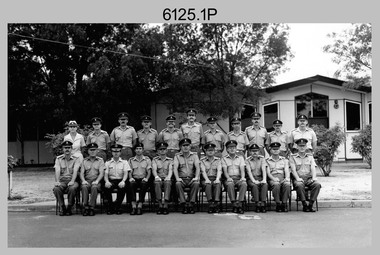
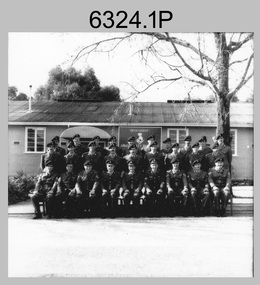
Photograph - Army Headquarters Survey Regiment Warrant Officers and Sergeants, Fortuna, Bendigo, c1957
... This is a set of two photographs of Warrant Officers and Sergeants posted to the Army Headquarters Survey Regiment Fortuna Villa, Bendigo Victoria, taken in circa 1957. WO1 Des Moore was the longest serving RSM of the unit. He was RSM at the Army Headquarters Cartographic...This is a set of two photographs of Warrant Officers and Sergeants posted to the Army Headquarters Survey Regiment Fortuna Villa, Bendigo Victoria, taken in circa 1957. WO1 Des Moore was the longest serving RSM of the unit. He was RSM at the Army Headquarters Cartographic ...This is a set of two photographs of Warrant Officers and Sergeants posted to the Army Headquarters Survey Regiment Fortuna Villa, Bendigo Victoria, taken in circa 1957. WO1 Des Moore was the longest serving RSM of the unit. He was RSM at the Army Headquarters Cartographic Unit from 1953 to 1955 and the Army Headquarters Survey Regiment from 1955 to 1963.This is a set of two photographs of Warrant Officers and Sergeants posted to the Army Headquarters Survey Regiment Fortuna Villa, Bendigo Victoria, taken in circa 1957. The photographs are on negative film and were scanned at 600 dpi. They are part of the Army Survey Regiment’s Collection. .1) & .2) - Photo, black & white c1957. Back Row L to R: Unidentified, Norm Quirk, Albert Brandon? Ken Shaw, unidentified, Tom Chisholm, unidentified, Derrick Shannon, unidentified. Centre Row L to R: Bob Aulesbrook, unidentified (x4), Alan Mason? Heck Webster, R McGarity. Front Row L to R: Fred Kitch, Robert Mumford, unidentified, Jack Cheater, Peter Gale, RSM Des Moore, Steve McConnachie, unidentified, Margaret McLaren, Ross Hyde, Paul Peterson. .1P to .2P – There are no annotationsroyal australian survey corps, rasvy, army survey regiment, asr, fortuna -
 Bendigo Military Museum
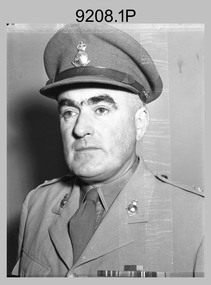
Photograph - Commanding Officers of the Army Headquarters Survey Regiment, Fortuna Villa, Bendigo, 1950s-1970s
... This is a set of eight photographs of Royal Australian Survey Corps officers who commanded the Army Headquarters Cartographic Company, Army Headquarters Cartographic Unit and the Army Headquarters (AHQ) Survey Regiment from 1949 to 1969 and 1971 to 1972. ...This is a set of eight photographs of Royal Australian Survey Corps officers who commanded the Army Headquarters Cartographic Company, Army Headquarters Cartographic Unit and the Army Headquarters (AHQ) Survey Regiment from 1949 to 1969 and 1971 to 1972. ...This is a set of eight photographs of Royal Australian Survey Corps officers who commanded the Army Headquarters Cartographic Company, Army Headquarters Cartographic Unit and the Army Headquarters (AHQ) Survey Regiment from 1949 to 1969 and 1971 to 1972. The first four photos of LTCOL Lindsay Lockwood MID were probably taken in the 1950s. As the longest serving commanding officer in the history of the unit from 1951 to 1961, there was many changes implemented by LTCOL Lindsay Lockwood MID. His influence and achievements as CO are covered in more detail in pages 48-49, 65 and 73-83 of Valerie Lovejoy’s book 'Mapmakers of Fortuna – A history of the Army Survey Regiment’ ISBN: 0-646-42120-4. The fifth photo of MAJ John Nolan was taken in the early 1960s. He was a former CO of AHQ Survey Regiment and Director of RA Svy.The sixth photo of five current and former CO/OCs of the Regiment was taken in 1967. Their periods of Command were: MAJ Patrick Kennedy - OC Army Headquarters Cartographic Company 1949 to 1951. COL Lindsay Lockwood MID - CO Army Headquarters Cartographic Company from 1951 to 1952, Army Headquarters Cartographic unit from 1952 to 1955 and AHQ Survey Regiment from 1955 to 1961. COL Tim Tyler – CO AHQ Survey Regiment 1962. COL Frank Buckland OBE, MID - CO AHQ Survey Regiment 1962 to 1965. CO LTCOL John Nolan - CO AHQ Survey Regiment 1965 to 1969. Note – their ranks when the photo was taken in 1967. The seventh photo of MAJ Bill Howarth was probably taken in the late 1960s. The last photo of was probably taken in 1971. He was the CO of the AHQ Survey Regiment 1971 to 1972. His influence and achievements as OC Lithographic Squadron and CO of the Regiment are covered in more detail in pages 67, 69, 103, and 106 of Valerie Lovejoy’s book 'Mapmakers of Fortuna’.This is a set of eight photographs of Commanding Officers of the Army Headquarters Survey Regiment, Fortuna Villa, Bendigo. c1950s to 1970s. The photographs are on negative film and scanned at 600 dpi. They are part of the Army Survey Regiment’s Collection. .1) to .4) - Photo, black & white, c1950s. CO LTCOL Lindsay Lockwood MID. .5) - Photo, black & white, c1960s. MAJ John Nolan. .6) - Photo, black & white, 1967. Current and former CO/OCs of the Regiment. L to R: CO LTCOL John Nolan, COL Frank Buckland OBE, MID, COL Tim Tyler, COL Lindsay Lockwood MID and MAJ Patrick Kennedy. .7) - Photo, black & white, c1958. MAJ Bill Howarth. .8) - Photo, black & white, c1971. CO LTCOL Bill Howarth. Most photos are not annotated. MAJ John Nolan’s name is superposed in white on photo .5P. The officers in photo .6P are identified on page 86 of Valerie Lovejoy’s book 'Mapmakers of Fortuna’. CO LTCOL Bill Howarth is identified at the bottom of photo .8P. It has been trimmed off before publication. royal australian survey corps, rasvy, army survey regiment, asr, fortuna -
 Bendigo Military Museum
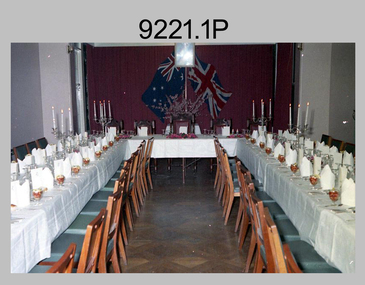
Photograph - AHQ Survey Regiment Officers Mess Formal Dinner, Fortuna, Bendigo, Victoria, 1967
... Army Headquarters Cartographic Company 1949 to 1951. COL Lindsay Lockwood MID - CO Army Headquarters Cartographic Company from 1951 to 1952, Army Headquarters Cartographic unit from 1952 to 1955 and AHQ Survey Regiment from 1955 to 1961. ...Army Headquarters Cartographic Company 1949 to 1951. COL Lindsay Lockwood MID - CO Army Headquarters Cartographic Company from 1951 to 1952, Army Headquarters Cartographic unit from 1952 to 1955 and AHQ Survey Regiment from 1955 to 1961. ...This is a set of 21 photographs of Army Headquarters (AHQ) Survey Regiment Officers Mess Formal Dinners held at Fortuna Villa, Bendigo in 1967. The dinner was held in the Ballroom next to the Officers Mess on the bottom floor of Fortuna Villa. These photos were probably taken at the time of a Corps Conference or to commemorate the transition of Director and Colonel Commandant of the Royal Australian Survey Corps. BRIG Lawrence FitzGerald OBE was Director of the Survey Corps from 1942 to 1960 and was promoted to Brigadier on retirement. He was succeeded by COL Don Macdonald AM, MID who served as Director from 1960 to 1967. He was promoted to Brigadier and appointed to the honorary position of Colonel Commandant of the Royal Australian Survey Corps. BRIG Don Macdonald AM, MID held this position from 1967 to 1973. COL Frank Buckland OBE, MID served as Director from 1967 to 1972. He was promoted to Brigadier and appointed to the honorary position of Colonel Commandant of the Royal Australian Survey Corps. BRIG Frank Buckland OBE, MID held this position from 1973 to 1976. The fifth photo features five current and former CO/OCs of the AHQ Survey Regiment, Bendigo. Their periods of Command were: MAJ Patrick Kennedy - OC Army Headquarters Cartographic Company 1949 to 1951. COL Lindsay Lockwood MID - CO Army Headquarters Cartographic Company from 1951 to 1952, Army Headquarters Cartographic unit from 1952 to 1955 and AHQ Survey Regiment from 1955 to 1961. COL Tim Tyler – CO AHQ Survey Regiment 1962. COL Frank Buckland OBE, MID - CO AHQ Survey Regiment 1962 to 1965. CO LTCOL John Nolan - CO AHQ Survey Regiment 1965 to 1969. Note – their ranks when the photo was taken in 1967. Refer to Item 9208.8P for a black and white photo of this group taken at the dinner.This is a set of 21 photographs of Army Headquarters (AHQ) Survey Regiment Officers Mess Formal Dinners held at Fortuna Villa, Bendigo in 1967. The photos are on negative film and scanned at 600 dpi. The photographs are part of the Army Survey Regiment’s Collection. .1) to .3) - Photo, colour, 1967. Fortuna’s Ballroom before the start of the Officers Mess Formal Dinner. .4) - Photo, colour, 1967. L to R: D-SVY COL Frank Buckland OBE, MID, Colonel Commandant COL Don Macdonald AM, MID, BRIG Lawrence FitzGerald OBE. .5) - Photo, colour, 1967. Current and former CO/OCs of the Regiment. L to R: CO LTCOL John Nolan, D-SVY COL Frank Buckland OBE, MID, COL Tim Tyler, COL Lindsay Lockwood MID and MAJ Patrick Kennedy. .6) - Photo, colour, 1967. L to R: MAJ Jim Stedman, MAJ Bob Hammett, MAJ Peter Constantine AM. .7) & .8) - Photo, colour, 1967. L to R: Unidentified (x3), MAJ Keith Todd. .9) - Photo, colour, 1967. L to R: Unidentified, Mrs Ruth Ridge, unidentified, MAJ Don Ridge. .10) - Photo, colour, 1967. L to R: MAJ Don Ridge, Mrs Ruth Ridge, unidentified, unidentified. .11) - Photo, colour, 1967. L to R: MAJ Reg Smith, unidentified (x2), CAPT Frank Thorogood SB St J, unidentified. .12) - Photo, colour, 1967. L to R: Unidentified, LT John Sinclair – Canadian Exchange, unidentified UK Exchange Officer. .13) & .14) - Photo, colour, 1967. L to R: Unidentified (x5), MAJ Brian Dalton, remainder unidentified. .15) - Photo, colour, 1967. CAPT Jack McNeale at far right, remainder unidentified. .16) - Photo, colour, 1967. Left side of table L to R: unidentified (x2), LT John Sinclair – Canadian Exchange, remainder unidentified. Right side of table L to R: unidentified (x2), CAPT Jack McNeale. .17) - Photo, colour, 1967. FLTLT Hanigan second from right, remainder unidentified. .18) & .19) - Photo, colour, 1967. L to R: FLTLT Hanigan, unidentified, MAJ Don Ridge, second from right, remainder unidentified. .20) - Photo, colour, 1967. L to R: Unidentified steward, Brian Taylor. .21) - Photo, colour, 1967. CAPT Frank Thorogood SB St J at far left, remainder unidentified.There are no annotationsroyal australian survey corps, rasvy, army survey regiment, asr, fortuna -
 Bendigo Military Museum
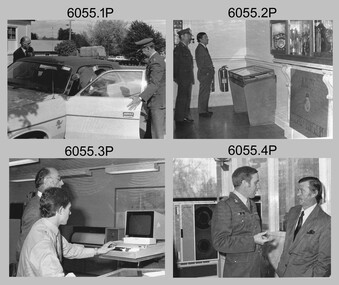
Photograph - Minister for Defence’s Visit to the Army Survey Regiment, Fortuna, Bendigo, c1978
... Cartographic and Lithographic Squadrons. Jim Killen served in the RAAF in WW2 and later had an illustrious career in politics. After receiving his knighthood and an AC for service to Australia, he was known as Sir Denis James "Jim" Killen, AC, KCMG. Key Army Survey Regiment personnel identified include the CO LTCOL Bob Skitch, who led the unit...Cartographic and Lithographic Squadrons. Jim Killen served in the RAAF in WW2 and later had an illustrious career in politics. After receiving his knighthood and an AC for service to Australia, he was known as Sir Denis James "Jim" Killen, AC, KCMG. Key Army Survey Regiment personnel identified include the CO LTCOL Bob Skitch, who led the unit ...This collection of 16 photos was most likely taken in 1978. Mr Denis James “Jim” Killen was the Minister for Defence in the Fraser Government from 1975 to 1982. It’s evident in these photos he was taken on a tour through the production areas in Air Survey, Cartographic and Lithographic Squadrons. Jim Killen served in the RAAF in WW2 and later had an illustrious career in politics. After receiving his knighthood and an AC for service to Australia, he was known as Sir Denis James "Jim" Killen, AC, KCMG. Key Army Survey Regiment personnel identified include the CO LTCOL Bob Skitch, who led the unit from 1976 to 1980 and WO1 Aub Harvey, who was RSM from 1976 to 1982.This is a set of photographs of a visit to the Army Survey Regiment, Bendigo c1978, by Mr D.J Killen who was the Minister for Defence. The photographs were printed on photographic paper and are part of the Army Survey Regiment’s Collection. The photographs were scanned at 300 dpi. .1) - Photo, black and white, c1978. L to R: Unidentified, Mr D.J. Killen and CO LTCOL Bob Skitch. .2) - Photo, black and white, c1978. L to R: CO LTCOL Bob Skitch and Mr D.J. Killen. .3) - Photo, black and white, c1978. L to R: Unidentified, SPR Mark Lander. .4) - Photo, black and white, c1978. L to R: MAJ Peter Eddy, Mr D.J. Killen. .5) - Photo, black and white, c1978. L to R: CPL Alan Staley, Mr D.J. Killen, MAJ Peter Eddy. .6) - Photo, black and white, c1978. L to R: CPL Robert Cocksedge, Mr D.J. Killen, MAJ Peter Eddy, unidentified. .7) - Photo, black and white, c1978. L to R: CPL Mick Davey, Mr D.J. Killen, MAJ Peter Eddy. .8) - Photo, black and white, c1978. L to R: CPL Mick Davey, MAJ Peter Eddy, Mr D.J. Killen, CO LTCOL Bob Skitch. .9) - Photo, black and white, c1978. L to R: Unidentified, Mr D.J. Killen. .10) - Photo, black and white, c1978. L to R: Unidentified, Mr D.J. Killen. SGT Bob Scaddan. .11) - Photo, black and white, c1978. L to R: Unidentified, Mr D.J. Killen, LCPL Laurel (Ryant) Staley. .12) - Photo, black and white, c1978. L to R: CAPT Gary Kenney, Mr D.J. Killen. .13) - Photo, black and white, c1978. L to R: CAPT Gary Kenney, Mr D.J. Killen, RSM Aub Harvey. .14) - Photo, black and white, c1978. L to R: Unidentified, unidentified, Mr D.J. Killen, CAPT Gary Kenney, .15) - Photo, black and white, c1978. L to R: CO LTCOL Bob Skitch, Mr D.J. Killen, CAPT Gary Kenney. .16) - Photo, black and white, c1978. L to R: Mr D.J. Killen, unidentified, CAPT Gary Kenney.royal australian survey corps, rasvy, army survey regiment, army svy regt, fortuna, asr -
 Bendigo Military Museum
Booklet - Army Survey Regiment - Unit Brief 1985, Army Survey Regiment, 1985
... Army Survey Regiment was located at Fortuna Villa in Bendigo. This booklet was produced in 1985 as a handout to visitors to the Unit to explain the Unit Background and History, The Role and Tasking, The Organisation and Functions and the Biographical Details of Key Personnel. The booklet contains comprehensive biographical details for the Commanding Officer LtCol J G Gruszka, Second in Command Maj RL Roche, OC Headquarters Sqn Maj DR Hockings, OC Air Survey Sqn Maj TJ Edwards, OC Cartographic Sqn Maj RB John, OC Lithographic Sqn Maj PG Raue, Adjutant Capt DJ Maxwell, UK Exchange Officer Maj AJM Vickers RE, US Exchange Officer Maj JJ Charland US Engr, Quartermaster LT DP Galbraith, Regimental Sergeant Major (RSM) WO1 RK Mason, Technical Services Officers Maj KA Weston, Maj AB McLellan and Computer Services Officer MR AJ Spurling....Army Survey Regiment was located at Fortuna Villa in Bendigo. This booklet was produced in 1985 as a handout to visitors to the Unit to explain the Unit Background and History, The Role and Tasking, The Organisation and Functions and the Biographical Details of Key Personnel. The booklet contains comprehensive biographical details for the Commanding Officer LtCol J G Gruszka, Second in Command Maj RL Roche, OC Headquarters Sqn Maj DR Hockings, OC Air Survey Sqn Maj TJ Edwards, OC Cartographic Sqn Maj RB John, OC Lithographic Sqn Maj PG Raue, Adjutant Capt DJ Maxwell, UK Exchange Officer Maj AJM Vickers RE, US Exchange Officer Maj JJ Charland US Engr, Quartermaster LT DP Galbraith, Regimental Sergeant Major (RSM) WO1 RK Mason, Technical Services Officers Maj KA Weston, Maj AB McLellan and Computer Services Officer MR AJ Spurling. ...The Army Survey Regiment was located at Fortuna Villa in Bendigo. This booklet was produced in 1985 as a handout to visitors to the Unit to explain the Unit Background and History, The Role and Tasking, The Organisation and Functions and the Biographical Details of Key Personnel. The booklet contains comprehensive biographical details for the Commanding Officer LtCol J G Gruszka, Second in Command Maj RL Roche, OC Headquarters Sqn Maj DR Hockings, OC Air Survey Sqn Maj TJ Edwards, OC Cartographic Sqn Maj RB John, OC Lithographic Sqn Maj PG Raue, Adjutant Capt DJ Maxwell, UK Exchange Officer Maj AJM Vickers RE, US Exchange Officer Maj JJ Charland US Engr, Quartermaster LT DP Galbraith, Regimental Sergeant Major (RSM) WO1 RK Mason, Technical Services Officers Maj KA Weston, Maj AB McLellan and Computer Services Officer MR AJ Spurling.A soft covered 10 x page A5 Booklet stapled in the centre. The Front cover has a royal Australian survey Corps Badge and scroll printed in Survey Corps colour purple overprinted with "Unit Brief Army Survey Regiment" in black A video has been made of the whole bookletroyal australian survey corps, rasvy, fortuna, army survey regiment, army svy regt, asr -
 Bendigo Military Museum
Document - Army Survey Regiment Manning Chart 1976, 1976
... Army Survey Regiment’s staff manning from December 1975 to August 1976. Each monthly report provided to Directorate of Survey covered the allocation of staff to Regimental Headquarters and its four sub units comprising Headquarters, Air Survey (Topographic), Cartographic and Lithographic Squadrons. ...Army Survey Regiment’s staff manning from December 1975 to August 1976. Each monthly report provided to Directorate of Survey covered the allocation of staff to Regimental Headquarters and its four sub units comprising Headquarters, Air Survey (Topographic), Cartographic and Lithographic Squadrons. ...This document contains detailed photocopies of reports of Army Survey Regiment’s staff manning from December 1975 to August 1976. Each monthly report provided to Directorate of Survey covered the allocation of staff to Regimental Headquarters and its four sub units comprising Headquarters, Air Survey (Topographic), Cartographic and Lithographic Squadrons. Each Squadron’s troop or section structure was represented by a wire diagram with soldiers and/or civilians names assigned to rank based established positions. A detailed table at the end of each report sumarised Army Survey Regiment’s posted strength by employment category and rank.Manilla cardboard folder containing 83 photocopied pages of staff posted to the Army Survey Regiment. Pages are fixed to the folder by a metal fastener. The title of the folder is written in black ink on a green tape background.royal australian survey corps, rasvy, army survey regiment, army svy regt, asr, fortuna -
 Bendigo Military Museum
Document - Army Survey Regiment Army and Civilian Establishment Authorisation, 23 05 1975
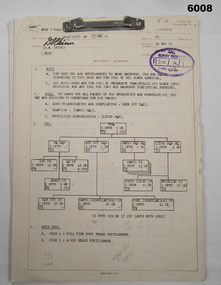
... Army Survey Regiment. It provided an organisational wire diagram summarising the overall numbers of Officer, Civilian and Other Ranks to RHQ, and Headquarters, Air Survey, Cartographic and Lithographic Squadrons. Staff allocations to RHQ and each of the four squadron's troop and/or sections were identified in a table format, by hierarchy of rank and employment categories. Royal Australian Survey Corps RASvy Fortuna Army Survey Regiment Army Svy Regt ASR This document comprises 7 pages of information in black and white with diagrams and tables detailing the allocation of staff to the unit ...This document was a directive from Army Headquarters authorising the allocation of Army and Civilian positions to the Army Survey Regiment. It provided an organisational wire diagram summarising the overall numbers of Officer, Civilian and Other Ranks to RHQ, and Headquarters, Air Survey, Cartographic and Lithographic Squadrons. Staff allocations to RHQ and each of the four squadron's troop and/or sections were identified in a table format, by hierarchy of rank and employment categories.This document comprises 7 pages of information in black and white with diagrams and tables detailing the allocation of staff to the unit. Pages are fixed by a metal fastener. There is no cover.royal australian survey corps, rasvy, fortuna, army survey regiment, army svy regt, asr -
 Bendigo Military Museum
Pamphlet - An Introduction to Topographic Mapping, C 1991
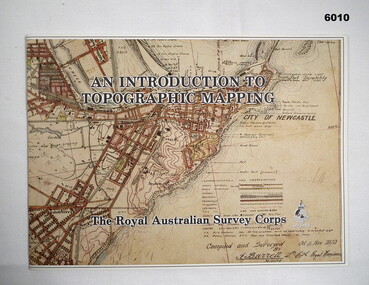
... This pamphlet was published by the Army Survey Regiment as an overview of the Royal Australian Survey Corps (RASvy), its role and unit structure circa 1991, prior to RASvy’s disbandment in 1996. The pamphlet comprehensively detailed the eight steps of topographic map production: Establish Survey Control, Aerial Photography, Aerotriangulation, Stereoplotting, Field Verification, Cartography, Printing and Storage/Map Distribution. ...This pamphlet was published by the Army Survey Regiment as an overview of the Royal Australian Survey Corps (RASvy), its role and unit structure circa 1991, prior to RASvy’s disbandment in 1996. The pamphlet comprehensively detailed the eight steps of topographic map production: Establish Survey Control, Aerial Photography, Aerotriangulation, Stereoplotting, Field Verification, Cartography, Printing and Storage/Map Distribution. ...This pamphlet was published by the Army Survey Regiment as an overview of the Royal Australian Survey Corps (RASvy), its role and unit structure circa 1991, prior to RASvy’s disbandment in 1996. The pamphlet comprehensively detailed the eight steps of topographic map production: Establish Survey Control, Aerial Photography, Aerotriangulation, Stereoplotting, Field Verification, Cartography, Printing and Storage/Map Distribution. Leading technologies used by RA Svy in 1991 included GPS control surveys, 5 colour printing on the Speedmaster offset press and bulk map packaging using the Map Handling Station (with guillotine). Digital map production was operating on the AUTOMAP 2 system, before the “Newheart” system upgrade two years later. Printed on the pamphlet cover was a portion of the plane tabled “four inches to a mile” map of Newcastle. This was compiled and surveyed in 1910 by LCPL A. Barrett, a member of the RAE Detachment, as part of the first major topographic mapping effort of Australia.This is a Royal Australian Survey Corp pamphlet with a historical map printed in colour on cardboard on both sides of the cover. There are 16 pages printed in colour on gloss paper, with photos, diagrams and descriptions. The pamphlet is bounded by two staples on its spine. Each of the 17 images were scanned at 300 dpi in JPEG (.jpg) format and stored on the attached 16 Gb USB memory stick. The images have been converted into MPEG-4 (.mp4) video format, 4Mb in size and runs for 2:16 minutes and is also stored on the memory stick.royal australian survey corps, rasvy, fortuna, army survey regiment, army svy regt, asr -
 Bendigo Military Museum
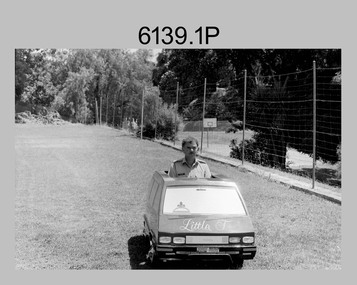
Photograph - Staff Retirement - Army Survey Regiment, Fortuna, Bendigo, c1989
... Army Survey Regiment, part of the grounds of Fortuna, Bendigo, in c1989. The occasion was probably to farewell SSGT Kevin Boehm, who was a cartographic draughtsman, after 22 years of service in the ADF. It is likely Bendigo Toyota was approached to loan their miniature Toyota Tarago; a vehicle used for marketing purposes. The novelty of this quirky “drive past” event was that Kev was well known as a part-time car salesman and often took the opportunity of assisting new staff in buying a car. Kev was a qualified pilot and often took time on weekends to take unit...Army Survey Regiment, part of the grounds of Fortuna, Bendigo, in c1989. The occasion was probably to farewell SSGT Kevin Boehm, who was a cartographic draughtsman, after 22 years of service in the ADF. It is likely Bendigo Toyota was approached to loan their miniature Toyota Tarago; a vehicle used for marketing purposes. The novelty of this quirky “drive past” event was that Kev was well known as a part-time car salesman and often took the opportunity of assisting new staff in buying a car. Kev was a qualified pilot and often took time on weekends to take unit ...These two photos were most likely taken in the volleyball court area of the Army Survey Regiment, part of the grounds of Fortuna, Bendigo, in c1989. The occasion was probably to farewell SSGT Kevin Boehm, who was a cartographic draughtsman, after 22 years of service in the ADF. It is likely Bendigo Toyota was approached to loan their miniature Toyota Tarago; a vehicle used for marketing purposes. The novelty of this quirky “drive past” event was that Kev was well known as a part-time car salesman and often took the opportunity of assisting new staff in buying a car. Kev was a qualified pilot and often took time on weekends to take unit staff and their families on recreational flights over Bendigo and Albury-Wodonga. His other claim to fame was he was “charge happy”, a tendency to prefer charges against offending soldiers rather than offer them a warning.These two photos were most likely taken in the volleyball court area of the Army Survey Regiment, part of the grounds of Fortuna, Bendigo, in c1989. The photographs were on 35mm negative film and were scanned at 96 dpi. They are part of the Army Survey Regiment’s Collection. .1) and .2) - Photo, black & white, c1989, SSGT Kevin Boehm. No personnel are identifiedroyal australian survey corps, rasvy, army survey regiment, army svy regt, fortuna, asr -
 Bendigo Military Museum
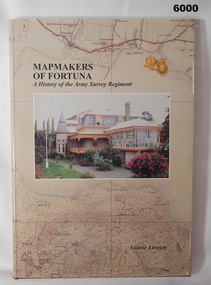
Book - Mapmakers of Fortuna, a History of the Army Survey Regiment, Ex Fortuna Survey Association Inc, 2003
... Cartographic Company at Fortuna Villa in 1942 until the disbandment of the Army Survey Regiment in 1996. Written by Valerie Lovejoy as part of her Masters degree at La Trobe University, Bendigo Royal Australian Survey Corps RASvy Army Survey Regiment Army Svy Regt ASR On first page, "Donated to Bendigo RSL Museum by Ex Fortuna Survey Association Inc 21 April 2022" Unit History of the Army Survey Regiment by Valerie Lovejoy, ISBN: 0-646-42120-4, 234 pages, 9 Chapters, 6 Appendices, Black and White photographs, Colored map extracts, Colored cover jacket, hard cover, nominal roll of Unit members. ...Covers the arrival of the Land Headquarters Cartographic Company at Fortuna Villa in 1942 until the disbandment of the Army Survey Regiment in 1996. Written by Valerie Lovejoy as part of her Masters degree at La Trobe University, BendigoUnit History of the Army Survey Regiment by Valerie Lovejoy, ISBN: 0-646-42120-4, 234 pages, 9 Chapters, 6 Appendices, Black and White photographs, Colored map extracts, Colored cover jacket, hard cover, nominal roll of Unit members.On first page, "Donated to Bendigo RSL Museum by Ex Fortuna Survey Association Inc 21 April 2022"royal australian survey corps, rasvy, army survey regiment, army svy regt, asr -
 Bendigo Military Museum
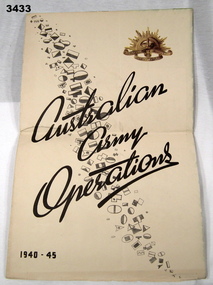
Poster - CHART WW2, ARMY OPERATIONS, LHQ Cartographic Coy, Aust Survey Corps with Directorate of Public Relations, A Chart of Australian Army Operations 1940 -1945, Post WW2
... Army Operations 1940 - 1945 printed in black ink, black & white divisional unit colour patches & gold coloured Rising Sun. Inside are 4 maps including Mediterranean Sea area, New Guinea, Pacific Islands - Borneo & Malaya. One panel has a chronology chart showing dates & events during 1939 - 1945. A Chart of Australian Army Operations 1940 -1945 Poster CHART WW2, ARMY OPERATIONS LHQ Cartographic ...Strong paper chart folded 3 times. Front panel has title Australian Army Operations 1940 - 1945 printed in black ink, black & white divisional unit colour patches & gold coloured Rising Sun. Inside are 4 maps including Mediterranean Sea area, New Guinea, Pacific Islands - Borneo & Malaya. One panel has a chronology chart showing dates & events during 1939 - 1945.chart, operations, army 1939 - 45 -
 Bendigo Military Museum
Photograph - Army Survey Regiment’s Officers, Warrant Officers and Sergeants and Squadrons, at Fortuna, Bendigo, 1982
... A component of the Army Svy Regt’s cartographic map production was carried out by the Detachment, a sub-unit located at Bonegilla next to the School of Military Survey. ...A component of the Army Svy Regt’s cartographic map production was carried out by the Detachment, a sub-unit located at Bonegilla next to the School of Military Survey. ...This is a set of six staff photographs of the Army Survey Regiment’s Officers, Warrant Officers and Sergeants, and each of its four Squadrons at Fortuna, Bendigo in December 1982. Note - Air Survey Squadron’s photo was probably taken in July 1982 as they appear in winter dress. Air Survey Squadron was responsible for aerotriangulation, photogrammetric feature extraction and the AUTOMAP 1 system. Typical tasks were flight planning the acquisition of aerial photography, pugging, mensuration and block adjustments, photogrammetric extraction of topographic features from aerial photography, digital feature editing, map compilation, operating the scanner/plotter, operating the AUTOMAP 1 system and computer programming by civilians. Cartographic Squadron was responsible for the production of the following military products: Joint Operation Graphics, small-scale RAAF Air Charts, large-scale topographic line maps and orthophotomaps. Cartographic technician tasks were scribing, compiling, retouching, masking, type setting, type stickup, terrain embossing, correcting and proving quality control. Headquarters Squadron was responsible for the planning and coordination of map production and contracts. It also performed administrative and support functions such as personnel administration, pay, finance, transportation, records, map Library, kitchens, messes and facility maintenance. It was staffed by Army personnel from RASvy, RACT, AACC, RAAOC and RAEME corps. Other supporting staff at this time included the RAAF Liaison Officer, RAN Liaison Officer and several civilians employed in administration, the Q-Store and grounds maintenance. A component of the Army Svy Regt’s cartographic map production was carried out by the Detachment, a sub-unit located at Bonegilla next to the School of Military Survey. Lithographic Squadron was responsible for the reproduction of map materials and printing of military map products. The main tasks undertaken by photographic technicians were photographic enlargements, reductions and duplication of map reproduction material and processing of aerial photography. Printing technician tasks included platemaking, offset printing, map stock despatching and proofing.This is a set of six staff photographs of the Army Survey Regiment’s Officers, Warrant Officers and Sergeants, and its four Squadrons, at Fortuna, Bendigo, 1982. The black and white photographs were printed on photographic paper and are part of the Army Survey Regiment’s Collection. The photograph was scanned at 300 dpi. No personnel are identified. No personnel are identified. .1P – Annotated on front “OFFICERS MESS DEC ’82” .2P – Annotated on back “SGTS MESS DEC ’82” .4P– Annotated on front “CARTO SQN DEC ’82” .5P– Annotated on front “HQ SQN DEC ’82”royal australian survey corps, rasvy, army survey regiment, army svy regt, fortuna, asr, air survey, carto, litho -
 Bendigo Military Museum
Photograph - Detachment - Army Survey Regiment, Bonegilla, Victoria, c1973
... This is a set of six photographs of personnel from the Detachment - Army Survey Regiment taken in front of its main map production building at Bonegilla, Victoria in c1974. This cartographic map production sub-unit of the Army Survey Regiment operated in buildings owned by the School of Military Survey from 17th of June 1970 to the 30th of September 1985. ...This is a set of six photographs of personnel from the Detachment - Army Survey Regiment taken in front of its main map production building at Bonegilla, Victoria in c1974. This cartographic map production sub-unit of the Army Survey Regiment operated in buildings owned by the School of Military Survey from 17th of June 1970 to the 30th of September 1985. ...This is a set of six photographs of personnel from the Detachment - Army Survey Regiment taken in front of its main map production building at Bonegilla, Victoria in c1974. This cartographic map production sub-unit of the Army Survey Regiment operated in buildings owned by the School of Military Survey from 17th of June 1970 to the 30th of September 1985. A total of 800 topographic maps ranging in scale from 1:25,000 to 1: 250,000 scale were completed. A major focus of production in the 1970s was the cartographic completion of the Papua-New Guinea 1:100,000 map series and the Flexiflow quality control system was developed as a tool to coordinate production. The Flexiflow system comprised a series of job plans and charts linked to a task allocation to resource magnetic planning board. Using critical path analysis and task prioritisation, complex job planning was efficiently scheduled, and re-prioritisations readily made. Reproduction requirements were effectively coordinated by way of weekly courier to the Army Survey Regiment at Bendigo. Supervisors and technicians fully embraced the system as they could understand their role, others around them and the positive production achievements. WO1 Bill Boyd (who does not appear in this photograph) was the technical warrant officer for 11 years at the Detachment was awarded the OAM, the Order of Australia Medal for leading the development and the implementation of the Flexiflow system. By mid-1982, production of maps at these scales was undertaken digitally on Bendigo’s AUTOMAP 2 system and the Detachment reverted to production of small-scale large format RAAF aeronautical charts. Detachment personnel managed to produce 18 charts in the following two years, which was an impressive achievement for the staff, given major differences in format, specification and scales. Development of digital production of aeronautical charts in 1984-85 led to gradual reduction in production output and contracting out production was instigated to meet the shortfall and as a consequence the Detachment closed in September 1985. See pages 177 to 180 of Valerie Lovejoy’s book 'Mapmakers of Fortuna – A history of the Army Survey Regiment’ ISBN: 0-646-42120-4. for more information on the history of the Detachment at Bonegilla.This is a set of six photographs of the Detachment - Army Survey Regiment taken in front of the main map production building at Bonegilla, Victoria in c1974. The photographs were printed on photographic paper and are part of the Army Survey Regiment’s Collection. The photographic print and proofs were scanned at 600 dpi. .1) to .3) - Photo, black & white c1973. Back Row L to R: Peter Simpson, Chris Edwards, Ted Dudzinski, Terry Genge, Colin Harden, Rowan Gillies, Bob Rowley OAM, Steve Hansen, Stu Thaxter. Centre Row L to R: Kevin Boehm, Dennis McCarthy, Peter Cross, unidentified, Brian Ryan, unidentified, Ian Marner, unidentified, Phil Smalley. Front Row L to R: Geoff Haynes, Bruce Wetzig, Dave Thompson, unidentified, OC Bob Roche, Ike Lever, John McCulloch, Dick Barwald, unidentified. .4) - Photo, black & white c1973. Back Row L to R: Peter Simpson, Chris Edwards, unidentified (x2), Colin Harden, Rowan Gillies, Bob Rowley OAM, Steve Hansen, Stu Thaxter. Centre Row L to R: Kevin Boehm, Dennis McCarthy, Peter Cross, unidentified, Brian Ryan, unidentified, Ian Marner, Phil Smalley, unidentified, Dick Barwald. Front Row L to R: Geoff Haynes, Bruce Wetzig, Dave Thompson, unidentified, OC Bob Roche, Ike Lever, John McCulloch, unidentified (x2). .5) - Photo, black & white c1973. Back Row L to R: Geoff Haynes, unidentified, John McCulloch, Bruce Wetzig. Front Row L to R: Dave Thompson, Ike Lever, unidentified. .6) - Photo, black & white c1973. L to R: OC Bob Roche, unidentified.There are no personnel annotated.royal australian survey corps, rasvy, army survey regiment, detachment - army survey regiment, army svy regt, asr -
 Bendigo Military Museum
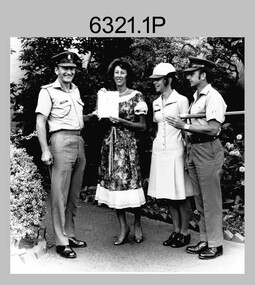
Photograph - Army Survey Regiment – Presentation to Charity Organisation, 1984
... Army Survey Regiment in 1984. SPR Tracy (Parker) Ash was the unit’s Miss Golden North section entrant in the Miss Australia Quest. MAJ Bob Roche, RSM Bob Mason and SPR Parker presented a fundraising cheque to the unidentified representative from the Spastic Society. The the newspaper article is from the Bendigo Advertiser. The following wording is taken from the article: ‘Tracy Parker is a sapper in the Army, and a cartographic...Army Survey Regiment in 1984. SPR Tracy (Parker) Ash was the unit’s Miss Golden North section entrant in the Miss Australia Quest. MAJ Bob Roche, RSM Bob Mason and SPR Parker presented a fundraising cheque to the unidentified representative from the Spastic Society. The the newspaper article is from the Bendigo Advertiser. The following wording is taken from the article: ‘Tracy Parker is a sapper in the Army, and a cartographic ...These photographs of a presentation to a charity organisation were taken in the grounds of Fortuna Villa, Army Survey Regiment in 1984. SPR Tracy (Parker) Ash was the unit’s Miss Golden North section entrant in the Miss Australia Quest. MAJ Bob Roche, RSM Bob Mason and SPR Parker presented a fundraising cheque to the unidentified representative from the Spastic Society. The the newspaper article is from the Bendigo Advertiser. The following wording is taken from the article: ‘Tracy Parker is a sapper in the Army, and a cartographic technician stationed at Fortuna, Bendigo. Originally from Melbourne, Tracy, 23, is the latest entrant in the Miss Golden North segment of the Miss Australia Quest. The highlight of Tracy’s quest will be an open day at Fortuna, once the magnificent home of Bendigo’s Quartz King, George Lansell. This open day at Fortuna, on Sunday, August 26, between 10 am and 4 pm, will give district residents a rare opportunity of inspecting this magnificent building and its gardens. Tracy said there will be handicrafts, rides, competitions and refreshments available at the open day. The main attraction, apart from the building and gardens, would be a hot air balloon. Admission to the open day would be: Adults $2, children and pensioners $1, family party $5. All proceeds from the open day at Fortuna will go to the Spastic Society. Tracy, like all other Miss Australia candidates work hard for the Spastic Society in fundraising activities. Getting further involved in fundraising, Tracy and her strong committee have organised a 6km fun run for Sunday August 19. Entry forms are available at Bendigo sports stores, and at the end of the fun run will be a barbecue. Apart from her vocation in the Army, and fundraising for the Spastic Society, Tracy Parker has a great love of horses, and associated activities of riding, jumping and showing her horses. Tracy is keen to do well in her fundraising, and with the Australian Army, or more particularly, the ranks of Fortuna behind her, Tracy looks like succeeding.’The first three items are photographs of a presentation to a charity organisation at the Army Survey Regiment, Bendigo in 1984. The fourth item is an article from the Bendigo Advertiser describing Army Survey Regiment’s fund-raising activities. The photographs were printed on photographic paper and are part of the Army Survey Regiment’s Collection. The photographic proof prints were scanned at 600 dpi. Photos .1P and .2P were scanned at 300 dpi. The newspaper article was scanned at 762 dpi. .1) to .3P) - Photo, black & white, 1984, L to R: MAJ Bob Roche, Regional Coordinator Mrs Jan Lamborn, SPR Tracy (Parker) Ash, RSM WO1 Bob Mason. .4) – Bendigo Advertiser newspaper article with photo, black & white, 1984, SPR Tracy (Parker) Ash. .1P to .2P – ‘Presentation of Certificate of Appreciation from Spastic Society. Presented by Regional Coordinator Mrs Jan Lamborn to MAJ Roche, SPR Tracy Ash (entrant in Miss Australia Quest (1984) and WO1 Mason.' .3P – No personnel identified. .4P – SPR Tracy Parker named in newspaper article.royal australian survey corps, rasvy, army survey regiment, army svy regt, fortuna, asr -
 Bendigo Historical Society Inc.
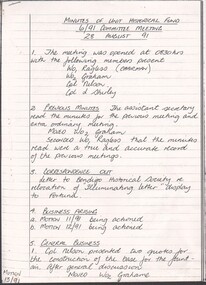
Document - Minutes of Army Survey Regiment Unit Historical Fund, Fortuna Villa
... Fortuna was compulsorily acquired by the Commonwealth in 1942 as the Cartographic Headquarters of the Australian Survey Corps during World War II, and many ancillary structures were added while preserving the main house and ornamental grounds. Victorian Heritage Database Report https://vhd.heritagecouncil.vic.gov.au/places/68334/download-report Fortuna Villa Minutes Minutes of Army Survey Regiment Unit Historical Fund, Fortuna Villa (28 Aug 1991 - 25 Nov 1992) 28 August 1991 - cost of construction of base of the fountain, and letter to Bendigo Art Gallery to follow-up loan of the "Venus" statue for display in the RM's office and resurfacing of marble baths in the CO and adjutant's offices. ...Fortuna Villa was initially commenced as a modest single storey home in 1861 next to the 180 Mine by Theodore Ballerstedt, who sold the mine and house to George Lansell in 1869. Lansell already owned the adjacent Fortuna Mine, and through deeper mining techniques greatly expanded the mine's operation, his personal wealth, and the house and grounds. Lansell was soon known as the 'Quartz King', Australia's first gold mining millionaire and credited as the driving force behind much of Bendigo's prosperity. He continuously added to and expanded the villa, decorating it extravagantly with the finest of artworks and materials, into a sprawling mansion with extensive landscaped grounds, to create a house and grounds of a size and grandeur with few rivals in Australia. After his death in 1907, his second wife Edith carried on with improvements, creating a house and grounds developed over 50 years. The attached mine also contributes to its significance, being one of the richest mines in Bendigo, and at one stage probably the deepest gold mine in the world at 3176 feet. The 1875 crushing works are attached directly to the mansion, and the mine's tailings and settling ponds (turned into ornamental lakes) represent a direct link between George Lansell's wealth and its source. Fortuna was compulsorily acquired by the Commonwealth in 1942 as the Cartographic Headquarters of the Australian Survey Corps during World War II, and many ancillary structures were added while preserving the main house and ornamental grounds. Victorian Heritage Database Report https://vhd.heritagecouncil.vic.gov.au/places/68334/download-reportMinutes of Army Survey Regiment Unit Historical Fund, Fortuna Villa (28 Aug 1991 - 25 Nov 1992) 28 August 1991 - cost of construction of base of the fountain, and letter to Bendigo Art Gallery to follow-up loan of the "Venus" statue for display in the RM's office and resurfacing of marble baths in the CO and adjutant's offices. Single undated page from Unit Historical Fund Committee in 1991. 11 Nov 1992 - discussion of Christmas tours and a plaque for hallway. 25 Nov 1992 - lights for the Company's office, and a discussion of five tasks for next year. Lansell's Fortuna flyer for tour.fortuna villa, minutes -
 Bendigo Historical Society Inc.
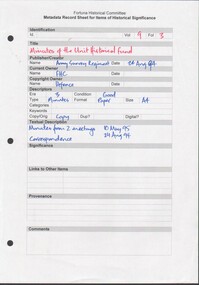
Administrative record - Minute records Army Survey Regiment Fortuna Historical Society
... Cartographic Headquarters of the Australian Survey Corps during World War II, and many ancillary structures were added while preserving the main house and ornamental grounds. Victorian Heritage Database Report https://vhd.heritagecouncil.vic.gov.au/places/68334/download-report Fortuna Historical Unit Minutes of the Fortuna Historical Committee held 24 August 1994 (hand written minutes over four sheets, referenced Vol 9 Fol 3) including four pages of stakeholder feedback tabled at the meeting Administrative record Minute records Army Survey Regiment Fortuna Historical Society ...Fortuna Villa was initially commenced as a modest single storey home in 1861 next to the 180 Mine by Theodore Ballerstedt, who sold the mine and house to George Lansell in 1869. Lansell already owned the adjacent Fortuna Mine, and through deeper mining techniques greatly expanded the mine's operation, his personal wealth, and the house and grounds. Lansell was soon known as the 'Quartz King', Australia's first gold mining millionaire and credited as the driving force behind much of Bendigo's prosperity. He continuously added to and expanded the villa, decorating it extravagantly with the finest of artworks and materials, into a sprawling mansion with extensive landscaped grounds, to create a house and grounds of a size and grandeur with few rivals in Australia. After his death in 1907, his second wife Edith carried on with improvements, creating a house and grounds developed over 50 years. The attached mine also contributes to its significance, being one of the richest mines in Bendigo, and at one stage probably the deepest gold mine in the world at 3176 feet. The 1875 crushing works are attached directly to the mansion, and the mine's tailings and settling ponds (turned into ornamental lakes) represent a direct link between George Lansell's wealth and its source. Fortuna was compulsorily acquired by the Commonwealth in 1942 as the Cartographic Headquarters of the Australian Survey Corps during World War II, and many ancillary structures were added while preserving the main house and ornamental grounds. Victorian Heritage Database Report https://vhd.heritagecouncil.vic.gov.au/places/68334/download-reportMinutes of the Fortuna Historical Committee held 24 August 1994 (hand written minutes over four sheets, referenced Vol 9 Fol 3) including four pages of stakeholder feedback tabled at the meetingfortuna, historical unit -
 Bendigo Military Museum
Photograph - Army Survey Regiment – Map Production, Fortuna, Bendigo, 1986
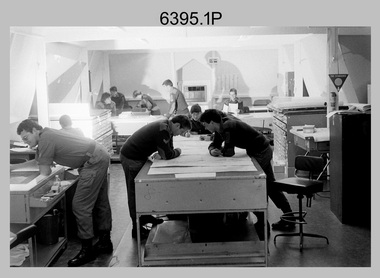
... Army Survey Regiment’s map production and facilities were taken at Fortuna Villa, Bendigo, April 1986. Photos .1P to .3P were taken in Cartographic Squadron’s Correcting Section in the Attic. located on the top floor of Fortuna Photos .4P to .5P were taken in Cartographic Squadron’s Proving Section, located in the Ballroom also on the top floor facing the lake. The technicians were probably involved in a rapid response map production, as they all were wearing field uniforms. As ‘Regiment Overcrowding’ is annotated on the plastic sleeve holding the negatives, it seems the photos were taken when the unit...Army Survey Regiment’s map production and facilities were taken at Fortuna Villa, Bendigo, April 1986. Photos .1P to .3P were taken in Cartographic Squadron’s Correcting Section in the Attic. located on the top floor of Fortuna Photos .4P to .5P were taken in Cartographic Squadron’s Proving Section, located in the Ballroom also on the top floor facing the lake. The technicians were probably involved in a rapid response map production, as they all were wearing field uniforms. As ‘Regiment Overcrowding’ is annotated on the plastic sleeve holding the negatives, it seems the photos were taken when the unit ...These 17 photographs of the Army Survey Regiment’s map production and facilities were taken at Fortuna Villa, Bendigo, April 1986. Photos .1P to .3P were taken in Cartographic Squadron’s Correcting Section in the Attic. located on the top floor of Fortuna Photos .4P to .5P were taken in Cartographic Squadron’s Proving Section, located in the Ballroom also on the top floor facing the lake. The technicians were probably involved in a rapid response map production, as they all were wearing field uniforms. As ‘Regiment Overcrowding’ is annotated on the plastic sleeve holding the negatives, it seems the photos were taken when the unit was at its capacity to demonstrate the lack of suitable work areas. The Army Survey Regiment’s Duty Room, RAP and Carpark appearing in Photo .10P was probably taken from the top steps near the SGT’s accommodation block. Two of the photos in this set are also published in item 6096.5P.This is a set of 17 photograph of Map Production and car park was taken at the Army Survey Regiment, Fortuna, Bendigo, in April 1986. The black & white photographs are on 35mm negative film and are part of the Army Survey Regiment’s Collection. The photographs were scanned at 96 dpi. .1) - Photo, black & white, 1986. Correcting Section, Attic: L to R: CPL Andy Lucas, SPR Chris Gordon, unidentified, SPR Jan (Crighton) Minchin, CPL Robin Marshall, CPL Frank Downie, SPR Gayle Humphrey, unidentified (x2), Jason Wells at rear. .2) - Photo, black & white, 1986. Correcting Section, Attic: L to R: CPL Andy Lucas, SPR Chris Gordon, unidentified, SPR Jan (Crighton) Minchin, CPL Robin Marshall, CPL Frank Downie, SPR Gayle Humphrey, unidentified, Jason Wells, unidentified. .3) - Photo, black & white, 1986. Correcting Section, Attic: L to R: CPL Andy Lucas, CPL Robin Marshall, SPR Chris Gordon, unidentified, CPL Frank Downie, SPR Gayle Humphrey, unidentified, SPR Jan (Crighton) Minchin at rear., Jason Wells on phone. .4) & .5) - Photo, black & white, 1986. Proving Section, Ballroom: On left front to back: SGT Alan Staley, SGT Roger Rees, SGT Greg Anderson. On right front to back: SGT Denis McCarthy, SGT Tim Allanson, SSGT Adrian ‘Charlie’ Creedy. .6) - Photo, black & white, 1986. Records & Proofing buildings. .7) - Photo, black & white, 1986. Technical Services temporary buildings. .8) - Photo, black & white, 1986. Q-store and transport buildings. .9) - Photo, black & white, 1986. Technical Services temporary buildings in front of transport compound. .10) - Photo, black & white, 1986. Army Survey Regiment Duty Room, RAP and Carpark at Fortuna. .11) - Photo, black & white, 1986. Records & Proofing buildings. .12) - Photo, black & white, 1986. Other Ranks (OR’s) car park and barracks with kitchen in background. .13) - Photo, black & white, 1986. Other Ranks kitchen, parade ground and SGT’s/Officers barracks in background. .14) - Photo, black & white, 1986. Fortuna Villa taken from the steps near the SGT’s accommodation block. .15) - Photo, black & white, 1986. Fortuna Villa taken from the steps near the OR’s s accommodation block. .16) - Photo, black & white, 1986. Fortuna Villa taken from the roadway near the OR’s accommodation block. .17) - Photo, black & white, 1986. 20’ x 30’ Army tents set up on the basketball court..1P to .17P – ‘Regiment Overcrowding’ and the date are annotated on the plastic sleeve.royal australian survey corps, rasvy, army survey regiment, army svy regt, fortuna, asr -
 Bendigo Military Museum
Photograph - Army Survey Regiment Open Day - Briefings and Tours, Fortuna, Bendigo, 1990
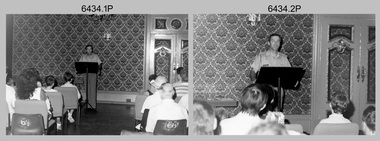
... unit’s important role as Defence’s map production agency, its technical equipment, and its economic importance to Bendigo. It also gave them an opportunity to tour through historic Fortuna Villa. This occasion is covered in more detail in page 143 of Valerie Lovejoy’s book 'Mapmakers of Fortuna – A history of the Army Survey Regiment’ ISBN: 0-646-42120-4. Refer to items 6435.35P and 6436.18P for more photos of the Open Day taken in the Map Production areas of Air Survey and Cartographic...unit’s important role as Defence’s map production agency, its technical equipment, and its economic importance to Bendigo. It also gave them an opportunity to tour through historic Fortuna Villa. This occasion is covered in more detail in page 143 of Valerie Lovejoy’s book 'Mapmakers of Fortuna – A history of the Army Survey Regiment’ ISBN: 0-646-42120-4. Refer to items 6435.35P and 6436.18P for more photos of the Open Day taken in the Map Production areas of Air Survey and Cartographic ...These 27 photographs were taken at an Army Survey Regiment Open Day at Fortuna Villa, Bendigo on the 24th of February 1990. This occasion was one of several events held to commemorate the 75th anniversary of the formation of the Royal Australian Survey Corps. Although historical tours of Fortuna occurred on a regular basis, this was the first technical open day since 1972. The Royal Australian Survey Corps recognised that an Open Day was the best way for the local community in Bendigo to gain an insight into the unit’s important role as Defence’s map production agency, its technical equipment, and its economic importance to Bendigo. It also gave them an opportunity to tour through historic Fortuna Villa. This occasion is covered in more detail in page 143 of Valerie Lovejoy’s book 'Mapmakers of Fortuna – A history of the Army Survey Regiment’ ISBN: 0-646-42120-4. Refer to items 6435.35P and 6436.18P for more photos of the Open Day taken in the Map Production areas of Air Survey and Cartographic Squadron, and production areas of Lithographic Squadron. Photo prints of some of these photos were scanned and catalogued in items 6247.30P and 6291.6P.These 27 photographs were taken at an Army Survey Regiment Open Day held at Fortuna, Bendigo on the 24th of February 1990. The 35mm colour and black & white negatives photographs were scanned at 96 dpi and are part of the Army Survey Regiment’s Collection. .1) & .2) - Photo, black & white, 1990. Ballroom - Visitor briefings by CO LTCOL Rene van den Tol. .3) - Photo, colour, 1990. Ballroom - Visitor briefings by MAJ Ray Redman. .4) - Photo, colour, 1990. Ballroom - Visitor briefings by unidentified UK Exchange officer. .5) - Photo, black & white, 1990. Music Room - Visitor briefings by MAJ Bob Williams. .6) - Photo, black & white, 1990. Orderly Room - ADJT CAPT Peter Parkes. .7) - Photo, colour, 1990. Music Room - ADJT CAPT Peter Parkes with civilian visitors. .8) - Photo, colour, 1990. Music Room - Visitor briefings by CPL Le-Anne (Smallshaw) Shirley. .9) - Photo, colour, 1990. Entrance Foyer - Visitor briefings. .10) - Photo, colour, 1990. CO’s Office - Visitor briefings by CPL Raelene (Munting) Brodie. .11) - Photo, colour, 1990. Mr Pat Thwaites outlining utilisation of satellite imagery to civilian visitors. .12) - Photo, black & white, 1990. Mr Pat Thwaites outlining utilisation of satellite imagery to civilian visitors. .13) - Photo, colour, 1990. Staircase leading up to the top floor - Visitor briefings by CPL Ian Nelson. .14) - Photo, colour, 1990. Building 16 - Visitor briefings by RSM WO1 Neville Stone. .15) - Photo, colour, 1990. Civilian visitors enjoying views of the garden from Fortuna Villa’s rooftop. .16) - Photo, black & white, 1990. Visitor briefings at Fortuna’s rear steps. .17) - Photo, black & white, 1990. Outside Building 16 - Visitor briefings by WO1 Gary Warnest. .18) - Photo, colour, 1990. Outside Building 16 - Visitor briefings by WO2 Adrian ‘Charlie’ Creedy. .19) - Photo, colour, 1990. Outside Building 16 - L to R: SPR Sue (Foote) Bourne, LCPL Sandy Winn, WO2 Adrian ‘Charlie’ Creedy. .20) - Photo, colour, 1990. Outside Building 16 - SGT Greg Byers. .21) - Photo, colour, 1990. Visitors enjoying Devonshire Tea in the gardens next to the Tavern. .22) - Photo, colour, 1990. RSM WO1 Neville Stone and family enjoying Devonshire Tea in the gardens next to the Tavern. .23) - Photo, colour, 1990. Visitors relaxing in the garden next to Fortuna’s lake. .24) - Photo, black & white, 1990. CPL Trevor Poll and others serve up BBQ lunch next to the tennis courts. .25) to .27) - Photo, colour, 1990. Parking at a premium inside the Army Survey Regiment and Chum Street..1P to .27P – no annotationsroyal australian survey corps, rasvy, army survey regiment, army svy regt, fortuna, asr -
 Bendigo Military Museum
Photograph - Army Survey Regiment Open Day – Lithographic Squadron, Fortuna, Bendigo, 1990
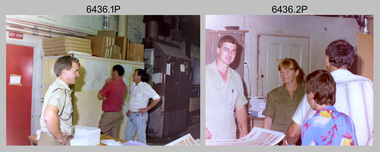
... unit’s important role as Defence’s map production agency, its technical equipment, and its economic importance to Bendigo. It also gave them an opportunity to tour through historic Fortuna Villa. This occasion is covered in more detail in page 143 of Valerie Lovejoy’s book 'Mapmakers of Fortuna – A history of the Army Survey Regiment’ ISBN: 0-646-42120-4. Refer to items 6434.27P and 6435.35P for more photos of the Open Day taken inside Fortuna, the garden areas and Map Production areas of Air Survey and Cartographic...unit’s important role as Defence’s map production agency, its technical equipment, and its economic importance to Bendigo. It also gave them an opportunity to tour through historic Fortuna Villa. This occasion is covered in more detail in page 143 of Valerie Lovejoy’s book 'Mapmakers of Fortuna – A history of the Army Survey Regiment’ ISBN: 0-646-42120-4. Refer to items 6434.27P and 6435.35P for more photos of the Open Day taken inside Fortuna, the garden areas and Map Production areas of Air Survey and Cartographic ...These 18 photographs were taken at an Army Survey Regiment Open Day at Fortuna Villa, Bendigo on the 24th of February 1990. This occasion was one of several events held to commemorate the 75th anniversary of the formation of the Royal Australian Survey Corps. Although historical tours of Fortuna occurred on a regular basis, this was the first technical open day since 1972. The Royal Australian Survey Corps recognised that an Open Day was the best way for the local community in Bendigo to gain an insight into the unit’s important role as Defence’s map production agency, its technical equipment, and its economic importance to Bendigo. It also gave them an opportunity to tour through historic Fortuna Villa. This occasion is covered in more detail in page 143 of Valerie Lovejoy’s book 'Mapmakers of Fortuna – A history of the Army Survey Regiment’ ISBN: 0-646-42120-4. Refer to items 6434.27P and 6435.35P for more photos of the Open Day taken inside Fortuna, the garden areas and Map Production areas of Air Survey and Cartographic Squadron. Photo prints of some of these photos were scanned and catalogued in items 6247.30P and 6291.6P.These 18 photographs were taken at an Army Survey Regiment Open Day held at Fortuna, Bendigo on the 24th of February 1990. The 35mm colour and black & white negatives photographs were scanned at 96 dpi and are part of the Army Survey Regiment’s Collection. .1) - Photo, colour, 1990. Print Troop – WO2 Rob Bogumil with visitors. .2) - Photo, colour, 1990. Print Troop – L to R: SPR Ross Anza, LCPL Janet Murray with visitors. .3) - Photo, black & white, 1990. Print Troop – L to R: LCPL Janet Murray, MAJ Bob Coote, SPR Gary Lord with visitors. .4) - Photo, black & white, 1990. Photo Troop – L to R: WO2 Keith Fenton RE UK Exchange, SGT Steve Burke with visitors. .5) - Photo, colour, 1990. Photo Troop – SGT Steve Burke with visitors. .6) - Photo, colour, 1990. Photo Troop – L to R: unidentified, SGT Steve Burke with visitors. .7) - Photo, colour, 1990. Print Troop – L to R: CPL Peter Breukel, WO2 Keith Fenton RE. UK Exchange with visitors. .8) - Photo, black & white, 1990. Photo Troop - WO2 Keith Fenton RE. UK Exchange. .9) - Photo, black & white, 1990. Print Troop - civilian visitors. .10) - black & white, Print Troop, 1990. - L to R: civilian visitors, SSGT Ian Nichols, CPL John ‘Flash’ Anderson. .11) - Photo, black & white, 1990. Print Troop - L to R: SSGT Ian Nichols, CPL Dale Hudson, Planeta printing press, with civilian visitors. .12) - Photo, colour, 1990. Print Troop - L to R: SSGT Ian Nichols, CAPT Roger Hancock with civilian visitors. .13) - Photo, colour, 1990. Print Troop - LT Marty Lyons with civilian visitors. .14) - Photo, black & white, 1990. Print Troop - L to R: LT Marty Lyons, unidentified with civilian visitors. .15) - Photo, black & white, 1990. Orthophoto Mapping Section - L to R: SSGT Peter Imeson, SGT Bob Garritty with civilian visitors. .16) - Photo, colour, 1990. Optronics raster scanner - WO2 Adrian ‘Charlie’ Creedy with civilian visitors. .17) - Photo, colour 1990. Outside Photo Troop office - L to R: SSGT Rhys De Laine, WO2 Rob Bogumil. .18) - Photo, black & white, 1990. Photo Troop - civilian visitors..1P to .18P – no annotationsroyal australian survey corps, rasvy, army survey regiment, army svy regt, fortuna, asr, litho sqn -
 Bendigo Military Museum
Photograph - LHQ Cartographic Company Personnel and Vehicles, Fortuna, Bendigo, 1943 to 1945
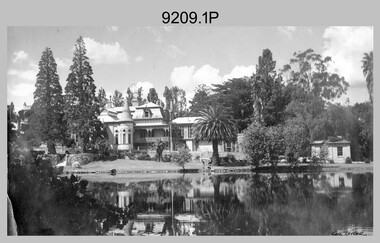
... Cartographic Company moved to Bendigo on 11 Jun 1942, from Mitchell House, Melbourne. The responsibilities of this unit were map compilation, fair drawing and lithographic reproduction, including printing the work of other Units as well as their own. A decision of War Cabinet on 13 August 1941 had authorised the formation of the Australian Women's Army...Cartographic Company moved to Bendigo on 11 Jun 1942, from Mitchell House, Melbourne. The responsibilities of this unit were map compilation, fair drawing and lithographic reproduction, including printing the work of other Units as well as their own. A decision of War Cabinet on 13 August 1941 had authorised the formation of the Australian Women's Army ...This is a set of 12 photographs taken in 1943 and 1945, during Army’s early years of occupation at Fortuna, Bendigo in WW2. The black and white photographs are contained in a photo album provided by the family of Rosemary (Atkinson) Bowman, who served in the Australian Women's Army Service (AWAS) and a former member of RA Svy. On 1 Feb 1941, a Cartographic Section was reformed as the Land Headquarters (LHQ) Cartographic Company. Deputy Chief of the General Staff, Major General Sidney Rowell instructed Its OC - Major William Sarll, in the interests of security of plant and to provide against possible damage of air attack, to investigate suitable safer inland accommodation for LHQ Cartographic Company. Major William Sarll inspected many properties before finding one that would meet the requirements of the Cartographic Company. In late 1941, he came to inspect Fortuna, a rambling old mansion dating back to the gold rush, with about fifteen acres of ground in central Bendigo. On 23 March 1942, the Commonwealth of Australia, under the provisions of the National Security Act of 1939, took possession of the house, the old battery buildings and the fifteen acres of grounds. LHQ Cartographic Company moved to Bendigo on 11 Jun 1942, from Mitchell House, Melbourne. The responsibilities of this unit were map compilation, fair drawing and lithographic reproduction, including printing the work of other Units as well as their own. A decision of War Cabinet on 13 August 1941 had authorised the formation of the Australian Women's Army Service (AWAS), in order to release men from certain military duties for employment with fighting units. Originally their employment was restricted to traditional female areas and numbers were strictly limited, but the outbreak of the Pacific War in 1942 led to a broadening of employment categories and an increase in numbers. The first AWAS arrived at Fortuna on 26 November 1942 and immediately became an integral part of the unit. Most of these women had artistic talent. Their work included fine drawing work, filling in all the topographical detail on fair copies of field sheets and pasting on names and figures, while others were drawing actual map outlines. Other sections the AWAS worked in were the duffing section, where unwanted features were painted out of the negatives before reproduction, and the retouching section where any defects in the zinc plates were corrected. The AWAS also worked on creating Army posters and other publicity material in this section. Seventy-five AWAS served with the Cartographic Company during the war. Refer to Item 6099.17P for photos taken in 1942, the first year of LHQ Cartographic Company’s occupation at Fortuna, Bendigo in WW2. The Survey Corps’ occupation of Fortuna during WW2 is covered in more detail with additional historic photographs, in pages 17 to 27 of Valerie Lovejoy’s book 'Mapmakers of Fortuna – A history of the Army Survey Regiment’ ISBN: 0-646-42120-4. Other items from Rosemary (Atkinson) Bowman are: 9210.16P, 99211.6P, 9212.6P, 9213.4P and 9214.12 This is a set of 12 photographs taken in 1943 and 1945, during Army’s early years of occupation at Fortuna, Bendigo in WW2. The black and white photographs are printed on photographic paper are contained in a photo album provided by the family of Rosemary (Atkinson) Bowman, who served in the Australian Women's Army Service (AWAS) and a former member of RA Svy. The photographs were scanned at 600 dpi and are part of the Army Survey Regiment’s Collection. .1) - Photo, black & white, 1943. LHQ Cartographic Company, Fortuna Villa, Bendigo. .2) - Photo, black & white, 1943. Ronye Bond. .3) - Photo, black & white, 1943. Rosemary (Atkinson) Bowman. .4) - Photo, black & white, 1943. Billie Hyatt. .5) - Photo, black & white, 1943. Helen Morton. .6) - Photo, black & white, 1943. Wes Runting. .7) - Photo, black & white, 1943. Ronye Bond. .8) - Photo, black & white, 1943. Rosemary (Atkinson) Bowman. .9) - Photo, black & white, 1943. Accommodation Tents L to R: Norma Lewis, Billie Hyatt, Peggy Priest, Ken Taylor, Tiny Lewis, Norma Jeffrey. .10) - Photo, black & white, 1943. Marching Contest in Bendigo’s Charing Cross. .11) - Photo, black & white, 1945. In front of Regimental Office. .12) - Photo, black & white, 1945. Part of Drive.Some personnel are identified with dates in the photo album.royal australian survey corps, rasvy, army survey regiment, asr, fortuna -
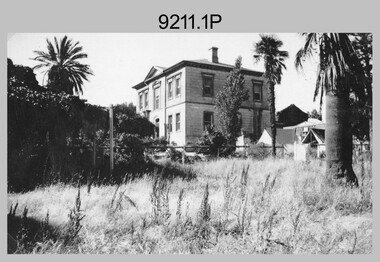 Bendigo Military Museum
Photograph - LHQ Cartographic Company AWAS Accommodation, Westend Hall, Bendigo, 1943
... Cartographic Company moved to Bendigo on 11 Jun 1942, from Mitchell House, Melbourne. The responsibilities of this unit were map compilation, fair drawing and lithographic reproduction, including printing the work of other Units as well as their own. A decision of War Cabinet on 13 August 1941 had authorised the formation of the Australian Women's Army...Cartographic Company moved to Bendigo on 11 Jun 1942, from Mitchell House, Melbourne. The responsibilities of this unit were map compilation, fair drawing and lithographic reproduction, including printing the work of other Units as well as their own. A decision of War Cabinet on 13 August 1941 had authorised the formation of the Australian Women's Army ...This is a set of 12 photographs taken during Army’s occupation at Fortuna, Bendigo in WW2. On 1 Feb 1941, a Cartographic Section was reformed as the Land Headquarters (LHQ) Cartographic Company. Deputy Chief of the General Staff, Major General Sidney Rowell instructed Its OC - Major William Sarll, in the interests of security of plant and to provide against possible damage of air attack, to investigate suitable safer inland accommodation for LHQ Cartographic Company. Major William Sarll inspected many properties before finding one that would meet the requirements of the Cartographic Company. In late 1941, he came to inspect Fortuna, a rambling old mansion dating back to the gold rush, with about fifteen acres of ground in central Bendigo. On 23 March 1942, the Commonwealth of Australia, under the provisions of the National Security Act of 1939, took possession of the house, the old battery buildings and the fifteen acres of grounds. LHQ Cartographic Company moved to Bendigo on 11 Jun 1942, from Mitchell House, Melbourne. The responsibilities of this unit were map compilation, fair drawing and lithographic reproduction, including printing the work of other Units as well as their own. A decision of War Cabinet on 13 August 1941 had authorised the formation of the Australian Women's Army Service (AWAS), in order to release men from certain military duties for employment with fighting units. Originally their employment was restricted to traditional female areas and numbers were strictly limited, but the outbreak of the Pacific War in 1942 led to a broadening of employment categories and an increase in numbers. The first AWAS arrived at Fortuna on 26 November 1942 and immediately became an integral part of the unit. Seventy-five AWAS served with the Cartographic Company during the war and Major Sarll paid them a special tribute for their 'untiring efforts' in the Company's war report. The AWAS could not be accommodated at Fortuna, and a nearby house, Westend Hall, on the corner of Lily and Barnard Streets, provided the first barracks with Warrant Officer Durack in charge. The building, designed by Vahland and Getzchmann in 1868, has been described as the 'grandest house on the goldfields with elegant Corinthian columns supporting a balustraded portico.' The building was conveniently situated close to the front gates of Fortuna. The women appreciated their pleasant surroundings as a magazine article written a year after their arrival reveals. 'It was a stroke of luck which gave us West End Hall with its gardens and large airy rooms; and it is to Miss Durack that we must give thanks for the bright furnishings, the good food and ... the splendid atmosphere of comradeship. But not all could be accommodated in the house; some slept in tents through the freezing Bendigo winters. Local girls like Gwen McGown were able to live at home, but had to report for the Monday morning parade after which the women would march to work. Saturday afternoon was designated sports afternoon for the women. They formed teams among themselves for competitions in basketball and softball. The women participated in an active way in the recreational activities of the Company, including athletics sports days, marching contests, concerts and dances. In the later years of the war, the barracks at West End Hall were too cramped and the AWAS were transferred to Lansellstowe, a beautiful old home in Barkly Terrace built originally for Leonard Vere Lansell, the third son of George Lansell. Prior to the AWAS occupation the Army had used the spacious house as a camp hospital. Refer to Item 6099.17P for photos taken in 1942, the first year of LHQ Cartographic Company’s occupation at Fortuna, Bendigo in WW2. The Survey Corps’ occupation of Fortuna during WW2 is covered in more detail with additional historic photographs, in pages 17 to 27 of Valerie Lovejoy’s book 'Mapmakers of Fortuna – A history of the Army Survey Regiment’ ISBN: 0-646-42120-4.Other items from Rosemary (Atkinson) Bowman are: 9209.12P, 9210.16P, 9212.6P, 9213.4P and 9214.12. This is a set of four photographs of AWAS Accommodation at ‘Westend Hall’, taken in 1943 during Army’s early years of occupation at Fortuna, Bendigo in WW2. The black and white photo, graphs are printed on photographic paper are contained in a photo album provided by the family of Rosemary (Atkinson) Bowman, a former member of RA Svy. The photographs were scanned at 600 dpi and are part of the Army Survey Regiment’s Collection. .1) - Photo, black & white, 1943. AWAS Accommodation, Westend Hall. .2) - Photo, black & white, 1943. At front steps of Westend Hall. L to R: Norma Lewis, Tiny Lewis, Billie Hyatt, Norma Jeffrey, Betty Eyval, Peggy Priest. .3) - Photo, black & white, 1943. Hall and stairway inside the old barracks - Westend Hall. .4) - Photo, black & white, 1943. Recreation room inside the old barracks - Westend Hall.Some personnel are identified with dates in the photo album.royal australian survey corps, rasvy, army survey regiment, asr, fortuna -
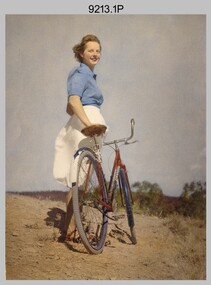 Bendigo Military Museum
Photograph - LHQ Cartographic Company Visit to Spring Gully and Castlemaine, 1943, 1944
... Army Service (AWAS), in order to release men from certain military duties for employment with fighting units. Originally their employment was restricted to traditional female areas and numbers were strictly limited, but the outbreak of the Pacific War in 1942 led to a broadening of employment categories and an increase in numbers. The first AWAS arrived at Fortuna on 26 November 1942 and immediately became an integral part of the unit. Seventy-five AWAS served with the Cartographic...Army Service (AWAS), in order to release men from certain military duties for employment with fighting units. Originally their employment was restricted to traditional female areas and numbers were strictly limited, but the outbreak of the Pacific War in 1942 led to a broadening of employment categories and an increase in numbers. The first AWAS arrived at Fortuna on 26 November 1942 and immediately became an integral part of the unit. Seventy-five AWAS served with the Cartographic ...This is a set of four photographs of Land Headquarters (LHQ) Cartographic Company personnel taken on Christmas Day, 25 December 1943 at Spring Gully Reservoir, Bendigo and in March 1944 during a visit to Castlemaine, 37km south of Bendigo. These visits were taken during Army’s WW2 occupation of Fortuna, Bendigo. On 1 Feb 1941, a Cartographic Section was reformed as the LHQ Cartographic Company. Deputy Chief of the General Staff, Major General Sidney Rowell instructed Its OC - Major William Sarll, in the interests of security of plant and to provide against possible damage of air attack, to investigate suitable safer inland accommodation for LHQ Cartographic Company. Major William Sarll inspected many properties before finding one that would meet the requirements of the Cartographic Company. In late 1941, he came to inspect Fortuna, a rambling old mansion dating back to the gold rush, with about fifteen acres of ground in central Bendigo. On 23 March 1942, the Commonwealth of Australia, under the provisions of the National Security Act of 1939, took possession of the house, the old battery buildings and the fifteen acres of grounds. LHQ Cartographic Company moved to Bendigo on 11 Jun 1942, from Mitchell House, Melbourne. The responsibilities of this unit were map compilation, fair drawing and lithographic reproduction, including printing the work of other Units as well as their own. Added to this unlikely mixture of permanent army officers, skilled tradesmen, artists and old soldiers were the women of the Company. A decision of War Cabinet on 13 August 1941 had authorised the formation of the Australian Women's Army Service (AWAS), in order to release men from certain military duties for employment with fighting units. Originally their employment was restricted to traditional female areas and numbers were strictly limited, but the outbreak of the Pacific War in 1942 led to a broadening of employment categories and an increase in numbers. The first AWAS arrived at Fortuna on 26 November 1942 and immediately became an integral part of the unit. Seventy-five AWAS served with the Cartographic Company during the war and Major Sarll paid them a special tribute for their 'untiring efforts' in the Company's war report. Refer to Item 6099.17P for photos taken in 1942, the first year of LHQ Cartographic Company’s occupation at Fortuna, Bendigo in WW2. The Survey Corps’ occupation of Fortuna during WW2 is covered in more detail with additional historic photographs, in pages 17 to 27 of Valerie Lovejoy’s book 'Mapmakers of Fortuna – A history of the Army Survey Regiment’ ISBN: 0-646-42120-4. Other items from Rosemary (Atkinson) Bowman are: 9209.12P, 9210.16P, 99211.6P, 9212.6P, and 9214.12.This is a set of four photographs of Land Headquarters (LHQ) Cartographic Company personnel taking time off at Spring Gully, Bendigo on December 1943 and Castlemaine in March 1944, during Army’s WW2 occupation of Fortuna, Bendigo. The colour and black and white photographs are printed on photographic paper are contained in a photo album provided by the family of Rosemary (Atkinson) Bowman, a former member of RA Svy. The photographs were scanned at 600 dpi and are part of the Army Survey Regiment’s Collection. .2) - Photo, colour, 25 December 1943. Rosemary (Atkinson) Bowman at Spring Gully Reservoir, Bendigo. .2) - Photo, black & white, March 1944. Outside Cumberland Hotel, Castlemaine, L to R: Ken Taylor, Wes Runting, Bob Vincent. .3) - Photo, black & white, March 1944. Outside Cumberland Hotel, Castlemaine, L to R: Rosemary (Atkinson) Bowman, Bob Vincent. .4) - Photo, black & white, March 1944. Halfway back to Bendigo - Rosemary (Atkinson) Bowman.Some personnel are identified with dates in the photo album.royal australian survey corps, rasvy, army survey regiment, asr, fortuna -
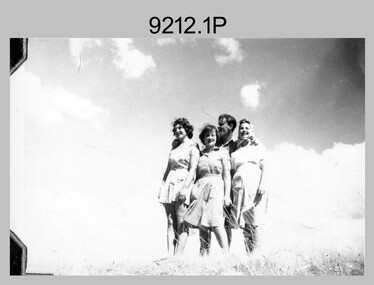 Bendigo Military Museum
Photograph - LHQ Cartographic Company Picnic, Axe Creek, Bendigo region, 1944
... Army Service (AWAS), in order to release men from certain military duties for employment with fighting units. Originally their employment was restricted to traditional female areas and numbers were strictly limited, but the outbreak of the Pacific War in 1942 led to a broadening of employment categories and an increase in numbers. The first AWAS arrived at Fortuna on 26 November 1942 and immediately became an integral part of the unit. Seventy-five AWAS served with the Cartographic...Army Service (AWAS), in order to release men from certain military duties for employment with fighting units. Originally their employment was restricted to traditional female areas and numbers were strictly limited, but the outbreak of the Pacific War in 1942 led to a broadening of employment categories and an increase in numbers. The first AWAS arrived at Fortuna on 26 November 1942 and immediately became an integral part of the unit. Seventy-five AWAS served with the Cartographic ...This is a set of six photographs of Land Headquarters (LHQ) Cartographic Company personnel taken in 1944 at a picnic held at Axe Creek, a locality 15km SE of Bendigo, during Army’s WW2 occupation of Fortuna, Bendigo. On 1 Feb 1941, a Cartographic Section was reformed as the LHQ Cartographic Company. Deputy Chief of the General Staff, Major General Sidney Rowell instructed Its OC - Major William Sarll, in the interests of security of plant and to provide against possible damage of air attack, to investigate suitable safer inland accommodation for LHQ Cartographic Company. Major William Sarll inspected many properties before finding one that would meet the requirements of the Cartographic Company. In late 1941, he came to inspect Fortuna, a rambling old mansion dating back to the gold rush, with about fifteen acres of ground in central Bendigo. On 23 March 1942, the Commonwealth of Australia, under the provisions of the National Security Act of 1939, took possession of the house, the old battery buildings and the fifteen acres of grounds. LHQ Cartographic Company moved to Bendigo on 11 Jun 1942, from Mitchell House, Melbourne. The responsibilities of this unit were map compilation, fair drawing and lithographic reproduction, including printing the work of other Units as well as their own. Added to this unlikely mixture of permanent army officers, skilled tradesmen, artists and old soldiers were the women of the Company. A decision of War Cabinet on 13 August 1941 had authorised the formation of the Australian Women's Army Service (AWAS), in order to release men from certain military duties for employment with fighting units. Originally their employment was restricted to traditional female areas and numbers were strictly limited, but the outbreak of the Pacific War in 1942 led to a broadening of employment categories and an increase in numbers. The first AWAS arrived at Fortuna on 26 November 1942 and immediately became an integral part of the unit. Seventy-five AWAS served with the Cartographic Company during the war and Major Sarll paid them a special tribute for their 'untiring efforts' in the Company's war report. Refer to Item 6099.17P for photos taken in 1942, the first year of LHQ Cartographic Company’s occupation at Fortuna, Bendigo in WW2. The Survey Corps’ occupation of Fortuna during WW2 is covered in more detail with additional historic photographs, in pages 17 to 27 of Valerie Lovejoy’s book 'Mapmakers of Fortuna – A history of the Army Survey Regiment’ ISBN: 0-646-42120-4. Other items from Rosemary (Atkinson) Bowman are: 9209.12P, 9210.16P, 99211.6P, 9213.4P and 9214.12. This is a set of six photographs of Australian Survey Corps personnel at a picnic held at Axe Creek, a locality a locality 15km SE of Bendigo, taken in 1944 during Army’s WW2 occupation of Fortuna, Bendigo. in printed on photographic paper are contained in a photo album provided by the family of Rosemary (Atkinson) Bowman, a former member of RA Svy. The photographs were scanned at 600 dpi and are part of the Army Survey Regiment’s Collection. .1) - Photo, black & white, 1944. L to R: Ronye Bond, Margie, Phil Flood, Rosemary (Atkinson) Bowman. .2) - Photo, black & white, 1944. L to R: Rosemary (Atkinson) Bowman, Margie, Bob Vincent, ‘Noakie’, Wes Runting. .3) - Photo, black & white, 1944. Rosemary (Atkinson) Bowman. .4) - Photo, black & white, 1944. L to R: ‘Noakie’, Wes Runting. .5) - Photo, black & white, 1944. Back row L to R: Ronald ‘Stape’ Stapleton, Wes ‘JD’ Runting, Ray Jones, Centre row L to R: Ronye Bond, Peggy Priest, Rosemary (Atkinson) Bowman. At front: Noakie. .6) - Photo, black & white, 1944. L to R: Ray Jones, Ronye Bond, ‘Noakie’, Rosemary (Atkinson) Bowman, Wes ‘JD’ Runting, Ronald ‘Stape’ Stapleton.Some personnel are identified with dates in the photo album.royal australian survey corps, rasvy, army survey regiment, asr, fortuna -
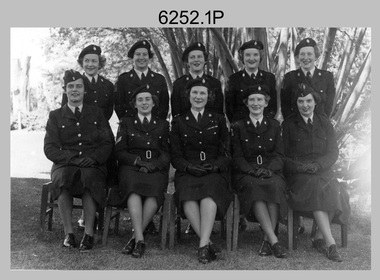 Bendigo Military Museum
Photograph - WRAAC Personnel posted to the Army Headquarters Survey Regiment, Fortuna Bendigo, c1950s – 1960s
... Cartographic Squadron. She was also the first female PMC of the Army Survey Regiment SGT’s Mess. The WRAAC uniform seen in this collection was replaced in 1979. As the Australian Army implemented the disbandment of the WRAAC as a separate corps in 1980, WRAAC personnel posted to Royal Australian Survey Corps units were integrated into RA Svy. ...Cartographic Squadron. She was also the first female PMC of the Army Survey Regiment SGT’s Mess. The WRAAC uniform seen in this collection was replaced in 1979. As the Australian Army implemented the disbandment of the WRAAC as a separate corps in 1980, WRAAC personnel posted to Royal Australian Survey Corps units were integrated into RA Svy. ...This is a collection of eight photographs of Women’s Royal Australian Army Corps (WRAAC) personnel posted to the Army Headquarters Survey Regiment, Fortuna, Bendigo circa 1957 to 1964. After the disbandment of the Australian Women's Army Service (AWAS) in 1947 there was only one or two of civilian women in administrative positions at Fortuna. In February 1957 female positions from the disbanded Southern Command Field Survey Section in Melbourne were transferred to newly established positions at the Army Headquarters Survey Regiment, Bendigo. They were accommodated at the newly acquired ‘Turriff’ mansion in Carpenter Street, Bendigo. Their first Officer Commanding (OC) was CAPT Beryl Perry from 1957 to September 1960. Her replacement as OC was CAPT Carol Castor who served in several positions up to June 1967. The main areas of employment in these early days were in administrative positions, draughting in and retouching in Lithographic Squadron. WO2 MA McLaren was the first female to reach the rank of WO2 as a Cartographic Squadron section commander in June 1961. WO1 Marj Knight served at Fortuna from 1959 to 1978 was the first female to reach the rank of WO1. WO1 Knight served in the senior Squadron Sergeant-Major and Technical Warrant Officer positions of Cartographic Squadron. She was also the first female PMC of the Army Survey Regiment SGT’s Mess. The WRAAC uniform seen in this collection was replaced in 1979. As the Australian Army implemented the disbandment of the WRAAC as a separate corps in 1980, WRAAC personnel posted to Royal Australian Survey Corps units were integrated into RA Svy. The WRAAC personnel in Photo .8P are not identified, although the SSGT seems to have an Army Headquarters Survey Regiment unit colour patch on her shoulder. The photo was most likely taken at WRAAC School, Mossman NSW or another WRAAC recruit training establishment.This is a collection of eight photographs of Women’s Royal Australian Army Corps (WRAAC) personnel posted to the Army Headquarters Survey Regiment, Fortuna Bendigo circa 1957 to 1964. The photographs were printed on photographic paper and are part of the Army Survey Regiment’s Collection. The photographs were scanned at 300 dpi. .8P is on negative film and scanned at 600 dpi. .1) - Photo, black & white, c1957. Back row – unidentified personnel, Front row – centre: CAPT Beryl Perry, unidentified personnel. .2) - Photo, black & white, c1958. Back row – unidentified personnel, Front row L to R: unidentified, SGT Margaret McLaren, CAPT Beryl Perry, unidentified (x2). .3) - Photo, black & white 1959. Back row – L to R: PTE Gwen Hill, PTE Hilary Clarkson, PTE Helen Paisley, PTE Pam Carseldine, PTE Margaret Ross, PTE Barbara Minto, PTE Margaret Taylor. Front row L to R: PTE Barbara Hawkin, PTE Joan Murray, SGT Margaret McLaren, CAPT Carol Castor, CPL Jenny Murray, CPL Julie Williams, PTE Phillipa Bowman. .4) - Photo, black & white, October 1963. L to R: WO2 Margaret McLaren, PTE Kay Brown, CAPT Carol Castor, PTE Helen Pasley, PTE Bev Madex, CPL Marj Knight. .5) - Photo, black & white, October 1963. L to R: PTE Bev Madex, PTE Helen Pasley, PTE Kay Brown, WO2 Margaret McLaren, CPL Marj Knight. .6) - Photo, black & white, August 1963. Back row – L to R: PTE Hollingsworth, PTE GM Hill, PTE PE Sykes, PTE Nola Strawbridge, PTE Jan Cruickshank, PTE Margaret Taylor, PTE Prescott, PTE RR Hutton, PTE BJ Madex, PTE BM Fuhrmann, PTE Cockburn. Front row – L to R: PTE NA Falot, LCPL JA Hurst, SGT Marj Knight, CAPT Carol Caster, CPL Jennifer Murray, LCPL A Burrows, unidentified. .7) - Photo, black & white, 1964. Back row – L to R: PTE Dianne Fowler, PTE Leslie Mortimer, PTE Marlene Penglase, PTE Marg Cooper, PTE Irene Rankins, PTE Elaine Veith, PTE Lyn Ireland, PTE Marg Murphy, PTE Nola Downes, PTE Joan Lawler, PTE Henni Schunck. Front row – L to R: PTE Loretta Hall, LCPL Jo McNamara, SGT Marj Knight, CAPT Carol Caster, CPL Nola Strawbridge, PTE Mary McHugh, PTE Kalen Sargent. .8) - Photo, black & white, c1960s – Unidentified SSGT issues uniforms and equipment to new WRAAC recruit at unknown location (probably WRAAC School, Mossman NSW)..1P to .3P, .7P, .8P - no annotation, .4P to .6P - Personnel (surnames, no rank) annotated on back.royal australian survey corps, rasvy, army survey regiment, army svy regt, fortuna, asr, wraac -
 Bendigo Military Museum
Card - LHQ Cartographic Company Publications, Fortuna, Bendigo, 1943 to 1945
... Cartographic Company moved to Bendigo on 11 Jun 1942, from Mitchell House, Melbourne. The responsibilities of this unit were map compilation, fair drawing and lithographic reproduction, including printing the work of other Units as well as their own. Added to this unlikely mixture of permanent army...Cartographic Company moved to Bendigo on 11 Jun 1942, from Mitchell House, Melbourne. The responsibilities of this unit were map compilation, fair drawing and lithographic reproduction, including printing the work of other Units as well as their own. Added to this unlikely mixture of permanent army ...This is a collection of publications produced from 1943 to 1945, during Army’s early years of occupation at Fortuna, Bendigo in WW2. The first item is a colour photograph of a photo album cover. The remaining items are publications printed on manilla card. The items are from a photo album provided by the family of Rosemary (Atkinson) Bowman, who served in the Australian Women's Army Service (AWAS) and a former member of RA Svy. On 1 Feb 1941, a Cartographic Section was reformed as the Land Headquarters (LHQ) Cartographic Company. Deputy Chief of the General Staff, Major General Sidney Rowell instructed Its OC - Major William Sarll, in the interests of security of plant and to provide against possible damage of air attack, to investigate suitable safer inland accommodation for LHQ Cartographic Company. Major William Sarll inspected many properties before finding one that would meet the requirements of the Cartographic Company. In late 1941, he came to inspect Fortuna, a rambling old mansion dating back to the gold rush, with about fifteen acres of ground in central Bendigo. On 23 March 1942, the Commonwealth of Australia, under the provisions of the National Security Act of 1939, took possession of the house, the old battery buildings and the fifteen acres of grounds. LHQ Cartographic Company moved to Bendigo on 11 Jun 1942, from Mitchell House, Melbourne. The responsibilities of this unit were map compilation, fair drawing and lithographic reproduction, including printing the work of other Units as well as their own. Added to this unlikely mixture of permanent army officers, skilled tradesmen, artists and old soldiers were the women of the Company. A decision of War Cabinet on 13 August 1941 had authorised the formation of the Australian Women's Army Service (AWAS), in order to release men from certain military duties for employment with fighting units. Originally their employment was restricted to traditional female areas and numbers were strictly limited, but the outbreak of the Pacific War in 1942 led to a broadening of employment categories and an increase in numbers. The first AWAS arrived at Fortuna on 26 November 1942 and immediately became an integral part of the unit. Most of these women had artistic talent. Their work included fine drawing work, filling in all the topographical detail on fair copies of field sheets and pasting on names and figures, while others were drawing actual map outlines. Other sections the AWAS worked in were the duffing section, where unwanted features were painted out of the negatives before reproduction, and the retouching section where any defects in the zinc plates were corrected. The AWAS also worked on creating Army posters and other publicity material in this section. Sometimes the women were employed in particularly arduous jobs. With Lieutenant Goodrich in charge, approximately twenty AWAS worked in the folding section where they spent long and arduous hours folding, collating and stapling top secret cipher and code publications. Seventy-five AWAS served with the Cartographic Company during the war and Major Sarll paid them a special tribute for their 'untiring efforts' in the Company's war report. Refer to Item 6099.17P for photos taken in 1942, the first year of LHQ Cartographic Company’s occupation at Fortuna, Bendigo in WW2. The Survey Corps’ occupation of Fortuna during WW2 is covered in more detail with additional historic photographs, in pages 17 to 27 of Valerie Lovejoy’s book 'Mapmakers of Fortuna – A history of the Army Survey Regiment’ ISBN: 0-646-42120-4. Other items from Rosemary (Atkinson) Bowman are: 9209.12P, 9210.16P, 99211.6P, 9212.6P, and 9213.4P.This is a collection of publications produced during Army’s early years of occupation at Fortuna, Bendigo in WW2. The first item is a colour photograph of a photo album cover. The remaining items are publications printed on manilla card. The items are contained in a photo album provided by the family of Rosemary (Atkinson) Bowman, a former member of RA Svy. The photographs were scanned at 600 dpi and are part of the Army Survey Regiment’s Collection. .1) – photo of album cover, brown hard textured cardboard, brown wooden key and purple and white Aust Svy Corps 2nd AIF badge. .2) – LHQ Cartographic Company Christmas Card, colour, 1943. .3) & .4) – LHQ Cartographic Company SGTs Mess Christmas Card, colour, 1943. Folded and unfolded. .5) & .6) – LHQ Cartographic Company Christmas Card, colour, 1945. Front and back. Annotated ‘From Margie’ .7) – Church of England Active Service Memento Card, colour, signed, 1943. .8) – LHQ Cartographic Company AWAS Dance Invitation, colour, dated 15th Jun 1944. Annotated ‘SPR Atkinson.’ .9) & .10) – LHQ Cartographic Company Carto Capers Musical Review Programme, colour, c1944. Front and back. .11) & .12) – LHQ Cartographic Company Christmas Dinner Menu, colour, 1943. Folded and unfolded.There are no annotations.royal australian survey corps, rasvy, army survey regiment, asr, fortuna
