
Showing 42 items matching " basket making"
-
 National Wool Museum
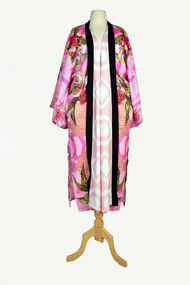
Textile - Cloak, Dr Deanne Gilson, Gum Blossom and Bottle Brush in Dilly Bag Cloak (Women Basket Making and Sharing Knowledge), 2022
... Gum Blossom and Bottle Brush in Dilly Bag Cloak (Women Basket Making and Sharing Knowledge)...Men also made woven dilly bags to hold their possessions in. The basket making was an ongoing aspect of daily life for Wadawurrung people and often done in cooler months when the weather was too bad to go outside. ...Gum Blossom and Bottle Brush in Dilly Bag Cloak (Women Basket Making and Sharing Knowledge) Textile Cloak Dr Deanne Gilson Christene Zlatkovic ...Standing proud, still here, the spirit of ten ancestral matriarchs adorned in contemporary ceremonial cloaks. Representing our women past, present and future, her Spirit, our culture, our Country (spelt with a capital for its importance and this is part of First Peoples protocols on acknowledging Country, our strength, our resilience and healing towards a sustainable future). The colours of this cloak refer to natural pink ochre and indigenous flowering plants on Wadawurrung Dja. The pink ochre is sourced by Deanne Gilson at Black Hill in Ballarat, Victoria. Men also made woven dilly bags to hold their possessions in. The basket making was an ongoing aspect of daily life for Wadawurrung people and often done in cooler months when the weather was too bad to go outside. Many women and family groups had their own style and techniques that were traded amongst other groups. Wadawurrung women had a particular stitch they used and incorporated elaborate symbols into the basket designs. Tammy Gilson’s weaving represents this stitch. This cloak pays homage to them and the changing seasons as they created, particularly the cooler months leading into the warmer season when several gum blossom flower. This cloak was worn once by artist Deanne Gilson at a formal opening at the Art Gallery of Ballarat in 2022. A Welcome to Country ceremony was performed while wearing it.Pink native flower in baskets motif on a pink background on outer cloak, pink and white diamond and circle design in lining. Solid black trimming. Cloak is machine sewn and handstitched with hand stitching on shoulder seam.deanne gilson, wadawurrung dja, first nations art -
 Vision Australia
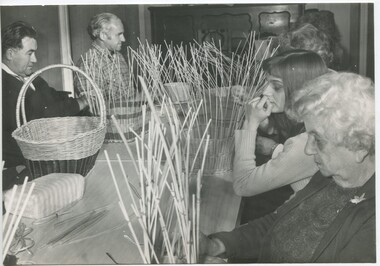
Photograph - Image, Basket making group, 196
... Basket making group ...Association for the Blind Baringa (Shepparton) 3 black and white photographs of people and baskets Basket making group Photograph Image ...A group of older people and woman in her twenties, sit at a table and make baskets. Images possibly from Shepparton.3 black and white photographs of people and basketsassociation for the blind, baringa (shepparton) -
 Vision Australia
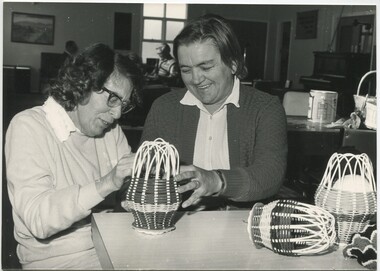
Photograph - Image, Woman making basket, 198
... Woman making basket...Association for the Blind Baringa (Shepparton) Peg Hall 3 black and white photographs woman and baskets Woman making basket Photograph Image ...Unknown female works on two different types of baskets with another person. In one image, she is constructed a cage frame over the top of the opening, whilst another holds it in place. In the second and third images, the woman is varnishing a completed basket and volunteer Peg Hall holds the tilted basket to keep it steady. Images possibly from Shepparton.3 black and white photographs woman and basketsassociation for the blind, baringa (shepparton), peg hall -
 Vision Australia
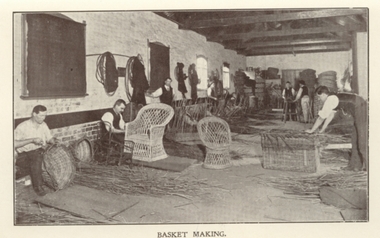
Photograph - Image, Cane workshop pictures from RVIB Annual Reports, circa 1900
... Basket weaving and brush making was a source of income for those who worked in the workshops at RVIB and other institutions in New South Wales and Queensland. ...6 scanned images of basket making from RVIB annual reports...Royal Victorian Institute for the Blind Employment 6 scanned images of basket making from RVIB annual reports Cane workshop pictures from RVIB Annual Reports Photograph Image ...Basket weaving and brush making was a source of income for those who worked in the workshops at RVIB and other institutions in New South Wales and Queensland. A diverse range products could be produced with cane, such as cane chairs, cots, washing baskets and trolleys, and the Institution sought to highlight these in the annual report. Over time the demand for, and supply of, cane changed - particularly during World War 2 when Asian sources were under attack or destroyed. At home, other materials such as plastics as well as the ability to import cheaper pre-produced products further reduced the demand for workshop pieces. RVIB eventually closed down it's workshop production of materials in 2009 with the sale of the warehouse in High Street, Prahran and the movement of staff to Macaulay Road, Kensington.6 scanned images of basket making from RVIB annual reportsroyal victorian institute for the blind, employment -
 Vision Australia
Photograph - Image, Merv Matthews making a basket
... Merv Matthews making a basket...1 x B/W photograph of man sitting on floor making a cane basket...basket using a baseboard over his legs whilst sitting on the floor. Next to him, on hessian sacks, a suited man looks on. Queensland Industrial Institute for the Blind Merv Matthews Employment 1 x B/W photograph of man sitting on floor making a cane basket Merv Matthews making a basket Photograph Image ...Merv Matthews makes a basket using a baseboard over his legs whilst sitting on the floor. Next to him, on hessian sacks, a suited man looks on.1 x B/W photograph of man sitting on floor making a cane basketqueensland industrial institute for the blind, merv matthews, employment -
 Koorie Heritage Trust
Booklet, Robson, Merryl K, Keeping the culture alive: an exhibition of Aboriginal fibrecraft featuring Connie Hart, an elder of the Gunditjmara people with significant items on loan from the Museum of Victoria, 1986
... ...Australian -- Basket making -- Exhibitions. I. Museum of Victoria. ...Aborigines Australian -- Basket making -- Exhibitions. I. Museum of Victoria. ...Exhibition held at Aboriginal Keeping Place, Hamilton and Westerm District Museum, June 18th, 1986-Feb 28th, 1987. Bibliography: p. 67.67 p. : ill., 1 folded geneal. table, ports. ; 24 cm.Exhibition held at Aboriginal Keeping Place, Hamilton and Westerm District Museum, June 18th, 1986-Feb 28th, 1987. Bibliography: p. 67.1. hart family. 2. aborigines, australian -- industries -- exhibitions. 3. aborigines, australian -- basket making -- exhibitions. i. museum of victoria. ii. hamilton (vic.). council. iii. hamilton and western district museum. aboriginal keeping place. iv. title. -
Women's Art Register
Archive (Collection) - Pat Dale Artist Archive
... ... Basket Making...1939- Nature Basket Making Weaving Archive Pat Dale Artist Archive ...nature, basket making, weavingnature, basket making, weaving -
Women's Art Register
Archive (Series) - Dale, Pat. Artist File 1
... ... Basket Making...Nature Basket Making Weaving Foolscap white archival 4 flap folder or document wallet Archive Dale, Pat. ...List of Images, Newspaper Clippingnature, basket making, weavingnature, basket making, weaving -
Women's Art Register
Archive (Series) - Pat Dale. Duplicate File 1
... Basket Making...Basket Making Weaving Nature Foolscap manilla file Archive Pat Dale. ...List of Images, Newspaper Clippingbasket making, weaving, naturebasket making, weaving, nature -
Women's Art Register
Archive (Series) - Pat Dale. Slide Kit
... Basket Making...Basket Making Weaving Nature Set of slides in Polypropylene sleeves, within a Polypropyline binder and slipcase. ...basket making, weaving, naturebasket making, weaving, nature -
Women's Art Register
Archive (Series) - Pat Dale, Digitised Slide Kit
... Basket Making...Basket Making Weaving Nature Archive Pat Dale, Digitised Slide Kit ...basket making, weaving, naturebasket making, weaving, nature -
 Vision Australia
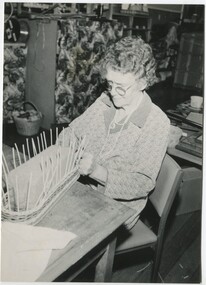
Photograph - Image, Various people weaving, 197
... Woman making baskets. Images possibly from Shepparton....Woman making baskets. Images possibly from Shepparton. ...Woman making baskets. Images possibly from Shepparton.4 black and white photographs of peopleassociation for the blind, baringa (shepparton) -
 Wodonga & District Historical Society Inc
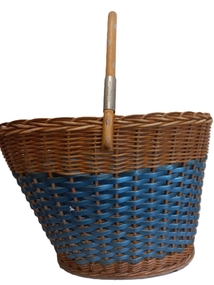
Domestic object - Vintage cane basket
... They moved to Melbourne and began Graf’s basket making business soon after. The basket in our Collection brings the Graf story full circle back to its Australian roots....They moved to Melbourne and began Graf’s basket making business soon after. The basket in our Collection brings the Graf story full circle back to its Australian roots. ...This handmade basket is typical of baskets used for domestic purposes for many years in the early to mid 20th century. It was produced in Australia by Graf's. Wicker baskets were popular at this time as they were light but durable. They were made in a wide range of shapes and sizes, including laundry baskets, storage items in the home, in shops and by travelling hawkers. Wicker was also a common material used for furniture. Vintage baskets by Graf's are still in demand by collectors. Franz and Anneliese Graf arrived in Australia about 1960 and spent time at the Bonegilla Migrant Camp where one of their sons Arnold was born. They moved to Melbourne and began Graf’s basket making business soon after. The basket in our Collection brings the Graf story full circle back to its Australian roots.This item is significant as it is representative of basketry items popular throughout Australia in the 1960s. This basket was hand-made in Australia and used by a resident of the Wodonga District.A woven cane shopping basket with a wooden base and single bamboo handle. The basket is made from mixed weaving of cane and light-blue strips. Underneath basket: Original GRAF'S Basket Hand made in AUSTRALIA On metal attached to handle: GRAF’S HANDLE BINDING, PAT.PEND vintage cane wear, vintage basket, graf baskets, basketware australia -
 Vision Australia
Photograph - Image, Queensland Industrial Institution for the Blind workshops, July 1965
... making a waste paper basket, Phil Woods making a clothes basket and Bill Smith making a wastepaper basket. ...making a waste paper basket, Phil Woods making a clothes basket and Bill Smith making a wastepaper basket. ...Four images taken of the Queensland Industrial Institute for the Blind by the Survey Office, Dept of Lands. 1 - The basket shop. From left to right: Merv Campbell making a linen basket, Dave Valoniti (?) making a waste paper basket, Phil Woods making a clothes basket and Bill Smith making a wastepaper basket. Examples of finished linen, cot and cane baskets sit to the left of the image. 2- The basket shop on the other side of the building. Unfortunately no individuals have been identified. 3 - Shop foreman Ron Blinco working at a brush making machine. 4-6 - Queensland Industrial Institution for the Blind truck carrying cane baskets, cots, chairs and seat frame. On the door of the truck reads: Health & Home Department. The side of the truck has the following painted on the sideboards: Manufacturers of Baskets, Bedding, Brooms, Brushes, Cane Furniture, Coir Mat & Matting.6 x B/W photographs of men and equipmentC2-5792, C2-5794, C2-5795,C2-5799queensland industrial institute for the blind, merv campbell, dave valoniti, phil woods, bill smith, ron blinco -
 Federation University Art Collection
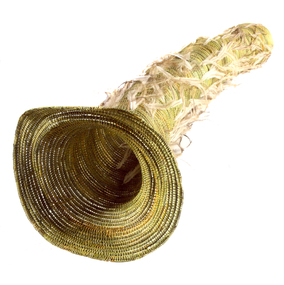
Artwork, other, 'Eel Trap with Emu Feathers' by Bronwyn Razem, 2013
... Bronwyn’s mother, Aunty Zelda Couzens, was a well-respected basket weaver and elder who taught Bronwyn basket-making techniques. Bronwyn now regularly conducts basket weaving workshops with Victorian Indigenous communities in order to facilitate the revival of cultural traditions. ...Bronwyn’s mother, Aunty Zelda Couzens, was a well-respected basket weaver and elder who taught Bronwyn basket-making techniques. Bronwyn now regularly conducts basket weaving workshops with Victorian Indigenous communities in order to facilitate the revival of cultural traditions. ..."The breeze going through the eel trap gives a feeling of water flowing through the vessel with the feathers softly waiving as the water flows. My grandfather Nicholas Couzens and my uncles made eel traps to fish the Hopkins River - this is how my mother learnt the techniques which she passed on to me."Bronwyn RAZEM Gunditjmara/Kirrae Whurrong Bronwyn Razem is an Indigenous Australian basket weaver and painter. She is a Gunditjmara woman of the Kirrae Whurrong clan of western Warrnambool on the Victorian coastline. Bronwyn’s practice involves an exploration of her Indigenous heritage and identity, and she creates symbolic representations of places and events that are meaningful to her family. She integrates ochres, sand and other materials into her paintings, and her works also draw on the possum skin cloak traditions of her ancestors. In 2008, Bronwyn was chosen by the Australia Council for the Arts to be part of a delegation of Indigenous artists to attend the 10th Pacific Arts Festival in Western Samoa. Bronwyn’s mother, Aunty Zelda Couzens, was a well-respected basket weaver and elder who taught Bronwyn basket-making techniques. Bronwyn now regularly conducts basket weaving workshops with Victorian Indigenous communities in order to facilitate the revival of cultural traditions. She has a Bachelor of Arts with Honours at Deakin University, and in 2008 she was enrolled in a Master by Research degree at Deakin Institute of Koorie Education, Geelong, and was living in Ballarat. (https://www.daao.org.au/bio/bronwyn-razem/biography/, accessed 18 April 2016) This item is part of the Federation University Art Collection. The Art Collection features over 1000 works and was listed as a 'Ballarat Treasure' in 2007.Bronwyn RAZEM (1953- ) Gunditjmara/Kirraw Wurrong A woven New Zealand flax eel trap with emu feathers. This work won the University of Ballarat Acquisitive Award for work reflecting Victoria's Western District. The judges were impressed by Bronwyn Razem's translation of the traditional eel trap into a sculptural form evocative of the flow of water and possible the passage of time. The design and technical knowhow which Razem inherited from her mother, uncles, and grandfather connects this work to the family;s life and traditions. She then enhances the simplicity of this very functional object by the addition of delicate emu feathers, creating a work that creatively and symbolically transcends its original form. art, artwork, bronwyn razem, razem, eel trap, aboriginal, indigenous, available -
 Flagstaff Hill Maritime Museum and Village
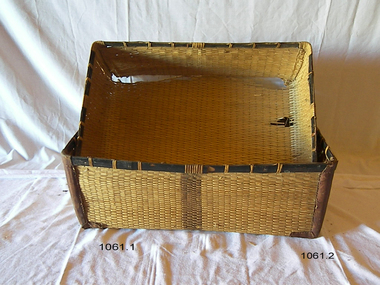
Domestic object - Basket, 1890-1920s
... The practice of basket making has evolved into an art. Artistic freedom allows basket makers with a wide choice of colours, materials, sizes, patterns, and details....The practice of basket making has evolved into an art. Artistic freedom allows basket makers with a wide choice of colours, materials, sizes, patterns, and details. ...Before the invention of woven baskets, people used tree bark to make simple containers. These containers could be used to transport gathered food and other items but crumbled after only a few uses. Weaving strips of bark or other plant material to support the bark containers would be the next step, followed by entirely woven baskets. The last innovation appears to be baskets so tightly woven that they could hold water. Depending on soil conditions, baskets may or may not be preserved in the archaeological record. Sites in the Middle East show that weaving techniques were used to make mats and possibly also baskets, circa 8000 BCE. Twined baskets date back to 7000 in Oasisamerica. Baskets made with interwoven techniques were common at 3000 BCE. Baskets were originally designed as multi-purpose vessels to carry and store materials and to keep stray items about the home. The plant life available in a region affects the choice of material, which in turn influences the weaving technique. Rattan and other members of the Arecaceae or palm tree family, the thin grasses of temperate regions, and broad-leaved tropical bromeliads each require a different method of twisting and braiding to be made into a basket. The practice of basket making has evolved into an art. Artistic freedom allows basket makers with a wide choice of colours, materials, sizes, patterns, and details.Before the advent of plastics (1907), the is now used for many different types and styles of storage container rattan, wicker or cane was used to make containers with a lid for the storage of linens etc. The subject item was probability used at the end of the Victorian era and into the Edwardian period around the 1900s as a household storage facility. These types of wicker or cane containers started to go out of fashion due to their fragility around the 1920s into the 1940s due as well to the introduction of synthetic materials. Wicker cane rectangular shaped domestic storage container with reinforced leather pads on 4 corner sides. lid fits inside the other. Black cane piece around top edge.Noneflagstaff hill, warrnambool, shipwrecked-coast, flagstaff-hill, flagstaff-hill-maritime-museum, maritime-museum, shipwreck-coast, flagstaff-hill-maritime-village -
 Victorian Aboriginal Corporation for Languages
Book, Bruce Pascoe, Wathaurong : too bloody strong : stories and life journeys of people from Wauthaurong, 1997
... The proud cry of survival is in all these stories and you can read the future in them to, From making baskets to building fences, from nursing to law, in education and art, the Wathaurong are preparing for the brand new day when the sun rises over a land of equality....The proud cry of survival is in all these stories and you can read the future in them to, From making baskets to building fences, from nursing to law, in education and art, the Wathaurong are preparing for the brand new day when the sun rises over a land of equality. ...Stolen children, stolen land, stolen freedom. Enough to break the strongest spirit but that?s what these people have got, they?re Too Bloody Strong to go under. The proud cry of survival is in all these stories and you can read the future in them to, From making baskets to building fences, from nursing to law, in education and art, the Wathaurong are preparing for the brand new day when the sun rises over a land of equality.maps, b&w illustrations, b&w photographswathaurong -
 Vision Australia
Photograph - Image, Queensland Institute for the Blind matting, cane and mattress workshop, August 1952
... Fives images of the workshop machinery used by the Queensland Industrial Institute for the Blind in the manufacture of various products. 1 - Pitched brooms being made by Stewart Jewell (left) and Jack Dollier (right). 2 - Unknown worker at a basket station making a cane basket, surrounded by finished examples. 3 - Snowy Willis oversees the operation of the machine that bores holes into brush heads. 4 - Unknown worker operating a coir matting machine. ...Fives images of the workshop machinery used by the Queensland Industrial Institute for the Blind in the manufacture of various products. 1 - Pitched brooms being made by Stewart Jewell (left) and Jack Dollier (right). 2 - Unknown worker at a basket station making a cane basket, surrounded by finished examples. 3 - Snowy Willis oversees the operation of the machine that bores holes into brush heads. 4 - Unknown worker operating a coir matting machine. ...Fives images of the workshop machinery used by the Queensland Industrial Institute for the Blind in the manufacture of various products. 1 - Pitched brooms being made by Stewart Jewell (left) and Jack Dollier (right). 2 - Unknown worker at a basket station making a cane basket, surrounded by finished examples. 3 - Snowy Willis oversees the operation of the machine that bores holes into brush heads. 4 - Unknown worker operating a coir matting machine. There were apparently 10 such machines in use at the time this image was taken. 5 - Snowy Willis checking the bobbins being filled from a giant spool. In the background are empty bobbins stacked against walls and filled bobbins on spool holders. 6 - Roy Anderson checks the wadding on a recently filled mattress, whilst in the background Ellen McDevitt uses a portable sewing table to sew the ends of a filled mattress.6 x B/W photographs of the workshop machinery used by the Queensland Industrial Institute for the BlindC2-657: 2, Brush shop - pitch set brooms being made by blind workers C2-664: Basket shop - some of the various types of baskets made C2-654: Snowy Willis. Brush shop - a semi automatic brush stock boring machine in operation. C2-666: Matting shop - one of the ten coir matting looms in use. 1960. C2-659: Matting shop - bobbin winder and bobbin bank. C2-655: 15. 2 col wide. Bed shop wadding a fibre mattress. Also showing special sewing machine and movable table used in sewing the mouths of filled mattresses.queensland industrial institute for the blind, stuart jewell, jack dollier, snowy willis, roy anderson, ellen mcdevitt -
 Vision Australia
Functional object - Object, Cane washing basket with side handles
... Basket weaving and brush making was a source of income for those who worked in the workshops at RVIB and other institutions in New South Wales and Queensland. ...Basket weaving and brush making was a source of income for those who worked in the workshops at RVIB and other institutions in New South Wales and Queensland. ...Basket weaving and brush making was a source of income for those who worked in the workshops at RVIB and other institutions in New South Wales and Queensland. A diverse range products could be produced with cane, such as cane chairs, cots, washing baskets and trolleys, and the Institution sought to highlight these in the annual report. Over time the demand for, and supply of, cane changed - particularly during World War 2 when Asian sources were under attack or destroyed. At home, other materials such as plastics as well as the ability to import cheaper pre-produced products further reduced the demand for workshop pieces. 1 cane basket with 2 side handlesroyal victorian institute for the blind, employment -
 Vision Australia
Functional object - Object, Cane washing basket
... Basket weaving and brush making was a source of income for those who worked in the workshops at RVIB and other institutions in New South Wales and Queensland. ...Basket weaving and brush making was a source of income for those who worked in the workshops at RVIB and other institutions in New South Wales and Queensland. ...Basket weaving and brush making was a source of income for those who worked in the workshops at RVIB and other institutions in New South Wales and Queensland. A diverse range products could be produced with cane, such as cane chairs, cots, washing baskets and trolleys, and the Institution sought to highlight these in the annual report. Over time the demand for, and supply of, cane changed - particularly during World War 2 when Asian sources were under attack or destroyed. At home, other materials such as plastics as well as the ability to import cheaper pre-produced products further reduced the demand for workshop pieces. This style of washing basket was commonly used by families until the introduction of cheap plastic baskets.1 cane basket with 2 side handlesemployment, royal victorian institute for the blind -
 Vision Australia
Functional object - Object, Cane basket with central handles
... Basket weaving and brush making was a source of income for those who worked in the workshops at RVIB and other institutions in New South Wales and Queensland. ...Basket weaving and brush making was a source of income for those who worked in the workshops at RVIB and other institutions in New South Wales and Queensland. ...Basket weaving and brush making was a source of income for those who worked in the workshops at RVIB and other institutions in New South Wales and Queensland. A diverse range products could be produced with cane, such as cane chairs, cots, washing baskets and trolleys, and the Institution sought to highlight these in the annual report. Over time the demand for, and supply of, cane changed - particularly during World War 2 when Asian sources were under attack or destroyed. At home, other materials such as plastics as well as the ability to import cheaper pre-produced products further reduced the demand for workshop pieces. This basket was made at RVIB, possibly during the 1980s due it's lack of discolouration and good condition. 1 cane basket with two side handlesemployment, royal victorian institute for the blind -
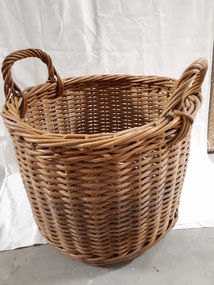 Vision Australia
Functional object - Object, Cane basket with handles and reinforced base
... Basket weaving and brush making was a source of income for those who worked in the workshops at RVIB and other institutions in New South Wales and Queensland. ...Basket weaving and brush making was a source of income for those who worked in the workshops at RVIB and other institutions in New South Wales and Queensland. ...Basket weaving and brush making was a source of income for those who worked in the workshops at RVIB and other institutions in New South Wales and Queensland. A diverse range products could be produced with cane, such as cane chairs, cots, washing baskets and trolleys, and the Institution sought to highlight these in the annual report. Over time the demand for, and supply of, cane changed - particularly during World War 2 when Asian sources were under attack or destroyed. At home, other materials such as plastics as well as the ability to import cheaper pre-produced products further reduced the demand for workshop pieces. This cane basket was used for storage as well as transporting heavier items. The base has been reinforced with two thick boards that allow the basket to hold more weight than regular baskets, and this also allows it to sit higher and the contents slightly above ground level.1 deep cane basket with two side handlesemployment, royal victorian institute for the blind -
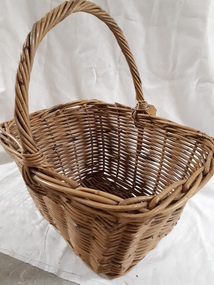 Vision Australia
Functional object - Object, Cane basket with handle
... Basket weaving and brush making was a source of income for those who worked in the workshops at RVIB and other institutions in New South Wales and Queensland. ...Basket weaving and brush making was a source of income for those who worked in the workshops at RVIB and other institutions in New South Wales and Queensland. ...Basket weaving and brush making was a source of income for those who worked in the workshops at RVIB and other institutions in New South Wales and Queensland. A diverse range products could be produced with cane, such as cane chairs, cots, washing baskets and trolleys, and the Institution sought to highlight these in the annual report. Over time the demand for, and supply of, cane changed - particularly during World War 2 when Asian sources were under attack or destroyed. At home, other materials such as plastics as well as the ability to import cheaper pre-produced products further reduced the demand for workshop pieces. Generic style basket that would have been used for shopping or any household task requiring movement of multiple items. Cane baskets were the original green alternative to plastic shopping bags. Note that the handle is deliberately askew, for easier carrying against the hip.1 cane basket with askew handleemployment, royal victorian institute for the blind -
 Vision Australia
Functional object - Object, Cane milk bottle basket, 1930-1940
... Basket weaving and brush making was a source of income for those who worked in the workshops at RVIB and other institutions in New South Wales and Queensland. ...Basket weaving and brush making was a source of income for those who worked in the workshops at RVIB and other institutions in New South Wales and Queensland. ...Basket weaving and brush making was a source of income for those who worked in the workshops at RVIB and other institutions in New South Wales and Queensland. A diverse range products could be produced with cane, such as cane chairs, cots, washing baskets and trolleys, and the Institution sought to highlight these in the annual report. Over time the demand for, and supply of, cane changed - particularly during World War 2 when Asian sources were under attack or destroyed. At home, other materials such as plastics as well as the ability to import cheaper pre-produced products further reduced the demand for workshop pieces. A milk bottle basket was designed for milkmen to deliver their wares quickly from door to door, without the bottles impacting upon each other. The milk basket was made in the basket shop of the RVIB for use in the organisation. It was used to carry milk bottles, then containers to the various tea rooms and could have been part of the kitchen equipment for the RVIBCane basket with handle and dividers to carry milk bottlesroyal victorian institute for the blind, equipment, employment -
 Vision Australia
Functional object - Object, Cane large basket
... Basket weaving and brush making was a source of income for those who worked in the workshops at RVIB and other institutions in New South Wales and Queensland. ...Basket weaving and brush making was a source of income for those who worked in the workshops at RVIB and other institutions in New South Wales and Queensland. ...Basket weaving and brush making was a source of income for those who worked in the workshops at RVIB and other institutions in New South Wales and Queensland. A diverse range products could be produced with cane, such as cane chairs, cots, washing baskets and trolleys, and the Institution sought to highlight these in the annual report. Over time the demand for, and supply of, cane changed - particularly during World War 2 when Asian sources were under attack or destroyed. At home, other materials such as plastics as well as the ability to import cheaper pre-produced products further reduced the demand for workshop pieces. This laundry basket was reinforced with a solid heavy base that gave it both strength and the ability to remain upright as clothing items were placed inside. This cane laundry basket made in the basket shop of RVIB for use in the organisation possibly between 1930-1940, not for sale. Held with staff in the Enterprises section since the move to 201 High Street in the early 1990s.1 cane basket with lidroyal victorian institute for the blind, employment -
 Vision Australia
Functional object - Object, Cane basket on wheels
... Basket weaving and brush making was a source of income for those who worked in the workshops at RVIB and other institutions in New South Wales and Queensland. ...Basket weaving and brush making was a source of income for those who worked in the workshops at RVIB and other institutions in New South Wales and Queensland. ...Basket weaving and brush making was a source of income for those who worked in the workshops at RVIB and other institutions in New South Wales and Queensland. A diverse range products could be produced with cane, such as cane chairs, cots, washing baskets and trolleys, and the Institution sought to highlight these in the annual report. Over time the demand for, and supply of, cane changed - particularly during World War 2 when Asian sources were under attack or destroyed. At home, other materials such as plastics as well as the ability to import cheaper pre-produced products further reduced the demand for workshop pieces. This cane basket was used at QBIC for transporting heavy items. The side has been reinforced with wood and four metal bands to help the cane keep it's shape and take the weight of heavy items. The base has two pieces of board and rotating wheels are attached to the middle of the lower board which allows it to sit above ground level and be wheeled over flat surfaces. A rope handle is attached to two sides as well.1 deep cane basket with two wheelsQBIC Industries - Asset Number: 1430-1 Description: Push Trolley 7 Location: 18R Block Cane Shop employment, qbic industries -
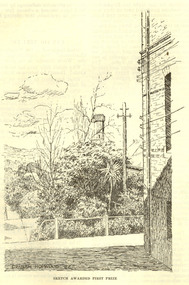 Federation University Historical Collection
Booklet - Magazine, Ballarat School of Mines Students' Magazine, 1927
... making -A brief description of the rubber industry -Decorating for the Gala Ball -Sporting activities, 1926 and 1927 -The Junior Techs class and sporting activities. Mentions of their participation in the Procession *Prints -S.M.B. Botanical Gardens by Graham Hopwood, awarded first prize -Caricatures unknown subjects, though to be staff and students at the school *Photographs -Editorial Staff -S.M.B. Athletic Team, 1926- Winners of the Herald Shield -S.M.B. Football Team, 1927 -School of Mines Girls' Basket...making -A brief description of the rubber industry -Decorating for the Gala Ball -Sporting activities, 1926 and 1927 -The Junior Techs class and sporting activities. Mentions of their participation in the Procession *Prints -S.M.B. Botanical Gardens by Graham Hopwood, awarded first prize -Caricatures unknown subjects, though to be staff and students at the school *Photographs -Editorial Staff -S.M.B. Athletic Team, 1926- Winners of the Herald Shield -S.M.B. Football Team, 1927 -School of Mines Girls' Basket ...Every year the Ballarat School of Mines (S.M.B) produced a magazine, between 1898-1967. The 1927 magazine Editorial Staff- A.T Morrison, E. Van Beek, G. Dimsey, G. Inglis, L. Hillman, J. Muir, J. Johnson, N. Nicholls, B. Saunders, Dr. J. R. Pound, Mr. H. Jolly, A. Proctor, and J. Walters. Contains list of course students for 1927. Listing of School Council and staff for 1927 (inside front cover). Listing of departments, courses and fees (approximate) available at S.M.B . (inside back cover) *Articles -Mr. John Rowell regarding his receiving the Crouch Memorial Prize -S.M.B. Procession, 1927 -S.M.B. Ball July 20th at the City Hall -Letter to Editor 'The Chemists' Trip to Melbourne mentioning a tour of the Footscray Technical School; an exploration of the Mount Lyell Chemical Works; visits to the Colonial Sugar Refining Company, The Melbourne Mint, the Deer Park Explosive Works (met with former S.M.B. students, A. Perry and H. R. Kofoed), Nobel (Australasia) Ltd. -Mentions of Literary Society activities -Geelong trip by school football team July 18th to play Gordon Tech. -Extract from the 'People's Paper', July 14 regarding the S.M.B Gala Night and the election of Miss S.M.B. -Mentions of the Mica Smith Scholarship -4th Annual reunion for Past Students Association, 23rd October -Descriptive article on Port Arthur -Tour of the Mount Lyell District, with mentions of the North Lyell Mine, Port Kembla, Lake Margaret Hydro Electric Works -Paper making -A brief description of the rubber industry -Decorating for the Gala Ball -Sporting activities, 1926 and 1927 -The Junior Techs class and sporting activities. Mentions of their participation in the Procession *Prints -S.M.B. Botanical Gardens by Graham Hopwood, awarded first prize -Caricatures unknown subjects, though to be staff and students at the school *Photographs -Editorial Staff -S.M.B. Athletic Team, 1926- Winners of the Herald Shield -S.M.B. Football Team, 1927 -School of Mines Girls' Basket Ball team, 1927 -Girls' Hockey Team, Ballarat School of Mines, 1927 -Winners of the Thompson Shield, 1926. Premiers N.C.D.- J.T.S.A. (Junior Technical School Association) *Advertisements -A.N.A. Hall, Camp St. 'The Rollicking English Company- "The Rivals", presented by the School of Mines Dramatic Company. Wednesday, 14th September, 1927.Green soft covered book relating to the Ballarat School of Mines student activities for the year 1927. smb, ballarat school of mines, hockey, ballarat school of mines botanical gardens, graham hopwood, basketball, netball, a.t morrison, e. van beek, g. dimsey, g. inglis, l. hillman, j. muir, j. johnson, n. nicholls, b. saunders, dr. j. r. pound, mr. h. jolly, a. proctor, j. walters -
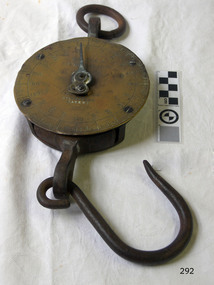 Flagstaff Hill Maritime Museum and Village
Instrument - Scale, George Salter & Co, ca. 1886
... making spring scales in the 1820s. In 1908 Salter opened up an Australian branch named Salter Scales Pty. Ltd. The scale is marked HMV SS Lady Loch. It would be suspended by its top ring, a basket...making spring scales in the 1820s. In 1908 Salter opened up an Australian branch named Salter Scales Pty. Ltd. The scale is marked HMV SS Lady Loch. It would be suspended by its top ring, a basket ...There were at least three 1880s vessels named Lady Loch, all built in Victoria; a river launch (ca 1884 to ca 1916, originally named Lady of the Lake), a steamer ferry (1884 to 1920s), and a government lighthouse tender steamer HMV Lady Loch (1886 to 1962). The spring balance scale was part of the equipment on the HMV Lady Loch. The scale was made by the renowned company Salter Weighing Machines in the United Kingdom, to Silvester's patent design. Salter Weighing Machines, Britain, began making spring scales in the 1820s. In 1908 Salter opened up an Australian branch named Salter Scales Pty. Ltd. The scale is marked HMV SS Lady Loch. It would be suspended by its top ring, a basket or other container is hung from the hook, and the items inside the basket are then pulled downwards on the hook, which stretches the springs inside the works. The pulling action moves a rack and gears a calculated distance and the gears turn the pointer on the dial to indicate the weight of the goods. This scale measures up to 200 pounds capacity. The HMV SS Lady Loch was an iron steamship built in Footscray, Melbourne, by Campbell, Sloss and McCain in 1886 for the colonial Victorian government’s Department of Trade and Customs. It was armed with a 6-inch gun and two 1-inch Nordenfelt guns. The Sydney Morning Herald of 27th January 1888 describes the vessel in detail. It even comments on the interior of the Saloon “The wood work … is on a very elaborate scale and is exceedingly neat …”. The HMV Lady Loch performed Customs duties and serviced the lighthouses along the coast. The scale could have measured goods for the Customs Tax, or for measuring out supplies for the lighthouse keepers. The vessel was named after Lady Elizabeth Loch, wife of Sir Henry Loch, Governor of Victoria from 1884 to 1889. In 1932 Lady Loch was converted to a hulk and used in Brisbane, and finally scuttled in 1962 at Moreton Bay, Queensland.The scale has importance due to its connection to the 1886 HMV Lady Loch, a vessel of great significance to Melbourne’s shipbuilding industry. It was the largest auxiliary vessel in the Victorian Colonial Government’s fleet and the first prominent vessel launched by Melbourne’s shipbuilding industry. The scale is also important for its connection with the colonial navy's Custom's work, as the scale was available to weigh goods that could attract taxes and deal out goods for distribution to lighthouse keepers. The HMV Lady Loch was also important part of Victoria's maritime history for its communication and support of the lighthouse keeper's along the coast of Victoria.Scale; Salter's spring balance mechanical hanging scale, brass and iron. Equally spaced marks around the circular dial have values from 0 to 200 in increments of 10, each increment is also divided into 10. An iron ring is attached to a fitted loop on the top of the scale, and an iron hook is attached to the fitted loop onthe bottom of the scale. A moving pointer attached to the centre of the dial has a calibration screw joined to its base. Four screws fix the brass face to the works at the back. There are stamped and embossed inscriptions. Made by Salter in Britain, to Silvester's Patent design. The scale was once equipment carried abourd the steamship HMV SS Lady Loch. Stamped: "SALTER'S / SPRING BALANCE" "SILVESTOR'S / PATENT" Embossed in script: "HMV SS / Lady Loch"warrnambool, shipwreck coast, flagstaff hill, flagstaff hill maritime museum, flagstaff hill maritime village, scale, salter, spring balance, silvester's patent, lady loch, steamship, hmv, colonial navy, victoria, lady elizabeth loch, custom's vessel, lighthouse tender, 1886, government vessel, victorian government, measuring instrument, weight, weighing instrument, mechanical scale, hanging scale, hmv lady loch, weights and measures, silvestor's patent, george salter & co. -
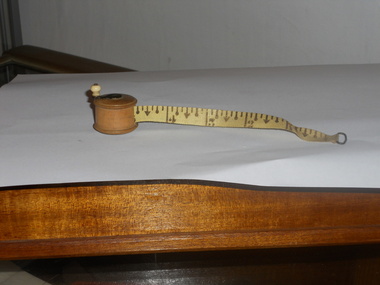 City of Moorabbin Historical Society (Operating the Box Cottage Museum)
Craft - Craftwork, tape measure c 1880, c1880
... basket. The case is of polished timber, and the little winder, to retract the tape, is made of brass with a small ivory handle Early settlers and market gardeners of Moorabbin Shire had to be self reliant producing their own food and making their farm equipment and clothing. ...c1880 This tiny tape measure, in Imperial measurements, was part of a Victorian era lady's sewing basket. The case is of polished timber, and the little winder, to retract the tape, is made of brass with a small ivory handleEarly settlers and market gardeners of Moorabbin Shire had to be self reliant producing their own food and making their farm equipment and clothing. The women of these families were skilful in all craftwork.c1880 this tiny, retractable, tape measure, in Imperial measure, is made of polished timber with a brass winder and ivory handle. Imperial ‘inch’ measurements on tape dressmaking, tape measure, sewing, craftwork, pioneers, early settlers, market gardeners, moorabbin, brighton, bentleigh cheltenham -
 Orbost & District Historical Society
dolls, Warren. Mrs H, first half 20th century
... making. (by Ivy Rodwell in from Personalities and Stories of the Early Orbost District by Mary Gilbert) This item is an example of a handcrafted item and reflects the needlework skills of women in the first half of the 20th century. doll handcraft toys maize cwa Two dolls - one male and one female - made of maize husks. They are both painted colourfully and are in a plastic box. There is a certificate from the country Women's Association for First prize in Basket ...Helena Francis Warren (nee McKeown) was married to William John Warren and lived in Newmerella. She was a fine amateur photographer who supplied the photos for the Back-To-Orbost celebration book in 1937 and also designed the Back-To-Orbost badge. She was known for her soft toy making. (by Ivy Rodwell in from Personalities and Stories of the Early Orbost District by Mary Gilbert)This item is an example of a handcrafted item and reflects the needlework skills of women in the first half of the 20th century.Two dolls - one male and one female - made of maize husks. They are both painted colourfully and are in a plastic box. There is a certificate from the country Women's Association for First prize in Basket Weave Handcrafts and Home Industries.doll handcraft toys maize cwa
