
Showing 69 items matching " craft workers"
-
 Glen Eira Historical Society
Letter - St Aloysius Church, Caulfield
... ... Craft workers...National Trust Register Wolff Johann Wilhelm Steward Chris St Aloysius Church Moriarty Bartholemew Maidment John Balaclava Road Lavers Keith M Catholic Church Caulfield Weber Horace Gothic (Revival) architecture Architectural features Architectural styles Organs Germany Community Finials Manufactured objects Musical Instruments Woodworking Electric apparatus Craft working Craft workers Letter St Aloysius Church, Caulfield ...A letter and a report, dated 21/07/2011, from the National Trust of Australia ( Victoria), regarding the decision by the Trust to classify the J. W. Wolff Pipe Organ due to its historical cultural and aesthetic significance. The organ is installed at St Aloysius Catholic Church, Balaclava Road Caulfield. The report includes black and white photographs of varying sizes, a list of references and the history of the Pipe Organ and the Church as well as reasons for considering the organ significant.j. w. wolff pipe organ, caulfield south, o’brien john aloysius fr., national trust register, wolff johann wilhelm, steward chris, st aloysius church, moriarty bartholemew, maidment john, balaclava road, lavers keith m, catholic church, caulfield, weber horace, gothic (revival) architecture, architectural features, architectural styles, organs, germany community, finials, manufactured objects, musical instruments, woodworking, electric apparatus, craft working, craft workers -
 City of Moorabbin Historical Society (Operating the Box Cottage Museum)
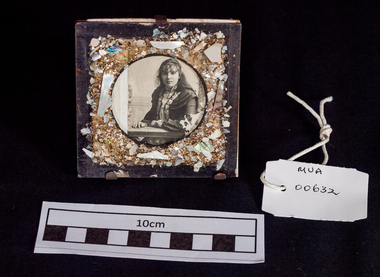
Craftwork, picture frame, c1900
... Early settlers were very skilled craft workers and made and decorated ornaments, photo frames, cards etc to brighten their homes...Early settlers were very skilled craft workers and made and decorated ornaments, photo frames, cards etc to brighten their homes moorabbin bentleigh brighton cheltenham early settlers pioneers jewellery craftwork photographs A small, hand made glass picture frame, hand decorated with chips of mother of pearl shell, a paper mache backing and a metal stand with clips. ...Early settlers were very skilled craft workers and made and decorated ornaments, photo frames, cards etc to brighten their homesA small, hand made glass picture frame, hand decorated with chips of mother of pearl shell, a paper mache backing and a metal stand with clips. Enclosing a circular photo of an unnamed lady moorabbin, bentleigh, brighton, cheltenham, early settlers, pioneers, jewellery, craftwork, photographs -
 City of Moorabbin Historical Society (Operating the Box Cottage Museum)
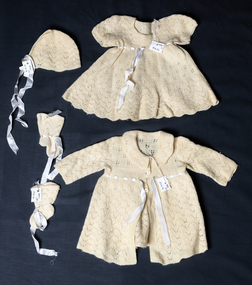
Clothing, Baby Layette 5piece wool hand knitted 1956, 1956
... Women were accomplished knitters, craft workers and dressmakers as they cared for their families. ...Women were accomplished knitters, craft workers and dressmakers as they cared for their families. ...Baby Layette consisting of hand knitted woolen dress, coat, hat and bootees with satin ribbons that was worn in City of Moorabbin c1960. Women were accomplished knitters, craft workers and dressmakers as they cared for their families. Typical hand knitted woollen clothes for a baby c1960 in City of Moorabbin Baby Layette consisting of hand knitted cream woollen dress, coat, hat and bootees for baby 1956clothing, baby layette, knitting,craftwork, wool, early settlers, city of moorabbin, bentleigh, ormond, moorabbin, post war settlers, world war 11 1939-40 sharp valma, -
 City of Moorabbin Historical Society (Operating the Box Cottage Museum)
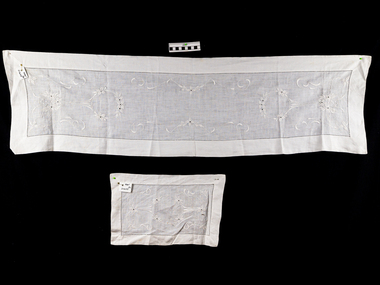
Haberdashery, 2x white linen table runners wirh needlework c1900, c1900
... The women of the early settler families in Moorabbin Shire c1900 were skilled dressmakers, craft workers and decorated their haberdashery with fine needlework . ...The women of the early settler families in Moorabbin Shire c1900 were skilled dressmakers, craft workers and decorated their haberdashery with fine needlework . ...The women of the early settler families in Moorabbin Shire c1900 were skilled dressmakers, craft workers and decorated their haberdashery with fine needlework . While the market gardens and farms were established the women made the clothes, haberdashery and napery for their families. The women of the early settler families were skilled dressmakers and craft workers c1900One long and one short white Linen table runners with central hand needlework floral design clothing, haberdashery, crochet, doilies, brighton, moorabbin, pioneers, dressmaking, market gardeners, early settlers, craftwork , bentleigh, lacework, moorabbin shire, hunt ailsa, dairy farms, fruit orchards -
 City of Moorabbin Historical Society (Operating the Box Cottage Museum)
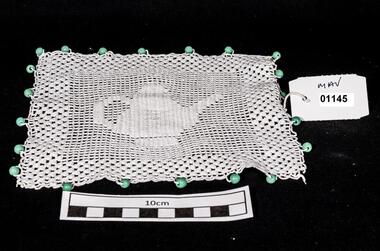
Dairy Equipment, doiley, 20thC
... Early settler women were skilled craft workers and crocheted doilies and other napery for their household. ...Early settler women were skilled craft workers and crocheted doilies and other napery for their household. ...Early settler women were skilled craft workers and crocheted doilies and other napery for their household. This Doiley is a cover for a jug or cup, with the glass beads providing the weight to secure it, to protect the contents from flies, insects and dust while on the kitchen table.Early settler women were skilled in dressmaking, crochet, knitting as they made clothes, furnishings, drapery and tableware for their families c1900A cotton, crocheted doily with a teapot pattern and green beads at edges to keep it in place when protecting contents of a jug or cupkitchen equipment, crochetwork, napery, doilies, milk jugs, early settlers, market gardeners, cooking utensils, kitchenware, castiron cooking pots, blacksmiths, slow cooking, moorabbin shire, bentleigh, mckinnon, highett, cheltenham, -
 City of Moorabbin Historical Society (Operating the Box Cottage Museum)
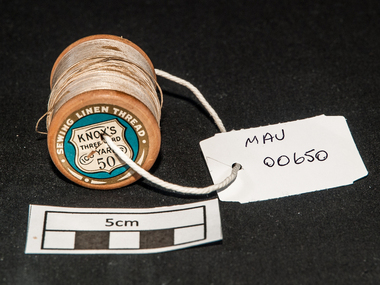
Sewing Equipment, cotton reel 'Knox's', early 20thC
... The women were skilful dressmakers and craft workers....The women were skilful dressmakers and craft workers. moorabbin brighton early settlers pioneers cheltenham knox pty. ltd. kilbirnie scotland cotton mills dressmaking W..J.KNOX / KILBIRNIE SCOTLAND/ 50/ 100yds A wooden reel of 'Knox's Three Cord' sewing cotton . 100 yards Sewing Equipment, cotton reel 'Knox's' W.J.Knox Pty Ltd ...W & J Knox Ltd were cotton millers in Kilbernie, Scotland during the time after the Industrial Revolution when Great Brittain exported manufactured cotton products globally. The early settlers in Moorabbin Shire had to be self reliant and made their own clothing, napery, tools and household goods. The women were skilful dressmakers and craft workers.A wooden reel of 'Knox's Three Cord' sewing cotton . 100 yardsW..J.KNOX / KILBIRNIE SCOTLAND/ 50/ 100ydsmoorabbin, brighton, early settlers, pioneers, cheltenham, knox pty. ltd. kilbirnie scotland, cotton mills, dressmaking -
 City of Moorabbin Historical Society (Operating the Box Cottage Museum)
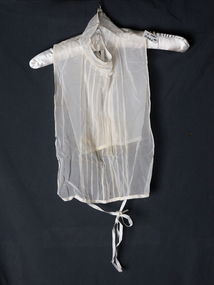
Clothing, Lady's white voile shirt fronts with high collars and ribbon ties x 2 c1900, c1900
... The early settler women were skilled dressmakers and craft workers....The early settler women were skilled dressmakers and craft workers. These Lady's voile shirt fronts are examples of the high dressmaking skill of the women of the early settler families in Moorabbin Shire c1900 clothing, dressmaking, haberdashery, crochet, brighton, moorabbin, mckinnon, ormond, pioneers, market gardeners, early settlers, craftwork , bentleigh, lacework, moorabbin shire, hunt ailsa, dairy farms, fruit orchards 2 identical small lady's white voile shirt fronts, with high collar and ribbon waist ties. ...These Lady's white voile shirt fronts were made for a small woman or child to wear under a suit jacket . The front has fine vertical pintucks and ribbon waist ties The back seam is fastened with press studs. The high collar has horizontal pintucks and 4 metal wire stays. The early settler women were skilled dressmakers and craft workers. These Lady's voile shirt fronts are examples of the high dressmaking skill of the women of the early settler families in Moorabbin Shire c1900 2 identical small lady's white voile shirt fronts, with high collar and ribbon waist ties. The front has fine vertical pintucks and the high collar has horizontal pintucks with 4 metal wire stays. Press studs fasten the back seam . clothing, dressmaking, haberdashery, crochet, brighton, moorabbin, mckinnon, ormond, pioneers, market gardeners, early settlers, craftwork , bentleigh, lacework, moorabbin shire, hunt ailsa, dairy farms, fruit orchards -
 Buda Historic Home & Garden Castlemaine
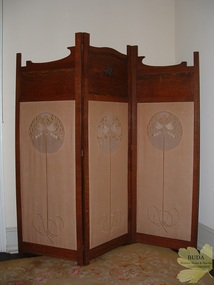
Domestic furniture, Arts and Crafts embroidered draught screen, c1900
... This landmark exhibition gave women artists and craft workers an opportunity to display their works to a broad audience and gain recognition for the variety and high standard of the works in both traditional and non-traditional fields for women. ...This landmark exhibition gave women artists and craft workers an opportunity to display their works to a broad audience and gain recognition for the variety and high standard of the works in both traditional and non-traditional fields for women. ...This screen with embroidered and appliqued panels was entered in the First Australian Exhibition of Women's Work 1907, at the Royal Exhibition Building in Melbourne. This landmark exhibition gave women artists and craft workers an opportunity to display their works to a broad audience and gain recognition for the variety and high standard of the works in both traditional and non-traditional fields for women. The embroidery and applique design is based on an original design for a similar object made by British Arts and Crafts Architect and Designer, M.H. Baillie-Scott, which was published in The Studio magazine in the early 1900s,This three-panel draught screen was made by Hilda Leviny in the Arts and Crafts style and entered into the First Exhibition of Women's Work, at the Exhibition Buildings, Melbourne in 1907.Arts and Crafts style three-panel draught screen made from timber(American Oak), linen panels, silk embroidery threads, beaten copper decoration and varnish. The embroidered panels, made by Hilda Leviny, are mounted within the timer framework, depicting a design of birds and trees in the Arts and Crafts style. Pattern Reg. No. 3227.2 and 2503. With copper decoration.hilda leviny, buda, castlemaine, domestic furniture, handcrafts, needlework, art nouveau, 1907, exhibition of women's work, royal exhibition building, woodwork, draught sceen, arts and crafts movement, embroidery and applique -
 Federation University Historical Collection
Article - Article - Women, Ballarat School of Mines: Women of Note; Isabel Huntington, Artist, Teacher, (1905 - 1971), 13/07/2023
... Isabel Huntington was a painter, craft officer and craft worker. She studied at Ballarat High School, Ballarat Technical Art School (a division of the School of Mines) and RMIT, and was a member of the Victorian Artists' Society and the Contemporary Art Society. ...Isabel Huntington was a painter, craft officer and craft worker. She studied at Ballarat High School, Ballarat Technical Art School (a division of the School of Mines) and RMIT, and was a member of the Victorian Artists' Society and the Contemporary Art Society. ...Isabel Huntington was a painter, craft officer and craft worker. She studied at Ballarat High School, Ballarat Technical Art School (a division of the School of Mines) and RMIT, and was a member of the Victorian Artists' Society and the Contemporary Art Society. In 1945 she was appointed Director of Handcrafts for the Victorian Division of the Red Cross Society. Isabel Huntington had previously held the position of Supervisor of Handcrafts at Heidelberg Military Hospital for three and a half years. She was a member of the Arts and Crafts Society. Isabel Huntington had five 'one-man" shows, three in Melbourne, one in Ballarat and one in Hamilton, Victoria. Ursula Hoff (from the National Gallery Victoria) judged the 1965 Albury awards for watercolour, and religious paintings in oils, awarding the prize to Isabel Huntington. In the same year Isabel Huntington travelled to Europe. After returning from overseas she taught at Rosanna High School, Victoria. Isabel Huntington lived at Montmorency, Victoria, and was there at the time of her death. Born Isabel McCausland, she married Robert Huntington in 1931. women of note, isabel huntington, ballarat school of mines, ballarat high school, ballarat technical art school, royal melbourne institute of technology, rmit, victorian division of red cross, director of handcrafts, rosanna high school, montmorency, heidelberg military hospital, supervisor of handcrafts, art shows, melbourne, ballarat, hamilton, mccausland, robert huntington -
 Federation University Art Collection
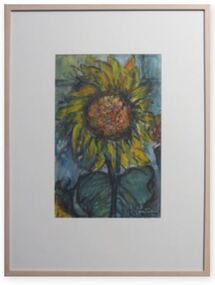
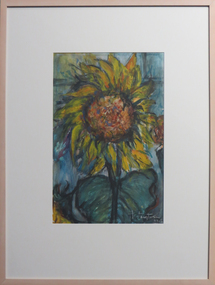
Painting, Isabel Huntington, 'Sunflower' by Isabel Huntington, c1956
... Isabel Huntington was a painter, craft officer and craft worker. She studied at Ballarat High School, Ballarat Technical Art School (a division of the School of Mines) and RMIT, and was a member of the Victorian Artists' Society and the Contemporary Art Society. ...Isabel Huntington was a painter, craft officer and craft worker. She studied at Ballarat High School, Ballarat Technical Art School (a division of the School of Mines) and RMIT, and was a member of the Victorian Artists' Society and the Contemporary Art Society. ...Isabel HUNTINGTON (1905 - 04 December 1971) Isabel McCausland was educated at Ballarat and married Robert Keith Huntington in 1931, and which time Isabel was living in the Melbourne suburb of Preston. Isabel Huntington was a painter, craft officer and craft worker. She studied at Ballarat High School, Ballarat Technical Art School (a division of the School of Mines) and RMIT, and was a member of the Victorian Artists' Society and the Contemporary Art Society. In 1945 she was appointed Director of Handcrafts for the Victorian Division of the Red Cross Society. Isabel Huntington had previously held the position of Supervisor of Handcrafts at Heidelberg Military Hospital for three and a half years. She was a member or the Arts and Crafts Society. Isabel Huntington had five 'one-man" shows, three in Melbourne, one in Ballarat and one in Hamilton, Victoria. The critics of the day described Isobel Huntington's work as Post Impressionist and Expressionist. 'Her enjoyment of the use of colour and her sense of vitality is obvious in her most original conception of the relationship of art to flowers.' Ursula Hoff judged the 1965 Albury awards for watercolour, and religious paintings in oils, awarding the prize to Isabel Huntington. In the same year Isabel Huntington travelled to Europe. In Ballarat's Crouch Prize Isabel Huntington was commended three times. After returning from overseas she taught at Rosanna High School, Victoria. Isabel Huntington lived at Montmorency, Victoria, and was there at the time of her death. Her studio was located at 10 Nokes Court, Montmorency, 3094. This item is part of the Federation University Art Collection. The Art Collection features over 2000 works and was listed as a 'Ballarat Treasure' in 2007 in 1971.Framed painting of a sunflower. The signature at the lower right has been oversigned in white 'Huntington 1962". A note on the back of the work suggests it was more like to have been created in 1956, and it was first purchased between 1956 and 1958. If you can share information on this artist or artwork please use the email link below.A note on the back says "Sunflower 1962 Oil/Pastel Insurance Isobel Huntington Gouache 1956 Black Box. Huntingdon (sic) Isobel. Acquired between 1956 - 1958"art, artwork, gouache, painting, sunflower, isabel huntington, handcraft, arts and crafts society, crouch prize, ursula hoff, alumni, flora, ballarat teachers' college art collection, isobel huntington, isabel mccausland -
 Flagstaff Hill Maritime Museum and Village
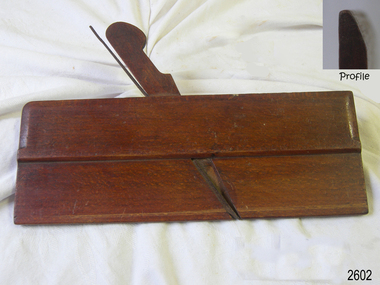
Tool - Wood Moulding Plane, George Hathersich, 1797-1851
... crafted woodworking tools. Similar tools are still made today and used by specialists in cabinet and woodcraft trades. Flagstaff Hill Flagstaff Hill Maritime Museum and Village Warrnambool Maritime Museum Maritime Village Great Ocean Road Shipwreck Coast wood work builder carpenter wood worker woodworking plane moulding plane tool woodworking tool George Hathersich Shudehill Manchester England C S Schofield "Hathersich" "C S Schofield" Plane; hand-operated mounding plane, round type. ...George Hathersich made wood moulding planes at 30 Shade Hill Street, Manchester, England, from 1797 to 1851. After his death, his wife, Elizabeth, carried on making planes. Moulding planes are used to create decorative edges on timber for doors, tables, cabinets and elaborate cabinetry.The maker, Hathersich, was a very early plane maker from Manchester, England. Hathersich's early 19th-century hand-operated planes are rare examples of crafted woodworking tools. Similar tools are still made today and used by specialists in cabinet and woodcraft trades.Plane; hand-operated mounding plane, round type. A narrow rectangular plane with a wooden wedge and an iron blade inserted in the bed. The wooden surface is stained and varnished. It has inscriptions. Made by George Hathersich of Manchester, UK. Also marked C S Schofield. "Hathersich" "C S Schofield"flagstaff hill, flagstaff hill maritime museum and village, warrnambool, maritime museum, maritime village, great ocean road, shipwreck coast, wood work, builder, carpenter, wood worker, woodworking, plane, moulding plane, tool, woodworking tool, george hathersich, shudehill, manchester, england, c s schofield -
 Federation University Historical Collection
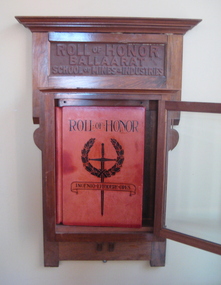
Book - Honour Board (hanging bookcase), Ballarat School of Mines Honor Book and Bookcase, c1920
... The School also designed certificates for the Young Workers' patriotic Guild, the "Herald" Shield for perpetual Competition at the Technical schools athletics meetings, the "Hansen" Shield for competition in the northern District High Schools, two metal tablets for the Castlemaine High School, and a certificate for the Grampians Secondary Schools' Association. Numerous Honor Gooks and mural cases have also been designed for State Schools." The 1920 Ballarat School of Mines Annual Report stated: Public appreciation of the High standard of design and artistic craft...The School also designed certificates for the Young Workers' patriotic Guild, the "Herald" Shield for perpetual Competition at the Technical schools athletics meetings, the "Hansen" Shield for competition in the northern District High Schools, two metal tablets for the Castlemaine High School, and a certificate for the Grampians Secondary Schools' Association. Numerous Honor Gooks and mural cases have also been designed for State Schools." The 1920 Ballarat School of Mines Annual Report stated: Public appreciation of the High standard of design and artistic craft ...The Ballarat Technical Art School made many honour boards for schools and organisation in Victoria and interstate. Their own was made, but the names were not listed. The Ballarat School of Mines Annual Report for 1921 states: 'It has been decided, for the present, to record the names of our students who served in the warm, in an Honor Book, and to defer the erection of an Honor Board until we can feel assured that the Roll is complete. the wide spread occupations of our students has rendered it very difficult for us to secure detailed information of their service. A handsome Honor Book and Case has been designed and executed by the staff and students of the Technical Art School, and the engrossing of the names and military records will be proceeded with as soon as possible. The Technical Art School was quite busy with commissions. The SMB Annual Report of 1918 states: 'under the direction of the Art principal (Mr H.H. Smith), the work of the Art School continues to receive wide public recognition. Handsome Honor Boars have been designed and executed for the Sydney Sports' Club, the St Arnaud High School, the Birregurra State School, the Wendouree State School and the Ballarat Old Colonists' Club. The School also designed the certificates for the Young Workers' Patriotic Guild, the 'Herald" Shield for perpetual competition at the technical Schools' athletic meetings, the "Hansen" Shield for competition among the Northern District High Schools, two metal tablets for the Castlemaine high School, and a certificate for the Grampians Secondary Schools' Association. Numerous Honor Books and Mural cases have also been designed for State Schools.' Over 400 former students and staff of the Ballarat School of Mines served during World War One. The 1920 SMb Students' Magazine said' 'Many students left Australia with the first Contingent, and since then, the School has been represented on every field where Australians have fought, from the first landing at Gallipoli to the decisive victory on the 8 August 1918.' The influence of the school was appropriately shown in the fact that at least 13 of its students were officers in the Australian Mining Corps. The title page has the initials 'D.J.' which most probably stands for Donald I. Johnston, a teacher with the Ballarat Technical Art school from 1920 to 1949. The Ballarat School of Mines World War 1 Honor Book remained uncompleted for more than 90 years. The names of over 400 SMB staff and students who served their country were not inscribed until 2012, despite names, ranks and service records being compiled. A restoration project was instigated as part of the 140th anniversary of the Ballarat School of Mines in 2010. Names were inscribed into the book by Calligrapher Lyn Forrester. The University of Ballarat believed this project is important not only to SMB's history, but the families and descendants of those who served while studying or teaching at SMB. The restoration project involved names being hand written in calligraphy into the Honor Book and was funded with the assistance of the 'Restoring Community War Memorial Grant'. The memorial was designed and made by the staff and students of the Ballarat School of Mines Technical Art School under the direction of Principal Herbert H. Smith. In 1921 the Ballarat School of Mines Annual Report recorded: "It has been decided, for the present, to record the names of our students who served in the war, in an Honor Book, and to defer the erection of an Honor Board until we can feel assured that the roll is complete. The wide spread occupations of our students has rended it very difficult for us to secure detailed information of their service. A handsome Honor Book and case has been designed and executed by the staff and students of the Technical Art School, and the engrossing of the names and miliatary records will proceed with as soon as possible. The Ballarat Technical Art School and was involved with the design and manufacture of numerous WW1 memorials. When it came time to complete their own memorial, the Principal died, and the Honor Roll must have been overlooked in the confusion that ensued. There have been numerous theories about why the Honor Roll was never completed, one being that it was because the SMB Principal, Maurice Copland, literally worked himself to death organising repatriation classes for ex-soldiers who attended SMB. The Courier of 18 November 1922 said of Maurice Copland: “He put his very best into the work for the welfare of the soldiers; in fact, he did too much for the good of his physique, for he wore himself out in the services of the returned men. If ever there was a war victim the late Mr Copland was one. But for the stress of work entailed by those repatriation classes and the amount of general war work which he performed Mr Copland would probably have been with them today." Understandably, SMB was thrown into some disarray by their Principal's death and the Honor Book was not completed. The University of Ballarat would like to finally honor its SMB war veterans by completing the Honor Book and as a further mark of respect, dedicate the project to Maurice Copland. The Ballarat Technical Art School undertook many honor boards. The Ballarat School of Mines Annual Report 1918 states: "Under the direction of the Art Principal (Mr H.H. Smith), the work of the Art School continues to receive a wide public recognition. handsome Honor Boards have been designed and executed for the Sydney Sports' Club, the St Arnaud High School, the Birregurra State School, the wendouree State School and the Ballarat Old Colonists' Club. The School also designed certificates for the Young Workers' patriotic Guild, the "Herald" Shield for perpetual Competition at the Technical schools athletics meetings, the "Hansen" Shield for competition in the northern District High Schools, two metal tablets for the Castlemaine High School, and a certificate for the Grampians Secondary Schools' Association. Numerous Honor Gooks and mural cases have also been designed for State Schools." The 1920 Ballarat School of Mines Annual Report stated: Public appreciation of the High standard of design and artistic craft work produced by the students of the Art School, under the direction of the Principal (Mr Herbert H. Smith), continues to be demonstrated by the lage number of important commissions entrusted to the school, not only by the public bodies and business firms by the Education Department and public bodies all over the State." "Amongst the important local commissions received during the year was the designing and supplying of the Municipal Council's Address of Welcome Casket for presentation to His Royal Highness the Prince of Wales, the designing and supervising of a large four-light stained glass window for the Lydiard Street Methodist Church, ... and supply numerous honor books, honor boards, etc., for public institutions and school." "The School has been honored by, and has acceded to the request of the Education Department to supply designs for the title page, chapter headings and initial letters for the War Service Book which it is about to publish, Mr F. Tate, director of Education, recognising the students' work in this direction by an appreciative letter of thanks. The Education Department has also been instrumental in directing to the School applications from all parts of the State, including Melbourne, for the School to supply competitive sports shields, honor boards, books and designs for certificates, and various decorative objects. The School has therefor been responsible for much work coming to local Ballarat firms which would otherwise have found its way to Melbourne or other centres. In 2011, as the result of a 'Restoring Community War Memorials Grant' calligrapher Lynton Forrester was commissioned to record over 400 names into the honor book. A Victorian Blackwood World War I Honor Board holds a red leatherbound Ballarat School of Mines Honor Book. The book includes a title page relating to the Ballarat School of Mines and Industries. The Ballarat School of Mines Honor Book and case was not finally inscribed with names until 2012. world war one, ww1, ballarat school of mines, world war 1, world war i, honour roll, calligraphy, don johnston, honor book, honor roll, copeland, maurice copeland, honour book, roll of honour, percy coltman, arthur e. tandy, leslie coulter -
 Flagstaff Hill Maritime Museum and Village
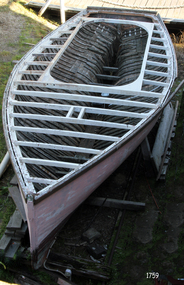
Vehicle - Vessel, Couta boat, Viator, 1890-1920
... workers. The other photograph shows a vessel built by J R Jones' son, J B Jones of Footscray, and his team of boat boulders. The photograph of the EVA MYRL was taken by E. A. Dond---. The other photograph is of the Sturrock Coot, taken a Albert Park Lake in St Kilda. The Viator is the most significant boat in the Flagstaff Hill's fleet, being the last remaining local 'couta boat and one of few existing examples of this craft ...The historic Victorian ‘couta boat “Viator” was built by renowned boat builder J.R. Jones of Williamstown in Melbourne, between 1890 and 1920. He was one of the early builders of this design. The features of Viator - carvel planked, open cockpit, vertical stem and straight keel, single mast and a pivoting centreboard - are all characteristics of an early Bass Strait ‘couta boat. This has been confirmed by experienced Victorian ‘couta boat restorer Tim Phillips. Viator served as a ‘couta fishing boat in the Warrnambool area until the mid-1930s, then some say she served as a mail ferry across to Portland. Later it was used as a fishing and recreation boat for local families. For years Viator sat in a paddock in East Warrnambool until purchased in 1975 and donated to Flagstaff Hill. ‘COUTA BOATS - The ‘couta design for vessels is believed to have originated at Port Phillip, Victoria, for the purpose of the Barracouta (‘couta) fishing industry, being both fast and seaworthy. , The 'couta fish was an important food fish in Australian waters, supplying Melbourne with plenty of inexpensive fish. VIATORY’S OWNERS - Some of Viator’s history is known: - 1940, registered Port Fairy and owned by G.J. Richards. - 1941-1945, registered in Port Fairy and owned by Jens “Peter” Petersen. - 1950’s “Brusher” Richards of Warrnambool and Port Fairy used it for fishing. - Peter Watson and his son also went fishing in Viator. - Frank Ferrier, boat builder, was an owner (son of ‘La Bella’ hero, William Ferrier) - Arthur Rogers owned Viator too, then sold it to Terry Pridmore and Wayne Moorefield - The Viator was stored in a paddock, unused, in Fairmont Avenue, Warrnambool, where it was gradually deteriorating. - 1975 Viator was purchase at a very reasonable price from Pridmore, then donated to Flagstaff Hill Maritime Village. RESTORATION - Shipwright Erik Mikkelsen soon started restoration on the Viator after it arrived at Flagstaff Hill in 1975. In 2006 the Maritime Museums of Australia awarded a grant to Flagstaff Hill Maritime Village to assist with the restoration and renovation of the Viator. Its restoration continues today in the care of Flagstaff Hill’s boat builder. J R. JONES - boat builder The photograph of the EVA MYRL shows the builder J R Jones with his team of workers. The other photograph shows a vessel built by J R Jones' son, J B Jones of Footscray, and his team of boat boulders. The photograph of the EVA MYRL was taken by E. A. Dond---. The other photograph is of the Sturrock Coot, taken a Albert Park Lake in St Kilda.The Viator is the most significant boat in the Flagstaff Hill's fleet, being the last remaining local 'couta boat and one of few existing examples of this craft. Viator received Heritage status with the Australian Maritime Museums Council and is listed on the Australian Register of Historical Vessels in 2006 (ARHV Number: HV000561). Viator was built in Victoria in the early days by renowned boat builder J.R. Jones, and sailed by fishermen for many years, both local and on the coastal waters of Victoria, and was possibly used for the mail service. It is significant for being used for the fishing trade, for government service, perhaps as a mail boat, and for recreation by local families.Vessel, the ‘Viator’, an historic Victorian ‘couta boat, handmade by renowned boat builder This J.R. Jones 'couta boat, the Viator, was built in Williamstown, c.1890-1920. The single mast vessel has a Caravel hull built from New Zealand Kauri, blackwood, with a red gum keel and a jarrah stem and stern. It has a pivoting centreboard. Two photographs are included; one of the builder with his team, the other is of his son J B Jones, with his team. Marked "Viator" Photograph 1759.2: "E. A. Dond---" (indecipherable". Handwritten on back "Grandfather / J R Jones / Built" Photograph 1759.3; sign within photograph "J B JONES / BUILDER / FOOTSCRAY", stamped in the card, bottom right " ----- / MELBOURNE" and handwritten on the back "I think this is Mr Abel Sturrock Coot Albert Park Lake"flagstaff hill, warrnambool, shipwrecked coast, flagstaff hill maritime museum, maritime museum, shipwreck coast, flagstaff hill maritime village, great ocean road, arhv hv000561, arthur rogers, bass strait ‘couta boat, “brusher” richards of warrnambool and port fairy, clinker hull boat, ‘couta crafted boat c 1890-1905, ‘couta fishing boat, erik mikkelsen shipwright, g.j. richards of port fairy, jens “peter” petersen, john lindsay, old mail boat, pivoting centerboard boat, peter watson, single-masted ketch, terry prodmore and wayne moorefield, vessel viator, viator a historical vessel, victorian ‘couta boat, victorian barracoota boat, warrnambool ‘couta boat, western victoria fishing boat, western victoria mail boat, hv000561, australian register of historical vessels, erik mikkelsen, j b jones, j b jones boat builder, footscray, sturrock coot, sturrock, j r jones, j r jones boat builder, williamstown, eva myrl -
 Upper Yarra Museum
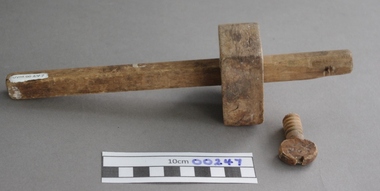
Wooden Marking Gauge
... This simple tool allowed Crafts or Trades people to consistently and accurately make parallel lines. wood worker carpenter cabinet maker gauge mark joints mortice & tennon Wooden Marker Part 1 - Marker Part 2 - Wooden screw Part 3 - Moving ..... ...Marking Gauges have been around for centuries in wood working shops, and is used to mark parallel lines on wood, either along the grain or across the grain, across the grain leaves a more jaggard line.This simple tool allowed Crafts or Trades people to consistently and accurately make parallel lines.Wooden Marker Part 1 - Marker Part 2 - Wooden screw Part 3 - Moving .....wood worker, carpenter, cabinet maker, gauge, mark, joints, mortice & tennon -
 Federation University Historical Collection
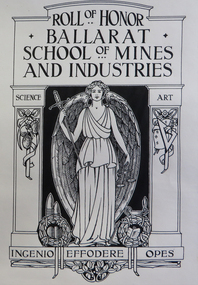
Book - Roll of Honor, Ballarat School of Mines Honor Book, c1920
... The School also designed certificates for the Young Workers' patriotic Guild, the "Herald" Shield for perpetual Competition at the Technical schools athletics meetings, the "Hansen" Shield for competition in the northern District High Schools, two metal tablets for the Castlemaine High School, and a certificate for the Grampians Secondary Schools' Association. Numerous Honor Gooks and mural cases have also been designed for State Schools." The 1920 Ballarat School of Mines Annual Report stated: Public appreciation of the High standard of design and artistic craft...The School also designed certificates for the Young Workers' patriotic Guild, the "Herald" Shield for perpetual Competition at the Technical schools athletics meetings, the "Hansen" Shield for competition in the northern District High Schools, two metal tablets for the Castlemaine High School, and a certificate for the Grampians Secondary Schools' Association. Numerous Honor Gooks and mural cases have also been designed for State Schools." The 1920 Ballarat School of Mines Annual Report stated: Public appreciation of the High standard of design and artistic craft ...The Ballarat Technical Art School made many honour boards for schools and organisation in Victoria and interstate. Their own was made, but the names were not listed. The Ballarat School of Mines Annual Report for 1921 states: 'It has been decided, for the present, to record the names of our students who served in the warm, in an Honor Book, and to defer the erectin of an Honor Board until we can feel ssured that the Roll is complete. the wide spread occupations of our students has rendered it very difficult for us to secure detailed information of their service. A handsome Honor Book and Case has been designed and executed by the staff ad students of the technical Art School, and the engrossing of the names and military records will be proceeded with as soon as possible. The Technical Art School was quite busy with commissions. The SMB Annual Report of 1918 states: 'under the direction of the Art principal (Mr H.H. Smith), the work of the Art School continues to receive wide public recognition. Handsome Honor Boars have been designed and executed for the Sydney Sports' Club, the St Arnaud High School, the Birregurra State School, the Wendouree State School and the Ballarat Old Colonists' Club. The School also designed the certificates for the Young Workers' Patriotic Guild, the 'Herald" Shield for perpetual competition at the technical Schools' athletic meetings, the "Hansen" Shield for competition among the Northern District High Schools, two metal tablets for the Castlemaine high School, and a certificate for the Grampians Secondary Schools' Association. Numerous Honor Books and Mural cases have also been designed for State Schools.' Over 400 former students and staff of the Ballarat School of Mines served during World War One. The 1920 SMb Students' Magazine said' 'Many students left Australia with the first Contingent, and since then, the School has been represented on every field where Australians have fought, from the first landing at Gallipoli to the decisive victory on the 8 August 1918.' The influence of the school was appropriately shown in the fact that at least 13 of its students were officers in the Australian Mining Corps. The title page has the initials 'D.J.' which most probably stands for Donald I. Johnston, a teacher with the Ballarat Technical Art school from 1920 to 1949. The Ballarat School of Mines World War 1 Honor Book remained uncompleted for more than 90 years. The names of over 400 SMB staff and students who served their country were not inscribed until 2012, despite names, ranks and service records being compiled. A restoration project was instigated as part of the 140th anniversary of the Ballarat School of Mines in 2010. Names were inscribed into the book by Calligrapher Lyn Forrester. The University of Ballarat believed this project is important not only to SMB's history, but the families and descendants of those who served while studying or teaching at SMB. The restoration project involved names being hand written in calligraphy into the Honor Book and was funded with the assistance of the 'Restoring Community War Memorial Grant'. The memorial was designed and made by the staff and students of the Ballarat School of Mines Technical Art School under the direction of Principal Herbert H. Smith. In 1921 the Ballarat School of Mines Annual Report recorded: "It has been decided, for the present, to record the names of our students who served in the war, in an Honor Book, and to defer the erection of an Honor Board until we can feel assured that the roll is complete. The wide spread occupations of our students has rended it very difficult for us to secure detailed information of their service. A handsome Honor Book and case has been designed and executed by the staff and students of the Technical Art School, and the engrossing of the names and miliatary records will proceed with as soon as possible. The Ballarat Technical Art School and was involved with the design and manufacture of numerous WW1 memorials. When it came time to complete their own memorial, the Principal died, and the Honor Roll must have been overlooked in the confusion that ensued. There have been numerous theories about why the Honor Roll was never completed, one being that it was because the SMB Principal, Maurice Copland, literally worked himself to death organising repatriation classes for ex-soldiers who attended SMB. The Courier of 18 November 1922 said of Maurice Copland: “He put his very best into the work for the welfare of the soldiers; in fact, he did too much for the good of his physique, for he wore himself out in the services of the returned men. If ever there was a war victim the late Mr Copland was one. But for the stress of work entailed by those repatriation classes and the amount of general war work which he performed Mr Copland would probably have been with them today." Understandably, SMB was thrown into some disarray by their Principal's death and the Honor Book was not completed. The University of Ballarat would like to finally honor its SMB war veterans by completing the Honor Book and as a further mark of respect, dedicate the project to Maurice Copland. The Ballarat Technical Art School undertook many honor boards. The Ballarat School of Mines Annual Report 1918 states: "Under the direction of the Art Principal (Mr H.H. Smith), the work of the Art School continues to receive a wide public recognition. handsome Honor Boards have been designed and executed for the Sydney Sports' Club, the St Arnaud High School, the Birregurra State School, the wendouree State School and the Ballarat Old Colonists' Club. The School also designed certificates for the Young Workers' patriotic Guild, the "Herald" Shield for perpetual Competition at the Technical schools athletics meetings, the "Hansen" Shield for competition in the northern District High Schools, two metal tablets for the Castlemaine High School, and a certificate for the Grampians Secondary Schools' Association. Numerous Honor Gooks and mural cases have also been designed for State Schools." The 1920 Ballarat School of Mines Annual Report stated: Public appreciation of the High standard of design and artistic craft work produced by the students of the Art School, under the direction of the Principal (Mr Herbert H. Smith), continues to be demonstrated by the lage number of important commissions entrusted to the school, not only by the public bodies and business firms by the Education Department and public bodies all over the State." "Amongst the important local commissions received during the year was the designing and supplying of the Municipal Council's Address of Welcome Casket for presentation to His Royal Highness the Prince of Wales, the designing and supervising of a large four-light stained glass window for the Lydiard Street Methodist Church, ... and supply numerous honor books, honor boards, etc., for public institutions and school." "The School has been honored by, and has acceded to the request of the Education Department to supply designs for the title page, chapter headings and initial letters for the War Service Book which it is about to publish, Mr F. Tate, director of Education, recognising the students' work in this direction by an appreciative letter of thanks. The Education Department has also been instrumental in directing to the School applications from all parts of the State, including Melbourne, for the School to supply competitive sports shields, honor boards, books and designs for certificates, and various decorative objects. The School has therefor been responsible for much work coming to local Ballarat firms which would otherwise have found its way to Melbourne or other centres. In 2011, as the result of a 'Restoring Community War Memorials Grant' calligrapher Lynton Forrester was commissioned to record over 400 names into the honor book. A red leatherbound Ballarat School of Mines Honor Book. The book includes a title page relating to the Ballarat School of Mines and Industries. The Ballarat School of Mines Honor Book was not finally inscribed with names until 2011-2012. world war one, ww1, ballarat school of mines, world war 1, world war i, honour roll, calligraphy, don johnston, honor book, honor roll, copeland, maurice copeland, honour book, roll of honour, percy coltman, arthur e. tandy, leslie coulter -
 Flagstaff Hill Maritime Museum and Village
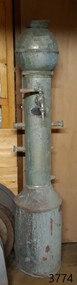
Functional object - Water Boiler, Jackson Boilers Ltd, 1920s
... craft above the water line, deterioration occurred below the surface and resulted in the ship being unsafe for visitors to board. It was broken up and removed from Flagstaff Hill in 2018, but items such as the historical boiler remain in Flagstaff Hill’s Collection. JACKSON BOILERS LTD.: - In 1911, Henry Jackson was the Managing Director at Jackson Boilers Ltd. He had gained around 30 years’ experience as a tin plate worker...craft above the water line, deterioration occurred below the surface and resulted in the ship being unsafe for visitors to board. It was broken up and removed from Flagstaff Hill in 2018, but items such as the historical boiler remain in Flagstaff Hill’s Collection. JACKSON BOILERS LTD.: - In 1911, Henry Jackson was the Managing Director at Jackson Boilers Ltd. He had gained around 30 years’ experience as a tin plate worker ...Jackson Boilers Ltd., brass founders, electro platers and sheet metal works made this tube water boiler. It was a fitting in the vessel Reginald M, a small cargo ship built at Port Adelaide in 1922 and named after her builder and first owner, John Murch. The Reginald M was launched at Largs Bay, South Australia, in 1922 to carry cargo around South Australia that included guano, barley, wool, horses, cattle, timber, explosives, potatoes, shell grit, and gypsum. It passed through numerous owners over the years and primarily maintained its purpose as a cargo vessel. In 1975, the decommissioned Reginald M was purchased by Flagstaff Hill Maritime Museum as an attraction. Although restoration efforts were undertaken and maintained for the craft above the water line, deterioration occurred below the surface and resulted in the ship being unsafe for visitors to board. It was broken up and removed from Flagstaff Hill in 2018, but items such as the historical boiler remain in Flagstaff Hill’s Collection. JACKSON BOILERS LTD.: - In 1911, Henry Jackson was the Managing Director at Jackson Boilers Ltd. He had gained around 30 years’ experience as a tin plate worker, plumber and gas fitter at Ilkey in 1881, then at Leeds by 1901. By 1921, he had changed employment from Jackson Boilers to Managing Director of Patent Water Boilers. During World War I, Jackson Boilers Ltd of Leeds performed war work like many other manufacturers at that time. The firm made cases for the explosive picric acid and electroplated fuse hole plugs. In 1918, the firm employed 15 males and 19 females. Jacksons Boilers became very successful throughout the first half of the twentieth century with showrooms and sales offices in Scotland, the Midlands and Southern England. It also had an office in Dublin, Ireland. In the post-war 1920s, the firm’s production included instantaneous water boilers and coffee machines for cafes, restaurants and canteens. Jackson Boilers also began to supply shipping lines with catering water boilers for their ships. The firm applied for a USA patent for the tube boiler in 1930, for the design which appears to have been invented in 1926. A 1971 advertisement adds the credentials, Members of the Catering Equipment Manufacturers’ Association. The tube water boiler was designed specifically for use in a ship's restaurant or dining area and patented by Jackson Boilers Ltd. of Leeds. The boiler is significant as a patented design, illustrating the evolution of maritime, commercial and domestic water boilers that have led to many innervations and improvements in today's boilers that are used in heating and in producing hot water for domestic and catering use. It is also significant as it is one of the earlier boilers the Jackson company made in the early 1920s before they applied for a US patent on their revised design in 1926.Water boiler, free standing Jackson's Tube boiler. A tall metal cylindrical stand with a metal sphere on top and several pipe fittings on the sides. A brass tap with a lever handle is connected to the front. A plaque with maker's details is attached under the tap. Details are also impressed into the cylinder above the tap.Jackson Boilers Leeds Ltd. "JACKSON'S PATENT" . Other details indecipherable. flagstaff hill maritime museum and village, flagstaff hill maritime museum, flagstaff hill, maritime museum, maritime village, warrnambool, great ocean road, leeds, jackson boilers ltd, jackson boilers, henry jackson, brass founders, electro platers, sheet metal works, patent water boilers, leeds manufacturer, tube water boiler, domestic boiler, tube domestic boiler, tube boiler, water heaters, water boilers, self-feeding water boilers, sheet metal work instantaneous water heaters, engineering, allied trades, metal workers, metal trade, food machinery, hospitality equipment, ship equipment, ship water boiler, ship heater, catering boilers, café boiler, restaurant boiler, canteen boiler, catering equipment manufacturers’ association, cema, kitchen equipment, kitchen appliance, war work, world war i, wwi, picric acid, picric acid cases, fuse hole plugs, electro plated fuse hole plugs, reginald m, cargo ship, port adelaide, 1922, john murch -
 City of Moorabbin Historical Society (Operating the Box Cottage Museum)
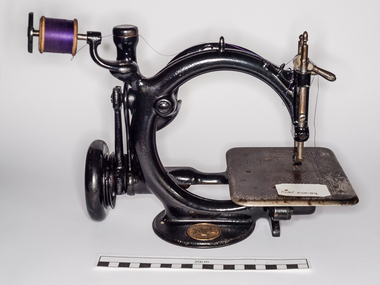
Functional object - Sewing machine, Wilcox & Gibbs, c1870
... The women were skilled dressmakers and craft workers. sewing machines early settlers pioneers moorabbin brighton gibbs james willcox james willcox henry new york america dressmaking mateial machine makers wrought iron work telford england The Willcox & Gibbs badge is located on the rear of the base casting Willcox and Gibbs: Serial No. 158679. ...Willcox and Gibbs: Serial No. 158679. The Willcox & Gibbs Sewing Machine Company was founded in 1857 by James E. A. Gibbs and James Willcox and opened its London Office in 1859 at 135 Regent Street . By 1871 the Company's Chief Office for Europe was at 150 Cheapside, London, this office was later moved (post 1885) to 94 - 96 Wigmore Street, then 37 & 39 Moorgate Street (by 1891 to post 1907) and later 20 Fore Street, London . Right from the initial production the manufacturing of the Company's single thread, chain stitch machine was undertaken by Brown & Sharpe, Rhode Island and this continued up until 1948. A special hand crank mechanism was produced in England for the European market, but the general design of the Willcox & Gibbs remained essentially the same throughout its production. The only major improvement was in 1875 when the glass tension discs were replaced with an automatic tension device which ensured the machine could not get out of adjustment. In addition to the domestic hand and treadle machines the company produced a wide range of industrial models. The Company finally closed in 1973. This Willcox & Gibbs came complete with its wooden carry case. The machine was made in America in the late 1860's but it has the ornate hand crank produced at Coalbrookdale near Telford, England which was, in Victorian times, renown for producing high quality ornate iron castings. This machine has the glass tension discs which were used on domestic models until 1875. The Willcox & Gibbs badge is located on the rear of the base casting and it also has a deep wooden base. The cloth plate has various American patent dates, four dating between 1857 & 1860 relating to J. E. A. Gibbs, three dating between 1860 & 1864 relating to Chas H. Willcox (son of James Willcox), the machine was also licensed under five other patents including the infamous Elias Howe patent of 1846. There are only two English patents one for J. E. A Gibbs and the other for James Willcox. In 1887 a W & G Sewing Machine sold in England for 6 pounds , with its box and bits, at a time when the average wage was less than 10/- shillings per week. The early settlers of Moorabbin Shire had to be self sufficient making their own clothes, tableware, bed coverings, furnishings and equipment. The women were skilled dressmakers and craft workers.Willcox and Gibbs: Serial No. 158679. A single thread, chain stitch Sewing Machine with a special hand crank mechanism produced in England for the European market, and the glass tension discs which were used on domestic models until 1875. This Willcox & Gibbs came complete with its wooden carry case. The machine was made in America c1870 but it has the ornate hand crank produced at Coalbrookdale near Telford, England which was, in Victorian times, renown for producing high quality ornate iron castings. This machine has the glass tension discs which were used on domestic models until 1875. The Willcox & Gibbs badge is located on the rear of the base casting and it also has a deep wooden base. The Willcox & Gibbs badge is located on the rear of the base castingsewing machines, early settlers, pioneers, moorabbin, brighton, gibbs james, willcox james, willcox henry, new york, america, dressmaking, mateial, machine makers, wrought iron work, telford england -
City of Moorabbin Historical Society (Operating the Box Cottage Museum)
Newsletter, City of Moorabbin Historical Society No. 8 Vol. 5 November 1965, City of Moorabbin Historical Society No. 8 Vol. 5 November 1965, 1965
... Sheehy CMHS for members and visitors The Aims of the CMHS are ‘to record the history of the City, and register something of the Australian Atmosphere, which the necessary speed-up in post-world-war two (WW11) immigration has caused to be lost; to produce a magazine at regular intervals, featuring the work of pioneers and the changing Australian scene; to work constantly with a long range view towards building a hall where records and exhibits can be housed’ (1961) Topics ; Moorabbin Arts Festival; Memories of old Cheltenham by Jack McCarthy; Park Road Railway Crossing Gate Keeper; 1903 Railway Workers Strike; This is Newsletter No. 8 Vol. 5 of the CMHS November 1965 CMHS obtained a Kingston City Council Community Grant 2016 for the digitization and preservation of these Original CMHS Newsletters commenced in 1961 City of Moorabbin Historical Society 1961, sheehy t.a., newsletters, neville f, ashley r, moorabbin city council, moorabbin arts festival 1965, mccarthy jack, charman road state school, victorian railways. railway workers strike 1903, judd clarrie, phonograph, CITY OF MOORABBIN HISTORICAL SOCIETY / AFFILIATED WITH THE ROYAL HISTORICAL SOCIETY OF / VICTORIA AND THE CHELTENHAM ARTS AND CRAFTS SOCIETY/ President Mr R. ...This is Newsletter No 8 Vol. 5 produced in November 1965 by Mr T. A. Sheehy CMHS for members and visitors The Aims of the CMHS are ‘to record the history of the City, and register something of the Australian Atmosphere, which the necessary speed-up in post-world-war two (WW11) immigration has caused to be lost; to produce a magazine at regular intervals, featuring the work of pioneers and the changing Australian scene; to work constantly with a long range view towards building a hall where records and exhibits can be housed’ (1961) Topics ; Moorabbin Arts Festival; Memories of old Cheltenham by Jack McCarthy; Park Road Railway Crossing Gate Keeper; 1903 Railway Workers Strike; This is Newsletter No. 8 Vol. 5 of the CMHS November 1965 CMHS obtained a Kingston City Council Community Grant 2016 for the digitization and preservation of these Original CMHS Newsletters commenced in 1961 2 x L 26cm x W 21cm page 1 printed both sides CITY OF MOORABBIN HISTORICAL SOCIETY / AFFILIATED WITH THE ROYAL HISTORICAL SOCIETY OF / VICTORIA AND THE CHELTENHAM ARTS AND CRAFTS SOCIETY/ President Mr R. Ashley….Editor of Newsletter Mr T.A.Sheehy Secretary Mrs F.Neville / VOLUME 5 No.8 NEWSLETTER NOVEMBER 1965city of moorabbin historical society 1961, sheehy t.a., newsletters, neville f, ashley r, moorabbin city council, moorabbin arts festival 1965, mccarthy jack, charman road state school, victorian railways. railway workers strike 1903, judd clarrie, phonograph, -
 City of Moorabbin Historical Society (Operating the Box Cottage Museum)
Clothing, Baby Layette 5 piece wool hand knitted 1962, 1962
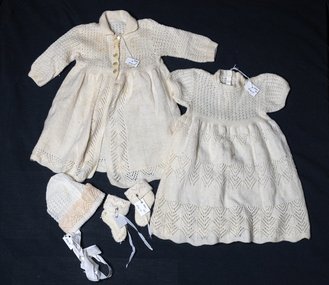
... Typical of a Baby Layette of hand knitted woollen dress, coat , hat, and bootees with satin ribbon worn in City of Moorabbin c 1960 Women were accomplished knitters, craft workers and dressmakers as they cared for their families knitting, craftwork, baby clothes, baby layette, sharp valma, wool, city of moorabbin, ormond, bentleigh, moorabbin, post war settlers, world war 11 1939-40, baby boomers, Baby Layette consisting of cream woollen hand knitted dress, coat, hat and bootees with ribbon Clothing, Baby Layette 5 piece wool hand knitted 1962 Mrs Valma Sharp ...Women in the City of Moorabbin knitted, sewed and crocheted clothes for their babies as they established their families in the new settlements in Ormond, Bentleigh and Moorabbin that followed World War 11. Typical of a Baby Layette of hand knitted woollen dress, coat , hat, and bootees with satin ribbon worn in City of Moorabbin c 1960 Women were accomplished knitters, craft workers and dressmakers as they cared for their families Baby Layette consisting of cream woollen hand knitted dress, coat, hat and bootees with ribbon knitting, craftwork, baby clothes, baby layette, sharp valma, wool, city of moorabbin, ormond, bentleigh, moorabbin, post war settlers, world war 11 1939-40, baby boomers, -
 City of Moorabbin Historical Society (Operating the Box Cottage Museum)
Clothing, Baby 5 pieces wool hand knit 1962, 1962
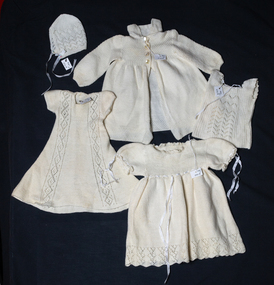
... Typical Baby clothes consisting of hand knitted wool coat, hat, singlet and 2 dresses worn in the City of Moorabbin c 1960 Women in City of Moorabbin were accomplished knitters, dressmakers and craft workers as they cared for their families while settling in to the new housing estates in post World War11 Ormond , Bentleigh and Moorabbin clothing, manufactured lace, dressmaking, blousknitting, craftwork, early settlers, moorabbin shire, mechanics institute cheltenham, postworld war 11 settlers, housing estates moorabbin 1950, bentleigh, ormond, moorabbin, cheltenham, sharp valma, Baby Clothes consisting of cream woollen hand knitted, coat, hat, singlet and 2 dresses Clothing, Baby 5 pieces wool hand knit 1962 Mrs Valma Sharp ...Typical Baby clothes consisting of hand knitted wool coat, hat, singlet and 2 dresses worn in the City of Moorabbin c 1960 Women in City of Moorabbin were accomplished knitters, dressmakers and craft workers as they cared for their families while settling in to the new housing estates in post World War11 Ormond , Bentleigh and Moorabbin Baby Clothes consisting of cream woollen hand knitted, coat, hat, singlet and 2 dresses clothing, manufactured lace, dressmaking, blousknitting, craftwork, early settlers, moorabbin shire, mechanics institute cheltenham, postworld war 11 settlers, housing estates moorabbin 1950, bentleigh, ormond, moorabbin, cheltenham, sharp valma, -
 City of Moorabbin Historical Society (Operating the Box Cottage Museum)
Clothing, Baby Bibs x 2 c1960, c1960
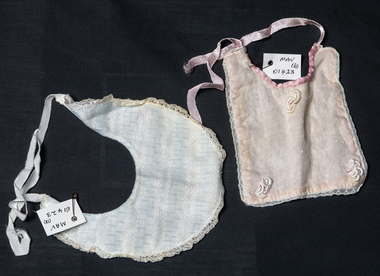
... Nylon became a very popular dressmaking material in City of Moorabbin c1960 as the new settlers established their families in the new estates post World War 11 in Ormond, Bentleigh, Moorabbin These Baby feeding Bibs x 2 with ribbon ties were made by a local resident of City of Moorabbin for her child c 1960 Women in City of Moorabbin were accomplished knitters, dressmakers and craft workers who made the clothes for their families while settling in to the new estates that opened up in Ormond, Bentleigh,and Moorabbin after World War 11 clothing, baby, nylon, machine pressed designs, layette, knitting,craftwork, wool, early settlers, city of moorabbin, bentleigh, ormond, moorabbin, post war settlers, world war 11 1939-40 sharp valma, Baby Bibs, x 2 made by a local resident for her children. a) towel, nylon, lace trim, with an appliqued flower and ribbon ties b) flannel, nylon, lace trim and ribbon ties Clothing, Baby Bibs x 2 c1960 Mrs Valma Sharp ...Nylon became a very popular dressmaking material in City of Moorabbin c1960 as the new settlers established their families in the new estates post World War 11 in Ormond, Bentleigh, Moorabbin These Baby feeding Bibs x 2 with ribbon ties were made by a local resident of City of Moorabbin for her child c 1960 Women in City of Moorabbin were accomplished knitters, dressmakers and craft workers who made the clothes for their families while settling in to the new estates that opened up in Ormond, Bentleigh,and Moorabbin after World War 11 Baby Bibs, x 2 made by a local resident for her children. a) towel, nylon, lace trim, with an appliqued flower and ribbon ties b) flannel, nylon, lace trim and ribbon ties clothing, baby, nylon, machine pressed designs, layette, knitting,craftwork, wool, early settlers, city of moorabbin, bentleigh, ormond, moorabbin, post war settlers, world war 11 1939-40 sharp valma, -
 City of Moorabbin Historical Society (Operating the Box Cottage Museum)
Haberdashery, Serviettes Linen with Crochet and needlework x2 c1910, c1910
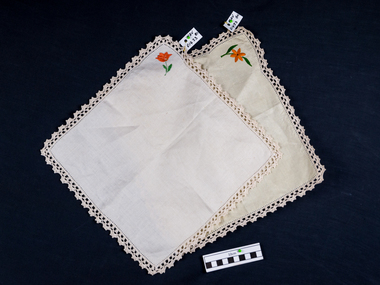
... The square of linen is edged with hand crochet and a flower in one corner is sewn with coloured silk The women of the early settler families in Moorabbin Shire c1910 were skilled dressmakers and craft workers. clothing,haberdashery, napery, serviettes, linen, crochet, brighton, moorabbin, pioneers, dressmaking, market gardeners, early settlers, craftwork , bentleigh, lacework, moorabbin shire, dairy farms, fruit orchards 2 cream linen serviettes with crocheted edge and a coloured needlework flower Haberdashery, Serviettes Linen with Crochet and needlework x2 c1910 Unrecorded craftworker ...The women of the early settler families made the clothes, haberdashery and napery as the market gardens and dairy farms were established c1900. The square of linen is edged with hand crochet and a flower in one corner is sewn with coloured silk The women of the early settler families in Moorabbin Shire c1910 were skilled dressmakers and craft workers. 2 cream linen serviettes with crocheted edge and a coloured needlework flower clothing,haberdashery, napery, serviettes, linen, crochet, brighton, moorabbin, pioneers, dressmaking, market gardeners, early settlers, craftwork , bentleigh, lacework, moorabbin shire, dairy farms, fruit orchards -
 Red Cliffs Military Museum
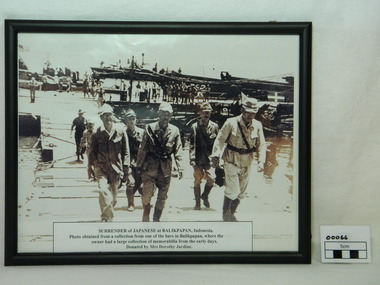
Framed Photograph, Surrender of Japanese at Balikpapan, 1945
... craft next to a Japanese landing barge. The Japanese landing bardge has the required surrender markings which is a green square with a white cross on top right of photo. The Australian soldier following the Japanese soldiers is wearing slouch hat and gungle green uniform. Along the docks are native workers...craft next to a Japanese landing barge. The Japanese landing bardge has the required surrender markings which is a green square with a white cross on top right of photo. The Australian soldier following the Japanese soldiers is wearing slouch hat and gungle green uniform. Along the docks are native workers ...Japanese Commanders crossing a pontoon bridge under guard by Australian soldier on the way to the official surrender of Japanese forces in Balikpapan in (Dutch East Indies) Indonesia 1945. This was a major event in the ending of World War 2. Following the japanese surrender the Local population began it push for independance. Framed photograph (copy) of Japanese Commanders surrendering at Balikpapan. Black frame and glass covered. The Japanese Command staff with a Japanese general and aid-d-camp (Captian)carring his breif case along with other staff members. In the background here are 2 American PT boats with American naval personal .Note American flag flying in the top left corner. There are several American landing craft next to a Japanese landing barge. The Japanese landing bardge has the required surrender markings which is a green square with a white cross on top right of photo. The Australian soldier following the Japanese soldiers is wearing slouch hat and gungle green uniform. Along the docks are native workers.Paper discription on lower photograph with details of item description, where photo obtained from and donated by.ww2, japanese, surrender, balikpapan, generals, americans, pt boats, japanese landing bardge, american landing craft, dutch east indies -
 Orbost & District Historical Society
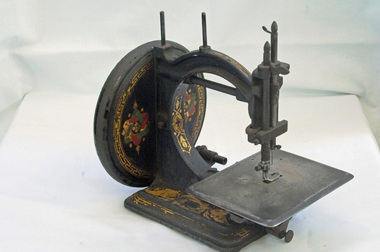
sewing machine, late 1860's - 1870's
... Many women were skilled dressmakers and craft workers. This item reflects that time. sewing-machine needlework On the cloth plate is stamped "Patent March 1867 Heron Gresham" with some indecipherable marks. ...The early settlers of Orbost had to be self sufficient making their own clothes, tableware, bed coverings, furnishings and equipment. Many women were skilled dressmakers and craft workers. This item reflects that time.A small black hand-cranked lockstitch sewing machine. It has a backwards C-shaped body. The wheel and base are decorated with a gold pattern. On the end above the needle assembly is a brass plate The balance wheel has a handle. The pattern on the wheel is a gold border with two gold, red and green stars formed by interwoven triangles. On the cloth plate is stamped "Patent March 1867 Heron Gresham" with some indecipherable marks.sewing-machine needlework -
 Mission to Seafarers Victoria
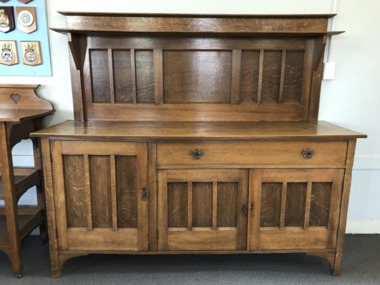
Furniture - Sideboard, Buffet, Heinrich Friedrich Fischer, 1909-1912
... workers and that made by Europeans, meaning Australians of European origin. To distinguish them, the European stamp was square or rectangular, the Chinese stamp was trianguler. It is not known when they were purchased or gifted and by whom. The facture is of quality, as indicated by the tenon and mortise joints of the drawers. The Wellers photographed the dining suite during his stay betwenn 1926-1929 (see item 1568). manse heritage listed sideboard arts and crafts ...This sideboard was originally used in the dining room of the Manse, the chaplains' residence. Upon completion of the Institute building in 1917, the Goldsmiths moved in after living for many uncomplaining years in a flat on Australia Wharf, which had “many disadvantages and discomforts”. The stamps in the drawer indicate the furniture was manufactured by H.F Fischer (Heinrich Friedrich Fischer). His store is mentioned in many advertisings as manufacturer and seller of furniture and was located at the 322 City Road address between 1909 and 1912 and is listed in the Sands & McDougall's in 1910. From 1913 his address changed to 308-310 City Road. The ‘European labour only’ stamp was a legal requirement in Victoria where it was set out in the Factories and Shops Act of 1896. Its purpose was to distinguish between furniture made in Victoria by Chinese workers and that made by Europeans, meaning Australians of European origin. To distinguish them, the European stamp was square or rectangular, the Chinese stamp was trianguler.It is not known when they were purchased or gifted and by whom. The facture is of quality, as indicated by the tenon and mortise joints of the drawers. The Wellers photographed the dining suite during his stay betwenn 1926-1929 (see item 1568).Wooden Oakwood Arts and Crafts sideboard 2 rectangular Stamps in purple ink in the drawer: " Manufactured by / H.F. Fischer/ 322 City Road / European Labour Only"manse, heritage listed, sideboard, arts and crafts, english, h.f. fischer, european labour, heinrish friedrich fischer, cabinetmaker -
 Cheese World Museum
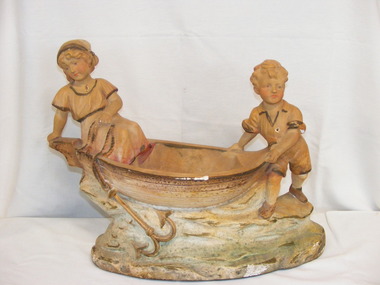
Ornament, Triaca & Picchi figurine, c1930
... He arrived in Melbourne in 1909 and practised his craft in Richmond, Melbourne, before returning to Italy in 1914 to serve in the Italian Army. He returned to Melbourne in 1923 and continued to sculpt at his Richmond home before relocating to Fitzroy. A 1927 image of workers...He arrived in Melbourne in 1909 and practised his craft in Richmond, Melbourne, before returning to Italy in 1914 to serve in the Italian Army. He returned to Melbourne in 1923 and continued to sculpt at his Richmond home before relocating to Fitzroy. A 1927 image of workers ...Part of the Uebergang Collection. Made by the firm of Triaca & Picchi. Camilo Triaca (1887-1972) was a sculptor born Tuscany, Italy. He arrived in Melbourne in 1909 and practised his craft in Richmond, Melbourne, before returning to Italy in 1914 to serve in the Italian Army. He returned to Melbourne in 1923 and continued to sculpt at his Richmond home before relocating to Fitzroy. A 1927 image of workers at his studio workshop taking a lunch break is in the Italian Historical Society collection (http://trove.nla.au/version172106091). The workshop was situated at 76-78 King William St, Fitzroy.Plaster figurine depicting a boat with a girl sitting in the front holding the rope of an anchor and a boy holding the back of the boat which is up on the sand. The girl wears a short sleeved frock with green edged neck and sleeves, and a matching scarf. The boy wears a V-neck shirt with sleeves rolled up.Triaci & Picchi/1773triaca camilo, triaca & picchi, italian immigrants, families, businesses, trades, sculptures, sculptors, melbourne, allansford, uebergang -
 Ringwood and District Historical Society
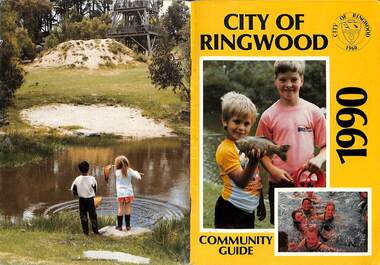
Booklet, City of Ringwood 1990 Community Guide, 1990
... Worker 36 2. LOCAL COMMUNITY SERVICES Accommodation 42 Aged Accommodation 42 Alcoholism 42 Arthritis Foundation 43 Arts and Crafts 43 Blind 43 Care Force 43 Catholic Family Welfare Bureau 43 Central Ringwood Community Centre 43 Childbirth and Parenting Association 44 Churches 45 Community Services Victoria 47 Day Centres and Drop-in Centres 48 Disabled Facilities 49 Do Care 50 Drugs 50 Elderly Day Care 50 Emergency Housing 51 Family Planning Services 51 Financial Counselling 52 Hearing Aid Service 53 Hospitals 54 Housing 54 Information 55 Legal 55 Literacy 55 Lone Parents 57 Marriage Celebrants 57 Maroondah Social Health Centre 57 Neighbourhood Mediation Centre - Outer East 57 North Ringwood Community House 53 Nursing 59 Optometric Services 59 Playgroups 60 Pre-Schools 60 Red Cross 61 Retirement 62 Ringwood Croydon Advisory Service 62 Schools 63 Senior Citizens' Centres 65 Transport 66 Twins 66 Unemployment 66 Volunteering 66 Youth Accommodation Project (Maroondah) 67 Youth Emergency Services 67 ...Worker 36 2. LOCAL COMMUNITY SERVICES Accommodation 42 Aged Accommodation 42 Alcoholism 42 Arthritis Foundation 43 Arts and Crafts 43 Blind 43 Care Force 43 Catholic Family Welfare Bureau 43 Central Ringwood Community Centre 43 Childbirth and Parenting Association 44 Churches 45 Community Services Victoria 47 Day Centres and Drop-in Centres 48 Disabled Facilities 49 Do Care 50 Drugs 50 Elderly Day Care 50 Emergency Housing 51 Family Planning Services 51 Financial Counselling 52 Hearing Aid Service 53 Hospitals 54 Housing 54 Information 55 Legal 55 Literacy 55 Lone Parents 57 Marriage Celebrants 57 Maroondah Social Health Centre 57 Neighbourhood Mediation Centre - Outer East 57 North Ringwood Community House 53 Nursing 59 Optometric Services 59 Playgroups 60 Pre-Schools 60 Red Cross 61 Retirement 62 Ringwood Croydon Advisory Service 62 Schools 63 Senior Citizens' Centres 65 Transport 66 Twins 66 Unemployment 66 Volunteering 66 Youth Accommodation Project (Maroondah) 67 Youth Emergency Services 67 Community information booklet issued by City of Ringwood for 1990 - covering the facilities and activities of the Ringwood Council and other local organisations and associations. ...Community information booklet issued by City of Ringwood for 1990 - covering the facilities and activities of the Ringwood Council and other local organisations and associations.CONTENTS: (page no.) 1. COUNCIL SERVICES After School Programme 33 Aged Services 33, 34,35 Aquatic Centre 15,16,17 Aquatic Centre Bonus Vouchers 17 Biological Wasp Control 24 Budget 13,14 Building information 26 By-Laws 29 Chief Executive's Message 9 Children's Services 44 Citizenship 35 Civic Centre 4 Committees of Council 5 Common Questions 39 Council Meeting Dates 4 Council Representatives 8 Councillors 6,7 Dogs 29 Emergency Telephone Numbers 67 Family Day Care 32 Fire Hazards 29 Garbage 37 Golf Course 19 Health and Environmental Services 24 Home Handyman Services 54 Home Help 33 Immunisation 25 incinerators 29 Knaith Road Child Care Centre 32 Library 22 Library Service Senior Citizens 34 Maternal and Child Health 31 Mayoral Message - Cr. Lillian Rosewarne 3 Meals on Wheels 33 Members of Parliament 40 Parks and Gardens 22,23 Rates 28 Residential Development Provisions 12 Ringwood Bypass Road 11 Ringwood Convention Centre & Performing Arts Centre 20 Ringwood District Centre 13 Ringwood Festival 21 Shopping Bus 34 Staff 10 Town Planning 26 Works Depot 36 Youth Outreach Worker 36 2. LOCAL COMMUNITY SERVICES Accommodation 42 Aged Accommodation 42 Alcoholism 42 Arthritis Foundation 43 Arts and Crafts 43 Blind 43 Care Force 43 Catholic Family Welfare Bureau 43 Central Ringwood Community Centre 43 Childbirth and Parenting Association 44 Churches 45 Community Services Victoria 47 Day Centres and Drop-in Centres 48 Disabled Facilities 49 Do Care 50 Drugs 50 Elderly Day Care 50 Emergency Housing 51 Family Planning Services 51 Financial Counselling 52 Hearing Aid Service 53 Hospitals 54 Housing 54 Information 55 Legal 55 Literacy 55 Lone Parents 57 Marriage Celebrants 57 Maroondah Social Health Centre 57 Neighbourhood Mediation Centre - Outer East 57 North Ringwood Community House 53 Nursing 59 Optometric Services 59 Playgroups 60 Pre-Schools 60 Red Cross 61 Retirement 62 Ringwood Croydon Advisory Service 62 Schools 63 Senior Citizens' Centres 65 Transport 66 Twins 66 Unemployment 66 Volunteering 66 Youth Accommodation Project (Maroondah) 67 Youth Emergency Services 67 rinx -
 Ringwood and District Historical Society
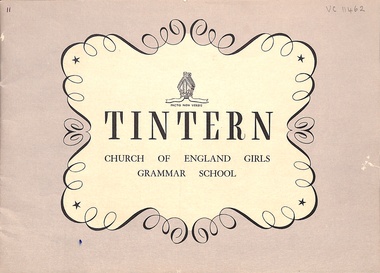
Archive - Parent Record, Tintern CEGS / Tintern CEG Primary and Seconday College, East Ringwood - Archive Collection (Parent Record)
... Workers, Journalists, Business Women and Home-Makers. Tintern girls have served their country in the Boer War and in the two World Wars. The school has maintained throughout the years a high scholastic standard. It has achieved outstanding successes in the Public Examinations in both Arts and Science subjects. In this year 1948 thirty Tintern girls are doing courses at the University. In Mrs. Cook’s day the school was noted for its music. It has now a flourishing orchestra, and Tintern choir was amongst those chosen to broadcast in Education Week 1947. Art and Craft...Workers, Journalists, Business Women and Home-Makers. Tintern girls have served their country in the Boer War and in the two World Wars. The school has maintained throughout the years a high scholastic standard. It has achieved outstanding successes in the Public Examinations in both Arts and Science subjects. In this year 1948 thirty Tintern girls are doing courses at the University. In Mrs. Cook’s day the school was noted for its music. It has now a flourishing orchestra, and Tintern choir was amongst those chosen to broadcast in Education Week 1947. Art and Craft ...Parent Record for Archive collection of photographs and documents relating to Tintern CEGS / Tintern CEG Primary and Seconday College, East Ringwood East Ringwood School Foundation Stone laid 10th June 1950 (See VC 11465)Transcription of Foreword to VC11462 c1950 memorial Booklet: "Tintern, one of the oldest girls’ schools in Victoria, was founded in 1877 by Mrs. Emma Bartlett Cook. It was then known as Tintern Ladies College. In 1918 it was taken over by the Church of England. From its inception it has sent out into the world women who have played an important part in the life of the community — as Doctors, Scientists, Lawyers, Teachers, University Lecturers, Heads of Schools and Colleges, Musicians, Artists, Architects, Nurses, Missionaries, Social Service Workers, Journalists, Business Women and Home-Makers. Tintern girls have served their country in the Boer War and in the two World Wars. The school has maintained throughout the years a high scholastic standard. It has achieved outstanding successes in the Public Examinations in both Arts and Science subjects. In this year 1948 thirty Tintern girls are doing courses at the University. In Mrs. Cook’s day the school was noted for its music. It has now a flourishing orchestra, and Tintern choir was amongst those chosen to broadcast in Education Week 1947. Art and Craft have an important place in the curriculum. Games such as hockey, tennis and croquet were started as early as the 1880s. In 1900 the girls were daring enough to start a bicycle club. Nowadays Tintern plays baseball, basketball, hockey and tennis. As the years have passed the curriculum has been widened and buildings have been added — the senior classrooms in 1918, the laboratory block in 1930, the Junior School (the gift of Sir William Angliss) in 1937, the library (the gift of Mr. E. R. Cullen) in 1938, the craft house in 1938 and the Domestic Science kitchen in 1946. ESTABLISHED 1877" -
 Kiewa Valley Historical Society
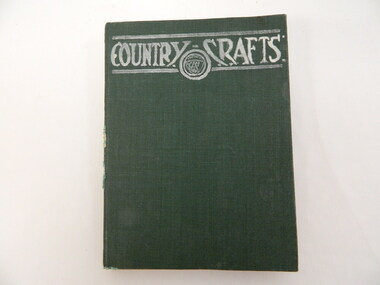
Book - Country Women's Association of Victoria, Country Crafts - CWA, 1950
... Women living in Tawonga were mostly on farms and, in 1946, when the branch commenced would have been feeling more remote with WW11 having had an effect on available workers and the well being of the women and children. country women's association of victoria. country crafts. tawonga. c.w.a. ...This book is a periodical that the Tawonga C.W.A. group received each year with news, hints, ideas etc. of all CWA groups in Victoria. The Tawonga branch of the C.W.A. commenced on the 7th Feb. 1946 and often combined activities with the other branches in the Kiewa Valley. The C.W.A. aimed to improve health, welfare and education for women and children in the country.Women living in Tawonga were mostly on farms and, in 1946, when the branch commenced would have been feeling more remote with WW11 having had an effect on available workers and the well being of the women and children.Hard covered bound green book with 345 slightly yellowing pages. 1949 periodical book Vol. XIX No.1 (- 12) 1st January 1949 - (December) reporting on activities of C.W.A. clubs in Victoria. It is set out month by month but isn't indexed. Subscription: 4/- per annum; 5/- per year, posted; 4d. per Copy, 5 and a half pence postedCover: "Country Crafts with CWA logo."country women's association of victoria. country crafts. tawonga. c.w.a. -
 Kiewa Valley Historical Society
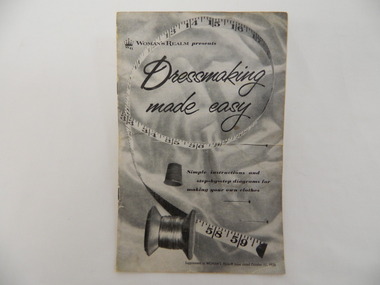
Book - Craft, Dressmaking Made Easy, 1958
... workers and the well being of the women and children. tawonga. country woman's association of victoria. dressmaking. woman's realm. c.w.a. Cover: Woman's Realm presents / Dressmaking / made easy / Simple instructions and / step-by-step diagrams for / making your own clothes Small white and grey book with picture of tape measure and cotton reel on the cover. It has 15 pages including the cover which is printed on too. It has general instructions for sewing. Held by 2 staples Dressmaking Made Easy Book - Craft ...Tawonga C.W.A. was involved in dressmaking and other home industries.The Tawonga branch of the C.W.A. commenced on the 7th Feb. 1946 and often combined activities with the other branches in the Kiewa Valley. The C.W.A. aimed to improve health, welfare and education for women and children in the country. This was achieved by getting together and exchanging ideas on dressmaking while providing for their families and the local community, possibly selling their products at fetes.Women living in Tawonga were mostly on farms and, in 1946, when the branch commenced would have been feeling more remote with WW11 having an effect on available workers and the well being of the women and children.Small white and grey book with picture of tape measure and cotton reel on the cover. It has 15 pages including the cover which is printed on too. It has general instructions for sewing. Held by 2 staplesCover: Woman's Realm presents / Dressmaking / made easy / Simple instructions and / step-by-step diagrams for / making your own clothes tawonga. country woman's association of victoria. dressmaking. woman's realm. c.w.a.
