
Showing 49 items matching " decorations etc."
-
 National Vietnam Veterans Museum (NVVM)
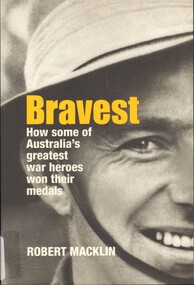
Book, Macklin, Robert, Bravest: How some of Australia's greatest war heroes won their medals
... ... decorations etc....Army - Medals badges decorations etc. The Victoria Cross is the highest award for valour that can be won by an Australian; just 96 Australians have been awarded the VC in conflicts from the boar War to the Vietnam War. ...The Victoria Cross is the highest award for valour that can be won by an Australian; just 96 Australians have been awarded the VC in conflicts from the boar War to the Vietnam War.The Victoria Cross is the highest award for valour that can be won by an Australian; just 96 Australians have been awarded the VC in conflicts from the boar War to the Vietnam War.australia. army - medals, badges, decorations etc. -
 National Vietnam Veterans Museum (NVVM)
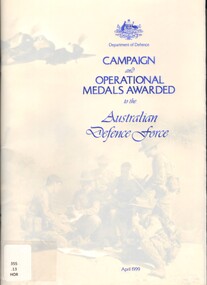
Book, Horton, R P, Campaign and Operational Medals Awarded to the Australian Defence Force
... ... decorations etc....Australian Defence Force - Medals badges decorations etc. Military decorations - Australia An important part of Australia's history has been written on the many battlefields and in the many countries in which Australian Defence Force personnel have served. to recognise this service, a considerable number of campaign and operational medals have been awarded. ...An important part of Australia's history has been written on the many battlefields and in the many countries in which Australian Defence Force personnel have served. to recognise this service, a considerable number of campaign and operational medals have been awarded.non-fictionAn important part of Australia's history has been written on the many battlefields and in the many countries in which Australian Defence Force personnel have served. to recognise this service, a considerable number of campaign and operational medals have been awarded.australia. australian defence force - medals, badges, decorations etc., military decorations - australia -
 National Vietnam Veterans Museum (NVVM)
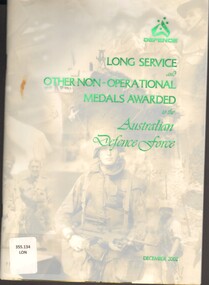
Book, Australia. Department of Defence, Long Service and Other Non-operational Medals Award
... ... decorations etc....Australian Defence Force - Medals badges decorations etc. This book contains a brief summary of the medals awarded under the Imperial Honours System or, since 14 February 1975, under the Australian Honours System. ...This book contains a brief summary of the medals awarded under the Imperial Honours System or, since 14 February 1975, under the Australian Honours System.This book contains a brief summary of the medals awarded under the Imperial Honours System or, since 14 February 1975, under the Australian Honours System.australia. australian defence force - medals, badges, decorations etc. -
 Eltham District Historical Society Inc
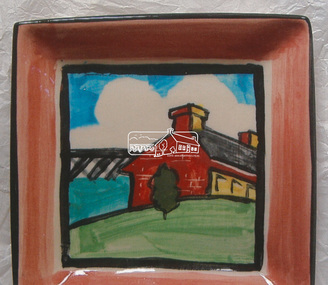
Decorative object - Photograph, Chris Pittard, Eltham District Historical Society Plate, c.2018
... Decorative plate commissioned by Eltham District Historical Society for use as gifts for guest speakers, etc. The decoration is a representation of the EDHS logo which features the Eltham Railway Trestle Bridge and Shillinglaw Cottage...Decorative plate commissioned by Eltham District Historical Society for use as gifts for guest speakers, etc. The decoration is a representation of the EDHS logo which features the Eltham Railway Trestle Bridge and Shillinglaw Cottage Chris Pittard Decorative Plate Shillinglaw Cottage Eltham Railway Trestle Bridge Artwork On face decorated with the EDHS logo in colour. ...Decorative plate commissioned by Eltham District Historical Society for use as gifts for guest speakers, etc. The decoration is a representation of the EDHS logo which features the Eltham Railway Trestle Bridge and Shillinglaw CottageSquare clay plate, glazed and fired, 14.5 x 14.5 x 2cmOn face decorated with the EDHS logo in colour. On revesre "Eltham District Historical Society" and "C. Pittard"chris pittard, decorative plate, shillinglaw cottage, eltham railway trestle bridge, artwork -
 Warrnambool and District Historical Society Inc.
China, Cup & Saucer, 1930s to early 1940s
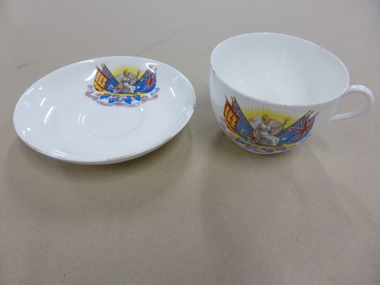
... In Victoria the day was celebrated with a school holiday and half-day business holiday, street and shop decorations, bonfires, concerts, processions etc. In 1958 Empire Day became known as Commonwealth Day. ...In Victoria the day was celebrated with a school holiday and half-day business holiday, street and shop decorations, bonfires, concerts, processions etc. In 1958 Empire Day became known as Commonwealth Day. ...These items were made in the 1930s or 1940s for sale as souvenirs of Empire Day in Victoria. As they were made by Royal Doulton of England they were high-quality souvenirs. Empire Day was established in 1905 to commemorate the reign of Queen Victoria and to promote and celebrate the importance of the British Empire in Britain and in the associated British Empire countries. It was celebrated on 24th May, the date of Queen Victoria’s birthday. In Victoria the day was celebrated with a school holiday and half-day business holiday, street and shop decorations, bonfires, concerts, processions etc. In 1958 Empire Day became known as Commonwealth Day. These items have no known local provenance but they were typical of the souvenirs that sold in the first half of the 20th century in Warnambool and all other parts of Australia around the time of Empire Day, May 24th . It will be useful for display. This cup and this saucer are made of white china with coloured images of Britannia, the rising sun, British flags, scrolls and the names of British Empire countries on each item. The cup rim and the saucer edge originally had gold trim but the gold has almost disappeared. The cup and the saucer have the name of the distributor and the maker on the base. ‘Empire Day, May 24th , Africa, Australasia, Canada, India’ empire day, history of warrnambool, empire day cup and saucer -
 Flagstaff Hill Maritime Museum and Village
Book - "Sovereign of the Seas" book or manual for the ship model hobby enthusiast, Harold T. Bodkin, 1933, "Sovereign of the Seas", Popular Mechanics Press
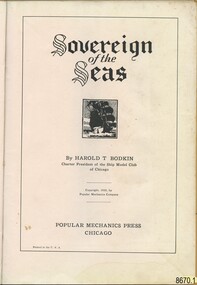
... The manual is divided into the following parts from pages 8 to 71: “Part I – Shaping the Hull/Part II – The Rudder, Quarter Galleries and Gunports/Part III Wales, Gunport Covers and Initial Ornamentation/Part V – Beakhead Decoration, Bulkhead and Rails, Etc./Part VI Carvings, Lanterns, Knights, Bitts and Painting/Part VII – Details of Mast Construction/Part VIII – Standing Rigging/Part IX – Running Rigging and Final Details. ...The manual is divided into the following parts from pages 8 to 71: “Part I – Shaping the Hull/Part II – The Rudder, Quarter Galleries and Gunports/Part III Wales, Gunport Covers and Initial Ornamentation/Part V – Beakhead Decoration, Bulkhead and Rails, Etc./Part VI Carvings, Lanterns, Knights, Bitts and Painting/Part VII – Details of Mast Construction/Part VIII – Standing Rigging/Part IX – Running Rigging and Final Details. ...Jim (James Bernard) Williams, who was the owner of this manual, was a long-time resident of Warrnambool having the opportunity to work at two notable historical businesses of the town. The first, Cramond & Dickson a drapier store established around 1852-1855 and which remained a store that traded under the same name for the longest in Victoria, before it closed its doors in 1974. The second business was Fletcher Jones a highly successful textile and clothing Australian business. Some of Jim’s spare time was devoted to the model ship making which would conjure up many fascinating stories of maritime history. In addition to Jim witnessing the tail end of ships at port in Warrnambool, his "father was as sea captain and operated his vessel in Bass Strait coastal trade between Tasmania and Victoria". The intricately detailed model made by Jim is full of precise detail. The manual and the blueprints held by Flagstaff Hill Maritime Village also reflect the intricate process and devotion to the task completed by Jim. The history of the shipwreck and maritime stories of the Victorian Southwest coast surrounding Warrnambool would have continued to inspire his passion. Three photos of the model and Jim, like the photo of Harold T. Bodkin in the manual, attest to the enthusiasm and enjoyment that was gained by him through this hobby. The manual opens to a photo of “Mr. Harold T. Bodkin adding finishing touches to model of the “Sovereign of the Seas”. The “Forward to Reader” which is on the next page is written by “E. R. HAAN, Technical Editor, Popular Mechanics Magazine. The forward explains the methodology used to achieve the fine detail that is part of the body of the model, by “applying imitation carvings”, and is cited as “a museum type of model”. The following page “Blueprints and Craftmats on the ‘Sovereign of the Seas’” discusses the availability of a set of blueprints to purchase separately. Followed by a description of the moulding process for the “miniature carvings”. “Historical Notes of Interest on the “Sovereign of the Seas (1637)” follow on the next page. The manual is divided into the following parts from pages 8 to 71: “Part I – Shaping the Hull/Part II – The Rudder, Quarter Galleries and Gunports/Part III Wales, Gunport Covers and Initial Ornamentation/Part V – Beakhead Decoration, Bulkhead and Rails, Etc./Part VI Carvings, Lanterns, Knights, Bitts and Painting/Part VII – Details of Mast Construction/Part VIII – Standing Rigging/Part IX – Running Rigging and Final Details. All of these instructions include photographs and detailed graphs. Then instructions on “How to Read and Use Ship-Model Drawings”, “The Shop-Model Maker’s Tools”, and “Simplified Ship-in-a-Bottle”. This is finished off with “Helpful Hints….” And numerous pages of advertising. Some adverts include aids for completing the “Sovereign of the Seas” model. Part I uses blue and black ink to illustrate a dramatic picture of the “Sovereign”, otherwise all print is in black ink on buff paper. This book in significant to the collection as it was donated along with other tools and blueprints which have been used by the donor of the "Sovereign of the Seas" model ship. It also connects with the wider community in that it is related to historical maritime interest and the donor, Jim Williams is also connected to other significant retail and manufacturing businesses of the past in Warrnambool. This manual has been covered with brown paper, including an extra strip for the spine. The front has a watermark at the top middle, some pencilled compass circles segmented into eight parts across the area and a small amount of script writing. The back also has the same type of compass circles and some other small shapes. There are also grease marks. The cover has a patina adding to variations of colour to the paper indicative of the book being handled often. The title page reads “Sovereign of the Seas” in an Old English font. This is followed by a lithograph print around 1 inch square of a ship at full sale. By HAROLD T. BODKIN/Charter President of the Ship Model Club of Chicago/Copyright, 1933, By Popular Mechanics Company/POPULAR MECHANICS PRESS/CHICAGO/Printed in the U.S.A. By HAROLD T. BODKIN/Charter President of the Ship Model Club of Chicago/Copyright, 1933, By Popular Mechanics Company/POPULAR MECHANICS PRESS/CHICAGO/Printed in the U.S.A.flagstaff hill, warrnambool, shipwrecked coast, flagstaff hill maritime museum, maritime museum, shipwreck coast, flagstaff hill maritime village, great ocean road, model ship, vessel sovereign of the seas, jim williams, james bernard williams, the forth tasmania, freda williams, heather williams, phyllis bowditch, fletcher jones staff 1936, 17th century sailing ship, cramond and dickson, sovereign of the seas, royal sovereign, sovereign, charles 1, fletcher jones, warrnambool breakwater -
 Federation University Historical Collection
Book, Old England: a pictorial museum of Regal, Ecclesiastical, Baronial, Municipal and Popular Antiquities, 1860 (exact)
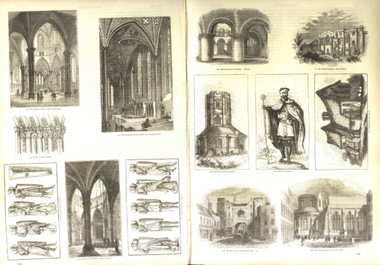
... decoration on spine. The book shows how life was like in old England in regards to people, places, architecture and fashions, etc. from Roman times through to Industrial age. ...decoration on spine. The book shows how life was like in old England in regards to people, places, architecture and fashions, etc. from Roman times through to Industrial age. ...Charles Knight is an English publisher and author. He was born at Windsor in 1791, and died in 1873 at Addlestone, Surrey. This book covers the period of English history from pre Roman times to the Industrial age. It shows how life was like in old England in regards to people, places, architecture and fashions, etc. The book contains 1000's of wonderful engravings, hand coloured plates beside 100's of pages of text contained in one volume. A large leather brown/gilt cover book with black leather bound and corners. 392 p. with coloured and b/w illustrations. It includes a table of contents of volume 1, 18 illuminated engraved (colour) plates, indexes to the engravings at the end of the book. 'Old England' gilt decoration on spine. The book shows how life was like in old England in regards to people, places, architecture and fashions, etc. from Roman times through to Industrial age. The book is published in two volumes, the book in hand contains volume 1 only.A plate inside front cover titled "Ballarat Technical Art School Library No. R/170"travel, customs, and, great britain antiquities, old england history, great britain description, the british period, the roman period, the anglosaxon period, regal baronial antiquities, ecclesiastical antiquities, great, britain social, life, charles knight, tomb of mary queen of scots, rochester castle -
 Federation University Historical Collection
Document, Ballarat Technical Art School Prospectus, 1908, 1908
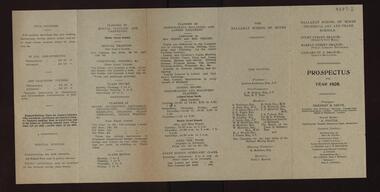
... Ladies Tailoring, Manual training, Carpentry, House Decoration, Signwriting, Lettering, Stenciling, Marbling, Graining, Glass Embossing, Ticket Writing, Art Teachers' Course, Life Classes, State School Teachers' CLasses, Drawing from a Flat Example, Drawing Ornament for the Cast, Practical Geometry, Perspective. Drawing in Light and Shade from the Cast, Modelling Plant Forms, Historic Ornament, Drawing the Antique From Memory, Composition of Form and COlour, Human Anatomy, Design, etc...Ladies Tailoring, Manual training, Carpentry, House Decoration, Signwriting, Lettering, Stenciling, Marbling, Graining, Glass Embossing, Ticket Writing, Art Teachers' Course, Life Classes, State School Teachers' CLasses, Drawing from a Flat Example, Drawing Ornament for the Cast, Practical Geometry, Perspective. Drawing in Light and Shade from the Cast, Modelling Plant Forms, Historic Ornament, Drawing the Antique From Memory, Composition of Form and COlour, Human Anatomy, Design, etc ...The Ballarat Technical Art School was established in 1907 as a division of the Ballarat School of Mines. Folded brochure with a prospectus for the newly established Ballarat Technical Art School. The principal was Herbert H. Smith. Subjects taught included Dressmaking, Millinery. Ladies Tailoring, Manual training, Carpentry, House Decoration, Signwriting, Lettering, Stenciling, Marbling, Graining, Glass Embossing, Ticket Writing, Art Teachers' Course, Life Classes, State School Teachers' CLasses, Drawing from a Flat Example, Drawing Ornament for the Cast, Practical Geometry, Perspective. Drawing in Light and Shade from the Cast, Modelling Plant Forms, Historic Ornament, Drawing the Antique From Memory, Composition of Form and COlour, Human Anatomy, Design, etc.ballarat technical art school, ballarat school of mines technical art and trade schools, prospectus, herbert h. smith, h.h. smith, f. foster, m. young, g. clegg, j. barber, t.r. pridgeon, albert steane, a.w. steane, e. cornell, art education -
 Ballarat Clarendon College
Book, Frederick Warne and Co. et al, The poetical works of Longfellow, Prior to the book prize received in December of 1893
... Tweedie 1947/ PLEASE REPORT ANY LOOSE LEAVES, ETC. Bound in brown cloth with gilt decoration and inscription on spine. ...This book was awarded to Lilian Jane Tweedie in 1893 for First prize in Latin (Preparation). Lilian enrolled in Clarendon Ladies' College in April 1891. In the original register it lists parent as William, occupation Barrister and residence as 58 Doveton Street, South Ballarat. Lilian's sibling attending Clarendon Ladies' College is Sarah Florence (enrolled 1884). Siblings attending Ballarat Clarendon College are George (enrolled 1889) and Arthur (enrolled 1885). Presbyterian educators placed great value on a classical education matched with diligence in study. Book prizes were highly regarded and academic success admired. In the school’s early years prizes were ordered direct from London and had the school crest embossed in gold on the front or back cover. Many of the prizes given in early years were returned to the school to equip the Weatherly Library when it opened in 1936.Bound in brown cloth with gilt decoration and inscription on spine. Floral end papers, detached papers, slight foxing on pages, 664 p.Book plate inside front cover: Clarendon Ladies' College,/ BALLARAT./ First Prize./ Latin (Preparation) Class III/ Awarded to/ Lilian Jane Tweedie/ REV. R. KENNEDY,/ PRINCIPAL./ December, 1893. Stamped on fly leaf: "BALLARAT COLLEGE NOT TO BE REMOVED FROM LIBRARY" Donation label on fly leaf: Literature./ College emblem/ Ballarat College Library/ PRESENTED BY/ Miss E. Tweedie/ &/ Mr F. Tweedie 1947/ PLEASE REPORT ANY LOOSE LEAVES, ETC.lilian-jane-tweedie, 1893, book-prize, clarendon-ladies'-college, william-tweedie, 58-doveton-st-south-ballarat, sarah-florence-tweedie, george-tweedie, arthur-tweedie. -
 Lara RSL Sub Branch
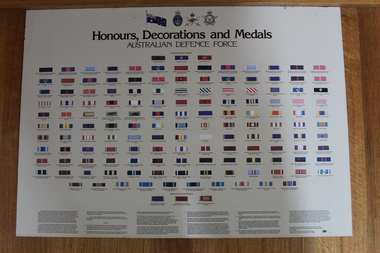
Chart of Honours, Decorations and Medals -- Australian Defence Force, Honours Decorations and Medals of the Australian Defence Force, 1986
... Collection of ribbons to be displayed in lieu of wearing full medals etc by soldiers of Australian Military Forces when entitled to be so warn. australian defence force honours,decorations and medals Sheet of Masonite with a printing of Honours Decorations and Medals of the Australian Defence Force - depicting ribbons for medals awarded to Australian Military Forces. ...Australian Defence Force ribbons representing medals that can be awarded.Collection of ribbons to be displayed in lieu of wearing full medals etc by soldiers of Australian Military Forces when entitled to be so warn.Chart - Honours Decorations and Medals of the Australian Defence Force. Display of ribbons representing medals that can be awarded to Australian Military Forces personnel.Sheet of Masonite with a printing of Honours Decorations and Medals of the Australian Defence Force - depicting ribbons for medals awarded to Australian Military Forces.australian defence force, honours,decorations and medals -
 Ballarat Fire Brigade
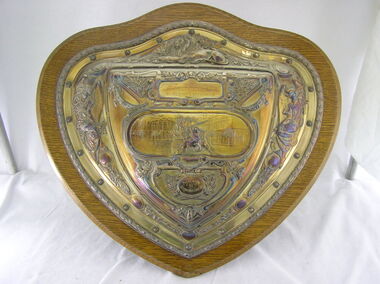
Trophy
... There are various other branches, leaves etc. that make up the remainder of the decorations on the sheild. ...There are various other branches, leaves etc. that make up the remainder of the decorations on the sheild. ...Trophy was won at the Geelong Fire Brigade Jubilee in 1904. This would have been a demonstartion to celebrate the 50th Anniversary of the Geelong brigade which formed in 1854Silver shield mounted on a wooden backing board. Trophy was won by Ballarat Fire Brigade at the Geelong Fire Brigade Jubilee in 1904. Trophy was donated by Merrywetather & sons Lim. Trophy has a Lion at the top centre, angels on both the left and right sides. In the centre is a horse drawn fire appliance (assumed a Merryweather steam pumper) drawn by 2 horses through what appears to be a town square. There are 3 fireman standing on the front of the appliance and 1 on the rear. There are various other branches, leaves etc. that make up the remainder of the decorations on the sheild. Item is very similar to item 020.1904 / GEELONG FIRE BRIGADE JUBILEE / COMPETITION / PRESENTED / BY / Merryweather & Sons Lim1904, geelong fire brigade, geelong fire brigade jubilee, merrywether and sons lim, elkington and co -
 Ballarat Fire Brigade
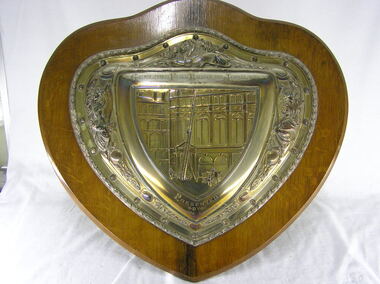
Trophy
... There are various other branches, leaves etc. that make up the remainder of the decorations on the sheild. ...There are various other branches, leaves etc. that make up the remainder of the decorations on the sheild. ...Trophy was won at the Geelong Fire Brigade Jubilee in 1904. This would have been a demonstartion to celebrate the 50th Anniversary of the Geelong brigade which formed in 1854 Silver shield mounted on a wooden backing board. Trophy was won by Ballarat Fire Brigade at the Geelong Fire Brigade Jubilee in 1904. Trophy was donated by Llyods of London and presented by E. Steane Price esq. Trophy has a Lion at the top centre, angels on both the left and right sides. In the centre there is a depection of 2 large multi storey buildings. The building in the front of the picture has a carraige ladder raised up against it with 2 firemen climbing the ladder. There are 2 additional firemen either side of the ladder and an additional fireman in front of standing in front of with another standing on top of what appears to be either a mannual pump or possibly the ladders appliance. There are various other branches, leaves etc. that make up the remainder of the decorations on the sheild. Item is very similar to item 018GEELONG FIRE BRIGADES JUBILEE / 1904 / PRESENTED / BY / E.STEANE PRICE Esq. LLYODS LONDON1904, geelong fire brigade, geelong fire brigade jubilee, elkington and co, e steane price esq, llyods london -
 Bendigo Military Museum
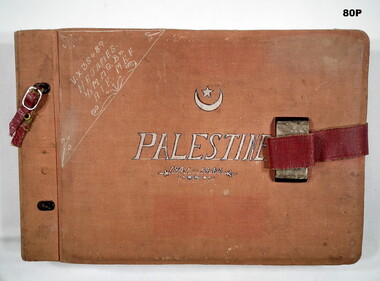
Album - ALBUM, PHOTOGRAPH, H E James, 1941 - 1942
... decoration. Contains 201 black & white photos of Palestine, Gaza, Tel Aviv & surrounding area, including people & places of interest, camels, etc. ...decoration. Contains 201 black & white photos of Palestine, Gaza, Tel Aviv & surrounding area, including people & places of interest, camels, etc. ...The album belonged to Henry Edward JAMES No VX38489. (Born South Melbourne, enlisted Royal Park) on 31.7.1940. On discharge from the AIF he was a Pte in HQ Vic L of C Area. Photo album that belonged to H E JAMES. Salmon coloured buckram hardcover, hand painted & printed in white with decoration. Contains 201 black & white photos of Palestine, Gaza, Tel Aviv & surrounding area, including people & places of interest, camels, etc. Bound using a partly missing red leather strap fastened with buckle made possibly of shell.On cover top left: VX38489 H E James 2/3 MMGBn AIF MEF Middle centre: PALESTINE 1941-1942books - albums, photographs, military history, photography, souvenirs -
 Kiewa Valley Historical Society
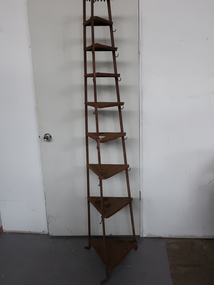
Stand - Pot Plants or Kitchen storage
... Home decoration involved pots / saucepans / plates etc in the kitchen to be on display / stored and/or indoor plants displayed in a corner on the verandah. ...Home decoration involved pots / saucepans / plates etc in the kitchen to be on display / stored and/or indoor plants displayed in a corner on the verandah. ...Home decoration involved pots / saucepans / plates etc in the kitchen to be on display / stored and/or indoor plants displayed in a corner on the verandah. It was common for the stand to be home-made and practical.Used by a resident of the Kiewa Valley as a domestic kitchen storage stand or possibly for indoor plants.Tall wooden pot stand with 9 triangular shelves spaced along it and with hooks on 2 of the 3 edges. It has 3 wooden poles holding the shelves. The stand has previously been painted blue. Nine equilateral triangle shelves decreasing in size with height towards the top. Top has decorative cap with steel fringe. Rusty. It may have been used as a kitchen pot / saucepan / plates stand or pot plant stand.pot plants, indoor plants, home decoration, pot stand, kitchen storage -
 Kiewa Valley Historical Society
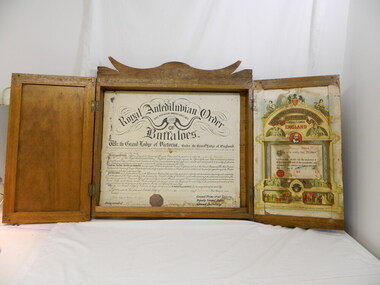
R.A.O.B. Members' Board
... etc. on black and white sign inside box. "Mt Beauty Lodge No. 150. This is to certify that Brother (blank) initiated into ...on 19th March 1949 ....signed by Chas / Chris A. Angus, Secretary" on coloured paper inside right hand side door. Large hollow wooden box with 2 wooden doors at the front that open out the from centre to a hollow box. Attached to the front of the box, at the top, is a wooden decoration ...Originated in the United Kingdom in 1822 with a motto "No Man Is At All Times Wise" and a maxim of "Justice, Truth and Philanthropy". A branch of the Royal Antediluvian Order of Buffaloes was formed at Bogong by Grand Lodge Officers from Melbourne and other members. The ceremony was held at Lewis Camp Mess (Kiewa Hydro Electric Scheme) with a world record of 78 new members initiated and a world record of over 100 pounds was raised. Another branch, No. 150, was opened in Mt Beauty. The Bogong and Mt Beauty lodges combined in 1948 and organised a Christmas treat for all children of the State Electricity Commission of Victoria working on the Kiewa Hydro Electric Scheme.Historical: The Bogong R.A.O.B. was formed circa Sept. 1946 and the Mt Beauty R.A.O.B. in 1948. The Members Board, the 78 members initiated and the money raise indicate that it was a popular organisation in Bogong and then in Mt Beauty during the construction of the Kiewa Hydro Electric Scheme. This club also shows how important social clubs were in making up part of the community thus making it socially historic as well. This board has good interpretive capacity as it tells the story of this club which was important to the community at the time. Large hollow wooden box with 2 wooden doors at the front that open out the from centre to a hollow box. Attached to the front of the box, at the top, is a wooden decoration with curved edges along the top. In the centre of this are the letters R.A.O.B.- the letters having been carved out of the wood and then filled with a different wood. Both doors have steel attachments and a locked padlock hangs on the door on the left. Inside the box is a white paper sign with black writing backed onto masonite. Inside the right hand side door a coloured paper sign is attached."R.A.O.B." top centre of box. "Royal Antediluvian Order of Buffaloes" etc. on black and white sign inside box. "Mt Beauty Lodge No. 150. This is to certify that Brother (blank) initiated into ...on 19th March 1949 ....signed by Chas / Chris A. Angus, Secretary" on coloured paper inside right hand side door.royal antediluvian order of buffaloes. bogong. mt beauty. charitable organisation. kiewa hydro electric scheme. lewis camp mess, clubs, societies -
 Bendigo Military Museum
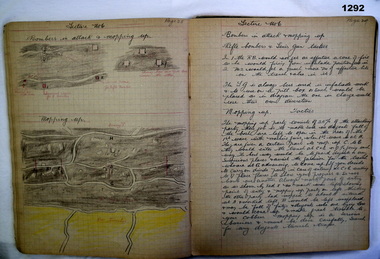
Book - BOMBING NOTES 1917, 1917
... Contains colour hand drawings, writing in ink relating to bombing, gas warfare, weapons, tactics etc. heading on page 4 with floral decoration "Bombing notes from the 2nd ANZAC B & JM School Morbecque 17/10/17, No 1043 L/Cpl JW Grinton 38th"...Contains colour hand drawings, writing in ink relating to bombing, gas warfare, weapons, tactics etc. heading on page 4 with floral decoration "Bombing notes from the 2nd ANZAC B & JM School Morbecque 17/10/17, No 1043 L/Cpl JW Grinton 38th" Book BOMBING NOTES 1917 ...Part of the Grinton collection which included hundreds of negatives and developed photos taken by Jack Grinton during WW1. Refer Cat No 1280 for service details. Refer 1317P, 1320P.Black fabric covered exercise book with graph printed pages. Contains colour hand drawings, writing in ink relating to bombing, gas warfare, weapons, tactics etc. heading on page 4 with floral decoration "Bombing notes from the 2nd ANZAC B & JM School Morbecque 17/10/17, No 1043 L/Cpl JW Grinton 38th"On inside cover in ink: "No 1043 L/Cpl JW Grinton, C Company. 38th battalion 10th INF Brigade, 3rd Division AIF. C Coy Bombing and Gas NCO"military, war fare, pen and ink -
 Bendigo Historical Society Inc.
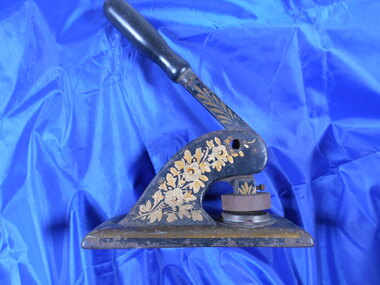
Functional object - Seal Embossing Press
... It consisted of a “building on a railway siding, plant and machinery, including dry grinding plant, kalsomine mixer, paint mill, furnace, electric motor, etc., large stores of raw and finished material, kalsomine with range of 21 colours, oil paints, &c.” Seal Embossing Press Corona Paint Company A cast iron embossing press. It's painted black with gold coulered floral decorations ...The Corona Paint Company Pty. Ltd. Bendigo was formed in November 1920 with £10,000 capital, in £1 shares. By July 1921, the Company had completed its factory and plant at Bendigo East, ready to begin the manufacture of paints. The Corona Paint works were opened on Saturday 28 January by the Prime Minister (Mr. Hughes) during a visit to Bendigo. Many new manufacturing industries were opened during this time after calls to address the decline of mining in the region. The factory of the CORONA PAINT COMPANY, BENDIGO, was advertised for sale in The Argus on 5 October 1923. It consisted of a “building on a railway siding, plant and machinery, including dry grinding plant, kalsomine mixer, paint mill, furnace, electric motor, etc., large stores of raw and finished material, kalsomine with range of 21 colours, oil paints, &c.”A cast iron embossing press. It's painted black with gold coulered floral decorations. The base is 18 centimetres long, nine centimetres wide and one and a half centimetres thick. A curved protrusion rises from the base that is eight centimetres by four centimetres which narrows to four centimetres by two and a half centimetres with a three-quarter centimetre wide slot. Inside the slot is a lever action with a ten centimetre by two and a half centimetre wooden handle. There is a removeable die on the end of the lever and an opposite removeable die the base. A small oval metal disc with paten no 3965 on is attached. The seal is The Corona Paint Company proprietary Limited seal embossing press, corona paint company -
 Bendigo Historical Society Inc.
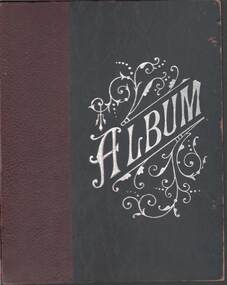
Book - GRANT DAVIS COLLECTION: ALBUM OF CUTTINGS RE PLAYS , CYCLING ETC
... GRANT DAVIS COLLECTION -ALBUM OF CUTTINGS RE PLAYS , CYCLING ETC String-bound brown paper .Damaged Loose Hard cardboard covers .Front cover has the word Album with decorations above and below in silver .The first page has a photo of Franklyn (Frank ) Joseph Davis.4.2.1868 -4.6.1952 . ...BOOK Grant Davis GRANT DAVIS COLLECTION -ALBUM OF CUTTINGS RE PLAYS , CYCLING ETC String-bound brown paper .Damaged Loose Hard cardboard covers .Front cover has the word Album with decorations above and below in silver .The first page has a photo of Franklyn (Frank ) Joseph Davis.4.2.1868 -4.6.1952 . ...GRANT DAVIS COLLECTION -ALBUM OF CUTTINGS RE PLAYS , CYCLING ETC String-bound brown paper .Damaged Loose Hard cardboard covers .Front cover has the word Album with decorations above and below in silver .The first page has a photo of Franklyn (Frank ) Joseph Davis.4.2.1868 -4.6.1952 . Also written is Frank Davis, Perth St Prahran. The second page has The Tattler - The Rose -scented handkerchief - a play written by a Melbourne lady - two photos are shown of play Actors . There is a letter from the Queensberry Cycling Club .Other pages have references to plays , Elocution competitions , the Melbourne Shakespeare Society - Programme dated 1902.book, grant davis -
 Bendigo Historical Society Inc.
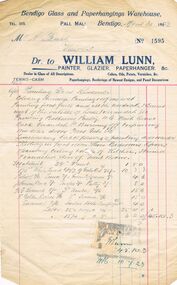
Document - WILLIAM LUNN INVOICE, 30/04/1923
... Paper hangings, Borderings of Newest designs, and panel Decorations. Invoice is for work to be carried out Painting etc, also lists materials and price. ...Paper hangings, Borderings of Newest designs, and panel Decorations. Invoice is for work to be carried out Painting etc, also lists materials and price. ...William Lunn (1833-1916) was born i England where he learned cabinetmaking. He came to Australia in 1855 and initially partook in mining and puddling. He then became a salesman for Mr Henry King, painter and decorator. When King died in 1868, Lunn bought the business. In 1906 Lunn married the widow, Ann Jane Newman (nee Pinnell) . Ann and her first husband were neighbours of William Lunn who lived in "Esperence", Wills Street. Even whilst in business, Lunn remained an active mining investor.William Lunn Invoice: Cream paper with navy print and red and light blue lines. Dated April 30th 1923. Bendigo Glass and paper hangings Warehouse, TEL. 315 PALL MALL, Bendigo. Invoice no. 1595. Mr A Bush View Street. Dr. to William Lunn, Painter, Glazier, Paperhanger. &c. Dealer in glass of All Descriptions. Colours, Oils, Paints, Varnishes, &c. Terms - Cash. Paper hangings, Borderings of Newest designs, and panel Decorations. Invoice is for work to be carried out Painting etc, also lists materials and price. At the bottom is a orange Stamp Duty 2 pence stamp. Box 625business, retail, house furnishings, william lunn. a bush -
 Warrnambool and District Historical Society Inc.
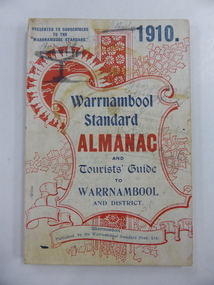
Book, Warrnambool Standard Almanac 1910, 1910
... The cover has a white background with red and white decorations – a shield, scrolls, sun etc. The back cover has an advertisement for the Warrnambool business of Bruce and McClure and is partly torn away. ...The cover has a white background with red and white decorations – a shield, scrolls, sun etc. The back cover has an advertisement for the Warrnambool business of Bruce and McClure and is partly torn away. ...This booklet was given to subscribers to the Warrnambool Standard newspaper as an almanac for the year 1910. These Standard Almanacs were published annually from 1875 to 1930. They contain much local information on Warrnambool and district about the businesses, government officials, large landowners, harbour management, banks, churches, schools, societies and organizations etc. The Warrnambool Standard newspaper was established in 1872 and continues to this day. This booklet is of high significance as it contains much valuable information about Warrnambool and district for the year 1910. It is a very important research tool for those studying and writing the history of Warrnambool and district. The copy is signed ‘G. Barber’ and was probably owned by George Barber, the son of George Barber, the well-known solicitor who opened a legal practice in Warrnambool in 1855. He died in 1879 and it appears that a member or members of his family went to live in the Maryborough area as this copy came into the collection of the Warrnambool and District Historical Society via the Midlands Historical Society. This is a soft cover booklet of 110 pages plus several pages of advertisements at the front and the back of the booklet. The cover has a white background with red and white decorations – a shield, scrolls, sun etc. The back cover has an advertisement for the Warrnambool business of Bruce and McClure and is partly torn away. The booklet shows some wear and staining. The inscription on the cover is handwritten in pencil.‘G. Barber’ warrnambool standard newspaper, history of warrnambool, standard almanac 1910, standard almanac -
 Embroiderers Guild, Victoria
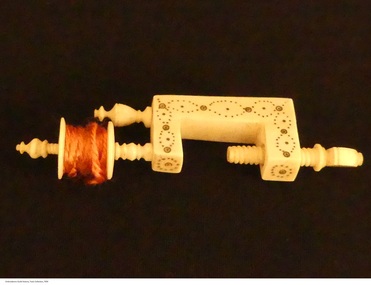
Tool - Ivory sewing clamp with winding netting reel
... Netting at home created special items such as purses, infant wear etc. ivory clamps were used in pairs for finer threads, Decorative ivory clamps were luxury items most used before 1840's. Netting Madras style decoration ...Netting at home created special items such as purses, infant wear etc. ivory clamps were used in pairs for finer threads,Decorative ivory clamps were luxury items most used before 1840's.Ivory and bone combination winding and netting clamp, topped with reel and urn shaped knob for netting. Base screw of bone. Rectangular shape decorated with black dot and circle (Madras) pattern.Black Dot and circle pattern on body of clampnetting, madras style decoration -
 Koorie Heritage Trust
Book, Bunce, Daniel et al, Australasiatic reminiscences of twenty-three years' wanderings in Tasmania and the Australias, 2000
... Chap.4; incidents in relation to the Aborigines at Hobart town; Chap.8; Tasmania - womens life, body decoration, clothing and scarification; Chap.9; Native chiefs with Buckley, the Wild white man; Chap.11; Journey to Westernport with natives (Derrimut, Benbow and Yammabook), foods - kangaroo and native porcupine; duties of women; Chap.12; Leichhardts journey, native names of flowers, fruits, etc. ...This book is a reprint of the original journal entries of Daniel Bunce prior to 1857. A journal style record of travel within Tasmania and Australia for a period of 23 years beginning in March 1833. Arriving in Port Phillip in October 1839 early observations of the colony are most interesting. Chap.4; incidents in relation to the Aborigines at Hobart town; Chap.8; Tasmania - womens life, body decoration, clothing and scarification; Chap.9; Native chiefs with Buckley, the Wild white man; Chap.11; Journey to Westernport with natives (Derrimut, Benbow and Yammabook), foods - kangaroo and native porcupine; duties of women; Chap.12; Leichhardts journey, native names of flowers, fruits, etc. (Condamine River area); foods, treacherous natives near Fitzroy DownsThis book is a reprint of the original journal entries of Daniel Bunce prior to 1857. A journal style record of travel within Tasmania and Australia for a period of 23 years beginning in March 1833. Arriving in Port Phillip in October 1839 early observations of the colony are most interesting. Chap.4; incidents in relation to the Aborigines at Hobart town; Chap.8; Tasmania - womens life, body decoration, clothing and scarification; Chap.9; Native chiefs with Buckley, the Wild white man; Chap.11; Journey to Westernport with natives (Derrimut, Benbow and Yammabook), foods - kangaroo and native porcupine; duties of women; Chap.12; Leichhardts journey, native names of flowers, fruits, etc. (Condamine River area); foods, treacherous natives near Fitzroy Downsleichhardt, ludwig, 1813-1848. | leichhardt expedition, (1846-1847) | botany -- queensland. | botany -- tasmania. | queensland -- discovery and exploration. | tasmania -- description and travel -- to 1850. | victoria -- description and travel -- to 1850. | body - decoration. | body - scarification. | settlement and contacts - colonisation - 1788-1850. | costume and clothing. | food - meat - echidna. | settlement and contacts - explorers. | food. | hunting. | gathering - honey. | food - meat - kangaroo / wallaby. | language - vocabulary. -
 Kew Historical Society Inc
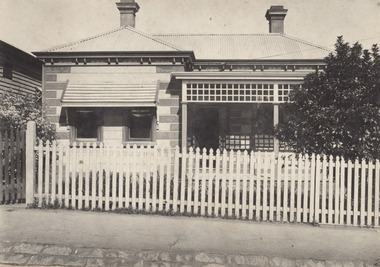
Photograph - W.B. Villa, Kew, c.1919
... These photographs provide significant heritage information relating house design and decoration, fencing and household gardens. houses - kew real estate photographs Stamped on mount: Top - "KEW. Close tram. Fine View. / W.B. Villa Containing 8 Rooms. / Up-to-date Conveniences. EL Etc ...The photograph offers significant information relating to late Victorian / Federation colour schemes and fencing.The block fronted villa has a corrugated iron roof and a flat projecting verandah, ornamented with a trellis design of timber. The front window features a timber shade, mounted on brackets. The treatment of the block-fronted panels shows that there is an attempt to highlight imitation quoining through use of a darker colour. The windows and door are also in this darker shade. The front fence and gate are made of wooden pickets. It is unlikely that the photograph was taken at the time of the villa's construction given the size of the shrub/tree in the front garden.Subdivision plans are historically important documents used as evidence of the growth of suburbs in Australia. They frequently provide information about when the land was sold on which a built structure was subsequently constructed as well as evidence relating to surveyors and real estate and financial agents. The numerous subdivision plans in the Kew Historical Society's collection represent working documents, ranging from the initial sketches made in planning a subdivision to printed plans on which auctioneers or agents listed the prices for which individual lots were sold. In a number of cases, the reverse of a subdivision plan in the collection includes a photograph of a house that was also for sale by the agent. These photographs provide significant heritage information relating house design and decoration, fencing and household gardens.A real estate photograph, mounted on brown card, showing a double fronted weatherboard villa, located in Kew, Victoria. On the reverse of the photograph is a subdivision plan for the Altyre Estate.Stamped on mount: Top - "KEW. Close tram. Fine View. / W.B. Villa Containing 8 Rooms. / Up-to-date Conveniences. EL Etc." Below - "Land 40 x 165. 615 pounds. Sold"houses - kew, real estate photographs -
 Kew Historical Society Inc
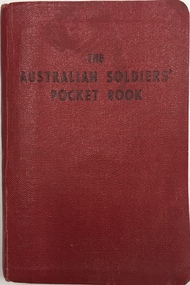
Book, Brown, Prior, Anderson Pty Ltd, The Australian Soldiers' Pocket Book : Containing useful information for Australian soldiers, 1940
... The 128-page pocket-sized book could be carried everywhere and provided Australian soldiers with a wide range of useful information about the requirements of war service and many other important details such as: The Laws and Customs of War - including Geneva Convention guidelines, notes on spies and insignia of rank; Things a Soldier should Know - including over 60 points; Signaling - including flags, morse code, shipboard bell times and time zone; Decorations Awarded to Australians in the Great War; Arabic and Japanese words; First Aid for gas injuries etc.; Australian Historical Events, facts and figures etc.; and Conduct Overseas - including expectations of behaviour when representing Australia. ...The 128-page pocket-sized book could be carried everywhere and provided Australian soldiers with a wide range of useful information about the requirements of war service and many other important details such as: The Laws and Customs of War - including Geneva Convention guidelines, notes on spies and insignia of rank; Things a Soldier should Know - including over 60 points; Signaling - including flags, morse code, shipboard bell times and time zone; Decorations Awarded to Australians in the Great War; Arabic and Japanese words; First Aid for gas injuries etc.; Australian Historical Events, facts and figures etc.; and Conduct Overseas - including expectations of behaviour when representing Australia. ...Booklet produced in 1940 for members of the 2nd AIF by the Australian Comforts Fund Victorian Division. The 128-page pocket-sized book could be carried everywhere and provided Australian soldiers with a wide range of useful information about the requirements of war service and many other important details such as: The Laws and Customs of War - including Geneva Convention guidelines, notes on spies and insignia of rank; Things a Soldier should Know - including over 60 points; Signaling - including flags, morse code, shipboard bell times and time zone; Decorations Awarded to Australians in the Great War; Arabic and Japanese words; First Aid for gas injuries etc.; Australian Historical Events, facts and figures etc.; and Conduct Overseas - including expectations of behaviour when representing Australia. non-fictionaustralian comforts fund (victoria), second world war 1939-1945, hugh george ferguson -
 Kilmore Historical Society
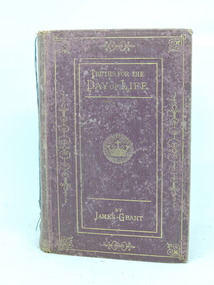
Truths for the Day of Life, Truths for the Day of Life and the Hour of Death, 1866
... etc. religion handford whitburgh cottage collection At back of title page, 'M.A. Handford/April 1875', hand inked which has bled through to title page. Brown cloth-covered hardcover book with embossed decoration ...Religious work by the author of "God is Love", "Our Heavenly Home", "Grace and Glory", etc.Brown cloth-covered hardcover book with embossed decoration on front & back covers. Gilt detail to front cover. Cover worn worn with loss of colour. A blue thread "ribbon" appears to have been added post production. Binding loose, back hinge broken, rear flyleaf missing. foxing, discolouration of page edges. 424 pp. Poor condition.At back of title page, 'M.A. Handford/April 1875', hand inked which has bled through to title page.religion, handford, whitburgh cottage collection -
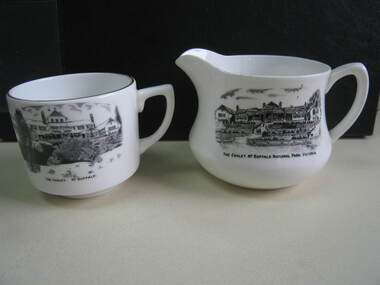 Parks Victoria - Mount Buffalo Chalet
Crockery
... etc... The collection includes a broad selection of products that have been sold throughout much of the Chalet's history, each representative of the transient fashions of their period.' (Pg. 114. Historica) 'A group of tableware items is notable for its black transfer printed decoration...etc... The collection includes a broad selection of products that have been sold throughout much of the Chalet's history, each representative of the transient fashions of their period.' (Pg. 114. Historica) 'A group of tableware items is notable for its black transfer printed decoration ...The jug and cup were purchased from a second - hand shop in Bairnsdale. Jug is older than cup as the chalet is represented as a single storey structure. The cup is later as the second storey appears in the illustration. 'Souvenirs in relation to the Chalet and Mount Buffalo wee first mention in December 1912... A large range of souvenirs has since been associated with the Chalet and Mount Buffalo from crafted wooden items, silver spoons, cups etc... The collection includes a broad selection of products that have been sold throughout much of the Chalet's history, each representative of the transient fashions of their period.' (Pg. 114. Historica) 'A group of tableware items is notable for its black transfer printed decoration, which features the Chalet building. Interestingly, the printed designs represent the Chalet at two different stages in its building history under the Victorian Railways, in 1926 after completion of the north wing, and 1937-39, after the second storey is added to the front.. manufactured in England by A.B. Jones and sons, a Stoke on Trent pottery firm which operated under the trade name of Grafton China between 1900-1972.' (Pg. 114. Historica)Listed in Draft Inventory of Significant Collection Items . Appendix A.3. Souvenirs. (Pg 168. Historica)..1] Ceramic jug. Souvenir of Mt Buffalo. White ceramic squat milk jug with a black transfer illustration/drawing on front side. Picture is of the MtBuffalo Chalet from the front. Some worn gold glaze detail. It appears to be a single story building with a planted garden at the front with a fence. Trees to one side and people walking up steps. "THE CHALET, MT BUFFALO NATIONAL PARK, VICTORIA." is written under the illustration. Jug has a faint crack. .2] White ceramic cup with gold edging around top of cup. Black transfer drawing of the chalet with a second storey. Rocks and tree in foreground and "THE CHALET. MT BUFFALO." underneath transfer. .1] "THE CHALET, MT BUFFALO NATIONAL PARK, VICTORIA." is written under the illustration. On the base of the jug, with sun motif, "ENGLAND / GRAFTON CHINA /A / B J / & SONS / LOFTUS MORA / PTY. LTD" .2] "THE CHALET. MT BUFFALO." underneath transfer. Under cup, "A.B.J. / GRAFTON / CHINA / MADE IN / ENGLAND" -
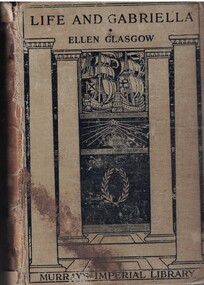 Linton Mechanics Institute and Free Library Collection
Book - Novel, Glasgow, Ellen, Life and Gabriella : the story of a woman's courage, 1916
... Reading Room: 1017 Sturt Street (Between Ascot 7 Windermere Sts) etc'; 'Murray's Imperial Library London'; 'Australian Red Cross Society' 529p. : beige cover with black decoration Life and Gabriella : the story of a woman's courage Book Novel Glasgow, Ellen John Murray The Country Life Press ...Gabriella is a young woman from a good family who has fallen on hard times. Forced to get a job that puts her between social groups, Gabriella embarks on a treacherous journey through the social strata of turn-of-the-century Richmond, Virginia529p. : beige cover with black decorationfictionGabriella is a young woman from a good family who has fallen on hard times. Forced to get a job that puts her between social groups, Gabriella embarks on a treacherous journey through the social strata of turn-of-the-century Richmond, Virginiafiction, romance, ellen glasgow -
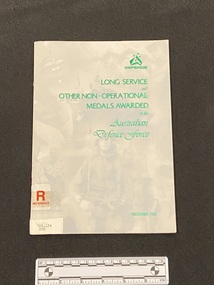 Returned Nurses RSL Sub-branch
Book - Illustrated paperback booklet, R P Horton, Long service and other non-operational medals awarded to the Australian Defence Force, 2002
... (From message by Danna Vale p. 1) Includes an attached printout of 'A basic guide to ribbons, etc. for Orders, Decorations, Medals and Awards earned by Australians' inside the front cover. ...For over a century the men and women of the Australian Defence Force have developed a rich history of service both on and off the battlefield. Many Australians have not been required to serve in battle but have contributed exemplary service in both operational and non-operational roles and have been integral in making the Australian Defence Force one of the most professional military forces in the world. To recognise their contribution, a number of long service and other non-operational medals have been awarded for their efforts. (From message by Danna Vale p. 1) Includes an attached printout of 'A basic guide to ribbons, etc. for Orders, Decorations, Medals and Awards earned by Australians' inside the front cover. Inside the back cover is an attached printout of 'Australian War Badges' from the Central Army Records Office, 2003.Staple bound booklet with opaque cover containing green metallic writing over card cover collage of photographs of military persons and equipment. There is a reference sticker on the front and a spine label sticker below it.non-fictionFor over a century the men and women of the Australian Defence Force have developed a rich history of service both on and off the battlefield. Many Australians have not been required to serve in battle but have contributed exemplary service in both operational and non-operational roles and have been integral in making the Australian Defence Force one of the most professional military forces in the world. To recognise their contribution, a number of long service and other non-operational medals have been awarded for their efforts. (From message by Danna Vale p. 1) Includes an attached printout of 'A basic guide to ribbons, etc. for Orders, Decorations, Medals and Awards earned by Australians' inside the front cover. Inside the back cover is an attached printout of 'Australian War Badges' from the Central Army Records Office, 2003.australian defence forces, medals -
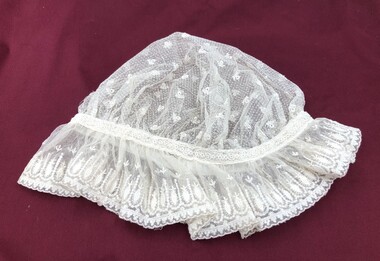 Emerald Museum & Nobelius Heritage Park
Headwear - Mob Cap, Early 19th century
... Its original owner is unknown, but it was purchased in the late 1990s by the donor who later moved to Emerald but, at the time, had a 2nd hand decoration shop in Camberwell when she purchased this as part of a group of garments which included bloomers, lace collars and cuffs, camisoles etc - all of which have been donated to the Museum. ...Its original owner is unknown, but it was purchased in the late 1990s by the donor who later moved to Emerald but, at the time, had a 2nd hand decoration shop in Camberwell when she purchased this as part of a group of garments which included bloomers, lace collars and cuffs, camisoles etc - all of which have been donated to the Museum. ...This type of mob cap is believed to be early 19th century. Its original owner is unknown, but it was purchased in the late 1990s by the donor who later moved to Emerald but, at the time, had a 2nd hand decoration shop in Camberwell when she purchased this as part of a group of garments which included bloomers, lace collars and cuffs, camisoles etc - all of which have been donated to the Museum. The donor was informed at the time of purchase that the garments were over 100 years old.This lovely hand-made lace cap is typical of a type of headwear worn by women inside the home in the early 19th century. Mob cap made of point d'esprit lace - a finely woven net lace - with a gathered lace trim. female, headwear, mob cap, point d'esprit, lynne findlay collection -
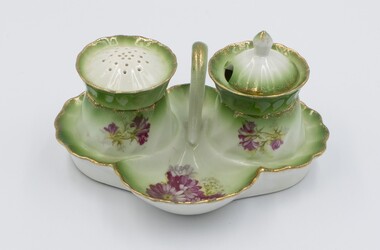 Emerald Museum & Nobelius Heritage Park
Ceramic - Ceramic cruet set consisting of stand, pepper container & salt container
... etc. When the train came through in 1900 the Gembrook commercial centre shifted to its present location, near the railway station. The Ure family continued to play a significant role in the Gembrook community. Items were donated by Jean Worrell The Ure family of 'Silver Wells' was significant in the early history of Gembrook. 1889 Silver Wells Ceramic cruet set consisting of a stand with a handle and containing a pepper container and salt container which are removable. Red floral decoration ...This cruet set was owned by the Ure family. Scottish migrants, John and Jane Ure settled on acreage north of Gembrook in 1874. They called their property 'Silver Wells' because of finding a pure and plentiful water source when digging their initial well. Silver Wells became the commercial centre of the early Gembrook settlement with shops, post office etc. When the train came through in 1900 the Gembrook commercial centre shifted to its present location, near the railway station. The Ure family continued to play a significant role in the Gembrook community. Items were donated by Jean WorrellThe Ure family of 'Silver Wells' was significant in the early history of Gembrook.Ceramic cruet set consisting of a stand with a handle and containing a pepper container and salt container which are removable. Red floral decoration with some green on a white background. Gold rim.1889, silver wells
