
Showing 73 items matching " goldfield police"
-
 Bendigo Historical Society Inc.
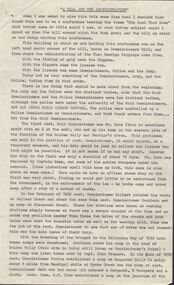
Document - A HILL AND ITS ADMINISTRATION
... ... Goldfield Police...DOCUMENT A Hill and its Administration Mr Horn Captain Dana Asst Commissioner Gilbert Commissioner Cockburn Capt John Urquart Asst Commissioner Panton Asst Commissioner Reid Asst Comm J M Clow Comm Wright Captain Bull Asst Comm Joseph Anderson Panton Red Ribbon Movement Governor LaTrobe Mr Thomson Police Commissioner Mitchell Col Valiant Queen Victoria Eureka Riot Lt Finch Mt Alexander Mail Sat 9 Sept 1854 Bendigo Sports Centre Post Office Garden Gully Goldmine High School Old Supreme Court St Jean's Hill Volunteer Rifle Corp Vic Volunteer Cal Regiment Vol Cavalry Bendigo Art Gallery A N A Lodge A N A Hall Goldfield Police M'Lachlan Fly Bros Hustlers Park Mine Bendigo Advertiser 15 January 1857 Bendigo Gaol Typed notes titled 'a Hill and its Administration'. ...Typed notes titled 'a Hill and its Administration'. It mentions the Gold Commissioners, mining licences, Red Ribbon Movement, the buildings around Commissioner's Hill, corrupt police, the iron lock up and the log lock up.document, a hill and its administration, mr horn, captain dana, asst commissioner gilbert, commissioner cockburn, capt john urquart, asst commissioner panton, asst commissioner reid, asst comm j m clow, comm wright, captain bull, asst comm joseph anderson panton, red ribbon movement, governor latrobe, mr thomson, police commissioner mitchell, col valiant, queen victoria, eureka riot, lt finch, mt alexander mail sat 9 sept 1854, bendigo sports centre, post office, garden gully goldmine, high school, old supreme court, st jean's hill, volunteer rifle corp, vic volunteer cal regiment, vol cavalry, bendigo art gallery, a n a lodge, a n a hall, goldfield police, m'lachlan, fly bros, hustlers park mine, bendigo advertiser 15 january 1857, bendigo gaol -
 Bendigo Historical Society Inc.
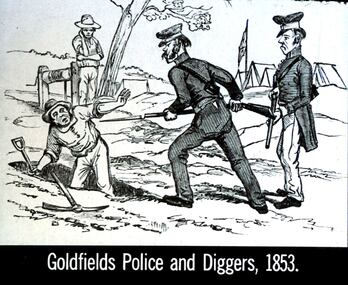
Slide - DIGGERS & MINING. THE GOLD LICENCE, c1853
... The Government Camp. Goldfields Police and Diggers, 1853. Slide also shows a miner in the background and mines, and what would be the Commissioners tents with the flag flying. ...The Government Camp. Goldfields Police and Diggers, 1853. Slide also shows a miner in the background and mines, and what would be the Commissioners tents with the flag flying. ...Diggers & Mining. The gold licence. The Government Camp. Goldfields Police and Diggers, 1853. Slide also shows a miner in the background and mines, and what would be the Commissioners tents with the flag flying. Markings: 37 994.LIF. 4. Used as a teaching aid.Hanimounteducation, tertiary, goldfields -
 Bendigo Historical Society Inc.
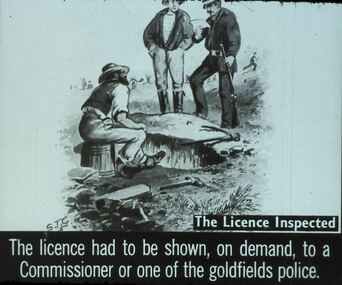
Slide - DIGGERS & MINING. THE GOLD LICENCE, c1850s
... The licence had to be shown, on demand to the Commissioner or one of the goldfields police. Markings: 29 994.LIF. 4. Used as a teaching aid....The licence had to be shown, on demand to the Commissioner or one of the goldfields police. Markings: 29 994.LIF. 4. Used as a teaching aid. ...Diggers & Mining. The gold licence. The Government Camp. Slide depicts 2 miners, and a Commissioner inspecting their Gold Licence. S.T.G. art work. The Licence Inspected. The licence had to be shown, on demand to the Commissioner or one of the goldfields police. Markings: 29 994.LIF. 4. Used as a teaching aid.hanimounteducation, tertiary, goldfields -
 Bendigo Historical Society Inc.
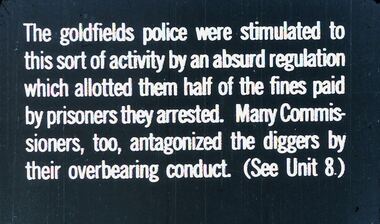
Slide - DIGGERS & MINING. THE GOLD LICENCE, c1850s
... The Government Camp. The goldfields police were stimulated to this sort of activity by an absurd regulation which allotted them half of the fines paid by prisoners they arrested. ...The Government Camp. The goldfields police were stimulated to this sort of activity by an absurd regulation which allotted them half of the fines paid by prisoners they arrested. ...Diggers & Mining. The gold licence. The Government Camp. The goldfields police were stimulated to this sort of activity by an absurd regulation which allotted them half of the fines paid by prisoners they arrested. Many Commissioners, too, antagonized their diggers by their overbearing conduct. (See Unit 8) Markings: 36 994.LIF. 4. Used as a teaching aid.hanimounteducation, tertiary, goldfields -
 Bendigo Historical Society Inc.
Slide - DIGGERS & MINING. THE GOLD LICENCE, c1850s
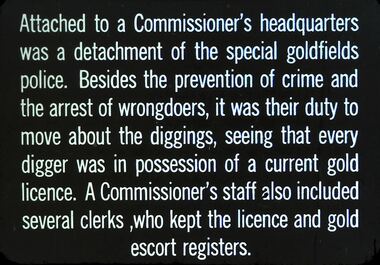
... Slide: Attached to a Commissioner's headquarters was a detachment to the special goldfields police. Besides the prevention of crime and the arrest of wrongdoers, it was their duty to move about the diggings, seeing that every digger was in possession of a current gold licence. ...Slide: Attached to a Commissioner's headquarters was a detachment to the special goldfields police. Besides the prevention of crime and the arrest of wrongdoers, it was their duty to move about the diggings, seeing that every digger was in possession of a current gold licence. ...Diggers & Mining. The gold licence. The Government Camp. Slide: Attached to a Commissioner's headquarters was a detachment to the special goldfields police. Besides the prevention of crime and the arrest of wrongdoers, it was their duty to move about the diggings, seeing that every digger was in possession of a current gold licence. A commissioner's staff also included several clerks, who kept the licence and gold escort registers. Markings: 13 994.LIF. 4. Used as a teaching aid.hanimounteducation, tertiary, goldfields -
 Bendigo Historical Society Inc.
Slide - DIGGERS & MINING. THE GOLD LICENCE, 1850s
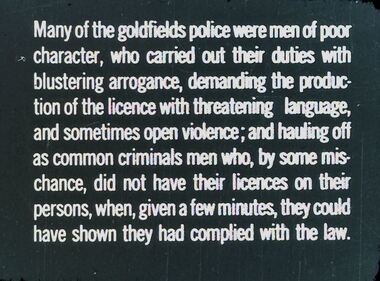
... Many of the goldfields police were men of poor character, who carried out their duties with blustering arrogance, demanding the production of the licence with threatening language, and sometimes open violence; and hauling off as common criminals men who, by some mischance, did not have their licences on their persons, when, given a few minutes, they could have shown they had complied with the law. ...Many of the goldfields police were men of poor character, who carried out their duties with blustering arrogance, demanding the production of the licence with threatening language, and sometimes open violence; and hauling off as common criminals men who, by some mischance, did not have their licences on their persons, when, given a few minutes, they could have shown they had complied with the law. ...Diggers & Mining. The gold licence. The Government Camp. Many of the goldfields police were men of poor character, who carried out their duties with blustering arrogance, demanding the production of the licence with threatening language, and sometimes open violence; and hauling off as common criminals men who, by some mischance, did not have their licences on their persons, when, given a few minutes, they could have shown they had complied with the law. Markings: 35 994.LIF. 4. Used as a teaching aid.hanimounteducation, tertiary, goldfields -
 Bendigo Historical Society Inc.
Slide - DIGGERS & MINING: THE DIGGINGS - THE DIGGERS
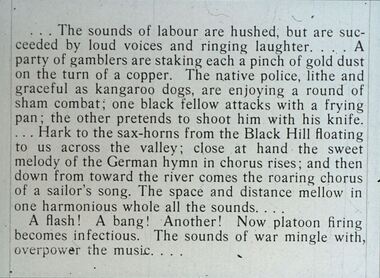
... Slide tells of fun and music on the goldfields, native police join the diggers of the goldfields to have some fun and some music along with fun platoon firing. ...Slide tells of fun and music on the goldfields, native police join the diggers of the goldfields to have some fun and some music along with fun platoon firing. ...Diggers & Mining: The Digging - The Diggers. Slide tells of fun and music on the goldfields, native police join the diggers of the goldfields to have some fun and some music along with fun platoon firing. Black and white side. Markings: 36 994.LIF:6. Used as a teaching aid.hanimounteducation, tertiary, goldfields -
 Flagstaff Hill Maritime Museum and Village
Administrative record - Reference Sociology/History, John Ferres, Government Printer, Victoria Police Gazettes for 1863, 1863
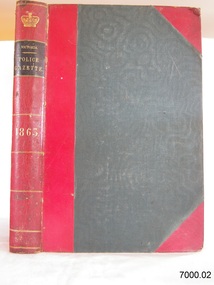
... At that time there were seven distinct, independently operating police bodies in Victoria: the Melbourne and County of Bourke Police, the City of Geelong Police, the Goldfields Police, the Gold Escort, the Water Police, the Rural Bench Constabulary, and the Mounted Police. ...At that time there were seven distinct, independently operating police bodies in Victoria: the Melbourne and County of Bourke Police, the City of Geelong Police, the Goldfields Police, the Gold Escort, the Water Police, the Rural Bench Constabulary, and the Mounted Police. ...The Victoria Police Gazette was a confidential, internal publication of the Victoria Police, issued to inform police officers, court and justice officials, and government departments about matters relevant to policing across the colony. It commenced in December 1853 and was initially published weekly by the Victoria Police. It was distributed each week to city and rural police stations and to government offices and newspaper publishers. Inclusions in this weekly publication were people wanted for questioning in relation to various crimes, prisoners discharged from city or country gaols, extracts from Police Gazettes in New South Wales, South Australia, Queensland, Tasmania, New Zealand, and occasionally overseas countries, as well as extracts from the Hobart Town Gazette listing escaped convicts and the person to whom they were assigned. There was also a "Missing Friends" section, where most people listed were not criminals but were sought by police so relatives, old friends, or government officials could renew contact with them. In addition, there was a record of deserted wives and children, listing the offender's name, birthplace, age, occupation, last known area of residence, likely future movements and known relatives. There was also a section on court lists, warrants issued, appointments and staffing changes within the police service, arrest and discharge records with physical descriptions, and lists of pastoralists with descriptions of their livestock brands.Hard Bound Volume. Victorian Police Gazettes for 1863 Author: Institutional Government Publication Publisher: John Ferres, Melbourne Date: 1863 Further Information: Compilation of Weekly Victorian Police Gazettes for 1863 in a hard bound volume with red spine and red corner reinforcing. Front panel grey coloured lettering in gilt with gilt banding to spine. Inside is twelve issues of the Police Gazettes for 1863.non-fictionThe Victoria Police Gazette was a confidential, internal publication of the Victoria Police, issued to inform police officers, court and justice officials, and government departments about matters relevant to policing across the colony. It commenced in December 1853 and was initially published weekly by the Victoria Police. It was distributed each week to city and rural police stations and to government offices and newspaper publishers. Inclusions in this weekly publication were people wanted for questioning in relation to various crimes, prisoners discharged from city or country gaols, extracts from Police Gazettes in New South Wales, South Australia, Queensland, Tasmania, New Zealand, and occasionally overseas countries, as well as extracts from the Hobart Town Gazette listing escaped convicts and the person to whom they were assigned. There was also a "Missing Friends" section, where most people listed were not criminals but were sought by police so relatives, old friends, or government officials could renew contact with them. In addition, there was a record of deserted wives and children, listing the offender's name, birthplace, age, occupation, last known area of residence, likely future movements and known relatives. There was also a section on court lists, warrants issued, appointments and staffing changes within the police service, arrest and discharge records with physical descriptions, and lists of pastoralists with descriptions of their livestock brands.warrnambool, shipwrecked-coast, flagstaff-hill, flagstaff-hill-maritime-museum, maritime-museum, shipwreck-coast, flagstaff-hill-maritime-village, shipwrecked-artefact, book, victoria police gazette 1862, victoria police gazette, warrnambool books and records, great ocean road -
 Flagstaff Hill Maritime Museum and Village
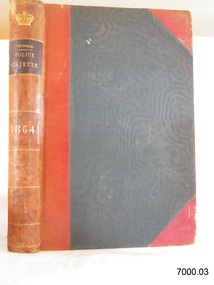
Administrative record - Reference Sociology/History, John Ferres, Government Printer, Victoria Police Gazettes for 1864, 1864
... At that time there were seven distinct, independently operating police bodies in Victoria: the Melbourne and County of Bourke Police, the City of Geelong Police, the Goldfields Police, the Gold Escort, the Water Police, the Rural Bench Constabulary, and the Mounted Police. ...At that time there were seven distinct, independently operating police bodies in Victoria: the Melbourne and County of Bourke Police, the City of Geelong Police, the Goldfields Police, the Gold Escort, the Water Police, the Rural Bench Constabulary, and the Mounted Police. ...The Victoria Police Gazette was a confidential, internal publication of the Victoria Police, issued to inform police officers, court and justice officials, and government departments about matters relevant to policing across the colony. It commenced in December 1853 and was initially published weekly by the Victoria Police. It was distributed each week to city and rural police stations and to government offices and newspaper publishers. Inclusions in this weekly publication were people wanted for questioning in relation to various crimes, prisoners discharged from city or country gaols, extracts from Police Gazettes in New South Wales, South Australia, Queensland, Tasmania, New Zealand, and occasionally overseas countries, as well as extracts from the Hobart Town Gazette listing escaped convicts and the person to whom they were assigned. There was also a "Missing Friends" section, where most people listed were not criminals but were sought by police so relatives, old friends, or government officials could renew contact with them. In addition, there was a record of deserted wives and children, listing the offender's name, birthplace, age, occupation, last known area of residence, likely future movements and known relatives. There was also a section on court lists, warrants issued, appointments and staffing changes within the police service, arrest and discharge records with physical descriptions, and lists of pastoralists with descriptions of their livestock brands.Hard Bound Volume. Victorian Police Gazettes for 1864 Author: Institutional Government Publication Publisher: John Ferres, Melbourne Date: 1864 Further Information: Compilation of Weekly Victorian Police Gazettes for 1864 in a hard bound volume with red spine and red corner reinforcing. Front panel grey coloured lettering in gilt with gilt banding to spine. Inside is twelve issues of the Police Gazettes for 1864.non-fictionThe Victoria Police Gazette was a confidential, internal publication of the Victoria Police, issued to inform police officers, court and justice officials, and government departments about matters relevant to policing across the colony. It commenced in December 1853 and was initially published weekly by the Victoria Police. It was distributed each week to city and rural police stations and to government offices and newspaper publishers. Inclusions in this weekly publication were people wanted for questioning in relation to various crimes, prisoners discharged from city or country gaols, extracts from Police Gazettes in New South Wales, South Australia, Queensland, Tasmania, New Zealand, and occasionally overseas countries, as well as extracts from the Hobart Town Gazette listing escaped convicts and the person to whom they were assigned. There was also a "Missing Friends" section, where most people listed were not criminals but were sought by police so relatives, old friends, or government officials could renew contact with them. In addition, there was a record of deserted wives and children, listing the offender's name, birthplace, age, occupation, last known area of residence, likely future movements and known relatives. There was also a section on court lists, warrants issued, appointments and staffing changes within the police service, arrest and discharge records with physical descriptions, and lists of pastoralists with descriptions of their livestock brands.warrnambool, shipwrecked-coast, flagstaff-hill, flagstaff-hill-maritime-museum, maritime-museum, shipwreck-coast, flagstaff-hill-maritime-village, shipwrecked-artefact, book, victoria police gazette 1862, victoria police gazette, warrnambool books and records, great ocean road -
 Flagstaff Hill Maritime Museum and Village
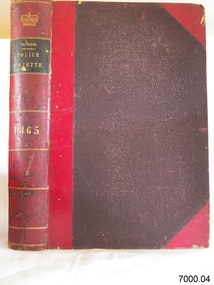
Administrative record - Reference Sociology/History, John Ferres, Government Printer, Victoria Police Gazettes for 1865, 1865
... At that time there were seven distinct, independently operating police bodies in Victoria: the Melbourne and County of Bourke Police, the City of Geelong Police, the Goldfields Police, the Gold Escort, the Water Police, the Rural Bench Constabulary, and the Mounted Police. ...At that time there were seven distinct, independently operating police bodies in Victoria: the Melbourne and County of Bourke Police, the City of Geelong Police, the Goldfields Police, the Gold Escort, the Water Police, the Rural Bench Constabulary, and the Mounted Police. ...The Victoria Police Gazette was a confidential, internal publication of the Victoria Police, issued to inform police officers, court and justice officials, and government departments about matters relevant to policing across the colony. It commenced in December 1853 and was initially published weekly by the Victoria Police. It was distributed each week to city and rural police stations and to government offices and newspaper publishers. Inclusions in this weekly publication were people wanted for questioning in relation to various crimes, prisoners discharged from city or country gaols, extracts from Police Gazettes in New South Wales, South Australia, Queensland, Tasmania, New Zealand, and occasionally overseas countries, as well as extracts from the Hobart Town Gazette listing escaped convicts and the person to whom they were assigned. There was also a "Missing Friends" section, where most people listed were not criminals but were sought by police so relatives, old friends, or government officials could renew contact with them. In addition, there was a record of deserted wives and children, listing the offender's name, birthplace, age, occupation, last known area of residence, likely future movements and known relatives. There was also a section on court lists, warrants issued, appointments and staffing changes within the police service, arrest and discharge records with physical descriptions, and lists of pastoralists with descriptions of their livestock brands.Hard Bound Volume. Victorian Police Gazettes for 1865 Author: Institutional Government Publication Publisher: John Ferres, Melbourne Date: 1865 Further Information: Compilation of Weekly Victorian Police Gazettes for 1865 in a hard bound volume with red spine and red corner reinforcing. Front panel grey coloured lettering in gilt with gilt banding to spine. Inside is twelve issues of the Police Gazettes for 1865.non-fictionThe Victoria Police Gazette was a confidential, internal publication of the Victoria Police, issued to inform police officers, court and justice officials, and government departments about matters relevant to policing across the colony. It commenced in December 1853 and was initially published weekly by the Victoria Police. It was distributed each week to city and rural police stations and to government offices and newspaper publishers. Inclusions in this weekly publication were people wanted for questioning in relation to various crimes, prisoners discharged from city or country gaols, extracts from Police Gazettes in New South Wales, South Australia, Queensland, Tasmania, New Zealand, and occasionally overseas countries, as well as extracts from the Hobart Town Gazette listing escaped convicts and the person to whom they were assigned. There was also a "Missing Friends" section, where most people listed were not criminals but were sought by police so relatives, old friends, or government officials could renew contact with them. In addition, there was a record of deserted wives and children, listing the offender's name, birthplace, age, occupation, last known area of residence, likely future movements and known relatives. There was also a section on court lists, warrants issued, appointments and staffing changes within the police service, arrest and discharge records with physical descriptions, and lists of pastoralists with descriptions of their livestock brands.warrnambool, shipwrecked-coast, flagstaff-hill, flagstaff-hill-maritime-museum, maritime-museum, shipwreck-coast, flagstaff-hill-maritime-village, shipwrecked-artefact, book, victoria police gazette 1862, victoria police gazette, warrnambool books and records, great ocean road -
 Flagstaff Hill Maritime Museum and Village
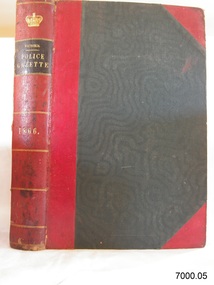
Administrative record - Reference Sociology/History, John Ferres, Government Printer, Victoria Police Gazettes for 1866, 1866
... At that time there were seven distinct, independently operating police bodies in Victoria: the Melbourne and County of Bourke Police, the City of Geelong Police, the Goldfields Police, the Gold Escort, the Water Police, the Rural Bench Constabulary, and the Mounted Police. ...At that time there were seven distinct, independently operating police bodies in Victoria: the Melbourne and County of Bourke Police, the City of Geelong Police, the Goldfields Police, the Gold Escort, the Water Police, the Rural Bench Constabulary, and the Mounted Police. ...The Victoria Police Gazette was a confidential, internal publication of the Victoria Police, issued to inform police officers, court and justice officials, and government departments about matters relevant to policing across the colony. It commenced in December 1853 and was initially published weekly by the Victoria Police. It was distributed each week to city and rural police stations and to government offices and newspaper publishers. Inclusions in this weekly publication were people wanted for questioning in relation to various crimes, prisoners discharged from city or country gaols, extracts from Police Gazettes in New South Wales, South Australia, Queensland, Tasmania, New Zealand, and occasionally overseas countries, as well as extracts from the Hobart Town Gazette listing escaped convicts and the person to whom they were assigned. There was also a "Missing Friends" section, where most people listed were not criminals but were sought by police so relatives, old friends, or government officials could renew contact with them. In addition, there was a record of deserted wives and children, listing the offender's name, birthplace, age, occupation, last known area of residence, likely future movements and known relatives. There was also a section on court lists, warrants issued, appointments and staffing changes within the police service, arrest and discharge records with physical descriptions, and lists of pastoralists with descriptions of their livestock brands.Hard Bound Volume. Victorian Police Gazettes for 1866 Author: Institutional Government Publication Publisher: John Ferres, Melbourne Date: 1866 Further Information: Compilation of Weekly Victorian Police Gazettes for 1866 in a hard bound volume with red spine and red corner reinforcing. Front panel grey coloured lettering in gilt with gilt banding to spine. Inside is twelve issues of the Police Gazettes for 1866.non-fictionThe Victoria Police Gazette was a confidential, internal publication of the Victoria Police, issued to inform police officers, court and justice officials, and government departments about matters relevant to policing across the colony. It commenced in December 1853 and was initially published weekly by the Victoria Police. It was distributed each week to city and rural police stations and to government offices and newspaper publishers. Inclusions in this weekly publication were people wanted for questioning in relation to various crimes, prisoners discharged from city or country gaols, extracts from Police Gazettes in New South Wales, South Australia, Queensland, Tasmania, New Zealand, and occasionally overseas countries, as well as extracts from the Hobart Town Gazette listing escaped convicts and the person to whom they were assigned. There was also a "Missing Friends" section, where most people listed were not criminals but were sought by police so relatives, old friends, or government officials could renew contact with them. In addition, there was a record of deserted wives and children, listing the offender's name, birthplace, age, occupation, last known area of residence, likely future movements and known relatives. There was also a section on court lists, warrants issued, appointments and staffing changes within the police service, arrest and discharge records with physical descriptions, and lists of pastoralists with descriptions of their livestock brands.warrnambool, shipwrecked-coast, flagstaff-hill, flagstaff-hill-maritime-museum, maritime-museum, shipwreck-coast, flagstaff-hill-maritime-village, shipwrecked-artefact, book, victoria police gazette 1862, victoria police gazette, warrnambool books and records, great ocean road -
 Flagstaff Hill Maritime Museum and Village
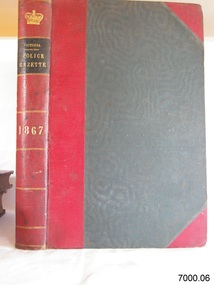
Administrative record - Reference Sociology/History, John Ferres, Government Printer, Victoria Police Gazettes for 1867, 1867
... At that time there were seven distinct, independently operating police bodies in Victoria: the Melbourne and County of Bourke Police, the City of Geelong Police, the Goldfields Police, the Gold Escort, the Water Police, the Rural Bench Constabulary, and the Mounted Police. ...At that time there were seven distinct, independently operating police bodies in Victoria: the Melbourne and County of Bourke Police, the City of Geelong Police, the Goldfields Police, the Gold Escort, the Water Police, the Rural Bench Constabulary, and the Mounted Police. ...The Victoria Police Gazette was a confidential, internal publication of the Victoria Police, issued to inform police officers, court and justice officials, and government departments about matters relevant to policing across the colony. It commenced in December 1853 and was initially published weekly by the Victoria Police. It was distributed each week to city and rural police stations and to government offices and newspaper publishers. Inclusions in this weekly publication were people wanted for questioning in relation to various crimes, prisoners discharged from city or country gaols, extracts from Police Gazettes in New South Wales, South Australia, Queensland, Tasmania, New Zealand, and occasionally overseas countries, as well as extracts from the Hobart Town Gazette listing escaped convicts and the person to whom they were assigned. There was also a "Missing Friends" section, where most people listed were not criminals but were sought by police so relatives, old friends, or government officials could renew contact with them. In addition, there was a record of deserted wives and children, listing the offender's name, birthplace, age, occupation, last known area of residence, likely future movements and known relatives. There was also a section on court lists, warrants issued, appointments and staffing changes within the police service, arrest and discharge records with physical descriptions, and lists of pastoralists with descriptions of their livestock brands.Hard Bound Volume. Victorian Police Gazettes for 1867 Author: Institutional Government Publication Publisher: John Ferres, Melbourne Date: 1867 Further Information: Compilation of Weekly Victorian Police Gazettes for 1867 in a hard bound volume with red spine and red corner reinforcing. Front panel grey coloured lettering in gilt with gilt banding to spine. Inside is twelve issues of the Police Gazettes for 1867.non-fictionThe Victoria Police Gazette was a confidential, internal publication of the Victoria Police, issued to inform police officers, court and justice officials, and government departments about matters relevant to policing across the colony. It commenced in December 1853 and was initially published weekly by the Victoria Police. It was distributed each week to city and rural police stations and to government offices and newspaper publishers. Inclusions in this weekly publication were people wanted for questioning in relation to various crimes, prisoners discharged from city or country gaols, extracts from Police Gazettes in New South Wales, South Australia, Queensland, Tasmania, New Zealand, and occasionally overseas countries, as well as extracts from the Hobart Town Gazette listing escaped convicts and the person to whom they were assigned. There was also a "Missing Friends" section, where most people listed were not criminals but were sought by police so relatives, old friends, or government officials could renew contact with them. In addition, there was a record of deserted wives and children, listing the offender's name, birthplace, age, occupation, last known area of residence, likely future movements and known relatives. There was also a section on court lists, warrants issued, appointments and staffing changes within the police service, arrest and discharge records with physical descriptions, and lists of pastoralists with descriptions of their livestock brands.warrnambool, shipwrecked-coast, flagstaff-hill, flagstaff-hill-maritime-museum, maritime-museum, shipwreck-coast, flagstaff-hill-maritime-village, shipwrecked-artefact, book, victoria police gazette 1862, victoria police gazette, warrnambool books and records, great ocean road -
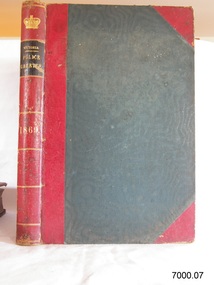 Flagstaff Hill Maritime Museum and Village
Administrative record - Reference Sociology/History, John Ferres, Government Printer, Victoria Police Gazettes for 1869, 1869
... At that time there were seven distinct, independently operating police bodies in Victoria: the Melbourne and County of Bourke Police, the City of Geelong Police, the Goldfields Police, the Gold Escort, the Water Police, the Rural Bench Constabulary, and the Mounted Police. ...At that time there were seven distinct, independently operating police bodies in Victoria: the Melbourne and County of Bourke Police, the City of Geelong Police, the Goldfields Police, the Gold Escort, the Water Police, the Rural Bench Constabulary, and the Mounted Police. ...The Victoria Police Gazette was a confidential, internal publication of the Victoria Police, issued to inform police officers, court and justice officials, and government departments about matters relevant to policing across the colony. It commenced in December 1853 and was initially published weekly by the Victoria Police. It was distributed each week to city and rural police stations and to government offices and newspaper publishers. Inclusions in this weekly publication were people wanted for questioning in relation to various crimes, prisoners discharged from city or country gaols, extracts from Police Gazettes in New South Wales, South Australia, Queensland, Tasmania, New Zealand, and occasionally overseas countries, as well as extracts from the Hobart Town Gazette listing escaped convicts and the person to whom they were assigned. There was also a "Missing Friends" section, where most people listed were not criminals but were sought by police so relatives, old friends, or government officials could renew contact with them. In addition, there was a record of deserted wives and children, listing the offender's name, birthplace, age, occupation, last known area of residence, likely future movements and known relatives. There was also a section on court lists, warrants issued, appointments and staffing changes within the police service, arrest and discharge records with physical descriptions, and lists of pastoralists with descriptions of their livestock brands.Hard Bound Volume. Victorian Police Gazettes for 1869 Author: Institutional Government Publication Publisher: John Ferres, Melbourne Date: 1869 Further Information: Compilation of Weekly Victorian Police Gazettes for 1869 in a hard bound volume with red spine and red corner reinforcing. Front panel grey coloured lettering in gilt with gilt banding to spine. Inside is twelve issues of the Police Gazettes for 1869.non-fictionThe Victoria Police Gazette was a confidential, internal publication of the Victoria Police, issued to inform police officers, court and justice officials, and government departments about matters relevant to policing across the colony. It commenced in December 1853 and was initially published weekly by the Victoria Police. It was distributed each week to city and rural police stations and to government offices and newspaper publishers. Inclusions in this weekly publication were people wanted for questioning in relation to various crimes, prisoners discharged from city or country gaols, extracts from Police Gazettes in New South Wales, South Australia, Queensland, Tasmania, New Zealand, and occasionally overseas countries, as well as extracts from the Hobart Town Gazette listing escaped convicts and the person to whom they were assigned. There was also a "Missing Friends" section, where most people listed were not criminals but were sought by police so relatives, old friends, or government officials could renew contact with them. In addition, there was a record of deserted wives and children, listing the offender's name, birthplace, age, occupation, last known area of residence, likely future movements and known relatives. There was also a section on court lists, warrants issued, appointments and staffing changes within the police service, arrest and discharge records with physical descriptions, and lists of pastoralists with descriptions of their livestock brands.warrnambool, shipwrecked-coast, flagstaff-hill, flagstaff-hill-maritime-museum, maritime-museum, shipwreck-coast, flagstaff-hill-maritime-village, shipwrecked-artefact, book, victoria police gazette 1862, victoria police gazette, warrnambool books and records, great ocean road -
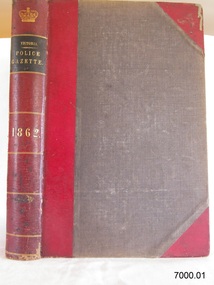 Flagstaff Hill Maritime Museum and Village
Administrative record - Reference Sociology/History, John Ferres, Government Printer, Victoria Police Gazettes for 1862, 1862
... At that time there were seven distinct, independently operating police bodies in Victoria: the Melbourne and County of Bourke Police, the City of Geelong Police, the Goldfields Police, the Gold Escort, the Water Police, the Rural Bench Constabulary, and the Mounted Police. ...At that time there were seven distinct, independently operating police bodies in Victoria: the Melbourne and County of Bourke Police, the City of Geelong Police, the Goldfields Police, the Gold Escort, the Water Police, the Rural Bench Constabulary, and the Mounted Police. ...The Victoria Police Gazette was a confidential, internal publication of the Victoria Police, issued to inform police officers, court and justice officials, and government departments about matters relevant to policing across the colony. It commenced in December 1853 and was initially published weekly by the Victoria Police. It was distributed each week to city and rural police stations and to government offices and newspaper publishers. Inclusions in this weekly publication were people wanted for questioning in relation to various crimes, prisoners discharged from city or country gaols, extracts from Police Gazettes in New South Wales, South Australia, Queensland, Tasmania, New Zealand, and occasionally overseas countries, as well as extracts from the Hobart Town Gazette listing escaped convicts and the person to whom they were assigned. There was also a "Missing Friends" section, where most people listed were not criminals but were sought by police so relatives, old friends, or government officials could renew contact with them. In addition, there was a record of deserted wives and children, listing the offender's name, birthplace, age, occupation, last known area of residence, likely future movements and known relatives. There was also a section on court lists, warrants issued, appointments and staffing changes within the police service, arrest and discharge records with physical descriptions, and lists of pastoralists with descriptions of their livestock brands.Hard Bound Volume. Victorian Police Gazettes for 1862 Author: Institutional Government Publication Publisher: John Ferres, Melbourne Date: 1862 Further Information: Compilation of Weekly Victorian Police Gazettes for 1862 in a hard bound volume with red spine and red corner reinforcing. Front panel grey coloured lettering in gilt with gilt banding to spine. Inside is twelve issues of the Police Gazettes for 1862.non-fictionThe Victoria Police Gazette was a confidential, internal publication of the Victoria Police, issued to inform police officers, court and justice officials, and government departments about matters relevant to policing across the colony. It commenced in December 1853 and was initially published weekly by the Victoria Police. It was distributed each week to city and rural police stations and to government offices and newspaper publishers. Inclusions in this weekly publication were people wanted for questioning in relation to various crimes, prisoners discharged from city or country gaols, extracts from Police Gazettes in New South Wales, South Australia, Queensland, Tasmania, New Zealand, and occasionally overseas countries, as well as extracts from the Hobart Town Gazette listing escaped convicts and the person to whom they were assigned. There was also a "Missing Friends" section, where most people listed were not criminals but were sought by police so relatives, old friends, or government officials could renew contact with them. In addition, there was a record of deserted wives and children, listing the offender's name, birthplace, age, occupation, last known area of residence, likely future movements and known relatives. There was also a section on court lists, warrants issued, appointments and staffing changes within the police service, arrest and discharge records with physical descriptions, and lists of pastoralists with descriptions of their livestock brands.warrnambool, shipwrecked-coast, flagstaff-hill, flagstaff-hill-maritime-museum, maritime-museum, shipwreck-coast, flagstaff-hill-maritime-village, shipwrecked-artefact, book, victoria police gazette 1862, victoria police gazette, warrnambool books and records, great ocean road -
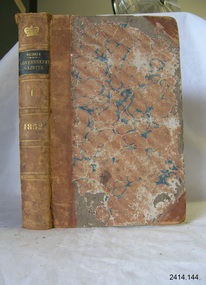 Flagstaff Hill Maritime Museum and Village
Book - Reference/Legal Statutes, John Ferres, Government Printer, The Victorian Government Gazette Vol 1 (January 1st to 30th June), 1852
... In early colonial administration, government gazettes published official land grants, goldfield regulations, judicial appointments, police notices, and public finances. ...In early colonial administration, government gazettes published official land grants, goldfield regulations, judicial appointments, police notices, and public finances. ...This volume is a primary historical document recording the foundational legal acts, official proclamations, and government notices that established the administration of the newly independent Colony of Victoria. Volume 1, one of the earliest Victorian Statutes, contains the initial Acts passed by the newly formed Legislative Council of Victoria following its formal separation from New South Wales on 1 July 1851. The inclusion of Charles Joseph La Trobe, Victoria's first Lieutenant-Governor, appointed in July 1851, signifies that this volume records official proclamations establishing colonial courts, administrative divisions, civil service appointments, and public order measures.Hard cover book,The Victorian Statutes Vol 1. Author: Corporate Author Charles Joseph L A Trobe “The Colony of Victoria” Publisher: John Ferres Government Printer Melbourne. Date: 1852 Three quarter leather, patterned covers. Top section of leather on spine frayed, lettering in gilt. No Library labels. Pencil text to flyleaf unreadable.non-fictionThis volume is a primary historical document recording the foundational legal acts, official proclamations, and government notices that established the administration of the newly independent Colony of Victoria. Volume 1, one of the earliest Victorian Statutes, contains the initial Acts passed by the newly formed Legislative Council of Victoria following its formal separation from New South Wales on 1 July 1851. The inclusion of Charles Joseph La Trobe, Victoria's first Lieutenant-Governor, appointed in July 1851, signifies that this volume records official proclamations establishing colonial courts, administrative divisions, civil service appointments, and public order measures.flagstaff hill, warrnambool, shipwrecked coast, flagstaff hill maritime museum, maritime museum, shipwreck coast, flagstaff hill maritime village, great ocean road, book, pattison collection, warrnambool library, warrnambool mechanics’ institute, ralph eric pattison, corangamite regional library service, warrnambool city librarian, mechanics’ institute library, victorian library board, warrnambool books and records, warrnambool children’s library -
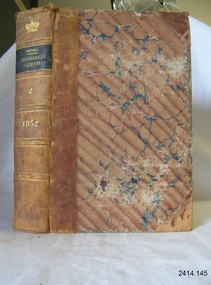 Flagstaff Hill Maritime Museum and Village
Book - Reference/Legal Statutes, John Ferres, Government Printer, The Victorian Government Gazette Vol 2 (July 1st to 31st December), 1852
... In early colonial administration, government gazettes published official land grants, goldfield regulations, judicial appointments, police notices, and public finances. ...In early colonial administration, government gazettes published official land grants, goldfield regulations, judicial appointments, police notices, and public finances. ...This volume is a primary historical document recording the foundational legal acts, official proclamations, and government notices that established the administration of the newly independent Colony of Victoria. Volume 1, one of the earliest Victorian Statutes, contains the initial Acts passed by the newly formed Legislative Council of Victoria following its formal separation from New South Wales on 1 July 1851. The inclusion of Charles Joseph La Trobe, Victoria's first Lieutenant-Governor, appointed in July 1851, signifies that this volume records official proclamations establishing colonial courts, administrative divisions, civil service appointments, and public order measures.Hard cover book,The Victorian Statutes Vol 2. Author: Corporate Author Charles Joseph L A Trobe “The Colony of Victoria” Publisher: John Ferres Government Printer Melbourne. Date: 1852 Further information: Three quarter leather, patterned covers. Top section of leather on spine frayed at top, lettering in gilt. No Library labels.non-fictionThis volume is a primary historical document recording the foundational legal acts, official proclamations, and government notices that established the administration of the newly independent Colony of Victoria. Volume 1, one of the earliest Victorian Statutes, contains the initial Acts passed by the newly formed Legislative Council of Victoria following its formal separation from New South Wales on 1 July 1851. The inclusion of Charles Joseph La Trobe, Victoria's first Lieutenant-Governor, appointed in July 1851, signifies that this volume records official proclamations establishing colonial courts, administrative divisions, civil service appointments, and public order measures.flagstaff hill, warrnambool, shipwrecked coast, flagstaff hill maritime museum, maritime museum, shipwreck coast, flagstaff hill maritime village, great ocean road, book, pattison collection, warrnambool library, warrnambool mechanics’ institute, ralph eric pattison, corangamite regional library service, warrnambool city librarian, mechanics’ institute library, victorian library board, warrnambool books and records, warrnambool children’s library -
 Flagstaff Hill Maritime Museum and Village
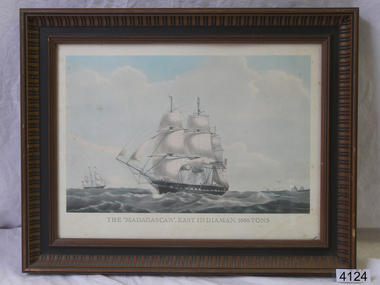
Print - Lithograph Picture, Madagascar Indiaman, Unknown
... On Wednesday 10 August, just as she was preparing to sail, police went on board and arrested a bushranger John Francis, who was later found to have been one of those responsible for robbing on 20th July the Melbourne Private Escort between the McIvor goldfield at Heathcote, Victoria and Kyneton. ...On Wednesday 10 August, just as she was preparing to sail, police went on board and arrested a bushranger John Francis, who was later found to have been one of those responsible for robbing on 20th July the Melbourne Private Escort between the McIvor goldfield at Heathcote, Victoria and Kyneton. ...Madagascar was a large British merchant ship built for the trade to India and China in 1837 that disappeared on a voyage from Melbourne to London in 1853. The disappearance of Madagascar was one of the great maritime mysteries of the 19th century and has probably been the subject of more speculation than any other 19th-century maritime puzzle, except for the Mary Celeste. Madagascar, the second Blackwall Frigate, was built for George and Henry Green at the Blackwall Yard, London, a shipyard that they co-owned with the Wigram family. A one-eighth share in the vessel was held throughout her 16-year career by her first master Captain William Harrison Walker Walker. Madagascar carried freight, passengers, and troops between England and India until the end of 1852. In addition to her normal crew, she also carried many boys being trained as officers for the merchant marine. Known as midshipmen from naval practice, their parents or guardians paid for their training, and they only received a nominal wage of usually a shilling a month. Due to the Victorian Gold Rush, Madagascar, under the command of Captain Fortescue William Harris, was sent to Melbourne with emigrants. She left Plymouth on 11 March 1853 and, after an uneventful passage of 87 days, reached Melbourne on 10 June. Fourteen of her 60 crew jumped ship for the diggings, and it is believed only about three replacements were signed on. She then loaded a cargo that included wool, rice, and about two tonnes of gold valued at £240,000, and took on board about 110 passengers for London. On Wednesday 10 August, just as she was preparing to sail, police went on board and arrested a bushranger John Francis, who was later found to have been one of those responsible for robbing on 20th July the Melbourne Private Escort between the McIvor goldfield at Heathcote, Victoria and Kyneton. On the following day, the police arrested two others, one on board the ship and the other as he was preparing to board. As a result of these arrests, Madagascar did not leave Melbourne until Friday 12 August 1853. After she left Port Phillip Heads Madagascar was never seen again. When the ship became overdue many theories were floated, including spontaneous combustion of the wool cargo, hitting an iceberg and, most controversially, being seized by criminal elements of the passengers and/or crew and scuttled, with the gold being stolen and the remaining passengers and crew murdered. There have been many rumors as to what happened to Madagascar over the years but what really happened is still a mystery. The lithograph was made around 1950 from an original painting of Madagascar a Vessel with a notorious past and is interesting and a significant item for the ships part in early Victorian history. The picture is it’s self not valuable or can be associated with a significant person in history. The interest lies in the events that are linked to the ship in the mid 19th century.Lithograph of the ship Madagascar, in a wooden frameThe Madagascar East Indiaman 1000 tonsflagstaff hill, warrnambool, shipwrecked-coast, flagstaff-hill, flagstaff-hill-maritime-museum, maritime-museum, shipwreck-coast, flagstaff-hill-maritime-village, lithograph, the madagascar, east indiaman -
 Federation University Historical Collection
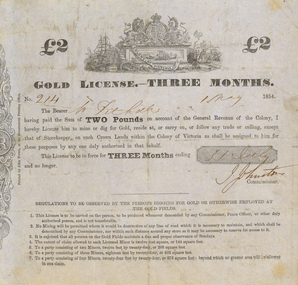
Document - Gold License, Fittnall's Gold Licenses, 1854, 1) 1 May 1854 ; .2) 16 April 1855
... Goldfields to carry a Gold License. The fee was one pound per month, and was payable in advance. There was agitation surrounding the gold license which was thought to be an excessive fee and did not give the bearer right to representation. On 03 December 1854 the gold diggers on the Eureka Lead fought a short battle against the army and police...Goldfields to carry a Gold License. The fee was one pound per month, and was payable in advance. There was agitation surrounding the gold license which was thought to be an excessive fee and did not give the bearer right to representation. On 03 December 1854 the gold diggers on the Eureka Lead fought a short battle against the army and police ...From 1851 the Victorian government required all men on Victorian Goldfields to carry a Gold License. The fee was one pound per month, and was payable in advance. There was agitation surrounding the gold license which was thought to be an excessive fee and did not give the bearer right to representation. On 03 December 1854 the gold diggers on the Eureka Lead fought a short battle against the army and police troopers. A few months later a new system of taxing gold diggers was introduced - the Miner's Right.The Victorian Gold Licence was issued from 1851 until early 1855. Every man on a Victorian goldfield had to carry a valid gold license, so few survived the harsh treatment of being carried around a working goldfield. There was much dissatisfaction about what was thought to be an unfair mining tax (or gold license). On 29 November 1854 Ballarat miners burnt their licenses on Bakery Hill. On 3 December 1854 the Eureka Stockade Battle took place, resulting in the Goldfields Commission. The first Miner's Right was issued in late June 1855, and in July the first Local Courts were elected by miner's right holders. The two Fitnall Gold Licenses are important because they were issued on either side of the Eureka Stockade, and are in very good condition. The Gold Licenses were donated to the Ballarat School of Mines by John Wilson in 1921. Two gold licenses issued by the Colony of Victoria. The licenses are printed onto blue paper with a Colony of Victoria logo at the top. The licenses were issued on either side of the historic Eureka Stockade in Ballarat East which took place on 03 December 1854. .1) No 219 - Made out to [H?] Fithall on 16 April 1854 and signed by Commissioner R.C. Mackenzie. The license was valid until 31 July 1854. .2) No. 214 - Made out to [H?] Fithall on 1 May 1854 and signed by Commissioner J. Johnston. The license was valid until 15 May 1855.On the backing card "Given to the School of Mines, October 6 1921, by John Wilson Errard Street, Ballarat."mining, gold license, gold licence, mining license, mining licence, mackenzie, johnston, fitnall, gold commissioner, eureka -
 Federation University Historical Collection
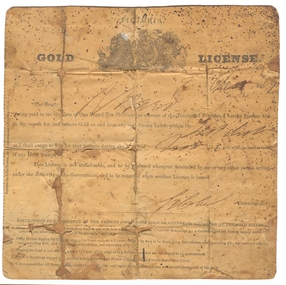
Document, Colony of Victoria, Gold License, 1852
... Goldfields to carry a Gold License. The fee was one pound per month, and was payable in advance. There was agitation surrounding the gold license which was thought to be an excessive fee and did not give the bearer right to representation. On 03 December 1854 the gold diggers on the Eureka Lead fought a short battle against the army and police...Goldfields to carry a Gold License. The fee was one pound per month, and was payable in advance. There was agitation surrounding the gold license which was thought to be an excessive fee and did not give the bearer right to representation. On 03 December 1854 the gold diggers on the Eureka Lead fought a short battle against the army and police ...From 1851 the Victorian government required all men on Victorian Goldfields to carry a Gold License. The fee was one pound per month, and was payable in advance. There was agitation surrounding the gold license which was thought to be an excessive fee and did not give the bearer right to representation. On 03 December 1854 the gold diggers on the Eureka Lead fought a short battle against the army and police troopers. A few months later a new system of taxing gold diggers was introduced - the Miner's Right. The Gold License c allowed the bearer to 'dig, search for, and remove gold on and from any Crown Lands' within the district specified on the license. The license was not transferable, and had to be produced on demand. This has resulted in most surviving licenses showing evidence of having been folded and kept in a pocket.The Victorian Gold Licence was issued from 1851 until early 1855. Every man on a Victorian goldfield had to carry a valid gold license, so few survived the harsh treatment of being carried around a working goldfield. There was much dissatisfaction about what was thought to be an unfair mining tax (or gold license). On 29 November 1854 Ballarat miners burnt their licenses on Bakery Hill. On 3 December 1854 the Eureka Stockade Battle took place, resulting in the Goldfields Commission. The first Miner's Right was issued in late June 1855, and in July the first Local Courts were elected by miner's right holders. This gold license was issued around one year after the issue of the first Victorian gold license in August 1851, making it a rare early survivor. This fold lines on this Gold License are evidence of being carried around by the bearer. A original Victorian paper gold license glued onto on old card poster. The original colour of the paper was pale blue. The license has undergone conservation treatment and has been removed from the card.'231', '9 Nov 1852', [name illegible], 'Lod dist [Loddon District?], [Commissioner illegible - probably M. Cohn]gold license, gold licence, mining, cohn, eureka -
 Federation University Historical Collection
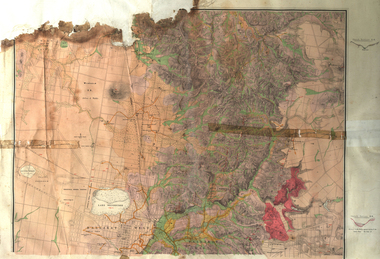
Map, Ballarat Goldfield, c1898
... The map indicates the position of Lake Wendouree, Township of Warrenheip, Ballarat East, Industrial School Reserve, Winters Swamp, Police Paddock, Wyndholm Premptive Right (Salton and Waldie), Black Hill, Vale Park Reserve, Pennyweight Hill, Little Bendigo, Black Swamp Lead, monte Christo Reef, Chinaman's Gully, Miners Rest, Pincotts Dam, Northumberland Gully. It also show the following goldmining companies: City of Ballarat, Kohinor, Hand and Band, Great North West, Northern Junction, Kneeshaw, Rossers Freehold, Silurial. Ballarat Goldfield ...This map shows geological features, suggests the last basalt flow, and includes alotments and names of Mining Companies. Although this map has no date on it the Ballarat Industrial School is used for dating purposed. The Ballarat Industrial School ran from 1869-1879, but the term Ballarat Industrial School Reserve was still in use in 1898 and possibly beyond.Geological Map of Ballarat with 3 holes in the left hand side. The map indicates the position of Lake Wendouree, Township of Warrenheip, Ballarat East, Industrial School Reserve, Winters Swamp, Police Paddock, Wyndholm Premptive Right (Salton and Waldie), Black Hill, Vale Park Reserve, Pennyweight Hill, Little Bendigo, Black Swamp Lead, monte Christo Reef, Chinaman's Gully, Miners Rest, Pincotts Dam, Northumberland Gully. It also show the following goldmining companies: City of Ballarat, Kohinor, Hand and Band, Great North West, Northern Junction, Kneeshaw, Rossers Freehold, Silurial.ballarat, warrenheip, lake wendouree, ballarat east, winters swamp, winter swamp, wyndholm premptive right, cemetery, vale park reserve, little bendigo, kneeshaw co., industrial school reserve, kirks dam, pincotts dam, black hill, wombat hill, dead horse gully, miners rest, mt rowan, salton and waldie, rose hill co, great north west no 1, rose's freehold co, hand and band co, police reserve, police paddock, mount rowan, ballarat industrial school reserve, market reserve, winter's swamp, kneeshar co, monte cristo line of reef, chinaman's gully or black snake, milkmaid's gully, ballarat gold field, bakery hil lead, old gravel pits lead, golden point lead, eureka lead, miner's rest, yarrowee creek, leigh creek, black swamp lead, yorkshire reef, nil desperandum reef, cockatoo lead, hit or miss gully, herbert werner frederick de nully, pennyweight hill, esmond's lead, ash's lead, nightingale lead, john bull gully, gladstone reef, whitehorse reef, petticoat creek, pincott's dam, frenchman's gully, tim's crushing plant, jenkin's gully, california gully, drake's creek, sulton and waldie, ballarat undustrial school, ballarat & mariborough railway -
 Federation University Historical Collection
Photograph - Black and White, Former Ballarat Library, c1960
... It was established to accommodate officials, troopers and police who were needed to administer the goldfields. Some permanent buildings were constructed. ...It was established to accommodate officials, troopers and police who were needed to administer the goldfields. Some permanent buildings were constructed. ...First known development on this site was the establishment of the Government Camp from the early 1850s. It was established to accommodate officials, troopers and police who were needed to administer the goldfields. Some permanent buildings were constructed. Lack of materials and bad weather prolonged the building of more permanent buildings and most men were still living in tents. Area was known as Camp Reserve. In 1864 a subdivision map shows the reserve be used for Public Buildings. Library applied for land on corner of Sturt and Camp Streets in 1878. 1880s plans show section of the reserve be used for a Free Library and Reading Room. Lease was granted and the old mining boardroom was initially used. Land for additional building to house a Museum and Art Gallery sought and agreement reached in 1882-3. Compensation paid to owners and library granted the land. Plans for a new library building with tower and lantern roof abandoned due to lack of funds. It wasn't until 1895 that a solution to funding was found and the library was able to begin constructing the complex of buildings on the Free Library Reserve. A number of changes have occurred since 1910s - the Classical Revival facade replaced with an angled facade in a stripped Classical style with Art Deco features and high parapet. Building is now part of Federation UniversityPhotograph of former library. Shows a two-storey rendered brick building in a Classical style. Some Art Deco features. Central pair of double windows with single window either side. High parapet above.government camp, goldfields, camp reserve, free library, reading room, sturt street, camp street, museum, art gallery, troopers, police, barracks, camp street -
 The Beechworth Burke Museum
Photograph
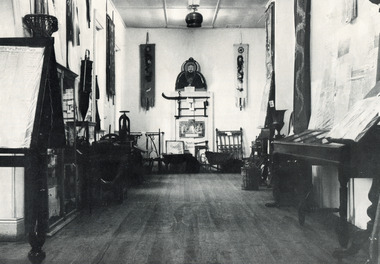
... Police, Robert O'Hara Burke, after his death in 1861 at Coopers Creek during the famed ill-fated Burke and Wills expedition. This photograph is contextually, historically and socially significant due to its connection to both the Burke Museum and Chinese culture in and around Beechworth during the mid-1800s through to 1900s. Around 4700 people of Chinese heritage lived at the Ovens goldfield ...This black and white photograph is estimated to have been taken c1900 inside the Burke Museum. Several objects part of the museum collection at the time can be seen, with a high number of Asian influence objects visible; potentially Chinese in origin, as several Chinese villages were located around Beechworth and across Spring Creek, from the mid 1800s. The Burke Museum is part of the Precinct of Beechworth, which was established upon the discovery of gold in 1852. Originally built as the Beechworth Athenaeum in 1857, the museum was later renamed to the Robert O'Hara Burke Memorial Museum, more commonly known as the Burke Museum, in honour of the famous explorer and former Beechworth Superintendent of Police, Robert O'Hara Burke, after his death in 1861 at Coopers Creek during the famed ill-fated Burke and Wills expedition.This photograph is contextually, historically and socially significant due to its connection to both the Burke Museum and Chinese culture in and around Beechworth during the mid-1800s through to 1900s. Around 4700 people of Chinese heritage lived at the Ovens goldfield by April of 1857, representing one-quarter of the entire population at the time. The object holds strong representativeness to the history of the Burke Museum and to the objects in its collection. Its interpretive capacity could be supported and enhanced with other photographs and objects in the collection. Collectively, these records and objects could provide an insight into the museum's collection and its relationship with the origins of the objects.Black and white rectangular photograph printed on paper. Unmounted; taped to paper. beechworth, spring creek, chinese, burke museum, immigration, chinese immigration, ovens goldfield, china, museum, robert o'hara burke, burke and wills expedition, burke and wills, goldfields -
Federation University Historical Collection
Document, Dianne Campbell, Ballarat Lawyers 1853-1895 Research Folders, c2000-2021
... Ballarat Lawyers Ballarat Dianne Campbell Goldfields Lawyers Collection Folders of research notes on Ballarat Lawyers, including newspaper clippings, website information, etc. .1) Ballarat Lawyers - A (Australian Law Firm histories, Jamaican in Australia, History of the Court System, University of Melbourne Law Students c1870s, Melanie Senior, Cinque Oakley Senior Lawyers, 19th Century Castlemaine Police Courts, New Victorian County Court, Scots and the Law in Scotland, Solicitor online encyclopedia, Alfred Akehurst, Artur Akehurst, J.T. ...Folders of research notes on Ballarat Lawyers, including newspaper clippings, website information, etc. .1) Ballarat Lawyers - A (Australian Law Firm histories, Jamaican in Australia, History of the Court System, University of Melbourne Law Students c1870s, Melanie Senior, Cinque Oakley Senior Lawyers, 19th Century Castlemaine Police Courts, New Victorian County Court, Scots and the Law in Scotland, Solicitor online encyclopedia, Alfred Akehurst, Artur Akehurst, J.T. Ansdell, Butler Cole Aspinall, Alfred James Bailey, Henry Stephen Bailey, Matthew Baird, Hugh Sutherland Barrett, William Field Barrett, Redmond Barry, George Elliott Barton, George Frederick Bartrop, John Bell, Thomas Bellas, George Booker) .2) Ballarat Lawyers B (Hugh Sunderland Barrett, Peter Beckford, William Beckford, John T.F. Bowker, William Box, George Boyd, William Boykett, B. Browne, Richard Archer Burton, Alfred Butler) .3) Ballarat Lawyers C-E (Thomas B.S. Carwithen, J.B. Cathcart, John Alfred Chalk, David Clarke, John Collins, Matthew Combe, Thomas Spemcer Cope, Richard. Crouch, Charles Curwan-Walker, Frank H. Cole, John Rowland Davies, Charles J. Dawson, Christopher John Dease, J.E. Dixon, Robert Willian Dobson, Roy Dobson, Edward Doward, Charles R. Doward, Edgar R. Doward,) .4) Ballarat Lawyers F-G (Charles B. Finlayson, Peter T. Finn, John Findlay, John Fitzgerald, John Olsen Foss, Alexander Fraser, J.A. Doane, Andrew Garran, George Garrard, David Gaunson, William Gaunt, MAry Gaunt, F.T. Gell) .5) Ballarat Lawyers H-J: (Frederick Ham, Jeremy Harper, John H. Harris, solicitors, Amelia Harris, J. Henry Harris, Peter Blake, Henry Plomer, Arthur Plomer, Ballarat Chamber of Commerce, Freemasons, White Flat Drainage and Mining Company, Henry R. Nicholls, Francis Ham, Richard T. Harvey, Edward Heady, Peter Heinz, T.t. Hollway. Thomas tuke hollway, William Higgins, James V.M. Hitchins, frederick Hitchins, James Hitchins, Edward Hockley, Robert W. Holmes, Catherine Kain, JOhn Ireland, Richard D. Ireland, Peter Jacobs) .6) T.C. Williams, John Kidahl, Arthur W. King, Pendrell family, M.A. Lazarus, Edward Lewis, W.H. McCormick, Soho Foundry, Henry S, Ochiltree, James V. McCormick, McDonnell, Townsend MacDermott, Morgan McDOnnell, Percy McDonnell, Cyprian McDonnell, John McFarland, Samuel W, McGowan, Bill McGregor, David Madden, Charles Holthouse, J. Madden, Samuel Mann, Samuel F. Mann, Tobias Furneaux, Samuel Mann, Agar Wynne, thomas Mann, Henry MacDermott, Archibald Midnie, Arthur Nevett, Arthur H. Nevett, Alfred Mitchell, William Mitchell, H.W. Morrow, William Mitchell, Norman P. Must, George F. Oakley.) .7) Ballarat Lawyer Q-R (Henry S. Ochiltree, W.B. Ochiltree, Edward G. Ochiltree, J.J.P. O'Dee, Bernard O'Dowd, John Ogier, Cornish Lawyers in Central Victoria Q-R, John Bateman Paynter, J.B. Pearson, Mondle Emmanuel Phillips, Robert King Piers, Robert King Piers, Pinkerton, Frank Pinkerton, Martha Pinkerton, Charles Purcell, R.H. Ramsay, Henry Randall, James Randall, Thomas Randall, John Warrington Rogers, John M. S. Rodd, George Rutler) .8) Lawyers in Central Victoria S-W (Charles Salter, H. Holmes, George Staveley, Charles Salter, George T. Boyd, Edward Sandford, Henry G. Shaw, Thomas W. Snape, Thomas S. Standish, Charles Snape, Frederick C. Standish, Edith Snape, James Snape, Thomas Snape, Philip Snape, George Staveley, John G. Stoker, William Stone, Henry Sturt, Matthew W. Taylor, Bread and Cheese Club, R.D. Thompson, Roger D. Thompson, R.H. Ramsay, R.G. Turner, F.H. Tuthill, W.M.K. Vale, William Vale, May Vale, William L. Vardy, Gordon Vardy, William S. Vardy, Charles Von Ende) .9) Lawyers in Central Victoria W-Z (Henry Walker, Andrew Wallace, John Wellesley, Brereton Watson, C.G.M. Watson, James Watson, George Armytage, Thomas Watson, Patricius Welsh, John Westmore, Theodore Whipham, Arthur Whipham, Thomas H. Whipham, Frances Whipham, Thomas Bellas, James L. Willoughby, John Noble Williams, James Wisewould, Horace Wright, H.M. Wright, William Wright, Henry J. Wrixon, Agar Wynne, Samuel Young) . ballarat lawyers, ballarat, dianne campbell goldfields lawyers collection -
Federation University Historical Collection
Document, Zelda Martin, Confirmation of Candidature - Central Victorian Towns - Boom or Bust, c1996
... goldfield towns...bendigo...castlemaine...ballarat...Maldon...Stawell...Ararat...maryborough...Creswick...Avoca...Heathcote...Banks...Bank of Australasia...Union bank of Australia...government camp...Sandhurst...water supply...Tarnagulla...Talbot...back creek...Mountain Creek...Police...Zelda Martin Victorian goldfield towns bendigo castlemaine ballarat Maldon Stawell Ararat maryborough Creswick Avoca Heathcote Banks Bank of Australasia Union bank of Australia government camp Sandhurst water supply Tarnagulla Talbot back creek Mountain Creek Police court Carisbrook dunolly thompson's foundry Eleven page article on Victorian goldfields town. ...Zelda Martin was a PhD candidate at the University of Melbourne. Zelda had a Bachelor of Commerce (majoring in Economic History and Economic Geography), an Master of Arts (in Politics) and a Diploma of Education; all from the University of Melbourne. Zelda is the author of a book titled " Australia's Relations with the Third World in the context of negotiations for a new international commodity order in the 1970's: continuity or change?" Pub. [Parkville, Victoria]: University of Melbourne, 1982.Eleven page article on Victorian goldfields town. The article was written during the author's PhD study. zelda martin, victorian goldfield towns, bendigo, castlemaine, ballarat, maldon, stawell, ararat, maryborough, creswick, avoca, heathcote, banks, bank of australasia, union bank of australia, government camp, sandhurst, water supply, tarnagulla, talbot, back creek, mountain creek, police court, carisbrook, dunolly, thompson's foundry -
Federation University Historical Collection
Document, Zelda Martin, Central Victorian Goldmining towns - Boom Towns or Ghost Towns?, c1996
... goldfield towns...bendigo...castlemaine...ballarat...Maldon...Stawell...Ararat...maryborough...Creswick...Avoca...Heathcote...Banks...Bank of Australasia...Union bank of Australia...government camp...Sandhurst...water supply...Tarnagulla...Talbot...back creek...Mountain Creek...Police...Police magistrates and Clerks of Petty Sessions, etc. *Field Branch *Immigration and Emigration Overland - Chinese - 1859 *Population on the Goldfields *The Geological Survey - The Government Geologist is assisited by staff from four branches - the office Branch; the Publishing Branch; the Field Branch and the Museum Branch. ...Police magistrates and Clerks of Petty Sessions, etc. *Field Branch *Immigration and Emigration Overland - Chinese - 1859 *Population on the Goldfields *The Geological Survey - The Government Geologist is assisited by staff from four branches - the office Branch; the Publishing Branch; the Field Branch and the Museum Branch. ...Zelda Martin was a PhD candidate at the University of Melbourne.[.1] 4th item in light blue display book titled Research Approach/Overview of Chapters/Confirmation of Canditure/Chapters1,2,3&4 of proposed thesis. *Twenty-seven page article on Victorian goldfields towns titled: Central Victorian Goldmining Towns - Boom Towns or Ghost Towns. The article was written during the author's PhD study. It outlines the context methodology, and resources and the chapters of the proposed thesis: (1) Central Victorian Goldmining Towns - The Context (2) Contemporary Views of the Factors Necessary for Town Growth (3) Outward Manifestations of Town Growth (4) The Trappings of Government (5-9) The Main Towns and Their Hinterland. [.2] 5th item in Light Blue display book as above item. *Chapter 1 of proposed thesis titled 'Pick, Shovel and Tin Dish Mining.' Covers in Section A: Central Victoria - Pre 1851: Aborigines in Central Victoria, Squatters, and Government. Section B: The years 1851-1854: The Early Gold Rushes, Government Reaction, Township Surveys, Legislation, Town Development, Local Government and Early Settlement. [.3] 6th item in Light Blue display book as above item. *2A of proposed thesis titled 'Contemporary Views of the Factors Necessary for Town Growth'. Similar information to Chapter 1 plus extra re towns and maps. Sections: Introduction, Context of Place - Geographical Towns Listed, The Context of Time - Pre1851 Aborigines, Governance of Port Phillip, The Squatters, The Villages of Central Victorian Highlands, Conclusion, Condensed Version of Chapter2B. [.4] 7th item in Light Blue display book as above item. *Chapter2B of proposed thesis. Sections: Area of Research, Schools, Banks, Newspapers, Progress Association, Town Development - Sandhurst (Bendigo), Ballarat, Castlemaine,, Maryborough, Ararat and Stawell. [.5] 8th item in Light Blue display book as above item. *Chapter 3 of proposed thesis titled 'Outward Manifestations of Town Growth'. Sections: Introduction, Contemporary Writing, Educationalists, The Bankers, The Townsfolk, Current Theory, General Theories of Urban Development, and Conclusion. [.6] 9th item in Light Blue display book as above item. *Chapter 4 of proposed thesis titled 'Trappings of Government' Sections: Introduction, Early Government Attitudes to Mining and Town Development, Law and Order, Township Surveys, Legislation, Local Government, Transport and Communication, The People and Lobbyists. [.7] 10th item in Light Blue display book as above item. *'The Rise and Fall of Central Victorian Goldmining Towns'. Includes a map showing main Goldfields, a table showing towns and villages at two points in time - 1857 and 1871; a Bibliography of Primary and Secondary Sources. [.8] Resource No1. Black display book titled Local Towns 1 : Alma: *Brief history *Directory *Maps Amphitheatre / Mountain Hut: *Brief History Post Office Directory Ararat: *Brief History *Post Office Directory 1869 - Alphabetical Listing by Occupation *Ararat - Prominent Citizens of 1858 *Langi-Morgala Museum Avoca: *Brief History *Excerpts from 'Avoca The Early Years', Margery and Betty Beavis; pg1 - Beginnings; pg11 - The Midas Touch; pg25 - Local Gold Escorts; pg27 - A Town is Born; pg51- The Administration of Justice; pg53 - The Ways of the Law; pg61 - News of the Day; pg65 - A Time to Play; pg72 - Land Ownership *Post Office Directory (Bailliere's) 1869 *Tourism Map and Information of area *Historic Avoca - A 5.5km Tour *Avoca & the Pyrenees Region - information pamphlet Ballarat: *Early History of Ballarat - Ballarat Historical Society, Publication No.1: origin of the name; Ballaarat - the Beginning; Fabulous Yields from the Ballaarat Goldfield; *Streetscape Lydiard Street. *Hand drawn map showing Leigh River, Old Portland Bay Road, plaque on road to Colac; etc. *Newspaper article re 'The Theatre Royal' ( which stood in the vicinity of the current Owen Williams store) - 'The News'15/04/1998 *Article - 'Ballarat's Mechanics' Institute Lives On' Ballarat Courier, 14/09/1985 *Article - Standing the Test of Time' The News 17/11/1993 re The Mechanics Institute & picture of the Reading Room *'Ballarat a Study of a City, Phyllis Reichl, pub. Nelson, 1968; no.3 place, time and people field studies series *Investigator Vol.33 No.2, 1998 Geelong Historical Society. Article on pg75 describes Ballarat in 1861 *Folded poster - 'Ballarat 100' a history of telegraph communication, pub. Telecom. Beaufort (Fiery Creek): *Brief history *Post Office Directory [.9] Resource No.2 Black Folder Titled Towns cont.No2 Bendigo (Sandhurst): *'Family & Local History at the Bendigo Library - 1851-2001 150 years of gold'. *Bendigo Government Camp in 1853 illustration; key to sketch and names of Government officers stationed there *Excerpts from 'Bendigo and Vicinity' Adolph Haman *The Bendigo Goldfield Registry - pgs 1-7 Introduction *Excerpt: 'Breaking the Grip' *Excerpt: The Most Go-Ahead Place *Excerpts from 'History of Bendigo' - anti license agitation; laying out of town; proposed railway; gold calls and dividends; the Sandhurst Municipality; journalism *Bibliography Blackwood: *Excerpts from 'Aspects of Early Blackwood - The Goldfield, the Landmarks, the Pioneers' Alan J Buckingham and Margaret F Hitchcock, JG Publishing,1980 Buninyong: *A Brief History *Investigator Vol1 No.2 Feb 1966 Geelong Historical Society. Pg3 - Article re gold escort route - Mt Alexander to Adelaide - (see a simple monument on the Western Highway a few miles out of Horsham. Pg 15 - Ballarat Excursion - re the finding of gold. *Three articles published by Buninyong and District Historical Society Inc: (Magpie Exploration; Finding Gold In The Green Hills; Magpie Exploration; Burnt Bridge to Cargarie to Mt Mercer) *Copies of newspaper articles/items *Buninyong Street Directory Carisbrook: *In the Beginning There Was Carisbrook *The History of the Carisbrook Racecourse Carngham / Snake Valley: *Brief History *Directory Castlemaine: *Directory 1865-1866 - Alphabetical and Street *Poster - Castlemaine A Contemporary Guide "The Great Centre" 1866 - A Contemporary Guide to the Fascinating Past *Pamphlet - Castlemaine District Community Hospital *Map - Castlemaine, Maldon & Surrounding Districts *Map and Information - The Dry Diggings Track - a 55kl walk among historic goldfields relics ( Castlemaine Fryerstown Vaughan Mt Franklin Hepburn Daylesford) *Postcard - Former Court House *Directory 1867 - Alphabetical, Trade [.10] Resource No.3 Grey folder Titled Towns 3 Creswick to Maryborough Creswick: *Brief History *Booklet - "Creswick Cemetery Walk" *Booklet - The Buried Rivers of Gold Heritage Trail Creswick *Creswick Historical Museum Information Sheet *Chronological History of Creswick *Alphabetical Directory of the Borough of Creswick *Creswick's Creek Directory 1856 *Historic Creswick Walking Tour *A Brief Account of the Schools of Creswick - Past and Present *100 Years of Railway Travel in Creswick *The Berry Deep Leads *The Spence Home at Jackass Gully in the Creswick State Forest ( William Guthrie Spence - Pioneer) *The New Australian Mine and the 1882 Disaster *Creswick District News, Issue 7, July August 1999 *The Creswick Miners Walk - Information and Map *Maps Chewton: *Brief History *Directory Clunes: *Brief History *Clunes Street Directory Daylesford: *Brief History *Notable Bushfires in Daylesford District Over More Than a Century - "Black Thursday" 1851; 1862; 1899; the Disastrous Hepburn Fire of 1906; 1939; 1944; 1969. *Post Office Directory -Daylesford and Hepburn Dunolly / Inkerman: *Brief History *Directory *Pamphlet - Goldfields Historical Museum *Pamphlet - Historic Dunolly - Victoria's Best Kept Secret *Map of Gold Workings at Dunolly Area - showing where the main gold rushes occurred *Brief History - Inglewood *Directory - Inglewood - Name Occupation, Dwelling Kingower: *Brief History *Directory - Name / Ocupation / Dwelling Linton / Happy Valley / Piggoreet: *Brief History *Directory - Lintons McIvor: *"A History of the Shire and the Township of Heathcote" by J.O. Randell Majorca: *Brief History *Official Post Office Directory 1869 - Name / Occupation/ Address Maldon (Tarrangower): *Brief History Part 1 *Brief History Part 2 *Post Office Directory *List - Alphabetical Order by Names plus Business and Trade (Tarrangower Times Oct/1858) *List - Alphabetical Order by Trade plus Name and Business *Directory - Name / Occupation / Dwelling Maryborough: *Worsley Cottage - built by Arthur Worsley, a contractor in stonework in 1894 [.11] Resource No. 4 Blue Display Book titled Towns 4 Moliagul to Stawell Moliagul: *Brief History *Moligul Legislative Assembly (Voting?) List - Names and Occupations *Moliagul Victorian Post Office Directory 1868 - Name / Ocupation / Address / Comments *"The Welcome Stranger" gold nugget *The Sunday School *The Welcome Stranger Discovery Walk - information and map Moonambel (Mountain Creek) Redbank *Brief History *List of names extracted from advertisments of the Pioneer and Mountain Creek Advertiser 16/02/1861. *Bailliere's Directory 1869 - Alphabetical List of Name / Occupation / Place St Arnaud: *Brief History Sebastapol: *Brief History *Directory 1869 - Alphabetical by Name; plus occupation and address. Browns and Scarsdale: *Brief History *Browns Street Directory - Name and Occupation Smythesdale: *Brief Description *Smythesdale Street Directory -Name and Occupation Stawell (Pleasant Creek) *Brief History *Victorian Official Post Office Directory - Name /Occupation / Dwelling *Chronology - 1841-1920 *Production of gold statistics - 1879 - 1900 *Big Hill *Extracts from "The Golden Years of Stawell". Chapt 1 - Stawell's Coming Out. Capt. 2 - The Gold Rush. Caapt.3 - Cradle of Democracy. Chapt.4 - The Reefs Becomes Stawell. Chapt. 5 - Rushing In. Chapt.6 - The Pioneers. Chapt 7 - The Decade of Optimism. [.12] Resource No. 5: Blue Display Book titled 'Towns Steiglitz to the The Golden Triangle. Steiglitz: Brief History Victorian Post Office Directory 1869 *Map of Steiglitz *List of maps relevant to Steiglitz history *Information 6 tables of data from "Reports of Mining Surveyors Talbot (Back Creek) Brief History Taradale: Post office Directory 1869 - Name/Occupation/Street. Also list in alphabetical order by Occupation Taradale *Chronological Reference to Taradale Mines *Water - The Coliban System of Waterworks *Joseph Brady *The Syphon Tarnagulla (Sandy Creek) *Brief History *Tarnagulla Businessmen Cameos to give depth to advertisments in 'The Tarnagulla Courier' various issues 1864-1871 *Directory - Name/Occupation /Address *List - Name/Business/Trade Wedderburn (Koorong) *Brief History *List - Name/Occupation The Golden Triangle: *The Early Rushes - Wedderburn / Moliagul / Sandy Creek - Tarnagulla / Jones Creek - Waanyarra / Kingower / Dunolly - Goldsborough / Inglweood *Census of 1857 - Population / Occupations *1858-1871 - A Time of Consolidation- Wedderburn / Moliagul / Sandy Creek- Tarnagulla / Arnold *Census 1871 - Population *Information gleaned from the census data - Demographics / Population / Occupations / marital / Birthplace / Religion / Literacy/ Occupation and Housing Cameos *Graphs - Birthplace of settlers /Male-Female Ratio / Married males / Children under 15 as Percentage of Population / Religion *Census 1857 - Statistical data *Maps *Bibliography [.13] Resource No. 6 - Black Display Book Information and Research in Central Victoria including: *Banking - Research from ANZ Bank Archives *Institutions - also includes articles listed from the Ballarat Times Newspaper *Australian mining History Association - A.M.H.A. Bibliography *Australia's Mining History * Bibliography - Land Surveys Victoria - *1853 Administration (Statistics and Other) includes: schools / ministers of religion / police / military / local administration / licences for sale of spirits / distances between various Victorian gold fields. * Victoria Government Gazette (Copy) - N0. 116, 12/12/1854 includes: Gold Felds Commission of Enquiry & No. 85, 15/09/1854 - Addresses presented to the Lieutenant Governor (Sir Charles Hotham) during his tour through the Gold Fields of Victoria,1854. Addresses on behalf of : the people of Bendigo; Members of the Church of England, Bendigo; Members of the Wesleyan Church on the Bendigo Gold Fields; Bendigo Gold District General Hospital; the Bendigo Prospecting Association; Committee of the Bendigo Local Exhibition; Bendigo District Medical Association; Coloured Americans Resident at Bendigo; German Inhabitants of Bendigo; Landowners, Inhabitants, and Miners of Castlemaine; Inhabitants of Forest Creek; Inhabitants of Heathcote and Gold Miners of McIvor; Residents and landholders of the District of Bacchus Marsh; Inhabitants of Kilmore and Vicinity. *Gold Fields Correspondence 1853: letter from Lieutenant Colonel Valiant, (Officer commanding the Troops in Victoria) to the Lieutenant Governor re threatened disturbance at Sandhurst (Bendigo) regarding the Gold License Fee. * Extracts from a book "Victoria" re Gold Fields Commission of Enquiry involving mainly Ballarat and Castlemaine and a chapter titled 'A Tour to the Victorian Gold-Fields' *Lists of central Victorian newspapers - listed by date published 1851to 1874; by first date available to State Library. *A list of cities and towns showing County, population in 1861 &1871, and municipal status. [.14] Resource no.7. Black display book. *Reference: Papers presented to Parliament Victoria - 1859-1860 4 volumes - relevant sections copied. Contains information on Branches of Government. General / Finance / Gold / Gazette / Commission and Warrant / Statistic. *Gold Fields Act. In accordance with the Act the gold fields are divided into six districts - Ballaarat, Castlemaine , Sandhurst, Avoca, Ararat, and Beechworth.. Official staff in each gold district consists of a Resident Warden, Wardens, Wardens' Clerks, Bailiffs, Chinese Protectors, Chinese Interpreters, and Mining Surveyors. *Gold Receiver *Gaols *Police magistrates and Clerks of Petty Sessions, etc. *Field Branch *Immigration and Emigration Overland - Chinese - 1859 *Population on the Goldfields *The Geological Survey - The Government Geologist is assisited by staff from four branches - the office Branch; the Publishing Branch; the Field Branch and the Museum Branch. *Commission to Enquire Into Sludge dated 10/02/1859 (Some sections copied) - Report to the Honorable Chief Commissioner of Public Works, Melbourne re the mode of carrying the sludge from the puddling mills in Sandhurst without interfering with the drainage of the town and the roads in the neighbourhood. [.15] Resource No.8: Camel display book titled Resource No. 8. Aborigines *Lists of book titles - +"Readings in Victorian prehistory" +"The Aborigines of Port Phillip" +Aboriginal languages and clans" +"A History of the Port Phillip District" +"Langi Ghiran 1: Aboriginal Rock...." +"Koorie History: sources for aboriginal studies in the State Library of Victoria", ed. Tom Griffiths, Melb. Friends of the State Library, 1989 +"The Public Lands of Australia Felix"; settlement and land appraisal in Victoria1834-91 with special reference to the Western Plains", J.M.Powell, Melb. Oxford University Press 1970 +*Bibliography of the Victorian Aborigines' from the earliest manuscripts to 31st December 1970, Massoa, Aldo, Melb. Hawthorn Press, 1971 +"Aborigines in Colonial Victoria, 1836-1886", M.F. Christie, Sydney University Press, 1979 +"Urban and Industrial Australia: readings in Human Geography" ed J.M. Powell, Melb. Sorrett Pub. 1974 *Extracts: -Processes of Pioneer Settlement - The Squatting Occupation of Victoria, 1834-60. J.M. Powell -Areal Variations in the Class Structure of the Central-Place Hierarchy. P. Scott - Volume1 and Volume 2: Notes Relating to the Habits of the Natives of Other Parts of Australia and Tasmania. Compiled from various sources for the Government of Victoria by R Brough Smyth. John Curry, O'Neil, Melb. 1st pub. Melb. 1876. p31-45 - Numbers and Distribution of the Aborigines in Victoria -Victorian Aborigines 1835-1901 - A Resource Guide to the Holdings of the Public Record Office, Victoria; published by the Government Information Centre 1984. *History of the Aboriginal Artefacts Displayed in the Daylesford Museum. F. G. Powell (4 page pamphlet) *Letter to Zelda Martin from Peter Lovett, Cultural Officer, Ballarat & District Aboriginal Co- Operative, 05/02/1997 *Map: Ian Clarke Victorian Tribunal Boundary Map - Clans of Central Victoria. *Victorian Rock Art and Mythology - Article about Mount Langhi Ghiran and myths of the Tjapwarong people. *Two Aboriginal myths relating to the Grampians - 'The Monster Emu' / 'The Aquisition of Fire', by the Aborigines in the Grampians Areas *Article titled (chapter 8) Ballarat - information re camping sites in the region. Lake Wendouree / Lake Burrumbeet (includes a myth) / Mt Bunninyong / Lal Lal / Pitfield / Mount Elephant / Mount Egerton / Meredith / Lake Goldsmith / Lake Learmonth / Ercildoune *Notes on the Aborigines of the Wider Ballarat Region plus European names=Aboriginal names. John Morris 26/07/1995 *Role of Aborigines in Town Development in Central Victoria. Mentions Native Police Force est. in Port Phillip 1842 and Central Board for Aborigines est. 1860 *The Grave of King Billy. (Frank Wilson) Pamphlet. *Camping Places in Central and Northern Victoria. Article re Lake Burrumbeet site. *Programme for the Unveiling of Memorial Cairn for Edward Stone Parker 1802-1865. Note portrait not accurate. Accurate portrait is available in the book "A Successful Failure A Trilogy The Aborigines and Early Settlers", Edgar Morrison, Graffiti Publications, 2002. * Large envelope addressed to Mr G Netherway containing newspaper cuttings regarding the life of Edward Stone Parker, the unveiling of the Memorial Cairn as mentioned above, articles titled 'Episodes from Our Early Days' (Edgar Morrison, Yandoit)- The Black's School, A School At Last and The Final years. Also a typed page titled 'Historical Background to E.S.Parker's Career. Includes an interesting tale titled 'When the cat lay doggo' re laying power leads for the unveiling ceremony at the memorial site. [.16] green display folder titled 'Research Aids' *List of references to Commissioners' & W'ardens' Reports (formerly held at La Trobe Library Archives, now at Public Records Office [PRO]). Indicates town referred to / date of report / name of camp if different to town. * Archive information re Anglican Records *Movement around the Goldfields - Miners and Storekeepers - usefulness of newspapers in providing information - areas covered - Castlemaine, Maldon, Ararat, Stawell, Tarnagulla, Dunolly. *Port Phillip /Victoria Directories 1839/1867 - Chronological list of Directories included in this series. *"Notes on the History of Local Government in Victoria" A.W. Greig Melb. University Press 1925 - Photo-copied extract p5-p40. (Source - Deakin University Library) - Introduction by W.Harrison Moore. Section 1 - Development in New South Wales Before Separation. Section 2 - Development in Victoria After Its Separation from New South Wales. Hand written notations: 'roads, markets, and local government 1855 on' ;'opportunity of squatters in parliament' and 'opportunities of matters in parliament p33' * Notes on the Establishment of Surveyor General's Department 1851and Commissioner of Crown Lands and Survey. * Newspaper articles from The Argus, 1849, re the discovery of gold in the Pyrenees region. * Excerpt - a report on schools - A.B.Orlebar, Inspector; re the need for permanent school buildings rather than tents. *Excerpt from - 'Approaches to Urban History', Sean Glynn: The Case for Caution * Except from - 'The Urban Sprinkle', Weston Bate: Country Towns and Australian Regional History *Reference- 'The History of Land Tenure in the Colony of Victoria', John Quick. References the Haines Land Bill, land tenure and Land Leagues. [.17] Light blue envelope folder titled 'Birtchnell's Ballarat, etc. Directory 1862 *Contains various directories for Smythesdale, Buninyong, Clunes, Brown's and Creswick. [.18] Red envelope folder no.2 titled Victorian Gazetteer *Selected pages from 1869 Victorian Gazetteer on A4 paper (with a handwritten note questioning if some pages are from 1868 Victorian Gazetteer as appears to be different sizes - A3 pages.) Information includes locations and descriptions of towns, hotels, banks, communications and populations. (Does not include names, residences and occupations) [.19] Red Envelope folder titled Bailliere's Official Post Office Directory 1868 (or1869 or a mixture of both?) *Preface *Contains a selection of pages of towns highlighted in yellow in the the index *Work on this directory was commenced in 1867. *Information includes: Municipalities - mayors and councilors; lists of towns naming male inhabitants and their occupations. [.20]Yellow manila folder titled Post Grad Seminar Presentation 1996 *Gives some background to Zelda Martin's proposed thesis and why she chose the topic Gold Mining Towns Boom or Bust [.21] A3 display book - No. 1A * A list of 'Relevant Newspapers collected: The Tarrangower Times and Maldon Advertiser (first published 1858) Includes dates 1858-1867. The Mount Alexander Mail. Includes dates 1854-1866 The Tarnagulla Courier. Includes dates from1864-1871 Dunolly and Burnt Creek Express. Includes dates from 1862-1871 * Selection of newspaper pages from The Mount Alexander Mail 1854 to 1856, mostly showing advertisements for businesses and services provided to that community. [.22] A3 display book - No. 1B * Selection of newspaper pages from The Mount Alexander Mail 1857 to 1866, mostly showing advertisements for businesses and services provided to that community. [.23] A3 display book -No. 2 * Selection of newspaper pages from The Tarnagulla Courier 1864 to 1871, mostly showing advertisements for businesses and services provided to that community. [.24] A3 display book - No. 3 *Selection of newspaper pages from The Tarrangower Times (and Maldon and Newstead) Advertiser 1858 to1867, mostly showing advertisements for businesses and services provided to that community. [.25] A3 display book - No.4 * Selection of newspaper pages from The Dunolly and Burnt Creek Express; and The Dunolly and Betbetshire Express 1862 to 1871, mostly showing advertisements for businesses and services provided for that community. [.26] A3 display book - No.5 Includes: * Bryce Ross's Diggings Directory. Includes instructions for using this directory. This directory was used by "all persons having connexion or desiring to communicate with 'working parties, private friends, or Stores at the Diggings." As a directory for each area wwas completed it was published in each month's issue of Bonwick's "Digger's Magazine." Years c1852/1853. This Directory commences first at the head of Forest Creek. Includes a directory for Bendigo and Ballarat. Of interest at the end of the Bendigo and Ballarat directory is a list of the number of storekeepers, butchers, doctors, smiths, eating houses, lemonade sellers and chapels. * The Castlemaine Directory and Book of General Information Comprehending Glass's Model Calendar for the Two Years 1862 and1863. "zelda martin, victorian goldfield towns, bendigo, castlemaine, ballarat, maldon, stawell, ararat, maryborough, creswick, avoca, heathcote, banks, bank of australasia, union bank of australia, government camp, sandhurst, water supply, tarnagulla, talbot, back creek, mountain creek, police court, carisbrook, dunolly, thompson's foundry, charles clacy, anthony trollope, robert cecil, mount alexander, urbanisation, national schools, education, govenrment, industry, railway, transport, settlement, land settlement in central victoria, steiglitz, joseph brady, the new australian mine, berry deep leads, william guthrie spence, creswick state forest, arthur worsley, worsley cottage, the welcome stranger, moliagul, moonambel, redbank, st arnaud, sebastapol, brown's, scarsdale, clunes, chewton, daylesford, bushfires, inkerman, inglewood, kingower, lintons, happy valley, piggoreet, mcivor, majorca, tarrangower, taradale, the coliban system, the syphon, sandy creek, wedderburn, koorong, arnold, jones creek, waanyarra, the golden triangle, census 1857, blackwood, buninyong, durham lead, magpie, carngham, snake valley, alma, amherst, daisy hill, amphitheatre, mountain hut, beaufort, fiery creek, counties, population, gold fields commission of enquiry1854, william westgarth, gold license fee, lieutenant colonel valiant, administration of the victorian gold fields, commission to enquire into sludge 1859, e.s. parker, edward stone parker, edgar morrison, mount franklin protectorate, dja dja wurrung, memorial cairn, franklinford, mt franklin memorial cairn, jajowurrong, dja dja wurung, tjaowarong, wothowurong, assistant protectors, daylesford museum, buluk, rock art - grampians, aboriginal mythology - grampians, aborigines, first nations people, mount franklin, aboriginal artifacts, lake burrumbeet, native police force, central board of aborigines, yandoit, commissioners' reports, wardens' reports, port phillip/victoria directories 1839-1867, local government - victoria 1853/1854, surveyor general's department - 1850's, victorian schools 1850's, a.b.orlebar, haines land bill, william charles haines, wilson gray, land tenure, land leagues, victorian gazetteer, the tarrangower times and maldon advertiser - 1858-1867, the mount alexander mail 1854-1866, the tarnagulla courier 1864, dunolly and burnt creek express 1862-1871, bryce rose's diggings directory, the castlemaine directory 1862-1863 -
 Flagstaff Hill Maritime Museum and Village
Book - Fictional Novel, Robert Clark, The Crooked Stick Or Pollie's Probation, 1895
... Before becoming a full-time writer, Browne lived the life he wrote about; he was a pioneering cattle and sheep squatter, a police magistrate, and a goldfields commissioner in New South Wales. ...Before becoming a full-time writer, Browne lived the life he wrote about; he was a pioneering cattle and sheep squatter, a police magistrate, and a goldfields commissioner in New South Wales. ...The Crooked Stick; or, Pollie's Probation is another of Rolf Boldrewood's lesser-known, late-Victorian novels. Published by Macmillan & Co. in 1895, it takes a sharp departure from his typical bushranger action, operating instead as a domestic social drama set against the backdrop of colonial pastoral life. The title is derived from an old folk proverb: "Go through the wood and through the wood, and take a crooked stick at last." It serves as a warning against being too selective in choosing a spouse, only to end up with a poor match out of desperation. The story centres on Pollie Devereux, a beautiful, high-spirited, and wealthy young woman living on Corindgerie, a prosperous Australian sheep station. Following her father's death, she is left under the guardianship of her sensible cousin, Tom Devereux. Tom is deeply in love with Pollie and represents stability, safety, and a traditional life on the land. Pollie, however, craves the romance, glamour, and sophistication she associates with Europe. Enter Bertram Devereux, an English cousin who arrives from the UK. He is polished, charming, and highly cynical—a classic Victorian "dandy". Pollie is infatuated, and the core of the book follows her "probation", a period of emotional maturity where she must learn to distinguish between superficial English charm and rugged, genuine Australian worth.Hard cover book, The Crooked Stick Or Pollie's Probation Author: Pen Name Rolf Boldrewood For (Thomas Alexander Browne) Publisher: Macmillan And Co Printer: Robert Clark Date: 1895 Blue cloth hardcover and spine with spine lettering in gilt. The label on the spine has a Library Label.fictionThe Crooked Stick; or, Pollie's Probation is another of Rolf Boldrewood's lesser-known, late-Victorian novels. Published by Macmillan & Co. in 1895, it takes a sharp departure from his typical bushranger action, operating instead as a domestic social drama set against the backdrop of colonial pastoral life. The title is derived from an old folk proverb: "Go through the wood and through the wood, and take a crooked stick at last." It serves as a warning against being too selective in choosing a spouse, only to end up with a poor match out of desperation. The story centres on Pollie Devereux, a beautiful, high-spirited, and wealthy young woman living on Corindgerie, a prosperous Australian sheep station. Following her father's death, she is left under the guardianship of her sensible cousin, Tom Devereux. Tom is deeply in love with Pollie and represents stability, safety, and a traditional life on the land. Pollie, however, craves the romance, glamour, and sophistication she associates with Europe. Enter Bertram Devereux, an English cousin who arrives from the UK. He is polished, charming, and highly cynical—a classic Victorian "dandy". Pollie is infatuated, and the core of the book follows her "probation", a period of emotional maturity where she must learn to distinguish between superficial English charm and rugged, genuine Australian worth.flagstaff hill, warrnambool, shipwrecked coast, flagstaff hill maritime museum, maritime museum, shipwreck coast, flagstaff hill maritime village, great ocean road, book, pattison collection, warrnambool library, warrnambool mechanics’ institute, ralph eric pattison, corangamite regional library service, warrnambool city librarian, mechanics’ institute library, victorian library board, warrnambool books and records, warrnambool children’s library, the crooked stick or pollie's probation, rolf bolderwood -
 Flagstaff Hill Maritime Museum and Village
Book - Fictional Novel, Rolf Boldrewood (Pen Name), War to The Knife, 1899
... Before becoming a full-time writer, Browne lived the life he wrote about; he was a pioneering cattle and sheep squatter, a police magistrate, and a goldfields commissioner in New South Wales. ...Before becoming a full-time writer, Browne lived the life he wrote about; he was a pioneering cattle and sheep squatter, a police magistrate, and a goldfields commissioner in New South Wales. ...War to the Knife; or, Tangata Maori is a late 19th-century historical romance novel written by the prominent Australian author Rolf Boldrewood (the pen name of Thomas Alexander Browne) and published by the historic house Macmillan & Co. in 1899. Unlike most of Boldrewood's work, which is rooted deeply in the Australian outback, War to the Knife shifts its setting to New Zealand during the Waikato War of the 1860s, which was part of the New Zealand Land Wars. The story follows Sir Roland Massinger, a cultured English squire who suffers a devastating heartbreak at home when the woman he loves, Hypatia Tollemache, rejects him to pursue a life dedicated to social reform. Distraught, Sir Roland leaves his ancestral estate and emigrates to New Zealand in search of adventure and a fresh start. Upon arriving, he finds himself caught squarely in the middle of the violent clash between the Pakeha (British colonial settlers) and the indigenous Maori tribes over the ownership of the Waitara land block. Written in a late-Victorian style that heavily blends high-stakes adventure with a romanticised "frontier" view, the book attempts to explore colonial identity and the cultural friction of the era.War to The Knife Author: Pen Name Rolf Boldrewood For (Thomas Alexander Browne) Publisher: Macmillan And Co Printer: Robert Clark Date: 1899 Blue cloth hardcover and spine with spine lettering in gilt. The spine has a Library label with inscription.fictionWar to the Knife; or, Tangata Maori is a late 19th-century historical romance novel written by the prominent Australian author Rolf Boldrewood (the pen name of Thomas Alexander Browne) and published by the historic house Macmillan & Co. in 1899. Unlike most of Boldrewood's work, which is rooted deeply in the Australian outback, War to the Knife shifts its setting to New Zealand during the Waikato War of the 1860s, which was part of the New Zealand Land Wars. The story follows Sir Roland Massinger, a cultured English squire who suffers a devastating heartbreak at home when the woman he loves, Hypatia Tollemache, rejects him to pursue a life dedicated to social reform. Distraught, Sir Roland leaves his ancestral estate and emigrates to New Zealand in search of adventure and a fresh start. Upon arriving, he finds himself caught squarely in the middle of the violent clash between the Pakeha (British colonial settlers) and the indigenous Maori tribes over the ownership of the Waitara land block. Written in a late-Victorian style that heavily blends high-stakes adventure with a romanticised "frontier" view, the book attempts to explore colonial identity and the cultural friction of the era. flagstaff hill, warrnambool, shipwrecked coast, flagstaff hill maritime museum, maritime museum, shipwreck coast, flagstaff hill maritime village, great ocean road, book, pattison collection, warrnambool library, warrnambool mechanics’ institute, ralph eric pattison, corangamite regional library service, warrnambool city librarian, mechanics’ institute library, victorian library board, warrnambool books and records, warrnambool children’s library, war to the knife, rolf bolderwood -
 Flagstaff Hill Maritime Museum and Village
Book - Fictional Novel, Macmillan & Co. et al, Nevermore, 1892
... Before becoming a full-time writer, Browne lived the life he wrote about; he was a pioneering cattle and sheep squatter, a police magistrate, and a goldfields commissioner in New South Wales. ...Before becoming a full-time writer, Browne lived the life he wrote about; he was a pioneering cattle and sheep squatter, a police magistrate, and a goldfields commissioner in New South Wales. ...Nevermore was serialized between 1889 and 1890, and was then published as a book in 1892. The novel is a dramatic tale set against the backdrop of Victorian England and the 1850s Australian gold rush. The story follows Launcelot 'Lance' Trevanion, a proud and rebellious young Englishman who quarrels with his father and leaves for the Victorian goldfields of Ballarat to seek his fortune. Lance's impulsive nature and poor judgment lead him into a web of misfortune. He is falsely accused of horse-stealing by a corrupt police magistrate, wrongfully imprisoned, and subjected to the brutal realities of the colonial penal system. The title Nevermore reflects the tragic, Edgar Allan Poe-esque downward spiral of the protagonist, exploring themes of family pride, mistaken identity, colonial injustice, and the impossibility of reclaiming lost innocence.Hard cover book, Nevermore Author: Pen Name Rolf Boldrewood For (Thomas Alexander Browne) Publisher: Macmillan And Co Printer: Robert Clark Date: 1892 Blue cloth hardcover and spine with spine lettering in black texter. The spine has a Library label with inscription.fictionNevermore was serialized between 1889 and 1890, and was then published as a book in 1892. The novel is a dramatic tale set against the backdrop of Victorian England and the 1850s Australian gold rush. The story follows Launcelot 'Lance' Trevanion, a proud and rebellious young Englishman who quarrels with his father and leaves for the Victorian goldfields of Ballarat to seek his fortune. Lance's impulsive nature and poor judgment lead him into a web of misfortune. He is falsely accused of horse-stealing by a corrupt police magistrate, wrongfully imprisoned, and subjected to the brutal realities of the colonial penal system. The title Nevermore reflects the tragic, Edgar Allan Poe-esque downward spiral of the protagonist, exploring themes of family pride, mistaken identity, colonial injustice, and the impossibility of reclaiming lost innocence.flagstaff hill, warrnambool, shipwrecked coast, flagstaff hill maritime museum, maritime museum, shipwreck coast, flagstaff hill maritime village, great ocean road, book, pattison collection, warrnambool library, warrnambool mechanics’ institute, ralph eric pattison, corangamite regional library service, warrnambool city librarian, mechanics’ institute library, victorian library board, warrnambool books and records, warrnambool children’s library, nevermore, rolf boldrewood, thomas alexander browne, robbery under arms, the miner's right. -
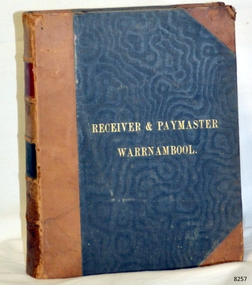 Flagstaff Hill Maritime Museum and Village
Book - Reference/Legal Statutes, John Ferres, Government Printer, The Victorian Legal Statutes Vol 3, Receiver Paymaster/Warrnambool, 1866
... These include: · Police Offences and Public Order: The legal frameworks for policing the goldfield boomtowns, managing public behaviour, and running early colonial prisons. · Public Works and Infrastructure: The acts authorising the construction of roads, bridges, and early municipal water supplies across the fast-growing colony. · Railways: The specific general legislation governing the expansion of Victoria's heavily subsidised, state-expanding railway networks. · Property and Land Transfer: Crucial laws managing land ownership, inheritance, and the foundational transfers of property as the colony shifted away from old squatter runs to permanent towns. · Wines, Beer, and Spirits: The colonial acts regulating the licensing of hotels and public houses, and managing the highly lucrative, tightly controlled alcohol trade. ...This volume is part of the first comprehensive consolidation of laws for the Colony of Victoria after it separated from New South Wales and established its own parliament. Specifically, Volume 3 is the final part of the core "Public and General" Victorian colonial laws. The first three volumes of the 1866 consolidation were organised alphabetically by legal topic. Volume 3 specifically contains all the major public acts running from P to W. Because it covers the tail end of the alphabet, it holds some of the most critical laws that built day-to-day society in 19th-century Victoria. These include: · Police Offences and Public Order: The legal frameworks for policing the goldfield boomtowns, managing public behaviour, and running early colonial prisons. · Public Works and Infrastructure: The acts authorising the construction of roads, bridges, and early municipal water supplies across the fast-growing colony. · Railways: The specific general legislation governing the expansion of Victoria's heavily subsidised, state-expanding railway networks. · Property and Land Transfer: Crucial laws managing land ownership, inheritance, and the foundational transfers of property as the colony shifted away from old squatter runs to permanent towns. · Wines, Beer, and Spirits: The colonial acts regulating the licensing of hotels and public houses, and managing the highly lucrative, tightly controlled alcohol trade.The Victorian Statutes Vol 3 Various Legal Statues /Warrnambool Publisher: John Ferres Government Printer Melbourne Date: 1866 Further Information: Three quarter leather. Corners worn lettering in gilt. non-fictionThis volume is part of the first comprehensive consolidation of laws for the Colony of Victoria after it separated from New South Wales and established its own parliament. Specifically, Volume 3 is the final part of the core "Public and General" Victorian colonial laws. The first three volumes of the 1866 consolidation were organised alphabetically by legal topic. Volume 3 specifically contains all the major public acts running from P to W. Because it covers the tail end of the alphabet, it holds some of the most critical laws that built day-to-day society in 19th-century Victoria. These include: · Police Offences and Public Order: The legal frameworks for policing the goldfield boomtowns, managing public behaviour, and running early colonial prisons. · Public Works and Infrastructure: The acts authorising the construction of roads, bridges, and early municipal water supplies across the fast-growing colony. · Railways: The specific general legislation governing the expansion of Victoria's heavily subsidised, state-expanding railway networks. · Property and Land Transfer: Crucial laws managing land ownership, inheritance, and the foundational transfers of property as the colony shifted away from old squatter runs to permanent towns. · Wines, Beer, and Spirits: The colonial acts regulating the licensing of hotels and public houses, and managing the highly lucrative, tightly controlled alcohol trade.flagstaff hill, warrnambool, shipwrecked coast, flagstaff hill maritime museum, maritime museum, shipwreck coast, flagstaff hill maritime village, great ocean road, book, pattison collection, warrnambool library, warrnambool mechanics’ institute, ralph eric pattison, corangamite regional library service, warrnambool city librarian, mechanics’ institute library, victorian library board, warrnambool books and records, warrnambool children’s library -
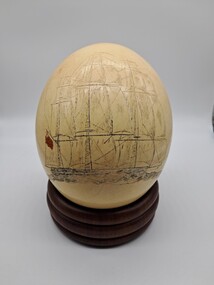 Glenelg Shire Council Cultural Collection
Artwork, other - Scrimshaw Ostrich Egg, Captain William Wilkinson, c. 1840
... Also, making the Utopia’s arrival in Portland a memorable event, 13 of crew deserted ship and headed for the Victorian goldfields. Only two were captured by the local mounted police near Mount Clay, north of Portland. ...Also, making the Utopia’s arrival in Portland a memorable event, 13 of crew deserted ship and headed for the Victorian goldfields. Only two were captured by the local mounted police near Mount Clay, north of Portland. ...Scrimshaw was a leisure activity for whalers and sailors. The egg is etched with two sailing ships. The markings in scrimshaw were made with the crude needles used for sail making and a black substance, possibly soot or tobacco juice was rubbed into the inscribed markings to bring the etched images into view. This egg belonged to Captain William Wilkinson. The immigrant ship Utopia sailed under a Captain Wilkinson arriving at Portland in 1854. Stacey Longstaff, Captain Wilkinson's great-great-grandson now living in Germany had inherited several items with associations to the Utopia. These included Captain Wilkinson’s sword; a decorative cut-paper memorial card acknowledging Captain Wilkinson’s death from cholera in Calcutta in 1855; an 1854 insurance certificate for Utopia; and a ship’s cabinet reputed to have housed the ship’s log. With no direct descendants to pass these items on to, Mr. Longstaff was looking for a suitable future home for them. Mr Longstaff found Glenelg Shire’s museum listings on the Culture Victoria website where he contacted Eleanor who in turn contacted us. Mr Longstaff decided that Portland was an appropriate home for the objects and negotiations commenced to transfer them to Portland and for their subsequent donation to Glenelg Shire Council’s Cultural Collection. The items were sent in two consignments - the sword, card and certificate initially, and once they had arrived in Portland, Mr Longstaff forwarded the cabinet. All items were sent at his own expense. During the time the parcels were in transit, emails were sent back and forth between Mr Longstaff and myself as we tracked the progress of the parcels from Rahden, Northern Germany to Portland. Utopia was one of the 37 ships that brought assisted immigrants to Portland in the 1850s. From 1851 to 1857, 11,395 immigrants first set foot on Australian soil at Portland. Arriving in Portland Bay on January 25, 1854, Captain Wilkinson was publicly praised by the passengers for the safe and speedy passage aboard the Utopia to Australia. Three testimonials written by the passengers appeared in the Portland Guardian on January 26. Also, making the Utopia’s arrival in Portland a memorable event, 13 of crew deserted ship and headed for the Victorian goldfields. Only two were captured by the local mounted police near Mount Clay, north of Portland. During the 83 day passage from Liverpool (UK) to Portland there were 5 births and 5 deaths aboard Utopia. The sword, certificate and memorial card will be exhibited at Portland’s History House in Cliff Street in a revamp of the display relating to assisted immigration into Portland in the 1850s. The ship’s cabinet will undergo conservation treatment before going on public display.Large egg with images of a ship carved into each side of the egg. There is red colouring over the flags on the ship. The ship is a sailing ship in full sail with water underneath. The egg has a crack and a hole in the top. It sits on a wooden rest.sailing, captain wilkinson, scrimshaw, egg, maritime, glenelg shire cultural collection, utopia
