
Showing 47 items matching " recreation equipment"
-
 Glen Eira Historical Society
Article - Murrumbeena Park
... ... Recreation equipment...Murrumbeena Park Murrumbeena Caulfield Parks Reserves Playgrounds Playground equipment Sports equipment Recreation equipment Children’s playground Gardens Sports grounds Playing fields Plants Kangaroo Road Murrumbeena Trees Sports establishments Recreations establishments Seesaws Slides Swings Monkey bars Murrumbeena Park Committee of Management Murrumbeena Cricket Club Murrumbeena Football Club Clubs Associations Sporting clubs Barbeques Picnics Caulfield Council Social facilities Murrumbeena Park Bowls Club Oakdale Angling Club Landscape Concept Plan Caulfield City Hall Caulfield Town Hall Municipal offices Official buildings Civic centres Local government Council chambers Walking trails THE AGE CAULFIELD CONTACT Article Murrumbeena Park ...This file contains three items. An article from THE AGE by Christopher Bantick, who reminisces on the facilities of Murrumbeena Park in decades past, and reflections on the changes the park has undergone in more recent times, dated 24/05/2008. Four coloured postcards of Murrumbeena Park displaying the flora, paths, play equipment, and facilities, taken by Margie McKenzie Photography, date unknown. An article from the CAULFIELD CONTACT listing the improvements that have and will be made to Murrumbeena Park, including a list of the facilities that are on offer as well as the sporting clubs that make use of the park, dated March 1992.murrumbeena park, murrumbeena, caulfield, parks, reserves, playgrounds, playground equipment, sports equipment, recreation equipment, children’s playground, gardens, sports grounds, playing fields, plants, kangaroo road murrumbeena, trees, sports establishments, recreations establishments, seesaws, slides, swings, monkey bars, murrumbeena park committee of management, murrumbeena cricket club, murrumbeena football club, clubs, associations, sporting clubs, barbeques, picnics, caulfield council, social facilities, murrumbeena park bowls club, oakdale angling club, landscape concept plan, caulfield city hall, caulfield town hall, municipal offices, official buildings, civic centres, local government, council chambers, walking trails, the age, caulfield contact -
Tatura Irrigation & Wartime Camps Museum
Tennis Racquet Press, 1940's
... internment camp recreation equipment...Press was made by Helmut Ruff for his daughter, Eva Ruff, in Camp 3. tennis racquet press ruff h internment camp recreation equipment Tennis Racquet press used to prevent warping of the wooden racquet when not in use. ...Press was made by Helmut Ruff for his daughter, Eva Ruff, in Camp 3.Tennis Racquet press used to prevent warping of the wooden racquet when not in use. Handmade.tennis racquet press, ruff h, internment camp recreation equipment -
Tatura Irrigation & Wartime Camps Museum
Tennis Racquet Press, 1940's
... Internment camp recreation equipment...Made in Camp 3 for Helmut Ruff. tennis racquet press ruff h Internment camp recreation equipment H Ruff Tennis racquet press used to prevent warping of the wooden racquet when not in use. ...Made in Camp 3 for Helmut Ruff.Tennis racquet press used to prevent warping of the wooden racquet when not in use. Handmade.H Rufftennis racquet press, ruff h, internment camp recreation equipment -
Tatura Irrigation & Wartime Camps Museum
Tennis Racquet, 1940's
... internment camp recreation equipment...Racquets were purhcased in 1945 through the Camp Canteen. tennis racquet slazengers australia ruff h internment camp recreation equipment Slazengers Wooden tennis racquet, with brown leather covered handle and gut strings. ...Used by internees at Camp 3, Tatura. Racquets were purhcased in 1945 through the Camp Canteen.Wooden tennis racquet, with brown leather covered handle and gut strings.Slazengerstennis racquet, slazengers australia, ruff h, internment camp recreation equipment -
 Whitehorse Historical Society Inc.
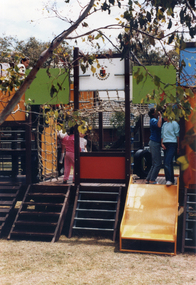
Photograph, Playground equipment
... recreation...playground equipment...city of nunawading parks and recreation playground equipment Coloured photograph of children on the portable playground equipment that was used at the Nunawading Council function Playground equipment Photograph Photograph ...Coloured photograph of children on the portable playground equipment that was used at the Nunawading Council functioncity of nunawading parks and recreation, playground equipment -
 Sunshine and District Historical Society Incorporated
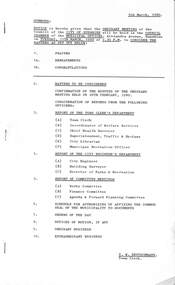
Administrative record - City of Sunshine - Commissioner Mr Alexander Alex George Gillon Collection 1976 - 1982 - Notice of ordinary meeting of the council 11th March 1980, City of Sunshine, 5th March 1980
... Marie Chaplin Proposal by the Sunshine Beautification Group Report of the Co-Ordinator of Welfare Services Family Day Care Programme Information and Co-Ordination Grant Donation from Ericssons Pty Ltd Child Care Equipment from Ericssons Broadmeadows Child Care Centre which became uneconomic and it was closed down Tenancy Law Reform West Sunshine Ethnic Community Child Care Co-Operative Limited Purchase of 90 Murray Street Sunshine West Proposed Purchase of Land Randall Street Maribyrnong Report of the Chief Health Surveyor Installation of a Septic Tank Sand Filter System Septic Tank Application Builders' Sanitary Service Health Act 1958 Quarterly Return to 31st December 1979 Offensive Trades Werribee Area Koga Nominees Pty ltd Lot 26 Holcourt Road Laverton Norther and Drybrook Nominees Pty Ltd Lot 28 Lincoln Street Laverton North Health Act Registrations for 1980 Prosecution Proceedings Sunshine Magistrates Court Report of the Superintendent Traffic & By-Laws Recreation Vehicles Complaint Rockbank Road Ardeer Report of the City Librarian Children's Services Librarian Report of the Municipal Recreation Officer Playground Equipment Midway Migrant Hostal Williamson Road Maribyrnong Report of the City Engineer & Planner Proposed Amendment No 114 to the Melbourne Metropolitan Planning Scheme Planning Permit Application Extension Platform to Wastepaper Section of Existing S.C.I. ...Marie Chaplin Proposal by the Sunshine Beautification Group Report of the Co-Ordinator of Welfare Services Family Day Care Programme Information and Co-Ordination Grant Donation from Ericssons Pty Ltd Child Care Equipment from Ericssons Broadmeadows Child Care Centre which became uneconomic and it was closed down Tenancy Law Reform West Sunshine Ethnic Community Child Care Co-Operative Limited Purchase of 90 Murray Street Sunshine West Proposed Purchase of Land Randall Street Maribyrnong Report of the Chief Health Surveyor Installation of a Septic Tank Sand Filter System Septic Tank Application Builders' Sanitary Service Health Act 1958 Quarterly Return to 31st December 1979 Offensive Trades Werribee Area Koga Nominees Pty ltd Lot 26 Holcourt Road Laverton Norther and Drybrook Nominees Pty Ltd Lot 28 Lincoln Street Laverton North Health Act Registrations for 1980 Prosecution Proceedings Sunshine Magistrates Court Report of the Superintendent Traffic & By-Laws Recreation Vehicles Complaint Rockbank Road Ardeer Report of the City Librarian Children's Services Librarian Report of the Municipal Recreation Officer Playground Equipment Midway Migrant Hostal Williamson Road Maribyrnong Report of the City Engineer & Planner Proposed Amendment No 114 to the Melbourne Metropolitan Planning Scheme Planning Permit Application Extension Platform to Wastepaper Section of Existing S.C.I. ...Notice of Ordinary Meeting of the Council 11th March 1980 Report of the Town Clerk's Department Report of the Town Clerk Discontinued Road Murray Street and Evelyn Crescent Sunshine West Melbourne & Metropolitan Board of Works Rating Final report of the Board of Review into the Role, Structure and Administration of Local Government Rosamond Bowling Club Proposed Application for a Liquor Licence Change of Meeting Date Recognition of Service of the late Mrs. Marie Chaplin Proposal by the Sunshine Beautification Group Report of the Co-Ordinator of Welfare Services Family Day Care Programme Information and Co-Ordination Grant Donation from Ericssons Pty Ltd Child Care Equipment from Ericssons Broadmeadows Child Care Centre which became uneconomic and it was closed down Tenancy Law Reform West Sunshine Ethnic Community Child Care Co-Operative Limited Purchase of 90 Murray Street Sunshine West Proposed Purchase of Land Randall Street Maribyrnong Report of the Chief Health Surveyor Installation of a Septic Tank Sand Filter System Septic Tank Application Builders' Sanitary Service Health Act 1958 Quarterly Return to 31st December 1979 Offensive Trades Werribee Area Koga Nominees Pty ltd Lot 26 Holcourt Road Laverton Norther and Drybrook Nominees Pty Ltd Lot 28 Lincoln Street Laverton North Health Act Registrations for 1980 Prosecution Proceedings Sunshine Magistrates Court Report of the Superintendent Traffic & By-Laws Recreation Vehicles Complaint Rockbank Road Ardeer Report of the City Librarian Children's Services Librarian Report of the Municipal Recreation Officer Playground Equipment Midway Migrant Hostal Williamson Road Maribyrnong Report of the City Engineer & Planner Proposed Amendment No 114 to the Melbourne Metropolitan Planning Scheme Planning Permit Application Extension Platform to Wastepaper Section of Existing S.C.I. Meat & Paper Pty Ltd Industrial Complex Somerville Road Tottenham Planning Permit Application Pole Sign 771 Geelong Road South East Corner Paw Paw Road Brookyln Planning Permit Application Subdivision and Erection of Detached Houses Neale Road Deer Park Planning Permit Application Detached House Lot 321 Doherty Street Deer Park Planning Permit Application Sky Sign Lot 2 Wright Street Sunshine Planning Permit Application Factory and Office Ballarat Road Deer Park Planning Permit Application Panel and Business Signs Lot 12 Francis Street Brooklyn Planning Permit Application Office 237 Hampshire Road Sunshine Planning Permit Application Warehouse Lot 1 Wright Street Sunshine Planning Permit Application Sky Sign Lots 4, 5 & 6 Ballarat Road Deer Park Contract Vehicle Wheel Wash Hulett Street Albion Westerngate North Estate Stage 2A Road & Drainage Works Completed Plan of Subdivision Mayo Street and Dundalk Street Sunshine Plan of Subdivision Ballarat Road and Hulett Street Albion Proposed Subdivision Paw Paw Road and Burgess Road Brooklyn Purchase of Land Lot 1 Wright Street Sunshine Plan of Subdivision I.C.I. Ballarat Road Deer Park Plan of Subdivision Douglas Street St. Albans Plan of Subdivision Douglas Street and Gooding Street St. Albans Pedestrian Signals Anderson Road at Ridley Street Albion Restricted Parking 99 to 103A Rosamond Road Maidstone Statcon Programme Additions to Network Traffic Control Items Half Cost Footpath Ballarat Road between McIntyre Road and Westmoreland Road Sunshine North Sewerage Facilities St. Albans East & Sunshine North Dickson Street Private Street Construction Hulett Street Private Street Scheme Proposed Construction of Whitesides Avenue / Collenso Street Sunshine West Private Street Scheme Diamond Reserve Pre-School & Infant Welfare Centre Variations Bon Thomas Pre-School Centre Variations Orama Street Child Care Centre Variations Highpoint West Welfare Centre Variations Depot Amenities Block Report of the Building Surveyor Building Over Easement 25 Huddersfield Road Deer Park Building Over Easement7 Melton Avenue Sunshine North Building Over Easement 36 Korowa Street Sunshine West Siting of Building Lot 421 Redditch Crescent Deer Park Siting of Building Lot 36 Andrew Street Sunshine Schedule for Authorising of Affixing the Common Seal of the Municipality to Documents Orders of the Day Accounts Submitted for Payment as a t 29th February 1980murray street, evelyn crescent, sunshine west, rosamond bowling club, rosamond road, maribyrnong, marie chaplin, sunshine beautification group, west sunshine ethnic community child care co-operative, randall street, koga nominees, holcourt road, drybrook nominees, lincoln street, laverton north, rockbank road, ardeer, midway migrant hostal, williamson road, s.c.i. meat & paper, somerville road, tottenham, geelong road, paw paw road, brookyln, neale road, deer park, doherty street, wright street, sunshine, ballarat road, francis street, hampshire road, hulett street, albion, mayo street, dundalk street, burgess road, i.c.i., douglas street, gooding street, st. albans, anderson road, ridley street, maidstone, mcintyre road, westmoreland road, dickson street, whitesides avenue, collenso street, diamond reserve pre-school & infant welfare centre, diamond avenue, albanvale, bon thomas pre-school centre, quinn street, orama street child care centre, orama street, highpoint west welfare centre, huddersfield road, melton avenue, korowa street, redditch crescent, andrew street -
 Sunshine and District Historical Society Incorporated
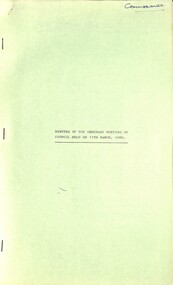
Administrative record - City of Sunshine - Commissioner Mr Alexander Alex George Gillon Collection 1976 - 1982 - Minutes of the ordinary meeting of council held on 11th March 1980, City of Sunshine, 11th March 1980
... Marie Chaplin Proposal by the Sunshine Beautification Group Report of the Co-Ordinator of Welfare Services Family Day Care Programme Information and Co-Ordination Grant Donation from Ericssons Pty Ltd Child Care Equipment from Ericssons Broadmeadows Child Care Centre which became uneconomic and it was closed down Tenancy Law Reform West Sunshine Ethnic Community Child Care Co-Operative Limited Purchase of 90 Murray Street Sunshine West Proposed Purchase of Land Randall Street Maribyrnong Report of the Chief Health Surveyor Installation of a Septic Tank Sand Filter System Septic Tank Application Builders' Sanitary Service Health Act 1958 Quarterly Return to 31st December 1979 Offensive Trades Werribee Area Koga Nominees Pty ltd Lot 26 Holcourt Road Laverton Norther and Drybrook Nominees Pty Ltd Lot 28 Lincoln Street Laverton North Health Act Registrations for 1980 Prosecution Proceedings Sunshine Magistrates Court Report of the Superintendent Traffic & By-Laws Recreation Vehicles Complaint Rockbank Road Ardeer Report of the City Librarian Children's Services Librarian Report of the Municipal Recreation Officer Playground Equipment Midway Migrant Hostal Williamson Road Maribyrnong Report of the City Engineer & Planner Proposed Amendment No 114 to the Melbourne Metropolitan Planning Scheme Planning Permit Application Extension Platform to Wastepaper Section of Existing S.C.I. ...Marie Chaplin Proposal by the Sunshine Beautification Group Report of the Co-Ordinator of Welfare Services Family Day Care Programme Information and Co-Ordination Grant Donation from Ericssons Pty Ltd Child Care Equipment from Ericssons Broadmeadows Child Care Centre which became uneconomic and it was closed down Tenancy Law Reform West Sunshine Ethnic Community Child Care Co-Operative Limited Purchase of 90 Murray Street Sunshine West Proposed Purchase of Land Randall Street Maribyrnong Report of the Chief Health Surveyor Installation of a Septic Tank Sand Filter System Septic Tank Application Builders' Sanitary Service Health Act 1958 Quarterly Return to 31st December 1979 Offensive Trades Werribee Area Koga Nominees Pty ltd Lot 26 Holcourt Road Laverton Norther and Drybrook Nominees Pty Ltd Lot 28 Lincoln Street Laverton North Health Act Registrations for 1980 Prosecution Proceedings Sunshine Magistrates Court Report of the Superintendent Traffic & By-Laws Recreation Vehicles Complaint Rockbank Road Ardeer Report of the City Librarian Children's Services Librarian Report of the Municipal Recreation Officer Playground Equipment Midway Migrant Hostal Williamson Road Maribyrnong Report of the City Engineer & Planner Proposed Amendment No 114 to the Melbourne Metropolitan Planning Scheme Planning Permit Application Extension Platform to Wastepaper Section of Existing S.C.I. ...Minutes of the Ordinary Meeting of Council held on 11th March 1980 Report of the Town Clerk's Department Report of the Town Clerk Discontinued Road Murray Street and Evelyn Crescent Sunshine West Melbourne & Metropolitan Board of Works Rating Final report of the Board of Review into the Role, Structure and Administration of Local Government Rosamond Bowling Club Proposed Application for a Liquor Licence Change of Meeting Date Recognition of Service of the late Mrs. Marie Chaplin Proposal by the Sunshine Beautification Group Report of the Co-Ordinator of Welfare Services Family Day Care Programme Information and Co-Ordination Grant Donation from Ericssons Pty Ltd Child Care Equipment from Ericssons Broadmeadows Child Care Centre which became uneconomic and it was closed down Tenancy Law Reform West Sunshine Ethnic Community Child Care Co-Operative Limited Purchase of 90 Murray Street Sunshine West Proposed Purchase of Land Randall Street Maribyrnong Report of the Chief Health Surveyor Installation of a Septic Tank Sand Filter System Septic Tank Application Builders' Sanitary Service Health Act 1958 Quarterly Return to 31st December 1979 Offensive Trades Werribee Area Koga Nominees Pty ltd Lot 26 Holcourt Road Laverton Norther and Drybrook Nominees Pty Ltd Lot 28 Lincoln Street Laverton North Health Act Registrations for 1980 Prosecution Proceedings Sunshine Magistrates Court Report of the Superintendent Traffic & By-Laws Recreation Vehicles Complaint Rockbank Road Ardeer Report of the City Librarian Children's Services Librarian Report of the Municipal Recreation Officer Playground Equipment Midway Migrant Hostal Williamson Road Maribyrnong Report of the City Engineer & Planner Proposed Amendment No 114 to the Melbourne Metropolitan Planning Scheme Planning Permit Application Extension Platform to Wastepaper Section of Existing S.C.I. Meat & Paper Pty Ltd Industrial Complex Somerville Road Tottenham Planning Permit Application Pole Sign 771 Geelong Road South East Corner Paw Paw Road Brookyln Planning Permit Application Subdivision and Erection of Detached Houses Neale Road Deer Park Planning Permit Application Detached House Lot 321 Doherty Street Deer Park Planning Permit Application Sky Sign Lot 2 Wright Street Sunshine Planning Permit Application Factory and Office Ballarat Road Deer Park Planning Permit Application Panel and Business Signs Lot 12 Francis Street Brooklyn Planning Permit Application Office 237 Hampshire Road Sunshine Planning Permit Application Warehouse Lot 1 Wright Street Sunshine Planning Permit Application Sky Sign Lots 4, 5 & 6 Ballarat Road Deer Park Contract Vehicle Wheel Wash Hulett Street Albion Westerngate North Estate Stage 2A Road & Drainage Works Completed Plan of Subdivision Mayo Street and Dundalk Street Sunshine Plan of Subdivision Ballarat Road and Hulett Street Albion Proposed Subdivision Paw Paw Road and Burgess Road Brooklyn Purchase of Land Lot 1 Wright Street Sunshine Plan of Subdivision I.C.I. Ballarat Road Deer Park Plan of Subdivision Douglas Street St. Albans Plan of Subdivision Douglas Street and Gooding Street St. Albans Pedestrian Signals Anderson Road at Ridley Street Albion Restricted Parking 99 to 103A Rosamond Road Maidstone Statcon Programme Additions to Network Traffic Control Items Half Cost Footpath Ballarat Road between McIntyre Road and Westmoreland Road Sunshine North Sewerage Facilities St. Albans East & Sunshine North Dickson Street Private Street Construction Hulett Street Private Street Scheme Proposed Construction of Whitesides Avenue / Collenso Street Sunshine West Private Street Scheme Diamond Reserve Pre-School & Infant Welfare Centre Variations Bon Thomas Pre-School Centre Variations Orama Street Child Care Centre Variations Highpoint West Welfare Centre Variations Depot Amenities Block Report of the Building Surveyor Building Over Easement 25 Huddersfield Road Deer Park Building Over Easement7 Melton Avenue Sunshine North Building Over Easement 36 Korowa Street Sunshine West Siting of Building Lot 421 Redditch Crescent Deer Park Siting of Building Lot 36 Andrew Street Sunshine Schedule for Authorising of Affixing the Common Seal of the Municipality to Documents Orders of the Day Accounts Submitted for Payment as a t 29th February 1980 Extraordinary Business Report of the Town Clerk Staff Matters Brooklyn Hall Report of the City Engineer & Planner Plan of Subdivision I.C.I. Ballarat Road Deer Parkmurray street, evelyn crescent, sunshine west, rosamond bowling club, rosamond road, maribyrnong, marie chaplin, sunshine beautification group, west sunshine ethnic community child care co-operative, randall street, koga nominees, holcourt road, drybrook nominees, lincoln street, laverton north, rockbank road, ardeer, midway migrant hostal, williamson road, s.c.i. meat & paper, somerville road, tottenham, geelong road, paw paw road, brookyln, neale road, deer park, doherty street, wright street, sunshine, ballarat road, francis street, hampshire road, hulett street, albion, mayo street, dundalk street, burgess road, i.c.i., douglas street, gooding street, st. albans, anderson road, ridley street, maidstone, mcintyre road, westmoreland road, dickson street, whitesides avenue, collenso street, diamond reserve pre-school & infant welfare centre, diamond avenue, albanvale, bon thomas pre-school centre, quinn street, orama street child care centre, orama street, highpoint west welfare centre, huddersfield road, melton avenue, korowa street, redditch crescent, andrew street, brooklyn hall -
 Flagstaff Hill Maritime Museum and Village
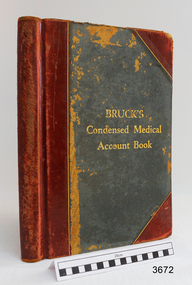
Financial record - Medical Accounts, c. 1929
... Recreation Reserve, on High Street, Koroit. John died in Warrnambool in 1887 but even 50 years later an ex-student wrote a letter to The Age newspaper, recalling memories of John Lee, his head master of the 1860s at the Tower Hill Lake Common School in Koroit. DR WILLIAM ROY ANGUS Doctor Angus had previously practiced in Nhill. The accounts book and many more items of Dr Angus were donated to Flagstaff Hill Maritime Village by the family of Dr Angus, Surgeon and Oculist. The Medical Accounts Book is part of the “W.R. Angus Collection” that includes historical medical equipment...Recreation Reserve, on High Street, Koroit. John died in Warrnambool in 1887 but even 50 years later an ex-student wrote a letter to The Age newspaper, recalling memories of John Lee, his head master of the 1860s at the Tower Hill Lake Common School in Koroit. DR WILLIAM ROY ANGUS Doctor Angus had previously practiced in Nhill. The accounts book and many more items of Dr Angus were donated to Flagstaff Hill Maritime Village by the family of Dr Angus, Surgeon and Oculist. The Medical Accounts Book is part of the “W.R. Angus Collection” that includes historical medical equipment ...The accounts records in the Medical Accounts book start in February 1929 and refer to many of Warrnambool’s local names and addresses. The ledger book belonged to Dr John Hunter Henderson who conducted his medical practice from his home and surgery at Birchwood, 214 Koroit Street, Warrnambool, from 1904-1939. This particular accounts book spans from February 1929 to May 1931. Dr Henderson retired in 1939 and moved to Melbourne. His home, medical practice and many of his surgery’s items, including the Medical Accounts Book, were transferred to Dr William Roy Angus in that same year. The patients’ addresses on page 1 of the ledger include John Lee of St Marys Road, Wangoom. John Lee’s name has two entries on this page. He Grandfather, also John Lee, was a notable pioneer of the district. JOHN LEE John Lee was born in 1884 and died in 1948. His father (1845-1892) and grandfather (1814-1887) were also named John Lee. John Lee’s Grandfather, Grandmother, Father and Uncle arrived in Australia from Ireland in 1852. The colonial family settled in St Marys Road, Wangoom, Victoria and have a long association with the district. John Lee, born in 1814, is proudly listed amongst the names on the commemorative Warrnambool Pioneers Board, having arrived in Australia In 1852. In 1855 John’s Grandfather John Lee, aged 41, was head teacher of the Tower Hill School on the south bank of Tower Hill. Two years later, in 1857, the north bank of Tower Hill was surveyed and named the township of Koroit. In November of that year John Lee continued on as head master, now at the newly built Tower Hill Lake National School Number 618, on land that is now Victoria Park Recreation Reserve, on High Street, Koroit. John died in Warrnambool in 1887 but even 50 years later an ex-student wrote a letter to The Age newspaper, recalling memories of John Lee, his head master of the 1860s at the Tower Hill Lake Common School in Koroit. DR WILLIAM ROY ANGUS Doctor Angus had previously practiced in Nhill. The accounts book and many more items of Dr Angus were donated to Flagstaff Hill Maritime Village by the family of Dr Angus, Surgeon and Oculist. The Medical Accounts Book is part of the “W.R. Angus Collection” that includes historical medical equipment, surgical instruments and material once belonging to Dr Edward Ryan and Dr Thomas Francis Ryan, (both of Nhill, Victoria) as well as Dr Angus’ own belongings. The Collection’s history spans the medical practices of the two Doctors Ryan, from 1885-1926 plus that of Dr John Henderson from 1904+1939 and Dr Angus until he retired, from 1923 - 1969. The Medical Accounts Book is significant as a record of the names, addresses and health of the people in Warrnambool and District in the early 20th century. The Book is significant for its early 20th century association with two local doctors, Dr John Henderson and Doctor William Roy Angus, whose practices span from 1904-1969. The Book is also significant historically for its association with the ancestors of patient John Lee, whose Grandfather is recognised on the Warrnambool pioneer Board as one of the early pioneers in Victoria, arriving in 1852. Ledger, Medical Accounts Book. Title is Bruck’s Condensed Medical Account Book. Book has hardback, green cover, bound and reinforced with red leather and printed title in gold lettering. The pages of index tabs in the beginning of the book have no entries. The first page of the accounts section of the book have the hand written heading “February 1929”. The book continues until the end of May 1931. Inside both front and back cover are hand written notes in different scrips. Both black and blue ink has been used. The book belonged to Dr John Hunter Henderson. It is part of the W.R. Angus Collection."Bruck’s Condensed Medical Account Book"flagstaff hill, warrnambool, shipwrecked coast, flagstaff hill maritime museum, maritime museum, shipwreck coast, flagstaff hill maritime village, great ocean road, medical treatment, medical history, medical accounts, medical administration, medical record 1929, ledger, bruck’s condensed medical account book, john hunter henderson, william roy angus, edward ryan, thomas francis ryan, john lee, tower hill school, tower hill lake national school, koroit primary school, victoria school 628, st marys wangoom, warrnambool pioneer, birchwood, 214 koroit street warrnambool -
 Flagstaff Hill Maritime Museum and Village
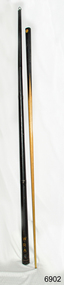
Billiard Cue, 1879 – 1919
... equipment...alcock & co pty ltd...w cook billiard cue 25/4/19...recreation...Dr Angus assisted Dr Tom Ryan, a pioneer in the use of X-rays and in ocular surgery. flagstaff hill warrnambool shipwrecked coast flagstaff hill maritime museum maritime museum shipwreck coast flagstaff hill maritime village great ocean road dr w r angus dr ryan surgical instrument t.s.s. largs bay warrnambool base hospital nhill base hospital mira hospital flying doctor billiard cue billiard equipment alcock & co pty ltd w cook billiard cue 25/4/19 recreation w.r. angus Case has gold embossed "W.R.A." ...This billiard cue donated to Flagstaff Hill Maritime Village by the family of Doctor William Roy Angus, Surgeon and Oculist. It would have been purchased in 1919 at the latest, which coincides with the time that Dr Angus was a medical student at Adelaide University. It is now part of the “W.R. Angus Collection” includes historical medical equipment, surgical instruments and material once belonging to Dr Edward Ryan and Dr Thomas Francis Ryan, (both of Nhill, Victoria) as well as Dr Angus’ own belongings. The Collection’s history spans the medical practices of the two Doctors Ryan, from 1885-1926 plus that of Dr Angus, up until 1969. ABOUT THE “W.R.ANGUS COLLECTION” Doctor William Roy Angus M.B., B.S., Adel., 1923, F.R.C.S. Edin.,1928 (also known as Dr Roy Angus) was born in Murrumbeena, Victoria in 1901 and lived until 1970. He qualified as a doctor in 1923 at University of Adelaide, was Resident Medical Officer at the Royal Adelaide Hospital in 1924 and for a period was house surgeon to Sir (then Mr.) Henry Simpson Newland. Dr Angus was briefly an Assistant to Dr Riddell of Kapunda, then commenced private practice at Curramulka, Yorke Peninsula, SA, where he was physician, surgeon and chemist. In 1926, he was appointed as new Medical Assistant to Dr Thomas Francis Ryan (T.F. Ryan, or Tom), in Nhill, Victoria, where his experiences included radiology and pharmacy. In 1927 he was Acting House Surgeon in Dr Tom Ryan’s absence. Dr Angus had become engaged to Gladys Forsyth and they decided he further his studies overseas in the UK in 1927. He studied at London University College Hospital and at Edinburgh Royal Infirmary and in 1928, was awarded FRCS (Fellow from the Royal College of Surgeons), Edinburgh. He worked his passage back to Australia as a Ship’s Surgeon on the on the Australian Commonwealth Line’s T.S.S. Largs Bay. Dr Angus married Gladys in 1929, in Ballarat. (They went on to have one son (Graham 1932, born in SA) and two daughters (Helen (died 12/07/1996) and Berenice (Berry), both born at Mira, Nhill ) According to Berry, her mother Gladys made a lot of their clothes. She was very talented and did some lovely embroidery including lingerie for her trousseau and beautifully handmade baby clothes. Dr Angus was a ‘flying doctor’ for the A.I.M. (Australian Inland Ministry) Aerial Medical Service in 1928 . Its first station was in the remote town of Oodnadatta, where Dr Angus was stationed. He was locum tenens there on North-South Railway at 21 Mile Camp. He took up this ‘flying doctor’ position in response to a call from Dr John Flynn; the organisation was later known as the Flying Doctor Service, then the Royal Flying Doctor Service. A lot of his work during this time involved dental surgery also. Between 1928-1932 he was surgeon at the Curramulka Hospital, Yorke Peninsula, South Australia. In 1933 Dr Angus returned to Nhill and purchased a share of the Nelson Street practice and Mira hospital (a 2 bed ward at the Nelson Street Practice) from Dr Les Middleton one of the Middleton Brothers, the current owners of what previously once Dr Tom Ryan’s practice. Dr Tom and his brother had worked as surgeons included eye surgery. Dr Tom Ryan performed many of his operations in the Mira private hospital on his premises. He had been House Surgeon at the Nhill Hospital 1902-1926. Dr Tom Ryan had one of the only two pieces of radiology equipment in Victoria during his practicing years – The Royal Melbourne Hospital had the other one. Over the years Dr Tom Ryan had gradually set up what was effectively a training school for country general-practitioner-surgeons. Each patient was carefully examined, including using the X-ray machine, and any surgery was discussed and planned with Dr Ryan’s assistants several days in advance. Dr Angus gained experience in using the X-ray machine there during his time as assistant to Dr Ryan. When Dr Angus bought into the Nelson Street premises in Nhill he was also appointed as the Nhill Hospital’s Honorary House Surgeon 1933-1938. His practitioner’s plate from his Nhill surgery is now mounted on the doorway to the Port Medical Office at Flagstaff Hill Maritime Village, Warrnambool. When Dr Angus took up practice in the Dr Edward and Dr Tom Ryan’s old premises he obtained their extensive collection of historical medical equipment and materials spanning 1884-1926. A large part of this collection is now on display at the Port Medical Office at Flagstaff Hill Maritime Village in Warrnambool. In 1939 Dr Angus and his family moved to Warrnambool where he purchased “Birchwood,” the 1852 home and medical practice of Dr John Hunter Henderson, at 214 Koroit Street. (This property was sold in1965 to the State Government and is now the site of the Warrnambool Police Station. and an ALDI sore is on the land that was once their tennis court). The Angus family was able to afford gardeners, cooks and maids; their home was a popular place for visiting dignitaries to stay whilst visiting Warrnambool. Dr Angus had his own silk worm farm at home in a Mulberry tree. His young daughter used his centrifuge for spinning the silk. Dr Angus was appointed on a part-time basis as Port Medical Officer (Health Officer) in Warrnambool and held this position until the 1940’s when the government no longer required the service of a Port Medical Officer in Warrnambool; he was thus Warrnambool’s last serving Port Medical Officer. (Masters of immigrant ships arriving in port reported incidents of diseases, illness and death and the Port Medical Officer made a decision on whether the ship required Quarantine and for how long, in this way preventing contagious illness from spreading from new immigrants to the residents already in the colony.) Dr Angus was a member of the Australian Medical Association, for 35 years and surgeon at the Warrnambool Base Hospital 1939-1942, He served as a Surgeon Captain during WWII1942-45, in Ballarat, Victoria, and in Bonegilla, N.S.W., completing his service just before the end of the war due to suffering from a heart attack. During his convalescence he carved an intricate and ‘most artistic’ chess set from the material that dentures were made from. He then studied ophthalmology at the Royal Melbourne Eye and Ear Hospital and created cosmetically superior artificial eyes by pioneering using the intrascleral cartilage. Angus received accolades from the Ophthalmological Society of Australasia for this work. He returned to Warrnambool to commence practice as an ophthalmologist, pioneering in artificial eye improvements. He was Honorary Consultant Ophthalmologist to Warrnambool Base Hospital for 31 years. He made monthly visits to Portland as a visiting surgeon, to perform eye surgery. He represented the Victorian South-West subdivision of the Australian Medical Association as its secretary between 1949 and 1956 and as chairman from 1956 to 1958. In 1968 Dr Angus was elected member of Spain’s Barraquer Institute of Barcelona after his research work in Intrasclearal cartilage grafting, becoming one of the few Australian ophthalmologists to receive this honour, and in the following year presented his final paper on Living Intrasclearal Cartilage Implants at the Inaugural Meeting of the Australian College of Ophthalmologists in Melbourne In his personal life Dr Angus was a Presbyterian and treated Sunday as a Sabbath, a day of rest. He would visit 3 or 4 country patients on a Sunday, taking his children along ‘for the ride’ and to visit with him. Sunday evenings he would play the Pianola and sing Scottish songs to his family. One of Dr Angus’ patients was Margaret MacKenzie, author of a book on local shipwrecks that she’d seen as an eye witness from the late 1880’s in Peterborough, Victoria. In the early 1950’s Dr Angus, painted a picture of a shipwreck for the cover jacket of Margaret’s book, Shipwrecks and More Shipwrecks. She was blind in later life and her daughter wrote the actual book for her. Dr Angus and his wife Gladys were very involved in Warrnambool’s society with a strong interest in civic affairs. He had an interest in people and the community They were both involved in the creation of Flagstaff Hill, including the layout of the gardens. After his death (28th March 1970) his family requested his practitioner’s plate, medical instruments and some personal belongings be displayed in the Port Medical Office surgery at Flagstaff Hill Maritime Village, and be called the “W. R. Angus Collection”. (References include: The Cue Coolector and his website www.thecuecollector.com, history of Alcock www.alcock.com.au, Alcocks & Billiards in Australia, by Alcocks, 12 page booklet, William Cook on www.thecuecollector.com, conversations with Berry McDade, daughter of Dr. W.R. Angus)The W.R. Angus Collection is significant for still being located at the site it is connected with, Doctor Angus being the last Port Medical Officer in Warrnambool. The collection of medical instruments and other equipment is culturally significant, being an historical example of medicine from late 19th to mid-20th century. Dr Angus assisted Dr Tom Ryan, a pioneer in the use of X-rays and in ocular surgery. Billiard cue in tapered case, part of W.R. Angus Collection. Metal case, painted black, hinged lid, green felt lining; contains light coloured timber billiard cue with black pattern on handle. Case has gold embossed initials of Dr Angus - W.R.A. Cue butt has round badge inlay of white, grained material with maker's details, Alcock & Co. Pty Ltd. of Melbourne with a Registered model W. Cook [William Cook] and a date 25/4/79 [1879].Case has gold embossed "W.R.A." Butt of cue has inlay with silver text "ALCOCK & CO. / Propty Ld / REGd / W. Cook / 25/4/79 / MELBOURNE - - - " flagstaff hill, warrnambool, shipwrecked coast, flagstaff hill maritime museum, maritime museum, shipwreck coast, flagstaff hill maritime village, great ocean road, dr w r angus, dr ryan, surgical instrument, t.s.s. largs bay, warrnambool base hospital, nhill base hospital, mira hospital, flying doctor, billiard cue, billiard equipment, alcock & co pty ltd, w cook billiard cue 25/4/19, recreation w.r. angus -
 Orbost & District Historical Society
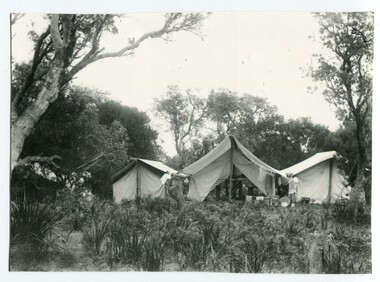
black and white photograph, first half 20th century
... recreation-camping on back - " Camping at C. Conran" A black / white photograph showing three large tents side by side in a bush setting. The middle tent is open and set up as a kitchen and the outer two appear to be sleeping quarters. There is fishing equipment ...This photograph is linked with photograph 1168. Orbost locals have been taking camping holidays at East Cape since at least the early 20th century. From the mid-1940s about a dozen huts were located there, mostly by locals from the Orbost area, to establish what was known as the 'Conran Settlement' or 'Conran Community'. These huts were subject to permissive occupancy laws which were invoked by the State Labor Government to force their removal in 1986. (Wikipedia)Orbost locals have been camping at Cape Conran since at least the early 20th century. This campsite is from a time before Cape Conran Coastal Park a 11,700 hectare area was declared a coastal park under the National Parks Act in 1997 and camping areas were formalised.A black / white photograph showing three large tents side by side in a bush setting. The middle tent is open and set up as a kitchen and the outer two appear to be sleeping quarters. There is fishing equipment against the middle tent - nets and tin tubs.on back - " Camping at C. Conran"cape-conran recreation-camping -
 Orbost & District Historical Society
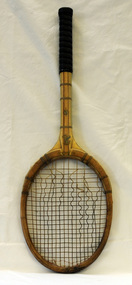
tennis racquet, 1930-1940
... This item is an example of an early piece of sports' equipment which was manufactured using different materials. tennis-raquet sport recreation phillips-john orbost-tennis-club ALL ENGLAND Genuine Weather Proof SLAZENGER Reinforced Cane Sealed finish A wooden tennis racquet with a reinforced cane handle. ...The tennis racquet belonged to John Phillips who used it in the late 1950s / early 1960s. It was not a new racquet when Ihe started using it, but a pass-me-down from his father. He purchased his first new racquet in the mid 60s and gave this racquet to the Orbost Museum to go in the racquet press so that people would have an idea of what the item (press) was used for - to stop wooden framed racquets with gut strings from warping. John played tennis at Orbost Tennis Club from 1969-1981 - vice president 1971-77, president 1977-81, secretary of Orbost & District Tennis Association 1975-81. He is a Life Member of the Orbost Tennis Club (1980). John is also a Life Member of the Orbost & District Historical Society.This item is an example of an early piece of sports' equipment which was manufactured using different materials.A wooden tennis racquet with a reinforced cane handle. The handle has a black leather grip. The frame is wooden ash with gut strings.ALL ENGLAND Genuine Weather Proof SLAZENGER Reinforced Cane Sealed finishtennis-raquet sport recreation phillips-john orbost-tennis-club -
 Flagstaff Hill Maritime Museum and Village
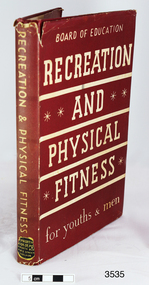
Book - Medical Textbook, His Majesty's Stationery Office, Recreation and Physical Fitness for Youths and Men, 1938
... equipment is culturally significant, being an historical example of medicine from late 19th to mid-20th century. Dr Angus assisted Dr Tom Ryan, a pioneer in the use of X-rays and in ocular surgery. flagstaff hill warrnambool shipwrecked-coast flagstaff-hill flagstaff-hill-maritime-museum maritime-museum shipwreck-coast flagstaff-hill-maritime-village national fitness campaign fit for a purpose dr w r angus medical history medical treatment medical education his majesty's stationery office medical textbook Label "EPWORTH BOOK DEPOT/BOOK SELLERS/PIRIE ST, ADELAIDE" Pencil "W.R. Angus" and on pge edges "A N. G U S" Recreation ...This medical book was used by Dr Angus in his practice in Warrnambool and was probably connected with his association with the National Fitness Council and his assistance with the National Fitness Campaign “Fit for Purpose”. It was donated to Flagstaff Hill Maritime Village by the family of Doctor William Roy Angus, Surgeon and Oculist. It is part of the “W.R. Angus Collection” that includes historical medical equipment, surgical instruments and material once belonging to Dr Edward Ryan and Dr Thomas Francis Ryan, (both of Nhill, Victoria) as well as Dr Angus’ own belongings. The Collection’s history spans the medical practices of the two Doctors Ryan, from 1885-1926 plus that of Dr Angus, up until 1969. ABOUT THE “W.R.ANGUS COLLECTION” Doctor William Roy Angus M.B., B.S., Adel., 1923, F.R.C.S. Edin.,1928 (also known as Dr Roy Angus) was born in Murrumbeena, Victoria in 1901 and lived until 1970. He qualified as a doctor in 1923 at University of Adelaide, was Resident Medical Officer at the Royal Adelaide Hospital in 1924 and for a period was house surgeon to Sir (then Mr.) Henry Simpson Newland. Dr Angus was briefly an Assistant to Dr Riddell of Kapunda, then commenced private practice at Curramulka, Yorke Peninsula, SA, where he was physician, surgeon and chemist. In 1926, he was appointed as new Medical Assistant to Dr Thomas Francis Ryan (T.F. Ryan, or Tom), in Nhill, Victoria, where his experiences included radiology and pharmacy. In 1927 he was Acting House Surgeon in Dr Tom Ryan’s absence. Dr Angus had become engaged to Gladys Forsyth and they decided he would take time to further his studies overseas in the UK in 1927. He studied at London University College Hospital and at Edinburgh Royal Infirmary and in 1928, was awarded FRCS (Fellow from the Royal College of Surgeons), Edinburgh. He worked his passage back to Australia as a Ship’s Surgeon on the on the Australian Commonwealth Line’s SS Largs Bay. Dr Angus married Gladys in 1929, in Ballarat. (They went on to have one son (Graham 1932, born in SA) and two daughters (Helen (died 12/07/1996) and Berenice (Berry), both born at Mira, Nhill ) Dr Angus was a ‘flying doctor’ for the A.I.M. (Australian Inland Ministry) Aerial Medical Service in 1928 . The organisation began in South Australia through the Presbyterian Church in that year, with its first station being in the remote town of Oodnadatta, where Dr Angus was stationed. He was locum tenens there on North-South Railway at 21 Mile Camp. He took up this ‘flying doctor’ position in response to a call from Dr John Flynn; the organisation was later known as the Flying Doctor Service, then the Royal Flying Doctor Service. A lot of his work during this time involved dental surgery also. Between 1928-1932 he was surgeon at the Curramulka Hospital, Yorke Peninsula, South Australia. In 1933 Dr Angus returned to Nhill where he’d previously worked as Medical Assistant and purchased a share of the Nelson Street practice and Mira hospital from Dr Les Middleton one of the Middleton Brothers, the current owners of what was once Dr Tom Ryan’s practice. Dr L Middleton was House Surgeon to the Nhill Hospital 1926-1933, when he resigned. [Dr Tom Ryan’s practice had originally belonged to his older brother Dr Edward Ryan, who came to Nhill in 1885. Dr Edward saw patients at his rooms, firstly in Victoria Street and in 1886 in Nelson Street, until 1901. The Nelson Street practice also had a 2 bed ward, called Mira Private Hospital ). Dr Edward Ryan was House Surgeon at the Nhill Hospital 1884-1902 . He also had occasions where he successfully performed veterinary surgery for the local farmers too. Dr Tom Ryan then purchased the practice from his brother in 1901. Both Dr Edward and Dr Tom Ryan work as surgeons included eye surgery. Dr Tom Ryan performed many of his operations in the Mira private hospital on his premises. He too was House Surgeon at the Nhill Hospital 1902-1926. Dr Tom Ryan had one of the only two pieces of radiology equipment in Victoria during his practicing years – The Royal Melbourne Hospital had the other one. Over the years Dr Tom Ryan gradually set up what was effectively a training school for country general-practitioner-surgeons. Each patient was carefully examined, including using the X-ray machine, and any surgery was discussed and planned with Dr Ryan’s assistants several days in advance. Dr Angus gained experience in using the X-ray machine there during his time as assistant to Dr Ryan. Dr Tom Ryan moved from Nhill in 1926. He became a Fellow of the Royal Australasian College of Surgeons in 1927, soon after its formation, a rare accolade for a doctor outside any of the major cities. He remained a bachelor and died suddenly on 7th Dec 1955, aged 91, at his home in Ararat. Scholarships and prizes are still awarded to medical students in the honour of Dr T.F. Ryan and his father, Dr Michael Ryan, and brother, John Patrick Ryan. ] When Dr Angus bought into the Nelson Street premises in Nhill he was also appointed as the Nhill Hospital’s Honorary House Surgeon 1933-1938. His practitioner’s plate from his Nhill surgery states “HOURS Daily, except Tuesdays, Fridays and Saturday afternoons, 9-10am, 2-4pm, 7-8pm. Sundays by appointment”. This plate is now mounted on the doorway to the Port Medical Office at Flagstaff Hill Maritime Village, Warrnambool. Dr Edward Ryan and Dr Tom Ryan had an extensive collection of historical medical equipment and materials spanning 1884-1926 and when Dr Angus took up practice in their old premises he obtained this collection, a large part of which is now on display at the Port Medical Office at Flagstaff Hill Maritime Village in Warrnambool. During his time in Nhill Dr Angus was involved in the merging of the Mira Hospital and Nhill Public Hospital into one public hospital and the property titles passed on to Nhill Hospital in 1939. In 1939 Dr Angus and his family moved to Warrnambool where he purchased “Birchwood,” the 1852 home and medical practice of Dr John Hunter Henderson, at 214 Koroit Street. (This property was sold in1965 to the State Government and is now the site of the Warrnambool Police Station. ). The Angus family was able to afford gardeners, cooks and maids; their home was a popular place for visiting dignitaries to stay whilst visiting Warrnambool. Dr Angus had his own silk worm farm at home in a Mulberry tree. His young daughter used his centrifuge for spinning the silk. Dr Angus was appointed on a part-time basis as Port Medical Officer (Health Officer) in Warrnambool and held this position until the 1940’s when the government no longer required the service of a Port Medical Officer in Warrnambool; he was thus Warrnambool’s last serving Port Medical Officer. (The duties of a Port Medical Officer were outlined by the Colonial Secretary on 21st June, 1839 under the terms of the Quarantine Act. Masters of immigrant ships arriving in port reported incidents of diseases, illness and death and the Port Medical Officer made a decision on whether the ship required Quarantine and for how long, in this way preventing contagious illness from spreading from new immigrants to the residents already in the colony.) Dr Angus was a member of the Australian Medical Association, for 35 years and surgeon at the Warrnambool Base Hospital 1939-1942, He served as a Surgeon Captain during WWII1942-45, in Ballarat, Victoria, and in Bonegilla, N.S.W., completing his service just before the end of the war due to suffering from a heart attack. During his convalescence he carved an intricate and ‘most artistic’ chess set from the material that dentures were made from. He then studied ophthalmology at the Royal Melbourne Eye and Ear Hospital and created cosmetically superior artificial eyes by pioneering using the intrascleral cartilage. Angus received accolades from the Ophthalmological Society of Australasia for this work. He returned to Warrnambool to commence practice as an ophthalmologist, pioneering in artificial eye improvements. He was Honorary Consultant Ophthalmologist to Warrnambool Base Hospital for 31 years. He made monthly visits to Portland as a visiting surgeon, to perform eye surgery. He represented the Victorian South-West subdivision of the Australian Medical Association as its secretary between 1949 and 1956 and as chairman from 1956 to 1958. In 1968 Dr Angus was elected member of Spain’s Barraquer Institute of Barcelona after his research work in Intrasclearal cartilage grafting, becoming one of the few Australian ophthalmologists to receive this honour, and in the following year presented his final paper on Living Intrasclearal Cartilage Implants at the Inaugural Meeting of the Australian College of Ophthalmologists in Melbourne In his personal life Dr Angus was a Presbyterian and treated Sunday as a Sabbath, a day of rest. He would visit 3 or 4 country patients on a Sunday, taking his children along ‘for the ride’ and to visit with him. Sunday evenings he would play the pianola and sing Scottish songs to his family. One of Dr Angus’ patients was Margaret MacKenzie, author of a book on local shipwrecks that she’d seen as an eye witness from the late 1880’s in Peterborough, Victoria. In the early 1950’s Dr Angus, painted a picture of a shipwreck for the cover jacket of Margaret’s book, Shipwrecks and More Shipwrecks. She was blind in later life and her daughter wrote the actual book for her. Dr Angus and his wife Gladys were very involved in Warrnambool’s society with a strong interest in civic affairs. Their interests included organisations such as Red Cross, Rostrum, Warrnambool and District Historical Society (founding members), Wine and Food Society, Steering Committee for Tertiary Education in Warrnambool, Local National Trust, Good Neighbour Council, Housing Commission Advisory Board, United Services Institute, Legion of Ex-Servicemen, Olympic Pool Committee, Food for Britain Organisation, Warrnambool Hospital, Anti-Cancer Council, Boys’ Club, Charitable Council, National Fitness Council and Air Raid Precautions Group. He was also a member of the Steam Preservation Society and derived much pleasure from a steam traction engine on his farm. He had an interest in people and the community He and his wife Gladys were both involved in the creation of Flagstaff Hill, including the layout of the gardens. After his death (28th March 1970) his family requested his practitioner’s plate, medical instruments and some personal belongings be displayed in the Port Medical Office surgery at Flagstaff Hill Maritime Village, and be called the “W. R. Angus Collection”. The W.R. Angus Collection is significant for still being located at the site it is connected with, Doctor Angus being the last Port Medical Officer in Warrnambool. The collection of medical instruments and other equipment is culturally significant, being an historical example of medicine from late 19th to mid-20th century. Dr Angus assisted Dr Tom Ryan, a pioneer in the use of X-rays and in ocular surgery. Recreation and Physical Fitness for Youths and Men, Board of Education. Pub 1938, His Majesty's Stationery Office, Adastral House, Kingsway, London, W.C. 2, Label "EPWORTH BOOK DEPOT/BOOK SELLERS/PIRIE ST, ADELAIDE" Pencil "W.R. Angus" and on pge edges "A N. G U S" (W.R. Angus Collection) Label "EPWORTH BOOK DEPOT/BOOK SELLERS/PIRIE ST, ADELAIDE" Pencil "W.R. Angus" and on pge edges "A N. G U S" flagstaff hill, warrnambool, shipwrecked-coast, flagstaff-hill, flagstaff-hill-maritime-museum, maritime-museum, shipwreck-coast, flagstaff-hill-maritime-village, national fitness campaign, fit for a purpose, dr w r angus, medical history, medical treatment, medical education, his majesty's stationery office, medical textbook -
 Glenelg Shire Council Cultural Collection
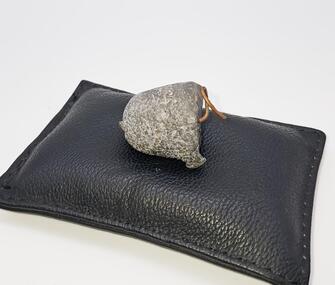
Equipment - lead sinker
... Lead sinkers were used to help the bait sink while rod fishing. fishing recreation leisure None dark grey lead sinker, domed shaped with a flat bottom. copper coloured wire through the centre, curling out the bottom. Equipment ...Lead sinkers were used to help the bait sink while rod fishing.dark grey lead sinker, domed shaped with a flat bottom. copper coloured wire through the centre, curling out the bottom. Nonefishing, recreation leisure -
 Halls Gap & Grampians Historical Society
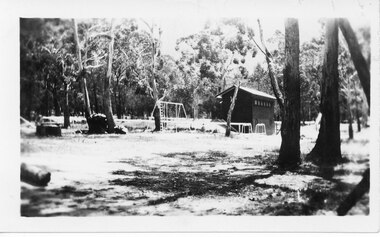
Photograph - B/W
... RECREATION Sport The photo is a distance shot of a tall narrow building with a pitched roof and small windows high up along the side. There is a metal set of swings/ladder and a lower set of metal equipment near the building. ...This is a photo of the Halls Gap Recreation area. The building is possibly the change shed for the swimming pool.The photo is a distance shot of a tall narrow building with a pitched roof and small windows high up along the side. There is a metal set of swings/ladder and a lower set of metal equipment near the building. It stands in a cleared area surrounded by bush. recreation, sport -
 Glen Eira Historical Society
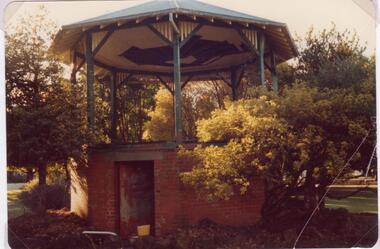
Article - Hopetoun Gardens
... One is a black and white photocopy of a photograph of the cannon, with three children, possibly from 1910. 6/Two colour photographs dated 15/05/2009, of the bandstand at Railway Reserve, which is to be moved to a new park in Glen Huntly Road. 7/Two colour photographs of the bandstand and playground equipment at Hopetoun Gardens, dated by hand on “c. 2000” 8/Printed four page booklet (two copies), no date (c. 2000?) of “Your Guide to Hopetoun Gardens – Interpretative Tree Walk”, printed by the Glen Eira City Council Recreation Services. 9/One colour negative (two copies of each) of swimming at Hopetoun Gardens, no date 10/Printed emails of correspondence dated from 26/08/2012 to 02/10/2012, to and from the Glen Eira historical Society, about the cannons at Hopetoun Gardens. 11/Article from Glen Eira News dated March/April 2013 about the history of the cannons with a coloured photograph....One is a black and white photocopy of a photograph of the cannon, with three children, possibly from 1910. 6/Two colour photographs dated 15/05/2009, of the bandstand at Railway Reserve, which is to be moved to a new park in Glen Huntly Road. 7/Two colour photographs of the bandstand and playground equipment at Hopetoun Gardens, dated by hand on “c. 2000” 8/Printed four page booklet (two copies), no date (c. 2000?) of “Your Guide to Hopetoun Gardens – Interpretative Tree Walk”, printed by the Glen Eira City Council Recreation Services. 9/One colour negative (two copies of each) of swimming at Hopetoun Gardens, no date 10/Printed emails of correspondence dated from 26/08/2012 to 02/10/2012, to and from the Glen Eira historical Society, about the cannons at Hopetoun Gardens. 11/Article from Glen Eira News dated March/April 2013 about the history of the cannons with a coloured photograph. ...This file contains eleven items about these Gardens: 1/Handwritten note from Pam Harrison of Monash University dated 15/06/2005, stating that she is sending the Glen Eira Historical a collection of items from her aunt, whose husband worked for Caulfield Council. Stapled together with a typed acknowledgment from Hazel Ford, Hon. Secretary of the Society dated 15/07/2005. 2/Typed letter from Walter A. Coxen of Queenscliff to (unnamed) Mayor of Caulfield, dated 14/04/1910, stating that he encloses information about the two eighty pound rifled muzzle loading guns now at Hopetoun Gardens, with more recently typed shot description of “The Cannon of Hopetoun Gardens.” Also included is a typed page dated 14/04/1910, signed by Mr Coxen on “Particulars of the two eighty-PR guns presented to the Caulfield Town Council”. 3/Two undated black and white photographs showing garden beds at Hopetoun Gardens. 4/Typed letter from Lt.-Col M.P.J. O’Brien, President, Fort Queenscliff Museum, dated 05/09/1984, to R-Ballantine, Hon. Secretary of the Caulfield Historical Society, stating that he would be happy to assist in tracing the history of the cannons in Hopetoun Gardens. 5/Photographs of the cannon at Hopetoun Gardens. Four are recent colour photographs, one dated 06/1981. One is a black and white photograph, undated (mid-1930s?), with a man sitting on the cannon. One is a black and white photocopy of a photograph of the cannon, with three children, possibly from 1910. 6/Two colour photographs dated 15/05/2009, of the bandstand at Railway Reserve, which is to be moved to a new park in Glen Huntly Road. 7/Two colour photographs of the bandstand and playground equipment at Hopetoun Gardens, dated by hand on “c. 2000” 8/Printed four page booklet (two copies), no date (c. 2000?) of “Your Guide to Hopetoun Gardens – Interpretative Tree Walk”, printed by the Glen Eira City Council Recreation Services. 9/One colour negative (two copies of each) of swimming at Hopetoun Gardens, no date 10/Printed emails of correspondence dated from 26/08/2012 to 02/10/2012, to and from the Glen Eira historical Society, about the cannons at Hopetoun Gardens. 11/Article from Glen Eira News dated March/April 2013 about the history of the cannons with a coloured photograph.hopetoun gardens, harrison pam, ford hazel, coxen walter adam, cannons, parks, fort queenscliff, elsternwick, bandstands, glen eira recreation services, trees, triarico elizabeth, dunbar margaret, rogers john (fleet engineer) -
Glen Eira Historical Society
Document - Sunny Hill Golf Course, North Road, Carnegie
... Alston Mr Golf Courses ‘Sunny Hill’ North Road Carnegie Sports Recreations Golf Clubs Clubs Associations Organisations Societies Leisure Cultural events Cultural activities Sports equipment Recreations equipment Kiosk Cultural structures Cultural establishments Parks Reserves Playing fields Sports people Goodwilland Equipment Koornang Road Alston Gordon RSL RNRA Document Sunny Hill Golf Course, North Road, Carnegie ...This file contains two items A letter that is a receipt for Mr Alston’s payment of interest in the golf course known as ‘Sunny Hill’ North Road Carnegie, dated 06/12/1938 A written and rewritten note by Felicitie Campbell from notes and memory of a phone conversation, the informant being Gordon Alston, on the history of the golf course, undated.alston mr, golf courses, ‘sunny hill’, north road, carnegie, sports, recreations, golf clubs, clubs, associations, organisations, societies, leisure, cultural events, cultural activities, sports equipment, recreations equipment, kiosk, cultural structures, cultural establishments, parks, reserves, playing fields, sports people, goodwilland equipment, koornang road, alston gordon, rsl, rnra -
Glen Eira Historical Society
Document - Bill O’Gorman’s Mowing Service
... Equipment... Gardening Services... BILL O’GORMANS MOWING SERVICE... Occupations... Lawn Care... Garbage Collection... Pruning... Tree Removal... Receipts... Financial Documents... O’Gorman Bill... People associated with recreation...Business and Finance Businesses Commerce Commercial Equipment Gardening Services BILL O’GORMANS MOWING SERVICE Occupations Lawn Care Garbage Collection Pruning Tree Removal Receipts Financial Documents O’Gorman Bill People associated with recreation East Bentleigh Moylan Street 51 Document Bill O’Gorman’s Mowing Service ...This file contains: A blank invoice for BILL O’GORMAN’S MOWING SERVICE, undated. The invoice includes the address and contact details of the business, including the ABN number, as well as a list of services offered.business and finance, businesses, commerce, commercial equipment, gardening services, bill o’gormans mowing service, occupations, lawn care, garbage collection, pruning, tree removal, receipts, financial documents, o’gorman bill, people associated with recreation, east bentleigh moylan street 51 -
Bendigo Historical Society Inc.
Document - The Victorian Country Volleyball Council (VCVC) Correspondence and Country Championship Reports, 1979
... This item contains Correspondence of the Council in 1979 and reports on the Country Championships for that year; it includes the following documents: 11171.8a Department of Youth Sport and Recreation Courses for 1979 11171.8b From VAVA General Coaches Course Level 2 11171.8c VAVA Executive Officers List 11171.8d Letter from Ballarat asking for promotional posters 11171.8e To Mildura Volleyball re affiliation 11171.8f To Wangaratta Volleyball re costs for Country Championships 11171.8g To all associations re tournament rules and registration fees 11171.8h To all associations re VCVC Meeting March 1979 11171.8i Calendar of events for the VAVA Referee's Commission 11171.8j To VAVA re possible grant for U17 Championships at Wangaratta 11171.8k To Ann Mansfield re Volleyball Equipment stock 11171.8l Estonia Sports Club South Australia notication of annual tournament 11171.8m Country Volleyball Championships Team Entry Form 11171.8n From Geelong Volleyball asking for promotional posters 11171.8o To Kyneton Volleyball information for affiliation 11171.8p Australian Volleyball Federation advertising for coaches 11171.8q Wangaratta Volleyball Executive Details 11171.8r From J. ...In 2023, the Commission handed the organisation of the Championships back to VVI, who with paid staff, were better equipped to manage the event. victorian country volleyball council vcvc victorian amateur volleyball association volleyball victoria This item contains Correspondence of the Council in 1979 and reports on the Country Championships for that year; it includes the following documents: 11171.8a Department of Youth Sport and Recreation Courses for 1979 11171.8b From VAVA General Coaches Course Level 2 11171.8c VAVA Executive Officers List 11171.8d Letter from Ballarat asking for promotional posters 11171.8e To Mildura Volleyball re affiliation 11171.8f To Wangaratta Volleyball re costs for Country Championships 11171.8g To all associations re tournament rules and registration fees 11171.8h To all associations re VCVC Meeting March 1979 11171.8i Calendar of events for the VAVA Referee's Commission 11171.8j To VAVA re possible grant for U17 Championships at Wangaratta 11171.8k To Ann Mansfield re Volleyball Equipment stock 11171.8l Estonia Sports Club South Australia notication of annual tournament 11171.8m Country Volleyball Championships Team Entry Form 11171.8n From Geelong Volleyball asking for promotional posters 11171.8o To Kyneton Volleyball information for affiliation 11171.8p Australian Volleyball Federation advertising for coaches 11171.8q Wangaratta Volleyball Executive Details 11171.8r From J. ...Volleyball has been played in regional Victoria since the early-1960’s. During those early days, most competitions, like the founders of our great sport, were run by, or in conjunction with, the YMCA. Competitions were running at the Ballarat School of Mines and the YMCA’s of Bendigo, Geelong and Warrnambool. In August 1966, an invitation was extended by the Victorian Amateur Volleyball Association to play in the first State-wide event at Monash University. Geelong and Bendigo accepted the invitation with Melbourne represented by Sisu. For Bendigo players at least, this was the first exposure to ‘international rules’, which prevented upward scoops with open hands, introduced an action called a ‘dig’ and seemed to penalise most overhead actions using the fingers as ‘double hits’! Over the next few years, the sport expanded through the YMCA movement with weekly competitions starting up in Ararat, Warrnambool and Latrobe Valley. The Victorian Regional Council of YMCA’s proposed the first Victorian YMCA Championship in Warrnambool on 30th March 1968 with an entry fee of $4.00 per team. The sport continued to grow with additional regional associations affiliating with the Victorian Amateur Volleyball Association (now VVI) who provided the coaching and refereeing assistance needed to raise the standard of play. In 1970, the YMCA Championships started to give way to the Victorian Country Championships with the first ever event held in Bendigo. In 1973, a re-organisation of the VAVA saw the proposal to create separate Victorian Country and Metropolitan Volleyball Councils. The VCVC was established in 1974 and took over the organisation of the Victorian Country Championships. For the next 10-12 years, the Country Championships grew in stature with the inclusion of two divisions for open men and women and junior divisions for boys and girls. Representative teams successfully contested Australian Country Championships between Victoria, South Australia and New South Wales on several occasions. In October 1985, the VCVC voluntarily wound up the Council and handed the responsibility for the Country Championships back to Volleyball Victoria, who by that time had full-time State Executive and Coaching Directors. Since that time, the Long Weekend in June has continued to be the date of the major annual volleyball event for most regional associations, even though in 1986 the Junior Country Championships were wound up in favour of state and national schools events. A number of regional associations have ceased to exist, as have a number of regional tournaments. Regional leagues were created in both the Gippsland and Central, North-West regions, with Gippsland the only one to survive. Some associations have successfully competed in the State League competitions at various times. Following the experience gained by a number of regional administrators working on the Sydney Olympic Games, a proposal to revamp the Victorian Country Championship was put to VVI in early 2002. Later that year, the Volleyball Victoria Country Championships Commission was formed to implement the recommendations of the review and take control of the event into the future. These championships now provide regional players and officials an opportunity to participate in a consistently well-managed event, using many international protocols and a high standard of presentation. Without doubt, this event now ranks as one of the best volleyball events in Australia. Source: 2022 Country Championship regulations The management of the Country Championships by the Victorian Country Championship Commission certainly achieved the objective of raising the standard of presentation, and delivering a consistently high quality event. However, the demands on Host Associations began to take their toll, with several Associations declining the opportunity to host the event due to the high workload. Similarly, the workload of the volunteer Commissioners also took its toll, with the Commission unable to fill casual vacancies. In 2023, the Commission handed the organisation of the Championships back to VVI, who with paid staff, were better equipped to manage the event.This item contains Correspondence of the Council in 1979 and reports on the Country Championships for that year; it includes the following documents: 11171.8a Department of Youth Sport and Recreation Courses for 1979 11171.8b From VAVA General Coaches Course Level 2 11171.8c VAVA Executive Officers List 11171.8d Letter from Ballarat asking for promotional posters 11171.8e To Mildura Volleyball re affiliation 11171.8f To Wangaratta Volleyball re costs for Country Championships 11171.8g To all associations re tournament rules and registration fees 11171.8h To all associations re VCVC Meeting March 1979 11171.8i Calendar of events for the VAVA Referee's Commission 11171.8j To VAVA re possible grant for U17 Championships at Wangaratta 11171.8k To Ann Mansfield re Volleyball Equipment stock 11171.8l Estonia Sports Club South Australia notication of annual tournament 11171.8m Country Volleyball Championships Team Entry Form 11171.8n From Geelong Volleyball asking for promotional posters 11171.8o To Kyneton Volleyball information for affiliation 11171.8p Australian Volleyball Federation advertising for coaches 11171.8q Wangaratta Volleyball Executive Details 11171.8r From J. A. Sporting Goods Price list 11171.8s To Horsham Volleyball re affiliation 11171.8t To Ararat Volleyball re affiliation 11171.8u Wangaratta U7 Championship referee's list and accomodation 11171.8v Notice of change of date of General Meeting 11171.8w Latrobe Valley Volleyball Association team colours 11171.8x 1979 Country Championships Shepparton list of accomodation 11171.8y Warrnambool Country Championships Team Entry Form 11171.8z From Goulburn Valley Volleyball contact details 11171.8aa From Kyneton Volleyball deference of affiliation 11171.8ab Notice of General Meeting at Wangaratta 11171.8ac Stawell Volleyball possible affiliation 11171.8ad Men's Volleyball draw 21-22 April 11171.8ae Wangaratta Volleyball U17 Championships Costs and schedule 11171.8af To Stawell Association re affiliation 11171.8ag VCVC Financial Statement 1978-79 11171.8ah VCVC Letter to the Shire of Nathalia 11171.8ai Letter re Fort Street Volleyball Club poaching players 11171.8aj Letter re Fort Street Volleyball Club poaching players 11171.8ak Letter to Coaches Commission re tournament 11171.8al VCVC Notice of general meeting in April 11171.8am VCVC re AGM Dates 1979 11171.8an VCVC re AGM Dates 1979 11171.8ao VCVC re AGM Dates 1979 11171.8ap Letter to Sports Services re design for tracksuit badge 11171.8aq VAVA Minutes of Executive Meeting Nov 1979 11171.8ar Country Championships Shaepparton Report 1979victorian country volleyball council, vcvc, victorian amateur volleyball association, volleyball victoria -
Glen Eira Historical Society
Document - Archery Society of Victoria
... Recreation... Sporting Clubs... Clubs... Associations... Competition... Entertainment... Sports Grounds... Leisure... Cultural Events and Activities... Sports and Recreations Equipment...Archery Society of Victoria Rippon Lea Cup Sport Archery Medieval Recreation Sporting Clubs Clubs Associations Competition Entertainment Sports Grounds Leisure Cultural Events and Activities Sports and Recreations Equipment Document Archery Society of Victoria ...This file contains one item. A flyer for the Archery Society of Victoria advertising an archery competition for the Rippon Lea Cup held on 08/09/1991.archery society of victoria, rippon lea cup, sport, archery, medieval, recreation, sporting clubs, clubs, associations, competition, entertainment, sports grounds, leisure, cultural events and activities, sports and recreations equipment -
 Glen Eira Historical Society
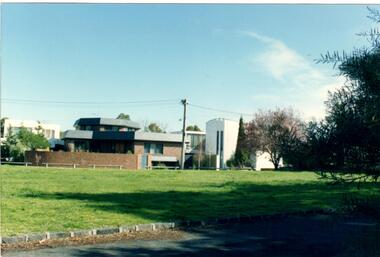
Article - East Caulfield Park
... Anthony’s Primary School Monash University Caulfield Campus Committees of Management Cypress Trees Mahogany Gym Trees Parks and Reserves Gardens Parks Sport Sports and Recreations Leisure Cultural Events Cultural Activities Sportsgrounds Sports People Ovals Playing Fields Sports Establishments Recreations Establishments Clubs and Associations Associations Organisations Societies Athletic Clubs Community Groups Pavilions Playground Equipment Playgrounds Gardens Barbecues Picnics Tennis Courts Lawn Bowls Bowls Bowling Clubs Schools Educational Establishments Trees Plants Article East Caulfield Park ...This file contains two items about this Park. An article featuring Caulfield Park and East Caulfield Park, which was developed as the districts principal sporting areas, relating to development and restoration. Includes copies of four photographs relating to the parks featured. One colour photograph of the Park: undated, source unknown. Noted on reverse 'E. Caulf. Reserve Pavilion'.caulfield, caulfield park, east caulfield park, crown reserves, caulfield council, east caulfield park, committee of management, caulfield park committee of management, little harold, lidsey p. mrs., hannan lynette ms., leskie mr., caulfield sub district cricket club, caulfield lacross club, anderson sandy, michelson david, balaclava road, hawthorn road, victorian cricket association, cbc st. kilda, grimwade house, st. aloysius primary school, st. anthony’s primary school, monash university caulfield campus, committees of management, cypress trees, mahogany gym trees, parks and reserves, gardens, parks, sport, sports and recreations, leisure, cultural events, cultural activities, sportsgrounds, sports people, ovals, playing fields, sports establishments, recreations establishments, clubs and associations, associations, organisations, societies, athletic clubs, community groups, pavilions, playground equipment, playgrounds, gardens, barbecues, picnics, tennis courts, lawn bowls, bowls, bowling clubs, schools, educational establishments, trees, plants -
 Glen Eira Historical Society
Letter - Halley Park
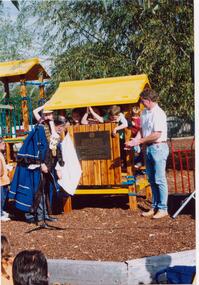
... COMMUNITY PROJECT OF THE YEAR Apex club Playground equipment Children’s playgrounds Gardens Recreations establishments Healthy Hearts Local Government State Awards 1994 Plaques Letter Halley Park ...This file contains three items. A letter to Ms Wendy A. Ross from Hazel Ford, secretary of the Glen Eira Historical Society, dated 31/05/2002. A letter to Felicitie Camplbell from Wendy A. Ross dated 07/05/2002, along with three photographs which were enclosed with the letter, including two of Mayor of Moorabbin, Cr. R. J. Bob Flavell, opening the playground at Halley Park, and one of a plaque. Three photographs including two of Halley Park Opening Ceremony where the Mayor of Moorabbin opened the playground at Halley Park which was the winner of the COMMUNITY PROJECT OF THE YEAR 1994 award, and one of the plaque commemorating the organisations that developed the park, photographs taken on 01/05/1994.ross wendy a., campbell felicitie, moorabbin, bentleigh, marquis road bentleigh, halley park, glen eira historical society, ford hazel, flavell r. j. cr., flavell bob cr., jasper road bentleigh, mortimore street bentleigh, playgrounds, parks, reserves, friends of halley park inc., community project of the year, apex club, playground equipment, children’s playgrounds, gardens, recreations establishments, healthy hearts local government state awards 1994, plaques -
Glen Eira Historical Society
Article - Lauriston Lawn Tennis Club
... Carnegie Lauriston Lawn Tennis Club Kangaroo Road Carnegie Rosanna Street Carnegie Russel Paul Tepic Natasha Sports Recreations Tennis Entertainment Sporting clubs Clubs Associations Tennis clubs Leisure Cultural events Cultural activities Sports equipment Recreations establishments Cultural structures Cultural establishments Tennis courts Sports grounds Sports people Sports officials Tennis players Article Lauriston Lawn Tennis Club ...This file contains one item. An article from the CAULFIELD/ PORT PHILLIP LEADER on the open day of Carnegie’s Lauriston Lawn Tennis Club, dated 13/09/2011, includes a copy of a photograph with coach and president.carnegie, lauriston lawn tennis club, kangaroo road carnegie, rosanna street carnegie, russel paul, tepic natasha, sports, recreations, tennis, entertainment, sporting clubs, clubs, associations, tennis clubs, leisure, cultural events, cultural activities, sports equipment, recreations establishments, cultural structures, cultural establishments, tennis courts, sports grounds, sports people, sports officials, tennis players -
 Glen Eira Historical Society
Article - DUNCAN MACKINNON RESERVE
... Duncan MacKinnon Reserve Glen Eira Murrumbeena Caulfield North Road Crosbie Road Murrumbeena Road Caulfield Historical Society Caulfield Council Caulfield Contact Caulfield Little Athletics Judge Mark Hyams Jamie Cr Glenhuntly Athletics Club Caulfield District Netball Association Stanish Jane Biggs Ed Cr Dixon Brian Taylor Sam Cr Crosbie Thomas Mahoney MacKinnon Duncan Cornelius Sports Establishments Pavilion Sporting Clubs Athletics Competitions Swamps Playgrounds Barbeques Warren Reserve Councillors Paddy’s Swamp Glen Eira Council Sports Equipment Recreations Equipment Victorian Masters Athletics Maccabi Athletics Club Washington Park Cricket Club Sports Grounds Ovals Playing fields Stadiums Duncan MacKinnon Park Caulfield’s East Ward Victorian Veterans Cricket Club Caulfield South Crosbie Swamp Caulfield Park Football Clubs Cricket Clubs Athletic Clubs Caulfield/Port Phillip Leader Mantric Architecture Parks Reserves Martens Veronika Cr Caulfield Historical Society Article DUNCAN MACKINNON RESERVE ...This file contains five items: 1/Item one is a newspaper article describing the plans for the restoration and development of the new pavilion. It includes figures, benefits and potential uses of the pavilion. Dated August 2012. 2/ An article from the Caulfield/Port Phillip Leader describing the new pavilion. Dated 21/08/2012. 3/A report from the Caulfield Contact detailing the history of Duncan MacKinnon Reserve. It also includes funding and planning for the upgrade to a park status, with new facilities. Dated December 1991. 4/Report by Caulfield Historical Society, with the original typed copy, describing historical changes from 1874 to 1976, and its transformation from a swamp to sporting ground. Includes figures, grants, and its changing uses by the community. Undated. Three copies in file. 5/Two photographs, an original and a smaller copy of the original, of children playing at the reserve. Undated.duncan mackinnon reserve, glen eira, murrumbeena, caulfield, north road, crosbie road, murrumbeena road, caulfield historical society, caulfield council, caulfield contact, caulfield little athletics, judge mark, hyams jamie cr, glenhuntly athletics club, caulfield district netball association, stanish jane, biggs ed cr, dixon brian, taylor sam cr, crosbie thomas mahoney, mackinnon duncan cornelius, sports establishments, pavilion, sporting clubs, athletics, competitions, swamps, playgrounds, barbeques, warren reserve, councillors, paddy’s swamp, glen eira council, sports equipment, recreations equipment, victorian masters athletics, maccabi athletics club, washington park cricket club, sports grounds, ovals, playing fields, stadiums, duncan mackinnon park, caulfield’s east ward, victorian veterans cricket club, caulfield south, crosbie swamp, caulfield park, football clubs, cricket clubs, athletic clubs, caulfield/port phillip leader, mantric architecture, parks, reserves, martens veronika cr, caulfield historical society -
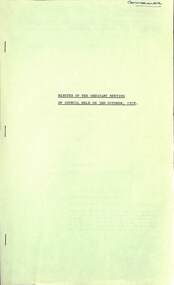 Sunshine and District Historical Society Incorporated
Administrative record - City of Sunshine - Commissioner Mr Alexander "Alex" George Gillon Collection 1976 - 1982 - Minutes of the Ordinary Meeting of Council Held on 3rd October 1978, City of Sunshine, 3rd October 1978
... Equipment Various Reserves Contract Reconstruction of Sydney Street Contract Gooding Street 40 Hour Week Victorian Sewerage and Drainage Contractors' Group Declaration of Sewered Properties General Notice Sewerage Facilities M.M.B.W. Allocation of Funds 1978/79 Joint Works Unclassified Roads Telecom Australia Modernisation of Public Telephones St. Albans Area Ashley Street / South Road Proposed Traffic Lights Maribyrnong River Flood Plan Acting Commissioner of Police Sewerage Facilities St. Albans (Albanvale) Warrs Road Northern Section Private Street Scheme Use of C.R.B. land McIntyre Road for Recreation...Equipment Various Reserves Contract Reconstruction of Sydney Street Contract Gooding Street 40 Hour Week Victorian Sewerage and Drainage Contractors' Group Declaration of Sewered Properties General Notice Sewerage Facilities M.M.B.W. Allocation of Funds 1978/79 Joint Works Unclassified Roads Telecom Australia Modernisation of Public Telephones St. Albans Area Ashley Street / South Road Proposed Traffic Lights Maribyrnong River Flood Plan Acting Commissioner of Police Sewerage Facilities St. Albans (Albanvale) Warrs Road Northern Section Private Street Scheme Use of C.R.B. land McIntyre Road for Recreation ...Minutes of the Ordinary Meeting of Council Held on 3rd October 1978 Reports on the Town Clerk's Department Report of the Town Clerk Victorian Beer Alcoholic Content Proposal for Reduction Land Transfer Adjacent to Deer Park Hotel Medway Golf Club Payment in Lieu of Rates Diamond Avenue Infant Welfare Centre Non-Availability of Subsidy Untied Grants Proposed Library Highpoint West Shopping Centre Land Transfer Discontinued Right of Way Rear of Railway Parade Deer Park Supplementary Valuations Community Youth Support Scheme Report of the Chief Health Inspector Nuisance Condition at 403 Ballarat Road Sunshine Removal of Dwelling Outside the Municipality Health Act Registrations Monsanto Application for Approval to Install Septic Tank Recirculating Sand Filter System at the Stansfield Steel Project Fairbairn Road Sunshine West Health (Tent) Regulations 1978 Draft Rubbish In and Around Flats Quarry Hole Commonwealth Land J.L. MacTaggart (Australia) Pty Ltd Noise By-Law Application for Transfer of Proprietorship of Premises Under the Health Act Infectious Diseases Sewerage Overflow 2 Bruce Street Albion Smoking in Public Buildings Immunisation Sunshine North Institute of Weights & Measures Annual National Conference Report of the Chief By-Laws Officer Court Proceedings Parking and Traffic Infringements Prohibited Parking Links Street Prohibited Parking Princess Street Area Prohibited Parking Gould Street Report of the City Librarian Bookmobile sites Municipal library Subsidy 1978/79 Bookmobile Seminar Children's Literature seconds National Seminar September 1st to 5th 1978 Report of the Municipal Recreation Officer Municipal Recreation Service Gound Allocations School Summer Season Holiday Programmes September 1978 Report of the City Engineer Proposed Children's Reception Centre for Erection in the City of Sunshine Planning Permit Application Illuminated Sign Churchill Avenue Planning Permit Application Grazing of Horses Furlong Road Planning Permit Application Offices Main Road West Planning Permit Application Extension to Exising Car Sales Yard Rosamond Road Planning Permit Application Corner of Neale Road and Station Road Deer Park Proposed Amendment No 81 to the Melbourne Metropolitan Planning Scheme Proposed Widening of Station Road Planning Permit Application Motor Repair Station Wright Street Planning Permit Application Sky Sign Hampshire Road Planning Permit Application Extension to Existing Warehouse McIntyre Road Planning Permit Application Consulting Rooms, Pharmacy, Service Premises and Caretaker's Dwelling Corner of Tamar Drive and Billingham Road Planning Permit Application Horse Grazing Judge Street & Norman Street Planning Permit Application Signs Geelong Road Planning Permit Application Factory Extension Carrington Drive Planning Permit Application Sky Sign Ballarat Road Sunshine Planning Permit Application Factory and Office Gee Street Sunshine North Planning Permit Application Drive in Bottle Shop and Extensions to St. Albans Hotel McKechnie Street Planning Permit Application Sky Sign & Fascia Signs Ballarat Road Sunshine Planning Permit Application Store Addition to Existing Office Geelong Road Plan of Subdivision Boral Resources Ballarat Road & Hulett Street Plan of Subdivision R.D.C. Projects Evergreen Avenue and Pineneedle Court Plan of Subdivision McPhersons Mitchell Street Plan of Subdivision Navigator Street Consolidation of Title Marshall Street Consolidation of Title Kevin Dennis Motors Ballarat Road and Annersley Street Consolidation of Title Lots 37 & 38 Balfour Avenue Contract Playground Equipment Various Reserves Contract Reconstruction of Sydney Street Contract Gooding Street 40 Hour Week Victorian Sewerage and Drainage Contractors' Group Declaration of Sewered Properties General Notice Sewerage Facilities M.M.B.W. Allocation of Funds 1978/79 Joint Works Unclassified Roads Telecom Australia Modernisation of Public Telephones St. Albans Area Ashley Street / South Road Proposed Traffic Lights Maribyrnong River Flood Plan Acting Commissioner of Police Sewerage Facilities St. Albans (Albanvale) Warrs Road Northern Section Private Street Scheme Use of C.R.B. land McIntyre Road for Recreation Purposes Garaging of Meals on Wheels Vehicles at Maidstone Hall Thomson Street Maidstone Relocation of Steel Framed Steel Clad Sheds to Errington Reserve and Robert Bruce Reserve Rosamond Bowling Club Report of the Building Surveyor Building Over Easement 135 Devonshire Road Sunshine Building Over Easement 10 Sproul Street Sunshine North Building Over Easement Lot 552 Oakwood Road St. Albans Building Over Easement 6 Haven Close Sunshine West Building Over Easement 75 Norwood Street Albion Building Over Easement182 Wright Street Sunshine West Building Over Easement 176 McIntyre Road Sunshine North Installation of Underground Tanks Corner Raleigh Road and Navigator Street Maribyrnong Ruinous and Dangerous Building Lots 6 & 7 Furlong Road Sunshine North Orders of the Day Accounts for Payment as at 15th September 1978, 26th September 1978 Extraordinary Business Report of the City Engineer Planning Permit Application Medical Consulting Rooms Clarke Street Sunshine Planning Permit Application Take away Food Premises Cafe Amusement Parlour Highpoint City Rosamond Road city of sunshine, alexander "alex" george gillon, deer park hotel, ballarat road, deer park, medway golf club, omar street, maidstone, diamond avenue infant welfare centre, diamond avenue, albanvale, highpoint west shopping centre, rosamond road, maribyrnong, railway parade, sunshine, monsanto, somerville road, footscray west, fairbairn road, sunshine west, j.l. mactaggart (australia) pty ltd, bruce street, albion, links street, princess street, st. albans, gould street, churchill avenue, braybrook, main road west, furlong road, sunshine north, neale road, station road, wright street, hampshire road, mcintyre road, tamar drive, billingham road, judge street, norman street, geelong road, brooklyn, carrington drive, gee street, st. albans hotel, mckechnie street, hulett street, pineneedle court, mitchell street, navigator street, marshall street, kevin dennis motors, annersley street, balfour avenue, sydney street, gooding street, ashley street, south road, maribyrnong river, warrs road, maidstone hall, thomson street, errington reserve, robert bruce reserve, rosamond bowling club, main road east, devonshire road, sproul street, oakwood road, haven close, norwood street, raleigh road, clarke street, highpoint city -
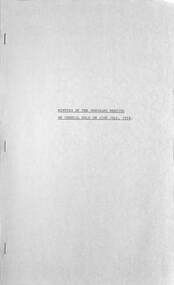 Sunshine and District Historical Society Incorporated
Administrative record - City of Sunshine - Commissioner Mr Alexander "Alex" George Gillon Collection 1976 - 1982 - Minutes of the ordinary meeting of council held on 25th July 1978, City of Sunshine, 25th July 1978
... Equipment Various Reserves Tenders for Surplus Vehicles Tender for Tractor Mower Use of Asphalt Plant Melbourne City Council Hulett Street Private Street Scheme Declaration of Sewage Areas No 3513 & 3499 Sewage Facilities to Premises St. Albans Report of the Building Surveyor Ruinous and Dangerous Building Lots 6 & 7 Furlong Road Sunshine North Ruinous and Dangerous Building 28 - 30 Ridley Street Albion Relocation of Housee to Lot 26 Adams Street St. Albans Flats Lots 3 & 4 Ballarat Road Deer Park Seminar Residential Slab Construction 31st August 1978 Report of the Director of Parks & Recreation...Equipment Various Reserves Tenders for Surplus Vehicles Tender for Tractor Mower Use of Asphalt Plant Melbourne City Council Hulett Street Private Street Scheme Declaration of Sewage Areas No 3513 & 3499 Sewage Facilities to Premises St. Albans Report of the Building Surveyor Ruinous and Dangerous Building Lots 6 & 7 Furlong Road Sunshine North Ruinous and Dangerous Building 28 - 30 Ridley Street Albion Relocation of Housee to Lot 26 Adams Street St. Albans Flats Lots 3 & 4 Ballarat Road Deer Park Seminar Residential Slab Construction 31st August 1978 Report of the Director of Parks & Recreation ...Minutes of the meeting of the sunshine city council held on 25th July 1978 Report of the Town Clerk's Department Report of the Town Clerk Lease Italo-Australian Co-Operative Social Club Ltd Supplementary Valuations Overseas Study Tours 1979 Municipal Association of Victoria Appointments Metropolitan Sectional Council Municipal Association of Victoria The Hub Sports Centre Prices Western Region Commission Report of the Co-Ordinator of Welfare Services Special Bus Replacement Willis Street Pre-School Centre Proposal for the Funding of Emergency Relief in the Western Region Family Day Care Family Day Care conference Tenancy Issues Use of Midway Hostel for Emergency Accommodation Home Help Designated Officer's Register Community Youth Support Scheme Deer Park Report of the Acting Chief Health Inspector Prosecutions Proceedings Sunshine Magistrates Court Immunisation Health Act Food Analyses Head Lice Infant Welfare Officers Western Region Environmental Committee Food Poisoning (Oysters) Butcher Shops Extended Opening Report of the Medical Officer of Health Report of the Chief By-Laws Officer Prohibited Parking Withers Street Supervision of School Crossings Main Road East / St. Albans High School and Rosamond Road / Maribyrnong High School Report of the City Librarian Children's Book Night Report of the Municipal Recreation Officer Albion Rovers Soccer Club Hours Club may use Selwyn Park for the Playing of Soccer Department of Youth, Sport and Recreation Commonwealth Games Appeal week Report of the Manager of the Sunshine Swimming Pool and the Deer Park Swimming Pool Report of the City Engineer Town Planning Car Parking Policy Melbourne Metropolitan Parking Study Planning Permit Application Factory Lot 37 Western Avenue Planning Permit Application Single Storey Units Lots 39, 40, 41, 42 & 44 Madden Street Maidstone Planning Permit Application Panel Beating Lot 4 McIntyre Road Planning Permit Application Petrol Filling Station, Bank, Child Minding Centre and Library Highpoint West Shopping Centre Rosamond Road Planning Permit Application Illuminated Facia Sign 29A Sun Crescent Planning Permit Application Extension to Existing Factory Warehouse and Caretaker's Dwelling and Addition of Offices McIntyre Road and Cromer Avenue Planning Permit Application Illuminated Facia Sign Sun Crescent C.S.C. Homes Pty Ltd, Sun Crescent Planning 7 C.S.C. Estate Agency Planning Permit Application Service Premises & Caretaker's Dwelling Lot 1 Ballarat Road Planning Permit Application Extension to Existing Warehouse Lot 13 McIntyre Road Planning Permit Application Re-building of Existing Shop 105 Anderson Road West Corner of Fraser Street Planning Permit Application Warehouse Corner McIntyre Road and Balwin Avenue Planning Permit Application Extension to Existing Car Sales Yard and Motor Repair Station 31 St. Albans Road Planning Permit Application Car Sales Yard Ballarat Road South West Corner Hampshire Road Planning Permit Application 3 Factories Market Road Brooklyn Consolidation of Title Station Road and Main Road West Shell Co of Australia Drainage Construction Subdivision Plantation Street and The Esplanade Plan of Consolidation Hulett Street Boral Albion Reid Strata Subdivision of 2 Carter Street Consolidation of Title Rosamond Road and White Street Contract Playground Equipment Various Reserves Tenders for Surplus Vehicles Tender for Tractor Mower Use of Asphalt Plant Melbourne City Council Hulett Street Private Street Scheme Declaration of Sewage Areas No 3513 & 3499 Sewage Facilities to Premises St. Albans Report of the Building Surveyor Ruinous and Dangerous Building Lots 6 & 7 Furlong Road Sunshine North Ruinous and Dangerous Building 28 - 30 Ridley Street Albion Relocation of Housee to Lot 26 Adams Street St. Albans Flats Lots 3 & 4 Ballarat Road Deer Park Seminar Residential Slab Construction 31st August 1978 Report of the Director of Parks & Recreation Reserves Development Reserves Active Usage Patterns Bon Thomas Reserve Development Orders of the Day Accounts Submitted for Payment as at 3rd July 1978 Extraordinary Business Report of the City Engineer Ex G.U.D. Premise Burton Crescent Maribyrnong Intersection Ballarat Road / Station Street Statcon Signal Programme Deferred Payment of Costs city of sunshine, alexander "alex" george gillon, italo-australian co-operative social club, furlong road, st. albans, the hub, sun crescent, sunshine, willis street pre-school centre, willis street, midway hostel, williamson road, maribyrnong, withers street, main road east, st. albans high school, rosamond road, maribyrnong high school, albion rovers soccer, selwyn park, selwyn street, albion, sunshine swimming pool, kennedy street, deer park swimming pool, deer park, western avenue, madden street, maidstone, mcintyre road, highpoint west shopping centre, cromer avenue, sunshine north, ballarat road, anderson road, fraser street, balwin avenue, st. albans road, hampshire road, market road, brooklyn, main road west, plantation street, the esplanade, hulett street, boral albion reid, carter street, white street, ridley street, adams street, bon thomas reserve, quinn street, g.u.d., burton crescent -
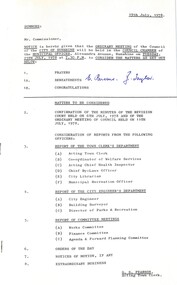 Sunshine and District Historical Society Incorporated
Administrative record - City of Sunshine - Commissioner Mr Alexander "Alex" George Gillon Collection 1976 - 1982 - Notice of Ordinary Meeting of to be held on Tuesday 25th July 1978, City of Sunshine, 19th July 1978
... Equipment Various Reserves Tenders for Surplus Vehicles Tender for Tractor Mower Use of Asphalt Plant Melbourne City Council Hulett Street Private Street Scheme Declaration of Sewage Areas No 3513 & 3499 Sewage Facilities to Premises St. Albans Report of the Building Surveyor Ruinous and Dangerous Building Lots 6 & 7 Furlong Road Sunshine North Ruinous and Dangerous Building 28 - 30 Ridley Street Albion Relocation of Housee to Lot 26 Adams Street St. Albans Flats Lots 3 & 4 Ballarat Road Deer Park Seminar Residential Slab Construction 31st August 1978 Report of the Director of Parks & Recreation...Equipment Various Reserves Tenders for Surplus Vehicles Tender for Tractor Mower Use of Asphalt Plant Melbourne City Council Hulett Street Private Street Scheme Declaration of Sewage Areas No 3513 & 3499 Sewage Facilities to Premises St. Albans Report of the Building Surveyor Ruinous and Dangerous Building Lots 6 & 7 Furlong Road Sunshine North Ruinous and Dangerous Building 28 - 30 Ridley Street Albion Relocation of Housee to Lot 26 Adams Street St. Albans Flats Lots 3 & 4 Ballarat Road Deer Park Seminar Residential Slab Construction 31st August 1978 Report of the Director of Parks & Recreation ...Notice of Ordinary Meeting of to be held on Tuesday 25th July 1978 Report of the Town Clerk's Department Report of the Town Clerk Lease Italo-Australian Co-Operative Social Club Ltd Supplementary Valuations Overseas Study Tours 1979 Municipal Association of Victoria Appointments Metropolitan Sectional Council Municipal Association of Victoria The Hub Sports Centre Prices Western Region Commission Report of the Co-Ordinator of Welfare Services Special Bus Replacement Willis Street Pre-School Centre Proposal for the Funding of Emergency Relief in the Western Region Family Day Care Family Day Care conference Tenancy Issues Use of Midway Hostel for Emergency Accommodation Home Help Designated Officer's Register Community Youth Support Scheme Deer Park Report of the Acting Chief Health Inspector Prosecutions Proceedings Sunshine Magistrates Court Immunisation Health Act Food Analyses Head Lice Infant Welfare Officers Western Region Environmental Committee Food Poisoning (Oysters) Butcher Shops Extended Opening Report of the Medical Officer of Health Report of the Chief By-Laws Officer Prohibited Parking Withers Street Supervision of School Crossings Main Road East / St. Albans High School and Rosamond Road / Maribyrnong High School Report of the City Librarian Children's Book Night Report of the Municipal Recreation Officer Albion Rovers Soccer Club Hours Club may use Selwyn Park for the Playing of Soccer Department of Youth, Sport and Recreation Commonwealth Games Appeal week Report of the Manager of the Sunshine Swimming Pool and the Deer Park Swimming Pool Report of the City Engineer Town Planning Car Parking Policy Melbourne Metropolitan Parking Study Planning Permit Application Factory Lot 37 Western Avenue Planning Permit Application Single Storey Units Lots 39, 40, 41, 42 & 44 Madden Street Maidstone Planning Permit Application Panel Beating Lot 4 McIntyre Road Planning Permit Application Petrol Filling Station, Bank, Child Minding Centre and Library Highpoint West Shopping Centre Rosamond Road Planning Permit Application Illuminated Facia Sign 29A Sun Crescent Planning Permit Application Extension to Existing Factory Warehouse and Caretaker's Dwelling and Addition of Offices McIntyre Road and Cromer Avenue Planning Permit Application Illuminated Facia Sign Sun Crescent C.S.C. Homes Pty Ltd, Sun Crescent Planning 7 C.S.C. Estate Agency Planning Permit Application Service Premises & Caretaker's Dwelling Lot 1 Ballarat Road Planning Permit Application Extension to Existing Warehouse Lot 13 McIntyre Road Planning Permit Application Re-building of Existing Shop 105 Anderson Road West Corner of Fraser Street Planning Permit Application Warehouse Corner McIntyre Road and Balwin Avenue Planning Permit Application Extension to Existing Car Sales Yard and Motor Repair Station 31 St. Albans Road Planning Permit Application Car Sales Yard Ballarat Road South West Corner Hampshire Road Planning Permit Application 3 Factories Market Road Brooklyn Consolidation of Title Station Road and Main Road West Shell Co of Australia Drainage Construction Subdivision Plantation Street and The Esplanade Plan of Consolidation Hulett Street Boral Albion Reid Strata Subdivision of 2 Carter Street Consolidation of Title Rosamond Road and White Street Contract Playground Equipment Various Reserves Tenders for Surplus Vehicles Tender for Tractor Mower Use of Asphalt Plant Melbourne City Council Hulett Street Private Street Scheme Declaration of Sewage Areas No 3513 & 3499 Sewage Facilities to Premises St. Albans Report of the Building Surveyor Ruinous and Dangerous Building Lots 6 & 7 Furlong Road Sunshine North Ruinous and Dangerous Building 28 - 30 Ridley Street Albion Relocation of Housee to Lot 26 Adams Street St. Albans Flats Lots 3 & 4 Ballarat Road Deer Park Seminar Residential Slab Construction 31st August 1978 Report of the Director of Parks & Recreation Reserves Development Reserves Active Usage Patterns Bon Thomas Reserve Development Orders of the Day Accounts Submitted for Payment as at 3rd July 1978 city of sunshine, alexander "alex" george gillon, italo-australian co-operative social club, furlong road, st. albans, the hub, sun crescent, sunshine, willis street pre-school centre, willis street, midway hostel, williamson road, maribyrnong, main road east, st. albans high school, rosamond road, maribyrnong high school, albion rovers soccer club, selwyn park, selwyn street, albion, sunshine swimming pool, kennedy street, deer park swimming pool, deer park, western avenue, madden street, maidstone, mcintyre road, sunshine north, highpoint west shopping centre, cromer avenue, ballarat road, anderson road, fraser street, balwin avenue, st. albans road, hampshire road, market road, main road west, station road, plantation street, the esplanade, hulett street, carter street, white street, ridley street, adams street, bon thomas reserve, quinn street, boral albion reid -
 Sunshine and District Historical Society Incorporated
Administrative record - City of Sunshine - Commissioner Mr Alexander Alex George Gillon Collection 1976 - 1982 - Minutes of the ordinary meeting of council held on 29th June 1977, City of Sunshine, 29th June 1977
... Albans Road & East Esplanade Melbourne Metropolitan Planning Scheme Amendment No 42 Footscray Institute of Technology Fairnsworth Avenue Deviation Footscray Citizens Against Freeways Royal Australian Institute of Parks & Recreation 50th Conference Buckingham Crescent Area Layout Design Art Show McKay Gardens Oakwood Road Footpath Albanvale Residents Association Canning Street Tenders Received Automatic Sprinkler System Sports Grounds Tenders Received Playground Equipment Plan of Subdivision Main Road West R.D.C. ...Albans Road & East Esplanade Melbourne Metropolitan Planning Scheme Amendment No 42 Footscray Institute of Technology Fairnsworth Avenue Deviation Footscray Citizens Against Freeways Royal Australian Institute of Parks & Recreation 50th Conference Buckingham Crescent Area Layout Design Art Show McKay Gardens Oakwood Road Footpath Albanvale Residents Association Canning Street Tenders Received Automatic Sprinkler System Sports Grounds Tenders Received Playground Equipment Plan of Subdivision Main Road West R.D.C. ...Minutes of the Ordinary Meeting of Council held on 29th June 1977 Report of the Town Clerk's Department Report of the Town Clerk Victorian Family and Community Services Programme Bikeway Seminar School Facilities Sunshine North Technical School Proposed Use and Agreement Maidstone Elderly Citizens Club And Meals on Wheels Lease if Navigational Beacon Site in Robinson Road Deer Park Community Use of Tennis Courts Request For Closing Street Bird Street South of Quinn Street Deer Park Capital Works Possible Subsidies Department of Youth, Sport & Recreation Use of School Facilities Sunshine West High School Council Contribution to Cost Proposed Lease of Railway land Next to Gardens Anderson Road Proposed Lease of Commonwealth Land Corner Devonshire Road and Martin Street Ardeer South Primary School Development of School Grounds Community Use Council Contribution Darnley Street Hostel for the Frail / Aged Deportation of Migrants Welwyn Uniting Kindergarten Maintenance Fee to the Deer Park Methodist Church Western Region Women's Refuge Report of the Chief Health Inspector Prosecutions Proceedings Sunshine Magistrate Court Application for Septic Tank Health Centre Robert Crescent Sunshine Navel Wives Association Plagues on all House Health Hygiene and History Office of Continuing Education University of Melbourne Proposed Course Visit of Interdepartmental Government Committee of Liquid Trade Waste Deposal Report of the Medical Officer of Health Report of City Engineer Land Use Permit Application Diecasting Shop Addition to Existing Manufacturing Complex South West Corner Mitchell Street and Rosamond Road Land Use Permit Application Subdivision Geelong Road and Francis Street Land Use Permit Application Sunshine Golf Club Pavilion Ralph Street Looking For Permission to Rebuild Thier Burnt Down Pavilion Land Use Permit Application Sign 568 Geelong Road Land Use Permit Application Resident Bee Keeping 47 Trafalgar Street St. Albans Land Use Permit Factory Lot 3 Suffolk Road Sunshine North Proposed Melbourne Metropolitan Planning Scheme Amendment 70 Land Use Permit Application Sunshine City Club Car Park Talmage Street Albion Land Use Permit Application installation of Underground Petrol Tank and Pumping Facilities and Addition to Existing Factory Sperry Vickers Rosamond Road Maribyrnong Land Use Permit Application Parking of Motor Car and Caravan 24 Judge Street Land Use Permit Application Motor Repair Station and Car Sales Yard 19 Errol Street Western Highway Street Lighting Traffic Signals Main Road West, Main Road East, St. Albans Road & East Esplanade Melbourne Metropolitan Planning Scheme Amendment No 42 Footscray Institute of Technology Fairnsworth Avenue Deviation Footscray Citizens Against Freeways Royal Australian Institute of Parks & Recreation 50th Conference Buckingham Crescent Area Layout Design Art Show McKay Gardens Oakwood Road Footpath Albanvale Residents Association Canning Street Tenders Received Automatic Sprinkler System Sports Grounds Tenders Received Playground Equipment Plan of Subdivision Main Road West R.D.C. Projects Transfer of Land Lots 434 to 437 Carlton Street Housing Commission Victoria to Braybrook Hotel for Car Parking Purposes Strata Subdivision 37 Ferndale Road Installation of Traffic Signals Anderson Road / Durham Road Sunshine A No Standing Any Time Bookmobile Excepted Sign 27 Duke Street Sunshine Report of the Building Surveyor Application Outbuilding 19 Lima Street St. Albans Application Outbuilding 25 Huddersfield Road Deer Park Child Care Centre Pavilion Ainsworth Reserve Child Care Building Program city of sunshine, alexander "alex" george gillon, navigational beacon, robinsons road, deer park, maidstone elderly citizens club, sunshine west high school, lachlan road, sunshine west, ardeer south primary school, sunshine north technical school, suffolk road, sunshine north, bird street, anderson road, sunshine, devonshire road, martin street, darnley street hostel, darnley street, welwyn uniting kindergarten, welwyn street, mitchell street, rosamond road, maidstone, geelong road, francis street, brooklyn, sunshine golf club, ralph street, trafalgar street, st. albans, sunshine city club car, talmage street, sperry vickers, maribyrnong, judge street, errol street, braybrook, main road west, main road east, st. albans road, east esplanade, oakwood road, albanvale residents association, canning street, avondale heights, carlton street, braybrook hotel, ballarat road, ferndale road, durham road, duke street, lima street, huddersfield road, ainsworth reserve, ainsworth reserve child care centre, vernon street -
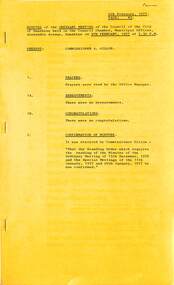 Sunshine and District Historical Society Incorporated
Administrative record - City of Sunshine - Commissioner Mr Alexander Alex George Gillon Collection 1976 - 1982 - Minutes of the ordinary meeting of council held on 9th February 1977, City of Sunshine, 9th February 1977
... Albans Flat Development Control Vehicle Fleet Compound at Municipal Offices Tool Kits for Apprentice Mechanics Security Compound at Garbage Tip Sunshine Tip Purchase Four-Wheel Drive Tractor Parks & Recreation Land Use Permit Application Greyhound Training Establishment 5 Vule Street Land Use Permit Application Flats 15 Bardsley Street Land Use Permit Application Service Premises Caretaker's Dwelling Lot 80 Porter Road Deer Park Land Use Permit Application Community Health Centre Andrea Street Land Use Permit Application Subdivision and Detached House Lot 2 Main Road East, Sunshine Avenue & McIntyre Road Land Use Permit Application Detached House Lot 376 Doherty Street Land Use Permit Application Extension Existing Shop and Dwelling 82 Glengala Road Land Use Permit Application Subdivision & Detached Houses Glenmaggie Drive Land Use Permit Application Temporary Storage of Equipment and Machinery Lot 493 Fairbairn Road Land Use Permit Flats 17 St. ...Albans Flat Development Control Vehicle Fleet Compound at Municipal Offices Tool Kits for Apprentice Mechanics Security Compound at Garbage Tip Sunshine Tip Purchase Four-Wheel Drive Tractor Parks & Recreation Land Use Permit Application Greyhound Training Establishment 5 Vule Street Land Use Permit Application Flats 15 Bardsley Street Land Use Permit Application Service Premises Caretaker's Dwelling Lot 80 Porter Road Deer Park Land Use Permit Application Community Health Centre Andrea Street Land Use Permit Application Subdivision and Detached House Lot 2 Main Road East, Sunshine Avenue & McIntyre Road Land Use Permit Application Detached House Lot 376 Doherty Street Land Use Permit Application Extension Existing Shop and Dwelling 82 Glengala Road Land Use Permit Application Subdivision & Detached Houses Glenmaggie Drive Land Use Permit Application Temporary Storage of Equipment and Machinery Lot 493 Fairbairn Road Land Use Permit Flats 17 St. ...Minutes of the Ordinary Meeting of Council held on 9th February 1977 Report of the Town Clerk Subsidies Rainbow Workshop Proposed Community Health Regional Planning Western Region Commission Proposal Co-Ordination Committee Proposed Regional Library Service Payment of Allowances to Councillors Employment of Unemployed Proposed Closure of Roads Railway Land Alexandra Avenue and Service Street Request for Inquiry into M.M.B.W. Operations Turkish Disaster Appeal Request for Financial Assistance Proposed Assignment of Lease The Hub Lease of land Scout Hall Lowe Crescent Loan Funds Financial Reports Castley Hall Financial Statement Transfer of Loan Funds not now Required for the Purpose for which they were borrowed either in part or full Future of Australian Assistance Plan Proposed Name Railway Station Deer Park Land Transfers for Sealing Proposed purchase of Garbage Tip Sunshine Tip Agreement with Councils Associated Matters Development of School Grounds Agrrements Use of Facilities by Ratepayers Proposed Liquor Licence Albion Rovers Soccer Club Subsidies for Welfare Officers and Elderly Citizens Clubs Proposed Name Part of St. Albans by City of Keilor St. Albans West North of the Albanvale Estate to Kurung Acquisition of Tip Site Sunshine Tip from Albion Reid Pty Ltd Sale of land Laurel Street to Education Department Proposed Indoor Heated Swimming Pool Report of Chief Health Inspector Ant Spray Authorisation of Doctor for Immunisation / Vaccination Procedures Application for Septic Tanks Application for Installation of Gas Fired Dry Septic Tank Units Prosecution Proceedings Sunshine Magistrate Court Food Sampling Apex Project City of Sunshine Nuisance Conditions Arising from the Continued Use of Vancant Land at Lot 272 Beela Court Sunshine West as a Trucking Depot Removal of Dwelling Outside of the Municipality Commonwealth Property Ashley Street to Port Arlington Proposed Disposal of Refuse By-Law Report of the Medical Officer of Health Holiday Activities in the Children's Section of the Library Report of the Federal Government's Committee of Inquiry into Public Libraries March 1976 Report of the City Engineer Certificate of Completion Private Street Scheme Right of Way Between Princess Street & Main Road East St. Albans Flat Development Control Vehicle Fleet Compound at Municipal Offices Tool Kits for Apprentice Mechanics Security Compound at Garbage Tip Sunshine Tip Purchase Four-Wheel Drive Tractor Parks & Recreation Land Use Permit Application Greyhound Training Establishment 5 Vule Street Land Use Permit Application Flats 15 Bardsley Street Land Use Permit Application Service Premises Caretaker's Dwelling Lot 80 Porter Road Deer Park Land Use Permit Application Community Health Centre Andrea Street Land Use Permit Application Subdivision and Detached House Lot 2 Main Road East, Sunshine Avenue & McIntyre Road Land Use Permit Application Detached House Lot 376 Doherty Street Land Use Permit Application Extension Existing Shop and Dwelling 82 Glengala Road Land Use Permit Application Subdivision & Detached Houses Glenmaggie Drive Land Use Permit Application Temporary Storage of Equipment and Machinery Lot 493 Fairbairn Road Land Use Permit Flats 17 St. Albans Road Land Use Permit Application Regional Depot Melbourne Metropolitan Board of Works St. Albans Road Re-Zoning 843 Ballarat Road Deer Park Land Use Permit Application Presbytery and Church Addition to Existing Church and School St. Peter Chanel Catholic Church & St. Peter Chanel Primary School Lot 59 Ballarat Road Deer Park Land Use Permit Application Garden Shed & Car Port Addition to Flats 9 Yarmouth Avenue Land Use Permit Application Holy Eucharist Primary School Oleander Drive Plan of Subdivision St. Albans Road Orama Street Child Care Centre Preparations of Plans Alteration to Bus Stop Route 416 McIntyre Road Sunshine North Land Use Permit Application Factory Lot 63 Munro Street Land Use Permit Application Extension to Existing Hall Sunshine United Cricket Club Selwyn Park Land Use Permit Application Factory & Storage Area Lots 101 & 102 Davies Avenue Land Use Permit Application Factory Lot 50 Cromer Avenue Land Use Permit Application Garage Extension 64 - 66 Monash Street Land Use Permit Application Recreation Buildings Additon to Existing Factory Australian Tube Mills Pty Ltd Hawthorn Avenue Land Use Permit Application Display of Goods in Conjunction with Petrol Filling Station 359 Ballarat Road Braybrook Land Use Permit Application 359 Ballarat Road General Engineering Lot 262 and Part Lots 258, 259 & 260 Rothray Avenue Land Use Permit Application Indoor Training Centre Lot 7 Mullenger Street Land Use Permit Application Extension to Existing Factory Ayton Street Land Use Permit Application Extension to Existing Factory Lots 49. 50 & 51 Marshall Street Land Use Permit Application Office & Amenities Addition to Existing Complex Lot 1 Burke Street Plan of Transfer of Land Old Geelong Road Land Use Permit Application Retail Timber Yard & Hardware Sales Lot 78 Sunshine Road Land Use Permit Application Underground Tank Additon to Existing Service Station Lot 2 Sunshine Road Land Use Permit Application Nursery & Garden Supply Depot 11 Norman Street Land Use Permit Application Office Finance Company 16A Watt Street Land Use Permit Application Service Industry and Shop 557B Geelong Road Proposed Widening of Easement Drain Monsanto Australia Limited Plan of Subdivision Market Road Hampton Avenue Private Street Scheme Strata Subdivision Lot 26 Belvedere Close Land Use Permit Application Flats Chifley Drive Land Use Permit Application Extension to Existing Factory Lot 6 Van Nes Avenue Statcon Intersection Signalisation Programme Churchill Avenue & Ashley Street Land Use Permit Application Warehouse, Office & Commercial Display Area 159 & 161 Rosamond Road and 3 White Street Land Use Permit Application Warehouse & Office Lot 4 Mitchell Street Land Use Permit Application Flats Van Ness Avenue Construction of Cranwell Street Extraordinary Business Report of the Town Clerk Amended Hours of Opening of Swimming Pools Castley Hall Committee of Management Loan Schedules Levels Possible Compensation McIntyre Road Bridge Railway Crossing Bunnett Street Land Transfer Loan National Bank Savings Bank Traffic Lights Anderson Road & Durham Road city of sunshine, alexander "alex" george gillon, the hub, sun crescent, sunshine, lowe crescent, castley hall, simmie street, deer park railway station, deer park, albion rovers soccer club, selwyn park, albion, laurel street, st. albans, beela court, sunshine west, alexandra avenue, service street, sunshine tip, albion reid, princess street, main road east, vule street, bardsley street, porter court, andrea street, sunshine avenue, mcintyre road, doherty street, glengala road, glenmaggie drive, fairbairn road, st. albans road, ballarat road, st. peter chanel catholic church, st. peter chanel primary school, yarmouth avenue, holy eucharist primary school, oleander drive, munro street, sunshine united cricket club, davies avenue, cromer avenue, monash street, hawthorn avenue, braybrook, rothray avenue, mullenger street, ayton street, marshall street, burke street, old geelong road, brooklyn, sunshine road, tottenham, norman street, watt street, market road, hampton avenue, belvedere close, chifley drive, van nes avenue, maribyrnong, churchill avenue, ashley street, rosamond road, white street, mitchell street, maidstone, cranwell street, mcintyre road bridge, anderson road, durham road -
 Sunshine and District Historical Society Incorporated
Administrative record - City of Sunshine - Commissioner Mr Alexander Alex George Gillon Collection 1976 - 1982 - Notice of ordinary meeting of the council of the City of Sunshine to be held on 9th February 1977, City of Sunshine, 28th January 1977
... Albans Flat Development Control Vehicle Fleet Compound at Municipal Offices Tool Kits for Apprentice Mechanics Security Compound at Garbage Tip Sunshine Tip Purchase Four-Wheel Drive Tractor Parks & Recreation Land Use Permit Application Greyhound Training Establishment 5 Vule Street Land Use Permit Application Flats 15 Bardsley Street Land Use Permit Application Service Premises Caretaker's Dwelling Lot 80 Porter Court Deer Park Land Use Permit Application Community Health Centre Andrea Street Land Use Permit Application Subdivision and Detached House Lot 2 Main Road East, Sunshine Avenue & McIntyre Road Land Use Permit Application Detached House Lot 376 Doherty Street Land Use Permit Application Extension Existing Shop and Dwelling 82 Glengala Road Land Use Permit Application Subdivision & Detached Houses Glenmaggie Drive Land Use Permit Application Temporary Storage of Equipment and Machinery Lot 493 Fairbairn Road Land Use Permit Flats 17 St. ...Albans Flat Development Control Vehicle Fleet Compound at Municipal Offices Tool Kits for Apprentice Mechanics Security Compound at Garbage Tip Sunshine Tip Purchase Four-Wheel Drive Tractor Parks & Recreation Land Use Permit Application Greyhound Training Establishment 5 Vule Street Land Use Permit Application Flats 15 Bardsley Street Land Use Permit Application Service Premises Caretaker's Dwelling Lot 80 Porter Court Deer Park Land Use Permit Application Community Health Centre Andrea Street Land Use Permit Application Subdivision and Detached House Lot 2 Main Road East, Sunshine Avenue & McIntyre Road Land Use Permit Application Detached House Lot 376 Doherty Street Land Use Permit Application Extension Existing Shop and Dwelling 82 Glengala Road Land Use Permit Application Subdivision & Detached Houses Glenmaggie Drive Land Use Permit Application Temporary Storage of Equipment and Machinery Lot 493 Fairbairn Road Land Use Permit Flats 17 St. ...Notice of Ordinary Meeting of the Council of the City of Sunshine to be held on 9th February 1977 Report of the Town Clerk Subsidies Rainbow Workshop Proposed Community Health Regional Planning Western Region Commission Proposal Co-Ordination Committee Proposed Regional Library Service Payment of Allowances to Councillors Employment of Unemployed Proposed Closure of Roads Railway Land Alexandra Avenue and Service Street Request for Inquiry into M.M.B.W. Operations Turkish Disaster Appeal Request for Financial Assistance Proposed Assignment of Lease The Hub Lease of land Scout Hall Lowe Crescent Loan Funds Financial Reports Castley Hall Financial Statement Transfer of Loan Funds not now Required for the Purpose for which they were borrowed either in part or full Future of Australian Assistance Plan Proposed Name Railway Station Deer Park Land Transfers for Sealing Proposed purchase of Garbage Tip Sunshine Tip Agreement with Councils Associated Matters Development of School Grounds Agrrements Use of Facilities by Ratepayers Proposed Liquor Licence Albion Rovers Soccer Club Subsidies for Welfare Officers and Elderly Citizens Clubs Proposed Name Part of St. Albans by City of Keilor St. Albans West North of the Albanvale Estate to Kurung Acquisition of Tip Site Sunshine Tip from Albion Reid Pty Ltd Sale of land Laurel Street to Education Department Proposed Indoor Heated Swimming Pool Report of Chief Health Inspector Ant Spray Authorisation of Doctor for Immunisation / Vaccination Procedures Application for Septic Tanks Application for Installation of Gas Fired Dry Septic Tank Units Prosecution Proceedings Sunshine Magistrate Court Food Sampling Apex Project City of Sunshine Nuisance Conditions Arising from the Continued Use of Vancant Land at Lot 272 Beela Court Sunshine West as a Trucking Depot Removal of Dwelling Outside of the Municipality Commonwealth Property Ashley Street to Port Arlington Proposed Disposal of Refuse By-Law Report of the Medical Officer of Health Holiday Activities in the Children's Section of the Library Report of the Federal Government's Committee of Inquiry into Public Libraries March 1976 Report of the City Engineer Certificate of Completion Private Street Scheme Right of Way Between Princess Street & Main Road East St. Albans Flat Development Control Vehicle Fleet Compound at Municipal Offices Tool Kits for Apprentice Mechanics Security Compound at Garbage Tip Sunshine Tip Purchase Four-Wheel Drive Tractor Parks & Recreation Land Use Permit Application Greyhound Training Establishment 5 Vule Street Land Use Permit Application Flats 15 Bardsley Street Land Use Permit Application Service Premises Caretaker's Dwelling Lot 80 Porter Court Deer Park Land Use Permit Application Community Health Centre Andrea Street Land Use Permit Application Subdivision and Detached House Lot 2 Main Road East, Sunshine Avenue & McIntyre Road Land Use Permit Application Detached House Lot 376 Doherty Street Land Use Permit Application Extension Existing Shop and Dwelling 82 Glengala Road Land Use Permit Application Subdivision & Detached Houses Glenmaggie Drive Land Use Permit Application Temporary Storage of Equipment and Machinery Lot 493 Fairbairn Road Land Use Permit Flats 17 St. Albans Road Land Use Permit Application Regional Depot Melbourne Metropolitan Board of Works St. Albans Road Re-Zoning 843 Ballarat Road Deer Park Land Use Permit Application Presbytery and Church Addition to Existing Church and School St. Peter Chanel Catholic Church & St. Peter Chanel Primary School Lot 59 Ballarat Road Deer Park Land Use Permit Application Garden Shed & Car Port Addition to Flats 9 Yarmouth Avenue Land Use Permit Application Holy Eucharist Primary School Oleander Drive Plan of Subdivision St. Albans Road Orama Street Child Care Centre Preparations of Plans Alteration to Bus Stop Route 416 McIntyre Road Sunshine North Land Use Permit Application Factory Lot 63 Munro Street Land Use Permit Application Extension to Existing Hall Sunshine United Cricket Club Selwyn Park Land Use Permit Application Factory & Storage Area Lots 101 & 102 Davies Avenue Land Use Permit Application Factory Lot 50 Cromer Avenue Land Use Permit Application Garage Extension 64 - 66 Monash Street Land Use Permit Application Recreation Buildings Additon to Existing Factory Australian Tube Mills Pty Ltd Hawthorn Avenue Land Use Permit Application Display of Goods in Conjunction with Petrol Filling Station 359 Ballarat Road Braybrook Land Use Permit Application 359 Ballarat Road General Engineering Lot 262 and Part Lots 258, 259 & 260 Rothray Avenue Land Use Permit Application Indoor Training Centre Lot 7 Mullenger Street Land Use Permit Application Extension to Existing Factory Ayton Street Land Use Permit Application Extension to Existing Factory Lots 49. 50 & 51 Marshall Street Land Use Permit Application Office & Amenities Addition to Existing Complex Lot 1 Burke Street Plan of Transfer of Land Old Geelong Road Land Use Permit Application Retail Timber Yard & Hardware Sales Lot 78 Sunshine Road Land Use Permit Application Underground Tank Additon to Existing Service Station Lot 2 Sunshine Road Land Use Permit Application Nursery & Garden Supply Depot 11 Norman Street Land Use Permit Application Office Finance Company 16A Watt Street Land Use Permit Application Service Industry and Shop 557B Geelong Road Proposed Widening of Easement Drain Monsanto Australia Limited Plan of Subdivision Market Road Hampton Avenue Private Street Scheme Strata Subdivision Lot 26 Belvedere Close Land Use Permit Application Flats Chifley Drive Land Use Permit Application Extension to Existing Factory Lot 6 Van Nes Avenue Statcon Intersection Signalisation Programme Churchill Avenue & Ashley Street Land Use Permit Application Warehouse, Office & Commercial Display Area 159 & 161 Rosamond Road and 3 White Street Land Use Permit Application Warehouse & Office Lot 4 Mitchell Street Land Use Permit Application Flats Van Ness Avenue Construction of Cranwell Street Extraordinary Business Report of the Town Clerk Amended Hours of Opening of Swimming Pools Castley Hall Committee of Management Loan Schedules Levels Possible Compensation McIntyre Road Bridge Railway Crossing Bunnett Street Land Transfer city of sunshine, alexander "alex" george gillon, the hub, sun crescent, sunshine, lowe crescent, castley hall, simmie street, deer park railway station, deer park, albion rovers soccer club, selwyn park, albion, laurel street, st. albans, beela court, sunshine west, alexandra avenue, service street, sunshine tip, albion reid, princess street, main road east, bardsley street, porter court, andrea street, sunshine avenue, mcintyre road, doherty street, glengala road, glenmaggie drive, fairbairn road, ballarat road, st. peter chanel catholic church, st. peter chanel primary school, yarmouth avenue, holy eucharist primary school, oleander drive, munro street, sunshine united cricket club, st. albans road, davies avenue, cromer avenue, monash street, hawthorn avenue, braybrook, rothray avenue, mullenger street, ayton street, marshall street, burke street, old geelong road, brooklyn, sunshine road, tottenham, norman street, watt street, geelong road, monsanto, somerville road, footscray west, hampton avenue, belvedere close, chifley drive, van nes avenue, maribyrnong, churchill avenue, ashley street, rosamond road, white street, mitchell street, maidstone, cranwell street, castley hall committee of management, bunnett street, mcintyre road bridge -
 Sunshine and District Historical Society Incorporated
Administrative record - City of Sunshine - Commissioner Mr Alexander Alex George Gillon Collection 1976 - 1982 - Notice of ordinary meeting of the council of the City of Sunshine to be held on 9th February 1977, City of Sunshine, 28th January 1977
... Albans Flat Development Control Vehicle Fleet Compound at Municipal Offices Tool Kits for Apprentice Mechanics Security Compound at Garbage Tip Sunshine Tip Purchase Four-Wheel Drive Tractor Parks & Recreation Land Use Permit Application Greyhound Training Establishment 5 Vule Street Land Use Permit Application Flats 15 Bardsley Street Land Use Permit Application Service Premises Caretaker's Dwelling Lot 80 Porter Court Deer Park Land Use Permit Application Community Health Centre Andrea Street Land Use Permit Application Subdivision and Detached House Lot 2 Main Road East, Sunshine Avenue & McIntyre Road Land Use Permit Application Detached House Lot 376 Doherty Street Land Use Permit Application Extension Existing Shop and Dwelling 82 Glengala Road Land Use Permit Application Subdivision & Detached Houses Glenmaggie Drive Land Use Permit Application Temporary Storage of Equipment and Machinery Lot 493 Fairbairn Road Land Use Permit Flats 17 St. ...Albans Flat Development Control Vehicle Fleet Compound at Municipal Offices Tool Kits for Apprentice Mechanics Security Compound at Garbage Tip Sunshine Tip Purchase Four-Wheel Drive Tractor Parks & Recreation Land Use Permit Application Greyhound Training Establishment 5 Vule Street Land Use Permit Application Flats 15 Bardsley Street Land Use Permit Application Service Premises Caretaker's Dwelling Lot 80 Porter Court Deer Park Land Use Permit Application Community Health Centre Andrea Street Land Use Permit Application Subdivision and Detached House Lot 2 Main Road East, Sunshine Avenue & McIntyre Road Land Use Permit Application Detached House Lot 376 Doherty Street Land Use Permit Application Extension Existing Shop and Dwelling 82 Glengala Road Land Use Permit Application Subdivision & Detached Houses Glenmaggie Drive Land Use Permit Application Temporary Storage of Equipment and Machinery Lot 493 Fairbairn Road Land Use Permit Flats 17 St. ...Notice of Ordinary Meeting of the Council of the City of Sunshine to be held on 9th February 1977 Report of the Town Clerk Subsidies Rainbow Workshop Proposed Community Health Regional Planning Western Region Commission Proposal Co-Ordination Committee Proposed Regional Library Service Payment of Allowances to Councillors Employment of Unemployed Proposed Closure of Roads Railway Land Alexandra Avenue and Service Street Request for Inquiry into M.M.B.W. Operations Turkish Disaster Appeal Request for Financial Assistance Proposed Assignment of Lease The Hub Lease of land Scout Hall Lowe Crescent Loan Funds Financial Reports Castley Hall Financial Statement Transfer of Loan Funds not now Required for the Purpose for which they were borrowed either in part or full Future of Australian Assistance Plan Proposed Name Railway Station Deer Park Land Transfers for Sealing Proposed purchase of Garbage Tip Sunshine Tip Agreement with Councils Associated Matters Development of School Grounds Agrrements Use of Facilities by Ratepayers Proposed Liquor Licence Albion Rovers Soccer Club Subsidies for Welfare Officers and Elderly Citizens Clubs Proposed Name Part of St. Albans by City of Keilor St. Albans West North of the Albanvale Estate to Kurung Acquisition of Tip Site Sunshine Tip from Albion Reid Pty Ltd Sale of land Laurel Street to Education Department Proposed Indoor Heated Swimming Pool Report of Chief Health Inspector Ant Spray Authorisation of Doctor for Immunisation / Vaccination Procedures Application for Septic Tanks Application for Installation of Gas Fired Dry Septic Tank Units Prosecution Proceedings Sunshine Magistrate Court Food Sampling Apex Project City of Sunshine Nuisance Conditions Arising from the Continued Use of Vancant Land at Lot 272 Beela Court Sunshine West as a Trucking Depot Removal of Dwelling Outside of the Municipality Commonwealth Property Ashley Street to Port Arlington Proposed Disposal of Refuse By-Law Report of the Medical Officer of Health Holiday Activities in the Children's Section of the Library Report of the Federal Government's Committee of Inquiry into Public Libraries March 1976 Report of the City Engineer Certificate of Completion Private Street Scheme Right of Way Between Princess Street & Main Road East St. Albans Flat Development Control Vehicle Fleet Compound at Municipal Offices Tool Kits for Apprentice Mechanics Security Compound at Garbage Tip Sunshine Tip Purchase Four-Wheel Drive Tractor Parks & Recreation Land Use Permit Application Greyhound Training Establishment 5 Vule Street Land Use Permit Application Flats 15 Bardsley Street Land Use Permit Application Service Premises Caretaker's Dwelling Lot 80 Porter Court Deer Park Land Use Permit Application Community Health Centre Andrea Street Land Use Permit Application Subdivision and Detached House Lot 2 Main Road East, Sunshine Avenue & McIntyre Road Land Use Permit Application Detached House Lot 376 Doherty Street Land Use Permit Application Extension Existing Shop and Dwelling 82 Glengala Road Land Use Permit Application Subdivision & Detached Houses Glenmaggie Drive Land Use Permit Application Temporary Storage of Equipment and Machinery Lot 493 Fairbairn Road Land Use Permit Flats 17 St. Albans Road Land Use Permit Application Regional Depot Melbourne Metropolitan Board of Works St. Albans Road Re-Zoning 843 Ballarat Road Deer Park Land Use Permit Application Presbytery and Church Addition to Existing Church and School St. Peter Chanel Catholic Church & St. Peter Chanel Primary School Lot 59 Ballarat Road Deer Park Land Use Permit Application Garden Shed & Car Port Addition to Flats 9 Yarmouth Avenue Land Use Permit Application Holy Eucharist Primary School Oleander Drive Plan of Subdivision St. Albans Road Orama Street Child Care Centre Preparations of Plans Alteration to Bus Stop Route 416 McIntyre Road Sunshine North Land Use Permit Application Factory Lot 63 Munro Street Land Use Permit Application Extension to Existing Hall Sunshine United Cricket Club Selwyn Park Land Use Permit Application Factory & Storage Area Lots 101 & 102 Davies Avenue Land Use Permit Application Factory Lot 50 Cromer Avenue Land Use Permit Application Garage Extension 64 - 66 Monash Street Land Use Permit Application Recreation Buildings Additon to Existing Factory Australian Tube Mills Pty Ltd Hawthorn Avenue Land Use Permit Application Display of Goods in Conjunction with Petrol Filling Station 359 Ballarat Road Braybrook Land Use Permit Application 359 Ballarat Road General Engineering Lot 262 and Part Lots 258, 259 & 260 Rothray Avenue Land Use Permit Application Indoor Training Centre Lot 7 Mullenger Street Land Use Permit Application Extension to Existing Factory Ayton Street Land Use Permit Application Extension to Existing Factory Lots 49. 50 & 51 Marshall Street Land Use Permit Application Office & Amenities Addition to Existing Complex Lot 1 Burke Street Plan of Transfer of Land Old Geelong Road Land Use Permit Application Retail Timber Yard & Hardware Sales Lot 78 Sunshine Road Land Use Permit Application Underground Tank Additon to Existing Service Station Lot 2 Sunshine Road Land Use Permit Application Nursery & Garden Supply Depot 11 Norman Street Land Use Permit Application Office Finance Company 16A Watt Street Land Use Permit Application Service Industry and Shop 557B Geelong Road Proposed Widening of Easement Drain Monsanto Australia Limited Plan of Subdivision Market Road Hampton Avenue Private Street Scheme Strata Subdivision Lot 26 Belvedere Close Land Use Permit Application Flats Chifley Drive Land Use Permit Application Extension to Existing Factory Lot 6 Van Nes Avenue Statcon Intersection Signalisation Programme Churchill Avenue & Ashley Street Land Use Permit Application Warehouse, Office & Commercial Display Area 159 & 161 Rosamond Road and 3 White Street Land Use Permit Application Warehouse & Office Lot 4 Mitchell Street Land Use Permit Application Flats Van Ness Avenue Construction of Cranwell Street Extraordinary Business Report of the Town Clerk Amended Hours of Opening of Swimming Pools Castley Hall Committee of Management Loan Schedules Levels Possible Compensation McIntyre Road Bridge Railway Crossing Bunnett Street Land Transfer city of sunshine, alexander "alex" george gillon, the hub, sun crescent, sunshine, lowe crescent, castley hall, simmie street, deer park railway station, deer park, albion rovers soccer club, selwyn park, albion, laurel street, st. albans, beela court, sunshine west, alexandra avenue, service street, sunshine tip, albion reid, princess street, main road east, bardsley street, porter court, andrea street, sunshine avenue, mcintyre road, doherty street, glengala road, glenmaggie drive, fairbairn road, ballarat road, st. peter chanel catholic church, st. peter chanel primary school, yarmouth avenue, holy eucharist primary school, oleander drive, munro street, sunshine united cricket club, st. albans road, davies avenue, cromer avenue, monash street, hawthorn avenue, braybrook, rothray avenue, mullenger street, ayton street, marshall street, burke street, old geelong road, brooklyn, sunshine road, tottenham, norman street, watt street, geelong road, monsanto, somerville road, footscray west, hampton avenue, belvedere close, chifley drive, van nes avenue, maribyrnong, churchill avenue, ashley street, rosamond road, white street, mitchell street, maidstone, cranwell street, castley hall committee of management, bunnett street, mcintyre road bridge
