
Showing 33 items matching " tambour work"
-
 Embroiderers Guild, Victoria
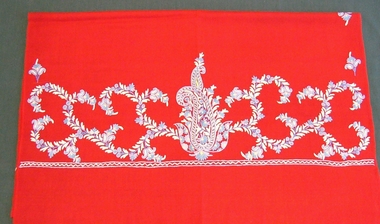
Textile - Kashmiri Stole, c. 1960-80
... ... Tambour work...Shades of blue and white tambour work with touches of yelow. Paisley and floral motifs in border design and a row of motifs around the edges....Tambour Stole 1960-80 Kashmir-Srinagar Tambour work Red, woven, twill wool. Tied fringe. ...Purchased by donor in Kashmir for his wife who was a member, now deceased.Red, woven, twill wool. Tied fringe. Shades of blue and white tambour work with touches of yelow. Paisley and floral motifs in border design and a row of motifs around the edges.tambour, stole, 1960-80, kashmir-srinagar, tambour work -
 Embroiderers Guild, Victoria
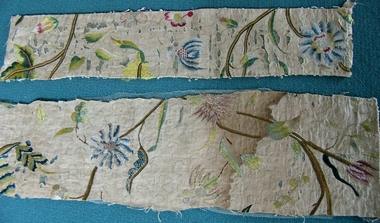
Textile - Early 18th C Silk Fragments, Early 18th C
... ... Tambour work...Meandering lines may be tambour work. Embroidered through two layers of linen....Meandering lines may be tambour work. Embroidered through two layers of linen. ...Early 18th C fragments of ecru linen, embroidered with silk flowers in soft shades of green, pink and blue. Meandering lines may be tambour work. Embroidered through two layers of linen."Fragments of Queen Anne Bed Hanging - silk on linen"embroidery, fragment, tambour work, 18th century -
 Embroiderers Guild, Victoria
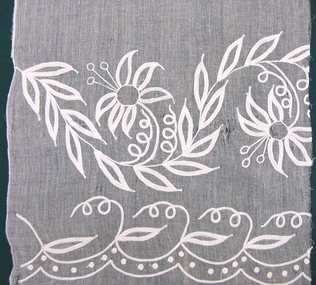
Textile - Fragment
... Tambour work on white muslin with a bold flower design....Embroidery Whitework Tambour Fragment Tambour work on white muslin with a bold flower design. ...Tambour work on white muslin with a bold flower design.embroidery, whitework, tambour, fragment -
 Embroiderers Guild, Victoria
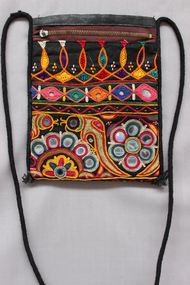
Accessory - Indian Bag Embroidered with Shisha Mirrors, 20 th C
... ...Tambour work...Bags India Embroidery Shisha Mirrors Tambour work Bags Small black cotton bag with a zipper at top front. ...Small black cotton bag with a zipper at top front. Embroidered in bright colours, orange, red, purple, green, yellow, pink and cream and shisha mirrors inserted. Black cord around sides of bag forming a handle and fluffy ends at bottom corners.bags, india, embroidery, shisha mirrors, tambour work, bags -
 Embroiderers Guild, Victoria
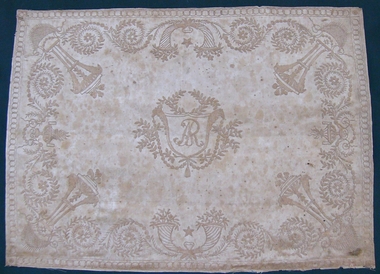
Textile - Silk Tambour Embroidered Panel, Late 19th century
... Tambour work...Tambour work Panels Late 19th century France AR Central part of design. ...Cream silk panel. Fine tambour embroidery. Classical design - urns, cornucopias and garlands of flowers. Central cartouche with initials.AR Central part of design.tambour work, panels, late 19th century, france -
 Embroiderers Guild, Victoria
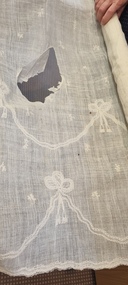
Textile - 18th C Tambour Embroidered Muslin Panel, c 1800
... ... Tambour work...Fine cotton muslin fabric embroidered with fine chain stitch tambour embroidered garlands, bows and tassels, with pulled thread work centres in various patterns, scattered motifs across ground. ...Found in cupboard in collection room, nil identification other than label saying "this handwork is very old" White work White lawn Drawn fabric Pulled thread Tambour work Tambour Garment Veil 18th Century 19th century Petticoats Fine cotton muslin fabric embroidered with fine chain stitch tambour embroidered garlands, bows and tassels, with pulled thread work centres in various patterns, scattered motifs across ground. ...Found in cupboard in collection room, nil identification other than label saying "this handwork is very old"Fine cotton muslin fabric embroidered with fine chain stitch tambour embroidered garlands, bows and tassels, with pulled thread work centres in various patterns, scattered motifs across ground. Looks like it was gathered across the top so may have been part of a skirt or petticoat or veil. white work, white lawn, drawn fabric, pulled thread, tambour work, tambour, garment, veil, 18th century, 19th century, petticoats -
 Embroiderers Guild, Victoria
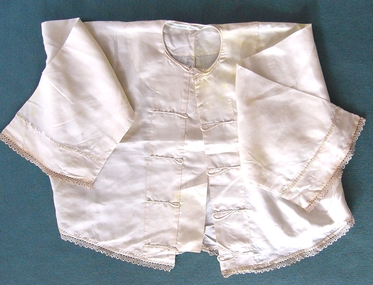
Clothing - Burmese Wedding Costume, c. 1850
... ... Tambour work...Embroidery Garments Tambour work 1840-60 Burma Skirt Blouse (part of Wedding Costume) Blouse Cream pongee silk in Chinese style with long wide sleeves trimmed with tatting and mother of pearl sequins. ...Note: Virginia Mort feels that costume is from Rajastan or Gujerat. Definitely from West India.Blouse Cream pongee silk in Chinese style with long wide sleeves trimmed with tatting and mother of pearl sequins.embroidery, garments, tambour work, 1840-60, burma, skirt, blouse (part of wedding costume) -
 Embroiderers Guild, Victoria
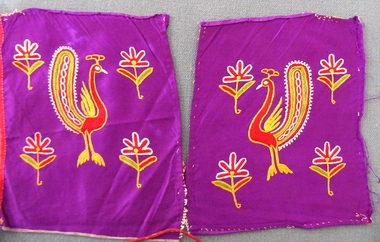
Clothing - Burmese Wedding Costume, c. 1850
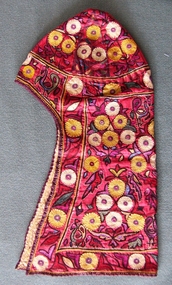
... ... Tambour work...Embroidery Garments Tambour work 1840-60 Burma Skirt Blouse (part of Wedding Costume) Panels probably part of jacket, floral motifs and birds, satin is red and purple. ...Note: Virginia Mort feels that costume is from Rajastan or Gujerat. Definitely from West India.Panels probably part of jacket, floral motifs and birds, satin is red and purple.embroidery, garments, tambour work, 1840-60, burma, skirt, blouse (part of wedding costume) -
 Embroiderers Guild, Victoria
Clothing - Burmese Wedding Costume, c. 1850
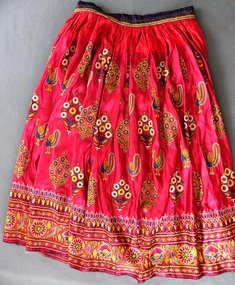
... ... Tambour work...Embroidery Garments Tambour work 1840-60 Burma Skirt Blouse (part of Wedding Costume) Red cotton (not a match to panels) chain stitch and shisha work, flowers and birds. ...Note: Virginia Mort feels that costume is from Rajastan or Gujerat. Definitely from West India.Red cotton (not a match to panels) chain stitch and shisha work, flowers and birds.embroidery, garments, tambour work, 1840-60, burma, skirt, blouse (part of wedding costume) -
 Embroiderers Guild, Victoria
Clothing - West Indian Wedding Costume, c. 1850
... ... Tambour work...Embroidery Garments Tambour work 1840-60 Burma Skirt Blouse (part of Wedding Costume) Skirt of bright red satin with motifs of flowers and birds, and several borders at the base of skirt. ...Note: Virginia Mort feels that costume is from Rajasthan or Gujarat. Definitely from West India.Skirt of bright red satin with motifs of flowers and birds, and several borders at the base of skirt.embroidery, garments, tambour work, 1840-60, burma, skirt, blouse (part of wedding costume) -
 Embroiderers Guild, Victoria
Accessory - Bag, 1930's
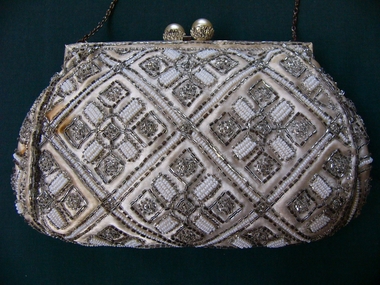
... ... Tambour work...Embroidery Bead work Tambour work Bags 1920-40 France Small beaded bag, ivory satin, silver bugle and white and silver seed beads. ...Purchased by Miss Sebaly's grandmother in Paris. Classic bag of the period.Small beaded bag, ivory satin, silver bugle and white and silver seed beads. Squared geometric pattern, silver coloured metal frame. Pearl clasp. embroidery, bead work, tambour work, bags, 1920-40, france -
 Embroiderers Guild, Victoria
Textile - Ottoman Style Sirma Embroidered Stole
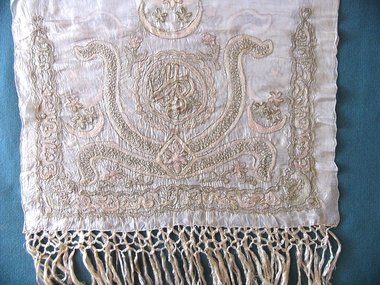
... ... Tambour work...Embroidery Stole Tambour work India In Arabic. Cream silk gauze with a border of local hieroglyphics included in the design. ...Cream silk gauze with a border of local hieroglyphics included in the design. Gilt chain stitch in pale pink and soft green and gold metal thread. A deep silk 8" silk border knotted (partly) fringe at each end.In Arabic.embroidery, stole, tambour work, india -
 Embroiderers Guild, Victoria
Textile - Indian Sohrai Table Runner
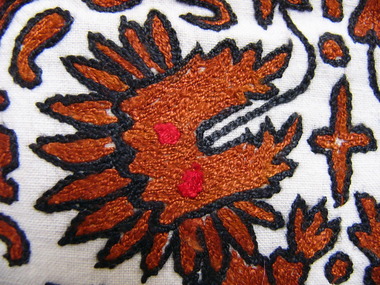
... ... Tambour work...Embroidery Tea cosy India? Tambour work Indian embroidery on cream cotton fabric with a tamboured design of dragons in brown and black. ...Sohrai embroidery is a traditional art form inspired by the, ritualistic, nature-based wall paintings of Jharkhand, India, created by tribal women, often during harvest seasons. This style features intricate, geometric, and figurative motifs—such as animals, birds, and plants—translated onto fabrics using techniques like Kantha stitch, embroidery, and sometimes mirror work.Indian embroidery on cream cotton fabric with a tamboured design of dragons in brown and black.embroidery, tea cosy, india?, tambour work -
 Embroiderers Guild, Victoria
Textile - Indian Sohrai Table Cloth
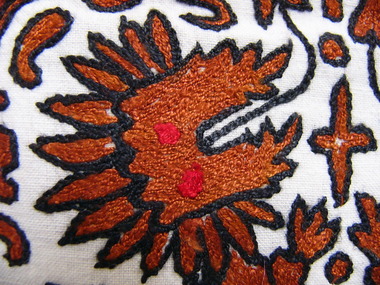
... ... Tambour work...Embroidery Tea cosy India? Tambour work Indian embroidery on cream cotton fabric with a tamboured design of dragons in brown and black. ...Sohrai embroidery is a traditional art form inspired by the, ritualistic, nature-based wall paintings of Jharkhand, India, created by tribal women, often during harvest seasons. This style features intricate, geometric, and figurative motifs—such as animals, birds, and plants—translated onto fabrics using techniques like Kantha stitch, embroidery, and sometimes mirror work.Indian embroidery on cream cotton fabric with a tamboured design of dragons in brown and black.embroidery, tea cosy, india?, tambour work -
 Embroiderers Guild, Victoria
Textile - Six Indian Sohrai Table Napkins
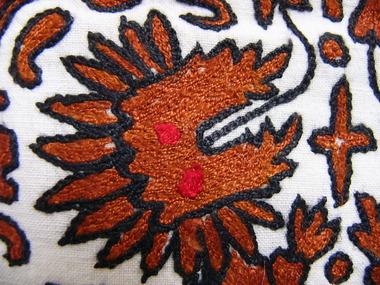
... ... Tambour work...Embroidery Tea cosy India? Tambour work Indian embroidery on cream cotton fabric with a tamboured design of dragons in brown and black. ...Sohrai embroidery is a traditional art form inspired by the, ritualistic, nature-based wall paintings of Jharkhand, India, created by tribal women, often during harvest seasons. This style features intricate, geometric, and figurative motifs—such as animals, birds, and plants—translated onto fabrics using techniques like Kantha stitch, embroidery, and sometimes mirror work.Indian embroidery on cream cotton fabric with a tamboured design of dragons in brown and black.embroidery, tea cosy, india?, tambour work -
 Embroiderers Guild, Victoria
Textile - Coggeshall Lace Flounce, Early 1800
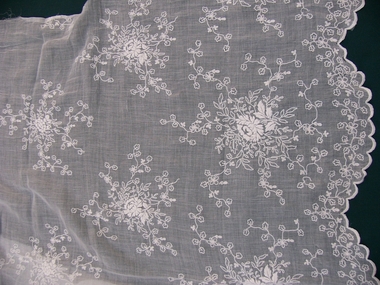
... ... Tambour work...work of the late Jean Dudding) About 1812 a French émigré, M. Drago and his two daughters settled in Coggeshall, Essex. Here they hired a room and began to teach the women and small children a method of decorating this net by using a tambour hook. ...Today Coggeshall lace is made by some members of the Lacemakers Guild and is taught as part of the City and Guilds course. https://coggeshallmuseum.org.uk/lace1.htm Embroidery Garments Whitework England Tambour work Early 18th century White muslin, with sprays of roses in white satin stitch, surrounded by delicate tambour embroidery known as Coggeshall embroidery. ...Miss Bostock, Foundation member of the EGV, travelled to England and met with The Hon. Rachel Kay-Shuttleworth of Gawthorpe Hall. Rachel "cut" off many pieces from her extensive lace collection which were gifted to the EGV. A Brief History (Information from the work of the late Jean Dudding) About 1812 a French émigré, M. Drago and his two daughters settled in Coggeshall, Essex. Here they hired a room and began to teach the women and small children a method of decorating this net by using a tambour hook. Thus began the making of Coggeshall Lace (sometimes called tambour lace). Tambouring produces a line of chain stitches and originated in the Far East, where the workers used a round frame resembling a tambourine or drum. This they could grip between the knees, thereby releasing both hands for tambouring. Coggeshall workers used a rectangular frame and this type is still used today. Throughout the 19th century this tamboured net lace was made in the tambour rooms and cottages of Coggeshall, and also in the homes of surrounding villages. Lace manufacturers and lace dealers co-ordinated these workers by obtaining orders from London and elsewhere. Sometimes more sophisticated designs were introduced and these would be tamboured by the more proficient workers. Besides the designs, all the necessary net and threads would also be distributed to the lace workers. Liberty & Co., amongst others, were supplied with Coggeshall Lace. The fluctuations in prosperity of the tambour lacemakers were governed by many factors. Fashion requiring flounces and frills gave great encouragement but the invention of chain stitch sewing machines and of machine made laces imitating the hand made article, together with a deterioration in the quality of design meant hard times for the laceworkers. Just after 1900 there was a great improvement in the quality of Coggeshall Lace. This was due largely to the activities of two ladies, the Misses Spurge, who were the chief employers in the district. Their brother William was an art teacher who improved the general standard of design and also introduced some old Italian designs. The First World War resulted in a decline in the making of Coggeshall Lace. The workers found it more profitable to do tambour beading. In the 1930's a determined effort was made to revive the making of Coggeshall Lace, and three handkerchiefs were given to Princess Marina on her marriage (See below). Coggeshall Lace was made into dresses for the Queen, Princess Margaret and Princess Alexandra. This work was undertaken by three very proficient workers in Great Tey. Queen Mary also chose two lace dresses and a teacloth in Coggeshall Lace. It was hoped that this Royal Patronage would encourage a revival of the craft. However the financial return was too meagre and after the Second World War both net and threads disappeared. Today Coggeshall lace is made by some members of the Lacemakers Guild and is taught as part of the City and Guilds course. https://coggeshallmuseum.org.uk/lace1.htm White muslin, with sprays of roses in white satin stitch, surrounded by delicate tambour embroidery known as Coggeshall embroidery. Coggeshall being a town in Essex.embroidery, garments, whitework, england, tambour work, early 18th century -
 Embroiderers Guild, Victoria
Textile - Indian Sohrai Tea Cosy
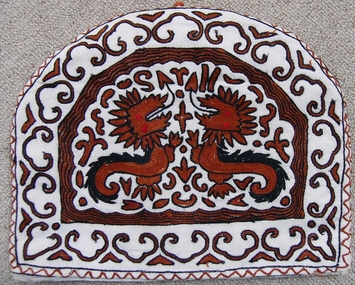
... ... Tambour work...Embroidery Tea cosy India? Tambour work Tea cosy is probably Indian. It is of cream cotton fabric with a tamboured design of dragons in brown and black. ...Sohrai embroidery is a traditional art form inspired by the, ritualistic, nature-based wall paintings of Jharkhand, India, created by tribal women, often during harvest seasons. This style features intricate, geometric, and figurative motifs—such as animals, birds, and plants—translated onto fabrics using techniques like Kantha stitch, embroidery, and sometimes mirror work.Tea cosy is probably Indian. It is of cream cotton fabric with a tamboured design of dragons in brown and black. Includes tea cloth and napkins.embroidery, tea cosy, india?, tambour work -
 Embroiderers Guild, Victoria
Textile - Brown and Gold Silk Tambour Embroidery Mat, Baroness Viola, Early 20th century
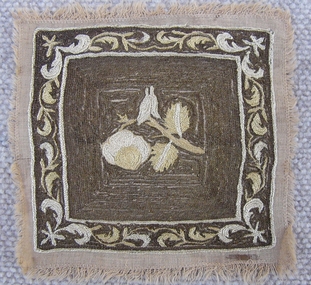
... ... Tambour work...Czechoslovakia Embroidery Tambour work Mid European 1900-20 floral flower Fine brown cotton fabric covered with dark brown and gold silk tambour embroidery. ...Made by Viola, sister of the Baroness Felicitas Weidersperger of Tazovitz.Fine brown cotton fabric covered with dark brown and gold silk tambour embroidery. The edge is fringed. Design is of a rose surrounded by a scrolled border.czechoslovakia, embroidery, tambour work, mid european, 1900-20, floral, flower -
 Kew Historical Society Inc
Clothing - Lace bodice, 1900s
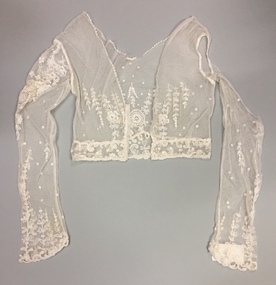
... White cotton machine made net bolero with tambour work and a chemical lace medallion inserted centre back...While the collection includes some examples of international fashion, most items were handmade or purchased in Melbourne. fashion and textiles collection - kew historical society lace women's clothing White cotton machine made net bolero with tambour work and a chemical lace medallion inserted centre back Clothing Lace bodice ...The Fashion & Design collection of Kew Historical Society includes examples of women’s, men’s, children’s and infants' clothing from the 18th, 19th and 20th centuries. While the collection includes some examples of international fashion, most items were handmade or purchased in Melbourne. White cotton machine made net bolero with tambour work and a chemical lace medallion inserted centre backfashion and textiles collection - kew historical society, lace, women's clothing -
 Embroiderers Guild, Victoria
Textile - Pitjantjatjara Tambour Wall Hanging, Iwana Ken, c. 2008
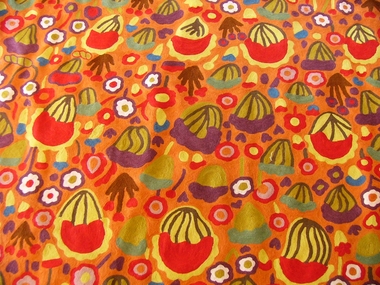
... The wall hanging is in tambour work. Background in orange. Hand tamboured...The wall hanging is in tambour work. Background in orange. Hand tamboured Textile Pitjantjatjara Tambour Wall Hanging Iwana Ken ...This wall hanging is a cross cultural collaboration combining a design taken from an original acrylic on canvas painting by Iwana Ken. The design was sent to Kashmir where it was hand embroidered in tambour/chain stitch in wool.The wall hanging is in bright colours in a semi abstract design of plants and flowers. The wall hanging is in tambour work. Background in orange. Hand tambouredLabel: Better World Arts, Cross Cultural Projects fine art - fine craft, ethical trade IKE 118B DL 101 12/100embroidery, australia, wall hanging, kashmir -
 Embroiderers Guild, Victoria
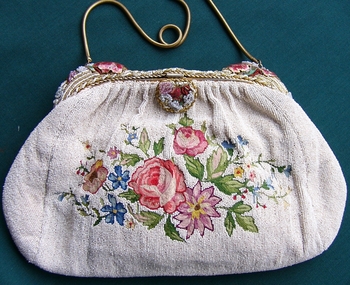
Accessory - Bag, 1940-60
... Very fine beading forms background to a floral bouquet in tambour work, multi coloured. Heavily encrusted bag frame with enamel carnations....Very fine beading forms background to a floral bouquet in tambour work, multi coloured. Heavily encrusted bag frame with enamel carnations. ...Beaded bag with an enamelled and beaded clasp. Very fine beading forms background to a floral bouquet in tambour work, multi coloured. Heavily encrusted bag frame with enamel carnations.beading, bags, 1940-60, french (?) -
 Embroiderers Guild, Victoria
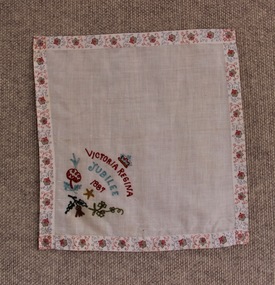
Accessory - Queen Victoria Jubilee 1887 Handkerchief, late 19th C
... Commemorates Queen Victoria's Jubilee. Tambour work crown/ flowers/ Jubilee 1887. red, blue, green, brown, and gold....Commemorates Queen Victoria's Jubilee. Tambour work crown/ flowers/ Jubilee 1887. red, blue, green, brown, and gold. ...Made by donor's grandmother.Pale cream fine cotton with floral border, which has been woven as part of the handkerchief (one piece). Commemorates Queen Victoria's Jubilee. Tambour work crown/ flowers/ Jubilee 1887. red, blue, green, brown, and gold.Victoria Regina / Jubilee/ 1887embroidery, queen victoria, jubilee, tambour -
 Embroiderers Guild, Victoria
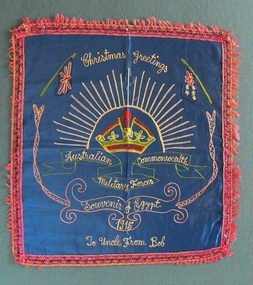
Textile - WW1 Egyptian Souvenir Cushion Cover, After 1914-```
... Blue silk panel made in Egypt as a souvenir for Australian soldiers during WW1. Design worked in tambour stitch. Edging is pink sequined braid....Embroidery Egypt WW1 Tambour "Christmas Greetings" Australian Commonwealth Military Forces" Souvenir of Egypt 1915 to Uncle from Bob Blue silk panel made in Egypt as a souvenir for Australian soldiers during WW1. Design worked ...Bought by donor in an opportunity shop.Blue silk panel made in Egypt as a souvenir for Australian soldiers during WW1. Design worked in tambour stitch. Edging is pink sequined braid."Christmas Greetings" Australian Commonwealth Military Forces" Souvenir of Egypt 1915 to Uncle from Bobembroidery, egypt, ww1, tambour -
 Embroiderers Guild, Victoria
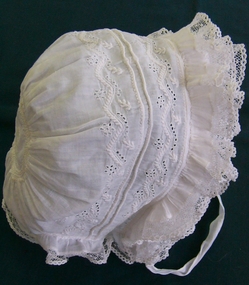
Headwear - Ayrshire Baby Bonnet, Mid 19th century
... Developed from Dresden embroidery (a form of pulled work) and tambour embroidery, it uses a range of stitches, including satin stitch, chain stitch, eyelets and buttonhole edging as well as a range of lace filling stitches. ...Developed from Dresden embroidery (a form of pulled work) and tambour embroidery, it uses a range of stitches, including satin stitch, chain stitch, eyelets and buttonhole edging as well as a range of lace filling stitches. ...Traditionally worked using white thread onto a fine white muslin, Ayrshire embroidery is recognisable by stylised floral motifs with areas of filled in cutwork. Developed from Dresden embroidery (a form of pulled work) and tambour embroidery, it uses a range of stitches, including satin stitch, chain stitch, eyelets and buttonhole edging as well as a range of lace filling stitches. The technique became popular in the early nineteenth century, when the previous fashion of elaborate gowns with hooped skirts was replaced by looser, simpler white cotton muslin garments. Although the elegant simplicity was favoured, women also desired some decoration. However, looms of the time could not create complex designs, so women turned to hand stitching.Using cotton muslin woven in Ayrshire, local women and girls would complete the intricate whitework to help supplement their family income. Mainly produced at home, Ayrshire whitework garments would be initially completed by one person. However, as the technique became more popular and the industry developed, to ensure high quality work, a piece would be passed around so that each embroiderer could focus on completing the stitches they specialised in.It is believed that the designs and motifs used in Ayrshire whitework were inspired by lace filling stitches found within an inset in a French Christening robe that was bought to Scotland by Lady Mary Montgomery, who then lent it to Mrs Jamieson of Ayr. She copied the stitches used within the robe and taught them to her outworkers, and she also produced plain muslin that was stamped with a water-soluble blue ink design that made embroidering the designs neater and more efficient. Ayrshire work became popular quite quickly, and it was incorporated into collars, cuffs and caps as well as children’s clothes and bonnets. Pieces were exported across Europe and the British Empire. As the decades progressed, technology advanced, resulting in looms that could incorporate decoration into the weave of the cloth, reducing the need for hand embroidered Ayrshire whitework.A triple frill of Buckingham lace, followed by two bands of fine embroidery - eyelets and satin stitch, and tucking, with small circle at crown.embroidery, whitework, bonnets, mid 19th century, scotland, garments -
 Flagstaff Hill Maritime Museum and Village
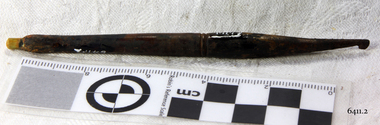
Functional object - Crochet Hook, Mid 19th Century
... tambouring. The French named the new technique “crochet in the air.” In the early 1800s, shepherd’s knitting came about, along with the shepherd’s hook. It’s thicker than a modern crochet hook but still with a hooked end. By the mid-1800s, it became known as crochet or slip stitch crochet. In the 60s, the granny square and crocheted home ware appeared and became more popular. A significant domestic item used in crochet or craft work ...Crochet came from the Old French word crochet, meaning ‘small hook.’ This word comes from Croche. Croche comes from the Germanic word croc. Both mean hook and crochetage, which means a single stitch used to join separate pieces of lace together. People used this term in making French lace in the 1600s and the word crochet describes the hook and the craft. Evidence shows the starting point was the mid-1800s but as early as the late 16th and early 17th century, crocheted braiding was used in clothing and other products. Like on a man’s cape at the Victoria and Albert Museum. Crochet evolved in the early 1700s when stitching material on a tambourine reached Europe after going through India, Persia, North America, Turkey, North Africa and other places around the world. People removed the background fabric used for tambouring. The French named the new technique “crochet in the air.” In the early 1800s, shepherd’s knitting came about, along with the shepherd’s hook. It’s thicker than a modern crochet hook but still with a hooked end. By the mid-1800s, it became known as crochet or slip stitch crochet. In the 60s, the granny square and crocheted home ware appeared and became more popular.A significant domestic item used in crochet or craft work and recovered from the wreck of the Schomberg in the 1970s. For more information regard the wrecking of the Schomberg see note sect this document. The Schomberg has historical significance as one of the first luxurious ships built to bring emigrants to Australia. The collection of recovered artefacts from the Schomberg wreck and held at Flagstaff Hill Museum are significant because of their potential to interpret the story of the Schomberg and its passengers.Crochet hook made from Bovine Bone. It has two sections that screw apart. Recovered from the wreck of the Schomberg. Nonewarrnambool, shipwrecked-coast, flagstaff-hill, flagstaff-hill-maritime-museum, maritime-museum, shipwreck-coast, flagstaff-hill-maritime-village, schomberg, shipwrecked-artefact, clipper ship, black ball line, 1855 shipwreck, aberdeen clipper ship, captain forbes, peterborough shipwreck, ss queen, crochet hook, crocheterage, craft -
 Bendigo Historical Society Inc.
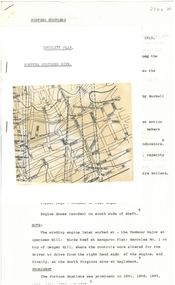
Document - ALBERT RICHARDSON COLLECTION: FORTUNA HUSTLERS MINE
... The winding engine later worked at the Tambour Major at Specimen Hill; Birds Reef at Kangaroo Flat, Hercules No. 1 on top of Danger Hill and the North Virginia mine at Eaglehawk....The winding engine later worked at the Tambour Major at Specimen Hill; Birds Reef at Kangaroo Flat, Hercules No. 1 on top of Danger Hill and the North Virginia mine at Eaglehawk. ...Two-page document with location map. The Fortuna Hustlers Gold mine was located close to the railway goods shed (Discovery Centre location) in an area occupied by Buckell and Jeffrey's office and yards. (now carpark of Marketplace shopping centre). It commenced operation in August 1888 and closed in December 1913.The depth of the shaft was 2,240ft. Features of the plant described are: the winding engine, the air compressor, boilers, baling tanks, poppet legs, engine house. The winding engine later worked at the Tambour Major at Specimen Hill; Birds Reef at Kangaroo Flat, Hercules No. 1 on top of Danger Hill and the North Virginia mine at Eaglehawk.bendigo, mining, fortuna hustlers mine -
 Bendigo Historical Society Inc.
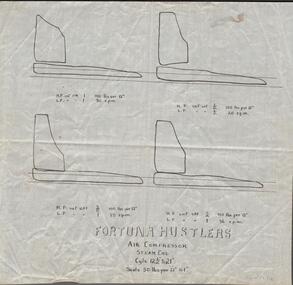
Document - FORTUNA COLLECTION: FORTUNA HUSTLERS - NOTES ON THE FORTUNA HUSTLERS
... MINE Gold fortuna hustlers Fortuna Hustlers Hustlers Line of Reef Railway Goods Sheds Buckell & Jeffrey's Roberts & Sons Tambour Major Birds Reef Hercules No 1 North Virginia Mine Gold Production & Dividends Australian Mining Standard (Special Edition) 1/6/1899 Mines Dept Booklet 'Bendigo Goldfields' 1936 Mines Dept Bulletin No 33 H Herman 1914 Annals of Bendigo Mining Section 1888 - 1913 A Richardson Four copies, 1 hand written and 3 typed copies of notes on the Fortuna Hustlers Mine. Notes include depth of shaft, size of lease, locality, plant, other mines where the winding engine worked ...Four copies, 1 hand written and 3 typed copies of notes on the Fortuna Hustlers Mine. Notes include depth of shaft, size of lease, locality, plant, other mines where the winding engine worked, prominence, best reefs, total production. References: Mines Dept Special Edition 'Australian Mining Standard' 1/6/1899; Mines Dept Booklet 'Bendigo Goldfield' Geo Brown 1936; Mines Dept Booklet No 33 H. Herman 1914; 'Annals of Bendigo' (Mining Sections, From 1888 - 1913): A. Richardson.mine, gold, fortuna hustlers, fortuna hustlers, hustlers line of reef, railway goods sheds, buckell & jeffrey's, roberts & sons, tambour major, birds reef, hercules no 1, north virginia mine, gold production & dividends, australian mining standard (special edition) 1/6/1899, mines dept booklet 'bendigo goldfields' 1936, mines dept bulletin no 33, h herman 1914, annals of bendigo mining section 1888 - 1913, a richardson -
 Embroiderers Guild, Victoria
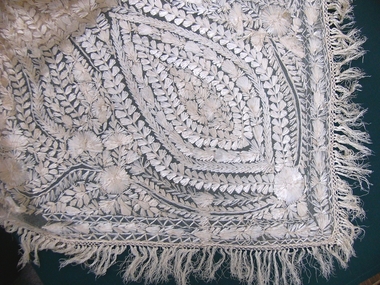
Accessory - Stole (Blonde work) Limerick Lace, Early 20th century
... Characteristics and Context: Definition: Limerick lace is a "mixed" lace created by decorating machine-made net with hand embroidery, specifically tambour work (using a hook) or needle-run work. ...Limerick Museum item: DESCRIPTION: Limerick lace. Blonde work. Designed and made by Eileen O’Donohue of the Limerick Lace School. PATTERN: Eastern style pattern with diamond zigzag border followed by flower and leaf border at the two ends. The centre has a scattering of single flowers with leaves. Crochet edges and fringed at both ends. STITCHES AND TECHNIQUES: Limerick Lace & crocheted fringe. FIBRE: Raw Silk threads, possibly silk net. SIZE: Height 284 cm cm x Width 58 cm. DATE: 1900 – 1915.Limerick lace – By the Poor For the Rich: Lace in Context Blonde Limerick lace refers to a specific style of Limerick lace—an Irish embroidered net—that adopts the aesthetic of 18th/19th-century French "blonde" lace, often featuring fine silk or cream-colored thread on a net base. It is a mixed lace, combining tambour or needle-run embroidery on a machine-made net. Characteristics and Context: Definition: Limerick lace is a "mixed" lace created by decorating machine-made net with hand embroidery, specifically tambour work (using a hook) or needle-run work. "Blonde" Aspect: Traditionally, blonde lace was a French silk lace known for its natural cream/pale gold color. When applied to Limerick lace, this refers to the use of fine cream or écru threads to create intricate patterns. Types of Limerick Lace: Tambour: A hook is used to create chain stitches. Needle-run: Embroidery is applied using a needle. Design and History: Patterns often feature floral, foliate, and nature-inspired motifs, such as shamrocks, ferns, or butterflies. While the industry began in 1829, styles evolved to include varied fillings. Production: The Limerick Lace School has produced modern interpretations, including stoles and veils featuring this technique.Cream net with an all over design in cream floss silk embroidery in a bold floral design. 5 cm silk fringe. Similar piece is in the Limerick Museum Ireland - described as Limerick Lace and crochet edges.embroidery, silk embroidery, shawls, early 20th century, india -
 Embroiderers Guild, Victoria
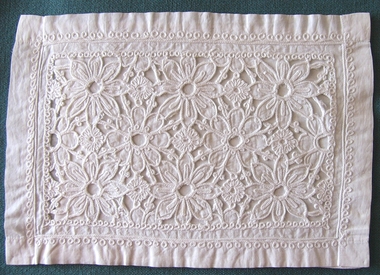
Textile - Cutwork Sachet, Early 20th century
... Fine white cotton sachet has front panel of cut-work in a floral design. All outlines are of tambour chain stitch...Embroidery Sachet Cutwork 1900-20 Australia Fine white cotton sachet has front panel of cut-work in a floral design. All outlines are of tambour chain stitch Textile Cutwork Sachet ...Fine white cotton sachet has front panel of cut-work in a floral design. All outlines are of tambour chain stitchembroidery, sachet, cutwork, 1900-20, australia -
 Australian Lace Guild - Victorian Branch
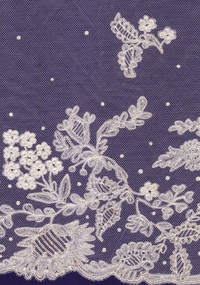
Textile - Tambour
... worked in chain stitch. Could possibly be handmade but is more likely to be machine made. Textile Tambour ...Flouncing - costume trim.Embroidered net. Flounce of machine made net with floral design worked in chain stitch. Could possibly be handmade but is more likely to be machine made.
