
Showing 21 items matching " third town clerk"
-
 Linton and District Historical Society Inc
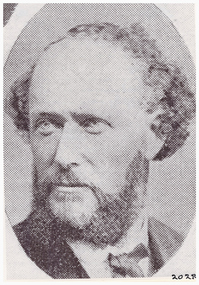
Photograph, John Edgar
... ... Third town Clerk..."John Edgar / Third Town Clerk / Browns & Scarsdale / No 2 ex Story of Browns and Scars"...John Edgar Third town Clerk Browns and Scarsdale "John Edgar / Third Town Clerk / Browns & Scarsdale / No 2 ex Story of Browns and Scars" Black and white copy of original portrait of an older bearded man with curly hair and receding hairline, wearing a suit and tie. ...Black and white copy of original portrait of an older bearded man with curly hair and receding hairline, wearing a suit and tie."John Edgar / Third Town Clerk / Browns & Scarsdale / No 2 ex Story of Browns and Scars"john edgar, third town clerk, browns and scarsdale -
 Flagstaff Hill Maritime Museum and Village
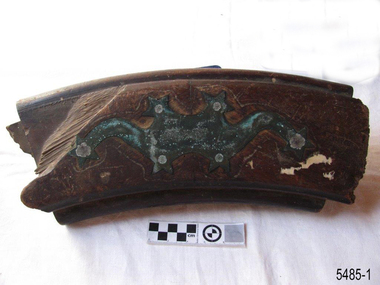
Functional object - Ship's Wheel, 1871 or earlier
... town clerk offered them all hospitality, the three badly injured men going to the hospital and others to the Olive Branch Hotel, then on to Melbourne. Captain Allen’s leg injury prevented him from going ashore so he and three other men travelled on the Dawn to Portland. They were met by the mayor who also treated them all with great kindness. Captain Allen took the train back to Melbourne then returned to America. Those saved were Captain Z. Allen (or Jacques Allen), J. Darcy chief mate, James F. Lawrence second mate, Ned Sewall third...town clerk offered them all hospitality, the three badly injured men going to the hospital and others to the Olive Branch Hotel, then on to Melbourne. Captain Allen’s leg injury prevented him from going ashore so he and three other men travelled on the Dawn to Portland. They were met by the mayor who also treated them all with great kindness. Captain Allen took the train back to Melbourne then returned to America. Those saved were Captain Z. Allen (or Jacques Allen), J. Darcy chief mate, James F. Lawrence second mate, Ned Sewall third ...The ship building company E. & A. Sewall, from Bath, Maine, USA, built many ships that had wheels with the same decorative, starburst pattern on them as this particular wheel segment, including the Eric the Red. The wheel was manufactured by their local Bath foundry, Geo. Moulton & Co. and sold to the Sewall yard for $100, according to the construction accounts of the vessel. Eric the Red was a wooden, three masted clipper ship. She had 1,580 tons register and was the largest full-rigged ship built at Bath, Maine, USA in 1871. She was built and registered by Arthur Sewall, later to become the partnership E. & A. Sewall, and was the 51st ship built by this company. The annually-published List of Merchant Vessels of the U.S. shows that Bath was still the home port of Eric the Red in 1880. The vessel was named after the Viking discoverer, Eric the Red, who was the first European to reach the shores of North America (in 980AD). The ship Eric the Red at first traded in coal between America and Britain, and later traded in guano nitrates from South America. In 1879 she was re-metalled and was in first class condition. On 10th June 1880 (some records say 12th June) Eric the Red departed New York for Melbourne and then Sydney. She had been commissioned by American trade representatives to carry a special cargo of 500 exhibits (1400 tons) - about a quarter to a third of America’s total exhibits - from America for the U.S.A. pavilion at Melbourne’s first International Exhibition. The exhibits included furniture, ironmongery, wines, chemicals, dental and surgical instruments, paper, cages, bronze lamp trimmings, axles, stamped ware, astronomical and time globes, samples of corn and the choicest of leaf tobacco. Other general cargo included merchandise such as cases of kerosene and turpentine, brooms, Bristol's Sarsaparilla, Wheeler and Wilson sewing machines, Wheeler’s thresher machine, axe handles and tools, cases of silver plate, toys, pianos and organs, carriages and Yankee notions. The Eric the Red left New York under the command of Captain Z. Allen (or some records say Captain Jacques Allen) and 24 other crew including the owner’s son third mate Ned Sewall. There were 2 saloon passengers also. On 4th September 1880 the ship had been sailing for an uneventful 85 days and the voyage was almost at its end. Eric the Red approached Cape Otway in a moderate north-west wind and hazy and overcast atmosphere. Around 1:30am Captain Allen sighted the Cape Otway light and was keeping the ship 5-6 miles offshore to stay clear of the hazardous Otway Reef. However he had badly misjudged his position. The ship hit the Otway Reef about 2 miles out to sea, south west of the Cape Otway light station. Captain Allen ordered the wheel to be put ‘hard up’ thinking that she might float off the reef. A heavy sea knocked the man away from the wheel, broke the wheel ropes and carried away the rudder. The sea swamped the lifeboats, the mizzenmast fell, with all of its rigging, then the mainmast fell and the ship broke in two. Some said that the passenger Vaughan, who was travelling for his health and not very strong, was washed overboard and never seen again. The ship started breaking up. The forward house came adrift with three of the crew on it as well as a longboat, which the men succeeded in launching and keeping afloat by continually bailing with their sea boots. The captain, the third mate (the owner’s son) and others clung to the mizzenmast in the sea. Then the owner’s son was washed away off the mast. Within 10 minutes the rest of the ship was in pieces, completely wrecked, with cargo and wreckage floating in the sea. The captain encouraged the second mate to swim with him to the deckhouse where there were other crew but the second mate wouldn’t go with him. Eventually the Captain made it to the deckhouse and the men pulled him up. At about 4:30am the group of men on the deckhouse saw the lights of a steamer and called for help. At the same time they noticed the second mate and the other man had drifted nearby, still on the spur, and pulled them both onto the wreck. The coastal steamer Dawn was returning to Warrnambool from Melbourne, its sailing time different to its usual schedule. Cries were heard coming from out of the darkness. Captain Jones sent out two life boats, and fired off rockets and blue lights to illuminate the area. They picked up the three survivors who were in the long boat from Eric the Red. Two men were picked up out of the water, one being the owner’s son who was clinging to floating kerosene boxes. At daylight the Dawn then rescued the 18 men from the floating portion of the deckhouse, which had drifted about 4 miles from where they’d struck the reef. Shortly after the rescue the deckhouse drifted onto breakers and was thrown onto rocks at Point Franklin, about 2 miles east of Cape Otway. Captain Jones had signalled to Cape Otway lighthouse the number of the Eric the Red and later signalled that there was a wreck at Otway Reef but there was no response from the lighthouse. The captain and crew of the Dawn spent several more hours searching unsuccessfully for more survivors, even going back as far as Apollo Bay. On board the Dawn the exhausted men received care and attention to their needs and wants, including much needed clothing. Captain Allen was amongst the 23 battered and injured men who were rescued and later taken to Warrnambool for care. Warrnambool’s mayor and town clerk offered them all hospitality, the three badly injured men going to the hospital and others to the Olive Branch Hotel, then on to Melbourne. Captain Allen’s leg injury prevented him from going ashore so he and three other men travelled on the Dawn to Portland. They were met by the mayor who also treated them all with great kindness. Captain Allen took the train back to Melbourne then returned to America. Those saved were Captain Z. Allen (or Jacques Allen), J. Darcy chief mate, James F. Lawrence second mate, Ned Sewall third mate and owner’s son, John French the cook, C. Nelson sail maker, Clarence W. New passenger, and the able seamen Dickenson, J. Black, Denis White, C. Herbert, C. Thompson, A. Brooks, D. Wilson, J. Ellis, Q. Thompson, C. Newman, W. Paul, J. Davis, M. Horenleng, J. Ogduff, T. W. Drew, R. Richardson. Four men had lost their lives; three of them were crew (Gus Dahlgreen ship’s carpenter, H. Ackman steward, who drowned in his cabin, and George Silver seaman) and one a passenger (J. B. Vaughan). The body of one of them had been found washed up at Cape Otway and was later buried in the lighthouse cemetery; another body was seen on an inaccessible ledge. Twelve months later the second mate James F. Lawrence, from Nova Scotia, passed away in the Warrnambool district; an obituary was displayed in the local paper. The captain and crew of the Dawn were recognised by the United States Government in July 1881 for their humane efforts and bravery, being thanked and presented with substantial monetary rewards, medals and gifts. Neither the ship, nor its cargo, was insured. The ship was worth about £15,000 and the cargo was reportedly worth £40,000; only about £2,000 worth had been recovered. Cargo and wreckage washed up at Apollo Bay, Peterborough, Port Campbell, Western Port and according to some reports, even as far away as the beaches of New Zealand. The day after the wreck the government steam ship Pharos was sent from Queenscliff to clear the shipping lanes of debris that could be a danger to ships. The large midship deckhouse of the ship was found floating in a calm sea near Henty Reef. Items such as an American chair, a ladder and a nest of boxes were all on top of the deckhouse. As it was so large and could cause danger to passing ships, Captain Payne had the deckhouse towed towards the shore just beyond Apollo Bay. Between Apollo Bay and Blanket Bay the captain and crew of Pharos collected Wheeler and Wilson sewing machines, nests of boxes, bottles of Bristol’s sarsaparilla, pieces of common American chairs, axe handles, a Wheelers’ Patent thresher and a sailor’s trunk with the words “A. James” on the front. A ship’s flag-board bearing the words “Eric the Red” was found on the deckhouse; finally those on board the Pharos had the name of the wrecked vessel. During this operation Pharos came across the government steamer Victoria and also a steamer S.S. Otway, both of which were picking up flotsam and wreckage. A whole side of the hull and three large pieces of the other side of the hull, with some of the copper sheathing stripped off, had floated on to Point Franklin. Some of the vessels yards and portions of her masts were on shore. The pieces of canvas attached to the yards and masts confirmed that the vessel had been under sail. The beach there was piled with debris several feet high. There were many cases of Diamond Oil kerosene, labelled R. W. Cameron and Company, New York. There were also many large planks of red pine, portions of a small white boat and a large, well-used oar. Other items found ashore included sewing machines (some consigned to ‘Long and Co.”) and notions, axe and scythe handles, hay forks, wooden pegs, rolls of wire (some branded “T.S” and Co, Melbourne”), kegs of nails branded “A.T. and Co.” from the factory of A. Field and Son, Taunton, Massachusetts, croquet balls and mallets, buggy fittings, rat traps, perfumery, cutlery and Douay Bibles, clocks, bicycles, chairs, a fly wheel, a cooking stove, timber, boxes, pianos, organs and a ladder. (Wooden clothes pegs drifted in for many years). There seemed to be no personal luggage or clothing. The Pharos encountered a long line, about one and a half miles, of floating wreckage about 10 miles off land, south east of Cape Otway, and in some places about 40 feet wide. It seemed that more than half of it was from Eric the Red. The ship’s crew rescued 3 cases that were for the Melbourne Exhibition and other items from amongst the debris. There were also chairs, doors, musical instruments, washing boards, nests of trunks and fly catchers floating in the sea. Most of the goods were saturated and smelt of kerosene. A section of the hull lies buried in the sand at Parker River Beach. An anchor with chain is embedded in the rocks east of Point Franklin and a second anchor, thought to be from Eric the Red, is on display at the Cape Otway light station. (There is a photograph of a life belt on the verandah of Rivernook Guest House in Princetown with the words “ERIC THE RED / BOSTON”. This is rather a mystery as the ship was registered in Bath, Maine, USA.) Parts of the ship are on display at Bimbi Park Caravan Park and at Apollo Bay Museum. Flagstaff Hill Maritime Village also has part of the helm (steering wheel), a carved wooden sword (said to be the only remaining portion of the ship’s figurehead; further research is currently being carried out), a door, a metal rod, samples of wood and a medal for bravery. Much of the wreckage was recovered by the local residents before police and other authorities arrived at the scene. Looters went to great effort to salvage goods, being lowered down the high cliff faces to areas with little or no beach to collect items from the wreckage, their mates above watching out for dangerous waves. A Tasmanian newspaper reports on a court case in Stawell, Victoria, noting a man who was caught 2 months later selling tobacco from the wreckage of Eric the Red. Some of the silverware is still treasured by descendants of Mr Mackenzie who was given these items by officials for his help in securing the cargo. The gifts included silver coffee and tea pots, half a dozen silver serviette rings and two sewing machines. The wreck and cargo were sold to a Melbourne man who salvaged a quantity of high quality tobacco and dental and surgical instruments. Timbers from the ship were salvaged and used in the construction of houses and sheds around Apollo Bay, including a guest house, Milford House (since burnt down in bushfires), which had furniture, fittings and timber on the dining room floor from the ship. A 39.7 foot long trading ketch, the Apollo, was also built from its timbers by Mr Burgess in 1883 and subsequently used in Tasmanian waters. It was the first attempt at ship building in Apollo bay. In 1881 a red light was installed about 300 feet above sea level at the base of the Cape Otway lighthouse to warn ships when they were too close to shore; It would not be visible unless a ship came within 3 miles from it. This has proved to be an effective warning. The State Library of Victoria has a lithograph in its collection depicting the steamer Dawn and the shipwrecked men, titled. "Wreck of the ship Eric the Red, Cape Otway: rescue of the crew by the Dawn". “The Eric the Red is historically significant as one of Victoria's major 19th century shipwrecks. (Heritage Victoria Eric the Red; HV ID 239) The wreck led to the provision of an additional warning light placed below the Cape Otway lighthouse to alert mariners to the location of Otway Reef. The site is archaeologically significant for its remains of a large and varied cargo and ship's fittings being scattered over a wide area. The site is recreationally and aesthetically significant as it is one of the few sites along this coast where tourists can visit identifiable remains of a large wooden shipwreck, and for its location set against the background of Cape Otway, Bass Strait, and the Cape Otway lighthouse.“ (Victorian Heritage Database Registration Number S239, Official Number 8745 USA) Segment of a ship's wheel, or helm, from the wreck of the sailing ship Eric the Red. The wheel part is an arc shape from the outer rim of the wheel and is made up of three layers of timber. The centre layer is a dark, dense timber and is wider than the two outer layers, which are less dense and lighter in colour. The wheel segment has a vertically symmetrical, decorative copper plate inlaid on the front. The plate has a starburst pattern; six stars decorate it, each at a point where there is a metal fitting going through the three layers of timber to the rear side of the wheel. On the rear each of the six fittings has an individual copper star around it. The edges of the helm are rounded and bevelled, polished to a shine in a dark stain. Around each of the stars, front and back, the wood is a lighter colour, as though the metal in that area being polished frequently. The length of the segment suggests that it has probably come from a wheel or helm that had ten spokes. (Ref: F.H.M.M. 16th March 1994, 239.6.610.3.7. Artefact Reg No ER/1.)flagstaff hill, warrnambool, shipwrecked-coast, flagstaff-hill, flagstaff-hill-maritime-museum, maritime-museum, shipwreck-coast, flagstaff-hill-maritime-village, ship's-wheel, eric-the-red, helm, shei's wheel, ship's steering wheel -
 Flagstaff Hill Maritime Museum and Village
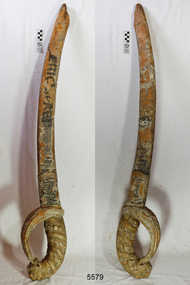
Decorative object - Sword, 1871 or earlier
... town clerk offered them all hospitality, the three badly injured men going to the hospital and others to the Olive Branch Hotel, then on to Melbourne. Captain Allen’s leg injury prevented him from going ashore so he and three other men travelled on the Dawn to Portland. They were met by the mayor who also treated them all with great kindness. Captain Allen took the train back to Melbourne then returned to America. Those saved were Captain Z. Allen (or Jacques Allen), J. Darcy chief mate, James F. Lawrence second mate, Ned Sewall third...town clerk offered them all hospitality, the three badly injured men going to the hospital and others to the Olive Branch Hotel, then on to Melbourne. Captain Allen’s leg injury prevented him from going ashore so he and three other men travelled on the Dawn to Portland. They were met by the mayor who also treated them all with great kindness. Captain Allen took the train back to Melbourne then returned to America. Those saved were Captain Z. Allen (or Jacques Allen), J. Darcy chief mate, James F. Lawrence second mate, Ned Sewall third ...This wooden sword is said to “possibly be the only remaining part of the figurehead from the sailing ship Eric the Red.” It was previously part of the collection of the old Warrnambool Museum and the entry in its inventory says “Wooden sword, portion of the figurehead, held by “Eric the Red” at the bow.” A large part of the ship’s hull was found on the rocks and a figurehead may have been attached or washed up on the shore. The shipping records for E. & A. Sewall, the builders, owners and managers of Eric the Red, are now preserved in the Maine Maritime Museum. There is no photograph on record of Eric the Red but photographs of other ships built around that time by the same company show that these did not have figureheads, and there is no record found of a figurehead for Eric the Red being ordered or paid for. Further research is being carried out. The ship building company E. & A. Sewall, from Bath, Maine, USA, built Eric the Red, a wooden, three masted clipper ship. She had 1,580 tons register and was the largest full-rigged ship built at Bath, Maine, USA in 1871. She was built and registered by Arthur Sewall, later to become the partnership E. & A. Sewall, and was the 51st ship built by this company. The annually-published List of Merchant Vessels of the U.S. shows that Bath was still the home port of Eric the Red in 1880. The vessel was named after the Viking discoverer, Eric the Red, who was the first European to reach the shores of North America (in 980AD). The ship Eric the Red at first traded in coal between America and Britain, and later traded in guano nitrates from South America. In 1879 she was re-metalled and was in first class condition. On 10th June 1880 (some records say 12th June) Eric the Red departed New York for Melbourne and then Sydney. She had been commissioned by American trade representatives to carry a special cargo of 500 exhibits (1400 tons) - about a quarter to a third of America’s total exhibits - from America for the U.S.A. pavilion at Melbourne’s first International Exhibition. The exhibits included furniture, ironmongery, wines, chemicals, dental and surgical instruments, paper, cages, bronze lamp trimmings, axles, stamped ware, astronomical and time globes, samples of corn and the choicest of leaf tobacco. Other general cargo included merchandise such as cases of kerosene and turpentine, brooms, Bristol's Sarsaparilla, Wheeler and Wilson sewing machines, Wheeler’s thresher machine, axe handles and tools, cases of silver plate, toys, pianos and organs, carriages and Yankee notions. The Eric the Red left New York under the command of Captain Z. Allen (or some records say Captain Jacques Allen) and 24 other crew including the owner’s son third mate Ned Sewall. There were 2 saloon passengers also. On 4th September 1880 the ship had been sailing for an uneventful 85 days and the voyage was almost at its end. Eric the Red approached Cape Otway in a moderate north-west wind and hazy and overcast atmosphere. Around 1:30am Captain Allen sighted the Cape Otway light and was keeping the ship 5-6 miles offshore to stay clear of the hazardous Otway Reef. However he had badly misjudged his position. The ship hit the Otway Reef about 2 miles out to sea, south west of the Cape Otway light station. Captain Allen ordered the wheel to be put ‘hard up’ thinking that she might float off the reef. A heavy sea knocked the man away from the wheel, broke the wheel ropes and carried away the rudder. The sea swamped the lifeboats, the mizzenmast fell, with all of its rigging, then the mainmast fell and the ship broke in two. Some said that the passenger Vaughan, who was travelling for his health and not very strong, was washed overboard and never seen again. The ship started breaking up. The forward house came adrift with three of the crew on it as well as a longboat, which the men succeeded in launching and keeping afloat by continually bailing with their sea boots. The captain, the third mate (the owner’s son) and others clung to the mizzenmast in the sea. Then the owner’s son was washed away off the mast. Within 10 minutes the rest of the ship was in pieces, completely wrecked, with cargo and wreckage floating in the sea. The captain encouraged the second mate to swim with him to the deckhouse where there were other crew but the second mate wouldn’t go with him. Eventually the Captain made it to the deckhouse and the men pulled him up. At about 4:30am the group of men on the deckhouse saw the lights of a steamer and called for help. At the same time they noticed the second mate and the other man had drifted nearby, still on the spur, and pulled them both onto the wreck. The coastal steamer Dawn was returning to Warrnambool from Melbourne, its sailing time different to its usual schedule. Cries were heard coming from out of the darkness. Captain Jones sent out two life boats, and fired off rockets and blue lights to illuminate the area. They picked up the three survivors who were in the long boat from Eric the Red. Two men were picked up out of the water, one being the owner’s son who was clinging to floating kerosene boxes. At daylight the Dawn then rescued the 18 men from the floating portion of the deckhouse, which had drifted about 4 miles from where they’d struck the reef. Shortly after the rescue the deckhouse drifted onto breakers and was thrown onto rocks at Point Franklin, about 2 miles east of Cape Otway. Captain Jones had signalled to Cape Otway lighthouse the number of the Eric the Red and later signalled that there was a wreck at Otway Reef but there was no response from the lighthouse. The captain and crew of the Dawn spent several more hours searching unsuccessfully for more survivors, even going back as far as Apollo Bay. On board the Dawn the exhausted men received care and attention to their needs and wants, including much needed clothing. Captain Allen was amongst the 23 battered and injured men who were rescued and later taken to Warrnambool for care. Warrnambool’s mayor and town clerk offered them all hospitality, the three badly injured men going to the hospital and others to the Olive Branch Hotel, then on to Melbourne. Captain Allen’s leg injury prevented him from going ashore so he and three other men travelled on the Dawn to Portland. They were met by the mayor who also treated them all with great kindness. Captain Allen took the train back to Melbourne then returned to America. Those saved were Captain Z. Allen (or Jacques Allen), J. Darcy chief mate, James F. Lawrence second mate, Ned Sewall third mate and owner’s son, John French the cook, C. Nelson sail maker, Clarence W. New passenger, and the able seamen Dickenson, J. Black, Denis White, C. Herbert, C. Thompson, A. Brooks, D. Wilson, J. Ellis, Q. Thompson, C. Newman, W. Paul, J. Davis, M. Horenleng, J. Ogduff, T. W. Drew, R. Richardson. Four men had lost their lives; three of them were crew (Gus Dahlgreen ship’s carpenter, H. Ackman steward, who drowned in his cabin, and George Silver seaman) and one a passenger (J. B. Vaughan). The body of one of them had been found washed up at Cape Otway and was later buried in the lighthouse cemetery; another body was seen on an inaccessible ledge. Twelve months later the second mate James F. Lawrence, from Nova Scotia, passed away in the Warrnambool district; an obituary was displayed in the local paper. The captain and crew of the Dawn were recognised by the United States Government in July 1881 for their humane efforts and bravery, being thanked and presented with substantial monetary rewards, medals and gifts. Neither the ship, nor its cargo, was insured. The ship was worth about £15,000 and the cargo was reportedly worth £40,000; only about £2,000 worth had been recovered. Cargo and wreckage washed up at Apollo Bay, Peterborough, Port Campbell, Western Port and according to some reports, even as far away as the beaches of New Zealand. The day after the wreck the government steam ship Pharos was sent from Queenscliff to clear the shipping lanes of debris that could be a danger to ships. The large midship deckhouse of the ship was found floating in a calm sea near Henty Reef. Items such as an American chair, a ladder and a nest of boxes were all on top of the deckhouse. As it was so large and could cause danger to passing ships, Captain Payne had the deckhouse towed towards the shore just beyond Apollo Bay. Between Apollo Bay and Blanket Bay the captain and crew of Pharos collected Wheeler and Wilson sewing machines, nests of boxes, bottles of Bristol’s sarsaparilla, pieces of common American chairs, axe handles, a Wheelers’ Patent thresher and a sailor’s trunk with the words “A. James” on the front. A ship’s flag-board bearing the words “Eric the Red” was found on the deckhouse; finally those on board the Pharos had the name of the wrecked vessel. During this operation Pharos came across the government steamer Victoria and also a steamer S.S. Otway, both of which were picking up flotsam and wreckage. A whole side of the hull and three large pieces of the other side of the hull, with some of the copper sheathing stripped off, had floated on to Point Franklin. Some of the vessels yards and portions of her masts were on shore. The pieces of canvas attached to the yards and masts confirmed that the vessel had been under sail. The beach there was piled with debris several feet high. There were many cases of Diamond Oil kerosene, labelled R. W. Cameron and Company, New York. There were also many large planks of red pine, portions of a small white boat and a large, well-used oar. Other items found ashore included sewing machines (some consigned to ‘Long and Co.”) and notions, axe and scythe handles, hay forks, wooden pegs, rolls of wire (some branded “T.S” and Co, Melbourne”), kegs of nails branded “A.T. and Co.” from the factory of A. Field and Son, Taunton, Massachusetts, croquet balls and mallets, buggy fittings, rat traps, perfumery, cutlery and Douay Bibles, clocks, bicycles, chairs, a fly wheel, a cooking stove, timber, boxes, pianos, organs and a ladder. (Wooden clothes pegs drifted in for many years). There seemed to be no personal luggage or clothing. The Pharos encountered a long line, about one and a half miles, of floating wreckage about 10 miles off land, south east of Cape Otway, and in some places about 40 feet wide. It seemed that more than half of it was from Eric the Red. The ship’s crew rescued 3 cases that were for the Melbourne Exhibition and other items from amongst the debris. There were also chairs, doors, musical instruments, washing boards, nests of trunks and fly catchers floating in the sea. Most of the goods were saturated and smelt of kerosene. A section of the hull lies buried in the sand at Parker River Beach. An anchor with chain is embedded in the rocks east of Point Franklin and a second anchor, thought to be from Eric the Red, is on display at the Cape Otway light station. (There is a photograph of a life belt on the verandah of Rivernook Guest House in Princetown with the words “ERIC THE RED / BOSTON”. This is rather a mystery as the ship was registered in Bath, Maine, USA.) Parts of the ship are on display at Bimbi Park Caravan Park and at Apollo Bay Museum. Flagstaff Hill Maritime Village also has part of the helm (steering wheel), a carved wooden sword (said to be the only remaining portion of the ship’s figurehead; further research is currently being carried out), a door, a metal rod, samples of wood and a medal for bravery. Much of the wreckage was recovered by the local residents before police and other authorities arrived at the scene. Looters went to great effort to salvage goods, being lowered down the high cliff faces to areas with little or no beach to collect items from the wreckage, their mates above watching out for dangerous waves. A Tasmanian newspaper reports on a court case in Stawell, Victoria, noting a man who was caught 2 months later selling tobacco from the wreckage of Eric the Red. Some of the silverware is still treasured by descendants of Mr Mackenzie who was given these items by officials for his help in securing the cargo. The gifts included silver coffee and tea pots, half a dozen silver serviette rings and two sewing machines. The wreck and cargo were sold to a Melbourne man who salvaged a quantity of high quality tobacco and dental and surgical instruments. Timbers from the ship were salvaged and used in the construction of houses and sheds around Apollo Bay, including a guest house, Milford House (since burnt down in bushfires), which had furniture, fittings and timber on the dining room floor from the ship. A 39.7 foot long trading ketch, the Apollo, was also built from its timbers by Mr Burgess in 1883 and subsequently used in Tasmanian waters. It was the first attempt at ship building in Apollo bay. In 1881 a red light was installed about 300 feet above sea level at the base of the Cape Otway lighthouse to warn ships when they were too close to shore; It would not be visible unless a ship came within 3 miles from it. This has proved to be an effective warning. The State Library of Victoria has a lithograph in its collection depicting the steamer Dawn and the shipwrecked men, titled. "Wreck of the ship Eric the Red, Cape Otway: rescue of the crew by the Dawn".The Eric the Red is historically significant as one of Victoria's major 19th century shipwrecks. (Heritage Victoria Eric the Red; HV ID 239) The wreck led to the provision of an additional warning light placed below the Cape Otway lighthouse to alert mariners to the location of Otway Reef. The site is archaeologically significant for its remains of a large and varied cargo and ship's fittings being scattered over a wide area. The site is recreationally and aesthetically significant as it is one of the few sites along this coast where tourists can visit identifiable remains of a large wooden shipwreck, and for its location set against the background of Cape Otway, Bass Strait, and the Cape Otway lighthouse. (Victorian Heritage Database Registration Number S239, Official Number 8745 USA)This carved wooden sword, recovered from the Eric the Red, is possibly the only portion of the figurehead recovered after the wreck. There are spirals carved from the base of the handle to the top of the sword. The hilt of the sword is a lion’s head holding its tail in its mouth, the tail forming the handle. The blade of the sword has engraved patterns on it. Tiny particles of gold leaf and dark blue paint fragments can be seen between the carving marks. There are remnants of yellowish-orange and crimson paint on the handle. At some time after the sword was salvaged the name of the ship was hand painted on the blade in black paint. The tip of the sword has broken or split and the remaining part is charcoal in appearance. On both the tip and the base of the handle are parts made where the sword could have been joined onto the figurehead There is a white coating over some areas of the sword, similar to white lead putty used in traditional shipbuilding. The words “ERIC the RED” have been hand painted on the blade of the sword in black paint sometime after it was salvaged.flagstaff hill, flagstaff hill maritime museum and village, warrnambool, maritime museum, maritime village, great ocean road, shipwreck coast, sword, wooden sword, eric the red, carved sword, figurehead, snake head on sword -
 Flagstaff Hill Maritime Museum and Village
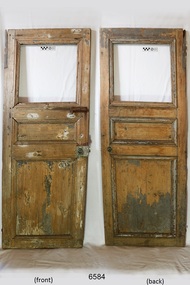
Furniture - Door, 1871 or earlier
... town clerk offered them all hospitality, the three badly injured men going to the hospital for care and others to the Olive Branch Hotel, then on to Melbourne. Captain Allen’s leg injury prevented him from going ashore so he and three other men travelled on the Dawn to Portland. They were met by the mayor who also treated them all with great kindness. Captain Allen took the train back to Melbourne then returned to America. Those saved were Captain Z. Allen (or Jacques Allen), J. Darcy chief mate, James F. Lawrence second mate, Ned Sewall third...town clerk offered them all hospitality, the three badly injured men going to the hospital for care and others to the Olive Branch Hotel, then on to Melbourne. Captain Allen’s leg injury prevented him from going ashore so he and three other men travelled on the Dawn to Portland. They were met by the mayor who also treated them all with great kindness. Captain Allen took the train back to Melbourne then returned to America. Those saved were Captain Z. Allen (or Jacques Allen), J. Darcy chief mate, James F. Lawrence second mate, Ned Sewall third ...The wooden door was salvaged from the wreck of the sailing ship Eric the Red, which was a wooden, three masted clipper ship. Eric the Red was the largest full-rigged ship built at Bath, Maine, USA in 1871, having had a 1,580 tons register. She was built and registered by Arthur Sewall, later to become the partnership E. & A. Sewall, the 51st ship built by this company. The annually-published List of Merchant Vessels of the U.S. shows Bath was still the home port of Eric the Red in 1880. The vessel was named after the Viking discoverer, Eric the Red, who was the first European to reach the shores of North America (in 980AD). The ship Eric the Red at first traded in coal between America and Britain, and later traded in guano nitrates from South America. In 1879 she was re-metalled and was in first class condition. On 10th June 1880 (some records say 12th June) Eric the Red departed New York for Melbourne and then Sydney. She had been commissioned by American trade representatives to carry a special cargo of 500 exhibits (1400 tons) – about a quarter to a third of America’s total exhibits - from America for the U.S.A. pavilion at Melbourne’s first International Exhibition. The exhibits included furniture, ironmongery, wines, chemicals, dental and surgical instruments, paper, cages, bronze lamp trimmings, axles, stamped ware, astronomical and time globes, samples of corn and the choicest of leaf tobacco. Other general cargo included merchandise such as cases of kerosene and turpentine, brooms, Bristol's Sarsaparilla, Wheeler and Wilson sewing machines, Wheeler’s thresher machine, axe handles and tools, cases of silver plate, toys, pianos and organs, carriages and Yankee notions. The Eric the Red left New York under the command of Captain Z. Allen (or some records say Captain Jacques Allen) and 24 other crew including the owner’s son third mate Ned Sewall. There were 2 saloon passengers also. The ship had been sailing for an uneventful 85 days and the voyage was almost at its end. On 4th September 1880 the Eric the Red approached Cape Otway with a moderate north-west wind and hazy and overcast atmosphere. Around 1:30am Captain Allen sighted the Cape Otway light and was keeping the ship 5-6 miles offshore to stay clear of the hazardous Otway Reef. However he had badly misjudged his position. The ship hit the Otway Reef about 2 miles out to sea, south west of the Cape Otway light station. He ordered the wheel to be put ‘hard up’ thinking that she might float off the reef. A heavy sea knocked the man away from the wheel, broke the wheel ropes and carried away the rudder. The sea swamped the lifeboats. The mizzenmast fell, with all of its rigging, then the mainmast also fell and the ship broke in two. Some said that the passenger Vaughan, who was travelling for his health and not very strong, was washed overboard and never seen again. The ship started breaking up. The forward house came adrift with three of the crew on it as well as a longboat, which the men succeeded in launching and keeping afloat by continually bailing with their sea boots. The captain, the third mate (the owner’s son) and others clung to the mizzenmast in the sea. Then the owner’s son was washed away off the mast. Within 10 minutes the rest of the ship was in pieces, completely wrecked, with cargo and wreckage floating in the sea. The captain encouraged the second mate to swim with him to the deckhouse where there were other crew but the second mate wouldn’t go with him. Eventually the Captain made it to the deckhouse and the men pulled him up. At about 4:30am the group of men on the deckhouse saw the lights of a steamer and called for help. At the same time they noticed the second mate and the other man had drifted nearby, still on the spur, and pulled them both onto the wreck. The coastal steamer Dawn was returning to Warrnambool from Melbourne, its sailing time different to its usual schedule. Captain Jones sent out two life boats, and fired off rockets and blue lights to illuminate the area. They picked up the three survivors who were in the long boat from Eric the Red. Two men were picked up out of the water, one being the owner’s son who was clinging to floating kerosene boxes. At daylight the Dawn then rescued the 18 men from the floating portion of the deckhouse, which had drifted about 4 miles from where they’d struck the reef. Shortly after the rescue the deckhouse drifted onto breakers and was thrown onto rocks at Point Franklin, about 2 miles east of Cape Otway. Captain Jones had signalled to Cape Otway lighthouse the number of the Eric the Red and later signalled that there was a wreck at Otway Reef but there was no response from the lighthouse. The captain and crew of the Dawn spent several more hours searching unsuccessfully for more survivors, even going back as far as Apollo Bay. On board the Dawn the exhausted men received care and attention to their needs and wants, including much needed clothing. Captain Allen was amongst the 23 battered and injured men who were rescued and later taken to Warrnambool for care. Warrnambool’s mayor and town clerk offered them all hospitality, the three badly injured men going to the hospital for care and others to the Olive Branch Hotel, then on to Melbourne. Captain Allen’s leg injury prevented him from going ashore so he and three other men travelled on the Dawn to Portland. They were met by the mayor who also treated them all with great kindness. Captain Allen took the train back to Melbourne then returned to America. Those saved were Captain Z. Allen (or Jacques Allen), J. Darcy chief mate, James F. Lawrence second mate, Ned Sewall third mate and owner’s son, John French the cook, C. Nelson sail maker, Clarence W. New passenger, and the able seamen Dickenson, J. Black, Denis White, C. Herbert, C. Thompson, A. Brooks, D. Wilson, J. Ellis, Q. Thompson, C. Newman, W. Paul, J. Davis, M. Horenleng, J. Ogduff, T. W. Drew, R. Richardson. Four men had lost their lives; three of them were crew (Gus Dahlgreen ship’s carpenter, H. Ackman steward, who drowned in his cabin, and George Silver seaman) and one a passenger (J. B. Vaughan). The body of one of them had been found washed up at Cape Otway and was later buried in the lighthouse cemetery; another body was seen on an inaccessible ledge. Twelve months later the second mate James F. Lawrence, from Nova Scotia, passed away in the Warrnambool district; an obituary was displayed in the local paper. The captain and crew of the Dawn were recognised by the United States Government in July 1881 for their humane efforts, being thanked and presented with substantial monetary rewards, medals and gifts. Neither the ship, nor its cargo, was insured. The ship was worth about £15,000 and the cargo was reportedly worth £40,000; only about £2,000 worth had been recovered. Cargo and wreckage washed up at Apollo Bay, Peterborough, Port Campbell, Western Port and according to some reports, even as far away as the beaches of New Zealand. The day after the wreck the government steam ship Pharos was sent from Queenscliff to clear the shipping lanes of debris that could be a danger to ships. The large midship deckhouse of the ship was found floating in a calm sea near Henty Reef. Items such as an American chair, a ladder and a nest of boxes were all on top of the deckhouse. As it was so large and could cause danger to passing ships, Captain Payne had the deckhouse towed towards the shore just beyond Apollo Bay. Between Apollo Bay and Blanket Bay the captain and crew of Pharos collected Wheeler and Wilson sewing machines, nests of boxes, bottles of Bristol’s sarsaparilla, pieces of common American chairs, axe handles, a Wheelers’ Patent thresher and a sailor’s trunk with the words “A. James” on the front. A ship’s flag-board bearing the words “Eric the Red” was found on the deckhouse; finally those on board the Pharos had the name of the wrecked vessel. During this operation Pharos came across the government steamer Victoria and also a steamer S.S. Otway, both of which were picking up flotsam and wreckage. A whole side of the hull and three large pieces of the other side of the hull, with some of the copper sheathing stripped off, had floated on to Point Franklin. Some of the vessels yards and portions of her masts were on shore. The pieces of canvas attached to the yards and masts confirmed that the vessel had been under sail. The beach there was piled with debris several feet high. There were many cases of Diamond Oil kerosene, labelled R. W. Cameron and Company, New York. There were also many large planks of red pine, portions of a small white boat and a large, well-used oar. Other items found ashore included sewing machines (some consigned to ‘Long and Co.”) and notions, axe and scythe handles, hay forks, wooden pegs, rolls of wire (some branded “T.S” and Co, Melbourne”), kegs of nails branded “A.T. and Co.” from the factory of A. Field and Son, Taunton, Massachusetts, croquet balls and mallets, buggy fittings, rat traps, perfumery, cutlery and Douay Bibles, clocks, bicycles, chairs, a fly wheel, a cooking stove, timber, boxes, pianos, organs and a ladder. (Wooden clothes pegs drifted in for many years). There seemed to be no personal luggage or clothing. The Pharos encountered a long line, about one and a half miles, of floating wreckage about 10 miles off land, south east of Cape Otway, and in some places about 40 feet wide. It seemed that more than half of it was from Eric the Red. The ship’s crew rescued 3 cases that were for the Melbourne Exhibition and other items from amongst the debris. There were also chairs, doors, musical instruments, washing boards, nests of trunks and fly catchers floating in the sea. Most of the goods were saturated and smelt of kerosene. A section of the hull lies buried in the sand at Parker River Beach. An anchor with chain is embedded in the rocks east of Point Franklin and a second anchor, thought to be from Eric the Red, is on display at the Cape Otway light station. (There is a photograph of a life belt on the verandah of Rivernook Guest House in Princetown with the words “ERIC THE RED / BOSTON”. This is rather a mystery as the ship was registered in Bath, Maine, USA.) Parts of the ship are on display at Bimbi Park Caravan Park and at Apollo Bay Museum. Flagstaff Hill Maritime Village also has part of the helm (steering wheel), a carved wooden sword (said to be the only remaining portion of the ship’s figurehead; further research is currently being carried out), a door, a metal rod and samples of wood. Much of the wreckage was recovered by the local residents before police and other authorities arrived at the scene. Looters went to great effort to salvage goods, being lowered down the high cliff faces to areas with little or no beach to collect items from the wreckage, their mates above watching out for dangerous waves. A Tasmanian newspaper reports on a court case in Stawell, Victoria, noting a man who was caught 2 months later selling tobacco from the wreckage of Eric the Red. Some of the silverware is still treasured by descendants of Mr Mackenzie who was given these items by officials for his help in securing the cargo. The gifts included silver coffee and tea pots, half a dozen silver serviette rings and two sewing machines. The wreck and cargo were sold to a Melbourne man who salvaged a quantity of high quality tobacco and dental and surgical instruments. Timbers from the ship were salvaged and used in the construction of houses and sheds around Apollo Bay, including a guest house, Milford House (since burnt down in bushfires), which had furniture, fittings and timber on the dining room floor from the ship. A 39.7 foot long trading ketch, the Apollo, was also built from its timbers by Mr Burgess in 1883 and subsequently used in Tasmanian waters. It was the first attempt at ship building in Apollo bay. In 1881 a red light was installed about 300 feet above sea level at the base of the Cape Otway lighthouse to warn ships when they were too close to shore; It would not be visible unless a ship came within 3 miles from it. This has proved to be an effective warning. The State Library of Victoria has a lithograph in its collection depicting the steamer Dawn and the shipwrecked men, titled. "Wreck of the ship Eric the Red, Cape Otway: rescue of the crew by the Dawn". “The Eric the Red is historically significant as one of Victoria's major 19th century shipwrecks. (Heritage Victoria Eric the Red; HV ID 239) The wreck led to the provision of an additional warning light placed below the Cape Otway lighthouse to alert mariners to the location of Otway Reef. The site is archaeologically significant for its remains of a large and varied cargo and ship's fittings being scattered over a wide area. The site is recreationally and aesthetically significant as it is one of the few sites along this coast where tourists can visit identifiable remains of a large wooden shipwreck, and for its location set against the background of Cape Otway, Bass Strait, and the Cape Otway lighthouse.“ (Victorian Heritage Database Registration Number S239, Official Number 8745 USA) Door from the wreck of the ship Eric the Red. The wooden singular rectangular door includes three insert panel sections. The top section is square shaped and is missing its panel or glass. The centre timber panel is about a third of the height of the top panel and the bottom timber panel is approximately equal in height to the total height of the two upper panels. The door fastenings include both a metal door latch and traditional door bolt. They are both attached to the front right hand side of the door. The bolt is just below the top panel, and the door latch is in approximately the centre of that side. The door latch has a round mark where a handle could have been attached. The wood of the door has scraping marks in a semi-circle around the door latch where the latch has swung around on its one remaining fastening and grazed the surface. There is a metal hinge at the top section of the door on the opposite side to the latch. The painted surface has been scraped back to expose the wood. The door is shorter than the average height of a person. On the reverse of the door there are lines on the panels, just inside their edges, is what appears to be pencil. The door is not aligned straight but is skew to centre.warrnambool, flagstaff hill, flagstaff hill maritime village, maritime museum, shipwreck coast, great ocean road, shipwreck artefact, eric the red, jaques allen, sewall, 1880, melbourne exhibition 1880, cape otway, otway reef, victorian shipwreck, bass strait, eric-the-red, door -
 Flagstaff Hill Maritime Museum and Village
Wood Sample, about 1871
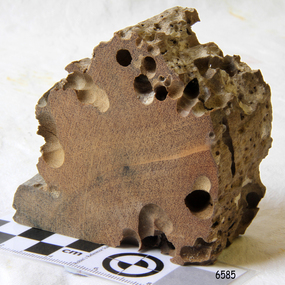
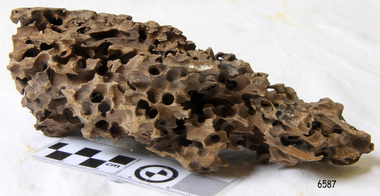
... town clerk offered them all hospitality, the three badly injured men going to the hospital for care and others to the Olive Branch Hotel, then on to Melbourne. Captain Allen’s leg injury prevented him from going ashore so he and three other men travelled on the Dawn to Portland. They were met by the mayor who also treated them all with great kindness. Captain Allen took the train back to Melbourne then returned to America. Those saved were Captain Zaccheus Allen (or Jacques Allen), J. Darcy chief mate, James F. Lawrence second mate, Ned Sewall third...town clerk offered them all hospitality, the three badly injured men going to the hospital for care and others to the Olive Branch Hotel, then on to Melbourne. Captain Allen’s leg injury prevented him from going ashore so he and three other men travelled on the Dawn to Portland. They were met by the mayor who also treated them all with great kindness. Captain Allen took the train back to Melbourne then returned to America. Those saved were Captain Zaccheus Allen (or Jacques Allen), J. Darcy chief mate, James F. Lawrence second mate, Ned Sewall third ...This piece of timber from the ship Eric the Red has been eaten through by the marine animals called Teredo Worms, sometimes called sea worms or ‘termites of the sea’. The worms bore holes into wood that is immersed in sea water and bacteria inside the worms digest the wood. Shipbuilders tried to prevent this problem by using coatings of tar, wax, lead or pitch. In the 18th and 19th centuries the outside of their ships were sheathed in copper or a combination of copper and zinc (called Muntz metal) and would be re-metalled periodically to ensure the sheathing would remain effective. In more recent times the ships are protected with a toxic coating. The American ship Eric the Red was a wooden, three masted clipper ship. She had 1,580 tons register and was the largest full-rigged ship built at Bath, Maine, USA in 1871. She was built and registered by Arthur Sewall, later to become the partnership E. & A. Sewall, the 51st ship built by this company. The annually-published List of Merchant Vessels of the U.S. shows Bath was still the home port of Eric the Red in 1880. The vessel was named after the Viking discoverer, Eric ‘the Red-haired’ Thorvaldsson , who was the first European to reach the shores of North America (in 980AD). The ship Eric the Red at first traded in coal between America and Britain, and later traded in guano nitrates from South America. In 1879 she was re-metalled and was in first class condition. On 10th June 1880 (some records say 12th June) Eric the Red departed New York for Melbourne and then Sydney. She had been commissioned by American trade representatives to carry a special cargo of 500 exhibits (1400 tons) – about a quarter to a third of America’s total exhibits - for the U.S.A. pavilion at Melbourne’s first International Exhibition. The exhibits included furniture, ironmongery, wines, chemicals, dental and surgical instruments, paper, cages, bronze lamp trimmings, axles, stamped ware, astronomical and time globes, samples of corn and the choicest of leaf tobacco. Other general cargo included merchandise such as cases of kerosene and turpentine, brooms, Bristol's Sarsaparilla, Wheeler and Wilson sewing machines, Wheeler’s thresher machine, axe handles and tools, cases of silver plate, toys, pianos and organs, carriages and Yankee notions. The Eric the Red left New York under the command of Captain Zaccheus Allen (or some records say Captain Jacques Allen) and 24 other crew including the owner’s son third mate Ned Sewall. There were also 2 saloon passengers on board. The ship had been sailing for an uneventful 85 days and the voyage was almost at its end. As Eric the Red approached Cape Otway there was a moderate north-west wind and hazy and overcast atmosphere. On 4th September 1880 at about 1:30am Captain Allen sighted the Cape Otway light and was keeping the ship 5-6 miles offshore to stay clear of the hazardous Otway Reef. However he had badly misjudged his position. The ship hit the Otway Reef about 2 miles out to sea, south west of the Cape Otway light station. Captain Allen ordered the wheel to be put ‘hard up’ thinking that she might float off the reef. The sea knocked the helmsman away from the wheel, broke the wheel ropes and carried away the rudder. The lifeboats were swamped, the mizzenmast fell, with all of its rigging, then the mainmast also fell and the ship broke in two. Some said that the passenger Vaughan, who was travelling for his health and not very strong, was washed overboard and never seen again. The ship started breaking up. The forward house came adrift with three of the crew on it as well as a longboat, which the men succeeded in launching and keeping afloat by continually bailing with their sea boots. The captain, the third mate (the owner’s son) and others clung to the mizzenmast in the sea. Then the owner’s son was washed away off the mast. Within 10 minutes the rest of the ship was in pieces, completely wrecked, with cargo and wreckage floating in the sea. The captain encouraged the second mate to swim with him to the deckhouse where there were other crew but the second mate wouldn’t go with him. Eventually the Captain made it to the deckhouse and the men pulled him up. At about 4:30am the group of men on the deckhouse saw the lights of a steamer and called for help. At the same time they noticed the second mate and the other man had drifted nearby, still on the spur, and pulled them both onto the wreck. The coastal steamer SS Dawn was returning to Warrnambool from Melbourne, its sailing time different to its usual schedule. She was built in 1876 and bought by the Portland and Belfast Steam Navigation Co. in 1877. At the time of this journey she was commanded by Captain Jones, and was sailing between Melbourne and Portland via Warrnambool. The provedore of the Dawn, Benjamin Lear, heard cries of distress coming through the portholes of the saloon. He gave the alarm and the engines were stopped. Cries could be heard clearly, coming from the land. Captain Jones sent out crew in two boats, and fired off rockets and blue lights to illuminate the area. They picked up the three survivors who were in the long boat from Eric the Red. Two men were picked up out of the water, one being the owner’s son who was clinging to floating kerosene boxes. At daylight the Dawn then rescued the 18 men from the floating portion of the deckhouse, which had drifted about 4 miles from where they’d struck the reef. Shortly after the rescue the deckhouse drifted onto breakers and was thrown onto rocks at Point Franklin, about 2 miles east of Cape Otway. Captain Jones had signalled to Cape Otway lighthouse the number of the Eric the Red and later signalled that there was a wreck at Otway Reef but there was no response from the lighthouse. The captain and crew of the Dawn spent several more hours searching unsuccessfully for more survivors, even going back as far as Apollo Bay. On board the Dawn the exhausted men received care and attention to their needs and wants, including much needed clothing. Captain Allen was amongst the 23 battered and injured men who were rescued and later taken to Warrnambool for care. Warrnambool’s mayor and town clerk offered them all hospitality, the three badly injured men going to the hospital for care and others to the Olive Branch Hotel, then on to Melbourne. Captain Allen’s leg injury prevented him from going ashore so he and three other men travelled on the Dawn to Portland. They were met by the mayor who also treated them all with great kindness. Captain Allen took the train back to Melbourne then returned to America. Those saved were Captain Zaccheus Allen (or Jacques Allen), J. Darcy chief mate, James F. Lawrence second mate, Ned Sewall third mate and owner’s son, John French the cook, C. Nelson sail maker, Clarence W. New passenger, and the able seamen Dickenson, J. Black, Denis White, C. Herbert, C. Thompson, A. Brooks, D. Wilson, J. Ellis, Q. Thompson, C. Newman, W. Paul, J. Davis, M. Horenleng, J. Ogduff, T. W. Drew, R. Richardson. Four men had lost their lives; three of them were crew (Gus Dahlgreen ship’s carpenter, H. Ackman steward, who drowned in his cabin, and George Silver seaman) and one a passenger (J. B. Vaughan). The body of one of them had been found washed up at Cape Otway and was later buried in the lighthouse cemetery; another body was seen on an inaccessible ledge. Twelve months later the second mate James F. Lawrence, from Nova Scotia, passed away in the Warrnambool district; an obituary was displayed in the local paper. Neither the ship, nor its cargo, was insured. The ship was worth about £15,000 and the cargo was reportedly worth £40,000; only about £2,000 worth had been recovered. Cargo and wreckage washed up at Apollo Bay, Peterborough, Port Campbell, Western Port and according to some reports, even as far away as the beaches of New Zealand. The day after the wreck the government steam ship Pharos was sent from Queenscliff to clear the shipping lanes of debris that could be a danger to ships. The large midship deckhouse of the ship was found floating in a calm sea near Henty Reef. Items such as an American chair, a ladder and a nest of boxes were all on top of the deckhouse. As it was so large and could cause danger to passing ships, Captain Payne had the deckhouse towed towards the shore just beyond Apollo Bay. Between Apollo Bay and Blanket Bay the captain and crew of Pharos collected Wheeler and Wilson sewing machines, nests of boxes, bottles of Bristol’s sarsaparilla, pieces of common American chairs, axe handles, a Wheelers’ Patent thresher and a sailor’s trunk with the words “A. James” on the front. A ship’s flag-board bearing the words “Eric the Red” was found on the deckhouse; finally those on board the Pharos had the name of the wrecked vessel. During this operation Pharos came across the government steamer Victoria and also a steamer S.S. Otway, both of which were picking up flotsam and wreckage. A whole side of the hull and three large pieces of the other side of the hull, with some of the copper sheathing stripped off, had floated on to Point Franklin. Some of the vessels yards and portions of her masts were on shore. The pieces of canvas attached to the yards and masts confirmed that the vessel had been under sail. The beach there was piled with debris several feet high. There were many cases of Diamond Oil kerosene, labelled R. W. Cameron and Company, New York. There were also many large planks of red pine, portions of a small white boat and a large, well-used oar. Other items found ashore included sewing machines (some consigned to ‘Long and Co.”) and notions, axe and scythe handles, hay forks, wooden pegs, rolls of wire (some branded “T.S” and Co, Melbourne”), kegs of nails branded “A.T. and Co.” from the factory of A. Field and Son, Taunton, Massachusetts, croquet balls and mallets, buggy fittings, rat traps, perfumery, cutlery and Douay Bibles, clocks, bicycles, chairs, a fly wheel, a cooking stove, timber, boxes, pianos, organs and a ladder. (Wooden clothes pegs drifted in for many years). There seemed to be no personal luggage or clothing. The Pharos encountered a long line, about one and a half miles, of floating wreckage about 10 miles off land, south east of Cape Otway, and in some places about 40 feet wide. It seemed that more than half of it was from Eric the Red. The ship’s crew rescued 3 cases that were for the Melbourne Exhibition and other items from amongst the debris. There were also chairs, doors, musical instruments, washing boards, nests of trunks and fly catchers floating in the sea. Most of the goods were saturated and smelt of kerosene. A section of the hull lies buried in the sand at Parker River Beach. An anchor with chain is embedded in the rocks east of Point Franklin and a second anchor, thought to be from Eric the Red, is on display at the Cape Otway light station. (There is a photograph of a life belt on the verandah of Rivernook Guest House in Princetown with the words “ERIC THE RED / BOSTON”. This is rather a mystery as the ship was registered in Bath, Maine, USA.) Parts of the ship are on display at Bimbi Park Caravan Park and at Apollo Bay Museum. Flagstaff Hill Maritime Village also has part of the helm (steering wheel), a carved wooden sword (said to be the only remaining portion of the ship’s figurehead; further research is currently being carried out), a door, a metal rod, several samples of wood and a medal for bravery, awarded to Nelson Johnson, a crew member of the S.S. Dawn by the U.S. President, for the rescue of the crew. Much of the wreckage was recovered by the local residents before police and other authorities arrived at the scene. Looters went to great effort to salvage goods, being lowered down the high cliff faces to areas with little or no beach to collect items from the wreckage, their mates above watching out for dangerous waves. A Tasmanian newspaper reports on a court case in Stawell, Victoria, noting a man who was caught 2 months later selling tobacco from the wreckage of Eric the Red. Some of the silverware is still treasured by descendants of Mr Mackenzie who was given these items by officials for his help in securing the cargo. The gifts included silver coffee and tea pots, half a dozen silver serviette rings and two sewing machines. A Mr G.W. Black has in his possession a medal and a purse that were awarded to his father, another Dawn crew member who was part of the rescue team. The medal is inscribed and named “To John Black ….” (from “Shipwrecks” by Margaret E. Mackenzie, 3rd edition, published 1964). The wreck and cargo were sold to a Melbourne man who salvaged a quantity of high quality tobacco and dental and surgical instruments. Timbers from the ship were salvaged and used in the construction of houses and sheds around Apollo Bay, including a guest house, Milford House (since burnt down in bushfires), which had furniture, fittings and timber on the dining room floor from the ship. A 39.7 foot long trading ketch, the Apollo, was also built from its timbers by Mr Burgess in 1883 and subsequently used in Tasmanian waters. It was the first attempt at ship building in Apollo bay. In 1881 a red light was installed about 300 feet above sea level at the base of the Cape Otway lighthouse to warn ships when they were too close to shore; It would not be visible unless a ship came within 3 miles from it. This has proved to be an effective warning. Nelson Johnson, recipient of the medal for bravery, married Elizabeth Howard in 1881 and they had 10 children. They lived in South Melbourne, Victoria. Nelson died in 1922 in Fitzroy Victoria, age 66. In 1895 the owners of the S.S. Dawn, the Portland and Belfast Steam Navigation Co., wound up and sold out to the Belfast Company who took over the Dawn for one year before selling her to Howard Smith. She was condemned and sunk in Suva in 1928. The State Library of Victoria has a lithograph in its collection depicting the steamer Dawn and the shipwrecked men, titled. "Wreck of the ship Eric the Red, Cape Otway: rescue of the crew by the Dawn".The wood (timber) sample is listed on the Collections Australia Database, Heritage Victoria, number 239 00010 A “The Eric the Red is historically significant as one of Victoria's major 19th century shipwrecks. (Heritage Victoria Eric the Red; HV ID 239) The wreck led to the provision of an additional warning light placed below the Cape Otway lighthouse to alert mariners to the location of Otway Reef. The site is archaeologically significant for its remains of a large and varied cargo and ship's fittings being scattered over a wide area. The site is recreationally and aesthetically significant as it is one of the few sites along this coast where tourists can visit identifiable remains of a large wooden shipwreck, and for its location set against the background of Cape Otway, Bass Strait, and the Cape Otway lighthouse.“ (Victorian Heritage Database Registration Number S239, Official Number 8745 USA) Wood sample from the wreck of the ship Eric the Red. Triangular shaped, full of sea worm (Teredo worm) holes. The wood is dark in colour and is very light in weight.flagstaff hill, warrnambool, shipwrecked-coast, flagstaff-hill, flagstaff-hill-maritime-museum, maritime-museum, shipwreck-coast, flagstaff-hill-maritime-village, shipwreck-artefact, eric-the-red, zaccheus-allen, sewall, 1880, melbourne-exhibition, cape-otway, otway-reef, wood-sample, s.s.-dawn -
 Flagstaff Hill Maritime Museum and Village
Wood Sample, About 1871
... town clerk offered them all hospitality, the three badly injured men going to the hospital for care and others to the Olive Branch Hotel, then on to Melbourne. Captain Allen’s leg injury prevented him from going ashore so he and three other men travelled on the Dawn to Portland. They were met by the mayor who also treated them all with great kindness. Captain Allen took the train back to Melbourne then returned to America. Those saved were Captain Zaccheus Allen (or Jacques Allen), J. Darcy chief mate, James F. Lawrence second mate, Ned Sewall third...town clerk offered them all hospitality, the three badly injured men going to the hospital for care and others to the Olive Branch Hotel, then on to Melbourne. Captain Allen’s leg injury prevented him from going ashore so he and three other men travelled on the Dawn to Portland. They were met by the mayor who also treated them all with great kindness. Captain Allen took the train back to Melbourne then returned to America. Those saved were Captain Zaccheus Allen (or Jacques Allen), J. Darcy chief mate, James F. Lawrence second mate, Ned Sewall third ...This piece of timber from the ship Eric the Red has been eaten through by the marine animals called Teredo Worms, sometimes called sea worms or ‘termites of the sea’. The worms bore holes into wood that is immersed in sea water and bacteria inside the worms digest the wood. Shipbuilders tried to prevent this problem by using coatings of tar, wax, lead or pitch. In the 18th and 19th centuries the outside of their ships were sheathed in copper or a combination of copper and zinc (called Muntz metal) and would be re-metalled periodically to ensure the sheathing would remain effective. In more recent times the ships are protected with a toxic coating. The American ship Eric the Red was a wooden, three masted clipper ship. She had 1,580 tons register and was the largest full-rigged ship built at Bath, Maine, USA in 1871. She was built and registered by Arthur Sewall, later to become the partnership E. & A. Sewall, the 51st ship built by this company. The annually-published List of Merchant Vessels of the U.S. shows Bath was still the home port of Eric the Red in 1880. The vessel was named after the Viking discoverer, Eric ‘the Red-haired’ Thorvaldsson , who was the first European to reach the shores of North America (in 980AD). The ship Eric the Red at first traded in coal between America and Britain, and later traded in guano nitrates from South America. In 1879 she was re-metalled and was in first class condition. On 10th June 1880 (some records say 12th June) Eric the Red departed New York for Melbourne and then Sydney. She had been commissioned by American trade representatives to carry a special cargo of 500 exhibits (1400 tons) – about a quarter to a third of America’s total exhibits - for the U.S.A. pavilion at Melbourne’s first International Exhibition. The exhibits included furniture, ironmongery, wines, chemicals, dental and surgical instruments, paper, cages, bronze lamp trimmings, axles, stamped ware, astronomical and time globes, samples of corn and the choicest of leaf tobacco. Other general cargo included merchandise such as cases of kerosene and turpentine, brooms, Bristol's Sarsaparilla, Wheeler and Wilson sewing machines, Wheeler’s thresher machine, axe handles and tools, cases of silver plate, toys, pianos and organs, carriages and Yankee notions. The Eric the Red left New York under the command of Captain Zaccheus Allen (or some records say Captain Jacques Allen) and 24 other crew including the owner’s son third mate Ned Sewall. There were also 2 saloon passengers on board. The ship had been sailing for an uneventful 85 days and the voyage was almost at its end. As Eric the Red approached Cape Otway there was a moderate north-west wind and hazy and overcast atmosphere. On 4th September 1880 at about 1:30am Captain Allen sighted the Cape Otway light and was keeping the ship 5-6 miles offshore to stay clear of the hazardous Otway Reef. However he had badly misjudged his position. The ship hit the Otway Reef about 2 miles out to sea, south west of the Cape Otway light station. Captain Allen ordered the wheel to be put ‘hard up’ thinking that she might float off the reef. The sea knocked the helmsman away from the wheel, broke the wheel ropes and carried away the rudder. The lifeboats were swamped, the mizzenmast fell, with all of its rigging, then the mainmast also fell and the ship broke in two. Some said that the passenger Vaughan, who was travelling for his health and not very strong, was washed overboard and never seen again. The ship started breaking up. The forward house came adrift with three of the crew on it as well as a longboat, which the men succeeded in launching and keeping afloat by continually bailing with their sea boots. The captain, the third mate (the owner’s son) and others clung to the mizzenmast in the sea. Then the owner’s son was washed away off the mast. Within 10 minutes the rest of the ship was in pieces, completely wrecked, with cargo and wreckage floating in the sea. The captain encouraged the second mate to swim with him to the deckhouse where there were other crew but the second mate wouldn’t go with him. Eventually the Captain made it to the deckhouse and the men pulled him up. At about 4:30am the group of men on the deckhouse saw the lights of a steamer and called for help. At the same time they noticed the second mate and the other man had drifted nearby, still on the spur, and pulled them both onto the wreck. The coastal steamer SS Dawn was returning to Warrnambool from Melbourne, its sailing time different to its usual schedule. She was built in 1876 and bought by the Portland and Belfast Steam Navigation Co. in 1877. At the time of this journey she was commanded by Captain Jones, and was sailing between Melbourne and Portland via Warrnambool. The provedore of the Dawn, Benjamin Lear, heard cries of distress coming through the portholes of the saloon. He gave the alarm and the engines were stopped. Cries could be heard clearly, coming from the land. Captain Jones sent out crew in two boats, and fired off rockets and blue lights to illuminate the area. They picked up the three survivors who were in the long boat from Eric the Red. Two men were picked up out of the water, one being the owner’s son who was clinging to floating kerosene boxes. At daylight the Dawn then rescued the 18 men from the floating portion of the deckhouse, which had drifted about 4 miles from where they’d struck the reef. Shortly after the rescue the deckhouse drifted onto breakers and was thrown onto rocks at Point Franklin, about 2 miles east of Cape Otway. Captain Jones had signalled to Cape Otway lighthouse the number of the Eric the Red and later signalled that there was a wreck at Otway Reef but there was no response from the lighthouse. The captain and crew of the Dawn spent several more hours searching unsuccessfully for more survivors, even going back as far as Apollo Bay. On board the Dawn the exhausted men received care and attention to their needs and wants, including much needed clothing. Captain Allen was amongst the 23 battered and injured men who were rescued and later taken to Warrnambool for care. Warrnambool’s mayor and town clerk offered them all hospitality, the three badly injured men going to the hospital for care and others to the Olive Branch Hotel, then on to Melbourne. Captain Allen’s leg injury prevented him from going ashore so he and three other men travelled on the Dawn to Portland. They were met by the mayor who also treated them all with great kindness. Captain Allen took the train back to Melbourne then returned to America. Those saved were Captain Zaccheus Allen (or Jacques Allen), J. Darcy chief mate, James F. Lawrence second mate, Ned Sewall third mate and owner’s son, John French the cook, C. Nelson sail maker, Clarence W. New passenger, and the able seamen Dickenson, J. Black, Denis White, C. Herbert, C. Thompson, A. Brooks, D. Wilson, J. Ellis, Q. Thompson, C. Newman, W. Paul, J. Davis, M. Horenleng, J. Ogduff, T. W. Drew, R. Richardson. Four men had lost their lives; three of them were crew (Gus Dahlgreen ship’s carpenter, H. Ackman steward, who drowned in his cabin, and George Silver seaman) and one a passenger (J. B. Vaughan). The body of one of them had been found washed up at Cape Otway and was later buried in the lighthouse cemetery; another body was seen on an inaccessible ledge. Twelve months later the second mate James F. Lawrence, from Nova Scotia, passed away in the Warrnambool district; an obituary was displayed in the local paper. Neither the ship, nor its cargo, was insured. The ship was worth about £15,000 and the cargo was reportedly worth £40,000; only about £2,000 worth had been recovered. Cargo and wreckage washed up at Apollo Bay, Peterborough, Port Campbell, Western Port and according to some reports, even as far away as the beaches of New Zealand. The day after the wreck the government steam ship Pharos was sent from Queenscliff to clear the shipping lanes of debris that could be a danger to ships. The large midship deckhouse of the ship was found floating in a calm sea near Henty Reef. Items such as an American chair, a ladder and a nest of boxes were all on top of the deckhouse. As it was so large and could cause danger to passing ships, Captain Payne had the deckhouse towed towards the shore just beyond Apollo Bay. Between Apollo Bay and Blanket Bay the captain and crew of Pharos collected Wheeler and Wilson sewing machines, nests of boxes, bottles of Bristol’s sarsaparilla, pieces of common American chairs, axe handles, a Wheelers’ Patent thresher and a sailor’s trunk with the words “A. James” on the front. A ship’s flag-board bearing the words “Eric the Red” was found on the deckhouse; finally those on board the Pharos had the name of the wrecked vessel. During this operation Pharos came across the government steamer Victoria and also a steamer S.S. Otway, both of which were picking up flotsam and wreckage. A whole side of the hull and three large pieces of the other side of the hull, with some of the copper sheathing stripped off, had floated on to Point Franklin. Some of the vessels yards and portions of her masts were on shore. The pieces of canvas attached to the yards and masts confirmed that the vessel had been under sail. The beach there was piled with debris several feet high. There were many cases of Diamond Oil kerosene, labelled R. W. Cameron and Company, New York. There were also many large planks of red pine, portions of a small white boat and a large, well-used oar. Other items found ashore included sewing machines (some consigned to ‘Long and Co.”) and notions, axe and scythe handles, hay forks, wooden pegs, rolls of wire (some branded “T.S” and Co, Melbourne”), kegs of nails branded “A.T. and Co.” from the factory of A. Field and Son, Taunton, Massachusetts, croquet balls and mallets, buggy fittings, rat traps, perfumery, cutlery and Douay Bibles, clocks, bicycles, chairs, a fly wheel, a cooking stove, timber, boxes, pianos, organs and a ladder. (Wooden clothes pegs drifted in for many years). There seemed to be no personal luggage or clothing. The Pharos encountered a long line, about one and a half miles, of floating wreckage about 10 miles off land, south east of Cape Otway, and in some places about 40 feet wide. It seemed that more than half of it was from Eric the Red. The ship’s crew rescued 3 cases that were for the Melbourne Exhibition and other items from amongst the debris. There were also chairs, doors, musical instruments, washing boards, nests of trunks and fly catchers floating in the sea. Most of the goods were saturated and smelt of kerosene. A section of the hull lies buried in the sand at Parker River Beach. An anchor with chain is embedded in the rocks east of Point Franklin and a second anchor, thought to be from Eric the Red, is on display at the Cape Otway light station. (There is a photograph of a life belt on the verandah of Rivernook Guest House in Princetown with the words “ERIC THE RED / BOSTON”. This is rather a mystery as the ship was registered in Bath, Maine, USA.) Parts of the ship are on display at Bimbi Park Caravan Park and at Apollo Bay Museum. Flagstaff Hill Maritime Village also has part of the helm (steering wheel), a carved wooden sword (said to be the only remaining portion of the ship’s figurehead; further research is currently being carried out), a door, a metal rod, several samples of wood and a medal for bravery, awarded to Nelson Johnson, a crew member of the S.S. Dawn by the U.S. President, for the rescue of the crew. Much of the wreckage was recovered by the local residents before police and other authorities arrived at the scene. Looters went to great effort to salvage goods, being lowered down the high cliff faces to areas with little or no beach to collect items from the wreckage, their mates above watching out for dangerous waves. A Tasmanian newspaper reports on a court case in Stawell, Victoria, noting a man who was caught 2 months later selling tobacco from the wreckage of Eric the Red. Some of the silverware is still treasured by descendants of Mr Mackenzie who was given these items by officials for his help in securing the cargo. The gifts included silver coffee and tea pots, half a dozen silver serviette rings and two sewing machines. A Mr G.W. Black has in his possession a medal and a purse that were awarded to his father, another Dawn crew member who was part of the rescue team. The medal is inscribed and named “To John Black ….” (from “Shipwrecks” by Margaret E. Mackenzie, 3rd edition, published 1964). The wreck and cargo were sold to a Melbourne man who salvaged a quantity of high quality tobacco and dental and surgical instruments. Timbers from the ship were salvaged and used in the construction of houses and sheds around Apollo Bay, including a guest house, Milford House (since burnt down in bushfires), which had furniture, fittings and timber on the dining room floor from the ship. A 39.7 foot long trading ketch, the Apollo, was also built from its timbers by Mr Burgess in 1883 and subsequently used in Tasmanian waters. It was the first attempt at ship building in Apollo bay. In 1881 a red light was installed about 300 feet above sea level at the base of the Cape Otway lighthouse to warn ships when they were too close to shore; It would not be visible unless a ship came within 3 miles from it. This has proved to be an effective warning. Nelson Johnson, recipient of the medal for bravery, married Elizabeth Howard in 1881 and they had 10 children. They lived in South Melbourne, Victoria. Nelson died in 1922 in Fitzroy Victoria, age 66. In 1895 the owners of the S.S. Dawn, the Portland and Belfast Steam Navigation Co., wound up and sold out to the Belfast Company who took over the Dawn for one year before selling her to Howard Smith. She was condemned and sunk in Suva in 1928. The State Library of Victoria has a lithograph in its collection depicting the steamer Dawn and the shipwrecked men, titled. "Wreck of the ship Eric the Red, Cape Otway: rescue of the crew by the Dawn".The wood (timber) sample is listed on the Collections Australia Database, Heritage Victoria, number 239 00010 A “The Eric the Red is historically significant as one of Victoria's major 19th century shipwrecks. (Heritage Victoria Eric the Red; HV ID 239) The wreck led to the provision of an additional warning light placed below the Cape Otway lighthouse to alert mariners to the location of Otway Reef. The site is archaeologically significant for its remains of a large and varied cargo and ship's fittings being scattered over a wide area. The site is recreationally and aesthetically significant as it is one of the few sites along this coast where tourists can visit identifiable remains of a large wooden shipwreck, and for its location set against the background of Cape Otway, Bass Strait, and the Cape Otway lighthouse.“ (Victorian Heritage Database Registration Number S239, Official Number 8745 USA) Wood sample from the wreck of the ship Eric the Red. Oblong shaped, full of sea worm (Teredo worm) holes. The wood is dark in colour and is very light in weight. flagstaff hill, warrnambool, shipwrecked-coast, flagstaff-hill, flagstaff-hill-maritime-museum, maritime-museum, shipwreck-coast, flagstaff-hill-maritime-village, shipwreck-artefact, eric-the-red, zaccheus-allen, sewall, 1880, melbourne-exhibition, cape-otway, otway-reef, wood-sample, s.s.-dawn -
 Ringwood and District Historical Society
Certificate, City of Ringwood Garden Competition - Third Prize
... THIRD PRIZE Awarded to Mr R Yee ( Equal 3rd) Signed by: Mayor A G Lavis, President of Horticultural Society H James, Town Clerk F P Dwerryhouse. ...THIRD PRIZE Awarded to Mr R Yee ( Equal 3rd) Signed by: Mayor A G Lavis, President of Horticultural Society H James, Town Clerk F P Dwerryhouse. ...Coloured photograph of floral arrangement photographTHIRD PRIZE Awarded to Mr R Yee ( Equal 3rd) Signed by: Mayor A G Lavis, President of Horticultural Society H James, Town Clerk F P Dwerryhouse. Date 26th March, 1960 Organised by the Ringwood Horticultural and Agricultural Society -
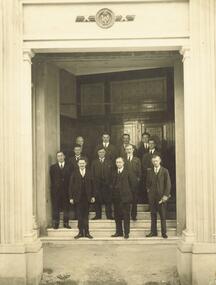 Ringwood and District Historical Society
Photograph, First Borough of Ringwood Councillors and officers-on steps New Ringwood Town Hall, August, 1927"
... Town Clerk, Crs. A.T. Miles and J.B. McAlpin. Second Row - Crs. J.K. McCaskill, R.G. Wilkins, A. Blood, W. Mackinlay, F.R. Lucas, Engineer. Third...Town Clerk, Crs. A.T. Miles and J.B. McAlpin. Second Row - Crs. J.K. McCaskill, R.G. Wilkins, A. Blood, W. Mackinlay, F.R. Lucas, Engineer. Third ...Written on back of photograph, "First Borough of Ringwood Councillors and officers (Architect and Builder, Town Hall). Reading from left to right, Front Row - Mr. A.F.B. Long, Town Clerk, Crs. A.T. Miles and J.B. McAlpin. Second Row - Crs. J.K. McCaskill, R.G. Wilkins, A. Blood, W. Mackinlay, F.R. Lucas, Engineer. Third Row - Mr. Jenkins, Rate Collector, Mr. A.C. Leith, Architect, Mr. A. Roberts, Builder and Mr. Taylor, Health Inspector. On steps New Town Hall, August, 1927". -
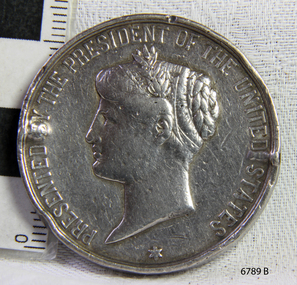 Flagstaff Hill Maritime Museum and Village
Award - Medal, Nelson Johnson, November 1880
... town clerk offered them all hospitality, the three badly injured men going to the hospital for care and others to the Olive Branch Hotel, then on to Melbourne. Captain Allen’s leg injury prevented him from going ashore so he and three other men travelled on the Dawn to Portland. They were met by the mayor who also treated them all with great kindness. Captain Allen took the train back to Melbourne then returned to America. Those saved were Captain Zaccheus Allen (or Jacques Allen), J. Darcy chief mate, James F. Lawrence second mate, Ned Sewall third...town clerk offered them all hospitality, the three badly injured men going to the hospital for care and others to the Olive Branch Hotel, then on to Melbourne. Captain Allen’s leg injury prevented him from going ashore so he and three other men travelled on the Dawn to Portland. They were met by the mayor who also treated them all with great kindness. Captain Allen took the train back to Melbourne then returned to America. Those saved were Captain Zaccheus Allen (or Jacques Allen), J. Darcy chief mate, James F. Lawrence second mate, Ned Sewall third ...This medal for bravery, for rescue of the crew from the shipwreck “Eric the Red” on 4th September 1880, was awarded to one of the crew of the steamer S.S. Dawn by the President of the United States in July 1881. The medal is engraved with the name “Nelson Johnson” (the anglicised version of his Swedish name Neils Frederick Yohnson). It was donated to Flagstaff Hill Maritime Village in 2013 by Nelson’s granddaughter. Nelson had migrated from Sweden to Sydney in 1879. The next year in 1880, aged 24, he was a seaman on the steamship Dawn and involved in the rescue of the survivors of the Eric the Red. Nelson Johnson was a crew member of the S.S. Dawn and was one of the rescue team in the dinghy in the early morning of September 4th 1880. Medals were awarded to the Captain and crew of the S.S. Dawn by the President of the United States, through the Consul-general (Mr Oliver M. Spencer), in July 1881 “ … in recognition of their humane efforts in rescuing the 23 survivors of the American built wooden sailing ship, the Eric the Red, on 4th September 1880.” The men were also presented with substantial monetary rewards and gifts. The city of Warrnambool’s care of the survivors was also mentioned by the President at the presentation, saying that “the city hosted and supported the crew ‘most graciously’. Previously, a week after the shipwreck, the Australian Government had also conveyed its thanks to the Captain and crew of the S.S. Dawn “Captain Griffith Jones, S.S. Dawn, The Hon. Mr Clark desires that the thanks of the Government should be conveyed to you for the prompt, persevering and seamanlike qualities displayed by you, your officers and crew in saving the number of lives you did on the occasion referred to. The hon. The Commissioner has also been pleased to award you a souvenir in commemoration of the occasion, and a sum of 65 pounds to be awarded to your officers and crew according to annexed scale. I am, &c, W Collins Rees, for and in the absence of the Chief Harbour Master.” The Awards are as follows: - Crew of DAWN'S lifeboat-Chief Officer, Mr G. Peat, 15 pounds; boat's crew-G. Sterge, A.B., 5 pounds; T. Hammond, A.B., 5 pounds; J. Black, A.B., 5 pounds; H. Edwards, A.B., 5 pounds. Dinghy's Crew-Second Officer, Mr Christie, 10 pounds; boat's crew -F. Lafer, A.B., 5 pounds; W. Johnstone, A.B., 5 pounds; Mr Lear, provedore, 5 pounds; Mr Dove, purser, 5 pounds. Captain Jones receives a piece of plate. (from “Wreck of the ship Eric the Red” by Jack Loney) The medal’s history, according to the Editor of ‘E-Sylum’ (the newsletter of The Numismatic Bibliomania Society “… appears to be an example of an 1880 State Department medal, catalogued as LS-3 (page 322 of R. W. Julian's book, Medals of the United States Mint: The First Century 1792-1892). The reverse is mostly blank for engraving, surrounded by a thin wreath. It was designed by George Morgan, chief engraver for the Philadelphia Mint, and struck in gold, silver and bronze. The one pictured here (in The Standard newspaper, 2nd July 2013) appears to be silver.” The following is an account of the events which led to the awarding of this medal. The American ship Eric the Red was a wooden, three-masted clipper ship. She had 1,580 tons register and was the largest full-rigged ship built at Bath, Maine, USA in 1871. She was built and registered by Arthur Sewall, later to become the partnership E. & A. Sewall, the 51st ship built by this company. The annually-published List of Merchant Vessels of the U.S. shows Bath was still the home port of Eric the Red in 1880. The vessel was named after the Viking discoverer, Eric ‘the Red-haired’ Thorvaldsson, who was the first European to reach the shores of North America (in 980AD). The ship Eric the Red at first traded in coal between America and Britain, and later traded in guano nitrates from South America. In 1879 she was re-metalled and was in first-class condition. On 10th June 1880 (some records say 12th June) Eric the Red departed New York for Melbourne and then Sydney. She had been commissioned by American trade representatives to carry a special cargo of 500 exhibits (1400 tons) – about a quarter to a third of America’s total exhibits - for the U.S.A. pavilion at Melbourne’s first International Exhibition. The exhibits included furniture, ironmongery, wines, chemicals, dental and surgical instruments, paper, cages, bronze lamp trimmings, axles, stamped ware, astronomical and time globes, samples of corn and the choicest of leaf tobacco. Other general cargo included merchandise such as cases of kerosene and turpentine, brooms, Bristol's Sarsaparilla, Wheeler and Wilson sewing machines, Wheeler’s thresher machine, axe handles and tools, cases of silver plate, toys, pianos and organs, carriages and Yankee notions. The Eric the Red left New York under the command of Captain Zaccheus Allen (or some records say Captain Jacques Allen) and 24 other crew including the owner’s son third mate Ned Sewall. There were also 2 saloon passengers on board. The ship had been sailing for an uneventful 85 days and the voyage was almost at its end. As Eric the Red approached Cape Otway there was a moderate north-west wind and a hazy and overcast atmosphere. On 4th September 1880 at about 1:30 am Captain Allen sighted the Cape Otway light and was keeping the ship 5-6 miles offshore to stay clear of the hazardous Otway Reef. However, he had badly misjudged his position. The ship hit the Otway Reef about 2 miles out to sea, southwest of the Cape Otway light station. Captain Allen ordered the wheel to be put ‘hard up’ thinking that she might float off the reef. The sea knocked the helmsman away from the wheel, broke the wheel ropes and carried away the rudder. The lifeboats were swamped, the mizzenmast fell, with all of its riggings, then the mainmast also fell and the ship broke in two. Some said that the passenger Vaughan, who was travelling for his health and not very strong, was washed overboard and never seen again. The ship started breaking up. The forward house came adrift with three of the crew on it as well as a longboat, which the men succeeded in launching and keeping afloat by continually bailing with their sea boots. The captain, the third mate (the owner’s son) and others clung to the mizzenmast in the sea. Then the owner’s son was washed away off the mast. Within 10 minutes the rest of the ship was in pieces, completely wrecked, with cargo and wreckage floating in the sea. The captain encouraged the second mate to swim with him to the deckhouse where there were other crew but the second mate wouldn’t go with him. Eventually, the Captain made it to the deckhouse and the men pulled him up. At about 4:30 am the group of men on the deckhouse saw the lights of a steamer and called for help. At the same time, they noticed the second mate and the other man had drifted nearby, still on the spur, and pulled them both onto the wreck. The coastal steamer SS Dawn was returning to Warrnambool from Melbourne, and its sailing time was different to its usual schedule. She was built in 1876 and bought by the Portland and Belfast Steam Navigation Co. in 1877. At the time of this journey, she was commanded by Captain Jones and was sailing between Melbourne and Portland via Warrnambool. The provedore the Dawn, Benjamin Lear, heard cries of distress coming through the portholes of the saloon. He gave the alarm and the engines were stopped. Cries could be heard clearly, coming from the land. Captain Jones sent out crew in two boats and fired off rockets and blue lights to illuminate the area. They picked up the three survivors who were in the long boat from Eric the Red. Two men were picked up out of the water, one being the owner’s son who was clinging to floating kerosene boxes. At daylight, the Dawn then rescued the 18 men from the floating portion of the deckhouse, which had drifted about 4 miles from where they’d struck the reef. Shortly after the rescue the deckhouse drifted onto breakers and was thrown onto rocks at Point Franklin, about 2 miles east of Cape Otway. Captain Jones had signalled to Cape Otway lighthouse the number of the Eric the Red and later signalled that there was a wreck at Otway Reef but there was no response from the lighthouse. The captain and crew of the Dawn spent several more hours searching unsuccessfully for more survivors, even going back as far as Apollo Bay. On board the Dawn the exhausted men received care and attention to their needs and wants, including much-needed clothing. Captain Allen was amongst the 23 battered and injured men who were rescued and later taken to Warrnambool for care. Warrnambool’s mayor and town clerk offered them all hospitality, the three badly injured men going to the hospital for care and others to the Olive Branch Hotel, then on to Melbourne. Captain Allen’s leg injury prevented him from going ashore so he and three other men travelled on the Dawn to Portland. They were met by the mayor who also treated them all with great kindness. Captain Allen took the train back to Melbourne then returned to America. Those saved were Captain Zaccheus Allen (or Jacques Allen), J. Darcy chief mate, James F. Lawrence second mate, Ned Sewall third mate and owner’s son, John French the cook, C. Nelson sail maker, Clarence W. New passenger, and able seamen Dickenson, J. Black, Denis White, C. Herbert, C. Thompson, A. Brooks, D. Wilson, J. Ellis, Q. Thompson, C. Newman, W. Paul, J. Davis, M. Horenleng, J. Ogduff, T. W. Drew, R. Richardson. Four men had lost their lives; three of them were crew (Gus Dahlgreen ship’s carpenter, H. Ackman steward, who drowned in his cabin, and George Silver seaman) and one a passenger (J. B. Vaughan). The body of one of them had been found washed up at Cape Otway and was later buried in the lighthouse cemetery; another body was seen on an inaccessible ledge. Twelve months later the second mate James F. Lawrence, from Nova Scotia passed away in the Warrnambool district; an obituary was displayed in the local paper. Neither the ship nor its cargo was insured. The ship was worth about £15,000 and the cargo was reportedly worth £40,000; only about £2,000 worth had been recovered. Cargo and wreckage washed up at Apollo Bay, Peterborough, Port Campbell, Western Port and according to some reports, even as far away as the beaches of New Zealand. The day after the wreck the government steamship Pharos was sent from Queenscliff to clear the shipping lanes of debris that could be a danger to ships. The large midship deckhouse of the ship was found floating in a calm sea near Henty Reef. Items such as an American chair, a ladder and a nest of boxes were all on top of the deckhouse. As it was so large and could cause danger to passing ships, Captain Payne had the deckhouse towed towards the shore just beyond Apollo Bay. Between Apollo Bay and Blanket Bay, the captain and crew of Pharos collected Wheeler and Wilson sewing machines, nests of boxes, bottles of Bristol’s sarsaparilla, pieces of common American chairs, axe handles, a Wheelers’ Patent thresher and a sailor’s trunk with the words “A. James” on the front. A ship’s flag-board bearing the words “Eric the Red” was found on the deckhouse; finally, those on board the Pharos had the name of the wrecked vessel. During this operation, Pharos came across the government steamer Victoria and also a steamer S.S. Otway, both of which were picking up flotsam and wreckage. A whole side of the hull and three large pieces of the other side of the hull, with some of the copper sheathing stripped off, had floated onto Point Franklin. Some of the vessels' yards and portions of her masts were on shore. The pieces of canvas attached to the yards and masts confirmed that the vessel had been under sail. The beach there was piled with debris several feet high. There were many cases of Diamond Oil kerosene, labelled R. W. Cameron and Company, New York. There were also many large planks of red pine, portions of a small white boat and a large, well-used oar. Other items found ashore included sewing machines (some consigned to ‘Long and Co.”) and notions, axe and scythe handles, hay forks, wooden pegs, rolls of wire (some branded “T.S” and Co, Melbourne”), kegs of nails branded “A.T. and Co.” from the factory of A. Field and Son, Taunton, Massachusetts, croquet balls and mallets, buggy fittings, rat traps, perfumery, cutlery and Douay Bibles, clocks, bicycles, chairs, a fly wheel, a cooking stove, timber, boxes, pianos, organs and a ladder. (Wooden clothes pegs drifted in for many years). There seemed to be no personal luggage or clothing. The Pharos encountered a long line, about one and a half miles, of f locating wreckage about 10 miles off land, southeast of Cape Otway, and in some places about 40 feet wide. It seemed that more than half of it was from Eric the Red. The ship’s crew rescued 3 cases that were for the Melbourne Exhibition and other items from amongst the debris. There were also chairs, doors, musical instruments, washing boards, nests of trunks and flycatchers floating in the sea. Most of the goods were saturated and smelt of kerosene. A section of the hull lies buried in the sand at Parker River Beach. An anchor with a chain is embedded in the rocks east of Point Franklin and a second anchor, thought to be from Eric the Red, is on display at the Cape Otway light station. (There is a photograph of a life belt on the verandah of Rivernook Guest House in Princetown with the words “ERIC THE RED / BOSTON”. This is rather a mystery as the ship was registered in Bath, Maine, USA.) Parts of the ship are on display at Bimbi Park Caravan Park and at Apollo Bay Museum. Flagstaff Hill Maritime Village also has part of the helm (steering wheel), a carved wooden sword (said to be the only remaining portion of the ship’s figurehead; further research is currently being carried out), a door, a metal rod, samples of wood and this medal awarded for the rescue of the crew. Much of the wreckage was recovered by the local residents before police and other authorities arrived at the scene. Looters went to great effort to salvage goods, being lowered down the high cliff faces to areas with little or no beach to collect items from the wreckage, their mates above watching out for dangerous waves. A Tasmanian newspaper reports on a court case in Stawell, Victoria, noting a man who was caught 2 months later selling tobacco from the wreckage of Eric the Red. Some of the silverware is still treasured by descendants of Mr Mackenzie who was given these items by officials for his help in securing the cargo. The gifts included silver coffee and teapots, half a dozen silver serviette rings and two sewing machines. A Mr G.W. Black has in his possession a medal and a purse that was awarded to his father, another Dawn crew member who was part of the rescue team. The medal is similarly inscribed and named “To John Black ….” (from “Shipwrecks” by Margaret E. Mackenzie, 3rd edition, published 1964). The wreck and cargo were sold to a Melbourne man who salvaged a quantity of high-quality tobacco and dental and surgical instruments. Timbers from the ship were salvaged and used in the construction of houses and shed around Apollo Bay, including a guest house, Milford House (since burnt down in bushfires), which had furniture, fittings and timber on the dining room floor from the ship. A 39.7-foot-long trading ketch, the Apollo, was also built from its timbers by Mr Burgess in 1883 and subsequently used in Tasmanian waters. It was the first attempt at shipbuilding in Apollo Bay. In 1881 a red light was installed about 300 feet above sea level at the base of the Cape Otway lighthouse to warn ships when they were too close to shore; It would not be visible unless a ship came within 3 miles from it. This has proved to be an effective warning. Nelson Johnson married Elizabeth Howard in 1881 and they had 10 children, the father of the medal’s donor being the youngest. They lived in 13 Tichbourne Place, South Melbourne, Victoria. Nelson died in 1922 in Fitzroy Victoria, age 66. In 1895 the owners of the S.S. Dawn, the Portland and Belfast Steam Navigation Co., wound up and sold out to the Belfast Company who took over the Dawn for one year before selling her to Howard Smith. She was condemned and sunk in Suva in 1928. The State Library of Victoria has a lithograph in its collection depicting the steamer Dawn and the shipwrecked men, titled. "Wreck of the ship Eric the Red, Cape Otway: rescue of the crew by the Dawn". The medal for bravery is associated with the ship the “The Eric the Red which is historically significant as one of Victoria's major 19th century shipwrecks. (Heritage Victoria Eric the Red; HV ID 239) The wreck led to the provision of an additional warning light placed below the Cape Otway lighthouse to alert mariners to the location of Otway Reef. The site is archaeologically significant for its remains of a large and varied cargo and ship's fittings being scattered over a wide area. The site is recreationally and aesthetically significant as it is one of the few sites along this coast where tourists can visit identifiable remains of a large wooden shipwreck, and for its location set against the background of Cape Otway, Bass Strait, and the Cape Otway lighthouse.“ (Victorian Heritage Database Registration Number S239, Official Number 8745 USA) This medal was awarded to Nelson Johnson by the U.S. President for bravery in the rescue of the Eric the Red crew. The obverse of the round, solid silver medal has an inscription around the rim. In the centre of the medal is the head of Liberty to the left, hair in a bun, with a sprig of leaves in the top left of a band around her head. There is a 6-pointed star below the portrait, between the start and end of the inscription. There are two raised areas on the rim, horizontally opposite each other, from the edge to just below the lettering and coinciding with the holes drilled in the edge. Slightly right of the top is a round indentation in the rim. The reverse has a wreath of leaves as a border, joined at the bottom by a ribbon bow. In the centre of the medal is an inscription, decorated with 3-pronged design and dots. The edge is plain with 2 small, rough and uneven holes horizontally opposite to each other, as though they had been used for mounting the medal at some stage. The medal has a matte finish on both sides and is slightly pitted and scratched.“PRESENTED BY THE PRESIDENT OF THE UNITED STATES” around the perimeter of the obverse of the medal. “TO / Nelson Johnson, / seaman of the British, / str “Dawn”, for bravery, / at risk of life, / in / rescuing the crew of / the American Ship / “Eric the Red.” “M” on obverse, truncation of the portraitwarrnambool, flagstaff hill, flagstaff hill maritime village, maritime museum, shipwreck coast, great ocean road, shipwreck artefact, eric the red, zaccheus allen, sewall, 1880, melbourne exhibition, cape otway, otway reef, victorian shipwreck, medal, nelson johnson, neils frederick yohnson, s.s. dawn, george morgan, hero -
 Port Melbourne Historical & Preservation Society
Photograph - Port Melbourne Strong Post in St Kilda Road, waiting for the arrival of Duke and Duchess of York, 21 Apr 1927
... Standing third and fourth from left Mrs CRICHTON, holding an Australian flag, and Cr J P CRICHTON. The tall man in centre of photograph looking at the camera is S S ANDERSON, Town Clerk. ...Standing third and fourth from left Mrs CRICHTON, holding an Australian flag, and Cr J P CRICHTON. The tall man in centre of photograph looking at the camera is S S ANDERSON, Town Clerk. ...In 1927 the Duke and Duchess of York (later King George VI and Queen Elizabeth) visited Australia. The Port Melbourne Council established a Strong Post in St Kilda Road to welcome the royal couple. Standing third and fourth from left Mrs CRICHTON, holding an Australian flag, and Cr J P CRICHTON. The tall man in centre of photograph looking at the camera is S S ANDERSON, Town Clerk. Second from right is Cr William HOWE, Mayor. This is the final version of the proof also held in the PMHPS collection (293.01) where the oval inset of the royal couple has been swapped from the right hand upper corner in the proof to the upper left corner in final version.Sepia photograph with a brown wooden mount of a Port Melbourne Council group in St Kilda Road awaiting the arrival of Duke and Duchess of York - 21 April, 1927. A oval photo of the royal couple is inset in the top left corner. "Port Melbourne Strong Post St. Kilda Rd. - Arrival of Duke & Duchess of York, April 21st 1927" below the image on the mount.local government - city of port melbourne, duke of york, duchess of york, william howe, sydney sims anderson, royal visits and occasions, mayors, town clerks, james peter crichton, elizabeth branton crichton nee portbury -
 Bendigo Historical Society Inc.
Document - BENDIGO SALEYARDS COLLECTION: LETTERS
... Town Clerk (pink copy) and the other to J Richmond. The Town Clerk's letter, dated 21/12/1978 refers to the replacement of a 20' extension ladder, electric power leads, and new oilskin wet weather gear. Signed by T H Williams. The letter to J Richmond, dated 20/12/1978 mentions Service Grants to the workers. Quoted are payments made by the Geelong Water & Sewerage Trust to their workers at the end of the First Year, Third...Town Clerk (pink copy) and the other to J Richmond. The Town Clerk's letter, dated 21/12/1978 refers to the replacement of a 20' extension ladder, electric power leads, and new oilskin wet weather gear. Signed by T H Williams. The letter to J Richmond, dated 20/12/1978 mentions Service Grants to the workers. Quoted are payments made by the Geelong Water & Sewerage Trust to their workers at the end of the First Year, Third ...Two letters (stapled together) from T H Williams, Country Organiser from the Federated Municipal and Shire Council Employees' Union of Australia - Victorian Division, one to The Town Clerk (pink copy) and the other to J Richmond. The Town Clerk's letter, dated 21/12/1978 refers to the replacement of a 20' extension ladder, electric power leads, and new oilskin wet weather gear. Signed by T H Williams. The letter to J Richmond, dated 20/12/1978 mentions Service Grants to the workers. Quoted are payments made by the Geelong Water & Sewerage Trust to their workers at the end of the First Year, Third Year, Fifth Year and Eighth Year.bendigo, council, cattle markets, bendigo saleyards collection - letters, city of bendigo, j richmond, norm harris, t h williams, federated municipal and shire employees' union of australia - victorian division, the geelong water & sewerage trust -
Port Melbourne Historical & Preservation Society
Photograph - Proof - Port Melbourne Strong Post in St Kilda Road, waiting for the arrival of Duke and Duchess of York, The Sears Studio, 21 Apr 1927
... Standing third and fourth from left Mrs CRICHTON, holding an Australian flag, and Cr J P CRICHTON. The tall man in centre of photograph looking at the camera is S S ANDERSON, Town Clerk. ...Standing third and fourth from left Mrs CRICHTON, holding an Australian flag, and Cr J P CRICHTON. The tall man in centre of photograph looking at the camera is S S ANDERSON, Town Clerk. ...In 1927 the Duke and Duchess of York (later King George VI and Queen Elizabeth) visited Australia. The Port Melbourne Council established a Strong Post in St Kilda Road to welcome the royal couple. Standing third and fourth from left Mrs CRICHTON, holding an Australian flag, and Cr J P CRICHTON. The tall man in centre of photograph looking at the camera is S S ANDERSON, Town Clerk. Second from right is Cr William HOWE, Mayor. This is a proof version of the final photo also held in the PMHPS collection (293.02) where the oval inset of the royal couple has been swapped from the right hand upper corner in the proof to the upper left corner in final version. Note that the price for copies of the photo is inscribed on the mount. 5/- for this (the large size) and 2/6 for a smaller size.Sepia proof photograph in a cardboard mount of Port Melbourne Council Group in St Kilda Road awaiting the arrival of Duke and Duchess of York - 21 April, 1927. A oval photo of the royal couple is inset (pasted) in the top right corner."This size 5/- each, smaller size 2/6 each" in pencil on the top left corner of the mount. "PROOF" stamped on the right edge of the mount.local government - city of port melbourne, duke of york, duchess of york, william howe, sydney sims anderson, royal visits and occasions, mayors, town clerks, james peter crichton, elizabeth branton crichton nee portbury -
 Box Hill Historical Society
Photograph - Citizenship ceremonies, 1965
... There are 3 men on a podium; one is the Mayor, another the Town Clerk. The third man is speaking. Two other gentlemen in the audience are seen from behind. ...There are 3 men on a podium; one is the Mayor, another the Town Clerk. The third man is speaking. Two other gentlemen in the audience are seen from behind. ...Naturalisation ceremony at Box Hill Town Hall. There are 3 men on a podium; one is the Mayor, another the Town Clerk. The third man is speaking. Two other gentlemen in the audience are seen from behind. L to R; -, Andrew Walls, David Youl.Black and white photocitizenship ceremonies, box hill town hall, town halls, walls> andrew (mr.), youl> david m. (cr.), naturalisation, mayors, town clerks -
 Sunshine and District Historical Society Incorporated
Administrative record - City of Sunshine - Commissioner Mr Alexander Alex George Gillon Collection 1976 - 1982 - Notice of Ordinary Meeting 19th October 1976, City of Sunshine, 19th October 1976
... Town Clerk Proposed Lease of Land from Railways near H.V. McKay Memorial Gardens for proposed car park Land transfer to Mental Health Authority Proposed St. Albans Sport Club Proposed Newport Power Station Street Construction Agreement Stage 5 Nickson's Subdivision Proposed Purchase of Land Main Road West and Camelot Drive M.M.B.W. Representation Report of By-Laws Officer Fire Hazards Removal of Fire Hazards 1976/1977 Snake Eradication Report of City Engineer Contract Annual Supply of Concrete Annual Supplies Third...Town Clerk Proposed Lease of Land from Railways near H.V. McKay Memorial Gardens for proposed car park Land transfer to Mental Health Authority Proposed St. Albans Sport Club Proposed Newport Power Station Street Construction Agreement Stage 5 Nickson's Subdivision Proposed Purchase of Land Main Road West and Camelot Drive M.M.B.W. Representation Report of By-Laws Officer Fire Hazards Removal of Fire Hazards 1976/1977 Snake Eradication Report of City Engineer Contract Annual Supply of Concrete Annual Supplies Third ...Notice of Ordinary Meeting 19th October 1976 Report of Town Clerk Proposed Lease of Land from Railways near H.V. McKay Memorial Gardens for proposed car park Land transfer to Mental Health Authority Proposed St. Albans Sport Club Proposed Newport Power Station Street Construction Agreement Stage 5 Nickson's Subdivision Proposed Purchase of Land Main Road West and Camelot Drive M.M.B.W. Representation Report of By-Laws Officer Fire Hazards Removal of Fire Hazards 1976/1977 Snake Eradication Report of City Engineer Contract Annual Supply of Concrete Annual Supplies Third Party Conference of Municipal Engineers Report on Contract Glengala Estate State 3 Private Street Scheme Report on Contract Garfield Street Private Street Scheme Report on Contract Dalton Street Private Street Scheme Report on Contract Fourth Avenue Private Street Scheme Private Subdivision Furlong Road Estate Stage 7 Private Subdivision Furlong Road Stage 6 Private Subdivision Furlong Road Stage 5 Private Subdivision Furlong Road Stage 3 & 4 Private Subdivision Furlong Road Stages 1 & 2 Private Subdivision Western Gate Stage 1B Private Subdivision Western Gate Stage 2 Private Subdivision Western Gate Stages 3a & 3B Private Subdivision Shopping Centre Car Park Corner Tallintyre Road and Fairbairn Road and Fairbairn Road Rappaport Housing Commission Private Subdivision Albanvale Stage 17 Private Subdivision Western Gate Stage 1A Private Subdivision Private Street Scheme Navigator Street McIntyre Road Outfall Drain Stage 2 McIntyre Road Construction South Road Drain Paw Paw Road Berkshire Road Drain Burgess Road Construction Grading Cranwell Street, Main Road East & McIntyre Road Cornhill Reserve Drain Evans Street Drain Market Road Drain Station Road Drains Wright Street Traffic Island Cooper Street Flats Rosamond Road Traffic Lights Soil Parks and Recreation Construction Strata Subdivision 1 Clacton Street Consolidation of Title Lots 1 & 120 McIntyre Road Condition of St. Albans Road Vinidex Tubemakers Pty Ltd Consolidation of Title Lots 1 & 2 Tallintyre Road and Fairbairn Road Availability of Sewerage in part of Sheffield Estate Plan of Subdivision Neale Road and Oakwood Road Plan of Subdivision Ballarat Road Albion Reid Pty Ltd Damaged to Footpath Westmoreland Road Hospital Land Plan of Subdivision 74 - 78 Hampshire Road Report of Chief Planner Building Over Easement Policy Cash In Lieu Of Carking Parking Brick Garage Lot 34 Station Road St. Albans Land Use Application Subdivision Neale Road Land Use Application Signs Ballarat Road Land Use Application Subdivision Furlong Road Land Use Application Additions to Parish Centre / School Oleander Drive Land Use Application Shops and Associated Car Parking Princes Street Land Use Permit Application for Extension of Time Lots 169 & 1970 Billingham Road Land Use Permit Service Premises and Dwelling Ralph Street Bus Parking Bays Glengala Road Land Use Permit Application Signs Lots 178. 179 & 180 Cedra Close Land Use Permit Application Factory Lots 8 & 10 Cromer Avenue Land Use Permit Application Additions to St. John's College School Churchill Avenue Land Use Permit McDonald Properties 396 Ballarat Road Land Use Permit Application Factory / Warehouse Lots 258, 259, 260 & 261 Rothray Avenue Club Rooms for Sunshine United Cricket Club Rooms Extension Garage Over Easement 4 Gail Street Land Use Permit Application Industrial Sales Oliver-Davey Glass Lot 1 Tottenham Parade S/F Garage 60 Ballarat Road Maidstone Undersize Allotment 10 Studley Street Maidstone Orders of the Day Proposal to Discontinue Roads off Alexandra Avenue and Service Street Sunshine city of sunshine, alexander "alex" george gillon, st. albans sport club, h.v. mckay memorial gardens, newport power substation, main road west, camelot street, st. albans, sunshine, kings park reserve, gillespie road, fourth avenue, garfield street, tallintyre road, fairbairn road, sunshine west, neale road, deer park, navigator street, maribyrnong, mcintyre road, sunshine north, south road, braybrook, paw paw road brooklyn, berkshire road, burgess street, brooklyn, cornhill reserve, cornhill street, cranwell street, main road east, evans street, market road, station road, hargreaves cresent, mclennan street, thompson street, millbank drive, wright street, cooper street, rosamond road, raleigh road, clacton street, st. albans road, vinidex tubemakers, oakwood road, albion reid, hampshire road, station street, ballarat road, albion, furlong road, oleander drive, princes street, ralph street, glengala road, cedar close, cromer street, churchill avenue, st. john's college, rothway avenue, sunshine united cricket club, selwyn park, selwyn street, gail street, tottenham parade, footscray west, studley street, maidstone, service street, alexander avenue, albion tip, sunshine tip -
 Sunshine and District Historical Society Incorporated
Administrative record - City of Sunshine - Commissioner Mr Alexander Alex George Gillon Collection 1976 - 1982 - Minutes of Special Meeting 3rd November 1976, City of Sunshine, 3rd November 1976
... Town Clerk Proposed Lease of Land from Railways near H.V. McKay Memorial Gardens for proposed car park Land transfer to Mental Health Authority Proposed St. Albans Sport Club Proposed Newport Power Station Street Construction Agreement Stage 5 Nickson's Subdivision Proposed Purchase of Land Main Road West & Camelot Drive M.M.B.W. Representation Report of By-Laws Officer Fire Hazard Tender for Removal of Fire Hazards Seasons 1976/1977 Snake Eradication Report of City Engineer Contract Annual Supply of Concrete Annual Supplies Third...Town Clerk Proposed Lease of Land from Railways near H.V. McKay Memorial Gardens for proposed car park Land transfer to Mental Health Authority Proposed St. Albans Sport Club Proposed Newport Power Station Street Construction Agreement Stage 5 Nickson's Subdivision Proposed Purchase of Land Main Road West & Camelot Drive M.M.B.W. Representation Report of By-Laws Officer Fire Hazard Tender for Removal of Fire Hazards Seasons 1976/1977 Snake Eradication Report of City Engineer Contract Annual Supply of Concrete Annual Supplies Third ...Minutes of special meeting 3rd November 1976 Report of the Town Clerk Proposed Lease of Land from Railways near H.V. McKay Memorial Gardens for proposed car park Land transfer to Mental Health Authority Proposed St. Albans Sport Club Proposed Newport Power Station Street Construction Agreement Stage 5 Nickson's Subdivision Proposed Purchase of Land Main Road West & Camelot Drive M.M.B.W. Representation Report of By-Laws Officer Fire Hazard Tender for Removal of Fire Hazards Seasons 1976/1977 Snake Eradication Report of City Engineer Contract Annual Supply of Concrete Annual Supplies Third Party Conference of Municipal Engineers Neale Road Estate Stage 1 Western Gate Estate Stage 1A Strata Subdivision 1 Clacton Street Consolidation of Title Lots 1 & 120 McIntyre Road Condition of St. Albans Road Vinidex Tubemakers Pty Ltd Availability of Sewerage in part of Sheffield Estate Plan of Subdivision Neale Road and Oakwood Road Plan of Subdivision Ballarat Road Albion Reid Pty Ltd Damaged to Footpath Westmoreland Road Hospital Land Plan of Subdivision 74 - 78 Hampshire Road Report of Chief Planner Building Over Easement Policy Cash In Lieu Of Carking Parking Brick Garage Lot 34 Station Road St. Albans Land Use Application Subdivision Neale Road Land Use Application Signs Ballarat Road Land Use Application Subdivision Furlong Road Land Use Application Additions to Parish Centre / School Oleander Drive Land Use Application Shops and Associated Car Parking Princes Street Land Use Permit Application for Extension of Time Lots 169 & 1970 Billingham Road Land Use Permit Service Premises and Dwelling Ralph Street Bus Parking Bays Glengala Road Land Use Permit Application Signs Lots 178. 179 & 180 Cedra Close Land Use Permit Application Factory Lots 8 & 10 Cromer Avenue Land Use Permit Application Additions to St. John's College School Churchill Avenue Land Use Permit McDonald Properties 396 Ballarat Road Land Use Permit Application Factory / Warehouse Lots 258, 259, 260 & 261 Rothray Avenue Club Rooms for Sunshine United Cricket Club Rooms Extension Garage Over Easement 4 Gail Street Land Use Permit Application Industrial Sales Oliver-Davey Glass Lot 1 Tottenham Parade S/F Garage 60 Ballarat Road Maidstone Undersize Allotment 10 Studley Street Maidstone Orders of the Day Proposal to Discontinue Roads off Alexandra Avenue and Service Street Sunshine city of sunshine, alexander "alex" george gillon, st. albans sports club, h.v. mckay memorial gardens, anderson road, sunshine, newport power substation, main road west, camelot drive, st. albans, clacton street, mcintyre road, sunshine north, st. albans road, vinidex tubemakers, neale road, oakwood road, deer park, albion reid, ballarat road, westmoreland road, hampshire road, station road, furlong road, oleander drive, princes street, ralph street, sunshine west, cedar close, cromer avenue, churchill avenue, braybrook, st. john's college, mcdonalds, rothray avenue, sunshine united cricket club, selwyn park, selwyn street, gail street, tottenham parade, footscray west, durham road, studley street, maidstone, alexandra avenue, service street, ainsworth reserve day care centre, vernon street, rosamond bowling club, rosamond tennis club, rosamond road, maribyrnong -
 Sunshine and District Historical Society Incorporated
Administrative record - City of Sunshine - Commissioner Mr Alexander Alex George Gillon Collection 1976 - 1982 - Notice of Ordinary Meeting 8th December 1976, City of Sunshine, 3rd December 1976
... City of Sunshine Alexander "Alex" George Gillon Mernda Street Neale Road Sunshine West Deer Park Robinsons Road Ballarat Road Albion Hertford Road Sunshine Ayton Street Sunshine North Durham Road Ashley Street Whittaker Street Maidstone Middle Road Clyde Street Maribyrnong Forrest Street Third Avenue Hampshire Road Albion Reid Notice of Ordinary Meeting 8th December 1976 Report of the Town Clerk Rates and Sanitary Interest Abandonments Land Transfers Land Subdivision Albion Reid Open Space Agreement Ballarat Road Albion Report of the Chief Health Inspector Prosecutions Proceedings Sunshine Magistrates Court Application for Septic Tanks Application for Installation of Gas Fired Dry Septic Tank Units Health Act Registrations Report of the Weights & Measures Inspector Weights and Measures Report for the Two Months Ending 26th November 1976 Report of the City Engineer Signalisation of Intersections City of Essendon Melbourne and Metropolitan Planning Scheme Proposed Amendment Annual Supply of Concrete Contract Proposed Transfer of Loan Money Plan of Subdivision 24 & 26 Mernda Street Land Use Permit Application Subdivision and Detached Houses Neale Road Land Use Permit Application Placement of Fillings Robinsons Road Land Use Permit Application Commercial Centre and Associated Car Park Neale Road Consolidation of Title Swing Bridge Motors 556 Ballarat Road Acquisition Gas and Fuel Corporation Victoria Land Use Permit Application Cluster Subdivision Off Neale Road Land Use Permit Application Flats Hertford Road Land Use Permit Application Timber Yard Part Lots 250, 251, 252, 253 & 254 Ayton Street Land Use Permit Application Sign 136 Durham Road Land Use Permit Application Subdivision Ballarat Road Bounded by Ashley Street on the West and Whittaker Street on the East Land Use Permit Application Residential Bee Keeping Middle Road Strata Subdivision 8 Clyde Street Refund Cash in Lieu Flats Forrest Street Report of the Building Surveyor Fencing lots 7, 8 & Part Lot 9 Third Avenue House Closer to Frontage Lot 51 & Part Lot 52 Hampshire Road Foolscap sized document. ...Notice of Ordinary Meeting 8th December 1976 Report of the Town Clerk Rates and Sanitary Interest Abandonments Land Transfers Land Subdivision Albion Reid Open Space Agreement Ballarat Road Albion Report of the Chief Health Inspector Prosecutions Proceedings Sunshine Magistrates Court Application for Septic Tanks Application for Installation of Gas Fired Dry Septic Tank Units Health Act Registrations Report of the Weights & Measures Inspector Weights and Measures Report for the Two Months Ending 26th November 1976 Report of the City Engineer Signalisation of Intersections City of Essendon Melbourne and Metropolitan Planning Scheme Proposed Amendment Annual Supply of Concrete Contract Proposed Transfer of Loan Money Plan of Subdivision 24 & 26 Mernda Street Land Use Permit Application Subdivision and Detached Houses Neale Road Land Use Permit Application Placement of Fillings Robinsons Road Land Use Permit Application Commercial Centre and Associated Car Park Neale Road Consolidation of Title Swing Bridge Motors 556 Ballarat Road Acquisition Gas and Fuel Corporation Victoria Land Use Permit Application Cluster Subdivision Off Neale Road Land Use Permit Application Flats Hertford Road Land Use Permit Application Timber Yard Part Lots 250, 251, 252, 253 & 254 Ayton Street Land Use Permit Application Sign 136 Durham Road Land Use Permit Application Subdivision Ballarat Road Bounded by Ashley Street on the West and Whittaker Street on the East Land Use Permit Application Residential Bee Keeping Middle Road Strata Subdivision 8 Clyde Street Refund Cash in Lieu Flats Forrest Street Report of the Building Surveyor Fencing lots 7, 8 & Part Lot 9 Third Avenue House Closer to Frontage Lot 51 & Part Lot 52 Hampshire Road city of sunshine, alexander "alex" george gillon, mernda street, neale road, sunshine west, deer park, robinsons road, ballarat road, albion, hertford road, sunshine, ayton street, sunshine north, durham road, ashley street, whittaker street, maidstone, middle road, clyde street, maribyrnong, forrest street, third avenue, hampshire road, albion reid -
 Sunshine and District Historical Society Incorporated
Administrative record - City of Sunshine - Commissioner Mr Alexander Alex George Gillon Collection 1976 - 1982 - Minutes Of Ordinary Meeting 8th December 1976, City of Sunshine, 8th December 1976
... City of Sunshine Alexander "Alex" George Gillon Ballarat Road Albion Mernda Street Neale Road Sunshine West Deer Park Robinsons Road Hertford Road Sunshine Ayton Street Sunshine North Durham Road Ashley Street Whittaker Street Maidstone Middle Road Clyde street Maribyrnong Forrest Street Third Avenue Hampshire Road Minutes Of Ordinary Meeting 8th December 1976 Report of the Town Clerk Rates and Sanitary Interest Abandonments Land Transfers Land Subdivision Albion Reid Open Space Agreement Ballarat Road Albion Report of the Chief Health Inspector Prosecutions Proceedings Sunshine Magistrates Court Application for Septic Tanks Application for Installation of Gas Fired Dry Septic Tank Units Health Act Registrations Report of the Weights & Measures Inspector Weights and Measures Report for the Two Months Ending 26th November 1976 Report of the City Engineer Signalisation of Intersections City of Essendon Melbourne and Metropolitan Planning Scheme Proposed Amendment Annual Supply of Concrete Contract Proposed Transfer of Loan Money Plan of Subdivision 24 & 26 Mernda Street Land Use Permit Application Subdivision and Detached Houses Neale Road Land Use Permit Application Placement of Fillings Robinsons Road Land Use Permit Application Commercial Centre and Associated Car Park Neale Road Consolidation of Title Swing Bridge Motors 556 Ballarat Road Acquisition Gas and Fuel Corporation Victoria Land Use Permit Application Cluster Subdivision Off Neale Road Land Use Permit Application Flats Hertford Road Land Use Permit Application Timber Yard Part Lots 250, 251, 252, 253 & 254 Ayton Street Land Use Permit Application Sign 136 Durham Road Land Use Permit Application Subdivision Ballarat Road Bounded by Ashley Street on the West and Whittaker Street on the East Land Use Permit Application Residential Bee Keeping Middle Road Strata Subdivision 8 Clyde Street Refund Cash in Lieu Flats Forrest Street Report of the Building Surveyor Fencing lots 7, 8 & Part Lot 9 Third Avenue House Closer to Frontage Lot 51 & Part Lot 52 Hampshire Road Foolscap sized document. ...Minutes Of Ordinary Meeting 8th December 1976 Report of the Town Clerk Rates and Sanitary Interest Abandonments Land Transfers Land Subdivision Albion Reid Open Space Agreement Ballarat Road Albion Report of the Chief Health Inspector Prosecutions Proceedings Sunshine Magistrates Court Application for Septic Tanks Application for Installation of Gas Fired Dry Septic Tank Units Health Act Registrations Report of the Weights & Measures Inspector Weights and Measures Report for the Two Months Ending 26th November 1976 Report of the City Engineer Signalisation of Intersections City of Essendon Melbourne and Metropolitan Planning Scheme Proposed Amendment Annual Supply of Concrete Contract Proposed Transfer of Loan Money Plan of Subdivision 24 & 26 Mernda Street Land Use Permit Application Subdivision and Detached Houses Neale Road Land Use Permit Application Placement of Fillings Robinsons Road Land Use Permit Application Commercial Centre and Associated Car Park Neale Road Consolidation of Title Swing Bridge Motors 556 Ballarat Road Acquisition Gas and Fuel Corporation Victoria Land Use Permit Application Cluster Subdivision Off Neale Road Land Use Permit Application Flats Hertford Road Land Use Permit Application Timber Yard Part Lots 250, 251, 252, 253 & 254 Ayton Street Land Use Permit Application Sign 136 Durham Road Land Use Permit Application Subdivision Ballarat Road Bounded by Ashley Street on the West and Whittaker Street on the East Land Use Permit Application Residential Bee Keeping Middle Road Strata Subdivision 8 Clyde Street Refund Cash in Lieu Flats Forrest Street Report of the Building Surveyor Fencing lots 7, 8 & Part Lot 9 Third Avenue House Closer to Frontage Lot 51 & Part Lot 52 Hampshire Road city of sunshine, alexander "alex" george gillon, ballarat road, albion, mernda street, neale road, sunshine west, deer park, robinsons road, hertford road, sunshine, ayton street, sunshine north, durham road, ashley street, whittaker street, maidstone, middle road, clyde street, maribyrnong, forrest street, third avenue, hampshire road -
![George Lewis, Mayor [of Kew] 1863](/media/collectors/550653872162f11fb04854aa/items/5922822bd0cef20e04ba0882/item-media/5c1960f321ea6c0dacf37803/item-fit-380x285.jpg?cb=6) Kew Historical Society Inc
Kew Historical Society IncPhotograph, J E Barnes, George Lewis, Mayor [of Kew] 1863, c.1906
... town clerks of the former Borough, Town and City of Kew. The portraits were transferred by the City of Kew to the Kew Historical Society in March 1989. A Significance Assessment in 2018, funded by the National Library of Australia confirmed the historic, and often artistic significance of the series. mayors of kew (vic) cr. george lewis Kew (Vic.) — municipal collection George Lewis / Mayor 1863 Framed portrait of Cr. George Lewis, third ...Kew achieved independence from the Boroondara Roads Board in 1860. As a new municipality, its first three leaders were designated as chairmen. On becoming a borough in 1863, its leaders were identified as mayors. The earliest photographs date from ca.1906, when the Town of Kew commissioned the noted local photographer Josiah E Barnes to produce standardised portraits of former mayors to be displayed in the Mayoral Chamber of the Town Hall. The collection also includes photographs by other well-known photographic studios such as Burlington Studios, Melba – Melbourne, Stuart Tompkins, Spencer Shier and Talma & Co. The majority of mounts identify the photographer. Eighty photographs are housed in their original frames.This portrait is one of a series of mounted and framed photographic portraits of mayors and town clerks of the former Borough, Town and City of Kew. The portraits were transferred by the City of Kew to the Kew Historical Society in March 1989. A Significance Assessment in 2018, funded by the National Library of Australia confirmed the historic, and often artistic significance of the series.Framed portrait of Cr. George Lewis, third Chairmen and later first Mayor of Kew. The mounting and framing of the photograph follows a typical layout or style in that each is framed in dark wood, glazed, and laid down on an inscribed board. The inscription identifies the name of the mayor and the year/s that he/she served.George Lewis / Mayor 1863 mayors of kew (vic), cr. george lewis, kew (vic.) — municipal collection -
 Sunshine and District Historical Society Incorporated
Administrative record - City of Sunshine - Commissioner Mr Alexander Alex George Gillon Collection 1976 - 1982 - Report of Committee Meetings 14th February 1979, City of Sunshine, 14th February 1979
... third at Robert Bruce Reserve is being connected to sewerage Skinner Reserve has been top-dressed Pollard Gardens Laneway levelled 6 Corio Street has been levelled and is ready for top-dressing H.V. McKay Gardens the House has been demolished Bon Thomas Reserve Pre-School and Diamond Avenue Pre-School landscaping drawings have been completed Ralph Street Reserve a further report is to be submitted Report of the Finance Committee Meeting Report of the Town Clerk Overpayment of Gratuities Financial Report for the Period Ended 15th January 1979 Report of the Co-Ordinator of Welfare Services Landscaping and Equipment for Child Care Service Report of the City Engineer & Planner Tender for Road Roller to Replace Plant No 71 Replacement of Suction Sweeper Plant No 23 Relocation of C.R.B. ...third at Robert Bruce Reserve is being connected to sewerage Skinner Reserve has been top-dressed Pollard Gardens Laneway levelled 6 Corio Street has been levelled and is ready for top-dressing H.V. McKay Gardens the House has been demolished Bon Thomas Reserve Pre-School and Diamond Avenue Pre-School landscaping drawings have been completed Ralph Street Reserve a further report is to be submitted Report of the Finance Committee Meeting Report of the Town Clerk Overpayment of Gratuities Financial Report for the Period Ended 15th January 1979 Report of the Co-Ordinator of Welfare Services Landscaping and Equipment for Child Care Service Report of the City Engineer & Planner Tender for Road Roller to Replace Plant No 71 Replacement of Suction Sweeper Plant No 23 Relocation of C.R.B. ...Report of Committee Meetings 14th February 1979 Report of Works Committee Meeting Kerb & Channel Macedon Street South Side Completed Kerb & Channel McIntyre Road Between Suffolk Road and the McIntyre Road Bridge Both Sides Completed Kerb & Channel Gangs presently working in Carlisle Street and Anderson Road Footpath Norwood Street West Side Completed Footpath Burnett Avenue Completed Footpath Lorne Crescent Completed Footpath Morris Street Completed Footpath Gangs now working in Gunnedah Street and Chapman Street Road Work McIntyre Road South of McIntyre Road Bridge Road Work Reconstruction of King Edward Avenue has commenced Road Work Access Road to the Truck Wash at the Sunshine Tip Completed Drainage Gangs presently working in Clairmont Street, Boundary Road and Fairbairn Road Swimming Pool Construction Now Completed Bon Thomas Reserve Building Completion due in two weeks Diamond Avenue Reserve Building Completion due in five weeks Highpoint West Building No Commencement Toilet Blocks on Reserves Two are Completed, the third at Robert Bruce Reserve is being connected to sewerage Skinner Reserve has been top-dressed Pollard Gardens Laneway levelled 6 Corio Street has been levelled and is ready for top-dressing H.V. McKay Gardens the House has been demolished Bon Thomas Reserve Pre-School and Diamond Avenue Pre-School landscaping drawings have been completed Ralph Street Reserve a further report is to be submitted Report of the Finance Committee Meeting Report of the Town Clerk Overpayment of Gratuities Financial Report for the Period Ended 15th January 1979 Report of the Co-Ordinator of Welfare Services Landscaping and Equipment for Child Care Service Report of the City Engineer & Planner Tender for Road Roller to Replace Plant No 71 Replacement of Suction Sweeper Plant No 23 Relocation of C.R.B. Funds 1978/79 Harrison Street / Miles Street Private Street Schemes St. Albans Road Reconstruction Abutting M.M.B.W. Depot Report of the Agenda & Forward Planning Committee Meeting Report of the Town Clerk Municipal Boundaries Overdraft Facilities Cost of Vehicle Crossing 6 Meager Street Deer Park Disqualification of Councillors Statute Provisions Report of the Co-Ordinator of Welfare Services Recurrent Subsidies for Child Care Services Report of the Chief Health Surveyor Nurses' Training Course Family Planning Association Report of the Municipal Recreation Officer Community Bus Guidelines for Use Report of the City Engineer & Planner Planning Permit Application Factory McIntyre Road Proposed Public Open Space Along Maribyrnong River Between Duke Street and Evans Street Braybrook & Proposed Amendment No 81 to the Melbourne Metropolitan Planning Scheme Planning Permit Application Resident Bee Keeping Grist Street Planning Permit Application Bank Extension Hampshire Road Sunshine Planning Permit Application Hairdressing Salon Hampshire Road Report of the Building Surveyor Fence 1 Evelyn Crescent Sunshine Westmacedon street, maidstone, mcintyre road, suffolk road, mcintyre road bridge, sunshine north, carlisle street, anderson road, sunshine, norwood street, albion, burnett avenue, lorne crescent, morris street, gunnedah street, chapman street, king edward avenue, sunshine tip, clairmont street, boundary road, brooklyn, fairbairn road, sunshine west, sunshine swimming pool, bon thomas reserve, quinn street, deer park, diamond avenue reserve, diamond avenue, albanvale, robert bruce reserve, station road, skinner reserve, churchill avenue, braybrook, pollard gardens, hampshire road, corio street, h.v. mckay gardens, bon thomas reserve pre-school, diamond avenue pre-school, ralph street reserve, ralph street, harrison street, miles street, st. albans road, st. albans, meager street, maribyrnong river, duke street, evans street, grist street, evelyn crescent -
 Sunshine and District Historical Society Incorporated
Administrative record - City of Sunshine - Commissioner Mr Alexander Alex George Gillon Collection 1976 - 1982 - Report of committee meetings 15th October 1979, City of Sunshine, 16th October 1979
... Report of Works Committee Meeting Kerb & Channel Burns Street and Sonley Street completed Kerb & Channel Thomson Street commenced Kerb & Channel Furlong Road completed Kerb & Channel Mernda Street & Maynes Street commenced Footpath Kellaway Street two thirds complete Footpath Braybrook Area work now progressing in Elizabeth Street Report of the Finance Committee Report of the Town Clerk Estimates 1979/80 Report of the City Engineer & Planner Capital Works Programme 1979/80/81 Report of the Agenda & Forward Planning Committee Report of the Town Clerk Contract for Cleaning of Council Properties Report of the Chief Health Surveyor Infant Welfare Report of the Superintendent of Traffic & By-Laws Report of the City Librarian Reports on Melton Library Report of the City Engineer Planning Permit Application Additional Skating Rink Wright Street Sunshine Tenders for Road Sweeper Tenders for Class Dozer Tenders for Semi-trailer Type Bookmobile Tenders for Tractor Loader Drainage Sunshine View Estate State2 Aycliffe Drive Pre-School & Infant Welfare Centre Footpath Glengala Road near S.E.C. ...Albans Yallourn Street Bridge Yallourn Street Ardeer Deer Park Little Athletics Centre Sassella Park Station Road Bon Thomas Reserve Pre-School Centre Quinn Street Orama Street Child Care Centre Orama Street Diamond Avenue Pre-School Centre Diamond Avenue Infant Welfare Centre Diamond Avenue Albanvale Highpoint West Infant Welfare Centre Highpoint West Library Rosamond Road Maribyrnong Ballarat Road Infant Welfare Centre Ballarat Road Scovell Reserve Scovell Crescent Dempster Park Phoenix Street Matthews Hill Reserve Matthews Street Duke Street Report of Works Committee Meeting Kerb & Channel Burns Street and Sonley Street completed Kerb & Channel Thomson Street commenced Kerb & Channel Furlong Road completed Kerb & Channel Mernda Street & Maynes Street commenced Footpath Kellaway Street two thirds complete Footpath Braybrook Area work now progressing in Elizabeth Street Report of the Finance Committee Report of the Town Clerk Estimates 1979/80 Report of the City Engineer & Planner Capital Works Programme 1979/80/81 Report of the Agenda & Forward Planning Committee Report of the Town Clerk Contract for Cleaning of Council Properties Report of the Chief Health Surveyor Infant Welfare Report of the Superintendent of Traffic & By-Laws Report of the City Librarian Reports on Melton Library Report of the City Engineer Planning Permit Application Additional Skating Rink Wright Street Sunshine Tenders for Road Sweeper Tenders for Class Dozer Tenders for Semi-trailer Type Bookmobile Tenders for Tractor Loader Drainage Sunshine View Estate State2 Aycliffe Drive Pre-School & Infant Welfare Centre Footpath Glengala Road near S.E.C. ...Report of Works Committee Meeting Kerb & Channel Burns Street and Sonley Street completed Kerb & Channel Thomson Street commenced Kerb & Channel Furlong Road completed Kerb & Channel Mernda Street & Maynes Street commenced Footpath Kellaway Street two thirds complete Footpath Braybrook Area work now progressing in Elizabeth Street Report of the Finance Committee Report of the Town Clerk Estimates 1979/80 Report of the City Engineer & Planner Capital Works Programme 1979/80/81 Report of the Agenda & Forward Planning Committee Report of the Town Clerk Contract for Cleaning of Council Properties Report of the Chief Health Surveyor Infant Welfare Report of the Superintendent of Traffic & By-Laws Report of the City Librarian Reports on Melton Library Report of the City Engineer Planning Permit Application Additional Skating Rink Wright Street Sunshine Tenders for Road Sweeper Tenders for Class Dozer Tenders for Semi-trailer Type Bookmobile Tenders for Tractor Loader Drainage Sunshine View Estate State2 Aycliffe Drive Pre-School & Infant Welfare Centre Footpath Glengala Road near S.E.C. Easement work progressing Roadworks Mernda Street & Maynes Street excavation completed Roadworks Burns Street and Sonley Street progressing Drainage McLeod Street completed Drainage Andrea Street commenced Repairs to Yallourn Street Bridge progressing Sassella Park runups for Little Athletics now excavated E.P.A. Survey three men presently working at Sunshine Tip on this survey Bon Thomas Reserve Pre-School Centre building completed Orama Street Child Care Centre building completed Diamond Avenue Pre-School Centre and Diamond Avenue Infant Welfare Centre building completed Highpoint West Infant Welfare Centre and Highpoint West Library completion estimated in 3 to 4 weeks Ballarat Road Infant Welfare Centre requires further internal painting Depot Aemities Block 3 to 4 weeks for completion Scovell Reserve excavations completed, ready to pour slab Diamond Avenue Pre-School Centre and Diamond Avenue Infant Welfare Centre landscaping completed Bon Thomas Reserve Pre-School Centre work progressing Dempster Park synthetic turf laid on two practice wickets Council Nursery soil sterilizer connected ready to operate Various Reserves Car Parks crush rock has been delivered Matthews Hill Reserve water reticulation extended. Boom gates to be erected in Duke Street in conjunction with M.M.B.W. Tree Maintenance 92% completeburns street, sonley street, thomson street, maidstone, furlong road, sunshine north, mernda street, maynes street, sunshine west, kellaway street, elizabeth street, braybrook, skating rink, wright street, sunshine, aycliffe drive pre-school & infant welfare centre, aycliffe drive, deer park, glengala road, mcleod street, andrea street, st. albans, yallourn street bridge, yallourn street, ardeer, deer park little athletics centre, sassella park, station road, bon thomas reserve pre-school centre, quinn street, orama street child care centre, orama street, diamond avenue pre-school centre, diamond avenue infant welfare centre, diamond avenue, albanvale, highpoint west infant welfare centre, highpoint west library, rosamond road, maribyrnong, ballarat road infant welfare centre, ballarat road, scovell reserve, scovell crescent, dempster park, phoenix street, matthews hill reserve, matthews street, duke street -
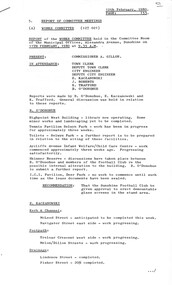 Sunshine and District Historical Society Incorporated
Administrative record - City of Sunshine - Commissioner Mr Alexander Alex George Gillon Collection 1976 - 1982 - Report of committee meetings 11th February 1980, City of Sunshine, 12th January 1980
... thirds excavated. Drain and crush rock laid Road Works Hampstead Road Maidstone to be completed after Lindenow Street Sassella Park Reconstruction planned for April 1980 Beachley Reserve Water service completed Highpoint West Library Building Landscaping commenced last week I.C.I. Land Poor water service, requires upgrading Castley Reserve experiencing poor grass growth, area to be redressed and re-sown Discussion extended to the technical qualifiications and traning Parks & Recreation Foreman Report of the Finance Committee Meeting Report of the Town Clerk Rates Arrears Submission for Additional Staff Capital Works Programme and Finance Available Report of the City Engineer Resort and Recreation Account Proposals for Sporting Pavilions and Improvements Building Surveyor's Office Overtime Purchase of Water Tanker Report of the Agenda & Forward Planning Committee Meeting...thirds excavated. Drain and crush rock laid Road Works Hampstead Road Maidstone to be completed after Lindenow Street Sassella Park Reconstruction planned for April 1980 Beachley Reserve Water service completed Highpoint West Library Building Landscaping commenced last week I.C.I. Land Poor water service, requires upgrading Castley Reserve experiencing poor grass growth, area to be redressed and re-sown Discussion extended to the technical qualifiications and traning Parks & Recreation Foreman Report of the Finance Committee Meeting Report of the Town Clerk Rates Arrears Submission for Additional Staff Capital Works Programme and Finance Available Report of the City Engineer Resort and Recreation Account Proposals for Sporting Pavilions and Improvements Building Surveyor's Office Overtime Purchase of Water Tanker Report of the Agenda & Forward Planning Committee Meeting Foolscap sized document. ...Report of committee meetings 11th February 1980 Report of Works Committee Meeting Highpoint West Library Building now operating Tennis Pavilion Selwyn Park work has been in progress for approximately three weeks Toilets Selwyn Park further report required regarding the siting of these facilities Aycliffe Avenue Infant Welfare & Child Care Centre work has been in progress for approximately three weeks Skinner Reserve discussions have taken place with Sunshine Football Club regarding possible internal building alterations I.C.I. Pavilion Deer Park no work to commence until such time as a lease document have been sealed Kerb & Channel McLeod Street Sunshine North anticipated to be completed this week Kerb & Channel Navigator Street East Side work progressing Footpath Treloar Crescent Braybrook West Side work progressing Footpath Melon Street / Dillon Street Braybrook Footpath Drainage Lindenow Street now completed Drainage Fisher Street 20% complete Drainage Chewton Street Maidstone completed Drainage Centre Street Sunshine anticipated to commence on 13th February Road Works Lindenow Street two thirds excavated. Drain and crush rock laid Road Works Hampstead Road Maidstone to be completed after Lindenow Street Sassella Park Reconstruction planned for April 1980 Beachley Reserve Water service completed Highpoint West Library Building Landscaping commenced last week I.C.I. Land Poor water service, requires upgrading Castley Reserve experiencing poor grass growth, area to be redressed and re-sown Discussion extended to the technical qualifiications and traning Parks & Recreation Foreman Report of the Finance Committee Meeting Report of the Town Clerk Rates Arrears Submission for Additional Staff Capital Works Programme and Finance Available Report of the City Engineer Resort and Recreation Account Proposals for Sporting Pavilions and Improvements Building Surveyor's Office Overtime Purchase of Water Tanker Report of the Agenda & Forward Planning Committee Meetinghighpoint west library, rosamond road, maribyrnong, selwyn park, selwyn street, albion, albion tennis club, aycliffe avenue infant welfare & child care centre, aycliffe avenue, deer park, skinner reserve, churchill avenue, sunshine football club, i.c.i. oval, ballarat road, braybrook, mcleod street, sunshine north, navigator street, treloar crescent, melon street, dillon street, lindenow street, fisher street, chewton street, maidstone, centre street, sunshine, hampstead road, sassella park, station road, beachley reserve, ardoyne street, castley reserve, simmie street, sunshine west
