
Showing 196 items matching "16 battalion"
-
 Bendigo Military Museum
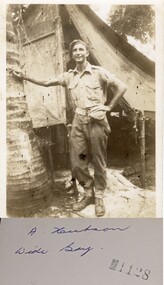
Photograph - ROBERT HILLMAN COLLECTION - 2/38TH MILITIA BATTALION, Men who transferred from 2/38th to 2/16 Battalion in action in New Guinea
... Men who transferred from 2/38th to 2/16 Battalion in action in New Guinea......2/16 Battalion...After the 38th, Leonard served in the 2/16th Battalion 2/38th Battalion 2/16 Battalion 2/28th Battalion Easch photograph has a descriptive inscription on the rear which is reproduced in the images in this record Black and white photographs Men who transferred from 2/38th to 2/16 Battalion in action in New Guinea Photograph ROBERT HILLMAN COLLECTION - 2/38TH MILITIA BATTALION ...During the Second World War, the Bendigo-based 38th Battalion was a militia unit undertaking garrison duties on the mainland. This set of images are from a set donated to the museum by the family of Robert Hillman. These images showmen of the 2/16th Battalion at camp in New Guinea. When the 2/38th Battalion was broken up August 1944, may of the men joined the 2/16th Battalion Some of the men identified in these images are: Robert Cameron Hillman, VX137175, from Bendigo. After the 38th, Robert served in the 2/16th Battalion. Ormond George Bottomley, VX88423, from Castlemaine. After the 38th, Ormond served in the 2/4th Pioneer Battalion. Ted Phair, VX137488 from Bendigo , who later served in 28th Battalion Leonard John Dunkley-Smith, VX149067, from Ballarat. After the 38th, Leonard served in the 2/16th Battalion Black and white photographs Easch photograph has a descriptive inscription on the rear which is reproduced in the images in this record2/38th battalion, 2/16 battalion, 2/28th battalion -
 Running Rabbits Military Museum operated by the Upwey Belgrave RSL Sub Branch
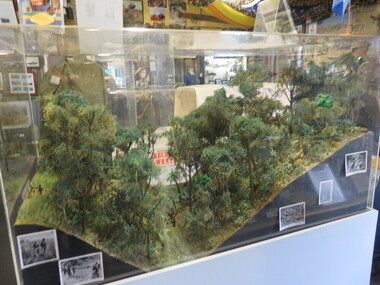
Kokoda diorama, Visions of Kokoda, 2005
... ww11, kokoda, new guinea, diorama, 39th battallion, 2/14th battalion, 2/16 battalion, 2/27 battalion, 53rd battalion, papuan infantry battalion...ww11, kokoda, new guinea, diorama, 39th battallion, 2/14th battalion, 2/16 battalion, 2/27 battalion, 53rd battalion, papuan infantry battalion Perspex case containing model of section of Kokoda Track Visions of Kokoda Kokoda diorama ...Perspex case containing model of section of Kokoda Trackww11, kokoda, new guinea, diorama, 39th battallion, 2/14th battalion, 2/16 battalion, 2/27 battalion, 53rd battalion, papuan infantry battalion -
 RSL Victoria - Anzac House Reference Library and Memorabilia Collection
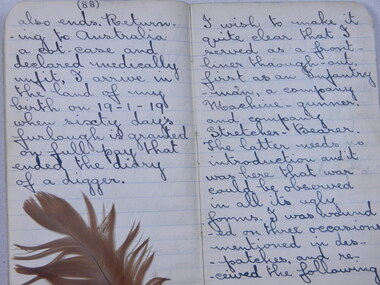
Diary of William Augustus Elverd - (Item held at Monash Memorial Defence Library), William Augustus Elverd, Written retrospectively (?). 1915 to 1919
... ...16 battalion...later than experiences described. ww1 western front diaries william augustus elverd 16 battalion Incomplete, coverless notebook - commences at part of page 4, complete from page 5 onwards. ...Diary details action seen at Gallipoli, Pozieres, Mouquet Farm and Passchendale. Diary may have been written (much?) later than experiences described. Incomplete, coverless notebook - commences at part of page 4, complete from page 5 onwards. Diary of William Elverd (1995 - 16th Battalion, 5th Reinforcement).ww1, western front, diaries, william augustus elverd, 16 battalion -
 Bendigo Military Museum
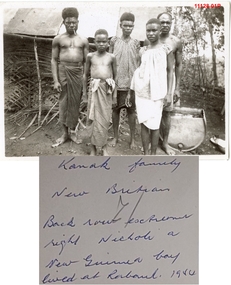
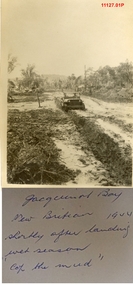
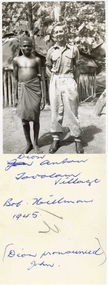
Photograph - ROBERT HILLMAN COLLECTION - 2/38TH MILITIA AND 2/16 AIF BATTALIONS, Official History Section photographs illustrating cultural environment
... ...2/16 Battalion...Whilst many are reproduced elsewhere, the images are important in the context of being significant to Robert Hillman as illustrative of his experiences militarily and culturally. 2/38th Battalion 2/16 Battalion 2/28th Battalion Robert Hillman Each photograph has a descriptive inscription on the rear which is reproduced in the images in this record Black and white photographs Official History Section photographs illustrating cultural environment Photograph ROBERT HILLMAN COLLECTION - 2/38TH MILITIA AND 2/16 AIF BATTALIONS ...During the Second World War, the Bendigo-based 38th Battalion was a militia unit undertaking garrison duties on the mainland. This set of images are from a set donated to the museum by the family of Robert Hillman. In August 1944 the 38th was disbanded to supply reinforcements to various AIF and CMF units. Hillman served in the 16th Battalion. These selected images from his collection are representative of the set of 97 undigitized photographs from official sources illustrating conditions in various areas of New Guinea where the 16th Battalion served. They show the local indigenous population and emphasize that the war affected not just the combatants but was a confronting and disruptive experience for the civilian population caught up in the war. Whilst many are reproduced elsewhere, the images are important in the context of being significant to Robert Hillman as illustrative of his experiences militarily and culturally. Black and white photographs Each photograph has a descriptive inscription on the rear which is reproduced in the images in this record2/38th battalion, 2/16 battalion, 2/28th battalion, robert hillman -
 Bendigo Military Museum
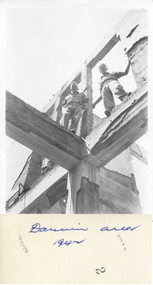
Photograph - ROBERT HILLMAN COLLECTION - 2/38TH MILITIA AND 2/16 AIF BATTALIONS, Official History Section photographs illustrative of fighting conditions
... ...2/16 Battalion...Whilst many are reproduced elsewhere, the images are important in the context of being significant to Robert Hillman as illustrative of his time in the 16th. 2/38th Battalion 2/16 Battalion 2/28th Battalion Robert Hillman Each photograph has a descriptive inscription on the rear which is reproduced in the images in this record Black and white photographs Official History Section photographs illustrative of fighting conditions Photograph ROBERT HILLMAN COLLECTION - 2/38TH MILITIA AND 2/16 AIF BATTALIONS ...During the Second World War, the Bendigo-based 38th Battalion was a militia unit undertaking garrison duties on the mainland. This set of images are from a set donated to the museum by the family of Robert Hillman. In August 1944 the 38th was disbanded to supply reinforcements to various AIF and CMF units. Hillman served in the 16th Battalion. These selected images are representative of the set of 60 undigitized photographs from official sources illustrating conditions in various areas of New Guinea where the 16th Battalion served. Whilst many are reproduced elsewhere, the images are important in the context of being significant to Robert Hillman as illustrative of his time in the 16th. Black and white photographs Each photograph has a descriptive inscription on the rear which is reproduced in the images in this record2/38th battalion, 2/16 battalion, 2/28th battalion, robert hillman -
 Bendigo Military Museum
Photograph - ROBERT HILLMAN COLLECTION - 2/38TH MILITIA BATTALION, 2/38th Militia Battalion in Western Australia 1942
... ...2/16 Battalion...After the 38th, Leonard served in the 2/16th Battalion 2/38th Battalion 2/16 Battalion 2/28th Battalion Easch photograph has a descriptive inscription on the rear which is reproduced in the images in this record Black and white photographs 2/38th Militia Battalion in Western Australia 1942 Photograph ROBERT HILLMAN COLLECTION - 2/38TH MILITIA BATTALION ...During the Second World War, the Bendigo-based 38th Battalion was a militia unit undertaking garrison duties on the mainland. This set of images are from a set donated to the museum by the family of Robert Hillman. They show the battalion in training in Western Australia. Later, the battalion would move to Darwin, where in August 1944 it was disbanded, with the men being offered the opportunity to join AIF and militia units actively engaged in the fighting in New Guinea and elsewhere. Some of the men identified in these images are: Robert Cameron Hillman, VX137175, from Bendigo. After the 38th, Robert served in the 2/16th Battalion. Ormond George Bottomley, VX88423, from Castlemaine. After the 38th, Ormond served in the 2/4th Pioneer Battalion. Ted Phair, VX137488 from Bendigo , who later served in 28th Battalion Leonard John Dunkley-Smith, VX149067, from Ballarat. After the 38th, Leonard served in the 2/16th Battalion Black and white photographs Easch photograph has a descriptive inscription on the rear which is reproduced in the images in this record2/38th battalion, 2/16 battalion, 2/28th battalion -
 Bendigo Military Museum
Photograph - ROBERT HILLMAN COLLECTION - 2/38TH MILITIA BATTALION, 2/38th and 2/16th Battalion men in Darwin and New Guinea
... ...2/16 Battalion...After the 38th, Leonard served in the 2/16th Battalion 2/38th Battalion 2/16 Battalion 2/28th Battalion Easch photograph has a descriptive inscription on the rear which is reproduced in the images in this record Black and white photographs 2/38th and 2/16th Battalion men in Darwin and New Guinea Photograph ROBERT HILLMAN COLLECTION - 2/38TH MILITIA BATTALION ...During the Second World War, the Bendigo-based 38th Battalion was a militia unit undertaking garrison duties on the mainland. This set of images are from a set donated to the museum by the family of Robert Hillman. These images are of the 2/38th travelling to Darwin from Western Australia, where the Battalion was disbanded to reinforce AIF and Militia units. Some of the men identified in these images are: Robert Cameron Hillman, VX137175, from Bendigo. After the 38th, Robert served in the 2/16th Battalion. Ormond George Bottomley, VX88423, from Castlemaine. After the 38th, Ormond served in the 2/4th Pioneer Battalion. Ted Phair, VX137488 from Bendigo , who later served in 28th Battalion Leonard John Dunkley-Smith, VX149067, from Ballarat. After the 38th, Leonard served in the 2/16th Battalion Black and white photographs Easch photograph has a descriptive inscription on the rear which is reproduced in the images in this record2/38th battalion, 2/16 battalion, 2/28th battalion -
 Bendigo Military Museum
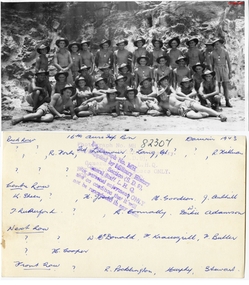
Photograph - ROBERT HILLMAN COLLECTION - 2/38TH MILITIA AND 2/16TH AIF BATTALIONS, 2/38th and 2/16th Battalion men in Darwin and New Guinea
... ...2/16 Battalion...After the 38th, Leonard served in the 2/16th Battalion 2/38th Battalion 2/16 Battalion 2/28th Battalion Easch photograph has a descriptive inscription on the rear which is reproduced in the images in this record Black and white photographs 2/38th and 2/16th Battalion men in Darwin and New Guinea Photograph ROBERT HILLMAN COLLECTION - 2/38TH MILITIA AND 2/16TH AIF BATTALIONS ...During the Second World War, the Bendigo-based 38th Battalion was a militia unit undertaking garrison duties on the mainland. This set of images are from a set donated to the museum by the family of Robert Hillman. In August 1944 the 38th was disbanded to supply reinforcements to various AIF and CMF units. Hillman served in the 16th Battalion. These images show official group photographs mainly of the 16th Battalion in training in Darwin Some of the men identified in these images are: Robert Cameron Hillman, VX137175, from Bendigo. After the 38th, Robert served in the 2/16th Battalion. Ormond George Bottomley, VX88423, from Castlemaine. After the 38th, Ormond served in the 2/4th Pioneer Battalion. Ted Phair, VX137488 from Bendigo , who later served in 28th Battalion Leonard John Dunkley-Smith, VX149067, from Ballarat. After the 38th, Leonard served in the 2/16th Battalion Black and white photographs Easch photograph has a descriptive inscription on the rear which is reproduced in the images in this record2/38th battalion, 2/16 battalion, 2/28th battalion -
 Clunes Museum
Photograph, CIRCA 1914/18
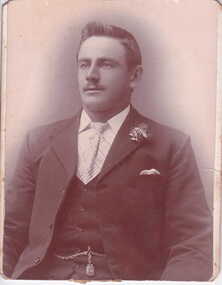
... PTE. T.H. BRAY 16 ST BATTALION A.I.F. MISSING IN FRANCE RUTES 182 NO. 2662 RETURN TO SUN" T. ...local history photography photographs military PTE. T.H. BRAY 16 ST BATTALION A.I.F. MISSING IN FRANCE RUTES 182 NO. 2662 RETURN TO SUN" T. ...ORIGINAL PHOTOGRAPH, SEPIA TONED OF PTE. T.H. BRAY IN CIVILIAN CLOTHES, FEATURED LAPEL POSY POCKET HANDKERCHIEF FOB WATCH CHAIN AND MEDALPTE. T.H. BRAY 16 ST BATTALION A.I.F. MISSING IN FRANCE RUTES 182 NO. 2662 RETURN TO SUN" T. H. BRAY 582 ASlocal history, photography, photographs, military -
 Bendigo Military Museum
Administrative record - DRIVING LICENCE, 16/9/1942
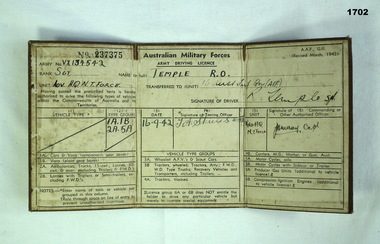
... He was most likely in a CMF unit at that time and transferred to 16 Battalion which was given AIF status. Not to be confused with 2nd /16th Batt AIF. ...He was most likely in a CMF unit at that time and transferred to 16 Battalion which was given AIF status. Not to be confused with 2nd /16th Batt AIF. documents-licenses military history-army Drivers “VX134542 Sgt R.O Temple” Driver's license, No 237375, cardboard with vinyl coating, dark brown colour, folds in three. ...Robert Osborne Temple No VX134542 enlisted in the 2nd AIF on 10.12.1942 aged 21 years. At discharge on 25.3.1946 he held the rank of Sgt in the 16th Australian Infantry Battalion. As above his enlistment date from the nominal roll is 10.12.1942 and the date on the licence is 16.9.1942. He was most likely in a CMF unit at that time and transferred to 16 Battalion which was given AIF status. Not to be confused with 2nd /16th Batt AIF. Driver's license, No 237375, cardboard with vinyl coating, dark brown colour, folds in three. Issued by Australian Army to R.O Temple.“VX134542 Sgt R.O Temple”documents-licenses, military history-army, drivers -
 Wangaratta RSL Sub Branch
Souvenir - Japanese Water Canteen, Takada Aluminum Mill (TKD), c1920
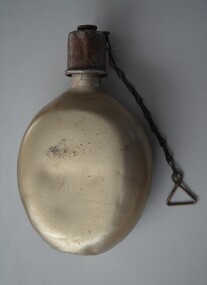
... V22561 served with the 8th Light Horse prior to enlisting in WW2 - VX90269 served with the 2/5 Commandos and 2/16 Battalion in New Guinea and Morotai/Borneo, prior to discharge in 1946....V22561 served with the 8th Light Horse prior to enlisting in WW2 - VX90269 served with the 2/5 Commandos and 2/16 Battalion in New Guinea and Morotai/Borneo, prior to discharge in 1946. ...Original pre-WWII commercial export field bottle manufactured in Japan during the 1920s or 1930s. During this era, Japanese aluminum manufacturers stamped their civilian-market exports with localized nature motifs such as a soaring crane or eagle over Mount Fuji or stylized mountain peaks framed inside a circular border such as the one on the base of this canteen. Many Japanese soldiers, particularly officers and infantrymen, frequently purchased their own tactical gear from commercial department stores or military supply shops before being deployed. Allied troops fighting in the Pacific routinely collected Japanese field gear as combat trophies. Item belonged to and probably souvenired by John Williams JAMES born 4/5/1922 at Benalla. V22561 served with the 8th Light Horse prior to enlisting in WW2 - VX90269 served with the 2/5 Commandos and 2/16 Battalion in New Guinea and Morotai/Borneo, prior to discharge in 1946.An original pre-war Japanese aluminum export canteen with a fully intact base stamp, brown screw cap, and its retaining chainUnpainted aluminium oval shaped water canteen with brownish screw top lip with chain attached.Maker's logo stamped on basejapanese canteen, ww2, new guinea, borneo -
 Bendigo Historical Society Inc.
Book - "For Empire. Australia's Rally to the Dear Old Flag.", 1914
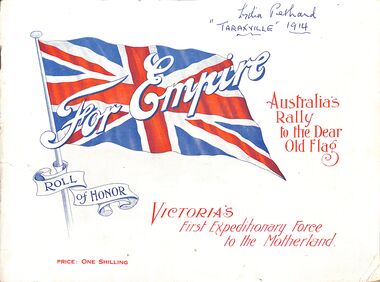
... Index of soldiers names listed by Divisional Headquarters and Battalions. 16 pages. ...Index of soldiers names listed by Divisional Headquarters and Battalions. 16 pages. Book "For Empire. Australia's Rally to the Dear Old Flag." ...Booklet issued in September 1914 containing a complete roll of the first Victorian Contingent to "the Motherland", documenting Australia's offer to send troops to Great Britain after the declaration of war, and the response by Victoria. Around 6,700 men volunteered within three weeks to take part in an "expeditionary force", and gathered at a camp at Broadmeadows in preparation for sailing on one of 26 troopships being sent by Australia. The booklet was produced as a souvenir to the "gallant men who responded so readily to the call to arms. Theirs is the spirit that has built up the greatness of England's empire." The wish that they have a "speedy and safe return to sunny Australia" underlines the naivety or innocence of the times. ON the declaration of war the Commonwealth Government immediately cabled the Imperial Authorities, offering to send an Expeditionary Force of 20,000 men to assist the Empire in this the greatest struggle in history. The offer was gratefully accepted by the mother country and immediately the enrolment of volunteers was begun, officers and men enthusiastically rallied to the call, and in the course of two or three weeks the whole of the contingents were in camp. The offer was made on the 3rd August, 1914, and before the end of September the troops were ready for the front. The command of the Expeditionary Force has been entrusted to Brigadier-General Bridges, who is ably assisted by the best officers in Australia. To transport the troops to England twenty-six of the largest and best liners that come to Australian waters have been engaged as troopships. The whole of the cost (estimated at more than £5,000,000) of equipping and maintaining the troops during the war will be borne by Australia, and even if the cost should be treble the amount it will be cheerfully and readily responded to in aid of the Empire. A Second Expeditionary Force is now in course of enrolment. Our Victorian First Contingent comprises some 6,700 officers and men, and this booklet is issued as a souvenir of Victoria's complement and to serve as a record and memento of the gallant men who responded so readily to the call to arms. Theirs is the spirit that has built up the greatness of England's Empire—the spirit that will support it while empires last. May Providence guide them to speedy victory and a safe return to sunny Australia. September, 1914. The booklet also mentions that a secondary expeditionary force is being assembled, so may have also functioned as an inducement to enlist. "For Empire. Australia's Rally to the Dear Old Flag." Roll of Honor. Victoria's First Expeditionary Force to the Motherland. Soft cover. Front cover contains image of Union Jack. Title in white, and subtitles in red . Stapled in spine. Publisher's name and address on back cover to bottom right. Contains black and white images. Index of soldiers names listed by Divisional Headquarters and Battalions. 16 pages. soldiers, world war one, british empire, first expeditionary force -
 Wangaratta RSL Sub Branch
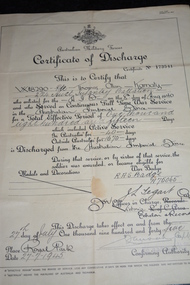
Certificate - Certificate of Discharge, c1945
... Australian Military Forces Certificate of Discharge dated 27/7/1945 issued to Thomas Allan Karnatz VX 48290 2/24 Battalion - born 16/7/1916. Enlisted Albury 22/7/1940 - Caulfield 8/8/1940 aged 24 years 17/10/1940 posted from 2/23 to 2/24 Battalion. ...Australian Military Forces Certificate of Discharge dated 27/7/1945 issued to Thomas Allan Karnatz VX 48290 2/24 Battalion - born 16/7/1916. Enlisted Albury 22/7/1940 - Caulfield 8/8/1940 aged 24 years 17/10/1940 posted from 2/23 to 2/24 Battalion. ...Australian Military Forces Certificate of Discharge dated 27/7/1945 issued to Thomas Allan Karnatz VX 48290 2/24 Battalion - born 16/7/1916. Enlisted Albury 22/7/1940 - Caulfield 8/8/1940 aged 24 years 17/10/1940 posted from 2/23 to 2/24 Battalion. Embarked 16/11/1940 and disembarked Middle East 17/12/1940. Reported missing in action on 6/5/1941 and officially prisoner of war on 8/7/1941. 26/4/1945 recovered POW arrived in UK prior to returning to Australia. Cream coloured paper certificate with words printed and hand written in black ink.Australian Military Forces Certificate of Discharge No 173511ta karnatz, ww2, pow, tobruk, 2/24 battalion -
 Wangaratta RSL Sub Branch
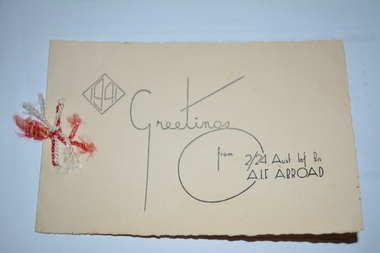
Card, c1941
... Item belonged to Thomas Allan Karnatz VX 48290 2/24 Battalion - born 16/7/1916. Enlisted Albury 22/7/1940 - Caulfield 8/8/1940 aged 24 years 17/10/1940 posted from 2/23 to 2/24 Battalion. ...Item belonged to Thomas Allan Karnatz VX 48290 2/24 Battalion - born 16/7/1916. Enlisted Albury 22/7/1940 - Caulfield 8/8/1940 aged 24 years 17/10/1940 posted from 2/23 to 2/24 Battalion. ...1941 Christmas Greeting card produced for the 2/24 Infantry Battalion AIF whilst abroad to send to family and loved ones. Item belonged to Thomas Allan Karnatz VX 48290 2/24 Battalion - born 16/7/1916. Enlisted Albury 22/7/1940 - Caulfield 8/8/1940 aged 24 years 17/10/1940 posted from 2/23 to 2/24 Battalion. Embarked 16/11/1940 and disembarked Middle East 17/12/1940. Reported missing in action on 6/5/1941 and officially prisoner of war on 8/7/1941. 26/4/1945 arrived UK recovered POW. Folded cream cardboard with irregular edging and wording in black print on front cover and inside back cover. Red and white rolled thread/ribbon tied through two punched holes on left margin. Inside contains a black and white panorama of a seaside bay. 1941 Greetings from 2/24 Aust Inf Bn/AIF ABROAD Inside card - Wishing you a Very Merry Christmas and Joy in the New Year/Xmas 1941/New Year 19422/24 bn, ww2, pow, thomas karnatz -
 Wangaratta RSL Sub Branch
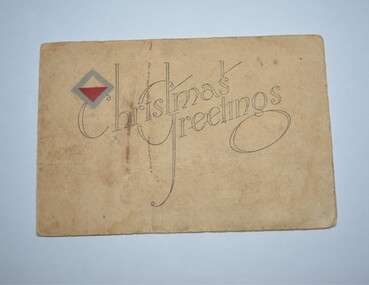
Card, Christmas Greetings, C1940
... Trained at Wangaratta with the 2/24 Battalion. 16/11/40 embarked overseas and served in the Middle East and New Guinea. ...Trained at Wangaratta with the 2/24 Battalion. 16/11/40 embarked overseas and served in the Middle East and New Guinea. ...24 Battalion Christmas Greetings card sent to his sister Marion, by VX25903 Robert Ross ADAMS Born 14/10/1919 at Three Bridges/Powelltown Enlisted 19/6/1940. Trained at Wangaratta with the 2/24 Battalion. 16/11/40 embarked overseas and served in the Middle East and New Guinea. Inside page has a Christmas greeting, and poem entitled “Thoughts” together with black and white image of a soldier with rifle. Card also contained a small separate page with verse entitled Comradeship Hymn.Item sent by R Adams to his married sister Marion and family during WW2. Donor Norma Woods, is the daughter of Marion and niece of Adams.Cream coloured cardboard card with red white and grey symbol top left corner above two words in black printOn cover - Christmas Greetings Inside cover - Sender VX25903 Dvr R Adams HQ Coy 2/24 Bn AIF Abroadww2, 2/24 battalion, middle east, rat of tobruk, robert ross adams, christmas card -
 Wangaratta RSL Sub Branch
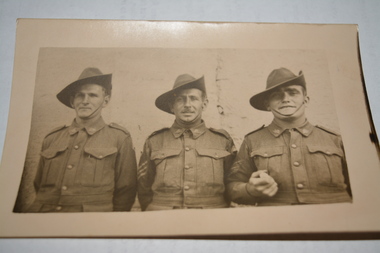
Photograph - Photographs, c1940
... Second soldier identified as Joseph Disher Darley VX48803 2/23 Battalion born 16/1/1919 and died in February 1989....Second soldier identified as Joseph Disher Darley VX48803 2/23 Battalion born 16/1/1919 and died in February 1989. ...Six black and white postcards all with photographs featuring Thomas Karnatz VX48290 POW and fellow soldiers of the 2/24th Battalion possibly taken whilst serving overseas in the Middle East during WW2. Second soldier identified as Joseph Disher Darley VX48803 2/23 Battalion born 16/1/1919 and died in February 1989.Six black and white postcards with images of men in military uniformthomas karnatz, ww2, middle east, pow, 2/24 battalion, joseph darley -
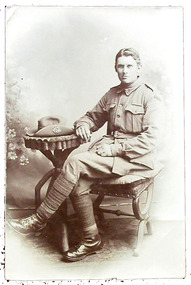 Ballarat Heritage Services
Photograph - Portrait, Antonio Alphonsus (Tony) Pavich, c1915
... He served with the 38th Battalion (transferred to the 7th Battalion on 16/09/2016) A.I.F., joining at Bendigo on 09 March 1916 aged 24 years. ...He served with the 38th Battalion (transferred to the 7th Battalion on 16/09/2016) A.I.F., joining at Bendigo on 09 March 1916 aged 24 years. ...Tony Pavich was a cousin of John Joseph Gervasoni. He was born near the town of Timor. During World War One he was wounded in the field on 18 April 1918, and admitted to the 3rd Australian Field Ambulance with a gunshot wound to the left leg. He was discharged to duty on 22 April 1918. He was killed in Action on 11 August 1918., during the Battle of Amiens.Photograph of Tony Pavich in World War One Australian army uniform. He served with the 38th Battalion (transferred to the 7th Battalion on 16/09/2016) A.I.F., joining at Bendigo on 09 March 1916 aged 24 years. His mother, Mary Pavich of Yandoit, was listed as next of Kin. His father, Antonio Pavich, was born in Australia.(NAA: B2455, PAVICH ANTONIO ALPHONSUSVerso - "Tony Pavich cousin Yandoit (killed))tony pavich, yandoit, world war one, battle of amiens, antonio pavich -
 Wangaratta RSL Sub Branch
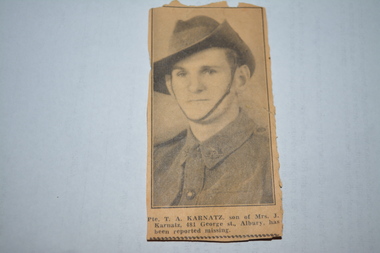
Memorabilia - Assorted Papers
... Item belonged to Thomas Allan Karnatz VX 48290 2/24 Battalion - born 16/7/1916. Enlisted Albury 22/7/1940 - Caulfield 8/8/1940 aged 24 years 17/10/1940 posted from 2/23 to 2/24 Battalion. ...Item belonged to Thomas Allan Karnatz VX 48290 2/24 Battalion - born 16/7/1916. Enlisted Albury 22/7/1940 - Caulfield 8/8/1940 aged 24 years 17/10/1940 posted from 2/23 to 2/24 Battalion. ...Brown vinyl wallet containing various papers including identity card, receipt for 60 pounds deposit for 1929 Dodge dated 23/12/1947, Ministry of Food vouchers, postcard, newspaper cutting, black and white photograph of two young boys with a bicycle - handwritten on rear from Mrs T A Karnatz Tawonga Roadside Wodonga Victoria Australia to Private Thomas Karnatz Prisoner of War No 139745 ARB KDO 7001 Stalag 11B Germany. Item belonged to Thomas Allan Karnatz VX 48290 2/24 Battalion - born 16/7/1916. Enlisted Albury 22/7/1940 - Caulfield 8/8/1940 aged 24 years 17/10/1940 posted from 2/23 to 2/24 Battalion. Embarked 16/11/1940 and disembarked Middle East 17/12/1940. Reported missing in action on 6/5/1941 and officially prisoner of war on 8/7/1941. 26/4/1945 arrived UK recovered POWBrown vinyl wallet containing assorted military and personal papersInside printed in gold lettering - Good wishes from the Australian Red Cross Societyww2, pow, 2/24 battalion, t a karnatz, tobruk -
 Wangaratta RSL Sub Branch
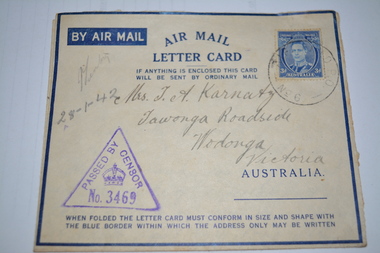
Letter - Handwritten letters
... Thomas Allan Karnatz VX 48290 2/24 Battalion - born 16/7/1916. Enlisted Albury 22/7/1940 - Caulfield 8/8/1940 aged 24 years 17/10/1940 posted from 2/23 to 2/24 Battalion. ...Thomas Allan Karnatz VX 48290 2/24 Battalion - born 16/7/1916. Enlisted Albury 22/7/1940 - Caulfield 8/8/1940 aged 24 years 17/10/1940 posted from 2/23 to 2/24 Battalion. ...Two handwritten letters - dated 27/6/1941 on blue lined writing paper from Pte D Detbridge VX31082 D Coy2/24 Batt. AIF Abroad to Mrs Karnatz advised her husband Tom was safe. He and several others were surrounded and forced to surrender and taken prisoners. Two of the boys managed to escape and brought the good news about Tom and others, being well and safe……… Airmail letter card dated 2/1/1942 from Pte Detbridge to Mrs Karnatz thanking her for the cake of chocolate and enquiring about Tom and if he had mentioned Tim Rogers, a mate who has not been heard of for some time. Thomas Allan Karnatz VX 48290 2/24 Battalion - born 16/7/1916. Enlisted Albury 22/7/1940 - Caulfield 8/8/1940 aged 24 years 17/10/1940 posted from 2/23 to 2/24 Battalion. Embarked 16/11/1940 and disembarked Middle East 17/12/1940. Reported missing in action on 6/5/1941 and officially prisoner of war on 8/7/1941. 26/4/1945 recovered POW arrived in UK prior to returning to Australia. Two handwritten letters - one in lead pencil on blue lined writing paper and the second in black ink on Airmail Letter Card with square blue stamp top right corner and triangular purple stamp lower left corner.Air Mail Letter Card addressed to Mrs T A Karnatz Tawonga Roadside Wodonga Victoria Australia Purple triangle stamp containing Passed by Censor No 3469 with a crown in the centre.ww2, 2/24 battalion, tobruk, thomas karnatz, pow -
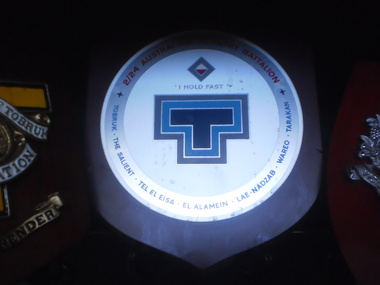 Wangaratta High School
2nd/24th Batallion Shield, 1945
... Presented with a 14 foot pennant the Battalion marched through the streets of Wangaratta on 27 September 1940 on the way to Bonegilla. Training continued in Bonegilla until the soldiers sailed on HMT Strathmore for the Middle East on 16 November. ...Presented with a 14 foot pennant the Battalion marched through the streets of Wangaratta on 27 September 1940 on the way to Bonegilla. Training continued in Bonegilla until the soldiers sailed on HMT Strathmore for the Middle East on 16 November. ...In July 1940 the 2/24th Battalion was formed. They set off from Caulfield for the still-being-built Bonegilla camp, stopping off at Wangaratta where they camped at the showgrounds. They were welcomed with open arms by the local community as they rapidly built up their numbers. The people of Wangaratta adopted the Battalion and they became known as ‘Wangaratta’s Own’. Presented with a 14 foot pennant the Battalion marched through the streets of Wangaratta on 27 September 1940 on the way to Bonegilla. Training continued in Bonegilla until the soldiers sailed on HMT Strathmore for the Middle East on 16 November. The Battalion was eventually attached to the 9th Australian Division, one of the most famous army fighting formations in World War 2. They served in Tobruk (1941) Tel el Eisa (1942), El Alemain (1942), New Guinea (1943) and Tarakan (1945).During the Tobruk siege the 9th Division was called the ‘The Rats of Tobruk’ by William Joyce, the German propagandist. The 2/24th Battalion suffered more casualties than any other 2nd AIF Battalion – 360 killed and 900 wounded. Brown lacquered wood shield with a silver metal 2/24 symbol on it.2/24 AUSTRALIAN INFANTRY BATALLION TOBRUK . THE SALIENT . TEL EL EISA . EL ALAMEIN . LAE . NADZAB . WAREO . TARAKAN I HOLD FAST -
 Federation University Historical Collection
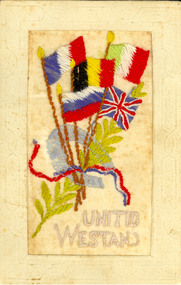
Postcard, 'United We Stand' World War One Souvenir Postcard, c1916
... Battalion. He was a Driver with the 4th D.A.C. The postcard is of "The Ascot" boys. Includes [Samuel] Gordon Spittle, Henry [Harry] Holmes's first cousin, and other Ascot lads and district connections: neighbours, Ascot State School classmates and football mates from Clunes / Creswick districts. (Research by Henry's grand-daughter, Jane Dyer nee Chatham) chatham chatham family collection holmes harry holmes henry holmes world war world war 1 world war i world war one. Verso: With best love from Harry 13/5/16 ...Postcard sent from the French theatre of war during World War One by Harry Holmes. HENRY SMERDON (Harry) HOLMES was born in 1897 at the family property, ’Sauchieburn’, 17 km north of Ballarat, in the Ascot district. He was the youngest of four children. After finishing his education at St Patrick’s College, Ballarat, Henry joined the Holmes family farming interests. At the age of 18 he enlisted and served with AIF in Egypt, France and Belgium 1915-1918. Henry served at the famous battlegrounds of Ypes and Somme in the Australian Army 8th Battalion. He was a Driver with the 4th D.A.C. The postcard is of "The Ascot" boys. Includes [Samuel] Gordon Spittle, Henry [Harry] Holmes's first cousin, and other Ascot lads and district connections: neighbours, Ascot State School classmates and football mates from Clunes / Creswick districts. (Research by Henry's grand-daughter, Jane Dyer nee Chatham) White postcard with embroidery on white silk. The embroidery includes 5 flags (England, France, Italy, Belgium, Russia), a blue horseshoe, a green sprig rosemary and the words 'United We Stand".Verso: With best love from Harry 13/5/16chatham, chatham family collection, holmes, harry holmes, henry holmes, world war, world war 1, world war i, world war one. -
 Federation University Historical Collection
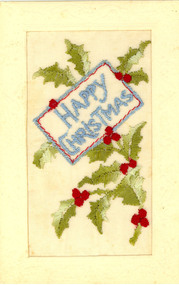
Postcard, World War One Souvenir Christmas Postcard, c1916
... Battalion. He was a Driver with the 4th D.A.C. The postcard is of "The Ascot" boys. Includes [Samuel] Gordon Spittle, Henry [Harry] Holmes's first cousin, and other Ascot lads and district connections: neighbours, Ascot State School classmates and football mates from Clunes / Creswick districts. (Research by Jane Dyer) chatham - holmes family archive chatham holmes harry holmes world war world war 1 world war one world war i france christmas Verso "All good wishes to all the dear ones at home for a happy Xmas and a bright New Year from Harry 11/11/16." ...Soldier Harry Holmes of Ascot, Victoria sent this postcard to his family while serving in the Australian Imperial Forces (AIF) in France. HENRY SMERDON (Harry) HOLMES was born in 1897 at the family property, ’Sauchieburn’, 17 km north of Ballarat, in the Ascot district. He was the youngest of four children. After finishing his education at St Patrick’s College, Ballarat, Henry joined the Holmes family farming interests. At the age of 18 he enlisted and served with AIF in Egypt, France and Belgium 1915-1918. Henry served at the famous battlegrounds of Ypes and Somme in the Australian Army 8th Battalion. He was a Driver with the 4th D.A.C. The postcard is of "The Ascot" boys. Includes [Samuel] Gordon Spittle, Henry [Harry] Holmes's first cousin, and other Ascot lads and district connections: neighbours, Ascot State School classmates and football mates from Clunes / Creswick districts. (Research by Jane Dyer) White Postcard with embroidery on white silk. The embroidery features green ivy leaves and red berries, and the words "Happy Christmas".Verso "All good wishes to all the dear ones at home for a happy Xmas and a bright New Year from Harry 11/11/16."chatham - holmes family archive, chatham, holmes, harry holmes, world war, world war 1, world war one, world war i, france, christmas -
 Mission to Seafarers Victoria
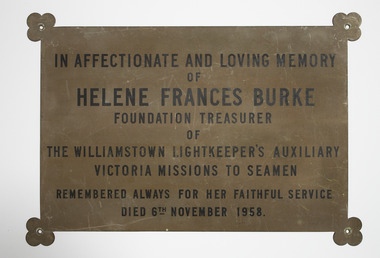
Plaque - Memorial Plaque, Helene Frances Burke
... Battalion, 2nd Brigade. He was made Acting Corporal for the duration of the voyage when the group left Melbourne on HMAT Demosthenes A64 on 16 July...Battalion, 2nd Brigade. He was made Acting Corporal for the duration of the voyage when the group left Melbourne on HMAT Demosthenes A64 on 16 July helene frances burke 1958 williamstown lightkeepers' auxiliary treasurer flagstaff maritime museum mrs p. burke mrs p.t. burke patrick thomas burke helene frances parkinson nee tickell helene frances burke nee tickell Commemorative Plaque for Helene Frances Burke Helene Frances Burke Plaque Memorial Plaque ...Helene Frances nee Tickell, daughter of William Tickell of Quarry Hill. She first married George Joshua Francis "Fred" Parkinson (27 January 1884 – 22 October 1913), a railway worker and AFL player. Fred died after a horrific railway accident leaving her with a three months old baby. She then married Patrick Thomas Burke in 1915. Patrick Burke was called up on 18 June, 1915, and placed in the 7th Reinforcements for the 8th Battalion, 2nd Brigade. He was made Acting Corporal for the duration of the voyage when the group left Melbourne on HMAT Demosthenes A64 on 16 JulyCommemorative Plaque for Helene Frances Burkehelene frances burke, 1958, williamstown, lightkeepers' auxiliary, treasurer, flagstaff maritime museum, mrs p. burke, mrs p.t. burke, patrick thomas burke, helene frances parkinson nee tickell, helene frances burke nee tickell -
 Red Cliffs Military Museum
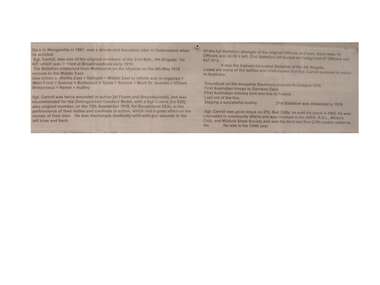
Document, Life history of Sgt. William Carroll, (estimated); early -mid 1990
... Of the full Battalion strength of the original Officers and men, there were 16 Officers and 24 Or's left. 21st Battalion left buried on foreign soil 47 Officers and 827 Or's. ...Of the full Battalion strength of the original Officers and men, there were 16 Officers and 24 Or's left. 21st Battalion left buried on foreign soil 47 Officers and 827 Or's. ...This short history is in a display of photos and a copy of a letter written home by Sgt Carroll to his Aunt.A brief written life history from birth to death of William Carroll service Number 815. As written by a member of Red Cliffs R.S.L. in consultation with the family.Born in Wangaratta in 1891, was a drover and boundary rider in Queensland when enlisted.Sgt. Carroll was one of the original members of the 21st Battalion, 6th Brigade, 1st AIF, which was formed at Broadmeadows early 1915. The battalion embarked from Melbourne on the Uylsses on the 8th May 1915 enroute to the Middle East. Saw action Middle East> Gallipoli>Middle East to reform and reorganise > Western Front> Somme> Bullecourt> Ypres> Somme> Mont St. Quentin> Villiers Bretonneux> Hamel Mutiny./ Sgt. Carroll was twice wounded in action (at Fluers and Broondseinde)and was recommended for the Distinguished Conduct Medal, with a Sgt Cozens (No 825 also original member, on the 15th September 1916, for exceptional zeal in the performance of their duties and coolness in action, which had a great affect on the moral of their mem. He was discharged medically unfit with gun wounds to his left knee and back. Of the full Battalion strength of the original Officers and men, there were 16 Officers and 24 Or's left. 21st Battalion left buried on foreign soil 47 Officers and 827 Or's. It was the highest decorated Battalion of the 6th Brigade. Listed are some of the Battles and Misfortunes that Sgt. Carrol survived to return to Australia. Torpedoed on the troop ship Southland enroute to Gallipoli 1915;/ First Australian troops to Garrison Cairo; First Australian Infantry Unit into line in France; Last out of the line; Staging a successful mutiny; 21st Battalion was disbanded in 1918. Sgt. Carroll was given block 276 Red Cliffs, he sold his block in 1982. He was interested in Community affairs and was involved in ADFA, RSL, Mildura Club, and Mildura Show Society and was the third last Red Cliffs Soldier Settler to die. He was in his 100th year.medal, distinguished, battalion, aif, 21st, 6th, brigade, 1st, mutiny, gallipoli, wangaratta, 1891, boundary, rider, ulysses, middle, east, western, front, conduct -
 Red Cliffs Military Museum
Letter, Letter from 815 Cpl William Carroll to his Aunt, 31/12/1916 (exact)
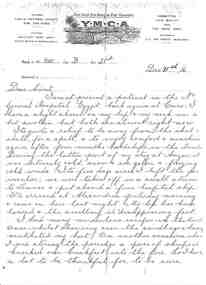
... battalion aif 815 sgt carroll e 21st 6th brigade 1st dcm wiiliam Top Left hand Corner: Patron/ YMCA National Council/ H.M. The King/ Patron /Military Camp Dept./ H.R.H. Duke of Connaught. Centre top: For God, For King & For Country/ YMCA Logo/ with the/ Mediterranean Expeditionary Force. (written through the logo)/ Right hand top corner: Committee/ for Egypt/and/the Near East./ Chairman/ H.E. Sir Henry McMahon Lower down page: Reply to No. 815 Coy D Bat 21st/ Dec 31st '16 ...This is part of a collection belonging to Sgt, William E. CarrollThis is a copy of a letter written by 815 Cpl William Carroll to his Aunt while he was hospitalised in Cairo. It is written on YMCA letterhead.Top Left hand Corner: Patron/ YMCA National Council/ H.M. The King/ Patron /Military Camp Dept./ H.R.H. Duke of Connaught. Centre top: For God, For King & For Country/ YMCA Logo/ with the/ Mediterranean Expeditionary Force. (written through the logo)/ Right hand top corner: Committee/ for Egypt/and/the Near East./ Chairman/ H.E. Sir Henry McMahon Lower down page: Reply to No. 815 Coy D Bat 21st/ Dec 31st '16/ Stationed at/ Dear Aunt,/ I am at present a patient in the (??)/ General Hospital, Egypt, back again at Cairo. I/have a slight abcess on my lip and my neck was a/ bit swollen, but both are almost right now./ It's quite a relief to be away from the shot &/ shell, for a spell & to enjoy comfort and sunshine/ again after four months hardships in the trenches./ During the latter part of my stay at ANZAC, it/ was intensely cold, snow & ice galore & freezing/ cold winds. It's five days since I left the pen/insular; we were taken off in a small steamer/ to Lemnos & put aboard a fine hospital ship./ We arrived at Alexandria yesterday morning/ & came on here last night. My lip has been/ lanced & the swelling is disappearing fast./ I had many miraculuous escapes in the trench./ Once whilst observing over the sandbags a barage/ ventilated my hat. On another occasion when/ I was stiring the porridge a piece of shrapnel/ knocked over our breakfast into the fire. So I have/ a lot to be thankful for to be sure./Many of my comrades have gone and are buried in the/ churchyard in Shrapnell gully & more are away sick/ and wounded. I intended to cable to you for some money but I think I'll be able to make do/ of it, & we have all our wants attended to here./ Do you remembr Willy O'Leary of Mansfield?- He/ was killed near us in an attack some time ago./ Young Sgt. Roberts, my chum of Dookie & Broadmeadows/ was also sniped a few days before I left./ The war doesn't appear to be going too well, but/ I am sure time will tell, & we will eventually/ give the Germans a good belting. Just address/ my letters as usual, as I don't think I'll be here/ for long & if I am my mates will send them/ on. I gave them permission to keep any parcel/ you might forward on whilst I am away. It was/ awfully good of you to send the other thing along./ Hoping all are quite well./ I am/ Your Affectionate Nephew/ William E. Carroll. Cpl/ww1, battalion, aif, 815, sgt, carroll, e, 21st, 6th, brigade, 1st, dcm, wiiliam -
 Australian Commando Association - Victoria
Book, The Private War of the Spotters: A history of the New Guinea Air Warning Wireless Company, February 1942-April 1945
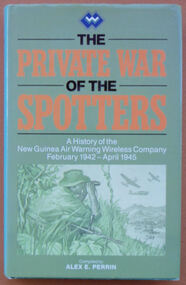
... Battalion, which was stationed at Port Moresby. Initial training was rudimentary, hasty, and was sometimes even carried out on en route to a new station. The first party of company personnel, or “spotters”, left Port Moresby as early as 1 February 1942, bound for the strategically important Samarai area, at the tip of Papua. In the first month of the company’s existence 16 ...The history of the New Guinea Air Warning Wireless Company. This reprinted version contains a map of the dispositions of Spotting Stations August 1943, additional MID awards listed and some additions to the nominal roll. The New Guinea Air Warning Wireless Company was formed in Port Moresby in late January 1942 and was granted “Separate Independent Establishment” status in October 1943. The company’s “founding father” was Major Don Small, who had witnessed Japanese air raids on Rabaul and realised that having lacked an effective early-warning system around New Britain meant that the defenders were taken by surprise. At the time, gaps had also appeared in the coast-watching communications network because the territory administration ordered the withdrawal of civilian wireless operators when Japan entered the war. The first influx of men into the company consisted largely of volunteers from the 39th Infantry Battalion, which was stationed at Port Moresby. Initial training was rudimentary, hasty, and was sometimes even carried out on en route to a new station. The first party of company personnel, or “spotters”, left Port Moresby as early as 1 February 1942, bound for the strategically important Samarai area, at the tip of Papua. In the first month of the company’s existence 16 spotter stations were established on the coast of Papua and in the mountains around Port Moresby. At the end of 1942 there were 61 operational stations being run by 180 men. The company’s high-water mark was in late 1944, by which time over 150 stations had been set up in Papua and New Guinea behind enemy lines. On 3 February 1942 the company issued its first air warning in Papua, when spotters at Tufi saw Japanese aircraft about to attack Port Moresby for the first time. The following month the company was responsible for the first Japanese killed in action in Papua by Australian ground forces, when spotters from Gona engaged the crew of a downed Japanese bomber. And in July 1942 the station at Buna signalled Port Moresby with news of the Japanese landings in Papua, marking the beginning of the Kokoda campaign. The dangers involved in the company’s work had also been made clear by this time. In July 1942 a party of spotters attempting to set up a station at Misima Island, off Milne Bay, was intercepted by a Japanese destroyer, resulting in the company’s first operational losses. Anticipating the direction of the campaign as a whole, the company’s focus moved north and north-west over the three years of its existence. In May 1942 a network was set up in the Wau area in association with the activities of Kanga Force. As part of the Wau network, spotter Ross Kirkwood audaciously constructed an observation post overlooking the Japanese airstrip at Salamaua. Kirkwood’s position was photographed by Damian Parer on the understanding that the pictures would not be published. They nevertheless appeared in a Sydney newspaper. The day after the publication of the photographs the observation post was attacked by the Japanese and Kirkwood was lucky to escape. In June 1944 the company’s headquarters were moved to Nadzab. By that time, spotter stations existed behind Japanese lines, as far north as Hollandia, and the company began to train Americans to perform similar work in the Philippines. In early 1945 the company moved to Balcombe, Victoria, where its members were posted to other units of the Australian Corps of Signals.gray plasticnon-fictionThe history of the New Guinea Air Warning Wireless Company. This reprinted version contains a map of the dispositions of Spotting Stations August 1943, additional MID awards listed and some additions to the nominal roll. The New Guinea Air Warning Wireless Company was formed in Port Moresby in late January 1942 and was granted “Separate Independent Establishment” status in October 1943. The company’s “founding father” was Major Don Small, who had witnessed Japanese air raids on Rabaul and realised that having lacked an effective early-warning system around New Britain meant that the defenders were taken by surprise. At the time, gaps had also appeared in the coast-watching communications network because the territory administration ordered the withdrawal of civilian wireless operators when Japan entered the war. The first influx of men into the company consisted largely of volunteers from the 39th Infantry Battalion, which was stationed at Port Moresby. Initial training was rudimentary, hasty, and was sometimes even carried out on en route to a new station. The first party of company personnel, or “spotters”, left Port Moresby as early as 1 February 1942, bound for the strategically important Samarai area, at the tip of Papua. In the first month of the company’s existence 16 spotter stations were established on the coast of Papua and in the mountains around Port Moresby. At the end of 1942 there were 61 operational stations being run by 180 men. The company’s high-water mark was in late 1944, by which time over 150 stations had been set up in Papua and New Guinea behind enemy lines. On 3 February 1942 the company issued its first air warning in Papua, when spotters at Tufi saw Japanese aircraft about to attack Port Moresby for the first time. The following month the company was responsible for the first Japanese killed in action in Papua by Australian ground forces, when spotters from Gona engaged the crew of a downed Japanese bomber. And in July 1942 the station at Buna signalled Port Moresby with news of the Japanese landings in Papua, marking the beginning of the Kokoda campaign. The dangers involved in the company’s work had also been made clear by this time. In July 1942 a party of spotters attempting to set up a station at Misima Island, off Milne Bay, was intercepted by a Japanese destroyer, resulting in the company’s first operational losses. Anticipating the direction of the campaign as a whole, the company’s focus moved north and north-west over the three years of its existence. In May 1942 a network was set up in the Wau area in association with the activities of Kanga Force. As part of the Wau network, spotter Ross Kirkwood audaciously constructed an observation post overlooking the Japanese airstrip at Salamaua. Kirkwood’s position was photographed by Damian Parer on the understanding that the pictures would not be published. They nevertheless appeared in a Sydney newspaper. The day after the publication of the photographs the observation post was attacked by the Japanese and Kirkwood was lucky to escape. In June 1944 the company’s headquarters were moved to Nadzab. By that time, spotter stations existed behind Japanese lines, as far north as Hollandia, and the company began to train Americans to perform similar work in the Philippines. In early 1945 the company moved to Balcombe, Victoria, where its members were posted to other units of the Australian Corps of Signals.world war ii, special operations, new guinea, new guinea air warning wireless company -
 Bendigo Military Museum
Memorabilia - CENTENARY of EAGLEHAWK ANZACS, FRAMED, Eaglehawk Heritage Society, NORMAN V LONG, C2014
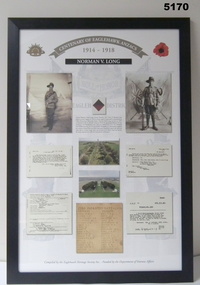
... PRIVATE NORMAN VERREL LONG , No 591, 23rd Battalion, Killed in Action, August 16, 1916 in France....PRIVATE NORMAN VERREL LONG , No 591, 23rd Battalion, Killed in Action, August 16, 1916 in France. Framed item ANZACS EAGLEHAWK NORMAN V. ...PRIVATE NORMAN VERREL LONG , No 591, 23rd Battalion, Killed in Action, August 16, 1916 in France.Memorabilia - framed story of a soldier, in colour, using memorabilia of the soldier and his life. Printed on paper. Frame - black extruded plastic, glass front, cardboard backing.NORMAN V. LONGframed item, anzacs, eaglehawk -
 Bendigo Military Museum
Memorabilia - CENTENARY of EAGLEHAWK ANZACS, FRAMED, Eaglehawk Heritage Society, FRANCIS N MOYLE, c2014
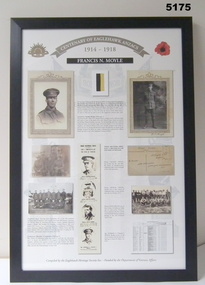
... Battalion RTA. Included in information - brothers-in-law to Francis N. Moyle; PRIVATE THOMAS ORTON - died of wounds 16 Sept PRIVATE ARTHUS ORTON PRIVATE LESLIE ORTON - 2nd Divisional Cycle Corps....Battalion RTA. Included in information - brothers-in-law to Francis N. Moyle; PRIVATE THOMAS ORTON - died of wounds 16 Sept PRIVATE ARTHUS ORTON PRIVATE LESLIE ORTON - 2nd Divisional Cycle Corps. ...PRIVATE FRANCIS NORMAN MOYLE. No 874, 29th Infantry Battalion RTA. Included in information - brothers-in-law to Francis N. Moyle; PRIVATE THOMAS ORTON - died of wounds 16 Sept PRIVATE ARTHUS ORTON PRIVATE LESLIE ORTON - 2nd Divisional Cycle Corps.Memorabilia - framed story of a soldier, in colour, using memorabilia of the soldier and his life. Printed on paper. Frame - Black extruded plastic, glass front, cardboard backing.FRANCIS N, MOYLE framed item, anzacs, eaglehawk -
 Bendigo Military Museum
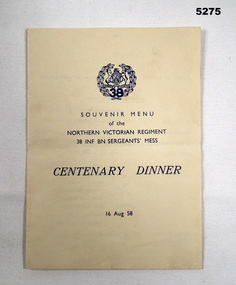
Document - MENU - 38 Bn. Centenary Dinner Sgt's Mess, Sgts Mess, 16 Aug 1958
... Battalion Militia Souvenir This is a single sheet of thick paper folded to make the menu. The front is printed in blue ink:- The 38 Bn badge is at the top: - The words "Souvenir Menu for the Northern Victorian Regiment, 38 Inf Bn Sergeants Mess - Centenary Dinner, 16 Aug 58". ...Refer to service of Harry Burrell MM, Refer Cat No 298.4 for his service details.This is a single sheet of thick paper folded to make the menu. The front is printed in blue ink:- The 38 Bn badge is at the top: - The words "Souvenir Menu for the Northern Victorian Regiment, 38 Inf Bn Sergeants Mess - Centenary Dinner, 16 Aug 58". Colour of the cardboard is an off white/Khaki colour.38th battalion, militia, souvenir -
 Bendigo Military Museum
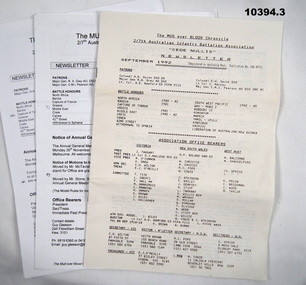
Newsletter - A.I.F. ASSOCIATION, 2/7th BATTALION, 2/7th Australian Infantry Battalion Association, "THE MUD OVER BLOOD Chronicle", 1992, 2012, 2015
... Battalion AIF 1. to 3. Newsletters - white colour paper, folded to A4 size with metal staples in it. 1. Black ink print illustrated black and white photographs. 1. September 1992 - 16 ...Newsletters issued to "HENRY TREVOR CLUTTERBUCK" 1st WW 7462, 2nd WW VX. From front page - "THE MUD over BLOOD Chronicle/ 2/7th Australian Infantry Battalion Association/ 'CEDE NULLIS' "1. to 3. Newsletters - white colour paper, folded to A4 size with metal staples in it. 1. Black ink print illustrated black and white photographs. 1. September 1992 - 16 pages. 2. October 2012 - 4 pages. 3. October 2015 - 4 pages.henry trevor clutterbuck, publications, newsletters, 2/7th battalion, aif
