
Showing 110 items matching "19th century artists"
-
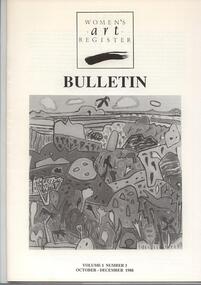 Women's Art Register
Women's Art Register Bulletin, Women's Art Register, Bulletin, 1988
... ...19th century artists...Meg Benwell Mary Leunig 19th century artists Another Planet Posters Bad Mothers Merrilee Kessler Sue Ferrari Ellis Rowan Kirsty Gorter Eileen Gray Sonja Delaunay Joan Mitchel Elizabeth Ney Dianne Beevers Bulletin Women's Art Register Bulletin Women's Art Register ...meg benwell, mary leunig, 19th century artists, another planet posters, bad mothers, merrilee kessler, sue ferrari, ellis rowan, kirsty gorter, eileen gray, sonja delaunay, joan mitchel, elizabeth ney, dianne beevers -
 Flagstaff Hill Maritime Museum and Village
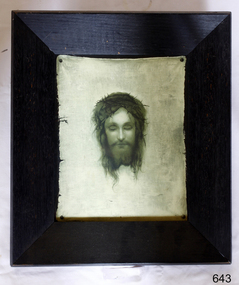
Print - Religious Print, Reinthal & Newman, Jesus Chrisus, ca 1906 - 1960s
... ...19th century artist...Print of an oil painting representing Jesus Christ, closed eyes, tear on cheek, with a crown of thorns, titled “Jesus Christus”, produced in 1874 by 19th-century artist Gabriel Cornelius von Max (GAB MAX). ...Print of an oil painting representing Jesus Christ, closed eyes, tear on cheek, with a crown of thorns, titled “Jesus Christus”, produced in 1874 by 19th-century artist Gabriel Cornelius von Max (GAB MAX). ...Print of an original oil painting created in 1874 (these numbers are in the top left corner) by artist Gabriel Max ("Gab Max" is in the top right corner) and reproduced by Kodak. The reproduction was likely made for the Mission to Seamen from the early 1906 to the 1960s to hang in its chapel. The publisher Reinthal & Newman, New York, was in business between 1906 and 1928. The company originally published postcards, but from 1920, it published prints of art from original works of famous and not-so-well-known artists. The published items were distributed by the House of Art, NY, which continued into the 1950s. The print was donated by the Williamstown Lightkeepers' Auxiliary to become part of the original furnishings of St Nicholas Seamen's Church, Williamstown, Victoria. The church was operated by the Mission to Seamen organisation. THE MISSIONS TO SEAMEN (Brief History): - The Missions to Seamen was an Anglican charity in Great Britain that has served the world's seafarers since 1856. Its symbol is a Flying Angel, inspired by a Bible verse. Today, there are centres in over 200 ports worldwide where seamen of all backgrounds are offered a warm welcome and provided with a wide range of facilities. In Victoria, the organisation began in Williamstown in 1857 as a Sailors’ Church, also known as ‘Bethel’ or the ‘Floating Church’ in an old hulk floating in Hobson’s Bay, Port of Melbourne. It soon became part of the Missions to Seamen, Victoria. In 2000, the organisation, now named Mission to Seafarers, still operated locally in Melbourne, Portland, Geelong and Hastings. The Ladies’ Harbour Lights Guild was formed in 1906 to support the Missions to Seamen in Melbourne and other centres, such as Williamstown. Two of the most significant ladies of the Guild were founder Ethel Augusta Godfrey and foundation member Alice Sibthorpe Tracy (who established a branch of the Guild in Warrnambool in 1920). The Guild continued its work until the 1960s. In 1943, a former Williamstown bank was purchased for the Missions to Seamen Club. The chapel was named St Nicholas’ Seamen’s Church and was supported by the Ladies’ Harbour Lights Guild, the Williamstown Lightkeepers’ Auxiliary and the League of Soldiers’ and Sailors’ Friends. It ceased operation in 1966. A Missions to Seamen Chapel and Recreation Room was a significant feature of ports during the late 1800s and 1900s. It seemed appropriate for Flagstaff Hill to include such a representation within the new Maritime Village, and the Melbourne Board of Management of Missions to Seamen Victoria gave its permission on 21st May 1979 for the entire furnishings of the Williamstown chapel to be transferred to Flagstaff Hill. The St Nicholas Seamen’s Church was officially opened on October 11, 1981, and resembles the Williamstown chapel. The print is significant because of its association with the Mission to Seamen in Williamstown, Victoria, and the Williamstown Lightkeepers' Auxiliary. This organisation had strong connections to the colonisation of Victoria by people travelling and arriving by sea. The picture is also significant as a representation of 19th-century religious art by Gabriel Cornelius von Max.Print of an oil painting representing Jesus Christ, closed eyes, tear on cheek, with a crown of thorns, titled “Jesus Christus”, produced in 1874 by 19th-century artist Gabriel Cornelius von Max (GAB MAX). Print on paper; black and grey drawing on beige canvas-look background with image of fixing pins in each corner, edges look like torn fabric. Published by Reinthal & Newman, New York. Print is behind glass, mounted in a heavy wooden frame that is painted dark brown. The reverse has numbers on a small white label. The base of the reverse has two small holes, each with indentations from something round. The backing board has indentations from nails no longer there. There are remnants of the original hanging wire, but this has been replaced. Part of the St Nicholas Seamen's Church Collection.FRONT: Top left :1874” Top right “GAB MAX” [Gabriel Cornelius von Max] Handwritten script under the picture “Jesus Christus”. Printed bottom left on front “A33 © REINTHAL & NEWMAN PUBS. N.Y.” REVERSE: “162” written in black felt pen on white label. Pencilled on reverse "11 3/8 x 9 1/4" and "Kodak" and other indecipherable markings.flagstaff hill, warrnambool, shipwrecked-coast, flagstaff-hill, flagstaff-hill-maritime-museum, maritime-museum, shipwreck-coast, flagstaff-hill-maritime-village, christian art, picture of jesus christ, jesus christus, photographic print of jesus christ, missions to seamen victoria, mission to seafarers, flying angel’s club, religious worship, reinthal & newman new york, jesus christ with crown of thorns, religion, religious service, sailors rest, bethel sailors’ church, bethel floating church, ladies harbour light guild, harbor lights guild, joy club for fighters, ladies lightkeepers’ auxiliary, st nicholas mission to seamen church williamstown, mission to seamen williamstown, st nicholas seamen’s church flagstaff hill, 139 nelson place williamstown, print, religious print, jesus christ, 1874, 19th century artist, gabriel cornelius von max, gab max, gabriel max, reinthal & newman, oil painting, st nicholas seamen's church, a33 © reinthal & newman pubs. n.y., kodak, house of art, williamstown lighthouse keepers' auxiliary, flagstaff hill maritime museum and village, maritime museum, maritime village, shipwreck coast, great ocean road, worship service, st nicholas seamen’s church, williamstown, st nicholas missions to seamen’s church williamstown, missions to seamen, st nicholas missions to seamen’s church flagstaff hill, anglican church, church furnishings, religious furnishings -
 Flagstaff Hill Maritime Museum and Village
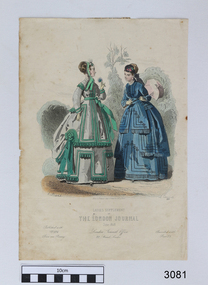
Journal, May 1868 - June 1877
... Preval”, a mid to late 19th century watercolour artist. Covers from 1871 have no signatures but have the word “COPYRIGHT” included in the printing. ...Preval”, a mid to late 19th century watercolour artist. Covers from 1871 have no signatures but have the word “COPYRIGHT” included in the printing. ...This Journal contains a wide variety of lifestyle subjects, showing an interest in in collection of ladies’ fashion covers, newspaper clippings and personal notes appear to have been gathered by a person with interests in fashion, poetry and the home. The covers dating up to 1870 have signatures such as “E. Preval”, a mid to late 19th century watercolour artist. Covers from 1871 have no signatures but have the word “COPYRIGHT” included in the printing. The name below the illustrations “Moine et Falconer” is a French fashion printer and publisher. The loose newspaper cuttings are dated from 1878 to 1927. Journal, comprising a collection of sixty (60) medium weight cartridge paper covers of the “Ladies’ Supplement of the London Journal” with a selection of newspaper clippings pasted to the back of all but two of the covers. The journal covers are dated between years 1868 – 1877. They each have a hand coloured engraving. Below some of the illustrations is a name and address (in French). Some of the covers have a portrait orientation and others are landscape. Some of the covers have a length of additional paper on the left/top with small print, as though there has been a magazine spine attached. The covers have printed dates and numbers, and some of the illustrations are numbered and have one or two signatures. On the reverse of the covers is a selection of newspaper cuttings, including poetry, Household Receipts (recipes, helpful hints on household matters, quotes, fashion, etc.) and personal notes, carefully cut to fit onto the pages. Hand written dates on some of these articles show that they are not all from the same date, and don’t necessarily correspond to the date of the cover. Some of these pages have been assembled upside down to the front cover. Also included are additional notes and loose newspaper cuttings from 1878 – 1927. Under some of the hand coloured engravings are the printed words “Moine et Falconer, imp. r. St Victor, go Paris” (or similar). There are also one or two signatures on the earlier engravings including “E. Preval”. Printed onto the Journal pages “Price one Penny”. Several of the pages have hand drawn lines and pencil script notes. Many of the newspaper cuttings have a date written in pencil on them. For example, “Stuffing Birds”.. The Ladies’ Supplements have been printed with number for “Published with No. –“, and a number for “Presented with Part -”. Some of the reverse pages have pencil notes beside them. flagstaff hill, warrnambool, shipwrecked coast, flagstaff hill maritime museum, maritime museum, shipwreck coast, flagstaff hill maritime village, great ocean road, ladies’ supplement of the london journal, the london journal, journal, 19th century, london journal office, moine et falconer, fashion print, ladies’ clothes, fashion plates, 19th century lifestyle, 19th century fashion, e proval -
 Warrnambool and District Historical Society Inc.
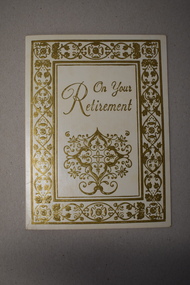
Card, Hallmark, On your retirement, 1968
... Bruce Morris (1903-1986) was the grandson of George Lance, well-known in Warrnambool in the 19th century as an artist, writer and musician who was deeply involved in the establishment of the Warrnambool Art Gallery. ...Bruce Morris (1903-1986) was the grandson of George Lance, well-known in Warrnambool in the 19th century as an artist, writer and musician who was deeply involved in the establishment of the Warrnambool Art Gallery. ...This card was presented to Bruce Morris on his retirement as editor of the Warrnambool Standard newspaper in 1968. The signatures on the card are those people who worked closely with him (the editorial staff?) on the newspaper. Bruce Morris (1903-1986) was the grandson of George Lance, well-known in Warrnambool in the 19th century as an artist, writer and musician who was deeply involved in the establishment of the Warrnambool Art Gallery. Bruce Morris was the staff training superintendent at Myer in Melbourne during the 30s and 40s. In 1946 he became the editor of the Warrnambool Standard and remained there until 1968. For 22 years he observed and recorded the events that affected the lives of the local people. He was noted for his historical articles (mostly with the initials BBM) and continued to write these articles for the Standard until the year he died. This card is of interest as a memento of Bruce Morris, one of Warrnambool’s important historians. This is a buff-colured card folded over to make a leaflet with a sheet of white paper folded over in the middle of the leaflet. The front cover has gold ornamentation and gold printing. There are a printing of a verse and eleven signatures in blue on the inside paper. ‘Ron Oakley, E. Fitzhenry, Eileen T, Horne, Don Burnett, Mac Jeffers, Peter Robertson, Terry Daffy, David Ferguson, Bruce Johnson, Ron Armstrong, Jim Ewing.’brue morris, warrnambool, warrnambool standard editors, history of warrnambool -
 City of Melbourne Libraries
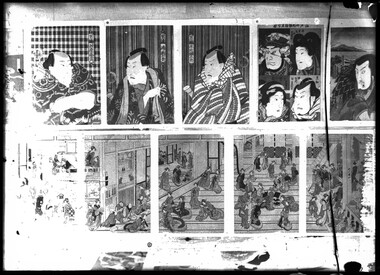
Photograph, Bull, Hugh Jones, 1897-1993, Japanese woodblock prints
... Woodblock printing in Japan is a technique best known for its use in the ukiyo-e artistic genre of single sheet images (although books were also created) which flourished from the 17th through 19th centuries. Its artists produced woodblock prints and paintings of such subjects as female beauties; kabuki actors and sumo wrestlers; scenes from history and folk tales; travel scenes and landscapes; flora and fauna, and erotica. ...Woodblock printing in Japan is a technique best known for its use in the ukiyo-e artistic genre of single sheet images (although books were also created) which flourished from the 17th through 19th centuries. Its artists produced woodblock prints and paintings of such subjects as female beauties; kabuki actors and sumo wrestlers; scenes from history and folk tales; travel scenes and landscapes; flora and fauna, and erotica. ...A DECK GALLERY FOR JAPANESE PRINTS. A unique exhibition of Japanese Prints was opened yesterday on Japanese ship Kamo Maru.These pictures are the property of the captain of the Kamo Maru Captain T. Takahata, and are displayed in a specially arranged gallery on the deck of the ship now berthed at No. 13 Victoria Dock. A picture on board yesterday after noon. (Inset) - One of many fine works by Utaguard Toyokuni who died in 1825. Photographer notations on slide: "B21" Published: 23 February 1934 Published title: A DECK GALLERY FOR JAPANESE PRINTS. Published caption: A unique exhibition of Japanese Prints was opened yesterday on Japanese ship Kamo Maru.These pictures are the property of the captain of the Kamo Maru Captain T. Takahata, and are displayed in a specially arranged gallery on the deck of the ship now berthed at No. 13 Victoria Dock. A picture on board yesterday after noon. (Inset) - One of many fine works by Utaguard Toyokuni who died in 1825. Trove article identifier: http://nla.gov.au/nla.news-article203376863 Description: Japanese woodblock prints, probably belonging to Captain Takahata of the Japanese passenger and cargo ship Kamo Maru, who displayed his Japanese Woodblock prints in a special on-board gallery when it visited Melbourne during 1933 and 1934. Research by project volunteer, Louise McKenzie: Plate MCK025 shows a number of Japanese woodblock prints. Three are of traditional “samurai” or Kabuki-style Japanese men in traditional dress and hairstyle; one is a composite of four different prints: two men and two women (samurai/geisha) in traditional dress. There are also several prints appearing to depict traditional scenes of indoor and outdoor life in Japan in the Edo period. An article appeared in The Age in February 1934, covering the visit to Melbourne of Captain T Takahata on the Japanese ship the Kamo Maru. An accompanying photo shows several women, in coats and hats, and a man, closely inspecting a gallery hang of Japanese woodblocks. Inset is a single image of a Kabuki theatre performer, a detail from the full photograph as shown in our slide. This work is attributed to Utagawa Toyokuni (1769-1823), who was mostly known for his prints relating to kabuki theatre and the actors’ dramatic postures. Japanese Kabuki theatre features heavily stylised performances, glamorous, highly decorated costumes and elaborate make-up worn by its performers. It was particularly popular in the Edo period (1615-1868), as was woodblock printing, after its earlier introduction from China around 150 years earlier. Woodblock printing in Japan is a technique best known for its use in the ukiyo-e artistic genre of single sheet images (although books were also created) which flourished from the 17th through 19th centuries. Its artists produced woodblock prints and paintings of such subjects as female beauties; kabuki actors and sumo wrestlers; scenes from history and folk tales; travel scenes and landscapes; flora and fauna, and erotica. The term ukiyo-e translates as 'picture[s] of the floating world'. This expression could be confusingly translated as meaning ‘a world of sorrow and grief’, 'erotic’ or ‘stylish’, and later came to describe the hedonistic spirit of the lower classes of the 17th century. Asai Ryōi celebrated this spirit in the novel Ukiyo Monogatari (Tales of the Floating World), c. 1661: “[L]iving only for the moment, savouring the moon, the snow, the cherry blossoms, and the maple leaves, singing songs, drinking sake, and diverting oneself just in floating, unconcerned by the prospect of imminent poverty, buoyant and carefree, like a gourd carried along with the river current: this is what we call ukiyo.” (Wikipedia: 'Ukiyo-e') Mass production of woodblocks during the Edo period was due to high literacy rates: 100% for samurai and 50-60% for farmers. Consequently, cheaper books were produced in large numbers. In the 18th century, Suzuki Harunobu established the technique of multicolor woodblock printing called nishiki-e and greatly developed Japanese woodblock printing culture such as ukiyo-e. Ukiyo-e influenced European Japonisme and Impressionism. Yoshitoshi was called the last great ukiyo-e master, and his cruel depictions and fantastic expressions influenced later Japanese literature and anime. However today the best known exponents from the period are probably Hokusai and Hiroshige.The price of one ukiyo-e at that time was about 20 mon, and the price of a bowl of soba noodles was 16 mon, so the price of one ukiyo-e was several hundred yen to 1000 yen in today's currency. 'Wikipedia: Ukiyo-e' states: “Japanese art, and particularly ukiyo-e prints, came to influence Western art from the time of the early Impressionists. Early painter-collectors incorporated Japanese themes and compositional techniques into their works as early as the 1860s: the patterned wallpapers and rugs in Manet's paintings were inspired by the patterned kimono found in ukiyo-e pictures, and Whistler focused his attention on ephemeral elements of nature as in ukiyo-e landscapes. Van Gogh was an avid collector, and painted copies in oil of prints by Hiroshige and Eisen. Degas and Cassatt depicted fleeting, everyday moments in Japanese-influenced compositions and perspectives. ukiyo-e's flat perspective and unmodulated colours were a particular influence on graphic designers and poster makers. Toulouse-Lautrec's lithographs displayed his interest not only in ukiyo-e's flat colours and outlined forms, but also in their subject matter: performers and prostitutes. He signed much of this work with his initials in a circle, imitating the seals on Japanese prints. Other artists of the time who drew influence from ukiyo-e include Monet, La Farge, Gauguin, and Les Nabis members such as Bonnard and Vuillard. French composer Claude Debussy drew inspiration for his music from the prints of Hokusai and Hiroshige, most prominently in La mer (1905). Imagist poets such as Amy Lowell and Ezra Pound found inspiration in ukiyo-e prints; Lowell published a book of poetry called Pictures of the Floating World (1919) on oriental themes or in an oriental style.” An awareness of and interest in this style of art seems to have been well established by the time Captain Takahata brought his sailing gallery to Australia in the 1930s. The Age article “Colour Prints from Japan” on 22 February 1934 p. 13, consists predominantly of a sophisticated curatorial assessment of the woodblock style and detailed artist and style information, which is remarkable for its in-depth analysis. The writer even draws attention to the existence of female woodprint artists. It has been difficult to verify those noted in this article, but worth drawing attention to the work produced by the daughter of Hokusai, Katsushika Oi, which is documented and has gained attention within Japan and elsewhere. Captain Takahata may have been quite the ambassador: adverts in Australian quarterly magazine, The Home, promoted regular cruises out of Melbourne and Sydney via Queensland, Thursday Island, Phillippines and Hong Kong to Japan at a cost of £90 for a round trip via Yokohama.(The Home, 1 August 1936, pages 76 and 79). It is reported in one of the many newspapers articles printed during 1933/1934 about Captain Takahata and his collection, that he inherited it, and it was not for sale even at an offered £10,000. However, one article makes mention of him scouring antique shops in rural Japan to add to the collection! And even enlisting the help of his children in the hunt. The collection totalled 11,000 prints and apparently 1,500 travelled with him when he sailed. These numbers do differ between reports, but his collection was undoubtedly large, and Captain Takahata enjoyed lecturing on the subject, explaining that each print was handmade. It took painstaking work over months to create the delicate colour tones, with a block being created for each colour used, and transferred onto specially prepared paper. Many of the designs are symbolic, and even those representing figures and scenes have a narrative basis, or represent traditional incidents in the life and history of Japan. (See Japanese Prints, The Sydney Morning Herald, 14 July 1934). In Brisbane in October 1934, The Courier Mail noted that Captain Takahata, now on the Yusen Kaisha steamer ‘Atsuta Mam’ (a sister ship to Kamo Maru) arrived with another 100 prints in his possession, and that he spent his spare time mounting and cataloguing his treasures. One of his new additions dated from 1787 and Captain Takahata “said that it was the only woodcut to depict eyelashes, and with the aid of a magnifying glass, he showed the extremely fine lines around the eyes of the three Japanese ladies on the print.” References: COLOR PRINTS FROM JAPAN. (1934, February 22). The Age (Melbourne, Vic. : 1854 - 1954), p. 13. Retrieved February 29, 2024, from http://nla.gov.au/nla.news-article20338088 A DECK GALLERY FOR JAPANESE PRINTS. (1934, February 23). The Age (Melbourne, Vic. : 1854 - 1954), p. 11. Retrieved February 29, 2024, from http://nla.gov.au/nla.news-article203376863 JAPANESE WOOD-CUTS. (1934, July 14). Daily Commercial News and Shipping List (Sydney, NSW : 1891 - 1954), p. 4. Retrieved February 29, 2024, from http://nla.gov.au/nla.news-article161150580 JAPANESE PRINTS. (1934, July 14). The Sydney Morning Herald (NSW : 1842 - 1954), p. 12. Retrieved February 29, 2024, from http://nla.gov.au/nla.news-article28024038 RARE WOOD-PRINTS FROM JAPAN (1934, July 16). The Herald (Melbourne, Vic. : 1861 - 1954), p. 20. Retrieved March 2, 2024, from http://nla.gov.au/nla.news-article243171208 JAPANESE WOODPRINTS. (1934, July 14). The Sydney Morning Herald (NSW : 1842 - 1954), p. 16. Retrieved March 2, 2024, from http://nla.gov.au/nla.news-article28023902 11,000 RARE WOODCUTS (1934, October 11). The Courier-Mail (Brisbane, Qld. : 1933 - 1954), p. 18. Retrieved March 2, 2024, from http://nla.gov.au/nla.news-article35647690 A DECK GALLERY FOR JAPANESE PRINTS. (1934, February 23). The Age (Melbourne, Vic. : 1854 - 1954), p. 11. Retrieved March 2, 2024, from http://nla.gov.au/nla.news-article203376863 RARE JAPANESE PRINTS (1934, July 11). The Courier-Mail (Brisbane, Qld. : 1933 - 1954), p. 10. Retrieved March 2, 2024, from http://nla.gov.au/nla.news-article36723139 Wikipedia: 'Ukiyo-e', https://en.wikipedia.org/wiki/Ukiyo-e Wikipedia: 'Woodblock printing in Japan', https://en.wikipedia.org/wiki/Woodblock_printing_in_Japan Wikipedia: 'Utagawa Toyokuni', https://en.wikipedia.org/wiki/Utagawa_Toyokuni Wikipedia: 'Kabuki', https://en.wikipedia.org/wiki/Kabuki 'Digital Humanities and Japanese History',https://dh.japanese-history.org/2020-spring-women-in-japanese-history/japanese-women-artists-of-the-edo-period/ '25 Famous Painters in Japanese Art', https://dh.japanese-history.org/2020-spring-women-in-japanese-history/japanese-women-artists-of-the-edo-period/ 'Nyk Kamo Maru', https://blog.shipwatcher.com/index.php/nyk-kamo-maru/ The Home : an Australian quarterly Retrieved March 4, 2024, from http://nla.gov.au/nla.obj-386036987 : Volume 17, No. 8, 1 August 1936.Photographer notations on slide: "B21".japan, prints, ships, art -
 Eltham District Historical Society Inc
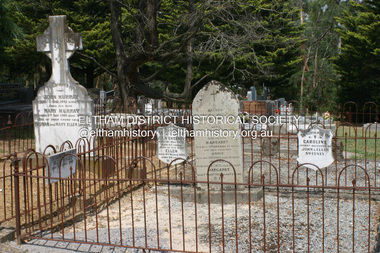
Photograph - Digital Photograph, Alan King, Graves of Thomas Sweeney and family, Eltham Cemetery, Victoria, 27 January 2008
... .; p55 From the piety and poverty of 19th century Eltham, 20th century artists and environmentalists, to today’s comfortable middle class, Eltham Cemetery records it all — and more. ....; p55 From the piety and poverty of 19th century Eltham, 20th century artists and environmentalists, to today’s comfortable middle class, Eltham Cemetery records it all — and more. ...The grave of Thomas Sweeney, former convict turned respectable citizen. The Murray and Sweeney families were both early settlers of the Eltham district and connected by marriage. Their family plots are located side by side in the Catholic section of the Eltham Cemetery. Irish-born Thomas Sweeney is regarded as the first settler in Eltham. He was transported to Sydney in 1823 after being convicted of arson. He was granted his freedom in 1838 and married Margaret Meehan in the same year. They moved to Melbourne and in 1842 Thomas purchased 110 acres beside the Yarra River in the vicinity of present-day Sweeneys Lane. He called the property ‘Culla Hill’ and built a small slab hut (reputedly with Wurundjeri help; Margaret is said to have run an informal hospital for them in return). This was followed in 1846 by more substantial buildings consisting of a three-roomed Irish-style ‘longhouse’ and a barn made of stone and handmade bricks, with doors large enough to accommodate a fully loaded wagon. When the gold rush came, Thomas prospered by selling meat and potatoes to the prospectors, enabling him to purchase a further 308 acres in 1856. He promoted the construction of a bridge over the Plenty River and the establishment of a school at Eltham. Roman Catholic Church services were held at Culla Hill in the early years. When he died in 1867, he was regarded as a respected member of the community. Thomas and Margaret are buried in Eltham Cemetery with many of their descendants. Their first son John continued to farm Culla Hill until his death in 1909. Culla Hill passed out of the Sweeneys' possession in 1939. The house and barn remain today, though lesser outbuildings have gone. The facade of the house is much the same as it was in the 1840s. Sacred To the memory of Thomas Sweeney Who died Sep 6th 1867 Aged 65 years May his soul res in peace Also his wife Margaret Died Oct 3rd 1884 aged 73 years And their daughters Annie Died Aug 22nd 1860 aged 21 years Johanna Died Aug 19th 1872 aged 22 years Margaret Died 7th Sep 1913 aged 72 years R.I.P. Also In Memory Of John Sweeney Died 24th May 1909 Aged 65 years Also of his wife Ellen Died 8th March 1910 Aged 64 years R.I.P Also In Memory Of Caroline Infant daughter of John & Ellen Sweeney Published: Nillumbik Now and Then / Marguerite Marshall 2008; photographs Alan King with Marguerite Marshall.; p55 From the piety and poverty of 19th century Eltham, 20th century artists and environmentalists, to today’s comfortable middle class, Eltham Cemetery records it all — and more. A visit to Eltham Cemetery reveals an important social record since its beginnings in 1858. The cemetery was situated on about six acres (2.4ha) (now around 4.8ha) at the corner of Mount Pleasant and Metery Roads.1* It is thought that Metery Road was originally called Cemetery Road, but in the early 1940s, a resident, possibly a councillor, objected to the name resulting in the change.2 Much can be gleaned about the developing Eltham community from burial styles and the names of former local residents. Originally the cemetery was divided into Christian denominations, like others of that time, following the United Kingdom burial system. In 1861 the cemetery included Church of England, Presbyterian, Roman Catholic and Wesleyans (later Methodist) sites. Graves also indicated social class. Some had grand tombstones, perhaps fenced with ornamental cast iron railing, but most in the 1860s and 1870s were constructed of modest stone slabs.3 This indicated the poverty of the district, which was largely inhabited by farmers on small landholdings. A poignant reminder of the high rates of infant mortality of those times, are the many infants and young children recorded on the headstones. Major changes occurred in the cemetery in the late 20th century as Christian adherence weakened and society became more egalitarian and informal. In the early 1970s a non-denominational lawn section for burials was established. Since then all new areas have been non-denominational to accommodate the more diverse local community. Now, instead of large ornamental headstones, some mourners have chosen boulders, reflecting the natural Eltham style, while others choose graves in the lawn areas or niches in walls. In the late 1970s, the University Donor Section was established north-west of Candlebark Lawn for those who donated their bodies for The University of Melbourne medical research. In the early 1980s the natural Australian garden style, popular in Eltham, was mirrored in a new section called Ashes Walk. Local landscape architect Gordon Ford, who had popularised this style, designed the Walk using boulders shaded by native plants beside curved pathways. Landscape architect Robert Boyle later redesigned Ashes Walk and developed other parts of the cemetery in keeping with this style.4 Appropriately Ford, who died in 1999, was interred in the Native Garden Section in a cluster of sites shaded by a large eucalyptus tree.5 By 2007, about 6400 interments were recorded in the Eltham Cemetery. Close inspection reveals notable names in the district’s history. The grave of Thomas Sweeney, a former convict who became a respected citizen, can be found in the Roman Catholic section near the path. Eltham Primary School’s first headmaster, David Clark, is buried in a modest grave in the Church of England section to the east of the path from the main entrance. Sir William Irvine, Victorian Premier from 1900 to 1902, whose grave is in the north-east Presbyterian section was at various times Victoria’s Chief Justice, Deputy Governor and Treasurer.6 Further south is the grave of social reformer Bertram Wainer, born in Scotland in 1928 and died in 1987. He campaigned to legalise abortion and exposed police corruption in allowing illegal ‘backyard’ abortions. Other prominent local residents interred in the cemetery include: Justus Jörgensen, who founded Montsalvat; Alistair Knox, the mud-brick housing pioneer and Eltham Shire Councillor from 1971 to 1975 and President in 1975; Clem and Nina Christensen, who had a major influence on the literary development of post World War Two Australia. Others were: composer Dorian Le Gallienne; artist Peter Glass; Stephen Dattner, a prominent Melbourne furrier; ALP parliamentarian for Greensborough, Pauline Toner and political scientist and commentator, Professor William Macmahon Ball.This collection of almost 130 photos about places and people within the Shire of Nillumbik, an urban and rural municipality in Melbourne's north, contributes to an understanding of the history of the Shire. Published in 2008 immediately prior to the Black Saturday bushfires of February 7, 2009, it documents sites that were impacted, and in some cases destroyed by the fires. It includes photographs taken especially for the publication, creating a unique time capsule representing the Shire in the early 21st century. It remains the most recent comprehenesive publication devoted to the Shire's history connecting local residents to the past. nillumbik now and then (marshall-king) collection, annie sweeney, caroline sweeney, ellen sweeney, eltham cemetery, graves, gravestones, johanna sweeney, john murray, john sweeney, margaret sweeney, mary ellen drain, mary murray, thomas murray, thomas sweeney -
 Flagstaff Hill Maritime Museum and Village
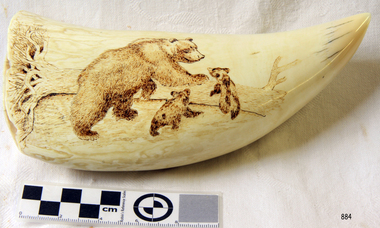
Craft - Scrimshaw
... Although scrimshaw is widely associated with nautical themes and designs of the 19th century whaling industry, vintage scrimshaw was also produced as tribal art in many cultures. Today, scrimshaw is recognized as a unique medium in which present-day artists have developed their own modern themes. ...Although scrimshaw is widely associated with nautical themes and designs of the 19th century whaling industry, vintage scrimshaw was also produced as tribal art in many cultures. Today, scrimshaw is recognized as a unique medium in which present-day artists have developed their own modern themes. ...When scrimshaw is mentioned, most people think of carving on sperm whale teeth only. But scrimshaw also includes engravings on skeletal whale bone–such as the jaw bone, called panbone–and ivory from other marine mammals such as walrus. Although scrimshaw is widely associated with nautical themes and designs of the 19th century whaling industry, vintage scrimshaw was also produced as tribal art in many cultures. Today, scrimshaw is recognized as a unique medium in which present-day artists have developed their own modern themes. Scrimshaw reproductions may take several forms. There are - New carvings on genuine ivory or bone with the deliberate intent to create an "antique” - New carvings on genuine ivory or bone sold as signed and dated contemporary art - Clearly marked synthetic museum reproductions and mass marketed - Unmarked synthetic replicas Painstakingly carved deliberate replicas are directed towards the scrimshaw collector and seldom appear in the general market. Pieces of contemporary art and museum copies are usually clearly marked and openly sold for what they are. The biggest problems in the general antiques market are the mass produced synthetic reproduction pieces, such as this item, that can be mistaken for the genuine item. The scrimshaw is a modern reproduction of a typical scrimshaw scene and engraved onto a synthetic substance. It has been created as a decorative piece and is currently displayed as a representation of the craft of scrimshaw.Scrimshaw carved on a non-natural material in the shape of a whale tooth. Engraving depicts a grizzly bear with two cubs next to a fallen tree. Nonewarrnambool, flagstaff-hill, flagstaff-hill-maritime-museum, maritime-museum, shipwreck-coast, flagstaff-hill-maritime-village, craft work, carving on bones, whale bone carving, engraving, scrimshaw, carving, reproduction scrimshaw -
 Flagstaff Hill Maritime Museum and Village
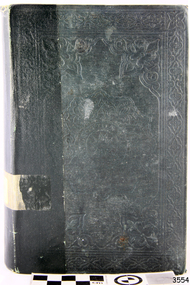
Book - Selection of Poetry, William James Linton, Poetry of America, 1878
... 19th century. He illustrated prominent periodicals and works by major writers, elevating wood engraving to a high fine art. He was also a passionate, radical democrat and Chartist reformer who used his printing presses to publish political pamphlets supporting European republican movements and freedom of the press. In 1867, disillusioned with British politics, he emigrated to the United States and bought a farmhouse in New Haven, Connecticut, naming it "Appledore" and setting up the famous private Appledore Press. Because of his dual status as a renowned English artist...19th century. He illustrated prominent periodicals and works by major writers, elevating wood engraving to a high fine art. He was also a passionate, radical democrat and Chartist reformer who used his printing presses to publish political pamphlets supporting European republican movements and freedom of the press. In 1867, disillusioned with British politics, he emigrated to the United States and bought a farmhouse in New Haven, Connecticut, naming it "Appledore" and setting up the famous private Appledore Press. Because of his dual status as a renowned English artist ...The full title is Poetry of America: Selections From One Hundred American Poets From 1776 to 1876. Compiled just after the US Centennial, it is an ambitious anthology celebrating a century of American poetic independence from Britain. It includes works by major literary figures like Ralph Waldo Emerson, Henry Wadsworth Longfellow, Edgar Allan Poe, and Oliver Wendell Holmes. Beyond mainstream poetry, the book features two highly distinctive additions: a comprehensive introductory review analyzing early American verse written before 1776, and a section dedicated to traditional African American songs and spirituals. This was one of the earliest instances of a major transatlantic anthology recognizing African American folk music as a vital pillar of American culture. This volume also features an iconic frontispiece portrait of Walt Whitman.Poetry of America Author: W.J.Linton Publisher: George Bell & Sons, York St Covent Garden, London Date: 1878fictionThe full title is Poetry of America: Selections From One Hundred American Poets From 1776 to 1876. Compiled just after the US Centennial, it is an ambitious anthology celebrating a century of American poetic independence from Britain. It includes works by major literary figures like Ralph Waldo Emerson, Henry Wadsworth Longfellow, Edgar Allan Poe, and Oliver Wendell Holmes. Beyond mainstream poetry, the book features two highly distinctive additions: a comprehensive introductory review analyzing early American verse written before 1776, and a section dedicated to traditional African American songs and spirituals. This was one of the earliest instances of a major transatlantic anthology recognizing African American folk music as a vital pillar of American culture. This volume also features an iconic frontispiece portrait of Walt Whitman.book, poetry of america, w.j.linton, shipwrecked-coast, flagstaff-hill, flagstaff-hill-maritime-museum, warrnambool, maritime-museum, shipwreck-coast, flagstaff-hill-maritime-village, shipwrecked-artefact, pattison collection, warrnambool library, warrnambool mechanics’ institute, ralph eric pattison, corangamite regional library service, warrnambool city librarian, mechanics’ institute library, victorian library board, warrnambool books and records, warrnambool children’s library, great ocean road, poetry -
 Flagstaff Hill Maritime Museum and Village
Print - Lithograph, sea rescue, R.N. Duffield, Australian cruiser “MELBOURNE” (Tons 5600) rescuing crew of sinking four-masted schooner “HELEN B. STERLING” of Halifax NS Canada, Tons 1343 in a gale in the Pacific Ocean, 19-11-1924
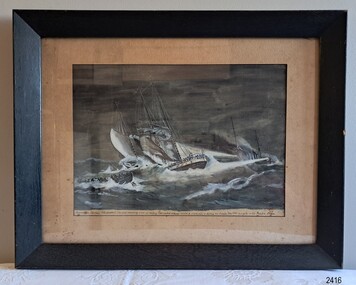
... This framed lithograph print in watercolour and gouache was produced on November 19th, 1924, by 20th-century marine artist, Mr R.N. Duffield. ...This framed lithograph print in watercolour and gouache was produced on November 19th, 1924, by 20th-century marine artist, Mr R.N. Duffield. ...This framed lithograph print in watercolour and gouache was produced on November 19th, 1924, by 20th-century marine artist, Mr R.N. Duffield. It depicts the event of a sea rescue that took place two years earlier. The framer was A.L. Frith of Footscray, Melbourne, who actively advertised from 1933 to 1935. The now disbanded Shiplovers' Society of Victoria (1930-2018) donated the print, and it seems likely that this print was framed for that organisation. This graphic image shows the conditions in which the rescue from the wrecked Helen B. Sterling happened. Captain George Harris was master of the American-owned, four-masted windjammer. His wife Edith and their ten-year-old son Leslie were on board, along with a crew of fifteen seamen. The ship set off from Newcastle, NSW, on January 5th, 1922, loaded with a cargo of coal to deliver to the Society Islands and on to San Francisco. Young Leslie later wrote a lively school composition for his teacher about his experiences on board the Helen B Sterling. He tells of a fire that broke out the day after they departed and burned a hole in a beam. Then another troublesome time on the 9th, when a strong gale blew a sail off the ship. Finally, he tells of the highlight of his voyage when, on the 18th January, the ship was right in the path of a strong cyclone, which broke the mainmast. Huge waves crashed over both sides of the deck, meeting in the middle, and the ship began to sink. The rescue from the wreck was an exciting time for the young boy, and even more so when one of his cats survived after being carefully wrapped in a pillowcase and thrown down from the ship for the boy. Reporters later wrote about Leslie’s comments, “... what had grieved him most was the thought that he might never see his two little sisters again”. Captain Harris said in a published statement, “… the gale was the worst he had met in his 12 years’ experience at sea. All went well for the first week. We then encountered a strong blow from the south-east. We tried the gasoline pump, but the engine broke down, and we had to do the pumping by hand. We at once shortened sail, but the sea increased in fury to such an extent that men were washed from the pumps. I was below at 5:30 on Sunday morning [January 22nd, 1922] when the main mast went over the side, … I at once sent out SOS signals, and got word that HMAS Melbourne was coming to our assistance. I had made a mistake with regard to our position, but did not know it until 11:30 o’clock, when I sent out the correct location. This was picked up by the Melbourne and I received the following reply: “We will reach you about 2 am. Keep a good heart. The Melbourne will do all she can.” Our ship was practically awash when we were taken off.” (Ref: the ‘Helen B. Sterling Disaster’, Maitland Weekly Mercury, NSW, 4-2-1922.) Officers from the Royal Australian Navy, Captain Henry J Feakes (later Rear-Admiral) and Commander Wilfrid Ward Hunt, were on board the light cruiser, HMAS Melbourne (1913-1928), when it left Sydney for New Zealand. After the SOS was received, the ship sped at full steam towards the sinking Helen B. Sterling. They found the vessel at about midnight and shone bright search lights on the distressed ship to illuminate the desperate scene. The Melbourne was unable to move close to the schooner, so sixteen seamen, including Commander Hunt, volunteered to man the Melbourne’s lifesaving 12-oared cutter. They rowed the sea boat with great urgency towards the victims of the sinking ship, keen to save lives no matter what the conditions. When the cutter was close to the Sterling, a line was secured between the Sterling and the cutter. The weary, waterlogged and anxious men on board could be rescued, one at a time, in the breeches buoy equipment, which looked like canvas shorts with a lifesaving ring in the waistband. The victims were hauled along the line and pulled aboard by many willing hands. All eighteen crew and passengers were saved, including Captain Harris and his family. The seamen of the Melbourne received a heroes’ welcome when they arrived in New Zealand. The grateful survivors were taken to Auckland, where they received the care and comfort they needed. Melbourne’s Lord Mayor, Cr. Swanston, on behalf of the citizens of Melbourne, formally recognised the heroic rescue efforts of the seamen of the HMAS Melbourne on March 2nd, 1922, at a special presentation. Two large flags, a White Ensign and an Australian “Jack" Flag, were presented to the Captain of HMAS Melbourne, and souvenirs were awarded to the sea boat’s crew and its Commander, Wilfred Ward Hunt. Commander Hunt was also presented with an original watercolour depicting the heroic rescue from the wreck of the Helen B. Sterling, painted just after the event by renowned marine artist Arthur V Gregory (1867-1957), and he received a silver cigarette case bearing the City’s coat of arms and the inscription, "To Commander Ward Hunt from the Citizens of Melbourne as a memento of the rescue of the crew of Helen B. Stirling by H.M.A.S. Melbourne, on 23.1.22". Both the painting and the cigarette case are now treasured items inherited by his grandson; a reminder of “… a very fine naval gentleman who believed in leading by example." R.N. DUFFIELD: - The Lithograph print in our collection by 20th-century English artist R.N. Duffield is dated Nov. 19, 1924. It is very similar to, and possibly created from, the original A V Gregory watercolour presented to Commander Hunt and dated 1922. Mr R.N. Duffield has art works in the Yarmouth Museums, Norfolk Museums Collection; “Orient Liner Otranto …,” and "Convoy of six ships at sea", both painted in watercolour and gouache during the 1940s. Some of his other works, also painted in watercolour and gouache, have been advertised for sale on Internet sites. Some details differ between the original A.V. Gregory and this Lithograph Print: - -the words on the bow on the original watercolour are “Helen B. Sterling, Blain”, which is in Washington, USA, where the Sterling Shipping Company was registered from around 1919; the words on the print are “Helen B. Sterling, Halifax, N S”, for Nova Scotia, Canada, which is the hometown of Sterling Shipping Company founder’s wife, Helen B Sterling. -The watercolour is coloured and has fine details; the print is monochrome - The A V Gregory signed the watercolour in 1922, on the lower left; the print is signed with the Lithographer’s name on the lower right; “R N Duffield, Nov. 19. 1924” ARTHUR VICTOR GREGORY (1867-1957): - A.V. Gregory is a renowned marine artist who worked in watercolour and gouache. He painted actively between 1899 and 1932, creating over 3o0 works. South Melbourne, Victoria, was where he lived and worked. This Lithograph print is significant in that it depicts the rescuing of the passengers and crew of the schooner “Helen B Stirling”. At the time this was a significant event that made most Australian and New Zealand papers because of the involvement of the Australian cruiser “Melbourne”. The image demonstrates the perilous conditions experienced by seafarers. It includes an example of the line and breeches buoy method used to save lives at sea from the 1860s and into the 20th century. It reflects a time in our history when sail and steam ships cruised the world’s seas together, the former trading with a cargo of coal from Newcastle, the latter defending our country in World War I. The print is part of Flagstaff Hill Maritime Museum’s Collection of maritime artworks that depict famous events, vessels and locations, showing the evolution of sea craft, and aiding the interpretation of our maritime history. The Lithograph print is behind glass in a black painted timber frame and mounted under a cream matte. The vivid image depicts a sea rescue in progress. The night scene is illuminated by a light beaming from a steamship, the Cruiser HMAS Melbourne. It reveals figures on the deck of a sinking sailing ship, the schooner Helen B. Sterling, as foaming waves roll across it. The stricken ship has a broken main mast, and a sail has been detached. A small figure is floating in the choppy sea, secured in a breeches buoy that is attached to a rescue line between a lifesaving cutter and the sailing ship. The crewmen in the cutter are ready to haul the shipwrecked victim aboard, while the figures on the foundering ‘Sterling’ watch them. The print’s paper-covered wooden backboard is attached to the frame with small tacks. A metal hanging wire is secured to two dissimilar eyelet screws. Inscriptions include text on the bow of the sinking vessel, a handwritten title below the picture, and a handwritten name in the print’s lower right corner. On the reverse are two oval, black ink stamps and a round cream label with printed text. The hand-painted print was reproduced from a lithograph, signed in the lower right, by R.N. Duffield of England, on November 19th, 1924. A Frith of Footscray, Melbourne framed it. Painted on the ship’s bow: “HELEN B. STERLING / HALIFAX N S” [Nova Scotia, Canada] Handwritten below the print: “AUSTRALIAN CRUISER “MEMBOURNE” (Tons 5600) rescuing crew of sinking four-masted schooner “HELEN B. STERLING” of Halifax NS Canada, Tons 1343 in a gale in the Pacific Ocean.” Handwritten on lower right: “R.N. DUFFIELD / Nov. 19. 1924” (underlined) On paper label: “Phone: / Footscray 398 [some of the text has torn off] / “A. FRITH / PICTURE FRAMER / Manufacturer / 17 Paisley Street / Footscray.“ On both oval stamps: “SHIPLOVERS SOCIETY OF VICTORIA / LIBRARY” flagstaff hill, flagstaff hill maritime museum and village, warrnambool, maritime museum, maritime village, great ocean road, shipwreck coast, lithograph, lithograph print, reproduction print, helen b. sterling, the sterling, american owned schooner, halifax, halifax n s, halifax nova scotia, nova scotia, halifax n s canada, schooner, windjammer, sailing ship, four-masted ship, captain george harris, george harris, edith harris, leslie harris, sterling shipping line, hmas melbourne, hmas melbourne (1), cruiser hmas melbourne, the melbourne, australian cruiser, captain henry j feakes, commander wilfred ward hunt, sinking ship, shipwreck, sea rescue, gale, cyclone, 1922 rescue, shipwreck rescue, breeches buoy, line rescue, rescue line, lifesaving, cutter, cutter melbourne, sea boat, lifesaving crew, 12-oar cutter, shipwreck victim, r.n. duffield, marine artist, nov. 19. 1924, 20th century artist, a frith, footscray picture framer, shiplovers’ society of victoria, shiplovers’ society library, watercolour, a v gregory, arthur victor gregory, melbourne artist, newcastle coal, newcastle nsw, society islands, san fracisco, aukland new zealand, school composition, ship’s cat, sos signal, lord mayor cr. swanston, heroes, cigarette case -
 Federation University Historical Collection
Book, Charles Auguste Albert Racinet, Polychromatic Ornament, 1877 (exact)
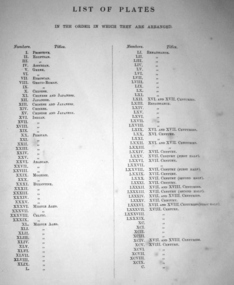
... 19th-century industrial draughtsmen, teachers of technical drawing and factory studio manager. He helped in spreading the most significant design of the decorative arts of the time. Racinet learned his trade from his father. He was trained by neo-classical artists...19th-century industrial draughtsmen, teachers of technical drawing and factory studio manager. He helped in spreading the most significant design of the decorative arts of the time. Racinet learned his trade from his father. He was trained by neo-classical artists ...Monsieur Charles Auguste Albert Racinet was born in Paris on July 20th, 1825. His job was representative of a group of 19th-century industrial draughtsmen, teachers of technical drawing and factory studio manager. He helped in spreading the most significant design of the decorative arts of the time. Racinet learned his trade from his father. He was trained by neo-classical artists in the ambit of Percier and Fontaine. August Racinet was influenced by the Schinkel tendency and supported by architects such as Hittorf and Voillet-le-Duc.Book. Large red leather cover. Title written in gold on spine. Illustrations (black & white), 100 of chromolithographic plates in gold, silver and colours. Various styles of ancient, oriental and medieval art including the Renaissance, the 17th, and the 18th centuries. Subjects are arranged in historical order. Text translated from the original French. The book includes a table of contents, a list of plates, a classified index and an introduction.A book plate inside front cover with a heading "Ballarat School of Art Library No. R/171. Stamped with "Reference","Education Department" and "Ballarat School of Art Library"art, paintings, textile, designs, decoration and craft, ornaments, ballarat technical art school library, bookplate -
 Flagstaff Hill Maritime Museum and Village
Book - Anthology of Biographical sketches, James Mason ( Compiler & Editior), The Great Triumphs of Great Men, 1879
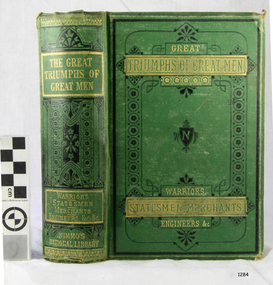
... The work highlights various individuals categorised as warriors and statesmen (such as Alfred the Great, King Canute, Oliver Cromwell, and the Duke of Wellington), engineers, artists, and inventors (like Sir Christopher Wren and Thomas Gainsborough), as well as merchants, poets, and philosophers. The overarching theme is typical of the 19th-century "self-help" movement that was popularised by Samuel Smiles, using the determination, moral character, and triumphs of great men as an inspirational road map for the reader. ...The Great Triumphs of Great Men is an interesting window into the Victorian era of popular history and educational publishing. The work was compiled and edited by James Mason. Rather than a single narrative, it is an anthology of biographical sketches outlining the lives, struggles, and achievements of historic figures. The work highlights various individuals categorised as warriors and statesmen (such as Alfred the Great, King Canute, Oliver Cromwell, and the Duke of Wellington), engineers, artists, and inventors (like Sir Christopher Wren and Thomas Gainsborough), as well as merchants, poets, and philosophers. The overarching theme is typical of the 19th-century "self-help" movement that was popularised by Samuel Smiles, using the determination, moral character, and triumphs of great men as an inspirational road map for the reader.Hard cover book,The Great Triumphs of Great Men. Author: Editor & Compiler, James Mason. Publisher: William P Nimmo, Edinburgh, Scotland. Date: 1879 Green premium leather hardcover with lettering in gilt highly decorated spine and front cover. The spine has no Library label, flyleaf has a reference number top right hand corner .non-fictionThe Great Triumphs of Great Men is an interesting window into the Victorian era of popular history and educational publishing. The work was compiled and edited by James Mason. Rather than a single narrative, it is an anthology of biographical sketches outlining the lives, struggles, and achievements of historic figures. The work highlights various individuals categorised as warriors and statesmen (such as Alfred the Great, King Canute, Oliver Cromwell, and the Duke of Wellington), engineers, artists, and inventors (like Sir Christopher Wren and Thomas Gainsborough), as well as merchants, poets, and philosophers. The overarching theme is typical of the 19th-century "self-help" movement that was popularised by Samuel Smiles, using the determination, moral character, and triumphs of great men as an inspirational road map for the reader.flagstaff hill, warrnambool, shipwrecked-coast, flagstaff-hill, flagstaff-hill-maritime-museum, maritime-museum, shipwreck-coast, flagstaff-hill-maritime-village -
 Flagstaff Hill Maritime Museum and Village
Painting - Maritime painting, ca. 19th century
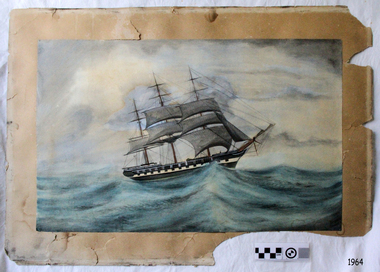
... artist is unknown. The ship in this painting is unidentified. Painting is an example of 19th century artwork. ...This maritime painting is unsigned and the artist is unknown. The ship in this painting is unidentified.Painting is an example of 19th century artwork.Painting, rectangular, watercolour mounted on card. Maritime theme depicts a three-masted ship at sea, sails rigged, bow facing right, hull is black and white. Figures are onboard.flagstaff hill maritime museum & village, maritime museum, maritime village, flagstaff hill, warrnambool, painting, 19th century, ship at sea, seascape, wall decoration, maritime painting -
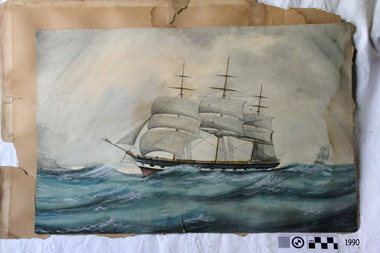 Flagstaff Hill Maritime Museum and Village
Painting - Maritime painting
... artist is unknown. The ship in this painting is unidentified. Painting is an example of 19th century artwork. ...Artist is unknown. This maritime painting is unsigned and the artist is unknown. The ship in this painting is unidentified.Painting is an example of 19th century artwork. Painting, rectangular watercolour, mounted on card. Maritime pointing depicts a three-masted ship at sea, sails rigged, bow facing left, hull is black, white and red. Second sailing ship on right in background. flagstaff hill maritime museum & village, maritime museum, flagstaff hill, warrnamool, painting, 19th century, ship at sea, seascape, wall decoration, maritime painting -
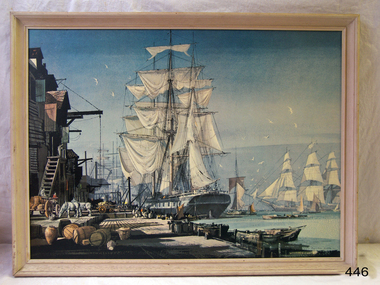 Flagstaff Hill Maritime Museum and Village
print - Picture of Sailing Ship, Rowland Hilder 1905 -1993, 20th Century
... 19th century which saw the development of the steam engine, and more recently, the diesel engine. Sailing ships slowly declined in use and number until now, most sailing ships are used for recreational purposes. This picture shows the widespread use of sail for trading purposes. flagstaff hill warrnambool shipwrecked-coast flagstaff-hill flagstaff-hill-maritime-museum maritime-museum shipwreck-coast flagstaff-hill-maritime-village maritime painting by Rowland Hilder painting of sailing ship None Picture of a sailing ship at a wharf with other ships in the background, by artist Rowland Hilder. ...The use of sails to propel a ship along its course dates back at least to 3000 BC., to the Egyptians who used sails to move their vessels up and down the Nile. Sailing ships then developed with the Greeks, Romans, Phoenicians, Vikings and other cultures. Their use was widespread until the 19th century which saw the development of the steam engine, and more recently, the diesel engine. Sailing ships slowly declined in use and number until now, most sailing ships are used for recreational purposes.This picture shows the widespread use of sail for trading purposes.Picture of a sailing ship at a wharf with other ships in the background, by artist Rowland Hilder. Natural wood frame.Noneflagstaff hill, warrnambool, shipwrecked-coast, flagstaff-hill, flagstaff-hill-maritime-museum, maritime-museum, shipwreck-coast, flagstaff-hill-maritime-village, maritime painting by rowland hilder, painting of sailing ship -
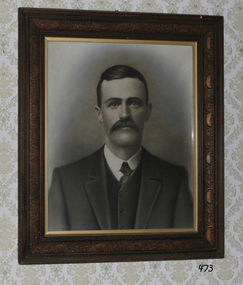 Flagstaff Hill Maritime Museum and Village
Photograph - Portrait, pre 1915
... artist. He worked as a labourer around the district, including at a local quarry. He passed away at only 37 years of age, leaving his wife, Mary, with three children aged 13 to 4 years. One of the children was Thomas Allen Wicking (1907-1995). He passed away on December 13, 1915, aged 37, and was buried in the Warrnambool Cemetery, southwest Victoria. The photograph is a historical record of Frank Wiking, a locally born quarry worker. He was born in the mid-19th century ...Mr Frank Wicking (1877-1915): Frank Wicking was born on July 19, 1877, at Garvoc, western Victoria, the sixth child of Thomas and Emma Wicking's ten children. Frank loved the outdoors and was a beekeeper, gardener and sketch artist. He worked as a labourer around the district, including at a local quarry. He passed away at only 37 years of age, leaving his wife, Mary, with three children aged 13 to 4 years. One of the children was Thomas Allen Wicking (1907-1995). He passed away on December 13, 1915, aged 37, and was buried in the Warrnambool Cemetery, southwest Victoria. The photograph is a historical record of Frank Wiking, a locally born quarry worker. He was born in the mid-19th century, to pioneers Thomas and Emma Wicking, and father of local historian, Tom Wicking.Photograph of a male adult, mounted behind glass, in a wooden frame with a carved, decorative border featuring trees, and a gold coloured inner border. The subject is Mr Frank Wicking (1877-1915).flagstaff hill, flagstaff hill maritime museum and village, warrnambool, maritime museum, maritime village, great ocean road, shipwreck coast, historic photograph, frank wicking, tom wicking, quarry worker, thomas allen wicking, thomas wicking, emma wicking, mary wicking, garvoc, victorian pioneer, beekeeper, sketch artist, gardener -
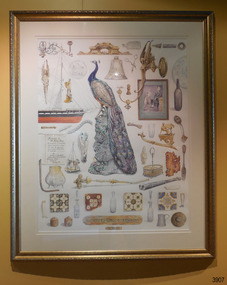 Flagstaff Hill Maritime Museum and Village
Artwork, other - Framed poster, Tim Walker, Loch Ard Shipwreck, circa 2010
... 19th century ships that travelled across the world full of people and cargo that are now part of our history. The work was commissioned especially for Flagstaff Hill and highlights the famous story of the 1878 ‘Loch Ard’ shipwreck. The images also include two small items from the 1981 ‘Fiji’ shipwreck. Local professional artist...artists’ supplies, porcelain, furniture, china and candles. This artwork has historical significance as it shows a small sample of the variety of items on board the late 19th century ships bound for Australia in the Colonial and late God Rush period. ...Tim Walker’s work is an eye-catching array of shipwreck artefacts and associated items. They help tell the story of the 19th century ships that travelled across the world full of people and cargo that are now part of our history. The work was commissioned especially for Flagstaff Hill and highlights the famous story of the 1878 ‘Loch Ard’ shipwreck. The images also include two small items from the 1981 ‘Fiji’ shipwreck. Local professional artist Timothy “Tim” Walker was born in Britain in 1970. He was self-taught had the desire to use his talents for full-time work. He specialised in painting local scenes, landscape and people of Warrnambool and district after he moved there in 1990. As he worked at the location of his subjects, people often told him interesting and amusing stories. He soon became involved in the Warrnambool and District Artists’ Society, where he has served for a period as President. In 2010 Warrnambool Art Gallery hosted an exhibition “Nine Lives” with works from nine local artists including Tim Walker. The ‘LOCH ARD’ 1873-1878 - brief history The clipper ship ‘Loch Ard’ was a built in Scotland in 1873. In 1978 the ship was sailing to Melbourne with 54 people on board as well as a mixed cargo of items, some of which were bound for the 1880 International Exhibition in Melbourne. On June 1st 1878 it was very close to its destination when it crashed into Mutton Bird Island, east of Port Campbell. Only two people survived. The wreck was re-discovered in 1967, almost a century later, and the site continues to provide evidence of the range of goods imported into the Colony of Victoria in the post-Gold Rush era. Flagstaff Hill divers in the 1970s reported finds of “Bottles of champagne, window panes, rolls of zinc, barrels of cement, iron rails, clocks, lead shot, corrugated iron, lead, marble, salad oil bottles, ink bottles, copper wire, gin bottles, rolls of carpet, floor tiles, copper rivets, gas light fittings, pocket knives, toys, crystal chandeliers, beer mugs, cutlery, candles sticks, wick scissors, cow bells, and sauce bottles.” The famous Loch Ard Peacock was also on board. The ‘FIJI’ 1875-1891 – brief history The barque ‘Fiji’ was built in Ireland in 1875. The sailing ship left Hamburg in May 1891, bound for Melbourne with a crew of twenty-five plus the captain. The ‘Fiji’ had almost reached her destination after a trip of 100 days at sea when, on September 5th 1891, she struck rock 300 metres from the shore at Moonlight Head, near Cape Otway. Eleven men lost their lives but with the help of locals including members of the Rocket Rescue Crew, the rest of the men were saved. In anticipation of Christmas, the cargo had included a wide variety of children’s toys, amongst which were dolls with china limbs, wooden rocking horses, miniature ships, and red and white rubber balls. There were also cases of dynamite, pig iron, steel goods, spirits, sailcloth, tobacco, fencing wire, concrete, 400 German pianos, concertinas and other musical instruments, artists’ supplies, porcelain, furniture, china and candles. This artwork has historical significance as it shows a small sample of the variety of items on board the late 19th century ships bound for Australia in the Colonial and late God Rush period. The cargo contained personal luggage, items intended as gifts, and goods ordered for domestic, commercial or industrial use. The wreck sites of both vessels, ‘Loch Ard’ and ‘Fiji’ are classified on the Victorian Heritage Register as significant and are now protected by government law. The sites are popular with divers and provide interpretive material regarding social and maritime history. Framed poster of a watercolour painting by Tim Walker, gilt frame, behind glass. Subject is a group of objects, most of which are connected with the 1878 shipwreck Loch Ard, such as items recovered from the shipwreck and the famous ‘Loch Ard Peacock’. Two items are from the wreck of the ‘Fiji’. Inscriptions on ingot, a handwritten letter, bell, clear bottle, and small plaque.On ingot: “PONTIFEX & WOOD. LONDON”. On letter: “Presented to Mr. Thomas Pearce”. On small ingot: “TIM WALKER”. On bell: “LOCH ARD”. On clear bottle “THE SINGER MANUFACTURING COMPANY“. On plaque: TIM WALKER”.warrnambool, flagstaff hill maritime museum, maritime museum, shipwreck coast, flagstaff hill maritime village, great ocean road, flagstaff hill, loch ard, fiji, watercolour, timothy walker, tim walker, warrnambool & district artists’ society, warrnambool art gallery, poster, henna street picture framers, cargo, print -
 Flagstaff Hill Maritime Museum and Village
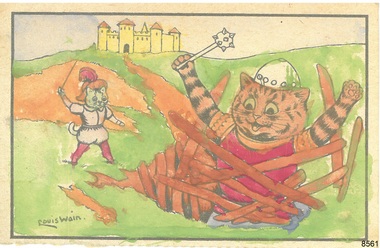
Postcard - Picture Postcard, Louis Wain (illustrator / artist), 1880s to 1930s
... This picture postcard is an example of the work of Louis Wain, English artist of the 19th and early 20th century. He is famous for his drawings of cats, which he continued producing throughout his life. ...The picture postcard is illustrated in a simple, child-like manner. It has a personal message on the back, perhaps sent by an adult called Lily to a young relative or friend. Its rough edges indicate that it may have been torn out of a book or from a sheet of cards. It is one of the hundreds of illustrations by artist Louis Wain, quoted as being "one of the most popular commercial illustrators in the history of England" (IllustrationChronicles.com). English artist Louis Wain (1860-1939) was famous for his illustrations of cats, many of which he gave human characteristics and personalities. Wain married Emily. They owned a cat called Peter who was a great comfort to Emily through her cancer illness and consequent death after only a few years of marriage. At 22 years old Wain gave up his job as a teacher to work full time as an illustrator. He was able to produce hundreds of drawing a year for journals, books, postcards and advertisements. Later he wrote and illustrated children's books. However he didn't benefit much from copyrighting his work as he sold his work to publishers together with the copyright, so reproductions of his works didn't earn him money. Wain said that he owned his career as a cat artist to Peter. Wain spent over a decade in mental asylums before his death in 1939.This picture postcard is an example of the work of Louis Wain, English artist of the 19th and early 20th century. He is famous for his drawings of cats, which he continued producing throughout his life. He is also known for producing the world's first screen cartoon cat, called "Pussyfoot". In 1972 Wain's work was presented at an exhibition in the Victorian and Albert Museum.Rectangular picture postcard printed on think cream card. Picture on postcard is outlined in black and coloured in roughly painted watercolours. The drawing has two cats dressed in armour standing and fighting in front of a turreted castle. The picture is a black framed outline. The artist's printed signature is in the bottom left corner. The artist is Louis Wain. The reverse has a vertical dividing line and a square outline for a postage stamp's location. It also has printed headings. There is a handwritten Pencil inscription. The postcard's left side and lower edge have rough uneven edges.Signature: "Louis Wain." Printed headings: "POST CARD" "THIS SPACE MAY BE USED FOR COMMUNICATION" "THE ADDRESS TO BE WRITTEN HERE" Handwritten on back: "To Dr R - - - - - - / with love / from Lilly"flagstaff hill maritime museum and village, warrnambool, great ocean road, shipwreck coast, postcard, picture postcard, louis wain, fighting cats, child's postcard, cat artist, animal portraits, national cat club, fencing, illustrator, children's books, children's author, children's illustrator, watercolour, cats dressed as humans, cats dressed as knights, popular art, victorian art -
 Flagstaff Hill Maritime Museum and Village
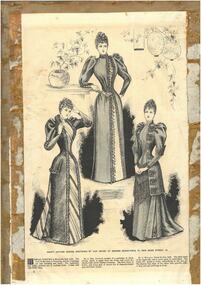
Newspaper - Newspaper page, The Lady's Newspaper and Court Chronicle, Fashion page, The Queen, The Lady's Newspaper, 1891
... 19th century. Flagstaff Hill Maritime Museum and Village Great Ocean Road Shipwreck Coast The Queen The Lady's Newspaper Fashion drawing Messrs redmayne 1891 A rectangular hardboard with a page from a newspaper atatched to one side of it, and a very small one line cut out from a newspaper glued to the other side. There are marks from sticky tape and old paper around the page. The page is of 3 fashion design drawings, titled Smart Autumn Gowns, sketched by our artist ...The Queen: The Ladies Newspaper and Court Chronicle or simply The Queen was a magazine created in 1864 in London. The title became "Queen in the 1950s, then "Harpers and Queen" in the UK and then part of the British Harper's Bazaar. In 1861 Samuel Orchart Beeton ("Mrs Beeton"'s husband) had founded a paper named "The Queen" about fashion and culture for upper class women of society. Edward William Cox bought the title the following year and at the same time he bought the Queen's rival that was named "The Ladies' Paper". He merged the two publications into "The Queen: The Ladies Newspaper and Court Chronicle" in 1864. The Queen, The Lady's newspaper was delivered to Australia from UK during colonial times. The fashion page shows designs of dresses that were worn in late 19th century.A rectangular hardboard with a page from a newspaper atatched to one side of it, and a very small one line cut out from a newspaper glued to the other side. There are marks from sticky tape and old paper around the page. The page is of 3 fashion design drawings, titled Smart Autumn Gowns, sketched by our artist at Messrs Redmayne's, 19 , new bond street, w. flagstaff hill maritime museum and village, great ocean road, shipwreck coast, the queen, the lady's newspaper, fashion drawing, messrs redmayne, 1891 -
 Flagstaff Hill Maritime Museum and Village
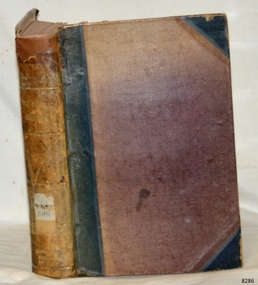
Book - Literary Work, John Bunyan, The Pilgrims Progress, 1850
... 19th-century London publisher based out of Ivy Lane and Paternoster Row. He established himself in the "numbers trade", a publishing strategy where massive, high-end works were released in affordable, sequential pamphlets via subscription. Virtue was legendary for his commitment to visual excellence; he hired top-tier artists...19th-century London publisher based out of Ivy Lane and Paternoster Row. He established himself in the "numbers trade", a publishing strategy where massive, high-end works were released in affordable, sequential pamphlets via subscription. Virtue was legendary for his commitment to visual excellence; he hired top-tier artists ...Written in 1678, The Pilgrim's Progress is a deeply influential Christian allegory that tracks the spiritual journey of a man named Christian. Weighed down by a crushing burden on his back (representing his sins), Christian flees his home in the "City of Destruction", after reading a holy book. Guided by the evangelist Evangelist, he embarks on a perilous trek toward the Celestial City (Heaven). Along the way, his journey brings him face-to-face with a cast of characters who personify spiritual triumphs and trials, such as Faithful, Hopeful, Mr Worldly Wiseman, and Giant Despair. He must navigate legendary, treacherous obstacles like the Slough of Despond, the temptations of Vanity Fair, and a terrifying battle with the demon Apollyon. The narrative is structured as a dream sequence experienced by the narrator. Because the second half follows Christian's wife, Christiana, and their children on the same path, it functions as both an adventure tale and a road map for the Puritan concept of salvation. It should be noted that the 1850 George Virtue printing is a classic example of a mid-Victorian luxury reprint. It is highly notable because it was curated by the popular non-conformist minister and author Rev. Robert Philip.The Pilgrims Progress Author: John Bunyan Curated By: Rev. Robert Philip Publisher: George Virtue Date: 1850 Further Information: Red hardcover with a red spine and reinforced corners, lettering in gilt. The spine has a Library label with an inscription.fictionWritten in 1678, The Pilgrim's Progress is a deeply influential Christian allegory that tracks the spiritual journey of a man named Christian. Weighed down by a crushing burden on his back (representing his sins), Christian flees his home in the "City of Destruction", after reading a holy book. Guided by the evangelist Evangelist, he embarks on a perilous trek toward the Celestial City (Heaven). Along the way, his journey brings him face-to-face with a cast of characters who personify spiritual triumphs and trials, such as Faithful, Hopeful, Mr Worldly Wiseman, and Giant Despair. He must navigate legendary, treacherous obstacles like the Slough of Despond, the temptations of Vanity Fair, and a terrifying battle with the demon Apollyon. The narrative is structured as a dream sequence experienced by the narrator. Because the second half follows Christian's wife, Christiana, and their children on the same path, it functions as both an adventure tale and a road map for the Puritan concept of salvation. It should be noted that the 1850 George Virtue printing is a classic example of a mid-Victorian luxury reprint. It is highly notable because it was curated by the popular non-conformist minister and author Rev. Robert Philip. flagstaff hill, warrnambool, shipwrecked coast, flagstaff hill maritime museum, maritime museum, shipwreck coast, flagstaff hill maritime village, great ocean road, book, pattison collection, warrnambool library, warrnambool mechanics’ institute, ralph eric pattison, corangamite regional library service, warrnambool city librarian, mechanics’ institute library, victorian library board, warrnambool books and records, warrnambool children’s library, the pilgrims progress, john bunyan -
 Flagstaff Hill Maritime Museum and Village
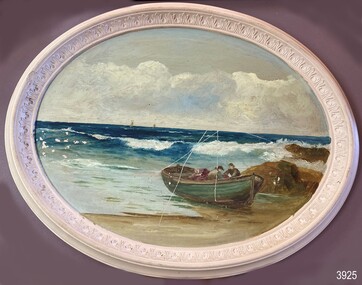
Painting - Maritime, 19th century
... This simple handmade painting on cast composite frame is typical of 19th century art work found in middle and upper class Victorian homes of that era. It cannot be attributed to a particular artist due to lack of inscriptons. ...This handmade picture has been painted on a cast plaster or composition frame. Plaster frames were popular in the e19th century. The material is quite fragile and many pictures from this era suffer from damage such as chips and cracks.This simple handmade painting on cast composite frame is typical of 19th century art work found in middle and upper class Victorian homes of that era. It cannot be attributed to a particular artist due to lack of inscriptons.Painting, oil on composite material, handmade Pink coloured cast composite oval frame with decorative border. Painting depicts two figures in a small green boat on the shore, sandy beach, rocks nearby, small surf waves, mild sea, two sailing vessels in background. No inscription on front of painting. flagstaff hill, warrnambool, maritime village, maritime museum, flagstaff hill maritime museum & village, shipwreck coast, great ocean road, victorian art work, maritime scen, composite material, plaster, cast frame, oval frame, victorian era -
 Flagstaff Hill Maritime Museum and Village
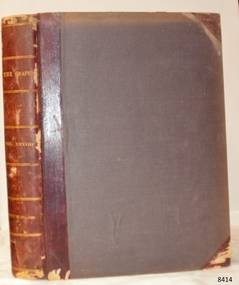
Newspaper - Bound Compilation of Newspapers July to December 1888, R. Clay, Sons, & Taylor, The Graphic Illustrated Newspaper Vol 38, 1888
... artists and engravers. Notably, Vincent van Gogh was an avid collector and admirer of The Graphic’s illustrations, famously praising its social realism. It is also significant to literary history because it serialized famous novels before they were published as standalone books. For historians, these volumes are goldmines, offering an unmatched, highly visual look into how the British public viewed the world at the close of the 19th century ...To understand exactly what this item is, it helps to clear up a common misconception: it is not a book, nor is it a traditional literary novel. Instead, it is a bound volume of The Graphic, a weekly British newspaper that ran from 1869 to 1932. Because newspapers back then were flimsy, readers or libraries would collect six months' worth of weekly issues and have them custom-bound into a hardback volume for preservation.Bound Compilation, The Graphic Illustrated Newspaper Vol 38 Author: Various, Publisher: Edward Joseph Mansfield 1888 Date: 1888 Reddish hardcover with a damaged browns spine, reinforced corners to hardcover gold edging to spine. non-fictionTo understand exactly what this item is, it helps to clear up a common misconception: it is not a book, nor is it a traditional literary novel. Instead, it is a bound volume of The Graphic, a weekly British newspaper that ran from 1869 to 1932. Because newspapers back then were flimsy, readers or libraries would collect six months' worth of weekly issues and have them custom-bound into a hardback volume for preservation.flagstaff hil, warrnambool, flagstaff hill maritime museum, maritime museum, shipwreck coast, flagstaff hill maritime village, great ocean road, book, pattison collection, warrnambool library, warrnambool mechanics’ institute, ralph eric pattison, corangamite regional library service, warrnambool city librarian, mechanics’ institute library, victorian library board, warrnambool books and records, warrnambool children’s library, the graphic illustrated newspaper vol 38, edward joseph mansfield -
 Flagstaff Hill Maritime Museum and Village
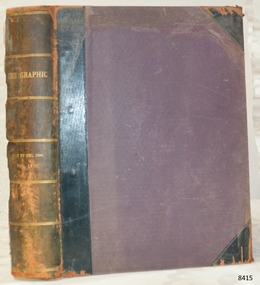
Newspaper - Bound Compilation of Newspapers July to December 1898, Edward Joseph Mansfield, Publisher, The Graphic Illustrated Newspaper Vol 58, 1898
... artists and engravers. Notably, Vincent van Gogh was an avid collector and admirer of The Graphic’s illustrations, famously praising its social realism. It is also significant to literary history because it serialized famous novels before they were published as standalone books. For historians, these volumes are goldmines, offering an unmatched, highly visual look into how the British public viewed the world at the close of the 19th century ...To understand exactly what this item is, it helps to clear up a common misconception: it is not a book, nor is it a traditional literary novel. Instead, it is a bound volume of The Graphic, a weekly British newspaper that ran from 1869 to 1932. Because newspapers back then were flimsy, readers or libraries would collect six months' worth of weekly issues and have them custom-bound into a hardback volume for preservation.Bound Compilation, The Graphic Illustrated Newspaper Vol 58 Author: Various, Publisher: Edward Joseph Mansfield 1898 Date: 1898 Reddish hardcover with a damaged browns spine, reinforced corners to hardcover gold edging to spine. non-fictionTo understand exactly what this item is, it helps to clear up a common misconception: it is not a book, nor is it a traditional literary novel. Instead, it is a bound volume of The Graphic, a weekly British newspaper that ran from 1869 to 1932. Because newspapers back then were flimsy, readers or libraries would collect six months' worth of weekly issues and have them custom-bound into a hardback volume for preservation.flagstaff hil, warrnambool, flagstaff hill maritime museum, maritime museum, shipwreck coast, flagstaff hill maritime village, great ocean road, book, pattison collection, warrnambool library, warrnambool mechanics’ institute, ralph eric pattison, corangamite regional library service, warrnambool city librarian, mechanics’ institute library, victorian library board, warrnambool books and records, warrnambool children’s library, the graphic illustrated newspaper vol 58, edward joseph mansfield -
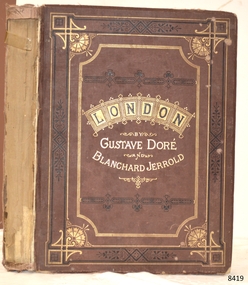 Flagstaff Hill Maritime Museum and Village
Book - Illustrated Reference Book/Social History, Louis Auguste Gustave Doré et al, London a Pilgrimage, 1872
... 19th century; as such, the work is a highly desirable piece of publishing history. The book offers a comprehensive, episodic portrait of Victorian London at the height of the British Empire. The prominent French artist ...London A Pilgrimage (1872) is one of the most celebrated, visually striking, and socially important illustrated books of the 19th century; as such, the work is a highly desirable piece of publishing history. The book offers a comprehensive, episodic portrait of Victorian London at the height of the British Empire. The prominent French artist Gustave Doré and English journalist William Blanchard Jerrold shared a fascination with urban life, combining their talents to create one of the 19th century's greatest collaborative works. They spent days exploring the metropolis together to capture the stark dualities of the city. Rather than focusing solely on the grand landmarks of the wealthy, the book famously juxtaposes the "sunlight and shadows" of London life. When Jerrold suggested a massive, joint exploration of London in 1869, it brought together two perfect skill sets: Jerrold provided the investigative journalistic grit and intimate knowledge of London’s social strata, while Doré provided the haunting, cinematic visual poetry through his illustrations.Hard cover book, London a Pilgrimage Author: William Blanchard Jerrold Publisher: Grant & Co, 74-78 Turnmill St. London. EC. Date: 1872 Morocco Olive hardcover with a damaged spine, lettering in gold with a title in a surrounded with a decorative panel. non-fictionLondon A Pilgrimage (1872) is one of the most celebrated, visually striking, and socially important illustrated books of the 19th century; as such, the work is a highly desirable piece of publishing history. The book offers a comprehensive, episodic portrait of Victorian London at the height of the British Empire. The prominent French artist Gustave Doré and English journalist William Blanchard Jerrold shared a fascination with urban life, combining their talents to create one of the 19th century's greatest collaborative works. They spent days exploring the metropolis together to capture the stark dualities of the city. Rather than focusing solely on the grand landmarks of the wealthy, the book famously juxtaposes the "sunlight and shadows" of London life. When Jerrold suggested a massive, joint exploration of London in 1869, it brought together two perfect skill sets: Jerrold provided the investigative journalistic grit and intimate knowledge of London’s social strata, while Doré provided the haunting, cinematic visual poetry through his illustrations.flagstaff hil, warrnambool, flagstaff hill maritime museum, maritime museum, shipwreck coast, flagstaff hill maritime village, great ocean road, book, pattison collection, warrnambool library, warrnambool mechanics’ institute, ralph eric pattison, corangamite regional library service, warrnambool city librarian, mechanics’ institute library, victorian library board, warrnambool books and records, warrnambool children’s library -
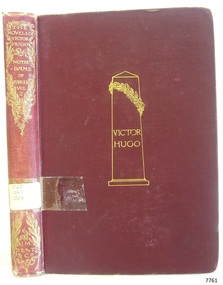 Flagstaff Hill Maritime Museum and Village
Book - Fictional Novel, Victor Hugo, Notre Dame of Paris Vol 2, 1899
... 19th-century restoration of Notre-Dame Cathedral by Viollet-le-Duc. Culturally, Quasimodo and Esmeralda have become universal archetypes, continuously adapted into plays, films, operas, and animations for nearly two centuries. It should also be noted that as James Carroll Beckwith translated the subject work from the original French as was common practice in the late 19th century, for luxury publishers like J.M. Dent & Co. To frequently commissioned artists ...The novel is better known today by its English title, The Hunchback of Notre-Dame. This grand historical novel is set in 1482 Paris and revolves around the doomed gypsy dancer Esmeralda, the tortured archdeacon Claude Frollo, the dashing but shallow captain Phoebus, and the fiercely loyal, deformed bell-ringer Quasimodo. By the time you reach the final volume, the narrative is driving toward its intense, tragic climax. Beyond the human drama, the book is a love letter to Gothic architecture; Hugo famously wrote it to spark a preservation movement to save the crumbling Notre-Dame Cathedral from neglect and modernisation.Notre Dame of Paris Vol 2 Author: Victor Hugo Publisher: J M Dent & Co Date: 1899 Further Information: Translated by J. Carroll Beckwith Vol. 1 is 7072, Vol. 3 is 7073, Vol.4 is 8036fictionThe novel is better known today by its English title, The Hunchback of Notre-Dame. This grand historical novel is set in 1482 Paris and revolves around the doomed gypsy dancer Esmeralda, the tortured archdeacon Claude Frollo, the dashing but shallow captain Phoebus, and the fiercely loyal, deformed bell-ringer Quasimodo. By the time you reach the final volume, the narrative is driving toward its intense, tragic climax. Beyond the human drama, the book is a love letter to Gothic architecture; Hugo famously wrote it to spark a preservation movement to save the crumbling Notre-Dame Cathedral from neglect and modernisation.flagstaff hill, warrnambool, shipwrecked coast, flagstaff hill maritime museum, maritime museum, shipwreck coast, flagstaff hill maritime village, great ocean road, book, pattison collection, warrnambool library, warrnambool mechanics’ institute, ralph eric pattison, corangamite regional library service, warrnambool city librarian, mechanics’ institute library, victorian library board, warrnambool books and records, warrnambool children’s library, notre dame of paris vol 4, victor hugo, j. carroll beckwith -
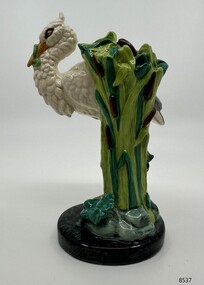 Flagstaff Hill Maritime Museum and Village
Decorative object - Minton Majolica model of a White Stork, 2001
... 19th century and the present. Minton & Co. Majolica miniature model Flagstaff Hill Maritime Museum Stoke Upon Trent John Henk Staffordshire Inscribed at the base Minton founded 1793, artist mark: 6, made in England A miniature white stork standing on one leg atop a rocky mound, an eel clasped in its beak, a frog beneath its foot, the stand formed by tall bullrushes & water-lily pads. ...Royal Doulton as part of the Minton Miniature series produced this stork model in 2001. A limited edition of 1,793 pieces were made, and this stork is number 118. The stork is a scaled down model of the original life-size piece first produced by John Henk, c. 1870, as a walking stick and umbrella stand. A rare miniature stork demonstrates the artistry and skill required to produce Majolica ware during the 19th century and the present.A miniature white stork standing on one leg atop a rocky mound, an eel clasped in its beak, a frog beneath its foot, the stand formed by tall bullrushes & water-lily pads.Inscribed at the base Minton founded 1793, artist mark: 6, made in Englandminton & co., majolica, miniature model, flagstaff hill maritime museum, stoke upon trent, john henk, staffordshire -
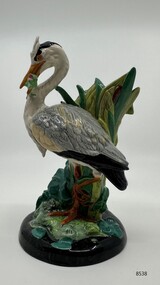 Flagstaff Hill Maritime Museum and Village
Decorative object - Minton Majolica model of a Grey Heron, 2001
... Comolera was a French artist and sculptor, renowned for dramatic naturalistic forms, and life-size renditions of birds and animals that won him admiration in public and artistic circles. The Warrnambool Art Gallery (WAG) has a life-sized Heron in its collection. A rare miniature heron demonstrates the artistry and skill required to produce Majolica ware during the 19th century ...Royal Doulton as part of the Minton Miniature series produced this heron model in 2001. A limited edition of 1,793 pieces were made, and this heron is number 89. The heron is a scaled down model of the original life-size piece first produced by Paul Comolera, c. 1892, as a walking stick and umbrella stand. Comolera was a French artist and sculptor, renowned for dramatic naturalistic forms, and life-size renditions of birds and animals that won him admiration in public and artistic circles. The Warrnambool Art Gallery (WAG) has a life-sized Heron in its collection. A rare miniature heron demonstrates the artistry and skill required to produce Majolica ware during the 19th century and the present.A miniature grey heron standing by bulrushes and holding a struggling fish in its beak, its plumage naturalistically coloured, on a circular base glazed in tones of grey and green and applied with further leaves and water lilies.Inscribed at the base Minton founded 1793, made in Englandminton & co., majolica, miniature model, flagstaff hill maritime museum, stoke upon trent, paul comolera, staffordshire -
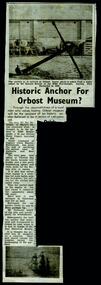 Orbost & District Historical Society
photograph, H.M.S. Rattlesnake, leaving Port Essington 1846-1849 BY STANLEY, OWEN
... artist and whose name, Owen Stanley, was given to the mountain ranges of PNG. After the passage out, Stanley brought aboard Oswald Brierly, later to be the marine painter to Queen Victoria, and together these men made two voyages through the Great Barrier Reef, painting and sketching all the while. They produced a visual record of 19th century...artist and whose name, Owen Stanley, was given to the mountain ranges of PNG. After the passage out, Stanley brought aboard Oswald Brierly, later to be the marine painter to Queen Victoria, and together these men made two voyages through the Great Barrier Reef, painting and sketching all the while. They produced a visual record of 19th century ..."The marine Hydrographers of the British Admiralty wanted desperately to chart a safe passage through the Great Barrier Reef and the gap between the northern tip of Australia and Papua New Guinea, which would open up the new colony to the East Indies trade. They commissioned the Rattlesnake, a 28 gun frigate of the Royal Navy, whose captain was a keen amateur artist and whose name, Owen Stanley, was given to the mountain ranges of PNG. After the passage out, Stanley brought aboard Oswald Brierly, later to be the marine painter to Queen Victoria, and together these men made two voyages through the Great Barrier Reef, painting and sketching all the while. They produced a visual record of 19th century contact between Europeans and the indigenous people of Northern Australia and New Guinea in an album which contains the original of this copy. It is held in the Mitchell Library in Sydney." (ref. State Library New South Wales) Sir Oswald Brierly, a young marine artist, arrived in Sydney in 1842 on the yacht Wanderer. Settling at the whaling station of Boyd Town in Twofold Bay, he painted extensively and left a vivid account of the whaling life during the five years he spent there. However it was the open sea and adventure that lead Brierly to accept a position on the HMS Rattlesnake as shipboard artist. This item is associated with the anchor of the The Rattlesnake. This anchor is in the main street of Orbost in front of what was once the museum.This is a copy of a picture of the H.M.S. Rattlesnake at sea with a canoe of Aborigines rowing towards it.h.m.s.-rattlesnake brierly-oswald stanley-owen -
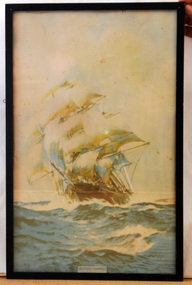 Orbost & District Historical Society
picture, Cutty Sark
... The original was painted by Arthur Chidley, an English artist from the late 19th Century. The Cutty Sark was a British clipper ship. ...The original was painted by Arthur Chidley, an English artist from the late 19th Century. The Cutty Sark was a British clipper ship. ...This print is one of a pair (Thermopylae). The original was painted by Arthur Chidley, an English artist from the late 19th Century. The Cutty Sark was a British clipper ship. Built on the Clyde in 1869 for the Jock Willis shipping line, she was one of the last tea clippers to be built and one of the fastest. , This item is an example of a piece of art likely to be found in a home where a framed print was considered to be an essential finishing touch. The Cutty Sark is the last tea clipper in existence and is considered a maritime treasure. Black framed print of "Cutty Sark" - ship in full sail. Ship is on rough seas. The wooden frame sections are simply mitred and nailed at the corners.Back- 4296picture cutty-sark chidley -
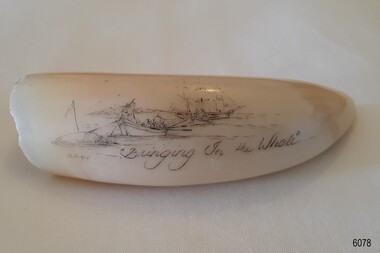 Flagstaff Hill Maritime Museum and Village
Craft - Scrimshaw, Bringing in the Whale
... Although scrimshaw is widely associated with nautical themes and designs of the 19th century whaling industry, vintage scrimshaw was also produced as tribal art in many cultures. Today, scrimshaw is recognized as a unique medium in which present-day artists have developed their own modern themes. ...Although scrimshaw is widely associated with nautical themes and designs of the 19th century whaling industry, vintage scrimshaw was also produced as tribal art in many cultures. Today, scrimshaw is recognized as a unique medium in which present-day artists have developed their own modern themes. ...When scrimshaw is mentioned, most people think of carving on sperm whale teeth only. But scrimshaw also includes engravings on skeletal whale bone–such as the jaw bone, called pan bone and ivory from other marine mammals such as walrus. Although scrimshaw is widely associated with nautical themes and designs of the 19th century whaling industry, vintage scrimshaw was also produced as tribal art in many cultures. Today, scrimshaw is recognized as a unique medium in which present-day artists have developed their own modern themes. Scrimshaw reproductions may take several forms. There are - New carvings on genuine ivory or bone with the deliberate intent to create an "antique” - New carvings on genuine ivory or bone sold as signed and dated contemporary art - Clearly marked synthetic museum reproductions and mass marketed - Unmarked synthetic replicas This scrimshaw work is done on a sperm whale's tooth. It is one of two pieces by artist Gary Tonkin in Flagstaff Hill’s collection. Sperm whales can live for 60 or even 70 years, so the tooth could be quite old. It came from the whaling station in Albany, Western Australia, which ceased processing whales in 1978 and is now a whaling museum. The two works were commissioned by Flagstaff Hill in the 1980s. Tonkin could spend from a few days to a few months in intensive work on each piece of scrimshaw. He is a world-renowned Master Scrimshander and a Fellow of the Australian Society of Marine Artists (FASMA), and lives in Albany, Western Australia. Gary Tonkin, FASMA – Tonkin was born in 1949 in Portland, Victoria, and grew up there with a history of whaling and related industries. He moved to Albany in southwest WA in 1971 and worked as an Export Meat inspector for the Federal Government. This small town also had a historical connection to whaling. The Cheynes Beach Whaling Station was still operating, and there were even three whaling ‘chaser’ vessels at the old jetty. In 1975, his employment now permanent, Tonkin bought an old cottage near the bay, purchased some whales’ teeth, and began learning the sailors’ art of scrimshaw, combining this with his artistic skills and knowledge of history. His job gave him access to buy as many whale teeth as he could afford, straight from the whaling station. Tonkin gained further marine knowledge as he sailed on the schooner ‘Esperance’ from Fremantle to Mauritius in 1988. He watched the sailors at work and experienced the rough and stormy sea conditions first-hand. Tonkin later visited whaling museums, galleries and libraries in England and America to gather reference materials and information on all aspects of whaling and scrimshaw. In 1993 he was Commissioned to engrave six large whale teeth, from the Albany whaling station, for the USA Gallery at the Australian National Maritime Museum in Sydney. This work is now in the museum’s permanent collection. From that time, Tonkin began working full-time as a Scrimshander. Tonkin’s work is now in galleries and museums in America and Australia, as well as in private collections. He is the founder of the Albany Maritime Heritage Association and was the inaugural President. In the 1990s he actively and successfully campaigned for the preservation of the Cheynes Beach Whaling Station in Albany, which is now Whale World, an open-air whaling museum. His continuing work as a Scrimshander contributes to the preservation of the art of scrimshaw and the history of whaling. This scrimshaw represents the ancient craft of scrimshaw, associated with mariners in the whaling trade in the early 19th century. The work is also Nationally significant for being created by world-renowned Scrimshander, Gary Tonkin, from Albany, Western Australia. Scrimshaw; whale tooth carved with an image of two whaleboats hauling a dead whale back to the mother ship. Inscribed Title and signature of artist Gary Tonkin.Inscribed "Bringing in the whale". Signature "G Tonkin"flagstaff hill maritime museum and village, warrnambool, great ocean road, shipwreck coast, maritime museum, flagstaff hill, perth, whaling, whales, australia, scrimshaw, scrimshander, gary tonkin, g tonkin, bone, tooth, craft, albany, western australia, cheynes beach whaling station, whale world, portland, engraving, maritime art, sperm whale's tooth, albany whaling station, albany whaling museum -
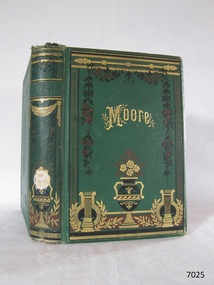 Flagstaff Hill Maritime Museum and Village
Book - Poetical Writings, Thomas Moore, The Poetical Works of Thomas Moore, 1878–1890s
... century under James Gall Inglis and Harry Robert Gall Inglis. The illustrator for this volume remains anonymous, as Gall & Inglis did not credit a single, specific artist or named illustrator. The title page states "Engravings on Steel", indicating trade illustrations created by commercial engravers who executed plates based on popular 19th-century Romantic landscape and narrative artwork....century under James Gall Inglis and Harry Robert Gall Inglis. The illustrator for this volume remains anonymous, as Gall & Inglis did not credit a single, specific artist or named illustrator. The title page states "Engravings on Steel", indicating trade illustrations created by commercial engravers who executed plates based on popular 19th-century Romantic landscape and narrative artwork. ...This subject volume is a comprehensive collection of the works of Irish poet and songwriter Thomas Moore (1779–1852). The work features his famous Irish Melodies (containing classic songs like "The Last Rose of Summer" and "The Minstrel Boy"), his Oriental romance epic Lalla Rookh, satire, and light verse, along with a biographical summary ("With Life") and steel-engraved illustrations.Hard cover book. The Poetical Works of Thomas Moore Author: Thomas Moore Publisher: Gall & Inglis Date: 1878–1890s Further Information: Highly decorated green Cloth hardcover with lettering and patterning to spine in gilt. The spine has a Library label with an inscription.fictionThis subject volume is a comprehensive collection of the works of Irish poet and songwriter Thomas Moore (1779–1852). The work features his famous Irish Melodies (containing classic songs like "The Last Rose of Summer" and "The Minstrel Boy"), his Oriental romance epic Lalla Rookh, satire, and light verse, along with a biographical summary ("With Life") and steel-engraved illustrations.warrnambool, shipwrecked-coast, flagstaff-hill, flagstaff-hill-maritime-museum, maritime-museum, shipwreck-coast, flagstaff-hill-maritime-village, shipwrecked-artefact, book, the poetical works of thomas moore, thomas moore, warrnambool mechanics’ institute, pattison collection, warrnambool library, ralph eric pattison, corangamite regional library service, warrnambool city librarian, mechanics’ institute library, victorian library board, warrnambool books and records, warrnambool children’s library
