
Showing 53 items matching "5th australia division"
-
 Federation University Historical Collection
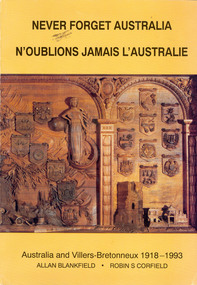
Book, Royal Victoria Pilgrimage Committee et al, Never Forget Australia: Australia and Villers-Bretonneux 1918-1993, 1994
... ...5th australia division...The Royal Victoria Regiment, The 1990s, The 1993 Pilgrimage. villers-brettonneux world war 1 world war one french amiens charles rosenthal keith murdoch henry rawlinson hobbsm pompey elliott ferdinand foch john monash red baron von richthofen tanks 5th australia division harold elliott sadlier marshall aboriginal diggers bill egan australian armt band ypres robinvale robin cuttle frederick birks gas 58th battalion tom brain dick bowman william james Yellow soft covered book with the cover featuring a carved timber memorial. ...Yellow soft covered book with the cover featuring a carved timber memorial.non-fictionvillers-brettonneux, world war 1, world war one, french, amiens, charles rosenthal, keith murdoch, henry rawlinson, hobbsm pompey elliott, ferdinand foch, john monash, red baron, von richthofen, tanks, 5th australia division, harold elliott, sadlier, marshall, aboriginal diggers, bill egan, australian armt band, ypres, robinvale, robin cuttle, frederick birks, gas, 58th battalion, tom brain, dick bowman, william james -
 Bendigo Military Museum
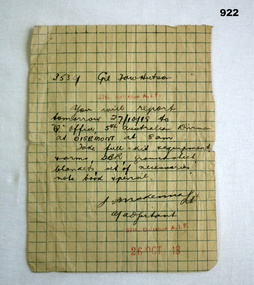
Document - MOVEMENT ORDER, 26.10.1918
... Note paper ruled vertically and horizontally with a brief note in ink to report to HQ 5th Australian Division. Stamped in red ink with date....Embarked for Egypt 29.12.15, transfers to 60th Batt 26.2.16 then to 57th batt on 15.3 16, embark for France 17.6.16, promoted L/Cpl 20.9.16, hospital 31.10.16 with Bronchitis, return to duty 9.11.16, hospital 20.1.17 dental, return to duty following day, promoted to Cpl 1.6.18, discharged from the AIF 31.8.19. documents-military Movement order 57th Battalion AIF 26 Oct 18 Note paper ruled vertically and horizontally with a brief note in ink to report to HQ 5th Australian Division. Stamped in red ink with date. ...The movement order was issued to Frederick Arthur William Hutson No 3539. (Born Bendigo, enlisted Bendigo) in the 8th reinforcements 21st Batt AIF on 28.7.15 age 23 years 2 months. Embarked for Egypt 29.12.15, transfers to 60th Batt 26.2.16 then to 57th batt on 15.3 16, embark for France 17.6.16, promoted L/Cpl 20.9.16, hospital 31.10.16 with Bronchitis, return to duty 9.11.16, hospital 20.1.17 dental, return to duty following day, promoted to Cpl 1.6.18, discharged from the AIF 31.8.19. Note paper ruled vertically and horizontally with a brief note in ink to report to HQ 5th Australian Division. Stamped in red ink with date.57th Battalion AIF 26 Oct 18documents-military, movement order -
 Bendigo Military Museum
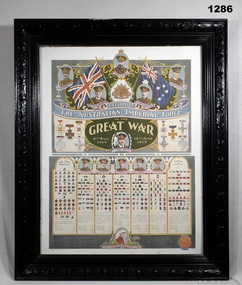
Poster - POSTER WW1, FRAMED
... Poster shows history of 1st, 2nd, 3rd, 4th & 5th Australian Divisions, also campaign medals....Poster shows history of 1st, 2nd, 3rd, 4th & 5th Australian Divisions, also campaign medals. Poster POSTER WW1, FRAMED Osboldstone & Co Pty Ltd ...Copyright J W SANDERS (late AIF).Black decorative wooden frame without glass. Poster in colour with white border & cardboard backing. Poster shows history of 1st, 2nd, 3rd, 4th & 5th Australian Divisions, also campaign medals.Printed top section of frame: “RECORD OF THE AUSTRALIAN IMPERIAL FORCE IN THE GREAT WAR 4TH AUG. 1914 - 28TH JUNE 1919”documents-posters, military history-army, aif -
 Mont De Lancey
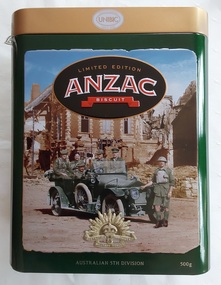
Container - Anzac Biscuit Tin, Returned and Services League of Australia, 2019
... 5th Division in a motor car. The lettering for the tin is stamped in red and white at the top of the lid with Limited Edition in gold. At the bottom of the tin is written - Australian...As stated above there is the name of the tin 'Limited Edition ANZAC Biscuit' with details of the tin's meaning for the Australian 5th Division. '500g Net' All of the tin has information about the soldiers who served in WW1 and WW2 and the relevance of the Anzac Spirit and biscuits....5th Division in a motor car. The lettering for the tin is stamped in red and white at the top of the lid with Limited Edition in gold. At the bottom of the tin is written - Australian ...This Unibic Limited Edition ANZAC Biscuit tin is one of a series produced in 2014 to commemorate 100 years 1914 - 2014 of World War 1, focusing on the Victoria Cross, The Anzac Biscuit Story and The RSL Story. The included paper sheet explains the Victoria Cross in full detail. The RSL and Modern Baking Pty Ltd in Broadmeadows provided this product.A medium sized rectangular Limited Edition green and gold lidded Anzac Biscuit Tin with an old brown and grey toned photograph image of soldiers of the 5th Division in a motor car. The lettering for the tin is stamped in red and white at the top of the lid with Limited Edition in gold. At the bottom of the tin is written - Australian 5th Division 500g including a gold coloured embossed Rising Sun Badge. There is a brief explanation about the 5th Divisional Motor Car's location on one side of the tin as well as an explanation of the meaning of the Rising Sun Badge on the other side. The back of the tin has information about The Anzac Biscuit Story and a recipe. Inside the tin there is a folded brochure about the seven 2019 Limited Edition Tins that were available at the time.As stated above there is the name of the tin 'Limited Edition ANZAC Biscuit' with details of the tin's meaning for the Australian 5th Division. '500g Net' All of the tin has information about the soldiers who served in WW1 and WW2 and the relevance of the Anzac Spirit and biscuits.war, world war 1, world war 2, containers, tins, commemorative tins, rsl -
 The Beechworth Burke Museum
Postcard, 1918
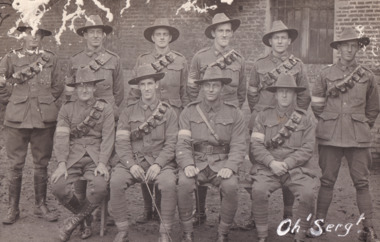
... Further research shows that Griggs was part of the 5th Australian Division Signals Company. Therefore, it is believed these soldiers were part of the ANZAC Signal Companies. ...Further research shows that Griggs was part of the 5th Australian Division Signals Company. Therefore, it is believed these soldiers were part of the ANZAC Signal Companies. ...It is believed that the photograph on the obverse side of the postcard was taken in 1918. Depicted are ten Australian male soldiers. Their names are transcribed in pencil on the reverse side of the postcard. Each soldier is dressed in a formal military uniform. It is believed that these soldiers were part of The Australian Imperial Force during World War I. This can be inferred by the chevron rank insignia visible on the uniforms of nine of ten men. The placement of this insignia on the sleeves of their right arms suggests that they were either Warrant Officers or Non-Commissioned Officers (NCO). Specifically, the number of chevron stripes - here, nine men have three - are believed to signify a Corporal rank. The men pictured on this postcard are also wearing 'Rising Sun' collar badges on their coats. Australia, unlike most other Commonwealth countries, did not adopt metal regimental badges during the First World War. All units were issued with the Australian Army General Service Badge, better known as the 'Rising Sun’ badge. This insignia is almost always identified with the Australian Imperial Force. Another characteristic of the Australian Imperial Force uniform are the rectangular colour patches worn by all men on this postcard. In March 1915, a new scheme of unit identification was devised to replace the wearing of unit titles. This consisted of cloth colour patches on the upper arms of a soldier’s tunic. The black and white nature of the record means that we cannot establish which battalion these soldiers were part of. However, one of the handwritten signatures on the reverse side of the postcard reads "W.A. Griggs". This was the signature of Sergeant William Archibald Griggs. Further research shows that Griggs was part of the 5th Australian Division Signals Company. Therefore, it is believed these soldiers were part of the ANZAC Signal Companies. The main role of the Signal Companies during World War I was the laying and maintenance of telephone cables and switchboards, used to connect various units in their area. Furthermore, the man standing in the back row, third from the left side, has an Overseas Service chevron patch on his coat. In January 1918, the Australian Imperial Force approved the wearing of the overseas service chevrons which had been adopted by the British Army. These were embroidered or woven inverted chevrons worn above the cuff on the right arm. Due to a shortage of supply, some men had chevrons privately made. For each year of war service, a blue chevron was awarded, and those men who had embarked in 1914 received a red chevron to indicate that year’s service; however, the black and white nature of the postcard makes it difficult to determine what colours are on this man's patch.The record is historically significant due to its connection to World War I. This conflict is integral to Australian culture as it was the single greatest loss of life and the greatest repatriation of casualties in the country's history. Australia’s involvement in the First World War began when the Australian government established the Australian Imperial Force (AIF) in August 1914. Immediately, men were recruited to serve the British Empire in the Middle East and on the Western Front. The first significant Australian action of the war was the Australian Naval and Military Expeditionary Force’s (ANMEF) landing on Rabaul on 11 September 1914. The ANMEF took possession of German New Guinea at Toma on 17 September 1914 and of the neighbouring islands of the Bismarck Archipelago in October 1914. On 25 April 1915, members of the AIF landed on Gallipoli in Turkey with troops from New Zealand, Britain, and France. This specific event holds very strong significance within Australian history. The record has strong research potential. This is due to the ongoing public and scholarly interest in war, history, and especially the ANZAC legend, which is commemorated annually on 25 April, known as ANZAC Day.Black and white rectangular postcard printed on paper.Obverse: Oh 'Serg!' / Reverse: CARTE POSTALE / 6537 / Correspondance / Adresse / w.a. Grigg / J. Fain / Ruckling / R.J Farrar / (?) / Clarke / L (?) / GFFisher / R. M. Forrest / With Compliments / Sgt's Mess / November 1918 /military album, army, aif, uniform, military, wwi, world war i, rising sun badge, william archibald griggs, anzac, signal companies, postcard, patches, chevron -
 Federation University Historical Collection
Booklet - Programme, 'Chu Chin Chow' Theatre Programme, c 1917
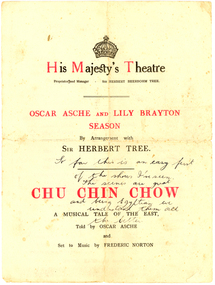
... Australian Imperial Forces in Egypt. Henry 'Harry' Holmes was the son of Violet Holmes. He enlisted under the name Harry Smerdon Holmes and was put into the 18th A.A.S.C., then later transferred into the 5th Division Train A.S.C. ...Australian Imperial Forces in Egypt. Henry 'Harry' Holmes was the son of Violet Holmes. He enlisted under the name Harry Smerdon Holmes and was put into the 18th A.A.S.C., then later transferred into the 5th Division Train A.S.C. ...Chu Chin Chow is a musical comedy written, produced and directed by Oscar Asche, with music by Frederic Norton, based (with minor embellishments) on the story of Ali Baba and the 40 Thieves. Tickets to see Chu Chin Chow were particularly eagerly sought by troops on leave from the Western Front. One of the attractions for the on-leave soldiers was the chorus of pretty slave girls who, for the period, were very scantily dressed. The cast was large and included a camel, a donkey, poultry and snakes. A total of 2,800,000 people saw the show. (http://en.wikipedia.org/wiki/Chu_Chin_Chow) It is thought that Harry Holmes attended 'Chu Chin Chow' while on leave in London during World War One. Around this time he had been serving in the Australian Imperial Forces in Egypt. Henry 'Harry' Holmes was the son of Violet Holmes. He enlisted under the name Harry Smerdon Holmes and was put into the 18th A.A.S.C., then later transferred into the 5th Division Train A.S.C. According to his Soldier's Pay Books (Cat. No. 20112) Holmes Registration number was 7983. He was Catholic and enlisted in the Third Military District on 17 September 1915, and embarked on 8 November 1915. Holmes was in the 18th AASC Unit with the rank of Driver at that time. On 15 November 1918 Holmes was promoted to Lance Corporal. He received leave on: * 3 August 1917 - London (10 days) * 19 February 1918 - Paris (10 days) * 27 August 1918 - London (14 days) Research: Henry Holmes' grandaughter, Jane Dyer (nee Chatham) White paper theatre programme with red and black writing. It is a publicity brochure from the play 'Chu Chin Chow' by Oscar Asche set to music by Frederic Norton. In black ink in front 'So far this is an easy first of the shows I've seen, The scenes are great and being Egyptian we understand them all the better'. chatham family collection, holmes, theatre, world war 1, world war, world war i, herbert tree, entertainment, music, musical, oscar asche, fred norton -
 Lara RSL Sub Branch
Newspaper, 17th Australian Infantry Brigade, February 22nd 1940
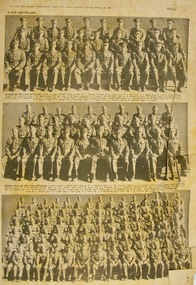
... The Argus 17th Australian Infantry Brigade, Second AIF, Souvenir Supplement, Thursday, February 22, 1940 Page 1 2/5th Battalion - Picture 1 Officers of the 2/5th Battalion; Picture 2 Senior NCO's of the 2/5th Battalion; Picture 3 A Company 2/5th Battalion Page 2 B Company 2/5th Battalion; C Company 2/5th Battalion; D Company 2/5th Battalion Page 3 Headquarters 2/2nd Field Regiment 6th Divisional Artillery; 3rd Battery 2/2nd Field Regiment 6th Divisional Artillery Page 4 Officers, NCO's and men of 2/2nd Field Company, 6th Divisional Engineers; Officers NCO's and men 2/2nd Field Ambulance and 2/2nd Australian General Hospital 6th Divisional Australian Army Medical Corps...Division, recruited from Victoria. The 17th Brigade fought in the Western Desert Campaign in Libya, the Battle of Greece, the Battle of Wau, the Salamaua-Lae campaign in Papua, and in the Aitape-Wewak campaign in New Guinea. The photographs are of national significance as they may reflect the only known photographs of individuals from WW2. aif army 17th brigade second aif 2/5th battalion australian army australian infantry brigade 2/2nd field aumbulance 2/2nd australian general hospital 6th divisional australian army medical corps 6th divisional engineers The Argus 17th Australian Infantry Brigade, Second AIF, Souvenir Supplement, Thursday, February 22, 1940 Page 1 2/5th Battalion - Picture 1 Officers of the 2/5th Battalion; Picture 2 Senior NCO's of the 2/5th Battalion; Picture 3 A Company 2/5th Battalion Page 2 B Company 2/5th Battalion; C Company 2/5th Battalion; D Company 2/5th Battalion Page 3 Headquarters 2/2nd Field Regiment 6th Divisional Artillery; 3rd Battery 2/2nd Field Regiment 6th Divisional Artillery Page 4 Officers, NCO's and men of 2/2nd Field Company, 6th Divisional Engineers; Officers NCO's and men 2/2nd Field Ambulance and 2/2nd Australian General Hospital 6th Divisional Australian Army Medical Corps 4 page newspaper pictures of 17th Brigade, Second AIF 17th Australian Infantry Brigade Newspaper ...The 17th Australian Infantry Brigade was an infantry brigade in the Australian Army. First formed in 1917 during World War I, it did not see any action. Reformed during World War II, before being disbanded in 1946. Today, its name is perpetuated by the 17th Combat Service Support Brigade, which was raised as a logistics formation in May 2006. The 17th Brigade was reformed on 13 October 1939, again as part of the 6th Division, recruited from Victoria. The 17th Brigade fought in the Western Desert Campaign in Libya, the Battle of Greece, the Battle of Wau, the Salamaua-Lae campaign in Papua, and in the Aitape-Wewak campaign in New Guinea. The photographs are of national significance as they may reflect the only known photographs of individuals from WW2.4 page newspaper pictures of 17th Brigade, Second AIFThe Argus 17th Australian Infantry Brigade, Second AIF, Souvenir Supplement, Thursday, February 22, 1940 Page 1 2/5th Battalion - Picture 1 Officers of the 2/5th Battalion; Picture 2 Senior NCO's of the 2/5th Battalion; Picture 3 A Company 2/5th Battalion Page 2 B Company 2/5th Battalion; C Company 2/5th Battalion; D Company 2/5th Battalion Page 3 Headquarters 2/2nd Field Regiment 6th Divisional Artillery; 3rd Battery 2/2nd Field Regiment 6th Divisional Artillery Page 4 Officers, NCO's and men of 2/2nd Field Company, 6th Divisional Engineers; Officers NCO's and men 2/2nd Field Ambulance and 2/2nd Australian General Hospital 6th Divisional Australian Army Medical Corpsaif, army, 17th brigade, second aif, 2/5th battalion, australian army, australian infantry brigade, 2/2nd field aumbulance, 2/2nd australian general hospital, 6th divisional australian army medical corps, 6th divisional engineers -
 Lara RSL Sub Branch
Book, Australia in Palestine, 1919
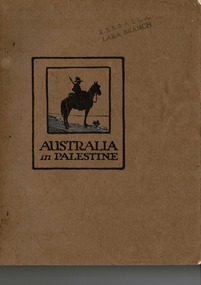
... His fearlessness, initiative and endurance, and his adaptability to almost any task, are due to the adventurous life he leads in his own country where he has been accustomed to long hours in the saddle, day and night, and to facing danger of all sorts from his earliest youth. battle of beersheba battle of richon ze zion battle of bir er abd camel corps lighthorse slush light sir h.g. chauvel mounted division at kantara medical services signal engineers katia oasis new zealand mounted troops sir edmund h allenby walers story 5th lighthorse romani WW1 World War 1 Australian Army To the memory of fallen comrades. ...A soldier's book produced almost entirely by soldiers in the field under active service conditions to send to their friends in Australia and abroad. Australian Lighthorse men is a type peculiar his own and has no counterpart in h is NZ brother. His fearlessness, initiative and endurance, and his adaptability to almost any task, are due to the adventurous life he leads in his own country where he has been accustomed to long hours in the saddle, day and night, and to facing danger of all sorts from his earliest youth.Brown front and back hardcover with dark brown text 'Australia in Palestine' with a light horseman framed in centre of front cover. The spine is green with text Australia in Palestine, Angus and Robertson bottom of spine. Evidence of water on front cover. Silverfish have eaten top right hand corner of first two pages. Farm scene in four boxes with AR in the lower corner of each square. Inside front and back covers are illustrations of a camel train and came corps in the desert with the rising sun in the background with a mountain. There is a grave and white cross in their foreground right lower corner Illustrations, photographs, poems, short stories, Centre foldout of the Battle for Richon Le Zion and Battle of Beersheba and after the Battle of Bir El Abed To the memory of fallen comrades. Pen mark inside W. Mathews Larabattle of beersheba, battle of richon ze zion, battle of bir er abd, camel corps, lighthorse, slush light, sir h.g. chauvel, mounted division at kantara, medical services, signal engineers, katia oasis, new zealand mounted troops, sir edmund h allenby, walers story, 5th lighthorse, romani, ww1, world war 1, australian army -
 Lara RSL Sub Branch
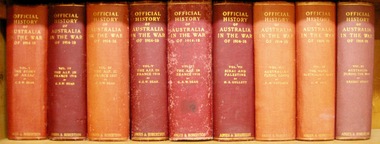
Book, The Anzac Book Official History of Australia in theWar of 1914-18 Volume III The AIFin France 1916. Author C.E.W. Bean 6th Edition 1938
... Australian Imperial Force in France 1916 Historical chronology including colour patches. AIF in France 1916 egypt desert line france suez canal camel train ferry post armentieres ypres aif battle of fromelles 5th division pozieres mouquet farm The Anzac Book - Printed 1916 Hardback cardboard Illustrations, maps and diagrams Chronology of 1916 The Anzac Book Official History of Australia in theWar of 1914-18 Volume III The AIFin France 1916. ...The Australian Imperial Force in France 1916Historical chronology including colour patches. AIF in France 1916The Anzac Book - Printed 1916 Hardback cardboard Illustrations, maps and diagrams Chronology of 1916egypt, desert line, france, suez canal, camel train, ferry post, armentieres, ypres, aif, battle of fromelles, 5th division, pozieres, mouquet farm -
 Lara RSL Sub Branch
Book, Stand Easy - After the Defeat of Japan 1945 Published for The Australian Military Forces by Australian War Memorial, 1945
... Contributors to this publication can be identified by their service number. blamey nerve war medical evacuation 2nd australian corps surrender of japan bougainville borneo 5th australian division 6th australian division 7th australian division 9th australian division tarakan Green hardcover with light green text and picture of soldier. ...A collection of personal stories which extended from the collection of Khaki and Green. The service numbers have been used to identify those who have contributed to the content.Personal recounts and reminiscing of service by Army service personnel, after the Japanese surrender. The title 'Stand Easy' meaning that whilst there was a surrender the Army's task still continued. Contributors to this publication can be identified by their service number.Green hardcover with light green text and picture of soldier. The spine also has light green text of title. The inside front and back covers have green art geometric patterns. Illustrations, photographs, cartoons, blamey, nerve war, medical evacuation, 2nd australian corps, surrender of japan, bougainville, borneo, 5th australian division, 6th australian division, 7th australian division, 9th australian division, tarakan -
 Red Cliffs Military Museum
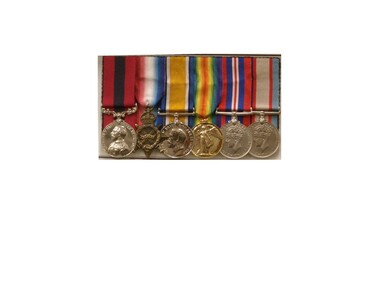
Replica Medals, WW1 & WW11 Medals Awarded to Nathaniel Barclay, (estimated); between 1914 & 1945
... 5th Battalion, 2nd Brigade, 1st Division, 25th February 1915 per transport 'Runic'. Disembarked Alexandria and to camp Heliopolis, Egypt. Operation Gallipoli from 5th May 1915 with 5th Battalion. Sick with dental problems 2nd Field Ambulance 17th September 1915. To hospital Lemnos 20th December 1915. To Alexandria hospital with pluerisy 12th January 1916. Returned to Australia...5th Battalion, 2nd Brigade, 1st Division, 25th February 1915 per transport 'Runic'. Disembarked Alexandria and to camp Heliopolis, Egypt. Operation Gallipoli from 5th May 1915 with 5th Battalion. Sick with dental problems 2nd Field Ambulance 17th September 1915. To hospital Lemnos 20th December 1915. To Alexandria hospital with pluerisy 12th January 1916. Returned to Australia ...Born 5th October 1895 in Adavoyle, United Kindom Occupation Grocer and later horticulturalist Married after WW1- Wife - Daisy Florence Barclay World War One Staff Sergeant Regimental Number 2139 Enlisted AIF in Melbourne 29th December 1914, having previously served 3 months with the Ulster Volunteers and to camp Broadmeadows, to depot Battalion 29th December 1914. Embarked from Melbourne for the middle East with 3rd reinforcement group for the 5th Battalion, 2nd Brigade, 1st Division, 25th February 1915 per transport 'Runic'. Disembarked Alexandria and to camp Heliopolis, Egypt. Operation Gallipoli from 5th May 1915 with 5th Battalion. Sick with dental problems 2nd Field Ambulance 17th September 1915. To hospital Lemnos 20th December 1915. To Alexandria hospital with pluerisy 12th January 1916. Returned to Australia with enteric per 'Nestor' 9th February 1916.To duty Broadmeadows 4th April 1916. Wmbarked with 4th reinforcements group for the 58th Battalion, 15th Brigade per transport 'Themistocles' 1st August 1916 Returned to England 14th September 1916. Operations France and Flanders from 6th December 1916. To 59th Battalion 29th December 1916. To 5th Division Infantry School 18th February to 28th March 1917 as Lance Corporal. Corporal 7th April 1917. Sergeant 2nd May 1917. To 3rd Southern General Hospital Oxford 4th October 1917. Returned to Melbourne per Transport 'Persic' 12th February 1918. Discharged 14th March 1918. Second World War. Regimental Number V5571 Emlisted in the Australian Military Forces in Royal Park, Melbourne 22nd August 1940 and to 2nd Infantry Training Battalion, Fyansford. Staff Sergeant 24th August 1940. To 2/14th Training Battalion Wangaratta 11th October 1940. To 2/23rd Training Battalion, Wangaratta 18th October, 1940.To Southern Command Training School 26th May 1941.to Camp Bonegilla 15th May 1942. To Camp Caulfield 11th November 1942. Discharged to Reserve Occupation 19th November 1942. Remarks. Awarded 1915-15 Star, British War Medal, and Victory Medal 1914-1919 Awarded Distinguished Conduct Medal as Lance Corporal vide London Gazette 30111 of 31st July 1918. Citation for action on 9th July 1917 during the third Battle of Ypres reads- " For conspicous gallantry and devotion to duty. He rendered invaluable service during operation in carrying important messsages through heavy fire" Awarded War Medal and Australian Service Medal 1939-45 in 1951. Described as 71.5inches tall, medium complexion, blue eyes and brown hair. He died 11th September 1962.WW1 - Distinguished Conduct Medal 1914/15 Star 1914/18 British War Medal Victory Medal WW11 - 1939/45 British War Medal Australian Service Medal 1939/45 All medals with associated coloured ribbons. These are replica medals made in the exact metals as the originals. Also in display is a record of War Service which can be found in the narrative. Noneservice, medal, 1918, citation, ww1, military, gazette, london, ww11, medals, 30111, 31st, july, ypres, distinguished -
 Australian Commando Association - Victoria
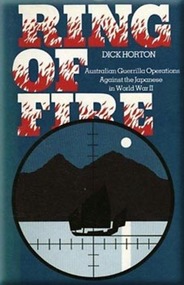
Book, Ring of Fire: Australian Guerrrilla Operations Against Japan in World War II
... He describes the magnificent series of operations of the Independent Companies against the crack 5th and 48th Divisions of the Japanese Army on Timor and the achievements of HMAS KRAIT a converted Japanese fishing boat. He goes on to describe the revolt of the population in Borneo which was engineered by a handful of men. mostly Australians from Z Special Unit, and which materially assisted the Allied Forces when they invaded and re-took it. ...Dick Horton, as a Lieutenant RNVR. was a member of the Special Forces with which this book is concerned and was awarded the DSC and the American Silver Star for his services. He writes from first-hand knowledge and pays fitting tribute to his brothers-in-arms. He describes the magnificent series of operations of the Independent Companies against the crack 5th and 48th Divisions of the Japanese Army on Timor and the achievements of HMAS KRAIT a converted Japanese fishing boat. He goes on to describe the revolt of the population in Borneo which was engineered by a handful of men. mostly Australians from Z Special Unit, and which materially assisted the Allied Forces when they invaded and re-took it. Apart from its unquestionable value to students of military history, "Ring of Fire" is an exciting account of a variety of imaginativenon-fiction Dick Horton, as a Lieutenant RNVR. was a member of the Special Forces with which this book is concerned and was awarded the DSC and the American Silver Star for his services. He writes from first-hand knowledge and pays fitting tribute to his brothers-in-arms. He describes the magnificent series of operations of the Independent Companies against the crack 5th and 48th Divisions of the Japanese Army on Timor and the achievements of HMAS KRAIT a converted Japanese fishing boat. He goes on to describe the revolt of the population in Borneo which was engineered by a handful of men. mostly Australians from Z Special Unit, and which materially assisted the Allied Forces when they invaded and re-took it. Apart from its unquestionable value to students of military history, "Ring of Fire" is an exciting account of a variety of imaginative -
 Australian Commando Association - Victoria
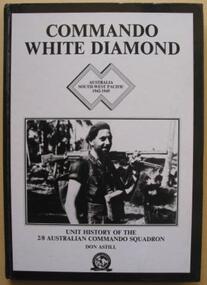
Book, Commando White Diamond: Unt History of the 2/8th Australian Commando Squadron
... Everything went well and the 5th Division later landed at Jacquinot Bay in November. The squadron too was on the move, and in October it sailed to Torokina, the main Australian base on Bougainville, where it joined the II Australian Corps. ...The detailed history of the No.8 Independent Commando Company during World War II. Plastic protective cover over the book. The 2/8th Independent Company was formed at Wilson’s Promontory, Victoria, in July 1942 and travelled to Yandina, in Queensland, in September. While the other seven independent companies saw action in the islands off Australian and in New Guinea, the 2/8th spent most of the next two years based at Adelaide River, in the Northern Territory. While it was in the Territory, the independent companies underwent a series of reorganisations and the name of the 2/8th was changed from the 2/8th Independent Company to the 2/8th Cavalry (Commando) Squadron. This name was later simplified to just commando squadron. In July 1944, after years of waiting, the squadron left the Territory and sailed from Townsville to Lae, via Milne Bay. While at Lae, the squadron received an intake of 70 men from the 2/8th from the 2/3rd, 2/5th and 2/6th Cavalry (Commando) Squadrons, many of whom were veterans of the earlier New Guinea campaigns. Their experience was no doubt a useful reserve that would have been called upon during the 2/8th’s subsequent campaign in Bougainville. Others though, were able to implement some of their commando training when a small group from the 2/8th they made a secret landing on New Britain. Towards the end of the 1944 the 5th Division was preparing to make a landing at Jacquinot Bay in New Britain. Part of these preparations included landing a small group of officers from the division at Jacquinot Bay to make a secret reconnaissance of the potential landing site. As Jacquinot Bay was still in Japanese controlled territory, ‘C’ Troop from the 2/8th provided the protection for the reconnaissance party by establishing a position on the beach and by patrolling the surrounding country. Everything went well and the 5th Division later landed at Jacquinot Bay in November. The squadron too was on the move, and in October it sailed to Torokina, the main Australian base on Bougainville, where it joined the II Australian Corps. The campaign on Bougainville was dived into three areas, the Central, Northern and Southern Sectors. The 2/8th served in the latter two areas. The 2/8th made the first move of the Australian campaign in the Northern Sector, by patrolling from Torokina to Kuraio Mission and Amun once a week. The squadron did this from the second week of November unit the second week of December. The 2/8th was then transferred to the Southern Sector. The main battle for Bougainville was fought in the Southern Sector, as the 3rd Division advanced towards Buin – the main Japanese base on the island. As the division’s infantry brigades advanced along the coast, the 2/8th’s task was to protect their flank by conducting forward reconnaissance patrols, harassing the Japanese with raids and ambushes and conducting a form of guerrilla warfare. The squadron had a long campaign. For nine months, from the end of December until August 1945, the troopers were in action the whole time. After securing the Jaba River, they moved inland, first to Sovele Mission, then the villages of Opai, Nihero and Morokaimoro. They had reached Kilipaijino by the end of the war. Each village taken became a patrol base. Patrols were usually limited to two sections, although up to six sections could be operating at a time. Patrols generally lasted four to six days, but nine-day patrols were not unknown. The squadron collected and collated track information, terrain reports and located the enemy. Once patrols had gathered information, they were free to make a ‘strike’ against the Japanese by setting an ambush or taking a prisoner. These raids were very effective, as they forced the Japanese to deploy troops to their rear areas, removing men from the front created by the infantry. Following Japan’s surrender and the end of the war, the ranks of the squadron thinned quickly as men were discharged or were transferred to other units. For those who were left, the squadron returned to Australia at the end of December. In mid January 1946, at Liverpool, the 2/8th Commando Squadron was disbanded.non-fictionThe detailed history of the No.8 Independent Commando Company during World War II. Plastic protective cover over the book. The 2/8th Independent Company was formed at Wilson’s Promontory, Victoria, in July 1942 and travelled to Yandina, in Queensland, in September. While the other seven independent companies saw action in the islands off Australian and in New Guinea, the 2/8th spent most of the next two years based at Adelaide River, in the Northern Territory. While it was in the Territory, the independent companies underwent a series of reorganisations and the name of the 2/8th was changed from the 2/8th Independent Company to the 2/8th Cavalry (Commando) Squadron. This name was later simplified to just commando squadron. In July 1944, after years of waiting, the squadron left the Territory and sailed from Townsville to Lae, via Milne Bay. While at Lae, the squadron received an intake of 70 men from the 2/8th from the 2/3rd, 2/5th and 2/6th Cavalry (Commando) Squadrons, many of whom were veterans of the earlier New Guinea campaigns. Their experience was no doubt a useful reserve that would have been called upon during the 2/8th’s subsequent campaign in Bougainville. Others though, were able to implement some of their commando training when a small group from the 2/8th they made a secret landing on New Britain. Towards the end of the 1944 the 5th Division was preparing to make a landing at Jacquinot Bay in New Britain. Part of these preparations included landing a small group of officers from the division at Jacquinot Bay to make a secret reconnaissance of the potential landing site. As Jacquinot Bay was still in Japanese controlled territory, ‘C’ Troop from the 2/8th provided the protection for the reconnaissance party by establishing a position on the beach and by patrolling the surrounding country. Everything went well and the 5th Division later landed at Jacquinot Bay in November. The squadron too was on the move, and in October it sailed to Torokina, the main Australian base on Bougainville, where it joined the II Australian Corps. The campaign on Bougainville was dived into three areas, the Central, Northern and Southern Sectors. The 2/8th served in the latter two areas. The 2/8th made the first move of the Australian campaign in the Northern Sector, by patrolling from Torokina to Kuraio Mission and Amun once a week. The squadron did this from the second week of November unit the second week of December. The 2/8th was then transferred to the Southern Sector. The main battle for Bougainville was fought in the Southern Sector, as the 3rd Division advanced towards Buin – the main Japanese base on the island. As the division’s infantry brigades advanced along the coast, the 2/8th’s task was to protect their flank by conducting forward reconnaissance patrols, harassing the Japanese with raids and ambushes and conducting a form of guerrilla warfare. The squadron had a long campaign. For nine months, from the end of December until August 1945, the troopers were in action the whole time. After securing the Jaba River, they moved inland, first to Sovele Mission, then the villages of Opai, Nihero and Morokaimoro. They had reached Kilipaijino by the end of the war. Each village taken became a patrol base. Patrols were usually limited to two sections, although up to six sections could be operating at a time. Patrols generally lasted four to six days, but nine-day patrols were not unknown. The squadron collected and collated track information, terrain reports and located the enemy. Once patrols had gathered information, they were free to make a ‘strike’ against the Japanese by setting an ambush or taking a prisoner. These raids were very effective, as they forced the Japanese to deploy troops to their rear areas, removing men from the front created by the infantry. Following Japan’s surrender and the end of the war, the ranks of the squadron thinned quickly as men were discharged or were transferred to other units. For those who were left, the squadron returned to Australia at the end of December. In mid January 1946, at Liverpool, the 2/8th Commando Squadron was disbanded. -
 Australian Commando Association - Victoria
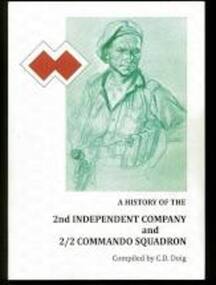
Book, A history of the 2nd Independent Company and 2/2nd Commando Squadron
... 5th Division, and was based at Lamarien. Following Japan’s surrender and the end of the war, the ranks of the squadron thinned quickly as men were discharged or transferred to other units. For those who were left, they returned to Australia...5th Division, and was based at Lamarien. Following Japan’s surrender and the end of the war, the ranks of the squadron thinned quickly as men were discharged or transferred to other units. For those who were left, they returned to Australia ...The history of the No. 2 Independent Commando Company and 2/2 Commando Squadron during World War II – scarce as a 1st edition dated 1986. Having completed its training at Foster, on Wilson’s Promontory, Victoria, the 2nd Independent Company was raised and travelled north to Katherine, in the Northern Territory. However, following Japan’s entry into the war, as with the other independent companies that were sent to the islands off Australia, the 2nd was sent to Timor, where it joined the 2/40th Battalion and the rest of Sparrow Force. Sparrow Force divided itself between west Timor, part of the Netherlands East Indies, and east Timor, which belonged to Portugal. The 2/40th Battalion defended the capital of west Timor, Koepang, and the airfield at Penfui. Most of the independent company moved to the airfield at Dili, in east Timor, and the nearby mountains. Portugal was opposed to the stationing of a Dutch or Australian garrison in case this provoked the Japanese, but despite this opposition, on 17 December 1941, elements of the 2nd Independent Company and Dutch troops landed near Dili. On 20 February 1942 the Japanese invaded the island, attacking east and west Timor simultaneously. The 2/40th Battalion held out for three days, but were overrun and were killed or captured. Similarly, the 2nd could not hold the airfield and were also driven back. But they were not captured and instead retreated to the mountains where they conducted a very successful and pursued a guerrilla war against the Japanese which lasted for over a year. Following the capture of Timor, the 2nd occupation the company was listed as “missing”, the company’s signallers were able to build a wireless transmitter, nicknamed ‘Winnie the War Winner’, and on 18/19 April were able to contact Darwin. At the end of May RAN vessels began landing supplies for the Australians on the south coast of east Timor. These supply runs were very dangerous but they allowed the Australians on Timor to continue fighting. In September the guerillas were reinforced with the 2/4th Independent Company. However, this could not go on indefinitely. In August the Japanese lunched a major offensive against the guerrillas and Japanese reprisals against the civilian population of east Timor reduced their support for the Australians. The 2nd (now named the 2/2nd Independent Company) and 2/4th were withdrawn in December and January 1943 respectively. Although the 2/2nd Independent Company is best known for its time on Timor, it also saw extensive service in New Guinea and New Britain. The independent company reformed at the army’s training centre at Canungra, Queensland, where it was reinforced and reequipped. The company then moved to the Atherton Tableland, where it briefly became part of the 2/6th Cavalry (Commando) Regiment. Due to this reorganisation, in October, the 2/2nd Independent Company was renamed the 2/2nd Cavalry (Commando) Squadron. This name was later simplified to just commando squadron. When this happened though, the 2/2nd was back in action. In June 1943 the 2/2nd sailed from Townsville for Port Moresby and was subsequently flown to Bena Bena, in the Bismark Range in New Guinea’s highlands. Here they supported the 2/7th Independent Company in patrolling the Ramu River area. In the second week of July the 2/2nd moved into position, with its headquarters at Bena Bena and with its platoons’ occupying neighbouring positions. By the end of the month their patrols were skirmishing with the Japanese. The 2/2nd remained in New Guinea until October 1944. After 90 days leave, the squadron reformed at Strathpine in Queensland before sailing to New Britain in April 1945. The 2/2nd landed at Jacquinot Bay on 17 April. The squadron then moved to Wide Bay, in order to support the 13th Brigade of the 5th Division, and was based at Lamarien. Following Japan’s surrender and the end of the war, the ranks of the squadron thinned quickly as men were discharged or transferred to other units. For those who were left, they returned to Australia and in early 1946 the 2/2nd Commando Squadron was disbanded. Includes Nominal Roll Soft Cover without Dust Jacket – 270 pages -
 Bendigo Military Museum
Award - CITATION DCM, Post 1943
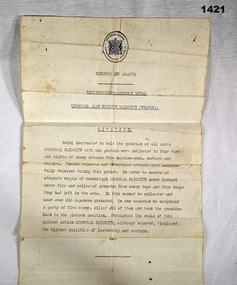
... Hospital 2.11.39 - 6.11.39 unlisted, posted to 2/7th Bn 6th Division 2nd AIF on 25.11.1939, hospital 2.3.40 - 19.3.40 unlisted, embarked for the Middle East 18.4.1940 arriving 17.5.1940, hospital twice between 31.7.40 - 22.8.40 unlisted, total 11 days, embark for Greece 9.4.1941, return to Middle East late May/June 1941 medical, promoted Cpl 20.7.1941, A/Sgt 14.2.1942, embark for Australia 12.3.1942 arriving 38.3.1942, hospital 9.6.42 - 16.6.42 with Threadworm, embark for New Guinea 13.10.1942, promoted Sgt 29.10.42, revert to Cpl at own request 25.11.1942, hospital with Malaria 18.1.43 - 9.2.43. During the period of August 1st - 5th...Hospital 2.11.39 - 6.11.39 unlisted, posted to 2/7th Bn 6th Division 2nd AIF on 25.11.1939, hospital 2.3.40 - 19.3.40 unlisted, embarked for the Middle East 18.4.1940 arriving 17.5.1940, hospital twice between 31.7.40 - 22.8.40 unlisted, total 11 days, embark for Greece 9.4.1941, return to Middle East late May/June 1941 medical, promoted Cpl 20.7.1941, A/Sgt 14.2.1942, embark for Australia 12.3.1942 arriving 38.3.1942, hospital 9.6.42 - 16.6.42 with Threadworm, embark for New Guinea 13.10.1942, promoted Sgt 29.10.42, revert to Cpl at own request 25.11.1942, hospital with Malaria 18.1.43 - 9.2.43. During the period of August 1st - 5th ...Alan Kenneth Naismith, VX4838 enlisted in the AIF on 23.10.1939 age 24 years 7 months. Hospital 2.11.39 - 6.11.39 unlisted, posted to 2/7th Bn 6th Division 2nd AIF on 25.11.1939, hospital 2.3.40 - 19.3.40 unlisted, embarked for the Middle East 18.4.1940 arriving 17.5.1940, hospital twice between 31.7.40 - 22.8.40 unlisted, total 11 days, embark for Greece 9.4.1941, return to Middle East late May/June 1941 medical, promoted Cpl 20.7.1941, A/Sgt 14.2.1942, embark for Australia 12.3.1942 arriving 38.3.1942, hospital 9.6.42 - 16.6.42 with Threadworm, embark for New Guinea 13.10.1942, promoted Sgt 29.10.42, revert to Cpl at own request 25.11.1942, hospital with Malaria 18.1.43 - 9.2.43. During the period of August 1st - 5th 1943 at an area called Bobdubi Ridge Alan is awarded the DCM and is WIA on the 5th, GSW to right shoulder, embarks from Pt Moresby 27.9.1943 arriving Cairns 30.9.1943, hospital Malaria 13.2.44 - 10.3.44, accidental injury 6.5.1944 fractured left clavicle, discharged from the Army on 8.9.1944. The Official History of Australia in WW2 states that Sgt Naismith had gained a reputation as a booby trap expert and was interested in these gadgets.The citation is on a light parchment type paper rectangular in shape. Colour is into a fawn with stains and marks from handling. Creases from folding have left several small tears. The rear is blank with sticky tape holding the citation together at the folds.At the top of the Citation is a seal, blue in colour with the words, Govenor - General, Commonwealth of Australia. The centre coat of arms of the seal has fine writing which is unreadable. There are no other markings except for the citation wording itself. “Distinguished Conduct Medal Corporal Alan Kenneth Naismith ( VX4838 )”citation dcm, a.k.naismith vx4838, documents - certificates -
4th/19th Prince of Wales's Light Horse Regiment Unit History Room
Uniform, Service Dress WW1, c 1914
... In 1921 he was promoted colonel, commanding the 5th Cavalry Brigade, and in 1931 brigadier, in charge of the 2nd Cavalry Division. He returned to Strathmerton but later farmed a property at Katandra, which he named Kuneitra. - Source: Australian...In 1921 he was promoted colonel, commanding the 5th Cavalry Brigade, and in 1931 brigadier, in charge of the 2nd Cavalry Division. He returned to Strathmerton but later farmed a property at Katandra, which he named Kuneitra. - Source: Australian Dictionary of Biography Service dress of General Sir Murray Bourchier, complete with jacket, trousers, shirt, tie, boots (high rise),Sam Browne belt, peaked cap, medal ribbons, badges of rank, medal ribbons Uniform, Service Dress WW1 ...Sir Murray William James Bourchier (1881-1937), grazier, soldier and politician, was born on 4 April 1881 at Pootilla, Bungaree, Victoria, eldest son of Edward Bourchier, Geelong-born farmer, and his wife Francis (Fanny), née Cope. In 1878 Edward and his three brothers had taken up four adjoining selections on the Murray River near Tocumwal. Within a few years their properties had expanded considerably: Edward's, near Strathmerton, was called Woodland Park; the other three were known collectively as Boomagong. After a private education in Melbourne, Murray returned to Woodland Park. From 1909 until the outbreak of World War I he commanded a troop of light horse at Numurkah, attending annual camps and courses. Bourchier's military service was distinguished. He enlisted in the Australian Imperial Force in August 1914 and sailed as a lieutenant in the 4th Light Horse Regiment, serving seven months on Gallipoli. After the Sinai campaign in 1916-17, during which he was promoted lieutenant-colonel commanding his regiment, he made the crucial final assault on Beersheba. On 31 October 1917 he led his men, many of them from his own district, at full gallop over two miles into Turkish entrenchments and on for a further two miles (3.2 km) into Beersheba to capture vital wells before the Turks could destroy them. Lacking sabres, the regiment used bayonets held in their hands as shock weapons. For this exploit he was awarded the Distinguished Service Order and earned the sobriquet 'Bourchier of Beersheba'. Eleven months later, after fighting north through Palestine, he commanded a joint force of the 4th and 12th Light Horse regiments (Bourchier Force) in the final advance on Damascus; on entering the city the 4th captured 12,000 Turks and set about relieving their sufferings. Bourchier was three times mentioned in dispatches. He was appointed C.M.G. in June 1919 and his A.I.F. appointment ended in October. In 1921 he was promoted colonel, commanding the 5th Cavalry Brigade, and in 1931 brigadier, in charge of the 2nd Cavalry Division. He returned to Strathmerton but later farmed a property at Katandra, which he named Kuneitra. - Source: Australian Dictionary of BiographyService dress of General Sir Murray Bourchier, complete with jacket, trousers, shirt, tie, boots (high rise),Sam Browne belt, peaked cap, medal ribbons, badges of rank, medal ribbons -
4th/19th Prince of Wales's Light Horse Regiment Unit History Room
Uniform, Mess Kit, c 1914
... In 1921 he was promoted colonel, commanding the 5th Cavalry Brigade, and in 1931 brigadier, in charge of the 2nd Cavalry Division. He returned to Strathmerton but later farmed a property at Katandra, which he named Kuneitra. Source: Australian...In 1921 he was promoted colonel, commanding the 5th Cavalry Brigade, and in 1931 brigadier, in charge of the 2nd Cavalry Division. He returned to Strathmerton but later farmed a property at Katandra, which he named Kuneitra. Source: Australian ...Sir Murray William James Bourchier (1881-1937), grazier, soldier and politician, was born on 4 April 1881 at Pootilla, Bungaree, Victoria, eldest son of Edward Bourchier, Geelong-born farmer, and his wife Francis (Fanny), née Cope. In 1878 Edward and his three brothers had taken up four adjoining selections on the Murray River near Tocumwal. Within a few years their properties had expanded considerably: Edward's, near Strathmerton, was called Woodland Park; the other three were known collectively as Boomagong. After a private education in Melbourne, Murray returned to Woodland Park. From 1909 until the outbreak of World War I he commanded a troop of light horse at Numurkah, attending annual camps and courses. Bourchier's military service was distinguished. He enlisted in the Australian Imperial Force in August 1914 and sailed as a lieutenant in the 4th Light Horse Regiment, serving seven months on Gallipoli. After the Sinai campaign in 1916-17, during which he was promoted lieutenant-colonel commanding his regiment, he made the crucial final assault on Beersheba. On 31 October 1917 he led his men, many of them from his own district, at full gallop over two miles into Turkish entrenchments and on for a further two miles (3.2 km) into Beersheba to capture vital wells before the Turks could destroy them. Lacking sabres, the regiment used bayonets held in their hands as shock weapons. For this exploit he was awarded the Distinguished Service Order and earned the sobriquet 'Bourchier of Beersheba'. Eleven months later, after fighting north through Palestine, he commanded a joint force of the 4th and 12th Light Horse regiments (Bourchier Force) in the final advance on Damascus; on entering the city the 4th captured 12,000 Turks and set about relieving their sufferings. Bourchier was three times mentioned in dispatches. He was appointed C.M.G. in June 1919 and his A.I.F. appointment ended in October. In 1921 he was promoted colonel, commanding the 5th Cavalry Brigade, and in 1931 brigadier, in charge of the 2nd Cavalry Division. He returned to Strathmerton but later farmed a property at Katandra, which he named Kuneitra. Source: Australian Dictionary of BiographyMess kit of General Sir Murray Bourchier complete with peaked cap, jacket, cummerbund, shirt, tie, waistcoat, trousers, shoes, AMF lapel badges & badges of rank -
 Monbulk RSL Sub Branch
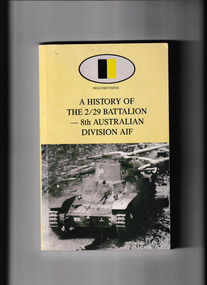
Book, Robert Christie, A history of the 2/29 Battalion - 8th Australian Division AIF, 1985
... Australian army - 8th division The unit originally left Australia as a completely Victorian unit but returned with representatives from all Sates in the Commonwealth. The 2/29th Battalion was the fist Victorian unit into action in the Malauan campaign and has the distinction of two set of battle honours, one for the bloody Muar Road battle where the battlion initially and later in association with the 2/19th Battalion held the crack Japanese 5th Division, the Imperial Guards for six days to enable the whole British force to be withdrawn behind Yong Peng, and the second for their part in the battle for Singapore Island. ...The unit originally left Australia as a completely Victorian unit but returned with representatives from all Sates in the Commonwealth. The 2/29th Battalion was the fist Victorian unit into action in the Malauan campaign and has the distinction of two set of battle honours, one for the bloody Muar Road battle where the battlion initially and later in association with the 2/19th Battalion held the crack Japanese 5th Division, the Imperial Guards for six days to enable the whole British force to be withdrawn behind Yong Peng, and the second for their part in the battle for Singapore Island. It was during the intial battle with the Japanese Imperial Guards on Sunday, January 18, 1942 that the Battalion with the supporting anti-tank guns of the 2/4th Anti Tank Regiment accounted for 8 Japanese tanks in one morning. Two commanding officers were killed during the Muar Road battle and total casualties for the week were 13 officers and 296 O/R/'s. It was when Lt.-Col. S. A. F. Pond, who took command, set about re-forming the Battalion after Muar that reinforcements from all States joined the unit. The battalion spent 3 1/2 years as P.O.W.'s of the Japanese and a long period of this working on the infamous Burma-Thailand railway where 260 lost their livesIll, p.224.non-fictionThe unit originally left Australia as a completely Victorian unit but returned with representatives from all Sates in the Commonwealth. The 2/29th Battalion was the fist Victorian unit into action in the Malauan campaign and has the distinction of two set of battle honours, one for the bloody Muar Road battle where the battlion initially and later in association with the 2/19th Battalion held the crack Japanese 5th Division, the Imperial Guards for six days to enable the whole British force to be withdrawn behind Yong Peng, and the second for their part in the battle for Singapore Island. It was during the intial battle with the Japanese Imperial Guards on Sunday, January 18, 1942 that the Battalion with the supporting anti-tank guns of the 2/4th Anti Tank Regiment accounted for 8 Japanese tanks in one morning. Two commanding officers were killed during the Muar Road battle and total casualties for the week were 13 officers and 296 O/R/'s. It was when Lt.-Col. S. A. F. Pond, who took command, set about re-forming the Battalion after Muar that reinforcements from all States joined the unit. The battalion spent 3 1/2 years as P.O.W.'s of the Japanese and a long period of this working on the infamous Burma-Thailand railway where 260 lost their livesworld war 1939 – 1945 – campaigns – malaya, australian army - 8th division -
 Kyneton RSL Sub Branch
WW1 Medals
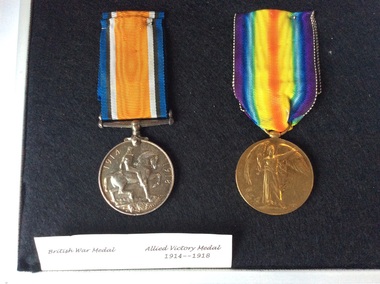
... Soldiers of the newly arrived 5th Australian Division, together with the British 61st Division, were ordered to attack strongly fortified German front line positions near the Aubers Ridge in French Flanders. ...Pte Simmons was born in Kyneton. Died at the battle of Fromelles, July 1916.Fromelles. The battle of Fromelles on 19 July 1916 was a bloody initiation for Australian soldiers to warfare on the Western Front. Soldiers of the newly arrived 5th Australian Division, together with the British 61st Division, were ordered to attack strongly fortified German front line positions near the Aubers Ridge in French Flanders. The attack was intended as a feint to hold German reserves from moving south to the Somme where a large Allied offensive had begun on 1 July. The feint was a disastrous failure. Australian and British soldiers assaulted over open ground in broad daylight and under direct observation and heavy fire from the German lines. Over 5,500 Australians became casualties. Almost 2,000 of them were killed in action or died of wounds and some 400 were captured. This is believed to be the greatest loss by a single division in 24 hours during the entire First World War. Some consider Fromelles the most tragic event in Australia’s history. www.awm.gov.au/articles/encyclopedia/fromelles Two WW1 War service medals with ribbons in a white presentation case. With black clothe lining. On the rim of each medal is: 4899Pte N T Simmons 59 Bn AIF The medals are labelled British War Medal and Allied Victory Medal 1914- 1918. On the inside of the lid is card inscribed: Posthumus award to 4899 Pte N T Simmons 59 Bn AIF. ww1 medals, british war medal, allied victory medal 1914- 1918, n t simmons, fromelles -
 National Vietnam Veterans Museum (NVVM)
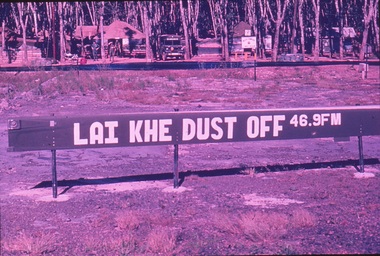
Slide - Sims Image Collection
... 5th Division. From a collection of 253 images on slides taken while on deployment in Vietnam, by Corporal Peter Stanley Sims (44304), who served in the Royal Australian Army Medical Corps, 1969 - 1970....5th Division. From a collection of 253 images on slides taken while on deployment in Vietnam, by Corporal Peter Stanley Sims (44304), who served in the Royal Australian Army Medical Corps, 1969 - 1970. ...Lai Khe Base Camp was a significant United States Army base in South Vietnam during the Vietnam War, serving as the headquarters for the 1st Infantry Division from 1965 to 1972. Located along Highway QL13, also known as Thunder Road, it also hosted other U.S. Army units and the South Vietnamese Army's 5th Division. From a collection of 253 images on slides taken while on deployment in Vietnam, by Corporal Peter Stanley Sims (44304), who served in the Royal Australian Army Medical Corps, 1969 - 1970.Sign of 'Lai Khe Dust Off 48.9FM', Vietnam 1969/70. peter stanley sims, 44304, slides, royal australian army medical corps, vietnam war, sims, hq australian forces vietnam, 20 surgical hospital, lai khe, dust off -
 National Vietnam Veterans Museum (NVVM)
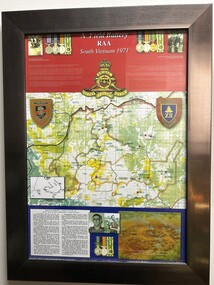
Poster - Information Board - A Field Battery RAA, South Vietnam 1971, A Field Battery RAA, South Vietnam 1971
... A Field Artillery Operation Overlord RAA Lance-Bombardier Peter (Blue) Martin Maher 55740 Royal Regiment Of Australian Artillery Military Medal MM Killed in Action Gnr Bayne Daniel (Gus) Kelly 2795310 12th Field Regiment 5th Platoon 104th Field Battery The Royal Australian Regiment B Company 2nd Lt Ian George Mathers 2794496 4th Field Regiment 42nd Us Artillery 1st Armoured Regiment A Squadron 3rd Cavalry Regiment Capt (Temp) Ian Michael Yerbury 43129 131 Divisional Locating Battery A Field Battery RAA, South Vietnam 1971 Silver framed display board of A Field Battery RAA, South Vietnam 1971with map, photos and notes of Operation Overlord - contact 7th June, 1971. ...Silver framed display board of A Field Battery RAA, South Vietnam 1971with map, photos and notes of Operation Overlord - contact 7th June, 1971. See media for more information.A Field Battery RAA, South Vietnam 1971a field artillery, operation overlord, raa, lance-bombardier peter (blue) martin maher, 55740, royal regiment of australian artillery, military medal, mm, killed in action, gnr bayne daniel (gus) kelly, 2795310, 12th field regiment, 5th platoon, 104th field battery, the royal australian regiment, b company, 2nd lt ian george mathers, 2794496, 4th field regiment, 42nd us artillery, 1st armoured regiment, a squadron, 3rd cavalry regiment, capt (temp) ian michael yerbury, 43129, 131 divisional locating battery -
 Bendigo Military Museum
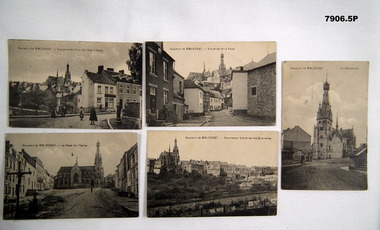
Postcard - POSTCARDS - WALCOURT, BELGIUM, c.WW1
... Postcards sent whilst billeted in Walcourt, whilst attached to 5th Divisional Headquarters (57 Batt) Australian Imperial Forces Abroad. ...Postcards sent whilst billeted in Walcourt, whilst attached to 5th Divisional Headquarters (57 Batt) Australian Imperial Forces Abroad. ...Postcards sent whilst billeted in Walcourt, whilst attached to 5th Divisional Headquarters (57 Batt) Australian Imperial Forces Abroad. Part of the "Robert H. Baron" (No. 3596 and Cooper Collections. See Catalogue No. 1981P for details of Baron's service.Five black and white postcard scenes of Walcourt, Belgium. Each has an anecdote on the back.1. & 2. Handwritten in blue ink on back: Letter from R.H. Baron to his mother dated “Belgium 15/3/19” 3. Handwritten in blue ink on back: “Letter from R.H. Baron to his mother - no date” 4. & 5. Handwritten in blue ink on back: "3596 Pte R.H. Baron, 5 Divisional Headquarters (57 Batt) Australian Imperial Forces Abroad”robert h. baron, cooper collection, postcard, letters, ww1, walcourt belgium -
 Bendigo Military Museum
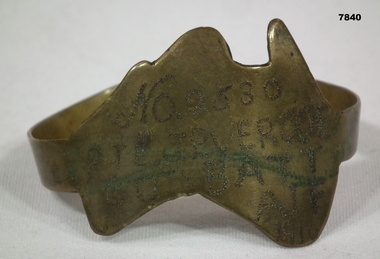
Memorabilia - TRENCH ART, BRACELET, C.1916
... 5th Aust. Division - for bravery and devotion to duty in dressing and carrying wounded to the Regt. Aid Post during a counter attack on Villers Brettoneux on the night of 24/25th April 1918. Cooper Collection Trench Art John P. Vercoe Engraved in the face of the map: 'No.2530, PTE J.P. VERCOE, 60TH BATT, AIF, 1916. Brass map of Australia ...Part of the Cooper Collection. "John Percy VERCOE", No. 2530, enlisted 18/5/16 in 5th Reinforcements, 60 BN. Aged 30 years. Embarked for England 25/9/1916, embarked for France 4/2/1917, WIA 26/4/1918. GSW to left eye, severe. Left eye excised England 30/4/1918. RTA 23/9/1918. Discharged from the AIF 4/1/1919. Passed away 30/12/1925. John received a Congratulatory card from MAJ.General J.H. Hobbs, K.C.B, V.D. Commanding 5th Aust. Division - for bravery and devotion to duty in dressing and carrying wounded to the Regt. Aid Post during a counter attack on Villers Brettoneux on the night of 24/25th April 1918.Brass map of Australia fashioned into a bracelet. Band is secured with a clip. Owners details engraved on the map.Engraved in the face of the map: 'No.2530, PTE J.P. VERCOE, 60TH BATT, AIF, 1916.cooper collection, trench art, john p. vercoe -
 St Kilda Historical Society
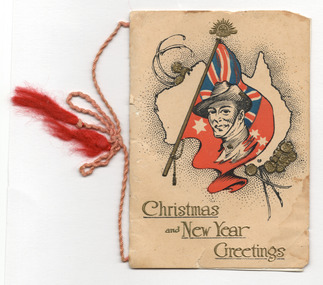
Ephemera - Seasonal card, Christmas and New Year Greetings, 1918
... Depicts Australian flag and soldier. Card is from 5th Divisional Signal Coy., AIF, France....Depicts Australian flag and soldier. Card is from 5th Divisional Signal Coy., AIF, France. 14th Battalion AIF Insert signed by George Arnold. ...Depicts Australian flag and soldier. Card is from 5th Divisional Signal Coy., AIF, France.Folded buff-coloured cardboard with paper insert fastened by faded red cord. Insert signed by George Arnold. Handwritten notation on back of card: Given to St K His Society by Mrs Parker 14/3/8214th battalion aif -
 Nhill and District Historical Society Inc.
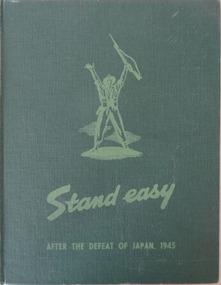
Book - Stand Easy, Australian War Memorial, After the Defeat of Japan 1945, 1945
... Contributors to this publication can be identified by their service number. blamey nerve war medical evacuation 2nd australian corps surrender of japan bougainville borneo 5th australian division 6th australian division 7th australian division 9th australian division tarakan military - history warfare A collection of personal stories which extended from the collection of Khaki and Green. ...A collection of personal stories which extended from the collection of Khaki and Green. The service numbers have been used to identify those who have contributed to the content.Stand Easy - After the Defeat of Japan 1945; Green hardcover with light green text and picture of soldier. The spine also has light green text of title. The inside front and back covers have green art geometric patterns. Illustrations, photographs, cartoons: 208 pages non-fiction A collection of personal stories which extended from the collection of Khaki and Green. The service numbers have been used to identify those who have contributed to the content.blamey, nerve war, medical evacuation, 2nd australian corps, surrender of japan, bougainville, borneo, 5th australian division, 6th australian division, 7th australian division, 9th australian division, tarakan, military - history, warfare -
 Wangaratta RSL Sub Branch
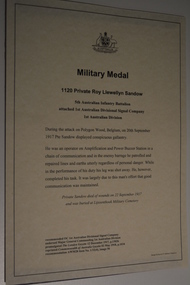
Document - Citation, Military Medal
... Military Medal 1120 Private Roy Llewellyn Sandow 5th Australian Infantry Battalion attached 1st Australian Divisional Signal Company 1st Australian Division...Private Sandow died of wounds on 22 September 1917 and was buried at Lijssenthoek Military Cemetery. roy llewellyn sandow polygon wood belgium 1917 ww1 5th australian infantry battalion Military Medal 1120 Private Roy Llewellyn Sandow 5th Australian Infantry Battalion attached 1st Australian Divisional Signal Company 1st Australian Division Cream coloured citation with Australian Coat of Arms above black type contained in black border. ...During the attack on Polygon Wood Belgium on 20th September 1917 Pte Sandow displayed conspicuousu gallantry - He was an operator on Amplification and Power Buzzer Station in a chain of communication and in the enemy barrage he patrolled and repaired lines and earths utterly regardless of personal danger. While in the performance of his duty his leg was shot away. He however completed his task. It was largely due to this man's effort that good communication was maintained. Private Sandow died of wounds on 22 September 1917 and was buried at Lijssenthoek Military Cemetery. Cream coloured citation with Australian Coat of Arms above black type contained in black border.Military Medal 1120 Private Roy Llewellyn Sandow 5th Australian Infantry Battalion attached 1st Australian Divisional Signal Company 1st Australian Divisionroy llewellyn sandow, polygon wood, belgium, 1917, ww1, 5th australian infantry battalion -
 Australian Army Museum of Western Australia
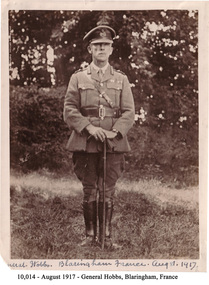
Photograph
... Talbot Hobbs, World War 1, 5th Australian Division, Western Front General Hobbs August 1917 Blaringham, France. ...General Hobbs August 1917 Blaringham, France. Digital copy of photograph from a personal album of Lieutenant General JJT Hobbs.talbot hobbs, world war 1, 5th australian division, western front -
 8th/13th Victorian Mounted Rifles Regimental Collection
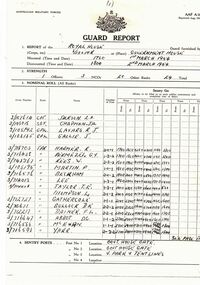
Document - Royal guard report, AAF A18 Guard Report, 2 March 1954
... The queen was resident at Government House Melbourne for nine days and during the time guard duties were shared by 1st Battalion Royal Australian Regiment, 3rd Division Royal Australian Artillery, 5th Infantry Battalion (Victorian Scottish), 6th Infantry Battalion (Royal Melbourne Regiment), 4th/19th Prince of Wales's Light Horse, 8th/13th Victorian Mounted Rifles, 2nd Medium Regiment, 22nd Field Regiment and Melbourne University Rifles. ...The queen was resident at Government House Melbourne for nine days and during the time guard duties were shared by 1st Battalion Royal Australian Regiment, 3rd Division Royal Australian Artillery, 5th Infantry Battalion (Victorian Scottish), 6th Infantry Battalion (Royal Melbourne Regiment), 4th/19th Prince of Wales's Light Horse, 8th/13th Victorian Mounted Rifles, 2nd Medium Regiment, 22nd Field Regiment and Melbourne University Rifles. ...The 8th/13th Victorian Mounted Rifles was raised as a regiment of the Royal Australian Armoured Corps on 1 May 1948 with Headquarters in Melbourne and squadrons in Sale, Benalla/Wangaratta and Albury. In 1955 Regimental Headquarters moved to Wangaratta and a second squadron was located at Albury. The Sale squadron transferred to 4th/19th Prince of Wales’s Light Horse. In 1977 8/13 VMR Regiment was reduced to an independent squadron A Squadron 8th/13th Victorian Mounted Rifles and in 1991 was linked with 4th/19th Prince of Wales’s Light Horse forming the VMR Squadron of that regiment. The queen was resident at Government House Melbourne for nine days and during the time guard duties were shared by 1st Battalion Royal Australian Regiment, 3rd Division Royal Australian Artillery, 5th Infantry Battalion (Victorian Scottish), 6th Infantry Battalion (Royal Melbourne Regiment), 4th/19th Prince of Wales's Light Horse, 8th/13th Victorian Mounted Rifles, 2nd Medium Regiment, 22nd Field Regiment and Melbourne University Rifles. Rare document relating to guard duty at Government House Melbourne mounted by a unit of the Citizen Military Forces from Victoria during a royal visit .Photocopy of a three page report prepared for period 1/2 March 1954 when 8th/13th Victorian Mounted Rifles Regiment provided the guard at Government House Melbourne during the visit of Her Majesty Queen Elizabeth II. The report lists the officer, 4 non commissioned officers and 20 other ranks comprising the guard together with timings and locations of the sentry posts. Also details of the guard duties, the general remarks at the conclusion of the guard period and the signatures of the Guard Commander, Captain LA Jackson 8th/13th Victorian Mounted Rifles and the Relieving Guard Commander Captain EJ King, 2nd Medium Regiment. queen elizabeth ii, royal visit 1954, government house, melbourne, guard, vmr -
 8th/13th Victorian Mounted Rifles Regimental Collection
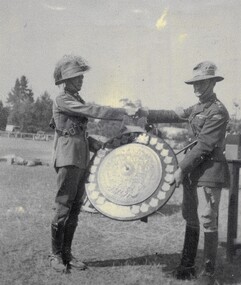
Photograph - Presentation of Hutton trophy
... Australia. The trophy is now held at the Armoured Centre Puckapunyal. Inter-regimental competition was strong in the years between WWI and WWII. Annually, the best troop in the regiments of the 3rd (Vic), 4th (SA), 5th (WA) and 6th (Tas) Military Districts competed for the Hutton Trophy and the Lord Forster Cup. The 20th Light Horse (Victorian Mounted Rifles) was raised in 1920 as part of the 3rd Cavalry Brigade, 2nd Cavalry Division...Australia. The trophy is now held at the Armoured Centre Puckapunyal. Inter-regimental competition was strong in the years between WWI and WWII. Annually, the best troop in the regiments of the 3rd (Vic), 4th (SA), 5th (WA) and 6th (Tas) Military Districts competed for the Hutton Trophy and the Lord Forster Cup. The 20th Light Horse (Victorian Mounted Rifles) was raised in 1920 as part of the 3rd Cavalry Brigade, 2nd Cavalry Division ...The Hutton Trophy or Shield was awarded annually to the best Light Horse Troop in Australia. The trophy is now held at the Armoured Centre Puckapunyal. Inter-regimental competition was strong in the years between WWI and WWII. Annually, the best troop in the regiments of the 3rd (Vic), 4th (SA), 5th (WA) and 6th (Tas) Military Districts competed for the Hutton Trophy and the Lord Forster Cup. The 20th Light Horse (Victorian Mounted Rifles) was raised in 1920 as part of the 3rd Cavalry Brigade, 2nd Cavalry Division, Citizen Military Forces, with Headquarters at Seymour and depots along the Goulburn Valley from Mansfield to Tocumwal in southern NSW. In December 1941, 20th Light Horse (Victorian Mounted Rifles) converted from horse to mechanised, initially as 20th Motor Regiment. In 1943 redesignated 20th Pioneer Battalion and deployed to Merauke, Dutch New Guinea. The regiment was disbanded at the end of the war, 1945. 20th Light Horse was the only light horse unit to serve overseas in WWII.No 1 Troop C Squadron 20th Light Horse Regiment drawn from the farming community of Tocumwal, personified the strength of citizen soldiering in rural Victorian and Southern NSW in the period following World War One and especially in the years immediately prior to the second World War. Building on the strength and enthusiasm of the Tocumwal Troop other Troops were raised at Finley, Berigan and Jerilderie. The Tocumwal Troop won the coveted Hutton Trophy in 1937 and 1938, defeating crack Troops from other States.Rare photograph of presentation of iconic RAAC trophy. Complements other items in the collection.Black and white photograph of two soldiers in Light Horse uniform with large trophy being Colonel G.A. Street MC presenting the Hutton Trophy to Sergeant H.G. Fyffe, troop leader of the Tocumwal Troop 20th Light Horse, winners of the 1937 competition. Sergeant Fyffe, later Captain Fyffe, 9th Division Cavalry Regiment served in North Africa and was awarded the Military Cross. hutton, light horse, fyffe, street, military, trophy -
 8th/13th Victorian Mounted Rifles Regimental Collection
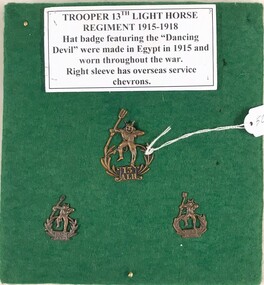
Badge - Dancing devils
... 5th Divisions. The regiment was reformed as firstly 1st Anzac Corps Mounted Troops and later Australian Corps Mounted Troops. ...5th Divisions. The regiment was reformed as firstly 1st Anzac Corps Mounted Troops and later Australian Corps Mounted Troops. ...The 13th Light Horse Regiment considered themselves to be the 'Devil's Own' owing to their number 13 designation, consequently when in Egypt in 1915 they commissioned local metal workers to produce unofficial hat and lapel badges. The 13th Light Horse Regiment (AIF) was raised at Broadmeadows Victoria in March 1915. Following service at Gallipoli the regiment was broken up with squadrons going to France as Divisional Cavalry Squadrons of 2nd, 4th and 5th Divisions. The regiment was reformed as firstly 1st Anzac Corps Mounted Troops and later Australian Corps Mounted Troops. The regiment was raised as 13th Light Horse (Gippsland), a Citizen Forces unit. following WWI, and trained as a cavalry regiment till August 1940, when it converted from horse to mechanised initially as 13th Motor Regiment then 13th Armoured Regiment. It trained in Victoria and Queensland but as the Japanese threat to the mainland declined, it was disbanded in October 1943 with men going to other units. The 10th Light Horse was raised in 1903 from Victorian Mounted Rifles companies in Gippsland. In 1912 the regiment was renumbered 13th Light Horse. In 1920 the regiment had the territorial title Gippsland Light Horse added. The regiment was raised as 13th Light Horse (Gippsland), a Citizen Forces unit. In 1940 the regiment converted from horse to mechanised, initially as 13th Motor Regiment then 13th Armoured Regiment. It trained in Victoria and Queensland but as the Japanese threat to the mainland declined, was disbanded in October 1943 with men going to other units. Fabric covered board with Dancing Devil hat badge and two lapel badges attached, also a paper label. The attached label relates to a previous display when the badges were displayed alongside a uniform.world war one, wwi, 13th, light horse, badge, devil
