
Showing 151 items matching "9 inch"
-
 Flagstaff Hill Maritime Museum and Village
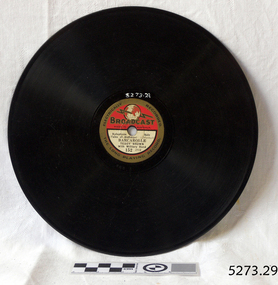
Audio - Gramophone Record, Vocalion Gramophone Co. Ltd (Broadcast records), Barcarole, late 1920s to early 1930s
... ...9 inch...Common diameters of records: 7 inch, 10 inch, 12 inch and 16 inch Revolutions Per Minute include: 33 1/3, 45, 78 Minutes per side of record: 3, 5.5, 7, 8, 9, 12, 15 and 22 Labels, in minutes per side: Single Play 3-5 min, Extended Play (EP) 7-12 min, Long Play (LP) 12-22 min ...Title: Barcarole Artist: Teddy Brown with his Military Band, Publisher: Broadcast, British Vocalion, Middlesex Number: A152 Size: 9 inch, Electrically recorded, promoted as Broadcast, The Long Playing Record....Title: Barcarole Artist: Teddy Brown with his Military Band, Publisher: Broadcast, British Vocalion, Middlesex Number: A152 Size: 9 inch, Electrically recorded, promoted as Broadcast, The Long Playing Record. ...Thomas Edison (1847–1931), an American, invented the phonograph in 1877, making it possible to record sound waves vertically and reproduce them on a wax cylinder so they could be heard again. Later, the German American, Emile Berliner (1851-1929), improved on Edison’s principles, greatly increasing the quality of the reproduced sounds with his invention of the gramophone in 1887, which recorded the sound waves laterally onto a flat shellac disc, or ‘record’. Records could be mass-produced in a factory where audio recordings were converted to a physical copy of that recording on a plate-sized disc. A gramophone machine reproduced the sound by spinning the record on a turntable at a specified number of rotations per minute (RPM) and using a stylus or needle to transfer the vibration via a membrane to a speaker, which amplified the sound. Berliner helped set up affiliated businesses overseas. One of his representatives was William Barry Owen (1860–1914), who, on 23 February 1889, partnered with Edmund Trevor Lloyd Williams (1859–1946) in England to register The Gramophone Company. His Master’s Voice (HMV) soon became the company’s major recording label, popular worldwide. The business based the label's logo of a dog looking into a gramophone horn for ‘his master’s voice’ was based on a painting by English artist Francis Barraud, which featured a terrier called Nipper beside a gramophone. Early gramophone records were mostly made from a material referred to as shellac, a natural ingredient combined with slate powder, and a filler of manilla copal, wood resin, carnauba wax, and carbon black. Although Bakelite seemed a useful, synthetic product, it was unsuccessful as a product for records. Around the time of World War II, lightweight, flexible synthetic vinyl records began replacing shellac records. Common diameters of records: 7 inch, 10 inch, 12 inch and 16 inch Revolutions Per Minute include: 33 1/3, 45, 78 Minutes per side of record: 3, 5.5, 7, 8, 9, 12, 15 and 22 Labels, in minutes per side: Single Play 3-5 min, Extended Play (EP) 7-12 min, Long Play (LP) 12-22 min This gramophone represents a step in the evolution of recording sound. In the 19th century, the human voice was first recorded on wax cylinders and replayed. It was the beginning of a new era in sound. Then, in the 1880s, voice could be recorded onto flat discs like this record, reliably reproduced and replayed many times, even on portable devices. Later, in the mid-20th century the following generation of electronic audio recording began, and later that century, digital recording gave even better reproduction. The record represents a popular means of entertainment for personal and social activities, as well as in some businesses. Shellac gramophone record with a red, cream and gold label. Title: Barcarole Artist: Teddy Brown with his Military Band, Publisher: Broadcast, British Vocalion, Middlesex Number: A152 Size: 9 inch, Electrically recorded, promoted as Broadcast, The Long Playing Record.flagstaff hill, warrnambool, maritime village, maritime museum, flagstaff hill maritime museum and village, shipwreck coast, great ocean road, gramophone, phonograph, sound waves, record, reproduction, audio record, music, sound, thomas edison, emile berliner, 1887, shellac, rpm, william barry owen, edmund trevor lloyd williams, the gramophone company, his master’s voice, hmv, francis barraud, nipper, electrically recorded, the long playing record, broadcast, british vocalion, middlesex, a152, barcarole, teddy brown with his military band, 9 inch -
 Sunshine and District Historical Society Incorporated
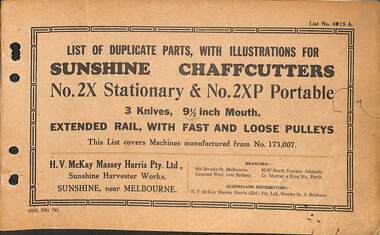
Manual - SUNSHINE HARVESTER - LIST OF DUPLICATE PARTS WITH ILLUSTRATIONS FOR SUNSHINE CHAFFCUTTERS NO.2 X STATIONARY & NO.2XP PORTABLE 3 KNIVES, 9 1/2 INCH MOUTH EXTENDED RAIL WITH FAST AND LOOSE PULLEY, SUNSHINE HARVESTER PRESS
... SUNSHINE HARVESTER - LIST OF DUPLICATE PARTS WITH ILLUSTRATIONS FOR SUNSHINE CHAFFCUTTERS NO.2 X STATIONARY & NO.2XP PORTABLE 3 KNIVES, 9 1/2 INCH MOUTH EXTENDED RAIL WITH FAST AND LOOSE PULLEY...Manual SUNSHINE HARVESTER - LIST OF DUPLICATE PARTS WITH ILLUSTRATIONS FOR SUNSHINE CHAFFCUTTERS NO.2 X STATIONARY & NO.2XP PORTABLE 3 KNIVES, 9 1/2 INCH MOUTH EXTENDED RAIL WITH FAST AND LOOSE PULLEY SUNSHINE HARVESTER PRESS ...h.v. mckays massey ferguson, sunshine harvester works, farm machinery -
 Sunshine and District Historical Society Incorporated
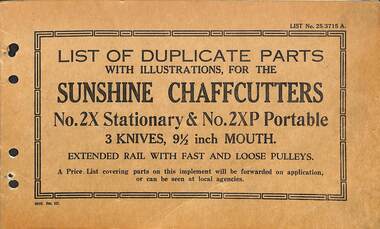
Manual - SUNSHINE HARVESTER - LIST OF DUPLICATE PARTS WITH ILLUSTRATIONS FOR THE SUNSHINE CHAFFCUTTERS NO. 2X STATIONARY & NO. 2XP PORTABLE 3 KNIVES 9 1/2 INCH MOUTH"/"EXTENDED RAIL WITH FAST & LOOSE PULLEYS, SUNSHINE HARVESTER PRESS
... SUNSHINE HARVESTER - LIST OF DUPLICATE PARTS WITH ILLUSTRATIONS FOR THE SUNSHINE CHAFFCUTTERS NO. 2X STATIONARY & NO. 2XP PORTABLE 3 KNIVES 9 1/2 INCH MOUTH"/"EXTENDED RAIL WITH FAST & LOOSE PULLEYS...Manual SUNSHINE HARVESTER - LIST OF DUPLICATE PARTS WITH ILLUSTRATIONS FOR THE SUNSHINE CHAFFCUTTERS NO. 2X STATIONARY & NO. 2XP PORTABLE 3 KNIVES 9 1/2 INCH MOUTH"/"EXTENDED RAIL WITH FAST & LOOSE PULLEYS SUNSHINE HARVESTER PRESS ...EX MUSEUM OF VICTORIA LOT 2 BOX 2/3h.v. mckays massey ferguson, sunshine harvester works, farm machinery -
 4th/19th Prince of Wales's Light Horse Regiment Unit History Room
Booklet (3 copies), Infantry Training Vol 1 Infantry Platoon Weapons Pam 9 Part II, 3.5 inch Rocket Launcher 1953, 1953
... Infantry Training Vol 1 Infantry Platoon Weapons Pam 9 Part II, 3.5 inch Rocket Launcher 1953...3.5 inch rocket launcher WO Code 8774 A soft covered booklet covering handling, firing and maintenance of the weapon Infantry Training Vol 1 Infantry Platoon Weapons Pam 9 Part II, 3.5 inch Rocket Launcher 1953 Booklet (3 copies) ...A soft covered booklet covering handling, firing and maintenance of the weaponWO Code 87743.5 inch rocket launcher -
National Vietnam Veterans Museum (NVVM)
Booklet, Australian Army: Infantry training, Vol. 1: Infantry platoon weapons pamphlet No. 9, Part 2: 3.5 inch rocket launcher , 1953, 1953
... Australian Army: Infantry training, Vol. 1: Infantry platoon weapons pamphlet No. 9, Part 2: 3.5 inch rocket launcher , 1953...Australia - Armed Forces - Service manuals Australian Army: Infantry training, Vol. 1: Infantry platoon weapons pamphlet No. 9, Part 2: 3.5 inch rocket launcher , 1953 Booklet Booklet Australian Army ...australia - armed forces - service manuals -
 Narre Warren and District Family History Group
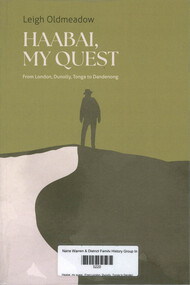
Book, Leigh Oldmeadow, Haabai, my quest.: From London, Dunolly, Tonga to Dandenong, 2024
... 299 p.; 9 inches...A family's journey from from London, Dunolly, Tonga to Dandenong. 299 p.; 9 inches Haabai, my quest.: From London, Dunolly, Tonga to Dandenong Book Leigh Oldmeadow ...A family's journey from from London, Dunolly, Tonga to Dandenong.299 p.; 9 inchesnon-fictionA family's journey from from London, Dunolly, Tonga to Dandenong. dandenong (vic.), leigh oldmeadow, upper beaconsfield (vic.) -
 Federation University Historical Collection
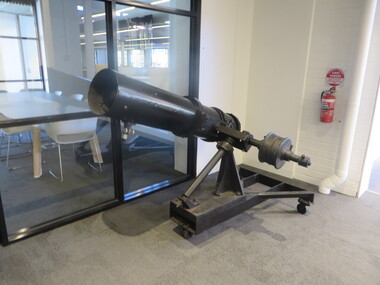
Instrument - Object, Telescope
... Black telescope with 9 inch mirror and large counterweight. ...The telescope was reconditioned by former staff member Graeme Hood. telescope observatory On the back of the mirror are the following words "G M Riley Sunshine 1922" Black telescope with 9 inch mirror and large counterweight. Telescope Instrument Object ...This telescope was used at the Ballarat School of Mines, and used to be located on the roof of the Ballarat Technical Art School (Gribble Building) at the Ballarat School of Mines. The telescope was reconditioned by former staff member Graeme Hood. Black telescope with 9 inch mirror and large counterweight. On the back of the mirror are the following words "G M Riley Sunshine 1922"telescope, observatory -
Federation University Historical Collection
Domestic object - Object, Candle Mould
... Metal candle mould for 6 x 9 inch candles...candle mould Metal candle mould for 6 x 9 inch candles Candle Mould Domestic object Object ...Metal candle mould for 6 x 9 inch candlescandle mould -
 Kiewa Valley Historical Society
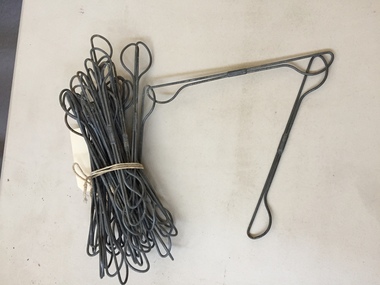
Surveyors Chain
... A bundle of galvanised wire chains linked at each end to form a chain. Each link is 9 inches long. See KVHS 1651...See KVHS 1651 A bundle of galvanised wire chains linked at each end to form a chain. Each link is 9 inches long. See KVHS 1651 Surveyors Chain ...See KVHS 1651A bundle of galvanised wire chains linked at each end to form a chain. Each link is 9 inches long. See KVHS 1651 -
Emerald Museum & Nobelius Heritage Park
Tool - Square - a woodworking tool, pre-WWII
... Square - a woodworking tool with 9-inch blade. Wooden handle. Hard metal blade. ...The square helps to fill out a picture of what was needed by the farmer in his work. square tool woodworking Alexander Emerald Victoria Australia Barely legible inch measurements on blade Square - a woodworking tool with 9-inch blade. Wooden handle. Hard metal blade. ...This square, along with a variety of other tools, was donated from a property in Emerald which was used for mixed farming and was owned by C Alexander (although he did not actually live there but leased it out) who bought it in 1920. The square helps to fill out a picture of what was needed by the farmer in his work.Square - a woodworking tool with 9-inch blade. Wooden handle. Hard metal blade. Measurements on blade barely legible. Brass edging.Barely legible inch measurements on bladesquare tool, woodworking, alexander, emerald, victoria, australia -
 Shepparton RSL Sub Branch
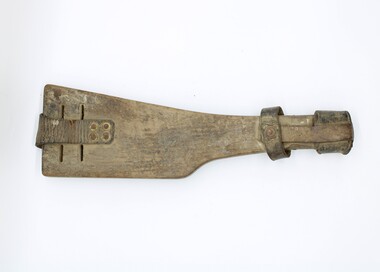
WW1 German Artillery Luger Stock, ww 1
... This item is a WW1 era German Luger Stock which would have most likely been used with a 9 inch barrel artillery Luger to assist with aiming a shot. ...This item is a WW1 era German Luger Stock which would have most likely been used with a 9 inch barrel artillery Luger to assist with aiming a shot. ...This item is a WW1 era German Luger Stock which would have most likely been used with a 9 inch barrel artillery Luger to assist with aiming a shot. This would have been attached to the wearer's belt.Wooden Stock. Length 36cm. Width butt 11, 20 cm strap wrapped around the end, width 3cm. held in by 4 screws 1 on stud to hold it in place. Cut through on on side other side . Width 4cm. Strap on the back holster for the muzzle. width strap 2cm Length 23cm held in place screw 1.5cm 3 rivots behind screw. ww1, first world war, 1914-1918, the great war, ww one, world war one, world war 1, luger, luger stock, stock, germany -
 Kiewa Valley Historical Society
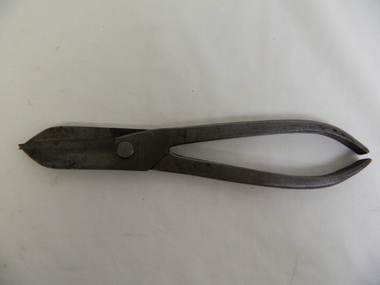
Tin Snips - Tool
... Best cast steel, black finish, ground blades. 9 inch. When closed blades meet at the point. ...Best cast steel, black finish, ground blades. 9 inch. When closed blades meet at the point. ...Used by builders and plumbers to cut tin.Used by Alan Tyers who worked for the State Electricity Commission of Victoria on the Kiewa Hydro Scheme.Cousin's Regular Pattern. Used by builders and plumbers to cut tin. Regular pattern with straight cutting edge. Best cast steel, black finish, ground blades. 9 inch. When closed blades meet at the point. Handles meet when closed and are curved outwards."J. Cousins & Sons. Sheffield"- Inscribed on handle side of pivot on one side.tinsmith, tin snips, tool, secv, cousin's & sons -
 Kiewa Valley Historical Society
Tool - Cold Chisel
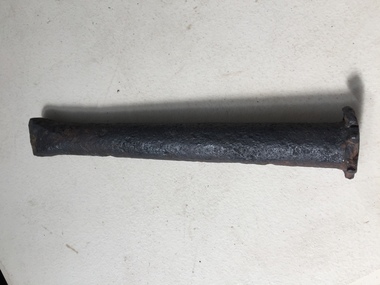
... Formerly KV110. 3 quarters of an inch diameter and 9 inches long and made of solid steel. Used to cut and shear hard materials such as metal and masonry. ...Used by workers in the Kiewa Valley. cold chisel metal work tool Formerly KV110. 3 quarters of an inch diameter and 9 inches long and made of solid steel. Used to cut and shear hard materials such as metal and masonry. ...Used by workers in the Kiewa Valley.Formerly KV110. 3 quarters of an inch diameter and 9 inches long and made of solid steel. Used to cut and shear hard materials such as metal and masonry. The descriptor cold means that metal is not preheated before using the tool. It is ideal for cutting through thick metal stock when a hacksaw is unsuitable.cold chisel, metal work, tool -
 Mt Dandenong & District Historical Society Inc.
Photograph, Olinda State School In Snow, 1951
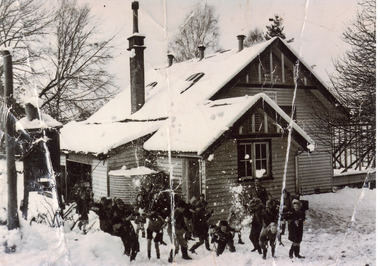
... The depth of the snow that year was 9 inches out in the open and the photo was taken either by The Age or the Sun. ...The depth of the snow that year was 9 inches out in the open and the photo was taken either by The Age or the Sun. olinda snow olinda school school school children keith curley Snow at Olinda Primary School 1951. ...The photograph held by the Historical Society is a copy of the original. A former pupil of Olinda State School contacted the Society with the following information: The photograph was taken in 1951. The teacher is Keith Curley who was Head Teacher from 1951 - 59. The depth of the snow that year was 9 inches out in the open and the photo was taken either by The Age or the Sun. Snow at Olinda Primary School 1951. Children playing in school ground.olinda, snow, olinda school, school, school children, keith curley -
 Murtoa & District Historical Society and Museum
fur coat, Ida Tepper's rabbit skin coat, 1920s
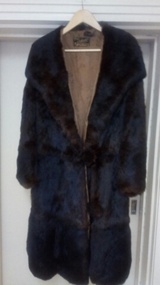
... It would have taken quite a few rabbits pelts to make the long full-length coat, as an average rabbit skin provides about 9 inch². ...It would have taken quite a few rabbits pelts to make the long full-length coat, as an average rabbit skin provides about 9 inch². Ida Tepper's rabbit skin coat fur coat ...The story behind the coat is that it was created in the early 1920s by F.J.Ellimor,Brunswick furriers, at the request of Mr Walter Tepper. Walter Tepper lived on a property, "Woodlands" at Kewell, near Murtoa. He trapped the rabbits and took the pelts to Melbourne where he commissioned the furrier to make the coat for his soon to be fiancé, Ida. Walter Tepper is buried in the Murtoa cemetery. Walter's granddaughter Carol Michalicek's (nee Schultz) donated the coat to the Murtoa Museum.It is significant as it is a fine example of the use of rabbit skins to create a fashionable coat. It remains in very good condition, 95 years since its creation. The coat has a link to the Tepper family who have resided in the district for over 100 years. This dark brown rabbit fur coat is well tailored, with quality inner lining and a dark, even-dyed coat. There is so much detail in the design of the coat, including a gorgeous heart shaped pocket. It would have taken quite a few rabbits pelts to make the long full-length coat, as an average rabbit skin provides about 9 inch². walter and ida tepper, rabbit skin coat, kewell -
 4th/19th Prince of Wales's Light Horse Regiment Unit History Room
Flag - King's Colour, 5th Battalion AIF, 1919 (estimated)
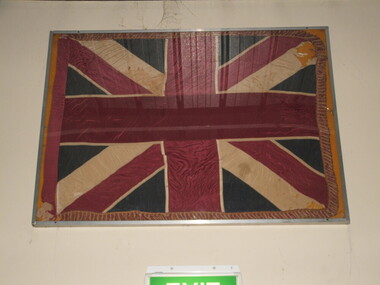
... The St George cross is 9 inches wide. All fimbriations are 1/2 inch. ...The St George cross is 9 inches wide. All fimbriations are 1/2 inch. 5th Battalion AIF Flag King's Colour Not known - procured by the British Government ...King's Colour - 5th Battalion AIF. Silk material. Design is of 'Great Union' flag as commissioned by the UK military (from the College of Arms) specifically for use on colours. The saltires of St Andrew and St Patrick are of the same width (4.5 inches) with a fimbriation added as in the original of the 1801 pattern Union Flag. The St George cross is 9 inches wide. All fimbriations are 1/2 inch. ww1, military, world war 1, silk, colours, heraldry, 5 battalion, 5bn, king s colours, sir ronald munro fergusson, 2 5 battalion, board, 3 military district, laid up, union flag, st george, st andrew, st patrick, college of arms -
 Bendigo Historical Society Inc.
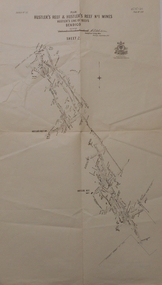
Map - HUSTLER'S REEF & HUSTLER'S REEF NO 1 MINES - PLAN OF THE HUSTLER'S REEF & HUSTLER'S REEF NO 1 MINES
... No 9 Level 896 feet 9 inches connecting No 10 Level at 867 feet 2 inches. ...No 9 Level 896 feet 9 inches connecting No 10 Level at 867 feet 2 inches. ...Plan of the Hustler's Reef & Hustler's Reef No 1 Mines on the Hustler's Line of Reefs, Bendigo Bulletin No 33, Plate No XVI. Plan shows the two shafts and the levels in relation to it. No 9 Level 896 feet 9 inches connecting No 10 Level at 867 feet 2 inches. Plan shows depth of levels and geographical features. Signed by H A Whitelaw, Underground Survey Office, Bendigo. Geographical Survey of Victoria emblem.mining, parish map, hustler's reef & hustler's reef no 1 mines, hustler's line of reefs, h a whitelaw, underground survey office bendigo, geographical survey of victoria -
 Mont De Lancey
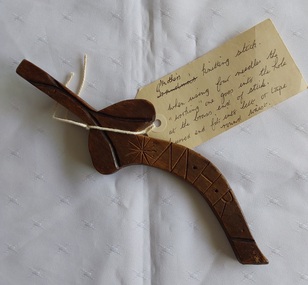
Functional object - Knitting Stick, Unknown
... It is approximately 23cm (9 inches) long with simple carving on one side of M H R in large letters as well as a nine pointed star next to them. ...It is approximately 23cm (9 inches) long with simple carving on one side of M H R in large letters as well as a nine pointed star next to them. ...The attached card states - 'Mother's knitting stick'. There is a brass hole one end with four brass nails where the tip of a knitting needle is inserted for support. The curved and fits into a belt or tape around the waist. Knitting was carried out on curved metal needles, one of these needed to be kept rigid by being held between the hand and knitting sheath held at the side of the body either tucked into a belt or held under the armpit. The sheath would allow someone to to knit with one hand whilst performing chores with the other. They also took the weight of the work and stopped stitches from slipping off the bottom of a double ended needle. Many were given as love tokens but there were plenty made by men for their daughters or other close family members.An antique curved carved wooden knitting stick or treen Knitting Sheath for hand knitters. It is approximately 23cm (9 inches) long with simple carving on one side of M H R in large letters as well as a nine pointed star next to them. There is a brass hole one end with four brass nails where the tip of a knitting needle is inserted for support. The curved end fits into a belt or tape round the waist. 'M H R' and a 'nine pointed star' is carved into the curved part of the stick . There is an attached card - 'Grandma's (crossed out) Mother's knitting stick. When using four needles the "working" one goes into the hole at the brass end of stick. Curved end fits into belt or tape round waist'accessories, knitting equipment, knitting -
 Department of Energy, Environment and Climate Action
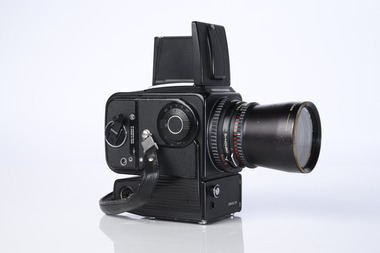
Hasselblad aerial camera
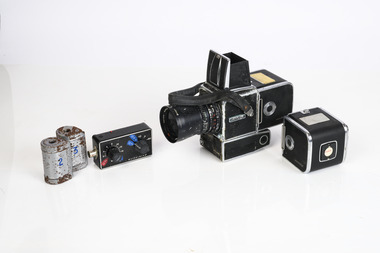
... The images needed to sharp, with high contrast, and in a large format (most were printed in B&W on 9-inch by 9-inch glossy photographic paper) with at least a 60% overlap to enable stereoscopic viewing and with a 20-30% side lap to allow for aircraft drift. ...The images needed to sharp, with high contrast, and in a large format (most were printed in B&W on 9-inch by 9-inch glossy photographic paper) with at least a 60% overlap to enable stereoscopic viewing and with a 20-30% side lap to allow for aircraft drift. ...Aerial photos were used to make maps of forest types, timber resources, to survey logging areas and regeneration, to mark boundaries of public land and new plantations, to identify new roads and tracks, as well as for fire suppression. Infrared film was sometimes used to monitor insect and disease attack. The images needed to sharp, with high contrast, and in a large format (most were printed in B&W on 9-inch by 9-inch glossy photographic paper) with at least a 60% overlap to enable stereoscopic viewing and with a 20-30% side lap to allow for aircraft drift. Preferably, the photo scale was close to the final map scale avoid to problems when enlarging and to reduce distortion. Something was needed to supplement the very expensive and infrequent large-area photography programs. From the mid-1960s Victorian foresters began experimenting with small format 70mm and 35mm cameras which proved simple, practical, cheap and flexible. It was found that any SLR camera could be used provided it had a good quality lens and fast shutter speed (preferably down to 1/1000 second). Motorised cameras with a large film capacity had obvious advantages and were essential when access to the camera was not possible during flight. It is also essential for the shutter to operate at low temperatures and those lubricated with silicones were recommended. Components of a typical FCV Divisional Office system included – A Hasselblad or Vinten 70 mm format aerial camera with a focal plane shutter which could be electrically operated. Interchangeable lenses to allow for different photo scales and flying heights. Several large film magazines, which were loaded in a darkroom, each with a capacity of 100 feet or approximately 500 frames. A remote control for the camera in single-shot mode or automatic firing at selected intervals of 2 to 50 seconds. It also needed a frame counter. A light aircraft was modified with an internal mounting for the camera to keep it level and steady. Often a hole was cut through the floor for the lens. The aircraft also needed an inbuilt 12 Volt DC battery to operate the motorised camera shutter. The front passenger seat was generally removed to improve access to the camera. An Aldis drift sight was also fitted. This might be likened to an inverted periscope and is used to determine drift, to facilitate accurate navigation along flight lines and to determine the exposure interval for stereoscopic overlap. This item is kept at Traralgon.Hasselblad 500 ELM camera with 70mm lens, film pack, motor drive and battery In 1964 Hasselblad started production of a motorized camera, the 500 EL The EL/M is a modified version of the EL, "M" means modified, "EL" electric. Perhaps the most famous use of the Hasselblad camera was during the Apollo program missions when man first landed on the Moon. Almost all of the still photographs taken during these missions used modified Hasselblad cameras. forests commission victoria (fcv), forest measurement, surveying, mapping -
 Kew Historical Society Inc
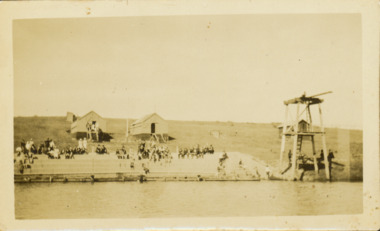
Photograph - Deep Rock Swimming Pool and Clubrooms on the Yarra, c.1925
... The ‘pool’ was to achieve fame as the venue for a world record-breaking ‘swallow dive’ of 205 feet 9 inches [63 metres] by ‘Prince Wickyama’, [aka Alec Wickham], a Solomon Islander. ...The ‘pool’ was to achieve fame as the venue for a world record-breaking ‘swallow dive’ of 205 feet 9 inches [63 metres] by ‘Prince Wickyama’, [aka Alec Wickham], a Solomon Islander. ...The former Deep Rock Swimming Pool was about 500 yards [457 metres] above Dight’s Falls. It was there that the Deep Rock Swimming Club was established in 1906. This initial club was expanded in 1916 to incorporate a life-saving club. In 1918, John Wren, the president of the club offered the club £1000, and undertook to sponsor a patriotic carnival in March 1918, at which swimming champions would take part. The ‘pool’ was to achieve fame as the venue for a world record-breaking ‘swallow dive’ of 205 feet 9 inches [63 metres] by ‘Prince Wickyama’, [aka Alec Wickham], a Solomon Islander. The dive from a special platform on the west side of the Yarra was reputedly viewed by between 50,000-100,000 spectators, with funds going to the State War Council. The Herald, 25 March 1918, claimed that the wide area occupied by spectators made more precise estimates impossible. In the 1980s, the construction of the Eastern Freeway, and the consequent re-routing of the Yarra River led to the site of the Deep Rock Pool being obliterated. A small cairn and plaque on the Fairfield side of the river now marks its former site.Very rare early photograph off the Deep Rock swimming pool. The pool and its built structures are historically and socially important to the people of Collingwood, Fairfield and Kew. Small, faded, Gelatin Silver print positive photograph of the Deep Rock Swimming Pool situated on the Yarra at Collingwood and Fairfield. The famous diving tower is at the right of the photo. The built structures were constructed for the Deep Rock Swimming and Life Saving Club. People are sitting on the terraces above the river. "Bathing Club. Deep Rock on the Yarra. Studley Park Melbourne. Please credit E.J. Thomasson Collection"deep rock swimming pool, deep rock swimming club, deep rock lifesaving club, swimming -- river yarra, river yarra -
![Uniform - Trainee Nurse Uniform [circa 1930], Dress [circa late1930s], August 2003](/media/collectors/50187a8f023fd7201471f198/items/6ab9e1b84443e7aaa3551151/item-media/6ab9e3c44443e7aaa3554f9a/item-fit-380x285.jpg?cb=6) Alfred Hospital Nurses League - Nursing History Collection
Alfred Hospital Nurses League - Nursing History CollectionUniform - Trainee Nurse Uniform [circa 1930], Dress [circa late1930s], August 2003
... Dress was full length, worn 9 inches off the floor. Gathered 3/4 length skirt. ...Dress was full length, worn 9 inches off the floor. Gathered 3/4 length skirt. ...Nancy Margaret Murdoch started March 1937, trained for 18 months. Contracted Tuberculosis, unable to complete training.Faded fine blue houndstooth check. Round neckline with neck band. Press stud at neck. Three metal buttons covered with white canvas. Waist band attached with button. No badge on sleeve to denote year. Dress was full length, worn 9 inches off the floor. Gathered 3/4 length skirt. Slit pocket right seam of skirt. Stain on left hand side of back of skirt. Sleeves full length, cuffs secured with metal buttons missing canvas cover. Fraying at wrist sleeve openings, tear and fraying on left sleeve. Small area of sleeve stitching missing on right front shoulder. Stain on sleeve bottom right sleeve. Stitch marks suggest right breast pocket has been removed. Two small stains above where pocket was located, otherwise dress in good condition.N. M. Murdoch printed cloth label attached back internal neck. Old catalogue number 516.11[a] hand written back inside neck. Worn in Preliminary Training School. -
 Department of Energy, Environment and Climate Action
Hasselblad aerial camera with carry case, spare batteries, and film cases (overall poor condtion)
... The images needed to sharp, with high contrast, and in a large format (most were printed in B&W on 9-inch by 9-inch glossy photographic paper) with at least a 60% overlap to enable stereoscopic viewing and with a 20-30% side lap to allow for aircraft drift. ...The images needed to sharp, with high contrast, and in a large format (most were printed in B&W on 9-inch by 9-inch glossy photographic paper) with at least a 60% overlap to enable stereoscopic viewing and with a 20-30% side lap to allow for aircraft drift. ...Aerial photos were used to make maps of forest types, timber resources, to survey logging areas and regeneration, to mark boundaries of public land and new plantations, to identify new roads and tracks, as well as for fire suppression. Infrared film was sometimes used to monitor insect and disease attack. The images needed to sharp, with high contrast, and in a large format (most were printed in B&W on 9-inch by 9-inch glossy photographic paper) with at least a 60% overlap to enable stereoscopic viewing and with a 20-30% side lap to allow for aircraft drift. Preferably, the photo scale was close to the final map scale avoid to problems when enlarging and to reduce distortion. Something was needed to supplement the very expensive and infrequent large-area photography programs. From the mid-1960s Victorian foresters began experimenting with small format 70mm and 35mm cameras which proved simple, practical, cheap and flexible. It was found that any SLR camera could be used provided it had a good quality lens and fast shutter speed (preferably down to 1/1000 second). Motorised cameras with a large film capacity had obvious advantages and were essential when access to the camera was not possible during flight. It is also essential for the shutter to operate at low temperatures and those lubricated with silicones were recommended. Components of a typical FCV Divisional Office system included – A Hasselblad or Vinten 70 mm format aerial camera with a focal plane shutter which could be electrically operated. Interchangeable lenses to allow for different photo scales and flying heights. Several large film magazines, which were loaded in a darkroom, each with a capacity of 100 feet or approximately 500 frames. A remote control for the camera in single-shot mode or automatic firing at selected intervals of 2 to 50 seconds. It also needed a frame counter. A light aircraft was modified with an internal mounting for the camera to keep it level and steady. Often a hole was cut through the floor for the lens. The aircraft also needed an inbuilt 12 Volt DC battery to operate the motorised camera shutter. The front passenger seat was generally removed to improve access to the camera. An Aldis drift sight was also fitted. This might be likened to an inverted periscope and is used to determine drift, to facilitate accurate navigation along flight lines and to determine the exposure interval for stereoscopic overlap. This item was found in storage at the Beechworth museum and its in poor condtionHasselblad 500 ELM camera with 70mm lens, film pack, motor drive and battery In 1964 Hasselblad started production of a motorized camera, the 500 EL The EL/M is a modified version of the EL, "M" means modified, "EL" electric. Perhaps the most famous use of the Hasselblad camera was during the Apollo program missions when man first landed on the Moon. Almost all of the still photographs taken during these missions used modified Hasselblad cameras. forests commission victoria (fcv), forest measurement, surveying, mapping -
 Halls Gap & Grampians Historical Society
Newspaper - Photocopy
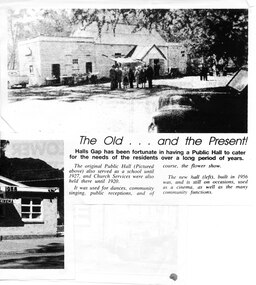
... The walls were to be constructed of slabs, 6 feet long, 9 inches wide and two inches thick. Uprights were to be 9 feet high and at least 9 inches thick. ...The walls were to be constructed of slabs, 6 feet long, 9 inches wide and two inches thick. Uprights were to be 9 feet high and at least 9 inches thick. ...The article shows a photo of the original Hall's Gap Hall and the (then) new Hall, which was built in 1956. The copy has been scanned as two separate images (because it was too large for the scanner). the second image is stored under "Additional Images". HISTORY OF HALL'S GAP HALL: No village, no matter how small, could possibly survive without a public meeting place, and Hall's Gap was no exception, even in 1899-1900. Actually it was the locals of Stony Creek village, as Hall's Gap was known for a short time, who decided to hold a meeting to find out how much interest there was in building a town hall! They soon found out that support was overwhelming, as can be seen by the fact that 14 gentlemen nominated for a position on the committee of four! Several motions were moved at that meeting, mainly with reference to the materials to be used, for instance that no "wattle and daub", but rather slabs of bark and local bush logs be used. The walls were to be constructed of slabs, 6 feet long, 9 inches wide and two inches thick. Uprights were to be 9 feet high and at least 9 inches thick. Sheets of bark, all 32 of them, had to be 8 feet by 8 feet. Tenders for the building materials were called on 9 March 1899 and, 21 days later, McKeon Brothers won the right to supply all the material for the princely sum of 4 pounds 10 shillings. The size of the hall was to be 20 feet by 10 feet. The first hall served the community well for the next thirteen years, being regularly used as a place of entertainment and religious worship. The growing community soon realised the need for a larger venue, with better facilities, so once again the townsfolk rallied to raise funds for a new hall, realising their dream around 1913. In 1921 a schoolteacher was provided by the education department but as there was no school building she was expected to use the hall. Mainly lessons were held in the kitchen as it was much warmer than the hall itself, and it was not unusual for up to twenty children to be taught, ranging in age from 5 to 14 years. It was not until 1928 that an official school was built. 1955-56 were years of great excitement. The Progress Association was in charge of deciding the format for the new hall, and there were many rowdy meetings beforehand. Some members had much more vision than others, and to some the amount of money required seemed astronomical. Two hall committee members resigned over differences of opinion but amazingly it all came together in the end, albeit at a greater cost than had been anticipated. There is only one record of a grant being made for the building,1500 pounds, and it came for the Minister of Public Works. Estimated cost of the building was around 8,000 pounds, and when finally finished it was just slightly over, but bank charges and interest took it to well over 9,000 pounds. An electric light generator was included and lighting installed. The SEC electricity was connected in 1962.A copy of a newspaper article entitled 'The Old . . . and the Present!', which includes two photographs.buildings, halls -
 Flagstaff Hill Maritime Museum and Village
Drawing - Vessel Line Drawing, Ship Building Clipper Ship Schomberg, 1855-1876
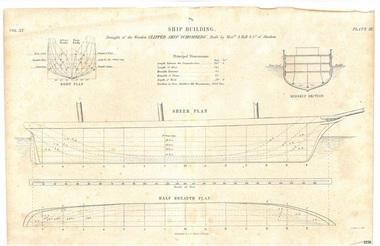
... Information on the draft Is as follows: “Principal dimensions: Length between the perpendiculars: 262 feet 6 inches Length of keel 245 feet Breadth extreme: 45 feet Breadth of frame: 42 feet Depth of hold: 29 feet 9 inches Burthen in tons, Builders Old Measurement: 2600 Tons” The publisher firm A & C Black, was founded by Adam and Charles Black in Edinburgh in 1807. ...Information on the draft Is as follows: “Principal dimensions: Length between the perpendiculars: 262 feet 6 inches Length of keel 245 feet Breadth extreme: 45 feet Breadth of frame: 42 feet Depth of hold: 29 feet 9 inches Burthen in tons, Builders Old Measurement: 2600 Tons” The publisher firm A & C Black, was founded by Adam and Charles Black in Edinburgh in 1807. ...This draft plan, a line etching, is of the wooden clipper ship "Schomberg" . It can be assumed from the heading "Ship Building." and the phrase "Built by Messrs. A Hall & Co. of Aberdeen" that the drawing is an example of plans for building a ship, and that the Schomberg ship has chosen to demonstrate this. The plan may have possibly been in a book, as it is made from two well-joined pieces of paper. The original plans would have been drawn up, discussed, reviewed and drawn in more detail before the building of the ship in Aberdeen, Scotland, in 1855. Information on the draft Is as follows: “Principal dimensions: Length between the perpendiculars: 262 feet 6 inches Length of keel 245 feet Breadth extreme: 45 feet Breadth of frame: 42 feet Depth of hold: 29 feet 9 inches Burthen in tons, Builders Old Measurement: 2600 Tons” The publisher firm A & C Black, was founded by Adam and Charles Black in Edinburgh in 1807. Over the years the company has published editions of Encyclopedia Britannica and Whose Who, and reference books, guides and technical books. The printer G Aikman (1788-1865) or his son G Aikman (1830-1905), were both named George. George senior was an early-19th century Scottish printer and publisher. After his death his son became the sole proprietor of the firm until he sold it in 1876. The draft plan uses the vessel Schomberg as its example ship building plan for demonstration purposes. It is significant for its association with the Victorian Heritage Registered shipwreck, the Schomberg. It is an example of a shipo building plan. The Schomberg collection is primarily significant because of the relationship between the objects, as together they have a high potential to interpret the story of the Schomberg. The Schomberg collection is archaeologically significant as the remains of an international passenger ship. The shipwreck collection is historically significant for representing aspects of Victoria’s shipping history and its potential to interpret sub-theme 1.5 of Victoria’s Framework of Historical Themes (living with natural processes). The collection is also historically significant for its association with the shipwreck and the ship, which was designed to be fastest and most luxurious of its day. The Schomberg collection meets the following criteria for assessment: Criterion A: Importance to the course, or pattern, of Victoria’s cultural history. Criterion B: Possession of uncommon, rare or endangered aspects of Victoria’s cultural history. Criterion C: Potential to yield information that will contribute to an understanding of Victoria’s cultural history.Plan; line engraving; draft of the wooden clipper ship 'Schomberg', built in 1855. The drawing on cream paper is made from two well- joined pages. The drawing gives the principal dimensions and labels for the Body Plan, Middle Section, Sheer Plan and Half Breadth Plan. Inscriptions are on the drawing and its rough cardboard storage folder. Publisher: A & C Black. Edinburgh. Printer: G. Aikman sc. EdinborughOn drawing: "SHIP BUILDING" "Draught of the Wooden CLIPPER SHIP SCHOMBERG", Buiilt by Messrs A Halt & Co. of Aberdeen" "Vol XX" "Plate III" "Principal Dimensions""BODY PLAN" "MIDDLE SECTION" "SHEER PLAN" "HALF BREDTH PLAN" "Published by A & C Black, Edinburgh" "G Aikman sc. Edinr" On storage folder: "Receipt Number 381A: "Line engraving draught of wooden ship "Schomberg" "warrnambool, flagstaff-hill-maritime-museum, shipwreck-coast, schomberg, schomberg plan, vessel schomberg, ship building, g. aikman ship plan draftsman, a.& c. black publisher aberdoon, a. hall & co. maker aberdeen, peterborough, clipper ship, captain forbes, black ball line, ship's plan, ship's drawing, line drawing, vessel plan, draft plan, line engraving, vol xx plate iii, a & c black, ship building example drawing, g aikman, 19th century -
 Learmonth and District Historical Society Inc.
Photo - Learmonth, Learmonth Tennis Team Winners 1941, 1941
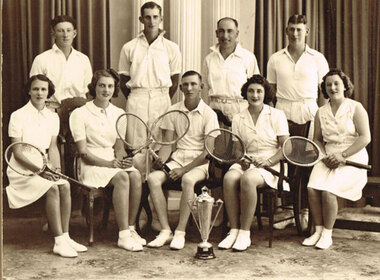
... A sepia photo on cardboard backing 12 x 9 1/2 inches. The photo itself is 7 1/2 x 5 3/4 inches in a landscape shape. ...A sepia photo on cardboard backing 12 x 9 1/2 inches. The photo itself is 7 1/2 x 5 3/4 inches in a landscape shape. ...Written in the Melbourne "ARGUS" newspaper on the 17th February 1941 under "COUNTRY SPORTS - TENNIS". In the B Grade contests for the Norman Grills Cup Learmonth No. 2 (E. Blain, J. Blain), W. McIntyre, L. Hucker, The Misses M. Ryan, D. Grills, J. Thomas and D. Dean d. Garibaldi. These players were all from the Learmonth and Weatherboard districts.A sepia photo on cardboard backing 12 x 9 1/2 inches. The photo itself is 7 1/2 x 5 3/4 inches in a landscape shape. There are 5 men and four women tennis players, all holding tennis rackets with a Premiership Cup at their feet.Learmonth No. 2 Country Week Tennis Team. Winners Season 1941. Names L-R Back row. L. Hucker (Vic, Capt.), W. McIntyre (Weatherboard), L. Rasdell, E. Blain. L-R Front row. Miss D. Dean (Mrs Toleman), Miss J. Thomas (Mrs Lyttle. Weatherboard), J. Blain (Capt.), Miss D. Grills (Mrs David Baird), Miss M. Ryan (Mrs Harrison. Weatherboard). Photographer - Thornton, Richards & Co, Ballarat.learmonth. tennis team, 1941, hucker, mcintyre, rasdell. blain, dean, thomas, grills, ryan -
 Department of Energy, Environment and Climate Action
Splitting Gun, Black Powder
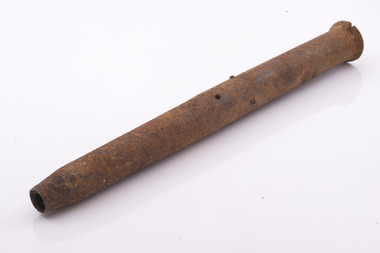
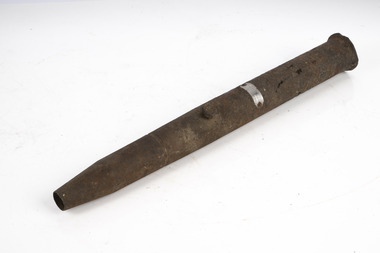
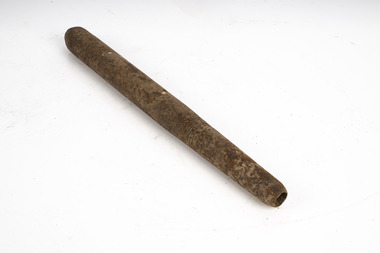
... They had a ¾ inch hole drilled about 9 inches deep into the centre of the shaft with a small pilot hole drilled from the outside to load the fuse. ...They had a ¾ inch hole drilled about 9 inches deep into the centre of the shaft with a small pilot hole drilled from the outside to load the fuse. ...Black powder splitting guns were commonly used to split large logs into more manageable pieces before the advent of excavators and front-end loaders in bush logging operations. A typical splitting gun used in Victorian forests was a piece of high-grade steel about 1-1/2 to 2 inches in diameter and about 16 inches long, and slightly tapered at one end. They had a ¾ inch hole drilled about 9 inches deep into the centre of the shaft with a small pilot hole drilled from the outside to load the fuse. The tube was carefully loaded with an amount of black gunpowder using a funnel and spoon. Experience being the guide on how much powder to use, which depended on log size, species and difficulty of splitting the wood. The hole was stopped with a piece of wadded paper and the gun positioned at the end of a length of the log to be split. The splitting gun was then belted into the log with a large wooden maul or even the back of an axe to a depth of about 3 to 4 inches. There were often markings as a guide. This also had the effect of tamping the black powder inside the gun. Preferably the gun was backed up by another large log to absorb the shock and avoid it flying off in the bush somewhere. I have seen guns where a length of string and coloured flag could be attached to help find them. A length of fuse was then inserted in the small hole and lit. Kaboom !!!! Needless to say, the splitting gun was a dangerous implement.Commonly used to split pulpwood but now rareBlack Powder Splitting GunFive marking rings used to guide how far the gun was in the logforest harvesting -
 Department of Energy, Environment and Climate Action
Log Splitting Gun
... They had a ¾ inch hole drilled about 9 inches deep into the centre of the shaft with a small pilot hole drilled from the outside to load the fuse. ...They had a ¾ inch hole drilled about 9 inches deep into the centre of the shaft with a small pilot hole drilled from the outside to load the fuse. ...Black powder splitting guns were commonly used to split large logs into more manageable pieces before the advent of excavators and front-end loaders in bush logging operations. A typical splitting gun used in Victorian forests was a piece of high-grade steel about 1-1/2 to 2 inches in diameter and about 16 inches long, and slightly tapered at one end. They had a ¾ inch hole drilled about 9 inches deep into the centre of the shaft with a small pilot hole drilled from the outside to load the fuse. The tube was carefully loaded with an amount of black gunpowder using a funnel and spoon. Experience being the guide on how much powder to use, which depended on log size, species and difficulty of splitting the wood. The hole was stopped with a piece of wadded paper and the gun positioned at the end of a length of the log to be split. The splitting gun was then belted into the log with a large wooden maul or even the back of an axe to a depth of about 3 to 4 inches. There were often markings as a guide. This also had the effect of tamping the black powder inside the gun. Preferably the gun was backed up by another large log to absorb the recoil shock and avoid it flying off in the bush somewhere. I have seen guns where a length of string and coloured flag could be attached to help find them. A length of fuse was then inserted in the small hole and lit. Kaboom !!!! Needless to say, the splitting gun was a dangerous implement.Log Splitting gun (large 50cm)forests commission victoria (fcv), hand tools -
 Department of Energy, Environment and Climate Action
Log Splitting Gun
... They had a ¾ inch hole drilled about 9 inches deep into the centre of the shaft with a small pilot hole drilled from the outside to load the fuse. ...They had a ¾ inch hole drilled about 9 inches deep into the centre of the shaft with a small pilot hole drilled from the outside to load the fuse. ...Black powder splitting guns were commonly used to split large logs into more manageable pieces before the advent of excavators and front-end loaders in bush logging operations. A typical splitting gun used in Victorian forests was a piece of high-grade steel about 1-1/2 to 2 inches in diameter and about 16 inches long, and slightly tapered at one end. They had a ¾ inch hole drilled about 9 inches deep into the centre of the shaft with a small pilot hole drilled from the outside to load the fuse. The tube was carefully loaded with an amount of black gunpowder using a funnel and spoon. Experience being the guide on how much powder to use, which depended on log size, species and difficulty of splitting the wood. The hole was stopped with a piece of wadded paper and the gun positioned at the end of a length of the log to be split. The splitting gun was then belted into the log with a large wooden maul or even the back of an axe to a depth of about 3 to 4 inches. There were often markings as a guide. This also had the effect of tamping the black powder inside the gun. Preferably the gun was backed up by another large log to absorb the recoil shock and avoid it flying off in the bush somewhere. I have seen guns where a length of string and coloured flag could be attached to help find them. A length of fuse was then inserted in the small hole and lit. Kaboom !!!! Needless to say, the splitting gun was a dangerous implement.Log Splitting gun (large 45cm)forests commission victoria (fcv), hand tools -
Ringwood and District Historical Society
Document - Real Estate & Stock Institute of Victoria Contract of Sale (C.E.Carter of Ringwood - Agent), Unsigned draft auction contract. Vendor: Ada L. Kennedy of Warrandyte Road, Ringwood - March, 1931
... The land is described as having a frontage of “58 feet 6 inches to Whitehorse Road by a depth of 131 feet 5 inches on the west side and 131 feet 9 inches on the east side…” and includes all buildings and erections on the property. ...The land is described as having a frontage of “58 feet 6 inches to Whitehorse Road by a depth of 131 feet 5 inches on the west side and 131 feet 9 inches on the east side…” and includes all buildings and erections on the property. ...Unsigned draft auction contract of sale of land with Agent's typewritten summary. Property - Lot 3 on Plan of Subdivision 9648, Part of Crown Portion 5, Parish of Ringwood, Certificate of Title Volume 4902 Folio 980219.18667 Kennedy AI Summary The document is an unsigned draft auction contract dated 28 March 1931 for the sale of Lot 3 on Plan of Subdivision 9648, part of Crown Portion 5 and part of a former government road in the Parish of Ringwood. The land is described as having a frontage of “58 feet 6 inches to Whitehorse Road by a depth of 131 feet 5 inches on the west side and 131 feet 9 inches on the east side…” and includes all buildings and erections on the property. Ada L. Kennedy is listed as vendor, with the purchaser’s details and the purchase price left blank. The contract was prepared for auction by C.E. Carter of Ringwood. The terms require a £150 deposit, with the balance payable by weekly instalments of 25 shillings at 7% interest until 28 March 1936, after which the remaining balance becomes due. The purchaser may pay off the whole or part of the purchase money early. The property is sold subject to existing tenancies and easements, and the purchaser must insure the buildings while instalments remain unpaid. Numerous technical amendments appear throughout the pro forma document, indicating it is a working draft. -
 Puffing Billy Railway
24 NB passenger carriage, 18/ 9/1909
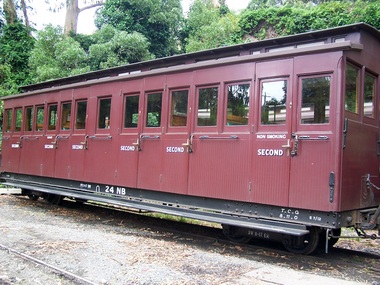
... 24 NB - Carriage (NB 3rd series) 6 compartments (36) Vehicle Length 29 feet 6 inches ( 8992 mm) Coupled Length 31 feet 4 inches (9550 mm) Width 6 feet 7 inches (2007 mm) Height 9 feet 9 inches (2972 mm) Weight 11 tons Capacity 40 passengers, or 36 with guard's compartment. ...24 NB - Carriage (NB 3rd series) 6 compartments (36) Vehicle Length 29 feet 6 inches ( 8992 mm) Coupled Length 31 feet 4 inches (9550 mm) Width 6 feet 7 inches (2007 mm) Height 9 feet 9 inches (2972 mm) Weight 11 tons Capacity 40 passengers, or 36 with guard's compartment. ...24 NB - Carriage (NB 3rd series) 6 compartments (36) Vehicle Length 29 feet 6 inches ( 8992 mm) Coupled Length 31 feet 4 inches (9550 mm) Width 6 feet 7 inches (2007 mm) Height 9 feet 9 inches (2972 mm) Weight 11 tons Capacity 40 passengers, or 36 with guard's compartment. Built 1906 - 1915 Number Built (1st Series) 6 Number Built (2nd Series) 17 Number Built (3rd Series) 4 In use NB 24 VR Service History NABAB 4.VA - 18/ 9/1909 NWS Built new - circa 1910 - To NAB 4.VA - NAB 4.VA - 18/ 6/1917 - To NB 24.VA - *NB 24.VA - / 6/1926 - Modified AC Malco 19/ 1/1932 NWS Into Workshops - 10/ 5/1932 NWS Out of Workshops (113 days) 21/ 6/1933 NWS Into Workshops - 17/ 8/1933 NWS Out of Workshops (58 days) 28/ 8/1934 NWS Into Workshops - 13/ 9/1934 NWS Out of Workshops (17 days) 9/ 2/1937 NWS Into Workshops - 17/ 3/1937 NWS Out of Workshops (37 days) 31/ 5/1940 NWS Into Workshops - 5/12/1940 NWS Out of Workshops (189 days) 27/ 1/1948 NWS Into Workshops - 29/ 7/1948 NWS Out of Workshops (185 days) 12/12/1954 - Scrapped Body to Eng. Spcl Works 17/ 8/1957 - Traced at Stocktake STET - Return to Register Puffing Billy Service History or Notes NB (3rd series) The Puffing Billy Railway built a guard's compartment built in 24 NB. This reduced the passenger capacity to 36. The car retained its classification as NB in an attempt to emphasise that this was only a temporary conversion. The NBC classification was already in use. One day the guard's compartment will be removed and the vehicle returned to the classification of NB. The guard's compartment has a radio, air brake taps and gauges but no hand brake.Historic - Victorian Railways Narrow Gauge - Passenger Rolling Stock: NB Passenger carriage Passenger carriage 24NB - Carriage (NB 2nd series 6 compartments), Timber body on a steel frame 24NBpuffing billy, 24nb, nb passenger carriage, 2'6" guage, victorian railways, narrow gauge passenger rolling stock
