
Showing 47 items matching "albury-wodonga border"
-
 Wodonga & District Historical Society Inc
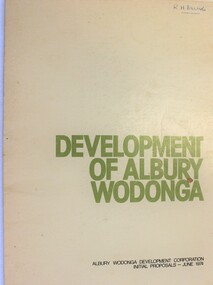
Book - Development of Albury Wodonga Initial Proposals, Albury-Wodonga Development Corporation, June 1974
... Albury-Wodonga Development Corporation...Border...Wodonga City Planning Albury decentralisation This report documents the initial policies and plans of the Albury-Wodonga Development Corporation for the growth of the city. It outlines the intitial proposals and long term goals set down for the development of the Albury -Wodonga area to establish it as a major Australian city. The Albury- Wodonga Development Agreement was signed on October 23. 1973 by Sir Robert Asking, Premier of New South Wales, Rupert Hamer, Premier of Victoria and Gough Whitlam, Prime Minister of Australia. Development of Albury Wodonga Initial Proposals Book Development of Albury Wodonga Initial Proposals Albury-Wodonga Development Corporation Border ...This report documents the initial policies and plans of the Albury-Wodonga Development Corporation for the growth of the city. It outlines the intitial proposals and long term goals set down for the development of the Albury -Wodonga area to establish it as a major Australian city. The Albury- Wodonga Development Agreement was signed on October 23. 1973 by Sir Robert Asking, Premier of New South Wales, Rupert Hamer, Premier of Victoria and Gough Whitlam, Prime Minister of Australia.non-fictionThis report documents the initial policies and plans of the Albury-Wodonga Development Corporation for the growth of the city. It outlines the intitial proposals and long term goals set down for the development of the Albury -Wodonga area to establish it as a major Australian city. The Albury- Wodonga Development Agreement was signed on October 23. 1973 by Sir Robert Asking, Premier of New South Wales, Rupert Hamer, Premier of Victoria and Gough Whitlam, Prime Minister of Australia.city planning wodonga, city planning albury, decentralisation -
 Wodonga & District Historical Society Inc
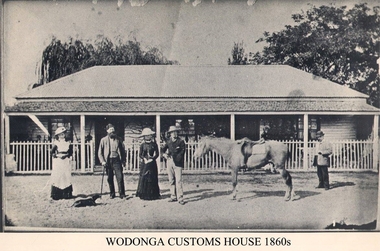
Photograph - Old Customs House, Wodonga, 1860s
... ...Albury Wodonga Border...Customs house Wodonga Albury Wodonga Border Colonial Rivalry Victoria /NSW Tariffs Black and white photograph of Customs officer Francis Cobham in Wodonga c 1860 Old Customs House, Wodonga Photograph Old Customs House, Wodonga ...Customs duties were a means of raising revenue between the 1850s and Federation. They were first introduced by NSW in November 1854 after it was separated from the colony of Victoria three years earlier. J P Hanify was appointed as sub-collector at Belvoir, the official name present day Wodonga at that time. Wodonga Customs House was built near the end of Union Bridge over the Murray River in 1859 Tariffs or customs duties greatly angered residents and it was little wonder the customs officer of the day was always an unpopular man. Tariffs had to be paid on articles such as tobacco, many food items and new clothing that were carried across the Border. The range of items was extended over time, leading to some farmers even swimming their livestock across the river to avoid duties at the Customs house. The levying of duties ended with Federation in 1901. Francis Cobham depicted in this photograph, took up the position of Customs officer in 1867 and remained there until his retirement in 1890. The building was originally a 2 roomed custom house in 1856 but was extended to provide living quarters for the Cobham family while a nearby cottage became the Customs house. The building was moved to a position south of the lagoon in the mid 1980s and is now a restaurant.This image represents an important stage in the development of colonial relationships and rivalries in Australia.Black and white photograph of Customs officer Francis Cobham in Wodonga c 1860customs house wodonga, albury wodonga border, colonial rivalry victoria /nsw, tariffs -
 Wodonga & District Historical Society Inc
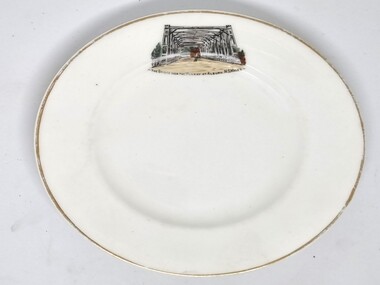
Souvenir - Souvenir Plate - Union Bridge, Albury, Hancock and Sons, c1930s
... ...Albury-Wodonga border...Wodonga. It is representative of a items produced to represent historic landmarks or features of the district. Albury Souvenirs Union Bridge Albury Albury-Wodonga border Murray RIver bridges Beneath image: " THE BRIDGE OVER THE MURRAY AT ALBURY, NSWALES Fine China round plate with gilt edge and image of the Union Bridge, Albury Souvenir Plate - Union Bridge, Albury Souvenir Souvenir Plate - Union Bridge, Albury Hancock and Sons ...This item is from a collection donated by descendants of John Francis Turner of Wodonga. It is one of many souvenirs produced to represent landmarks in the Albury-Wodonga district. The first punt across the Murray River at Albury was established by Robert Brown in 1843. In 1861 the first Union Bridge was built. It was demolished to make way for the second Union Bridge which opened in 1898. This second bridge closed and was eventually demolished after the third and existing bridge was opened in 1961. Hancock and Sons, Stoke on Trent - Sampson Hancock, a prominent Wesleyan Methodist, started potting in 1857. In 1891 he established the business of Sampson Hancock & Sons. Sampson died in 1900 and the business was continued by his three sons - Jabez, Harry and Arthur. In 1935 the business was in financial difficulty and was made bankrupt. It was restarted as S Hancock & Sons (Potters) Ltd. and moved to the Gordon Works, Hanley - which was renamed the Corona Works. The restarted company was not a success and it finally closed in 1937, having been put into receivership on 23rd March. This information helps to establish provenance of this plate.This item comes from a collection used by a prominent citizen of Wodonga. It is representative of a items produced to represent historic landmarks or features of the district.Fine China round plate with gilt edge and image of the Union Bridge, AlburyBeneath image: " THE BRIDGE OVER THE MURRAY AT ALBURY, NSWALESalbury souvenirs, union bridge albury, albury-wodonga border, murray river bridges -
 Wodonga & District Historical Society Inc
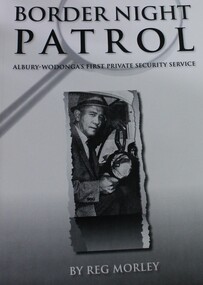
Book - Border night patrol : Albury-Wodonga's first private security service, Reg Morley, 2014
... ...crime albury wodonga...border...border security albury-wodonga crime albury wodonga border patrol reg morley This book tells the stories and encounters of Reg Morley who ran Albury-Wodonga's first private security service for 12 years from 1958. ...This book tells the stories and encounters of Reg Morley who ran Albury-Wodonga's first private security service for 12 years from 1958. Sworn in by Albury Police Inspector Jack Burke as a Special Constable, Mr. Morley started out his business with barely enough clients to make a living. Eventually it became a great success, and he sold the business in 1970 to Metropolitan Security Services. The stories are accompanied by Border Morning Mail clippings of events.non-fictionThis book tells the stories and encounters of Reg Morley who ran Albury-Wodonga's first private security service for 12 years from 1958. Sworn in by Albury Police Inspector Jack Burke as a Special Constable, Mr. Morley started out his business with barely enough clients to make a living. Eventually it became a great success, and he sold the business in 1970 to Metropolitan Security Services. The stories are accompanied by Border Morning Mail clippings of events.border security albury-wodonga, crime albury wodonga, border patrol, reg morley -
 Wodonga & District Historical Society Inc
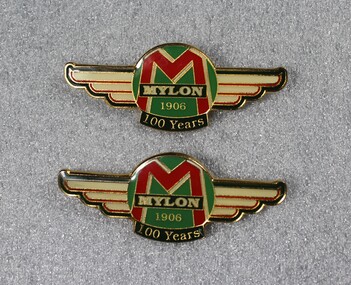
Memorabilia - Mylon's Wodonga, Victoria Centenary Badge, C. 1906
... In 1906 Patrick Mylon started a passenger transport service in the Albury-Wodonga border area with horses and cabs. His son Jack went into business in the late 1920s, and his grandson Bernie joined the firm early in 1970. ...In 1906 Patrick Mylon started a passenger transport service in the Albury-Wodonga border area with horses and cabs. His son Jack went into business in the late 1920s, and his grandson Bernie joined the firm early in 1970. ...In 1906 Patrick Mylon started a passenger transport service in the Albury-Wodonga border area with horses and cabs. His son Jack went into business in the late 1920s, and his grandson Bernie joined the firm early in 1970. When Patrick started with the horses and cabs, each cab carried eight passengers and he always had two horses per cab. As the business expanded, Mylons used a range of buses and coaches including Reo, Chev and Bedford vehicles. During more than 100 years of service to the Wodonga region and beyond, Mylon Motorways received many awards for Excellence and tourism. On July 2, 2008 the company, including its 31 buses and 45 staff members were transferred to the Dyson Group. Mylon were formed in 1906 providing transport service between Wodonga and Albury via horse-drawn cabs. This expanded to a modern fleet of more than 31 buses offering a range of regular bus routes and tours throughout the area and beyond. They were recognised for outstanding service and awards of excellence in the transport industry and tourism.Badges produced to celebrate 100 years of Mylon's operation in Wodonga. Logo includes the Mylon company logo featuring a red M on a green background and 3 gold bars. The word 100 years and 1906 have been added in gold lettering.In centre of logo " 1906/ 100 years"mylon, buslines, wodonga, wodonga businesses, transport -
 Wodonga & District Historical Society Inc
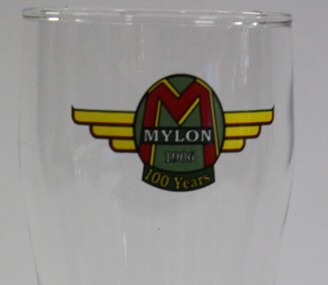
Memorabilia - Souvenir Schooner Glass Mylon Centenary, C. 1906
... In 1906 Patrick Mylon started a passenger transport service in the Albury-Wodonga border area with horses and cabs. His son Jack went into business in the late 1920s, and his grandson Bernie joined the firm early in 1970. ...In 1906 Patrick Mylon started a passenger transport service in the Albury-Wodonga border area with horses and cabs. His son Jack went into business in the late 1920s, and his grandson Bernie joined the firm early in 1970. ...In 1906 Patrick Mylon started a passenger transport service in the Albury-Wodonga border area with horses and cabs. His son Jack went into business in the late 1920s, and his grandson Bernie joined the firm early in 1970. When Patrick started with the horses and cabs, each cab carried eight passengers and he always had two horses per cab. As the business expanded, Mylons used a range of buses and coaches including Reo, Chev and Bedford vehicles. During more than 100 years of service to the Wodonga region and beyond, Mylon Motorways received many awards for Excellence and tourism. On July 2, 2008 the company, including its 31 buses and 45 staff members were transferred to the Dyson Group. Mylon were formed in 1906 providing transport service between Wodonga and Albury via horse-drawn cabs. This expanded to a modern fleet of more than 31 buses offering a range of regular bus routes and tours throughout the area and beyond. They were recognised for outstanding service and awards of excellence in the transport industry and tourism.Two schooner glasses produced to celebrate 100 years of operation in Wodonga. Logo includes the Mylon company logo featuring a red M and 3 gold bars. The word 100 years and 1906 have been added in gold lettering.In centre of logo " 1906/ 100 years"mylon, transport, wodonga, buslines -
 Wodonga & District Historical Society Inc
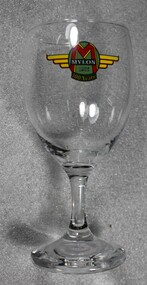
Memorabilia - Souvenir Wine Glass Mylon Centenary, C. 1906
... In 1906 Patrick Mylon started a passenger transport service in the Albury-Wodonga border area with horses and cabs. His son Jack went into business in the late 1920s, and his grandson Bernie joined the firm early in 1970. ...In 1906 Patrick Mylon started a passenger transport service in the Albury-Wodonga border area with horses and cabs. His son Jack went into business in the late 1920s, and his grandson Bernie joined the firm early in 1970. ...In 1906 Patrick Mylon started a passenger transport service in the Albury-Wodonga border area with horses and cabs. His son Jack went into business in the late 1920s, and his grandson Bernie joined the firm early in 1970. When Patrick started with the horses and cabs, each cab carried eight passengers and he always had two horses per cab. As the business expanded, Mylons used a range of buses and coaches including Reo, Chev and Bedford vehicles. During more than 100 years of service to the Wodonga region and beyond, Mylon Motorways received many awards for Excellence and tourism. On July 2, 2008 the company, including its 31 buses and 45 staff members were transferred to the Dyson Group.Mylon were formed in 1906 providing transport service between Wodonga and Albury via horse-drawn cabs. This expanded to a modern fleet of more than 31 buses offering a range of regular bus routes and tours throughout the area and beyond. They were recognised for outstanding service and awards of excellence in the transport industry and tourism.A wine glass produced to celebrate 100 years of operation in Wodonga. Logo includes the Mylon company logo featuring a red M and 3 gold bars. The word 100 years and 1906 have been added in gold lettering.In centre of logo " 1906/ 100 years"mylon, transport, wodonga, buslines -
 Wodonga & District Historical Society Inc
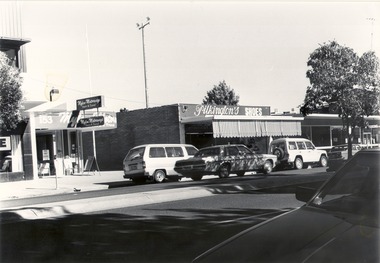
Photograph - Codling Collection 01 - Wodonga, High Street West - Mylons, Pilkington's, S.E.C, 1980s
... In 1906 Patrick Mylon started a passenger transport service in the Albury-Wodonga border area with horses and cabs. His son Jack went into business in the late 1920s, and his grandson Bernie joined the firm early in 1970. ...In 1906 Patrick Mylon started a passenger transport service in the Albury-Wodonga border area with horses and cabs. His son Jack went into business in the late 1920s, and his grandson Bernie joined the firm early in 1970. ...Miss Olive Codling was a Foundation Member and a Life Member of the Wodonga Historical Society. Many of her prize-winning photos are held in the Society Collection. She also held a range of roles and committee positions in a wide range of Wodonga community organisations. These included the Horticultural Society, the Wodonga Arts Council, the Wodonga Camera Club and the Wodonga Lapidary Club. This photo collection is significant as it documents how the businesses and buildings in Wodonga have evolved and contributed to community throughout the 20th century.Wodonga, High Street West Businesses include Mylon Motorways and Pilkington shoes. 153 High Street, Wodonga in 2021is now the location of Gateway Health and other allied Health Services. In 1906 Patrick Mylon started a passenger transport service in the Albury-Wodonga border area with horses and cabs. His son Jack went into business in the late 1920s, and his grandson Bernie joined the firm early in 1970. When Patrick started with the horses and cabs, each cab carried eight passengers and he always had two horses per cab. As the business expanded, Mylons used a range of buses and coaches including Reo, Chev and Bedford vehicles. During more than 100 years if service to the Wodonga region and beyond, Mylon Motorways received many awards for Excellence and tourism. On July 2, 2008 the company, including its 31 buses and 45 staff members were transferred to the Dyson Group. On building facades on left "153 Mylon Motorways/Tours and Travel" On building on the right "Pilkington's SHOES"wodonga businesses, high st wodonga, pilkingtons shoes, mylon motorways -
 Wodonga & District Historical Society Inc
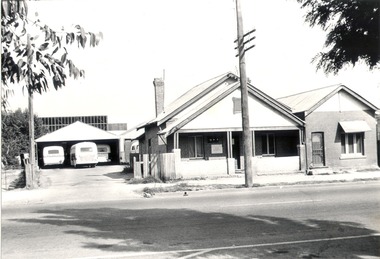
Slide - Mann Collection Album - Mylon's depot opposite Woodland Grove, C. 1970s
... In 1906 Patrick Mylon started a passenger transport service in the Albury-Wodonga border area with horses and cabs. His son Jack went into business in the late 1920s, and his grandson Bernie joined the firm early in 1970. ...In 1906 Patrick Mylon started a passenger transport service in the Albury-Wodonga border area with horses and cabs. His son Jack went into business in the late 1920s, and his grandson Bernie joined the firm early in 1970. ...Elaine Mann was married to David Mann, a successful Wodonga businessman and community leader who passed away in Wodonga in June 2012. David was a member of the Mann family who began their business in Wodonga in 1920. Elaine was a teacher in Wodonga for many years and an active member of the community.This photo collection is of significance as it documents how the businesses and buildings in Wodonga have evolved and contributed to community throughout the late 20th century.Mylon bus depot and office at the southern end of High Street, Wodonga . It is now the location of Gateway Health and other allied Health Services. In 1906 Patrick Mylon started a passenger transport service in the Albury-Wodonga border area with horses and cabs. His son Jack went into business in the late 1920s, and his grandson Bernie joined the firm early in 1970. When Patrick started with the horses and cabs, each cab carried eight passengers and he always had two horses per cab. As the business expanded, Mylons used a range of buses and coaches including Reo, Chev and Bedford vehicles. During more than 100 years if service to the Wodonga region and beyond, Mylon Motorways received many awards for Excellence and tourism. On July 2, 2008 the company, including its 31 buses and 45 staff members were transferred to the Dyson Group.wodonga businesses, high st wodonga, mylon motorways -
 Wodonga & District Historical Society Inc
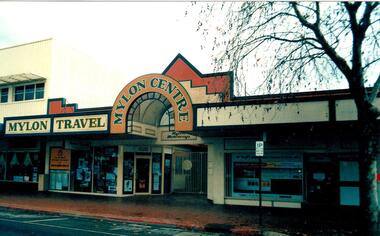
Photograph - Mylon Centre, Wodonga
... In 1906 Patrick Mylon started a passenger transport service in the Albury-Wodonga border area with horses and cabs. His son Jack went into business in the late 1920s, and his grandson Bernie joined the firm early in 1970. ...In 1906 Patrick Mylon started a passenger transport service in the Albury-Wodonga border area with horses and cabs. His son Jack went into business in the late 1920s, and his grandson Bernie joined the firm early in 1970. ...In 1906 Patrick Mylon started a passenger transport service in the Albury-Wodonga border area with horses and cabs. His son Jack went into business in the late 1920s, and his grandson Bernie joined the firm early in 1970. When Patrick started with the horses and cabs, each cab carried eight passengers and he always had two horses per cab. As the business expanded, Mylons used a range of buses and coaches including Reo, Chev and Bedford vehicles. Mylon Travel Centre opened at 152 High Street, Wodonga on 21 November 1992. It allowed Mylons to extend their service for holidaymakers. Mylon’s staff could help with all holiday needs, including answering questions about destinations as well as booking tours, accommodation, concert seats and express coach bookings. The new Centre had a computerised reservation system with direct link-up for world-wide reservations. During more than 100 years of service to the Wodonga region and beyond, Mylon Motorways received many awards for Excellence and tourism. On July 2, 2008 the company, including its 31 buses and 45 staff members were transferred to the Dyson Group.This building was part of a major local company which serviced Wodonga for over 100 years.A colour photo depicting the front of a building and roadway.Above building: MYLON TRAVEL / MYLON CENTREmylon motorways, mylon travel centre, wodonga businesses -
 Wodonga & District Historical Society Inc
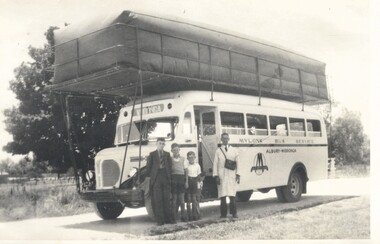
Photograph - Mylon's Reo Gas-powered bus
... Albury and Wodonga Councils pruned back the trees so the bus could pull into the kerbs without tearing the gas bag, and the Albury Council put in a special gas pipeline to the corner of David Street where the bag could be refilled. Street lights could also cause a problem for the bag's safety. The driver in this image is Alf Jackson pictured with the Mylon boys, Phillip, David and Bernie. In 1906 Patrick Mylon started a passenger transport service in the Albury-Wodonga border...Albury and Wodonga Councils pruned back the trees so the bus could pull into the kerbs without tearing the gas bag, and the Albury Council put in a special gas pipeline to the corner of David Street where the bag could be refilled. Street lights could also cause a problem for the bag's safety. The driver in this image is Alf Jackson pictured with the Mylon boys, Phillip, David and Bernie. In 1906 Patrick Mylon started a passenger transport service in the Albury-Wodonga border ...This 1941 Reo bus was owned by the Mylon Bus Company in Wodonga. The gas bag was used for fuel to compensate for the shortage of petrol during World War II. The Reo, powered by gas, could run 40 miles on 1,100 cubic feet. Albury and Wodonga Councils pruned back the trees so the bus could pull into the kerbs without tearing the gas bag, and the Albury Council put in a special gas pipeline to the corner of David Street where the bag could be refilled. Street lights could also cause a problem for the bag's safety. The driver in this image is Alf Jackson pictured with the Mylon boys, Phillip, David and Bernie. In 1906 Patrick Mylon started a passenger transport service in the Albury-Wodonga border area with horses and cabs. His son Jack went into business in the late 1920s, and his grandson Bernie joined the firm early in 1970. When Patrick started with the horses and cabs, each cab carried eight passengers and he always had two horses per cab. As the business expanded, Mylons used a range of buses and coaches including Reo, Chev and Bedford vehicles. During more than 100 years of service to the Wodonga region and beyond, Mylon Motorways received many awards for Excellence and Tourism. On 2nd July 2008 the company, including its 31 buses and 45 staff members, were transferred to the Dyson Group.This image is significant because it captures innovations made to cope with fuel scarcity during World War II and represents an important Wodonga business.A black and white image of a Reo gas-powered bus owned by Mylon Bus Lines Wodonga. The driver and a group of boys are standing beside the bus.mylon motorways, patrick mylon, wodonga transport -
 Kiewa Valley Historical Society
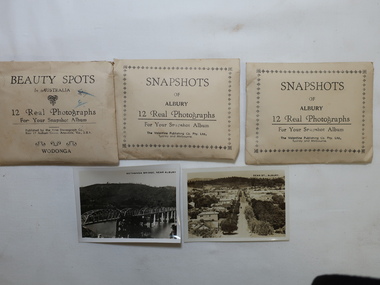
Photos - Albury and Wodonga
... Wodonga and Albury where the residents of the Kiewa Valley shopped. Albury photos Wodonga photos Printed on the envelope: "Beauty Spots / in Australia / 12 Real Photographs / For Your Snapshot Album / Published ...? Wodonga /(or Albury)" Small black and white photos with black label along the bottom or top and with white border ...Not dated but are an informative record of the featured spot chosen in the photo.Record of main features in Wodonga and Albury where the residents of the Kiewa Valley shopped.Small black and white photos with black label along the bottom or top and with white border. 12 photos held in an envelopePrinted on the envelope: "Beauty Spots / in Australia / 12 Real Photographs / For Your Snapshot Album / Published ...? Wodonga /(or Albury)"albury photos, wodonga photos -
 Kiewa Valley Historical Society
Book - Albury, NSW, Progressive Albury The Town with a Future
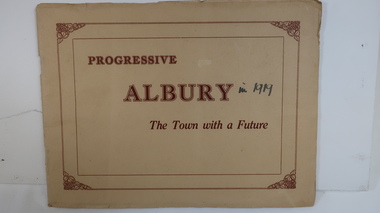
... Albury is in NSW on the Murray River across the border from Wodonga. From 1839 it has grown and has a population of c8000 in 1919. ...Albury is in NSW on the Murray River across the border from Wodonga. From 1839 it has grown and has a population of c8000 in 1919. ...Albury is in NSW on the Murray River across the border from Wodonga. From 1839 it has grown and has a population of c8000 in 1919. Many of its buildings are grand and include 'Mates' a 'progressive up-to-date' Department Store.Residents of the Kiewa Valley shop in Albury and Wodonga as together these are their closest main cities.Cream cardboard cover with reddish print inside rectangular border with grape decoration in each corner. 20 pages held by 2 staples. Each page has 1 or 2 black and white photos. Photos have their title printed underneath.On cover - "in 1919"albury, shopping, murray river, mates department store, grand buildings -
 Wodonga & District Historical Society Inc
Book - North East Rural Directory 1998
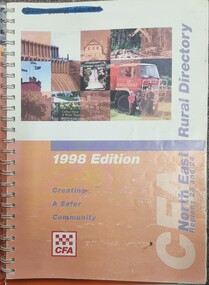
... border following the Murray River. It also includes Falls Creek and Mount Hotham. On Cover CFA North East Rural Directory Regions 23 and 24 1998 Edition Creating a Safer Community CFA Logo A spiral bound volume including colour topographic maps and illustrations of North East Victoria. The cover features a collage of colour photo of North East Victoria including a CFA firefighter in a truck with members of his family beside it. The book also features a key map, explanation of map references and symbols, localities index. Alphabetical road indexes for Wodonga, Albury ...The CFA North East Rural Directory for Regions 23 and 24 was designed to assist fire brigades and other emergency services in responding to calls in the North East region of Victoria. Its purpose was to minimize response times to emergency situations by providing accurate and detailed information about all of the localities in the regions. District 23 is based at Wangaratta and Extends as far south as Woods Point. District 24 is centred in Wodonga and extends past Corryong to the New South Wales border following the Murray River. It also includes Falls Creek and Mount Hotham.A spiral bound volume including colour topographic maps and illustrations of North East Victoria. The cover features a collage of colour photo of North East Victoria including a CFA firefighter in a truck with members of his family beside it. The book also features a key map, explanation of map references and symbols, localities index. Alphabetical road indexes for Wodonga, Albury, Wangaratta and Benalla as well as township maps and alphabetical road indexes for smaller communities are included.The CFA North East Rural Directory for Regions 23 and 24 was designed to assist fire brigades and other emergency services in responding to calls in the North East region of Victoria. Its purpose was to minimize response times to emergency situations by providing accurate and detailed information about all of the localities in the regions. District 23 is based at Wangaratta and Extends as far south as Woods Point. District 24 is centred in Wodonga and extends past Corryong to the New South Wales border following the Murray River. It also includes Falls Creek and Mount Hotham.emergency management north east victoria, cfa region 24, cfa wodonga, cfa region 23 -
 Wodonga & District Historical Society Inc
Photograph - J. J. Cunningham, Druggist, c1877
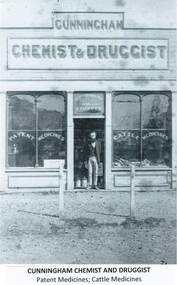
... An item in the Ovens and Murray Advertiser of Tuesday 17th December 1872 stated that in the prospect of the good times coming on the completion of the North-Eastern railway, Wodonga was rapidly extending its borders; new buildings are going up in every direction, and business men were flocking there from other parts of the district. One of the most recent arrivals was Mr J. J. Cunningham, late of Growler's Creek. On Saturday 4th January 1873 a notice in The Albury...An item in the Ovens and Murray Advertiser of Tuesday 17th December 1872 stated that in the prospect of the good times coming on the completion of the North-Eastern railway, Wodonga was rapidly extending its borders; new buildings are going up in every direction, and business men were flocking there from other parts of the district. One of the most recent arrivals was Mr J. J. Cunningham, late of Growler's Creek. On Saturday 4th January 1873 a notice in The Albury ...An item in the Ovens and Murray Advertiser of Tuesday 17th December 1872 stated that in the prospect of the good times coming on the completion of the North-Eastern railway, Wodonga was rapidly extending its borders; new buildings are going up in every direction, and business men were flocking there from other parts of the district. One of the most recent arrivals was Mr J. J. Cunningham, late of Growler's Creek. On Saturday 4th January 1873 a notice in The Albury Banner and Wodonga Express informed residents of the Wodonga District that J. J. Cunningham had commenced business as a Chemist and Druggist in Sydney Street, Wodonga. With a carefully selected stock of drugs, patent medicines, horse and cattle medicines, and miscellaneous articles of fancy goods and tobaccos, he promised prompt service and attention to detail. He also provided a service in teeth extraction. It is unsure when John James Cunningham left Wodonga, but in 1896 an action was taken against him in the Supreme Court by Pauline Rennie of Echuca for damages of £500 for negligence and unskilfulness as a chemist and druggist when he had mistakenly given her 10 grains of cocaine instead of a pain-killing medication she had requested. The Court gave a finding in her favour but with damages of £75. This item is significant because it captures an early business in Wodonga in the 1870s.A black and white photo of a man standing in the doorway of his business in Wodonga.Above door: CUNNINGHAM / CHEMIST & DRUGGIST On windows: Patent Medicines / Teeth Extracted & Stopped / Cattle Medicinesearly wodonga businesses, j j cunningham chemist and druggist, wodonga 1870s -
 Wodonga & District Historical Society Inc
Photograph - Sunicrust Bakery Wodonga, 1970s - 1990s
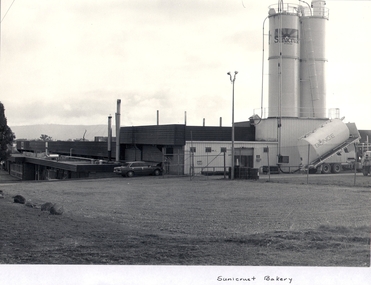
... Wodonga in 1930. In 1960, Bob Hall and Albury bakers Wynne and Thiel joined Bunge's Albury Flour Mills in forming a new company, Southern Border Bakeries. ...Wodonga in 1930. In 1960, Bob Hall and Albury bakers Wynne and Thiel joined Bunge's Albury Flour Mills in forming a new company, Southern Border Bakeries. ...Hall's Bakery was established in Wodonga in 1930. In 1960, Bob Hall and Albury bakers Wynne and Thiel joined Bunge's Albury Flour Mills in forming a new company, Southern Border Bakeries. The three bakeries continued to operate separately, but in 1972 Southern Border built the Sunicrust Bakery in Kendall St. A strange anomaly in interstate trade regulations in the 1970s required some innovative thinking. In Victoria, it was illegal to transport bread over 75km, so to get around this, Sunicrust rented a shed in South Albury known as Southern Border Bakeries. Bread from Wodonga was transported to Albury in semi-trailer loads of 10,000 units. It was unloaded and placed in the shed. A docket was written out and the bread was reloaded and was free to be sent back over the border and sent to Melbourne if need be. This manoeuvre complied with Section 92 of the Australian Constitution allowing free trade between States. By 1997, the Sunicrust bakery employed 100 people and produced 200,000 units a week. Goodman Fielder acquired the Sunicrust brand when they purchased Bunge Australia's baking and milling assets in late 1998. Gradually employment fell and Goodman Fielder decided that Wodonga was a small plant and it was no longer economically viable to keep it going. Baking ceased in 2007 with the loss of 44 jobs. Goodman Fielder retained a distribution depot on site.These photos are significant because they document an important manufacturing industry based in Wodonga from the 1970s to 2007,Two photographs of the Sunicrust Bakery in Wodonga. In the coloured photo it has been renamed as Goodman Fielder.wodonga industries, 1970s wodonga, manufacturing industries wodonga -
 Wodonga & District Historical Society Inc
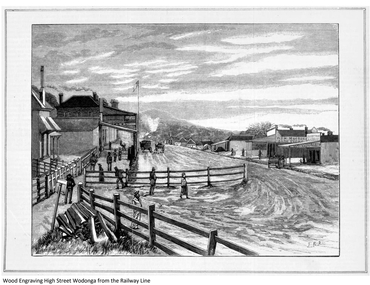
Work on paper - Wodonga From the Railway Line, John Rossi Ashton, 1883
... Albury there is a distance of three miles, which in summer has the reputation of being the dustiest three miles in Australia. This distance is traversed by omnibuses and cabs, which ply between the two towns, and until the junction of the railways did a good business in carrying all travellers from station to station. The dwellers in Wodonga, who are Victorians to the backbone, complain severely of the disadvantages under which they labour, owing to the border...Albury there is a distance of three miles, which in summer has the reputation of being the dustiest three miles in Australia. This distance is traversed by omnibuses and cabs, which ply between the two towns, and until the junction of the railways did a good business in carrying all travellers from station to station. The dwellers in Wodonga, who are Victorians to the backbone, complain severely of the disadvantages under which they labour, owing to the border ...This image appeared in the Australasian Sketcher on 2nd July 1883. This issue had several illustrations relating to the meeting of the railways at Albury and Wodonga. The item was accompanied by the following text:- Wodonga consists of two principal streets lying parallel to each other seemingly desirous of outstripping the other in length and the straggling character of its buildings. After carrying on this contest for the length of three quarters of High Street, of which we give a view, bears off the palm. Between the township and Albury there is a distance of three miles, which in summer has the reputation of being the dustiest three miles in Australia. This distance is traversed by omnibuses and cabs, which ply between the two towns, and until the junction of the railways did a good business in carrying all travellers from station to station. The dwellers in Wodonga, who are Victorians to the backbone, complain severely of the disadvantages under which they labour, owing to the border duties, in comparison with their more fortunate neighbours in Albury, but though they grumble they have no intention of giving in, and confidently look forward to the brighter days which they say are in store for Wodonga. In the lower right hand corner are the initials J. R. A. These are the initials of Julian Rossi Ashton (1851-1942). Ashton was born in England and emigrated to Melbourne in 1878 to work as an artist for the Illustrated Australian News. In 1881 he worked at the Australasian Sketcher and in 1883 moved to Sydney to work on the Picturesque Atlas of Australasia and the Bulletin. He became an influential patron and supporter of Australian Art through his roles as trustee of the National Art Gallery of New South Wales. He was awarded the Society of Artists’ medal for distinguished services to Australian art in 1924, appointed as Commander of the Order of the British Empire in 1930, and won the Sydney Sesquicentennial Prize for a watercolour in 1938. Ashton dominated artistic circles in Sydney for over 50 years. He established his own Art School in Sydney and became a teacher and mentor to many now prominent Australian artists. Julian Rossi Ashton died on 27th April 1942 This item is significant because it depicts an early view of Wodonga and was created by a future prominent artist and influential patron and supporter of Australian Art .A print from a Wood Engraving which was published in the Australasian Sketcher 1883. It features a street scene in Wodonga.wodonga town 1883, early wodonga -
 Wodonga & District Historical Society Inc
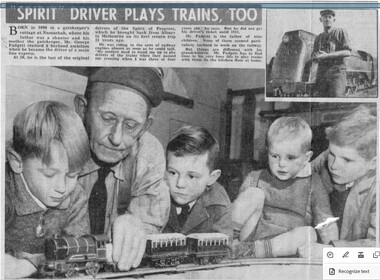
Article - George Padgett and the Spirit of Progress, 1948
... border. In November 1937 when the “Spirit of Progress” made its first run from Melbourne to Albury, George was moved to Wodonga. ...border. In November 1937 when the “Spirit of Progress” made its first run from Melbourne to Albury, George was moved to Wodonga. ...George Padgett was born into a railway family in Numurkah, Victoria on 3 February 1890. He began working for the Victorian Railways as a junior clerk in Maryborough and gained his Driver’s ticket in 1914 at North Melbourne. He was based at Ararat for some time, then transferred to Dimboola in 1926. In 1927 George drove the pilot train ahead of the Royal Train between Ballarat and the South Australian border. In November 1937 when the “Spirit of Progress” made its first run from Melbourne to Albury, George was moved to Wodonga. From the train's first return trip he took over the driving. During his career, he made an average of 92 round trips a year and this article reports that he made his 1,100th round trip in 1948. By the time of George’s retirement he had travelled over 500,000 miles at the wheel of the “Spirit”. George made his last trip on the “Spirit of Progress” on 4 February 1955 prior to his retirement. He died in Wodonga on 19 February 1967. These articles are significant because they give an account of the long-serving career of a locomotive driver who lived in Wodonga.Two newspaper articles written about George Padgett, long term driver of the Spirit of Progress Article 1 - "Spirit" Driver Plays trains too" was published in The Sun News-Pictorial Sat 28 Aug 1948 on Page 8 Article 2 - "THE ENGINE-DRIVER: MR PADGETT'S engine" was published in the Melbourne Herald Saturday 24 July 1948 on page 7george padgett, "spirit of progress" -
 Wodonga & District Historical Society Inc
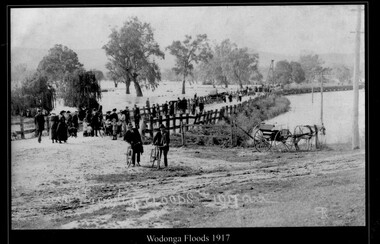
Photograph - Wodonga Floods, Robert Prentice, 1917
... Albury-Wodonga. The gauge at the Union Bridge was 18 feet. All bridges between Albury and Wodonga were washed away and locals had to travel by train between the two towns. It was the only link between the centres for several weeks. The suspension bridge was a temporary fix to allow pedestrian traffic to travel between Wodonga and Albury. A report from The Argus on October 9, 1917 stated: “For the last three or four months the low-lying land between the border...Albury-Wodonga. The gauge at the Union Bridge was 18 feet. All bridges between Albury and Wodonga were washed away and locals had to travel by train between the two towns. It was the only link between the centres for several weeks. The suspension bridge was a temporary fix to allow pedestrian traffic to travel between Wodonga and Albury. A report from The Argus on October 9, 1917 stated: “For the last three or four months the low-lying land between the border ...THE 1917 floods were the second highest recorded in Albury-Wodonga. The gauge at the Union Bridge was 18 feet. All bridges between Albury and Wodonga were washed away and locals had to travel by train between the two towns. It was the only link between the centres for several weeks. The suspension bridge was a temporary fix to allow pedestrian traffic to travel between Wodonga and Albury. A report from The Argus on October 9, 1917 stated: “For the last three or four months the low-lying land between the border towns of Albury and Wodonga has been almost continuously under water, 150 points were registered here on Thursday and Friday and heavier falls were recorded higher up the river, causing all rivers to rise simultaneously. Residents of Bonegilla, Bethanga, Talgarno and the Murray Valley were cut off from railway facilities. In 2025 this location is now the Lincoln Causeway. This image is one of a collection of photos taken by Robert Prentice. The images are clearly identified as he inscribed in the glass a back-to-front capital R (Я) on to which was joined a capital P creating his mark ЯР.This image is significant because it captures a major flooding event in Wodonga and was taken by a recognised Wodonga photographer.A black and white photograph of people observing the flood damage at WodongaWodonga Floods 1917 ЯРfloods wodonga, natural resources, robert prentice -
 Wodonga & District Historical Society Inc
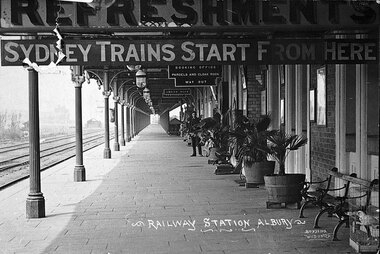
Photograph - Albury Railway Station, Thomas Bonsema, 1910
... Albury Railway Station was opened on February 26 1882. It was the first large transit stop to be built on the border of Victoria and New South Wales. The two states still used different gauge train tracks, so the longest undercover platform in the southern hemisphere at the time was built at Albury, to allow passengers to quickly transition between lines. A new covered platform and new goods shed were added in 1884. Our Collection includes several photographs signed BONSEMA WODONGA...Albury Railway Station was opened on February 26 1882. It was the first large transit stop to be built on the border of Victoria and New South Wales. The two states still used different gauge train tracks, so the longest undercover platform in the southern hemisphere at the time was built at Albury, to allow passengers to quickly transition between lines. A new covered platform and new goods shed were added in 1884. Our Collection includes several photographs signed BONSEMA WODONGA ...The Albury Railway Station was opened on February 26 1882. It was the first large transit stop to be built on the border of Victoria and New South Wales. The two states still used different gauge train tracks, so the longest undercover platform in the southern hemisphere at the time was built at Albury, to allow passengers to quickly transition between lines. A new covered platform and new goods shed were added in 1884. Our Collection includes several photographs signed BONSEMA WODONGA or sometimes simply TBW. Later images taken in Chiltern were signed Bonsema Chiltern or TBC. Thomas Peter John Bonsema was born in Wodonga in 1876 to Peter John Bonsema and Mary Ann nee Nash. His name first appears on the Electoral Roll for Wodonga in 1909 and on the Electoral Roll in 1912 he is listed as a photographer. His photographs capture many scenes and events around Wodonga and surrounding areas. Thomas Bonsema married Minna Louisa Jones in 1912. By 1914 he had moved to Chiltern, Victoria where he established Bonsema’s Photographic Studio. From this time onward many of his works bore the signature “BONSEMA CHILTERN”. As well as continuing to photograph landscapes and important buildings, Mr Bonsema was often the official photographer at school and community celebrations. He also sold many framed photographs and postcards from his premises at 68 -70 Conness Street, Chiltern. By 1943 Thomas John Bonsema had relocated to New South Wales and died in Beecroft, NSW on 14th July 1944. Some of his photographs are held in the Victorian State Library and Mitchell Library Sydney Collections.These images are significant because they are the work of a recognised photographer Thomas Bonsema who was born in Wodonga in 1876. The Albury Railway Station was a critical link in transport between Victoria and New South Wales.A black and white image of the platform at Albury StationRailway Station Albury. Bonsema Wodongabonsema photography, thomas peter john bonsema, albury railway station -
 Wodonga & District Historical Society Inc
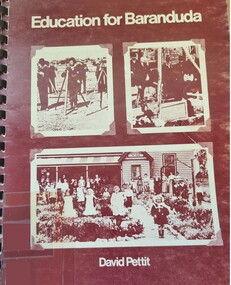
Book - Education for Baranduda, David Pettit, 1976
... Albury-Wodonga Development Corporation. Baranduda Albury-Wodonga Development Corporation Education North East Victoria This book is the result of research commissioned by the Albury-Wodonga Development Corporation in 1976 to investigate future educational needs for the Baranduda community, Baranduda was established as a pastoral run around 1846. It developed as a rural community in the late 19th century—with a school opening in 1880. In 1974 The Albury-Wodonga Development Corporation was established to transform the twin-town border ...This book is the result of research commissioned by the Albury-Wodonga Development Corporation in 1976 to investigate future educational needs for the Baranduda community, Baranduda was established as a pastoral run around 1846. It developed as a rural community in the late 19th century—with a school opening in 1880. In 1974 The Albury-Wodonga Development Corporation was established to transform the twin-town border region into a major inland city, aiming for a population of 300,000 by 2000. It was created by federal and state governments to decentralise population from capital cities, manage regional land development, and boost local industry. As part of its recommendations Baranduda was designated for development as a modern satellite township. This report was commissioned as part of the planning for the future development of the Baranduda community.A spiral bound publication of 110 pages investigating potential plans and developments of education in Baranduda, Victoria. Cover features 3 photographs and diagrams are included.This book is the result of research commissioned by the Albury-Wodonga Development Corporation in 1976 to investigate future educational needs for the Baranduda community, Baranduda was established as a pastoral run around 1846. It developed as a rural community in the late 19th century—with a school opening in 1880. In 1974 The Albury-Wodonga Development Corporation was established to transform the twin-town border region into a major inland city, aiming for a population of 300,000 by 2000. It was created by federal and state governments to decentralise population from capital cities, manage regional land development, and boost local industry. As part of its recommendations Baranduda was designated for development as a modern satellite township. This report was commissioned as part of the planning for the future development of the Baranduda community.baranduda, albury-wodonga development corporation, education north east victoria -
 Wodonga & District Historical Society Inc
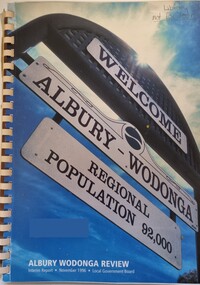
Book - Albury Wodonga Review - Interim Report, Local Govenment Board, 1996
... Albury Wodonga. Albury Wodonga development Albury Wodonga governance This book is the interim report for the review into the future development of the Albury Wodonga region. It was conducted by the Local Government Board and followed extensive investigation into cross border issues following the abolition of the Albury Wodonga Corporation, The overall recommendation was that Albury Wodonga's best interests would be served by a single-cross border municipality capable of governing the whole city on both sides of the Murray River. ...This book is the interim report for the review into the future development of the Albury Wodonga region. It was conducted by the Local Government Board and followed extensive investigation into cross border issues following the abolition of the Albury Wodonga Corporation, The overall recommendation was that Albury Wodonga's best interests would be served by a single-cross border municipality capable of governing the whole city on both sides of the Murray River.A spiral bound report of A4 size created by the Local Government Board. It features the Welcome ti Albury-Wodonga road sign showing a regional population of 92,000.non-fictionThis book is the interim report for the review into the future development of the Albury Wodonga region. It was conducted by the Local Government Board and followed extensive investigation into cross border issues following the abolition of the Albury Wodonga Corporation, The overall recommendation was that Albury Wodonga's best interests would be served by a single-cross border municipality capable of governing the whole city on both sides of the Murray River.albury wodonga development, albury wodonga governance -
 8th/13th Victorian Mounted Rifles Regimental Collection
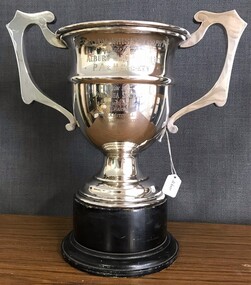
Artwork, other - McCallum trophy
... Large silver cup presented to Wodonga Section 8th Light Horse winners of competition at Albury and Border P.A.& H Society Show 1937...McCallum Whisky Trophy / Presented to Albury and Border P A & H Society / Won by Wodonga section / Cpl J A H McGeoch (Sec Ldr) / L/Cpl D Martin / Tpr F A Mitchell / Tpr E G Baumgarten / 1937...As Japanese threat to the mainland declined the regiment was disbanded military light horse show albury wodonga mccallum McCallum Whisky Trophy / Presented to Albury and Border P A & H Society / Won by Wodonga section / Cpl J A H McGeoch (Sec Ldr) / L/Cpl D Martin / Tpr F A Mitchell / Tpr E G Baumgarten / 1937 Large silver cup presented to Wodonga Section 8th Light Horse winners of competition at Albury and Border P.A.& H Society Show 1937 Artwork, other McCallum trophy ...The 8th Light Horse Regiment AIF was raised at Broadmeadows Victoria in September 1914 under the command of Lieutenant Colonel Alexander White and formed part of the 3rd Light Horse Brigade. The regiment served at Gallipoli where in a courageous but ill-fated charge at the Nek on 7 August 1915 it suffered horrendous casualties including Lieutenant Colonel White. Rebuilt in Egypt under the command of Lieutenant Colonel Leslie Maygar VC the regiment went on the serve throughout the Middle East Campaign. Colonel Maygar died of wounds at Beersheba when the regiment was attacked by enemy aircraft while waiting to follow up the successful charge of the 4th LH Brigade on 30 October 1917. The 8th Light Horse AIF was disbanded in 1919, but soon after re-raised as the 8th (Indi) Light Horse in the Citizen Military Forces, superseding 16th (Indi) Light Horse. It had its headquarters at Benalla with sub-units throughout the Upper Murray and Northeast Victoria. In December 1941, the regiment converted from horse to mechanised, initially as 8th Reconnaissance Battalion then in July 1942 it became 8th Cavalry Regiment and served in Northern Territory. As Japanese threat to the mainland declined the regiment was disbandedLarge silver cup presented to Wodonga Section 8th Light Horse winners of competition at Albury and Border P.A.& H Society Show 1937McCallum Whisky Trophy / Presented to Albury and Border P A & H Society / Won by Wodonga section / Cpl J A H McGeoch (Sec Ldr) / L/Cpl D Martin / Tpr F A Mitchell / Tpr E G Baumgarten / 1937military, light horse, show, albury, wodonga, mccallum -
 8th/13th Victorian Mounted Rifles Regimental Collection
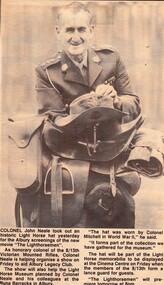
Document
... Albury-Wodonga Military Area, Honorary Colonel 8/13 VMR and Officer Commanding ‘a’ Squadron 8/13 VMR. The VMR Heritage Troop mounted a Lance-Guard in the theatre foyer and the Albury City Band played prior to the screening. Proceeds from the function were donated to Legacy. Newspaper clipping from Border ...‘A’ Squadron 8/13 Victorian mounted Rifles hosted a special screening of the movie “The Lighthorsemen” at the Regent Theatre Albury on 11 September 1987. The official party included the Area Commander Albury-Wodonga Military Area, Honorary Colonel 8/13 VMR and Officer Commanding ‘a’ Squadron 8/13 VMR. The VMR Heritage Troop mounted a Lance-Guard in the theatre foyer and the Albury City Band played prior to the screening. Proceeds from the function were donated to Legacy.Newspaper clipping from Border Mail of Wednesday 9 September 1987 regarding special screening of film " the lighthorsemen " hosted by 8/13 Victorian Mounted Rifles. -
 Wodonga & District Historical Society Inc
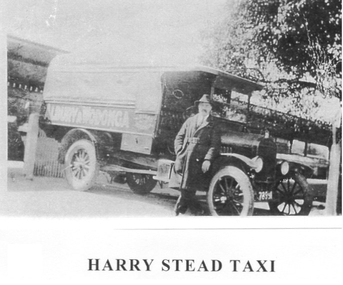
Photograph - Harry Stead Taxi Service
... Albury Municipal Council required all taxi drivers to have a NSW certificate of registration before collecting fares in NSW. The case was held as a test case and as a result the regulation was amended to enable the Council to issue public vehicle licenses to a Victorian registered vehicle as long it travelled no more than 10 miles over the border. These images are significant because they document an early transport service provided to the Wodonga ...Harry Stead, Snr., owned and operated Wodonga’s first taxi service. He had horse drawn cabs running between Wodonga, and Albury in 1868. He also ran a carrying business with wagons and drays. Workmen from Albury and Wodonga were carried to the construction site of the Hume Weir. Drays, although slow, were used with room for 10 or 12 paying passengers, at times. Stead’s paddocks ran back from Sydney Street (now High Street) with stable accommodation for his 70 and more horses. The Provincial Motel occupied part of the site in later years. Harry’s son, “young Harry” joined his Dad around 1892 as soon as his schooldays were over. After the horse drawn cabs, the Steads began a motorised taxi, hire car and bus services. Some of the taxis used were an A-Model Ford, 1934 Ford, Ford V8, Dodge Tourer, Hudson Six and, earlier, the 1923 Buick with dicky seat. Among the drivers were Stan Hogbin, Gerry Gerrard, Jack O’Neill, “Peggy” O’Neill, Ernie “Honey” Zeinert, Cliff Williams and Les Cole. Young Harry had four cars on the rank from 1930 to 1940 when competition for fares was fierce. He had his regulars who paid 4/- a week to go to and from Albury daily. In 1934, Harry was before the Albury Police Court, charged with having driven his taxi on a public road without a taxi licence. The Albury Municipal Council required all taxi drivers to have a NSW certificate of registration before collecting fares in NSW. The case was held as a test case and as a result the regulation was amended to enable the Council to issue public vehicle licenses to a Victorian registered vehicle as long it travelled no more than 10 miles over the border.These images are significant because they document an early transport service provided to the Wodonga community.Three black and white photos depicting Harry Stead and his Wodonga Taxi Service.harry stead wodonga, transport wodonga, wodonga services -
 Wodonga & District Historical Society Inc
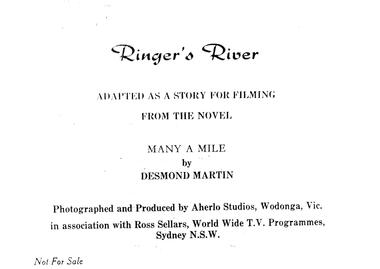
Album - Ringer's River by Des Martin - Cast, Credits & Introduction
... Border Morning Mail, The Age, and the Herald and Weekly Times amongst other publications. Des Martin’s other literary works included Australia Astride (1959), A Tale of Twin Cities, Part One (1981) and Backing up the Boys (1998). In 1976, Des wrote an historical novel, “Many a Mile”, based on a fictional region which highly resembled the Albury-Wodonga...Border Morning Mail, The Age, and the Herald and Weekly Times amongst other publications. Des Martin’s other literary works included Australia Astride (1959), A Tale of Twin Cities, Part One (1981) and Backing up the Boys (1998). In 1976, Des wrote an historical novel, “Many a Mile”, based on a fictional region which highly resembled the Albury-Wodonga ...Des Martin lived all his life in Wodonga, except for his years of service during World War Two. He was raised on the family property Aherlo in the Huon Creek Valley. In 1937 he joined the 8th Light Horse Regiment but in May 1940 led his Wodonga Troop into the 2/2nd Australian Pioneer Battalion, which saw service in Syria, Java, New Guinea and Borneo. After the war, Des returned to Aherlo and his horses. He was granted permission by the Victorian Racing Club to participate as an amateur “gentleman” rider. He was a founder of the Victorian Amateur Riders Association and also the Murray Valley Hunt Club, for which he was Master for 21 years. He was a prolific writer, cartoonist, photographer and poet, contributing to The Border Morning Mail, The Age, and the Herald and Weekly Times amongst other publications. Des Martin’s other literary works included Australia Astride (1959), A Tale of Twin Cities, Part One (1981) and Backing up the Boys (1998). In 1976, Des wrote an historical novel, “Many a Mile”, based on a fictional region which highly resembled the Albury-Wodonga and Upper Murray area of Victoria. It was set in the last 10 years leading up to Federation. Throughout this period tensions (caused by fluctuating border duties, including an infamous impost on cattle and horses) occasioned the intermittent posting of heavily armed police detachments along the River Murray. Des also wrote eight 50-minute scripts from “Many a Mile” as a television series and were presented to Michael Pate, one of Australia’s leading actors and producers. Also, funding was sought through the Australian Broadcasting Commission ... unfortunately the series never came to fruition. This album is a pictorial precis, including photos and scene descriptions, created to promote the concept of the series and have it produced locally in North Eastern Victoria featuring local settings, skilled horsemen and actors. It was to be called “Ringer’s River” ... Ringer being the title accorded to either a top cattle hand, or the fastest shearer in the wool shed. Des Martin died on 12th April 1995.These albums and images are significant because they document literature written by a prominent member of the Wodonga community. The presentation of this precis was supported by several significant district families and individuals.Documents written to introduce the concept of "Ringer's River" to gain interest for the development of a television seriesdes martin, many a mile, ringer's river, northeast victoria stories -
 Wodonga & District Historical Society Inc
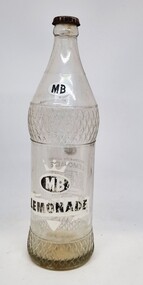
Domestic object - Bottle - Murray Breweries Beechworth, 1940s
... Albury and Wodonga Breweries" in 1879. His brother, Alfred Arthur Billson, took over the Beechworth brewery in 1882, trading as A A Billson and Co. In July 1888, George Billson combined his two breweries as the Albury Brewing and Malting Company Ltd. In 1911 the brothers combined to become Border...Albury and Wodonga Breweries" in 1879. His brother, Alfred Arthur Billson, took over the Beechworth brewery in 1882, trading as A A Billson and Co. In July 1888, George Billson combined his two breweries as the Albury Brewing and Malting Company Ltd. In 1911 the brothers combined to become Border ...The history of Murray Breweries Pty Ltd is intertwined with that of several northeast Victorian breweries and in particular that of the Albury Brewing and Malting Company and Billson’s Brewery which still operates in Beechworth. George Billson Jr. took over the “Albury and Wodonga Breweries" in 1879. His brother, Alfred Arthur Billson, took over the Beechworth brewery in 1882, trading as A A Billson and Co. In July 1888, George Billson combined his two breweries as the Albury Brewing and Malting Company Ltd. In 1911 the brothers combined to become Border United Co-operative Breweries Ltd. Towards the end of 1914, this company was liquidated and its operations transferred to the newly registered Murray Breweries Pty. Ltd. Murray Breweries immediately began down-sizing, closing the Tallangatta factory at the end of 1914, and selling the Albury brewery (which no longer brewed due to poor water quality) in 1920. The first half the twentieth century saw a decline in the production of alcoholic beverages, partly due to the Beer Excise tax of 1901 and competition from Melbourne breweries. The Temperance movement of the 1920s also pushed Murray Breweries to focus on the brewing of non-alcoholic cordials and aerated drinks. They also continued to produce the non-alcoholic herbal beer Ecks until the 1980s. In the closing decades of the 20th century the Brewery produced and home-delivered soft drinks, which were eventually replaced by bulk spring water sales and delivery under the name ‘Snowline mountain spring water.’ This artifact is representative of tradition manufacturing industries in Northeast Victoria.A clear glass lemonade bottle bearing the logo of Murray Breweries of Beechworth. The initials "MB" form an oval shape below a white crown. It has a diamond embossed design both above and below the logo. There is also detailed information about the ingredients on one side. The glass has a metal cap.On front: in a white oval, black initials MB. In the middle section: a white crown above a black oval with initials "MB" above "LEMONADE" in black text. On reverse side in white text: "MB/ PRESERVATIVE ADDED/ LEMONADE/ THIS BEVERAGE IS MADE/ FR.OM AUSTRALIA'S/ FINEST LEMONS BLEND-/ ED BY AN EXCLUSIVE/ PROCESS WITH PURE/ MOUNTAIN SPRING/ WATER, THIS DELIGHTFUL /FLAVOUR HAS NO EQUAL. / MANUFACTURED BY/ MURRAY BREWERIES / BEECHWORTH, VICTORIA/ Net Contents 26 Fl. Oz."murray breweries, aerated drinks, breweries northeast victoria, billsons -
 Wodonga & District Historical Society Inc
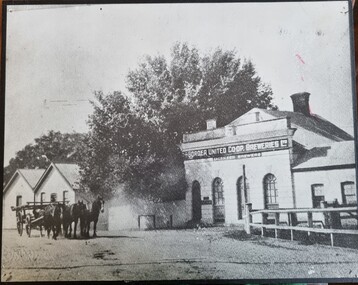
Photograph - Border United Co-op Breweries
... Breweries Northeast Victoria Murray Breweries manufacturing history Albury Wodonga On building wall: "The BORDER INITED CO-OP BREWERIES LTD/LICENSED BREWERS" Black and white image of brewery buildings. ...The Border United Co-operative Breweries Limited was formed in 1911 by the amalgamation of The Albury Brewing and Malting Company Limited and The Anglo-Australian Brewery Company Proprietary Limited which operated breweries in Beechworth, Tallangatta and Yarrawonga. The Anglo-Australian Brewery was owned by the Billson family. By August the new plant was operating near the Union Bridge on the border of Victoria and NSW as shown in this photo. However the enterprise failed in August 1914 when not enough co-operative shares could be sold and also due to declining water quality. In December 1914 its spirit merchant’s license was transferred to the newly established Murray River Proprietary Company. In 1922, the brewery and 32 acres of land was sold to Mr E E Waite. Waite sold the buildings for removal.This image represents buildings related to early industries in the Albury-Wodonga region.Black and white image of brewery buildings. The image has been mounted on board.On building wall: "The BORDER INITED CO-OP BREWERIES LTD/LICENSED BREWERS"breweries northeast victoria, murray breweries, manufacturing history albury wodonga -
 Wodonga & District Historical Society Inc
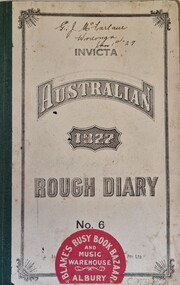
Journal - Australian Rough Diary 1927, Sands & McDougall Pty. Ltd
... Albury Coursing Club. In his later years, George moved to Euroa and then fo the Northcote and Broadmeadows area of Melbourne where he died in 1968. G. J. McFarlane McFarlane family Wodonga On front Cover: INVICTA AUSTRALIAN 1927 ROUGH DIARY / No 6 WITH THREE DAYS ON A PAGE / Price 2s. /PRINTED AND PUBLISHED BY SANDS & MCDOUGALL PTY. LTD. / SOLD BY ALL STATIONERS. On a circular sticker adhered at lower edge: BLAKE'S BUSY BOOK BAZAAR/ AND MUSIC WAREHOUSE/ ALBURY Handwritten on front: G J. McFarlane/ Wodonga/ Jan 1st 27 A small diary with cardboard cover including volume and publisher details within a border ...George James McFarlane was born on 19 August 1895 in Wodonga, Victoria. He was the youngest son of Charles John McFarlane and Emily Charlotte nee Ellis. He married Margaret Frances Kirley in Wodonga in 1918 and they had 6 children. George kept this diary for most of 1927. It documents his daily life and some local events. George worked part time with the local blacksmith and then on his own farm before and after work. He was later to take over the blacksmith himself, operating as a blacksmith and farrier from premises in High Street, Wodonga. George's diary documents his daily dedication to other jobs on the farm including trapping and shooting vermin such as rabbits and foxes, growing watermelon and vegetables and training horses. He also became a member of the Albury Coursing Club. In his later years, George moved to Euroa and then fo the Northcote and Broadmeadows area of Melbourne where he died in 1968.A small diary with cardboard cover including volume and publisher details within a border. A red and white retailer sticker has been adhered to the front cover. The diary includes a calendar for 1927 and 37 pages of information including postal, money order and telegraphic information, British weights and measures and Directions for Making a will. The remainder of the diary is divided into 3 days per page. Entries have been entered until 28 August 1927.On front Cover: INVICTA AUSTRALIAN 1927 ROUGH DIARY / No 6 WITH THREE DAYS ON A PAGE / Price 2s. /PRINTED AND PUBLISHED BY SANDS & MCDOUGALL PTY. LTD. / SOLD BY ALL STATIONERS. On a circular sticker adhered at lower edge: BLAKE'S BUSY BOOK BAZAAR/ AND MUSIC WAREHOUSE/ ALBURY Handwritten on front: G J. McFarlane/ Wodonga/ Jan 1st 27g. j. mcfarlane, mcfarlane family wodonga -
 Wodonga & District Historical Society Inc
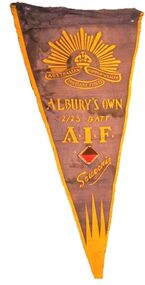
Banner - Souvenir Banner 2/23rd Battalion - Albury's Own
... Albury, New South Wales, where a large number of volunteers were completing their recruit training at the 4th Recruit Training Battalion. Upon the conclusion of this course, the recruits were posted to the 2/23rd and the battalion – over 900 strong– moved to Bonegilla, Victoria, just across the border, where more complex collective training was completed prior to departure overseas. A large majority of the battalion's initial intake of volunteers came from the Albury–Wodonga...Albury, New South Wales, where a large number of volunteers were completing their recruit training at the 4th Recruit Training Battalion. Upon the conclusion of this course, the recruits were posted to the 2/23rd and the battalion – over 900 strong– moved to Bonegilla, Victoria, just across the border, where more complex collective training was completed prior to departure overseas. A large majority of the battalion's initial intake of volunteers came from the Albury–Wodonga ...Established at Victoria Barracks, in Melbourne, in June 1940, the 2/23rd Battalion was raised as part of the all-volunteer Second Australian Imperial Force and assigned to the 26th Brigade. Under the command of Lieutenant Colonel Bernard Evans, a small cadre of experienced personnel drawn from Victorian Militia units were concentrated at Victoria Barracks prior to the battalion headquarters being relocated to Albury, New South Wales, where a large number of volunteers were completing their recruit training at the 4th Recruit Training Battalion. Upon the conclusion of this course, the recruits were posted to the 2/23rd and the battalion – over 900 strong– moved to Bonegilla, Victoria, just across the border, where more complex collective training was completed prior to departure overseas. A large majority of the battalion's initial intake of volunteers came from the Albury–Wodonga region and as a result, the 2/23rd became known as "Albury's Own"This item is part of a collection of items owned by Arthur Lock, a member of the 2/23rd Battalion, an all-volunteer Second Australian Imperial Force which served as part of the garrison during the Siege of Tobruk, then at El Alamein, New Guinea and Borneo. It has particular local significance as the battalion was know as "Albury's Own" because a large majority of the battalion's initial intake of volunteers came from the Albury–Wodonga region.A souvenir banner representing the 2/23rd Battalion - Albury's Own. The banner incorporates the insignia of the Commonwealth of Australia Military Forces. It also includes the Unit colour patch which is a lozenge shape, divided into brown over red, with a grey trim. This patch was used from 1940 to 1942 when the patch representing service at Tobruk was introduced. world war 11, 2/23rd battalion, albury's own, arthur lock
