
Showing 59 items matching "all native australian"
-
 Flagstaff Hill Maritime Museum and Village
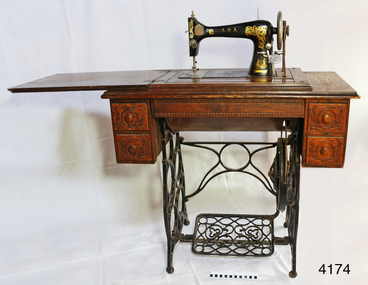
Domestic object - Sewing Machine, Early 20th century
... ...all native australian...David Ward later imported machines from Beisolt & Locke in Germany and registered name A.N.A. (All Native Australian), his shop was in Collingwood Melbourne. ...David Ward later imported machines from Beisolt & Locke in Germany and registered name A.N.A. (All Native Australian), his shop was in Collingwood Melbourne. ...Ward Brothers (George and Samuel) registered a company (Australian Sewing Machines Limited Pty Ltd) with the head office address in Errol St, North Melbourne, and Prahan. The earliest newspaper advertisement for this company was in 1897. Around this time the Ward Brothers first imported sewing machines from England and Wertheim placed their decal on them and mounted them in their own Australian made cabinets. David Ward later imported machines from Beisolt & Locke in Germany and registered name A.N.A. (All Native Australian), his shop was in Collingwood Melbourne. Some of these machines had Ward Brothers decals on them as well. The three brothers sold under the same name as Ward Brothers. The early Ward Brothers logo had a map of Australia with a picture of all three brothers on it. In 1911 all three of the Ward Brothers decided to share a stall in the yearly Melbourne exhibition. The A.N.A was the machine that got rave reviews. It was at this time that the Australian Sewing Machine Company Pty Ltd decided to add the A.N.A logo to their logo to cash in on the new found celebrity status that the A.N.A has gained. To cut a long story short. David Ward took his brothers to court to prevent this from happening. This was a long drawn out affair that took quite a few years. The settlement was decided out of court and nothing was disclosed of the deal that was made. David seemed to have left the scene, then the remaining Ward Brothers and A.N.A. combined and then became “Wardana”. There are many Ward Brothers sewing machines in displays, they originated from Japan, England, America, and Germany. It seems that where ever they got the best deal for sewing machines or parts is the direction they went. This is where the Bendigo sewing machine company came into the picture. All imported sewing machines into Australia drew a government tax. Bendigo Cording's Traction Company was given proposed two-pound tariff protection that gave the company a significant price advantage for its machines. As a result, the Ward Brothers purchased a huge number of Bendigo shares to get cheaper machines for their sewing machine cabinets. Ward Brothers then placed one of their company officials on the Board of “Bendigo Sewing Machines Limited” and the rest is history. Ward Brothers had shops Australian wide and in most of the major country towns. History for “Bendigo Sewing Machines Limited” Cordings Traction Company owners (H. Keck MLC, W. Wallace, and W. Ewing) operated their business out of the former W. Webb & Co. building in Queen St. Bendigo. Around 1923-1924 they decided to switch from traction engines to manufacturing sewing machines. The actual date is not known but that year's financial report made note of both Cordings and Bendigo Sewing Machines Limited. The switch was made with the government of the day agreeing to a tariff of two pounds per head for every machine head made completely in Australia. The change from traction engines to sewing machines went well. Government representatives visited the factory in Bendigo to inspect and ensure that the sewing machines were Australian made as a result they agreed on granting the two-pound tariff to the company. After the first 12 months, they built 30, the following 12 months the company had produced 1500 machines probably due to the involvement of the Ward brothers. However, the government proposed a new condition to the tariff agreement which was that the company must produce 20% of Australia's requirements for sewing machines. In 1924 after having had produced 1500 machines resulting in reaching their financial limit for tariff support. According to the government, the requirement was 15,000 machines for the next year had to be produced to qualify for the tariff. The company had already reached its production limit and unfortunately folded. There were several attempts to regain government assistance to save this new industry but it was to no avail. Even a promise to open another factory in Sydney was offered but unfortunately wasn't accepted. An item fabricated in Australia from a majority of imported parts from either Germany, America or England giving a snapshot into the early manufacturing industries that were operating at the time of Federation. Sewing machine, treadle, in timber cabinet. Branded Ward Bros, A.N.A., Australian Sewing Machine Coy. Decorative carved timber cabinet, hinged, fold-out laminated timber top and five drawers; two small on each side with handles and one long, shallow, between side drawers without handle. Thread is on bobbin in a rocket shuttle (both in good condition) plus spare empty shuttle (rusty). Brass ‘Half Yard’ ruler inlaid across front, measuring scale in inches and centimetres. Two metal shuttle cover plates (or throat plate / slide plate); front one is impressed with a gauge for needle and thread. Gold trim and decals on flatbed and machine front and back, serial number under shuttle cover, brand on decals and on round metal plate on back of machine. Front right of machine has a bobbin winder. Treadle belt shows signs of wear and laminate on timber machine cover is peeling slightly.Decal coat of arms on right front of machine: kangaroo on left, man with broad-brim hat, holding pick-axe on right, in centre, top “SEWING MACHINE / THE / A. N. A.” then below it, the rising sun, then below that is state of Victoria shield with the Southern Cross constellation. Wheat sheaves around edge on left and flowering plant on right. Gold ribbon banner at bottom with script “WARD BROS.“ Decal of map of Australia on flatbed of machine. States and capital cities are marked and named (no northern territory), portrait of two men. In centre of map are interwoven letters “A. N. A.” and written in script “WARD BROS.” Decal across front of machine body has large, decorated gold lettering “A. N. A.” Decal across the top of machine “THE AUSTRALIAN SEWING MACHINE COY. PTY. Ltd.” Steel shuttle cover at front has an impressed gage listing cotton and needle sizes and number of stitches. Brass disc on back of machine “A. N. A.” in centre. Brass ruler across front of machine has carved or pressed words in the timber. In centre “INCHES” above ruler and “CENTIMETRES” below ruler, and on right above ruler is “HALF YARD” Decal across back of machine’s body “A.N. A. / MADE IN U.S.A.” Stamped into metal under shuttle cover is “219415” (2 and 5 are partially there, first 1 could instead be a 7) flagstaff hill, warrnambool, shipwrecked coast, flagstaff hill maritime museum, maritime museum, shipwreck coast, flagstaff hill maritime village, great ocean road, ward bros., australian sewing machine co., a.n.a., treadle sewing machine, rocket shuttle sewing machine, home industry, clothing, wardana, australian sewing machine company, all native australian, dressmaking, clothing manufacturer -
 Federation University Historical Collection
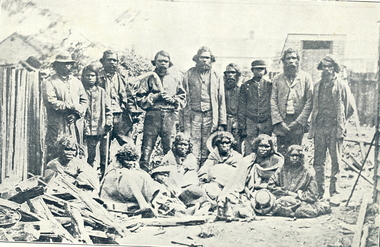
Photograph - Images - black & White, King Billy of Ballarat, published 1904
... The Ballarat Star of 25 September 1896 stated: that Billy and his subjects 'once virtually owned all the land comprised of the City of Ballarat and its immediate surroundings 'so 'it can be considered only fair that six feet of ground should not be denied for his burial'
The Australian Natives Association and the Australian Historical Records Society (later Ballarat Historical Society) took a major role in the burial of Frank Wilson. ...The Ballarat Star of 25 September 1896 stated: that Billy and his subjects 'once virtually owned all the land comprised of the City of Ballarat and its immediate surroundings 'so 'it can be considered only fair that six feet of ground should not be denied for his burial'
The Australian Natives Association and the Australian Historical Records Society (later Ballarat Historical Society) took a major role in the burial of Frank Wilson. ...'King Billy' of Ballarat is also known as Frank Wilson, after the surname of an owner of Ercildoun Estate. He was buried in a Wesleyan burial plot at the Ballaarat Old Cemetery on 26 September 1896. The Anglican burial ceremony was organised by the community who thought 'King Billy' to be the last of his tribe. The Ballarat Star of 25 September 1896 stated: that Billy and his subjects 'once virtually owned all the land comprised of the City of Ballarat and its immediate surroundings 'so 'it can be considered only fair that six feet of ground should not be denied for his burial' The Australian Natives Association and the Australian Historical Records Society (later Ballarat Historical Society) took a major role in the burial of Frank Wilson. "As public interest and compassion grew, noteworthy citizens of Ballarat and two key Christian denominations appeared to jostle for pre-eminence in the ritual to follow. Whilst the 'venerable Archdeacon Mercer' from the Anglican Church took the funeral service, the cemetery trustees arranged that the body was placed in 'a central site in the Wesleyan section of the cemetery'. Frank was recorded as a Roman Catholic. The coffin was carried to the grave by several Methodists, including Justice of the Peace, Glenny, and Member of the Legislative Assembly, Kirton, as well as Old Colonists' and noted citizens. (https://www.academia.edu/3246304/2001_Remembering_King_Billy_Journal_of_Australian_Colonial_History_vol_3_2_61-80) Three Images relating to King Billy of Ballarat as illustrated in the Evening Echo Historical Edition 1904. * Image of a group of Aboriginal people. They are most most probably Wathaurung (Wadawurrung) . The picture includes ten standing males, two holding a boomerangs. Six females sit on the ground in front, three hold hats. A seated child wears a hat. * The burial of King Billy in the Ballaarat New Cemetery, 26 September 1896. * King Billy's Grave in the Ballaarat New Cemetery. wathaurung, wada wurrung, wathaurong, king billy, aborigines, aboriginal, frank wilson, mercer, ballaarat new cemetery, glenny, burial, mullawullah -
 Federation University Historical Collection
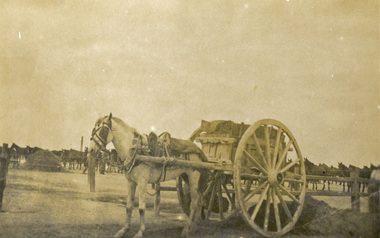
Postcard - Sepia, A Horse and Cart Carry Manure at Metras Camp, c1916
... Australian Imperial Force based in Egypt at the time. Egypt was a major base for the AIF from December 1914. A number of campaigns were fought in this theatre. There were two campaigns involving the AIF. Note that not all the fighting was actually geographically in Egypt. (http://www.aif.adfa.edu.au:8888/about3.html) Chatham family Archive Chatham Holmes World War World War 1 world War I World war One Egypt Ascot .1) verso - 'Taken at Metras Camp' .2) verso - 'A native horse and cart carting manure at horse lines.' ...The photograph is associated with Harry Holmes who was a member of the Australian Imperial Force based in Egypt at the time. Egypt was a major base for the AIF from December 1914. A number of campaigns were fought in this theatre. There were two campaigns involving the AIF. Note that not all the fighting was actually geographically in Egypt. (http://www.aif.adfa.edu.au:8888/about3.html)Two postcards showing Australian army camp at Metras Camp, Egypt .1) A soldier sits on a horse in front of a cart. Lines of horses are in the background behind a post and rail fence. .2 A horse is hitched to a manure cart at Metras Camp, Egypt. Lines of horses are in the background. .1) verso - 'Taken at Metras Camp' .2) verso - 'A native horse and cart carting manure at horse lines.'chatham family archive, chatham, holmes, world war, world war 1, world war i, world war one, egypt, ascot -
 Federation University Historical Collection
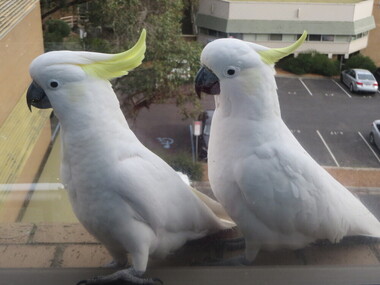
Photograph - Photo, Clare Gervasoni, Cockatoos visit the Geoffrey Blainey Research Centre at Federation University Australia, 2014, 12/06/2014
... all year round. (http://www.birdsinbackyards.net/species/Cacatua-galerita, accessed 12/06/2014) Federation University Australia geoffrey Blainey research Centre Cockatoo birds native birds sulphur-crested cockatoo Two Sulphur-crested cockatoos on the window ledge of the Geoffrey Blainey Research Centre at Federation University Australia. ...The sulphur crested cockatoo (scientific name Cacatua galerita) is a large white parrot with dark grey-black bill, a distinctive sulphur-yellow crest and a yellow wash on the underside of the wings. Sexes are similar, although the female can be separated at close range by its red-brown eye (darker brown in the male). Sulphur-crested Cockatoos are found in a variety of timbered habitats and are common around human settlements. The birds stay in the same area all year round. (http://www.birdsinbackyards.net/species/Cacatua-galerita, accessed 12/06/2014)Two Sulphur-crested cockatoos on the window ledge of the Geoffrey Blainey Research Centre at Federation University Australia. Numerous birds visit 'dance' along the window ledge including cockatiels, Magpie Larks, Crows and Rosellas.federation university australia, geoffrey blainey research centre, cockatoo, birds, native birds, sulphur-crested cockatoo -
 The Beechworth Burke Museum
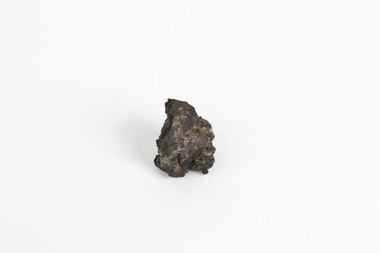
Geological specimen - Native (metallic) copper, Unknown
... all humankind. Beechworth Burke Museum Geological Specimen Native Specimen Geological Mineral mineralogy indigo shire Beechworth Museum copper copper ore NATIVE (metalic) COPPER / Locality: Moonta, South Australia A small, palm-sized solid native copper mineral specimen with shades of browns, black and rustic tones throughout the specimen. ...This specimen is a native copper specimen that is metallic. Copper is typically found in the earth's crust and is often found alongside other metals such as gold, zinc, lead and silver which all belong to the same group which is the Copper/Gold group. Copper is most commonly formed from large masses of molten lava rock which has solidified in the earth's crust and over time though different sizes and speeds of crystal growth has turned into large amounts of copper, stored in porphyry copper deposits. Copper has a distinctive colour, yet can sometime appear blue and greenish which is often caused by oxidisation or a mixture of copper and other metals. This specific specimen was recovered from Moonta, South Australia. The Moonta Mining Company was established in 1861, after a Shepard in the area noticed traces of copper. This lead to a rush in the copper mining industry which was relatively young in Australia at the time, making Moonta Mining Company one of the richest in Australia. By the 1860's, South Australia had been nicknamed the "Copper Kingdom" due to its vast amount of Large copper mines and resources. As of 2016, Australia was the second largest producer of Copper internationally, following behind Chile in first place. This copper specimen is significant historically and scientifically as it is such an important metal commonly used throughout the world in various ways. Copper is an invaluable recourse used in daily life, used in most electrical appliances as it is a great conductor of heat and electricity, as well as being soft and malleable, making it easy to bend and mould into delicate sheets and wires. Copper does not corrode and is therefore used in the production of water pipes among countless other significant necessities that are often overlooked in our society. Historically, Copper holds great significance as it was the first metal used by humans. It was discovered roughly 9000 years ago and was utilised by the Neolithic Man who learnt that heating the metal made it more malleable, thus tools and utensils were made which were far superior to the previous stone tools used by humans. This history and its connection to the current and ongoing relationship between humans and copper must be preserved and highlighted as it is integral to the history of all humankind. A small, palm-sized solid native copper mineral specimen with shades of browns, black and rustic tones throughout the specimen.NATIVE (metalic) COPPER / Locality: Moonta, South Australiabeechworth, burke museum, geological specimen, native specimen, geological, mineral, mineralogy, indigo shire, beechworth museum, copper, copper ore -
 Greensborough Historical Society
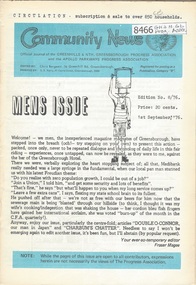
Newsletter, Greenhills and North Greensborough Progress Association, Community News: official journal of the Greenhills and Nth. Greensborough Progress Association and the Apollo Parkways Progress Association.1st September, 1976. Edition No. 8/76, 01/09//1976
... All a smokescreen?, Value of freedom or freedom of values, One view of our new shopping centre, Odds & sods, Local man has international voice [John O'Connor], What is a councillor's role?, From the Council Chambers, Meet the natives, Cameo of Len Delacca, Scout news, School and Kinder news, Fathering, Nursing Mothers Association, Parent Australia, This, that and the other, Diamond Valley Repertory, Malcolm Blair reserve. ...All a smokescreen?, Value of freedom or freedom of values, One view of our new shopping centre, Odds & sods, Local man has international voice [John O'Connor], What is a councillor's role?, From the Council Chambers, Meet the natives, Cameo of Len Delacca, Scout news, School and Kinder news, Fathering, Nursing Mothers Association, Parent Australia, This, that and the other, Diamond Valley Repertory, Malcolm Blair reserve. ...This edition includes a report on the The Apollo Parkways Progress Association, Mens issue, 4 wheel driving, All a smokescreen?, Value of freedom or freedom of values, One view of our new shopping centre, Odds & sods, Local man has international voice [John O'Connor], What is a councillor's role?, From the Council Chambers, Meet the natives, Cameo of Len Delacca, Scout news, School and Kinder news, Fathering, Nursing Mothers Association, Parent Australia, This, that and the other, Diamond Valley Repertory, Malcolm Blair reserve. A digital copy of this Newsletter is available from Greensborough Historical Society. Newsletter, 32 p., illus.greenhills and north greensborough progress association, greenhills, apollo parkways progress association -
 The Beechworth Burke Museum
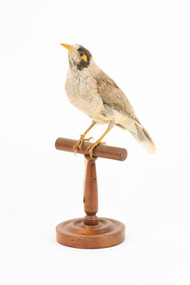
Animal specimen - Noisy Miner, Trustees of the Australian Museum, 1860-1880
... Noisy Miners are native to Australia and can be found on the East Coast. Noisy Miners live in northern Queensland and all along the eastern coast to South Australia and Tasmania. ...Noisy Miners are native to Australia and can be found on the East Coast. Noisy Miners live in northern Queensland and all along the eastern coast to South Australia and Tasmania. ...Noisy Miners are native to Australia and can be found on the East Coast. Noisy Miners live in northern Queensland and all along the eastern coast to South Australia and Tasmania. Noisy Miners are found in woodlands and open forests. They have also become well adapted to suburban situations and are a common sight in parks and gardens. The Noisy Miner feeds on nectar, fruits and insects. Very occasionally they will eat small reptiles and amphibians. Food is either taken from trees or on the ground. In keeping with its highly social nature, the Noisy Miner usually feeds in large groups. The Noisy miner specimen is mounted accurately. This specimen is part of a collection of almost 200 animal specimens that were originally acquired as skins from various institutions across Australia, including the Australian Museum in Sydney and the National Museum of Victoria (known as Museums Victoria since 1983), as well as individuals such as amateur anthropologist Reynell Eveleigh Johns between 1860-1880. These skins were then mounted by members of the Burke Museum Committee and put-on display in the formal space of the Museum’s original exhibition hall where they continue to be on display. This display of taxidermy mounts initially served to instruct visitors to the Burke Museum of the natural world around them, today it serves as an insight into the collecting habits of the 19th century.This specimen is part of a significant and rare taxidermy mount collection in the Burke Museum. This collection is scientifically and culturally important for reminding us of how science continues to shape our understanding of the modern world. They demonstrate a capacity to hold evidence of how Australia’s fauna history existed in the past and are potentially important for future environmental research. This collection continues to be on display in the Museum and has become a key part to interpreting the collecting habits of the 19th century.The Noisy Miner is identified by its mostly grey body and black crown and cheeks. The bill is yellow, as are the legs and the naked skin behind the eye. The name is well suited as the common calls are uttered repeatedly by the members of the colony .Despite their moderate size, Noisy Miners aggressively attack larger birds such as hawks and kookaburras. These attacks may be so vigorous that most other birds are excluded from an area occupied by Noisy Miners.Swing tag: 65a. Garrulous Honey-Eater / See Catalogue, page 19 /taxidermy mount, taxidermy, animalia, burke museum, beechworth, australian museum, skin, reynell eveleigh johns, bird, australian birds, noisy miner, garrulous honeyeater, yellow beak, honeyeater, east coast -
 The Beechworth Burke Museum
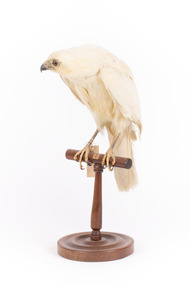
Animal specimen - Grey Goshawk, Trustees of the Australian Museum, 1860-1880
... It is native to Australia, and found in rainforest, forests, open forest and thickly-wooded watercourses. It mostly occurs in southeastern and northwestern Australia, and in Tasmania, all Grey Goshawks are white-phase. ...It is native to Australia, and found in rainforest, forests, open forest and thickly-wooded watercourses. It mostly occurs in southeastern and northwestern Australia, and in Tasmania, all Grey Goshawks are white-phase. ...This White Goshawk is the white colour morph of the Grey Goshawk. Is a moderate-sized hawk that measures 38 - 55 cm in length, and has a wingspan of 70 - 110 cm. It is native to Australia, and found in rainforest, forests, open forest and thickly-wooded watercourses. It mostly occurs in southeastern and northwestern Australia, and in Tasmania, all Grey Goshawks are white-phase. This specimen is part of a collection of almost 200 animal specimens that were originally acquired as skins from various institutions across Australia, including the Australian Museum in Sydney and the National Museum of Victoria (known as Museums Victoria since 1983), as well as individuals such as amateur anthropologist Reynell Eveleigh Johns between 1860-1880. These skins were then mounted by members of the Burke Museum Committee and put-on display in the formal space of the Museum’s original exhibition hall where they continue to be on display. This display of taxidermy mounts initially served to instruct visitors to the Burke Museum of the natural world around them, today it serves as an insight into the collecting habits of the 19th century.This specimen is part of a significant and rare taxidermy mount collection in the Burke Museum. This collection is scientifically and culturally important for reminding us of how science continues to shape our understanding of the modern world. They demonstrate a capacity to hold evidence of how Australia’s fauna history existed in the past and are potentially important for future environmental research. This collection continues to be on display in the Museum and has become a key part to interpreting the collecting habits of the 19th century.This White Goshawk is white all over, with hints of beige around its eyes. The bird's legs are a yellow-beige colour, and its beak grey and white. This specimen stands on a perch, mounted upon a wooden platform, and has an identification tag tied around its leg.Swing tag: 5. / White Goshawk / See Catalogue, page 2 / Mount: 5 / taxidermy mount, taxidermy, animalia, burke museum, beechworth, australian museum, skin, reynell eveleigh johns, bird, hawk, white goshawk, accipitridae -
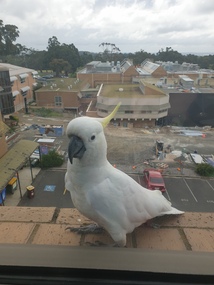 Federation University Historical Collection
Photograph - Photo, Clare Gervasoni, Cockatoos visit the Geoffrey Blainey Research Centre at Federation University Australia, 2019, 21//2019
... all year round. (http://www.birdsinbackyards.net/species/Cacatua-galerita, accessed 12/06/2014) Federation University Australia geoffrey Blainey research Centre Cockatoo birds native birds sulphur-crested cockatoo Two Sulphur-crested cockatoos on the window ledge of the Geoffrey Blainey Research Centre at Federation University Australia. ...The sulphur crested cockatoo (scientific name Cacatua galerita) is a large white parrot with dark grey-black bill, a distinctive sulphur-yellow crest and a yellow wash on the underside of the wings. Sexes are similar, although the female can be separated at close range by its red-brown eye (darker brown in the male). Sulphur-crested Cockatoos are found in a variety of timbered habitats and are common around human settlements. The birds stay in the same area all year round. (http://www.birdsinbackyards.net/species/Cacatua-galerita, accessed 12/06/2014)Two Sulphur-crested cockatoos on the window ledge of the Geoffrey Blainey Research Centre at Federation University Australia. Numerous birds visit 'dance' along the window ledge including cockatiels, Magpie Larks, Crows and Rosellas.federation university australia, geoffrey blainey research centre, cockatoo, birds, native birds, sulphur-crested cockatoo -
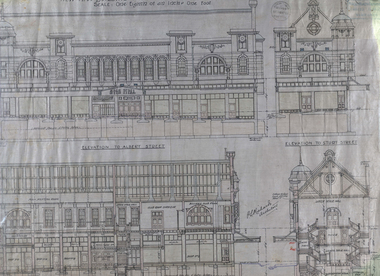 Federation University Historical Collection
Plan - Architectural Plans, Australian Natives' Association Ballarat Branch No 4 Architectural Plans
... australian natives' association architecture percy richards building specifications ballarat technical art school ballarat materials construction P.S. Richards Percival Selwyn Richards A.N.A.4. PLANS painted on side and lid. Signature of P.S. Richards. Fourteen detailed drawings showing the specifications for each section of the new A.N.A. building for Ballarat. A 24 page document submitted to the Public Health Department, Victoria, received 15 January 1918 and a 3 page document related to Reinforced Concrete Particulars. All ...Percy Richards taught Architecture and Building Construction at The Ballarat Art School - a division of Ballarat School of Mines from 1918-1921. He was responsible for the design of a number of buildings in the district. This item is the "Specification of work required to be done and materiaals required for construction of the new A.N.A. Building at the corner of Sturt, Albert and Lewis Streets, Ballarat. Prepared by and to the satisfaction of P.S. Richards, A.R.V.I.A. Architect and subject to the General Conditions of Contract." "BALLARAT CITY A.N.A. BALLARAT, Wednesday — The Ballarat City branch, A.N.A., which was formed nearly 50 years ago, ranks fourth on the association records, but several of the members were prominent in establishing the association in Melbourne a year or two earlier. On the past half-year's operations the total funds increased by £1558/18/3 to £29.389/11/11. The membership now totals 949. The committee recommended that as the property at the corner of Sturt and Albert Streets, which had been intended as the site of a new hall, had been sold, steps should he taken to remodel the present hall, and bring It up to date. The report was adopted." (The Herald, 18 June 1924)Fourteen detailed drawings showing the specifications for each section of the new A.N.A. building for Ballarat. A 24 page document submitted to the Public Health Department, Victoria, received 15 January 1918 and a 3 page document related to Reinforced Concrete Particulars. All contained in a labelled black metal cylinder.A.N.A.4. PLANS painted on side and lid. Signature of P.S. Richards.ana, australian natives' association, architecture, percy richards, building specifications, ballarat, technical art school ballarat, materials, construction, p.s. richards, percival selwyn richards -
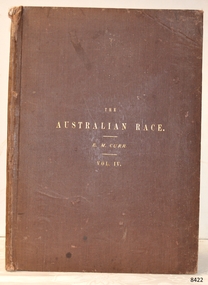 Flagstaff Hill Maritime Museum and Village
Book - Ethnographic survey, Edward Micklethwaite Curr, The Australian Race Vol 4, 1886-1887
... all volumes should be read critically alongside Indigenous modern scholarship. (For more information on the Pattison Collection see item 3678 Flagstaff Hill collections) https://victoriancollections.net.au/items/5580c7e72162f114d8b758db flagstaff hil Warrnambool flagstaff hill maritime museum maritime museum shipwreck coast flagstaff hill maritime village great ocean road book pattison collection warrnambool library warrnambool mechanics’ institute ralph eric pattison corangamite regional library service warrnambool city librarian mechanics’ institute library victorian library board warrnambool books and records warrnambool children’s library The Australian Race Vol 4 Aboriginal Studies languages Native Langauge The Australian Race Vol. 4 by Edward M. ...The Australian Race Vol. 4 by Edward M. Curr is the highly illustrated fourth part of Curr’s four volume ethnographic survey of Aboriginal Australia. It consolidates his findings on origins, languages, customs, and distributions, and its atlas volume furnishes a large comparative language map and ethnographic plates. The four volume set are a broad survey of Aboriginal peoples’ origins, languages, social customs, and movements across the Australian continent. The fourth volume functions as an atlas and language compendium, pairing textual material with a folio atlas of comparative vocabularies and a large map that traces routes and distributions. This volume also documents specific rites and regional practices, as part of his broader attempt to synthesize ethnographic and linguistic data across Australia. The work is considered a foundational reference work although in today's modern world is is regarded as dated and eurocentric set of volumes as a reference in Australian Indigenous studies and anthropology.Hard cover book, The Australian Race Vol 4. Author: Edward Micklethwaite Curr Publisher: John Ferres, Government Printer Melbourne Aus. Date: 1886-1887 Light brown cloth hardcover and spine and blue edging to hard covers lettering in blue . The spine has a label with an inscription. Further Information: Map in pocket at the back of volnon-fictionThe Australian Race Vol. 4 by Edward M. Curr is the highly illustrated fourth part of Curr’s four volume ethnographic survey of Aboriginal Australia. It consolidates his findings on origins, languages, customs, and distributions, and its atlas volume furnishes a large comparative language map and ethnographic plates. The four volume set are a broad survey of Aboriginal peoples’ origins, languages, social customs, and movements across the Australian continent. The fourth volume functions as an atlas and language compendium, pairing textual material with a folio atlas of comparative vocabularies and a large map that traces routes and distributions. This volume also documents specific rites and regional practices, as part of his broader attempt to synthesize ethnographic and linguistic data across Australia. The work is considered a foundational reference work although in today's modern world is is regarded as dated and eurocentric set of volumes as a reference in Australian Indigenous studies and anthropology.flagstaff hil, warrnambool, flagstaff hill maritime museum, maritime museum, shipwreck coast, flagstaff hill maritime village, great ocean road, book, pattison collection, warrnambool library, warrnambool mechanics’ institute, ralph eric pattison, corangamite regional library service, warrnambool city librarian, mechanics’ institute library, victorian library board, warrnambool books and records, warrnambool children’s library, the australian race vol 4, aboriginal studies, languages, native langauge -
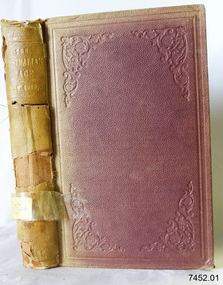 Flagstaff Hill Maritime Museum and Village
Book - Ethnographic survey, Edward Micklethwaite Curr, The Australian Race Vol 1, 1886-1887
... all volumes should be read critically alongside Indigenous modern scholarship. (For more information on the Pattison Collection see item 3678 Flagstaff Hill collections) https://victoriancollections.net.au/items/5580c7e72162f114d8b758db flagstaff hil Warrnambool flagstaff hill maritime museum maritime museum shipwreck coast flagstaff hill maritime village great ocean road book pattison collection warrnambool library warrnambool mechanics’ institute ralph eric pattison corangamite regional library service warrnambool city librarian mechanics’ institute library victorian library board warrnambool books and records warrnambool children’s library The Australian Race Vol 4 Aboriginal Studies languages Native Langauge The Australian Race Vol. 1 by Edward M. ...The Australian Race Vol. 1 by Edward M. Curr is the highly illustrated first part of Curr’s four volume ethnographic survey of Aboriginal Australia. It consolidates his findings on origins, languages, customs, and distributions, and its atlas volume furnishes a large comparative language map and ethnographic plates. The four volume set is a broad survey of Aboriginal peoples’ origins, languages, social customs, and movements across the Australian continent. Volume one is chiefly a comparative on various vocabularies and linguistic materials, with early observations used to identify and compare Aboriginal language groups. This volume also documents specific rites and regional practices, as part of his broader attempt to synthesize ethnographic and linguistic data across Australia. The work is considered a foundational reference work although in today's modern world is is regarded as dated and eurocentric set of volumes as a reference in Australian Indigenous studies and anthropology.Hard cover book, The Australian Race Vol 1. Author: Edward Micklethwaite Curr Publisher: John Ferres, Government Printer Melbourne Aus. Date: 1886-1887 Light brown cloth hardcover and spine and blue edging to hard covers lettering in blue . The spine has a label with an inscription.non-fictionThe Australian Race Vol. 1 by Edward M. Curr is the highly illustrated first part of Curr’s four volume ethnographic survey of Aboriginal Australia. It consolidates his findings on origins, languages, customs, and distributions, and its atlas volume furnishes a large comparative language map and ethnographic plates. The four volume set is a broad survey of Aboriginal peoples’ origins, languages, social customs, and movements across the Australian continent. Volume one is chiefly a comparative on various vocabularies and linguistic materials, with early observations used to identify and compare Aboriginal language groups. This volume also documents specific rites and regional practices, as part of his broader attempt to synthesize ethnographic and linguistic data across Australia. The work is considered a foundational reference work although in today's modern world is is regarded as dated and eurocentric set of volumes as a reference in Australian Indigenous studies and anthropology.flagstaff hil, warrnambool, flagstaff hill maritime museum, maritime museum, shipwreck coast, flagstaff hill maritime village, great ocean road, book, pattison collection, warrnambool library, warrnambool mechanics’ institute, ralph eric pattison, corangamite regional library service, warrnambool city librarian, mechanics’ institute library, victorian library board, warrnambool books and records, warrnambool children’s library, the australian race vol 4, aboriginal studies, languages, native langauge -
 Flagstaff Hill Maritime Museum and Village
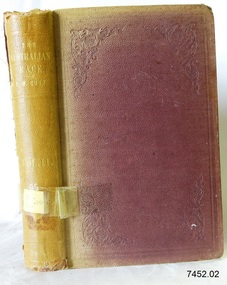
Book - Ethnographic survey, Edward Micklethwaite Curr, The Australian Race Vol 2, 1886-1887
... all volumes should be read critically alongside Indigenous modern scholarship. (For more information on the Pattison Collection see item 3678 Flagstaff Hill collections) https://victoriancollections.net.au/items/5580c7e72162f114d8b758db flagstaff hil Warrnambool flagstaff hill maritime museum maritime museum shipwreck coast flagstaff hill maritime village great ocean road book pattison collection warrnambool library warrnambool mechanics’ institute ralph eric pattison corangamite regional library service warrnambool city librarian mechanics’ institute library victorian library board warrnambool books and records warrnambool children’s library The Australian Race Vol 4 Aboriginal Studies languages Native Langauge The Australian Race Vol. 2 by Edward M. ...The Australian Race Vol. 2 by Edward M. Curr is the second part of Curr’s four volume ethnographic survey of Aboriginal Australia. Volume two continues the language and vocabulary work from volume one, and goes on in expanding the comparative material available across more regions and groups of Aboriginal tribes or mobs. The four volume set is a broad survey of Aboriginal peoples’ origins, languages, social customs, and movements across the Australian continent. Volume one is chiefly a comparative on various vocabularies and linguistic materials, with early observations used to identify and compare Aboriginal language groups. This volume also documents specific rites and regional practices, as part of his broader attempt to synthesize ethnographic and linguistic data across Australia. The work is considered a foundational reference work although in today's modern world is is regarded as dated and eurocentric set of volumes as a reference in Australian Indigenous studies and anthropology.Hard cover book, The Australian Race Vol 2. Author: Edward Micklethwaite Curr Publisher: John Ferres, Government Printer Melbourne Aus. Date: 1886-1887 Light brown cloth hardcover and spine and blue edging to hard covers lettering in blue . The spine has a label with an inscription.non-fictionThe Australian Race Vol. 2 by Edward M. Curr is the second part of Curr’s four volume ethnographic survey of Aboriginal Australia. Volume two continues the language and vocabulary work from volume one, and goes on in expanding the comparative material available across more regions and groups of Aboriginal tribes or mobs. The four volume set is a broad survey of Aboriginal peoples’ origins, languages, social customs, and movements across the Australian continent. Volume one is chiefly a comparative on various vocabularies and linguistic materials, with early observations used to identify and compare Aboriginal language groups. This volume also documents specific rites and regional practices, as part of his broader attempt to synthesize ethnographic and linguistic data across Australia. The work is considered a foundational reference work although in today's modern world is is regarded as dated and eurocentric set of volumes as a reference in Australian Indigenous studies and anthropology.flagstaff hil, warrnambool, flagstaff hill maritime museum, maritime museum, shipwreck coast, flagstaff hill maritime village, great ocean road, book, pattison collection, warrnambool library, warrnambool mechanics’ institute, ralph eric pattison, corangamite regional library service, warrnambool city librarian, mechanics’ institute library, victorian library board, warrnambool books and records, warrnambool children’s library, the australian race vol 4, aboriginal studies, languages, native langauge -
 Flagstaff Hill Maritime Museum and Village
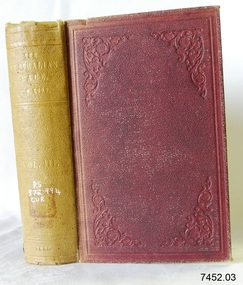
Book - Ethnographic survey, Edward Micklethwaite Curr, The Australian Race Vol 3, 1886-1887
... all volumes should be read critically alongside Indigenous modern scholarship. (For more information on the Pattison Collection see item 3678 Flagstaff Hill collections) https://victoriancollections.net.au/items/5580c7e72162f114d8b758db flagstaff hil Warrnambool flagstaff hill maritime museum maritime museum shipwreck coast flagstaff hill maritime village great ocean road book pattison collection warrnambool library warrnambool mechanics’ institute ralph eric pattison corangamite regional library service warrnambool city librarian mechanics’ institute library victorian library board warrnambool books and records warrnambool children’s library The Australian Race Vol 4 Aboriginal Studies languages Native Langauge The Australian Race Vol. 3 by Edward M. ...The Australian Race Vol. 3 by Edward M. Curr is the third part of Curr’s four volume ethnographic survey of Aboriginal Australia. Volume three moves further into Aboriginal customs their social practices, and regional accounts gathered from settlers, missionaries, and other correspondents of the time. The four volume set is a broad survey of Aboriginal peoples’ origins, languages, social customs, and movements across the Australian continent. Volume one is chiefly a comparative on various vocabularies and linguistic materials, with early observations used to identify and compare Aboriginal language groups. This volume continuing in documenting specific rites and regional practices, as part of his broader attempt to synthesize ethnographic and linguistic data across Australia. The work is considered a foundational reference work although in today's modern world is is regarded as dated and eurocentric set of volumes as a reference in Australian Indigenous studies and anthropology.Hard cover book, The Australian Race Vol 3. Author: Edward Micklethwaite Curr Publisher: John Ferres, Government Printer Melbourne Aus. Date: 1886-1887 Light brown cloth hardcover and spine and blue edging to hard covers lettering in blue . The spine has a label with an inscription.non-fictionThe Australian Race Vol. 3 by Edward M. Curr is the third part of Curr’s four volume ethnographic survey of Aboriginal Australia. Volume three moves further into Aboriginal customs their social practices, and regional accounts gathered from settlers, missionaries, and other correspondents of the time. The four volume set is a broad survey of Aboriginal peoples’ origins, languages, social customs, and movements across the Australian continent. Volume one is chiefly a comparative on various vocabularies and linguistic materials, with early observations used to identify and compare Aboriginal language groups. This volume continuing in documenting specific rites and regional practices, as part of his broader attempt to synthesize ethnographic and linguistic data across Australia. The work is considered a foundational reference work although in today's modern world is is regarded as dated and eurocentric set of volumes as a reference in Australian Indigenous studies and anthropology.flagstaff hil, warrnambool, flagstaff hill maritime museum, maritime museum, shipwreck coast, flagstaff hill maritime village, great ocean road, book, pattison collection, warrnambool library, warrnambool mechanics’ institute, ralph eric pattison, corangamite regional library service, warrnambool city librarian, mechanics’ institute library, victorian library board, warrnambool books and records, warrnambool children’s library, the australian race vol 4, aboriginal studies, languages, native langauge -
 City of Moorabbin Historical Society (Operating the Box Cottage Museum)
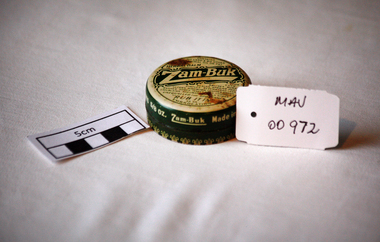
Containers, tin ‘Zam-Buk’ ointment, c1980
... The company founded in Australia in 1897 produced patent medicines, manufacturing products including Bile Beans and Zam-Buk ointment. Charles concocted ‘Bile Beans for Biliousness’, supposedly from a secret native recipe discovered by an eminent scientist – all a myth! ...The company founded in Australia in 1897 produced patent medicines, manufacturing products including Bile Beans and Zam-Buk ointment. Charles concocted ‘Bile Beans for Biliousness’, supposedly from a secret native recipe discovered by an eminent scientist – all a myth! ...Charles Edward Fulford, Ltd Leeds, England. The company founded in Australia in 1897 produced patent medicines, manufacturing products including Bile Beans and Zam-Buk ointment. Charles concocted ‘Bile Beans for Biliousness’, supposedly from a secret native recipe discovered by an eminent scientist – all a myth! Phenomenal sales were achieved through door-to-door leafleting, free gifts, and blanket advertising in the popular press, featuring emotive personal stories of miraculous, life-changing cures, presented as news items. The Company was first established in the UK in 1899 after achieving success in Australia. Charles’ brother Frank Harris Fulford, and entrepreneur, came from Canada to Leeds in 1902 to manage the British division of Charles's manufacturing business, C. E. Fulford Limited The company had to face damaging adverse publicity in 1905 when the judge in a case over the Bile Beans name declared that the business was founded on ‘fraud, impudence and advertisement’. But it survived, indeed flourished, expanding internationally. His other ‘secret’ remedy, Zambuk ointment was claimed to soothe and heal every kind of skin condition, an essential standby for all good mothers and wives. Both products lasted into the 1980s, after various company take-overs; interestingly, Zambuk has recently been revived. 1906 Charles Fulford, only 36, died at his home in Australia, apparently from exhaustion. He left a fortune, including a huge bequest to Dr Barnardo’s charity for homeless boys in London. A small round tin with a lift off lid containing 'Zam-Buk' antiseptic ointmentLid : CONTAINS / NO LARD & NO OTHER / ANIMAL OIL OR FAT / Zam-Buk' / FOR / Cuts/ Bruises, Burns / ..........UNEQUALLED FOR SPORTSMEN / "RUB IT IN "/ AS AN / EMBROCATION. Base :DIRECTIONS ................/ HEALING, SOOTHING, ANTISEPTIC. Around Lid : Zam-Buk Made in Australia by C.E.FULFORD (Australasia) Ltd SYDNEY / Incorporated in England / CONTENTS 5/8 OZ.pharmacy, medicines, early settlers, market gardeners, moorabbin, bentleigh, cheltenham, c.e.fulford pty ltd, ointments, zam-buk ointment, sydney, melbourne, fulford frank harris, antiseptic, leeds england, -
 Phillip Island and District Historical Society Inc.
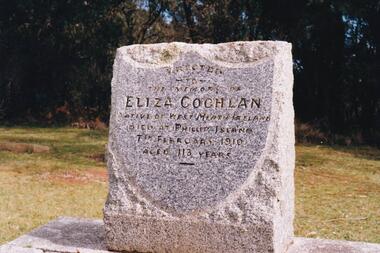
Photograph Album, Kodak, Phillip Island Cemetery, c 1990
... native trees. In all 25 acres of land were set aside as Crown Land in the land settlement of 1868. There are 6.2 acres of wetlands near the cemetery entrance. phillip island cemetery nancy mchaffie edith jeffery a) Grave stone of Eliza Coghlan b) Grave stone of Eliza Coghlan with Edith Jeffery standing beside. Eliza was born in West Heath, Ireland. She arrived in Australia ...The Album was compiled by Nancy McHaffie late 1990's, with the assistance of Edith Jeffery's, with her book "Garden of Memories" and extensive knowledge of Phillip Island. The Cemetery lies back from the road and is surrounded by Manna Gums, rare Peppermint Gums, Blackwoods and other native trees. In all 25 acres of land were set aside as Crown Land in the land settlement of 1868. There are 6.2 acres of wetlands near the cemetery entrance.a) Grave stone of Eliza Coghlan b) Grave stone of Eliza Coghlan with Edith Jeffery standing beside. Eliza was born in West Heath, Ireland. She arrived in Australia on the immigrant ship "Thomas Arbuthnot". She came to Phillip Island as house-keeper to James Duffus and served for 40 years. She was often seen walking to Cowes, about five miles, carrying a heavy turkey. The main road to the cemetery was named in her honour. It has been claimed that Eliza with the oldest subject of Queen Victoria. She died in February 1910, at the age of 113.phillip island cemetery, nancy mchaffie, edith jeffery -
 Phillip Island and District Historical Society Inc.
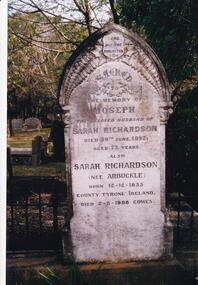
Photograph Album, Kodak, Phillip Island Cemetery, c 1990
... native trees. In all 25 acres of land were set aside as Crown Land in the land settlement of 1868. There are 6.2 acres of wetlands near the cemetery entrance. phillip island cemetery nancy mchaffie edith jeffery 466-23: Joseph Richardson came to Australia in 1837 from Liverpool, England. ...The Album was compiled by Nancy McHaffie late 1990's, with the assistance of Edith Jeffery's, with her book "Garden of Memories" and extensive knowledge of Phillip Island. The Cemetery lies back from the road and is surrounded by Manna Gums, rare Peppermint Gums, Blackwoods and other native trees. In all 25 acres of land were set aside as Crown Land in the land settlement of 1868. There are 6.2 acres of wetlands near the cemetery entrance.466-23: Joseph Richardson came to Australia in 1837 from Liverpool, England. Sarah Arbuckle and her two sisters arrived in 1850. Sarah and Joseph were married when gold was discovered in Victoria. They went to the diggings and had some success. Joseph bought land on Phillip Island when it was open to freehold selection in 1868. The family moved to Phillip Island shortly afterwards, to a house they built on a hill west of Cowes. They called their home "Everton" after a Liverpool suburb. The house still stands in Church Street, known as "Tallawalla". 466-24: The McIlwraith family came from Melton, Victoria to Heath Hill, Rhyll in 1869. They played an important part in the early history of Phillip Island. James was a foundation member of the Trust, John and Alan played their part in the local scene. John was President and Alan Secretary of the Cemetery Trust for many years.phillip island cemetery, nancy mchaffie, edith jeffery -
 Phillip Island and District Historical Society Inc.
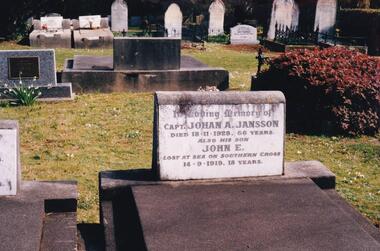
Photograph Album, Kodak, Phillip Island Cemetery, c 1990
... native trees. In all 25 acres of land were set aside as Crown Land in the land settlement of 1868. There are 6.2 acres of wetlands near the cemetery entrance. Phillip Island Cemetery Johan Jansson Evelyn Jansson Mavis Jansson Nancy McHaffie Edith Jeffery 466-44: Captain Johan Jansson. Capatain Jansson was born in 1862 and came to Australia ...The Album was compiled by Nancy McHaffie late 1990's, with the assistance of Edith Jeffery's, with her book "Garden of Memories" and extensive knowledge of Phillip Island. The Cemetery lies back from the road and is surrounded by Manna Gums, rare Peppermint Gums, Blackwoods and other native trees. In all 25 acres of land were set aside as Crown Land in the land settlement of 1868. There are 6.2 acres of wetlands near the cemetery entrance.466-44: Captain Johan Jansson. Capatain Jansson was born in 1862 and came to Australia on the ship "Nosstaljee" in 1886. In 1887 he came to the Island and started work with Captain Lock. He bought land at Rhyll in 1891 and built a house two years later, now known as Jansson's Cottage. Johan married Evelyn Power.. a daughter of Captain Powell. He purchased the ketch "Swan" and later :Stephen" in 1914. They took chicory, seaweed, hay and other farm produce to Melbourne, returning with general cargo. Captain Jansson died in 1928 aged 66 years. 466-45: Evelyn Jansson. Evelyn was the daughter of Captain Powell. She married Johan Jansson on her 18th birthday. She died 1971 aged 95 years. Their daughter Mavis is buried with Evelyn - died 1971 aged 72 years.phillip island cemetery, johan jansson, evelyn jansson, mavis jansson, nancy mchaffie, edith jeffery -
 Phillip Island and District Historical Society Inc.
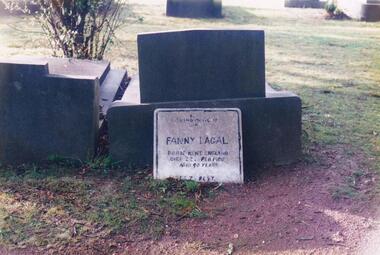
Photograph Album, Kodak, Phillip Island Cemetery, c 1990
... native trees. In all 25 acres of land were set aside as Crown Land in the land settlement of 1868. There are 6.2 acres of wetlands near the cemetery entrance. phillip island cemetery fanny lagal nee thompson nancy mchaffie edith jeffery FANNY LAGAL (nee THOMPSON): Fanny arrived in Australia in the early 1920s. ...The Album was compiled by Nancy McHaffie late 1990's, with the assistance of Edith Jeffery's, with her book "Garden of Memories" and extensive knowledge of Phillip Island. The Cemetery lies back from the road and is surrounded by Manna Gums, rare Peppermint Gums, Blackwoods and other native trees. In all 25 acres of land were set aside as Crown Land in the land settlement of 1868. There are 6.2 acres of wetlands near the cemetery entrance.FANNY LAGAL (nee THOMPSON): Fanny arrived in Australia in the early 1920s. After her husband died she arrived on Phillip Island. She worked at "Summerland House" and later at the "Isle of Wight Hotel". She took great pride in keeping the altar linen and generally looking after the Anglican Church. Those who knew her said she was a gracious lady with a great sense of humour. Fanny went to a nursing home at Frankston where she resided until she died in February 1980, aged 90. Friends arranged for her to be buried at the Cemetery.phillip island cemetery, fanny lagal nee thompson, nancy mchaffie, edith jeffery -
 The Beechworth Burke Museum
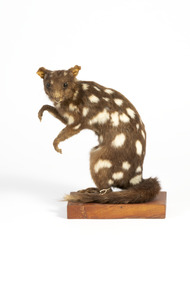
Animal specimen - Eastern quoll, Trustees of the Australian Museum, 1860-1880
... Once, most parts of Australia were inhabited by at least one of the species.Captain Cook collected quolls along the east coast in 1770, and recorded "quoll" as their local Aboriginal name. Quolls were often seen by early settlers, who called them "native cat", "native polecat" and "spotted marten", names based on familiar European animals. Since 1770, all...Once, most parts of Australia were inhabited by at least one of the species.Captain Cook collected quolls along the east coast in 1770, and recorded "quoll" as their local Aboriginal name. Quolls were often seen by early settlers, who called them "native cat", "native polecat" and "spotted marten", names based on familiar European animals. Since 1770, all ...Four species of quoll occur in Australia: the northern, spotted-tailed, eastern and western quolls. Once, most parts of Australia were inhabited by at least one of the species.Captain Cook collected quolls along the east coast in 1770, and recorded "quoll" as their local Aboriginal name. Quolls were often seen by early settlers, who called them "native cat", "native polecat" and "spotted marten", names based on familiar European animals. Since 1770, all four species have declined dramatically in numbers. This is mainly because of habitat loss or change across Australia, and introduced predators such as foxes and cats. Quolls are carnivorous marsupials with a pointed snout, a long tail and brown to black fur distinctively spotted with white. They are lively, attractive animals, with bright eyes, a moist pink nose and many sharp teeth. Like most Australian mammals, quolls are mainly active at night. Typically, they spend the day in one of their many dens, although spotted-tailed quolls and northern quolls sometimes forage and bask in the sunshine. Their large home ranges can extend for several kilometres in each direction from a smaller core range, and the range of a male quoll often overlaps those of several females. An interesting feature of their behaviour is the use of shared latrine (toilet) sites in open spaces such as rock ledges, for marking their territory and other social functions. Male quolls travel widely during the breeding season, with mating occurring during winter. All four species have a gestation period of 21 days. Because they are marsupial mammals, their young are born tiny and undeveloped and must work their way to the pouch, where they attach themselves to a teat to feed. Only the spotted-tailed quoll has a true pouch. In the other species, the young are protected by shallow folds of skin around the teats. As the pups grow, they dangle from the mother's belly; later, she carries them on her back. Quolls reach sexual maturity at one year. They have a naturally short life span, with smaller quolls living an average of only two years, and the larger spotted-tailed quoll about four to five years. The northern quoll is particularly short-lived. This specimen is part of a collection of almost 200 animal specimens that were originally acquired as skins from various institutions across Australia, including the Australian Museum and the National Museum of Victoria, as well as individuals such amateur anthropologist Reynell Eveleigh Johns between 1860-1880. These skins were then mounted by members of the Burke Museum Committee and put-on display in the formal space of the Museum’s original exhibition hall where they continue to be on display. This display of taxidermy mounts initially served to instruct visitors to the Burke Museum of the natural world around them, today it serves as an insight into the collecting habits of the 19th century. This specimen is part of a significant and rare taxidermy mount collection in the Burke Museum. This collection is scientifically and culturally important for reminding us of how science continues to shape our understanding of the modern world. They demonstrate a capacity to hold evidence of how Australia’s fauna history existed in the past and are potentially important for future environmental research. This collection continues to be on display in the Museum and has become a key part to interpreting the collecting habits of the 19th century.Average sized quoll with brown fur with white spots on body but absence on the long tail which is furry unlike the smooth body fur. The quoll has a small had with a pointed snout lined with sharp teeth, and thin membraned ears that are slightly covered in fur. The forelegs of the quoll are slightly smaller than the hindlegs, with all four legs featuring sharp clawed paws.On mounting board: BMM5984/ On Catalogue Tag (attached to left hindleg): Native Cat./ Catalogue. Page 50./ burke museum, taxidermy, taxidermy mount, fauna, animal, animalia, reynell eveleigh johns, quoll, native cat, dasyurus -
 Orbost & District Historical Society
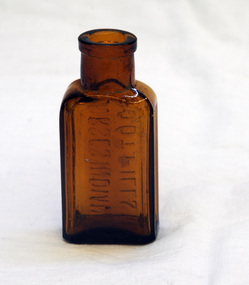
bottle, c. 1930s-1940s
... Australia in the 1920’s. Indian root is likely Wahoo (Euonymus atropurpureus), a common herb in Native American medicine used as a laxative. One of the most popular patent medicines, Dr. Morse’s Indian Root Pills was almost identical to the hundreds of other cure-alls...Australia in the 1920’s. Indian root is likely Wahoo (Euonymus atropurpureus), a common herb in Native American medicine used as a laxative. One of the most popular patent medicines, Dr. Morse’s Indian Root Pills was almost identical to the hundreds of other cure-alls ...This bottle was found in the pine plantation in Orbost. Comstock’s Morses Indian Root Pills were first manufactured by the American firm in the mid-1850’s but their popularity peaked in Australia in the 1920’s. Indian root is likely Wahoo (Euonymus atropurpureus), a common herb in Native American medicine used as a laxative. One of the most popular patent medicines, Dr. Morse’s Indian Root Pills was almost identical to the hundreds of other cure-alls, or at least claimed to cure the most common ailments of the day. It was advertised as a specific cure for most blood, stomach and liver diseases. The manufacturers claimed that the pills would "absolutely remove all dyspepsia, giddiness, headache, and are most useful in female disorders." (ref. Hagley Museum)This item is an example of a commonly used 'over-the-counter" medicine.A rectangular, brown glass bottle with neck for cork sealing.Morses Indian Root Pills Dose 2 to 4. W. H. Comstockmorses -indian-root-pills bottle medicine health -
 Ringwood and District Historical Society
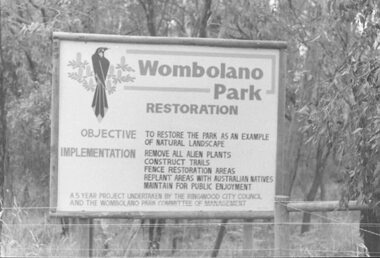
Photograph, Wombolano Park restoration sign. Heathmont. 1984
... Implementation - Remove all alien plants, construct trails, fence restoration areas, replant areas with Australian natives, maintain for public enjoyment. ...Implementation - Remove all alien plants, construct trails, fence restoration areas, replant areas with Australian natives, maintain for public enjoyment. ...Black and white photographSign reads as follows: "Wombolano Park restoration. Objective - to restore the park as an example of natural landscape. Implementation - Remove all alien plants, construct trails, fence restoration areas, replant areas with Australian natives, maintain for public enjoyment. A 5 year project undertaken by the Ringwood City Council and the Wombolano Park Committee of Management." -
 Bendigo Military Museum
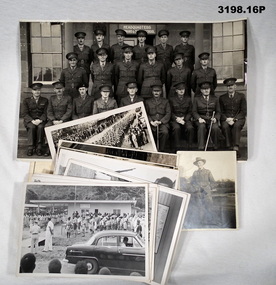
Photograph - PHOTOGRAPHS WW1 - WW2, 9) Col H T ALLAN, 1) 11.11.1918; .3) c.Jul-Aug 1940; .4) & .5) c.WWII; .6), .7) & .8) post WWII; .9) - .16) 29.3.1958;
... Civilian observers line the street. .5) Black & white photo of an Australian Army Officer, most likely Herbert T ALLAN, standing in front of a tent in New Guinea. .6) Black & white photo of Col Herbert T ALLAN seated, taken in New Guinea. .7) Black & white photo of Col H T ALLAN talking to 3 New Guinea natives who are possibly former members of the Pacific Islands Regiment. .8) Black & white photo of Col H T ALLAN & his New Guinean driver in an Australian Base Command jeep. .9) Black & white photo of New Guinean spectators at the opening of the Rabaul Ex-Servicemen's Club. .10) Black & white photo of Col Herbert T ALLAN with a group of PNG Ex-Servicemen. All...Civilian observers line the street. .5) Black & white photo of an Australian Army Officer, most likely Herbert T ALLAN, standing in front of a tent in New Guinea. .6) Black & white photo of Col Herbert T ALLAN seated, taken in New Guinea. .7) Black & white photo of Col H T ALLAN talking to 3 New Guinea natives who are possibly former members of the Pacific Islands Regiment. .8) Black & white photo of Col H T ALLAN & his New Guinean driver in an Australian Base Command jeep. .9) Black & white photo of New Guinean spectators at the opening of the Rabaul Ex-Servicemen's Club. .10) Black & white photo of Col Herbert T ALLAN with a group of PNG Ex-Servicemen. All ...Herbert Trangmar ALLAN, refer Cat No 2755.4 for his extensive service records and awards. .3) Taken during his appointment to Headquarters of the Command & Staff School, 2nd Military District. .7) Col H T ALLAN former commander of the Pacific Islands Regiment. .10) See newspaper articles 3046.52 & 3046.53 a., b., c. .11) - .14) See newspaper articles 3046.52 & 3046.53 a., b., c. .16) The flap staff was donated by the Royal Papua & New Guinea Constabulary. See newspaper articles 3046.52 & 3046.53 a., b., c. Th photos are of various sizes with an average as per the size field. .1) Black & white full length photo of Capt Herbert T ALLAN, 17th Battalion, in Australian Army uniform from WWI, location unknown. .2) Black & white studio portrait of Herbert T ALLAN in suit & tie. Photo is mounted on cream card with a khaki border. Photo is secured in a cream card folder. .3) Black & white photo of a group of Australian Army Officers in uniform. Front row seated, rear / middle rows standing. Herbert T ALLAN seated front row 2nd from right. Headquarters of Command & Staff School in background. .4) Black & white photo of a battalion of soldiers marching down a street with sloped rifles & fixed bayonets. Battalion led by an Officer most likely to be Herbert T ALLAN. Solder on horseback in foreground. Civilian observers line the street. .5) Black & white photo of an Australian Army Officer, most likely Herbert T ALLAN, standing in front of a tent in New Guinea. .6) Black & white photo of Col Herbert T ALLAN seated, taken in New Guinea. .7) Black & white photo of Col H T ALLAN talking to 3 New Guinea natives who are possibly former members of the Pacific Islands Regiment. .8) Black & white photo of Col H T ALLAN & his New Guinean driver in an Australian Base Command jeep. .9) Black & white photo of New Guinean spectators at the opening of the Rabaul Ex-Servicemen's Club. .10) Black & white photo of Col Herbert T ALLAN with a group of PNG Ex-Servicemen. All are wearing medals. To the immediate left of Col Herbert T ALLAN is Raymond Martin, Club President. On wall behind is a rifle donated by Capt R CLAMMER of Rabaul Police. .11) Black & white photo of a presentation table to the Rabaul Ex-Servicemen, by the New Britain Boy Scouts. Club President, Raymond Martin is receiving the table with Colonel Herbert T ALLAN looking on. .12) Black & white photo of Rabaul Ex-Servicemen's Club President, Raymond Martin making a speech at the Club's opening with Colonel Herbert T ALLAN, a Naval Officer & a group looking on. Group is in front of PNG Rabaul Branch of Native Ex-Servicemen's Association building. .13) Black & white photo of the parade of PNG Ex-Servicemen, Boy Scouts & spectators at the opening of the Rabaul Ex-Servicemen's Club. .14) Black & white photo of Colonel Herbert T ALLAN inspecting a parade of PNG Ex-Servicemen at the opening of the Rabaul Ex-Servicemen's Club. .15) Black & white photo of the official party at the opening of the Papua & New Guinea Rabaul Branch Native Ex-Servicemen's Club. .16) Black & white photo of Colonel Herbert T ALLAN raising the Australian flag in front of a parade of PNG Ex-Servicemen, Boy Scouts & spectators at the opening of the Rabaul Ex-Servicemen's Club. .1) Handwritten on back: Armistice Day Nov 11th 1918. Hence the smile. .2) Printed on folder front: Portrait study by Howard Harris. Handwritten on back: Blue Allan. .3) On front: Handwritten 'X' below H T ALLAN. On back: Stamp of S J Hood photographer detailing order No 1. .5) Handwritten in pencil on back: Return to I Marsh Woolgoolga. .6) Stamped in blue ink on back: Photograph No MH 75552 Supplied by Military History Section (SD?) General? LHQ For official purpose ONLY NOT TO BE PUBLISHED .7) Stamped in blue ink on back: Photograph No MH 75553 Supplied by Military History Section (SD?) General? LHQ For official purpose ONLY NOT TO BE PUBLISHED Handwritten in pencil on back: Return to I Marsh Woolgoolga. .8) Stamped in blue ink on back: Photograph No MH 75556 Supplied by Military History Section (SD?) General? LHQ For official purpose ONLY NOT TO BE PUBLISHED photographs, articles, pacific, new guinea -
 Kiewa Valley Historical Society
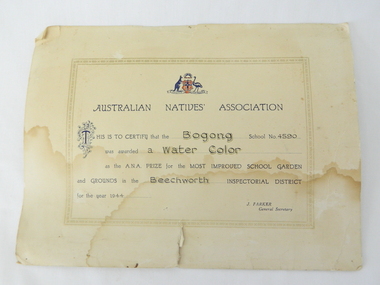
Certificate Prize - Bogong School, Australian Natives Association, 1944
... all who worked and studied at Bogong School 4590 This item represents a period in school and social development when the community covered the beautification of school facilities without State involvement. A period in time when public resources could only cover city and larger townships bogong school 4590 gardening awards beechworth inspectorial This is to certify that the Bogong School 4590 was awarded a water colour as the A.N.A. prize for the most improved school gardening and grounds in the Beechworth Inspectorial District for 1944 signed J. Parker General Secretary Buff coloured cardboard certificate Australian Natives ...Historical document detailing the significance of beautification and pride taken by all who worked and studied at Bogong School 4590This item represents a period in school and social development when the community covered the beautification of school facilities without State involvement. A period in time when public resources could only cover city and larger townships Buff coloured cardboard certificateThis is to certify that the Bogong School 4590 was awarded a water colour as the A.N.A. prize for the most improved school gardening and grounds in the Beechworth Inspectorial District for 1944 signed J. Parker General Secretarybogong school 4590, gardening awards, beechworth inspectorial -
 Kiewa Valley Historical Society
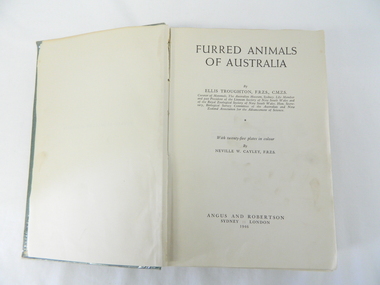
Book - Non Fiction Australian Mammals, Furred Animals of Australia, 1946
... However the rural based pupils would find the chapters and coloured prints more "real" than city located students because they are living day to day in the Australian bush, home to all the various mammals and marsupials presented in this book. australian mammals and marsupials nature books australia wild life On the spine "FURRED ANIMALS OF AUSTRALIA" and underneath "BROUGHTON" and at the bottom "ANGUS & ROBERTSON" This green coloured hard covered book has 178 double sided printed pages and twenty five plate detailing the appearances of native mammals. ...This book was written before the "preservation of Australian Flora and Fauna" movement became a household edict. The book covers all the "known" marsupials of the time and coloured prints are provided where required to show physical and other distinguishing features. Time and extensive searches of hard to reach places in Australia has uncovered a greater range of marsupials than presented in this book. Rural Australia (1940s) had not been as developed and altered as the 1980s onward. This book was used in Primary schools as reference material. Although rural school children would have come across many "real life" encounters with some of the mammals referred to, the diversity and range of mammals presented in this book is quite extensive. Most "city" born children would have only seen the mammals presented in this book at animal zoos in the larger cities.This book details the Australian wide range of mammals, and not just those which school children in the Kiewa Valley could meet "face to face". However the rural based pupils would find the chapters and coloured prints more "real" than city located students because they are living day to day in the Australian bush, home to all the various mammals and marsupials presented in this book.This green coloured hard covered book has 178 double sided printed pages and twenty five plate detailing the appearances of native mammals. The first two pages are frayed and all pages show colouration (yellow) of age. The book has a clear plastic cover as protection placed at a later dateOn the spine "FURRED ANIMALS OF AUSTRALIA" and underneath "BROUGHTON" and at the bottom "ANGUS & ROBERTSON"australian mammals and marsupials, nature books, australia wild life -
 Bendigo Historical Society Inc.
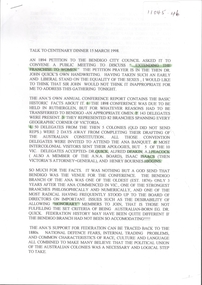
Document - Centenary of ANA Annual Conference 1898, Michele Matthews Collection, 1998
... Australian Natives’ Association was one of many friendly societies operating in Australia in the 19th century. The ANA was an exclusively Australian organisation established in Victoria on 24 April 1871 by a group of young, white Australian-born men. Meetings were open to all...Australian Natives’ Association was one of many friendly societies operating in Australia in the 19th century. The ANA was an exclusively Australian organisation established in Victoria on 24 April 1871 by a group of young, white Australian-born men. Meetings were open to all ...The Australian Natives’ Association was one of many friendly societies operating in Australia in the 19th century. The ANA was an exclusively Australian organisation established in Victoria on 24 April 1871 by a group of young, white Australian-born men. Meetings were open to all and membership did not involve rituals or regalia. Federation of the Australian colonies became an ANA goal in 1884. By 1910 membership had reached 28,844 and was broadly based across all occupations and social classes. Source https://www.nma.gov.au/defining-moments/resources/australian-natives-association 1. Bendigo Advertiser newspaper article reporting an upcoming dinner to be held commemorating the centenary of a meeting held by the Australian Natives' Association (ANA) at the Shamrock Hotel on March 15, 1898. Includes a black and white photograph of town crier Tom Stewart who will read Alfred Deakin's original speech at the commemoration dinner. Published 11.3.98. 2. Programme booklet for Centenary of the Banquet Shamrock Hotel, Bendigo, Sunday 15 March 1998. (Report of proceedings of the Annual Conference of Victorian Branches of the AUSTRALIAN NATIVES' ASSOCIATION held at the A.N.A. Hall Bendigo ON Thursday 15th, Wednesday 16th, Thursday 17th March, 1898). A5 booklet with yellow card cover and two page insert printed on yellow paper. Cover and insert bound together with piece of white curling ribbon. Speakers include Mr. Alan Castleman, Dr. Richard Sneddon, Ms. Michele Matthews. Re-enactment of the 1898 speech by the Hon. Alfred Deakin (Reda by Tom Stewart). Includes menu. 3. Transcript of the talk by Michele Mathews presented to the Centenary Dinner on 15 March 1998. Three type written pages on white paper. Some words and sentences marked with green highlighter.federation, alfred deakin, ana, australian natives' association, tom stewart, town crier -
 Bendigo Historical Society Inc.
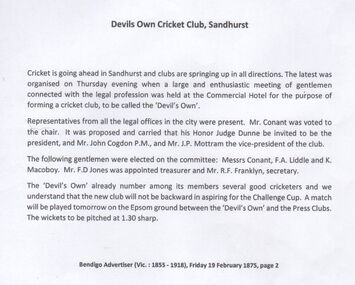
Article - Devils Own Cricket Club Established Bendigo Advertiser Article
... In addition to the Devils' Own Cricket Club, there were many male cricket clubs formed in Bendigo in the 1870's, for example, the Bendigo United Cricket Club; Epsom Cricket Club; All Trades Cricket Club; New Chum Cricket Club; California Gully Cricket Club; Long Gully Cricket Club; Butchers' Cricket Club; View Point Cricket Club; Myers Street Cricket Club; Australian Natives Association Cricket Club; View Point Cricket Club; Beehive Cricket Club; Advertiser Cricket Club; Kangaroo Flat Cricket Club; Golden Square Cricket Club; North Bendigo Cricket Club; Crusoe Cricket Club; City Cricket Club; Bohemians Cricket Club and the Happy Valley Cricket Club. ...In addition to the Devils' Own Cricket Club, there were many male cricket clubs formed in Bendigo in the 1870's, for example, the Bendigo United Cricket Club; Epsom Cricket Club; All Trades Cricket Club; New Chum Cricket Club; California Gully Cricket Club; Long Gully Cricket Club; Butchers' Cricket Club; View Point Cricket Club; Myers Street Cricket Club; Australian Natives Association Cricket Club; View Point Cricket Club; Beehive Cricket Club; Advertiser Cricket Club; Kangaroo Flat Cricket Club; Golden Square Cricket Club; North Bendigo Cricket Club; Crusoe Cricket Club; City Cricket Club; Bohemians Cricket Club and the Happy Valley Cricket Club. ...The Devils' Own Cricket Club was also referred to as the Law Cricket Club and the Law (Devils' Own) Cricket Club. The club was formed in 1875 from members of the local legal fraternity and business people in Sandhurst (Bendigo). In addition to the Devils' Own Cricket Club, there were many male cricket clubs formed in Bendigo in the 1870's, for example, the Bendigo United Cricket Club; Epsom Cricket Club; All Trades Cricket Club; New Chum Cricket Club; California Gully Cricket Club; Long Gully Cricket Club; Butchers' Cricket Club; View Point Cricket Club; Myers Street Cricket Club; Australian Natives Association Cricket Club; View Point Cricket Club; Beehive Cricket Club; Advertiser Cricket Club; Kangaroo Flat Cricket Club; Golden Square Cricket Club; North Bendigo Cricket Club; Crusoe Cricket Club; City Cricket Club; Bohemians Cricket Club and the Happy Valley Cricket Club. Where did the name 'Devils' Own' come from? The Inns of Court Regiment, London, has a unique place in history as a result of its ancient and intimate connection with the Law and lawyers. It recruited and 'officered' almost exclusively from the legal profession, drawn from barristers, attorneys, notaries and their clerks and students practising in the area of the Inns of Court comprising Middle Temple, Inner Temple, Lincoln’s Inn and Gray’s Inn. During Napoleonic Wars all Inns raised companies. During a review by King George III in Hyde Park in 1803, the King used his dislike for lawyers – particularly ones carrying arms – to name the massed ranks of the Law Association as "The Devil's Own".[5] "It is understood that the King was in high health and excellent spirits at the time. The Bloomsbury and Inns of Court Volunteers was reformed in 1797 during the Napoleonic Wars. It was shortly afterwards that the regiment gained its enduring nickname. During a review by King George III in Hyde Park in 1803, the King used his dislike for lawyers – particularly ones carrying arms – to name the massed ranks of the Law Association as "The Devil's Own". "It is understood that the King was in high health and excellent spirits at the time. When the 'Temple companies' had defiled before him, his Majesty enquired of Lord David Erskine, who commanded them, as lieutenant colonel, what was the composition of that corps? 'They are all lawyers, Sire,' said Erskine. 'What! What! 'exclaimed the King, 'all lawyers? all lawyers? Call them the Devil's Own, call them the Devil's Own!" "And the Devil's Own they were called accordingly." ( Norton, F.C., A short history of the military & naval services of the Inns of Court and the members of the Bench and the Bar, 1886, William Clowes & Sons, Stamford Street and Charing Cross, London) Did Bendigo’s legal fraternity name themselves DOCC with the intent that they would reflect the distinguished pedigree and qualities of the Devil’s Own regiment? Details of one the players in the 'Devils'Own' CC : Pelling Hugh Gough Pigott Stainsby Conant, solicitor, born Hampshire, England 1846. Arrived Australia 1871. Pelling was the son of Francis Pigott Stainsby Conant Esq., Lieutenant Governor of the Isle of Man. He married Catherine Anne Drummond. In 1874, his practice was in the Albion Chambers, Sandhurst, given as 'Pelling H.G.P.S. Conant, Solicitor'. Organisation-Club/society-sportA transcript of the Devils Own Cricket Club article in the 19th February, 1875 edition of the Bendigo Advertiser docc, devils own cricket club, sandhurst, bendigo advertiser, pelling h.g.p. s. conant, solicitor, barrister -
 Bendigo Historical Society Inc.
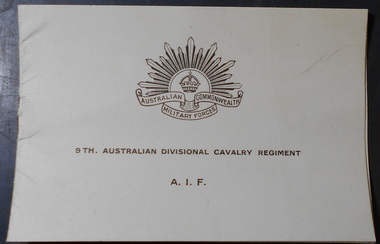
Document - ANA COLLECTION: CHRISTMAS CARD SENT DEC 1941 FROM 9TH AUSTRALIAN DIVISIONAL CAVALRY REGIMENT A.I.F
... Australian Natives Association Christmas card 9th Australian Divisional Cavalry Regiment 9th Australian Divisional Cavalry Regiment A.I.F. Christmas card sent from the Middle East, Dec 1941 from Trooper J.A. Martindale, 9th Australian Divisional Cavalry Regiment A.I.F.; to "Fellow Members of the A.N.A. wishing you all ...Christmas card sent from the Middle East, Dec 1941 from Trooper J.A. Martindale, 9th Australian Divisional Cavalry Regiment A.I.F.; to "Fellow Members of the A.N.A. wishing you all A Merry Christmas and A Happy New Year" Two sheets of beige card a Christmas card front, with Australian Commonwealth Military Forces badge b central message, hand written from Trooper J.A. Martindale9th Australian Divisional Cavalry Regiment A.I.F.australian natives association, christmas card, 9th australian divisional cavalry regiment -
 Bendigo Historical Society Inc.
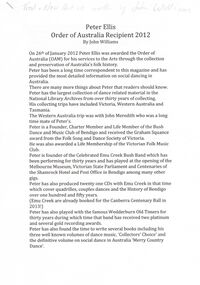
Document - PETER ELLIS COLLECTION: PETER ELLIS ORDER OF AUSTRALIA RECIPIENT, 26th January, 2012
... all the dances he plays for. Peter has also been instrumental in the Bendigo Field Naturalist's Club of which he is a life member. He has been heavily involved in campaigns that have led to the establishment of two flora reserves and extensions to the Greater Bendigo National Park when housing developments threatened native bushland. He has contributed text and photographs to the publication 'Wildflowers of Bendigo'. Peter's award was really well deserved as you can see. What is really fitting is that he received the award on Australia...all the dances he plays for. Peter has also been instrumental in the Bendigo Field Naturalist's Club of which he is a life member. He has been heavily involved in campaigns that have led to the establishment of two flora reserves and extensions to the Greater Bendigo National Park when housing developments threatened native bushland. He has contributed text and photographs to the publication 'Wildflowers of Bendigo'. Peter's award was really well deserved as you can see. What is really fitting is that he received the award on Australia ...2 page article printer on A4 printer paper. Handwritten in greylead pencil across top of first page reads: Trad + Now Article written by John Williamson. Peter Ellis Order of Australia Recipient 2012 By John Williams. On 26th of January 2012 Peter Ellis was awarded the Order of Australia (OAM) for his services to the Arts through the collection and preservation of Australia's folk history. Peter has been a long time correspondent to this magazine and has provided the most detailed information on social dancing in Australia. There are many more things about Peter that readers should know. Peter has the largest collection of dance related material in the National Library Archives from over thirty years of collecting. His collecting trips have included Victoria, Western Australia and Tasmania. The Western Australia trip was with John Meredith who was a long time mate of Peter's. Peter is a founder, charter member and life member of the Bush Dance and Music Club of Bendigo and received the Graham Squance award from the Folk Song and Dance Society of Victoria. He was also awarded a life membership of the Victorian Folk Music Club. Peter is founder of the Celebrated Emu Creek Bush Band which has been performing for thirty years and has played at the opening of the Melbourne Museum, Victorian State Parliament and Centenaries of the Shamrock Hotel and Post Office in Bendigo among many other gigs. Peter has also produced twenty one CDs with Emu Creek in that time which cover quadrilles, couples dances and the History of the Bendigo over one hundred and fifty years. (Emu Creek are already booked for the Canberra Centenary Ball in 2013!) Peter has also played with the famous Wedderburn Old Timers for thirty years during which time that band has received two platinum and several gold recording awards. Peter has also found the time to write several books including his three well know volumes of dance music, 'Collectors Choice' and the definitive volume on social dance in Australia 'Merry Country Dance'. He has also co-authored 'Two Hundred Dancing Years' with Shirley Andrews and 'Music Makes Me Smile - The music of the Nariel Valley' with Harry Gardner. Peter has also contributed to books compiled by others such as Rob Willis, Graham Seal and Dave Di Santi. Peter has trained many young musicians and conducted continuing Ed classes and Deb sets. He is a gold medal standard ballroom dancer in his own right which many dancers say contributes to his understanding of the correct tempo for all the dances he plays for. Peter has also been instrumental in the Bendigo Field Naturalist's Club of which he is a life member. He has been heavily involved in campaigns that have led to the establishment of two flora reserves and extensions to the Greater Bendigo National Park when housing developments threatened native bushland. He has contributed text and photographs to the publication 'Wildflowers of Bendigo'. Peter's award was really well deserved as you can see. What is really fitting is that he received the award on Australia Day. How fitting for a man who has single handedly saved more of Australia's Social Dance music and history than any other person. Australian dancing, music and the environment really owes Peter a lot. Well done from all your Trad and Now readers.person, individual, peter ellis oam -
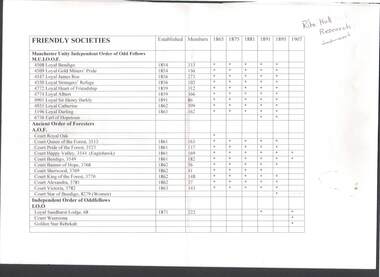 Bendigo Historical Society Inc.
Document - LIST OF FRIENDLY SOCIETIES: BENDIGO
... All Nations) Royal Antediluvian Order of Buffaloes R.A.O.B. The Hibernian Australasian Catholic Benefit Society H.A.C.B.S. Independent Order of Good Templars Loyal Orange Institution of Victoria Australian Natives Association A.N.A. ...Three pages of research by Rita Hull on Friendly Societies. Includes name of Society, when established, the number of Members, and the years 1865,1875, 1881,1891, 1895 and 1907 (an asterisk if they were still operating). Listed are the Society names and the different Court, Lodge, etc. under the name. They are: Manchester Unity Independent Order of Odd Fellows M.U.I.O.O.F. - Loyal Bendigo Loyal Gold Miners' Pride, Loyal James Roe, Loyal Strangers' Refuge, Loyal Heart of Friendship, Loyal Albert, Loyal Sir Henry Barkly, Loyal Catherine, Loyal Darling and Earl of Hopetoun. Ancient Order of Foresters A.O.F. - Court Royal Oak, Court Queen of the Forest, Court Pride of the Forest, Court Happy Valley, Court Bendigo, Court Banner of Hope, Court Sherwood, Court King of the Forest, Court Alexandra, Court Victoria and Court Star of Bendigo (Women). Independent Order of Oddfellows I.O.O. - Loyal Sandhurst Lodge, Court Weeroona and Golden Star Rebekah. Independent Order of Rechabites I.O.R. - Tent Star of Bendigo, Tent Refuge, Tent Cobden, Tent Olive Branch, Tent Laurel, Tent Sutton and Tent Herald of Peace. Sons and Daughters of Temperance - Royal Diadem Division, Ark of Safety, Royal Septre, Hope of Sandhurst (Ladies), Princess Beatrice (Ladies), Lady Loch (Ladies) and Laurel (Ladies). Grand United Order of Oddfellows G.U.O.O.F. - Lodge Star of Eaglehawk, Lodge Sandhurst, Lodge Pride of Bendigo, Lodge Olive Branch and Lodge Belvidere. United Ancient Order of Druids U.A.O.D. - Lodge Quartzopolis, Lodge Eldorado, Lodge Caractacus, Lodge Bendigo and Lodge Sandhurst. Order of St Andrew (Scottish Constitution) - Bendigo Lodge No 1. Order of St Andrew (All Nations) - Lodge Sandhurst and Lodge Unity. Royal Antediluvian Order of Buffaloes R.A.O.B. - Provincial Grand Lodge No 1, Prairie Lodge, Forest Lodge and Southern Cross Lodge. The Hibernian Australasian Catholic Benefit Society H.A.C.B.S. - St Kilian's No 4 and Eaglehawk Branch. Independent Order of Good Templars - Lodge Bendigo, Lodge Guiding Star, and Lodge Hope of Golden Square. Loyal Orange Institution of Victoria - Lodge William Lodge and Loyal Governor Bowen (Pride of Eaglehawksocieties, order of .., list, list of friendly societies, rita hull, manchester unity independent order of odd fellows m.u.i.o.o.f., ancient order of foresters a.o.f., independent order of oddfellows i.o.o., independent order of rechabites i.o.r., sons and daughters of temperance, grand united order of oddfellows g.u.o.o.f., united ancient order of druids u.a.o.d., order of st andrew (scottish constitution), order of st andrew (all nations), royal antediluvian order of buffaloes r.a.o.b., the hibernian australasian catholic benefit society h.a.c.b.s., independent order of good templars, loyal orange institution of victoria, australian natives association a.n.a.
