
Showing 99 items matching "army exercise"
-
 Bendigo Military Museum
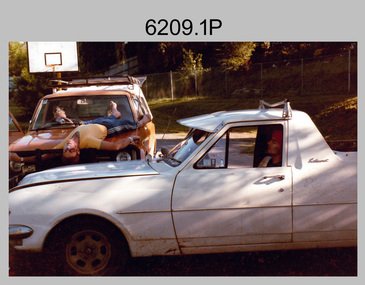
Photograph - Lithographic Squadron Incident Response Exercise – Army Survey Regiment, Fortuna, Bendigo, 1987
... Lithographic Squadron Incident Response Exercise – Army Survey Regiment, Fortuna, Bendigo. ...Lithographic Squadron Incident Response Exercise – Army Survey Regiment, Fortuna, Bendigo. ...This is a set of 10 photographs of This is a set of 10 photographs of Lithographic Squadron participating in an incident response exercise at the Army Survey Regiment, Fortuna Villa, Bendigo, in 1987. ...This is a set of 10 photographs of Lithographic Squadron participating in an incident response exercise at the Army Survey Regiment, Fortuna Villa, Bendigo, 1987. ...Lithographic Squadron Incident Response Exercise – Army Survey Regiment, Fortuna, Bendigo. ...This is a set of 10 photographs of This is a set of 10 photographs of Lithographic Squadron participating in an incident response exercise at the Army Survey Regiment, Fortuna Villa, Bendigo, in 1987. The incident exercise was held on the basketball court and the roadway from Lithographic Squadron up the hill to the back gate of Fortuna. Photos .9P and .10P were taken in the offices of Lithographic Squadron. In 1987 MAJ Mick Byrne was the OC of Lithographic Squadron and WO1 Trevor Osborne was probably the Squadron Sergeant Major (SSM).This is a set of 10 photographs of Lithographic Squadron participating in an incident response exercise at the Army Survey Regiment, Fortuna Villa, Bendigo, 1987. The photographs were printed on photographic paper and are part of the Army Survey Regiment’s Collection. The photographs were scanned at 300 dpi. .1) - Photo, colour, 1987, L to R: unidentified, CPL Paul Baker, Steve Burke? .2) - Photo, colour, 1987, CPL Paul Baker. .3) - Photo, colour, 1987, SSGT Nick Collins RE (behind left door), unidentified personnel. .4) - Photo, colour, 1987, L to R: unidentified (x4), Gavin Neilson, unidentified (x5), Waldo Shirley, John Reid, unidentified. .5) - Photo, colour, 1987, unidentified personnel. .6) - Photo, colour, 1987, L to R: unidentified (x6), Lance Strudwick, SPR Janet Murray, SPR Colin Yeats, Alan Virtue. .7) - Photo, colour, 1987, unidentified personnel, Graham Hales on right. .8) - Photo, colour, 1987, L to R: John ‘Flash’ Anderson, Colin Campbell, Jim Ash, unidentified, Greg Rowe, Peter Dillon, Damien Nolan. .9) - Photo, colour, 1987, Lithographic Squadron OC - MAJ Mick Byrne. .10) - Photo, colour, 1987, Lithographic Squadron SSM - WO1 Trevor Osborne. .1P to .10P No annotations identifying personnel. Photos annotated ‘1987’ on back. royal australian survey corps, rasvy, army survey regiment, army svy regt, fortuna, asr, litho -
 Bendigo Military Museum
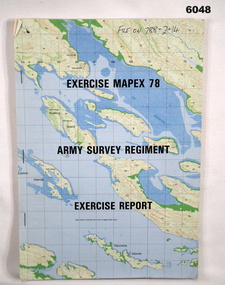
Administrative record - Army Survey Regiment - Exercise Mapex 78, Mar 1979
... Army Survey Regiment - Exercise Mapex 78...Army Survey Regiment - Exercise Mapex 78...The exercise was designed to test the Army Survey Regiment in an intensive production phase of 30 days duration....Royal Australian Survey Corps RASvy Fortuna Army Survey Regiment Army Svy Regt ASR Top right hand corner of front cover "File on 788-2-14" A4 soft covered booklet, printed map of part of the Kimberley region of Western Australia on front and back covers, staple bound Army Survey Regiment - Exercise Mapex 78 Administrative record Army Survey Regiment - Exercise Mapex 78 Army Survey Regiment ...Exercise Report on exercise Mapex 78. The exercise was designed to test the Army Survey Regiment in an intensive production phase of 30 days duration.A4 soft covered booklet, printed map of part of the Kimberley region of Western Australia on front and back covers, staple boundTop right hand corner of front cover "File on 788-2-14"royal australian survey corps, rasvy, fortuna, army survey regiment, army svy regt, asr -
 Queenscliffe Maritime Museum
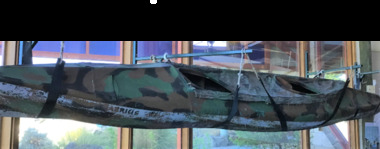
Vehicle - Kayak, Commandos
... Kayak of a similar type as those used during the ill-fated army exercise with loss of life in the rip....This is the only entrance for all shipping into Port Phillip Bay and to and from the Port of Melbourne, Victoria, Australia. rip disaster commandos kayak military history - army Kayak of a similar type as those used during the ill-fated army exercise with loss of life in the rip. Vehicle Kayak, Commandos ...The remarkable story when 74 soldiers fought in vain to save the lives of their mates off Portsea as 3 soldiers died. Tragically, Privates Roger Wood and Edward Meyer, and Warrant Officer George "Taffy" Drakopoulos, died. Please Note: "The Rip" is also known as "The Heads", which is a dangerous stretch of water connecting Port Phillip Bay and Bass Strait. This is the only entrance for all shipping into Port Phillip Bay and to and from the Port of Melbourne, Victoria, Australia.Kayak of a similar type as those used during the ill-fated army exercise with loss of life in the rip.rip disaster, commandos, kayak, military history - army -
 Bendigo Military Museum
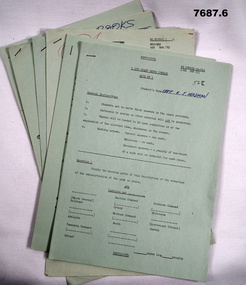
Document - TRAINING EXERCISE, QUIZ, ARMY
... TRAINING EXERCISE, QUIZ, ARMY...Army KEVIN JOHN HERDMAN Handwritten answers and anecdotes on each document in red, blue and black ink. Collection of multipage documents with printing in black type on one side of each page. Pages of each document stapled on top LHC. A.4, foolscap and quarto sized pages on green coloured paper. Document TRAINING EXERCISE ...3rd Division Staff Officers Course - Quiz Nos. 1-5 and 7. Date: June 1972 to March 1973. Part of the "Kevin John Herdman" no. 397661 collection. See Cat No. 5942P for details of his service.Collection of multipage documents with printing in black type on one side of each page. Pages of each document stapled on top LHC. A.4, foolscap and quarto sized pages on green coloured paper.Handwritten answers and anecdotes on each document in red, blue and black ink.officer training, quiz, army, kevin john herdman -
 4th/19th Prince of Wales's Light Horse Regiment Unit History Room
Photo Album, Michael K Cecil, Exercise Far Horizons, September-October 1993, 4th/19th Prince of Wales's Light Horse Regiment RAAC, 1993 (exact)
... ...army exercise...training army exercise far horizons michael k cecil m113a1 Slip binder containing 68 photos of Exercise Far Horizons conducted by 4th/19th Prince of Wales's Light Horse Regiment during September-October 1993 Exercise Far Horizons, September-October 1993, 4th/19th Prince of Wales's Light Horse Regiment RAAC Photo Album Michael K Cecil ...Slip binder containing 68 photos of Exercise Far Horizons conducted by 4th/19th Prince of Wales's Light Horse Regiment during September-October 1993training, army exercise, far horizons, michael k cecil, m113a1 -
 Moorabbin Air Museum
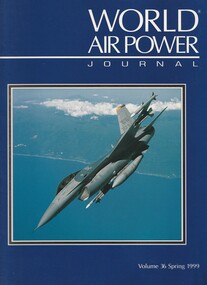
Book (item) - (SP) World Air Power Journal 36 Spring 1999
... DAM-PAM ’98 French Army exercise feature...Briefings: RAAF Scherger: the last bare base Exercise Pitch Black 98 RSingAF helicopter training in Australia Greek Air Force T-33s Chilean AF at Red Flag Air Power Analysis Update: Argentina DAM-PAM ’98 French Army exercise feature US Airborne Command and Control Systems Focus Aircraft: Lockheed Martin F-16 Block 40 and Beyond (50 pages) Variant Briefing: MiG-29 ‘Fulcrum’ US Army Aviation in Korea photo feature Air Power Analysis: Bulgaria Book (SP) World Air Power Journal 36 Spring 1999 ...briefings: raaf scherger: the last bare base, exercise pitch black 98, rsingaf helicopter training in australia, greek air force t-33s, chilean af at red flag, air power analysis update: argentina, dam-pam ’98 french army exercise feature, us airborne command and control systems, focus aircraft: lockheed martin f-16 block 40 and beyond (50 pages), variant briefing: mig-29 ‘fulcrum’, us army aviation in korea photo feature, air power analysis: bulgaria -
 Bendigo Military Museum
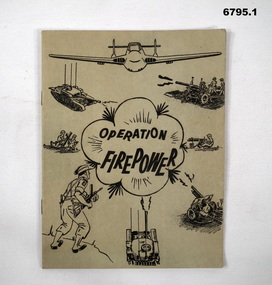
Manual - TRAINING MANUALS VARIOUS, 1937, 1959
... Dated March 1959, which planned an army exercise at Brigade Level. Outlined aim, Tactical setting, maps and plans. 2. ...Dated March 1959, which planned an army exercise at Brigade Level. Outlined aim, Tactical setting, maps and plans. 2. ...1. An instruction manual outlining the structure of a military exercise to practice Battle activity at a Brigade level. 2. An instruction manual outlining the proper way to read a map and the logic of it's structure. 3. Illustrative guide on what leaders should expect in relation to their soldiers. Items in the collection re Col J Swatton, refer Cat No 6719.2P for his service details.1. Green cover, 16 page booklet titled " Operation Firepower" . Dated March 1959, which planned an army exercise at Brigade Level. Outlined aim, Tactical setting, maps and plans. 2. Loose stapled 28 page manual on reading maps. Yellow paper with three folder holes punched in left size. Contains instructions and pictures and examples. 3. Brown covered manual, yellow faded pages, 60 pages inside with pictorial content displaying the do's and don't's of the behaviour of a good soldier.1. Maps have some notations, images of vehicles/weapons on front. 2. Titled " Map Reading - Supplement A.T.M. (AUST) No 12". Written on top " Colonel J.W. Swatton". 3. Titled "Right or Wrong": Element of Training and Leadership illustrated 1937". Stamp on back saying "on loan" but now donated.passchendaele barracks trust, training manuals -
 National Vietnam Veterans Museum (NVVM)
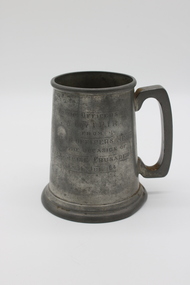
Memorabilia - Tankard
... Exercise Crusader was a major Australian Army field training exercise held in the Wide Bay area of Queensland on 31 July 1964.The exercise is notable because it was the first time that soldiers from the Pacific Islands Regiment (PIR) served outside of Papua New Guinea. ...Exercise Crusader was a major Australian Army field training exercise held in the Wide Bay area of Queensland on 31 July 1964.The exercise is notable because it was the first time that soldiers from the Pacific Islands Regiment (PIR) served outside of Papua New Guinea. ...Exercise Crusader was a major Australian Army field training exercise held in the Wide Bay area of Queensland on 31 July 1964.The exercise is notable because it was the first time that soldiers from the Pacific Islands Regiment (PIR) served outside of Papua New Guinea. A detachment of 41 PIR soldiers traveled to Queensland to act as the "enemy" force in the training of Australian troops.Tankard large, made of pewter, personally engraved.To the Officers of/ C COY 1 PIR/from/ 2RAR Officers Mess/ on the occasion of/Exercise Crusader 31 Jul 64. (PIR is Pacific Island Regiment)tankard, exercise crusader, 31july64, 2rar, c company, pacific island regiment -
 Bendigo Military Museum
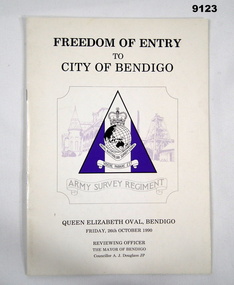
Booklet - Army Survey Regiment - Freedom of Entry to City of Bendigo 1990, Army Survey Regiment, Oct 1990
... exercising of that privilege on 26 October 1990. This booklet records the senior Officers of the Royal Australian Survey Corps and their appointments and dates of service as well as the unit members participating in the Freedom of Entry Parade that was held on the Queen Elizabeth Oval, Bendigo. The Reviewing Officer was Cr AJ Douglass JP the Mayor of the City of Greater Bendigo. The Army...exercising of that privilege on 26 October 1990. This booklet records the senior Officers of the Royal Australian Survey Corps and their appointments and dates of service as well as the unit members participating in the Freedom of Entry Parade that was held on the Queen Elizabeth Oval, Bendigo. The Reviewing Officer was Cr AJ Douglass JP the Mayor of the City of Greater Bendigo. The Army ...Freedom of Entry is a ceremonial privilege granted to military units, allowing them to march through a city or town with full military honors, symbolizing trust and community ties. Freedom of Entry has its roots in military traditions dating back to ancient Rome, where soldiers were not allowed to enter the city without permission due to concerns about maintaining order. This practice evolved over centuries, particularly after the English Civil War, when loyal military units were granted the right to enter cities as a mark of honor and trust. In contemporary times, Freedom of Entry is a formal honor bestowed by local governments on military units, allowing them to march through the streets with swords drawn, drums beating, and colors flying. This event typically includes a ceremonial parade, where the unit is challenged by local authorities, symbolizing the community's recognition of the military's service and commitment. The granting of Freedom of Entry represents the highest civic honor a city can confer on a military unit. It strengthens the bond between the military and the local community, acknowledging the unit's historical ties and contributions. Events celebrating Freedom of Entry often draw large crowds, showcasing community support for the armed forces. The Certificate of Freedom of Entry to Bendigo was granted to A.H.Q Survey Regt in 1970. Signed by JCH Jeffrey, Mayor. This was a great honor to be granted to the unit and this booklet records the exercising of that privilege on 26 October 1990. This booklet records the senior Officers of the Royal Australian Survey Corps and their appointments and dates of service as well as the unit members participating in the Freedom of Entry Parade that was held on the Queen Elizabeth Oval, Bendigo. The Reviewing Officer was Cr AJ Douglass JP the Mayor of the City of Greater Bendigo. The Army Survey Regiment exercised its Freedom of Entry with ceremonial parades in 1970, 1977, 1980, 1985, 1990, 1995 and finally in 1996 when the Unit was disbanded. Because of the importance and amount of information, the entire booklet has been scanned at 200dpi and then made into a 3.54 Mb video that runs for about 4 minutes. Pause the video if you wish to read the entire contents of a single page.Laminated cardboard cover, black & white print. On front cover at R top corner RASvy emblem in colour. 20 pages, coloured photo of the Director of Military Survey Colonel DG Swiney MBE on p2. Coloured photo of CO Lt Col Rene Van den Tol on p4, coloured photo of Mayor of the City of Greater Bendigo Cr AJ Douglas JP on p6. Contents cover the history of dignitaries, the Freedom of Entry Certificate & program of service followed by a list of Senior Survey Corps Officers and the dates that they served followed by a nominal roll of the Unit parade attendees. Held at Queen Elizabeth Oval on Friday 26 October 1990. The entire booklet has been scanned at 200dpi and then made into a 3.54 Mb video that runs for about 4 minutes. Pause the video if you wish to read the entire contents of a single page.books-military, civic mementoes-presentations, military history-army, royal australian survey corps, rasvy, fortuna, army survey regiment, army svy regt -
Marysville & District Historical Society
THE TRIANLGE NEWS-VOL 40 NO 37-SEPTEMBER 27 2013
... exercise...marysville primary school netball team tigers...note from editor...what's on when in october...buxton progress assocn agm...marysville & district football & netball club agm...marysville community market...creative triangle...murrindindi shire council payment of rate instalments...celebrate senior's week...triangle community dinner...el kanah village...church notices...breakfast all for men...intrepid triangle bushwalkers...mayor's chair...great victorian rail trail marketing opportunities...marysville golf report...expressions of interest...advertisements...2013 open gardens...the salvation army...marysville victoria australia narbethong fire brigade alexandra group training exercise marysville primary school netball team tigers note from editor what's on when in october buxton progress assocn agm marysville & district football & netball club agm marysville community market creative triangle murrindindi shire council payment of rate instalments celebrate senior's week triangle community dinner el kanah village church notices breakfast all for men intrepid triangle bushwalkers mayor's chair great victorian rail trail marketing opportunities marysville golf report expressions of interest advertisements 2013 open gardens the salvation army funding available 2009 bushfire relief dalton fiske foundation grant buxton hotel taste of italy pasta night local bus tours real estate marysville triangle community men's shed agm victorian senior's festival afternoon tea dance lions triangle tool library community safety a priority for council heart foundation walkers wanted art show kinglake amnesty supports fire prevention efforts australian centre for grief and bereavement australia day award nominations renewal of wildlife licence department of environment & primary industries narbethong history group narbethong hall book launch black spur inn tradie meal & stay deal road management plan review highlights works priorities office manager camp marysville sixteenth annual steam and wood show taggerty dance on again casual situation vacant in triangle area marysville & district kindergarten assocn preschool centre open & enrolment day buxton recreation reserve working bee the committee of management of the gallipoli park precinct leadership course funded by bendigo bank THE TRIANLGE NEWS-VOL 40 NO 37-SEPTEMBER 27 2013 ...marysville, victoria, australia, narbethong fire brigade, alexandra group training exercise, marysville primary school netball team tigers, note from editor, what's on when in october, buxton progress assocn agm, marysville & district football & netball club agm, marysville community market, creative triangle, murrindindi shire council payment of rate instalments, celebrate senior's week, triangle community dinner, el kanah village, church notices, breakfast all for men, intrepid triangle bushwalkers, mayor's chair, great victorian rail trail marketing opportunities, marysville golf report, expressions of interest, advertisements, 2013 open gardens, the salvation army, funding available, 2009 bushfire relief, dalton fiske foundation grant, buxton hotel taste of italy pasta night, local bus tours, real estate, marysville triangle community men's shed agm, victorian senior's festival, afternoon tea dance, lions triangle tool library, community safety a priority for council, heart foundation walkers wanted, art show kinglake, amnesty supports fire prevention efforts, australian centre for grief and bereavement, australia day award nominations, renewal of wildlife licence, department of environment & primary industries, narbethong history group, narbethong hall book launch, black spur inn tradie meal & stay deal, road management plan review highlights works priorities, office manager camp marysville, sixteenth annual steam and wood show, taggerty dance on again, casual situation vacant in triangle area, marysville & district kindergarten assocn, preschool centre open & enrolment day, buxton recreation reserve working bee, the committee of management of the gallipoli park precinct, leadership course funded by bendigo bank -
 Bendigo Military Museum
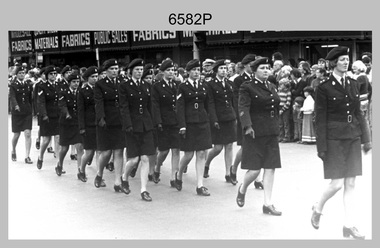
Photograph - Army Survey Regiment Freedom of Entry March, Bendigo CBD, 1977
... The Freedom of Entry to the City was an honour conferred by the Bendigo City Council to the Army Survey Regiment in 1970. 1977 was the second time the unit exercised its freedom of marching into the city with swords drawn, bayonets fixed and drums beating. ...The Freedom of Entry to the City was an honour conferred by the Bendigo City Council to the Army Survey Regiment in 1970. 1977 was the second time the unit exercised its freedom of marching into the city with swords drawn, bayonets fixed and drums beating. ...The Freedom of Entry to the City was an honour conferred by the Bendigo City Council to the Army Survey Regiment in 1970. 1977 was the second time the unit exercised its freedom of marching into the city with swords drawn, bayonets fixed and drums beating. The honour is usually bestowed upon local regiments, in recognition of their dedicated service, and it is common for military units to periodically exercise their freedom by arranging a parade through the city. Led by the Regiment’s CO – LTCOL Bob Skitch, the unit marched down View St in the CBD, along Pall Mall and up Gaol Rd to the Queen Elizabeth II Oval. The ceremonial parade followed with a march past the guests of honour, the Mayor of Bendigo and military dignitaries. The parade concluded after formal inspections of the troops. The Regiment also exercised its Freedom of Entry with anniversary parades in 1980, 1985, 1990, 1992 and 1996.This photograph of the Army Survey Regiment was taken on the occasion of the Freedom of Entry to the City of Bendigo March in 1977. The photo was printed on photographic paper and scanned at 200 dpi. It is part of the Army Survey Regiment’s Collection. .1 - Photo, black & white, 1977. Female Contingent salutes on the march past the dais. Right file L to R: PTE Chris Meharg, CPL Di Chalmers, LCPL Lynn Johnson, PTE Debbie Brown, PTE Le-anne (Smallshaw) Shirley, PTE Janet (Chopping) Justin, PTE Deirdre Moorrees, CPL Sue (Lang) Spath, WO1 Marj Knight, LT Dianne (Norling) Harris CSC. Centre and left file L to R: SSGT Pat Lumsden - obscured, PTE Karen (Carmichael) Gloster, PTE Kerry (Brown) Collins- obscured, PTE Terry Martin, PTE Laurel (Ryant) Staley – obscured, PTE Tracey (Beckwith) Phillips, PTE Marrianne (Van De Zee) De Groot- obscured. Personnel are named on a digital copy of this photo.royal australian survey corps, rasvy, army survey regiment, army svy regt, fortuna -
 Bendigo Military Museum
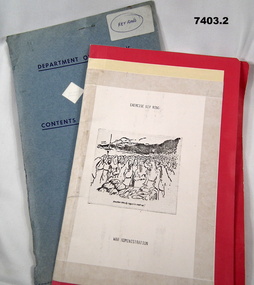
Document - TRAINING NOTES, Australian Army, Exercise Key Ring - War Administration, April 1984, May 1988
... Exercise Key Ring - War Administration Document TRAINING NOTES Australian Army ...Training notes related to "Exercise Key Ring" - War Administration. Printed notes are dated April 84 and May 88. Part off the "Kevin John HERDMAN" No.397661, collection. See Catalogue No. 5942P for details of his service record.1. Red and cream coloured foolscap sized manilla folder containing green and pink coloured pages with text in black type. Pages have two punched holes and are secured in place with a silver coloured fastener. Title on front cover in black type. Black and white illustration with caption also on front cover. 2. Light blue coloured foolscap sized manila folder containing white pages with printing in black text and fastened on top LH corner with a staple. Remaining lined pages contain handwritten notes in black, blue and pencil. All pages are labelled “Restricted”. Title on front cover is dark blue type. Front and rear covers have three diamond shaped holes cut into them.1. Handwritten in pencil inside back cover: "Class1. Rat, 3, POL, 4. Def Hom, 5. Ammo/min” 2. Handwritten in blue on a white sticker on front covers: “Key Ring”.training notes, exercise key ring, war administration, kevin john herdman -
 Bendigo Military Museum
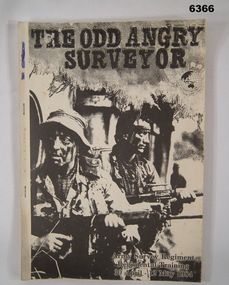
Administrative record - Army Survey Regiment Regimental Training 1984 - The Odd Angry Surveyor, Army Survey Regiment, Bendigo, 21 Feb 1984
... This is an Administrative Instruction setting out all aspects of the Army Survey Regiment Regimental Training Exercise "Odd Angry Surveyor" during the period 30 Apr - 12 May 1984. ...This is an Administrative Instruction setting out all aspects of the Army Survey Regiment Regimental Training Exercise "Odd Angry Surveyor" during the period 30 Apr - 12 May 1984. ...This is an Administrative Instruction setting out all aspects of the Army Survey Regiment Regimental Training Exercise "Odd Angry Surveyor" during the period 30 Apr - 12 May 1984. The Exercise conducted in two phases, Phase One- being theory lessons in a number of aspects of Infantry Minor Tactics at Section Level, whilst Phase Two- was putting into practice the lessons from Phase One.Light carboard covered A4 paper report stapled on left hand sideroyal australian survey corps, rasvy, fortuna, army survey regiment, army svy regt, asr -
 Bendigo Military Museum
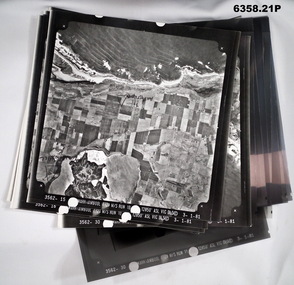
Photograph - Aerial Photography - Mohogany Ship Search Warrnambool Victoria, Victorian Lands Department, 3.1.1981
... These Victorian Lands Dept Aerial Photographs were acquired by the Army Survey Regiment to help locate a Mohogany Ship wreck near Warrnambool Victoria as part of a unit Regimental Training Exercise...These Victorian Lands Dept Aerial Photographs were acquired by the Army Survey Regiment to help locate a Mohogany Ship wreck near Warrnambool Victoria as part of a unit Regimental Training Exercise Royal Australian Survey Corps RASvy Fortuna Army Survey Regiment Army Svy Regt ASR Seven Aerial photographic Prints and Film Negatives and positives of the same images. ...These Victorian Lands Dept Aerial Photographs were acquired by the Army Survey Regiment to help locate a Mohogany Ship wreck near Warrnambool Victoria as part of a unit Regimental Training ExerciseSeven Aerial photographic Prints and Film Negatives and positives of the same images. Images are Numbered 3562- 15,16,17,18,19, 29 and 30.royal australian survey corps, rasvy, fortuna, army survey regiment, army svy regt, asr -
 Bendigo Military Museum
Photograph - AHQ Survey Regiment Freedom of Entry Parade 1970, 1970
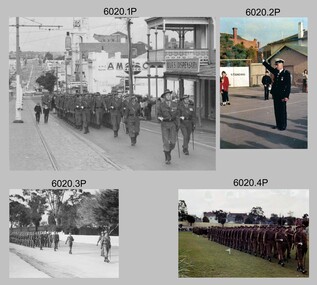
... The Regiment continued to exercise its Freedom of Entry with anniversary parades in 1977, 1980, 1985, 1990, 1992 and 1996. Royal Australian Survey Corps RASvy Fortuna Army Survey Regiment Army Svy Regt ASR These black and white and colour photographs of the AHQ Survey Regiment were taken on the occasion of the Freedom of Entry parade to the City of Bendigo on the 14th of June 1970. ...The Freedom of Entry to the City was an honour conferred by the Bendigo City Council to the AHQ Survey Regiment on the 20th of April 1970. The unit was granted for the first time the privilege of marching into the city with swords drawn, bayonets fixed and drums beating. The honour is usually bestowed upon local regiments, in recognition of their dedicated service, and it is common for military units to periodically exercise their freedom by arranging a parade through the city. The Freedom of Entry Parade occurred on the 14th of June 1970 led by the Regiment’s CO – LTCOL Bill Sprenger MID, MBE; the unit marched up View St in the CBD to the Queen Elizabeth II Oval. The ceremonial parade followed with a march past the guests of honour, Mayor of Bendigo Councillor Jeffrey and military dignitaries. The parade concluded after formal inspections of the troops. A ceremonial scroll was presented to the Bendigo City Council to the AHQ Survey Regiment citing the occasion and was proudly displayed in the entry foyer to Fortuna Villa up to October 2008. The Regiment continued to exercise its Freedom of Entry with anniversary parades in 1977, 1980, 1985, 1990, 1992 and 1996.These black and white and colour photographs of the AHQ Survey Regiment were taken on the occasion of the Freedom of Entry parade to the City of Bendigo on the 14th of June 1970. The photographs were printed on photographic paper and are part of the Army Survey Regiment’s Collection. The photographs were scanned at 300 dpi. .1) Photo, black & white, L to R: RSM WO1 John Hogan, CO LTCOL Bill Sprenger MID, MBE; and 2IC MAJ Frank Thorogood SB St J. .2) Photo, colour, unidentified Victorian police Superintendent .3) Photo, black & white, L to R: RSM WO1 John Hogan, 2IC MAJ Frank Thorogood SB St J. and CO LTCOL Bill Sprenger MID, MBE. .4) Photo, colour, unidentified personnel .5) Photo, colour, L to R: unidentified, COL COMDT BRIG Don Macdonald MID, unidentified, CO LTCOL Bill Sprenger MID, MBE; and Mayor - Councillor Jeffrey. .6) Photo, black & white, L to R: unidentified, COL COMDT BRIG Don Macdonald MID, unidentified, CO LTCOL Bill Sprenger MID, MBE; and Mayor - Councillor Jeffrey. .7) Photo, black & white, L to R: unidentified, Mayor Councillor Jeffrey, COL COMDT BRIG Don Macdonald MID, unidentified and CO LTCOL Bill Sprenger MID, MBE. .8) Photo, black & white, L to R: unidentified, COL COMDT BRIG Don Macdonald MID, unidentified, CO LTCOL Bill Sprenger MID, MBE; and Mayor - Councillor Jeffrey. royal australian survey corps, rasvy, fortuna, army survey regiment, army svy regt, asr -
 Bendigo Military Museum
Photograph - Army Survey Regiment Freedom of Entry Parade 1980, 1980
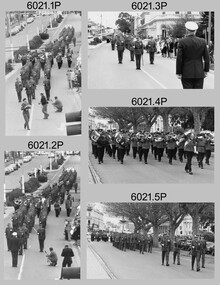
... The Freedom of Entry to the City was an honour conferred by the Bendigo City Council to the Army Survey Regiment in 1970. 1980 was the third time the unit exercised its freedom of marching into the city with swords drawn, bayonets fixed and drums beating. ...The Freedom of Entry to the City was an honour conferred by the Bendigo City Council to the Army Survey Regiment in 1970. 1980 was the third time the unit exercised its freedom of marching into the city with swords drawn, bayonets fixed and drums beating. ...The Freedom of Entry to the City was an honour conferred by the Bendigo City Council to the Army Survey Regiment in 1970. 1980 was the third time the unit exercised its freedom of marching into the city with swords drawn, bayonets fixed and drums beating. The honour is usually bestowed upon local regiments, in recognition of their dedicated service, and it is common for military units to periodically exercise their freedom by arranging a parade through the city. Led by the Regiment’s CO – LTCOL Bob Skitch, the unit marched down View St in the CBD, along Pall Mall and up Gaol Rd to the Queen Elizabeth II Oval. The ceremonial parade followed with a march past the guests of honour, Mayor of Bendigo Councillor Paul Tomkinson and military dignitaries. The parade concluded after formal inspections of the troops. The Regiment also exercised its Freedom of Entry with anniversary parades in 1977, 1980, 1985, 1990 and 1995.These black and white photographs of the Army Survey Regiment were taken on the occasion of the Freedom of Entry parade to the City of Bendigo in 1980. The photographs were printed on photographic paper and are part of the Army Survey Regiment’s Collection. The photographs were scanned at 300 dpi. .1) Photo, black & white, L to R: MAJ Don Swiney, LTCOL Bob Skitch, WO1 Aub Harvey, unidentified, photographer in foreground – SGT Garran Hill .2) Photo, colour, black & white, L to R: MAJ Don Swiney, LTCOL Bob Skitch, WO1 Aub Harvey, unidentified .3) Photo, black & white, L to R: MAJ Don Swiney, WO1 Aub Harvey, LTCOL Bob Skitch, unidentified .4) Photo, black & white: 3rd MD Band .5) Photo, colour, L to R: MAJ Don Swiney, WO1 Aub Harvey, LTCOL Bob Skitch, unidentified .6) Photo, black & white, L to R: MAJ Don Swiney, WO1 Aub Harvey, unidentified, LTCOL Bob Skitch .7) Photo, black & white, L to R: SGT Stu Thaxter, LT Neil Taylor, CAPT Bob Roche .8) Photo, black & white, L to R: SPR Per Andersen – right marker .9) Photo, black & white, L to R: MAJ Peter Eddy .10) Photo, black & white, L to R: CPL Frank Lenane, CPL Flash Anderson, SGT Rhys De Laine, SPR Per Andersen .11) Photo, black & white, L to R: Mayor Paul Tomkinson .12) Photo, black & white, L to R: MAJ Don Swiney, WO1 Aub Harvey, unidentified, LTCOL Bob Skitch .13) Photo, black & white, L to R: unidentified personnel .14) Photo, black & white, L to R: unidentified personnel .15) Photo, black & white, L to R: unidentified personnel .16) Photo, black & white, L to R: unidentified personnel .18) Photo, black & white, L to R: CAPT Paddy Strunks, Mayor Paul Tomkinson, LTCOL Bob Skitch .19) Photo, black & white, L to R: Mayor Paul Tomkinson, CPL Bill Jones, CPL Gary Drummond, WO2 Tom Pattison .20) Photo, black & white, L to R: CAPT Paddy Strunks, WO1 Aub Harvey, Mayor Paul Tomkinson, SGT Rick Warren, CPL Andy Wilson …, WO2 Ted Burgess .21) Photo, black & white, L to R: LTCOL Bob Skitch, SPR Roy Hicks, Trevor Osborne, SPR Paul Baker, CAPT Stan Vote, CPL Bill Jones, Greg Francis-Wright .22) Photo, black & white, Air Survey Squadron inspection. Rear rank: SSGT Russell ‘Rusty’ Williams. Centre rank L to R: CPL Peter Treble, SGT Jim Beard, SPR Peter Hardy, SPR Steve Hilton, SPR John Lane, CPL Mick Hogan, Mayor – Councillor Paul Tomkinson. .23) Photo, black & white, L to R: Mayor Paul Tomkinson, CPL Marrianne (Van De Zee) De Groot, SPR Cathy Regan, SPR Ginny Turner, SPR Ilen Isaac, SPR Penny Knott, SPR Santina Argetto, SPR Gina Coore .24) Photo, black & white, L to R: Mayor Paul Tomkinson, SPR Cathy Regan, SPR Ginny Turner, SPR Ilen Isaac, SPR Penny Knott, SPR Santina Argetto, SPR Gina Coore, WO2 Pat Lumsden .25) Photo, black & white, L to R: LTCOL Bob Skitch, Mayor Paul Tomkinson, SPR Ilen Isaac, SPR Penny Knott, SPR Santina Argetto, SPR Gina Coore, WO2 Pat Lumsdenroyal australian survey corps, rasvy, fortuna, army survey regiment, army svy regt, asr -
 Bendigo Military Museum
photograph - Royal Australian Survey Corps Aero-triangulation Equipment, 1936 to 1952
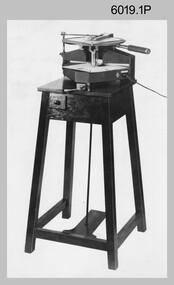
... The slotted template methodology was later used as an essential aero-triangulation exercise in advance courses conducted at the School of Military Survey. Royal Australian Survey Corps RASvy Army Survey Regiment Army Svy Regt Fortuna ASR air survey aerotrig .1 and .2 –annotated on back “Slotted Template” .3P - annotated on front “COMPILATION SECTION SLOTTED TEMPLATE MACHINE WO2 BOB PRATT” These three photographs are of a slotted template machine used in aero-triangulation. ...Although it’s unknown when these two photos were taken, the South African Pattern Mk IV Slotted Template Machine was in service from 1936 to 1952. The machine was used to cut slots and holes in an acetate film medium. This template was then used to fit several runs of aerial photography to ground control points at a desired scale with a substitution of the templates in the assembly. Radial slots on the templates from central holes representing the photograph’s principal point (centre) were placed over hollow metal studs mounted over control points on the scaled base sheet. The studs represented the intersection of radial lines through common points of detail of overlapping photos. A pricker was used to transfer from the photo-points to the templates. The slotted template methodology was later used as an essential aero-triangulation exercise in advance courses conducted at the School of Military Survey.These three photographs are of a slotted template machine used in aero-triangulation. The first two photographs were printed on photographic paper and are part of the Army Survey Regiment’s Collection. The photographs were scanned at 300 dpi. The third photograph was captured from a collection using a smart phone. .1) and .2) - Photo, black & white, 1936-1952. South African Pattern Mk IV Slotted Template Machine. .3) - Photo, black & white, 1936-1952. WO2 Bob Pratt operating the Slotted Template Machine. .1 and .2 –annotated on back “Slotted Template” .3P - annotated on front “COMPILATION SECTION SLOTTED TEMPLATE MACHINE WO2 BOB PRATT”royal australian survey corps, rasvy, army survey regiment, army svy regt, fortuna, asr, air survey, aerotrig -
 Bendigo Military Museum
Photograph - 4th Field Survey Squadron Adventurous Training Mount Remarkable National Park, SA, 4th Field Survey Squadron Adventurous Training, Mount Remarkable National Park, SA, 1986
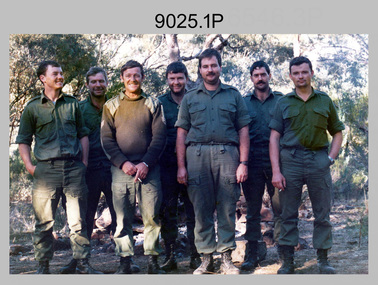
... A 10 DAY SURVIVAL EXERCISE IN THE FLINDERS RANGES " MOUNT REMARKABLE” .3P – ‘MOUNT REMARKABLE 10 DAY SURVIVAL EXERCISE THEY DIDN'T BLINDFOLIS US ON THE WAY IN (ITS NOT A JOEY)’ This is a set of six photographs of 4th Field Survey Squadron undergoing adventurous training at Mount Remarkable National Park, South Australia in 1986. Colour photographs .1P and .3P are printed on photographic paper and scanned at 300 dpi. Colour photographs .2P and .4P to .6P are on 35mm negative film and scanned at 2400 dpi. They are part of the Army ...This is a set of six photographs of 4th Field Survey Squadron undergoing adventurous training at Mount Remarkable National Park, part of the Flinders Ranges, SA in 1986. These photos feature personnel during a 10-day survival exercise 'The Highlanders’.This is a set of six photographs of 4th Field Survey Squadron undergoing adventurous training at Mount Remarkable National Park, South Australia in 1986. Colour photographs .1P and .3P are printed on photographic paper and scanned at 300 dpi. Colour photographs .2P and .4P to .6P are on 35mm negative film and scanned at 2400 dpi. They are part of the Army Survey Regiment’s Collection. .1) - Photo, colour, 1986. L to R: Tony Rawcliffe, Kev Whitty, Wally Chilcott, Jamie ‘Fish’ McRae, Shaun Hynes, Geoff ‘GT’ Ford, Bruce Graham. .2) - Photo, colour, 1986. L to R: Geoff ‘GT’ Ford, Kev Whitty, Tony Rawcliffe, Jamie ‘Fish’ McRae, Wally Chilcott, Shaun Hynes. .3) - Photo, colour, 1986. L to R: Tony Rawcliffe, Wally Chilcott. .4) - Photo, colour, 1986. L to R: Bruce Graham, Kev Whitty. .5) & .6)- Photo, colour, 1986. L to R: Jamie ‘Fish’ McRae, Bruce Graham.The following annotations are written on the back of each photo: .1P – ‘1986 THE HIGHLANDERS. A 10 DAY SURVIVAL EXERCISE IN THE FLINDERS RANGES " MOUNT REMARKABLE” .3P – ‘MOUNT REMARKABLE 10 DAY SURVIVAL EXERCISE THEY DIDN'T BLINDFOLIS US ON THE WAY IN (ITS NOT A JOEY)’ royal australian survey corps, rasvy, 4 fd svy sqn -
 Bendigo Military Museum
Journal - JOURNALS WW1, 1914 - 1918
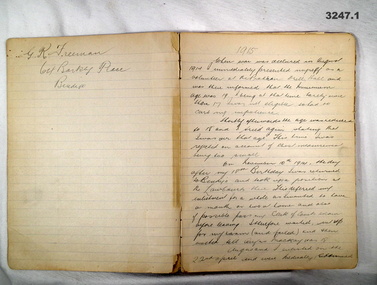
... Refer Cat No 3251P for Freeman's service details. journals 57th .1) "G R Freeman 64 Barkly Place Bendigo" .2) "Army Book 152, Correspondence Book (Field Service)" .3) "November 10th, G R Freeman , London etc Nov - Dec 1918" .1) Black fabric covered exercise book, ruled, written in ink, beginning Aug 1914, ending Mar 1919. .2) Brown cardboard covered blue lined grid squares written in pencil beginning Jan 1918, ending Dec 1918. .3) Light green cardboard cover, ruled pages, written in pencil beginning 1 Nov 1918 ending 10 Dec 1918. ...The journals were written by George Ross FREEMAN No 2485 - 57th Battalion AIF. .1) This journal was written from the notes in .2) & .3). .2) & .3) Were notes taken during the war. Refer Cat No 3251P for Freeman's service details..1) Black fabric covered exercise book, ruled, written in ink, beginning Aug 1914, ending Mar 1919. .2) Brown cardboard covered blue lined grid squares written in pencil beginning Jan 1918, ending Dec 1918. .3) Light green cardboard cover, ruled pages, written in pencil beginning 1 Nov 1918 ending 10 Dec 1918..1) "G R Freeman 64 Barkly Place Bendigo" .2) "Army Book 152, Correspondence Book (Field Service)" .3) "November 10th, G R Freeman , London etc Nov - Dec 1918"journals, 57th -
Queenscliffe Maritime Museum
Uniform - Uniform, commando
... On the evening of February 17, 1960, 74 peacetime commandos in army boats set off on a training exercise from Point Lonsdale to Point Nepean, simulating a raid. ...On the evening of February 17, 1960, 74 peacetime commandos in army boats set off on a training exercise from Point Lonsdale to Point Nepean, simulating a raid. ...Equipment similar to that worn by commandos involved in Rip Disaster. On the evening of February 17, 1960, 74 peacetime commandos in army boats set off on a training exercise from Point Lonsdale to Point Nepean, simulating a raid. Swept out to sea through The Rip as they crossed the bay from Point Lonsdale, George ''Taffy'' Drakopoulos and Eddie Meyer drowned before they could be rescued. Another man, Roger Wood, selflessly helped his fellow commandos up a rope ladder to safety from a Zodiac inflatable, only to be flung off the end into an angry sea somewhere beyond The Rip. The three dead men were all from Melbourne, all aged around 20.Lifeboat Queenscliff assisted in the search for the lost commandos in February 1960Army commando webbing belt and pair of gaiterswebbing, uniform, commandos, rip disaster -
 Queenscliffe Maritime Museum
Uniform - Beret
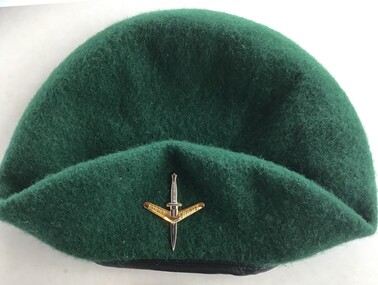
... On the evening of February 17, 1960, 74 peacetime commandos in army boats set off on a training exercise from Point Lonsdale to Point Nepean, simulating a raid. ...On the evening of February 17, 1960, 74 peacetime commandos in army boats set off on a training exercise from Point Lonsdale to Point Nepean, simulating a raid. ...On the evening of February 17, 1960, 74 peacetime commandos in army boats set off on a training exercise from Point Lonsdale to Point Nepean, simulating a raid. The weather was calm at Point Lonsdale on a midweek evening 50 years ago, but 50 years ago weather forecasts were not yet reliable. By nightfall a massive storm came through and all hell broke loose. Soon, three young Victorians were dead and more than 70 others were rescued from huge seas in Bass Strait.Green commando beret similar to ones worn by commandos involved in Rip Disaster of 1960Commando beret (green) with unit insigniaUnit insignia: "Strike Swiftly"commandos, beret -
 Bendigo Military Museum
Photograph - 4th Field Survey Squadron Adventurous Training, Wilpena pound, Flinders Ranges, SA, 1987
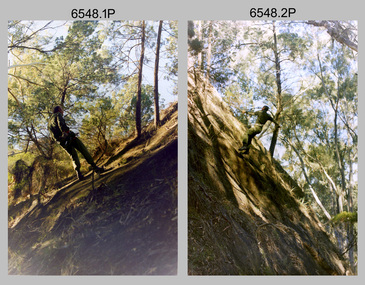
... Army Reserve also participated in the training. Refer to items 6546.42P and 6547.40P for additional photographs taken during the adventurous training exercise....Army Reserve also participated in the training. Refer to items 6546.42P and 6547.40P for additional photographs taken during the adventurous training exercise. ...This is a set of 14 photographs of a 4th Field Survey Squadron undergoing an abseiling activity, as part of adventurous training held at Mount Remarkable National Park, South Australia in May 1987. It is evident the training focussed on teamwork, leadership, abseiling, rock climbing, field craft and living off the land survival skills. Elements from units of the Army Reserve also participated in the training. Refer to items 6546.42P and 6547.40P for additional photographs taken during the adventurous training exercise.This is a set of 14 photographs of 4th Field Survey Squadron personnel undergoing an abseiling activity, as part of 4th Field Survey Squadron adventurous training held at Mount Remarkable National Park of South Australia in May 1987. The colour photographs are on 35mm negative film and are part of the Army Survey Regiment’s Collection. The photographs were scanned at 96 dpi. .1) - Photo, colour, 1987. Abseiling activities, SSM WO1 Bill Griggs. .2) to .14) - Photo, colour, 1987. Abseiling activities, unidentified soldier..1P to .14P – There are no personnel identified. ‘1987 ADV TRAINING’ annotated on negatives sleeve.royal australian survey corps, rasvy, 4 fd svy sqn -
 Bendigo Military Museum
Photograph - 4th Field Survey Squadron Adventurous Training, Wilpena pound, Flinders Ranges, SA, 1989
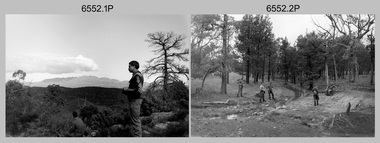
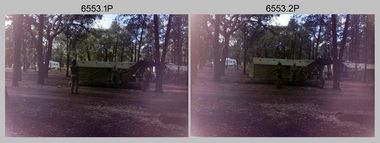
... Army Reserve also participated in the training. In this photo set, one of 4th Field Survey’s sections participated in abseiling and trekked to the highest mountain in the Flinders Ranges – St. Mary’s Peak. Refer to items 6553.56P for additional colour photographs taken during the adventurous training exercise...Army Reserve also participated in the training. In this photo set, one of 4th Field Survey’s sections participated in abseiling and trekked to the highest mountain in the Flinders Ranges – St. Mary’s Peak. Refer to items 6553.56P for additional colour photographs taken during the adventurous training exercise ...This is a set of 43 photographs of a 4th Field Survey Squadron adventurous training held at Wilpena pound, in the Flinders Ranges of South Australia in 1989. It is evident the training focussed on teamwork, leadership, abseiling, rock climbing, field craft and living off the land survival skills. Elements from units of the Army Reserve also participated in the training. In this photo set, one of 4th Field Survey’s sections participated in abseiling and trekked to the highest mountain in the Flinders Ranges – St. Mary’s Peak. Refer to items 6553.56P for additional colour photographs taken during the adventurous training exercise.This is a set of 43 photographs of 4th Field Survey Squadron personnel undergoing adventurous training held at Wilpena pound, in the Flinders Ranges of South Australia in 1989. The black & white photographs are on 35mm negative film and are part of the Army Survey Regiment’s Collection. The photographs were scanned at 96 dpi. .1) - Photo, black & white, 1989. L to R: SGT Laurie Justin, SGT Stu Symonds. .2) - Photo, black & white, 1989. L to R: SGT Stu Symonds, CPL Roger Graf, SSGT Max Coletti, SPR Cheryl Deluca-Cardillo, SPR Andrew Quin. .3) & .4) - Photo, black & white, 1989. Wilpena Pound topography. .5) - Photo, black & white, 1989. SGT Stu Symonds. .6) - Photo, black & white, 1989. Abseiling ropes and equipment. .7) to .16) - Photo, black & white, 1989. Abseiling activities, unidentified soldier. .17) to .18) - Photo, black & white, 1989. Abseiling activities, CPL Michelle Griffith. .19) - Photo, black & white, 1989. L to R: unidentified (x5), SGT Mick Hogan, unidentified (x3). .20) - Photo, black & white, 1989. L to R: CPL Roger Graf, CPL Michelle Griffith, SPR Cheryl Deluca-Cardillo, SGT Laurie Justin, SSGT Max Coletti, SPR Andrew Quin. SGT Stu Symonds. .21) - Photo, black & white, 1989. L to R: unidentified (x2), SGT Stu Symonds. .22) & .23) - Photo, black & white, 1989. Wilpena Pound topography. .24) - Photo, black & white, 1989. SSGT Max Coletti. .25) - Photo, black & white, 1989. SSGT Max Coletti, SPR Cheryl Deluca-Cardillo, SGT Stu Symonds. .26) - Photo, black & white, 1989. SGT Stu Symonds. .27) - Photo, black & white, 1989. L to R: CPL Michelle Griffith, SPR Cheryl Deluca-Cardillo, SSGT Max Coletti, SGT Laurie Justin, SPR Andrew Quin, CPL Roger Graf, SGT Stu Symonds. .28) &.29) - Photo, black & white, 1989. Wilpena Pound topography. .30) - Photo, black & white, 1989. SGT Stu Symonds. .31) - Photo, black & white, 1989. CPL Michelle Griffith. .32) - Photo, black & white, 1989. L to R: CPL Michelle Griffith, SGT Stu Symonds, SSGT Max Coletti, SGT Laurie Justin. .33) - Photo, black & white, 1989. L to R: CPL Michelle Griffith, SGT Stu Symonds, CPL Roger Graf (standing), SSGT Max Coletti, SGT Laurie Justin. .34) - Photo, black & white, 1989. L to R: SGT Stu Symonds, CPL Michelle Griffith, CPL Roger Graf (standing), SSGT Max Coletti, SGT Laurie Justin. .35) to .37) - Photo, black & white, 1989. Wilpena Pound topography. .38) - Photo, black & white, 1989. SPR Cheryl Deluca-Cardillo. .39) - Photo, black & white, 1989. L to R: CPL Michelle Griffith, SGT Stu Symonds, SPR Andrew Quin, SGT Laurie Justin. .40) &.41) - Photo, black & white, 1989. Wilpena Pound topography. .1P to .43P – There are no personnel identified. ‘1989 ADV TRAINING’ annotated on negatives sleeve.royal australian survey corps, rasvy, 4 fd svy sqn -
 Bendigo Military Museum
Photograph - 4th Field Survey Squadron Adventurous Training, Wilpena pound, Flinders Ranges, SA, 1989
... Army Reserve also participated in the training. In this photo set, one of 4th Field Survey’s sections participated in abseiling and trekked to the highest mountain in the Flinders Ranges – St. Mary’s Peak. Refer to item 6552.43P for black & white photographs taken during the adventurous training exercise...Army Reserve also participated in the training. In this photo set, one of 4th Field Survey’s sections participated in abseiling and trekked to the highest mountain in the Flinders Ranges – St. Mary’s Peak. Refer to item 6552.43P for black & white photographs taken during the adventurous training exercise ...This is a set of 55 photographs of a 4th Field Survey Squadron adventurous training held at Wilpena pound, in the Flinders Ranges of South Australia in 1989. It is evident the training focussed on teamwork, leadership, abseiling, rock climbing, field craft and living off the land survival skills. Elements from units of the Army Reserve also participated in the training. In this photo set, one of 4th Field Survey’s sections participated in abseiling and trekked to the highest mountain in the Flinders Ranges – St. Mary’s Peak. Refer to item 6552.43P for black & white photographs taken during the adventurous training exercise.This is a set of 55 photographs of 4th Field Survey Squadron personnel undergoing adventurous training held at Wilpena pound, in the Flinders Ranges of South Australia in 1989. The colour photographs are on 35mm negative film and are part of the Army Survey Regiment’s Collection. The photographs were scanned at 96 dpi. .1) & 2)- Photo, colour, 1989. Base camp. WO1 Bill Griggs 2nd from left, remainder unidentified. .3) - Photo, colour, 1989. Old homestead inside Wilpena Pound. SPR Cheryl Deluca-Cardillo, 2nd from left, remainder unidentified. .4) - Photo, colour, 1989. Wilpena Pound topography. .5) - Photo, colour, 1989. Abseiling activities, unidentified personnel. .6) & .7) - Photo, colour, 1989. Flinders Ranges topography. .8) - Photo, colour, 1989. Abseiling activities. L to R: SSGT Max Coletti, SGT Stu Symonds. .9) - Photo, colour, 1989. Abseiling activities, unidentified personnel. .10) - Photo, colour, 1989. Flinders Ranges topography. .11) - Photo, colour, 1989. Abseiling activities. L to R: unidentified, CPL Michelle Griffith, SGT Stu Symonds. .12) - Photo, colour, 1989. Abseiling activities. L to R: unidentified, SPR Andrew Quin, SGT Laurie Justin, SGT Stu Symonds. .13) - Photo, colour, 1989. Abseiling activities. L to R: SGT Stu Symonds SGT Laurie Justin. .14) - Photo, colour, 1989. Abseiling activities. L to R: unidentified, SGT Stu Symonds. .15) - Photo, colour, 1989. Abseiling activities. SGT Laurie Justin. .16) - Photo, colour, 1989. Abseiling activities. SGT Stu Symonds. .17) & .18) - Photo, colour, 1989. Abseiling activities. SPR Cheryl Deluca-Cardillo. .19) - Photo, colour, 1989. Abseiling activities. L to R: SPR Cheryl Deluca-Cardillo, unidentified. .20) - Photo, colour, 1989. Abseiling activities. SSGT Max Coletti. .21) - Photo, colour, 1989. Abseiling activities. SPR Andrew Quin. .22) - Photo, colour, 1989. Abseiling activities. CPL Michelle Griffith. .23) - Photo, colour, 1989. Abseiling activities. CPL Michelle Griffith. .24) - Photo, colour, 1989. Flinders Ranges topography, unidentified personnel. .25) - Photo, colour, 1989. Flinders Ranges topography, unidentified SGT. .26) to .30) - Photo, colour, 1989. Flinders Ranges topography. .31) - Photo, colour, 1989. Flinders Ranges topography, unidentified personnel. .32) & .33) - Photo, colour, 1989. Flinders Ranges topography. L to R: unidentified, CPL Michelle Griffith, SGT Stu Symonds, CPL Roger Graf, SSGT Max Coletti, SGT Laurie Justin. .34) - Photo, colour, 1989. St. Mary’s Peak. L to R: unidentified, CPL Michelle Griffith, CPL Steve Nokes, SGT Stu Symonds. .35) - Photo, colour, 1989. St. Mary’s Peak. SGT Stu Symonds. .36) & .37) - Photo, colour, 1989. St. Mary’s Peak. CPL Steve Nokes. .38) - Photo, colour, 1989. Flinders Ranges topography. .39) - Photo, colour, 1989. St. Mary’s Peak. SGT Laurie Justin. .40) - Photo, colour, 1989. St. Mary’s Peak. SPR Cheryl Deluca-Cardillo. .41) - Photo, colour, 1989. St. Mary’s Peak. SPR Andrew Quin. .42) - Photo, colour, 1989. Flinders Ranges topography, SGT Stu Symonds. .43) - Photo, colour, 1989. Social activities. L to R: unidentified (x6), CPL Perry Langeberg, SGT Laurie Justin. .44) - Photo, colour, 1989. Social activities. L to R: CPL Perry Langeberg, SGT John Zuringer, SGT Laurie Justin, SGT Mick Hogan, unidentified, SGT Stu Symonds. .45) - Photo, colour, 1989. Social activities. L to R: unidentified (x6), CPL Perry Langeberg, SGT John Zuringer. .46) - Photo, colour, 1989. Social activities. L to R: CPL Jamie McRae, SGT Laurie Justin, SGT Mick Hogan, unidentified, SGT Stu Symonds, SPR Cheryl Deluca-Cardillo, WO1 Bill Griggs. .47) - Photo, colour, 1989. Social activities. L to R: SGT Laurie Justin, unidentified, CPL Steve Nokes, SGT Stu Symonds, SPR Cheryl Deluca-Cardillo, WO1 Bill Griggs, unidentified (x2). .48) - Photo, colour, 1989. Social activities. L to R: CPL Steve Nokes, WO1 Bill Griggs, SPR Cheryl Deluca-Cardillo, unidentified (x2), CPL Steve Ellis, CPL Michelle Griffith, SGT Gill Park. .49) - Photo, colour, 1989. Social activities. L to R: CPL Perry Langeberg, SGT John Zuringer, CPL Jamie McRae, SGT Laurie Justin, SGT Mick Hogan, unidentified, SGT Stu Symonds. .50) - Photo, colour, 1989. Sheep cooking in fire pit. L to R: WO2 Peter Symmans, unidentified (x5), CPL Steve Ellis. .51) - Photo, colour, 1989. Sheep cooking in fire pit. L to R: WO2 Peter Symmans, unidentified. .52) - Photo, colour, 1989. Sheep cooking in fire pit. Unidentified personnel. .53) - Photo, colour, 1989. Cooked sheep removed from fire pit. L to R: unidentified. WO2 Peter Symmans, unidentified. .54) - Photo, colour, 1989. Cooked sheep removed from fire pit. L to R: CPL Michelle Griffith, SGT Gill Park, unidentified, SSGT Max Coletti, unidentified, SPR Cheryl Deluca-Cardillo. .55) - Photo, colour, 1989. Cooked sheep removed from fire pit. L to R: unidentified, CPL Michelle Griffith, WO2 Peter Symmans..1P to .55P – There are no personnel identified. ‘1989 ADV TRAINING’ annotated on negatives sleeve.royal australian survey corps, rasvy, 4 fd svy sqn -
 Bendigo Military Museum
Photograph - 4th Field Survey Squadron Regimental Training - Exercise ‘Fuggy Hollow’ in SA, 1994
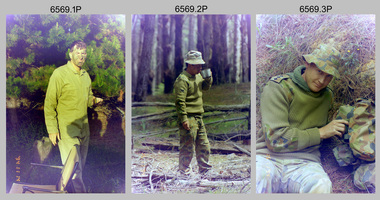
... Evertz. 4th Field Survey Squadron Regimental Training - Exercise ‘Fuggy Hollow’ in SA Photograph 4th Field Survey Squadron Regimental Training - Exercise ‘Fuggy Hollow’ in SA Army Survey Regiment ...This is a set of 30 photographs of 4th Field Survey Squadron personnel undergoing regimental training in 1994, at Second Valley Conservation Park in South Australia. The aim of Exercise ‘Fuggy Hollow’ was typically to provide personnel a practical knowledge of infantry and minor tactics (IMT) at the section level, navigation and map reading, RATEL and survival in the Field.This is a set of 30 photographs of 4th Field Survey Squadron personnel undergoing regimental training in 1994, at Second Valley Conservation Park in South Australia. The colour photographs are on 35mm negative film and are part of the Army Survey Regiment’s Collection. The photographs were scanned at 96 dpi. .1) - Photo, colour, 1994. Unidentified soldier. .2) - Photo, colour, 1994. CPL Phuc ‘Charlie’ Tran. .3 to .5) - Photo, colour, 1994. CAPT Chris Topovsek. .6) & .7) - Photo, colour, 1994. Unidentified soldiers. .8) - Photo, colour, 1994. L to R: SPR Fran Calvert, unidentified (x2), SPR Mark Linford, unidentified. .9) to .17) - Photo, colour, 1994. Unidentified soldiers. .18) & .19) - Photo, colour, 1994. L to R: LT Andrew Caudle, SSGT Brian Collings, OC Maj Peter Demaine. .20) - Photo, colour, 1994. WO2 Peter Hammer. .21) - Photo, colour, 1994. L to R: CAPT Chris Topovsek, SSGT Brian Collings, WO2 Peter Hammer .22) - Photo, colour, 1994. SSGT Brian Collings. .23) - Photo, colour, 1994. L to R: unidentified, SPR Fran Calvert. .24) - Photo, colour, 1994. L to R: SPR Mark Sinderberry, SGT Steve McGuiness, unidentified. .25) - Photo, colour, 1994. SPR Mark Linford. .26) - Photo, colour, 1994. L to R: unidentified (x2), SPR Fran Calvert, unidentified. .27 & .28) - Photo, colour, 1994. L to R: SSGT Brian Collings, WO2 Peter Hammer. .29) - Photo, colour, 1994. WO2 Simon ‘Andy’ Capp. .30) - Photo, colour, 1994. SGT H. Evertz..1P to .30P – There are no personnel identified. ‘1994 EX FUGGY HOLLOW (IMTs) Second Valley Conservation Park’ annotated on negatives sleeve.royal australian survey corps, rasvy, 4 fd svy sqn -
 Bendigo Military Museum
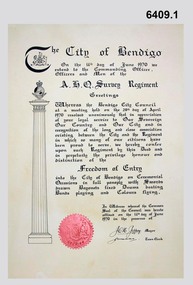
Certificate - Army Survey Regiment City of Bendigo Freedom of Entry Certificate 1970, Ian Wallace and AHQ Survey Regiment, Bendigo, June 1970
... The Freedom of Entry to the City was first conferred by the Bendigo City Council to the Army Survey Regiment in 1970. The unit then exercised its freedom by marching into the city with swords drawn, bayonets fixed and drums beating. ...The Freedom of Entry to the City was first conferred by the Bendigo City Council to the Army Survey Regiment in 1970. The unit then exercised its freedom by marching into the city with swords drawn, bayonets fixed and drums beating. ...The certificate was issued by the City of Bendigo to AHQ Survey Regiment awarding the Regiment "Freedom of Entry" on ceremonial occasions. The certificate recognises the long service and close association between the Regiment and the City. Three certificates with seals were produced. One held by the City of Bendigo, one held by the Regiment and one was held by Ian Wallace who produced the certificates when he was part of the City's Engineering Department. The Freedom of Entry to the City was first conferred by the Bendigo City Council to the Army Survey Regiment in 1970. The unit then exercised its freedom by marching into the city with swords drawn, bayonets fixed and drums beating. The honour is usually bestowed upon local regiments, in recognition of their dedicated service, and it is common for military units to periodically exercise their freedom by arranging a parade through the city. The parade generally concluded after formal inspections of the troops. Regiment members were often treated to a civic reception at the City Hall after the ceremony. The Regiment also exercised its Freedom of Entry with anniversary parades in 1977, 1980, 1985, 1990, 1992 and 1996. The Regiment copy of the certificate was sent to the Army Military Museum at Holsworthy when the unit was disbanded and this copy (6409.1) held in the Bendigo RSL Museum is the copy that was originally held by the City of Bendigo. 6409.2 is a photograph of Gary Warnest, President ExFortuna Survey Association (left) holding the certificate 6409.1 and Mr Ian Wallace the certificate producer (right).Large framed certificate. Wooden frame, glass protecting the certificate.royal australian survey corps, rasvy, fortuna, army survey regiment, army svy regt, asr -
 Bendigo Military Museum
Magazine - "Parare" Survey Corps Magazine Issue 9, Royal Australian Survey Corps, 1993
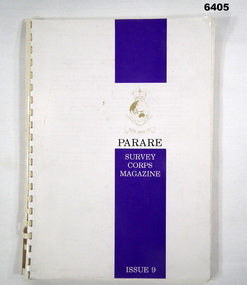
... Army Map Depot - Unit Ski Day, pages 20, 21. The William Patton Expedition - Locating his grave as part of the " Burke and Wills " expedition, list of personnel involved - page 43. 8 Fd Svy Sqn - names mentioned and photo - page 50. 4 Fd Svy Sqn (1992) names mentioned page 69. The G Res manning list on page 70. Names mentioned in "Unit sports pages 73, 74. Exercise...Army Map Depot - Unit Ski Day, pages 20, 21. The William Patton Expedition - Locating his grave as part of the " Burke and Wills " expedition, list of personnel involved - page 43. 8 Fd Svy Sqn - names mentioned and photo - page 50. 4 Fd Svy Sqn (1992) names mentioned page 69. The G Res manning list on page 70. Names mentioned in "Unit sports pages 73, 74. Exercise ...An annual magazine published for release on RASvy Corps birthday 1st July. All units with RASvy Corps are invited / expected to submit an article depicting their activities over the preceding years 1991 to 1993. 4Fd Svy Sqn Adventure training list pages 7, 8. Army Map Depot - Unit Ski Day, pages 20, 21. The William Patton Expedition - Locating his grave as part of the " Burke and Wills " expedition, list of personnel involved - page 43. 8 Fd Svy Sqn - names mentioned and photo - page 50. 4 Fd Svy Sqn (1992) names mentioned page 69. The G Res manning list on page 70. Names mentioned in "Unit sports pages 73, 74. Exercise Kokoda Cartographer July 1992 list of participants on Page 78. Iraq - The Gulf War, Topographic Support page 52. Adelaide (4 Fd Svy Sqn) 1992 page 65. 8 Fd Svy Sqn manning wind down list pages 89-90. Military Geographic Information Pilot Project page 92. Royal Australian Survey Corps Aerial photography Team personnel list page 95. Operation Belama 92 Team list page 96. Long term Schooling attendees and promotions, page 105. Litho Sqn Postings in and out pages 116-117. Special awards SGT Durrant page 113, SSGT SR Hill page 114. RASvy completes 1:50,000 scale mapping of the Pilbara Region page 121. 1st Topo Svy Sqn personnel mentioned on page 122. A4 sized booklet with soft glossy card covers, paper pages held together with a plastic spiral binder.army survey regiment, army survey regt, fortuna, royal australian survey corps, rasvy, asr -
 Bendigo Military Museum
Document - TRAINING NOTES, ARMY
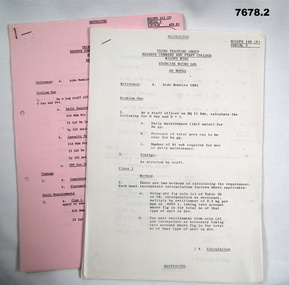
... Exercise Mini Log Kevin John Herdman 2. Handwritten on top RHC of first page; MASTER 81, Sec attached sheets. 1. Multipage document on A4 sized paper. Text on one side of each page in black. Pages are cream in colour and stapled together on top LHC. 2. Multipage document on pink coloured A4 paper, Text on one side of each page in black. Pages stapled together on top LHC. Document TRAINING NOTES, ARMY ...1. 'Exercise Micro Log'. Third Training Group, Reserve Command and Staff College, MILOPS Wing. 2. Exercise 'Mini Log.' Part of the Kevin John Herdman, No.397661 collection. See Catalogue No.5942P for details of his service.1. Multipage document on A4 sized paper. Text on one side of each page in black. Pages are cream in colour and stapled together on top LHC. 2. Multipage document on pink coloured A4 paper, Text on one side of each page in black. Pages stapled together on top LHC.2. Handwritten on top RHC of first page; MASTER 81, Sec attached sheets.training notes, exercise microlog, exercise mini log, kevin john herdman -
 Bendigo Military Museum
Document - TRAINING COURSE, OFFICER, ARMY
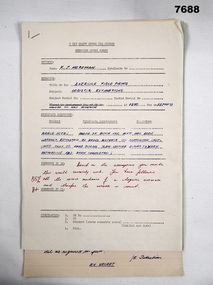
... Exercise - 22nd May 1973. Question and answer document. Part of the "Kevin John Herdman" No. 397661 collection. See Cat No. 5942P for details of his service. Field Firing Training Course Army ...3rd Division Staff Officers Training Course - Field Firing Exercise - 22nd May 1973. Question and answer document. Part of the "Kevin John Herdman" No. 397661 collection. See Cat No. 5942P for details of his service.Multipage document on both A4 and foolscap paper. Cover sheet has text in black type with handwritten details in red and blue ink. Foolscap sized pages are lined and contain handwritten detail in blue ink. Remaining A4 pages are on green coloured paper with text in black type. Pages are stapled on top LHC.Various comments, answers and anecdotes on pages in red and blue ink.field firing, training course, army, kevin john herdman -
 Bendigo Military Museum
Photograph - Army Headquarters (AHQ) Survey Regiment Freedom of Entry Parade, Bendigo CBD, 1970
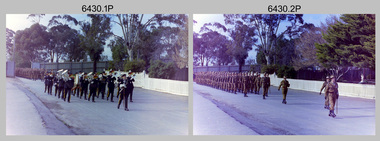
... Army Survey Regiment’s Collection. The photographic negatives were scanned at 96 dpi. .1) to .2) - Photo, colour, 1970. AHQ Survey Regiment marches to Queen Elizabeth Oval entry, led by CO LTCOL Lionel Sprenger MBE, MID, unidentified 2IC and RSM WO1 John Hogan. .3) to .4) - Photo, colour, 1970. AHQ Survey Regiment at entry to Queen Elizabeth Oval, exercising...exercise its Freedom of Entry with anniversary parades in 1977, 1980, 1985, 1992 and 1996. Refer to item 6020.8P for another set of photos of this event scanned from photographic prints. Royal Australian Survey Corps RASvy Army ...The Freedom of Entry to the City was an honour conferred by the Bendigo City Council to the AHQ Survey Regiment on the 20th of April 1970. The unit was granted for the first time the privilege of marching into the city with swords drawn, bayonets fixed and drums beating. The honour is usually bestowed upon local regiments, in recognition of their dedicated service, and it is common for military units to periodically exercise their freedom by arranging a parade through the city. The Freedom of Entry Parade occurred on the 14th of June 1970 led by the Regiment’s CO – LTCOL Bill Sprenger MID, MBE; the unit marched up View St in the CBD to the Queen Elizabeth II Oval. The ceremonial parade followed with a march past the guests of honour, Mayor of Bendigo Councillor Clark Jeffrey and military dignitaries. The parade concluded after formal inspections of the troops. A ceremonial scroll was presented to the Bendigo City Council to the AHQ Survey Regiment citing the occasion and was proudly displayed in the entry foyer to Fortuna Villa up to October 2008. The Regiment continued to exercise its Freedom of Entry with anniversary parades in 1977, 1980, 1985, 1992 and 1996. Refer to item 6020.8P for another set of photos of this event scanned from photographic prints.This set of 39 colour photographs were taken on the occasion of the Army Headquarters (AHQ) Survey Regiment’s Freedom of Entry parade to the City of Bendigo on the 14th of June 1970. The photographs are on 35mm negative film. They are part of the Army Survey Regiment’s Collection. The photographic negatives were scanned at 96 dpi. .1) to .2) - Photo, colour, 1970. AHQ Survey Regiment marches to Queen Elizabeth Oval entry, led by CO LTCOL Lionel Sprenger MBE, MID, unidentified 2IC and RSM WO1 John Hogan. .3) to .4) - Photo, colour, 1970. AHQ Survey Regiment at entry to Queen Elizabeth Oval, exercising its right of entry to City of Bendigo. .5) to .6) - Photo, colour, 1970. AHQ Survey Regiment marches down View St in the City of Bendigo. .7) to .11) - Photo, colour, 1970. AHQ Survey Regiment marches up View St in the City of Bendigo. .12) to .13) - Photo, colour, 1970. AHQ Survey Regiment enters Queen Elizabeth Oval, led by CO LTCOL Lionel Sprenger MBE, MID, unidentified 2IC and RSM WO1 John Hogan. .14) - Photo, colour, 1970. One of AHQ Survey Regiment’s squadrons enters Queen Elizabeth Oval. .15) to .19) - Photo, colour, 1970. AHQ Survey Regiment forms up on Queen Elizabeth Oval awaiting arrival of dignitaries. .20) - Photo, colour, 1970. AHQ Survey Regiment inspected by dignitaries. L to R: Director of the Survey Corps COL Frank Buckland OBE, MID; Colonel Commandant BRIG Don Macdonald AM, MID; unidentified General, CO LTCOL Lionel Sprenger MBE, MID, Mayor of Bendigo Councillor Clark Jeffrey, unidentified personnel. .21) to .23) - Photo, colour, 1970. AHQ Survey Regiment inspected by dignitaries. Director of the Survey Corps COL Frank Buckland OBE, MID; Colonel Commandant BRIG Don Macdonald AM, MID; unidentified General, CO LTCOL Lionel Sprenger MBE, MID, Mayor of Bendigo Councillor Clark Jeffrey. WRAAC personnel centre rank - PTE Desi Asaris, rear rank L to R: unidentified, PTE Pat Lumsden, PTE Heather (Turnbull) Slater, SGT Irene (Rankins) Saunders. .24) to .27) - Photo, colour, 1970. Band inspected by dignitaries. Director of the Survey Corps COL Frank Buckland OBE, MID; Colonel Commandant BRIG Don Macdonald AM, MID; unidentified General, CO LTCOL Lionel Sprenger MBE, MID, Mayor of Bendigo Councillor Clark Jeffrey. .28) to .30) - Dignitaries return to dias. Director of the Survey Corps COL Frank Buckland OBE, MID; Colonel Commandant BRIG Don Macdonald AM, MID; unidentified General, CO LTCOL Lionel Sprenger MBE, MID, Mayor of Bendigo Councillor Clark Jeffrey.Director of the Survey Corps COL Frank Buckland OBE, MID; Colonel Commandant BRIG Don Macdonald AM, MID; unidentified General, CO LTCOL Lionel Sprenger MBE, MID, Mayor of Bendigo Councillor Clark Jeffrey. .31) - Photo, colour, 1970. Unidentified Padre’s Freedom of Entry parade address. .32) - Photo, colour, 1970. AHQ Survey Regiment during the unidentified Padre’s Freedom of Entry parade address. .33) to .35) - Photo, colour, 1970. AHQ Survey Regiment led by CO LTCOL Lionel Sprenger MBE, MID, unidentified 2IC and RSM WO1 John Hogan march past the dais to salute the parade dignitaries. .36) - Photo, colour, 1970. Parade dignitaries at the dais: unidentified councillor, Mayor of Bendigo Councillor Clark Jeffrey. Colonel Commandant BRIG Don Macdonald AM, MID; unidentified General. .37) to .38) - Photo, colour, 1970. AHQ Survey Regiment squadrons march past the dais to salute the parade dignitaries. .39) - Photo, colour, 1970. AHQ Survey Regiment WRAAC personnel march past the dais to salute the parade dignitaries. L to R: unidentified (x2), CPL Beryl Parkinson, unidentified (x2), PTE Robyn (Marsh) Kemsley, unidentified, WO2 Marj Knight, PTE Desi Asaris, PTE Heather (Turnbull) Slater, SGT Irene (Rankins) Saunders..1P to .3P – no annotationsroyal australian survey corps, rasvy, army survey regiment, army svy regt, fortuna, asr
