
Showing 52 items matching "ash wednesday bushfires 1983"
-
 Sunshine and District Historical Society Incorporated
Newspaper - The Weekly Times Newspaper - Ash Wednesday 1983 Bushfires, Ash Wednesday 1983 Bushfires
... The Weekly Times Newspaper - Ash Wednesday 1983 Bushfires...Ash Wednesday 1983 Bushfires...Publication on the Ash Wednesday 1983 Bushfires with text and photos...Ash Wednesday 1983 Bushfires...Ash Wednesday Fire Ash Wednesday 1983 Bushfires Publication on the Ash Wednesday 1983 Bushfires with text and photos Ash Wednesday 1983 Bushfires Newspaper The Weekly Times Newspaper - Ash Wednesday 1983 Bushfires ...Publication on the Ash Wednesday 1983 Bushfires with text and photosash wednesday, fire -
 Narre Warren and District Family History Group
Newspaper - Ash Wednesday 1983 Bushfires, The Herald and Weekly Times Limited, 1983
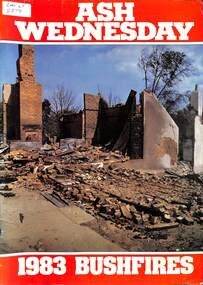
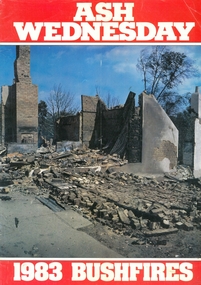
... Ash Wednesday 1983 Bushfires...Ash Wednesday 1983 Bushfires...The front cover has a burnt out house with Ash Wednesday printed in white with a red background at the top of the page and 1983 Bushfires at the bottom of the page. ...Ash Wednesday 1983 Bushfires Newspaper Ash Wednesday 1983 Bushfires The Herald and Weekly Times Limited Standard Newspapers Ltd. ...A large newspaper sized magazine remembering the Ash Wednesday bushfires on 16 February 1983. The magazine/newspaper was produced by The Herald and The Sun newspapers in conjunction with the Geelong and Bendigo Advertisers. It was produced to raise money for the State Disaster Appeal.Printed newspaper sized magazine. The front cover has a burnt out house with Ash Wednesday printed in white with a red background at the top of the page and 1983 Bushfires at the bottom of the page. non-fictionA large newspaper sized magazine remembering the Ash Wednesday bushfires on 16 February 1983. The magazine/newspaper was produced by The Herald and The Sun newspapers in conjunction with the Geelong and Bendigo Advertisers. It was produced to raise money for the State Disaster Appeal. ash wednesday, the dandenongs, mount macedon, the otways, framlingham, cockatoo, upper beaconsfield, -
 Hume City Civic Collection
Magazine, ASH WEDNESDAY 1983 BUSHFIRES, 1983
... ASH WEDNESDAY 1983 BUSHFIRES...This magazine was produced by The Herald and The Sun also with help from the Geelong Advertiser and the Bendigo Advertiser from their newspapers printing the devastating effects of the Ash Wednesday bushfires that swept through Victoria and South Australia on 16 February 1983. ...ASH/WEDNESDAY/1983/BUSHFIRES...Ash Wednesday Fires Victoria The Herald The Sun Newspapers Geelong Bendigo South Australia 1980s Bushfires Macedon Ranges ASH/WEDNESDAY/1983/BUSHFIRES A large size printed magazine consisting of 78 pages with red border top and bottom of front and back cover with white writing in red border. ...A large size printed magazine consisting of 78 pages with red border top and bottom of front and back cover with white writing in red border. A picture of a burnt out house and car is on the front and back cover.non-fictionash wednesday fires, victoria, the herald, the sun, newspapers, geelong, bendigo, south australia, 1980s, bushfires, macedon ranges -
 Bendigo Historical Society Inc.
Newspaper - The Sun: Ash Wednesday 1983 bushfires
... The Sun: Ash Wednesday 1983 bushfires...Newspaper collection: The Sun - Ash Wednesday 1983 bushfires. Supplement with 76 pages of black and white photograph. ...Newspaper The sun Ash Wednesday Newspaper collection: The Sun - Ash Wednesday 1983 bushfires. Supplement with 76 pages of black and white photograph. ...Newspaper collection: The Sun - Ash Wednesday 1983 bushfires. Supplement with 76 pages of black and white photograph. newspaper, the sun, ash wednesday -
 Narre Warren and District Family History Group
Book, Edward Mundie, Cockatoo Ash Wednesday 1983 : the people's story, 1983
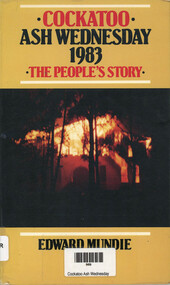
... ...Ash Wednesday bushfires 1983...cockatoo (vic.) Ash Wednesday bushfires 1983 Ash Wednesday fires with personal stories of the people involved 94 p.; 22 cm Cockatoo Ash Wednesday 1983 : the people's story Book Edward Mundie Hyland House ...Ash Wednesday fires with personal stories of the people involved94 p.; 22 cmnon-fictionAsh Wednesday fires with personal stories of the people involvedcockatoo (vic.), ash wednesday bushfires 1983 -
 Narre Warren and District Family History Group
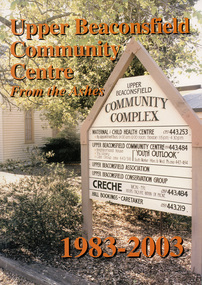
Book, Ruth Hainsworth et al, Upper Beaconsfield Community Centre - From the Ashes 1983 - 2003, 2003
... Ash Wednesday bushfires 1983...Ash Wednesday bushfires 1983 upper beaconsfield (vic.) ...History of the Upper Beaconsfield Community Centre that began after the Ash Wednesday Bushfires in 1983.non-fictionHistory of the Upper Beaconsfield Community Centre that began after the Ash Wednesday Bushfires in 1983.ash wednesday bushfires 1983, upper beaconsfield (vic.), the village bell -
 Narre Warren and District Family History Group
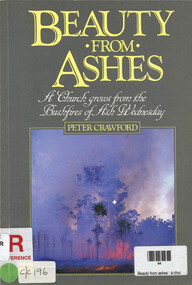
Book, Peter Crawford, Beauty from ashes : a church grows from the bushfires of Ash Wednesday, 1987
... ...Ash Wednesday bushfires 1983...cockatoo (vic.) Ash Wednesday bushfires 1983 The town of Cockatoo was destroyed by fire in 1983. ...The town of Cockatoo was destroyed by fire in 1983. This book tells the story of the building up of the parish of St. Luke's Anglican Church and the building of the Church in the four years following the fires. It is written by Peter Crawford who became the vicar of the Emerald-Cockatoo parish on the outskirts of Melbourne.124 p. : maps ; 21 cm.non-fictionThe town of Cockatoo was destroyed by fire in 1983. This book tells the story of the building up of the parish of St. Luke's Anglican Church and the building of the Church in the four years following the fires. It is written by Peter Crawford who became the vicar of the Emerald-Cockatoo parish on the outskirts of Melbourne. cockatoo (vic.), ash wednesday bushfires 1983 -
 Narre Warren and District Family History Group
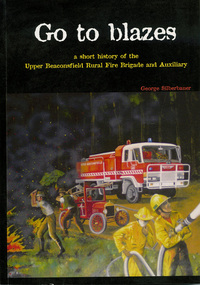
Book, George Silberbauer, Go to blazes : a short history of the Upper Beaconsfield Rural Fire Brigade and Auxiliary, 2006
... ...Ash Wednesday bushfires 1983...Upper Beaconsfield Rural Fire Brigade Ash Wednesday bushfires 1983 A short history of the Upper Beaconsfield Rural Fire Brigade and Auxiliary 114 p.; 21 cm Go to blazes : a short history of the Upper Beaconsfield Rural Fire Brigade and Auxiliary Book George Silberbauer Upper Beaconsfield Rural Fire Brigade ...A short history of the Upper Beaconsfield Rural Fire Brigade and Auxiliary114 p.; 21 cmnon-fictionA short history of the Upper Beaconsfield Rural Fire Brigade and Auxiliaryupper beaconsfield (vic.), upper beaconsfield rural fire brigade, ash wednesday bushfires 1983 -
 Narre Warren and District Family History Group
Book, State Government Victoria, Ash Wednesday 40th Anniversary Commemorative Event, 2023
... Ash Wednesday bushfires 1983...Ash Wednesday bushfires 1983 anniversary A booklet distributed at the Ash Wednesday 40th Anniversary Commemorative Event Ash Wednesday 40th Anniversary Commemorative Event Book State Government Victoria ...A booklet distributed at the Ash Wednesday 40th Anniversary Commemorative Eventnon-fictionA booklet distributed at the Ash Wednesday 40th Anniversary Commemorative Eventash wednesday bushfires 1983, anniversary -
 Narre Warren and District Family History Group
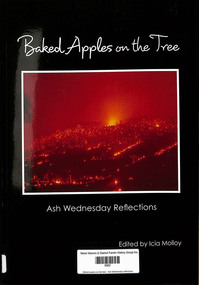
Book, Icia Molloy, Baked apples on the tree : Ash Wednesday reflections, 2012
... Ash Wednesday bushfires 1983...Ash Wednesday bushfires 1983 cockatoo (vic.) Ash Wednesday reflections by residents of Cockatoo 151 p.; 30 cm Baked apples on the tree : Ash Wednesday reflections Book Icia Molloy Cockatoo Neighbourhood House ...Ash Wednesday reflections by residents of Cockatoo151 p.; 30 cmnon-fictionAsh Wednesday reflections by residents of Cockatooash wednesday bushfires 1983, cockatoo (vic.) -
Emerald Museum & Nobelius Heritage Park
Photograph - Cross - Uniting Church, Upper Beaconsfield, Unknown photographer, 1980s
... Ash Wednesday 1983...bushfires...The cross featured in the photograph is from a church in Upper Beaconsfield which was damaged in the Ash Wednesday bushfires in February 1983. The specific occasion on which this photograph was taken is not known....The cross featured in the photograph is from a church in Upper Beaconsfield which was damaged in the Ash Wednesday bushfires in February 1983. The specific occasion on which this photograph was taken is not known. ...The cross depicted in the photograph is stated to be from the Uniting Church in Upper Beaconsfield in the Museum's registration records but may instead be from St John's Anglican Church which burned down in the Ash Wednesday bushfires as no Uniting Church site is recorded in Upper Beaconsfield. Forty-seven people were killed in the Ash Wednesday fires in Victoria, including twenty-seven from the Cardinia Shire area. Twenty-one of the people killed were located in Upper Beaconsfield; twelve of the people killed in the area were fire-fighters, along with nine residents. 186 homes and countless livestock were also lost in the fires which ranged through Victoria and into South Australia due to a combination of dry, hot and windy weather. The date of the fires corresponds with the the date of the Christian religious festival of the same name that year. St John's Anglican Church was rebuilt on the same site within the next three years. The design, by local architect Paul Reid, combined elements of the previous building with the style of village churches Reid had observed in Austria and Bavaria after his graduation from Melbourne University. The cross, which buckled in the heat generated by the fires, is believed to be on display at the Ash Wednesday Bushfire Education Centre in Cockatoo, which was itself constructed as a memorial on the site of a kindergarten in which 300 Cockatoo residents sheltered from the fire. The specific occasion on which this photograph was taken is not known.This item is significant because of its association with the Ash Wednesday bushfires, one of the worst natural disasters in Victoria's history. The Ash Wednesday fires occurred on 16th February 1983. Twenty-seven people from the Cardinia Shire area were killed in the fires, including twenty-one who died within a kilometre of the church in which the cross depicted resided.Black and white rectangular photograph printed on photographic paper. The photograph depicts a plain dark-coloured metal cross on a stand. The cross has buckled forwards. The item is resting on a table covered with a pale-coloured table-cloth. A bouquet of flowers is visible to the left-hand side of the image. Chairs and three women in special occasion-style clothing are visible at the rear of the image. The cross featured in the photograph is from a church in Upper Beaconsfield which was damaged in the Ash Wednesday bushfires in February 1983. The specific occasion on which this photograph was taken is not known.ash wednesday 1983, bushfires, churches, st john's anglican church, uniting church, upper beaconsfield victoria australia, cockatoo victoria australia, cross, deceased persons, natural disasters, ash wednesday bushfire education centre, paul reid, cardinia shire council -
Emerald Museum & Nobelius Heritage Park
Newspaper - Commemorative newspaper
... Ash Wednesday 1983 Bushfires Commemorative Newspaper...Ash Wednesday 1983 Bushfires Commemorative Newspaper Newspaper Commemorative newspaper ...Ash Wednesday 1983 Bushfires Commemorative Newspaper -
Emerald Museum & Nobelius Heritage Park
Photograph - Church, Upper Beaconsfield, Unknown photographer, 1980s
... ...Ash Wednesday 1983...bushfires...1983 bushfires. Records show the original building had undergone renovations and paint jobs throughout the 1950's and 1960's. The church underwent expansions by adding rooms and halls onto the original church structure. After the church had been destroyed by the Ash Wednesday...1983 bushfires. There is also strong research potential due to the significance of the atrocities that occurred. religious structures and establishments st john's anglican church church Upper Beaconsfield Victoria Australia Ash Wednesday 1983 bushfires 1980s anglican church Emerald & District Collection Black and white rectangular photograph printed on matte photographic paper. ...This record holds strong historic significance as it captures the community's resistance to the 1983 bushfires. There is also strong research potential due to the significance of the atrocities that occurred.Black and white rectangular photograph printed on matte photographic paper. This black and white photograph consists of St John's Anglican church in Upper Beaconsfield, which had been rebuilt following the 1983 bushfires. Records show the original building had undergone renovations and paint jobs throughout the 1950's and 1960's. The church underwent expansions by adding rooms and halls onto the original church structure. After the church had been destroyed by the Ash Wednesday fires the new church pictured above would take under a year to be rebuilt. Due to donations that came in the church was built completely debt free.religious structures and establishments, st john's anglican church, church, upper beaconsfield victoria australia, ash wednesday 1983, bushfires, 1980s, anglican church, emerald & district collection -
Emerald Museum & Nobelius Heritage Park
Newspaper - Ash Wednesday Newspapers, The Bulletin, 1983
... Special editions of local newspapers published following Ash Wednesday bushfires in 1983...Special editions of local newspapers published following Ash Wednesday bushfires in 1983 bushfires Dandenong Ranges Victoria Australia Cockatoo Victoria Australia Ash Wednesday 1983 Berwick-Pakenham Times Pakenham Gazette and Berwick City News The Leader ' Newspapers. 1. ...Special editions of local newspapers published following Ash Wednesday bushfires in 1983Newspapers. 1. Berwick-Pakenham Times 21 February 1983| 2. The Pakenham Gazette and Berwick City News| 3. Leader: Emergency Issue of Free Press, Lillydale Express, Knox-Sherbrooke News, Ringwood-Croydon Mail 17 February 19831. 44-page newspaper|2. 52-page newspaper|3. single sheet newsprint with photograqphs folded to 4 pages'bushfires, dandenong ranges, victoria, australia, cockatoo victoria australia, ash wednesday 1983, berwick-pakenham times, pakenham gazette and berwick city news, the leader -
 Bendigo Historical Society Inc.
Magazine - Proud Past Healthy Future
... Newspaper collection: The Sun - Ash Wednesday 1983 bushfires. Supplement with 76 pages of black and white photograph. ...St John of God Bendigo Hospital Newspaper collection: The Sun - Ash Wednesday 1983 bushfires. Supplement with 76 pages of black and white photograph. ...Newspaper collection: The Sun - Ash Wednesday 1983 bushfires. Supplement with 76 pages of black and white photograph. st john of god, bendigo, hospital -
 Warrnambool and District Historical Society Inc.
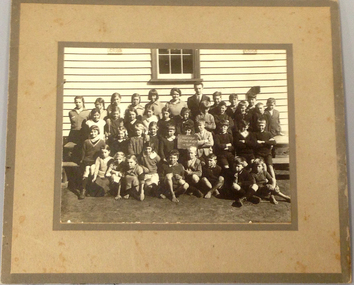
Photograph, Naringal School 1932, C 1932
... The Naringal Primary School was burnt to the ground in the Ash Wednesday Bushfires 1983....The Naringal Primary School was burnt to the ground in the Ash Wednesday Bushfires 1983. An interesting depiction of a country school's enrolment in the 1930's. ...The Naringal school was originally known as Tallangatta S S when it was opened in 1877. The era of this photograph saw enrolments increase from around 39 to 59. Headteacher at the time and in this photograph is Mr Wellman. One of its most eminent past pupils was Sister Mona Wilson who was also sewing mistress for a short time before commencing nursing training. She sailed with the 8th division in 1941. and was lost at sea when the ship "Viner Brook " was sunk after being bombed by the Japanese. The Naringal Primary School was burnt to the ground in the Ash Wednesday Bushfires 1983. An interesting depiction of a country school's enrolment in the 1930's. Having been taken in the time of the Great Depression. As the school was destroyed in the Ash Wednesday Bushfires, in 1983 so surviving items relating to the school are limited. Small black and white photograph mounted on fawn card with darker border on the edge and also around the photograph. It depicts 38 children with teacher in back row. Naringal School No 1839, 1932 on board.naringal, tallangatta victoria, mr wellman naringal, naringal primary school 1932 -
Emerald Museum & Nobelius Heritage Park
Book, Peter Crawford, Beauty from Ashes - A Church grows from the Bushfires of Ash Wednesday, 1986
... The Ash Wednesday bushfires in Feb 1983 caused deaths, destruction and trauma in the township of Cockatoo. ...The Ash Wednesday bushfires in Feb 1983 caused deaths, destruction and trauma in the township of Cockatoo. ...The Ash Wednesday bushfires in Feb 1983 caused deaths, destruction and trauma in the township of Cockatoo. This book tells the story of the building up of the parish of St. Luke's Anglican Church and the building of the Church in the four years following the fires. It is written by Peter Crawford who became the vicar of the Emerald-Cockatoo parish.This is a recount of a local community's response to a devastating bushfire.Paperback. 124 pages. No photographs. Autographed by author.On front cover: ' BEAUTY / FROM / ASHES / A Church grows from the / Bushfires of Ash Wednesday / PETER CRAWFORED'cockatoo, ash wednesday, peter crawford -
Emerald Museum & Nobelius Heritage Park
Book - History Book, Mundie, Edward Hyland House, Cockatoo, Ash Wednesday 1983: the people's story, 1983
... Stories, mostly from first-hand accounts, of the Ash Wednesday bushfires in Cockatoo, February 1983. The author lived in Cockatoo for 20 years and was at one time fire-risk contractor for the local council. ...Stories, mostly from first-hand accounts, of the Ash Wednesday bushfires in Cockatoo, February 1983. The author lived in Cockatoo for 20 years and was at one time fire-risk contractor for the local council. ...Stories, mostly from first-hand accounts, of the Ash Wednesday bushfires in Cockatoo, February 1983. The author lived in Cockatoo for 20 years and was at one time fire-risk contractor for the local council. Names used in the book are fictitious to protect privacy.94 p. : ill. ; DDC994.520922 ISBN 0908090595Paper'Donated to Emerald Museum by Robert Apedaile, 1995'bushfires, cockatoo victoria australia, edward mundie, ash wednesday 1983 -
 National Wool Museum
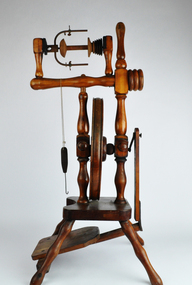
Tool - Spinning Wheel, c.1980
... Gill had joined her local Spinners and Weavers Guild after the Ash Wednesday bushfires of 1983. She was a then resident of Mount Macedon and lost everything in the fires. ...Gill had joined her local Spinners and Weavers Guild after the Ash Wednesday bushfires of 1983. She was a then resident of Mount Macedon and lost everything in the fires. ...This spinning wheel originates from New Zealand; however, it has no distinguishing features relating to its creator such as an inscription, so its exact maker is not known. Gill Stange remembers buying the wheel on Bridge Road in Richmond, approximately 30 years ago. Gill had joined her local Spinners and Weavers Guild after the Ash Wednesday bushfires of 1983. She was a then resident of Mount Macedon and lost everything in the fires. Moving to Melbourne to get away from the scene of much pain, Gill was also in need of a new hobby to help occupy her mind. That is when spinning and weaving entered her life. The local Spinners and Weavers Guild was a great support network for her and with their recommendation, she purchased her own spinning wheel. Her passion was started, and the wheel was to become a treasured item in Gill’s home. She had several spinning wheels within her possession over the years, however, this wheel was her first and always her favourite. When the time came for Gill to downsize, there was simply no longer room for her spinning wheel. This is when she decided to donate the wheel to the National Wool Museum. Gill remembers one highlight was weaving a tablecloth from a traditional German design. It took her two years to complete, with Gill spinning all the wool herself on this wheel. The tablecloth won the first prize in the Melbourne Show in 1987. Gill also used the wheel to teach programs to school children on how to spin and knit wool. She would take the easily transported little wheel, and its accompanying seat, with her to schools. Its small size enabled her to teach children to knit and spin, bringing others the joy that spinning had brought her. Not just limited to schools, Gill also taught programs with the wheel here at the National Wool Museum. It is a fitting home for the wheel, which Gill donated to the National Wool Museum in 2021.Dark varnished wood in a Castle style spinning wheel. The wheel has 8 small spokes which meet a thick outside rim. The outside rim has four golden disc weights on the bottom edge, to aid in the turning of the wheel. The spinning wheel has four legs of turned wood giving a sculptural form, a design pattern which is continued throughout. The wheel has a single medium sized foot pedal. This pedal is well worn with varnish missing from years of use. The wheel is completed with its accompanying chair. Made of the same dark varnished wood, its legs are also of turned wood, continuing the design pattern and uniting the two objects. The chair is very simple outside of the legs, with a medium size base and a thin backrest ending in a rounded head. The chair’s varnish is also starting to fade from years of use. The chair is small, designed to keep the spinning wheel operator at the appropriate height when spinning on the equally small and compact Castle style spinning wheel. Additional parts were donated with the Spinning Wheel. - 3 x Lazy Kates - Spare Maiden. - 450mm Niddy Noddy - Steel teeth brushspinning wool, spinning wheel, ash wednesday, mount macedon, textile production -
 Puffing Billy Railway
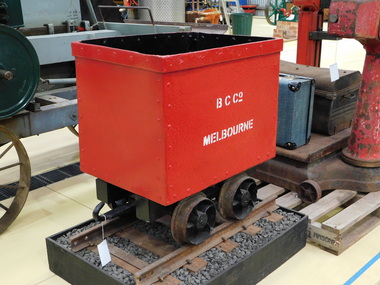
Benwerrin Coal Company Coal Skip, circa 1899 - 1904
... Little remains of the mine today with trestles and sleepers destroyed in the “Ash Wednesday” Bushfires in 1983. References: Houghton, N (1975), Sawdust and Steam, Light Railway Research Society of Australia. ...Little remains of the mine today with trestles and sleepers destroyed in the “Ash Wednesday” Bushfires in 1983. References: Houghton, N (1975), Sawdust and Steam, Light Railway Research Society of Australia. ...BENWERRIN COAL COMPANY SKIP This quarter ton coal truck or skip was used at a small mine situated at Benwerrin near Deans Marsh in Victoria’s Otway Ranges. The mine first opened in 1899 and closed in 1904. With the fuel shortages due to World War 2, the Benwerrin Coal Company reopened the mine in 1941. The coal was loaded into skips and winched out of Box’s Creek valley on a narrow gauge incline to a loading point that was close to the Deans Marsh-Lorne Road. It was then taken by road to the Deans Marsh Railway station. The average gradient of the tramway was 1 in 4 over a length of just under 500 metres (1600 feet). The gauge of the tramway has often been referred to as 375mm (or 15 inches) as shown on the map opposite taken from “Sawdust and Steam”. However, actual measurements of the wheels show the gauge to be 400mm (or 16 inches), which is quite unusual as is the small size of the skip itself. The mine produced up to 30 tonnes of brown coal each week until it closed in 1949 and the incline tramway and its skips were abandoned. Preservation of this coal truck came as a result of interest by the Tramway Museum Society of Victoria (TMSV) in the Barlow or Box type rails that it ran on. These rails had originally come from the Beaumaris Horse Tramway and were obtained by the Benwerrin Coal Company from Hayden Bros’ abandoned timber tramway at nearby Barwon Downs. Members of the TMSV visited the mine in the 1960s only to find that most of the tramway had recently been recovered for scrap. There remained a significant number of relics around the mine adits including most of the skips. One of these remained in good condition and it was recovered for preservation in May 1967. It was restored but never displayed and a second restoration took place by the author over 2012/13 so that it could be placed in the Menzies Creek Museum where it was delivered in February 2013. Little remains of the mine today with trestles and sleepers destroyed in the “Ash Wednesday” Bushfires in 1983. References: Houghton, N (1975), Sawdust and Steam, Light Railway Research Society of Australia. Historic - Industrial Narrow Gauge Railway - Benwerrin Coal Company , Benwerrin , Victoria, AustraliaCoal Skip - made of Iron sheet and wrought iron frame & wheelsB,C.Co Melbournepuffing billy, coal skip, benwerrin coal company, narrow gauge -
 Department of Energy, Environment and Climate Action
Timber moisture meter adapted for forest fuels
... During the afternoon of the Ash Wednesday bushfires on 16 February 1983 fuel moisture contents were recorded at Stawell as low as 2.7%. ...During the afternoon of the Ash Wednesday bushfires on 16 February 1983 fuel moisture contents were recorded at Stawell as low as 2.7%. ...Representative samples of fuel such as bark, leaves, twigs etc were minced and the moisture measured The availability of fuel to burn depends largely on its moisture content. When it exceeds 20-25% not much will burn, whereas 12-15% is generally ideal for fuel reduction burning, but if the moisture content drops as low as 7-10% virtually everything will ignite, and fire behaviour becomes extreme. During the afternoon of the Ash Wednesday bushfires on 16 February 1983 fuel moisture contents were recorded at Stawell as low as 2.7%. Fine fuels like leaves and bark can rapidly absorb moisture after a shower of rain, or from the air when the Relative Humidity (RH) is high, and the temperature is low. Conversely, they can also dry out very quickly. So even though the overall fuel quantity in the forest doesn’t change, the fine fuel availability can increase rapidly from zero after rain to many tonnes per hectare as the fuel dries out. This can happen over a few hours on hot and windy days. Heavy fuels like logs on the ground take longer to dry out. Adaption of a timber moisture meter made by the FCV radio lab to measure fuelforests commission victoria (fcv), bushfire, forest measurement -
 Department of Energy, Environment and Climate Action
Fuel Mincer
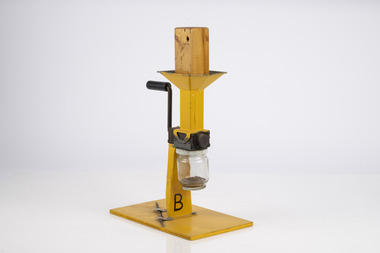
... During the afternoon of the Ash Wednesday bushfires on 16 February 1983 fuel moisture contents were recorded at Stawell as low as 2.7%. ...During the afternoon of the Ash Wednesday bushfires on 16 February 1983 fuel moisture contents were recorded at Stawell as low as 2.7%. ...Used to mince fuel samples to measure moisture content Representative samples of fuel such as bark, leaves, twigs etc were minced and the moisture measured The availability of fuel to burn depends largely on its moisture content. When it exceeds 20-25% not much will burn, whereas 12-15% is generally ideal for fuel reduction burning, but if the moisture content drops as low as 7-10% virtually everything will ignite, and fire behaviour becomes extreme. During the afternoon of the Ash Wednesday bushfires on 16 February 1983 fuel moisture contents were recorded at Stawell as low as 2.7%. Fine fuels like leaves and bark can rapidly absorb moisture after a shower of rain, or from the air when the Relative Humidity (RH) is high, and the temperature is low. Conversely, they can also dry out very quickly. So even though the overall fuel quantity in the forest doesn’t change, the fine fuel availability can increase rapidly from zero after rain to many tonnes per hectare as the fuel dries out. This can happen over a few hours on hot and windy days. Heavy fuels like logs on the ground take longer to dry out. Fuel mincer Made at Altona as an alternative design to the commercial Spong Mincer With wooden plug to push fuel into the mincer and glass jar to collect sampleforests commission victoria (fcv), bushfire, forest measurement -
 Department of Energy, Environment and Climate Action
Electric Fuel Mincer
... During the afternoon of the Ash Wednesday bushfires on 16 February 1983 fuel moisture contents were recorded at Stawell as low as 2.7%. ...During the afternoon of the Ash Wednesday bushfires on 16 February 1983 fuel moisture contents were recorded at Stawell as low as 2.7%. ...Used to mince fuel samples to measure moisture content Representative samples of fuel such as bark, leaves, twigs etc were minced and the moisture measured The availability of fuel to burn depends largely on its moisture content. When it exceeds 20-25% not much will burn, whereas 12-15% is generally ideal for fuel reduction burning, but if the moisture content drops as low as 7-10% virtually everything will ignite, and fire behaviour becomes extreme. During the afternoon of the Ash Wednesday bushfires on 16 February 1983 fuel moisture contents were recorded at Stawell as low as 2.7%. Fine fuels like leaves and bark can rapidly absorb moisture after a shower of rain, or from the air when the Relative Humidity (RH) is high, and the temperature is low. Conversely, they can also dry out very quickly. So even though the overall fuel quantity in the forest doesn’t change, the fine fuel availability can increase rapidly from zero after rain to many tonnes per hectare as the fuel dries out. This can happen over a few hours on hot and windy days. Heavy fuels like logs on the ground take longer to dry out. Battery operated Fuel mincer. Plugs into 12 volt car cigarette lighter socket Adaption using parts from commercial food processor Made at Altona as an alternative design to the commercial Spong Mincer Glass jar to collect sampleforests commission victoria (fcv), bushfire, forest measurement -
 Department of Energy, Environment and Climate Action
Marconi Moisture meter
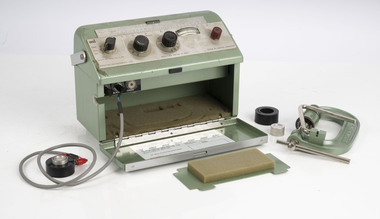
... During the afternoon of the Ash Wednesday bushfires on 16 February 1983 fuel moisture contents were recorded at Stawell as low as 2.7%. ...During the afternoon of the Ash Wednesday bushfires on 16 February 1983 fuel moisture contents were recorded at Stawell as low as 2.7%. ...Used to measure fuel moisture content Representative samples of fuel such as bark, leaves, twigs etc were minced and the moisture measured The availability of fuel to burn depends largely on its moisture content. When it exceeds 20-25% not much will burn, whereas 12-15% is generally ideal for fuel reduction burning, but if the moisture content drops as low as 7-10% virtually everything will ignite, and fire behaviour becomes extreme. During the afternoon of the Ash Wednesday bushfires on 16 February 1983 fuel moisture contents were recorded at Stawell as low as 2.7%. Fine fuels like leaves and bark can rapidly absorb moisture after a shower of rain, or from the air when the Relative Humidity (RH) is high, and the temperature is low. Conversely, they can also dry out very quickly. So even though the overall fuel quantity in the forest doesn’t change, the fine fuel availability can increase rapidly from zero after rain to many tonnes per hectare as the fuel dries out. This can happen over a few hours on hot and windy days. Heavy fuels like logs on the ground take longer to dry out. Adaption of a commercial timber moisture meter measure fuelTF 933 Cforests commission victoria (fcv), bushfire, forest measurement -
 Department of Energy, Environment and Climate Action
Delton Moisture meter
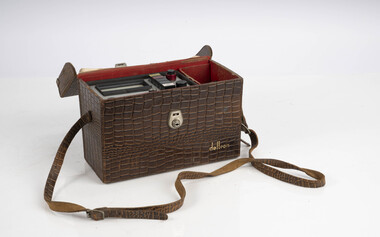
... During the afternoon of the Ash Wednesday bushfires on 16 February 1983 fuel moisture contents were recorded at Stawell as low as 2.7%. ...During the afternoon of the Ash Wednesday bushfires on 16 February 1983 fuel moisture contents were recorded at Stawell as low as 2.7%. ...Used to measure moisture content by electric current resistance Representative samples of fuel such as bark, leaves, twigs etc were minced and the moisture measured The availability of fuel to burn depends largely on its moisture content. When it exceeds 20-25% not much will burn, whereas 12-15% is generally ideal for fuel reduction burning, but if the moisture content drops as low as 7-10% virtually everything will ignite, and fire behaviour becomes extreme. During the afternoon of the Ash Wednesday bushfires on 16 February 1983 fuel moisture contents were recorded at Stawell as low as 2.7%. Fine fuels like leaves and bark can rapidly absorb moisture after a shower of rain, or from the air when the Relative Humidity (RH) is high, and the temperature is low. Conversely, they can also dry out very quickly. So even though the overall fuel quantity in the forest doesn’t change, the fine fuel availability can increase rapidly from zero after rain to many tonnes per hectare as the fuel dries out. This can happen over a few hours on hot and windy days. Heavy fuels like logs on the ground take longer to dry out. Commercial timber moisture meter used to measure fuelDCR9-Tforests commission victoria (fcv), bushfire, forest measurement -
 Department of Energy, Environment and Climate Action
Spong Fuel Mincer
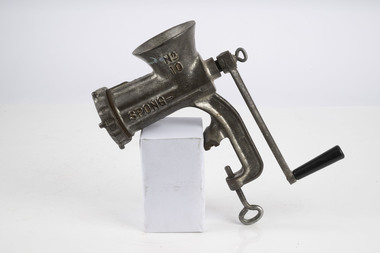
... During the afternoon of the Ash Wednesday bushfires on 16 February 1983 fuel moisture contents were recorded at Stawell as low as 2.7%. ...During the afternoon of the Ash Wednesday bushfires on 16 February 1983 fuel moisture contents were recorded at Stawell as low as 2.7%. ...Used to prepare fuel samples to measure their moisture content. Representative samples of fine fuel such as bark, leaves, twigs etc were minced first through a course mincing plate, then a fine plate and the moisture content measured with a Speedy moisture meter or other device. The availability of fuel to burn depends largely on its moisture content. When it exceeds 20-25% not much will burn, whereas 12-15% is generally ideal for fuel reduction burning, but if the moisture content drops as low as 7-10% virtually everything will ignite, and fire behaviour becomes extreme. During the afternoon of the Ash Wednesday bushfires on 16 February 1983 fuel moisture contents were recorded at Stawell as low as 2.7%. Fine fuels like leaves and bark can rapidly absorb moisture after a shower of rain, or from the air when the Relative Humidity (RH) is high, and the temperature is low. Conversely, they can also dry out very quickly. So even though the overall fuel quantity in the forest doesn’t change, the fine fuel availability can increase rapidly from zero after rain to many tonnes per hectare as the fuel dries out. This can happen over a few hours on hot and windy days. Heavy fuels like logs on the ground take longer to dry out. Spong No 10 food mincerforests commission victoria (fcv), bushfire, forest measurement -
 Department of Energy, Environment and Climate Action
Prototype fuel moisture meter
... During the afternoon of the Ash Wednesday bushfires on 16 February 1983 fuel moisture contents were recorded at Stawell as low as 2.7%. ...During the afternoon of the Ash Wednesday bushfires on 16 February 1983 fuel moisture contents were recorded at Stawell as low as 2.7%. ...Bushfire behaviour is influenced by many things including temperature, relative humidity, forest type, fuel quantity and fuel dryness, topography and even slope. Wind has a dominant effect on the Rate of Spread (ROS), and also bushfire size, shape and direction. Fuel arrangement is as important as fuel quantity (tonnes/ha). Fibrous and ribbon bark, together with elevated and near-surface scrub fuels act as ladders which lead flames into the tree canopy. But the availability of fuel to burn depends largely on its moisture content. When it exceeds 20-25% not much will burn, whereas 12-15% is generally ideal for fuel reduction burning, but if the moisture content drops as low as 7-10% virtually everything will ignite, and fire behaviour becomes extreme. During the afternoon of the Ash Wednesday bushfires on 16 February 1983 fuel moisture contents were recorded at Stawell as low as 2.7%. Fine fuels like leaves and bark can rapidly absorb moisture after a shower of rain, or from the air when the Relative Humidity (RH) is high, and the temperature is low. Conversely, they can also dry out very quickly. So even though the overall fuel quantity in the forest doesn’t change, the fine fuel availability can increase rapidly from zero after rain to many tonnes per hectare as the fuel dries out. This can happen over a few hours on hot and windy days. Heavy fuels like logs on the ground take longer to dry out. Since the 1930s foresters, firefighters and researchers have been working to develop quick and reliable techniques for measuring fuel moisture content. One of the most accurate methods is slowly drying a sample of fuel in a conventional oven for 24-48 hours to remove all the moisture and measuring the weight difference, but this takes time and is not practical in the field when rapid measurements are needed. But oven drying is often used as a benchmark to compare other methods. Microwave ovens are faster but can cause uneven drying and even char the fuel. They are also not very practical for use in the field. Some mathematical models rely on weather records such as rainfall, wind speed, evaporation, cloud cover, shading, relative humidity, slope, aspect and season of the year to predict soil and fuel moisture. The Keetch-Byram Drought Index of soil dryness is the most common. But complex fuels with leaves, twigs, grass etc make the predictive models often inadequate for fine fuels. The most common technique in Victorian forests until recently was the trusty Speedy Moisture Meter. Originally developed in England during the 1920s for measuring moisture in wheat and other grains it was adapted for Australian forest fuels in the 1950s (I think). Fuel was first ground using a Spong mincer, often attached to the bullbar of a vehicle, and a small sample placed into the Speedy together with a measure of calcium carbide and then sealed. A chemical reaction created gas pressure which was read on the external dial. There were important techniques with cleaning, mincing and using the chemicals with the Speedy to give reliable readings, but it was quick, inexpensive, robust, portable and practical in the field. It was used routinely before igniting a fuel reduction burn or measuring fuel moisture differentials on slash burns. But in about 1996, Karen Chatto and Kevin Tolhurst from the Department’s Creswick Research Station developed the Wiltronics Fuel Moisture meter which measured electrical resistance. Wiltronics is an Australian owned company operating from Ballarat. The final result was a kit that was portable, accurate and could reliably measure fuel moisture contents between 3% and 200%. Although expensive, it is now widely used by fire agencies around the world which has virtually relegated the Speedy to the back cupboard.Prototype Fuel moisture meterT-H Fine Fuel Meterforests commission victoria (fcv), bushfire, forest measurement -
 Orbost & District Historical Society
newsaper/magazine, Ash Wednesday, February 1983
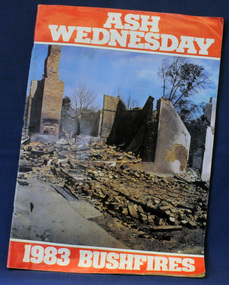
... 1983. It has white ASH WEDNESDAY in print on a red background above the photograph and 1983 BUSHFIRES in white print on a red background belop the photograph. ...It has white ASH WEDNESDAY in print on a red background above the photograph and 1983 BUSHFIRES in white print on a red background belop the photograph. ...This magazine was published to raise money for the State Disaster appeal. It was a tribute to the photographers and reporters who contributed to the coverage of the Ash Wednesday bushfires for these publications.this item is a contemporary record of a major fire disaster in Victoria and is a useful reference tool.A large 78 pp stapled magazine. On the front cover is a coloured photograph of the town of Macedon the morning after the bush fires in February 1983. It has white ASH WEDNESDAY in print on a red background above the photograph and 1983 BUSHFIRES in white print on a red background belop the photograph. The photograph extends to the back cover. The magazine contains black/white photographs, stories and reports.bushfires ash-wednesday magazine disasters-victoria -
 Eltham District Historical Society Inc
Program, Diamond Valley News, Festival tipped to be the best ever, Diamond Valley News, Tuesday, October 23, p2, 1984
... Events and information concerning the 10th Eltham Community Festival held 16-18 November, 1984 [Photo of Keir Baker of Research Primary School] On the reverse (page 1) Fireman officially honoured, Diamond Valley News, Tuesday, October 23, 1984, p1 Opening of the Panton Hill Firemen's Memorial Park by the Member for Evelyn, Mr Max McDonald on Sunday 21 October, 1984 in memory of the five firemen who lost their lives on Ash Wednesday (1983) fighting the fire at Upper Beaconsfield - Maurie Atkinson, Stuart Duff, Neville Jeffrey, Bill Marsden and Peter Singleton [Photo of the memorial and Mr Max McDonald]] 1984 Apex Club Eltham Community Festival Eltham Festival Eltham Jazz festival Eltham Living and Learning Centre Eltham Rotary Eltham Service Club Eltham Town Park Grand Parade Jaycees Keir Baker Lions Club Eltham Main Road Phoenix Club Research primary school Ash Wednesday Bill Marsden Cal Martin Diamond Valley Big Band Evelyn Maurie Atkinson Max McDonald MP Neville Jeffrey Panton Hill Firemen's Memorial Park Peter Singleton Stuart Duff Victorian Bushfires - 1983 Newsprint Festival tipped to be the best ever, Diamond Valley News, Tuesday, October 23, p2 Program Diamond Valley News ...Events and information concerning the 10th Eltham Community Festival held 16-18 November, 1984 [Photo of Keir Baker of Research Primary School] On the reverse (page 1) Fireman officially honoured, Diamond Valley News, Tuesday, October 23, 1984, p1 Opening of the Panton Hill Firemen's Memorial Park by the Member for Evelyn, Mr Max McDonald on Sunday 21 October, 1984 in memory of the five firemen who lost their lives on Ash Wednesday (1983) fighting the fire at Upper Beaconsfield - Maurie Atkinson, Stuart Duff, Neville Jeffrey, Bill Marsden and Peter Singleton [Photo of the memorial and Mr Max McDonald]]Newsprint1984, apex club, eltham community festival, eltham festival, eltham jazz festival, eltham living and learning centre, eltham rotary, eltham service club, eltham town park, grand parade, jaycees, keir baker, lions club eltham, main road, phoenix club, research primary school, ash wednesday, bill marsden, cal martin, diamond valley big band, evelyn, maurie atkinson, max mcdonald mp, neville jeffrey, panton hill firemen's memorial park, peter singleton, stuart duff, victorian bushfires - 1983 -
 Eltham District Historical Society Inc
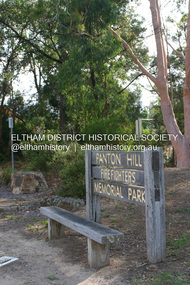
Photograph - Digital Photograph, Alan King, Panton Hill Fire Fighters Memorial Park, 2 February 2008
... Ash Wednesday, February 16, 1983, are honoured by the Panton Hill Fire Fighters Memorial Park on the main road. Published: Nillumbik Now and Then / Marguerite Marshall 2008; photographs Alan King with Marguerite Marshall.; p119 This collection of almost 130 photos about places and people within the Shire of Nillumbik, an urban and rural municipality in Melbourne's north, contributes to an understanding of the history of the Shire. Published in 2008 immediately prior to the Black Saturday bushfires ...Five volunteer fire fighters who died in Upper Beaconsfield on Ash Wednesday, February 16, 1983, are honoured by the Panton Hill Fire Fighters Memorial Park on the main road. Published: Nillumbik Now and Then / Marguerite Marshall 2008; photographs Alan King with Marguerite Marshall.; p119This collection of almost 130 photos about places and people within the Shire of Nillumbik, an urban and rural municipality in Melbourne's north, contributes to an understanding of the history of the Shire. Published in 2008 immediately prior to the Black Saturday bushfires of February 7, 2009, it documents sites that were impacted, and in some cases destroyed by the fires. It includes photographs taken especially for the publication, creating a unique time capsule representing the Shire in the early 21st century. It remains the most recent comprehenesive publication devoted to the Shire's history connecting local residents to the past. nillumbik now and then (marshall-king) collection, panton hill fire fighters memorial park
