
Showing 269 items matching "australia. army field hospital"
-
 National Vietnam Veterans Museum (NVVM)
Film - Film, DVD, 1st Australian Field Hospital, Vung Tau, South Vietnam, 1968-1972 (Copy 1), 2002
... Australia. Army Field Hospital...Australia. Army Field Hospital 1st Black & white film transferred to Film, DVD 1st Australian Field Hospital, Vung Tau, South Vietnam, 1968-1972 (Copy 1) Film Film, DVD 1st Australian Field Hospital Assoc. ...Black & white film transferred to Film, DVDaustralia. army field hospital, 1st -
National Vietnam Veterans Museum (NVVM)
Film - Film, DVD, 1st Australian Field Hospital: Vung Tau, South Vietnam, 1968-1972 (Copy 2), 2002
... Australia. Army. Field Hospital...Australia. Army. Field Hospital 1st Black & white film transferred to Film, DVD 1st Australian Field Hospital: Vung Tau, South Vietnam, 1968-1972 (Copy 2) Film Film, DVD 1st Australian Field Hospital Assoc. ...Black & white film transferred to Film, DVDaustralia. army. field hospital, 1st -
National Vietnam Veterans Museum (NVVM)
Film - Film, DVD, Australian Field Hospital, Vung Tau 1968-69 (Film, DVD & 8 Super 8 films)
... Australia. Army Field Hospital...Australia. Army Field Hospital 1st Super 8 films transferred to Film, DVD. ...Super 8 films transferred to Film, DVD. Silent, coloured filmaustralia. army field hospital, 1st -
 Lara RSL Sub Branch
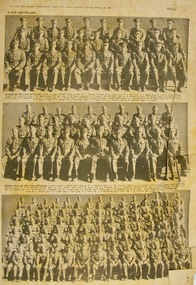
Newspaper, 17th Australian Infantry Brigade, February 22nd 1940
... The Argus 17th Australian Infantry Brigade, Second AIF, Souvenir Supplement, Thursday, February 22, 1940 Page 1 2/5th Battalion - Picture 1 Officers of the 2/5th Battalion; Picture 2 Senior NCO's of the 2/5th Battalion; Picture 3 A Company 2/5th Battalion Page 2 B Company 2/5th Battalion; C Company 2/5th Battalion; D Company 2/5th Battalion Page 3 Headquarters 2/2nd Field Regiment 6th Divisional Artillery; 3rd Battery 2/2nd Field Regiment 6th Divisional Artillery Page 4 Officers, NCO's and men of 2/2nd Field Company, 6th Divisional Engineers; Officers NCO's and men 2/2nd Field Ambulance and 2/2nd Australian General Hospital 6th Divisional Australian Army Medical Corps...The photographs are of national significance as they may reflect the only known photographs of individuals from WW2. aif army 17th brigade second aif 2/5th battalion australian army australian infantry brigade 2/2nd field aumbulance 2/2nd australian general hospital 6th divisional australian army medical corps 6th divisional engineers The Argus 17th Australian Infantry Brigade, Second AIF, Souvenir Supplement, Thursday, February 22, 1940 Page 1 2/5th Battalion - Picture 1 Officers of the 2/5th Battalion; Picture 2 Senior NCO's of the 2/5th Battalion; Picture 3 A Company 2/5th Battalion Page 2 B Company 2/5th Battalion; C Company 2/5th Battalion; D Company 2/5th Battalion Page 3 Headquarters 2/2nd Field Regiment 6th Divisional Artillery; 3rd Battery 2/2nd Field Regiment 6th Divisional Artillery Page 4 Officers, NCO's and men of 2/2nd Field Company, 6th Divisional Engineers; Officers NCO's and men 2/2nd Field Ambulance and 2/2nd Australian General Hospital 6th Divisional Australian Army Medical Corps 4 page newspaper pictures of 17th Brigade, Second AIF 17th Australian Infantry Brigade Newspaper ...The 17th Australian Infantry Brigade was an infantry brigade in the Australian Army. First formed in 1917 during World War I, it did not see any action. Reformed during World War II, before being disbanded in 1946. Today, its name is perpetuated by the 17th Combat Service Support Brigade, which was raised as a logistics formation in May 2006. The 17th Brigade was reformed on 13 October 1939, again as part of the 6th Division, recruited from Victoria. The 17th Brigade fought in the Western Desert Campaign in Libya, the Battle of Greece, the Battle of Wau, the Salamaua-Lae campaign in Papua, and in the Aitape-Wewak campaign in New Guinea. The photographs are of national significance as they may reflect the only known photographs of individuals from WW2.4 page newspaper pictures of 17th Brigade, Second AIFThe Argus 17th Australian Infantry Brigade, Second AIF, Souvenir Supplement, Thursday, February 22, 1940 Page 1 2/5th Battalion - Picture 1 Officers of the 2/5th Battalion; Picture 2 Senior NCO's of the 2/5th Battalion; Picture 3 A Company 2/5th Battalion Page 2 B Company 2/5th Battalion; C Company 2/5th Battalion; D Company 2/5th Battalion Page 3 Headquarters 2/2nd Field Regiment 6th Divisional Artillery; 3rd Battery 2/2nd Field Regiment 6th Divisional Artillery Page 4 Officers, NCO's and men of 2/2nd Field Company, 6th Divisional Engineers; Officers NCO's and men 2/2nd Field Ambulance and 2/2nd Australian General Hospital 6th Divisional Australian Army Medical Corpsaif, army, 17th brigade, second aif, 2/5th battalion, australian army, australian infantry brigade, 2/2nd field aumbulance, 2/2nd australian general hospital, 6th divisional australian army medical corps, 6th divisional engineers -
 Orbost & District Historical Society
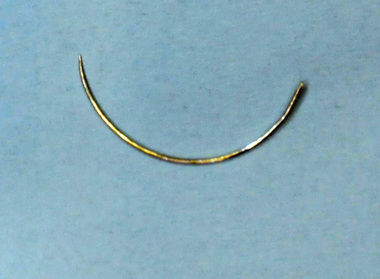
suture needle, Early 20th century
... He was a private , 17340, with the army medical corps reinforcements and then with 8 Field Ambulance. He did his initial training at Seymour Clearance Hospital (AMC) at Royal Park and then 5 Australian General Hospital. ...He was a private , 17340, with the army medical corps reinforcements and then with 8 Field Ambulance. He did his initial training at Seymour Clearance Hospital (AMC) at Royal Park and then 5 Australian General Hospital. ...This suture needle was used by Ferguson Fisher, a farmer, of Orbost. He was a private , 17340, with the army medical corps reinforcements and then with 8 Field Ambulance. He did his initial training at Seymour Clearance Hospital (AMC) at Royal Park and then 5 Australian General Hospital. He served in France and Belgium. He was not a trained doctor but had been taught to stitch wounds.He returned to Australia in 1919. This item gives an insight into the human element of World War 1 ensuring that those who were part of the Orbost community and played a vital role during this time are remembered.A small curved stainless steel suture needle.ww1 fisher-ferguson-linklater suture-needle -
 Bendigo Military Museum
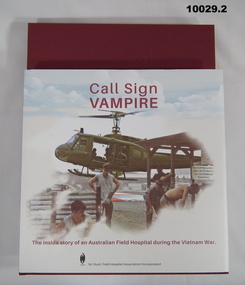
Book - VIETNAM, MEDICAL, Rod SEARLE, Denice BELL, Paul DANAHAR, Gregory ANDERSON, "CALL SIGN VAMPIRE", 2021
... Australian Field Hospital during the Vietnam War". Publications Books Medical Vietnam 1. Hard cover book with dust cover. Hard cover - with red coloured Buckram. Dust cover - paper, red and black print on front, spine and back. Illustrated front, colour photograph of a helicopter, landing area and five Army ...From Title Page; "Call Sign/ Vampire/ The inside story of an Australian Field Hospital during the Vietnam War".1. Hard cover book with dust cover. Hard cover - with red coloured Buckram. Dust cover - paper, red and black print on front, spine and back. Illustrated front, colour photograph of a helicopter, landing area and five Army personnel. Back - two personnel in operating theatre scene. 280 pages - cut, plain, white colour paper. Illustrated - colour and black and white photographs, documents and newspaper clippings. 2. Slipcase. Slipcover - cardboard box shape with red Buckram cover - Embossed red print on front and back edge. publications, books, medical, vietnam -
 Bendigo Military Museum
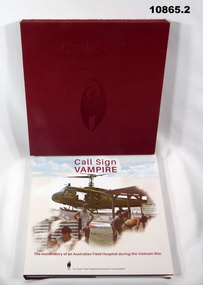
Book - VIETNAM, MEDICAL, Rod SEARLE, Denise BELL, Paul DANAHER, Gregory ANDERSON, "CALL SIGN VAMPIRE", 2021
... Australian Field Hospital during the Vietnam War". Publications Books Medical Vietnam 1. Hard cover book with dust cover. Cover is cardboard with red colour buckram. Dustcover - paper, red and back print on front, spine and back. Illustrated - front, colour photograph of a helicopter, landing area and five army ...From Title page. "Call sign/ VAMPIRE/ The Inside Story of our Australian Field Hospital during the Vietnam War".1. Hard cover book with dust cover. Cover is cardboard with red colour buckram. Dustcover - paper, red and back print on front, spine and back. Illustrated - front, colour photograph of a helicopter, landing area and five army personnel. Back - two personnel in operating theatre scene. 280 pages - cut, plain white paper. Ilustrated in colour and black and white photographs, documents and newspaper clippings. 2. Slipcase - cardboard box shape with red buckram cover. Embossed with red print on front and back edge.publications, books, medical, vietnam -
 Bendigo Military Museum
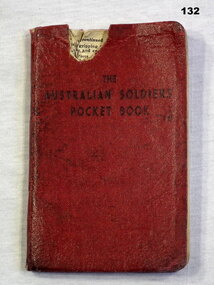
Book - SOLDIERS POCKET BOOK, 1940
... (Born Sydney, enlisted Royal Park) on 8.7.40, embarked 5.2.1941, disembarked Middle East 24.3.1941, posted to 2/12th Field Regt, served in the Seige of Tobruk, transferred to AACS 25.11.1941, graded group 3 Driver Mechanic 28.8.1942, hospital with lacerated scalp 12.11.1942, rejoin unit 8.1.1943, embark for Aust 22.2.1943, disembark Sydney 23.3.1943, serves then with canteen services, reclassified medically and discharged on 10.3.1944. The piece missing in the pocket book was caused by a piece of Shrapnel. documents notebooks personal effects military history army Front cover: "The Australian ...The book belonged to Colin Lawrance McMURRAY, VX33785 Gunner 2/12th Field Regiment HQ Supply Column 9th Div AIF. (Born Sydney, enlisted Royal Park) on 8.7.40, embarked 5.2.1941, disembarked Middle East 24.3.1941, posted to 2/12th Field Regt, served in the Seige of Tobruk, transferred to AACS 25.11.1941, graded group 3 Driver Mechanic 28.8.1942, hospital with lacerated scalp 12.11.1942, rejoin unit 8.1.1943, embark for Aust 22.2.1943, disembark Sydney 23.3.1943, serves then with canteen services, reclassified medically and discharged on 10.3.1944. The piece missing in the pocket book was caused by a piece of Shrapnel.Red-covered book, 127 pages. Useful information for soldiers. There is a piece missing at the top of the book with tattered sheets inside.Front cover: "The Australian Soldiers Pocket Book." Inside: "Col McMurray VX 33785 Gunner 2/12th Field Regt"documents, notebooks, personal effects, military history, army -
 Bendigo Military Museum
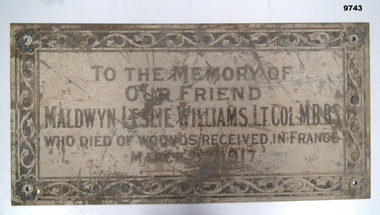
Plaque - MEMORIAL PLAQUE, WW1, C G Roeszler & Son, Post WW1
... Hospital and in private practice. He played several games in the Victorian Football League (VFL) whilst at university. Enlisted in Citizens Military Force in 1909 as Captain in Royal Australian Army Medical Corps. Promoted to Major in 1913. Sept 1915 - appointed Major in regular army, 8th Field...Hospital and in private practice. He played several games in the Victorian Football League (VFL) whilst at university. Enlisted in Citizens Military Force in 1909 as Captain in Royal Australian Army Medical Corps. Promoted to Major in 1913. Sept 1915 - appointed Major in regular army, 8th Field ...Born in Castlemaine 1886. Maldwyn L. Williams (Leslie) was a prominent doctor in Bendigo, both at Bendigo Base Hospital and in private practice. He played several games in the Victorian Football League (VFL) whilst at university. Enlisted in Citizens Military Force in 1909 as Captain in Royal Australian Army Medical Corps. Promoted to Major in 1913. Sept 1915 - appointed Major in regular army, 8th Field Ambulance Unit. Nov 1915 - sailed for Egypt; June 1916 - sailed for Marseilles. Jan 1917 - promoted to Lt. Colonel and command of 1st Field Ambulance Unit. Wounded near Bapaume 2nd March 1917; died from wounds 3rd March 1917. Buried at Dernancourt Cemetery, France. The engraver of the plaque was C.G. Roeszler & Son of Melbourne. This business was founded in 1869 and is still family-owned and trading today. This company is responsible for many examples of engraving around Melbourne, including work on the 1928 Ringwood Memorial Clock and in St Paul's Cathedral in Flinders St, Melbourne. Rectangular metal plaque, possibly brass. 4cm border featuring botanical motif. A flower with eight round petals at each corner - each flower has a 0.7cm hole at its centre. Decoration and inscription engraved and filled with black material, possibly shellac or enamel paint which is degraded, cracking, and loose.Main inscription: "TO THE MEMORY OF/OUR FRIEND/MALDWYN LESLIE WILLIAMS. LT. COL, M.B,B.S./WHO DIED OF WOUNDS RECEIVED IN FRANCE/MARCH 3RD ['RD" is in smaller font and higher that other letters with a dot beneath] 1917.' Bottom right: "C.G. ROESZLER & SON MELB".plaque, memorial -
 Bendigo Military Museum
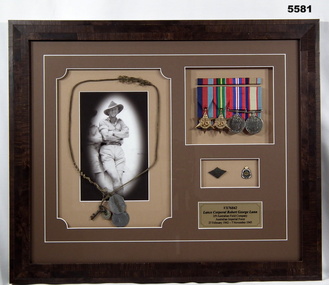
Memorabilia - MONTAGE, FRAMED MEMORABILIA, Post 2000
... Robert George Lunn VX76842 enlisted on 27.2.1942 age 35 years, 5.3 1942 transfer to Engineer Training Echuca, 12.4.1942 transfer to 2nd Field Sqd, 27.6.1942 transfer to No 4 Bomb Disposal Coy, 3.9.1942 transfer to No 2 Bomb Disposal Coy, 18.2.1943 transfer to Engineer Training Centre RAE, 18.8.1943 transfer to 5th Aust Advance Reinforcements Depot Townsville, 11.11.1943 embark for Pt Moresby, 19.11.1943 taken on strength 2/9th Field Coy, 4.6.1944 embark from Lae to Brisbane, 11.8.1944 hospital with Malaria28.8.1944 rejoin unit, 20.9.1944 hospital (unclear), 27.9.1944 rejoin unit, 23.5.1945 embark for Morotai, 7.8.1945 promoted to Cpl, 12.8.1945 fly from Balikpapan to Aust to attend a Junior leaders school Aust Army, 22.8.1945 arrive Vic and attend school, 29.8.1945 attend RAE Training Centre NSW, 31.10.1945 Move to Vic for discharge, 7.11.1945 discharged from the 2nd AIF. Framed memorabilia WW2 medals Lunn "VX76842 Lance Corporal Robert George Lunn, 2/9 Australian ...Robert George Lunn VX76842 enlisted on 27.2.1942 age 35 years, 5.3 1942 transfer to Engineer Training Echuca, 12.4.1942 transfer to 2nd Field Sqd, 27.6.1942 transfer to No 4 Bomb Disposal Coy, 3.9.1942 transfer to No 2 Bomb Disposal Coy, 18.2.1943 transfer to Engineer Training Centre RAE, 18.8.1943 transfer to 5th Aust Advance Reinforcements Depot Townsville, 11.11.1943 embark for Pt Moresby, 19.11.1943 taken on strength 2/9th Field Coy, 4.6.1944 embark from Lae to Brisbane, 11.8.1944 hospital with Malaria28.8.1944 rejoin unit, 20.9.1944 hospital (unclear), 27.9.1944 rejoin unit, 23.5.1945 embark for Morotai, 7.8.1945 promoted to Cpl, 12.8.1945 fly from Balikpapan to Aust to attend a Junior leaders school Aust Army, 22.8.1945 arrive Vic and attend school, 29.8.1945 attend RAE Training Centre NSW, 31.10.1945 Move to Vic for discharge, 7.11.1945 discharged from the 2nd AIF.Wood framed item with photo, ID tags, medals x 4, RAS badge, RSL badge, all items are set in panels within the frame, panel with text at bottom. Medals. 1. 1939 - 45 Star. 2. Pacific Star. 3. British War medal 1939 - 45. 4. Australian Service Medal 1939 - 45."VX76842 Lance Corporal Robert George Lunn, 2/9 Australian Field Company Australian Imperial Force, 27 February 1942 - 7 November 1945"framed, memorabilia, ww2, medals, lunn -
 Frankston RSL Sub Branch
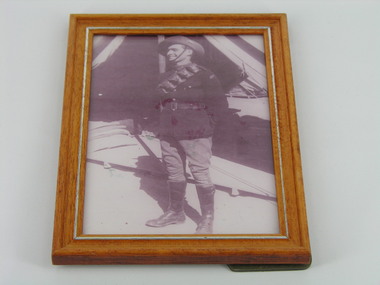
Photograph, Ron Gage, Generic frame
... Details from World War 2 Nominal Roll GAGE, RONALD WILLIAM Service Australian Army Service Number VX107470 (V32070) Date of Birth 29 Aug 1921 Place of Birth MELBOURNE, VIC Date of Enlistment 16 Sep 1942 Locality on Enlistment GLENHUNTLY, VIC Place of Enlistment IN THE FIELD, QLD Next of Kin GAGE, FREDERICK Date of Discharge 31 Jul 1946 Rank Private Posting at Discharge 115 HEIDLEBERG MILITARY HOSPITAL ...Details from World War 2 Nominal Roll GAGE, RONALD WILLIAM Service Australian Army Service Number VX107470 (V32070) Date of Birth 29 Aug 1921 Place of Birth MELBOURNE, VIC Date of Enlistment 16 Sep 1942 Locality on Enlistment GLENHUNTLY, VIC Place of Enlistment IN THE FIELD, QLD Next of Kin GAGE, FREDERICK Date of Discharge 31 Jul 1946 Rank Private Posting at Discharge 115 HEIDLEBERG MILITARY HOSPITAL ron gage Label on the obverse; PRESENTED BY RON GAGE MILITIA ARTILLERY (HORSE) 1936 SELF PHOTOGRAPH Framed photograph, of serviceman Ron Gage, in uniform of the Australian Militia Horse Artillery ca 1936. ...Details from World War 2 Nominal Roll GAGE, RONALD WILLIAM Service Australian Army Service Number VX107470 (V32070) Date of Birth 29 Aug 1921 Place of Birth MELBOURNE, VIC Date of Enlistment 16 Sep 1942 Locality on Enlistment GLENHUNTLY, VIC Place of Enlistment IN THE FIELD, QLD Next of Kin GAGE, FREDERICK Date of Discharge 31 Jul 1946 Rank Private Posting at Discharge 115 HEIDLEBERG MILITARY HOSPITAL Framed photograph, of serviceman Ron Gage, in uniform of the Australian Militia Horse Artillery ca 1936. The frame is of a light brown wood with silver trim and has a glass front.Label on the obverse; PRESENTED BY RON GAGE MILITIA ARTILLERY (HORSE) 1936 SELF PHOTOGRAPHron gage, -
 Geoffrey Kaye Museum of Anaesthetic History
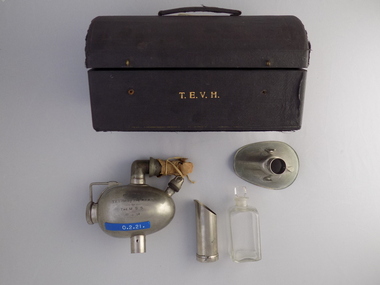
Equipment - Inhaler, Probyn Williams, Mayer & Meltzer, c. 1900
... After studying at Melbourne University, Victorian-born Hurley was a Medical Officer at the Royal Melbourne Hospital until he commenced private practice in Collins Street. He was appointed Captain Australian Army Medical Corps, AIF and served in Gallipoli with the 2nd Field Ambulance. ...After studying at Melbourne University, Victorian-born Hurley was a Medical Officer at the Royal Melbourne Hospital until he commenced private practice in Collins Street. He was appointed Captain Australian Army Medical Corps, AIF and served in Gallipoli with the 2nd Field Ambulance. ...Hurley, Sir Thomas Ernest Victor (1888-1958) was gifted this Probyn Williams inhaler in 1914. After studying at Melbourne University, Victorian-born Hurley was a Medical Officer at the Royal Melbourne Hospital until he commenced private practice in Collins Street. He was appointed Captain Australian Army Medical Corps, AIF and served in Gallipoli with the 2nd Field Ambulance. He served in Enypt, London, and the Western Front during World War 1. He gained a Companion of the Order of St George and St Michael in 1917. Upon return to Melbourne he held positions such as surgeon to Victoria Police (1928-1956), elected to Council of the Victorian branch of the British Medical Association, member of the Charities Board of Victoria and foundation member of the Royal Australasian College of Surgeons and chaired the Flying Personnel Research Committee m a consulting surgeon at the Royal Melbourne Hospital. This apparatus is transitional between Clover's and Hewitt's having Clover's narrow "ways" and compact size, but using Hewitt's ether-control lever.Black round topped box with brass hooks [missing] at front and brass hinges at rear. The initials T.E.V.H. are printed in gold leaf on the front. There is a black fabric handle on the top. Inside the box is black padding with the manufacturer's logo printed in gold leaf. There is a square section in the base of the box for holding the square clear glass bottle for ether. The pear-shaped mask is made of metal. There is also a metal ether measure for pouring the ether. The metal inhaler is ovoid shaped. The rotating gauge has a series of numbers engraved onto the inhaler for measurement. There is an elbow joint attaching a re-breather bag, with a small amount of waxy paper remaining attached with a thin ribbon. There is a small glass bulb encased in a metal housing. Printed in gold leaf on front of box: T.E.V.H. •Printed in gold leaf on inside lid of box: MAYER & MELTZER / LONDON / MELBOURNE & CAPE TOWN •Engraved on side of inhaler: PRESENTED / TO / T.E.V. Hurley Esq.,M.D.M.S. / by / THE M.S.S. / 15.6.14. •Engraved on reverse side of inhaler: PROBYN WILLIAMS / ETHER INHALER •Moulded into connector on elbow joint: MAYER & MELTZER •Stamped into base of metal pourer: MAYER & MELTZER / LONDON •Blue sticker with white printed text on front of inhaler: O.2.21.hurley, thomas ernest victor, probyn williams, university of melbourne, world war 1, wwi, gallipoli, australian army medical corps, medical student society, mayer & meltzer, clover, joseph, hewitt, fredrick william -
 Royal Australian and New Zealand College of Obstetricians & Gynaecologists (RANZCOG)
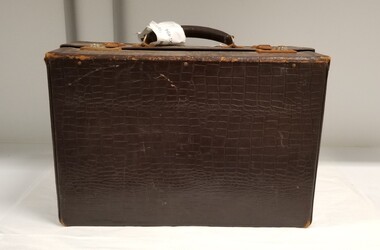
Equipment - Medical case used by Dr Reginald Worcester
... Hospital. He obtained his MRCOG in England in 1935, and on his return to Australia was appointed as a university tutor in obstetrics and gynaecology. In 1939, he was appointed as the honorary gynaecologist to outpatients at the Royal Women's Hospital. Worcester served with the AIF during World War II as C.O. of the 17th Field Ambulance in Darwin and as A.D.M.S., Northern Territory Force, and the 2nd/9th Australian Army...Hospital. He obtained his MRCOG in England in 1935, and on his return to Australia was appointed as a university tutor in obstetrics and gynaecology. In 1939, he was appointed as the honorary gynaecologist to outpatients at the Royal Women's Hospital. Worcester served with the AIF during World War II as C.O. of the 17th Field Ambulance in Darwin and as A.D.M.S., Northern Territory Force, and the 2nd/9th Australian Army ...Reginald George Worcester (1903-1972) was a highly regarded obstetrics and gynaecology specialist. Between 1930 and 1933, Worcester was the Medical Superintendent at the Royal Women's Hospital. He obtained his MRCOG in England in 1935, and on his return to Australia was appointed as a university tutor in obstetrics and gynaecology. In 1939, he was appointed as the honorary gynaecologist to outpatients at the Royal Women's Hospital. Worcester served with the AIF during World War II as C.O. of the 17th Field Ambulance in Darwin and as A.D.M.S., Northern Territory Force, and the 2nd/9th Australian Army Corps from 1942 to 1943. His major war service, however, was undertaken in Borneo and Moratai, commanding the 2nd/1st Australian C.C.S. and the 2nd/9th Australian General Hospital. Worcester acquitted himself admirably during the war, with company commander Hubert Smith praising his contribution in no uncertain terms: " His [Worcester's] success as C.O. of a Field Ambulance resulted from a complete understanding of what the unit should be able to do in the transportation of casualties in the field, as well as of the usual medial functions. He organized both with efficiency and at all times difficult decisions were made with humility and good humour. The personal qualities which made him such a calm and considerate consultant never left him, even in the most dangerous and trying circumstances of war." Worcester's time in the army greatly affected his health, but despite this he was able to build a strong and reputable practice upon his return to Australia. As outlined by Arthur Hill, Worcester " was appointed in turn to the following important posts: Honorary Outpatient Obstetrician and Inpatient Gynaecologist to the Women’s Hospital (1946-1948); Honorary Gynaecologist to Prince Henry’s Hospital (1946-1963); Guest Examiner in London for the R.C.O.G. (1953); Examiner in Obstetrics and Gynaecology for the Royal Australasian College of Surgeons (1957-1964); Visiting Gynaecologist to the Repatriation General Hospital, Heidelberg 1963- 1967); and first Victorian Members’ representative (1947-1950) and later Fellows’ Representative (1953-1960) on the Australian (Regional) Council of the R.C.O.G. To these posts he brought the benefits of clear thinking and critical awareness. In 1949 he was elected F.R.C.O.G." In early 1967, Worcester suffered a hemiplegia which left him with an impaired gait and paralysed his right hand. Although unable to do major surgery, he returned to part-time practice by September 1967. His ill-health persisted though, and he was retired from practice in 1970. (Source: (1973), REGINALD GEORGE WORCESTER. Medical Journal of Australia, 1: 770-771.)Brown leather medical case. The case has a solid frame and is rectangular, with a leather handle at top. There are two locks on the top of the case, and a metal clasp on either side to fasten the bag closed. The case is embossed with the text 'R.G. WORCESTER' on top, in a position between the two locks and below the handle at bottom centre. The inside of the case is lined with a canvas bag that is buttoned to the case with press studs. The inside of the case also contains a loose canvas bag on which is handwritten 'BAG No/THREE/ R.G. WORCESTER'. The loose canvas bag has a metal zipper at opening.'R.G.WORCESTER'obstetrics, surgery -
 Bendigo Historical Society Inc.
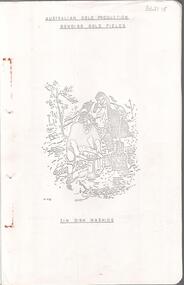
Document - MINING IN BENDIGO COLLECTION: BENDIGO GOLD FIELDS, 1968
... COTTAGE Miners Mining in Bendigo Bendigo Gold Fields Index V R Dwyer Strzelecki Edward Hargreaves Thomas Hancock Henry Frenchman Wittscheibe Ballerstedt Fortuna Villa George Lansell The Rocks Victoria Nugget Dascombe Nugget Welcome Stranger Welcome Nugget Canadian Nugget Sarah Sands Lady Hotham Maryborough Heron Nugget Blanche Barkley Vicount Canterbury Precious Nugget Poseidon Gold Prices Gold Yield 1851 - 1890 Location of Shafts Mechanics Institute Old Masonic Hall Court St Killians Forrest St Methodist Church Hospital Baptist Church Bendigo Gas Company St Andrews Presbyterian Church Bendigo Benevolent Home Railway St Marys Church of England Bendigo M P Building Society St Pausl Church of England High School City Family Hotel Fire Brigade B U F S Dispensary Synagogue Beehive Store School of Mines Bendigo Miners Association St Marys Convent Dr Backhaus St Mathews Long Gully Salvation Army Post Office Art Gallery Sacred Heart Cathedral Eaglehawk Town Hall Typed copy of the Bendigo Gold Fields , collected and arranged by V. R. Dwyer, 1968. On front cover: Australian ...Typed copy of the Bendigo Gold Fields , collected and arranged by V. R. Dwyer, 1968. On front cover: Australian Gold Production Bendigo Gold Field. Image of tin dish washing. Cover has an image of two people tin dish washing. Notes include a brief history of gold in Australia, Bendigo Goldfield yields, Bendigo Gold Nuggets, Victorian Nuggets, gold prices, yield for the years 1851 to 1890, lines of reef, mine shafts and depth, location, public buildings and organisations and mines listed for each reef. Typed copy of this document is held in Folder 130, number 3621.18.cottage, miners, mining in bendigo, bendigo gold fields index, v r dwyer, strzelecki, edward hargreaves, thomas hancock, henry frenchman, wittscheibe, ballerstedt, fortuna villa, george lansell, the rocks, victoria nugget, dascombe nugget, welcome stranger, welcome nugget, canadian nugget, sarah sands, lady hotham, maryborough, heron nugget, blanche barkley, vicount canterbury, precious nugget, poseidon, gold prices, gold yield 1851 - 1890, location of shafts, mechanics institute, old masonic hall, court, st killians, forrest st methodist church, hospital, baptist church, bendigo gas company, st andrews presbyterian church, bendigo benevolent home, railway, st marys church of england, bendigo m p building society, st pausl church of england, high school, city family hotel, fire brigade, b u f s dispensary, synagogue, beehive store, school of mines, bendigo miners association, st marys convent, dr backhaus, st mathews long gully, salvation army, post office, art gallery, sacred heart cathedral, eaglehawk town hall -
 National Vietnam Veterans Museum (NVVM)
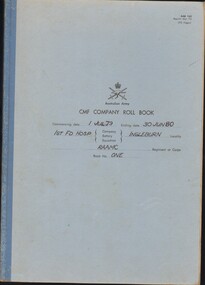
Administrative record - Company Roll Book, Australian Army: CMF Company roll book (1st Field Hospital) 1981-1982, 1981
... Australia - Armed Forces - Service manuals 1st Australian Field Hospital A faded blue covered book with 70 lined pages and a darker blue binding Australian Army: CMF Company roll book (1st Field Hospital) 1981-1982 Administrative record Company Roll Book Australian Army ...A faded blue covered book with 70 lined pages and a darker blue bindingaustralia - armed forces - service manuals, 1st australian field hospital -
 National Vietnam Veterans Museum (NVVM)
Slide - Sims Image Collection
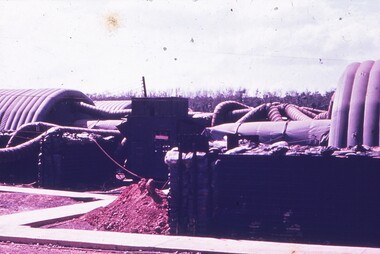
... field hospital developed by the US Army. These hospitals utilized inflatable shelters, expandable structures, and auxiliary power units to create self-contained medical facilities. They could be constructed relatively easily and were capable of supporting a large number of patients. This image is from a collection of 253 images on slides taken by Corporal Peter Stanley Sims (Service no:44304), while on deployment in Vietnam 1969 -1970. He served in the Royal Australian...field hospital developed by the US Army. These hospitals utilized inflatable shelters, expandable structures, and auxiliary power units to create self-contained medical facilities. They could be constructed relatively easily and were capable of supporting a large number of patients. This image is from a collection of 253 images on slides taken by Corporal Peter Stanley Sims (Service no:44304), while on deployment in Vietnam 1969 -1970. He served in the Royal Australian ...During the war in Vietnam, a MUST hospital (Medical Unit, Self-Contained, Transportable) was a type of field hospital developed by the US Army. These hospitals utilized inflatable shelters, expandable structures, and auxiliary power units to create self-contained medical facilities. They could be constructed relatively easily and were capable of supporting a large number of patients. This image is from a collection of 253 images on slides taken by Corporal Peter Stanley Sims (Service no:44304), while on deployment in Vietnam 1969 -1970. He served in the Royal Australian Army Medical Corps. Medical Unit, Self-contained, Transportable (MUST) inflatable shelters used for wards and operating theatres at American 20 Surgical hospital, Vietnam 1969/70.peter stanley sims, 44304, slides, royal australian army medical corps, vietnam war, sims, australian forces vietnam, hq australian forces vietnam, 20 surgical hospital, quonset hut, medical unit self contained transportable, must, hospital -
 National Vietnam Veterans Museum (NVVM)
Slide - Sims Image Collection
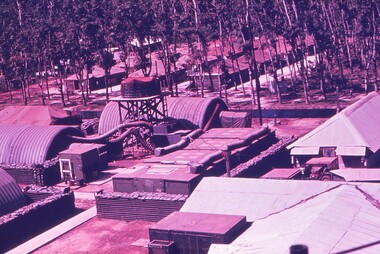
... field hospital developed by the US Army. These hospitals utilized inflatable shelters, expandable structures, and auxiliary power units to create self-contained medical facilities. They could be constructed relatively easily and were capable of supporting a large number of patients. This image is from a collection of 253 images on slides taken by Corporal Peter Stanley Sims (Service no:44304), while on deployment in Vietnam 1969 -1970. He served in the Royal Australian...field hospital developed by the US Army. These hospitals utilized inflatable shelters, expandable structures, and auxiliary power units to create self-contained medical facilities. They could be constructed relatively easily and were capable of supporting a large number of patients. This image is from a collection of 253 images on slides taken by Corporal Peter Stanley Sims (Service no:44304), while on deployment in Vietnam 1969 -1970. He served in the Royal Australian ...During the war in Vietnam, a MUST hospital (Medical Unit, Self-Contained, Transportable) was a type of field hospital developed by the US Army. These hospitals utilized inflatable shelters, expandable structures, and auxiliary power units to create self-contained medical facilities. They could be constructed relatively easily and were capable of supporting a large number of patients. This image is from a collection of 253 images on slides taken by Corporal Peter Stanley Sims (Service no:44304), while on deployment in Vietnam 1969 -1970. He served in the Royal Australian Army Medical Corps. Equipment used for operating wards and operating theatres at American 20 Surgical hospital, Vietnam 1969/70.peter stanley sims, 44304, slides, royal australian army medical corps, vietnam war, sims, australian forces vietnam, hq australian forces vietnam, 20 surgical hospital, medical unit self contained transportable, must -
 National Vietnam Veterans Museum (NVVM)
Slide - Sims Image Collection
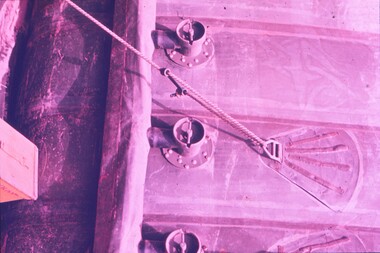
... field hospital developed by the US Army. These hospitals utilized inflatable shelters, expandable structures, and auxiliary power units to create self-contained medical facilities. They could be constructed relatively easily and were capable of supporting a large number of patients. This image is from a collection of 253 images on slides taken by Corporal Peter Stanley Sims (Service no:44304), while on deployment in Vietnam 1969 -1970. He served in the Royal Australian...field hospital developed by the US Army. These hospitals utilized inflatable shelters, expandable structures, and auxiliary power units to create self-contained medical facilities. They could be constructed relatively easily and were capable of supporting a large number of patients. This image is from a collection of 253 images on slides taken by Corporal Peter Stanley Sims (Service no:44304), while on deployment in Vietnam 1969 -1970. He served in the Royal Australian ...During the war in Vietnam, a MUST hospital (Medical Unit, Self-Contained, Transportable) was a type of field hospital developed by the US Army. These hospitals utilized inflatable shelters, expandable structures, and auxiliary power units to create self-contained medical facilities. They could be constructed relatively easily and were capable of supporting a large number of patients. This image is from a collection of 253 images on slides taken by Corporal Peter Stanley Sims (Service no:44304), while on deployment in Vietnam 1969 -1970. He served in the Royal Australian Army Medical Corps. Anchor point on buildings at American 20 Surgical hospital, Vietnam 1969/70.peter stanley sims, 44304, slides, royal australian army medical corps, vietnam war, sims, australian forces vietnam, hq australian forces vietnam, 20 surgical hospital, must -
 National Vietnam Veterans Museum (NVVM)
Slide - Sims Image Collection
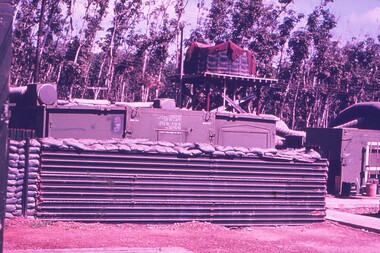
... field hospital developed by the US Army. These hospitals utilized inflatable shelters, expandable structures, and auxiliary power units to create self-contained medical facilities. They could be constructed relatively easily and were capable of supporting a large number of patients. This image is from a collection of 253 images on slides taken by Corporal Peter Stanley Sims (Service no:44304), while on deployment in Vietnam 1969 -1970. He served in the Royal Australian...field hospital developed by the US Army. These hospitals utilized inflatable shelters, expandable structures, and auxiliary power units to create self-contained medical facilities. They could be constructed relatively easily and were capable of supporting a large number of patients. This image is from a collection of 253 images on slides taken by Corporal Peter Stanley Sims (Service no:44304), while on deployment in Vietnam 1969 -1970. He served in the Royal Australian ...During the war in Vietnam, a MUST hospital (Medical Unit, Self-Contained, Transportable) was a type of field hospital developed by the US Army. These hospitals utilized inflatable shelters, expandable structures, and auxiliary power units to create self-contained medical facilities. They could be constructed relatively easily and were capable of supporting a large number of patients. This image is from a collection of 253 images on slides taken by Corporal Peter Stanley Sims (Service no:44304), while on deployment in Vietnam 1969 -1970. He served in the Royal Australian Army Medical Corps. Fortified barrier protecting equipment that runs wards and operating theatres at the 20 surgical Hospital , Vietnam 1969/70.peter stanley sims, 44304, slides, royal australian army medical corps, vietnam war, sims, australian forces vietnam, hq australian forces vietnam, 20 surgical hospital, fortified barriers, must, hospital -
 National Vietnam Veterans Museum (NVVM)
Slide - Sims Image Collection
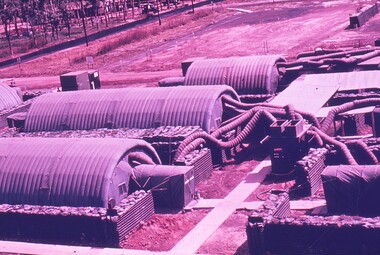
... field hospital developed by the US Army. These hospitals utilized inflatable shelters, expandable structures, and auxiliary power units to create self-contained medical facilities. They could be constructed relatively easily and were capable of supporting a large number of patients. This image is from a collection of 253 images on slides taken by Corporal Peter Stanley Sims (Service no:44304), while on deployment in Vietnam 1969 -1970. He served in the Royal Australian...field hospital developed by the US Army. These hospitals utilized inflatable shelters, expandable structures, and auxiliary power units to create self-contained medical facilities. They could be constructed relatively easily and were capable of supporting a large number of patients. This image is from a collection of 253 images on slides taken by Corporal Peter Stanley Sims (Service no:44304), while on deployment in Vietnam 1969 -1970. He served in the Royal Australian ...During the war in Vietnam, a MUST hospital (Medical Unit, Self-Contained, Transportable) was a type of field hospital developed by the US Army. These hospitals utilized inflatable shelters, expandable structures, and auxiliary power units to create self-contained medical facilities. They could be constructed relatively easily and were capable of supporting a large number of patients. This image is from a collection of 253 images on slides taken by Corporal Peter Stanley Sims (Service no:44304), while on deployment in Vietnam 1969 -1970. He served in the Royal Australian Army Medical Corps. Medical Unit, Self-contained, Transportable (MUST) inflatable shelters used for wards and operating theatres at American 20 Surgical hospital, Vietnam 1969/70.peter stanley sims, 44304, slides, royal australian army medical corps, vietnam war, sims, australian forces vietnam, hq australian forces vietnam, 20 surgical hospital, quonset hut, medical unit self contained transportable, must -
 National Vietnam Veterans Museum (NVVM)
Slide - Sims Image Collection
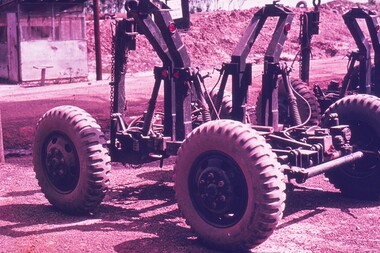
... field hospital developed by the US Army. These hospitals utilized inflatable shelters, expandable structures, and auxiliary power units to create self-contained medical facilities. They could be constructed relatively easily and were capable of supporting a large number of patients. This image is from a collection of 253 images on slides taken by Corporal Peter Stanley Sims (Service no:44304), while on deployment in Vietnam 1969 -1970. He served in the Royal Australian...field hospital developed by the US Army. These hospitals utilized inflatable shelters, expandable structures, and auxiliary power units to create self-contained medical facilities. They could be constructed relatively easily and were capable of supporting a large number of patients. This image is from a collection of 253 images on slides taken by Corporal Peter Stanley Sims (Service no:44304), while on deployment in Vietnam 1969 -1970. He served in the Royal Australian ...During the war in Vietnam, a MUST hospital (Medical Unit, Self-Contained, Transportable) was a type of field hospital developed by the US Army. These hospitals utilized inflatable shelters, expandable structures, and auxiliary power units to create self-contained medical facilities. They could be constructed relatively easily and were capable of supporting a large number of patients. This image is from a collection of 253 images on slides taken by Corporal Peter Stanley Sims (Service no:44304), while on deployment in Vietnam 1969 -1970. He served in the Royal Australian Army Medical Corps. Cart for moving equipment at the 20 Surgical Hospital, Vietnam 1970. peter stanley sims, 44304, slides, royal australian army medical corps, vietnam war, sims, australian forces vietnam, hq australian forces vietnam, 20 surgical hospital -
 National Vietnam Veterans Museum (NVVM)
Slide - Sims Image Collection
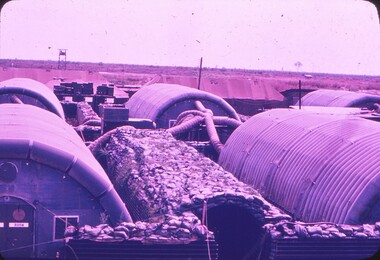
... field hospital developed by the US Army. These hospitals utilized inflatable shelters, expandable structures, and auxiliary power units to create self-contained medical facilities. They could be constructed relatively easily and were capable of supporting a large number of patients. This image is from a collection of 253 images on slides taken by Corporal Peter Stanley Sims (Service no:44304), while on deployment in Vietnam 1969 -1970. He served in the Royal Australian...field hospital developed by the US Army. These hospitals utilized inflatable shelters, expandable structures, and auxiliary power units to create self-contained medical facilities. They could be constructed relatively easily and were capable of supporting a large number of patients. This image is from a collection of 253 images on slides taken by Corporal Peter Stanley Sims (Service no:44304), while on deployment in Vietnam 1969 -1970. He served in the Royal Australian ...During the war in Vietnam, a MUST hospital (Medical Unit, Self-Contained, Transportable) was a type of field hospital developed by the US Army. These hospitals utilized inflatable shelters, expandable structures, and auxiliary power units to create self-contained medical facilities. They could be constructed relatively easily and were capable of supporting a large number of patients. This image is from a collection of 253 images on slides taken by Corporal Peter Stanley Sims (Service no:44304), while on deployment in Vietnam 1969 -1970. He served in the Royal Australian Army Medical Corps. Inflatable buildings and fortified storage areas at the 20 Surgical hospital, Vietnam 1969/70.peter stanley sims, 44304, slides, royal australian army medical corps, vietnam war, sims, australian forces vietnam, hq australian forces vietnam, 20 surgical hospital, must -
 National Vietnam Veterans Museum (NVVM)
Slide - Sims Image Collection
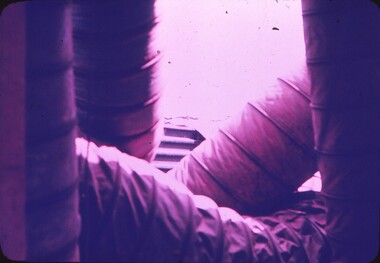
... field hospital developed by the US Army. These hospitals utilized inflatable shelters, expandable structures, and auxiliary power units to create self-contained medical facilities. They could be constructed relatively easily and were capable of supporting a large number of patients. This image is from a collection of 253 images on slides taken by Corporal Peter Stanley Sims (Service no:44304), while on deployment in Vietnam 1969 -1970. He served in the Royal Australian...field hospital developed by the US Army. These hospitals utilized inflatable shelters, expandable structures, and auxiliary power units to create self-contained medical facilities. They could be constructed relatively easily and were capable of supporting a large number of patients. This image is from a collection of 253 images on slides taken by Corporal Peter Stanley Sims (Service no:44304), while on deployment in Vietnam 1969 -1970. He served in the Royal Australian ...During the war in Vietnam, a MUST hospital (Medical Unit, Self-Contained, Transportable) was a type of field hospital developed by the US Army. These hospitals utilized inflatable shelters, expandable structures, and auxiliary power units to create self-contained medical facilities. They could be constructed relatively easily and were capable of supporting a large number of patients. This image is from a collection of 253 images on slides taken by Corporal Peter Stanley Sims (Service no:44304), while on deployment in Vietnam 1969 -1970. He served in the Royal Australian Army Medical Corps. Large piping to take air to inflatable buildings at the 20 Surgical hospital, Vietnam 1969/70.peter stanley sims, 44304, slides, royal australian army medical corps, vietnam war, sims, australian forces vietnam, hq australian forces vietnam, 20 surgical hospital, must, hospital, field hospital -
 National Vietnam Veterans Museum (NVVM)
Slide - Sims Image Collection
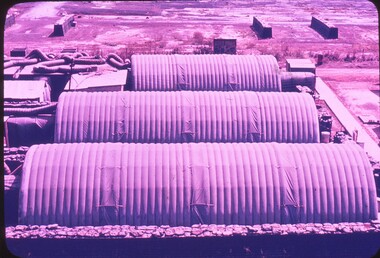
... field hospital developed by the US Army. These hospitals utilized inflatable shelters, expandable structures, and auxiliary power units to create self-contained medical facilities. They could be constructed relatively easily and were capable of supporting a large number of patients. This image is from a collection of 253 images on slides taken while on deployment in Vietnam by Corporal Peter Stanley Sims (44304), who served in the Royal Australian...field hospital developed by the US Army. These hospitals utilized inflatable shelters, expandable structures, and auxiliary power units to create self-contained medical facilities. They could be constructed relatively easily and were capable of supporting a large number of patients. This image is from a collection of 253 images on slides taken while on deployment in Vietnam by Corporal Peter Stanley Sims (44304), who served in the Royal Australian ...During the war in Vietnam, a MUST hospital (Medical Unit, Self-Contained, Transportable) was a type of field hospital developed by the US Army. These hospitals utilized inflatable shelters, expandable structures, and auxiliary power units to create self-contained medical facilities. They could be constructed relatively easily and were capable of supporting a large number of patients. This image is from a collection of 253 images on slides taken while on deployment in Vietnam by Corporal Peter Stanley Sims (44304), who served in the Royal Australian Army Medical Corps, 1969 -1970.Inflated roofs of buildings at the 20 Surgical hospital, Vietnam 1969/70.peter stanley sims, 44304, slides, royal australian army medical corps, vietnam war, sims, australian forces vietnam, hq australian forces vietnam, 20 surgical hospital -
 National Vietnam Veterans Museum (NVVM)
Slide - Sims Image Collection
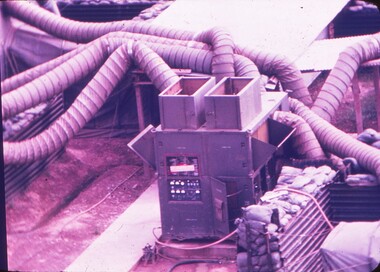
... field hospital developed by the US Army. These hospitals utilized inflatable shelters, expandable structures, and auxiliary power units to create self-contained medical facilities. They could be constructed relatively easily and were capable of supporting a large number of patients. This image is from a collection of 253 images on slides taken by Corporal Peter Stanley Sims (Service no:44304), while on deployment in Vietnam 1969 -1970. He served in the Royal Australian...field hospital developed by the US Army. These hospitals utilized inflatable shelters, expandable structures, and auxiliary power units to create self-contained medical facilities. They could be constructed relatively easily and were capable of supporting a large number of patients. This image is from a collection of 253 images on slides taken by Corporal Peter Stanley Sims (Service no:44304), while on deployment in Vietnam 1969 -1970. He served in the Royal Australian ...During the war in Vietnam, a MUST hospital (Medical Unit, Self-Contained, Transportable) was a type of field hospital developed by the US Army. These hospitals utilized inflatable shelters, expandable structures, and auxiliary power units to create self-contained medical facilities. They could be constructed relatively easily and were capable of supporting a large number of patients. This image is from a collection of 253 images on slides taken by Corporal Peter Stanley Sims (Service no:44304), while on deployment in Vietnam 1969 -1970. He served in the Royal Australian Army Medical Corps. Flexible pipes connected to equipment to inflate the Medical unit self contained transportable (MUST) temporary buildings at the 20 Surgical hospital, Vietnam 1969/70.peter stanley sims, 44304, slides, royal australian army medical corps, vietnam war, sims, australian forces vietnam, hq australian forces vietnam, 20 surgical hospital, medical unit self contained transportable -
 National Vietnam Veterans Museum (NVVM)
Slide - Sims Image Collection
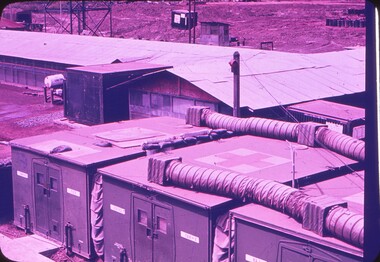
... field hospital developed by the US Army. These hospitals utilized inflatable shelters, expandable structures, and auxiliary power units to create self-contained medical facilities. They could be constructed relatively easily and were capable of supporting a large number of patients. This image is from a collection of 253 images on slides taken while on deployment in Vietnam by Corporal Peter Stanley Sims (44304), who served in the Royal Australian...field hospital developed by the US Army. These hospitals utilized inflatable shelters, expandable structures, and auxiliary power units to create self-contained medical facilities. They could be constructed relatively easily and were capable of supporting a large number of patients. This image is from a collection of 253 images on slides taken while on deployment in Vietnam by Corporal Peter Stanley Sims (44304), who served in the Royal Australian ...During the war in Vietnam, a MUST hospital (Medical Unit, Self-Contained, Transportable) was a type of field hospital developed by the US Army. These hospitals utilized inflatable shelters, expandable structures, and auxiliary power units to create self-contained medical facilities. They could be constructed relatively easily and were capable of supporting a large number of patients. This image is from a collection of 253 images on slides taken while on deployment in Vietnam by Corporal Peter Stanley Sims (44304), who served in the Royal Australian Army Medical Corps, 1969 -1970.Medical buildings at the 20 Surgical hospital (USA), Vietnam 1969/70.peter stanley sims, 44304, slides, royal australian army medical corps, vietnam war, sims, australian forces vietnam, hq australian forces vietnam, 20 surgical hospital -
 National Vietnam Veterans Museum (NVVM)
Slide - Sims Image Collection
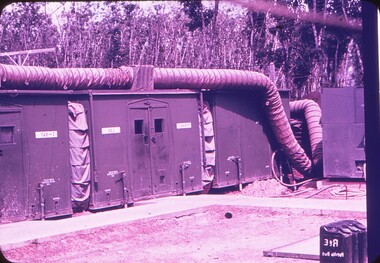
... field hospital developed by the US Army. These hospitals utilized inflatable shelters, expandable structures, and auxiliary power units to create self-contained medical facilities. They could be constructed relatively easily and were capable of supporting a large number of patients. This image is from a collection of 253 images on slides taken while on deployment in Vietnam by Corporal Peter Stanley Sims (44304), who served in the Royal Australian...field hospital developed by the US Army. These hospitals utilized inflatable shelters, expandable structures, and auxiliary power units to create self-contained medical facilities. They could be constructed relatively easily and were capable of supporting a large number of patients. This image is from a collection of 253 images on slides taken while on deployment in Vietnam by Corporal Peter Stanley Sims (44304), who served in the Royal Australian ...During the war in Vietnam, a MUST hospital (Medical Unit, Self-Contained, Transportable) was a type of field hospital developed by the US Army. These hospitals utilized inflatable shelters, expandable structures, and auxiliary power units to create self-contained medical facilities. They could be constructed relatively easily and were capable of supporting a large number of patients. This image is from a collection of 253 images on slides taken while on deployment in Vietnam by Corporal Peter Stanley Sims (44304), who served in the Royal Australian Army Medical Corps, 1969 -1970.Medical buildings at the 20 Surgical hospital, Vietnam 1969/70.peter stanley sims, 44304, slides, royal australian army medical corps, vietnam war, sims, australian forces vietnam, hq australian forces vietnam, 20 surgical hospital, must, hospital -
 National Vietnam Veterans Museum (NVVM)
Slide - Sims Image Collection
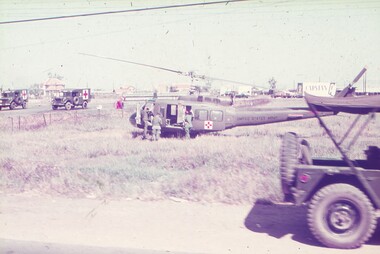
... Australian Army Medical Corps, 1969 - 1970. Peter Stanley Sims 44304 Slides Royal Australian Army Medical Corps Vietnam War Sims Australian Force Vietnam 3rd Field Hospital Unit 3rd Field Hospital Unit, Saigon, Vietnam 1969/70. ...From a collection of 253 images on slides taken while on deployment in Vietnam by Corporal Peter Stanley Sims (44304). He served in the Royal Australian Army Medical Corps, 1969 - 1970.3rd Field Hospital Unit, Saigon, Vietnam 1969/70.peter stanley sims, 44304, slides, royal australian army medical corps, vietnam war, sims, australian force vietnam, 3rd field hospital unit -
 National Vietnam Veterans Museum (NVVM)
Administrative record - Company Roll Book, Australian Army: CMF Company roll book (1st Field Hospital) 1979-1980, 1981
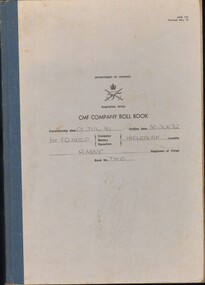
... Australia - Armed Forces - Service manuals 1st Australian Field Hospital In a faded blue ledger with 152 pages with a dark blue binding. Australian Army ...In a faded blue ledger with 152 pages with a dark blue binding.australia - armed forces - service manuals, 1st australian field hospital -
 National Vietnam Veterans Museum (NVVM)
Memorabilia - A Hand Painted Poster with the Names of Ted Dorrington and Dave Wittner on it
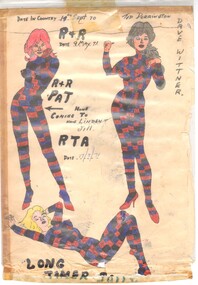
... Memorbilia Poster R & R Pte Edward Joseph Dorrington 3797231 Australian National Serviceman Royal Australian Army Medical Corps 1st Australian Field Hospital Cpl (Temp) David Maurice Wittner 3798268 A Hand Painted Poster with the Names of Ted Dorrington and Dave Wittner on it. ...A Hand Painted Poster with the Names of Ted Dorrington and Dave Wittner on it. There are coloured drawings of three ladies in blue and red checked clothing. Top of the poster reads Date In country 14th Sept 70 and Ted Dorrington. Down the right hand side reads Dave Wittner. See media file for more information. memorbilia, poster, r & r, pte edward joseph dorrington, 3797231, australian national serviceman, royal australian army medical corps, 1st australian field hospital, cpl (temp) david maurice wittner, 3798268
