
Showing 57 items matching "australian army - military life"
-
 Returned Nurses RSL Sub-branch
Book - Illustrated paperback book, Department of Veterans' Affairs, Canberra, Devotion: stories of Australia's wartime nurses, 2013
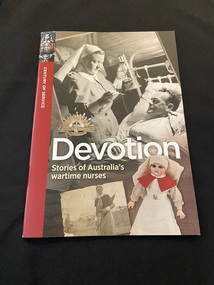
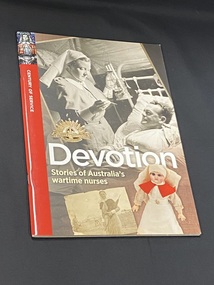
... Australian Army - military life...Australian Army - military life Military Nursing women in war women soldiers Australian Armed Forces - Nurses This education resource is the first book in the Century of Service series and is aimed at primary and lower secondary schools students. ...This education resource is the first book in the Century of Service series and is aimed at primary and lower secondary schools students. It explores the contribution and courage of Australian nurses in conflicts and peacekeeping operations from the Boer War to the present.--Dept. of Veteran's Affairs website.Staple-bound paperback book. It has a red strip along the left side with a stained glass image of a nurse at the top and 'century of service' printed sideways in white text below the image. The cover shows a black and white image of a nurse tending a patient in a military tent. The title is printed in large white print below the centre of the page and beneath it is a photo of a nurse in a miltary base and of an old doll dressed as a nurse. The symbol for Australian Commonwealth Military Forces is in the middle of the page.non-fictionThis education resource is the first book in the Century of Service series and is aimed at primary and lower secondary schools students. It explores the contribution and courage of Australian nurses in conflicts and peacekeeping operations from the Boer War to the present.--Dept. of Veteran's Affairs website.australian army - military life, military nursing, women in war, women soldiers, australian armed forces - nurses -
 Returned Nurses RSL Sub-branch
Book - Illustrated paperback book, Department of Veterans' Affairs, Canberra, Ancestry: stories of multicultural ANZACs, 2015
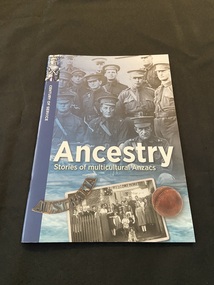
... Australian Army - military life...Australian Army - military life Australian Imperial Force (1940-1947) AIF Gallipoli campaign Australian Imperial Force minorities Armed Forces minorities World War 1914-1918 WW1 WWI First World War ANZAC Soldiers-Australia-history This commemorative publication is the third book in the Century of Service series and is aimed at upper primary and lower secondary school students. ...This commemorative publication is the third book in the Century of Service series and is aimed at upper primary and lower secondary school students. It explores stories of individuals and families from different cultural backgrounds who served in Australian units during the First World War. The stories contain educational questions, historical facts, did you know questions and a glossary of terms used in the text. [taken from Trove] Contents: Introduction -- Maker of the records: Honorary Captain Charles Bean -- Committed to service: the Coriglianos -- A Maori ANZAC: Private Karanema Pohatu -- A family legacy: the Righettis -- "Conspicuous bravery": Lieutenant Leonard Kayzor -- A service family: the Christensens -- "Gallantry in action": Captain Marcel Aurousseau -- "The gentleman in gloves": Major William Oldfield -- "Band of brothers": the Langtips -- "Great bravery and dash": Sergeant Nicholas Rodakis -- From shopkeeper to soldier: Private Vincent Mahboud -- Equal in service: Trooper Frank Fisher -- The war in colour: Honorary Lieutenant Harold Septimus Power -- What is their ancestry?Staple-bound paperback book. It has a blue strip along the left side with a stained glass image of a nurse at the top and 'century of service' printed sideways in white text below the image. The cover shows a black and white image of soldiers. The title is printed in large white print below the centre of the page and beneath it is a photo of a large family and their dog posing in front of a building with a welcome home sign displayed. non-fictionThis commemorative publication is the third book in the Century of Service series and is aimed at upper primary and lower secondary school students. It explores stories of individuals and families from different cultural backgrounds who served in Australian units during the First World War. The stories contain educational questions, historical facts, did you know questions and a glossary of terms used in the text. [taken from Trove] Contents: Introduction -- Maker of the records: Honorary Captain Charles Bean -- Committed to service: the Coriglianos -- A Maori ANZAC: Private Karanema Pohatu -- A family legacy: the Righettis -- "Conspicuous bravery": Lieutenant Leonard Kayzor -- A service family: the Christensens -- "Gallantry in action": Captain Marcel Aurousseau -- "The gentleman in gloves": Major William Oldfield -- "Band of brothers": the Langtips -- "Great bravery and dash": Sergeant Nicholas Rodakis -- From shopkeeper to soldier: Private Vincent Mahboud -- Equal in service: Trooper Frank Fisher -- The war in colour: Honorary Lieutenant Harold Septimus Power -- What is their ancestry?australian army - military life, australian imperial force (1940-1947), aif, gallipoli campaign, australian imperial force minorities, armed forces minorities, world war 1914-1918, ww1, wwi, first world war, anzac, soldiers-australia-history -
 Returned Nurses RSL Sub-branch
Book - Illustrated paperback book, Department of Veterans' Affairs, Canberra, Candour: stories in the words of those who served 1914-18, 2018
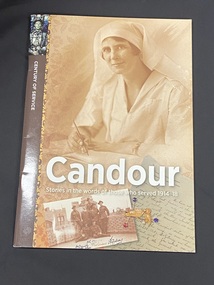
... Australian Army - military life...Australian Army - military life World War 1914-1918 Military Nursing Military Service soldiers The Australian soldier and sailor frequently recorded in his diary or in his home-letters indications of the thoughts, hopes, and fears which were uppermost in his mind, and descriptions of his own and others' work and actions. ...The Australian soldier and sailor frequently recorded in his diary or in his home-letters indications of the thoughts, hopes, and fears which were uppermost in his mind, and descriptions of his own and others' work and actions. These papers are often the most valuable human documents....from cover.Staple-bound paperback book with a brown strip along the left side with an image of a soldier in stained glass at the top and 'century of service' printed sideways beneath it. The cover is a sepia toned portrait of an Army nurse with images of a letter, brooch and postcard at the bottom of the page. The title is printed in large white text just above the bottom images.non-fictionThe Australian soldier and sailor frequently recorded in his diary or in his home-letters indications of the thoughts, hopes, and fears which were uppermost in his mind, and descriptions of his own and others' work and actions. These papers are often the most valuable human documents....from cover. australian army - military life, world war 1914-1918, military nursing, military service, soldiers -
 Returned Nurses RSL Sub-branch
Book - Illustrated paperback book, Department of Veterans' Affairs, Canberra, Devotion: stories of Australia's wartime nurses, 2013
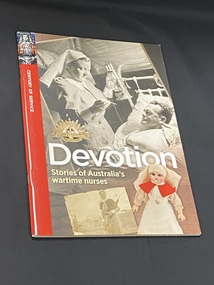
... Australian Army - military life...Australian Army - military life Military Nursing women in war women soldiers Australian Armed Forces - Nurses This education resource is the first book in the Century of Service series and is aimed at primary and lower secondary schools students. ...This education resource is the first book in the Century of Service series and is aimed at primary and lower secondary schools students. It explores the contribution and courage of Australian nurses in conflicts and peacekeeping operations from the Boer War to the present.--Dept. of Veteran's Affairs website.Staple-bound paperback book. It has a red strip along the left side with a stained glass image of a nurse at the top and 'century of service' printed sideways in white text below the image. The cover shows a black and white image of a nurse tending a patient in a military tent. The title is printed in large white print below the centre of the page and beneath it is a photo of a nurse in a miltary base and of an old doll dressed as a nurse. The symbol for Australian Commonwealth Military Forces is in the middle of the page.non-fictionThis education resource is the first book in the Century of Service series and is aimed at primary and lower secondary schools students. It explores the contribution and courage of Australian nurses in conflicts and peacekeeping operations from the Boer War to the present.--Dept. of Veteran's Affairs website.australian army - military life, military nursing, women in war, women soldiers, australian armed forces - nurses -
 Returned Nurses RSL Sub-branch
Book - Illustrated paperback book, Department of Veterans' Affairs, Canberra, Devotion: stories of Australia's wartime nurses, 2013
... Australian Army - military life...Australian Army - military life Military Nursing women in war women soldiers Australian Armed Forces - Nurses This education resource is the first book in the Century of Service series and is aimed at primary and lower secondary schools students. ...This education resource is the first book in the Century of Service series and is aimed at primary and lower secondary schools students. It explores the contribution and courage of Australian nurses in conflicts and peacekeeping operations from the Boer War to the present.--Dept. of Veteran's Affairs website.Staple-bound paperback book. It has a red strip along the left side with a stained glass image of a nurse at the top and 'century of service' printed sideways in white text below the image. The cover shows a black and white image of a nurse tending a patient in a military tent. The title is printed in large white print below the centre of the page and beneath it is a photo of a nurse in a miltary base and of an old doll dressed as a nurse. The symbol for Australian Commonwealth Military Forces is in the middle of the page.non-fictionThis education resource is the first book in the Century of Service series and is aimed at primary and lower secondary schools students. It explores the contribution and courage of Australian nurses in conflicts and peacekeeping operations from the Boer War to the present.--Dept. of Veteran's Affairs website.australian army - military life, military nursing, women in war, women soldiers, australian armed forces - nurses -
 Returned Nurses RSL Sub-branch
Book - Hardcover illustrated book, L.I. Terrett et al, Preserving our proud heritage: the customs and traditions of the Australian Army, 2015
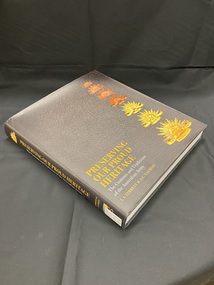
... Australian Army uniforms...Australian Army military life...Australian Army uniforms Australian Army military life Military honors Military ceremonies and salutes Australian military music Australian military history The Australian Army's customs and traditions represent the symbols and substance of much of our national character, adopted from Army's forebears and developed since 1901 to where we are today. ...The Australian Army's customs and traditions represent the symbols and substance of much of our national character, adopted from Army's forebears and developed since 1901 to where we are today. In the form of the 'Rising Sun', these traditions shape Army's institutional values and to an extent its collective personality, which provides - along with serving members both past and present - the Army's beating heart. Army's foundations, exhibited through its customs and traditions, will ensure it continues to draw the pride and respect of the nation. Much can be learnt from the past and Army constantly draws on the importance of its comparatively young but rich history. These origins have provided the forms for its badges, insignia and symbols of office; the way Army demonstrates respect for the past through formal functions and dinners, the way it addresses its people and the way they wear their uniform. These tangible links to Army's past, like the weft and warp of a rich historical tapestry, set it up well for its future. Just as Army respects its past, it and its people will respect it today and tomorrow. - From Trove.Black dustjacket on hardcover book. Front cover has images of seven different Australian military badges down the right hand side. Bottom left corner has the title printed in gold, followed by the sub-title in white, author's names in gold print. This information is repeated on the spine in the same colours.non-fictionThe Australian Army's customs and traditions represent the symbols and substance of much of our national character, adopted from Army's forebears and developed since 1901 to where we are today. In the form of the 'Rising Sun', these traditions shape Army's institutional values and to an extent its collective personality, which provides - along with serving members both past and present - the Army's beating heart. Army's foundations, exhibited through its customs and traditions, will ensure it continues to draw the pride and respect of the nation. Much can be learnt from the past and Army constantly draws on the importance of its comparatively young but rich history. These origins have provided the forms for its badges, insignia and symbols of office; the way Army demonstrates respect for the past through formal functions and dinners, the way it addresses its people and the way they wear their uniform. These tangible links to Army's past, like the weft and warp of a rich historical tapestry, set it up well for its future. Just as Army respects its past, it and its people will respect it today and tomorrow. - From Trove. australian army uniforms, australian army military life, military honors, military ceremonies and salutes, australian military music, australian military history -
 Monbulk RSL Sub Branch
Book, Chris Masters, Uncommon soldier : brave, compassionate and tough, the making of Australia's modern diggers, 2012
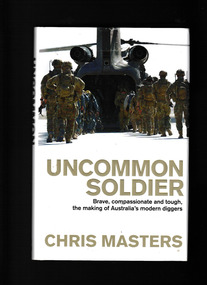
... Australian army - History...Military life...Australian army - History Military life - History The result of a six year immersive investigation, this is a penetrating and significant exploration of the nature of the modern Australian soldier - fighter, peacekeeper, street-level diplomat, aid worker. ...The result of a six year immersive investigation, this is a penetrating and significant exploration of the nature of the modern Australian soldier - fighter, peacekeeper, street-level diplomat, aid worker. Using the investigative and research skills that he is known for, Chris Masters turns his attention to the contemporary digger - war fighter, peacekeeper, street-level diplomat and aid worker - linking the pioneering approaches to warfare of General Monash's time to the challenge of what lies ahead for Australian soldiers.Index, ill, notes, p.374.non-fictionThe result of a six year immersive investigation, this is a penetrating and significant exploration of the nature of the modern Australian soldier - fighter, peacekeeper, street-level diplomat, aid worker. Using the investigative and research skills that he is known for, Chris Masters turns his attention to the contemporary digger - war fighter, peacekeeper, street-level diplomat and aid worker - linking the pioneering approaches to warfare of General Monash's time to the challenge of what lies ahead for Australian soldiers. australian army - history, military life - history -
 Federation University Historical Collection
Photograph - postcard, S. Gordon Spittle, Australians at the World War One Suez Hospital, January 1916, c 07 January 1916
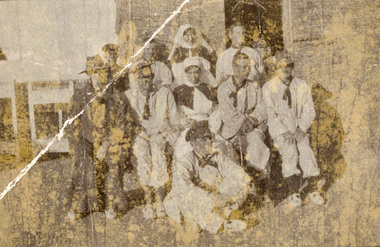
... Australian Army Nursing Service. Nurse Kirkham was from North Perth, Western Australia. She was posted to the Auxiliary Hospital, Egypt on 09 November 1915 leaving for France on 23 June 1916. Samuel Gordon Spittle (8005) enlisted into the AIF on 17 July 1915, a member of the 18th Australian Army Service Corps (AASC). He left Alexandria on 15 June 1916 disembarking at Marseilles 24 June 1916. Harry Holmes was discharged from a hospital in Egypt on 15 August 1919. He was awarded the Military Medal promulgated on 11 December 1919. (NAA: B2455, Spittle Samuel Gordon) Not only does this photograph portray life ...This photograph was with a number of others associated with Harry Holmes of Ascot, Victoria. The postcard was written on by Harry Holmes who was a member of the Australian Imperial Force based in Egypt at the time. Nurse Kirkham is Laurie Hemsley Kirkham She was admitted to the Suez Public Hospital (Abbassia) post 06 January 1916. She left Australia with a group of South Australian nurses. Egypt was a major base for the AIF from December 1914. A number of campaigns were fought in this theatre. There were two campaigns involving the AIF. Note that not all the fighting was actually geographically in Egypt. (http://www.aif.adfa.edu.au:8888/about3.html) The Nurse Kirkam mentioned by the writer is probably Sarah Alice Kirkham, Staff Nurse with the Australian Army Nursing Service. Nurse Kirkham was from North Perth, Western Australia. She was posted to the Auxiliary Hospital, Egypt on 09 November 1915 leaving for France on 23 June 1916. Samuel Gordon Spittle (8005) enlisted into the AIF on 17 July 1915, a member of the 18th Australian Army Service Corps (AASC). He left Alexandria on 15 June 1916 disembarking at Marseilles 24 June 1916. Harry Holmes was discharged from a hospital in Egypt on 15 August 1919. He was awarded the Military Medal promulgated on 11 December 1919. (NAA: B2455, Spittle Samuel Gordon) Not only does this photograph portray life in Egypt during World War War, it highlights the role played by members of the Australian Army Nursing Service in both professional and social activities in the theatre of war.Two Australian nurses and a number of Australian soldiers in Hospital Uniform pose for a photograph in Egypt during World War One. Verso: "A little group of Australians at Suez Hospital Joe F[awcett] & I [Gordon Spittle] are standing in the back row with Nurse Kirkham standing between, she is on the short side so stood on a box. Gordon S."chatham family archive, chatham, holmes, world war, world war 1, world war i, world war one, france, gordon spittle, kirkham, suez, egypt, samuel gordon spittle, joe fawcett, laurie kirkham, nurse kirkham, suez hospital, laurie helmsley kirkham, l.a. kirkham, harry holmes, nurses, ascot -
 Lara RSL Sub Branch
Book, Jungle Warfare - With the Australian Army in the South West Pacific, 1944
... military operations in the jungle and Kenai, mountains and swamps of New Guinea. There the terrain and climate gave to the fighting a character of its own, unlike anything experienced by Australians previously and never to be forgotten by those who took part in it. jungle warfare new guinea australian army royal australian navy united nations amphibious operation hidden battlefields shaggy ridge operational drop life-saving moresby style stretcher bearing Jungle Warfare - With the Australian Army in the South West Pacific. ...This is the fourth book in this series to the people at home during WWII. Stories of military operations in the jungle and Kenai, mountains and swamps of New Guinea. There the terrain and climate gave to the fighting a character of its own, unlike anything experienced by Australians previously and never to be forgotten by those who took part in it.Jungle Warfare - With the Australian Army in the South West Pacific. Brown front and back cover with Ore text and picture of soldier carrying his webbing. Same text on the spine. The inside front and back cover has text ore coloured text on a brown background. Photographs, illustrations, poems, stories, paintings jungle warfare, new guinea, australian army, royal australian navy, united nations, amphibious operation, hidden battlefields, shaggy ridge, operational drop, life-saving moresby style, stretcher bearing -
Lara RSL Sub Branch
Book, Jungle Warfare - With the Australian Army in the South West Pacific, 1944
... military operations in the jungle and Kenai, mountains and swamps of New Guinea. There the terrain and climate gave to the fighting a character of its own, unlike anything experienced by Australians previously and never to be forgotten by those who took part in it. jungle warfare new guinea australian army royal australian navy united nations amphibious operation hidden battlefields shaggy ridge operational drop life-saving moresby style stretcher bearing Jungle Warfare - With the Australian Army in the South West Pacific. ...This is the fourth book in this series to the people at home during WWII. Stories of military operations in the jungle and Kenai, mountains and swamps of New Guinea. There the terrain and climate gave to the fighting a character of its own, unlike anything experienced by Australians previously and never to be forgotten by those who took part in it.Jungle Warfare - With the Australian Army in the South West Pacific. Brown front and back cover with Ore text and picture of soldier carrying his webbing. Same text on the spine. The inside front and back cover has text ore coloured text on a brown background. Photographs, illustrations, poems, stories, paintings. This book has a paper jacket cover - slightly torn. jungle warfare, new guinea, australian army, royal australian navy, united nations, amphibious operation, hidden battlefields, shaggy ridge, operational drop, life-saving moresby style, stretcher bearing -
Lara RSL Sub Branch
Book, Jungle Warfare - With the Australian Army in the South West Pacific, 1944
... military operations in the jungle and Kenai, mountains and swamps of New Guinea. There the terrain and climate gave to the fighting a character of its own, unlike anything experienced by Australians previously and never to be forgotten by those who took part in it. Jungle warfare New Guinea Australian Army Royal Australian Navy United Nations amphibious operation hidden battlefields shaggy ridge operational drop life ...This is the fourth book in this series to the people at home during WWII. Stories of military operations in the jungle and Kenai, mountains and swamps of New Guinea. There the terrain and climate gave to the fighting a character of its own, unlike anything experienced by Australians previously and never to be forgotten by those who took part in it.Jungle Warfare - With the Australian Army in the South West Pacific. Brown front and back cover with Ore text and picture of soldier carrying his webbing. Same text on the spine. The inside front and back cover has text ore coloured text on a brown background. Photographs, illustrations, poems, stories, paintings jungle warfare, new guinea, australian army, royal australian navy, united nations, amphibious operation, hidden battlefields, shaggy ridge, operational drop, life-saving moresby style, stretcher bearing -
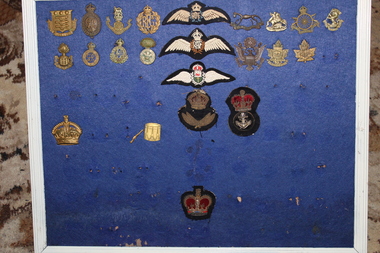 Lara RSL Sub Branch
framed embroaded Patches & Brass military Medals, Blue material background Framed Patches & Medals
... military cloth patches., Row 1 British Army Cap Badge - Royal Army Ordnance Corps. F1 Household Life guards, Cap Badge, Center G.R. below V. Oval with motto on outside Banner. Royal Lancashire Cap Badge.World War 1 R.F.C. - Royal Flying Corps Cap Badge. surrounded by Laurel Wreath with Crown on top. Circ. 1895 Royal Australian...military cloth patches., Row 1 British Army Cap Badge - Royal Army Ordnance Corps. F1 Household Life guards, Cap Badge, Center G.R. below V. Oval with motto on outside Banner. Royal Lancashire Cap Badge.World War 1 R.F.C. - Royal Flying Corps Cap Badge. surrounded by Laurel Wreath with Crown on top. Circ. 1895 Royal Australian ...Some are rare in natureBlue material - background, White timber frame surround with 18 metal military cap badges and 6 military cloth patches., Row 1 British Army Cap Badge - Royal Army Ordnance Corps. F1 Household Life guards, Cap Badge, Center G.R. below V. Oval with motto on outside Banner. Royal Lancashire Cap Badge.World War 1 R.F.C. - Royal Flying Corps Cap Badge. surrounded by Laurel Wreath with Crown on top. Circ. 1895 Royal Australian Air Force pilot's wings. The brevet has white cotton embroidered wings, a king's crown, and the letters 'R.A.A.F.' within a pale blue embroidered laurel wreath. Horse Badge - Small Brass - British Army Military. Saint George slaying he dragon - Small Brass Badge. Army Cyclist Corps - World War 1 Cap Badge. Duke of Wellington's Regimental Cap Badge. Row 2 Royal Inniskilling Fusiliers Corps 1895 = Shoulder Title - Officer's. Royal Horse Guards Brass Army Cap Badge. Brass Badge - Queen; Mary's Own - 18th Hussars. Vintage Royal Welsh Fusiliers Cap Badge. R.A. F. Service Dress Wings with King's Crown. American Eagle Brass - Army Officers Cap Badge. 45th Overseas Battalion - Canada Expeditionary Forces. 48th Battlion, Victoria, Canada - British Columbia Brass Cap Badge. World War 1. Row 3. Center World War 11 - Rhodesian Air Force Cloth Pilots wings . row 4 Center - Embossed Woven Crown with metal gold thread woven feathers under. Right - Embossed Woven Crown with Brass Gold Anchor below.- Navy Petty Officer Cap Badge. Row 5. Large Metal Gold color Crown - British Army Warrant Officers Badge. Small Brass Single Rifle with ACT on the Butt of the rifle. Brass Badge - Drummers Proficiency., Last Row - center Embossed woven Crown Red Felt on Blue Back.none - no labels6 cloth patches raised and embossed, 18 military brass metal cap badges vary in type and country and conflict. -
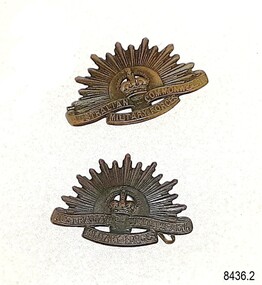 Flagstaff Hill Maritime Museum and Village
Badge - Australian Military badge, Australian Commonwealth Military Forces, 1914-to possibly 1940s
... Australian Defence Forces in World War II. The objects allow insight into military life in the early-to-mid 20th century. The W.R. Angus Collection is significant for still being located at the site it is connected with, Doctor Angus being the last Port Medical Officer in Warrnambool. The Collection includes historical medical objects that date back to the late 1800s. Flagstaff Hill Warrnambool Maritime Village Maritime Museum Shipwreck coast Great Ocean Road Flagstaff Hill Maritime Museum and Village Dr W R Angus Dr Ryan Warrnambool Base Hospital Nhill Base Hospital Mira hospital Flying Doctor W.R. Angus Collection Australian Army ...The two badges belonged to Dr William Roy Angus and are now part of Flagstaff Hill’s comprehensive W.R. Angus Collection, donated by the family of Dr W R Angus, 1901-1970, surgeon and oculist. The badges date to the World War I era, when Dr Angus was a youth. These badges were also used in World War II it seems, and could have belonged to Dr Angus when he was a Surgeon Captain for the Australian Defence Forces during World War II when he was in his forties. Some resources say that this badge was also used in WWII The W.R. Angus Collection: - The W.R. Angus Collection includes historical medical equipment, surgical instruments and material belonging to Dr Edward Ryan and Dr Thomas Francis Ryan, (both of Nhill, Victoria) and Dr Angus’ own belongings. The Collection’s history spans the medical practices of the two Doctors Ryan, from 1885-1926 plus that of Dr Angus, up until 1969. It includes historical medical and surgical equipment and instruments from the doctors Edward and Thomas Ryan of Nhill, Victoria. Dr Angus married Gladys in 1927 at Ballarat, the nearest big city to Nhill where he began as a Medical Assistant. He was also Acting House surgeon at the Nhill hospital where their two daughters were born. During World War II He served as a Military Doctor in the Australian Defence Forces. Dr Angus and his family moved to Warrnambool in 1939, where Dr Angus operated his own medical practice. He later added the part-time Port Medical Officer responsibility and was the last person appointed to that position. Dr Angus and his wife were very involved in the local community, including the planning stages of the new Flagstaff Hill and the layout of the gardens there. Dr Angus passed away in March 1970.Dr W R Angus (1901-1970), surgeon and oculist, collected a range of military objects including those he personally used during his time as Surgeon Captain in the Australian Defence Forces in World War II. The objects allow insight into military life in the early-to-mid 20th century. The W.R. Angus Collection is significant for still being located at the site it is connected with, Doctor Angus being the last Port Medical Officer in Warrnambool. The Collection includes historical medical objects that date back to the late 1800s.Badges; a pair of collar badges from the Australian Commonwealth Military Forces badges. Brass with the logo of a crown within a rising sun, above ribbons with embossed text. WWI era. The badges are part of the W. R. Angus Collection."AUSTRALIAN COMMONWEALTH MILITARY FORCES"flagstaff hill, warrnambool, maritime village, maritime museum, shipwreck coast, great ocean road, flagstaff hill maritime museum and village, dr w r angus, dr ryan, warrnambool base hospital, nhill base hospital, mira hospital, flying doctor, w.r. angus collection, australian army, surgeon captain, ballarat, bonegilla, badge, insignia, australian commonwealth military forces, world war 1, first world war, 1914-1918, badge collection, world war 2, second world war, great war, australian defence forces, wwi, ww2, world war ii, world war i -
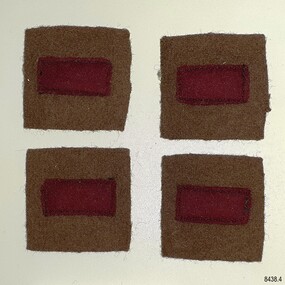 Flagstaff Hill Maritime Museum and Village
Badge - Australian Military cloth patch, Army Medical Corps, 108 Australian General Hospital, 1939-1945
... Australian Defence Forces in World War II. The objects allow insight into military life in the early-to-mid 20th century. The W.R. Angus Collection is significant for still being located at the site it is connected with, Doctor Angus being the last Port Medical Officer in Warrnambool. The Collection includes historical medical objects that date back to the late 1800s. Flagstaff Hill Warrnambool Maritime Village Maritime Museum Shipwreck coast Great Ocean Road Flagstaff Hill Maritime Museum and Village Dr W R Angus W.R. Angus Collection Australian Army ...The four cloth patches belonged to Dr William Roy Angus and are now part of Flagstaff Hill’s comprehensive W.R. Angus Collection, donated by the family of Dr W R Angus (1901-1970), surgeon and oculist. The badges date to the Second World War era, when Dr Angus was a Surgeon Captain for the Australian Defence Forces in the Army Medical Corps, 108 Australian General Hospital and 106 Australian General Hospital, stationed in Ballarat, Victoria, and in Bonegilla, N.S.W. He completed his service just before the end of the war due to suffering from a heart attack. In World War I the troops of the Australian Military Forces staked coloured flags of various shapes and colours in the ground where they camped to identify their units. These flag codes were quickly recognised. The system worked so well that miniature flags were called colour patches. They became part of the uniform, to be worn on both sleeves just below the shoulder. The system was slightly modified for use in the Second World War. The W.R. Angus Collection: - The W.R. Angus Collection includes historical medical equipment, surgical instruments and material belonging to Dr Edward Ryan and Dr Thomas Francis Ryan, (both of Nhill, Victoria) and Dr Angus’ own belongings. The Collection’s history spans the medical practices of the two Doctors Ryan, from 1885-1926 plus that of Dr Angus, up until 1969. It includes historical medical and surgical equipment and instruments from the doctors Edward and Thomas Ryan of Nhill, Victoria. Dr Angus married Gladys in 1927 at Ballarat, the nearest big city to Nhill where he began as a Medical Assistant. He was also Acting House surgeon at the Nhill hospital where their two daughters were born. During World War II He served as a Military Doctor in the Australian Defence Forces. Dr Angus and his family moved to Warrnambool in 1939, where Dr Angus operated his own medical practice. He later added the part-time Port Medical Officer responsibility and was the last person appointed to that position. Both Dr Angus and his wife were very involved in the local community, including the planning stages of the new Flagstaff Hill and the layout of the gardens there. Dr Angus passed away in March 1970.Dr W R Angus (1901-1970), surgeon and oculist, collected a range of military objects including those he personally used during his time as Surgeon Captain in the Australian Defence Forces in World War II. The objects allow insight into military life in the early-to-mid 20th century. The W.R. Angus Collection is significant for still being located at the site it is connected with, Doctor Angus being the last Port Medical Officer in Warrnambool. The Collection includes historical medical objects that date back to the late 1800s.Badges; set of four cloth patches, red rectangles on brown squares. Insignia of the Australian Defence Forces, Army Medical Corps, 108 Australian General Hospital, WWII era. Dr W R Angus owned the cloth patches that are now part of the W. R. Angus Collection.flagstaff hill, warrnambool, maritime village, maritime museum, shipwreck coast, great ocean road, flagstaff hill maritime museum and village, dr w r angus, w.r. angus collection, australian army, surgeon captain, ballarat, bonegilla, badge, insignia, badge collection, world war 2, second world war, australian defence forces, army medical corps, 108 australian general hospital, great war, military uniform, 106 australian general hospital, 1939-1945 -
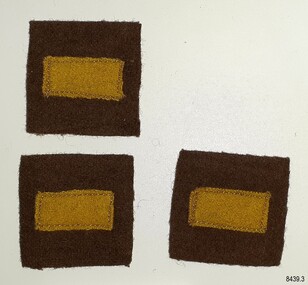 Flagstaff Hill Maritime Museum and Village
Badge - Australian Military cloth patch, Army Medical Corps, 106 Australian General Hospital, 1939-1945
... Australian Defence Forces in World War II. The objects allow insight into military life in the early-to-mid 20th century. The W.R. Angus Collection is significant for still being located at the site it is connected with, Doctor Angus being the last Port Medical Officer in Warrnambool. The Collection includes historical medical objects that date back to the late 1800s. Flagstaff Hill Warrnambool Maritime Village Maritime Museum Shipwreck coast Great Ocean Road Flagstaff Hill Maritime Museum and Village Dr W R Angus W.R. Angus Collection Australian Army ...The three cloth patches belonged to Dr William Roy Angus and are now part of Flagstaff Hill’s comprehensive W.R. Angus Collection, donated by the family of Dr W R Angus (1901-1970), surgeon and oculist. The badges date to the Second World War era, when Dr Angus was a Surgeon Captain for the Australian Defence Forces in the Army Medical Corps, 108 Australian General Hospital and 106 Australian General Hospital, stationed in Ballarat, Victoria, and in Bonegilla, N.S.W. He completed his service just before the end of the war due to suffering from a heart attack. In World War I the troops of the Australian Military Forces staked coloured flags of various shapes and colours in the ground where they camped to identify their units. These flag codes were quickly recognised. The system worked so well that miniature flags were called colour patches. They became part of the uniform, to be worn on both sleeves just below the shoulder. The system was slightly modified for use in the Second World War. The W.R. Angus Collection: - The W.R. Angus Collection includes historical medical equipment, surgical instruments and material belonging to Dr Edward Ryan and Dr Thomas Francis Ryan, (both of Nhill, Victoria) and Dr Angus’ own belongings. The Collection’s history spans the medical practices of the two Doctors Ryan, from 1885-1926 plus that of Dr Angus, up until 1969. It includes historical medical and surgical equipment and instruments from the doctors Edward and Thomas Ryan of Nhill, Victoria. Dr Angus married Gladys in 1927 at Ballarat, the nearest big city to Nhill where he began as a Medical Assistant. He was also Acting House surgeon at the Nhill hospital where their two daughters were born. During World War II He served as a Military Doctor in the Australian Defence Forces. Dr Angus and his family moved to Warrnambool in 1939, where Dr Angus operated his own medical practice. He later added the part-time Port Medical Officer responsibility and was the last person appointed to that position. Both Dr Angus and his wife were very involved in the local community, including the planning stages of the new Flagstaff Hill and the layout of the gardens there. Dr Angus passed away in March 1970.Dr W R Angus (1901-1970), surgeon and oculist, collected a range of military objects including those he personally used during his time as Surgeon Captain in the Australian Defence Forces in World War II. The objects allow insight into military life in the early-to-mid 20th century. The W.R. Angus Collection is significant for still being located at the site it is connected with, Doctor Angus being the last Port Medical Officer in Warrnambool. The Collection includes historical medical objects that date back to the late 1800s.Badges; set of three cloth patches, yellow rectangles on brown squares. Insignia of the Australian Defence Forces, Army Medical Corps, 106 Australian General Hospital, WII era. Dr W R Angus owned the cloth patches that are now part of the W. R. Angus Collection.flagstaff hill, warrnambool, maritime village, maritime museum, shipwreck coast, great ocean road, flagstaff hill maritime museum and village, dr w r angus, w.r. angus collection, australian army, surgeon captain, ballarat, bonegilla, badge, insignia, world war 1, 1914-1918, badge collection, world war 2, second world war, australian defence forces, army medical corps, 108 australian general hospital, great war, military uniform, 106 australian general hospital -
 Flagstaff Hill Maritime Museum and Village
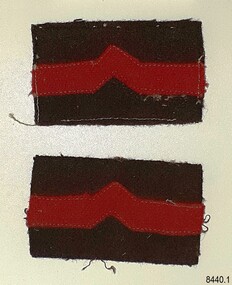
Badge - Australian Military cloth patch, Army Medical Corps, Non-Divisional Units, 1925 - 1942
... Australian Army Medical Corps patches. They Dr W R Angus (1901-1970), surgeon and oculist, collected a range of military objects including those he personally used during his time as Surgeon Captain in the Australian Defence Forces in World War II. The item allows insight into military life ...The cloth insignia badges date to 1925-1940, after the First World War and into the early Second World War era. During peacetime training, the "brown with a cherry-red crossbar" badge was initially used for the 8th Field Ambulance, 2nd Military District Medical and Veterinary Stores. The colour patch was approved for wear by full-time duty personnel of all medical units apart from the Infantry and Cavalry. In 1942 these patches were replaced by the new scheme of colour patches introduced by the Australian Army Medical Corps. Dr W R Angus was a Surgeon Captain for the Australian Defence Forces, Army Medical Corps, stationed in Ballarat, Victoria, and in Bonegilla, N.S.W. He completed his service just before the end of the war due to suffering from a heart attack. The badges are now part of Flagstaff Hill’s comprehensive W.R. Angus Collection, donated by the family of Dr W R Angus (1901-1970), surgeon and oculist. The W.R. Angus Collection: - The W.R. Angus Collection includes historical medical equipment, surgical instruments and material belonging to Dr Edward Ryan and Dr Thomas Francis Ryan, (both of Nhill, Victoria) and Dr Angus’ own belongings. The Collection’s history spans the medical practices of the two Doctors Ryan, from 1885-1926 plus that of Dr Angus, up until 1969. It includes historical medical and surgical equipment and instruments from the doctors Edward and Thomas Ryan of Nhill, Victoria. Dr Angus married Gladys in 1927 at Ballarat, the nearest big city to Nhill where he began as a Medical Assistant. He was also Acting House surgeon at the Nhill hospital where their two daughters were born. During World War II He served as a Military Doctor in the Australian Defence Forces. Dr Angus and his family moved to Warrnambool in 1939, where Dr Angus operated his own medical practice. He later added the part-time Port Medical Officer responsibility and was the last person appointed to that position. Both Dr Angus and his wife were very involved in the local community, including the planning stages of the new Flagstaff Hill and the layout of the gardens there. Dr Angus passed away in March 1970.These colour insignia patches represent the history between the First and Second World Wars and the evolution of Australian Army Medical Corps patches. They Dr W R Angus (1901-1970), surgeon and oculist, collected a range of military objects including those he personally used during his time as Surgeon Captain in the Australian Defence Forces in World War II. The item allows insight into military life in the early-to-mid 20th century. The W.R. Angus Collection is significant for still being located at the site it is connected with, Doctor Angus being the last Port Medical Officer in Warrnambool. The Collection includes historical medical objects that date back to the late 1800s.Badge, cloth insignia patch. Pair of two Insignia colour patches.Red stripe with an inverted 'V' shape on brown fabric. Insignia of the Australian Army Medical Corps, Non-Divisional Units. One badge has light-coloured stitches around the perimeter. The cloth patches belonged to Dr W R Angus and are now part of the W. R. Angus Collection.flagstaff hill, warrnambool, maritime village, maritime museum, shipwreck coast, great ocean road, flagstaff hill maritime museum and village, dr w r angus, w.r. angus collection, australian army, surgeon captain, ballarat, bonegilla, badge, insignia, badge collection, world war 2, second world war, australian defence forces, army medical corps, military uniform, cloth patch, insignia patch, australian army medical corp (militia), ww 2, ww ii, 1925-1940, military badge, non-divisional unit, aamc, 1940-1942, 8th field ambulance, peacetime training, insignia history -
 Flagstaff Hill Maritime Museum and Village
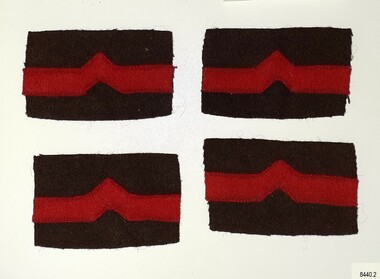
Badge - Australian Military cloth patch, Army Medical Corps, Non-Divisional Units, 1925 - 1942
... Australian Army Medical Corps patches. Dr W R Angus (1901-1970), surgeon and oculist, collected a range of military objects including those he personally used during his time as Surgeon Captain in the Australian Defence Forces in World War II. The item allows insight into military life ...The cloth insignia badges date to 1925-1940, after the First World War and into the early Second World War era. During peacetime training, the "brown with a cherry-red crossbar" badge was initially used for the 8th Field Ambulance, 2nd Military District Medical and Veterinary Stores. The colour patch was approved for wear by full-time duty personnel of all medical units apart from the Infantry and Cavalry. In 1942 these patches were replaced by the new scheme of colour patches introduced by the Australian Army Medical Corps. Dr W R Angus was a Surgeon Captain for the Australian Defence Forces, Army Medical Corps, stationed in Ballarat, Victoria, and in Bonegilla, N.S.W. He completed his service just before the end of the war due to suffering from a heart attack. The badges are now part of Flagstaff Hill’s comprehensive W.R. Angus Collection, donated by the family of Dr W R Angus (1901-1970), surgeon and oculist. The W.R. Angus Collection: - The W.R. Angus Collection includes historical medical equipment, surgical instruments and material belonging to Dr Edward Ryan and Dr Thomas Francis Ryan, (both of Nhill, Victoria) and Dr Angus’ own belongings. The Collection’s history spans the medical practices of the two Doctors Ryan, from 1885-1926 plus that of Dr Angus, up until 1969. It includes historical medical and surgical equipment and instruments from the doctors Edward and Thomas Ryan of Nhill, Victoria. Dr Angus married Gladys in 1927 at Ballarat, the nearest big city to Nhill where he began as a Medical Assistant. He was also Acting House surgeon at the Nhill hospital where their two daughters were born. During World War II He served as a Military Doctor in the Australian Defence Forces. Dr Angus and his family moved to Warrnambool in 1939, where Dr Angus operated his own medical practice. He later added the part-time Port Medical Officer responsibility and was the last person appointed to that position. Both Dr Angus and his wife were very involved in the local community, including the planning stages of the new Flagstaff Hill and the layout of the gardens there. Dr Angus passed away in March 1970.These colour insignia patches represent the history between the First and Second World Wars and the evolution of Australian Army Medical Corps patches. Dr W R Angus (1901-1970), surgeon and oculist, collected a range of military objects including those he personally used during his time as Surgeon Captain in the Australian Defence Forces in World War II. The item allows insight into military life in the early-to-mid 20th century. The W.R. Angus Collection is significant for still being located at the site it is connected with, Doctor Angus being the last Port Medical Officer in Warrnambool. The Collection includes historical medical objects that date back to the late 1800s.Badge, cloth insignia patch. Set of four Insignia colour patches.Red stripe with an inverted 'V' shape on brown fabric. Insignia of the Australian Army Medical Corps, Non-Divisional Units. The cloth patches belonged to Dr W R Angus and are now part of the W. R. Angus Collection.flagstaff hill, warrnambool, maritime village, maritime museum, shipwreck coast, great ocean road, flagstaff hill maritime museum and village, dr w r angus, w.r. angus collection, australian army, surgeon captain, ballarat, bonegilla, badge, insignia, badge collection, world war 2, second world war, australian defence forces, army medical corps, military uniform, cloth patch, insignia patch, australian army medical corp (militia), ww 2, ww ii, 1925-1940, military badge, non-divisional unit, aamc, 1940-1942, 8th field ambulance, peacetime training, insignia history -
 Flagstaff Hill Maritime Museum and Village
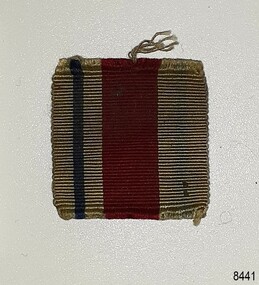
Badge - Insignia Ribbon, 1939-1945
... Australian Defence Forces in World War II. The item allows insight into military life in the early-to-mid 20th century. The W.R. Angus Collection is significant for still being located at the site it is connected with, Doctor Angus being the last Port Medical Officer in Warrnambool. The Collection includes historical medical objects that date back to the late 1800s. Flagstaff Hill Warrnambool Maritime Village Maritime Museum Shipwreck coast Great Ocean Road Flagstaff Hill Maritime Museum and Village Dr W R Angus W.R. Angus Collection Australian Army ...The cloth insignia patch is one of a collection of military badges that date to the World War II period. This ribbon has not yet been identified. The badges are now part of Flagstaff Hill’s comprehensive W.R. Angus Collection, donated by the family of Dr W R Angus (1901-1970), surgeon and oculist. Dr W R Angus was a Surgeon Captain for the Australian Defence Forces, Army Medical Corps, stationed in Ballarat, Victoria, and in Bonegilla, N.S.W. He completed his service just before the end of the war due to suffering from a heart attack. The W.R. Angus Collection: - The W.R. Angus Collection includes historical medical equipment, surgical instruments and material belonging to Dr Edward Ryan and Dr Thomas Francis Ryan, (both of Nhill, Victoria) and Dr Angus’ own belongings. The Collection’s history spans the medical practices of the two Doctors Ryan, from 1885-1926 plus that of Dr Angus, up until 1969. It includes historical medical and surgical equipment and instruments from the doctors Edward and Thomas Ryan of Nhill, Victoria. Dr Angus married Gladys in 1927 at Ballarat, the nearest big city to Nhill where he began as a Medical Assistant. He was also Acting House surgeon at the Nhill hospital where their two daughters were born. During World War II He served as a Military Doctor in the Australian Defence Forces. Dr Angus and his family moved to Warrnambool in 1939, where Dr Angus operated his own medical practice. He later added the part-time Port Medical Officer responsibility and was the last person appointed to that position. Both Dr Angus and his wife were very involved in the local community, including the planning stages of the new Flagstaff Hill and the layout of the gardens there. Dr Angus passed away in March 1970.This insignia ribbon is connected to the collection of military badges in the W.R. Angus Collection. Dr W R Angus (1901-1970), surgeon and oculist, collected a range of military objects including those he personally used during his time as Surgeon Captain in the Australian Defence Forces in World War II. The item allows insight into military life in the early-to-mid 20th century. The W.R. Angus Collection is significant for still being located at the site it is connected with, Doctor Angus being the last Port Medical Officer in Warrnambool. The Collection includes historical medical objects that date back to the late 1800s.Badge, woven ribbon insignia patch. Rectangular patch has vertical stripes, one is a narrow blue stripe and the other is a wide red or crimson stripe. The cloth patches belonged to Dr W R Angus and are now part of the W. R. Angus Collection.flagstaff hill, warrnambool, maritime village, maritime museum, shipwreck coast, great ocean road, flagstaff hill maritime museum and village, dr w r angus, w.r. angus collection, australian army, surgeon captain, ballarat, bonegilla, badge, insignia, badge collection, world war 2, second world war, australian defence forces, army medical corps, military uniform, cloth patch, insignia patch, australian army medical corp (militia), ww 2, ww ii, 1925-1940, military badge, non-divisional unit, aamc, 1940-1942, 8th field ambulance, peacetime training, insignia history, insignia ribbon, ribbon patch -
 Flagstaff Hill Maritime Museum and Village
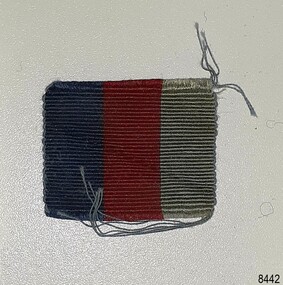
Badge - Insignia Ribbon, 1939-1945
... Australian Defence Forces in World War II. The item allows insight into military life in the early-to-mid 20th century. The W.R. Angus Collection is significant for still being located at the site it is connected with, Doctor Angus being the last Port Medical Officer in Warrnambool. The Collection includes historical medical objects that date back to the late 1800s. Flagstaff Hill Warrnambool Maritime Village Maritime Museum Shipwreck coast Great Ocean Road Flagstaff Hill Maritime Museum and Village Dr W R Angus W.R. Angus Collection Australian Army ...The cloth insignia patch is one of a collection of military badges that date to the World War II period. This ribbon has not yet been identified. The badges are now part of Flagstaff Hill’s comprehensive W.R. Angus Collection, donated by the family of Dr W R Angus (1901-1970), surgeon and oculist. Dr W R Angus was a Surgeon Captain for the Australian Defence Forces, Army Medical Corps, stationed in Ballarat, Victoria, and in Bonegilla, N.S.W. He completed his service just before the end of the war due to suffering from a heart attack. The W.R. Angus Collection: - The W.R. Angus Collection includes historical medical equipment, surgical instruments and material belonging to Dr Edward Ryan and Dr Thomas Francis Ryan, (both of Nhill, Victoria) and Dr Angus’ own belongings. The Collection’s history spans the medical practices of the two Doctors Ryan, from 1885-1926 plus that of Dr Angus, up until 1969. It includes historical medical and surgical equipment and instruments from the doctors Edward and Thomas Ryan of Nhill, Victoria. Dr Angus married Gladys in 1927 at Ballarat, the nearest big city to Nhill where he began as a Medical Assistant. He was also Acting House surgeon at the Nhill hospital where their two daughters were born. During World War II He served as a Military Doctor in the Australian Defence Forces. Dr Angus and his family moved to Warrnambool in 1939, where Dr Angus operated his own medical practice. He later added the part-time Port Medical Officer responsibility and was the last person appointed to that position. Both Dr Angus and his wife were very involved in the local community, including the planning stages of the new Flagstaff Hill and the layout of the gardens there. Dr Angus passed away in March 1970.This insignia ribbon is connected to the collection of military badges in the W.R. Angus Collection. Dr W R Angus (1901-1970), surgeon and oculist, collected a range of military objects including those he personally used during his time as Surgeon Captain in the Australian Defence Forces in World War II. The item allows insight into military life in the early-to-mid 20th century. The W.R. Angus Collection is significant for still being located at the site it is connected with, Doctor Angus being the last Port Medical Officer in Warrnambool. The Collection includes historical medical objects that date back to the late 1800s.Badge, woven ribbon insignia patch. Rectangular patch has wide vertical stripes, one is a blue stripe and the other is a red or crimson stripe. The cloth patches belonged to Dr W R Angus and are now part of the W. R. Angus Collection.flagstaff hill, warrnambool, maritime village, maritime museum, shipwreck coast, great ocean road, flagstaff hill maritime museum and village, dr w r angus, w.r. angus collection, australian army, surgeon captain, ballarat, bonegilla, badge, insignia, badge collection, world war 2, second world war, australian defence forces, army medical corps, military uniform, cloth patch, insignia patch, australian army medical corp (militia), ww 2, ww ii, 1925-1940, military badge, non-divisional unit, aamc, 1940-1942, 8th field ambulance, peacetime training, insignia history, insignia ribbon, ribbon patch -
 Orbost & District Historical Society
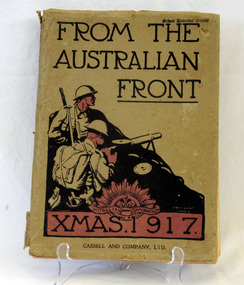
book, Cassell and Company Limited, From The Australian Front, 1917
... This book is a significant contemporary record of life for the Australian soldiers on the Western Front during World War 11. military Book-From-The-Western-Front World-War-11 Grey cardboard covered 128 pp book with black and red writing on cover. the title, "FROM THE AUSTRALIAN FRONT" is in black print at the top above a black drawn sketch of two soldiers behind a mound and holding bayonets. at the foot is XMAS. 1917 inside a red rectangle with the insignia of the Australian Army (the rising sun) at the top. ...This book was produced as a gift for Australian soldiers and their families on the Western Front in 1917. In the introduction General Birdwood, Commander of the ANZACS, explained it was for ‘…those whom we left behind in Australia, and who we know are thinking of us, some idea of our surroundings on the battle fronts…’.This book is a significant contemporary record of life for the Australian soldiers on the Western Front during World War 11.Grey cardboard covered 128 pp book with black and red writing on cover. the title, "FROM THE AUSTRALIAN FRONT" is in black print at the top above a black drawn sketch of two soldiers behind a mound and holding bayonets. at the foot is XMAS. 1917 inside a red rectangle with the insignia of the Australian Army (the rising sun) at the top. It contains cartoons, illustrations and photographs created by the soldiers themselves and put together in the style of an annual. military book-from-the-western-front world-war-11 -
 Phillip Island and District Historical Society Inc.
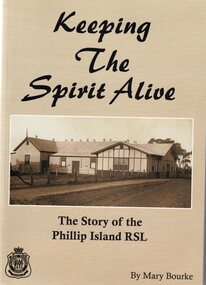
Book, BOURKE, Mary, Keeping the spirit alive : the story of the Phillip Island RSL, 2008
... life on the Island during the War. Veterans stories World War 1 Historical Returned Services League of Australia phillip island sub branch history victoria Mary Bourke Military Vietnam Afghanistan Women's Land Army Gambling Veterans' Stories Part 1 - The Story of Phillip Island RSL Part 2 - The Stories of our Veterans A5 soft covered, beige colour book with black & white & coloured photographs Keeping the spirit alive : the story of the Phillip Island RSL Book Book BOURKE, Mary Phillip Island RSL Sub Branch Inc. ...History of Phillip Island RSL and life on the Island during the War. Veterans stories World War 1HistoricalA5 soft covered, beige colour book with black & white & coloured photographsPart 1 - The Story of Phillip Island RSL Part 2 - The Stories of our Veteransreturned services league of australia, phillip island sub branch, history, victoria, mary bourke, military, vietnam, afghanistan, women's land army, gambling, veterans' stories -
 Bendigo Military Museum
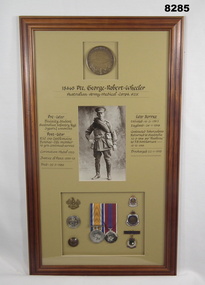
Award - FRAMED MEDALS, BADGES, PHOTO
... Military and RSL service. The Medallion at the top has around the edge, "Centenary of the Government of Victoria 1851 - 1951". In the centre of has, "Awarded to G.R. Wheeler Esq for 25 years service to the Returned Servicemen". The bottom inset has the following. Badge, "8th Australian Infantry Regiment". (George served in pre War) Badge, "For King and Empire - Services rendered". Button. From an Army uniform. Badge. "Life...Military and RSL service. The Medallion at the top has around the edge, "Centenary of the Government of Victoria 1851 - 1951". In the centre of has, "Awarded to G.R. Wheeler Esq for 25 years service to the Returned Servicemen". The bottom inset has the following. Badge, "8th Australian Infantry Regiment". (George served in pre War) Badge, "For King and Empire - Services rendered". Button. From an Army uniform. Badge. "Life ...The item is a mixture of Military and RSL service. The Medallion at the top has around the edge, "Centenary of the Government of Victoria 1851 - 1951". In the centre of has, "Awarded to G.R. Wheeler Esq for 25 years service to the Returned Servicemen". The bottom inset has the following. Badge, "8th Australian Infantry Regiment". (George served in pre War) Badge, "For King and Empire - Services rendered". Button. From an Army uniform. Badge. "Life Member of the RSL". Badge. "RSL membership badge with membership year clip 1920 on" Badge. "Super Veteran - Royal Victorian Bowls Association"' Medals. "British War medal 1914 - 1918" "Coronation medal 1953". George Wheeler, refer Cat No 8263 for his Military and RSL Service details.Framed timber with a fawn colour back ground with a medallion at the top followed by a photo inset, at bottom inset are a set of medals and 6 various badges.Main item is, "18465 Pte George. Robert. Wheeler - Australian Army Medical Corps AIF.brsl, smirsl, gwheeler -
 Bendigo Military Museum
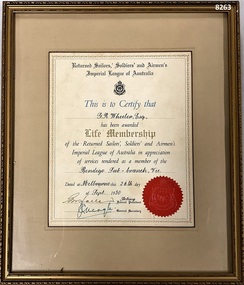
Certificate - LIFE MEMBERSHIP OF THE RSL, 1950
... Australia on 12.5.1918. On arrival he was admitted to No 5 Aust General Hospital on 16.7.1918 then the Military Sanitorium 22.7.1918. He was finally discharged on 22.1.1919. In a 5 page brief of his life which came with his collection he stated that after discharge he spent a lot of time in hospital over the next 15 months. At discharge the medical officer told him that his Life expectancy was 10 years. When at the Army...Australia on 12.5.1918. On arrival he was admitted to No 5 Aust General Hospital on 16.7.1918 then the Military Sanitorium 22.7.1918. He was finally discharged on 22.1.1919. In a 5 page brief of his life which came with his collection he stated that after discharge he spent a lot of time in hospital over the next 15 months. At discharge the medical officer told him that his Life expectancy was 10 years. When at the Army ...George Robert Wheeler joined the RSL in 1918. In 1936 he started volunteering with the Castlemaine RSL and joined the Committee, he was President in 1939. He moved to Bendigo in 1941 and became involved in Bendigo RSL Funerals and conducted most until late 1948. he did home visits to families who had a loss in WW2. In 1943 he was appointed Honorary Secretary of No 27 District Board, a position he held until 1962. In 1959 he was appointed State Councillor for No 27 District Board until 1968. He was elected to the Committee of the Bendigo RSL Branch in 1942. he served on Committee to 1949 then a year in 1951, a total of 9 years. During those years he was Treasurer for the years 1947/48 & 49. For about 10 years he wrote the Leading paragraphs in the Bendigo Advertiser in the Ex Servicemen's Column. In 1959 he was appointed a Justice of the Peace and retired at age 73. George enlisted on 13.3.1917 as part of the July Reinforcements and posted to Medical Corp No 18465. Pre embarkation he had postings with Clearing Hospital Broadmeadows, No 11 General Hospital, AMC Bendigo, Clearing Hospital Seymour. Embarked 21.11.1917 and disembarked at Australia Camp Suez 15.12.1917 then embarked for Alexandria camp on 31.12.1917 disembarking on 2.1.1918. On 8.1.1918 he embarked for Taranto Southern Italy then finally for England arriving on 24.1.1918. He served with others as Hospital Orderlies in the above places. On 23.2.1918 he was hospitalised with Perineal Abcess, later with Influenza on 14.3.1918 and then "Tubercle Lung" and returned to Australia on 12.5.1918. On arrival he was admitted to No 5 Aust General Hospital on 16.7.1918 then the Military Sanitorium 22.7.1918. He was finally discharged on 22.1.1919. In a 5 page brief of his life which came with his collection he stated that after discharge he spent a lot of time in hospital over the next 15 months. At discharge the medical officer told him that his Life expectancy was 10 years. When at the Army medical training Depot in England he stated that the first time he saw a mans leg cut of he fainted.Life Membership Certificate of the Bendigo RSL, gold frame with brown coloured backing sheet, certificate is white background with text in blue and black, in the RH bottom corner is a red seal. signed and dated by the Acting Federal President and General secretary of the RSLAt the top, "Returned Sailors, Soldiers and Airmens Imperial League of Australia", - "G R Wheeler", "Bendigo Sub - Branch", - "Melbourne 26th Sept 1950". brsl, smirsl, life membership, certificate, gwheeler -
 Queenscliffe Maritime Museum
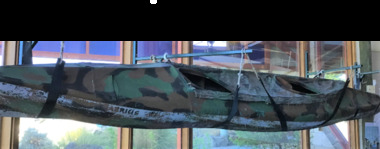
Vehicle - Kayak, Commandos
... This is the only entrance for all shipping into Port Phillip Bay and to and from the Port of Melbourne, Victoria, Australia. rip disaster commandos kayak military history - army Kayak of a similar type as those used during the ill-fated army exercise with loss of life in the rip. ...The remarkable story when 74 soldiers fought in vain to save the lives of their mates off Portsea as 3 soldiers died. Tragically, Privates Roger Wood and Edward Meyer, and Warrant Officer George "Taffy" Drakopoulos, died. Please Note: "The Rip" is also known as "The Heads", which is a dangerous stretch of water connecting Port Phillip Bay and Bass Strait. This is the only entrance for all shipping into Port Phillip Bay and to and from the Port of Melbourne, Victoria, Australia.Kayak of a similar type as those used during the ill-fated army exercise with loss of life in the rip.rip disaster, commandos, kayak, military history - army -
 Bendigo Military Museum
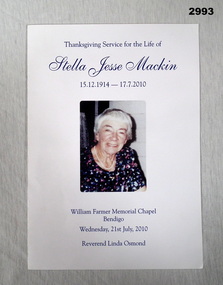
Memorabilia - CARD, MEMORIAL, Late July 2010
... Australian Army Nursing Corp 2nd AIF. Part of the HEWSTON collection re WW1 & WW2. documents - cards / memorials military history Thanksgiving “Thanksgiving for the life of Stella Jesse Mackin 15.12.1914 - 17.7.2010” White memorial card, coloured photo of Stella Jesse Mackin, blue printed text. ...Refer Cat No 2578 for her service history in the Australian Army Nursing Corp 2nd AIF. Part of the HEWSTON collection re WW1 & WW2.White memorial card, coloured photo of Stella Jesse Mackin, blue printed text. Rear cover, black & white photo.“Thanksgiving for the life of Stella Jesse Mackin 15.12.1914 - 17.7.2010”documents - cards / memorials, military history, thanksgiving -
 Monbulk RSL Sub Branch
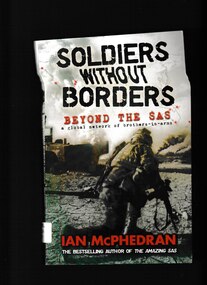
Book, Harper Collins Australia, Soldiers without borders: Beyond the SAS, a global network of brothers in arms, 2008
... australian army - special air regiment "What happens to the elite, close-knit soldiers of the SAS after they leave the tight world of the military? For some, there are highly paid jobs as trigger men with security companies in the worlds war zones and trouble spots. But for many, unexpected adventures unfold. Some go on to establish and lead major corporations or to advise multinational companies about risk where the commercial stakes are high. Some join foreign defence forces, training new elite special forces in unusual places. For others, life ..."What happens to the elite, close-knit soldiers of the SAS after they leave the tight world of the military? For some, there are highly paid jobs as trigger men with security companies in the worlds war zones and trouble spots. But for many, unexpected adventures unfold. Some go on to establish and lead major corporations or to advise multinational companies about risk where the commercial stakes are high. Some join foreign defence forces, training new elite special forces in unusual places. For others, life takes a different twist. They become top government advisers and even hardened criminals. Most sinister of all is the shadowy world of black ops - risky, rewarding and adrenaline-driven jobs that governments always deny. But wherever they are, the former elite soldiers are never far from each other, bound in an exclusive global network of brothers-in-arms."-Index, ill (plates col, b/w), maps, p.364.non-fiction"What happens to the elite, close-knit soldiers of the SAS after they leave the tight world of the military? For some, there are highly paid jobs as trigger men with security companies in the worlds war zones and trouble spots. But for many, unexpected adventures unfold. Some go on to establish and lead major corporations or to advise multinational companies about risk where the commercial stakes are high. Some join foreign defence forces, training new elite special forces in unusual places. For others, life takes a different twist. They become top government advisers and even hardened criminals. Most sinister of all is the shadowy world of black ops - risky, rewarding and adrenaline-driven jobs that governments always deny. But wherever they are, the former elite soldiers are never far from each other, bound in an exclusive global network of brothers-in-arms."-soldiers - retirement, australian army - special air regiment -
 Monbulk RSL Sub Branch
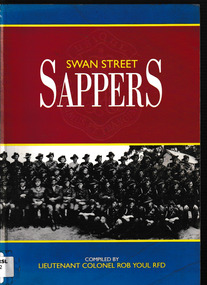
Book, Headquarters Logistic Support Force Engineers committee, The Swan Street Sappers 1860-1996 : a history of the Engineer Training Depot, Swan Street, Melbourne and of Sappers in Victoria, 1995
... Australian army - History Australian army - Engineers This book marks the closing of the Engineer Training Depot at Swan Street, Melbourne in late 1991 by registering its great contribution to military and community life and by telling the story of Sappers in Victoria. ...This book marks the closing of the Engineer Training Depot at Swan Street, Melbourne in late 1991 by registering its great contribution to military and community life and by telling the story of Sappers in Victoria.Index, bib, ill, p.203.non-fictionThis book marks the closing of the Engineer Training Depot at Swan Street, Melbourne in late 1991 by registering its great contribution to military and community life and by telling the story of Sappers in Victoria.australian army - history, australian army - engineers -
 Victorian Interpretive Projects Inc.
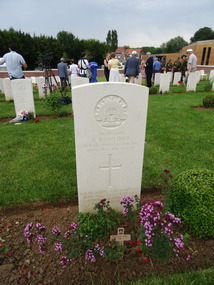
Photograph - Colour, Ann Gervasoni, Gravestone for F. Rawlings, Pheasant Wood Cemetery, Fromelles, 2014, 19/07/2015
... army in Western Australia. All but one of the 75 soldiers have now been re-buried, with full military honours, at a specially constructed cemetery near the battle site. Private Rawlings' grand-niece, Maureen Holding, of Mannibadar, got a call to confirm the news on Tuesday night. 'It's just quite incredible after all these years and huge loss of life...army in Western Australia. All but one of the 75 soldiers have now been re-buried, with full military honours, at a specially constructed cemetery near the battle site. Private Rawlings' grand-niece, Maureen Holding, of Mannibadar, got a call to confirm the news on Tuesday night. 'It's just quite incredible after all these years and huge loss of life ...The photographer, Ann Gervasoni, was in Frommelles for the reburial ceremony for 5 previously unidentified Australian soldiers. "AFTER almost 94 years, Ballarat soldier Private Frederick Rawlings, and a long-standing family mystery, can finally be laid to rest. Private Rawlings was one of 5533 Australian soldiers killed in the bloodiest conflict in Australian history, the World War I Battle of Fromelles, France. He was one of 250 men buried in a mass grave at Pheasant Wood after the battle of July 19 and 20 in 1916. In the past two years, a joint Australian and British project has aimed to positively identify the remains of those soldiers buried at the site. This week, the Federal Government announced Private Rawlings was one of 75 men who had been identified by name. Also on the list were Corporal Leslie Hart, born in Clunes, and Lance Corporal Allan Bennett, born in Ballarat, both of whom joined the army in Western Australia. All but one of the 75 soldiers have now been re-buried, with full military honours, at a specially constructed cemetery near the battle site. Private Rawlings' grand-niece, Maureen Holding, of Mannibadar, got a call to confirm the news on Tuesday night. 'It's just quite incredible after all these years and huge loss of life, they've actually identified him,' Mrs Holding said yesterday. Last year, Mrs Holding and her brother, Leo Rawlings, gave DNA samples to the Australian Army to help with the identification process. But until seeing a newspaper article more than 20 years ago, they did not know Private Rawlings or his younger brother, Corporal Sydney Rawlings, had even been in the war. On Anzac Day 1988, The Courier published a photo of Cpl Sydney Rawlings and excerpts from a letter from an army chaplain that informed Ballarat family members of Cpl Rawlings' death in Northern France in 1918. 'About two years later, my husband, Malcolm, found in a tin of rusty nails and shoe buckles belonging to my late dad, a set of war medals,' Mrs Holding said. They were inscribed with Sydney's Rawlings' name, and checks of family records and The Courier story confirmed the connection. In 1991, this newspaper published a list of soldiers who had memorial trees in Ballarat's Avenue of Honour. Next to Sydney's name was that of Frederick Rawlings.(http://www.thecourier.com.au/story/543125/remains-of-ballarat-soldier-killed-in-france-during-wwi-identified/, accessed 16/04/2014.)A number of colour digital images showing the grave of Frederick Rawlings of Ballarat in the Pheasant Wood Cemetery, Frommelles, France.world war one, fromelles, pheasant wood, frederick rawlings, allan bennett, leslie hart -
 National Vietnam Veterans Museum (NVVM)
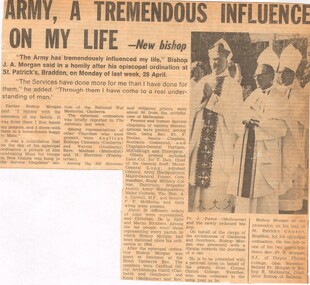
Newspaper, A Newspaper Clipping Titled "Army, A Tremendous Influence On My Life - New Bishop
... Australian Army Chaplains Department. He served as a Military Vicar of the Australian Defence Force. He was awarded The Companion of the Order of Australia (AOM) in 1976. Chaplain-General John Aloysius Morgan 351016 Royal Australian Army Chaplains Department Military Vicar Chaplain The Companion of the Order of Australia AOM Newspaper clippings religion vietnam war A Newspaper Clipping Titled "Army, A Tremendous Influence On My Life - New Bishop. ...This is part of a collection which was donated by Chaplain-General John Aloysius Morgan (351016) who served with the Royal Australian Army Chaplains Department. He served as a Military Vicar of the Australian Defence Force. He was awarded The Companion of the Order of Australia (AOM) in 1976.A Newspaper Clipping Titled "Army, A Tremendous Influence On My Life - New Bishop. (See media file scan for the full story).chaplain-general john aloysius morgan, 351016, royal australian army chaplains department, military vicar, chaplain, the companion of the order of australia, aom, newspaper clippings, religion, vietnam war -
 National Vietnam Veterans Museum (NVVM)
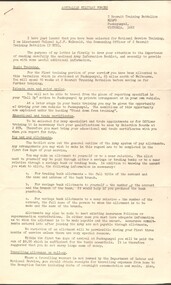
Document
... Australian servicemen Pte. Allen Doran Lette Service No. 3795490. Ordnance Corps. Australian Military Forces 2 Recruit Training Battalion Regular Army Lette Ordnance Corps Vietnam Life as A Recruit Australian Military Forces/Introduction To Recruit Training A two page typed document on issued by the Australian Military Forces on the Introduction to Recruit Training. ...Standard issue document to Australian servicemen Pte. Allen Doran Lette Service No. 3795490. Ordnance Corps.A two page typed document on issued by the Australian Military Forces on the Introduction to Recruit Training. Australian Military Forces/Introduction To Recruit Trainingaustralian military forces, 2 recruit training battalion, regular army, lette, ordnance corps, vietnam, life as a recruit
