
Showing 589 items matching "australian army personnel"
-
 National Vietnam Veterans Museum (NVVM)
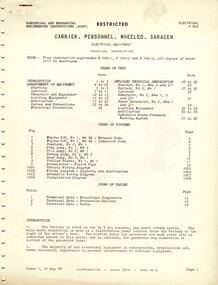
Booklet, Australian Army, Australian Army: Carrier, Personnel, Wheeled, Saracen
... Australian Army: Carrier, Personnel, Wheeled, Saracen...Electrical and Mechanical Engineering Instructions Carrier Personnel Carrier Saracen Personnel Carrier There are several pages of Electrical and Mechanical Engineering Instructions (Aust). there are several punch holes down the left hand side and the pages are held together with a staple in the top left hand corner. This is stored in a plastic bag. Australian Army ...There are several pages of Electrical and Mechanical Engineering Instructions (Aust). there are several punch holes down the left hand side and the pages are held together with a staple in the top left hand corner. This is stored in a plastic bag.electrical and mechanical engineering instructions, carrier, personnel carrier, saracen personnel carrier -
 4th/19th Prince of Wales's Light Horse Regiment Unit History Room
Booklet, Australian Army. Manual of Personnel Administration, 1971
... Australian Army. Manual of Personnel Administration...army personnel administration DSN 7610-66-047-2589 A semi-soft covered loose leaf manual covering policies, procedures, terms of service, promotion, medical and dental procedures, documentation etc for permanent and reserve forces within the Australian Army Australian Army. ...A semi-soft covered loose leaf manual covering policies, procedures, terms of service, promotion, medical and dental procedures, documentation etc for permanent and reserve forces within the Australian ArmyDSN 7610-66-047-2589army personnel administration -
Tatura Irrigation & Wartime Camps Museum
Book - Autobiography, Detained by the Enemy, 1942-1945, 1987
... australian army...australian army personnel...Australian Army in WW2. He volunteered at the age of 18 years after Japan entered the war, as an Ally to Germany and Italy, the aggressors. Taken prisoner by the Japanese and held in camps in Malaya and Singapore, enduring previously untold horrors at the hands of the Japanese captors. Written for his grandchildren to read and perhaps understand. documents reports bill anderson australian army australian army personnel ...Personal history written by Bill Anderson of his experiences in the Australian Army in WW2. He volunteered at the age of 18 years after Japan entered the war, as an Ally to Germany and Italy, the aggressors. Taken prisoner by the Japanese and held in camps in Malaya and Singapore, enduring previously untold horrors at the hands of the Japanese captors. Written for his grandchildren to read and perhaps understand.Burgundy hard covered book with printed title in gold, containing photocopied handwritten material and printed material.Two photos and descriptions of the author, and his record of his Army Service. 1 - Bill Anderson aged 20 years and 10 months (May 1941); 2 - Bill Anderson aged 66 years and 10 months (May 1987). Service record. These items inside front cover of book.documents, reports, bill anderson, australian army, australian army personnel -
Lakes Entrance Historical Society
Book, Soldiering On. The Australian Army at Home and Overseas, 1942
... Personal experiences of Australian Army Personnel during the Second World War to 1942. ...World War 1939 - 1945 Personal experiences of Australian Army Personnel during the Second World War to 1942. ...Personal experiences of Australian Army Personnel during the Second World War to 1942. Illustrated with sketches and photographs. Table of contents.world war 1939 - 1945 -
 National Vietnam Veterans Museum (NVVM)
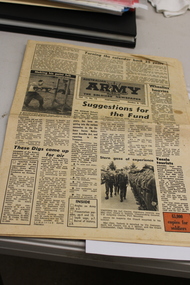
Newspaper - Army newspaper
... The Soldiers newspaper for Australian Army personnel. Vol 12, No 15. Fortnightly. ...Australian Armed Forces to human interest stories. Army Newspaper Peter Sims OAM JP Australian Army Australian Military Force/The Soldiers Newspaper The Soldiers newspaper for Australian Army personnel. ...Newspaper produced for Australian Armed Forces each fortnight. Articles varied from information about Australian Armed Forces to human interest stories.The Soldiers newspaper for Australian Army personnel. Vol 12, No 15. Fortnightly. Oct 8 1970. 43,000 copies printed for soldiers.Australian Army Australian Military Force/The Soldiers Newspaper army, newspaper, peter sims oam jp -
Tatura Irrigation & Wartime Camps Museum
Book, The Australian Military Forces et al, Khaki and Green, 1943
... australian army personnel...Wholly written by serving members of the Australian Army scattered over the Commonwealth and in all those place where Australians were called upon to serve. australian army personnel khaki and green rsl Green hard cover book with paler green text. ...Wholly written by serving members of the Australian Army scattered over the Commonwealth and in all those place where Australians were called upon to serve.Green hard cover book with paler green text. Khaki and green dust cover. Khaki and green textaustralian army personnel, khaki and green, rsl -
 Lilydale RSL Sub Branch
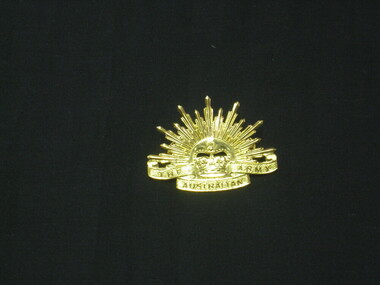
Badge
... Australian Army. Worn on the left side of the Ceremonial hat KFF (brim up) by Australian Army personnel. ...Australian Army. Worn on the left side of the Ceremonial hat KFF (brim up) by Australian Army personnel. ...Rising Sun badge. Australian Army. Worn on the left side of the Ceremonial hat KFF (brim up) by Australian Army personnel. Current version used from 1991. -
Frankston RSL Sub Branch
Compass
... Compass used by Australian Army personnel during the Vietnam conflict. ...The compass lid has the following stamping: "ENGINEER", "DIRECTIONAL COMPASS" Compass used by Australian Army personnel during the Vietnam conflict. ...Compass used by Australian Army personnel during the Vietnam conflict. This compass has a circular alloy metal body with a hingeing lid of the same material painted in drab jungle green.The compass lid has the following stamping: "ENGINEER", "DIRECTIONAL COMPASS" -
 Lara RSL Sub Branch
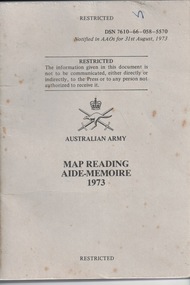
Booklet, Map Reading Aide-Memoire 1973, 1973
... Used by the Australian Army personnel to learn Map Reading...Used by the Australian Army personnel to learn Map Reading Used by the Australian Army personnel to learn map reading australian army army australia map reading booklet See images of front cover and rear cover A small rectangular booklet with cover and 26 pages Map Reading Aide-Memoire 1973 Booklet ...Used by the Australian Army personnel to learn Map ReadingUsed by the Australian Army personnel to learn map readingA small rectangular booklet with cover and 26 pagesSee images of front cover and rear coveraustralian army, army, australia, map reading, booklet -
 Keilor East RSL Sub Branch
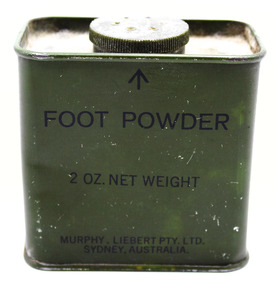
Memorabilia - Tin, Murphy, Liebert Pty Ltd, Foot Powder, June 1970
... Equipment for personal use; grooming, hygiene and health care by Australian Army personnel....Equipment for personal use; grooming, hygiene and health care by Australian Army personnel. personal hygiene foot powder defence vietnam Sydney, Australia Small dark green tin with twist top, foot powder 2oz net weigh. ...Equipment for personal use; grooming, hygiene and health care by Australian Army personnel.Small dark green tin with twist top, foot powder 2oz net weigh. Sydney, Australiapersonal hygiene, foot powder, defence, vietnam -
 Bendigo Military Museum
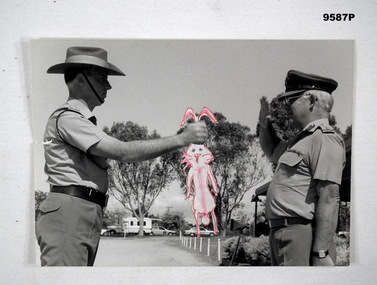
Photograph - PRESENTATION PHOTOGRAPH
... Black and white photograph of two Australian Army personnel in uniform. The soldier on the left is presenting an object to the Officer on the right, who is saluting. ...Photograph Australian Army Stuck onto the photograph: 'Hand drawn outline in red pen of a rabbit.' Black and white photograph of two Australian Army personnel in uniform. ...Part of the Cooper Collection.Black and white photograph of two Australian Army personnel in uniform. The soldier on the left is presenting an object to the Officer on the right, who is saluting. The object held by the soldier is a hand drawn figure of a rabbit which has been stuck onto the photograph so as to appear to be being held by it's ears. Trees and vehicles in the background.Stuck onto the photograph: 'Hand drawn outline in red pen of a rabbit.'photograph, australian army -
 Bendigo Military Museum
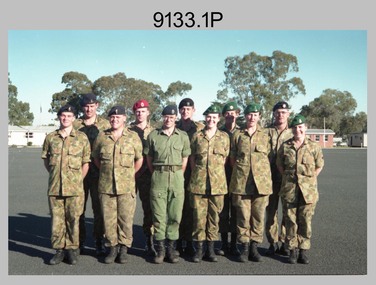
Photograph - Subject 1 Corporal Course, Puckapunyal Military Base, Victoria, 1990
... This is a set of five group photographs of Australian Army personnel at a Subject 1 Corporal Course most likely held at Puckapunyal Military Base, Victoria in 1990. ...This is a set of five photographs of Australian Army personnel at a Subject 1 Corporal Course, probably held at Puckapunyal Military Base, Victoria in 1990. ...This is a set of five group photographs of Australian Army personnel at a Subject 1 Corporal Course most likely held at Puckapunyal Military Base, Victoria in 1990. ...This is a set of five group photographs of Australian Army personnel at a Subject 1 Corporal Course most likely held at Puckapunyal Military Base, Victoria in 1990. This course was one of the mandatory qualification courses for promotion to the rank of Corporal. It was and still is the primary promotion and career development course for Australian Army soldiers enabling the transition to junior leadership. It focused on developing military skills in command, leadership, tactics, weapons training, and administration. RA Svy’s WO2 Steve Hansen and SGT Greg Else from the Army Survey Regiment, Bendigo were seconded to Puckapunyal to form part of the instructor group. The Army Survey Regiment’s LCPL Darren ‘Barney’ Maher and SPR Charmian McKean attended the course.This is a set of five photographs of Australian Army personnel at a Subject 1 Corporal Course, probably held at Puckapunyal Military Base, Victoria in 1990. The photographs are on 35mm negative film and were scanned at 2400 dpi. They are part of the Army Survey Regiment’s Collection. .1) - Photo, colour, 1990. Back row L to R: all unidentified. Front row L to R: LCPL Darren ‘Barney’ Maher, remainder unidentified. .2) - Photo, colour, 1990. Back row L to R: all unidentified. Front row L to R: unidentified (x4), WO2 Steve Hansen, unidentified, SGT Greg Else. .3) & .4) - Photo, colour, 1990. Back row L to R: all unidentified. Front row L to R: unidentified, SPR Charmian McKean, remainder unidentified. .5) - Photo, colour, 1990. Back row L to R: all unidentified. 3rd row L to R: unidentified (x6), LCPL Darren ‘Barney’ Maher, unidentified (x4), SPR Charmian McKean, remainder unidentified. Back row L to R: all unidentified. 2nd row L to R: all unidentified. Front row L to R: unidentified (x7), WO2 Steve Hansen, SGT Greg Else, remainder unidentified..1P to .5P – ‘Subj 1 for CPL Course 1990’ is annotated on negative sleeve.royal australian survey corps, rasvy, army survey regiment, army svy regt, fortuna -
 4th/19th Prince of Wales's Light Horse Regiment Unit History Room
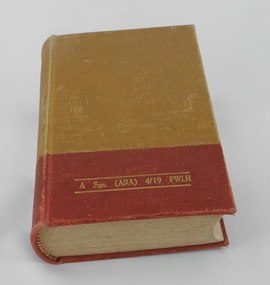
Book, Australian Army, Australian Edition of Manual of Military Law 1941
... Law manual applicable to Australian Army personnel from 1941. This effectively applied British military law. ...Law manual applicable to Australian Army personnel from 1941. This effectively applied British military law. ...Law manual applicable to Australian Army personnel from 1941. This effectively applied British military law. In 1982 the Defence Force Discipline Act of the Australian Parliament established a framework of military law for Australia's circumstances. Hard cover bookOn front cover in gold lettering- "A Sqn (ARA) 4/19 PWLH" On fly leaf, rubber stamps - "A SQN 1 CAV REGT. Inscription in red ink - "This book is the personal property of ; -J.B.Larkman" and rubber stamp - "WO2 SSM A SQN" On title page - Rubber stamps - "A Sqn (ARA) 4/19 PWLH" and "A SQN 1 CAV REGT" Detailed records of amendments entered in red ink on Amendments pages from Serial 1, 30 Nov 41 to Serial 9, 31 July 1948 military law, world war 2 -
 Returned Nurses RSL Sub-branch
Badge - Collar Badge, Royal Australian Army Nursing Corps (RAANC), unknown
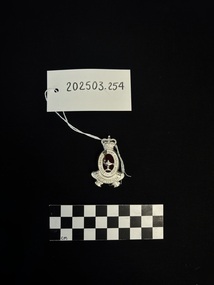
... The Royal Australian Army Nursing Corps (RAANC) provides health care and medical assistance to Australian Army personnel in military health facilities. ...The Royal Australian Army Nursing Corps (RAANC) provides health care and medical assistance to Australian Army personnel in military health facilities. ...The Royal Australian Army Nursing Corps (RAANC) provides health care and medical assistance to Australian Army personnel in military health facilities. The Royal Australian Army Nursing Corps embraces the values of compassion and service to others, reflecting the care and dedication provided to the wounded and sick. The Australian Army employs registered general nurses as nursing officers in Army hospitals and medical centres. These officers form the Royal Australian Army Nursing Corps. The collar badge would have been worn on the collar of official uniform. This badge is in good condition and provides context and interests in nurse uniform. However, it is hard to guarantee that this is an original badge or a replica. Photograph of Royal Australian Army Nursing Corps collar badge. Oval shaped badge surmounted by St Edward's crown. Around the edge of the oval is embossed 'Royal Australian Army Nursing Corps'. In the centre of the oval is a Nightingale oil lamp on a dull cherry coloured felt background. Across the bottom is a scroll embossed with the Latin motto 'Pro Humanitate', translating to 'for humanity'. The metallic nature of the badge leaves it cool to the touch, with rounded edges and a round collar attachment peg, unlike the sharp attachment pegs like typical badges and pins. 'Royal Australian Army Nursing Corps'/ 'Pro Humanitate'[Latin translating to English as 'for humanity']. raanc, uniform, badge, royal australian army nursing corps -
 Wangaratta RSL Sub Branch
Newspaper, Table Tops, 3/10/1944
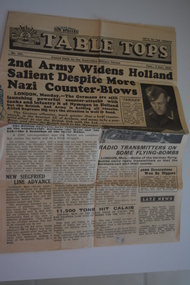
... Table Tops was a free daily newspaper produced for Australian Army personnel, published in the Atherton Tableland Training Area in Queensland, Australia, with regional editions produced abroad for serving personnel. ...Table Tops was a free daily newspaper produced for Australian Army personnel, published in the Atherton Tableland Training Area in Queensland, Australia, with regional editions produced abroad for serving personnel. ...Table Tops was a free daily newspaper produced for Australian Army personnel, published in the Atherton Tableland Training Area in Queensland, Australia, with regional editions produced abroad for serving personnel. Table Tops was produced by the staff of the AIF News, who were part of the First Australian Army Printing and Press Unit.The newspaper was produced seven days a week: weekday and Saturday editions were four pages long while Sunday editions were eight pages. The pages were demy quarto size. Occasional special editions were produced in addition to the daily editions. It contained news on the progress of the war, as well as home news such as current events in Australia and sport results.Two page cream coloured newspaper with rising sun badge top left corner of heading Table Tops - Free to the Troops Air Special No 501 Issued Daily by the Australian Military Forces Tues 3 Oct., 1944table tops, ww2 -
 Wangaratta RSL Sub Branch
Newspaper, Table Tops, 14/10/1944
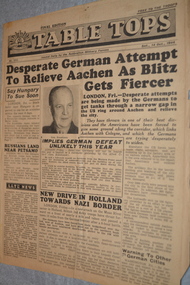
... Table Tops was a free daily newspaper produced for Australian Army personnel, published in the Atherton Tableland Training Area in Queensland, Australia, with regional editions produced abroad for serving personnel. ...Table Tops was a free daily newspaper produced for Australian Army personnel, published in the Atherton Tableland Training Area in Queensland, Australia, with regional editions produced abroad for serving personnel. ...Table Tops was a free daily newspaper produced for Australian Army personnel, published in the Atherton Tableland Training Area in Queensland, Australia, with regional editions produced abroad for serving personnel. Table Tops was produced by the staff of the AIF News, who were part of the First Australian Army Printing and Press Unit.The newspaper was produced seven days a week: weekday and Saturday editions were four pages long while Sunday editions were eight pages. The pages were demy quarto size. Occasional special editions were produced in addition to the daily editions. It contained news on the progress of the war, as well as home news such as current events in Australia and sport results.Four page cream coloured newspaper with rising sun badge top left corner of heading Table Tops - Free to the Troops Final Edition No 512 Issued Daily by the Australian Military Forces Sat., 14 Oct., 1944table tops, ww2 -
 Wangaratta RSL Sub Branch
Newspaper, Table Tops, 22/8/1943
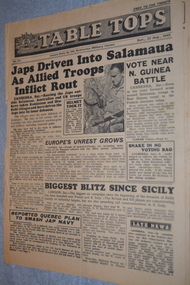
... Table Tops was a free daily newspaper produced for Australian Army personnel, published in the Atherton Tableland Training Area in Queensland, Australia, with regional editions produced abroad for serving personnel. ...Table Tops was a free daily newspaper produced for Australian Army personnel, published in the Atherton Tableland Training Area in Queensland, Australia, with regional editions produced abroad for serving personnel. ...Table Tops was a free daily newspaper produced for Australian Army personnel, published in the Atherton Tableland Training Area in Queensland, Australia, with regional editions produced abroad for serving personnel. Table Tops was produced by the staff of the AIF News, who were part of the First Australian Army Printing and Press Unit.The newspaper was produced seven days a week: weekday and Saturday editions were four pages long while Sunday editions were eight pages. The pages were demy quarto size. Occasional special editions were produced in addition to the daily editions. It contained news on the progress of the war, as well as home news such as current events in Australia and sport results.Four page cream coloured newspaper with rising sun badge top left corner of heading Table Tops - Free to the Troops No 92 Issued Daily by the Australian Military Forces Sun., 22 Aug.,1943table tops, ww2 -
 National Vietnam Veterans Museum (NVVM)
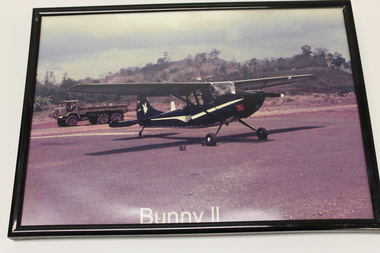
Photograph - Colour image, Bunny II
... Bunny II was built by Australian Army air corps personnel from the 161 Possums using salvaged parts in Vung Tau, Vietnam, in 1970. ...Bunny II was built by Australian Army air corps personnel from the 161 Possums using salvaged parts in Vung Tau, Vietnam, in 1970. ...Bunny II was built by Australian Army air corps personnel from the 161 Possums using salvaged parts in Vung Tau, Vietnam, in 1970. Dating back to the 1950s, the bunny design on the tail of an aircraft has come to represent the tradition and spirit of Naval Aviation.Colored photograph in a black frame. In the foreground on the tarmac is a small black plane with 161 in red near the nose. There is a white strip down the side of the plane. Also has an image of a white bunny on the tail of the plane. The rotors also have a white tip on them. Behind the plane is a truck with a soldier in it. There is a small hill in the background. On the bottom of the photograph reads Bunny 11.Bunny 11/ 161/white bunny on tail. plane, truck, tarmac, white bunny, bunny 11, 161 recce, birddog, cessna, bird dog, navy aircraft -
 Frankston RSL Sub Branch
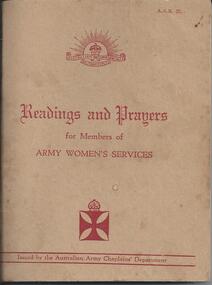
Book, Readings and Prayers for Members of ARMY WOMEN'S SERVICES
... Example of the Readings and Prayers book that is issued to Australian Army Women's Services personnel during World War 2 by the Australian Army Chaplains' Department. ...Australian Army Chaplains' Department". There is an Australian Commonwealth Military Forces badge at the top of the page and an Australian Army Chaplains' badge at the bottom. The book has the reference number "A.A.B. 35". Pocket book size with thick, buff, paper cover imprinted with red lettering and the Australian Commonwealth Military Forces badge. Example of the Readings and Prayers book that is issued to Australian Army Women's Services personnel ...Pocket book size with thick, buff, paper cover imprinted with red lettering and the Australian Commonwealth Military Forces badge. Example of the Readings and Prayers book that is issued to Australian Army Women's Services personnel during World War 2 by the Australian Army Chaplains' Department. The book has 176 pages of suggested readings and prayers for a variety of different occasions. The book was produced ca 1944.The book front cover is printed with the following text in deep red: "Readings and Prayers for Members of ARMY WOMEN'S SERVICES", "Issued by the Australian Army Chaplains' Department". There is an Australian Commonwealth Military Forces badge at the top of the page and an Australian Army Chaplains' badge at the bottom. The book has the reference number "A.A.B. 35". -
 Bendigo Military Museum
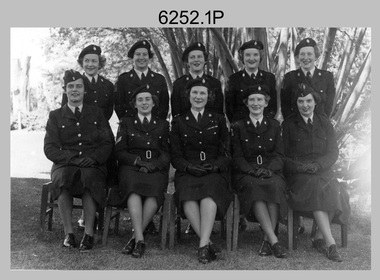
Photograph - WRAAC Personnel posted to the Army Headquarters Survey Regiment, Fortuna Bendigo, c1950s – 1960s
... This is a collection of eight photographs of Women’s Royal Australian Army Corps (WRAAC) personnel posted to the Army Headquarters Survey Regiment, Fortuna, Bendigo circa 1957 to 1964. ...This is a collection of eight photographs of Women’s Royal Australian Army Corps (WRAAC) personnel posted to the Army Headquarters Survey Regiment, Fortuna Bendigo circa 1957 to 1964. ...This is a collection of eight photographs of Women’s Royal Australian Army Corps (WRAAC) personnel posted to the Army Headquarters Survey Regiment, Fortuna, Bendigo circa 1957 to 1964. ...This is a collection of eight photographs of Women’s Royal Australian Army Corps (WRAAC) personnel posted to the Army Headquarters Survey Regiment, Fortuna, Bendigo circa 1957 to 1964. After the disbandment of the Australian Women's Army Service (AWAS) in 1947 there was only one or two of civilian women in administrative positions at Fortuna. In February 1957 female positions from the disbanded Southern Command Field Survey Section in Melbourne were transferred to newly established positions at the Army Headquarters Survey Regiment, Bendigo. They were accommodated at the newly acquired ‘Turriff’ mansion in Carpenter Street, Bendigo. Their first Officer Commanding (OC) was CAPT Beryl Perry from 1957 to September 1960. Her replacement as OC was CAPT Carol Castor who served in several positions up to June 1967. The main areas of employment in these early days were in administrative positions, draughting in and retouching in Lithographic Squadron. WO2 MA McLaren was the first female to reach the rank of WO2 as a Cartographic Squadron section commander in June 1961. WO1 Marj Knight served at Fortuna from 1959 to 1978 was the first female to reach the rank of WO1. WO1 Knight served in the senior Squadron Sergeant-Major and Technical Warrant Officer positions of Cartographic Squadron. She was also the first female PMC of the Army Survey Regiment SGT’s Mess. The WRAAC uniform seen in this collection was replaced in 1979. As the Australian Army implemented the disbandment of the WRAAC as a separate corps in 1980, WRAAC personnel posted to Royal Australian Survey Corps units were integrated into RA Svy. The WRAAC personnel in Photo .8P are not identified, although the SSGT seems to have an Army Headquarters Survey Regiment unit colour patch on her shoulder. The photo was most likely taken at WRAAC School, Mossman NSW or another WRAAC recruit training establishment.This is a collection of eight photographs of Women’s Royal Australian Army Corps (WRAAC) personnel posted to the Army Headquarters Survey Regiment, Fortuna Bendigo circa 1957 to 1964. The photographs were printed on photographic paper and are part of the Army Survey Regiment’s Collection. The photographs were scanned at 300 dpi. .8P is on negative film and scanned at 600 dpi. .1) - Photo, black & white, c1957. Back row – unidentified personnel, Front row – centre: CAPT Beryl Perry, unidentified personnel. .2) - Photo, black & white, c1958. Back row – unidentified personnel, Front row L to R: unidentified, SGT Margaret McLaren, CAPT Beryl Perry, unidentified (x2). .3) - Photo, black & white 1959. Back row – L to R: PTE Gwen Hill, PTE Hilary Clarkson, PTE Helen Paisley, PTE Pam Carseldine, PTE Margaret Ross, PTE Barbara Minto, PTE Margaret Taylor. Front row L to R: PTE Barbara Hawkin, PTE Joan Murray, SGT Margaret McLaren, CAPT Carol Castor, CPL Jenny Murray, CPL Julie Williams, PTE Phillipa Bowman. .4) - Photo, black & white, October 1963. L to R: WO2 Margaret McLaren, PTE Kay Brown, CAPT Carol Castor, PTE Helen Pasley, PTE Bev Madex, CPL Marj Knight. .5) - Photo, black & white, October 1963. L to R: PTE Bev Madex, PTE Helen Pasley, PTE Kay Brown, WO2 Margaret McLaren, CPL Marj Knight. .6) - Photo, black & white, August 1963. Back row – L to R: PTE Hollingsworth, PTE GM Hill, PTE PE Sykes, PTE Nola Strawbridge, PTE Jan Cruickshank, PTE Margaret Taylor, PTE Prescott, PTE RR Hutton, PTE BJ Madex, PTE BM Fuhrmann, PTE Cockburn. Front row – L to R: PTE NA Falot, LCPL JA Hurst, SGT Marj Knight, CAPT Carol Caster, CPL Jennifer Murray, LCPL A Burrows, unidentified. .7) - Photo, black & white, 1964. Back row – L to R: PTE Dianne Fowler, PTE Leslie Mortimer, PTE Marlene Penglase, PTE Marg Cooper, PTE Irene Rankins, PTE Elaine Veith, PTE Lyn Ireland, PTE Marg Murphy, PTE Nola Downes, PTE Joan Lawler, PTE Henni Schunck. Front row – L to R: PTE Loretta Hall, LCPL Jo McNamara, SGT Marj Knight, CAPT Carol Caster, CPL Nola Strawbridge, PTE Mary McHugh, PTE Kalen Sargent. .8) - Photo, black & white, c1960s – Unidentified SSGT issues uniforms and equipment to new WRAAC recruit at unknown location (probably WRAAC School, Mossman NSW)..1P to .3P, .7P, .8P - no annotation, .4P to .6P - Personnel (surnames, no rank) annotated on back.royal australian survey corps, rasvy, army survey regiment, army svy regt, fortuna, asr, wraac -
 Flagstaff Hill Maritime Museum and Village
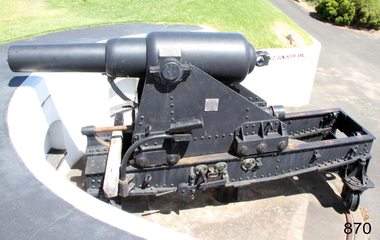
Weapon - Cannon, 1866
... Most of the personnel probably re-enlisted in the local 4th Australian Light Horse Regiment. The two 80 Pounder RML were moved back to the Fortifications in 1973. They were both fully restored by Army...Most of the personnel probably re-enlisted in the local 4th Australian Light Horse Regiment. The two 80 Pounder RML were moved back to the Fortifications in 1973. They were both fully restored by Army ...In the years following the Crimean War (1854-1857J) there was a great concern in the Colony that Imperial Russia would attempt an invasion. Coastal defences in the colony of Victoria were greatly strengthened by the Government as a result. Warrnambool was originally protected by cannons at Cannon Hill, approximately 1 kilometer west of the Flagstaff Hill Fortifications. These cannons included two 1866 guns, both 80 Pound Rifled Muzzle Loaders (RML) purchased by Victoria’s Colonial Government. They were part of a shipment of 26 such guns sent from England in December 1866. They are registered as No. 23 (80cwt-2qr-0lbs) - Gun 1, and No.13 (81cwt-1qr-12lbs) - Gun 2. They were cast at the Royal Gun Factory, Woolwich Arsenal, in 1866 and have a 6.3 inch bore. Both barrels carry the Royal Cypher of Queen Victoria, Insignia of the Royal Engineers, within the Garter and Motto surmounted by the Crown, with the Royal Cypher of Queen Victoria within the Garter (letters in centre “VR”, motto “HONI SOIT QUI MAL Y PENSE”, "Shame be to him who thinks evil of it."). The guns were originally supplied with wooden carriages. (The Royal Arsenal at Woolwich, England, was established eleven years after the Restoration of King Charles II. It was the principal supplier of armaments to the British and Empire Governments. At the height of its operations during World War One the factory covered 1300 acres and employed very nearly 80,000 workers. Woolwich was the Headquarters of the Royal Artillery since the raising of that Regiment in 1716. The Arsenal was closed in the late 1960’s.) These two cannons were transferred to the Warrnambool Garrison Artillery Battery Fortifications erected at Flagstaff Hill in 1887 as part of Victoria’s Coastal Defences. The original wooden carriages were subsequently replaced with the present iron garrison carriages in 1888. They are a “C” pivot. The ‘racers’ or curved track set into the floor of the gun emplacement (which enabled the guns to be traversed more quickly) are as specified for guns up to 10 inch, being of wrought iron 2.78 inches wide. A temporary third gun, now no longer on Flagstaff Hill’s site, was a 5 inch Rifled Breech Loading (BL) Armstrong gun mounted on an Elswick hydro pneumatic disappearing carriage It was faster to load and fire than the 80 pound RMLs and its arrival spelt the end of the older 80 pound guns’ useful life, apart from being used for practice sessions. The 5 inch BL gun was the main defensive weapon of the Warrnambool Battery until the Battery was downgraded in importance and the gun was recalled to Melbourne in 1910. The State of Victoria took over the ownership of the guns at the time of Australian Federation in 1901. In about 1901/1902 the Garrison Battery was converted to the Warrnambool Battery of the Australian Field Artillery (No 4 Field Battery). It was equipped with 4.7 inch naval guns mounted on field carriages. They were now a mobile unit but continued to use the Warrnambool Garrison area at Flagstaff Hill for practice. When the Fortifications were declared obsolete, the two 80 Pounder RML were relocated to Cannon Hill in 1910. On the outbreak of World War One the 4.7 inch guns were recalled to Melbourne, and the Battery was disbanded. Most of the personnel probably re-enlisted in the local 4th Australian Light Horse Regiment. The two 80 Pounder RML were moved back to the Fortifications in 1973. They were both fully restored by Army First Year Apprentices at the Ordinance Factory in Bendigo in time for the centenary year of the fortifications in 1987. The guns are capable of firing 80 pound (32.3kg) armour piercing exploding shells 3.65kms out to sea. They were original manned by volunteers before a paid Garrison was established. Now the Guns are again fired by volunteers on Special Event days. Since restoration the Gun Number 1 had been fired on a regular basis but Gun Number 2 hadn’t been fired since the mid 1990’s. In April 2015 Gun Number 2 was serviced in preparation for the firing of both cannons on the ANZAC Centenary commemorations on April 25th 2015. Other guns from the original Cannon Hill location were obsolete by the time the 1887 Warrnambool Garrison Artillery Battery was built. These guns are (1) a 32 Pounder Muzzle Loading Smooth Bore (SB) cast in 1813 at the famous Carron Foundry, number 80837 and now located in the Warrnambool Botanic Gardens (2) a 68 Pounder Muzzle Loading Smooth Bore cast in 1861 at the equally august Low Moor Foundry, number 10310 and now located on the lawn area at the entrance to Flagstaff Hill Maritime Village. Both of these guns are mounted on their original wooden garrison carriages. There are only seven 32 Pounder SB made by Carron and fifteen 68 Pounder SB made at Low Moor known to exist in the State of Victoria. Funding was received to repair Cannon No.2 and its iron carriage. After completion, both Cannon No 1 and No. 2 were 'fired' in a public re-enactment on April 4th, 2026. (Conservation Management Plan for Victorian Guns and Cannon, South Western Victoria, May 2008, ref W/F/05)The Warrnambool Garrison has been added to the Victorian Heritage Register H1250 “for its intact battery and guns, a strong reminder of Victoria’s wealth and determination to protect itself from the perceived threat of invasion in the 1880’s.” The City of Warrnambool is one of several custodians of a collection of artillery pieces of heritage significance at a state, national and international level. These pieces are directly related to the defence of south-west Victoria in the 19th century. The care and preservation come under the Heritage Act 1995. Cannon. 80 Pound Rifled Muzzle Loading (RML) Gun on iron carriage and slide, installed in the Battery at Flagstaff Hill’s Fortifications. Made in 1866 at the Royal Gun Factory (R-G-F), Woolich, England. Gun Reg No 13. Flagstaff Hill Garrison Gun 2 (Gun No. 2). Insignia of the Royal Engineers, and the weight of the gun, stamped on top of the gun’s barrel. There is a brass plate on the side of the gun with the details of 1987 restoration.Stamped into the metal on top of the barrel, Insignia of the Royal Engineers; Garter and Motto “HONI SOIT QUI MAL Y PENSE”, surmounted by the Crown, with the Royal Cypher of Queen Victoria “VR” within the Garter. Also stamped on top of the gun are 2 inward pointing arrows above the weight ”81-1-12”. Brass plate “RESTORATION / BY / FIRST YEAR / APPRENTICES / ORDANANCE FACTORY / BENDIGO 1987”flagstaff hill, warrnambool, shipwrecked coast, flagstaff hill maritime museum, maritime museum, shipwreck coast, flagstaff hill maritime village, great ocean road, colonial defences, victoria’s coastal defences, warrnambool fortification, warrnambool garrison battery, warrnambool volunteer corps, ordinance, armaments, cannon hill fortifications, 4th australian light horse regiment, no 4 field battery, 80 pound cannon rifled muzzle loaders (rml), victorian colonial government, royal gun factory england, woolwich arsenal, royal cypher of queen victoria, garrison gun -
 Federation University Historical Collection
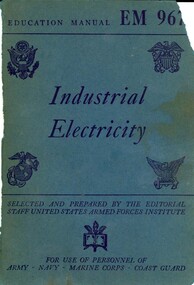
Book, Industrial Electricity
... personnel of the army, navy, marine corps and coast guard. The book was used by Charles Bacon who studied at the University of Nevada in the late 1930s/early 1940s. Bacon worked at Bunker Hill Mines and Kellogg Idaho, before arriving in Australian...personnel of the army, navy, marine corps and coast guard. The book was used by Charles Bacon who studied at the University of Nevada in the late 1930s/early 1940s. Bacon worked at Bunker Hill Mines and Kellogg Idaho, before arriving in Australian ...The book was published for the use of personnel of the army, navy, marine corps and coast guard. The book was used by Charles Bacon who studied at the University of Nevada in the late 1930s/early 1940s. Bacon worked at Bunker Hill Mines and Kellogg Idaho, before arriving in Australian in 1951. He worked for CN Myers, a company involved with paper converting. CN Myers was a family business (on Charles Bacon's maternal line).Blue soft covered book of 607 pages. Chapters include electrical Algebra, fundamentals of Electricity, Wiring, Magnetism, Armature Wiring, Generators, Motors, Controllers, Geometry and Trigonometry, Alternating Current, AC Circuits, Transformers, Polyphase Systems, Alternators, Induction Motors, Stator Winding, Multi-Speed Induction Motors, AC Controllers, electrical instruments, Electron Tubes, Welding Systems, Welding Systems, electrical Drawings. charles bacon, mining engineering, metallurgy, university of nevada, armed forces, world war 2 -
Frankston RSL Sub Branch
Plaque, Memorial, 1914-1918 Memorial Plaque, 1920 (estimated); Issued from 1920
... Australian Army private Richard Evans Harkness, service number 03426, of the 37th battalion, 8th re-inforcement. Harkness was killed in action on 12th August, 1918, near the French village of Proyart, during the 3rd Division's advance along the Somme Valley. further details can be found here: https://www.awm.gov.au/collection/U51477 Colloquially known as 'Dead Man's Penny' or 'King's Penny', these plaques were awarded to the next of kin of service personnel who died on active service during WW1. ...Australian Army private Richard Evans Harkness, service number 03426, of the 37th battalion, 8th re-inforcement. Harkness was killed in action on 12th August, 1918, near the French village of Proyart, during the 3rd Division's advance along the Somme Valley. further details can be found here: https://www.awm.gov.au/collection/U51477 Colloquially known as 'Dead Man's Penny' or 'King's Penny', these plaques were awarded to the next of kin of service personnel who died on active service during WW1. ...This round, bronze memorial plaque was presented to the family of Private Richard Evans Harkness, service number 3426, of the 37th Battalion, (8th Reinforcements) who was killed in action at Villers-Bretonneux on 12th August, 1918. Colloquially known as 'Dead Man's Penny' or 'King's Penny', this plaque was given to the next of kin of service personnel who died on active service in WW1. 1914-1918 Memorial Plaque In early 1920 it was announced that the next-of-kin of all Australian servicemen and women whose deaths were attributable to the First World War would receive a memorial plaque and scroll "as a solace for bereavement and as a memento". The memorial plaques were not uniquely Australian. In fact they were designed and produced in Britain and issued to commemorate all those who died as a result of war service from within the British Commonwealth. The idea for the plaques was originally conceived mid-way through the war. In 1917 a competition was announced to obtain a suitable design and 800 entries were eventually received. The winner, Mr. E. Carter Preston of Liverpool, England, was chosen in 1918. He was awarded a prize of 250 pounds. Mr Manning Pike directed the manufacture of the memorial plaques at the Memorial Plaque Factory set up at Acton, London. Some later plaques were also made at the Woolwich Arsenal. The cost of manufacturing so many plaques must have been considerable. Each plaque had the name of the soldier commemorated individually embossed (some were engraved) as part of the design. The full name was given without any indication of rank or honours to show the equality of sacrifice of all those who had lost their lives. The scroll designed to accompany the plaques was of thick paper, headed by the royal coat-of-arms, and bore the following message: "He whom this scroll commemorates was numbered among those who, at the call of King and Country, left all that was dear to them, endured hardness, faced danger, and finally passed out of the sight of men by the path of duty and self-sacrifice, giving up their own lives that others might live in freedom. Let those that come after see that his name is not forgotten". Underneath the message the serviceman or woman’s name, rank, honours and unit were written by hand in red ink. Because of the late arrival in Australia of the plaques many scrolls were sent out separately. A message from the King, "I join with my grateful people in sending you this memorial of a brave life given for others in the Great War", was included with the scroll. The first plaques were distributed in Australia in 1922. Each plaque was sent out from Base Records Office at Victoria Barracks in Melbourne by second-class mail. Approximately 60,000 plaques were issued in Australia. Families of deceased members of the Royal Australian Navy and the Australian Army Nursing Service also received plaques and scrolls This plaque is significant because it commemorates the death of an Australian soldier on active service in World War 1. It is representative of some 60,000 issued to next of kin of soldiers killed in World War 1. Although Richard Harness was living at 52 Victoria Street, Abbotsford when enlisted, together with a scroll from the King, it was donated by a Frankston Family.This round, bronze memorial plaque was presented to the family of Australian Army private Richard Evans Harkness, service number 03426, of the 37th battalion, 8th re-inforcement. Harkness was killed in action on 12th August, 1918, near the French village of Proyart, during the 3rd Division's advance along the Somme Valley. further details can be found here: https://www.awm.gov.au/collection/U51477 Colloquially known as 'Dead Man's Penny' or 'King's Penny', these plaques were awarded to the next of kin of service personnel who died on active service during WW1. refer to link for further information : http://www.awm.gov.au/encyclopedia/memorial_scroll/plaque.aspAround the edge are the words 'HE DIED FOR FREEDOM AND HONOUR' On the righthand side of the plaque is the name of the soldier, in this case Richard Evans Harkness.commemorative, memorial, plaque, dead, man s, penny, king s, richard, evans, harkness -
Frankston RSL Sub Branch
Uniform, Trouser
... australian army uniform desert camouflague camouflague afghanistan Australian Defence Forces uniform worn by Australian personnel in Afghanistan. ...Australian Defence Forces uniform worn by Australian personnel in Afghanistan. This uniform is the 'Desert Camouflague' type and is a pair of long trousers. australian, army, uniform, desert camouflague, camouflague, afghanistan -
Frankston RSL Sub Branch
Helmet, Australian M1, circa 1960's
... An example of an Australian Army issue M1 steel battle helmet complete with fibreglass liner. This helmet type was issued to Australian defence personnel during the Vietnam conflict. ...Australian Defence Force. In the 1990s they were replaced by the Kevlar based Personnel Armour System-Ground Troop (PASGT) type helmet. However, as evidenced by this helmet, some M1 Steel helmets were not replaced in-service by the PASGT helmet and survived into the early 21st Century. Used by Royal Australian Army ...Standard issue United States M1 pattern steel helmet, olive drab in colou, stretch cotton cargo type net, with fibreglass liner. On the inside of a strap in the liner '8415-153-6671' is printed in black ink. This number would appear to be the "Federal Stock Number (FSN)" which was used 1949 to 1975 when ti was replaced by "National Stock Number (NSN)' by additional of 00 after the first 4 numbers. this would indicate that it was made in USA. The chin strap and liner are both complete and fully operable. These helmets were first issued in 1941 to the United States Armed Forces. They were adopted after the Korean War by the Australian Defence Force. In the 1990s they were replaced by the Kevlar based Personnel Armour System-Ground Troop (PASGT) type helmet. However, as evidenced by this helmet, some M1 Steel helmets were not replaced in-service by the PASGT helmet and survived into the early 21st Century. Used by Royal Australian Army in Vietnam in areas where mines were significnat, such as Long Hai's mountains (together with US flak jackets), and also by Royal Australain Navy.An example of an Australian Army issue M1 steel battle helmet complete with fibreglass liner. This helmet type was issued to Australian defence personnel during the Vietnam conflict. The inner line has a transfer on the front " Australian Military Forces" with rising sun badge. The steel outer has an olive green elastic cover (similiar to cargo net) to hold camouflage material. The M1 is two "one-size-fits-all" helmets: an outer shell made of metal and a hard hat-type liner that is nestled inside the shell and contains the suspension system that would be adjusted to fit the wearer's head. Helmet covers and netting would be applied by covering the steel shell with the extra material tucked inside the shell and secured by inserting the liner. The helmet is 7 inches in height, width is 9.5 inches and length is 11 inches. The weight of a World War II era M1 is approximately 2.85 pounds including the liner and chinstrap. (From Wikipepedia) the inner line has a transfer on the front " Australian Military Forces" with rising sun badge.steel helmet -
 Frankston RSL Sub Branch
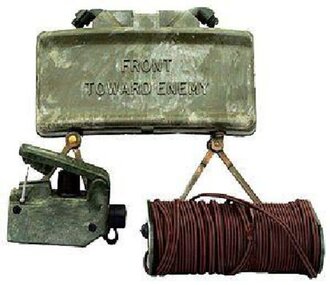
Claymore Mine
... Claymore anti personnel mine collection consisting of : 00173.1 a replica of the mine proper 00173.2 the standard hand held firing device 00173.3 a sample of shrapnel from an exploded mine 00173.4 carrying bag 00173.5 Australian Army training handbook...Vietnam era vietnam claymore mine cable Claymore anti personnel mine collection consisting of : 00173.1 a replica of the mine proper 00173.2 the standard hand held firing device 00173.3 a sample of shrapnel from an exploded mine 00173.4 carrying bag 00173.5 Australian Army training handbook Claymore Mine ...Vietnam eraClaymore anti personnel mine collection consisting of : 00173.1 a replica of the mine proper 00173.2 the standard hand held firing device 00173.3 a sample of shrapnel from an exploded mine 00173.4 carrying bag 00173.5 Australian Army training handbookvietnam, claymore mine, cable -
Lara RSL Sub Branch
Book, Soldiering On - The Australian Army at Home and Overseas, 1942
... Australian Army at Home and Overseas. Red hardback front and back with light coloured text of title. The rising sun badge, with text under it - The Australian Army at home and overseas. Inside front and back cover show illustrations of RAAF personnel...The rising sun badge, with text under it - The Australian Army at home and overseas. Inside front and back cover show illustrations of RAAF personnel dressed in the uniform which depicts their job i.e. females in nurse uniforms. ...This volume is like a veteran 'gong' - winner with years of tough going and breathless incidents to draw from. The service and the blokes in it have been able to dig into this pile of gen. and present some amazing stories, pictures, poems, graphics and cartoons.Personal recounts from RAAF service personnel by way of stories, poems, cartoons, illustrations and portraitsSoldiering On - The Australian Army at Home and Overseas. Red hardback front and back with light coloured text of title. The rising sun badge, with text under it - The Australian Army at home and overseas. Inside front and back cover show illustrations of RAAF personnel dressed in the uniform which depicts their job i.e. females in nurse uniforms. raaf,, wwii, new guinea, malaya, middle east, bethlehem, south west pacific, bab-el-mandeb, doughboy, royal womens army service, syria, cairo, singapore battle, jungle ambush -
Lara RSL Sub Branch
Book, Soldiering On - The Australian Army at Home and Overseas, 1942
... Australian Army at Home and Overseas. Red hardback front and back with light coloured text of title. The rising sun badge, with text under it - The Australian Army at home and overseas. Inside front and back cover show illustrations of RAAF personnel...The rising sun badge, with text under it - The Australian Army at home and overseas. Inside front and back cover show illustrations of RAAF personnel dressed in the uniform which depicts their job i.e. females in nurse uniforms. ...This volume is like a veteran 'gong' - winner with years of tough going and breathless incidents to draw from. The service and the blokes in it have been able to dig into this pile of gen. and present some amazing stories, pictures, poems, graphics and cartoons.Personal recounts from RAAF service personnel by way of stories, poems, cartoons, illustrations and portraitsSoldiering On - The Australian Army at Home and Overseas. Red hardback front and back with light coloured text of title. The rising sun badge, with text under it - The Australian Army at home and overseas. Inside front and back cover show illustrations of RAAF personnel dressed in the uniform which depicts their job i.e. females in nurse uniforms. raaf,, wwii, new guinea, malaya, middle east, bethlehem, south west pacific, bab-el-mandeb, doughboy, royal womens army service, syria, cairo, singapore battle, jungle ambush -
Lara RSL Sub Branch
Book, Soldiering On - The Australian Army at Home and Overseas, 1952
... Australian Army at Home and Overseas. Green hardback front and back with light coloured text of title. The rising sun badge, with text under it - The Australian Army at home and overseas. Inside front and back cover show illustrations of RAAF personnel...The rising sun badge, with text under it - The Australian Army at home and overseas. Inside front and back cover show illustrations of RAAF personnel dressed in the uniform which depicts their job i.e. females in nurse uniforms. ...This volume is like a veteran 'gong' - winner with years of tough going and breathless incidents to draw from. The service and the blokes in it have been able to dig into this pile of gen. and present some amazing stories, pictures, poems, graphics and cartoons.Personal recounts from RAAF service personnel by way of stories, poems, cartoons, illustrations and portraitsSoldiering On - The Australian Army at Home and Overseas. Green hardback front and back with light coloured text of title. The rising sun badge, with text under it - The Australian Army at home and overseas. Inside front and back cover show illustrations of RAAF personnel dressed in the uniform which depicts their job i.e. females in nurse uniforms. raaf,, wwii, new guinea, malaya, middle east, bethlehem, south west pacific, bab-el-mandeb, doughboy, royal womens army service, syria, cairo, singapore battle, jungle ambush -
Lara RSL Sub Branch
Hard Cover book, Soldiering On, The Australian Army at Home and Overseas, 1942
... Australian Army at Home and Overseas. Red hardback front and back with light coloured text of title. The rising sun badge, with text under it - The Australian Army at home and overseas. Inside front and back cover show illustrations of RAAF personnel...The rising sun badge, with text under it - The Australian Army at home and overseas. Inside front and back cover show illustrations of RAAF personnel dressed in the uniform which depicts their job i.e. females in nurse uniforms. ...This volume is like a veteran 'gong' - winner with years of tough going and breathless incidents to draw from. The service and the blokes in it have been able to dig into this pile of gen. and present some amazing stories, pictures, poems, graphics and cartoons. Personal recounts from RAAF service personnel by way of stories, poems, cartoons, illustrations and portraits Soldiering On - The Australian Army at Home and Overseas. Red hardback front and back with light coloured text of title. The rising sun badge, with text under it - The Australian Army at home and overseas. Inside front and back cover show illustrations of RAAF personnel dressed in the uniform which depicts their job i.e. females in nurse uniforms.
