
Showing 852 items matching "australian army survey corps"
-
 Bendigo Military Museum
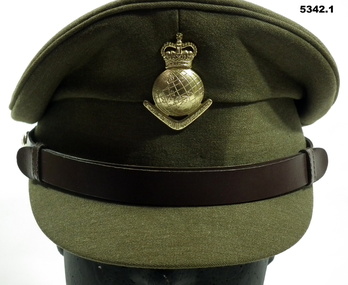
Uniform - SERVICE DRESS, ARMY - Royal Australian Army Survey Corps Uniform, Commonwealth Govt Clothing Factory, 1970-1988
... SERVICE DRESS, ARMY - Royal Australian Army Survey Corps Uniform...SERVICE DRESS, ARMY - Royal Australian Army Survey Corps Uniform...Army...Royal Australian Survey Corps...This is the peaked cap and uniform of 36898 Warrant Officer Thomas William Pattison, Royal Australian Survey Corps, Army Survey Regiment who served from 21 Mar 1960 until 16 Jan 1993 and died whilst in service....SERVICE DRESS, ARMY - Royal Australian Army Survey Corps Uniform Uniform SERVICE DRESS, ARMY - Royal Australian Army Survey Corps Uniform Commonwealth Govt Clothing Factory ...This is the peaked cap and uniform of 36898 Warrant Officer Thomas William Pattison, Royal Australian Survey Corps, Army Survey Regiment who served from 21 Mar 1960 until 16 Jan 1993 and died whilst in service.1. Cap - Polyester, Khaki, small peak, leather band, metal Insignia. 2. Jacket - polyester, khaki, yellow metal buttons, Insignia badges, purple lanyard, embroidered Insignia lower sleeves. 3, Shirt - polyester, short sleeves, embroidered insignia on sleeves. 4. Pants - Polyester, Khaki.Jacket - embroidered Insignia on lower sleeves - Crown.uniform, army, royal australian survey corps, rasvy, army survey regiment, army svy regt, asr -
 Bendigo Military Museum
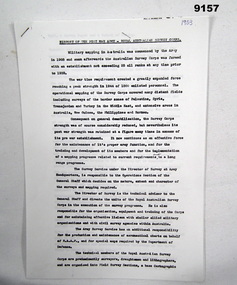
Administrative record - History of the Post War Army - Royal Australian Survey Corps 1953, Australian Survey Corps (Royal from 1948), 1938-1953
... History of the Post War Army - Royal Australian Survey Corps 1953...History of the Post War Army - Royal Australian Survey Corps 1953...The six stapled photocopies of typed text describe in some detail the history of the post WWII Army, and in particular the Australian Survey Corps. The first of 3 x separate pages at the rear is a summary of the recommendations, Commonwealth Survey Committee 1944. ...History of the Post War Army - Royal Australian Survey Corps 1953 Administrative record History of the Post War Army - Royal Australian Survey Corps 1953 Australian Survey Corps (Royal from 1948) Commonwealth Survey Committee ...The six stapled photocopies of typed text describe in some detail the history of the post WWII Army, and in particular the Australian Survey Corps. The first of 3 x separate pages at the rear is a summary of the recommendations, Commonwealth Survey Committee 1944. The second page describes the Military mapping programme referencing a memo from the Queensland Premier dated 2 Aug 1944 and mentions notes from the 1938 Commonwealth Survey Committee. The third page (possibly incomplete) is from the Conference of the Commonwealth Survey Committee and the State Surveyor General held at Canberra 15 20 Jan 1945.6 x photocopies of A4 pages of typed text, stapled in the top LH Corner. There are an additional 3 x A4 photocopied pages at the rear of the original document.Hand written note on the first page "1953"royal australian survey corps, rasvy, fortuna, army survey regiment, army svy regt, asr -
 Bendigo Historical Society Inc.
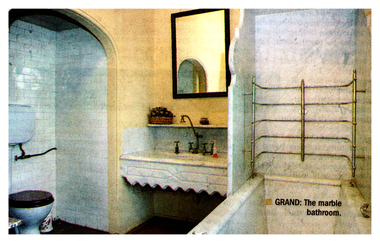
Newspaper - Fortuna Article - "Historic Building has Varied Past", Jul 25 2008
... ...Australian army survey corps...Australian military sought a secure location for map printing and storage north of the Great Dividing Range. The Commonwealth acquired a lease on Fortuna, and Army tradesmen made alterations. Major Sari and 150 men arrived in June 1942. The Australian Survey Corps... and Women's Army Corps produced classified mapping documents during World War II. Purchased by the Commonwealth Government in 1951. The Royal Australian Survey ...Built in 1856 by J.T.C. Balderstedt as an eight-room, two-storey red brick house near the New Chum gold reef. Extended in 1869 with a three-room gabled wing. Surrounded by ornate gardens and a masonry wall, overlooking gold mining operations. Purchased by George Lansell in 1871 for 20,000 pounds. Lansell made significant additions and modifications; he died in 1906. By 1938, the property was in disrepair but avoided demolition.In 1942, the Australian military sought a secure location for map printing and storage north of the Great Dividing Range. The Commonwealth acquired a lease on Fortuna, and Army tradesmen made alterations. Major Sari and 150 men arrived in June 1942. The Australian Survey Corps and Women's Army Corps produced classified mapping documents during World War II. Purchased by the Commonwealth Government in 1951. The Royal Australian Survey Corps was disbanded in 1996.D efence Imagery and Geospatial Organisation (DIGO) was established in 2000 in Canberra and Bendigo to provide geospatial intelligence for defence.In 2004, it was announced that DIGO operations would remain in Bendigo but move from Fortuna. The Department of Defence plans to vacate Fortuna, with its future use undecided.History Lives Article - "Historic Building has Varied Past" - The Bendigo Weekly Friday Jul 25 2008 This item contains the following: 11217.15a Colour Photo of Fortuna Long Room 11217.15b Colour Photo of Fortuna Staircase 11217.15c Colour Photo of Fortuna Steps and Entrance 11217.15d Part of page 7 - Fortuna Refit Not an Easy Option 11217.15e Colour Photo of Fortuna Bathroom 11217.15f Colour Photo of Fortuna Entrance Pathnon-fictionbendigo, fortuna, george lansell, australian army survey corps -
 Bendigo Military Museum
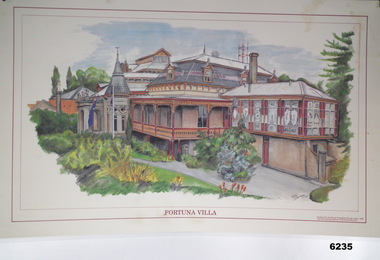
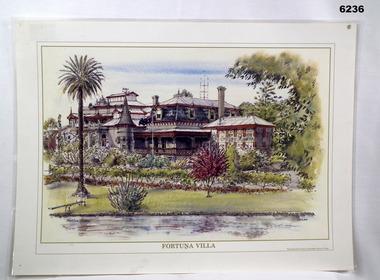
Print - Print of Fortuna Villa by Ruth Edwards, Ruth Edwards, 1991
... Print of a painting on parchment paper, laminated. printed by the Royal Australian Survey Corps, Army Survey Regiment...Army Survey Regiment from 1942 - 1996. This print was printed by the Army Survey Regiment. A number of prints were produced at various sizes including Unit Christmas cards. Royal Australian Survey Corps ...Print of a painting of Fortuna Villa by Ruth Edwards 1991. Fortuna Villa was the home of the Army Survey Regiment from 1942 - 1996. This print was printed by the Army Survey Regiment. A number of prints were produced at various sizes including Unit Christmas cards. Print of a painting on parchment paper, laminated. printed by the Royal Australian Survey Corps, Army Survey RegimentLabelled "Fortuna Villa" signed by Ruth Edwardsroyal australian survey corps, rasvy, fortuna, army survey regiment, army svy regt, asr -
 Bendigo Military Museum
Print - Print of Fortuna Villa by Bill Walls, Bill Walls
... Print on heavy paper, laminated and printed by the Royal Australian Survey Corps, Army Survey Regiment, Bendigo...Army Survey Regiment from 1942 - 1996. This print was printed by the Army Survey Regiment. A number of prints were produced at various sizes including the Unit Christmas cards. Royal Australian Survey Corps ...Print of a painting by Bill Walls. Fortuna Villa was the home of the Army Survey Regiment from 1942 - 1996. This print was printed by the Army Survey Regiment. A number of prints were produced at various sizes including the Unit Christmas cards.Print on heavy paper, laminated and printed by the Royal Australian Survey Corps, Army Survey Regiment, BendigoLabelled "Fortuna Villa" signed by Bill Wallsroyal australian survey corps, rasvy, fortuna, army survey regiment, army svy regt, asr -
 Bendigo Historical Society Inc.
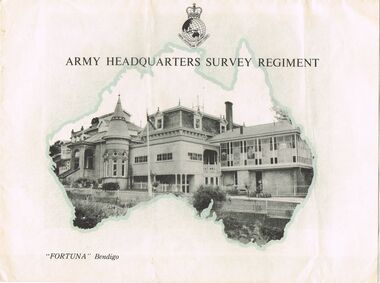
Document - LYDIA CHANCELLOR COLLECTION; 'FORTUNA' BENDIGO
... Australian Army... Royal Australian Survey Corps...BUILDINGS Government 'fortuna' Lydia Chancellor collection Australian Army Royal Australian Survey Corps 'Fortuna ' mansions buildings houses house Lansell family An information brochure in black, white and turquoise. ...An information brochure in black, white and turquoise. On the front cover are the words, ' Army Headquarters Survey Regiment 'Fortuna' Bendigo.' It contains black and white photos of 'Fortuna' inside and out and also an outline in print of the history of 'Fortuna.' C1950s. Also included is a small black and white photo of 'Fortuna.'buildings, government, 'fortuna', lydia chancellor, collection, australian army, royal australian survey corps, 'fortuna, ' mansions, buildings, houses, house, lansell family -
 Bendigo Military Museum
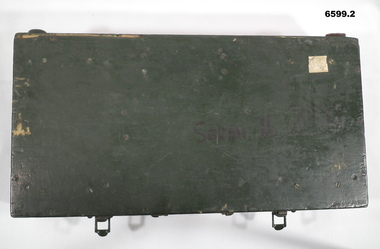
Instrument - Universal Stereoscope - boxed, 1940
... It was used extensively by members of the Australian Army Survey Corps during WWII in many theatres of war for viewing and annotating aerial photography. ...It was used extensively by members of the Australian Army Survey Corps during WWII in many theatres of war for viewing and annotating aerial photography. ...The Universal Stereoscope was used to view overlapping stereo aerial photography in three dimensions (3D). It consists of magnifying lenses, an optical train including glass prisms and mirrors that are protected by sliding metal covers, all suspended on a pair of fold out adjustable legs. The Universal Stereoscope was produced in Australia in 1940 for military use and has its protective wooden box. It was used extensively by members of the Australian Army Survey Corps during WWII in many theatres of war for viewing and annotating aerial photography. See also photograph at 6205.6P. 6205.1P shows the Universal Stereoscope in use by Royal Australian Survey Corps annotating Aerial Photography.6599.1 Wooden Box that contains a Universal Stereoscope. 6599.2 Open Wooden Box showing a folded Universal Stereoscope. A dark green wooden box containing a Universal Stereoscope with spare mirrors. The Universal Stereoscope was used to view overlapping stereo aerial photography in three dimensions (3D). It consists of magnifying lenses, an optical train including glass prisms and mirrors that are protected by sliding metal covers, all suspended on a pair of fold out adjustable legs. The stereoscope is painted a dark green colour."DC 1940" "Serial (Number) - 239 D>D"royal australian survey corps, rasvy, fortuna, army survey regiment, army svy regt -
 Bendigo Military Museum
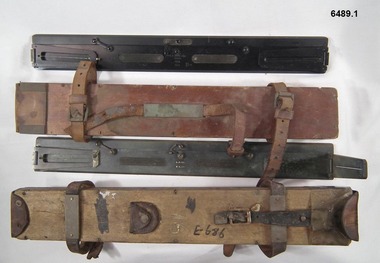
Instrument - Plane Table Surveying - Simple Alidade, ER Watts and Son, London, 1938
... The photo at 6489.2 is an Australian Army Survey Corps Party using a Plane Table Alidade in Syria during WWII. ...The photo at 6489.2 is an Australian Army Survey Corps Party using a Plane Table Alidade in Syria during WWII. ...The Plane Table Alidade was used as the sighting Instrument in the production of historical manual hand drawn maps. A Plane Table Board mounted on a tripod is levelled and the Alidade is placed on the table with the vanes perpendicular to the it. Each sighting vane has a central thread lined up on the target and the angle to that target point is then drawn on the map sheet using the beveled fiducial edge. Plane Table Surveying is used as a quick method where less accuracy is required or needed. Plane table Surveying is a relatively portable and inexpensive method and was used extensively before the advent of sophisticated surveying instruments. The photo at 6489.2 is an Australian Army Survey Corps Party using a Plane Table Alidade in Syria during WWII. See also item 6580 which is the Plane Table with tripod legs that was used with the Alidade.Two Plane Table sighting instruments (Alidade) used for historical manual map making housed in wooden transit boxes. A brass instrument with folding sights at each end and a beveled fiducial edge in one edge. The front sight is the object vane and the rear sight is the sight vane. There is a sliding arm attached to the base to draw parallel lines to the fiducial edge. Very slight differences in model between these two instruments.First Instrument, "ER Watts and Son, London, 1938, MkII, Box Label 423. Second Instrument - R. E-Co, Mk.II, stamped E686, Box Label 686.royal australian survey corps, rasvy, fortuna, army survey regiment, army svy regt, asr -
 Bendigo Military Museum
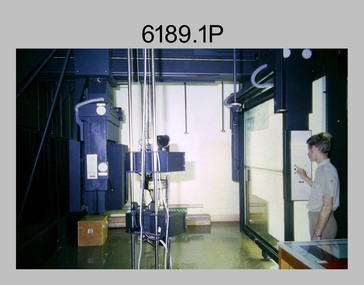
Photograph - Photographic Technicians operating the KLIMSCH Camera at the Army Survey Regiment, Fortuna, c1980s
... It was made to the specifications of the Royal Australian Army Survey Corps to assist in the production of the very high standard maps for the Army. ...It was made to the specifications of the Royal Australian Army Survey Corps to assist in the production of the very high standard maps for the Army. ...These four photographs were most likely taken in the mid-1980s in Lithographic Squadron at the Army Survey Regiment, Fortuna, Bendigo. The equipment operated by the technicians is the KLIMSCH camera. The main tasks undertaken by the technicians were most likely enlargements and reductions of map reproduction material. The KLIMSCH Commodore camera was introduced in 1953 and was the largest in the Southern Hemisphere. It was replaced with a new model of the same size in 1979. The new model with its computer-based interface provided productivity gains with improved speed and its consistent results led to less wastage in time and materials. Its variomat lens system provided improved retention of map feature linear weights during the camera reduction process. The camera which was specially made for the Army in Germany was fully automatic and power operated. It was claimed to be one of the biggest automatic cameras of its type in the world. It was made to the specifications of the Royal Australian Army Survey Corps to assist in the production of the very high standard maps for the Army. This is a set of four photographs of technicians operating the KLIMSCH Camera at the Army Headquarters Survey Regiment, Bendigo c1985. The photographs were on 35mm negative film and scanned at 96 dpi. They are part of the Army Survey Regiment’s Collection. .1) Photo, black & white, c1985, Frank Lenane operating the KLIMSCH Camera. .2) - Photo, black & white, c1985, KLIMSCH Camera. .3) to .4) - Photo, black & white, c1985, John Whaling operating the KLIMSCH Camera..1P to .4P – no annotationroyal australian survey corps, rasvy, army survey regiment, army svy regt, fortuna, asr, litho -
 Bendigo Military Museum
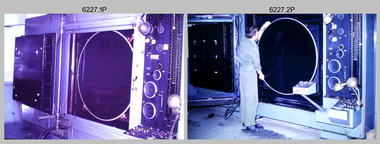
Photograph - Photographic Technicians operating the KLIMSCH Camera at the Army Survey Regiment, Fortuna, Bendigo, c1988
... ...Royal Australian Survey Corps...Army...It was made to the specifications of the Royal Australian Army Survey Corps to assist in the production of the very high standard maps for the Army. ...It was made to the specifications of the Royal Australian Army Survey Corps to assist in the production of the very high standard maps for the Army. ...These nine photographs were most likely taken in c1988 in Lithographic Squadron at the Army Survey Regiment, Fortuna, Bendigo. The equipment operated by the technicians is the KLIMCH camera. The main tasks undertaken by the technicians were most likely enlargements and reductions of map reproduction material. The KLIMSCH Commodore camera was introduced in 1953 and was the largest in the Southern Hemisphere. It was replaced with a new model of the same size in 1979. The new model with its computer-based interface provided productivity gains with improved speed and its consistent results led to less wastage in time and materials. Its variomat lens system provided improved retention of map feature linear weights during the camera reduction process. The camera which was specially made for the Army in Germany was fully automatic and power operated. It was claimed to be one of the biggest automatic cameras of its type in the world. It was made to the specifications of the Royal Australian Army Survey Corps to assist in the production of the very high standard maps for the Army. There are several more photos catalogued in the Victorian Collections database of RA Svy personnel operating the KLIMSCH camera.This is a set of four photographs of technicians operating the KLIMSCH Camera at the Army Headquarters Survey Regiment, Bendigo c1988. The photographs are on 35mm colour slides scanned at 96 dpi. They are part of the Army Survey Regiment’s Collection. .1) - Photo, colour, c1988, KLIMSCH Camera. .2) - Photo, colour, c1988, KLIMSCH Camera, unidentified technician. .3) - Photo, colour, c1988, KLIMSCH Camera. .4) - Photo, colour, c1988, KLIMSCH Camera, L to R: SPR Shona Hastie, CPL Paul Baker. .5) - Photo, colour, c1988, KLIMSCH Camera. .6) & .7) - Photo, colour, c1988, KLIMSCH Camera, SPR Shona Hastie. .8) & .9) - Photo, colour, c1988, KLIMSCH Camera, SPR Russell Pajank.35mm colour slides are in good condition.rasvy, royal australian survey corps, army survey regiment, army svy regt, fortuna, asr, litho sqn -
 Bendigo Military Museum
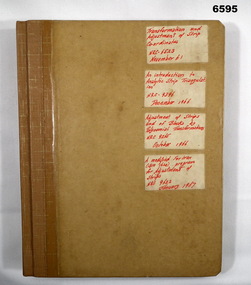
Manual - National Research Council of Canada, Division of Applied Physics - Strip triangulation of measured points, National Research Council of Canada, Nov 1961, Dec 1966, Oct 1966, Jan 1967
... The Royal Australian Survey Corps, Army Survey Regiment used transformations of Aerial Photographic strip and block coordinates to accurately calculate setup parameters for the extraction of topographical features on Wild B8 stereo plotters. ...The Royal Australian Survey Corps, Army Survey Regiment used transformations of Aerial Photographic strip and block coordinates to accurately calculate setup parameters for the extraction of topographical features on Wild B8 stereo plotters. ...The Royal Australian Survey Corps, Army Survey Regiment used transformations of Aerial Photographic strip and block coordinates to accurately calculate setup parameters for the extraction of topographical features on Wild B8 stereo plotters. This manual describes the methods and "Fortran" computer programming language solutions. Chapter 1 - Transformation and adjustment of strip coordinates by electronic computation. Chapter 2 - An Introduction to Analytical Strip Triangulation with a "Fortran" program. Chapter 3 - A "Fortran" program for the adjustment of Strips and Blocks by Polynomial Transformations. Chapter 4 - A modified "Fortran" (IBM 1620) program for the adjustments of Strip coordinates.Hard Covered Manual containing Chapter 1 - 8 x pages, Chapter 2 - 84 x pages, Chapter 3 - 33 x pages, Chapter 4 - 29 x pages.Distribution stamps and labels on front cover.royal australian survey corps, rasvy, fortuna, army survey regiment, army svy regt -
 Bendigo Military Museum
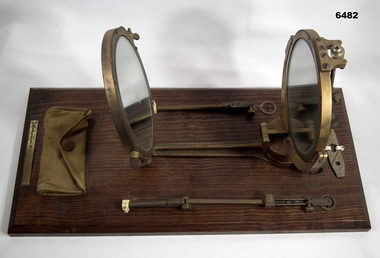
Instrument - Heliograph Mk V Training Aid - circa 1912, 1912
... surveying and communications equipment. It was primarily used for visual signaling by reflecting sunlight with a mirror to send coded messages over long distances. This method was primarily useful in remote areas where other forms of communication were not available. The MkV model, specifically, was widely used by the British Army and other military forces from around 1906 until the mid 1960s. It remained in use with the Australian Army Survey Corps...surveying particularly in the remote areas of Australia. This instrument was used as a training aid to help teach surveyors at the Royal Australian Survey Corps School of Military Survey. Catalog item No 2009 is a tripod that was used to mount the Heliograph whilst being used for surveying. Royal Australian Survey Corps RASvy Fortuna Army ...The Heliograph MkV is a fascinating piece of historical surveying and communications equipment. It was primarily used for visual signaling by reflecting sunlight with a mirror to send coded messages over long distances. This method was primarily useful in remote areas where other forms of communication were not available. The MkV model, specifically, was widely used by the British Army and other military forces from around 1906 until the mid 1960s. It remained in use with the Australian Army Survey Corps until the mid 1980s. The device typically included a 5 - inch mirror and was often mounted on a tripod for stability. Initially the instrument was used to communicate between survey stations using Morse code to coordinate their activities. Later when better forms of communication were available they were used for precise angle alignment where the sunlight reflection from the mirror was targeted between the survey stations to give very accurate results. The MkV was relatively light weight and portable, making it ideal for use in the field. It could be setup and adjusted quickly. The heliograph had an adjustable mirror that could be tilted to reflect sunlight towards a distant receiver. Surveyors could align the mirror using a sighting device. Whilst it was primarily used by the Military it was also used in civil surveying particularly in the remote areas of Australia. This instrument was used as a training aid to help teach surveyors at the Royal Australian Survey Corps School of Military Survey. Catalog item No 2009 is a tripod that was used to mount the Heliograph whilst being used for surveying.A Heliograph containing two mirrors with brass surrounds mounted on a wooden board as a Training Aid. Item has additional parts attached to the base board."Heliograph Mk V Training Aid"royal australian survey corps, rasvy, fortuna, army survey regiment, army svy regt, asr -
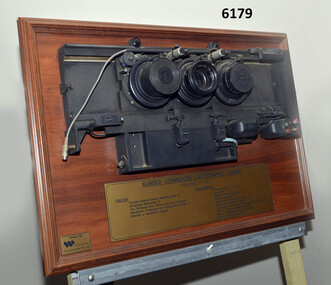 Bendigo Military Museum
Plaque - Mounted Klimsch Commodore Cartographic Camera Lenses, WYCOMBE Constructions Pty Ltd, 1997
... Australian Army in Germany was fully automatic and power operated. It was claimed to be one of the biggest automatic cameras of its type in the world. It was made to the specifications of the Royal Australian Army Survey Corps to assist in the production of the very high standard maps for the Australian Army. ...Australian Army in Germany was fully automatic and power operated. It was claimed to be one of the biggest automatic cameras of its type in the world. It was made to the specifications of the Royal Australian Army Survey Corps to assist in the production of the very high standard maps for the Australian Army. ...These are the Lenses from the Klimsch Commodore Cartographic Camera that was located in Lithographic Squadron at the Army Survey Regiment, Fortuna, Bendigo. The KLIMSCH Commodore camera was originally introduced to the Survey Regiment in 1953 and was the largest in the Southern Hemisphere. It was replaced with a new model of the same size in 1977. These lenses are from this new model. The new model with its computer-based interface provided productivity gains with improved speed and its consistent results led to less wastage in time and materials. Its variomat lens system provided improved retention of map feature linear weights during the camera reduction process. The camera which was specially made for the Australian Army in Germany was fully automatic and power operated. It was claimed to be one of the biggest automatic cameras of its type in the world. It was made to the specifications of the Royal Australian Army Survey Corps to assist in the production of the very high standard maps for the Australian Army. THIS KLIMSCH COMMODORE CARTOGRAPHIC CAMERA was in operation 1977 - 1997". It was a Precision Darkroom Camera especially suited for Cartographic Reproduction of Line, Continous Tone, Halftone and Colour Separation. Reproduction of Negatives and Positives from a variety of Reflection or Transmission Originals. Its characteristics were: Maximum Negative Size 1.27m sq, Copy Holder (Vacuum) 2m sq, Maximum Enlargement 400%, Maximum Reduction 13%, Automatic 60, 90 and 120cm Focal Length Lens, Transmission or Reflection Originals, Pulsed Xenon, Photo Flood or Fluorescent Tube Light Source, Maximum Reflection Original 1.3m x 1.85m, Maximum Transmission Original 1.3m x 1.85m, Exposure Light Monitoring System." The camera was superseded by computerized image manipulation software associated with the Automap system. These significant and extremely high-quality Lenses were retrieved by WYCOMBE Constructions Pty Ltd during the demolishment of the camera in 1997 and then mounted on a display board. See also Item 6189.4P for more photographs of the camera.Lenses from the Klimsch Commodore Cartographic Camera mounted on a very heavy timber display board. The display board contains an engraved plate that describes the technical characteristics of the camera."KLIMSCH COMMODORE CARTOGRAPHIC CAMERA 1977 - 1997", "FUNCTION: Precision Darkroom Camera especially suited for Cartographic Reproduction of Line, Continous Tone, Halftone and Colour Separation. Reproduction of Negatives and Positives from a variety of Reflection or Transmission Originals." "CHARACTERISTICS: Maximum Neg Size 1.27m sq, Copy Holder 2m sq, Maximum Enlargement 400%, Maximum Reduction 13%, Automatic 60, 90, 120cm Focal Length Lens, Transmission or Reflection Originals, Pulsed Xenon, Photo Flood or Fluorescent Tube Light Source, Maximum Reflection Original 1.3m x 1.85m, Maximum Transmission Original 1.3m x 1.85m, Exposure Light Monitoring System." royal australian survey corps, rasvy, fortuna, army survey regiment, army svy regt, asr, litho -
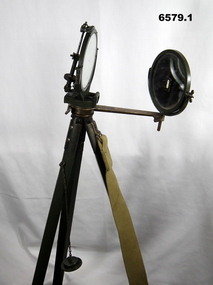 Bendigo Military Museum
Instrument - Duplex Heliograph Mk V - 1940 with Tripod, LUCO Art Metal Coy Ltd, London, 1940
... surveying and communications equipment. It was primarily used for visual signaling by reflecting sunlight with a mirror to send coded messages over long distances. This method was primarily useful in remote areas where other forms of communication were not available. The MkV model, specifically, was widely used by the British Army and other military forces from around 1906 until the mid 1960s. It remained in use with the Australian Army Survey Corps...surveying and communications equipment. It was primarily used for visual signaling by reflecting sunlight with a mirror to send coded messages over long distances. This method was primarily useful in remote areas where other forms of communication were not available. The MkV model, specifically, was widely used by the British Army and other military forces from around 1906 until the mid 1960s. It remained in use with the Australian Army Survey Corps ...The Heliograph MkV is a fascinating piece of historical surveying and communications equipment. It was primarily used for visual signaling by reflecting sunlight with a mirror to send coded messages over long distances. This method was primarily useful in remote areas where other forms of communication were not available. The MkV model, specifically, was widely used by the British Army and other military forces from around 1906 until the mid 1960s. It remained in use with the Australian Army Survey Corps until the mid 1980s. The device typically included a 5 - inch mirror and was often mounted on a tripod for stability. Initially the instrument was used to communicate between survey stations using Morse code to coordinate their activities. Later when better forms of communication were available, they were used for precise angle alignment where the sunlight reflection from the mirror was targeted between the survey stations to give very accurate results. The MkV was relatively light weight and portable, making it ideal for use in the field. It could be setup and adjusted quickly. The heliograph had an adjustable mirror that could be tilted to reflect sunlight towards a distant receiver. Surveyors could align the mirror using a sighting device. Whilst it was primarily used by the Military it was also used in civil surveying particularly in the remote areas of Australia. The British Army Mark V version uses a flat round mirror with a small unsilvered spot in the centre. The sender aligned the heliograph to the target by looking at the reflected target in the mirror and moving their head until the target was hidden by the unsilvered spot. Keeping their head still, they then adjusted the aiming rod so its cross wires bisected the target, they then turned up the sighting vane, which covered the cross wires with a diagram of a cross, and aligned the mirror with the tangent and elevation screws, so the small shadow that was a reflection of the unsilvered spot hole was on the cross target. This indicated that the sunbeam was pointing at the target. If the sun was in front of the sender, its rays were reflected directly from this mirror to the receiving station. If the sun was behind the sender, the sighting rod was replaced by a second mirror, to capture the sunlight and direct it onto the main mirror to reflect it to the receiving station.. 1 Brish Army "Mance" Mk V A253 Heliograph has two 125mm diameter mirrors on a brass arm with targeting attachments. The Instrument is mounted on a three-legged tripod of brass and mahogany with spiked feet, approximately 1.2 metres high. The instrument was made by LUCO Art Metal Co Ltd, London in 1940. .2 A military green metal carrying safety storage case with khaki shoulder strap.A253 stamped on instrumentroyal australian survey corps, rasvy, fortuna, army survey regiment, army svy regt, asr -
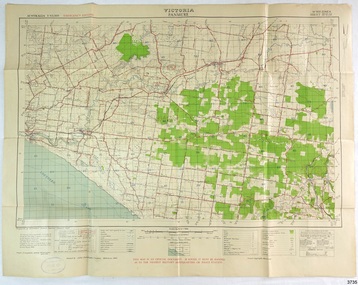 Flagstaff Hill Maritime Museum and Village
Document - Map, Department of Lands & Survey, Victoria / Panmure, 1942
... Australian Defence Department. The map was compiled for the Dept. of Army by the Dept. of Lands and Survey in Melbourne, prepared by the Australian Section of the Imperial General Staff, which was a British Government body created in 1907 to co-ordinate the defence of Britain and its Empire. It was printed by A.H.Q. Cartographic Company, Survey Corps...Australian Defence Department. The map was compiled for the Dept. of Army by the Dept. of Lands and Survey in Melbourne, prepared by the Australian Section of the Imperial General Staff, which was a British Government body created in 1907 to co-ordinate the defence of Britain and its Empire. It was printed by A.H.Q. Cartographic Company, Survey Corps ...This Emergency Edition of the map of Panmure, Victoria, is part of the W.R. Angus Collection. It was printed in 1942 during World War II. It is one of two maps donated to Flagstaff Hill Maritime Village by the family of Doctor William Roy Angus, who served as Surgeon Captain in the Australian Defence Department. The map was compiled for the Dept. of Army by the Dept. of Lands and Survey in Melbourne, prepared by the Australian Section of the Imperial General Staff, which was a British Government body created in 1907 to co-ordinate the defence of Britain and its Empire. It was printed by A.H.Q. Cartographic Company, Survey Corps, which was formed in 1941. The Corp changed its name to L.H.Q. Cartographic Company of Bendigo. In 1947 the name reverted back to the A.H.Q. Cartographic Company until 1955 when it became the A.H.Q. Survey Regiment. The W.R. Angus Collection includes historical medical equipment, surgical instruments and material once belonging to Dr Edward Ryan and Dr Thomas Francis Ryan, (both of Nhill, Victoria) as well as Dr Angus’ own belongings. The Collection’s history spans the medical practices of the two Doctors Ryan, from 1885-1926 plus that of Dr Angus who began practice in 1924. Dr. Angus served with the Australian Department of Defence as a Surgeon Captain during the Second World Was from 1942 to 1945. He served in Ballarat, Victoria, and in Bonegilla, N.S.W. until he suffering from a heart attack just before the war ended. ABOUT THE “W.R.ANGUS COLLECTION” - Doctor William Roy Angus M.B., B.S., Adel., 1923, F.R.C.S. Edin.,1928, was generally known as Dr Roy Angus. His working life included a position as a doctor with the Flying Doctor Service in Australia’s rural and remote areas. After many varied experiences Dr Angus and his family moved to Warrnambool in 1939 where he purchased “Birchwood,” the 1852 home and medical practice of Dr John Hunter Henderson. He was appointed on a part-time basis as Port Medical Officer in Warrnambool and held this position until the 1940’s when the government no longer required the service of a Port Medical Officer. Dr Angus was a surgeon at the Warrnambool Base Hospital 1939-1942. After further studies he commenced practice as an ophthalmologist in Warrnambool, pioneering in artificial eye improvements. He was Honorary Consultant Ophthalmologist to Warrnambool Base Hospital for 31 years and made monthly visits to Portland to perform eye surgery. Dr Angus and his wife Gladys were very involved in Warrnambool’s community with a strong interest in civic affairs. They were both involved in the creation of Flagstaff Hill Maritime Village, including the layout of the gardens. After his death on 28th March 1970 his family requested his practitioner’s plate, medical instruments and some personal belongings be displayed in the Port Medical Office surgery at Flagstaff Hill Maritime Village, and be called the “W. R. Angus Collection”. This Emergency Edition of the Map of Panmure is significant as an example of the documents prepared for the defence of Australia in World War 2. The Map is also significant for its connection between the Australian Army and the involvement of Dr WR Angus as a Surgeon in the Medical Services during World War II. The W.R. Angus Collection is significant for still being located at the site it is connected with, Doctor Angus being the last Port Medical Officer in Warrnambool. The collection of medical instruments and other equipment is culturally significant, being an historical example of medicine, administration, household equipment and clothing from late 19th to mid-20th century. Dr Angus assisted Dr Tom Ryan, a pioneer in the use of X-rays and in ocular surgery. The collection includes Dr Angus’s Army objects and is significant as an example of items issued to Doctors and Surgeons in the Medical Services of the Australian Army in World War IIMilitary map of Panmure, Victoria, Australia; part of the W.R. Angus Collection. Rectangular coloured map on cream paper for the Australian Army. Details include sea, waterways and land, contour lines, grid lines, names of districts, towns and roads, bridges, swamps, rail lines, cuttings, tracks, buildings (including blacksmiths), pumps, lighthouses, telegraph, telephones and electric transmission lines, and fire stations. The map has margin notes that include distances in miles to nearby towns. The map was compiled for the Dept. of Army by the Dept. of Lands and Survey in Melbourne, prepared by the Australian Section, Imperial General Staff and printed by A.H.Q. Cartographic Company, Melbourne in 1942. Crown Copyright Reserved. Inscriptions in red print state that it is and Emergency Edition and an Official document. An oval purple stamp includes the price.Printed in black; 'Victoria / Panmure", "No. 930 / Zone 6" Printed in red; “EMERGENCY EDITION”, “THIS MAP IS AN OFFICIAL DOCUMENT. IF FOUND, IT MUST BE HANDED / IN TO THE NEAREST MILITARY HEADQUARTERS OR POLICE STATION” Stamped: within concentric ovals (“- - - FOR SALE / PRICE 2/- / - - - - - OF THE ARMY”)flagstaff hill, warrnambool, flagstaff hill maritime museum, maritime museum, shipwreck coast, flagstaff hill maritime village, great ocean road, dr w r angus, dr ryan, warrnambool base hospital, flying doctor, surgeon captain, australian department of defence, royal australian army, world war 2, map panmure 1942, roy angus, port medical officer, nhill base hospital, military map, emergency map, military service australian army, department of army, department of lands and survey, a.h.q. cartographic company melbourne, panmure 1942, australian section, imperial general staff -
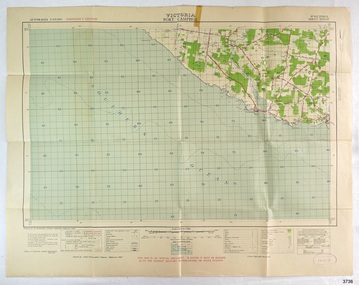 Flagstaff Hill Maritime Museum and Village
Document - Map, Department of Lands & Survey, Victoria / Port Campbell, 1942
... Australian Defence Department. The map was compiled for the Dept. of Army by the Dept. of Lands and Survey in Melbourne, prepared by the Australian Section of the Imperial General Staff, which was a British Government body created in 1907 to co-ordinate the defence of Britain and its Empire. It was printed by A.H.Q. Cartographic Company, Survey Corps...Australian Defence Department. The map was compiled for the Dept. of Army by the Dept. of Lands and Survey in Melbourne, prepared by the Australian Section of the Imperial General Staff, which was a British Government body created in 1907 to co-ordinate the defence of Britain and its Empire. It was printed by A.H.Q. Cartographic Company, Survey Corps ...This Emergency Edition of the map of Port Campbell, Victoria, is part of the W.R. Angus Collection. It was printed in 1942 during World War II. It is one of two maps donated to Flagstaff Hill Maritime Village by the family of Doctor William Roy Angus, who served as Surgeon Captain in the Australian Defence Department. The map was compiled for the Dept. of Army by the Dept. of Lands and Survey in Melbourne, prepared by the Australian Section of the Imperial General Staff, which was a British Government body created in 1907 to co-ordinate the defence of Britain and its Empire. It was printed by A.H.Q. Cartographic Company, Survey Corps, which was formed in 1941. The Corp changed its name to L.H.Q. Cartographic Company of Bendigo. In 1947 the name reverted back to the A.H.Q. Cartographic Company until 1955 when it became the A.H.Q. Survey Regiment. The W.R. Angus Collection includes historical medical equipment, surgical instruments and material once belonging to Dr Edward Ryan and Dr Thomas Francis Ryan, (both of Nhill, Victoria) as well as Dr Angus’ own belongings. The Collection’s history spans the medical practices of the two Doctors Ryan, from 1885-1926 plus that of Dr Angus who began practice in 1924. Dr Angus served with the Australian Department of Defence as a Surgeon Captain during the Second World Was from 1942 to 1945. He served in Ballarat, Victoria, and in Bonegilla, N.S.W. until he suffering from a heart attack just before the war ended. ABOUT THE “W.R.ANGUS COLLECTION” - Doctor William Roy Angus M.B., B.S., Adel., 1923, F.R.C.S. Edin.,1928, was generally known as Dr Roy Angus. His working life included a position as a doctor with the Flying Doctor Service in Australia’s rural and remote areas. After many varied experiences Dr Angus and his family moved to Warrnambool in 1939 where he purchased “Birchwood,” the 1852 home and medical practice of Dr John Hunter Henderson. He was appointed on a part-time basis as Port Medical Officer in Warrnambool and held this position until the 1940’s when the government no longer required the service of a Port Medical Officer. Dr Angus was a surgeon at the Warrnambool Base Hospital 1939-1942. After further studies he commenced practice as an ophthalmologist in Warrnambool, pioneering in artificial eye improvements. He was Honorary Consultant Ophthalmologist to Warrnambool Base Hospital for 31 years and made monthly visits to Portland to perform eye surgery. Dr Angus and his wife Gladys were very involved in Warrnambool’s community with a strong interest in civic affairs. They were both involved in the creation of Flagstaff Hill Maritime Village, including the layout of the gardens. After his death on 28th March 1970 his family requested his practitioner’s plate, medical instruments and some personal belongings be displayed in the Port Medical Office surgery at Flagstaff Hill Maritime Village, and be called the “W. R. Angus Collection”. This Emergency Edition of the Map of Port Campbell is significant as an example of the documents prepared for the defence of Australia in World War 2. The Map is also significant for its connection between the Australian Army and the involvement of Dr WR Angus as a Surgeon in the Medical Services during World War II. The W.R. Angus Collection is significant for still being located at the site it is connected with, Doctor Angus being the last Port Medical Officer in Warrnambool. The collection of medical instruments and other equipment is culturally significant, being an historical example of medicine, administration, household equipment and clothing from late 19th to mid-20th century. Dr Angus assisted Dr Tom Ryan, a pioneer in the use of X-rays and in ocular surgery. The collection includes Dr Angus’s Army objects and is significant as an example of items issued to Doctors and Surgeons in the Medical Services of the Australian Army in World War IIMilitary map of Port Campbell, Victoria, Australia; part of the W.R. Angus Collection. Rectangular coloured map on cream paper for the Australian Army. Details include sea, waterways and land, contour lines, grid lines, names of districts, towns and roads, bridges, swamps, rail lines, cuttings, tracks, buildings (including blacksmiths), pumps, lighthouses, telegraph, telephones and electric transmission lines, and fire stations. The map has margin notes that include distances in miles to nearby towns. The map was compiled for the Dept. of Army by the Dept. of Lands and Survey in Melbourne, prepared by the Australian Section, Imperial General Staff and printed by A.H.Q. Cartographic Company, Melbourne in 1942. Crown Copyright Reserved. Inscriptions in red print state that it is and Emergency Edition and an Official document. An oval purple stamp includes the price.Printed in black; 'Victoria / Port Campbell", "No. 932 / Zone 6" Printed in red; “EMERGENCY EDITION”, “THIS MAP IS AN OFFICIAL DOCUMENT. IF FOUND, IT MUST BE HANDED / IN TO THE NEAREST MILITARY HEADQUARTERS OR POLICE STATION” Stamped: within concentric ovals (“- - - FOR SALE / PRICE 2/- / - - - - - OF THE ARMY”)flagstaff hill, warrnambool, flagstaff hill maritime museum, maritime museum, shipwreck coast, flagstaff hill maritime village, great ocean road, dr w r angus, dr ryan, warrnambool base hospital, nhill base hospital, flying doctor, surgeon captain, map port campbell 1942, roy angus, port medical officer, military map, emergency map, australian department of defence, royal australian army, military service australian army, department of army, department of lands and survey, world war 2, a.h.q. cartographic company melbourne, australian section, imperial general staff, port campbell 1942 -
 Flagstaff Hill Maritime Museum and Village
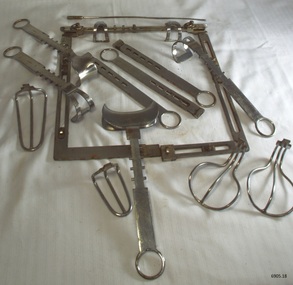
Surgical Kit, c. 1920's
... Australian Army Medical Corps in WWI and developed techniques in gastro-intestinal surgery. He was instrumental in the foundation of the Australasian College of Surgeons in 1927, retiring from the council in 1948. A survey...Australian Army Medical Corps in WWI and developed techniques in gastro-intestinal surgery. He was instrumental in the foundation of the Australasian College of Surgeons in 1927, retiring from the council in 1948. A survey ...This H.B Devin’s operating frame and abdominal retractor kit is named after its designer, Sir Hugh Berchmans Devine, 1878-1959, son of a Werribee district grazier in Victoria, Australia, surgeon at the Royal Melbourne Hospital. A text book diagram of H.B. Devine’s Abdominal Retractor shows the frame and retractors set up for a pelvic operation. The accompanying text reads “Devine’s retractor is so designed that there are no screws, yet the retractors and “mechanical hands” by a jamming action remain firmly on the frame in whatever position they are placed. This is accomplished by a system of inclined planes incorporated in the frame and in the single and double hooks, retractor blades and handles of the “mechanical hands”. Set comprises 3 “mechanical hands” 5 retractor blades. (Pg 72, The 1948 Catalogue of Surgical Instruments, published by Felton, Grimwade & Duerdins Pty Ltd of Melbourne). Devine became a general surgeon who later gained an international reputation for his for his contribution in the advancement of abdominal surgery. Devine was educated in Ballarat and later became an Honourable Fellow of the Royal College of Surgeons. During his career he became Senior Surgeon and Dean of the Medical School at St Vincent’s Hospital in Melbourne. He served in the Australian Army Medical Corps in WWI and developed techniques in gastro-intestinal surgery. He was instrumental in the foundation of the Australasian College of Surgeons in 1927, retiring from the council in 1948. A survey on needs for operating room equipment notes that “In the past some surgeons associated themselves with particular instrument makers… The Melbourne surgeon [Hugh Devine] had his special abdominal retractor made by a small firm in South Yarra…” Hugh Devine writes instructions for inserting the Operating Frame in his book “The Surgery of the Alimentary Tract”. He says “ … the author’s operating frame is inserted into the wound … for exposure of the stomach … and exploration of the abdomen” and adds a note that the frame is “obtainable from J. Ludbrooke & Son, Melbourne, Victoria, Australia”. He accompanies his text with a diagram of the frame set into the wound. This surgical kit was donated to Flagstaff Hill Maritime Village by the family of Doctor William Roy Angus, Surgeon and Oculist. It is part of the “W.R. Angus Collection” that includes historical medical equipment, surgical instruments and material once belonging to Dr Edward Ryan and Dr Thomas Francis Ryan, (both of Nhill, Victoria) as well as Dr Angus’ own belongings. The Collection’s history spans the medical practices of the two Doctors Ryan, from 1885-1926 plus that of Dr Angus, up until 1969. ABOUT THE “W.R.ANGUS COLLECTION” Doctor William Roy Angus M.B., B.S., Adel., 1923, F.R.C.S. Edin.,1928 (also known as Dr Roy Angus) was born in Murrumbeena, Victoria in 1901 and lived until 1970. He qualified as a doctor in 1923 at University of Adelaide, was Resident Medical Officer at the Royal Adelaide Hospital in 1924 and for a period was house surgeon to Sir (then Mr.) Henry Simpson Newland. Dr Angus was briefly an Assistant to Dr Riddell of Kapunda, then commenced private practice at Curramulka, Yorke Peninsula, SA, where he was physician, surgeon and chemist. In 1926, he was appointed as new Medical Assistant to Dr Thomas Francis Ryan (T.F. Ryan, or Tom), in Nhill, Victoria, where his experiences included radiology and pharmacy. In 1927 he was Acting House Surgeon in Dr Tom Ryan’s absence. Dr Angus had become engaged to Gladys Forsyth and they decided he further his studies overseas in the UK in 1927. He studied at London University College Hospital and at Edinburgh Royal Infirmary and in 1928, was awarded FRCS (Fellow from the Royal College of Surgeons), Edinburgh. He worked his passage back to Australia as a Ship’s Surgeon on the on the Australian Commonwealth Line’s T.S.S. Largs Bay. Dr Angus married Gladys in 1929, in Ballarat. (They went on to have one son (Graham 1932, born in SA) and two daughters (Helen (died 12/07/1996) and Berenice (Berry), both born at Mira, Nhill ) According to Berry, her mother Gladys made a lot of their clothes. She was very talented and did some lovely embroidery including lingerie for her trousseau and beautifully handmade baby clothes. Dr Angus was a ‘flying doctor’ for the A.I.M. (Australian Inland Ministry) Aerial Medical Service in 1928 . Its first station was in the remote town of Oodnadatta, where Dr Angus was stationed. He was locum tenens there on North-South Railway at 21 Mile Camp. He took up this ‘flying doctor’ position in response to a call from Dr John Flynn; the organisation was later known as the Flying Doctor Service, then the Royal Flying Doctor Service. A lot of his work during this time involved dental surgery also. Between 1928-1932 he was surgeon at the Curramulka Hospital, Yorke Peninsula, South Australia. In 1933 Dr Angus returned to Nhill and purchased a share of the Nelson Street practice and Mira hospital (a 2 bed ward at the Nelson Street Practice) from Dr Les Middleton one of the Middleton Brothers, the current owners of what previously once Dr Tom Ryan’s practice. Dr Tom and his brother had worked as surgeons included eye surgery. Dr Tom Ryan performed many of his operations in the Mira private hospital on his premises. He had been House Surgeon at the Nhill Hospital 1902-1926. Dr Tom Ryan had one of the only two pieces of radiology equipment in Victoria during his practicing years – The Royal Melbourne Hospital had the other one. Over the years Dr Tom Ryan had gradually set up what was effectively a training school for country general-practitioner-surgeons. Each patient was carefully examined, including using the X-ray machine, and any surgery was discussed and planned with Dr Ryan’s assistants several days in advance. Dr Angus gained experience in using the X-ray machine there during his time as assistant to Dr Ryan. When Dr Angus bought into the Nelson Street premises in Nhill he was also appointed as the Nhill Hospital’s Honorary House Surgeon 1933-1938. His practitioner’s plate from his Nhill surgery is now mounted on the doorway to the Port Medical Office at Flagstaff Hill Maritime Village, Warrnambool. When Dr Angus took up practice in the Dr Edward and Dr Tom Ryan’s old premises he obtained their extensive collection of historical medical equipment and materials spanning 1884-1926. A large part of this collection is now on display at the Port Medical Office at Flagstaff Hill Maritime Village in Warrnambool. In 1939 Dr Angus and his family moved to Warrnambool where he purchased “Birchwood,” the 1852 home and medical practice of Dr John Hunter Henderson, at 214 Koroit Street. (This property was sold in1965 to the State Government and is now the site of the Warrnambool Police Station. and an ALDI sore is on the land that was once their tennis court). The Angus family was able to afford gardeners, cooks and maids; their home was a popular place for visiting dignitaries to stay whilst visiting Warrnambool. Dr Angus had his own silk worm farm at home in a Mulberry tree. His young daughter used his centrifuge for spinning the silk. Dr Angus was appointed on a part-time basis as Port Medical Officer (Health Officer) in Warrnambool and held this position until the 1940’s when the government no longer required the service of a Port Medical Officer in Warrnambool; he was thus Warrnambool’s last serving Port Medical Officer. (Masters of immigrant ships arriving in port reported incidents of diseases, illness and death and the Port Medical Officer made a decision on whether the ship required Quarantine and for how long, in this way preventing contagious illness from spreading from new immigrants to the residents already in the colony.) Dr Angus was a member of the Australian Medical Association, for 35 years and surgeon at the Warrnambool Base Hospital 1939-1942, He served with the Australian Department of Defence as a Surgeon Captain during WWII 1942-45, in Ballarat, Victoria, and in Bonegilla, N.S.W., completing his service just before the end of the war due to suffering from a heart attack. During his convalescence he carved an intricate and ‘most artistic’ chess set from the material that dentures were made from. He then studied ophthalmology at the Royal Melbourne Eye and Ear Hospital and created cosmetically superior artificial eyes by pioneering using the intrascleral cartilage. Angus received accolades from the Ophthalmological Society of Australasia for this work. He returned to Warrnambool to commence practice as an ophthalmologist, pioneering in artificial eye improvements. He was Honorary Consultant Ophthalmologist to Warrnambool Base Hospital for 31 years. He made monthly visits to Portland as a visiting surgeon, to perform eye surgery. He represented the Victorian South-West subdivision of the Australian Medical Association as its secretary between 1949 and 1956 and as chairman from 1956 to 1958. In 1968 Dr Angus was elected member of Spain’s Barraquer Institute of Barcelona after his research work in Intrasclearal cartilage grafting, becoming one of the few Australian ophthalmologists to receive this honour, and in the following year presented his final paper on Living Intrasclearal Cartilage Implants at the Inaugural Meeting of the Australian College of Ophthalmologists in Melbourne In his personal life Dr Angus was a Presbyterian and treated Sunday as a Sabbath, a day of rest. He would visit 3 or 4 country patients on a Sunday, taking his children along ‘for the ride’ and to visit with him. Sunday evenings he would play the pianola and sing Scottish songs to his family. One of Dr Angus’ patients was Margaret MacKenzie, author of a book on local shipwrecks that she’d seen as an eye witness from the late 1880’s in Peterborough, Victoria. In the early 1950’s Dr Angus, painted a picture of a shipwreck for the cover jacket of Margaret’s book, Shipwrecks and More Shipwrecks. She was blind in later life and her daughter wrote the actual book for her. Dr Angus and his wife Gladys were very involved in Warrnambool’s society with a strong interest in civic affairs. He had an interest in people and the community They were both involved in the creation of Flagstaff Hill, including the layout of the gardens. After his death (28th March 1970) his family requested his practitioner’s plate, medical instruments and some personal belongings be displayed in the Port Medical Office surgery at Flagstaff Hill Maritime Village, and be called the “W. R. Angus Collection”. [References: The 1948 Catalogue of Surgical Instruments; hospital supplies and guide to instruments for operatons, published by Felton, Grimwade & Duerdins Pty Ltd, 21 Alfred Place, Melbourne; Sir Hugh Berchmans Devine, Royal College of Surgeons, http://livesonline.rcseng.ac.uk/biogs/E004999b.htm; Equipment, What Surgeons Want in Operating Rooms, https://mpatkin.org/op_room_planning/what_surgeons_want.htm ]The W.R. Angus Collection is significant for still being located at the site it is connected with, Doctor Angus being the last Port Medical Officer in Warrnambool. The collection of medical instruments and other equipment is culturally significant, being an historical example of medicine, administration, household equipment and clothing from late 19th to mid-20th century. Dr Angus assisted Dr Tom Ryan, a pioneer in the use of X-rays and in ocular surgery. Surgical Kit containing operating frame and abdominal retractors, part of the W.R. Angus Collection. Kit cover is brown kid leather lined with navy cotton, 6 leather pockets inside and cotton flaps to close. Contains Sir Hugh Devine operating frame and abdominal retractors, stainless steel, made by J. Ludbrooke and Sons, Melbourne. Note with instruments "Sir Hugh Devine, surgeon at Royal Melbourne Hospital” c. 1920’sImpressed into instruments “J. LUDBROOKE AND SONS”, “PATENT 12990/28”, “83”, flagstaff hill, warrnambool, shipwrecked coast, flagstaff hill maritime museum, maritime museum, shipwreck coast, flagstaff hill maritime village, great ocean road, dr w r angus, dr ryan, surgical instrument, t.s.s. largs bay, warrnambool base hospital, nhill base hospital, mira hospital, flying doctor, medical treatment, medical history, surgical kit, j. ludbrooke and sons, operating frame, abdominal retractor set, abdominal surgery, alimentary surgery -
 Bendigo Military Museum
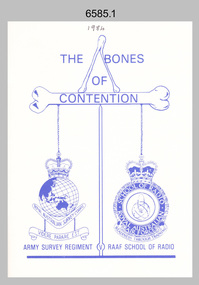
Photograph - Bones Day – Army Survey Regiment Verses RAAF School of Radio at Bendigo, Victoria, 1984
... Royal Australian Survey Corps RASvy Army Survey Regiment Army Svy Regt Fortuna Bones Day .1 - 'The Bones of Contention' title on booklet cover. '1984' hand written on top of cover Photos .2P to .41P – 'Bones Day 1984' annotated on cover sleeve. ...These 41 photographs were taken at Bones Day, an annual sports competition between the Army Survey Regiment and the RAAF School of Radio, at Bendigo on the 14th of November 1984. The two units took turns each year to host the event. The day competition usually comprised basketball, cricket, cross country, golf, pistol shooting, sailing, squash, rifle shooting, softball, tennis, touch football, tug-of-war and volleyball. The “big bone” trophy comprising a large bone from a beast housed inside a wooden framed glass case, was awarded to the winner of the day competition. The “O.H.A.R.A Rock” seen on the table in photo 6585.10P was awarded to the shooter with the lowest score in rifle shooting. The evening competition often included darts, carpet bowls, hookey, quoits and billiards/snooker. The “little bone” (a mounted chicken bone) was the consolation trophy awarded to the winner of the evening competition. The 3-hour bus trip for the visiting unit on their return was typically very raucous. The history of the Bones Day competition is best described in the booklet titled - Bones of Contention Souvenir Program. 1965. Refer to Item 6267. Photo 6585.41P is also published with Item 6276.5P.This item comprises the cover of a program booklet and a set of 40 photographs from Bones Day, an annual sports competition between the Army Survey Regiment and the RAAF School of Radio, held at Bendigo on the 14th of November 1984. The photographs were printed on photographic paper and are part of the Army Survey Regiment’s Collection. The colour A4 booklet cover and black and white photographs were scanned at 300 dpi. .1) – A5 size program booklet titled ‘The Bones of Contention’, buff card cover, graphics and internal text printed in purple. 32 pages dated 1984. .2) to .4) - Photo, black & white, 1984. Basketball. Army in darker tops, RAAF in white. .5) - Photo, black & white, 1984. Basketball. Unidentified participants from RAAF. .6) - Photo, black & white, 1984. Rifle Shooting. L to R: CPL Graham Johnston, unidentified. .7) & .8) - Photo, black & white, 1984. Rifle Shooting. Unidentified participants. .9) - Photo, black & white, 1984. Rifle Shooting. Unidentified officials at Range Control. .10) - Photo, black & white, 1984. Rifle Shooting. Unidentified participants from RAAF. The “O.H.A.R.A Rock” awarded to the shooter with the lowest score in rifle shooting is seen on the table. .11) - Photo, black & white, 1984. Pistol Shooting. Army CO LTCOL Jorge Gruszka. .12) - Photo, black & white, 1984. Pistol Shooting. L to R: Army CO LTCOL Jorge Gruszka, CPL Doug Home. .13) - Photo, black & white, 1984. Pistol Shooting. Army CO LTCOL Jorge Gruszka. .14) - Photo, black & white, 1984. Pistol Shooting. RAAF’s participants L to R: unidentified, CO WGCDR McCarthy, remainder unidentified. .15) - Photo, black & white, 1984. Pistol Shooting. ARMY’s participants L to R: CPL Doug Home, SSGT Davidson, SPR Andy Godden, CO LTCOL Jorge Gruszka. .16) & .17) - Photo, black & white, 1984. Pistol Shooting. ARMY and RAAF participants Back row L to R: CPL Doug Home, SSGT Davidson, unidentified RAAF participants (x2). Front row L to R: SPR Andy Godden, RAAF CO WGCDR McCarthy, Army CO LTCOL Jorge Gruszka. .18) to .25) - Photo, black & white, 1984. Softball. Unidentified ARMY & RAAF participants. .26) - Photo, black & white, 1984. Tennis. L to R: ARMY’s CPL John ‘Stormy’ Tempest, SPR Steve Coulson. .27) - Photo, black & white, 1984. Tennis. Unidentified participant. .28) - Photo, black & white, 1984. Tennis. CPL Ginny (Turner) Rowe, unidentified in background. .29) to .31) - Photo, black & white, 1984. Tennis. Unidentified participants. .32) - Photo, black & white, 1984. Tug-of-War. Army team lines up L to R: SPR Kerron South, CPL Leon Jackson, SPR Brett McAllister, CPL Jamie ‘Fish’ McRae, unidentified, CPL Roger Graf, CPL Peter Lefel. .33) - Photo, black & white, 1984. Tug-of-War. Army team pulling hard L to R: unidentified, CPL Jamie ‘Fish’ McRae, SPR Brett McAllister, CPL Leon Jackson, SPR Kerron South. .34) - Photo, black & white, 1984. Tug-of-War. Army and RAAF spectators. Centre foreground L to R: MAJ Bob Roche, Army CO LTCOL Jorge Gruszka, RAAF CO WGCDR McCarthy. .35) - Photo, black & white, 1984. Tug-of-War. RAAF team taking the strain on the rope. Unidentified participants. .36) - Photo, black & white, 1984. Tug-of-War. Army and RAAF teams shake hands after Army’s victory. .37) - Photo, black & white, 1984. Volleyball. Army’s team (light shirts) prepare to receive RAAF’s serve. L to R: CPL Rod Skidmore, CPL Ian Nichols, CPL Dan Cirsky, CPL Terry ‘TJ’ Wicker. .38) - Photo, black & white, 1984. Volleyball. Army’s CPL Rod Skidmore (light shirt) attempts to block a RAAF spike. Unidentified RAAF participants at left. Army team L to R: CPL Terry ‘TJ’ Wicker CPL Robin Marshall, CPL Dan Cirsky. .39) - Photo, black & white, Trophy presentation. L to R: RAAF CO WGCDR McCarthy presents ‘the Big Bone’ to Army’s CO LTCOL Jorge Gruszka. .40) - Photo, black & white, Trophy presentation. L to R: RAAF CO WGCDR McCarthy presents ‘the Little Bone’ to Army’s CO LTCOL Jorge Gruszka. .41) - Photo, black & white, Trophy presentation. L to R: RAAF CO WGCDR McCarthy presents an unidentified trophy to Army’s CO LTCOL Jorge Gruszka..1 - 'The Bones of Contention' title on booklet cover. '1984' hand written on top of cover Photos .2P to .41P – 'Bones Day 1984' annotated on cover sleeve.royal australian survey corps, rasvy, army survey regiment, army svy regt, fortuna, bones day -
 Bendigo Military Museum
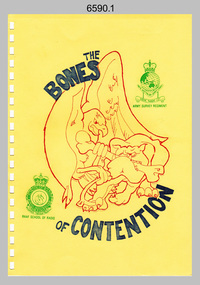
Photograph - Bones Day – Army Survey Regiment Verses RAAF School of Radio at Laverton, Victoria, 1985
... Royal Australian Survey Corps RASvy Army Survey Regiment Army Svy Regt Fortuna Bones Day .1 - 'The Bones of Contention' title on booklet cover. ...The 10 photographs were taken at Bones Day, an annual sports competition between the Army Survey Regiment and the RAAF School of Radio, at Laverton on the 13th of November 1985. The two units took turns each year to host the event. The day competition usually comprised basketball, cricket, cross country, golf, sailing, pistol shooting, squash, rifle shooting, softball, tennis, touch football, tug-of-war and volleyball. The “big bone” trophy comprising a large bone from a beast housed inside a wooden framed glass case, was awarded to the winner of the day competition. The “O.H.A.R.A Rock” was awarded to the shooter with the lowest score in rifle shooting. The evening competition often included darts, carpet bowls, hookey, quoits and billiards/snooker. The “little bone” (a mounted chicken bone) was the consolation trophy awarded to the winner of the evening competition. The 3-hour bus trip for the visiting unit on their return was typically very raucous. The history of the Bones Day competition is best described in the booklet titled - Bones of Contention Souvenir Program. 1965. Refer to Item 6267. This item comprises the cover of a program booklet and a set of 10 photographs taken at Bones Day, an annual sports competition between the Army Survey Regiment and the RAAF School of Radio, held at Laverton on the 13th of November 1985. The photographs were printed on photographic paper and are part of the Army Survey Regiment’s Collection. The colour A4 booklet cover and black and white photographs were scanned at 300 dpi. .1) – A4 size program booklet titled ‘The Bones of Contention’, buff card cover and colour graphics, internal text and cartoon graphics printed in purple. 32 pages dated 1985. .2) - Photo, black & white, 1985. Basketball teams. Back row L to R: unidentified (x2), Bob Croxton, unidentified, Danny Galbraith, unidentified, Steve Burke. Middle row L to R: Rob Jones, unidentified (x2), Sherri (Dally) Burke, unidentified, Evan Allanson, unidentified. Front row L to R: unidentified (x4), Brenton McDonald, unidentified, Max Shaw. .3) - Photo, black & white, 1985. Cricket teams. Back row L to R: unidentified, Bill Griggs, unidentified, Mick Hogan, unidentified, Jim Ash, Dave Wright, Bob Thrower. Middle row L to R: PTE Hudson, unidentified, Brett McAllister, unidentified (x5). Front row L to R: PTE Wigg, unidentified, Brian Partridge, unidentified, Graham Hales, unidentified (x3). .4) - Photo, black & white, 1985. Cross Country teams. Back row L to R: unidentified (x3), Peter Barrett unidentified (x2), Paul Davis, unidentified. Front row L to R: unidentified, Jeff Rudd, unidentified, Greg Rowe, unidentified (x2), Steve Winner, unidentified. .5) - Photo, black & white, 1985. Golf teams. Back row L to R: unidentified (x2), Brian Johnson, unidentified (x2). Front row L to R: Doug Arman, unidentified, Graeme Dowd, unidentified, Peter Imeson, unidentified (x2). .6) - Photo, black & white, 1985. Pistol Shooting teams. Back row L to R: unidentified, Doug Home, unidentified, Tony Clark, Ben Lucas. Front row L to R: unidentified (x2), Daryl Hockings CSM, unidentified, Max Colletti. .7) - Photo, black & white, 1985. Pistol Shooting teams. Back row L to R: unidentified, Greg Sulman, unidentified, Bob Bright, Tom Bloxham, Bob Hopper, unidentified (x2). Front row L to R: unidentified (x2), Dan Cirsky, unidentified (x3), Brad Peppler, unidentified. .8) - Photo, black & white, 1985. Softball teams. Back row L to R: Scheryl Delforce, unidentified, Le-Anne (Smallshaw) Shirley, unidentified, Raelene (Munting) Brodie, Carmel (Butler) Fauth, Gill Park. Middle row L to R: unidentified (x2), Viv (Hawkins) Doherty, unidentified, Avril (Bray) Lloyd, unidentified (x6). Front row L to R: Wendy (Leitinger) McCarthy, unidentified, Leah (Hoffman) Peppler, unidentified, Lorraine (Daly) Talbot-Smith, unidentified, Chris Gordon, unidentified. .9) - Photo, black & white, 1985. Tennis teams. Back row L to R: Damien Killeen, unidentified, Ozzie Slade, unidentified, Dennis Learmonth, unidentified. Middle row L to R: Carol Dunstan, unidentified, Ginny (Turner) Rowe, unidentified (x2), Steve Coulson. Front row L to R: unidentified (x4), Col McInness, Peter Ball. .10) - Photo, black & white, 1985. Touch Football teams. Back row L to R: unidentified, Paul Baker, Jeff Willey, Per Andersen, unidentified (x4). Middle row L to R: John ’Junior’ Whaling, Simon ‘Andy’ Capp, Daryl South, Ken Talbot-Smith, unidentified (x4). Front row L to R: Frank Downie, Peter ‘Spoon’ Lefel, Roy Hicks, Greg Oaten CSC, unidentified (x4). .11) - Photo, black & white, 1985. Tug-of-War teams. Back row L to R: unidentified (x2), Steve Burke, unidentified (x3). Middle row L to R: unidentified (x2), JB Zahra, unidentified, Mal Paterson, Geunther Ebenwaldner, unidentified, Peter ‘Spoon’ Lefel. Front row L to R: Kerron South, unidentified, Barry Hogan, unidentified (x2), Brett McAllister. .1 - 'The Bones of Contention' title on booklet cover. Photos .2P to .11P – 'Bones Day 1985' annotated on cover sleeve.royal australian survey corps, rasvy, army survey regiment, army svy regt, fortuna, bones day -
 Bendigo Military Museum
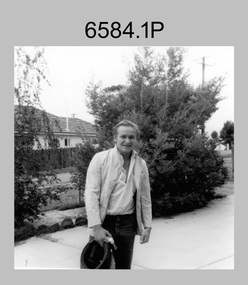
Photograph - Royal Australian Survey Corps Personnel – School of Military Survey, Bonegilla and Army Survey Regiment, Bendigo, 1977 to 1989
... This is a collection of 19 photographs of Royal Australian Survey Corps personnel taken at the School of Military Survey (SMS), Bonegilla and the Army Survey Regiment (ASR), Bendigo from 1977 to 1989. ...This is a collection of 19 photographs of Royal Australian Survey Corps personnel probably taken at the School of Military Survey, Bonegilla and the Army Survey Regiment, Bendigo from 1977 to 1989. ...Royal Australian Survey Corps RASvy Army Survey Regiment Army Svy Regt Fortuna .1P to .19P The are no annotations. ...This is a collection of 19 photographs of Royal Australian Survey Corps personnel taken at the School of Military Survey (SMS), Bonegilla and the Army Survey Regiment (ASR), Bendigo from 1977 to 1989. Personnel identified in photographs .1P to .6P were attending their initial employment training at the SMS. Personnel identified in the remaining photographs were posted to the ASR in the 1980s.This is a collection of 19 photographs of Royal Australian Survey Corps personnel probably taken at the School of Military Survey, Bonegilla and the Army Survey Regiment, Bendigo from 1977 to 1989. The black and white and colour photographs are printed on photographic paper and scanned at 300 dpi. They are part of the Army Survey Regiment Collection. .1) - Photo, black & white, c1977 Wolfgang Thun. .2) - Photo, black & white, c1977, Alan Wilkins. .3) - Photo, black & white, c1977, Scott Hatten. .4) - Photo, black & white, c1977, Mark Casey. .5) - Photo, black & white, c1977, Marty George. .6) - Photo, black & white, c1977, Mark Lander. .7) - Photo, black & white, c1980s, L to R: Chris ‘Charlie’ Brown, Jamie ‘Fish’ McRae. .8) - Photo, black & white, c1980s, L to R: Scott Payne, Steve Drummond. .9) - Photo, black & white, c1980s, David Murphy. .10) - Photo, black & white, c1980s, Bob Sheppard. .11) - Photo, black & white, c1980s, Lyall Camp. .12) - Photo, black & white, c1980s, Peter ‘Spoon’ Lefel. .13) - Photo, black & white, c1980s, L to R: Greg Honan, Jann (Caithness) Lambton-Young. .14) - Photo, black & white, c1980s, L to R: Brian Fauth – partially obscured, Mick Gillham, Sherri (Dally) Burke, Gordon Lowery. .15) - Photo, black & white, c1980s, Lorraine (Daly) Talbot-Smith. .16) - Photo, black & white, c1980s, Lance Strudwick. .17) - Photo, black & white, c1980s, L to R: Geunther Ebenwaldner – partially obscured, Roy Hicks. .18) - Photo, black & white, c1980s, L to R: Paul Hopes, Steve Drummond, Rob Straube. .19) - Photo, black & white, c1980s, L to R: Geunther Ebenwaldner – facing away, unidentified, Bob Thrower. .1P to .19P The are no annotations.royal australian survey corps, rasvy, army survey regiment, army svy regt, fortuna -
 Bendigo Military Museum
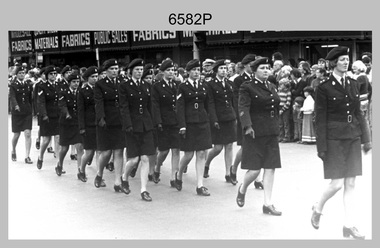
Photograph - Army Survey Regiment Freedom of Entry March, Bendigo CBD, 1977
... Royal Australian Survey Corps RASvy Army Survey Regiment Army Svy Regt Fortuna Personnel are named on a digital copy of this photo. ...The Freedom of Entry to the City was an honour conferred by the Bendigo City Council to the Army Survey Regiment in 1970. 1977 was the second time the unit exercised its freedom of marching into the city with swords drawn, bayonets fixed and drums beating. The honour is usually bestowed upon local regiments, in recognition of their dedicated service, and it is common for military units to periodically exercise their freedom by arranging a parade through the city. Led by the Regiment’s CO – LTCOL Bob Skitch, the unit marched down View St in the CBD, along Pall Mall and up Gaol Rd to the Queen Elizabeth II Oval. The ceremonial parade followed with a march past the guests of honour, the Mayor of Bendigo and military dignitaries. The parade concluded after formal inspections of the troops. The Regiment also exercised its Freedom of Entry with anniversary parades in 1980, 1985, 1990, 1992 and 1996.This photograph of the Army Survey Regiment was taken on the occasion of the Freedom of Entry to the City of Bendigo March in 1977. The photo was printed on photographic paper and scanned at 200 dpi. It is part of the Army Survey Regiment’s Collection. .1 - Photo, black & white, 1977. Female Contingent salutes on the march past the dais. Right file L to R: PTE Chris Meharg, CPL Di Chalmers, LCPL Lynn Johnson, PTE Debbie Brown, PTE Le-anne (Smallshaw) Shirley, PTE Janet (Chopping) Justin, PTE Deirdre Moorrees, CPL Sue (Lang) Spath, WO1 Marj Knight, LT Dianne (Norling) Harris CSC. Centre and left file L to R: SSGT Pat Lumsden - obscured, PTE Karen (Carmichael) Gloster, PTE Kerry (Brown) Collins- obscured, PTE Terry Martin, PTE Laurel (Ryant) Staley – obscured, PTE Tracey (Beckwith) Phillips, PTE Marrianne (Van De Zee) De Groot- obscured. Personnel are named on a digital copy of this photo.royal australian survey corps, rasvy, army survey regiment, army svy regt, fortuna -
 Bendigo Military Museum
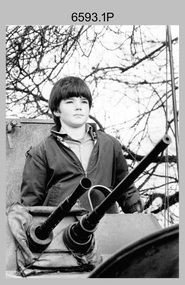
Photograph - Miss Golden North Charity Queen - 2LT Kathie Ryan Army Survey Regiment, Fortuna, Bendigo, 1985
... Army Survey Regiment’s Open Day Administrative Instruction are stored with these photographs. The Open Day was held on the weekend of 24-25 August 1985. Activities included static displays of armoured vehicles, map production displays, Army recruiting displays historical tours of Fortuna Villa, refreshments including Devonshire Teas, craft stalls, live music and children's rides. Royal Australian Survey Corps ...This is a set of 12 photographs of the Army Survey Regiment’s winning entrant in the Miss Golden North Charity Queen quest - 2LT Kathie Ryan, taken on three occasions in 1985. The following article was compiled by the unit summarising her campaign. ‘On Friday 20 September 1985, 2LT Kathie Ryan of the Army Survey Regiment, Bendigo, faced a selection panel of a different kind. Kathie is an entrant in this years Miss Australia Quest and is sponsored by her unit. Together with seven other girls from Central Victora, Kathie vied for the Regional Title of Miss Golden North, held on 20 September 1985. With enthusiastic shouts of joy from the members of the Regiment present, Kathie Ryan was crowned Miss Golden North 1986. She is now one of 19 finalists contesting the title “Miss Victoria 1986”. “It has been a very rewarding experience being involved in raising money for such a worthwhile cause” said Kathie. “Organisations such as the Spastic Society, have a very important role in helping people with disabilities. To be involved with this society has been both enjoyable and a great learning experience”. The aim of the Miss Australia Quest is to raise funds for the Spastic Society of Australia. Kathie entered the Quest in March then, together with her committee, started to raise money. Over the next seven months, many fund-raising activities were conducted. These included an Open Day at the Army Survey Regiment, a Bingo night, several raffles, and several tin shakes in the streets of Bendigo as well a participating in several of the functions organised at a Regional or State level in the name of the Spastic Society. The total raised this year was in excess of $11,500. The Army Survey Regiment has now had 3 entrants in the Miss Australia Quest since 1981 and has raised over $23,000 for the Spastic Society in that time’ An abbreviated article with photo 6593.4P was published on page 12 of the Army Newspaper on 28 November 1985. Two articles with photographs were published in the Bendigo Advertiser Newspaper on 23 September and 30 October 1985. Clippings from these newspapers, a detailed breakdown of the funds raised during the campaign and the Army Survey Regiment’s Open Day Administrative Instruction are stored with these photographs. The Open Day was held on the weekend of 24-25 August 1985. Activities included static displays of armoured vehicles, map production displays, Army recruiting displays historical tours of Fortuna Villa, refreshments including Devonshire Teas, craft stalls, live music and children's rides.This is a set of 12 photographs of the Army Survey Regiment’s winning entrant in the Miss Golden North Quest - 2LT Kathie Ryan, taken on three occasions in 1985. The photographs were printed on photographic paper and are part of the Army Survey Regiment’s Collection. The colour and black and white photographs were scanned at 300 dpi. Included in this set are negatives of photo 6593.4P, 6593.5P and 6593.6P. .1) - Photo, black & white, Open Day 23-24 Aug 1985. Unidentified visitor on APC vehicle. .2) - Photo, black & white, Open Day 23-24 Aug 1985. Unidentified pipe band performs in front of APC vehicle. .3) - Photo, black & white, Open Day 23-24 Aug 1985. View of Fortuna Villa. .4) - Photo, black & white, Miss Australia Quest Presentation at All seasons Motor Inn 20 Sep 1985. 2LT Kathie Ryan crowned Miss Golden North Queen by former holder of the title Miss Celine Hull. Unidentified compere in background. .5) - Photo, black & white, Miss Australia Quest Presentation at All seasons Motor Inn 20 Sep 1985. 2LT Kathie Ryan reacts winning the Miss Golden North Queen. Winner of the Miss Golden North Charity Queen title Miss Noelene Earle is on her right. .6) - Photo, black & white, Miss Australia Quest Presentation at All seasons Motor Inn 20 Sep 1985. Title winners L to R: Miss Golden North Charity Queen - Noelene Earle, Miss North-West/Sunraysia & Charity Queen – Jo-Anne Collier and Miss Golden North Queen - 2LT Kathie Ryan. .7) & .8) - Photo, colour, Miss Australia Quest Presentation at All seasons Motor Inn 20 Sep 1985. 2LT Kathie Ryan is escorted to the ceremony dais by LT Greg Oaten CSC. .9) - Photo, colour, Miss Australia Quest Presentation at All seasons Motor Inn 20 Sep 1985. 2LT Kathie Ryan with her escorts L to R: LT Greg Oaten CSC and CAPT Neil Taylor. .10) - Photo, colour, Miss Australia Quest Presentation at All seasons Motor Inn 20 Sep 1985. Miss Golden North Queen 2LT Kathie Ryan with her organising committee L to R: SPR Sherri (Dally) Burke, WO2 Pat Lumsden, RSM WO1 Bob Mason, 2LT Kathie Ryan, MAJ Alex McLennan - President, SPR Gae (Robinson) Amato – Secretary, CPL Mick Minchin – Treasurer. .11) - Photo, colour, 1985. MAJ Alex McLennan presents 2LT Kathie Ryan with the Miss Golden North Queen prizes she had won at a celebration BBQ. In background L to R: SPR Wally Twidale, unidentified, SPR Dave Lambton-Young, SPR Jann (Caithness) Lambton-Young, unidentified, Mrs Pam Mason, WO2 Pat Lumsden. .12) - Photo, colour, 1985. L to R: MAJ Alex McLennan, Miss Golden North Queen 1985 Miss Celine Hull, CO LTCOL Jorge Gruszka, CPL Mick Minchin, Miss Golden North Queen 1986 2LT Kathie Ryan. 2x unidentified ladies in background double exposure.‘Miss Australia Quest 1985' annotated on cover sleeve. .7P to .11P – names annotated on back of photographs. ’15 October 1985’ annotated on back of photographs .7P to .9P is probably incorrect, based on other reports and newspaper articles. royal australian survey corps, rasvy, army survey regiment, army svy regt, fortuna -
 Bendigo Military Museum
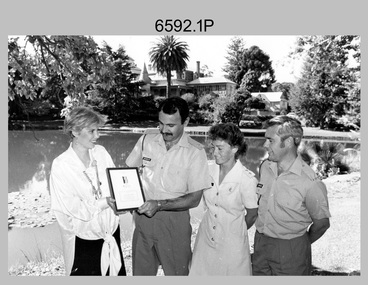
Photograph - Miss Victoria’s Visit to the Army Survey Regiment, Fortuna, Bendigo, 1986
... Army Survey Regiment by Miss Victoria on the 19th of April 1986. Her visit was hosted by the CO - LTCOL Don Swiney MBE. Although a list of Miss Victoria former winners is available on-line, the visitor is not identified as it is unclear she was the 1985 or 1986 winner. It is probable the presentation of the certificate in photo .1P was related to a fundraising donation by the unit to Miss Victoria’s charity. Royal Australian Survey Corps ...This is a set of four photographs of a visit to the Army Survey Regiment by Miss Victoria on the 19th of April 1986. Her visit was hosted by the CO - LTCOL Don Swiney MBE. Although a list of Miss Victoria former winners is available on-line, the visitor is not identified as it is unclear she was the 1985 or 1986 winner. It is probable the presentation of the certificate in photo .1P was related to a fundraising donation by the unit to Miss Victoria’s charity.This is a set of four photographs of a visit to the Army Survey Regiment by Miss Victoria on the 19th of April 1986. The black & white photographs were printed on photographic paper and are part of the Army Survey Regiment’s Collection. The photographs were scanned at 300 dpi. .1) - Photo, black & white, 1986. L to R: Miss Victoria, MAJ Alex McLennan, LT Carol Dunstan, CPL Mick Minchin. .2) & .3) - Photo, black & white, 1986. L to R: Miss Victoria, CO - LTCOL Don Swiney MBE. .4) - Photo, black & white, 1986. Miss Victoria on the stairway to the top floor of Fortuna Villa.‘Miss Victoria Visit 1986' annotated on cover sleeve.royal australian survey corps, rasvy, army survey regiment, army svy regt, fortuna -
 Bendigo Military Museum
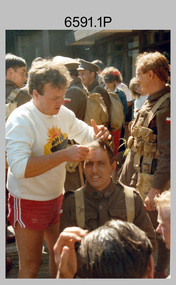
Photograph - The ANZACS TV Series - Army Survey Regiment’s Extras, Phillip Island, Victoria, 1985
... The producers provided ample refreshments back at Cowes Motor Inn at the end of the day, before Army Svy Regt’s 28 personnel departed on the 4-hr trip back to Bendigo. Royal Australian Survey Corps RASvy Army Survey Regiment Army Svy Regt Fortuna ‘Filming of “ANZACS” 1985’ annotated on cover sleeve. ...This is a set of six photographs of Army Survey Regiment personnel who volunteered as extras in the ANZACS TV Series filmed in 1985. Many of the extras playing the roles of Australian soldiers were serving members of the Army Survey Regiment, Bendigo and the Armoured Regiment, Puckapunyal. This was done to keep costs down so that actors did not have to learn how to act as soldiers or to have to teach them how to use the weapons. Army Svy Regt’s 28 personnel left Bendigo in the early hours of the morning arriving at Phillip Island’s Cowes Motor Inn. Wardrobe staff make-up artists dressed the soldiers from both units in authentic WW1 uniforms in readiness for filming at Woolamai Surf Beach, on the other side of Phillip Island. Filming for the day involved a battle scene simulation of the beach landings at Gallipoli, Turkey. A long day of filming ensued, with 8 arduous re-takes of charges from the beach to the steep cliffs, and the scrubland beyond the cliffs before the producers were satisfied with the footage. The producers provided ample refreshments back at Cowes Motor Inn at the end of the day, before Army Svy Regt’s 28 personnel departed on the 4-hr trip back to Bendigo. This is a set of six photographs of Army Survey Regiment personnel who volunteered as extras in the ANZACS TV Series filmed at Phillip Island, Victoria in 1985. The colour photographs. were printed on photographic paper and are part of the Army Survey Regiment’s Collection. The photographs were scanned at 300 dpi. A newspaper article published by the Bendigo Advertiser on the 29th of October 1985 is stored with the photos. .1) - Photo, colour, 1985. A hairdresser attends to Garry Hudson’s hair at the Cowes Motor Inn. Glen Weatherall is on far right. .2) - Photo, colour, 1985. Production staff preparing a scene at the cliff base at Woolamai Surf Beach. .3) - Photo, colour, 1985. A make-up artist applies simulated wounds to an unidentified soldier. .4) - Photo, colour, 1985. Production staff preparing a beach landing scene. .5) - Photo, colour, 1985. Extras from the Army Svy Regt and 1st Armd Regt gather at Woolamai Surf Beach. L to R in foreground: Gary Tremain, Graham Hales, unidentified, Dave Lawler, unidentified. .6) - Photo, colour, 1985. The 28 extras from the Army Svy Regt at Woolamai Surf Beach. Standing L to R: Terry McIntyre, unidentified, Ian Fitzgerald, unidentified, John Reid, unidentified, Gary Tremain, unidentified (x2), Chad Hardwick, unidentified, Dave Lawler, Barry Hogan, Terry Danger, Peter Imeson, Garry Hudson. Kneeling L to R: unidentified, Peter Ball, Harald Mai, Paul Baker, Alan Staley, Ian McKenzie, Brad Peppler. Sitting: Rod Skidmore. ‘Filming of “ANZACS” 1985’ annotated on cover sleeve.royal australian survey corps, rasvy, army survey regiment, army svy regt, fortuna -
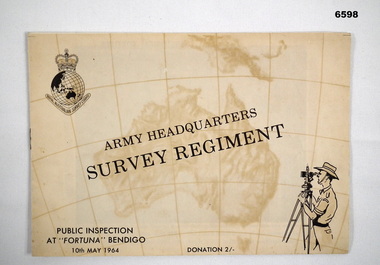 Bendigo Military Museum
Pamphlet - Army Headquarters Survey Regiment Tour Booklet 1964, Army Headquarters Survey Regiment, Circa 1964
... Printed buff coloured photo of Australia on a 4 x page folded A5 booklet. Contains a black printed Survey Corps badge , Surveyor characture and Title "Army Survey Headquarters Survey Regiment" on the cover. ...Army Occupied Fortuna from 1942 - 1996. Royal Australian Survey Corps RASvy Fortuna Army Survey Regiment Army Svy Regt ASR "Public Inspection at 'Fortuna' Bendigo 10th May 1964" Donation 2/- Printed buff coloured photo of Australia on a 4 x page folded A5 booklet. ...It is believed that this booklet was produced for visitors to a Fortuna Villa Open Day in 1964. Contains historical photos of the Fortuna Villa Entrance Hall and Music Room. Army Occupied Fortuna from 1942 - 1996.Printed buff coloured photo of Australia on a 4 x page folded A5 booklet. Contains a black printed Survey Corps badge , Surveyor characture and Title "Army Survey Headquarters Survey Regiment" on the cover. The booklet contains other selected early photographs of Fortuna and a diagram of the layout of the grounds. Pages 3 and 4 contain photographs and descriptions of Field surveying from the period."Public Inspection at 'Fortuna' Bendigo 10th May 1964" Donation 2/- royal australian survey corps, rasvy, fortuna, army survey regiment, army svy regt, asr -
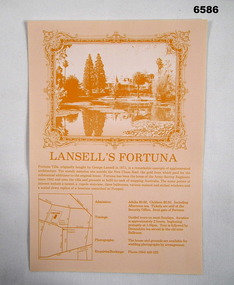 Bendigo Military Museum
Flyer - Lansell's Fortuna - Flyer, Army Survey Regiment, Circa 1980
... Army tenure. A number of different versions of the Tour booklet were produced. Each version had a different colour cover. The orange covered edition of the booklet was the last version produced and printed and this flyer was produced as a handout companion for those tours. Contains a photograph of Fortuna Villa and a short history as well as location, cost, timings, other activities and booking information. Royal Australian Survey Corps ...History of Fortuna Villa booklets were produced covering owners and occupiers, the building and the tours during Army tenure. A number of different versions of the Tour booklet were produced. Each version had a different colour cover. The orange covered edition of the booklet was the last version produced and printed and this flyer was produced as a handout companion for those tours. Contains a photograph of Fortuna Villa and a short history as well as location, cost, timings, other activities and booking information.The single page orange printed Flyer is for the Fortuna Tours conducted by the Army Survey Regiment. The Flyer has a photograph of Fortuna Villa taken from across the lake and is printed in orange on gloss paper. It contains a location diagram and details about the tours.royal australian survey corps, rasvy, fortuna, army survey regiment, army svy regt, asr -
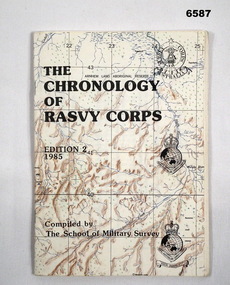 Bendigo Military Museum
Booklet - The Chronology of the Royal Australian Survey Corps - Ed2 1985, School of Military Survey, Bonegilla, Vic, 24.06.1985
... Future and final editions of the History of the Royal Australian Survey Corps have used this document as part of their research. Royal Australian Survey Corps RASvy Fortuna Army Survey Regiment Army Svy Regt School of Military Survey Compiled and printed by the School of Military Survey A5 paper booklet, 56 x pages and stapled. ...This is the second Edition of the "Chrology of the Royal Australian Survey Corps" produced in 1985 by the officers at the School of Military Survey (SMS). The First Edition produced in 1979 was also produced at the SMS. Since the first edition was produced, a definitive history of the Corps has been published by Brigadier Fitzgerald in his book "Lebanon to Labuan" in 1980 and is the story of the Corps during WWII. This new edition has been completely revised and updated. In order that amendments for future editions may easily be made, this document has compiled on computer. Signed LTCOL JG Corless Commanding Officer SMS. Future and final editions of the History of the Royal Australian Survey Corps have used this document as part of their research.A5 paper booklet, 56 x pages and stapled. Cover is a printed map with title and printed versions of the initial Australian Survey Corps Badge, the "King's and Queen's Crown" versions of the Royal Australian Survey Corps badges. The booklet contains computer text and poor quality B/W photographs.Compiled and printed by the School of Military Surveyroyal australian survey corps, rasvy, fortuna, army survey regiment, army svy regt, school of military survey -
 Bendigo Military Museum
Pamphlet - Manual of Land Warfare - Employment of RASvy - Survey Training, School of Military Survey, Bonegilla, Vic, 1984
... Royal Australian Survey Corps RASvy Fortuna Army Survey Regiment Army Svy Regt ASR School of Military Survey On the front cover: "A 7610 -14 - 1332" "As proposed by SMS April 1985" 45 x page A4 paper pamphlet containing text and diagrams. ...This document is a draft proposal by the School of Military Survey (SMS) for the Manual of Land Warfare Volume 1, Phamphlet No1 - Employment of RASvy - Part 2, Survey Training 1984. The pamphlet describes the responsibilities and principles of employment of RASvy units and elements in the area of operations and in the support area. It outlines the roles, characteristics and tasks of RASvy units and elements, but no attempt has been made to detail staff or technical procedures. The document being a draft, contains many blank pages for additional information to be added prior to publication. RASvy was disbanded in 1996.45 x page A4 paper pamphlet containing text and diagrams. Buff coloured light card covers with a plastic comb binding.On the front cover: "A 7610 -14 - 1332" "As proposed by SMS April 1985"royal australian survey corps, rasvy, fortuna, army survey regiment, army svy regt, asr, school of military survey -
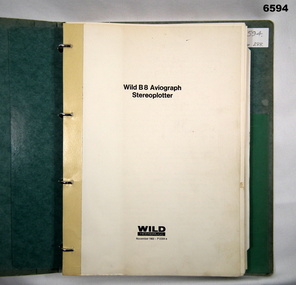 Bendigo Military Museum
Manual - Wild Heerbrugg B8 Aviograph Stereoplotter Manual 1963, Wild Heerbrugg, Germany, 1963
... Australian Survey Corps from 1965 onwards. They were later upgraded with tri axis locators for capturing digital topographical data. Royal Australian Survey Corps RASvy Fortuna Army ...Wild Heerbrugg B8 Aviograph Stereoplotters were a very accurate piece of equipment for the extraction of topographical information from stereo air photography. This is an operating manual covering all aspects of the Wild B8 Stereoplotter. Chapters include, construction, descriptions of the optical train, electrical equipment, technical data, assembly (adjustment, instructions for use and maintenance). They were widely used throughout the Royal Australian Survey Corps from 1965 onwards. They were later upgraded with tri axis locators for capturing digital topographical data.Green hard covered operating manual covering all aspects of the Wild B8 Stereoplotter. Chapters include, construction, descriptions of the optical train, electrical equipment, technical data, assembly (adjustment, instructions for use and maintenance). There are 70 x pages of text and plans and diagrams. There are 33 x unnumbered pages of photographs, diagrams and tables. Additional photocopied pages added "P2 Relative Orientation - Semi Numerical Method." "1927" (Presumed to be the Serial Number of the B8 Stereoplotter that the manual was used with).royal australian survey corps, rasvy, fortuna, army survey regiment, army svy regt, asr -
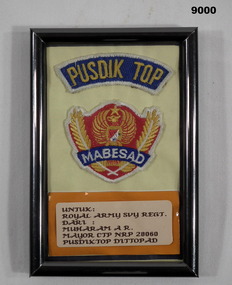 Bendigo Military Museum
Souvenir - Pusdik Top-Topography Education and Training Centre Mabesad - Army Headquarters (Indonesia), Topography Education and Training Centre, September 1992
... Souvenir artefact presented to the Army Survey Regiment by a visiting member of the Indonesian Topography Education and Training Centre. Royal Australian Survey Corps RASvy Army Survey Regiment Army Svy Regt A framed artefact with Indonesian cloth badge and writing. ...Souvenir artefact presented to the Army Survey Regiment by a visiting member of the Indonesian Topography Education and Training Centre.A framed artefact with Indonesian cloth badge and writing. Paper label with text.royal australian survey corps, rasvy, army survey regiment, army svy regt
