
Showing 53 items matching "australian war correspondent"
-
 National Vietnam Veterans Museum (NVVM)
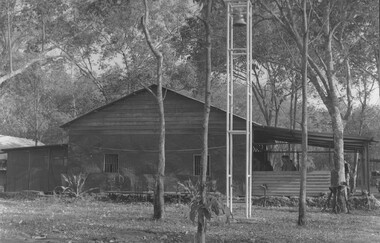
Photograph, Gibbons, Denis, Burgess Bell
... Pat Burgess - Australian War Correspondent...A black and white photograph of the non-denominational chapel at 1st Australian Task Force Headquarters, Nui Dat, Phuoc Tuy Province, South Vietnam. The bell, located in the tower, was donated by war correspondant Pat Burgess - an Australian War correspondent, simply called "Burgess Bell" by all....Australian infantry battalions, posting compelling war images from within many combat zones before being flown out in late November 1970 after sustaining injuries. The images held within the National Vietnam Veterans Museum make up the Gibbons Collection. Photograph 1st ATF Base Nui Dat Phuoc Tuy Province Non Demoninational Chapel Pat Burgess - Australian War Correspondent ...Denis Gibbons (1937 – 2011) Trained with the Australian Army, before travelling to Vietnam in January 1966, Denis stayed with the 1st Australian Task Force in Nui Dat working as a photographer. For almost five years Gibbons toured with nine Australian infantry battalions, posting compelling war images from within many combat zones before being flown out in late November 1970 after sustaining injuries. The images held within the National Vietnam Veterans Museum make up the Gibbons Collection. A black and white photograph of the non-denominational chapel at 1st Australian Task Force Headquarters, Nui Dat, Phuoc Tuy Province, South Vietnam. The bell, located in the tower, was donated by war correspondant Pat Burgess - an Australian War correspondent, simply called "Burgess Bell" by all.photograph, 1st atf base, nui dat, phuoc tuy province, non demoninational chapel, pat burgess - australian war correspondent, burgess bell, gibbons collection catalogue, denis gibbons, photographer, vietnam war -
 National Vietnam Veterans Museum (NVVM)
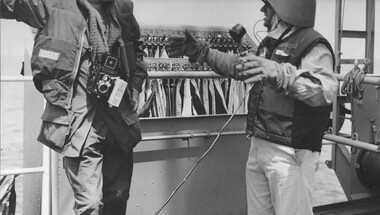
Photograph, Gibbons, Denis, Briefing Denis Gibbons
... ...Australian War Correspondent...A black and white photograph of Tonkin Gulf, North Vietnam 25th May 1967 Lt Stanley L Masterton briefs Australian War Correspondent, Denis Gibbons, during his visit to the Australian Guided Missile Destroyer HMAS Hobart. the briefing is taking place on the flag deck, where a large set of signal flags are visible in a ready use locker behind them. the ship, was at that time engaging, with ship to shore gunfire, a major "choke point" (an area where the North Vietnamese were preparing war supplies to be shipped to their units in South Vietnam) at the township of "Vinh". ...Australian infantry battalions, posting compelling war images from within many combat zones before being flown out in late November 1970 after sustaining injuries. The images held within the National Vietnam Veterans Museum make up the Gibbons Collection. HMAS Hobart Lt Stanley L Masterton Denis Gibbons Vinh Hainan Island Haiphong Harbour Gibbons Collection Catalogue Tonkin Gulf Australian War Correspondent ...Denis Gibbons (1937 – 2011) Trained with the Australian Army, before travelling to Vietnam in January 1966, Denis stayed with the 1st Australian Task Force in Nui Dat working as a photographer. For almost five years Gibbons toured with nine Australian infantry battalions, posting compelling war images from within many combat zones before being flown out in late November 1970 after sustaining injuries. The images held within the National Vietnam Veterans Museum make up the Gibbons Collection.A black and white photograph of Tonkin Gulf, North Vietnam 25th May 1967 Lt Stanley L Masterton briefs Australian War Correspondent, Denis Gibbons, during his visit to the Australian Guided Missile Destroyer HMAS Hobart. the briefing is taking place on the flag deck, where a large set of signal flags are visible in a ready use locker behind them. the ship, was at that time engaging, with ship to shore gunfire, a major "choke point" (an area where the North Vietnamese were preparing war supplies to be shipped to their units in South Vietnam) at the township of "Vinh". Hobart was expecting, at any moment, counted battery fire from North Vietnamese coastal batteries after radar stations on Hainan Island, Near Haiphong Harbour and at Vinh had locked onto Horart's position with very accurate triangular positioning. Lt Masterton was informing Gibbons of the incoming enemy fire and was worried he (Gibbons) was not wearing a helment, gibbons, most respectfully advised Lt Masterton that he could not operate his cameras with a helmet on. Hobart immediately turned and saled, very rapidly, out to sea as the counter battery fire commencedAustralian War memorial negative: Navy 13503hmas hobart, lt stanley l masterton, denis gibbons, vinh, hainan island, haiphong harbour, gibbons collection catalogue, tonkin gulf, australian war correspondent, australian guided missile destroyer, photograhp, enemy fire -
 National Vietnam Veterans Museum (NVVM)
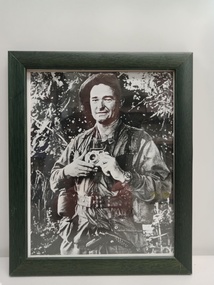
Photograph - Image Pat Burgess
... Pat Burgess - Australian War Correspondent...Pat Burgess - Australian War Correspondent Vietnam 1965-1966 Burgess 1RAR Noble journalist On reverse " Pat Burgess in his "warco gear". ...This is a photograph of Francis Patrick (Pat) Burgess, journalist, who travelled to South Vietnam with the 1st Battalion, Royal Australian Regiment. He recorded the experiences of 6 Platoon, `B’ Company. This image was taken by Sgt Bill Noble, who served in 1 RAR.Black and white photo of a man in uniform in jungle setting holding a camera. He is wearing an army issue hat and a belt with a canteen and a revolver in a holster attached. He is looking at the camera with an amused look on his face. On reverse " Pat Burgess in his "warco gear". Pat attached himself to B Coy 1 RAR on the first tour of 1st Battalion RAR 1965-1966."pat burgess - australian war correspondent, vietnam, 1965-1966, burgess, 1rar, noble, journalist -
 Monbulk RSL Sub Branch
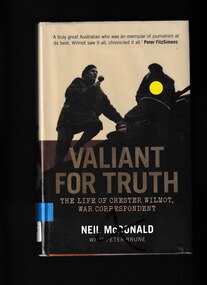
Book, Neil McDonald et al, Valiant for truth: The life of Chester Wilmot, war correspondent, 2016
... Chester Wilmot was a renowned Australian war correspondent, broadcaster, journalist and writer. ...Chester Wilmot was a renowned Australian war correspondent, broadcaster, journalist and writer. ...Valiant for the truth charts Wilmots exceptional life as he reported key events of the twentieth century.Notes, index, bibliography, maps, p.463.non-fictionValiant for the truth charts Wilmots exceptional life as he reported key events of the twentieth century.world war 1939-1945 - journalists - biography, wilmot chester 1911-1954 -
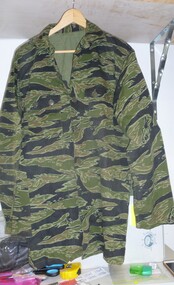 National Vietnam Veterans Museum (NVVM)
Uniform - Uniform, Army, Camouflage Shirt
... Australian war correspondent Denis Gibbons lived and worked in South Vietnam for five years. ...Australian war correspondent Denis Gibbons lived and worked in South Vietnam for five years. ...Australian war correspondent Denis Gibbons lived and worked in South Vietnam for five years. He arrived in Vietnam in January 1966 and operated from the 1st Australian Task Force Headquarters during his time in Vietnam. His unique photographs were shot in the thick of action, giving them an immediacy and a real sense of the danger that Australian soldiers lived for most of the time in Vietnam. During his time in Vietnam. He took tens of thousands of his black-and-white and colour photographs. Gibbons was flown out of Vietnam in November 1970, after being wounded when an Armoured Personnel Carrier he was travelling in hit an enemy mine; he was wounded six times over the course of his five years in Vietnam.Camoflague shirt with two pockets on chest with two buttons on each. One button missing from top of shirt. One button missing from bottom of jacket. Tailor made in Vietnam.clothing, camoflague shirt, denis gibbons, war photographers - australia -
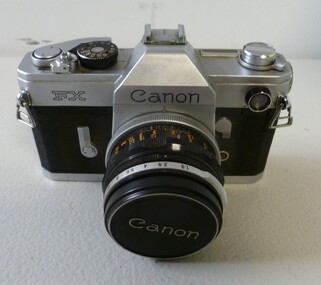 National Vietnam Veterans Museum (NVVM)
Functional Object - Canon Camera
... Australian war correspondent Denis Gibbons lived and worked in South Vietnam for five years. ...Australian war correspondent Denis Gibbons lived and worked in South Vietnam for five years. ...Australian war correspondent Denis Gibbons lived and worked in South Vietnam for five years. He arrived in Vietnam in January 1966 and operated from the 1st Australian Task Force Headquarters during his time in Vietnam. His unique photographs were shot in the thick of action, giving them an immediacy and a real sense of the danger that Australian soldiers lived for most of the time in Vietnam. During his time in Vietnam. He took tens of thousands of his black-and-white and colour photographs. Gibbons was flown out of Vietnam in November 1970, after being wounded when an Armoured Personnel Carrier he was travelling in hit an enemy mine; he was wounded six times over the course of his five years in Vietnam.Black and silver FX SLE with FL lens canon camera with attachment for flash on top (no flash), no straps. Takes film. On Front of camers - Canon FX. On back - Canon Camera Company Inc. No: 223389. On inside film compartment F612camera, denis gibbons, war photographers - australia -
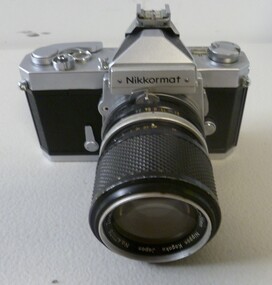 National Vietnam Veterans Museum (NVVM)
Functional Object - Camera Nikkormat
... Australian war correspondent Denis Gibbons lived and worked in South Vietnam for five years. ...Australian war correspondent Denis Gibbons lived and worked in South Vietnam for five years. ...Australian war correspondent Denis Gibbons lived and worked in South Vietnam for five years. He arrived in Vietnam in January 1966 and operated from the 1st Australian Task Force Headquarters during his time in Vietnam. His unique photographs were shot in the thick of action, giving them an immediacy and a real sense of the danger that Australian soldiers lived for most of the time in Vietnam. During his time in Vietnam. He took tens of thousands of his black-and-white and colour photographs. Gibbons was flown out of Vietnam in November 1970, after being wounded when an Armoured Personnel Carrier he was travelling in hit an enemy mine; he was wounded six times over the course of his five years in Vietnam.Black and silver camera - Nikkormat FT SLR with a zoon lens and attaching plate for flash. No straps. Takes film. Quite heavy. Has provision for michrphone and tripodcamera, dennis gibbons, war photographers - australia -
 Frankston RSL Sub Branch
Statuette, Mates
... Australian serviceman assisting a wounded comrade. The statuette depicts a scene from a famous moving film taken in New Guinea during World War 2 by Australian War Correspondent, Damien Peter Parer who was attached to the Australian Military Forces. ...Australian serviceman assisting a wounded comrade. The statuette depicts a scene from a famous moving film taken in New Guinea during World War 2 by Australian War Correspondent, Damien Peter Parer who was attached to the Australian Military Forces. ...Small statuette depicting an Australian serviceman assisting a wounded comrade. The statuette depicts a scene from a famous moving film taken in New Guinea during World War 2 by Australian War Correspondent, Damien Peter Parer who was attached to the Australian Military Forces. The statuette is made from Pewter and is mounted on a stained wooden base. The following text statement is copied from the AWM website and describes the image in further detail: During the advance on Salamaua VX89711 Sergeant Gordon Raymond Charles Ayre MM, a 58/59th Battalion bandsman from Shepparton, Victoria, in pouring rain assists a wounded mate, VX132355 Private William Oswald Wallace Johnson, of the same unit, across Alan's (Allen's?) Creek to an advanced regimental aid post. Johnson had been wounded by a Japanese grenade on the 13th of July 1943 during an attack on the "coconuts" area. Sergeant Ayre was awarded the military medal for his performance during this action. This is one of the iconic images of the Second World War. (Still from AWM film F01866 "Assault on Salamaua", newsreel by Damien Parer)The wooden base has a label which is inscribed with the following: "MATES" Heritage Fine Arts, Limited Edition -
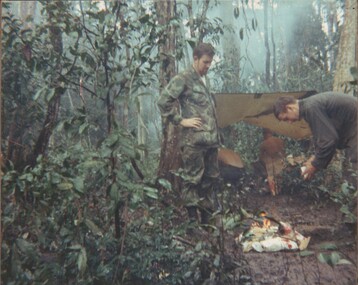 National Vietnam Veterans Museum (NVVM)
Photograph, Gibbons, Denis, Denis Gibbons 4
... Australian United Press International War Correspondent Denis Gibbons, in a night harbour position with members of the 8th Battalion from the Royal Australian Regiment, watches a medic burn contaminated dressings following the treatment of wounded diggers in a contact with the NVA/VietCong.... - Australia 8th Battalion Royal Australian Regiment Medic NVA/VC Gibbons Collection Catalogue 8 RAR Denis Gibbons Photographer Vietnam War (1961-1975). History- Sources NVA Viet Cong A colour photograph of Hat Dich, South Vietnam, December 1969. Australian United Press International War Correspondent ...Denis Gibbons (1937 – 2011) Trained with the Australian Army, before travelling to Vietnam in January 1966, Denis stayed with the 1st Australian Task Force in Nui Dat working as a photographer. For almost five years Gibbons toured with nine Australian infantry battalions, posting compelling war images from within many combat zones before being flown out in late November 1970 after sustaining injuries. The images held within the National Vietnam Veterans Museum make up the Gibbons Collection. A colour photograph of Hat Dich, South Vietnam, December 1969. Australian United Press International War Correspondent Denis Gibbons, in a night harbour position with members of the 8th Battalion from the Royal Australian Regiment, watches a medic burn contaminated dressings following the treatment of wounded diggers in a contact with the NVA/VietCong.photograph, hat dich, united press international, war correspondents - australia, 8th battalion, royal australian regiment, medic, nva/vc, gibbons collection catalogue, 8 rar, denis gibbons, photographer, vietnam war, (1961-1975). history- sources, nva viet cong -
 Melbourne Legacy
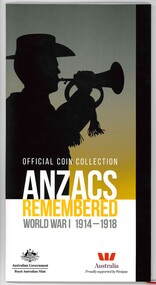
Album, Anzacs Remembered World War 1 1914-1918 Offical Coin Collection, 2015
... Based on photos chosen from the Australian War Memorial archive, the ANZAC Official Coin Collection includes fourteen coins that have been designed and produced by the Royal Australian Mint to mark significant aspects that occurred in the First World War. Our set contains 13 coins. The First World War themes featured in this collection include the war years, mateship, Light Horsemen, the home front, the Royal Australian Navy, Remembrance Day, Nurses, wartime animals, The Last Post, War Correspondents, Australian Flying Corps, Australian Imperial Force, the Unknown Soldier, and the Gallipoli Landing. ...Based on photos chosen from the Australian War Memorial archive, the ANZAC Official Coin Collection includes fourteen coins that have been designed and produced by the Royal Australian Mint to mark significant aspects that occurred in the First World War. Our set contains 13 coins. The First World War themes featured in this collection include the war years, mateship, Light Horsemen, the home front, the Royal Australian Navy, Remembrance Day, Nurses, wartime animals, The Last Post, War Correspondents, Australian Flying Corps, Australian Imperial Force, the Unknown Soldier, and the Gallipoli Landing. ...A display folder for a set of 20 cent coins issued in 2015 to commemorate 100 years of Anzac and the First World War. Based on photos chosen from the Australian War Memorial archive, the ANZAC Official Coin Collection includes fourteen coins that have been designed and produced by the Royal Australian Mint to mark significant aspects that occurred in the First World War. Our set contains 13 coins. The First World War themes featured in this collection include the war years, mateship, Light Horsemen, the home front, the Royal Australian Navy, Remembrance Day, Nurses, wartime animals, The Last Post, War Correspondents, Australian Flying Corps, Australian Imperial Force, the Unknown Soldier, and the Gallipoli Landing. Project was issed by the Royal Mint and supported by the Australian War Memorial, Newscorp, Westpac and Legacy. The set, including coins was used as a prize in the JPESA speaking contest that Melbourne Legacy ran for many years until 2022.A type of prize given at a Legacy speaking competition that commemorates World War 1.Cardboard folder for a coin collection to be inserted in. Folds out into 6 sections. Red cord to tie the folder closed.coins, world war one -
 Melbourne Legacy
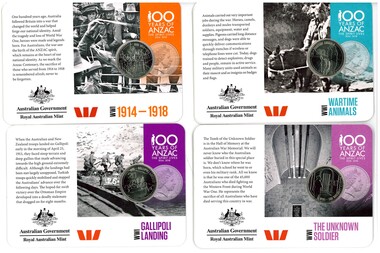
Currency, Anzacs Remembered World War 1 1914-1918 Offical Coin Collection, 2015
... Australian War Memorial archive, the ANZAC Official Coin Collection includes fourteen coins that have been designed and produced by the Royal Australian Mint to mark significant aspects that occurred in the First World War. Our set contains 13 coins - missing the Australian Flying Corps. There is also a folder to store the set in. The First World War themes featured in this collection include the war years, mateship, Light Horsemen, the home front, the Royal Australian Navy, Remembrance Day, Nurses, wartime animals, The Last Post, War Correspondents...Australian War Memorial archive, the ANZAC Official Coin Collection includes fourteen coins that have been designed and produced by the Royal Australian Mint to mark significant aspects that occurred in the First World War. Our set contains 13 coins - missing the Australian Flying Corps. There is also a folder to store the set in. The First World War themes featured in this collection include the war years, mateship, Light Horsemen, the home front, the Royal Australian Navy, Remembrance Day, Nurses, wartime animals, The Last Post, War Correspondents ...A set of thirteen 20 cent coins issued in 2015 to commemorate 100 years of Anzac and the First World War. Based on photos chosen from the Australian War Memorial archive, the ANZAC Official Coin Collection includes fourteen coins that have been designed and produced by the Royal Australian Mint to mark significant aspects that occurred in the First World War. Our set contains 13 coins - missing the Australian Flying Corps. There is also a folder to store the set in. The First World War themes featured in this collection include the war years, mateship, Light Horsemen, the home front, the Royal Australian Navy, Remembrance Day, Nurses, wartime animals, The Last Post, War Correspondents, Australian Flying Corps, Australian Imperial Force, the Unknown Soldier, and the Gallipoli Landing. Project was issed by the Royal Mint and supported by the Australian War Memorial, Newscorp, Westpac and Legacy. The set, including coins was used as a prize in the JPESA speaking contest that Melbourne Legacy ran for many years until 2022.A type of prize given at a Legacy speaking competition that commemorates World War 1.Thirteen uncirculated 20 cent coins in cardboard mount, each commemorating an aspect of World War 1. coins, world war one -
 Federation University Historical Collection
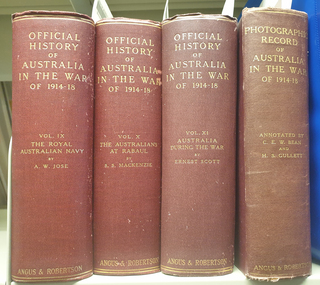
Book, Ernest Scott, Official History of Australia in the War, Vol 11, Australia During the War of 1914 - 1918, 1936
... Ernest Scott was a Professor in History at the University of Melbourne. world war world war one aif anzac censorship germans internment spying war correspondents official photographers propaganda equipment munitions conscription conscription referendum recruiting horses patriotic funds red cross australian comforts fund junior red cross peace conference treaty repatriation soldier settlement andrew fisher legacy Red hard covered book of 922 pages with 67 illustrations Official History of Australia in the War, Vol 11, Australia During the War of 1914 - 1918 Book Book Ernest Scott ...Ernest Scott was a Professor in History at the University of Melbourne.Red hard covered book of 922 pages with 67 illustrationsworld war, world war one, aif, anzac, censorship, germans, internment, spying, war correspondents, official photographers, propaganda, equipment, munitions, conscription, conscription referendum, recruiting, horses, patriotic funds, red cross, australian comforts fund, junior red cross, peace conference, treaty, repatriation, soldier settlement, andrew fisher, legacy -
Lara RSL Sub Branch
Book, Australian War Photographs, 1919
... Each photograph of the sectors on which they fought will stimulate old memories - some sad, some pleasant, but all unspeakably dear. wwi war correspondents pen pictures condition under which our soldiers served. official photographers Australian War Photographs - Printed 1919. ...The graphic pen-pictures of the war correspondents we have learned much of the conditions under which our soldiers lived and fought, but no matter how vivid the presentation, words alone cannot fully convey to the civilian an accurate impression of the battle area. Many of these photographs were taken under heavy fire showing the actual scenery amid which some of the most thrilling acts in the great drama of WWI were displayed. A pictorial record of places and events of our heroic soldiers who served in WWI. Each photograph of the sectors on which they fought will stimulate old memories - some sad, some pleasant, but all unspeakably dear. Australian War Photographs - Printed 1919. A pictorial record from November, 1917 to the end of WWI. Soft cardboard cover front back and spine. The back cover has the badge of the Australian Commonwealth Military Forces badge. The front cover has the title and silhouette illustration of WWI soldiers in the trenches and/or 'no man's land'.wwi, war correspondents, pen pictures, condition under which our soldiers served., official photographers -
Lara RSL Sub Branch
Book, Australian War Photographs, 1919
... WWI war correspondents pen pictures condition under which our soldiers served. official photographers Australian War Photographs - Printed 1919. ...The graphic pen-pictures of the war correspondents we have learned much of the conditions under which our soldiers lived and fought, but no matter how vivid the presentation, words alone cannot fully convey to the civilian an accurate impression of the battle area. Many of these photographs were taken under heavy fire showing the actual scenery amid which some of the most thrilling acts in the great drama of WWI were displayed. A pictorial record of places and events of our heroic soldiers who served in WWI. Each photograph of the sectors on which they fought will stimulate old memories - some sad, some pleasant, but all unspeakably dear. Australian War Photographs - Printed 1919. A pictorial record from November, 1917 to the end of WWI. Soft cardboard cover front back and spine. The back cover has the badge of the Australian Commonwealth Military Forces badge. The front cover has the title and silhouette illustration of WWI soldiers in the trenches and/or 'no man's land'.wwi, war correspondents, pen pictures, condition under which our soldiers served., official photographers -
 Federation University Historical Collection
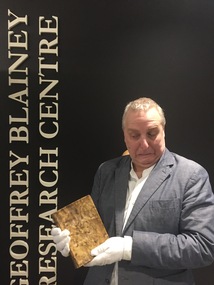
Photograph - Photograph - Colour, Clare Gervasoni, Visitors to the Geoffrey Blainey Research Centre, 2014-2022>
... Gordon Spittle MM "The War Correspondent", 04 September 2019 * Barry Kentish and Peter Voterakis of the Ballarat Fly Fishing Club * Kevin Jewell and Robert Littlewood, trustees of the Keith Wingrove Memorial Trust Visitors to the Geoffrey Blainey Research Centre Photograph Photograph - Colour Australia Victoria Mount Helen Clare Gervasoni ...The Geoffrey Blainey Research Centre is a supervised reading room in the E.J. Barker Library on the Federation University Mt Helen Campus. It holds the Art and HIstorical Collections, as well as special librarry collections.Colour photographs of visitors to the Federation University Geoffrey Blainey Research Centre. * Dr Dorothy Wickham, 08 August 2012 * Gene Geoffrey and the Human Skin Covered Book * Major Neil Leckie RFD (Ret'd) with his newly released book 'Creswick's War: Through the Letters of Driver S. Gordon Spittle MM "The War Correspondent", 04 September 2019 * Barry Kentish and Peter Voterakis of the Ballarat Fly Fishing Club * Kevin Jewell and Robert Littlewood, trustees of the Keith Wingrove Memorial Trustgeoffrey blainey resaerch centre, visitors, dorothy wickham, gene geoffrey, neil leckie, barry kentish, peter voterakis, kevin jewell, robert littlewood -
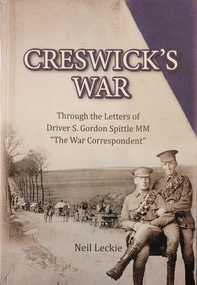 Federation University Historical Collection
Book - War History, Neil Leckie, Creswick's War Through the Eyes of Driver S. Gordon Spittle MM "The War Correspondent", 2019, 2019
... war, what happens to him, where he goes and the people he meets. Spittle served with the 18 Company Australian Army Service Corps (AASC). Gift of Major Neil Leckie RFD (Ret'd) Creswick's War Through the Eyes of Driver S. Gordon Spittle MM "The War Correspondent ...Soft covered book of 242 pages. This book is a chronology of Gordon Spittle's war, what happens to him, where he goes and the people he meets. Spittle served with the 18 Company Australian Army Service Corps (AASC). Gift of Major Neil Leckie RFD (Ret'd)australian army service corps, s. gordon spittle, gordon spittle, world war one, ascot, allendale, william brazenor, harold joseph reid, james leslie sim, les sim, harry smerdon holmes, leslie john walter, jack nase, ray blight, john joseph nase, john raymond blight, frank thomas, baupaume, amiens, messines, somme, roy jackson, les vernon, violet spittle, leslie sim, harry holmes, violet holmes -
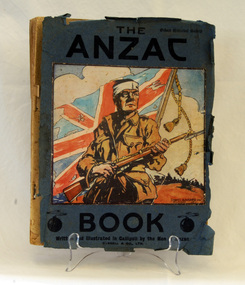 Orbost & District Historical Society
book, Cassell and Company Limited, The ANZAC Book, 1916
... war correspondent Charles Bean and his assistant, Arthur Bazely, edited the contributions. The drawing on the front cover, "Gallipoli 1915" is by David Baker. Over 100,000 copies of the book were sold. About half went to the AIF and many could also be found in Australian...war correspondent Charles Bean and his assistant, Arthur Bazely, edited the contributions. The drawing on the front cover, "Gallipoli 1915" is by David Baker. Over 100,000 copies of the book were sold. About half went to the AIF and many could also be found in Australian ...This book was originally intended as a Christmas and New Year diversion for soldiers facing a harsh winter in the trenches on Gallipoli. In November 1915 a committee was formed to produce the publication and a notice seeking contributions was circulated at Gallipoli. Prizes were offered for various categories and 150 submissions were received, although not all were incorporated in the book. After the evacuation of Gallipoli, official war correspondent Charles Bean and his assistant, Arthur Bazely, edited the contributions. The drawing on the front cover, "Gallipoli 1915" is by David Baker. Over 100,000 copies of the book were sold. About half went to the AIF and many could also be found in Australian households. It cost 2/6. The illustrations, stories, cartoons and poems for this book were cCreated by soldiers under enemy fire and in extreme hardship. This book is of great historic significance as a contemporary record of The AIF in Gallipoli.A thick 169 pp book with paper cover, titled in black text 'The Anzac Book / Written and Illustrated in Gallipoli by the Men of Anzac.It contains pages of text, some colour illustrations and cartoons. On the cover is a drawing of a determined looking soldier carrying a bayonet in front of a tattered British flag. world-war-1 literature book-the-anzac-book gallipoli -
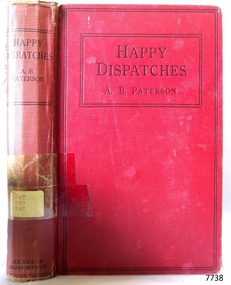 Flagstaff Hill Maritime Museum and Village
Book, Happy Dispatches
... correspondent to report on the South African War. After being a roving reporter in China he went to England and spent time with Rudyard Kipling. In April 1903 Paterson married Alice Walker in Tenterfield, New South Wales, and they had two children, Grace and Hugh. At the outbreak of World War 1 Paterson sailed for England in the hope of covering the fighting in Flanders as a correspondent but finished up driving an ambulance for the Australian...correspondent to report on the South African War. After being a roving reporter in China he went to England and spent time with Rudyard Kipling. In April 1903 Paterson married Alice Walker in Tenterfield, New South Wales, and they had two children, Grace and Hugh. At the outbreak of World War 1 Paterson sailed for England in the hope of covering the fighting in Flanders as a correspondent but finished up driving an ambulance for the Australian ...This item is from the ‘Pattison Collection’, a collection of books and records that was originally owned by the Warrnambool Mechanics’ Institute, which was founded in Warrnambool in 1853. By 1886 the Warrnambool Mechanics’ Institute (WMI) had grown to have a Library, Museum and Fine Arts Gallery, with a collection of “… choice productions of art, and valuable specimens in almost every branch and many wonderful national curiosities are now to be seen there, including historic relics of the town and district.” It later included a School of Design. Although it was very well patronised, the lack of financial support led the WMI in 1911 to ask the City Council to take it over. In 1935 Ralph Pattison was appointed as City Librarian to establish and organise the Warrnambool Library as it was then called. When the WMI building was pulled down in 1963 a new civic building was erected on the site and the new Warrnambool Library, on behalf of the City Council, took over all the holdings of the WMI. At this time some of the items were separated and identified as the ‘Pattison Collection’, named after Ralph Pattison. Eventually the components of the WMI were distributed from the Warrnambool Library to various places, including the Art Gallery, Historical Society and Flagstaff Hill. Later some were even distributed to other regional branches of Corangamite Regional Library and passed to and fro. It is difficult now to trace just where all of the items have ended up. The books at Flagstaff Hill Maritime Village generally display stamps and markings from Pattison as well as a variety of other institutions including the Mechanics’ Institute itself. RALPH ERIC PATTISON Ralph Eric Pattison was born in Rockhampton, Queensland, in 1891. He married Maude Swan from Warrnambool in 1920 and they set up home in Warrnambool. In 1935 Pattison accepted a position as City Librarian for the Warrnambool City Council. His huge challenge was to make a functional library within two rooms of the Mechanics’ Institute. He tirelessly cleaned, cleared and sorted a disarrayed collection of old books, jars of preserved specimens and other items reserved for exhibition in the city’s museum. He developed and updated the library with a wide variety of books for all tastes, including reference books for students; a difficult task to fulfil during the years following the Depression. He converted all of the lower area of the building into a library, reference room and reading room for members and the public. The books were sorted and stored using a cataloguing and card index system that he had developed himself. He also prepared the upper floor of the building and established the Art Gallery and later the Museum, a place to exhibit the many old relics that had been stored for years for this purpose. One of the treasures he found was a beautiful ancient clock, which he repaired, restored and enjoyed using in his office during the years of his service there. Ralph Pattison was described as “a meticulous gentleman whose punctuality, floorless courtesy and distinctive neat dress were hallmarks of his character, and ‘his’ clock controlled his daily routine, and his opening and closing of the library’s large heavy doors to the minute.” Pattison took leave during 1942 to 1945 to serve in the Royal Australian Navy, Volunteer Reserve as Lieutenant. A few years later he converted one of the Museum’s rooms into a Children’s Library, stocking it with suitable books for the younger generation. This was an instant success. In the 1950’s he had the honour of being appointed to the Victorian Library Board and received more inspiration from the monthly conferences in Melbourne. He was sadly retired in 1959 after over 23 years of service, due to the fact that he had gone over the working age of council officers. However he continued to take a very keen interest in the continual development of the Library until his death in 1969. About A. B. ‘Banjo’ Paterson Andrew Barton Paterson was born at Narrambla Station in New South Wales, Australia, on 17th February 1864 and died 5th February 1941. His first seven years were spent on his father’s station, where like so many Australian children he enjoyed a bush boyhood. This property was at Obley in the Orange district of New South Wales. The family moved to the Yass district and lived near the main route from Sydney to Melbourne where he saw a great many bullock teams, drovers with herds of stock, gold escorts and Cob & Co coaches. His lifelong love of horses and horsemen was forged from the riders and their horses he saw at the picnic races and polo matches the family attended. These horses and riders where from the Murrumbidgee River and Snowy Mountain areas of New South Wales. Patterson lived most of his life in Sydney. He became a journalist, army officer, novelist, poet, solicitor and a war correspondent. He enjoyed many different sports such as tennis, rowing and, most of all, he delighted in his horsemanship. His first poem ‘El Mahdi to the Australian Troop’ was published in the Bulletin in 1885 under the pen name of “The Banjo”, which was the name of his favourite horse. In 1895 his first book was published and was sold out in the week of publication; he sold 7000 copies in a few months. This book was “The Man From Snowy River, and other Verses” and it contained such ballads as ‘Clancy of the Overflow’, ‘The Geebung Polo Club’, ‘The Man from Ironbark’, and ‘Saltbush Bill’. The tittle poem was first published in 1890. In 1895 Patterson visited his fiancé (at that time), Sarah Riley, who was staying with her friends the Macphersons at Dagworth Station in Queensland. Sarah’s old school friend Christina McPherson. Christina replayed to them an old Scottish tune called “The Craigielee March” that she had heard played by the Garrison Artillery band at the Warrnambool picnic races in Victoria, 1894. Patterson wrote words to fit the tune and it became the now famous ‘Waltzing Matilda’. He was commissioned by the Sydney Morning Herald and the Melbourne Age as they correspondent to report on the South African War. After being a roving reporter in China he went to England and spent time with Rudyard Kipling. In April 1903 Paterson married Alice Walker in Tenterfield, New South Wales, and they had two children, Grace and Hugh. At the outbreak of World War 1 Paterson sailed for England in the hope of covering the fighting in Flanders as a correspondent but finished up driving an ambulance for the Australian Voluntary Hospital, Wimereux, France. In 1915 as an honorary vet he made three voyages taking horse to Africa, China and Egypt. On 18th October 1915 he was commissioned in the 2nd Remount Unit in the Australian Imperial Force and was promoted to Captain serving in the Middle East. He was wounded in April 1916, when he re-joined his unit he was promoted to major and commanded the Australian Remount Squadron from October 1916 to his return to Australia in 1919. Once the War was over he resumed his work as a journalist until he retired in 1930 so that he could devote time to creative writing. He became a successful radio broadcaster with the Australian Broadcasting Commission using his travel experiences. He wrote the children’s book “The Animals Noah Forgot” in 1933 and then in 1934 “Happy Dispatches” in which he told of his meetings with people like Winston Churchill and Kipling. “The Shearer’s Colt was published in 1936 and in 1939 he wrote for the Sydney Morning Herald. After a short illness he passed away in Sydney on 5th February 1941. The Pattison Collection, along with other items at Flagstaff Hill Maritime Village, was originally part of the Warrnambool Mechanics' Institute’s collection. The Warrnambool Mechanics’ Institute Collection is primarily significant in its totality, rather than for the individual objects it contains. Its contents are highly representative of the development of Mechanics' Institute libraries across Australia, particularly Victoria. A diversity of publications and themes has been amassed, and these provide clues to our understanding of the nature of and changes in the reading habits of Victorians from the 1850s to the middle of the 20th century. The collection also highlights the Warrnambool community’s commitment to the Mechanics’ Institute, reading, literacy and learning in the regions, and proves that access to knowledge was not impeded by distance. These items help to provide a more complete picture of our community’s ideals and aspirations. The Warrnambool Mechanics Institute book collection has historical and social significance for its strong association with the Mechanics Institute movement and the important role it played in the intellectual, cultural and social development of people throughout the latter part of the nineteenth century and the early twentieth century. The collection of books is a rare example of an early lending library and its significance is enhanced by the survival of an original collection of many volumes. The Warrnambool Mechanics' Institute’s publication collection is of both local and state significance. Happy Dispatches Author: A B ("Banjo") Paterson Publisher: Angus & Robertson Ltd Date: 1935Label on spine cover with typed text PAT 920 PAT Pastedown front endpaper has sticker from Warrnambool Public Library covered by a sticker from Corangamite Regional Library Service Front loose endpaper has a stamp from Corangamite Regional Library Service warrnambool, shipwrecked-coast, flagstaff-hill, flagstaff-hill-maritime-museum, maritime-museum, shipwreck-coast, flagstaff-hill-maritime-village, shipwrecked-artefact, book, pattison collection, warrnambool library, warrnambool mechanics’ institute, ralph eric pattison, corangamite regional library service, warrnambool city librarian, mechanics’ institute library, victorian library board, warrnambool books and records, warrnambool children’s library, great ocean road, happy dispatches, a b paterson, banjo paterson -
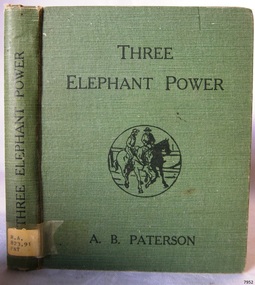 Flagstaff Hill Maritime Museum and Village
Book, Three Elephant Power
... correspondent to report on the South African War. After being a roving reporter in China he went to England and spent time with Rudyard Kipling. In April 1903 Paterson married Alice Walker in Tenterfield, New South Wales, and they had two children, Grace and Hugh. At the outbreak of World War 1 Paterson sailed for England in the hope of covering the fighting in Flanders as a correspondent but finished up driving an ambulance for the Australian...correspondent to report on the South African War. After being a roving reporter in China he went to England and spent time with Rudyard Kipling. In April 1903 Paterson married Alice Walker in Tenterfield, New South Wales, and they had two children, Grace and Hugh. At the outbreak of World War 1 Paterson sailed for England in the hope of covering the fighting in Flanders as a correspondent but finished up driving an ambulance for the Australian ...This item is from the ‘Pattison Collection’, a collection of books and records that was originally owned by the Warrnambool Mechanics’ Institute, which was founded in Warrnambool in 1853. By 1886 the Warrnambool Mechanics’ Institute (WMI) had grown to have a Library, Museum and Fine Arts Gallery, with a collection of “… choice productions of art, and valuable specimens in almost every branch and many wonderful national curiosities are now to be seen there, including historic relics of the town and district.” It later included a School of Design. Although it was very well patronised, the lack of financial support led the WMI in 1911 to ask the City Council to take it over. In 1935 Ralph Pattison was appointed as City Librarian to establish and organise the Warrnambool Library as it was then called. When the WMI building was pulled down in 1963 a new civic building was erected on the site and the new Warrnambool Library, on behalf of the City Council, took over all the holdings of the WMI. At this time some of the items were separated and identified as the ‘Pattison Collection’, named after Ralph Pattison. Eventually the components of the WMI were distributed from the Warrnambool Library to various places, including the Art Gallery, Historical Society and Flagstaff Hill. Later some were even distributed to other regional branches of Corangamite Regional Library and passed to and fro. It is difficult now to trace just where all of the items have ended up. The books at Flagstaff Hill Maritime Village generally display stamps and markings from Pattison as well as a variety of other institutions including the Mechanics’ Institute itself. RALPH ERIC PATTISON Ralph Eric Pattison was born in Rockhampton, Queensland, in 1891. He married Maude Swan from Warrnambool in 1920 and they set up home in Warrnambool. In 1935 Pattison accepted a position as City Librarian for the Warrnambool City Council. His huge challenge was to make a functional library within two rooms of the Mechanics’ Institute. He tirelessly cleaned, cleared and sorted a disarrayed collection of old books, jars of preserved specimens and other items reserved for exhibition in the city’s museum. He developed and updated the library with a wide variety of books for all tastes, including reference books for students; a difficult task to fulfil during the years following the Depression. He converted all of the lower area of the building into a library, reference room and reading room for members and the public. The books were sorted and stored using a cataloguing and card index system that he had developed himself. He also prepared the upper floor of the building and established the Art Gallery and later the Museum, a place to exhibit the many old relics that had been stored for years for this purpose. One of the treasures he found was a beautiful ancient clock, which he repaired, restored and enjoyed using in his office during the years of his service there. Ralph Pattison was described as “a meticulous gentleman whose punctuality, floorless courtesy and distinctive neat dress were hallmarks of his character, and ‘his’ clock controlled his daily routine, and his opening and closing of the library’s large heavy doors to the minute.” Pattison took leave during 1942 to 1945 to serve in the Royal Australian Navy, Volunteer Reserve as Lieutenant. A few years later he converted one of the Museum’s rooms into a Children’s Library, stocking it with suitable books for the younger generation. This was an instant success. In the 1950’s he had the honour of being appointed to the Victorian Library Board and received more inspiration from the monthly conferences in Melbourne. He was sadly retired in 1959 after over 23 years of service, due to the fact that he had gone over the working age of council officers. However he continued to take a very keen interest in the continual development of the Library until his death in 1969. About A. B. ‘Banjo’ Paterson Andrew Barton Paterson was born at Narrambla Station in New South Wales, Australia, on 17th February 1864 and died 5th February 1941. His first seven years were spent on his father’s station, where like so many Australian children he enjoyed a bush boyhood. This property was at Obley in the Orange district of New South Wales. The family moved to the Yass district and lived near the main route from Sydney to Melbourne where he saw a great many bullock teams, drovers with herds of stock, gold escorts and Cob & Co coaches. His lifelong love of horses and horsemen was forged from the riders and their horses he saw at the picnic races and polo matches the family attended. These horses and riders where from the Murrumbidgee River and Snowy Mountain areas of New South Wales. Patterson lived most of his life in Sydney. He became a journalist, army officer, novelist, poet, solicitor and a war correspondent. He enjoyed many different sports such as tennis, rowing and, most of all, he delighted in his horsemanship. His first poem ‘El Mahdi to the Australian Troop’ was published in the Bulletin in 1885 under the pen name of “The Banjo”, which was the name of his favourite horse. In 1895 his first book was published and was sold out in the week of publication; he sold 7000 copies in a few months. This book was “The Man From Snowy River, and other Verses” and it contained such ballads as ‘Clancy of the Overflow’, ‘The Geebung Polo Club’, ‘The Man from Ironbark’, and ‘Saltbush Bill’. The tittle poem was first published in 1890. In 1895 Patterson visited his fiancé (at that time), Sarah Riley, who was staying with her friends the Macphersons at Dagworth Station in Queensland. Sarah’s old school friend Christina McPherson. Christina replayed to them an old Scottish tune called “The Craigielee March” that she had heard played by the Garrison Artillery band at the Warrnambool picnic races in Victoria, 1894. Patterson wrote words to fit the tune and it became the now famous ‘Waltzing Matilda’. He was commissioned by the Sydney Morning Herald and the Melbourne Age as they correspondent to report on the South African War. After being a roving reporter in China he went to England and spent time with Rudyard Kipling. In April 1903 Paterson married Alice Walker in Tenterfield, New South Wales, and they had two children, Grace and Hugh. At the outbreak of World War 1 Paterson sailed for England in the hope of covering the fighting in Flanders as a correspondent but finished up driving an ambulance for the Australian Voluntary Hospital, Wimereux, France. In 1915 as an honorary vet he made three voyages taking horse to Africa, China and Egypt. On 18th October 1915 he was commissioned in the 2nd Remount Unit in the Australian Imperial Force and was promoted to Captain serving in the Middle East. He was wounded in April 1916, when he re-joined his unit he was promoted to major and commanded the Australian Remount Squadron from October 1916 to his return to Australia in 1919. Once the War was over he resumed his work as a journalist until he retired in 1930 so that he could devote time to creative writing. He became a successful radio broadcaster with the Australian Broadcasting Commission using his travel experiences. He wrote the children’s book “The Animals Noah Forgot” in 1933 and then in 1934 “Happy Dispatches” in which he told of his meetings with people like Winston Churchill and Kipling. “The Shearer’s Colt was published in 1936 and in 1939 he wrote for the Sydney Morning Herald. After a short illness he passed away in Sydney on 5th February 1941. The Pattison Collection, along with other items at Flagstaff Hill Maritime Village, was originally part of the Warrnambool Mechanics' Institute’s collection. The Warrnambool Mechanics’ Institute Collection is primarily significant in its totality, rather than for the individual objects it contains. Its contents are highly representative of the development of Mechanics' Institute libraries across Australia, particularly Victoria. A diversity of publications and themes has been amassed, and these provide clues to our understanding of the nature of and changes in the reading habits of Victorians from the 1850s to the middle of the 20th century. The collection also highlights the Warrnambool community’s commitment to the Mechanics’ Institute, reading, literacy and learning in the regions, and proves that access to knowledge was not impeded by distance. These items help to provide a more complete picture of our community’s ideals and aspirations. The Warrnambool Mechanics Institute book collection has historical and social significance for its strong association with the Mechanics Institute movement and the important role it played in the intellectual, cultural and social development of people throughout the latter part of the nineteenth century and the early twentieth century. The collection of books is a rare example of an early lending library and its significance is enhanced by the survival of an original collection of many volumes. The Warrnambool Mechanics' Institute’s publication collection is of both local and state significance. Three Elephant Power Author: A B Paterson Publisher: Angus & Robertson Date: 1917Label on spine cover with typed text RA 823.91 PAT Pastedown front endpaper has sticker from Warrnambool Mechanics Institute and Free Library Front loose endpaper has a stamp from Warrnambool Mechanics Institute Fly paper has a stamp from Warrnambool Mechanics Institutewarrnambool, shipwrecked-coast, flagstaff-hill, flagstaff-hill-maritime-museum, maritime-museum, shipwreck-coast, flagstaff-hill-maritime-village, shipwrecked-artefact, book, pattison collection, warrnambool library, warrnambool mechanics’ institute, ralph eric pattison, corangamite regional library service, warrnambool city librarian, mechanics’ institute library, victorian library board, warrnambool books and records, warrnambool children’s library, great ocean road, three elephant power, a b paterson -
 Bendigo Military Museum
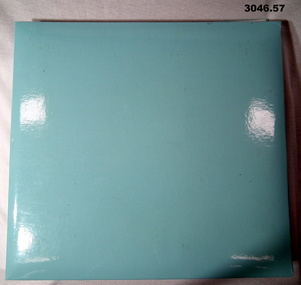
Administrative record - COMPENDIUM WW1 - WW2, 4) A H Pettifer, Government Printer et al, 2) 14.2.1946; .3) 1.3.1919; .4) 30.11.1954 .5) 24.11.19? - WWI; .6) 31.10.1917; .7) 12.6.1917; .8) Page 1: 20.12.1915, Page 2: 10.12.1915, Page 6: 19.1915; .9) 10.9.1918; .10) 18.4.1919; .11) c.2.3.19?; .12) 18.9.1920; .14) post WWI; .15) 24.4.1920; .17) 18.4.1942; .18) 19.6.1943; .19) 18.3.1947; .20) 1944; .21) 1944; .23) 22.10.1941; .26) 13.9.1944; .27) 1.1944; .30) 7.3.1950; .31) 31.7.1944; .32) 16.4.1942; .33) 13.6.1946; .34) 6.5.1946; .36) a) & b) 3.11.1947; .37) 24.10.1951; .38) 24.9.1957; .39) 9.10.1957; .40) 19.2.1958; .41) 26.2.1958; .42) 1.3.1958; .43) & .44) 7.3.1958; .45) 25.2.1958; .46) 3.1.1948; .47) 26.2.1948; .48) 22.4.1958; .49) 24.2.1958; .50) 12.3.1958; .51) 6.1958; .52) c.Mar/Apr 1958; .53) 5.4.1958; .54) c.end WWII; .55) a.b. 13.6.1967; .56) 26.5.1967; .57) 18.2.1954
... Administrative record COMPENDIUM WW1 - WW2 .2) Pacific Island Regiment .3) War Office .4) A H Pettifer, Government Printer .5) Lord Chamberlain .6) W Birdwood, 1st ANZAC Corps .8) Pages 1 & 2 University of Sydney .8) Pages 3 & 5 Commonwealth Gazette .8) Page 6 Australian Military Forces .8) Pages 7 - 11 Military Forces of the Commonwealth 2nd Military District .9) Department of Defence Base Records Office .10) Military Forces of the Commonwealth, 2nd Military District .11) Lord Birdwood .12) Australian Imperial Force, Base Records Office .13) Australian Military Forces .15) University of Sydney .16) Territory of New Guinea .17) Major General Morshead, Headquarters AIF (ME) .18) Major General Morshead, Headquarters 2 Australian Corps .19) J R Halligan, Secretary of Dept of External Territories .20) 20th Australian Infantry Brigade .21) 2/13 Battalion AIF .22) Australian Anti-Tank Regt AIF .23) 20th Infantry Brigade .24) 2/17 Australian Infantry Battalion 26) Major W A JENNER, New Guinea Force Headquarters .28) & .29) First Australian Army .30) CARO A Block .31) Lt Gen Stanley Gauige, Comd New Guinea Force, Headquarters .33) Ltd Discharge Depot .34) AMF Discharge Depot .35) Joseph Francis, Minister for the Army .36) a) & b) H T Allan (assumed) .37) Brigadier in Charge of Administration, HQ Eastern Command, Victorian Barracks .38) & .39) J V Knight, State Secretary, RSS & AILA Papua New Guinea Branch .41) & .43) 41) Major General T J DALY, General Officer Commanding Northern Command Headquarters, Victoria Barracks .44) H T Allan .46) & .47) Henry G Eckhoff, Honarary Secretary, New Guinea Citizens Association, Lae Branch .48) Major General T J Daly, General Officer Commanding Australian Military Forces, Northern Command Headquarters .49) Lieutenant General Sir Henry Wells, Chief of General Staff .50) H T Allan .51) A PNG Correspondent - Pacific Islands Monthly .53) a.b.c. The Rabaul Times .55) a.b. R W Robson, Publisher, Pacific Islands Monthly (PIM) .57) Government House .2) Pacific Island Regiment .3) War ...Herbert Trangmar Allan, refer 2755.4 for his extensive service history and wards. .2) Details gifting of a pair of Japanese binoculars to Col H T ALLAN by Pacific Island Regiment. .3) Certificate issued by Winston Churchill, Secretary of State for War (The War of 1914-1918), awarded to Capt H T ALLAN MC. .4) Herbert Trangman ALLAN born 5.1.1895 at Woolwich, NSW. Middle name misspelled, should be Trangmar not Trangman. .6) Congratulating H T ALLAN on receiving the Military Cross award for leading 2 companies which had lost officers during action on Passchendaele Ridge on 9.10.1917. .7) Describes life behind the lines whilst H T ALLAN's battalion has been resting for a month. Daily life consisted of training drills, sport & entertainment. Writer takes time to describe the countryside & weather. .8) Relate to H T ALLAN's military exam results & his promotion to 2nd Lieutenant in 1915. .9) To Herbert Allan's father, Mr P Allan detailing the citation for awarding of the Military Cross to Herbert ALLAN. Original citation appeared in the London Gazette,5.4.1918. .10) Form addressed to Capt H ALLAN MC, 17th Battalion stating his period of enlistment in the 1st AIF was to expire 26.5.1919. .11) Letter from Lord BIRDWOOD (General) to Herbert ALLAN in response to a letter received 19.11.19?. General BIRDWOOD expresses his opinions on difficulties the allied troops face in their fight against the Japanese. .12) Letter to Capt H T ALLAN advising of MID oak leaves sent to him. Details guidelines for attaching oak leaves to both the larger Victory Medal & the small service dress medal. .13) Form details H T ALLAN's WWII Army No, Rank, Unit & Decorations & Medals held. The form has not been signed & dated. .14) Details service record of Lt Col H T ALLAN NX12229. Includes military service from 1912 - 1944, schools & courses attended, decorations, promotions & overseas service. .16) Form issued to H T ALLAN on 15.12.1939 granting permission to leave New Guinea for Australia & return within a period of 12 months. Issued by Customs Office in Salamaua. Lists H T ALLAN's age as 44, height 5' 10" & occupation. .17) Letter from Major General MORSHEAD GOC, AIF (ME) to Major H T ALLAN, OBE, MC congratulating him on being awarded the OBE for outstanding service at Tobruch. .18) Letter from Major General MORSHEAD to Major H T ALLAN, OBE, MC replying to ALLAN's letter of 15.6.1943. MORSHEAD is congratulating ALLAN on his appointment to New Guinea Force, also acknowledges his excellent service record. .19) Letter acknowledges H T ALLAN's resignation from the Office of Production Member of the Australian New Guinea Production Control Board, effective from 28.8.1946. .20) Major General WINDEYER commanded the 20th Brigade from 1942-1946. .22) Card sent from the CO of the 3rd Australian Anti-Tank Regiment. .23) Menu for Farewell Dinner held in the Officer's Mess of the 20th Infantry Brigade, Tobruch on 22.10.1941. .24) Menu & Toast list for Farewell Dinner to Brigadier J J MURRAY DSO MC VD. Attended by H T ALLAN & held in the Officers Mess, 2/17 Australian Infantry Battalion on 22.12.1941. .25) Invitation to Col H T ALLAN by Lady Gowrie (wife of Governor General Baron Gowrie) to attend a Luncheon at Government House, Canberra, ACT. .26) Letter to Major (T/Lt Col) H T ALLAN from Major W A JENNER advising him of his secondment to 2/17 Australian Infantry Battalion & appointment to command 5 Aust Base Sub Area. .27) Application for Africa Star with Eighth Army Clasp signed by H T ALLAN & approved by Lt Colonel of 2/17 Australian Infantry Battalion. H T ALLAN held the rank of Major (substantive) at the time of qualification, 1.3.1942 - 11.1942. He held the rank of Lt Colonel at the time of application in 2.1944. .28) Detailing changes in command & promotions including that of Lt Col H T ALLAN, dated 1.4.19? .29) For Lt Col H T ALLAN detailing movements required by First Australian Army command. .30) Acknowledgement & confirmation of Col H T ALLAN's application for campaign awards for WWII. .31) Letter addressed to Lt Col H T ALLAN from Lt Gen Stanley Sauige requesting information on New Britain for a forthcoming visit. .32) Certificate was presented to H T ALLAN on 16.4.1942 when he was awarded an OBE by King George VI. .33) Document details H T ALLAN's relinguishing of Command of the HQ of Pacific Islands Regiment. ALLAN also relinguished the rank of temporary Colonel & was transferred to the Reserve of Officers with rank of substantive Lt Colonel. .35) Official letter to Colonel H T ALLAN from Joseph Francis, Minister for the Army. The letter acknowledges Col ALLAN's long & distinguished career during both peace & wartime. .36) a) & b) From H T ALLAN (assumed) to Prime Minister J B CHIFFLEY referring to the production of copra in New Guinea, the actions of the Commonwealth Bank in relation to planters & the collaboration of New Guinea natives with the Japanese. Assumed to be a copy of original. .37) Letter to H T ALLAN indicating he had been placed on the Retired List with the rank of Honorary Colonel. .38) Letter invites H T ALLAN to officially open the State Conference in Lae in late March or early April 1958. Invitation was extended due to H T ALLAN for distinguished service in PNG. .39) Letter to H T ALLAN thanking him for accepting the invitation to open the Papua & New Guinea State Conference in late March or early April 1958. .40) Letter from H T ALLAN to Lt Gen Sir Henry WELLS, Chief of the General Staff, Victoria Barracks, Melbourne. ALLAN requests permission to wear his uniform for official engagements during his upcoming visit to New Guinea. ALLAN also offers advice on how to deal with native troops including serving time with them, learning their language & studying their customs. He suggests that this would help quell & dissent & revolt. .41) Reply from Major General DALY to HT ALLAN thanking him for his offer to spend time with the CO of the Pacific Island Regiment to address concerns with that unit. This meeting would coincide with ALLAN's upcoming visit to PNG. .42) HT ALLAN's reply to Major General T J DALY's letter of 26.2.1958. ALLAN requests an opportunity to discuss PIR issues with Major General DALY prior to his visit to PNG. .43) Major General T J DALY's reply to HT ALLAN's request for a meeting to discuss ongoing issues with the Pacific Island Regiment. .44) Letter from HT ALLAN to Brigadier D M CLELAND notifying him that he will be staying in Port Moresby on his way to the RSS&AILA Congress in Lae. .45) Lieutenant Colonel MCGUINN writes to invite Colonel ALLAN to visit the PIR during his visit to New Guinea at the end of March of the beginning of April 1959. .46) Letter of appreciation to H T ALLAN thanking him for his efforts in presenting the case for the Territory of New Guinea during the post WWII transition period. .47) Letter to H T ALLAN from New Guinea Citizens Association, Lae Branch, thanking him for his service on behalf of the people of the Territory of New Guinea. The association offered to send ALLAN a suitable present in recognition of his service. .48) Major General T J DALY's reply to HT ALLAN's suggestions for handling disquiet amongst the native troops in the Pacific Island Regiment. .49) Reply from Lieutenant General WELLS to H T ALLAN granting him permission to wear his uniform on his forthcoming visit to New Guinea. WELLS also notes that he has passed other requests made by ALLAN to Major General DALY. .50) Copy of H T ALLAN's reply to Lieutenant General WELL's letter of 24.2.1958 [.49)]. .51) A written account of Colonel H T Blue ALLAN's visit to New Guinea in 3.1958. Article appeared on p.65 & 67 of the 6.1958 edition of Pacific Islands Monthly. .52) Newspaper account of Colonel H T Blue ALLAN's opening of the Rabaul Branch of the Native Ex Servicemen's Association. Colonel ALLAN spoke of the involvement of the Pacific Islands Regiment during WWII. .53) The Rabaul Times account of Colonel H T Blue ALLAN's opening of the Rabaul Branch of Native Ex Servicemen's Club. Featured on p1, concluded p3. .54) Biographical account of Colonel H T ALLAN's service in WWI & WWII. In addition an account of his success in New Guinea between the wars is included. .55) a.b. Biography of Colonel H T ALLAN written by R W Robson who was the founder of the Pacific Islands Monthly. Article was written following ALLAN's death on 23.5.1967 aged 72. This item is a pre publication copy of Robson's article which appeared in the Pacific Islands Monthly. .56) Text of a valedictory given at the funeral of Colonel Herbert Trangmar ALLAN OBE, MC, ED, NX12229 held 26.5.1967 following his death on 23.5.1967. The speech summarized his life in both wars & civilian life. 57) Invitation issued to Colonel H T & Mrs ALLAN to attend a Garden Party at Government House on 18.2.1954. At this function Colonel H T & Mrs ALLAN were to be presented to her Majesty Queen Elizabeth II.Herbert T ALLAN Collection. The contents are all of various size, the Album is the size documented. .1) Large teal green album containing 16 plastic pockets each with white card insert. Various documents & photos contained in each pocket. .2) Typed letter, black type on cream paper. .3) Certificate mounted on fawn card backed with dark brown veneer. Presented to Capt H T ALLAN MC for being mentioned in despatches on 7.11.1917. .4) New South Wales Birth Certificate extract, printed on pink paper with watermark. .5) Telegram on tissue paper to a sheet of cream paper. Pin located top L corner. Requests the attendance of Lt Herbert ALLAN, Russell Hotel, Russell Square. .6) Typed letter mounted on grey cardboard. .7) 2 page letter on foolscap paper, secured by pin top L corner. Written from France by Herbert (Bert) ALLAN & addressed to his father. .8) 11 pages secured with a clip top L corner. 1st document typed, 2nd handwritten, remainder printed. Relate to H T ALLAN's military exam results. .9) Typed letter from Department of Defence Base Records Office to P ALLAN. .10) Document, printed form to inform the recipient that their period of enlistment in the 1st AIF had expired. .11) 4 page handwritten letter on 2 sheets of paper. 1st page has a printed letterhead. .12) BR Form No 20. Typed formal letter from AIF Base Records Office to accompany Mentioned in Despatches oak leaves sent to the recipient. .13) Form AAFA36 used for recommending the awarding of an Efficiency Decoration. Form details service record & details of a serving soldier. .14) 1 large / 1 small page, numbered, detailing the service record of Lt Col H T ALLAN. Black type on cream paper. 2 pages are loose but evidence of attachment visible. .15) Bachelor of Arts Degree Certificate (testamur) granted by the University of Sydney, awarded to Herbert Trangmar ALLAN. Printed on cream parchment. .16) Proforma document issued by the Territory of New Guinea permitting leave & return to the Territory. Printed 2 sides, black type on cream paper. .17) Letter on Australian Imperial Force letterhead from Major General MORSHEAD to Major H T ALLAN. .18 Letter on HQ2 Aust Corps letterhead from Major General MORSHEAD to Major H T ALLAN. .19) Typed letter on External Territories letterhead from J R Halligan to H T ALLAN. .20) Cream Christmas card folded in 2, sent to H T ALLAN. On front in black lettering is HQ 20th Australian Infantry Brigade below black Rising Sun emblem. Inside in black lettering is With Best Wishes for Christmas and New Year. Christmas 1944. .21) Cream card folded in 2. Front illustration depicts a devil figure riding a platypus & carrying a pennant with 2/13 on it. The devil is depicted attacking a German & Japanese soldier. Below the devil is a boomerang with Greetings Xmas 1944 printed on it. Illustration is in green & black. Inside on LHS is a message from 2/13 Battalion. On RHS is a list of 2/13 battle honours from 1940-1943. On back in black print is 1944-1945 New Guinea Australia. .22) Cream Christmas card folded in 2. Front illustration in brown with word Greetings in green. RHS inside printing in green & brown letters. Artillery badge on back in brown. .23) Cream card folded in 2. Typed menu on cream paper attached inside. Front cover illustrated with 20th Infantry Brigade colour patch & a rat over a scroll with words - So What? .24) Cream card folded in 2. On front black printing accompanied by 2/17 Battalion colour patch that is black over green diamond shape. Inside a list of Toasts & Dinner Menu printed in black. Back page for autographs. .25) Cream invitation card. Black cursive script printing below gold crown on front. .26) Typed letter on cream paper. .27) Typed foolscap application form to claim the Africa Star. .28) & .29) Message form filled with typed orders. .30) Typed letter acknowledging an application for campaign medals & listing eligible awards. .31) Typed letter on bond paper. .32) Certificate on cream parchment. Black print in cursive script. Text details the awarding of an OBE to the recipient. .33) Typed text on Australian Military Forces letterhead. Cream paper. .34) Typed text. Temporary note for H T ALLAN's discharge from AMF. .35) Typed letter on Commonwealth of Australia, Minister for the Army letterhead. .36) a) & b) 2 page letter in black type on cream paper. Pages are loose, letter unsigned. .37) 1 page typed letter on Australian Military Forces letterhead. .38) & .39) 1 page typed letter on Return Sailors, Soldiers & Airmen's Imperial League of Australia, Papua & New Guinea Branch letterhead. .40) 1 page typed letter, unsigned. .41) Single sided typed letter on Australian Military Forces letterhead on cream paper. .42) 1 page typed letter, unsigned on cream paper. .43) Single sided typed letter on Australian Military Forces, Northern Command, Victoria Barracks, Brisbane letterhead on cream paper. .44) Single sided typed letter on cream paper. .45) 2 page typed letter on folded cream paper bearing the letterhead of the Pacific Islands Regiment. .46) 1 page typed letter on cream, lined paper. .47) 1 page typed letter on cream paper. .48) 1 page typed letter on Australian Military Forces, Northern Command Headquarters, Victoria Barracks, Brisbane letterhead on cream paper. .49) 1 page typed letter on Chief of General Staff, Australian Military Forces, Army Headquarters, Victoria Barracks, Melbourne letterhead on cream paper. .50) 1 page copy of an unsigned letter on cream paper. .51) Magazine article: Building a New Nation in New Guinea : Some advice from Colonel Blue ALLAN. Black & white article with a 2nd small section stapled to the main page. Large page features a black & white captioned photo of a group listening to a uniformed Officer deliver a speech. Also features advertising front & back. .52) Newspaper article: Official Opening of Native Ex Servicemen's Club. Black & white typed newspaper article featuring a captioned black & white photo of a uniformed Australian Officer & a group of New Guinea Ex Servicemen. .53) a. b. c. Newspaper article: Master Blue Came Back to the Islands: 4000 Attend Club Opening. 3 Section article cut from a newspaper. One part is the banner of the newspaper with date published. Other sections contain the text of the article. The larger section features a black & white photo of an Australian Army Officer in uniform. .54) Newspaper article, untitled. Black & white typed newspaper article with black & white caricature of an Australian Army Officer featured. .55) a. b. Magazine article: The Story of a Big Man who Loved Soldiering. 2 page black & white typed article with sub headings. .56) Text of a Speech. 2 page typed text written for a valedictory given at a funeral. Pages connected with a staple in the top L corner. .57) Printed, cream card invitation to a Garden Party for the recipient to meet Queen Elizabeth II & The Duke of Edinburgh. Text is in cursive script under the Coat of Arms of Her Majesty. .2) Signature ? Capt S C PIR. .4) Date of issue typed: 30.11.1954 Name of recipient: Herbert Trangman Allan Stamped: T Wells, Registrar General NSW .5) Handwritten: To Lt Herbert Allan, Russell Hotel, Russell Square. Typed: Buckingham Palace OHS. Your attendance is required at Buckingham Palace on Wednesday next the Twentyeighth inst (28.11.19?) at ten o'clock am service dress please telegraph acknowledgement Lord Chamberlain London. Stamped: Central District 24 NO 19. .6) Signed in pencil: W Birdwood. In pencil on back: 15 x 12. .8) p1: Handwritten signature. Copy dated 29.12.1915. p2 Handwritten in ink: P Allan Esq, Mount Hunter Hill. Military Examination. Copy dated 29.12.1915. Handwritten in pencil: Results: H T Allan. Tactics - Distinction 92% HE Barff p3 Underlined in ink: 38th Infantry Herbert Trangmar Allan to be 2nd Lieutenant (provisionally). Dated 16 June 1914. p5 Handwritten: Total 139. Lieut Allan tied with 15 others for 20 place. p7, 9, 10 & 11underlined in ink: H T Allan. p8 Underlined in ink: Allan HT. .9) & .10) Signature in black ink. .12) Handwritten signature in black ink: On back handwritten signature in black ink: Clive Wilkinson, Buddong, Robinson St, Chatswood. Also ? Rd, Cremorne Pt. .13) Handwritten in black ink: Details of HT Allan's Commission Service from 16.6.1914 - 18.2.1946. .15) Handwritten signature of the University Chancellor, Dean of Faculty of Arts & Registrar. Handwritten name of recipient. Seal of the University of Sydney imprinted bottom LHS. .16) Handwritten in black ink: Details of recipient. Stamped in red ink: New Guinea Customs. Stamped in blue ink: H M Customs, Cooktown, dated 17.12.1939. Handwritten on reverse: Signature. Stamped on reverse in red ink: New Guinea Customs, dated 15.12.1939. .17) & .18) Handwritten signature: Major General Morshead. .19) Handwritten signature in black ink: J R Halligan. .20) Handwritten inside in blue ink: Lt Col Allan. Good wishes from your many friends here. Signed by Major General Windeyer. .21) Inside LHS handwritten in blue ink: Lt Col Allan & an indecipherable signature. .22) Inside RHS handwritten: To Major (Blue) Allan OBE MC from Lt Col? .23) On front handwritten in blue ink: H T Allan?. Inside in black ink & pencil are 19 signatures. .24) On front: 3 signatures in black ink & pencil. On back: 36 signatures in black & blue ink & pencil. .25) On back handwritten in black ink: Colonel H T Allan OBE MC, with 3 ink lines below name. .26) Handwritten in blue/black ink: Signature. Handwritten in blue pencil top R corner: A32/3477. Handwritten in black ink bottom L corner: Cond (?) 15/9A. Handwritten in black ink: Signature. .27) Stamped top R corner: 2/17 Bn Received 9.2.1944. Signature in black ink: H T Allan. Signature in black ink: ? Lt Col 2/17 Aust Inf Bn 10.2.1944 Page bottom in pencil: Blue will keep 1 1/4 for you? .30) Handwritten: Details of eligible medals. Handwritten signature: J C K Miller Capt 7.3.50. Handwritten bottom L corner: Col H T Allan Bottom R corner: OBE, MC, 1914-19, Victory, ED, MID 1914-18, MID 1939-45 On back: Steak & Kidney Morris ) Clark ) Vowood ) 10/- 70215 Maughan ) Allan ) .31) Top of page: Imprinted Coat of Arms Top LHS in black ink: TOP SECRET AND PERSONAL Handwritten signature: Stanley Sauige .32) Embossed top L corner: Seal of the Most Excellent Order of the British Empire. Handwritten: Mary R. .32) Signed: Queen Mary, mother of George VI. .33) Handwritten signature. .34) Handwritten in blue ink: HERBERT TRANGMAR ALLAN 6 MAY 46 Handwritten signature. .35) Handwritten signature in blue ink: Joseph Francis, Minister for the Army. .37) Handwritten signature. .38) & .39) Handwritten signature: J W Knight. .41), .43) & .45) Handwritten signature in blue ink. .46) & .47) Handwritten signature in black ink: Henry G Eckhoff. .48) Handwritten signature in blue ink: With best wishes Yours sincerely T J Daly. .49) Handwritten signature in black ink: Yours sincerely H Wells. .57) Handwritten in black ink: Colonel & Mrs H T Allan.certificates, records, awards, administrative, compendium -
 4th/19th Prince of Wales's Light Horse Regiment Unit History Room
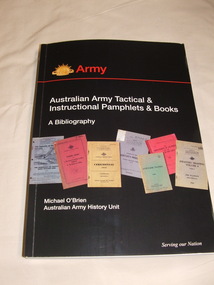
Book, Army History Unit, Australian Army Tactical & Instructional Pamphlets & Books - A Bibliography, 2017
... Australian colonies. The bibliography demonstrates the range of subject areas that Army has addressed over its history, including such esoteric issues as censorship, the evolution of Signals training, accreditation of war correspondents & the management of enemy POW and repatriation of Australians taken POW....Australian colonies. The bibliography demonstrates the range of subject areas that Army has addressed over its history, including such esoteric issues as censorship, the evolution of Signals training, accreditation of war correspondents & the management of enemy POW and repatriation of Australians taken POW. ...This second edition charts the evolution of doctrine development in the Australian Army by detailing a list of instructional and tactical literature of the Army and its precursor pre-Federation Australian colonies. The bibliography demonstrates the range of subject areas that Army has addressed over its history, including such esoteric issues as censorship, the evolution of Signals training, accreditation of war correspondents & the management of enemy POW and repatriation of Australians taken POW.ISBN 978-0-9946046-8-2bibliography, tactical & instructional pamphlets & books, military education -
 Monbulk RSL Sub Branch
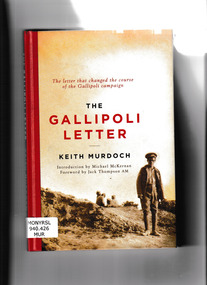
Book, Keith Murdoch, The Gallipoli letter, 2020
... world war 1914-1918 - campaigns gallipoli war correspondents - australia keith murdoch The Gallipoli letter is an 8000 word private report which was written by Keith Arthur Murdoch after he visited the Gallipoli peninsula in September 1915. ...The Gallipoli letter is an 8000 word private report which was written by Keith Arthur Murdoch after he visited the Gallipoli peninsula in September 1915. It describes the organisation, and conditions of the Gallipoli campaign. It was sent to Andrew Fisher (Australian Prime Minister) and Henry Herbert Asquith (British Prime Minister). This letter changed the course of the Gallipoli campaign.Ill (facsims), p.98.non-fictionThe Gallipoli letter is an 8000 word private report which was written by Keith Arthur Murdoch after he visited the Gallipoli peninsula in September 1915. It describes the organisation, and conditions of the Gallipoli campaign. It was sent to Andrew Fisher (Australian Prime Minister) and Henry Herbert Asquith (British Prime Minister). This letter changed the course of the Gallipoli campaign.world war 1914-1918 - campaigns gallipoli, war correspondents - australia, keith murdoch -
 Monbulk RSL Sub Branch
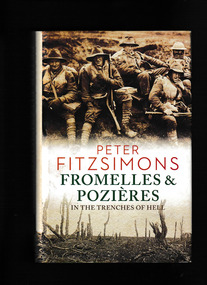
Book, Peter Fitzsimons, Fromelles and Pozières : in the trenches of hell, 2015
... Australian War Memorial describes as 'the worst 24 hours in Australia's entire history. Just days later, three Australian Divisions attacked German positions at nearby Pozi�res, and over the next six weeks they suffered another 23,000 casualties. Of that bitter battle, the great Australian war correspondent ...In the Trenches of Hell On 19 July 1916, 7000 Australian soldiers - in the first major action of the AIF on the Western Front - attacked entrenched German positions at Fromelles in northern France. By the next day, there were over 5500 casualties, including nearly 2000 dead - a bloodbath that the Australian War Memorial describes as 'the worst 24 hours in Australia's entire history. Just days later, three Australian Divisions attacked German positions at nearby Pozi�res, and over the next six weeks they suffered another 23,000 casualties. Of that bitter battle, the great Australian war correspondent Charles Bean would write, 'The field of Pozi�res is more consecrated by Australian fighting and more hallowed by Australian blood than any field which has ever existed . . .' Yet the sad truth is that, nearly a century on from those battles, Australians know only a fraction of what occurred. This book brings the battles back to life and puts the reader in the moment, illustrating both the heroism displayed and the insanity of the British plan. With his extraordinary vigour and commitment to research, Peter FitzSimons shows why this is a story about which all Australians can be proud. And angry.Index, bibliography, notes, ill (maps), p.816.In the Trenches of Hell On 19 July 1916, 7000 Australian soldiers - in the first major action of the AIF on the Western Front - attacked entrenched German positions at Fromelles in northern France. By the next day, there were over 5500 casualties, including nearly 2000 dead - a bloodbath that the Australian War Memorial describes as 'the worst 24 hours in Australia's entire history. Just days later, three Australian Divisions attacked German positions at nearby Pozi�res, and over the next six weeks they suffered another 23,000 casualties. Of that bitter battle, the great Australian war correspondent Charles Bean would write, 'The field of Pozi�res is more consecrated by Australian fighting and more hallowed by Australian blood than any field which has ever existed . . .' Yet the sad truth is that, nearly a century on from those battles, Australians know only a fraction of what occurred. This book brings the battles back to life and puts the reader in the moment, illustrating both the heroism displayed and the insanity of the British plan. With his extraordinary vigour and commitment to research, Peter FitzSimons shows why this is a story about which all Australians can be proud. And angry.world war 1914-1918 - campaigns - western front, world war 1914-1918 - australian participation - fromelles and pozieres -
 Monbulk RSL Sub Branch
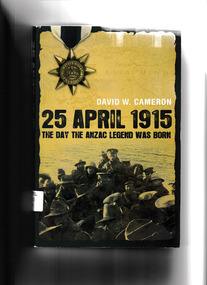
Book, David W Cameron, 25 April 1915: The day the ANZAC legend was born, 2007
... It concludes with the visit of Charles Bean, the official Australian war correspondent, to the peninsula in 1919 as part of the Australian Historical mission to organise the burial of the dead that had lain exposed to the elements for the last four years, and to the formation of the cemeteries that are today visited by thousands. ...A detailed account of what happened to the Australian, New Zealand and Turkish troops on the beaches and hills of the Gallipoli peninsula on that fateful day - the day the ANZAC legend was born. On the 25th of April 1915 Australian troops landed on the Gallipoli Peninsula in what is now called Anzac Cove. They rushed from the beach up to Plugge's Plateau into Australian military history suffering many casualties on the way. Just after midday troops from New Zealand landed at Gallipoli and together the Australians and New Zealanders created the Anzac legend. It was the events of this first day that set the course of the whole battle leading to the evacuation of the Anzac troops in December 1915. This is the story of that day telling the Australian, New Zealand and Turkish side of what was to become a tragedy for all three countries and an ultimate triumph for Turkey. It concludes with the visit of Charles Bean, the official Australian war correspondent, to the peninsula in 1919 as part of the Australian Historical mission to organise the burial of the dead that had lain exposed to the elements for the last four years, and to the formation of the cemeteries that are today visited by thousands. About the Author : Dr David Cameron is a biological anthropologist who has written several books. In early 2003 he conducted a preliminary survey of the Anzac Gallipoli battlefields and held numerous discussions with Turkish and Australian government officials about conservation issues relating to the Anzac area. He became interested in the actual landing and decided to write this book.--publisher. A detailed account of what happened to the Australian, New Zealand and Turkish troops on the beaches and hills of the Gallipoli peninsula on that fateful day - the day the ANZAC legend was born.Index, bibliography, notes, maps, ill, p.324.non-fictionA detailed account of what happened to the Australian, New Zealand and Turkish troops on the beaches and hills of the Gallipoli peninsula on that fateful day - the day the ANZAC legend was born. On the 25th of April 1915 Australian troops landed on the Gallipoli Peninsula in what is now called Anzac Cove. They rushed from the beach up to Plugge's Plateau into Australian military history suffering many casualties on the way. Just after midday troops from New Zealand landed at Gallipoli and together the Australians and New Zealanders created the Anzac legend. It was the events of this first day that set the course of the whole battle leading to the evacuation of the Anzac troops in December 1915. This is the story of that day telling the Australian, New Zealand and Turkish side of what was to become a tragedy for all three countries and an ultimate triumph for Turkey. It concludes with the visit of Charles Bean, the official Australian war correspondent, to the peninsula in 1919 as part of the Australian Historical mission to organise the burial of the dead that had lain exposed to the elements for the last four years, and to the formation of the cemeteries that are today visited by thousands. About the Author : Dr David Cameron is a biological anthropologist who has written several books. In early 2003 he conducted a preliminary survey of the Anzac Gallipoli battlefields and held numerous discussions with Turkish and Australian government officials about conservation issues relating to the Anzac area. He became interested in the actual landing and decided to write this book.--publisher. A detailed account of what happened to the Australian, New Zealand and Turkish troops on the beaches and hills of the Gallipoli peninsula on that fateful day - the day the ANZAC legend was born. world war 1914-1918 - campaigns - gallipoli, australian army - anzac corps -
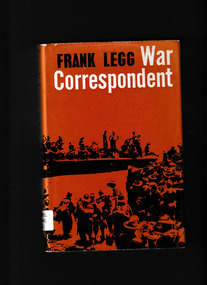 Monbulk RSL Sub Branch
Book, Rigby, War correspondent, 1964
... World war 1939 – 1945 – Personal narratives – Australia Campaigns - South West Pacific theatre Frank Legg was a war correspondent accompanying the Australian forces in the South Pacific area during World War Two Ill, p.265. ...Frank Legg was a war correspondent accompanying the Australian forces in the South Pacific area during World War TwoIll, p.265.non-fictionFrank Legg was a war correspondent accompanying the Australian forces in the South Pacific area during World War Twoworld war 1939 – 1945 – personal narratives – australia, campaigns - south west pacific theatre -
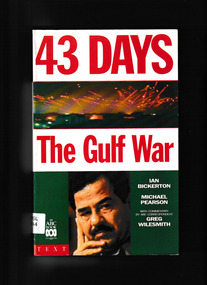 Monbulk RSL Sub Branch
Book, Text Publishing in association with the Australian Broadcasting Corporation, 43 days : the Gulf War, 1991
... Iraq Kuwait crisis 1990-1991 Operation Desert Shield An illustrated account of the Gulf War written by two Australian Middle East specialists with contributions from experienced journalists who covered the war. Includes extracts from reports filed by ABC correspondents in Washington, Moscow, London and the Middle East, and an appendix of key documents. ...An illustrated account of the Gulf War written by two Australian Middle East specialists with contributions from experienced journalists who covered the war. Includes extracts from reports filed by ABC correspondents in Washington, Moscow, London and the Middle East, and an appendix of key documents.Index, bibliography, ill, maps, p.249.non-fictionAn illustrated account of the Gulf War written by two Australian Middle East specialists with contributions from experienced journalists who covered the war. Includes extracts from reports filed by ABC correspondents in Washington, Moscow, London and the Middle East, and an appendix of key documents.iraq kuwait crisis 1990-1991, operation desert shield -
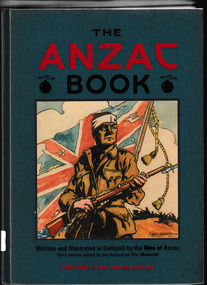 Monbulk RSL Sub Branch
Book, UNSW Press, The Anzac book / written and illustrated in Gallipoli by the men of Anzac, 2010
... This long-awaited third edition is a reproduction of the original book, with a new foreword by acclaimed author Les Carlyon, an introduction from Australian War Memorial historian Ashley Ekins, and added material originally rejected by the editor, official war correspondent C.E.W. ...Created by soldiers under enemy fire and in extreme hardship, the illustrations, stories, cartoons, and poems were intended as a Christmas and New Year diversion for soldiers facing a harsh winter in the trenches on Gallipoli. This long-awaited third edition is a reproduction of the original book, with a new foreword by acclaimed author Les Carlyon, an introduction from Australian War Memorial historian Ashley Ekins, and added material originally rejected by the editor, official war correspondent C.E.W. Bean.Bibliography, ill, p.203.non-fictionCreated by soldiers under enemy fire and in extreme hardship, the illustrations, stories, cartoons, and poems were intended as a Christmas and New Year diversion for soldiers facing a harsh winter in the trenches on Gallipoli. This long-awaited third edition is a reproduction of the original book, with a new foreword by acclaimed author Les Carlyon, an introduction from Australian War Memorial historian Ashley Ekins, and added material originally rejected by the editor, official war correspondent C.E.W. Bean.world war 1914-1918 - campaigns - gallipoli, world war 1914-1918 - personal correspondence -
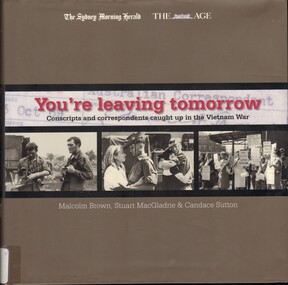 National Vietnam Veterans Museum (NVVM)
Book, Brown, Malcolm and MacGladrie, Stuar and Sutton, Candace, You're Leaving Tomorrow: Conscripts and Correspondents caught up in the Vietnam War (Copy 2), 2007
... 1961-1975 - Participation - Australian Vietnam War 1961-1975 - Journalists three highly respected Fairfax journalists take a fresh look at the dramatic events of the Vietnam War in this fascinating and richly visual book/ You're Leaving Tomorrow: Conscripts and Correspondents caught up in the Vietnam War (Copy 2). ...three highly respected Fairfax journalists take a fresh look at the dramatic events of the Vietnam War in this fascinating and richly visual book/three highly respected Fairfax journalists take a fresh look at the dramatic events of the Vietnam War in this fascinating and richly visual book/ 1961-1975 - participation - australian, vietnam war, 1961-1975 - journalists -
 National Vietnam Veterans Museum (NVVM)
Book, Lunn, Hugh, Vietnam, A Reporter's War (Copy 1)
... Vietnam War 1961-1975 - Personal narratives Australian Tet Offensive (1968) Saigon Assigned by Reuters to Vietnam, twenty-five year old correspondent Hugh Lunn left London with just 10 pounds for expenses and a one way ticket to Saigon. ...Assigned by Reuters to Vietnam, twenty-five year old correspondent Hugh Lunn left London with just 10 pounds for expenses and a one way ticket to Saigon. Arriving at the height of the war in 1967, he witnessed some of the most bloody and dramatic events, culminating in the 1968 Tet Offensice. Bombed, shot at, and lied to by the military, Hugh Lunn discovered that there was a war of words - and inages - as well as bullets.Assigned by Reuters to Vietnam, twenty-five year old correspondent Hugh Lunn left London with just 10 pounds for expenses and a one way ticket to Saigon. Arriving at the height of the war in 1967, he witnessed some of the most bloody and dramatic events, culminating in the 1968 Tet Offensice. Bombed, shot at, and lied to by the military, Hugh Lunn discovered that there was a war of words - and inages - as well as bullets.vietnam war, 1961-1975 - personal narratives, australian, tet offensive (1968), saigon -
 National Vietnam Veterans Museum (NVVM)
Book, Vietnam, A reporter's War (Copy 2)
... Vietnam War 1961-1975 - Personal narratives Australian Tet Offensive (1968) Saigon Assigned by Reuters to Vietnam, twenty-five year old correspondent Hugh Lunn left London with just 10 pounds for expenses and a one way ticket to Saigon. ...Assigned by Reuters to Vietnam, twenty-five year old correspondent Hugh Lunn left London with just 10 pounds for expenses and a one way ticket to Saigon. Arriving at the height of the war in 1967, he witnessed some of the most bloody and dramatic events, culminating in the 1968 Tet Offensice. Bombed, shot at, and lied to by the military, Hugh Lunn discovered that there was a war of words - and inages - as well as bullets.Assigned by Reuters to Vietnam, twenty-five year old correspondent Hugh Lunn left London with just 10 pounds for expenses and a one way ticket to Saigon. Arriving at the height of the war in 1967, he witnessed some of the most bloody and dramatic events, culminating in the 1968 Tet Offensice. Bombed, shot at, and lied to by the military, Hugh Lunn discovered that there was a war of words - and inages - as well as bullets.vietnam war, 1961-1975 - personal narratives, australian, tet offensive (1968), saigon
