
Showing 639 items matching "austria-hungary"
-
 Dandenong/Cranbourne RSL Sub Branch
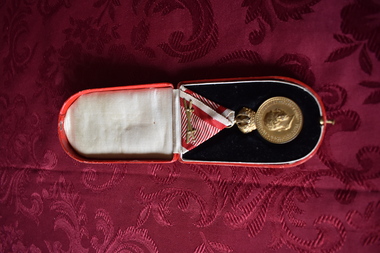
Medal, Military Merit Medal (Austria - Hungary)
... Military Merit Medal (Austria - Hungary)....Military Merit Medal (Austria - Hungary). Medal ...The Military Merit Medal was founded by Emperor Franz Joseph 1st on March 12 1890. The Medal was awarded in both peacetime for meritorious service and in wartime for outstanding acts. ( Including bravery or military merit).Historic Significance.Bronze, Silver or Gold Medal with bust of the reigning Emperor on the obverse side. The words "SIGNUM LAUDIS" (Latin for "Sign of Praise") on the reverse. It is surrounded by a wreath of half - laurels and half- oak leaves. The medal is surmounted by a dual crowns "Karl 1st type" and worn from a tri-fold ribbon. On the ribbon there are two crossed swords. Reverse impressed with " SIGNVM LAVDIS " . -
 National Wool Museum
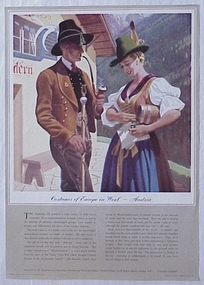
Poster, Costumes of Europe in Wool- Austria
... Costumes of Europe in Wool- Austria..."Costumes of Europe in Wool- Austria" - Dept of Education, International Wool Secretariat, part of the "Costumes of Europe in Wool" Series...."Costumes of Europe in Wool- Austria" - Dept of Education, International Wool Secretariat, part of the "Costumes of Europe in Wool" Series....Costumes of Europe in Wool- Austria Poster ..."Costumes of Europe in Wool- Austria" - Dept of Education, International Wool Secretariat, part of the "Costumes of Europe in Wool" Series."Costumes of Europe in Wool- Austria" - Dept of Education, International Wool Secretariat, part of the "Costumes of Europe in Wool" Series.Prepared by the Department of Education, International Wool Secretariat, Dorland House, 18-20 Regent St Londonwool marketing, international wool secretariat, dept of education -
 Embroiderers Guild, Victoria
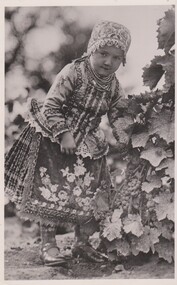
Photograph - Postcard of Sióagárd, Hungary - Child in Traditional Dress
... ... Hungary...Little girl from Sióagárd, Hungary in traditional dress. Sióagárd is a village in Tolna County, in central Hungary. ...Black and white postcard of a child from Sióagárd, Hungary in traditional dress. Described as very similar to the apron in the EGV Collection....Hungary...Little girl from Sióagárd, Hungary in traditional dress. Sióagárd is a village in Tolna County, in central Hungary. ...Little girl from Sióagárd, Hungary in traditional dress. Sióagárd is a village in Tolna County, in central Hungary. The Sárvíz river flows into the Sió in the village. Black and white postcard of a child from Sióagárd, Hungary in traditional dress. Described as very similar to the apron in the EGV Collection.embroidery, aprons, hungary, surface stitchery -
 Lara RSL Sub Branch
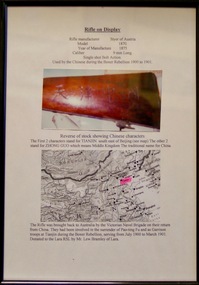
Framed Photograph and Rifle, Rifle - Styer. Made in Austria in 1875, 1875
... Rifle - Styer. Made in Austria in 1875...Rifle - Styer. Made in Austria in 1875. Glass covered Rectangular Framed Photo and Map with a brief description....Rifle - Styer. Made in Austria in 1875 Framed Photograph and Rifle. ...The Boxer Rebellion, Boxer Uprising or Yihetuan Movement was a violent anti-foreign, anti-colonial and anti-Christian uprising that took place in China between 1899 and 1901, toward the end of the Qing dynasty.The Rifle was brought back to Australia by the Victorian Naval Brigade on their return from China. They had been involved in the surrender of Pao-ting Fu and as Garrison troops at Tianjin during the boxer Rebellion, serving from July 1900 to March 1901. Rifle - Styer. Made in Austria in 1875. Glass covered Rectangular Framed Photo and Map with a brief description.rifle,gun,styer rifle, boxer rebellion,lara r.s.l. -
 Robin Boyd Foundation
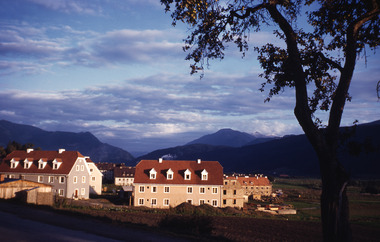
Slide, Robin Boyd, 1950
... For six months, they travelled extensively throughout Europe (predominantly driving themselves) - France, Italy, United Kingdom, Sweden, Denmark, Germany, Austria, Switzerland and Spain....Colour slide in a mount. Austrian Houses, Bad Aussee, Austria...Austria Houses (Handwritten) / Bad Aussee (Handwritten)...Austrian Houses, Bad Aussee, Austria Slide Robin Boyd ...Penleigh Boyd, Robin and Patricia Boyd's son, writes “Prior to 1950 Robin, like most other amateur or hobby photographers, took black and white printed photographs. The oldest slides date from 1950 when Robin and Patricia travelled to Europe on Robin’s Robert Haddon Travelling Scholarship.” In 1948 Robin Boyd was awarded ‘joint first place’ in the Robert Haddon competition for his design of Mildura art gallery. The scholarship helped fund their first overseas trip. Robin and Patricia were passengers on the Greek ship “Cyrenia” departing in May 1950, passing through the Suez Canal and landing in Genoa five weeks later. For six months, they travelled extensively throughout Europe (predominantly driving themselves) - France, Italy, United Kingdom, Sweden, Denmark, Germany, Austria, Switzerland and Spain.Colour slide in a mount. Austrian Houses, Bad Aussee, AustriaAustria Houses (Handwritten) / Bad Aussee (Handwritten)haddon travelling scholarship, haddon, robin boyd, slide -
 Ballarat Heritage Services
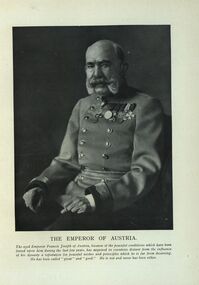
Image, The Emperor of Austria, Franz Joseph
... The Emperor of Austria, Franz Joseph...His harsh, absolutist rule within Austria produced a strong central government but also led to rioting and an assassination attempt....His harsh, absolutist rule within Austria produced a strong central government but also led to rioting and an assassination attempt. emperor of austria franz joseph francis joseph of austria world war one The Emperor of Austria, Franz Joseph Image ...He became emperor during the Revolutions of 1848 after the abdication of his uncle, Ferdinand I. With his prime minister, Felix, prince zu Schwarzenberg, he achieved a powerful position for Austria, in particular with the Punctation of Olmütz convention in 1850. His harsh, absolutist rule within Austria produced a strong central government but also led to rioting and an assassination attempt.emperor of austria, franz joseph, francis joseph of austria, world war one -
 Wodonga & District Historical Society Inc
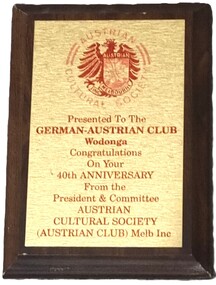
Plaque - German-Austrian Club Wodonga 40th Anniversary, 2000
... They were Kurt Mueller, Willi Klimt, Toni Krischa and Erwin Klein from Germany and Manfred Teissl from Austria. On the 16th July 1960, after advertising in the Border Morning Mail the German Austrian Club in Wodonga was born. ...It includes the insignia of the Austrian Cultural Society of Melbourne....Presented To The GERMAN-AUSTRIAN CLUB Wodonga Congratulations On Your 40th ANNIVERSARY From the President & Committee AUSTRIAN CULTURAL SOCIETY (AUSTRIAN CLUB) Melb Inc...It includes the insignia of the Austrian Cultural Society of Melbourne. German-Austrian Club Wodonga 40th Anniversary Plaque German-Austrian Club Wodonga 40th Anniversary ...Thousands of German migrants started a new life at Bonegilla, Victoria in the 1950s. Among them were five men who met each other in Wodonga, became friends and decided to form a German Austrian Club, where they could enjoy the company of likeminded individuals. They were Kurt Mueller, Willi Klimt, Toni Krischa and Erwin Klein from Germany and Manfred Teissl from Austria. On the 16th July 1960, after advertising in the Border Morning Mail the German Austrian Club in Wodonga was born. Office bearers were Paul Peters as President. Gerhard Ziermann as Secretary and Günter Schmehl as Treasurer. Their aim was "To promote the upkeep of the German language in written and spoken form and to promote good German fellowship, while enjoying functions of a cultural and entertaining nature". By 1963 the Club boasted 40 members, holding meetings at the RSL Clubrooms and other suitable locations before they found a house in Hovell Street, Wodonga. It was used for meetings, Skat meetings, film nights and Sonnabendschule” or Saturday school where children of members could continue to learn German. The Committee organised a wide range of activities and functions in their small rooms but dreamed of having a bigger home. This became reality in July 1979, when the Committee purchased land from the Albury Wodonga Development Corporation at 5 McFarland Road, Wodonga. The first brick was laid on the Club's land in May 1980, and the double-story brick building was completed within 12 months voluntarily by Club members. At the same time members supported other organisations and charities in the Wodonga and wider community. The first Oktoberfest in Wodonga was held in 1975, drawing 4,000 attendees. The event was organized to promote German culture, and the profits from the first year were donated to the Wodonga District Hospital, raising $20,000. In 2001 the German Austrian Club was presented with the Certificate of Meritorious Service by the Government of Victoria for Community Works in Wodonga and district. The Club raised $23,000 for the Wodonga Hospital, had numerous fundraisers to assist in bushfires and drought situations and was involved in the Red Cross Calling campaign for many years. After much fundraising, hard work and making their way through extensive government red tape, the Club moved to its new premises in McFarland Road on 1st August 1981. The members continued to make necessary internal adjustments and sought an alcohol licence. The building was officially opened in May 1983. The Club prospered and had 300 members, making it necessary for new applicants to be put on a waiting list to be accepted as members. Interest groups formed consisted of Competition Air Rifle Shooting Group, a Skat (German Card game) Group, Folk Dancing Group, Ladies Group, Table Tennis Group, Darts Group, Chess Group and the Billiard Group. In later years, as so many Australians became members, the Club’s name was changed to the German Austrian Australian Club. Over recent years patronage and interest in the Club and its activities changed. Children of the original members had become “real Aussies” and did not always want to carry on traditions. Aging membership and lack of volunteers forced the Club to disband in 2025. The Club building has been gifted to the Albury Wodonga Theatre Company.This item is significant because it is representative of an important cultural organisation which operated in Wodonga for over 60 years.A small metal plaque on a wooden backing with red text. It includes the insignia of the Austrian Cultural Society of Melbourne.Presented To The GERMAN-AUSTRIAN CLUB Wodonga Congratulations On Your 40th ANNIVERSARY From the President & Committee AUSTRIAN CULTURAL SOCIETY (AUSTRIAN CLUB) Melb Incgerman austrian australian club, german migrants wodonga -
 Wodonga & District Historical Society Inc
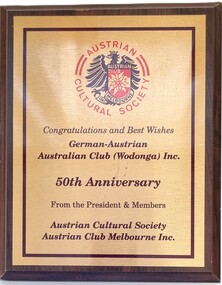
Plaque - German-Austrian Club Wodonga 50th Anniversary, 2010
... They were Kurt Mueller, Willi Klimt, Toni Krischa and Erwin Klein from Germany and Manfred Teissl from Austria. On the 16th July 1960, after advertising in the Border Morning Mail the German Austrian Club in Wodonga was born. ...It includes the insignia of the Austrian Cultural Society of Melbourne....Congratulations and Best Wishes German-Austrian Australian Club (Wodonga) Inc. 50th Anniversary From the President & Members Austrian Cultural Society Austrian Club Melbourne Inc....It includes the insignia of the Austrian Cultural Society of Melbourne. German-Austrian Club Wodonga 50th Anniversary Plaque German-Austrian Club Wodonga 50th Anniversary ...Thousands of German migrants started a new life at Bonegilla, Victoria in the 1950s. Among them were five men who met each other in Wodonga, became friends and decided to form a German Austrian Club, where they could enjoy the company of likeminded individuals. They were Kurt Mueller, Willi Klimt, Toni Krischa and Erwin Klein from Germany and Manfred Teissl from Austria. On the 16th July 1960, after advertising in the Border Morning Mail the German Austrian Club in Wodonga was born. Office bearers were Paul Peters as President. Gerhard Ziermann as Secretary and Günter Schmehl as Treasurer. Their aim was "To promote the upkeep of the German language in written and spoken form and to promote good German fellowship, while enjoying functions of a cultural and entertaining nature". By 1963 the Club boasted 40 members, holding meetings at the RSL Clubrooms and other suitable locations before they found a house in Hovell Street, Wodonga. It was used for meetings, Skat meetings, film nights and Sonnabendschule” or Saturday school where children of members could continue to learn German. The Committee organised a wide range of activities and functions in their small rooms but dreamed of having a bigger home. This became reality in July 1979, when the Committee purchased land from the Albury Wodonga Development Corporation at 5 McFarland Road, Wodonga. The first brick was laid on the Club's land in May 1980, and the double-story brick building was completed within 12 months voluntarily by Club members. At the same time members supported other organisations and charities in the Wodonga and wider community. The first Oktoberfest in Wodonga was held in 1975, drawing 4,000 attendees. The event was organized to promote German culture, and the profits from the first year were donated to the Wodonga District Hospital, raising $20,000. In 2001 the German Austrian Club was presented with the Certificate of Meritorious Service by the Government of Victoria for Community Works in Wodonga and district. The Club raised $23,000 for the Wodonga Hospital, had numerous fundraisers to assist in bushfires and drought situations and was involved in the Red Cross Calling campaign for many years. After much fundraising, hard work and making their way through extensive government red tape, the Club moved to its new premises in McFarland Road on 1st August 1981. The members continued to make necessary internal adjustments and sought an alcohol licence. The building was officially opened in May 1983. The Club prospered and had 300 members, making it necessary for new applicants to be put on a waiting list to be accepted as members. Interest groups formed consisted of Competition Air Rifle Shooting Group, a Skat (German Card game) Group, Folk Dancing Group, Ladies Group, Table Tennis Group, Darts Group, Chess Group and the Billiard Group. In later years, as so many Australians became members, the Club’s name was changed to the German Austrian Australian Club. Over recent years patronage and interest in the Club and its activities changed. Children of the original members had become “real Aussies” and did not always want to carry on traditions. Aging membership and lack of volunteers forced the Club to disband in 2025. The Club building has been gifted to the Albury Wodonga Theatre Company.This item is significant because it is representative of an important cultural organisation which operated in Wodonga for over 60 years.A small metal plaque on a wooden backing with red text. It includes the insignia of the Austrian Cultural Society of Melbourne.Congratulations and Best Wishes German-Austrian Australian Club (Wodonga) Inc. 50th Anniversary From the President & Members Austrian Cultural Society Austrian Club Melbourne Inc.german austrian australian club, german migrants wodonga -
 Robin Boyd Foundation
Slide, Robin Boyd, 1950
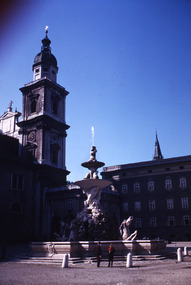
... For six months, they travelled extensively throughout Europe (predominantly driving themselves) - France, Italy, United Kingdom, Sweden, Denmark, Germany, Austria, Switzerland and Spain....Residenzplatz , Salzburg, Austria...Austria Salzburg (Handwritten) / Residenz Platz With Cathedral (Handwritten)...Residenzplatz , Salzburg, Austria Slide Robin Boyd ...Penleigh Boyd, Robin and Patricia Boyd's son, writes “Prior to 1950 Robin, like most other amateur or hobby photographers, took black and white printed photographs. The oldest slides date from 1950 when Robin and Patricia travelled to Europe on Robin’s Robert Haddon Travelling Scholarship.” In 1948 Robin Boyd was awarded ‘joint first place’ in the Robert Haddon competition for his design of Mildura art gallery. The scholarship helped fund their first overseas trip. Robin and Patricia were passengers on the Greek ship “Cyrenia” departing in May 1950, passing through the Suez Canal and landing in Genoa five weeks later. For six months, they travelled extensively throughout Europe (predominantly driving themselves) - France, Italy, United Kingdom, Sweden, Denmark, Germany, Austria, Switzerland and Spain.Colour slide in a mount. Residenzplatz , Salzburg, AustriaAustria Salzburg (Handwritten) / Residenz Platz With Cathedral (Handwritten)haddon travelling scholarship, haddon, robin boyd, slide -
 Robin Boyd Foundation
Slide, Robin Boyd, 1950
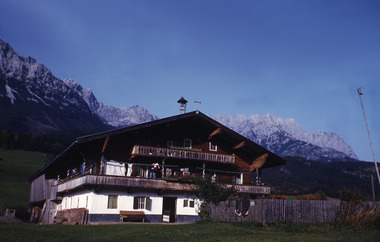
... For six months, they travelled extensively throughout Europe (predominantly driving themselves) - France, Italy, United Kingdom, Sweden, Denmark, Germany, Austria, Switzerland and Spain....Traditional House, Austria (Probably Tyrol)...Austria House (Handwritten) / Country House Turol (Handwritten)...Traditional House, Austria (Probably Tyrol) Slide Robin Boyd ...Penleigh Boyd, Robin and Patricia Boyd's son, writes “Prior to 1950 Robin, like most other amateur or hobby photographers, took black and white printed photographs. The oldest slides date from 1950 when Robin and Patricia travelled to Europe on Robin’s Robert Haddon Travelling Scholarship.” In 1948 Robin Boyd was awarded ‘joint first place’ in the Robert Haddon competition for his design of Mildura art gallery. The scholarship helped fund their first overseas trip. Robin and Patricia were passengers on the Greek ship “Cyrenia” departing in May 1950, passing through the Suez Canal and landing in Genoa five weeks later. For six months, they travelled extensively throughout Europe (predominantly driving themselves) - France, Italy, United Kingdom, Sweden, Denmark, Germany, Austria, Switzerland and Spain.Colour slide in a mount. Traditional House, Austria (Probably Tyrol)Austria House (Handwritten) / Country House Turol (Handwritten)haddon travelling scholarship, haddon, robin boyd, slide -
 Tatura Irrigation & Wartime Camps Museum
Document- Certificate, Adolf Lichtenstern
... Adolf Lichtenstern completed an Electrical Engineering degree in Austria. He was a German citizen, and along with his wife (Eugenia) and child (Kenneth) was resident in Singapore upon the beginning of WWII. ...Certificate awarded to Adolf Lichtenstern, 12th Sept 1921, on completion of his Electrical Engineers Course, Vienna, Austria....Vienna, Austria...Adolf Lichtenstern completed an Electrical Engineering degree in Austria. He was a German citizen, and along with his wife (Eugenia) and child (Kenneth) was resident in Singapore upon the beginning of WWII. ...Adolf Lichtenstern completed an Electrical Engineering degree in Austria. He was a German citizen, and along with his wife (Eugenia) and child (Kenneth) was resident in Singapore upon the beginning of WWII. The family was transported to and interned in Camp 3, Tatura.Large copy of diploma in German. Certificate awarded to Adolf Lichtenstern, 12th Sept 1921, on completion of his Electrical Engineers Course, Vienna, Austria.tatura, internment camps, singapore, documents, certificates, education -
 Ballarat Tramway Museum
Equipment - Tram Track Materials, Pandrol Australia, Sydney
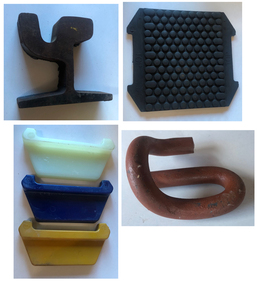
... Rolled by voestalpine Railway Systems, Austria .2 - Group of three different sized Pandrol Rail insulators used between the rail and the clip. .3 - Pandrol resilient pad used between the concrete sleeper and the rail .4 - Pandrol clip used to secure the rail to the sleeper....voestalpine Railway Systems, Austria...Equipment Tram Track Materials Pandrol Australia, Sydney voestalpine Railway Systems, Austria ...Tramway Track materials used to reconstruct or replace Ballarat Tramway Museum track between Carlton St and Depot Junction Sept 2019. Follows the current practice in Melbourne.Demonstrates the materials used to replace BTM Tramway Track during 2019. Same materials used during the reconstruction of 2022.Group of rail fittings used during 2019 track relay by Fulton Hogan between Carlton St and Depot Junction. .1 - Section of tram rail - Ri57A - cut from an 18m long rail section. Rolled by voestalpine Railway Systems, Austria .2 - Group of three different sized Pandrol Rail insulators used between the rail and the clip. .3 - Pandrol resilient pad used between the concrete sleeper and the rail .4 - Pandrol clip used to secure the rail to the sleeper.tramways, ballarat, btm, trackwork, tramway rails, pandrol, voestalpine -
 Whitehorse Historical Society Inc.
Tool - Sickle
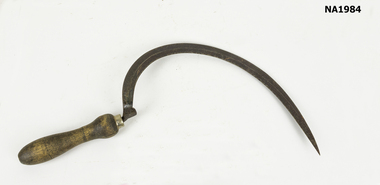
... Austria...Austria...A lavender farm. rural industry agriculture Austria Large curved sharpened steel blade with a wooden handle. ...Type of sickle used by Mr. Slater at his property 'Mitcham Grove' North Blackburn. A lavender farm.Large curved sharpened steel blade with a wooden handle.Austriarural industry, agriculture -
 Mission to Seafarers Victoria
Functional object - Cigarette Lighter, c. 1950
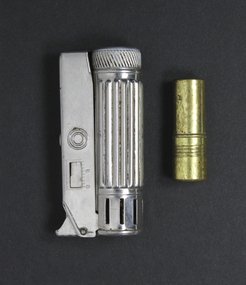
... The origin of the lighters appears to be Austria and could have been acquired either during or post his war service. ...Lighter1: PATENT/BORA/EXTRA/MADE IN/AUSTRIA (stamped alongside body of lighter) Lighter2: PATENT/Made/in/Austria/902. ...Austria...The origin of the lighters appears to be Austria and could have been acquired either during or post his war service. ...Possibly acquired by seafarer Mr Arthur Dixon who served in WW2 merchant vessels. The origin of the lighters appears to be Austria and could have been acquired either during or post his war service. Initial research indicates an approximate date of 1950s for date of manufacture.See Donor details 1727-1737.2 Small, cylindrical, fluted, polished, stainless steel cigarette lighters, with flint action. Includes a flint gauge in the ignition unit. Runs on lighter fuel, with inbuilt wick. Accompanying bronze coloured metal case of flints. Manufacturer name embossed on body. Lid incised with cylindrical grip of 4 ridges. Lighter1: PATENT/BORA/EXTRA/MADE IN/AUSTRIA (stamped alongside body of lighter) Lighter2: PATENT/Made/in/Austria/902. At right angles at base of lighter, REL Flints: Thorens (stamped in brand name logo style on body at right angle to lid)cigarette lighters, smoking accessories, arthur dixon, bora cigarette lighter, arthur oswald dixon, sailors, seafarers, seamen, officers, smoking, lighters, bora -
 Eltham District Historical Society Inc
Document - Identy Card, Frau Fleischer, Vienna, Austria, 1919
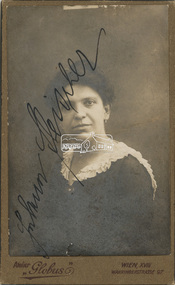
... Frau Fleischer, Vienna, Austria......Austria...Contained within our collection is an identity card for a Frau Fleischer from Vienna, Austria in 1919. We have no detail on this item, why we have it, where it came from and have not been able to conclusively decipher her first name. ...Police Directorate Vienna, July 15, 1919 1919 Atelier Globus Austria Fleischer Frau Fleisher Identity Card Johanna Fleischer vienna Wahringerstrasse 97 Wien Colour print on commercial photo paper Frau Fleischer, Vienna, Austria Document Identy Card ...Contained within our collection is an identity card for a Frau Fleischer from Vienna, Austria in 1919. We have no detail on this item, why we have it, where it came from and have not been able to conclusively decipher her first name. Did she migrate to Australia some time after the First World War, did she end up in Eltham? We have tried tracking the name Fleischer in Eltham but no positive links so far. The card is written in Gothic German script, the handwriting is very difficult however we have been able to decipher some of what it states. Legitimation The identity of the person depicted in the photograph Mrs. Johanna? Fleischer Profession ? Apartment XV. ?? and the handwritten signature is hereby officially confirmed D. o. Police Directorate Vienna, July 15, 19191919, atelier globus, austria, fleischer, frau fleisher, identity card, johanna fleischer, vienna, wahringerstrasse 97, wien -
 Melbourne Legacy
Postcard - Document, postcard
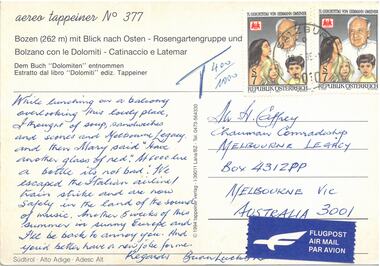
... A postcard to the Comradeship Committee when a Legatee was travelling in Austria. "Bozen mit Blick each Osten" which translates as "Bolzano with view to the east". ...Colour postcard from Austria....Printed "Bozen mit Blick each Osten". Two Austrian postages stamps and an Airmail sticker. ...Colour postcard from Austria. Postcard Document, postcard ...A postcard to the Comradeship Committee when a Legatee was travelling in Austria. "Bozen mit Blick each Osten" which translates as "Bolzano with view to the east". It is addressed to Mr H Caffrey, Chairman Comradeship at Melbourne Legacy. It is not dated and is signed Brian Lucky Luscombe. It says: "While lunching on a balcony overlooking this lovely place, I thought of soup, sandwiches and scones and Melbourne Legacy. And then Mary said "have another glass of red". At 6000 lire a bottle it's not too bad. We escaped the Italian airline/train strike and are now safely in the land of the Sound of Music. Another 5 weeks of this summer in sunny Europe and I'll be back to annoy you. And you'd better have a new job for me. Regards. Brian Lucky Luscombe.A record of a Legatee travelling and relating experiences back to his comrades in Melbourne.Colour postcard from Austria.Printed "Bozen mit Blick each Osten". Two Austrian postages stamps and an Airmail sticker. Handwritten text in blue pen.comradeship, legatee -
 Falls Creek Historical Society
Ski Pass for Axamer Lizum Resort in Austria for C. H. Bridgford
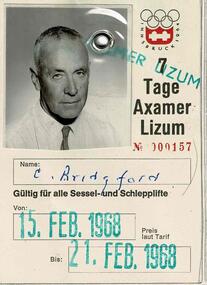
... Ski Pass for Axamer Lizum Resort in Austria for C. H. Bridgford...A plastic covered ski pass for Axamer Lizum resort in Austria. It was issued to C. H. Bridgeford. in 1968. ...Ski Pass for Axamer Lizum Resort in Austria for C. H. Bridgford Ski Pass for Axamer Lizum Resort in Austria for C. ...SKI TICKETS Before tows and lifts were introduced at Falls Creek, it could take skiers 20 minutes to climb to the Summit … but only TWO minutes to go back to the bottom. The arrival of tows, then chairlifts and T-bars changed the face of skiing forever. The first rope tow was constructed by Toni St. Elmo for the 1951 winter season. Bob Hymans installed a smaller tow for his guests at Skyline Lodge. Tows were still quite slow, so in 1956 Bob Hymans created his single chairlift. In 1958 the Village rope tow, designed by Albury engineer Jock Wilson, opened. It was financed by shareholders including Bill Griffith (Bowna Ski Club) and the Bridgford family (St. Trinian’s Ski Club). Several other tows followed including the Summit T-bar in 1961, built by Ron McCallum and operated by Alpine Developments Pty. Ltd. which was a company formed by C. H. (Bill) Bridgford. By 1982 Falls Creek was served by 16 different lifts or T-bars, all owned and operated by Alpine Developments (Holdings) Pty. Ltd. During the development of Falls Creek, different methods have been used to pay for the use of tows, lifts and T-bars … including metal tokens, single tickets, strips of tickets and season passes. The Falls Creek Historical Society Collection includes many examples of these items.This ski pass is significant because it was issued to a pioneer of the ski industry in Falls Creek, Victoria.A plastic covered ski pass for Axamer Lizum resort in Austria. It was issued to C. H. Bridgeford. in 1968. Charles (Bill) Bridgeford built a family lodge called St. Trinian's in the early 1950s. Bill had previously worked in the family shipping firm and had been Member for South Eastern in the Victorian Parliament. He became one of the shareholders in the Village rope tow which had been a failure partly because too many people had been involved. In 1960 Bridgeford approached Toni St. Elmo with an offer to buy the Nissen tow and Nissen Lodge which was accepted. With friends Geoff Henke and Ron McCallum, an engineer, he formed Alpine Developments (Holdings) Pty. Ltd. Ron had also been Lift Manager at Mt. Buller and together they acquired the Village rope tow and replaced it with a T-bar. They gained the franchise to operate all ski lifts and T-bars and later the Falls Creek Ski School. Alpine Developments (Holdings) Pty. Ltd continued to expand the lift network until 1983 when the lifts were sold to Transfield.On front: Photograph and text Innsbruck Olympics 1964 logo in top right Tage M Axamer Lizum № 000157 Gültig für alle Sessel-und Schlepplifte (Valid for all chairlifts and drag tows) 15. FEB. 1968 until 21. FEB. 1968 Preis laut Tarif (Price according to tariff) On back: Condition of use in German, English and Frenchcharles bridgeford, alpine development holdings pty ltd, ski pass, axamer lizum resort -
 Robin Boyd Foundation
Slide, Robin Boyd, 1950
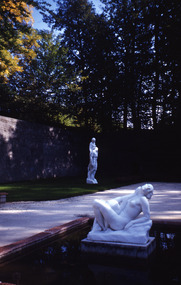
... For six months, they travelled extensively throughout Europe (predominantly driving themselves) - France, Italy, United Kingdom, Sweden, Denmark, Germany, Austria, Switzerland and Spain....Colour slide in a mount. Leda, by Austrian-German sculptor Josef Thorak...Austria Sculpture (Handwritten) / Open-air Scupture Exhibition (Handwritten) / Sculptor: Thoraz; LEDA (Handwritten)...Leda, by Austrian-German sculptor Josef Thorak Slide Robin Boyd ...Penleigh Boyd, Robin and Patricia Boyd's son, writes “Prior to 1950 Robin, like most other amateur or hobby photographers, took black and white printed photographs. The oldest slides date from 1950 when Robin and Patricia travelled to Europe on Robin’s Robert Haddon Travelling Scholarship.” In 1948 Robin Boyd was awarded ‘joint first place’ in the Robert Haddon competition for his design of Mildura art gallery. The scholarship helped fund their first overseas trip. Robin and Patricia were passengers on the Greek ship “Cyrenia” departing in May 1950, passing through the Suez Canal and landing in Genoa five weeks later. For six months, they travelled extensively throughout Europe (predominantly driving themselves) - France, Italy, United Kingdom, Sweden, Denmark, Germany, Austria, Switzerland and Spain.Colour slide in a mount. Leda, by Austrian-German sculptor Josef ThorakAustria Sculpture (Handwritten) / Open-air Scupture Exhibition (Handwritten) / Sculptor: Thoraz; LEDA (Handwritten)haddon travelling scholarship, haddon, robin boyd, slide -
 Robin Boyd Foundation
Slide, Robin Boyd, 1950
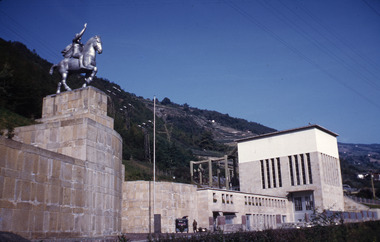
... For six months, they travelled extensively throughout Europe (predominantly driving themselves) - France, Italy, United Kingdom, Sweden, Denmark, Germany, Austria, Switzerland and Spain....Statue of Mussolini, Power Station neat Austrian border, Italy.... / El.P. St. Near Austrian Border / Mussolini (All Handwritten)...St. Near Austrian Border / Mussolini (All Handwritten) Colour slide in a mount. ...Penleigh Boyd, Robin and Patricia Boyd's son, writes “Prior to 1950 Robin, like most other amateur or hobby photographers, took black and white printed photographs. The oldest slides date from 1950 when Robin and Patricia travelled to Europe on Robin’s Robert Haddon Travelling Scholarship.” In 1948 Robin Boyd was awarded ‘joint first place’ in the Robert Haddon competition for his design of Mildura art gallery. The scholarship helped fund their first overseas trip. Robin and Patricia were passengers on the Greek ship “Cyrenia” departing in May 1950, passing through the Suez Canal and landing in Genoa five weeks later. For six months, they travelled extensively throughout Europe (predominantly driving themselves) - France, Italy, United Kingdom, Sweden, Denmark, Germany, Austria, Switzerland and Spain.Colour slide in a mount. Statue of Mussolini, Power Station neat Austrian border, ItalyItaly / Power St. / El.P. St. Near Austrian Border / Mussolini (All Handwritten)haddon travelling scholarship, haddon, robin boyd, slide -
 Embroiderers Guild, Victoria
Domestic Object - Towel, Mid 20th Century
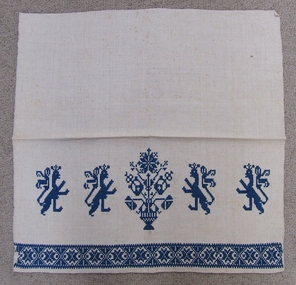
... Label on reverse - Hungarian old design, made in Budapest, work rooms by Save the Children Fund children....Budapest, Hungary...Embroidery Towel Cross Stitch 1940-60 Mid European lions flowers heraldic Label on reverse - Hungarian old design, made in Budapest, work rooms by Save the Children Fund children. ...Purchased in Greece 1961. From the Save the Children Fund in Budapest, worked by a child.Traditional design, in bright deep blue cross stitch on handwoven linen.Label on reverse - Hungarian old design, made in Budapest, work rooms by Save the Children Fund children.embroidery, towel, cross stitch, 1940-60, mid european, lions, flowers, heraldic -
Moorabbin Air Museum
Book (item) - Military Pilot and Aircrew Badges, Military Pilot & Aircrew Badges of the World (1870-Present) Vol.1: Europe ( Albania-Hungary) by Don Chalif
... Military Pilot & Aircrew Badges of the World (1870-Present) Vol.1: Europe ( Albania-Hungary) by Don Chalif...Military Pilot & Aircrew Badges of the World (1870-Present) Vol.1: Europe ( Albania-Hungary) by Don Chalif Book Military Pilot and Aircrew Badges ... -
![Publication, Export Monimpex Budapest, Honeyland Hungary (Export Monimpex Budapest), Budapest, [nd]](/media/collectors/52ae888f2162ef0b08d63076/items/533240a42162ef06a4bf872b/item-media/53389fdc2162ef13f882ab31/item-fit-380x285.jpg?cb=6) Wheen Bee Foundation
Wheen Bee FoundationPublication, Export Monimpex Budapest, Honeyland Hungary (Export Monimpex Budapest), Budapest, [nd]
... Honeyland Hungary (Export Monimpex Budapest), Budapest, [nd]...Honeyland Hungary (Export Monimpex Budapest), Budapest, [nd] Publication Export Monimpex Budapest ... -
 Mrs Aeneas Gunn Memorial Library
Book, John Murray, Raggle-taggle : adventures with a fiddle in Hungary and Roumania, 1935
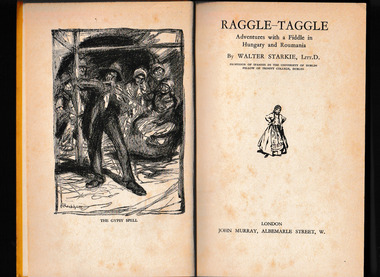
... Raggle-taggle : adventures with a fiddle in Hungary and Roumania...Hungary - Music Roumania - Music The travels of a music lover in Hungary and Roumania p.399. ...The travels of a music lover in Hungary and Roumaniap.399.non-fictionThe travels of a music lover in Hungary and Roumaniahungary - music, roumania - music -
 Warrnambool and District Historical Society Inc.
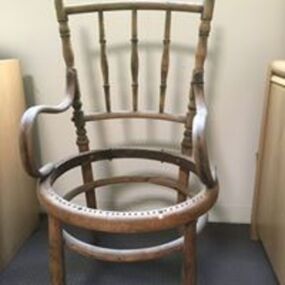
Furniture, Flaschner, Bentwood Chair Swintons Store, early 20th Century
... Austria Flaschner Lodenbach a/ F (Autriche)...Lodenbach, Austria...This chair is of considerable interest as it comes from the Swintons stores in Warrnambool and this is a business that has been operating in Timor Street since 1865. swintons pty. ltd. warrnambool history of warrnambool Austria Flaschner Lodenbach a/ F (Autriche) This is a wooden ( bent wood) chair with a round seat attached to the back by wooden screws. ...This chair comes from Swintons Stores in Warrnambool and is said to have been used as a "Santa Chair" at Christmas time. Wiliam and Ann Swinton arrived in Australia in 1854. William, a builder opened a grocery, china and glassware store in Timor Street, Warrnambool in 1865. By 1888 the firm was known as William Swinton and Sons. Branch stores were opened at South Warrnambool, Raglan Parade, Wangoom, Cudgee and Nullawarre. In1934 the business split into two companies, Swintons Pty. Ltd. and George Swinton and Sons Pty. Ltd. The Swinton family still operate a business in Timor Street, Warrnambool, making it one of the oldest family businesses still operating in Australia.This chair is of considerable interest as it comes from the Swintons stores in Warrnambool and this is a business that has been operating in Timor Street since 1865.This is a wooden ( bent wood) chair with a round seat attached to the back by wooden screws. The seat insert, possibly basket wear is missing. There is a lower circular piece of wood under the seat and this is broken at one end. There are four bowed legs. The back of the chair has turned wood with three middle slats and two sides attached by wooden pegs and screws. The seat has two bent wood handles, currently detached . The chair is stained and a little chipped.Austria Flaschner Lodenbach a/ F (Autriche)swintons pty. ltd. warrnambool, history of warrnambool -
 Benalla Migrant Camp Inc.
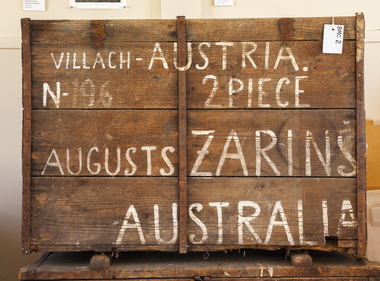
Functional object - Wooden Sea Chest, Zarins Sea Chest, 1940-50s
... A basic online search reveals that Villach-Austria refers to the DP camp (displaced persons' camp) that the Zarins family originated from. ...Villach-Austria, N-196, 2 piece, AUGUSTS ZARINS, Australia (painted on side of chest in white paint, by hand)...Villach, Austria...A basic online search reveals that Villach-Austria refers to the DP camp (displaced persons' camp) that the Zarins family originated from. ...Sea chests held all the worldy belongings of migrant families, when they migrated by ship. Families were eligible for up to two chests depending on the size of the family. From the markings, it appears that there was a second chest, but this is the only chest from this family in our collection. This chest would have been purchased or built by the Zarins family and loaded at the harbour from which the migrant ship left - in this instance that location is unknown. A basic online search reveals that Villach-Austria refers to the DP camp (displaced persons' camp) that the Zarins family originated from. Maybe the chest had been picked up from there, or there were a group of camp residents coming to Australia, we can only guess why this is written on the chest at all. Heavy wooden chest with metal handles on both sides and lid is missing. Metal bands with nails fixed to front and back and sides.Villach-Austria, N-196, 2 piece, AUGUSTS ZARINS, Australia (painted on side of chest in white paint, by hand)wood, wooden, chest, sea chest, zarins -
 Victorian Apiarists Association
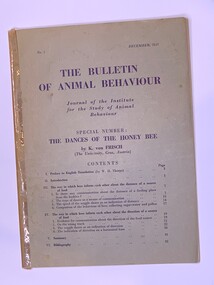
Publication, The Dances Of The Honey Bee - The Bulletin Of Animal Behaviour No. 5(K. von Frisch, The University, Graz, Austria), December 1947
... The Dances Of The Honey Bee - The Bulletin Of Animal Behaviour No. 5(K. von Frisch, The University, Graz, Austria)...Old Publication, Faded Blue Cover, non original spine The Dances Of The Honey Bee - The Bulletin Of Animal Behaviour No. 5(K. von Frisch, The University, Graz, Austria) Publication ...Old Publication, Faded Blue Cover, non original spine -
 Kew Historical Society Inc
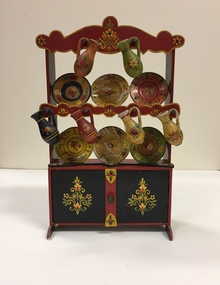
Souvenir, Miniature Dresser, 1950s
... Ethnic Hungarian miniature dresser, donated by a past member of KHS...Hungary...Ethnic Hungarian miniature dresser, donated by a past member of KHS vaughan-smith collection hungarian folk art toy dressers Miniature dresser, made of wood and painted with folk designs. ...Ethnic Hungarian miniature dresser, donated by a past member of KHSMiniature dresser, made of wood and painted with folk designs. The dresser comes with six detachable jugs. vaughan-smith collection, hungarian folk art, toy dressers -
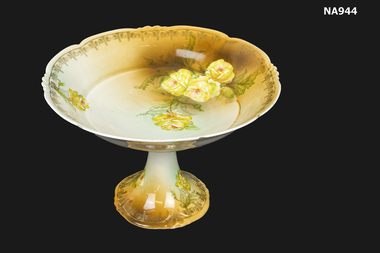 Whitehorse Historical Society Inc.
Domestic object - Fruit Comport, 1914
... 'Austrian' china fruit comport on stand.Transfer border and yellow roses retouched by hand.Brown and gold enamel decoration...Austria...domestic items crockery 'Austrian' china fruit comport on stand.Transfer border and yellow roses retouched by hand.Brown and gold enamel decoration Domestic object Fruit Comport ...'Austrian' china fruit comport on stand.Transfer border and yellow roses retouched by hand.Brown and gold enamel decorationdomestic items, crockery -
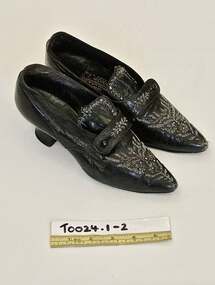 Brighton Historical Society
Footwear - Shoes, 1880-1900
... Made in Austria for / J. T. MORRIS / 306 Sturt Street / BALLARAT...Austria...The eldest their four children, Pauline Margaret Law (born 15 December 1915) ultimately purchased the house with her husband Hugh McLean in 1956 and lived there until 1965 when the house was demolished. shoes j. t. morris ballarat margaret law margaret bartholomew james lindsay gordon law pelaco Made in Austria for / J. T. MORRIS / 306 Sturt Street / BALLARAT Dark brown leather shoes with Louis heel. ...These shoes belonged to Margaret Law (nee Bartholomew). Born on 3 December 1837 in Stirling, Scotland, Margaret emigrated to Australia with her family aboard the Ticonderoga, arriving in Melbourne on 22 December 1852. Around one hundred passengers died of typhus during the journey, and around seventy more after arrival. Two of Margaret's siblings were among the casualties. The Bartholomew family settled in Ballarat. Around 1861, Margaret married James Nicol Law. They continued to live in Ballarat for some years, and it is likely that Margaret purchased the shoes during this period. They had several children, the youngest of which was James Lindsay Gordon "Lin" Law, (1881-1963). In 1906, Lin and his business partner James Kerr Pearson (also a Brighton local, who lived at 12 Moule Avenue) established the shirt manufacturing company Pelaco. In 1922 the company established its factory at 23 Goodwood Street on the top of Richmond Hill; the 4.3 metre high neon 'Pelaco' sign, erected in 1939, is today heritage listed. The company was known for its innovative approach to efficiency and labour relations, discontinuing Saturday morning work in 1908 and appointing an industrial relations officer in 1928. Lin married Elsie Russell on 12 January 1915 (BHS also holds a bridge jacket given to Elsie by Lin; see T0047). They settled in Brighton, moving into 'Blairgowrie', 306 St Kilda Street, in 1920. The eldest their four children, Pauline Margaret Law (born 15 December 1915) ultimately purchased the house with her husband Hugh McLean in 1956 and lived there until 1965 when the house was demolished.Dark brown leather shoes with Louis heel. Vamp and strap are decorated with cut metal beads. Strap secured with one boot button and button hole.Made in Austria for / J. T. MORRIS / 306 Sturt Street / BALLARATshoes, j. t. morris, ballarat, margaret law, margaret bartholomew, james lindsay gordon law, pelaco -
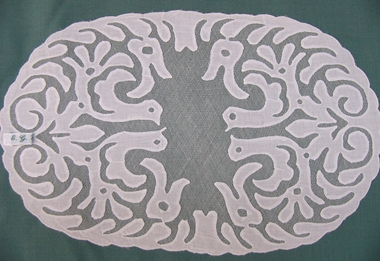 Embroiderers Guild, Victoria
Textile - Oval Mat, Hungarian Oval Mat, Mid 19th century
... ... Hungary...Purchased from Miss E MacMillan, The Primrose Pottery shop who obtained it from an Hungarian refugee....Hungary...Purchased from Miss E MacMillan, The Primrose Pottery shop who obtained it from an Hungarian refugee. Mats 1940-60 Hungary Applique White lawn applied to machine made net with "blind hemming". ...Purchased from Miss E MacMillan, The Primrose Pottery shop who obtained it from an Hungarian refugee.White lawn applied to machine made net with "blind hemming". The design is based on traditional work from southern Europe. The edge of the mat is scalloped in buttonhole stitch.mats, 1940-60, hungary, applique
