
Showing 80 items matching "barry francis"
-
 Whitehorse Historical Society Inc.
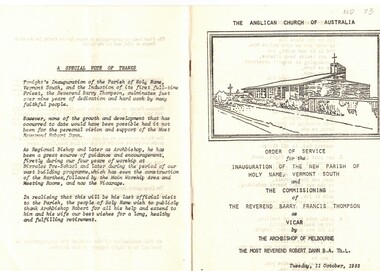
Document, Parish of Holy Name, 1/10/1983
... ...barry francis...Order of Service for the inauguration of the new Parish of Holy Name, Vermont south and the commissioning of Reverend Barry Francis Thompson as Vicar by the Archbishop of Melbourne, the Most Reverend Robert Dann on Tuesday, 11 October, 1983. ...holy name anglican church vermont south; dann robert rev. thompson barry francis Order of Service for the inauguration of the new Parish of Holy Name, Vermont south and the commissioning of Reverend Barry Francis Thompson as Vicar by the Archbishop of Melbourne, the Most Reverend Robert Dann on Tuesday, 11 October, 1983. a tribute is included to the involvement of Archbishop Robert Dann over the previous nine years to the development of the Parish. 12 pages Parish of Holy Name Document Document ...Order of Service for the inauguration of the new Parish of Holy Name, Vermont south and the commissioning of Reverend Barry Francis Thompson as Vicar by the Archbishop of Melbourne, the Most Reverend Robert Dann on Tuesday, 11 October, 1983. a tribute is included to the involvement of Archbishop Robert Dann over the previous nine years to the development of the Parish. 12 pagesholy name anglican church, vermont south;, dann, robert, rev., thompson, barry francis -
 Box Hill Historical Society
Book, Robert L. Hayes, Ad altiora certamus : a collective memoir of the Box Hill High School 1950-55 Cohort and the Foundation Matriculation Class, 2015
... Barry...Francis> Arthur...Schools Box Hill High School Reminiscences Memoirs Agnew> Malcolm Aitken> Michael Baker> Jeff Barber> Rance Barclay> Robin Blackwell> John Chandler> Geoff Dahan> Paul Dobbin> Graeme Filshie> Barry Francis> Arthur Friday> Robin Gannaway> Alex Hancy> Tom Hayes> Bob Hewitt> Neil Hiscock> Peter Hobday> Garth Lee> Bryan McKirdy> Lindsay Olsen> Ken Roffey> Stuart Schaeche> Marshall Smart> Leslie Smit> Kees Smith> Graeme Swales> David Tucker> Murray Wade> Mark Webster> John Wilshier> Eric Wilson> Geoff The reminiscences of 190 of the foundation matriculation class of Box Hill High School are collected to provide a history and memory of the school and the students. ...The reminiscences of 190 of the foundation matriculation class of Box Hill High School are collected to provide a history and memory of the school and the students. Stories of school life as well as life after Box Hill High School were contributed. A list of the members of the cohort as well as names of those who provided personal accounts are included.214 pages : illustrations (some colour}, facsimiles (some colour}, portraits (some colour}; 3 appendicesnon-fictionThe reminiscences of 190 of the foundation matriculation class of Box Hill High School are collected to provide a history and memory of the school and the students. Stories of school life as well as life after Box Hill High School were contributed. A list of the members of the cohort as well as names of those who provided personal accounts are included.schools, box hill high school, reminiscences, memoirs, agnew> malcolm, aitken> michael, baker> jeff, barber> rance, barclay> robin, blackwell> john, chandler> geoff, dahan> paul, dobbin> graeme, filshie> barry, francis> arthur, friday> robin, gannaway> alex, hancy> tom, hayes> bob, hewitt> neil, hiscock> peter, hobday> garth, lee> bryan, mckirdy> lindsay, olsen> ken, roffey> stuart, schaeche> marshall, smart> leslie, smit> kees, smith> graeme, swales> david, tucker> murray, wade> mark, webster> john, wilshier> eric, wilson> geoff -
 Melbourne Legacy
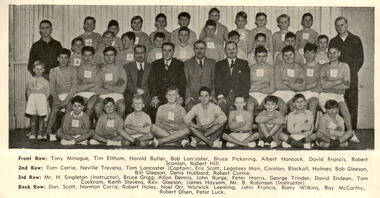
Photograph, Melbourne Legacy, East Brighton Class 1953, 1953
... Back row: Don Scott, Norman Corrie, Robert Haley, Noel Orr, Warwick Leeming, John Francis, Barry Wilkins, Ray McCarthy, Robert Olsen, Peter Luck. ...Back row: Don Scott, Norman Corrie, Robert Haley, Noel Orr, Warwick Leeming, John Francis, Barry Wilkins, Ray McCarthy, Robert Olsen, Peter Luck. ...A photo from a newsletter from September 1953. The photo shows the East Brighton boys class. Front row: Tony Minogue, Tim Eltham, Harold Butler, Bob Lancaster, Bruce Pickering, Albert Hancock, David Francis, Robert Scanlan, Robert Hill. Second row: Tom Corrie, Neville Trevena, Tom Lancaster, Eric Scott, Legatees Mair, Carolan, Blackall, Holmes; Bob Gleeson, Bill Gleeson, Denis Hubbard, Robert Carnie. Third row: Mr H Singleton (Instructor), Bruce Grigg, Allan Dennis, John Burge, Peter Harris, George Trinder, David Endean, Tom Cockram, Keith Stevens, Kev Gleeson, James Haysom, Mr B Robinson (Instructor). Back row: Don Scott, Norman Corrie, Robert Haley, Noel Orr, Warwick Leeming, John Francis, Barry Wilkins, Ray McCarthy, Robert Olsen, Peter Luck. Names mentioned in the article include boys newly enrolled: Geoffrey Bishop, Gregory Bishop, Trevor Busst, Harold Butler, John Burge, Daryl Bernaldo, Norman Corrie, Tom Corrie, Alan Dennis, Peter Eltham, John Francis, David Francis, James Haysom, Albert Hancock, Robert Haley, Peter Harris, Robert Hill, Warwick Leeming, Barry Mitchell, Ray McCarthy, Ian Nicholds, Laurie Nicholls, Geoffrey One, Noel Orr, Robert Olsen, Bruce Pickering, Frank Rose, Keith Stephens, Don Scott, Robert Scanlan, Stephen Westcott, Barry Wilkins, Robert Watson. The article mentions that the photos of the boys classes were donated to Legacy by Mr John Beckett of Sandringham. Individual photos being catalogued to record detail about each one.The newsletter outlining news of Junior Legatee activities with mentions of boys by name.Black and white photo of the East Brighton boys class printed in a newsletter in September 1953.junior legatees, boys classes -
 Federation University Historical Collection
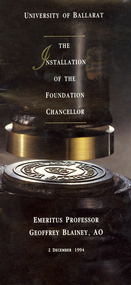
Photograph - Documents, Installation of Emeritus Professor Geoffrey Blainey as the Foundation Chancellor of the University of Ballarat, 1994
... francis...david fitzgerald...redmond barry...The velvet trencher with gold tassel is the traditional headwear for a Chancellor. university of ballarat chancellor geoffrey blainey blainey governor of victoria richard mcgarvie bill pryor nina valentine david james vern robson lee francis david fitzgerald redmond barry ballarat school of mines Black and white 16 page booklet with a primarily black cover. ...The Chancellor is the head of the university and presides over meetings of Council. The Chancellor is also an ex officio member of all other bodies of the University. As well as being the traditional colour of embellishment on a Chancellor's gown, gold also provides a tangible link between the new university and its Ballarat ancestry. Academic gowns distinguish between the university's senior office holders, The design of the Chancellor's gown at the University of Ballarat is based on an Oxford and Cambridge tradition for university Chancellors' robes. It is made after the style of an English Queen's Counsel gown, with appropriate traditional adornment (chevrons) on the sleeves and edges. The decorative braiding is in gold oak-leaf braid. The velvet trencher with gold tassel is the traditional headwear for a Chancellor. Black and white 16 page booklet with a primarily black cover. The booklet is the programme for the installation of Emeritus Professor Geoffrey Blainey as the foundation Chancellor of the University of Ballarat. The contents include an order of proceedings, history, Geoffrey Blainey, the role of Chancellor, the chancellor's regalia, University of Ballarat logo.university of ballarat, chancellor, geoffrey blainey, blainey, governor of victoria, richard mcgarvie, bill pryor, nina valentine, david james, vern robson, lee francis, david fitzgerald, redmond barry, ballarat school of mines -
 Federation University Historical Collection
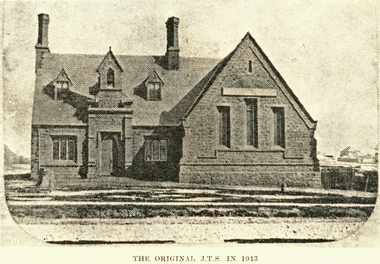
Magazine - Booklet, F.W. Niven, Ballarat School of Mines Students' Magazine, 1957, 1957
... francis hunting...teng hor khoo...teng seong khoo...norman leckie...boon thiam lu...brian mclennan...peter russell...chookiate sirivingse...laurie trean...john wolfe...ballarat school of mines...peter robinson...john thomas huyton clelland...d. w. brown...n. bunning...jim mckay...barry...Holmes, graham Manning, Andrew Brumby, Kevin Rogers, Graham Walters, keith alexander brian bellingham neil brogden bernie gallagher john gowan francis hunting teng hor khoo teng seong khoo norman leckie boon thiam lu brian mclennan peter russell chookiate sirivingse laurie trean john wolfe ballarat school of mines peter robinson john thomas huyton clelland d. w. brown n. bunning jim mckay barry singleton malcolm hausler josephine young george lewis alan clarke andrew atkins lorette davey noel flood denis bryans john mckenzie robert skewes ian fraser walter reimann pat collier ralph Hepburn Peter M. ...The Ballarat School of Mines produced an annual students' magazine from 1899 - 1966. Contents include, School Council, Members of Staff, 1st Corbould Scholarship, Australian Speech, Art Lending Library, Literary Society, football, Boys' Junior Technical School, Bullarto Camp Reunion, John Leckie, Stan Hillman, Girls' Junior Technical School, Parliament House, Ballarat North Junior Technical School Images include: Craig's Royal Hotel, Peter Robinson, John Thomas Huyton Clelland, John Wolfe, Bernie Gallagher, Nelson Hails, John Gowan, Beverley Selkirk, Pat Collier, Barry Singleton Mara Jekabsons, Bill Widdop, Neil Brogden, frank Pomeroy, Laurence Trevan, Neville Bunning, Jim McKay, Malcolm Hausler, Josephine Young, George Lewis, Alan Clarke, Norman Leckie, Andrew Atkins, Lorette Davey, Noel Flood, Denis Bryan, SMB Football Team, SMB Athletics Team, SMB Baseball Team, SMB Basketball Team, SMB Tennis Team, Athletic Champions, R. Ross, I. Beaumont, R. Parker, G. Waller, John Rash, J. Sarah, J. Walters, P. Rowe, L. Drummond, R. Whitcher, ATC Flight No 24, BJTS Football Team, BJTS Swimming Team, BJTS Tennis Team, BJTS Athletics Squad, BJTS Cricket Team, BJTS Softball team and coach, W. Sawall, L. McDonald, K. Penna, J. Clarke, K. Rogers, Mr Wilson, F. Holmes, graham Manning, Andrew Brumby, Kevin Rogers, Graham Walters, Yellow soft covered students' magazine of 92 pages. keith alexander, brian bellingham, neil brogden, bernie gallagher, john gowan, francis hunting, teng hor khoo, teng seong khoo, norman leckie, boon thiam lu, brian mclennan, peter russell, chookiate sirivingse, laurie trean, john wolfe, ballarat school of mines, peter robinson, john thomas huyton clelland, d. w. brown, n. bunning, jim mckay, barry singleton, malcolm hausler, josephine young, george lewis, alan clarke, andrew atkins, lorette davey, noel flood, denis bryans, john mckenzie, robert skewes, ian fraser, walter reimann, pat collier, ralph hepburn, peter m. robinson, a. bethune, j. lane, d. colbourn, w. etty, b. bellingham, n. hails, t. white, p. agrums, w. widdop, f. pomeroy, b. singleton, j. mckay, j. pollock, r. cutter, d. vendy, j. wolfe, p. collier, w. bowtell, r. hepburn, w. wynd, p. menz, b. dunstan, j. gowan, l. groat, g. westwood, j. erdmanis, a. rock, k. alexander, p. walker, w. reimann, n. delosa, b. mclennan, a. clarke, g. wilson, t. coad, j. caldwell, d. chung, r. champneys, j. mckenzie, b. paterson, j. cowan, somnam nandhabiwat, w. spencer, p. schoutens, d. treller, gayle peterson, denise lockett, carmel dobbyn, margaret ayars, raymond jenkin, l. nester, w. eyers, r. ross, g. dreever, r. ross, i. beaumont, r. parker, g. waller, j. rash, j. sarah, j. walters, p. rowe, l. drummond, r. whitcher, r. ingle, i. pollock, p. bilney, i. collier, l. thomas, g. leslie, p. schoutens, a. morris, g. wells, b. mcgregor, j. bedggood, k. spencer, j. vincent, j. elliott, j. whitten, g. higgins, g. le couteur, h. mcdougall, g. wise, m. allen, d. pattie, i. collinson, c. kearns, g. severino, g. smith, n. smith, f. tolliday, r. williams, d. coldicott, m. hewitt, g. higgins, c. ludbrook, j. simpson, glenys spielvogel, norma davies, dawn ridgeway, carmel dobbyn, beverley davis, j. crouch, kathleen harris, j. walters, jan hunter, j. carroll, c. jenkins, lesley cutts, h. vagg, irene horgan, graham manning, andrew brumby, kevin rogers, graham walters, k. howell, n. malthouse, l. deppler, g. manning, n. nugent, b. antonio, r. mccarthy, mr morrison, r. mckenzie, w. wakeling, j. clarke, l. mayne, n. bromley, a. brumby, a. abrams, k. penna, r. button, p. linane, f. holmes, n. yean, mr love, miss atkins, p. cochrane, i. quick, mr mitchell, b. flynn, r. brown, k. penna, j. mcmahon, g. turnbull, n. skewes, d. vowles, d. blake, mr nuttall, g. borchers, i. greenbank, d. evans, j. whelan, j. milne, w. sawall, d. ward, r. rundell, mr ellerton, m. foy, l. reed, c. tilgals, peter agrums -
 Federation University Historical Collection
Programme, Ballarat School of Mines Revue, 1961, 1961
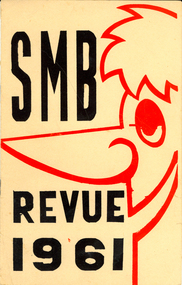
... Performers included Danny Taylor, Eric Mcgrath, David Bell, Bob Coutts, Noel Murphy, Noel Whitcher, Anne Moorhouse, Sue Mole, Noel Delosa, Jill Norton, Mary Wettenhall, Barry Lonsdale, David Kirton, Don Yates, Baldwin Eng, Suresh Chand, Teddy Gan, Francis Kwong, Daniel Yung, jenny Milbourne, Jenny trahar, Anita Bitans, Janis ermanis, Kevin Rogers, Kevin Sculley, David Kirton, Noelene Ahpee, Ruth Nelson, Gersina Prox, Peter Agrums, Sue Davies, Balswin Eng, Edward Scull, John Kavanagh, Val Baker, Sue Mole, Val Driffen, Jill Norton, Graeme Williams, Malcolm Peel, Geoffrey Simmonds, David Kirton, George Leishman, Barry Lonsdale, William Roodenburg, Ian Weir, Jack tay, W. ...Performers included Danny Taylor, Eric Mcgrath, David Bell, Bob Coutts, Noel Murphy, Noel Whitcher, Anne Moorhouse, Sue Mole, Noel Delosa, Jill Norton, Mary Wettenhall, Barry Lonsdale, David Kirton, Don Yates, Baldwin Eng, Suresh Chand, Teddy Gan, Francis Kwong, Daniel Yung, jenny Milbourne, Jenny trahar, Anita Bitans, Janis ermanis, Kevin Rogers, Kevin Sculley, David Kirton, Noelene Ahpee, Ruth Nelson, Gersina Prox, Peter Agrums, Sue Davies, Balswin Eng, Edward Scull, John Kavanagh, Val Baker, Sue Mole, Val Driffen, Jill Norton, Graeme Williams, Malcolm Peel, Geoffrey Simmonds, David Kirton, George Leishman, Barry Lonsdale, William Roodenburg, Ian Weir, Jack tay, W. ...Small soft covered booklet with black and red ink on the cover. The contents include details for the Ballarat School of Mines Revue for 1961 called 'Off the Beat'. Performers included Danny Taylor, Eric Mcgrath, David Bell, Bob Coutts, Noel Murphy, Noel Whitcher, Anne Moorhouse, Sue Mole, Noel Delosa, Jill Norton, Mary Wettenhall, Barry Lonsdale, David Kirton, Don Yates, Baldwin Eng, Suresh Chand, Teddy Gan, Francis Kwong, Daniel Yung, jenny Milbourne, Jenny trahar, Anita Bitans, Janis ermanis, Kevin Rogers, Kevin Sculley, David Kirton, Noelene Ahpee, Ruth Nelson, Gersina Prox, Peter Agrums, Sue Davies, Balswin Eng, Edward Scull, John Kavanagh, Val Baker, Sue Mole, Val Driffen, Jill Norton, Graeme Williams, Malcolm Peel, Geoffrey Simmonds, David Kirton, George Leishman, Barry Lonsdale, William Roodenburg, Ian Weir, Jack tay, W. McDonald, L. Hillman, J. McCullock, Miss Catford, Beverley Howlett, Edith Lawn, Mr Dixon, B. Nolan.ballarat school of mines, review, theatre, poster -
Federation University Historical Collection
Document, Ballarat Identities Research Notes
... Barry...Thomas Bath...Graham Berry...Francis...A folder of notes relating to the Ballarat Biographies including Martha Clendinning, George Clendinning, John Hepburn, Elizabeth Hepburn, Smeaton Estate, William Bailey, Egerton Mine, Redmond Barry, Thomas Bath, Graham Berry, Francis Cane, Thomas Bury, Thomas Carpenter, Charles Gavan Duffy, Henry Dunnsford, Charles Dyte, Stanley Elder, Archibald Fisken, Alexander Greenfield, William Henderson, William Irwin, King Billy, Mullawullah, Kopke, Rod Lacey, Peter Lalor, John Dunmore Lang, George Long, Thomas Learmonth, Evan Rowlands, Robert Lewis, F.W. ...Dianne Campbell Goldfields Lawyers Collection Martha Clendinning George Clendinning John Hepburn Elizabeth Hepburn Smeaton Estate William Bailey Egerton Mine Redmond Barry Thomas Bath Graham Berry Francis Cane Thomas Bury Thomas Carpenter Charles Gavan Duffy Henry Dunnsford Charles Dyte Stanley Elder Archibald Fisken Alexander Greenfield William Henderson William Irwin King Billy Mullawullah Kopke Rod Lacey Peter Lalor John Dunmore Lang George Long Thomas Learmonth Evan Rowlands Robert Lewis F.W. ...A folder of notes relating to the Ballarat Biographies including Martha Clendinning, George Clendinning, John Hepburn, Elizabeth Hepburn, Smeaton Estate, William Bailey, Egerton Mine, Redmond Barry, Thomas Bath, Graham Berry, Francis Cane, Thomas Bury, Thomas Carpenter, Charles Gavan Duffy, Henry Dunnsford, Charles Dyte, Stanley Elder, Archibald Fisken, Alexander Greenfield, William Henderson, William Irwin, King Billy, Mullawullah, Kopke, Rod Lacey, Peter Lalor, John Dunmore Lang, George Long, Thomas Learmonth, Evan Rowlands, Robert Lewis, F.W. Niven, Ochiltree, Alexander Ocheltree, W.B, Ochiltree, Edward G. Ochiltree, Lal Lal Estate, Count O'Loughlin, Martin O'Loughlin, Isiah Pearce, John Permewan, Emanual Steinfeld, James Pinnock, A.J. Pittard, J. Deardem, Rochlitz, William Henry Shaw, William Collard Smith, Henry B. De La Poer Wall, William C. Weir, John Winter, Lauderdale Housedianne campbell goldfields lawyers collection, martha clendinning, george clendinning, john hepburn, elizabeth hepburn, smeaton estate, william bailey, egerton mine, redmond barry, thomas bath, graham berry, francis cane, thomas bury, thomas carpenter, charles gavan duffy, henry dunnsford, charles dyte, stanley elder, archibald fisken, alexander greenfield, william henderson, william irwin, king billy, mullawullah, kopke, rod lacey, peter lalor, john dunmore lang, george long, thomas learmonth, evan rowlands, robert lewis, f.w. niven, ochiltree, alexander ocheltree, w.b, edward g. ochiltree, lal lal estate, count o'loughlin, martin o'loughlin, isiah pearce, john permewan, emanual steinfeld, james pinnock, a.j. pittard, j. deardem, rochlitz, william henry shaw, william collard smith, henry b. de la poer wall, william c. weir, john winter, lauderdale house -
 Federation University Historical Collection
Magazine, Ballarat School of Mines Students' Magazine, 1947, 1947
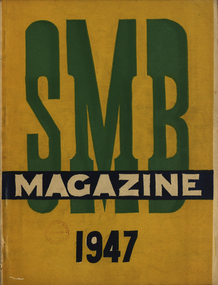
... barry...lesley bearup...winifred beckwith...david berlyn...william bolitho...daniel brazil...lawrence burchell...william bates...ronald cairns...leslie coburn...maurice collins...kenneth cowell...john dixon...francis...The Ballarat School of Mines was a predecessor institution of Federation University Australia. ballarat school of mines students' magazine staff sports james rogers dr pound mr procter mr r. w. richards mr h. j. edwards mr r. p. flower ken palmer joan walter mr john leslie burt mr fisher mr pattenden mr scarfe mr a. m. richards mr j. woolcock mr p. marxsen obituary mr david maxwell a. f. heseltine dorothy spence p. wilson n. whitaker william ross peter wilson joan parker stanley butson david daykin ian cooper june baker hazel barry lesley bearup winifred beckwith david berlyn william bolitho daniel brazil lawrence burchell william bates ronald cairns leslie coburn maurice collins kenneth cowell john dixon francis eckermann rexford fraser elizabeth freeth eric goon marjorie gray doreen hehir joyce hicks john lannen stanley lawrie charles layfield ethel lloyd robert looney eileen maloney gwendoline mcdonnell ian mclenehan colin nicol mervyn oddie john procter shirley ross frederic reeve evelyn robinson john robinson graeme ross ronald rosser jean scott lawrence sedgwick john shergold margaret sim clifford skurrie norma stafford barbara strachan iris sherritt robert tantau anthony tunbridge clive venables dorothy waller wesley walters harold ward john willis norman whittaker Ballarat School of Mines Football Team J. ...The Ballarat School of Mines was a predecessor institution of Federation University Australia. Yellow front page soft cover of 55 pages with green and blue inscriptions on front cover Artwork Mr Bryan - By Peter Wilson Original book illustration - By Peter Wilson Hammerhead - By Peter Wilson Yank - By Joan Parker Herb - By Peter Wilson Tex - By Stanley Butson Rex - By Marjorie Gray Pen and Ink rendering - By Norman Whittaker Bet - By Evelyn or John Robinson Original Book Illustration - By William Ross Spud - By Marjorie Gray Dell - By Evelyn or John Robinson Fay - By Marjorie Gray Hazel - By Maurice Collins Thelma - By Ian Cooper Mickey - By Peter Wilson Wardy - By David Daykin Tiny - By Joan Parker ballarat school of mines students' magazine, staff, sports, james rogers, dr pound, mr procter, mr r. w. richards, mr h. j. edwards, mr r. p. flower, ken palmer, joan walter, mr john leslie burt, mr fisher, mr pattenden, mr scarfe, mr a. m. richards, mr j. woolcock, mr p. marxsen, obituary, mr david maxwell, a. f. heseltine, dorothy spence, p. wilson, n. whitaker, william ross, peter wilson, joan parker, stanley butson, david daykin, ian cooper, june baker, hazel barry, lesley bearup, winifred beckwith, david berlyn, william bolitho, daniel brazil, lawrence burchell, william bates, ronald cairns, leslie coburn, maurice collins, kenneth cowell, john dixon, francis eckermann, rexford fraser, elizabeth freeth, eric goon, marjorie gray, doreen hehir, joyce hicks, john lannen, stanley lawrie, charles layfield, ethel lloyd, robert looney, eileen maloney, gwendoline mcdonnell, ian mclenehan, colin nicol, mervyn oddie, john procter, shirley ross, frederic reeve, evelyn robinson, john robinson, graeme ross, ronald rosser, jean scott, lawrence sedgwick, john shergold, margaret sim, clifford skurrie, norma stafford, barbara strachan, iris sherritt, robert tantau, anthony tunbridge, clive venables, dorothy waller, wesley walters, harold ward, john willis, norman whittaker, ballarat school of mines football team, j. rogers, j. willis, hans fumberger, dave jelbart, j.mccoy, m. heatherington, mr hillman, r. rosser, bob davis, r. kibby, c. edmonds, j. blainey, w. brown. r. cairns j. morrish, k. whiter, a temby, b. tantau, n. rees, b. murrel, l. veale, robert davis -
 Federation University Historical Collection
Book - Copies of newspaper articles, Ballarat Academy of Performing Arts Press Releases 1997, 1997
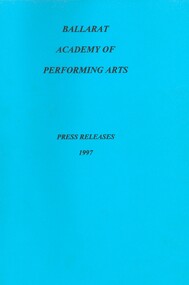
... Barry Breen...The Flag...Performing Arts Academy - Ballarat...Bert Labont'e...Lydiard Stree Alive...David and Goliath...David Patullo...Amanda Sandwith...BAPA Launch...Erica Chestnut...Sue-Ann Thomas...Amy Young...Dr Keith Young...Ballarat "Y" Choir...The Bacchae...Richard DiGregorio...Chris Stipic...Colette Brugman...Denis Marinovic...Brendan Mayne...Karissa Clarke...Narrell Werner...Niniane Le Page...Fiona Russell...Anne Winters...Melissa Lownds...Renee Francis...BAPA Pericles Ozact Theatre Company Ozact Maelstrom Chris Dickens Joan Petering Peter Tulloch 7 Deadly Ballarat Academy of Performing arts BPCA Ballarat College of Performing Arts Sounds of Broadway and Off Judith Roberts Graeme Vendy Bewitched Adam Turnbull Claire O'Sullivan Katherine Evans Martin Cole Simon Buckle Charley's Aunt Brandon Thomas Derren Jackson Ross Larkin Kevin Dee Adelle Gregory Colette Bruggeman Luke Doxey Gavin Fenech Dennis Marinovic Nadia Andary Narelle Werner The Importance of Being Ernest Maureen Edwards Andrew Arney Tim Haymes Mark Gambino Heather Kent Performing Arts Courses 1997 The Man From Muckinupin Dorothy Hewett Chris Dickins Linda Judd James McLaverty Jamie Robertson Natalia Rose Steven Kerr Jon Catanzariti Grant Hickory Sarah Griffin Laura Hill Kathy Lucas Angela Coad Jeff Parker John Cousins bruce widdop Melissa Carey Adam Parsons Adam Davies Damian Muller Leonard Bauska Matthew Heenan Cosi Grainery Lane Theatre Andrew Seeary Brett Edginton Karl Hatton Miranda Crellin Rob MacLeod Ray Craven Elizabeth Stewart Michael Cooper Bob House Barry Breen The Flag Performing Arts Academy - Ballarat Bert Labont'e Lydiard Stree Alive David and Goliath David Patullo Amanda Sandwith BAPA Launch Erica Chestnut Sue-Ann Thomas Amy Young Dr Keith Young Ballarat "Y" Choir The Bacchae Richard DiGregorio Chris Stipic Colette Brugman Denis Marinovic Brendan Mayne Karissa Clarke Narrell Werner Niniane Le Page Fiona Russell Anne Winters Melissa Lownds Renee Francis Kathryn Martin Michael Rafferty Dominic Phelan Geoffrey Spink Paul Thomas Ashraf Abdou Karan Khanna Alex Meerbach Lauren Oliver Suzie Lewis Lindy Kerr Adrian Dart David Kambouris Max Grarock Phil Crompton Ross Farrell Roger Woodward Erard Grand Concert Piano Karrissa Clarke Beth Child Chris Lytas Kate Edwards Ruth Sheridan Ballarat Academy of Performing Arts Asset Drive Positions - School of Arts Erard Concert Grande Piano Ignace Paderewski Professor David James David James Robert Allen BAPA Opening Gabrielle McMullen Dr Ron Wild Graham Clarke Michael Faulkner Sacred Heart Convent of Mercy Ballarat Lola Montez the musical Spider Dance Lola Montez Grant Hickey Fred Fargher Peter Freund Ballarat Begonia Festival Nancy Brauer James Robertson Jo Pearson On The Town Keith Miles Adam Lubicz Glenn Quinn Play With Your Food Melissa Porritt Loenne Whitecross Jess Matthews Kristie Glab Julia McNamee SMB Performing Arts Students The London Blitz Show They Shoot Horses Don't They? ...Reports published in The Courier newspaper of performances by Ballarat Academy of Performing Arts, including items naming students past and present of the University of Ballarat during 1997 plus articles of people and events connected to the Arts Academy. Also contains information about Ballarat University courses for performing arts. Articles are mostly from the Ballarat Courier newspaper in chronology year (1997) order with no page numbers. Two items are from December 1996 and three articles in October 2001. PRODUCTIONS : *' Pericles' performed by Ballarat's Ozact Theatre Company at Port Fairy's Battery Point. *'Maelstrom' written by Chris Dickens and directed by Peter Tulloch performed by BAPA third year students.(Oct. 28th - Nov 1st) Some cast members were: James McLaverty, Melissa Casey, Linda Judd, Angela Coad, Sarah Griffin, Kathy Lucas, Melissa Casey, Laura Hill, Grant Hickey, Jamie Robertson, Jon Catanzariti, Steve Kerr, Jeff Parker Natalie Zappulla. Performed at Ballarat University Studio Theatre (Nov 4th -8th) and also at Melbourne's CUB Malthouse (Nov. 25th-29th) *"7 Deadly" directed by Chris Dickens and performed in The Chapel at the Academy's Victoria Street campus by 1st year Ballarat University students. Some cast members were: Ash Abdou, Niniane Le Page, Alex Meerbach, Adam Davies and Elicia Bolger. *"Sounds of Broadway and Off' (Oct 9th - 11th) directed and choreographed by Judith Roberts and performed at the Studio Theatre , University of Ballarat, by 1st year students of Musical Theatre at BAPA. Some cast members were Paul Thomas, Shannon Palmer, Aakash Andrews, Justine Schnellbeck, Erica Chestnut,, Rebecca McGuinness, Matthew Heyward, Kellie Rode. Tickets cost $5.00 *'Bewitched" "a parody of the original television series" directed and produced by Ballarat performing arts graduates Adam Turnbull and Claire O'Sullivan. Most of the cast and crew were graduates from the University of Ballarat. Some cast members were: Katherine Evans as Samantha and Martin Cole as Darren. Simon Buckle was responsible for his original music, songs and special effects. *Concert: Featuring pianist Slavomir Zumis and cellist Robert Ekselman (Oct. 3rd) *"Charley's Aunt" by Brandon Thomas, performed by 2nd year Ballarat Academy of the Arts 2nd Year Company at The Venue Studio Theatre, University of Ballarat (Sept. 23rd-27th). Cast members: Derren Jackson, Ross Larkin, Kevin Dee, Adelle Gregory, Colette Bruggeman, Luke Doxey, Gavin Fenech, Dennis Marinovic, Nadia Andary, Narelle Werner. Cost: Adults $10, Concession $7.50, Bookings at Majestix. *'The Importance of Being Ernest' (by Oscar Wilde), performed by second year theatre company of the University of Ballarat, directed by Maureen Edwards, designed by Andrew Arney. Cast members included Narrell Werner as Gwendolen, Tim Haymes as Jack, Mark Gambino as Algermon, Adelle Gregory as Cecily and Heather Kent as Lady Bracknell. The production was at the Studio Theatre, University of Ballarat, September 16th-20th , 8pm. Ticket costs: $10 Adult, $7.50 Pensioners/students. Double bill tickets for The Importance of Being Ernest and Charley's Aunt (Sept.23-27) costs: $15 Adults,$10 Concession. *"The Man From Muckinupin' (by Dorothy Hewett), directed by Chris Dickens and performed by University of Ballarat 3rd Year Performing Arts at Studio Theatre, University of Ballarat from Aug 26th - Aug 30th 1997. Cast members: Lisa Judd as Polly, James McLaverty as Jack, Jamie Robertson, Natalia Rose, Steven Kerr, Jon Catanzariti, Melissa Casey, Grant Hickey, Sarah Griffin, Laura Hill, Kathy Lucas, Angela Coad, and Jeff Parker. Ticket costs: $10 Adults, $7.50 Concession from MajesTix *'The Inspector' (by John Cousins) director Bruce Widdop, performed by the Third Year Graduating Company, University of Ballarat, Ballarat Academy of Performing Arts; at Studio Theatre, University of Ballarat, Aug 19th-23rd, 1997. Cast: Jamie Robertson as the mayor, Jeff Parker as the supposed government inspector, Grant Hickey as Sidney, Melissa Carey as Rose, and Sarah Griffin as Rose's daughter, Laura Hill as the postmaster and Linda Judd as the headmistress. Some 1st year students had cameo roles - Adam Parsons and Adam Davies. *'Cosi' directed by Andrew Seeary and performed by Theatre Movement at the Grainery Lane Theatre, Doveton Street, Balarat. The story has a young, nervous director Lewis, played by Brett Edginton, arrive in a mental home to produce a play with the inmates. Other cast members are Karl Hatton (Roy), Miranda Crellin (Cherry), Rob MacLeod (Henry), Ray Craven (Zac), Narrell Werner (Julie), Nadia Andary (Ruth), Mark Gambino (Doug), Elizabet Stewart and Michael Cooper (Lewis' unsympathetic friends) and Bob House (the Social Worker). Nadia, Mark and Narelle are Ballarat University performing arts students. Season: July 24th,25th 26th and 31st and August 1st and 2nd, 1997. Tickets at the door or through Majestix. Cost: Adults $16; Concession $11. Reviewer: Barry Breen, a Ballarat author, poet and performance artist. *'New Works' involves two plays - 'The Inside Out', director Melissa Casey and 'Secrets'. director Jeff Parker, presented by Ballarat Academy of Performing Arts Third Year Company, both written and directed by third year students. All production areas handled by students of BAPA. Cast members: 'The Inside Out' - Jamie Robertson, Laura Hill. 'Secrets' - Sarah Griffin, Linda Jude, Steven Kerr, Angela Coad, Natalie Zappulla. Staged at University of Ballarat's Studio Theatre. Bookings MajesTix - $10 or $7.5 *Euripide's, 'The Bacchae', a tale of revenge, directed by Bruce Widdop and performed by 2nd year students from the University of Ballarat Performing Arts Department and the BAPA. Assistant directors' Tim Haymes and Derren Jackson. Cast members: Richard DiGregorio (Dionysus), Chris Stipic (Cadmus), Colette Brugman (Agaue), Denis Marinovic (Pentheus), Mark Gambino (Teiresias) and Ross Larkin as the messenger. Other supporting performers are Luke Doxey, Brendan Mayne, Heather Kent, Kevin Dee, Gavin Fenech, Nadia Andary, Karissa Clarke, Adelle Gregory and Narrell Werner. The play was performed at the Studio Theatre, Ballarat University, June 3rd-6th, 1997.Tickets MajesTix or at the door - $10 Adult, $7.50 Concession. *'Back to the Tivoli' School of Performing Arts - June 10th -14th. Venue: Academy of Performing Arts, Victoria Street, 8pm *Aristophane's 'Lysistrata', an anti-war comedy. Performed by first year drama students from the University of Ballarat and BAPA at the Studio Theatre, University of Ballarat, Mount Helen, on May 27th-30th, 1997. Cast members: Niniane Le Page (Lysistrata), Fiona Russell (Calonice), Anne Winter (Myhrrine), Dominic Phelan (Cinesias), Alex Meerbach (Stratyllis), Michael Rafferty (Leader), Melissa Lowndes (Lampito), Renee Francis (Ismenia), Kathryn Martin (Corinthian), Geoffrey Spink (doorman), Adam Parsons (magistrate), Adrian Dart (policeman), David Kambouris (policeman two), Max Grarock (negotiator), Phol Crompton (ambassador) and Ross Farrell (herald). Male chorus members: Paul Thomas, Adam Davies, Ashraf Abdou, Karan Khanna. Female chorus members: Lauren Oliver, Suzie, Lewis and Lindy Kerr. Tickets MajesTix - $10 Adults, $7.50 Concession; or $12 special double bill price including The Bacchae. *Roger Woodward Recital - a piano recital by the internationally acclaimed Australian pianist to launch the Ballarat Academy of the Arts asset drive. He performed on the University's historic Erard Grand Concert piano on stage in Founders Hall, describing it as "absolutely amazing.' The instrument was 93 years old and hadn't been played for more than eighty years. An audience of 500 were entertained with pieces by Schubert and Bach for the first half of the program and Waltzes, Mazurkas, and Polonaises by Chopin after the interval. Fittingly an encore of the Minuet in G by Paderewski was played on the very piano the composer had brought from England for his Australian tour in 1906. *'The Merry Wives of Windsor' by William Shakespeare; directed by Beth Child; designer Damian Muller; Production by Third Year Graduating Company, University of Ballarat Performing Arts Department. This play is a comedy not performed very frequently. Cast members: Angela Coad (Mistress Page), Laura Hil (Mistress Quickly), Gavin Fenech (Falstaff), Kathy Lucus (Justice Shallow), Melissa Casey (Mistress Ford), Jeff Parker (Mr Ford), Jamie Robertson ( Mr Page) and Karrissa Clarke (Simple). Staged at the Studio Theatre, University of Ballarat, May 6th-10th 1997 at 8pm. Tickets $10. Concession $7.50. *"Ship of Fools" SMB Performing Arts. Grainery Lane Theatre, 9th-10th May 1997 Cast members: Chris Lytas (Mac & Convinso), Kate Edwards (Mayor & Rachel), Ruth Sheridan (numerous characters) *'Lola Montez - The Musical' author Alan Burke; director Peter Tulloch; choreographer Fred Fargher; designer Damian Muller, musical director Graeme Vendy. Performed by twenty-eight second year Performing Arts students with Nadia Andary in the lead role of Lola,, Grant Hickey as Henry Seekamp the Ballarat Times editor who receives a whipping from Lola for his criticism of her. Tim Haymes is the character Smith, Karissa Clarke plays nurse Jane Oliver and Ross Larkin plays soldier Daniel Brady. Other cast members were Luke Doxey, Richard Di Gregorio, Chris Stipic and Brendan Mayne. A feature of the show is Lola's celebrated Spider Dance which was acknowledged many years ago by the crowd throwing gold nuggets onto the stage. Presented by the Hugh Williamson Foundation in association with the Begonia Festival organizers the performance was at Her Majesty's Theatre, Ballarat nightly from 12th-15th March at 8pm with a matinee at 2pm on the 15th. Tickets at Majestic: Adult $18.50, Concession $13.50, Group Adult $15.50, Group Concession $10.50, Culture Vulture $12.00 Family $46 Season 97. *' 2001- 'On The Town' a musical comedy performed by graduating Ballarat Academy of Performing Arts and directed by course coordinator Kim Durban from the Victorian Theatre Company; and BAPA assistant production manager Jo Pearson. It features a cast of 30 and music from a 15 piece band. Photo depicts three cast members: Keith Miles, Adam Lubicz and Glenn Quinn. It was performed in America in 1944 and tells the story of three sailors who arrive in New York on 24-hour shore leave. It was performed at Founder's Hall, University of Ballarat, Mount Helen campus. Tickets $15 adults, $10 concession and $7 for children and students. Family tickets were available. Bookings MajesTix. *'Play With Your Food' a new theatre restaurant show performed by SMB Performing Arts students at Craig's Cellar, Lydiard Street, Ballarat. It was an original show devised and written by Second Year SMB Performing Arts students. following their sold-out touring show 'unplugged' and Book Week play 'SapceDust'. There are also articles about people involved with the University of Ballarat Performing Arts course and the courses in the Arts. Lady Lush's world of unusual characters presented jokes, songs, music whisked together into a bizarre story for audiences to enjoy and even be tie up. Cast members: Melissa Porritt, Loenne Whitecross, Jess Matthews, Kristie Glab and Julia McNamee. It was performed over five nights, 7th-8th-9th-15th and 16th November, 2001. Cost $20. NEWSPAPER ARTICLES: Directors for University of Ballarat 2nd Year Performing Arts Maureen Edwards (photo) An advertisement for BA Visual Arts - Studio Studies available for Ceramics / Drawing / Graphic Design / Print Making /Painting / Multi-Discipline - Undergraduate and Post Graduate Studies. Also for BA Performing Arts - Major Studies available: Performance Acting, Theatre Production, Performance Music Theatre. Ballarat Academy of Performing Arts - New lecturers 1997: Lecturer in Design and theatre crafts - Damian Muller; lecturer in production and stage management - Leonard Bauska; and lecturer in theatre technology - Matthew Heenan. Ballarat Academy of Performing Arts - 1 st article in 'The Flag' Alumni Newsletter, University of Ballarat, Issue June, 1997 re 1st intake of students in February, 1997. 2nd article 'Where Are They Now' - Amanda Sandwith. Event - 'Lydiard Street Alive' : firebreathing act 'David and Goliath' performed by David Patullo. Article with information (includes advertisment for course) about the 3 year performing arts degree at Ballarat consisting of performance acting, theatre production and performance music theatre which are part of Ballarat Academy of Performi8ng Arts which resources from three institutions - University of Ballarat, Australian Catholic University and the School of Mines. BAPA launch: Photos of some attendees - June 3rd 1997 Ballarat Courier. Performers featured Erica Chestnut and Sue-Ann Thomas. Amy Young - Up Close and Personal article - Ballarat Courier - Saturday June 14 1997. Amy Young was the director and conductress of Ballarat 'Y" Choir for 45 years. In 1996 she donated her husband's (Dr Keith Young) Steinway grand piano and musical collection to BAPA. This article is about her life. Events calendar for the Month of May, 1997. Peter Tulloch ( University of Ballarat Performing Arts Co-ordinator 1997) Newspaper article - interview by Elise Sullivan that appeared in The Ballarat Courier Saturday May 3rd 1997 Weekend Edition . Many articles on Roger Woodward and a $3 million asset drive for the Ballarat Academy of Performing Arts. Advertisement for 3 Arts positions at the University of Ballarat - Lecturers in Theatre for Movement/Dance; Design, Theory and Craft; and Theatre Technology Article: 'Who's Who at the Academy' - A list of First Year, Second Year, Third Year, Performing Arts Staff (University of Ballarat and Australian Catholic University). Article about the Erard Concert Grande piano and its acquisition by the University of Ballarat. There are several articles linked to the production of "Lola Montez the Musical' including: *Lola Montez's life in a timeline -1818 to 1861 compiled by Peter Freund, Her Majesty's Theatre historian on behalf of Ballarat Begonia Festival. * A radio show in 1952 performed by Ballarat's "Y" Drama Group featuring 16 year old Joy Brehaut as Lola Montez and directed by 3BA's Ted Furling *Ballarat's Most Famous Scandal Advertising Poster for Lola Montez *Lola Whips In * Lola to Tread the Boards Again * Lola to Return to Ballarat - The "Minister for Purity, The Reverend John Potter" - (actor Jamie Robertson) * Veteran Takes His First Look at Lola * First Stage Lola meets the New Lola - Nadia Andary meets 1967 Lola, Nancy Brauer. * Lola Returns Home An article listing the 12th Annual Encore Awards held at Ballarat Village on Wednesday 5th March 1997. * Advertisement for major studies available in 1998 -Theatre Performance; Music Theatre Performance and Theatre Production plus upcoming productions - Aug - The Inspector and The Man From Muckinup; Sept - The Importance of Being Ernest and Charley's Aunt; Oct- The London Blitz Show and They Shot Horses Don't They? Nov - Graduate Exhibition * Article 3/12/1996: Amy Young donates her husband Dr. W. H. Keith Young's Steinway grand piano and studio stacked with historic documents to the jointly run Performing Arts Academy following his death. The book consists of A4 paper sheets, heat bound with blue card front and back cover with a plastic overlay. The pages contain photocopied articles printed in the Ballarat Courier during 1997. Two articles are from December 1996.bapa, pericles, ozact theatre company, ozact, maelstrom, chris dickens, joan petering, peter tulloch, 7 deadly, ballarat academy of performing arts, bpca, ballarat college of performing arts, sounds of broadway and off, judith roberts, graeme vendy, bewitched, adam turnbull, claire o'sullivan, katherine evans, martin cole, simon buckle, charley's aunt, brandon thomas, derren jackson, ross larkin, kevin dee, adelle gregory, colette bruggeman, luke doxey, gavin fenech, dennis marinovic, nadia andary, narelle werner, the importance of being ernest, maureen edwards, andrew arney, tim haymes, mark gambino, heather kent, performing arts courses 1997, the man from muckinupin, dorothy hewett, chris dickins, linda judd, james mclaverty, jamie robertson, natalia rose, steven kerr, jon catanzariti, grant hickory, sarah griffin, laura hill, kathy lucas, angela coad, jeff parker, john cousins, bruce widdop, melissa carey, adam parsons, adam davies, damian muller, leonard bauska, matthew heenan, cosi, grainery lane theatre, andrew seeary, brett edginton, karl hatton, miranda crellin, rob macleod, ray craven, elizabeth stewart, michael cooper, bob house, barry breen, the flag, performing arts academy - ballarat, bert labont'e, lydiard stree alive, david and goliath, david patullo, amanda sandwith, bapa launch, erica chestnut, sue-ann thomas, amy young, dr keith young, ballarat "y" choir, the bacchae, richard digregorio, chris stipic, colette brugman, denis marinovic, brendan mayne, karissa clarke, narrell werner, niniane le page, fiona russell, anne winters, melissa lownds, renee francis, kathryn martin, michael rafferty, dominic phelan, geoffrey spink, paul thomas, ashraf abdou, karan khanna, alex meerbach, lauren oliver, suzie lewis, lindy kerr, adrian dart, david kambouris, max grarock, phil crompton, ross farrell, roger woodward, erard grand concert piano, karrissa clarke, beth child, chris lytas, kate edwards, ruth sheridan, ballarat academy of performing arts asset drive, positions - school of arts, erard concert grande piano, ignace paderewski, professor david james, david james, robert allen, bapa opening, gabrielle mcmullen, dr ron wild, graham clarke, michael faulkner, sacred heart convent of mercy ballarat, lola montez the musical, spider dance, lola montez, grant hickey, fred fargher, peter freund, ballarat begonia festival, nancy brauer, james robertson, jo pearson, on the town, keith miles, adam lubicz, glenn quinn, play with your food, melissa porritt, loenne whitecross, jess matthews, kristie glab, julia mcnamee, smb performing arts students, the london blitz show, they shoot horses don't they?, graduate exhibition -
 Federation University Historical Collection
Photographs - black and white, Ballarat College of Advanced Education: 1st Year Applied Science Students, 1983, 1983
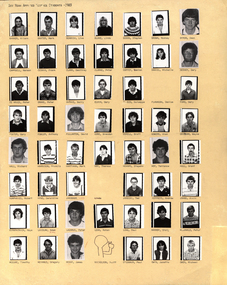
... barry...elkin, gary...? e/f guiseppe...flanagan, denise...ford, gary...foster, gary...fowler, anthony...fullarton, david...gore, brendan...gorell, brett...gowers, alan...grinham, wayne...hall, richard...harrison, francis...barry elkin, gary ? e/f guiseppe flanagan, denise ford, gary foster, gary fowler, anthony fullarton, david gore, brendan gorell, brett gowers, alan grinham, wayne hall, richard harrison, francis hartmann, mark hay, theresa hovard,stephen hoy, terrance hull, grant humphries, robert hynd,geraldine jakubans, linda jarecki, ted jeffreys, andrew johns, alvin kirkpatrick, kaye laidlaw, gary lazarus, peter lean, rohan long, paul markby, craig mcdonald, peter mceuna, timothy mcinnes, gregory mckay, james nicholson, scott o'connor, paul owen, janette owen, michael pear, zlatko picorrillo, john pilkington, john potter, steven prendergast, maurice roberts, barry ryan, marie schwarz, peter seeary, adrian shiells, jane stevenson, michael tan, simon taylor, catherine turkuile, marianne thomas, rosemarie twyford, keith vorstenbosch, mark walker, paul ward, jennifer warner, gary wheeler, stuart winter, anthony wood, mark yee, arthur zentgraf, mark bowie, ? ...Individual images of students in 1st Year Applied Science Course. The names of the student is written under the photo - in alphabetical order. Some spaces have no photo. Some names have been crossed out. In total there are 91 names (55 on one and 36 on the other). Of this number there are only 16 girls in the course for this year.Two beige cards with small black and white photographs - photographer's proofsName of student under photo - alphabetical orderapplied science, 1st year, barker, alison, baxter, mark, beamish, lisa, blake, linda, bodon, stephen, brown, rodney, byron, dean, campbell, noreen, cesnik, frank, clark, geoffrey, clarke, peter, coffey, damien, daniel, michelle, desnoy,gary, de vries, peter, drake, peter, duthie, barry, elkin, gary, ? e/f guiseppe, flanagan, denise, ford, gary, foster, gary, fowler, anthony, fullarton, david, gore, brendan, gorell, brett, gowers, alan, grinham, wayne, hall, richard, harrison, francis, hartmann, mark, hay, theresa, hovard,stephen, hoy, terrance, hull, grant, humphries, robert, hynd,geraldine, jakubans, linda, jarecki, ted, jeffreys, andrew, johns, alvin, kirkpatrick, kaye, laidlaw, gary, lazarus, peter, lean, rohan, long, paul, markby, craig, mcdonald, peter, mceuna, timothy, mcinnes, gregory, mckay, james, nicholson, scott, o'connor, paul, owen, janette, owen, michael, pear, zlatko, picorrillo, john, pilkington, john, potter, steven, prendergast, maurice, roberts, barry, ryan, marie, schwarz, peter, seeary, adrian, shiells, jane, stevenson, michael, tan, simon, taylor, catherine, turkuile, marianne, thomas, rosemarie, twyford, keith, vorstenbosch, mark, walker, paul, ward, jennifer, warner, gary, wheeler, stuart, winter, anthony, wood, mark, yee, arthur, zentgraf, mark, bowie, ?, davies, ronald, mckay, ?, maclean, andrew, cramer, geoff, page, stuart, firth, barry, fry, b, hennesy, tom, hoell, nicholas, evans, michael -
Federation University Historical Collection
Book, Ballarat University College Statutory Report of Operations and Financial Statements, 1993, 1993
... barry dixon...axhar albazzaz...lee francis...university of ballarat geoffrey blainey university of ballarat establishment university of ballarat act john sharpham ken hawkins ray cotsell stafford mcknight barry dixon axhar albazzaz lee francis david haymes bill pryor janet torney david fiskin rex hollioake bill mcgregor pam davies nina valentine ian ferguson university of melbourne rober moran Bill vermeed Grey soft covered report Ballarat University College Statutory Report of Operations and Financial Statements, 1993 Book ...Grey soft covered report university of ballarat, geoffrey blainey, university of ballarat establishment, university of ballarat act, john sharpham, ken hawkins, ray cotsell, stafford mcknight, barry dixon, axhar albazzaz, lee francis, david haymes, bill pryor, janet torney, david fiskin, rex hollioake, bill mcgregor, pam davies, nina valentine, ian ferguson, university of melbourne, rober moran, bill vermeed -
Federation University Historical Collection
Book, University of Ballarat Statutory Report of Operations and Financial Statements, 1994, 1994
... barry dixon...axhar albazzaz...lee francis...The name Federation University Australia was chosen to convey the scope and capacity of an expanded regional university with a federated network of campuses. university of ballarat geoffrey blainey university of ballarat establishment university of ballarat act john sharpham ken hawkins ray cotsell stafford mcknight barry dixon axhar albazzaz lee francis david haymes bill pryor david fiskin rex hollioake bill mcgregor pam davies nina valentine ian ferguson university of melbourne rober moran boll vermeend pat hope dick de fegely bill mcgrath david caro bob morrell david james derek woolley frank hurley denis else alice mills trevor hastings White soft covered report University of Ballarat Statutory Report of Operations and Financial Statements, 1994 Book ...Federation University Australia was established on 1 January 2014. Formerly known as the University of Ballarat, its enabling legislation was the University of Ballarat Amendment (Federation University Australia) Act 2013. Although formally created as a University in 1994, the University of Ballarat has a lineage back to 1870 with the establishment of the School of Mines Ballarat, making it the third institution of higher learning to be established in Australia and the first to be established in regional Australia. On 1 January 1994, Ballarat University College became the University of Ballarat and in 1998 the University merged with three TAFE Institutes to become a dual sector institution with multiple campuses. On 1 January 2014, the University of Ballarat amalgamated with the Monash University Gippsland Campus to form Federation University Australia. The Gippsland Campus also had a long lineage dating back to 1928 with the establishment of the Yallourn Technical School which became a predecessor institution to the Gippsland College of Advanced Education formed in 1968. In 1990, it was renamed the Monash University College and in 1993 became the Gippsland Campus of Monash University. In 2016, Federation University Australia announced plans to take possession, over a two-year period, of Monash’s Berwick Campus in the south-east corridor of Melbourne. Federation University Australia, or FedUni, is headquartered in Ballarat and offers programs in Higher Education and Vocational Education and Training to regional Victoria and beyond. The University’s commitment to educational and social equity, teaching excellence, research distinction, environmental sustainability and regional capacity building has enabled it to develop in a way that draws on its proud heritage to inform its future. Its regional character sets a framework for the University’s priorities but does not constrain it from serving wider community interests, nationally and internationally. The name Federation University Australia was chosen to convey the scope and capacity of an expanded regional university with a federated network of campuses.White soft covered report university of ballarat, geoffrey blainey, university of ballarat establishment, university of ballarat act, john sharpham, ken hawkins, ray cotsell, stafford mcknight, barry dixon, axhar albazzaz, lee francis, david haymes, bill pryor, david fiskin, rex hollioake, bill mcgregor, pam davies, nina valentine, ian ferguson, university of melbourne, rober moran, boll vermeend, pat hope, dick de fegely, bill mcgrath, david caro, bob morrell, david james, derek woolley, frank hurley, denis else, alice mills, trevor hastings -
 City of Moorabbin Historical Society (Operating the Box Cottage Museum)
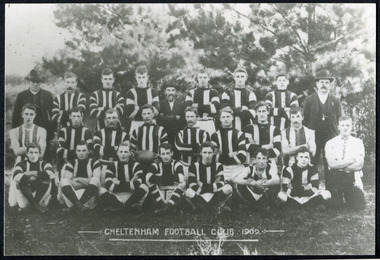
Photographs, x 3 Black & White Cheltenham Football Club 1909,1913, 1946, 20thC
... .; bent thomas, o'shannassy john, king richard, charman stephen, highett william, ormond francis, maynard dennis, market gardeners, vineyards, orchards, cheltenham, two acre village, holloway josiah,...woff percy, connor tom, box peter, barker trevor, white barry....; bent thomas, o'shannassy john, king richard, charman stephen, highett william, ormond francis, maynard dennis, market gardeners, vineyards, orchards, cheltenham, two acre village, holloway josiah, woff percy, connor tom, box peter, barker trevor, white barry, browlow charles, a) CHELTENHAM FOOTBALL CLUB 1909 Cheltenham Football Club 1909. ...Known as the Rosellas, the early Cheltenham Football Club sides began playing on a regular basis in 1890, and would travel long distances by steam train to play country teams, such as Ballarat where they would arrive at their destination, play the match, socialize then return to the station. Opposition players and supporters would give three hearty cheers on their departure. The Cheltenham home games were played on a paddock on the corner of Park and Charman roads in Cheltenham. In 1907 the Cheltenham progress committee made an application to the board of land works for land in Weatherall Road for recreational service to the public. That application was received and granted, then developed where Cheltenham Recreational Reserve now stands. The land in the early days was virgin bush and the response for voluntary help to clear the area was outstanding. Nearly all the market gardeners in the district along with horses, ploughs, axes, shovels completely cleared the area in three weeks. The Moorabbin council then leveled the playing area and erected a post and rail fence around the ground. Pine tree shrubs were then planted on the west side of the ground. The ground was opened in 1909 and the first Cheltenham side entered in the newly formed Federal Football Association along with seven other foundation members, Mordialloc, Mentone, Moorabbin, Frankston, Glenhuntly, Elsternwick, and Ellindale. The grand final for that year, 1909 was a hard encounter between Cheltenham and Ellindale with Cheltenham coming out victors, thus becoming the inaugural Federal Football Association premiers. Cheltenham went onto win five senior premierships in the Federal Football Association by the end of the 1920s, they won the flags in 1909, 1911, 1913, 1922 and 1925, with the late Percy Woff playing in all 5 premiership sides and was captain in 1922. 1928 saw the start of an outstanding career from our oldest living player Tom Connor. Cheltenham continued to win premierships in the 1920’s and 1930’s with juniors taking out the 1929 and 1933 flags, under the guidance of Woff, and that continued in 1934 when Cheltenham took out the 1st XVIII and 2nd XVIII premierships. Cheltenham produced its only Brownlow medallist in Peter Box who played in the late 1940s, before going to Footscray where he became a champion. The 3rd XVIII went through the season undefeated in 1974 winning the premiership, with Trevor Barker a key player before going to St Kilda the following year. The club won three senior premierships under coach Barry White in 1992, 1993 and 1995. ( from CFNC website 2019) Cheltenham Football Club was formed 1890 and succeeded in winning many Premierships as a member of the Federal Football Association, Outstanding players Peter Box Brownlow Medalist 1956 Footscay VFL, , Trevor Barker and Kevin Roberts St Kilda VFL.3x Black & White photographs of the players in the Australian Rules Cheltenham Football Club 1909, 1913 and 1946 extra photo of Peter Box Folio 10 MAV 01059a) CHELTENHAM FOOTBALL CLUB 1909 Cheltenham Football Club 1909. Back row: A Chandler, committee member; R. Robertson, back-pocket; J. Harris, half back flank; J Adams, ruck and forward-pocked; M. J. Monk, club president; L. Woff, back-pocket; W. Adams, ruck and back-pocket; P. Woff, rover and forward-pocket; A Monk, committee member. Middle row: W. Hore, back pocket and ruck; A. Towns, half-forward flank; W. Carson, full back; F. Andrews, captain-half forward flank; H. Butler, centre half back; J. Warburton, centre half-forward; A. Slater, half-back flank; F. Fisher, half-forward flank; C. Sherwood, trainer. Front Row: G Gouldthorpe, wing; H. King, full-forward; W. Johnston, ruck and forward-pocket; P Spears, rover and forward-pocket; F. Bichl, wing; A. Bichl. rover and forward-pocket; F. Butler, centre player. Courtesy, Lionel Seal. ( from CFC website 2019) b) CHELTENHAM 1913 PREMIERS c) CHELTENHAM -1946 / Back row - J. Fisher, G.Corrigan, N.Hocking, F.Virtue, R.Craven, L.Baker, M.Blundell / 2nd Row - J.Phillips, T.Connor, E.Hawkins, A.Blakely, G.Baker, A.Dark, J.Barker, D.Craven, J.Pickering, P.Cameron,/ W.Hicks, G.Hoskings, R.Beihl, A.Hubbard, R.Kier, C.Russell. / Front Row - Clark Taylor, J.Slade, N.Niel, J.Brooks, T,Butler, H.Hosking, C.Hacusler, E.Hornibrook, W.Briggs, B.Russell, L.Biehl, / W Ripponcheltenham football club, australian rules football, victorian football association, victorian football league, smith j l; smith mary ann, stanley helen, , chaff cutter, horse drawn carts, toll gates brighton, motor cars 1900, steam engines, early settlers, bentleigh, parish of moorabbin, city of moorabbin, county of bourke, moorabbin roads board, shire of moorabbin, henry dendy's special survey 1841, were j.b.; bent thomas, o'shannassy john, king richard, charman stephen, highett william, ormond francis, maynard dennis, market gardeners, vineyards, orchards, cheltenham, two acre village, holloway josiah,, woff percy, connor tom, box peter, barker trevor, white barry, browlow charles, -
 Ringwood and District Historical Society
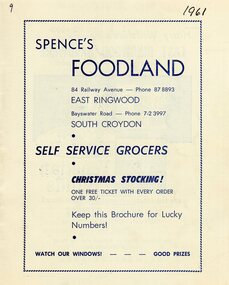
Programme, Ringwood East Giant Community Fair in 1961
... Francis School Mothers Club, Ringwood East Tennis Club, Legacy, Yarra Valley, Police & Citizens Youth Club, Ladies Guilds of District Churches. Events include Dog Competition, Marching Girls, Boxing and Judo Display, Police Exhibition, Cake Stalls and a visit from Father Christmas. Advertising including Spences Foodland, Harry Wiltshire's East Ringwood Hardware, Whytes, Buchanan's Newsagency, Ian E Russell, Barry...Francis School Mothers Club, Ringwood East Tennis Club, Legacy, Yarra Valley, Police & Citizens Youth Club, Ladies Guilds of District Churches. Events include Dog Competition, Marching Girls, Boxing and Judo Display, Police Exhibition, Cake Stalls and a visit from Father Christmas. Advertising including Spences Foodland, Harry Wiltshire's East Ringwood Hardware, Whytes, Buchanan's Newsagency, Ian E Russell, Barry ...Giant Community Fair organised by the Ringwood East Chamber of Commerce to be held in the Drill Hall Grounds Dublin Road Ringwood East on Saturday December 2nd 1961. All proceeds to aid Local Charities which include: Ringwood East Red Cross Company, Ringwood East Pre-school, Warrawong Holiday Kindergarten, Boy Scouts, Girl Guides, Maroondah Pre-School Centre, Eastwood Mothers Club, Ringwood East Mothers Club, St. Francis School Mothers Club, Ringwood East Tennis Club, Legacy, Yarra Valley, Police & Citizens Youth Club, Ladies Guilds of District Churches. Events include Dog Competition, Marching Girls, Boxing and Judo Display, Police Exhibition, Cake Stalls and a visit from Father Christmas. Advertising including Spences Foodland, Harry Wiltshire's East Ringwood Hardware, Whytes, Buchanan's Newsagency, Ian E Russell, Barry Hall Chemist, Orleans' Florist - Pet Shop, Sunrise Secretarial Service, Eastwood Cycle & Sports Store, Jenny & John Gift Shop, J.W.F. Sloan Butcher, Bill Patterson Motors, Shir-Vonne Beauty Salon, Eastwood Cake Shop, H.E. & M.D. Burridge, Kellettskornor and Joan's Handy Bar. -
 Murrumbeena Cricket Club
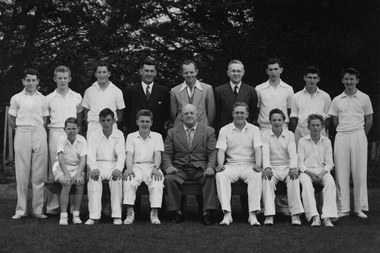
Photograph, 1953-54 Under 16 Premiership, c. 1954
... Francis...Jack Gilbert...Eddie Kennedy...Alf Watson...V Sparks...R Burton...Don ‘Mick’ Duff...Daryl Fotheringham...Fred Jungwirth...Ken Berry...Vic Rees...John McNabb...Jim Young...Barry...Murrumbeena Murrumbeena Cricket Club Cricket Cricket Clubs Cricketers Gavin Browne Norm Thornhill Graeme Francis Jack Gilbert Eddie Kennedy Alf Watson V Sparks R Burton Don ‘Mick’ Duff Daryl Fotheringham Fred Jungwirth Ken Berry Vic Rees John McNabb Jim Young Barry Muldoon Photograph of 1953-54 Under 16 premiership 1953-54 Under 16 Premiership Photograph Photograph ...Photograph of 1953-54 Under 16 premiershipmurrumbeena, murrumbeena cricket club, cricket, cricket clubs, cricketers, gavin browne, norm thornhill, graeme francis, jack gilbert, eddie kennedy, alf watson, v sparks, r burton, don ‘mick’ duff, daryl fotheringham, fred jungwirth, ken berry, vic rees, john mcnabb, jim young, barry muldoon -
 Flagstaff Hill Maritime Museum and Village
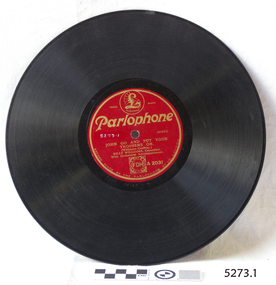
Audio - Gramophone Record, Parlophone Co. Ltd, John Go And Put Your Trousers On, Early-to-mid 20th century
... Barry Owen...Edmund Trevor Lloyd Williams...The Gramophone Company...His Master’s Voice...HMV...Francis...Barry Owen (1860–1914), who, on 23 February 1889, partnered with Edmund Trevor Lloyd Williams (1859–1946) in England to register The Gramophone Company. His Master’s Voice (HMV) soon became the company’s major recording label, popular worldwide. The label's logo, a dog looking into a gramophone horn, looking for his master’s voice, was based on a painting by English artist Francis...Barry Owen (1860–1914), who, on 23 February 1889, partnered with Edmund Trevor Lloyd Williams (1859–1946) in England to register The Gramophone Company. His Master’s Voice (HMV) soon became the company’s major recording label, popular worldwide. The label's logo, a dog looking into a gramophone horn, looking for his master’s voice, was based on a painting by English artist Francis ...Thomas Edison (1847–1931), an American, invented the phonograph in 1877, making it possible to record sound waves vertically and reproduce them on a wax cylinder so they could be heard again. Later, the German American, Emile Berliner (1851-1929), improved on Edison’s principles, greatly increasing the quality of the reproduced sounds with his invention of the gramophone in 1887, which recorded the sound waves laterally onto a flat shellac disc, or ‘record’. Records could be mass-produced in a factory where audio recordings were converted to a physical copy of that recording on a plate-sized disc. A gramophone machine reproduced the sound by spinning the record on a turntable at a specified number of rotations per minute (RPM) and using a stylus or needle to transfer the vibration via a membrane to a speaker, which amplified the sound. Berliner helped set up affiliated businesses overseas. One of his representatives was William Barry Owen (1860–1914), who, on 23 February 1889, partnered with Edmund Trevor Lloyd Williams (1859–1946) in England to register The Gramophone Company. His Master’s Voice (HMV) soon became the company’s major recording label, popular worldwide. The label's logo, a dog looking into a gramophone horn, looking for his master’s voice, was based on a painting by English artist Francis Barraud, which featured a terrier called Nipper beside a gramophone. Early gramophone records were mostly made from a material referred to as shellac, a natural ingredient combined with slate powder, and a filler of manilla copal, wood resin, carnauba wax, and carbon black. Although Bakelite seemed a useful, synthetic product, it was unsuccessful as a product for records. Around the time of World War II, lightweight, flexible synthetic vinyl records began replacing shellac records. Common diameters of records: 7 inch, 10 inch, 12 inch and 16 inch Revolutions Per Minute include: 33 1/3, 45, 78 Minutes per side of record: 3, 5.5, 7, 8, 9, 12, 15 and 22 Labels, in minutes per side: Single Play 3-5 min, Extended Play (EP) 7-12 min, Long Play (LP) 12-22 min This gramophone represents a step in the evolution of recording sound. In the 19th century, the human voice was first recorded on wax cylinders and replayed. It was the beginning of a new era in sound. Then, in the 1880s, voice could be recorded onto flat discs like this record, reliably reproduced and replayed many times, even on portable devices. Later, in the mid-20th century the following generation of electronic audio recording began, and later that century, digital recording gave even better reproduction. The record represents a popular means of entertainment for personal and social activities, as well as in some businesses. Shellac gramophone record, red label. Title: John Go And Put Your Trousers On Artist: Billy Williams Publisher: Parlophone Co Ltd, London Number: 41413 Size: 10 inch"A2031"flagstaff hill, warrnambool, maritime village, maritime museum, flagstaff hill maritime museum and village, shipwreck coast, great ocean road, gramophone, phonograph, sound waves, record, reproduction, audio record, music, sound, thomas edison, emile berliner, 1887, shellac, rpm, william barry owen, edmund trevor lloyd williams, the gramophone company, his master’s voice, hmv, francis barraud, nipper, 10 inch, parlophone co ltd, london, john go and put your trousers on, billy williams -
 Flagstaff Hill Maritime Museum and Village
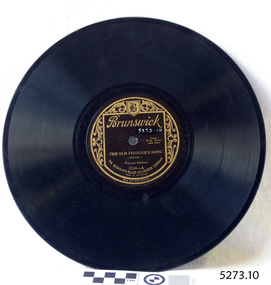
Audio - Gramophone Record, Brunswick Records, The Old Fiddlers Song, Early-to-mid 20th century
... Barry Owen...Edmund Trevor Lloyd Williams...The Gramophone Company...His Master’s Voice...HMV...Francis...Barry Owen (1860–1914), who, on 23 February 1889, partnered with Edmund Trevor Lloyd Williams (1859–1946) in England to register The Gramophone Company. His Master’s Voice (HMV) soon became the company’s major recording label, popular worldwide. The business based the label's logo of a dog looking into a gramophone horn for ‘his master’s voice’ was based on a painting by English artist Francis...Barry Owen (1860–1914), who, on 23 February 1889, partnered with Edmund Trevor Lloyd Williams (1859–1946) in England to register The Gramophone Company. His Master’s Voice (HMV) soon became the company’s major recording label, popular worldwide. The business based the label's logo of a dog looking into a gramophone horn for ‘his master’s voice’ was based on a painting by English artist Francis ...Thomas Edison (1847–1931), an American, invented the phonograph in 1877, making it possible to record sound waves vertically and reproduce them on a wax cylinder so they could be heard again. Later, the German American, Emile Berliner (1851-1929), improved on Edison’s principles, greatly increasing the quality of the reproduced sounds with his invention of the gramophone in 1887, which recorded the sound waves laterally onto a flat shellac disc, or ‘record’. Records could be mass-produced in a factory where audio recordings were converted to a physical copy of that recording on a plate-sized disc. A gramophone machine reproduced the sound by spinning the record on a turntable at a specified number of rotations per minute (RPM) and using a stylus or needle to transfer the vibration via a membrane to a speaker, which amplified the sound. Berliner helped set up affiliated businesses overseas. One of his representatives was William Barry Owen (1860–1914), who, on 23 February 1889, partnered with Edmund Trevor Lloyd Williams (1859–1946) in England to register The Gramophone Company. His Master’s Voice (HMV) soon became the company’s major recording label, popular worldwide. The business based the label's logo of a dog looking into a gramophone horn for ‘his master’s voice’ was based on a painting by English artist Francis Barraud, which featured a terrier called Nipper beside a gramophone. Early gramophone records were mostly made from a material referred to as shellac, a natural ingredient combined with slate powder, and a filler of manilla copal, wood resin, carnauba wax, and carbon black. Although Bakelite seemed a useful, synthetic product, it was unsuccessful as a product for records. Around the time of World War II, lightweight, flexible synthetic vinyl records began replacing shellac records. Common diameters of records: 7 inch, 10 inch, 12 inch and 16 inch Revolutions Per Minute include: 33 1/3, 45, 78 Minutes per side of record: 3, 5.5, 7, 8, 9, 12, 15 and 22 Labels, in minutes per side: Single Play 3-5 min, Extended Play (EP) 7-12 min, Long Play (LP) 12-22 min This gramophone represents a step in the evolution of recording sound. In the 19th century, the human voice was first recorded on wax cylinders and replayed. It was the beginning of a new era in sound. Then, in the 1880s, voice could be recorded onto flat discs like this record, reliably reproduced and replayed many times, even on portable devices. Later, in the mid-20th century the following generation of electronic audio recording began, and later that century, digital recording gave even better reproduction. The record represents a popular means of entertainment for personal and social activities, as well as in some businesses. Shellac gramophone record with a black and gold label. Title: The Old Fiddlers Song Artist: Vernon Delhart, tenor Publisher: Brunswick Number:3234-A Size: 10 inchflagstaff hill, warrnambool, maritime village, maritime museum, flagstaff hill maritime museum and village, shipwreck coast, great ocean road, gramophone, phonograph, sound waves, record, reproduction, audio record, music, sound, thomas edison, emile berliner, 1887, shellac, rpm, william barry owen, edmund trevor lloyd williams, the gramophone company, his master’s voice, hmv, francis barraud, nipper, 10 inch, brunswick records, 3234-a, the old fiddlers song, vernon delhart (tenor) -
 Flagstaff Hill Maritime Museum and Village
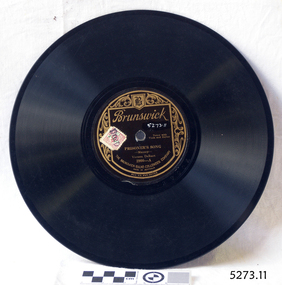
Audio - Gramophone Record, Brunswick Records, Prisoner's Song, Early-to-mid 20th century
... Barry Owen...Edmund Trevor Lloyd Williams...The Gramophone Company...His Master’s Voice...HMV...Francis...Barry Owen (1860–1914), who, on 23 February 1889, partnered with Edmund Trevor Lloyd Williams (1859–1946) in England to register The Gramophone Company. His Master’s Voice (HMV) soon became the company’s major recording label, popular worldwide. The business based the label's logo of a dog looking into a gramophone horn for ‘his master’s voice’ was based on a painting by English artist Francis...Barry Owen (1860–1914), who, on 23 February 1889, partnered with Edmund Trevor Lloyd Williams (1859–1946) in England to register The Gramophone Company. His Master’s Voice (HMV) soon became the company’s major recording label, popular worldwide. The business based the label's logo of a dog looking into a gramophone horn for ‘his master’s voice’ was based on a painting by English artist Francis ...Thomas Edison (1847–1931), an American, invented the phonograph in 1877, making it possible to record sound waves vertically and reproduce them on a wax cylinder so they could be heard again. Later, the German American, Emile Berliner (1851-1929), improved on Edison’s principles, greatly increasing the quality of the reproduced sounds with his invention of the gramophone in 1887, which recorded the sound waves laterally onto a flat shellac disc, or ‘record’. Records could be mass-produced in a factory where audio recordings were converted to a physical copy of that recording on a plate-sized disc. A gramophone machine reproduced the sound by spinning the record on a turntable at a specified number of rotations per minute (RPM) and using a stylus or needle to transfer the vibration via a membrane to a speaker, which amplified the sound. Berliner helped set up affiliated businesses overseas. One of his representatives was William Barry Owen (1860–1914), who, on 23 February 1889, partnered with Edmund Trevor Lloyd Williams (1859–1946) in England to register The Gramophone Company. His Master’s Voice (HMV) soon became the company’s major recording label, popular worldwide. The business based the label's logo of a dog looking into a gramophone horn for ‘his master’s voice’ was based on a painting by English artist Francis Barraud, which featured a terrier called Nipper beside a gramophone. Early gramophone records were mostly made from a material referred to as shellac, a natural ingredient combined with slate powder, and a filler of manilla copal, wood resin, carnauba wax, and carbon black. Although Bakelite seemed a useful, synthetic product, it was unsuccessful as a product for records. Around the time of World War II, lightweight, flexible synthetic vinyl records began replacing shellac records. Common diameters of records: 7 inch, 10 inch, 12 inch and 16 inch Revolutions Per Minute include: 33 1/3, 45, 78 Minutes per side of record: 3, 5.5, 7, 8, 9, 12, 15 and 22 Labels, in minutes per side: Single Play 3-5 min, Extended Play (EP) 7-12 min, Long Play (LP) 12-22 min This gramophone represents a step in the evolution of recording sound. In the 19th century, the human voice was first recorded on wax cylinders and replayed. It was the beginning of a new era in sound. Then, in the 1880s, voice could be recorded onto flat discs like this record, reliably reproduced and replayed many times, even on portable devices. Later, in the mid-20th century the following generation of electronic audio recording began, and later that century, digital recording gave even better reproduction. The record represents a popular means of entertainment for personal and social activities, as well as in some businesses. Shellac gramophone record with a black and gold label. Title: Prisoner's Song Artist: Vernon Dalhart, tenor Publisher: Brunswick Records Number: A-2900 Size: 10 inchOn label, white sticker with red printflagstaff hill, warrnambool, maritime village, maritime museum, flagstaff hill maritime museum and village, shipwreck coast, great ocean road, gramophone, phonograph, sound waves, record, reproduction, audio record, music, sound, thomas edison, emile berliner, 1887, shellac, rpm, william barry owen, edmund trevor lloyd williams, the gramophone company, his master’s voice, hmv, francis barraud, nipper, 10 inch, brunswick records, a-2900, prisoner's song, vernon dalhart (tenor) -
 Flagstaff Hill Maritime Museum and Village
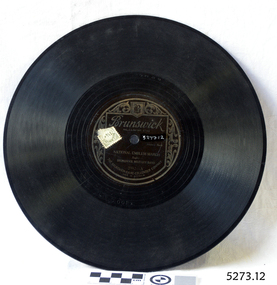
Audio - Gramophone Record, Brunswick Records, National Emblem March, Early-to-mid 20th century
... Barry Owen...Edmund Trevor Lloyd Williams...The Gramophone Company...His Master’s Voice...HMV...Francis...Barry Owen (1860–1914), who, on 23 February 1889, partnered with Edmund Trevor Lloyd Williams (1859–1946) in England to register The Gramophone Company. His Master’s Voice (HMV) soon became the company’s major recording label, popular worldwide. The business based the label's logo of a dog looking into a gramophone horn for ‘his master’s voice’ was based on a painting by English artist Francis...Barry Owen (1860–1914), who, on 23 February 1889, partnered with Edmund Trevor Lloyd Williams (1859–1946) in England to register The Gramophone Company. His Master’s Voice (HMV) soon became the company’s major recording label, popular worldwide. The business based the label's logo of a dog looking into a gramophone horn for ‘his master’s voice’ was based on a painting by English artist Francis ...Thomas Edison (1847–1931), an American, invented the phonograph in 1877, making it possible to record sound waves vertically and reproduce them on a wax cylinder so they could be heard again. Later, the German American, Emile Berliner (1851-1929), improved on Edison’s principles, greatly increasing the quality of the reproduced sounds with his invention of the gramophone in 1887, which recorded the sound waves laterally onto a flat shellac disc, or ‘record’. Records could be mass-produced in a factory where audio recordings were converted to a physical copy of that recording on a plate-sized disc. A gramophone machine reproduced the sound by spinning the record on a turntable at a specified number of rotations per minute (RPM) and using a stylus or needle to transfer the vibration via a membrane to a speaker, which amplified the sound. Berliner helped set up affiliated businesses overseas. One of his representatives was William Barry Owen (1860–1914), who, on 23 February 1889, partnered with Edmund Trevor Lloyd Williams (1859–1946) in England to register The Gramophone Company. His Master’s Voice (HMV) soon became the company’s major recording label, popular worldwide. The business based the label's logo of a dog looking into a gramophone horn for ‘his master’s voice’ was based on a painting by English artist Francis Barraud, which featured a terrier called Nipper beside a gramophone. Early gramophone records were mostly made from a material referred to as shellac, a natural ingredient combined with slate powder, and a filler of manilla copal, wood resin, carnauba wax, and carbon black. Although Bakelite seemed a useful, synthetic product, it was unsuccessful as a product for records. Around the time of World War II, lightweight, flexible synthetic vinyl records began replacing shellac records. Common diameters of records: 7 inch, 10 inch, 12 inch and 16 inch Revolutions Per Minute include: 33 1/3, 45, 78 Minutes per side of record: 3, 5.5, 7, 8, 9, 12, 15 and 22 Labels, in minutes per side: Single Play 3-5 min, Extended Play (EP) 7-12 min, Long Play (LP) 12-22 min This gramophone represents a step in the evolution of recording sound. In the 19th century, the human voice was first recorded on wax cylinders and replayed. It was the beginning of a new era in sound. Then, in the 1880s, voice could be recorded onto flat discs like this record, reliably reproduced and replayed many times, even on portable devices. Later, in the mid-20th century the following generation of electronic audio recording began, and later that century, digital recording gave even better reproduction. The record represents a popular means of entertainment for personal and social activities, as well as in some businesses. Shellac gramophone record with a black and gold label. Title: National Emblem March Artist: Brunswick Military Band Publisher: Brunswick Number: A2002 Size: 10 inchOn the label is a cream coloured stamp with printed detailsflagstaff hill, warrnambool, maritime village, maritime museum, flagstaff hill maritime museum and village, shipwreck coast, great ocean road, gramophone, phonograph, sound waves, record, reproduction, audio record, music, sound, thomas edison, emile berliner, 1887, shellac, rpm, william barry owen, edmund trevor lloyd williams, the gramophone company, his master’s voice, hmv, francis barraud, nipper, 10 inch, brunswick records, a2002, national emblem march, brunswick military band -
 Flagstaff Hill Maritime Museum and Village
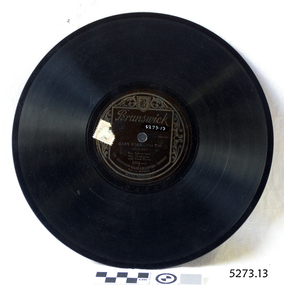
Audio - Gramophone Record, Brunswick Records, Baby Face
... Barry Owen...Edmund Trevor Lloyd Williams...The Gramophone Company...His Master’s Voice...HMV...Francis...Barry Owen (1860–1914), who, on 23 February 1889, partnered with Edmund Trevor Lloyd Williams (1859–1946) in England to register The Gramophone Company. His Master’s Voice (HMV) soon became the company’s major recording label, popular worldwide. The business based the label's logo of a dog looking into a gramophone horn for ‘his master’s voice’ was based on a painting by English artist Francis...Barry Owen (1860–1914), who, on 23 February 1889, partnered with Edmund Trevor Lloyd Williams (1859–1946) in England to register The Gramophone Company. His Master’s Voice (HMV) soon became the company’s major recording label, popular worldwide. The business based the label's logo of a dog looking into a gramophone horn for ‘his master’s voice’ was based on a painting by English artist Francis ...Thomas Edison (1847–1931), an American, invented the phonograph in 1877, making it possible to record sound waves vertically and reproduce them on a wax cylinder so they could be heard again. Later, the German American, Emile Berliner (1851-1929), improved on Edison’s principles, greatly increasing the quality of the reproduced sounds with his invention of the gramophone in 1887, which recorded the sound waves laterally onto a flat shellac disc, or ‘record’. Records could be mass-produced in a factory where audio recordings were converted to a physical copy of that recording on a plate-sized disc. A gramophone machine reproduced the sound by spinning the record on a turntable at a specified number of rotations per minute (RPM) and using a stylus or needle to transfer the vibration via a membrane to a speaker, which amplified the sound. Berliner helped set up affiliated businesses overseas. One of his representatives was William Barry Owen (1860–1914), who, on 23 February 1889, partnered with Edmund Trevor Lloyd Williams (1859–1946) in England to register The Gramophone Company. His Master’s Voice (HMV) soon became the company’s major recording label, popular worldwide. The business based the label's logo of a dog looking into a gramophone horn for ‘his master’s voice’ was based on a painting by English artist Francis Barraud, which featured a terrier called Nipper beside a gramophone. Early gramophone records were mostly made from a material referred to as shellac, a natural ingredient combined with slate powder, and a filler of manilla copal, wood resin, carnauba wax, and carbon black. Although Bakelite seemed a useful, synthetic product, it was unsuccessful as a product for records. Around the time of World War II, lightweight, flexible synthetic vinyl records began replacing shellac records. Common diameters of records: 7 inch, 10 inch, 12 inch and 16 inch Revolutions Per Minute include: 33 1/3, 45, 78 Minutes per side of record: 3, 5.5, 7, 8, 9, 12, 15 and 22 Labels, in minutes per side: Single Play 3-5 min, Extended Play (EP) 7-12 min, Long Play (LP) 12-22 min Shellac gramophone record with a black and gold label. Title: Baby Face Artist: Foxtrot by Ben Selvin and his Orchestra Publisher: Brunswick Number: A-3253 Size: 10 inchWhite sticker on the labelflagstaff hill, warrnambool, maritime village, maritime museum, flagstaff hill maritime museum and village, shipwreck coast, great ocean road, gramophone, phonograph, sound waves, record, reproduction, audio record, music, sound, thomas edison, emile berliner, 1887, shellac, rpm, william barry owen, edmund trevor lloyd williams, the gramophone company, his master’s voice, hmv, francis barraud, nipper, 10 inch, brunswick records, a-3253, baby face, foxtrot, ben selvin and his orchestra -
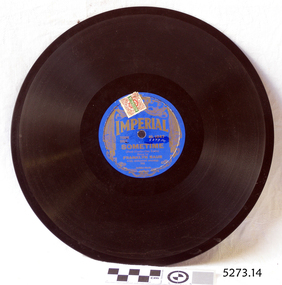 Flagstaff Hill Maritime Museum and Village
Audio - Gramophone Record, Imperial Records, Sometime, Early-to-mid 20th century
... Barry Owen...Edmund Trevor Lloyd Williams...The Gramophone Company...His Master’s Voice...HMV...Francis...Barry Owen (1860–1914), who, on 23 February 1889, partnered with Edmund Trevor Lloyd Williams (1859–1946) in England to register The Gramophone Company. His Master’s Voice (HMV) soon became the company’s major recording label, popular worldwide. The business based the label's logo of a dog looking into a gramophone horn for ‘his master’s voice’ was based on a painting by English artist Francis...Barry Owen (1860–1914), who, on 23 February 1889, partnered with Edmund Trevor Lloyd Williams (1859–1946) in England to register The Gramophone Company. His Master’s Voice (HMV) soon became the company’s major recording label, popular worldwide. The business based the label's logo of a dog looking into a gramophone horn for ‘his master’s voice’ was based on a painting by English artist Francis ...Thomas Edison (1847–1931), an American, invented the phonograph in 1877, making it possible to record sound waves vertically and reproduce them on a wax cylinder so they could be heard again. Later, the German American, Emile Berliner (1851-1929), improved on Edison’s principles, greatly increasing the quality of the reproduced sounds with his invention of the gramophone in 1887, which recorded the sound waves laterally onto a flat shellac disc, or ‘record’. Records could be mass-produced in a factory where audio recordings were converted to a physical copy of that recording on a plate-sized disc. A gramophone machine reproduced the sound by spinning the record on a turntable at a specified number of rotations per minute (RPM) and using a stylus or needle to transfer the vibration via a membrane to a speaker, which amplified the sound. Berliner helped set up affiliated businesses overseas. One of his representatives was William Barry Owen (1860–1914), who, on 23 February 1889, partnered with Edmund Trevor Lloyd Williams (1859–1946) in England to register The Gramophone Company. His Master’s Voice (HMV) soon became the company’s major recording label, popular worldwide. The business based the label's logo of a dog looking into a gramophone horn for ‘his master’s voice’ was based on a painting by English artist Francis Barraud, which featured a terrier called Nipper beside a gramophone. Early gramophone records were mostly made from a material referred to as shellac, a natural ingredient combined with slate powder, and a filler of manilla copal, wood resin, carnauba wax, and carbon black. Although Bakelite seemed a useful, synthetic product, it was unsuccessful as a product for records. Around the time of World War II, lightweight, flexible synthetic vinyl records began replacing shellac records. Common diameters of records: 7 inch, 10 inch, 12 inch and 16 inch Revolutions Per Minute include: 33 1/3, 45, 78 Minutes per side of record: 3, 5.5, 7, 8, 9, 12, 15 and 22 Labels, in minutes per side: Single Play 3-5 min, Extended Play (EP) 7-12 min, Long Play (LP) 12-22 min This gramophone represents a step in the evolution of recording sound. In the 19th century, the human voice was first recorded on wax cylinders and replayed. It was the beginning of a new era in sound. Then, in the 1880s, voice could be recorded onto flat discs like this record, reliably reproduced and replayed many times, even on portable devices. Later, in the mid-20th century the following generation of electronic audio recording began, and later that century, digital recording gave even better reproduction. The record represents a popular means of entertainment for personal and social activities, as well as in some businesses. Shellac gramophone record with a blue and gold label. Title: Sometime Artist: Franklyn Baur, tenor, solo Publisher: Imperial Records Number:1547 Size: 14 inchWhite paper stamp with gold, red and green printflagstaff hill, warrnambool, maritime village, maritime museum, flagstaff hill maritime museum and village, shipwreck coast, great ocean road, gramophone, phonograph, sound waves, record, reproduction, audio record, music, sound, thomas edison, emile berliner, 1887, shellac, rpm, william barry owen, edmund trevor lloyd williams, the gramophone company, his master’s voice, hmv, francis barraud, nipper, imperial record, 1547, sometime, tenor solo, franklyn baur, 14 inch -
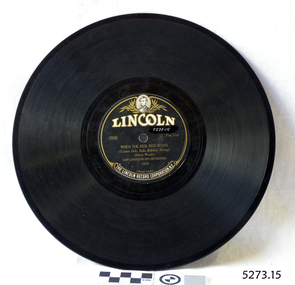 Flagstaff Hill Maritime Museum and Village
Audio - Gramophone Record, Lincoln Record Corporation, When The Red, Red Robin, Early-to-mid 20th century
... Barry Owen...Edmund Trevor Lloyd Williams...The Gramophone Company...His Master’s Voice...HMV...Francis...Barry Owen (1860–1914), who, on 23 February 1889, partnered with Edmund Trevor Lloyd Williams (1859–1946) in England to register The Gramophone Company. His Master’s Voice (HMV) soon became the company’s major recording label, popular worldwide. The business based the label's logo of a dog looking into a gramophone horn for ‘his master’s voice’ was based on a painting by English artist Francis...Barry Owen (1860–1914), who, on 23 February 1889, partnered with Edmund Trevor Lloyd Williams (1859–1946) in England to register The Gramophone Company. His Master’s Voice (HMV) soon became the company’s major recording label, popular worldwide. The business based the label's logo of a dog looking into a gramophone horn for ‘his master’s voice’ was based on a painting by English artist Francis ...Thomas Edison (1847–1931), an American, invented the phonograph in 1877, making it possible to record sound waves vertically and reproduce them on a wax cylinder so they could be heard again. Later, the German American, Emile Berliner (1851-1929), improved on Edison’s principles, greatly increasing the quality of the reproduced sounds with his invention of the gramophone in 1887, which recorded the sound waves laterally onto a flat shellac disc, or ‘record’. Records could be mass-produced in a factory where audio recordings were converted to a physical copy of that recording on a plate-sized disc. A gramophone machine reproduced the sound by spinning the record on a turntable at a specified number of rotations per minute (RPM) and using a stylus or needle to transfer the vibration via a membrane to a speaker, which amplified the sound. Berliner helped set up affiliated businesses overseas. One of his representatives was William Barry Owen (1860–1914), who, on 23 February 1889, partnered with Edmund Trevor Lloyd Williams (1859–1946) in England to register The Gramophone Company. His Master’s Voice (HMV) soon became the company’s major recording label, popular worldwide. The business based the label's logo of a dog looking into a gramophone horn for ‘his master’s voice’ was based on a painting by English artist Francis Barraud, which featured a terrier called Nipper beside a gramophone. Early gramophone records were mostly made from a material referred to as shellac, a natural ingredient combined with slate powder, and a filler of manilla copal, wood resin, carnauba wax, and carbon black. Although Bakelite seemed a useful, synthetic product, it was unsuccessful as a product for records. Around the time of World War II, lightweight, flexible synthetic vinyl records began replacing shellac records. Common diameters of records: 7 inch, 10 inch, 12 inch and 16 inch Revolutions Per Minute include: 33 1/3, 45, 78 Minutes per side of record: 3, 5.5, 7, 8, 9, 12, 15 and 22 Labels, in minutes per side: Single Play 3-5 min, Extended Play (EP) 7-12 min, Long Play (LP) 12-22 min This gramophone represents a step in the evolution of recording sound. In the 19th century, the human voice was first recorded on wax cylinders and replayed. It was the beginning of a new era in sound. Then, in the 1880s, voice could be recorded onto flat discs like this record, reliably reproduced and replayed many times, even on portable devices. Later, in the mid-20th century the following generation of electronic audio recording began, and later that century, digital recording gave even better reproduction. The record represents a popular means of entertainment for personal and social activities, as well as in some businesses. Shellac gramophone record with a black and gold label. Title: When The Red, Red Robin Artist: Sammy Lanin and his Orchestra Publisher: Lincoln Record Corporation, N.Y. Number:2528 Size: 10 inchflagstaff hill, warrnambool, maritime village, maritime museum, flagstaff hill maritime museum and village, shipwreck coast, great ocean road, gramophone, phonograph, sound waves, record, reproduction, audio record, music, sound, thomas edison, emile berliner, 1887, shellac, rpm, william barry owen, edmund trevor lloyd williams, the gramophone company, his master’s voice, hmv, francis barraud, nipper, lincoln record corporation, new york, 2528, when the red red robin, sammy lanin and his orchestra, 10 inch -
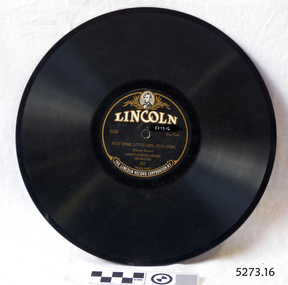 Flagstaff Hill Maritime Museum and Village
Audio - Gramophone Record, Lincoln Record Corporation, Stay Home Little Girl, Stay Home, Early-to-mid 20th century
... Barry Owen...Edmund Trevor Lloyd Williams...The Gramophone Company...His Master’s Voice...HMV...Francis...Barry Owen (1860–1914), who, on 23 February 1889, partnered with Edmund Trevor Lloyd Williams (1859–1946) in England to register The Gramophone Company. His Master’s Voice (HMV) soon became the company’s major recording label, popular worldwide. The business based the label's logo of a dog looking into a gramophone horn for ‘his master’s voice’ was based on a painting by English artist Francis...Barry Owen (1860–1914), who, on 23 February 1889, partnered with Edmund Trevor Lloyd Williams (1859–1946) in England to register The Gramophone Company. His Master’s Voice (HMV) soon became the company’s major recording label, popular worldwide. The business based the label's logo of a dog looking into a gramophone horn for ‘his master’s voice’ was based on a painting by English artist Francis ...Thomas Edison (1847–1931), an American, invented the phonograph in 1877, making it possible to record sound waves vertically and reproduce them on a wax cylinder so they could be heard again. Later, the German American, Emile Berliner (1851-1929), improved on Edison’s principles, greatly increasing the quality of the reproduced sounds with his invention of the gramophone in 1887, which recorded the sound waves laterally onto a flat shellac disc, or ‘record’. Records could be mass-produced in a factory where audio recordings were converted to a physical copy of that recording on a plate-sized disc. A gramophone machine reproduced the sound by spinning the record on a turntable at a specified number of rotations per minute (RPM) and using a stylus or needle to transfer the vibration via a membrane to a speaker, which amplified the sound. Berliner helped set up affiliated businesses overseas. One of his representatives was William Barry Owen (1860–1914), who, on 23 February 1889, partnered with Edmund Trevor Lloyd Williams (1859–1946) in England to register The Gramophone Company. His Master’s Voice (HMV) soon became the company’s major recording label, popular worldwide. The business based the label's logo of a dog looking into a gramophone horn for ‘his master’s voice’ was based on a painting by English artist Francis Barraud, which featured a terrier called Nipper beside a gramophone. Early gramophone records were mostly made from a material referred to as shellac, a natural ingredient combined with slate powder, and a filler of manilla copal, wood resin, carnauba wax, and carbon black. Although Bakelite seemed a useful, synthetic product, it was unsuccessful as a product for records. Around the time of World War II, lightweight, flexible synthetic vinyl records began replacing shellac records. Common diameters of records: 7 inch, 10 inch, 12 inch and 16 inch Revolutions Per Minute include: 33 1/3, 45, 78 Minutes per side of record: 3, 5.5, 7, 8, 9, 12, 15 and 22 Labels, in minutes per side: Single Play 3-5 min, Extended Play (EP) 7-12 min, Long Play (LP) 12-22 min This gramophone represents a step in the evolution of recording sound. In the 19th century, the human voice was first recorded on wax cylinders and replayed. It was the beginning of a new era in sound. Then, in the 1880s, voice could be recorded onto flat discs like this record, reliably reproduced and replayed many times, even on portable devices. Later, in the mid-20th century the following generation of electronic audio recording began, and later that century, digital recording gave even better reproduction. The record represents a popular means of entertainment for personal and social activities, as well as in some businesses. Shellac gramophone record with a coloured label. Title: Stay Home Little Girl, Stay Home Artist: Johnny Johnson and his Orchestra. Publisher: The Lincoln Record Corporation, N.Y. 2516 Number:797 Size: 10 inchflagstaff hill, warrnambool, maritime village, maritime museum, flagstaff hill maritime museum and village, shipwreck coast, great ocean road, gramophone, phonograph, sound waves, record, reproduction, audio record, music, sound, thomas edison, emile berliner, 1887, shellac, rpm, william barry owen, edmund trevor lloyd williams, the gramophone company, his master’s voice, hmv, francis barraud, nipper, lincoln record corporation n.y. 2516, stay home little girl stay home, johnny johnson and his orchestra, 797, 10 inch -
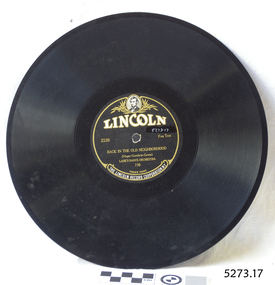 Flagstaff Hill Maritime Museum and Village
Audio - Gramophone Record, Lincoln Record Corporation, Back In The Old Neighborhood, Early-to-mid 20th century
... Barry Owen...Edmund Trevor Lloyd Williams...The Gramophone Company...His Master’s Voice...HMV...Francis...Barry Owen (1860–1914), who, on 23 February 1889, partnered with Edmund Trevor Lloyd Williams (1859–1946) in England to register The Gramophone Company. His Master’s Voice (HMV) soon became the company’s major recording label, popular worldwide. The business based the label's logo of a dog looking into a gramophone horn for ‘his master’s voice’ was based on a painting by English artist Francis...Barry Owen (1860–1914), who, on 23 February 1889, partnered with Edmund Trevor Lloyd Williams (1859–1946) in England to register The Gramophone Company. His Master’s Voice (HMV) soon became the company’s major recording label, popular worldwide. The business based the label's logo of a dog looking into a gramophone horn for ‘his master’s voice’ was based on a painting by English artist Francis ...Thomas Edison (1847–1931), an American, invented the phonograph in 1877, making it possible to record sound waves vertically and reproduce them on a wax cylinder so they could be heard again. Later, the German American, Emile Berliner (1851-1929), improved on Edison’s principles, greatly increasing the quality of the reproduced sounds with his invention of the gramophone in 1887, which recorded the sound waves laterally onto a flat shellac disc, or ‘record’. Records could be mass-produced in a factory where audio recordings were converted to a physical copy of that recording on a plate-sized disc. A gramophone machine reproduced the sound by spinning the record on a turntable at a specified number of rotations per minute (RPM) and using a stylus or needle to transfer the vibration via a membrane to a speaker, which amplified the sound. Berliner helped set up affiliated businesses overseas. One of his representatives was William Barry Owen (1860–1914), who, on 23 February 1889, partnered with Edmund Trevor Lloyd Williams (1859–1946) in England to register The Gramophone Company. His Master’s Voice (HMV) soon became the company’s major recording label, popular worldwide. The business based the label's logo of a dog looking into a gramophone horn for ‘his master’s voice’ was based on a painting by English artist Francis Barraud, which featured a terrier called Nipper beside a gramophone. Early gramophone records were mostly made from a material referred to as shellac, a natural ingredient combined with slate powder, and a filler of manilla copal, wood resin, carnauba wax, and carbon black. Although Bakelite seemed a useful, synthetic product, it was unsuccessful as a product for records. Around the time of World War II, lightweight, flexible synthetic vinyl records began replacing shellac records. Common diameters of records: 7 inch, 10 inch, 12 inch and 16 inch Revolutions Per Minute include: 33 1/3, 45, 78 Minutes per side of record: 3, 5.5, 7, 8, 9, 12, 15 and 22 Labels, in minutes per side: Single Play 3-5 min, Extended Play (EP) 7-12 min, Long Play (LP) 12-22 min This gramophone represents a step in the evolution of recording sound. In the 19th century, the human voice was first recorded on wax cylinders and replayed. It was the beginning of a new era in sound. Then, in the 1880s, voice could be recorded onto flat discs like this record, reliably reproduced and replayed many times, even on portable devices. Later, in the mid-20th century the following generation of electronic audio recording began, and later that century, digital recording gave even better reproduction. The record represents a popular means of entertainment for personal and social activities, as well as in some businesses. Shellac gramophone record with a black and gold label. Title: Back In The Old Neighbourhood Artist: Lane's Dance Orchestra. Publisher: The Lincoln Record Corporation, N.Y. 2138 Number:738 Size: 10 inchflagstaff hill, warrnambool, maritime village, maritime museum, flagstaff hill maritime museum and village, shipwreck coast, great ocean road, gramophone, phonograph, sound waves, record, reproduction, audio record, music, sound, thomas edison, emile berliner, 1887, shellac, rpm, william barry owen, edmund trevor lloyd williams, the gramophone company, his master’s voice, hmv, francis barraud, nipper, the lincoln record corporation n.y. 2138, back in the old neighbourhood, lane's dance orchestra, 738 -
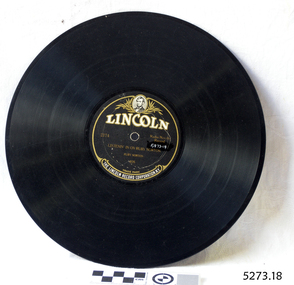 Flagstaff Hill Maritime Museum and Village
Audio - Gramophone Record, Lincoln Record Corporation, Listenin In On Ruby Norton, Early-to-mid 20th century
... Barry Owen...Edmund Trevor Lloyd Williams...The Gramophone Company...His Master’s Voice...HMV...Francis...Barry Owen (1860–1914), who, on 23 February 1889, partnered with Edmund Trevor Lloyd Williams (1859–1946) in England to register The Gramophone Company. His Master’s Voice (HMV) soon became the company’s major recording label, popular worldwide. The business based the label's logo of a dog looking into a gramophone horn for ‘his master’s voice’ was based on a painting by English artist Francis...Barry Owen (1860–1914), who, on 23 February 1889, partnered with Edmund Trevor Lloyd Williams (1859–1946) in England to register The Gramophone Company. His Master’s Voice (HMV) soon became the company’s major recording label, popular worldwide. The business based the label's logo of a dog looking into a gramophone horn for ‘his master’s voice’ was based on a painting by English artist Francis ...Thomas Edison (1847–1931), an American, invented the phonograph in 1877, making it possible to record sound waves vertically and reproduce them on a wax cylinder so they could be heard again. Later, the German American, Emile Berliner (1851-1929), improved on Edison’s principles, greatly increasing the quality of the reproduced sounds with his invention of the gramophone in 1887, which recorded the sound waves laterally onto a flat shellac disc, or ‘record’. Records could be mass-produced in a factory where audio recordings were converted to a physical copy of that recording on a plate-sized disc. A gramophone machine reproduced the sound by spinning the record on a turntable at a specified number of rotations per minute (RPM) and using a stylus or needle to transfer the vibration via a membrane to a speaker, which amplified the sound. Berliner helped set up affiliated businesses overseas. One of his representatives was William Barry Owen (1860–1914), who, on 23 February 1889, partnered with Edmund Trevor Lloyd Williams (1859–1946) in England to register The Gramophone Company. His Master’s Voice (HMV) soon became the company’s major recording label, popular worldwide. The business based the label's logo of a dog looking into a gramophone horn for ‘his master’s voice’ was based on a painting by English artist Francis Barraud, which featured a terrier called Nipper beside a gramophone. Early gramophone records were mostly made from a material referred to as shellac, a natural ingredient combined with slate powder, and a filler of manilla copal, wood resin, carnauba wax, and carbon black. Although Bakelite seemed a useful, synthetic product, it was unsuccessful as a product for records. Around the time of World War II, lightweight, flexible synthetic vinyl records began replacing shellac records. Common diameters of records: 7 inch, 10 inch, 12 inch and 16 inch Revolutions Per Minute include: 33 1/3, 45, 78 Minutes per side of record: 3, 5.5, 7, 8, 9, 12, 15 and 22 Labels, in minutes per side: Single Play 3-5 min, Extended Play (EP) 7-12 min, Long Play (LP) 12-22 min This gramophone represents a step in the evolution of recording sound. In the 19th century, the human voice was first recorded on wax cylinders and replayed. It was the beginning of a new era in sound. Then, in the 1880s, voice could be recorded onto flat discs like this record, reliably reproduced and replayed many times, even on portable devices. Later, in the mid-20th century the following generation of electronic audio recording began, and later that century, digital recording gave even better reproduction. The record represents a popular means of entertainment for personal and social activities, as well as in some businesses. Shellac gramophone record with a black and gold label. Title: Listenin" In On Ruby Norton Artist: Ruby Norton. Publisher: The Lincoln Record Corporation N.Y. Number:2174 835 Size: 10 inchflagstaff hill, warrnambool, maritime village, maritime museum, flagstaff hill maritime museum and village, shipwreck coast, great ocean road, gramophone, phonograph, sound waves, record, reproduction, audio record, music, sound, thomas edison, emile berliner, 1887, shellac, rpm, william barry owen, edmund trevor lloyd williams, the gramophone company, his master’s voice, hmv, francis barraud, nipper, the lincoln record corporation n.y. 2174, listenin in on ruby norton, ruby norton, 835, 10 inch -
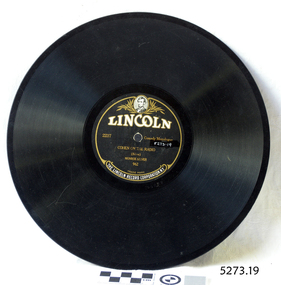 Flagstaff Hill Maritime Museum and Village
Audio - Gramophone Record, Lincoln Record Corporation, Cohen On The Radio, Early-to-mid 20th century
... Barry Owen...Edmund Trevor Lloyd Williams...The Gramophone Company...His Master’s Voice...HMV...Francis...Barry Owen (1860–1914), who, on 23 February 1889, partnered with Edmund Trevor Lloyd Williams (1859–1946) in England to register The Gramophone Company. His Master’s Voice (HMV) soon became the company’s major recording label, popular worldwide. The business based the label's logo of a dog looking into a gramophone horn for ‘his master’s voice’ was based on a painting by English artist Francis...Barry Owen (1860–1914), who, on 23 February 1889, partnered with Edmund Trevor Lloyd Williams (1859–1946) in England to register The Gramophone Company. His Master’s Voice (HMV) soon became the company’s major recording label, popular worldwide. The business based the label's logo of a dog looking into a gramophone horn for ‘his master’s voice’ was based on a painting by English artist Francis ...Thomas Edison (1847–1931), an American, invented the phonograph in 1877, making it possible to record sound waves vertically and reproduce them on a wax cylinder so they could be heard again. Later, the German American, Emile Berliner (1851-1929), improved on Edison’s principles, greatly increasing the quality of the reproduced sounds with his invention of the gramophone in 1887, which recorded the sound waves laterally onto a flat shellac disc, or ‘record’. Records could be mass-produced in a factory where audio recordings were converted to a physical copy of that recording on a plate-sized disc. A gramophone machine reproduced the sound by spinning the record on a turntable at a specified number of rotations per minute (RPM) and using a stylus or needle to transfer the vibration via a membrane to a speaker, which amplified the sound. Berliner helped set up affiliated businesses overseas. One of his representatives was William Barry Owen (1860–1914), who, on 23 February 1889, partnered with Edmund Trevor Lloyd Williams (1859–1946) in England to register The Gramophone Company. His Master’s Voice (HMV) soon became the company’s major recording label, popular worldwide. The business based the label's logo of a dog looking into a gramophone horn for ‘his master’s voice’ was based on a painting by English artist Francis Barraud, which featured a terrier called Nipper beside a gramophone. Early gramophone records were mostly made from a material referred to as shellac, a natural ingredient combined with slate powder, and a filler of manilla copal, wood resin, carnauba wax, and carbon black. Although Bakelite seemed a useful, synthetic product, it was unsuccessful as a product for records. Around the time of World War II, lightweight, flexible synthetic vinyl records began replacing shellac records. Common diameters of records: 7 inch, 10 inch, 12 inch and 16 inch Revolutions Per Minute include: 33 1/3, 45, 78 Minutes per side of record: 3, 5.5, 7, 8, 9, 12, 15 and 22 Labels, in minutes per side: Single Play 3-5 min, Extended Play (EP) 7-12 min, Long Play (LP) 12-22 min This gramophone represents a step in the evolution of recording sound. In the 19th century, the human voice was first recorded on wax cylinders and replayed. It was the beginning of a new era in sound. Then, in the 1880s, voice could be recorded onto flat discs like this record, reliably reproduced and replayed many times, even on portable devices. Later, in the mid-20th century the following generation of electronic audio recording began, and later that century, digital recording gave even better reproduction. The record represents a popular means of entertainment for personal and social activities, as well as in some businesses. Shellac gramophone record with a black and gold label. Title: Cohen On The Radio Artist: Monroe Silver Publisher: The Lincoln Record Corporation N.Y. 2237 Number:962 Size: 10 inchflagstaff hill, warrnambool, maritime village, maritime museum, flagstaff hill maritime museum and village, shipwreck coast, great ocean road, gramophone, phonograph, sound waves, record, reproduction, audio record, music, sound, thomas edison, emile berliner, 1887, shellac, rpm, william barry owen, edmund trevor lloyd williams, the gramophone company, his master’s voice, hmv, francis barraud, nipper, the lincoln record corporation n.y. 2237, cohen on the radio, monroe silver, no 962, 10 inch -
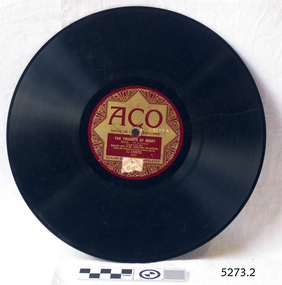 Flagstaff Hill Maritime Museum and Village
Audio - Gramophone Record, ACO, The Triumph of Right, Early-to-mid 20th century
... Barry Owen...Edmund Trevor Lloyd Williams...The Gramophone Company...His Master’s Voice...HMV...Francis...Barry Owen (1860–1914), who, on 23 February 1889, partnered with Edmund Trevor Lloyd Williams (1859–1946) in England to register The Gramophone Company. His Master’s Voice (HMV) soon became the company’s major recording label, popular worldwide. The business based the label's logo of a dog looking into a gramophone horn for ‘his master’s voice’ was based on a painting by English artist Francis...Barry Owen (1860–1914), who, on 23 February 1889, partnered with Edmund Trevor Lloyd Williams (1859–1946) in England to register The Gramophone Company. His Master’s Voice (HMV) soon became the company’s major recording label, popular worldwide. The business based the label's logo of a dog looking into a gramophone horn for ‘his master’s voice’ was based on a painting by English artist Francis ...Thomas Edison (1847–1931), an American, invented the phonograph in 1877, making it possible to record sound waves vertically and reproduce them on a wax cylinder so they could be heard again. Later, the German American, Emile Berliner (1851-1929), improved on Edison’s principles, greatly increasing the quality of the reproduced sounds with his invention of the gramophone in 1887, which recorded the sound waves laterally onto a flat shellac disc, or ‘record’. Records could be mass-produced in a factory where audio recordings were converted to a physical copy of that recording on a plate-sized disc. A gramophone machine reproduced the sound by spinning the record on a turntable at a specified number of rotations per minute (RPM) and using a stylus or needle to transfer the vibration via a membrane to a speaker, which amplified the sound. Berliner helped set up affiliated businesses overseas. One of his representatives was William Barry Owen (1860–1914), who, on 23 February 1889, partnered with Edmund Trevor Lloyd Williams (1859–1946) in England to register The Gramophone Company. His Master’s Voice (HMV) soon became the company’s major recording label, popular worldwide. The business based the label's logo of a dog looking into a gramophone horn for ‘his master’s voice’ was based on a painting by English artist Francis Barraud, which featured a terrier called Nipper beside a gramophone. Early gramophone records were mostly made from a material referred to as shellac, a natural ingredient combined with slate powder, and a filler of manilla copal, wood resin, carnauba wax, and carbon black. Although Bakelite seemed a useful, synthetic product, it was unsuccessful as a product for records. Around the time of World War II, lightweight, flexible synthetic vinyl records began replacing shellac records. Common diameters of records: 7 inch, 10 inch, 12 inch and 16 inch Revolutions Per Minute include: 33 1/3, 45, 78 Minutes per side of record: 3, 5.5, 7, 8, 9, 12, 15 and 22 Labels, in minutes per side: Single Play 3-5 min, Extended Play (EP) 7-12 min, Long Play (LP) 12-22 min This gramophone represents a step in the evolution of recording sound. In the 19th century, the human voice was first recorded on wax cylinders and replayed. It was the beginning of a new era in sound. Then, in the 1880s, voice could be recorded onto flat discs like this record, reliably reproduced and replayed many times, even on portable devices. Later, in the mid-20th century the following generation of electronic audio recording began, and later that century, digital recording gave even better reproduction. The record represents a popular means of entertainment for personal and social activities, as well as in some businesses. Shellac gramophone record with a crimson and gold label. Title: The Triumph of Right Artist: H.M. Welsh Guards Publisher: ACO England Number: G15875 Size: 10 inchflagstaff hill, warrnambool, maritime village, maritime museum, flagstaff hill maritime museum and village, shipwreck coast, great ocean road, gramophone, phonograph, sound waves, record, reproduction, audio record, music, sound, thomas edison, emile berliner, 1887, shellac, rpm, william barry owen, edmund trevor lloyd williams, the gramophone company, his master’s voice, hmv, francis barraud, nipper, 10 inch, the triumph of right, h.m. welsh guards, aco england -
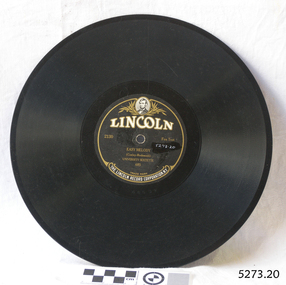 Flagstaff Hill Maritime Museum and Village
Audio - Gramophone Record, Lincoln Record Corporation, Easy Melody, Early-to-mid 20th century
... Barry Owen...Edmund Trevor Lloyd Williams...The Gramophone Company...His Master’s Voice...HMV...Francis...Barry Owen (1860–1914), who, on 23 February 1889, partnered with Edmund Trevor Lloyd Williams (1859–1946) in England to register The Gramophone Company. His Master’s Voice (HMV) soon became the company’s major recording label, popular worldwide. The business based the label's logo of a dog looking into a gramophone horn for ‘his master’s voice’ was based on a painting by English artist Francis...Barry Owen (1860–1914), who, on 23 February 1889, partnered with Edmund Trevor Lloyd Williams (1859–1946) in England to register The Gramophone Company. His Master’s Voice (HMV) soon became the company’s major recording label, popular worldwide. The business based the label's logo of a dog looking into a gramophone horn for ‘his master’s voice’ was based on a painting by English artist Francis ...Thomas Edison (1847–1931), an American, invented the phonograph in 1877, making it possible to record sound waves vertically and reproduce them on a wax cylinder so they could be heard again. Later, the German American, Emile Berliner (1851-1929), improved on Edison’s principles, greatly increasing the quality of the reproduced sounds with his invention of the gramophone in 1887, which recorded the sound waves laterally onto a flat shellac disc, or ‘record’. Records could be mass-produced in a factory where audio recordings were converted to a physical copy of that recording on a plate-sized disc. A gramophone machine reproduced the sound by spinning the record on a turntable at a specified number of rotations per minute (RPM) and using a stylus or needle to transfer the vibration via a membrane to a speaker, which amplified the sound. Berliner helped set up affiliated businesses overseas. One of his representatives was William Barry Owen (1860–1914), who, on 23 February 1889, partnered with Edmund Trevor Lloyd Williams (1859–1946) in England to register The Gramophone Company. His Master’s Voice (HMV) soon became the company’s major recording label, popular worldwide. The business based the label's logo of a dog looking into a gramophone horn for ‘his master’s voice’ was based on a painting by English artist Francis Barraud, which featured a terrier called Nipper beside a gramophone. Early gramophone records were mostly made from a material referred to as shellac, a natural ingredient combined with slate powder, and a filler of manilla copal, wood resin, carnauba wax, and carbon black. Although Bakelite seemed a useful, synthetic product, it was unsuccessful as a product for records. Around the time of World War II, lightweight, flexible synthetic vinyl records began replacing shellac records. Common diameters of records: 7 inch, 10 inch, 12 inch and 16 inch Revolutions Per Minute include: 33 1/3, 45, 78 Minutes per side of record: 3, 5.5, 7, 8, 9, 12, 15 and 22 Labels, in minutes per side: Single Play 3-5 min, Extended Play (EP) 7-12 min, Long Play (LP) 12-22 min This gramophone represents a step in the evolution of recording sound. In the 19th century, the human voice was first recorded on wax cylinders and replayed. It was the beginning of a new era in sound. Then, in the 1880s, voice could be recorded onto flat discs like this record, reliably reproduced and replayed many times, even on portable devices. Later, in the mid-20th century the following generation of electronic audio recording began, and later that century, digital recording gave even better reproduction. The record represents a popular means of entertainment for personal and social activities, as well as in some businesses. Shellac gramophone record with a black and gold label. Title: Easy Melody Artist: University Sextette Publisher: The Lincoln Record Corporation N.Y. Number:2130 685 Size: 10 inchflagstaff hill, warrnambool, maritime village, maritime museum, flagstaff hill maritime museum and village, shipwreck coast, great ocean road, gramophone, phonograph, sound waves, record, reproduction, audio record, music, sound, thomas edison, emile berliner, 1887, shellac, rpm, william barry owen, edmund trevor lloyd williams, the gramophone company, his master’s voice, hmv, francis barraud, nipper, the lincoln record corporation n.y., 2130, easy melody, university sextette, 685 -
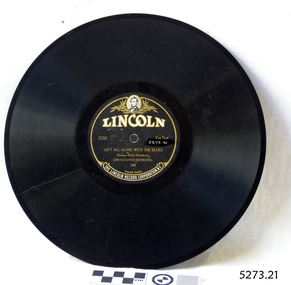 Flagstaff Hill Maritime Museum and Village
Audio - Gramophone Record, Lincoln Record Corporation, Left All Alone With The Blues, Early-to-mid 20th century
... Barry Owen...Edmund Trevor Lloyd Williams...The Gramophone Company...His Master’s Voice...HMV...Francis...Flagstaff Hill Warrnambool Maritime Village Maritime Museum Flagstaff Hill Maritime Museum and Village Shipwreck coast Great Ocean Road gramophone phonograph sound waves record reproduction audio record music sound Thomas Edison Emile Berliner 1887 shellac RPM William Barry Owen Edmund Trevor Lloyd Williams The Gramophone Company His Master’s Voice HMV Francis Barraud Nipper The Lincoln Record Corporation N.Y. 2153 Left All Alone With The Blues Lincoln Dance Orchestra 700 Shellac gramophone record with a black and gold label. ...Photograph RecordThis gramophone represents a step in the evolution of recording sound. In the 19th century, the human voice was first recorded on wax cylinders and replayed. It was the beginning of a new era in sound. Then, in the 1880s, voice could be recorded onto flat discs like this record, reliably reproduced and replayed many times, even on portable devices. Later, in the mid-20th century the following generation of electronic audio recording began, and later that century, digital recording gave even better reproduction. The record represents a popular means of entertainment for personal and social activities, as well as in some businesses. Shellac gramophone record with a black and gold label. Title: Left All Alone With The Blues Artist: Lincoln Dance Orchestra Publisher: The Lincoln Record Corporation, N.Y. 2153 Number:700 Size: 10 inchflagstaff hill, warrnambool, maritime village, maritime museum, flagstaff hill maritime museum and village, shipwreck coast, great ocean road, gramophone, phonograph, sound waves, record, reproduction, audio record, music, sound, thomas edison, emile berliner, 1887, shellac, rpm, william barry owen, edmund trevor lloyd williams, the gramophone company, his master’s voice, hmv, francis barraud, nipper, the lincoln record corporation n.y. 2153, left all alone with the blues, lincoln dance orchestra, 700 -
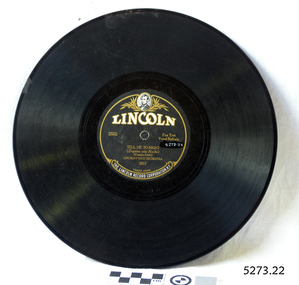 Flagstaff Hill Maritime Museum and Village
Audio - Gramophone Record, Lincoln Record Corporation, Tell Me To-Night, Early-to-mid 20th century
... Barry Owen...Edmund Trevor Lloyd Williams...The Gramophone Company...His Master’s Voice...HMV...Francis...Barry Owen (1860–1914), who, on 23 February 1889, partnered with Edmund Trevor Lloyd Williams (1859–1946) in England to register The Gramophone Company. His Master’s Voice (HMV) soon became the company’s major recording label, popular worldwide. The business based the label's logo of a dog looking into a gramophone horn for ‘his master’s voice’ was based on a painting by English artist Francis...Barry Owen (1860–1914), who, on 23 February 1889, partnered with Edmund Trevor Lloyd Williams (1859–1946) in England to register The Gramophone Company. His Master’s Voice (HMV) soon became the company’s major recording label, popular worldwide. The business based the label's logo of a dog looking into a gramophone horn for ‘his master’s voice’ was based on a painting by English artist Francis ...Thomas Edison (1847–1931), an American, invented the phonograph in 1877, making it possible to record sound waves vertically and reproduce them on a wax cylinder so they could be heard again. Later, the German American, Emile Berliner (1851-1929), improved on Edison’s principles, greatly increasing the quality of the reproduced sounds with his invention of the gramophone in 1887, which recorded the sound waves laterally onto a flat shellac disc, or ‘record’. Records could be mass-produced in a factory where audio recordings were converted to a physical copy of that recording on a plate-sized disc. A gramophone machine reproduced the sound by spinning the record on a turntable at a specified number of rotations per minute (RPM) and using a stylus or needle to transfer the vibration via a membrane to a speaker, which amplified the sound. Berliner helped set up affiliated businesses overseas. One of his representatives was William Barry Owen (1860–1914), who, on 23 February 1889, partnered with Edmund Trevor Lloyd Williams (1859–1946) in England to register The Gramophone Company. His Master’s Voice (HMV) soon became the company’s major recording label, popular worldwide. The business based the label's logo of a dog looking into a gramophone horn for ‘his master’s voice’ was based on a painting by English artist Francis Barraud, which featured a terrier called Nipper beside a gramophone. Early gramophone records were mostly made from a material referred to as shellac, a natural ingredient combined with slate powder, and a filler of manilla copal, wood resin, carnauba wax, and carbon black. Although Bakelite seemed a useful, synthetic product, it was unsuccessful as a product for records. Around the time of World War II, lightweight, flexible synthetic vinyl records began replacing shellac records. Common diameters of records: 7 inch, 10 inch, 12 inch and 16 inch Revolutions Per Minute include: 33 1/3, 45, 78 Minutes per side of record: 3, 5.5, 7, 8, 9, 12, 15 and 22 Labels, in minutes per side: Single Play 3-5 min, Extended Play (EP) 7-12 min, Long Play (LP) 12-22 min This gramophone represents a step in the evolution of recording sound. In the 19th century, the human voice was first recorded on wax cylinders and replayed. It was the beginning of a new era in sound. Then, in the 1880s, voice could be recorded onto flat discs like this record, reliably reproduced and replayed many times, even on portable devices. Later, in the mid-20th century the following generation of electronic audio recording began, and later that century, digital recording gave even better reproduction. The record represents a popular means of entertainment for personal and social activities, as well as in some businesses. Shellac gramophone record with a black and gold label. Title: Tell Me To-Night Artist: Lincoln Dance Orchestra. Publisher: The Lincoln Record Corporation N.Y. 2552 Number:2057 Size: 10 inchflagstaff hill, warrnambool, maritime village, maritime museum, flagstaff hill maritime museum and village, shipwreck coast, great ocean road, gramophone, phonograph, sound waves, record, reproduction, audio record, music, sound, thomas edison, emile berliner, 1887, shellac, rpm, william barry owen, edmund trevor lloyd williams, the gramophone company, his master’s voice, hmv, francis barraud, nipper, the lincoln record corporation n.y. 2552, tell me to-night, lincoln dance orchestra, 2057
