
Showing 33 items matching "bible studies"
-
 Flagstaff Hill Maritime Museum and Village
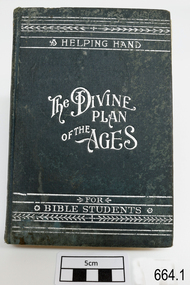
Book - Reference Religious Ideology, Charles Taze Russell, Millennial Dawn Vol 1 The Plan of the Ages, 1905
... ...Bible Studies...His religious calling began in the early 1870s when, after attending an Adventist meeting, he started holding his own independent Bible study groups to re-examine scripture without denominational creeds. ...His religious calling began in the early 1870s when, after attending an Adventist meeting, he started holding his own independent Bible study groups to re-examine scripture without denominational creeds. ...Millennial Dawn, Vol. 1 (The Plan of the Ages) was published in 1905 by the Watch Tower Bible & Tract Society and is a central text in the history of modern American millenarianism. The subject book was originally published in 1886 under the title The Plan of the Ages, and later re-titled The Divine Plan of the Ages as part of the Studies in the Scriptures series. Volume 1 lays out the foundational theological framework of Charles Taze Russell's religious movement. The book argues that God operates through distinct chronological "dispensations" or ages, such as the Patriarchal Age, the Jewish Age, and the Gospel Age, leading up to the "Millennial Age". Its primary themes include the harmonising of the scriptures while attempting to systematically reconcile Old and New Testament prophecies.Millennial Dawn Vol 1 (The Plan of The Ages) Author: Charles Taze Russell Publisher: Watch Tower Bible & Tract Society. Allegheny, PA USA 1905 Date: 1905 Further Information: Blue hard cover book with white text to lettering and front board edge pattern designnon-fictionMillennial Dawn, Vol. 1 (The Plan of the Ages) was published in 1905 by the Watch Tower Bible & Tract Society and is a central text in the history of modern American millenarianism. The subject book was originally published in 1886 under the title The Plan of the Ages, and later re-titled The Divine Plan of the Ages as part of the Studies in the Scriptures series. Volume 1 lays out the foundational theological framework of Charles Taze Russell's religious movement. The book argues that God operates through distinct chronological "dispensations" or ages, such as the Patriarchal Age, the Jewish Age, and the Gospel Age, leading up to the "Millennial Age". Its primary themes include the harmonising of the scriptures while attempting to systematically reconcile Old and New Testament prophecies.flagstaff hill, warrnambool, shipwrecked-coast, flagstaff-hill, flagstaff-hill-maritime-museum, maritime-museum, shipwreck-coast, millennial dawn vol 1 the plan of the ages, book, religious works, watch tower bible & tract society, charles taze russell, jehova witness, bible studies -
 Flagstaff Hill Maritime Museum and Village
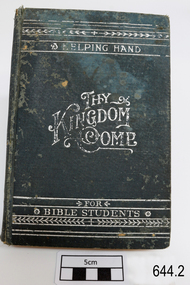
Book - Reference Religious Ideology, Charles Taze Russell, Millennial Dawn Vol 3 Thy Kingdom Come, 1905
... ...Bible Studies...His religious calling began in the early 1870s when, after attending an Adventist meeting, he started holding his own independent Bible study groups to re-examine scripture without denominational creeds. ...His religious calling began in the early 1870s when, after attending an Adventist meeting, he started holding his own independent Bible study groups to re-examine scripture without denominational creeds. ...Millennial Dawn, Vol. 3 (Thy Kingdom Come) was published in 1905 by the Watch Tower Bible & Tract Society and is a central text in the history of modern American millenarianism. The subject book was originally published in 1886 under the title The Plan of the Ages, and later re-titled The Divine Plan of the Ages as part of the Studies in the Scriptures series. Volume 1 lays out the foundational theological framework of Charles Taze Russell's religious movement. The book argues that God operates through distinct chronological "dispensations" or ages, such as the Patriarchal Age, the Jewish Age, and the Gospel Age, leading up to the "Millennial Age". Its primary themes include the harmonising of the scriptures while attempting to systematically reconcile Old and New Testament prophecies.Millennial Dawn Vol 3 (Thy Kingdom Come) Author: Charles Taze Russell Publisher: Watch Tower Bible & Tract Society. Allegheny, PA USA 1905 Date: 1905 Further Information: Blue hard cover book with white text to lettering and front board edge pattern designnon-fictionMillennial Dawn, Vol. 3 (Thy Kingdom Come) was published in 1905 by the Watch Tower Bible & Tract Society and is a central text in the history of modern American millenarianism. The subject book was originally published in 1886 under the title The Plan of the Ages, and later re-titled The Divine Plan of the Ages as part of the Studies in the Scriptures series. Volume 1 lays out the foundational theological framework of Charles Taze Russell's religious movement. The book argues that God operates through distinct chronological "dispensations" or ages, such as the Patriarchal Age, the Jewish Age, and the Gospel Age, leading up to the "Millennial Age". Its primary themes include the harmonising of the scriptures while attempting to systematically reconcile Old and New Testament prophecies.flagstaff hill, warrnambool, shipwrecked-coast, flagstaff-hill, flagstaff-hill-maritime-museum, maritime-museum, shipwreck-coast, millennial dawn vol 1 the plan of the ages, book, religious works, watch tower bible & tract society, charles taze russell, jehova witness, bible studies -
 Flagstaff Hill Maritime Museum and Village
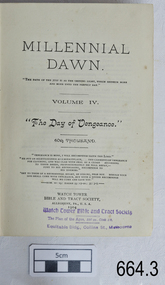
Book - Reference Religious Ideology, Charles Taze Russell, Millennial Dawn Vol 4 The Day of Vengeance, 1905
... ...Bible Studies...His religious calling began in the early 1870s when, after attending an Adventist meeting, he started holding his own independent Bible study groups to re-examine scripture without denominational creeds. ...His religious calling began in the early 1870s when, after attending an Adventist meeting, he started holding his own independent Bible study groups to re-examine scripture without denominational creeds. ...Millennial Dawn, Vol. 4 (The Day of Vengeance) was published in 1905 by the Watch Tower Bible & Tract Society and is a central text in the history of modern American millenarianism. The subject book was originally published in 1886 under the title The Plan of the Ages, and later re-titled The Divine Plan of the Ages as part of the Studies in the Scriptures series. Volume 1 lays out the foundational theological framework of Charles Taze Russell's religious movement. The book argues that God operates through distinct chronological "dispensations" or ages, such as the Patriarchal Age, the Jewish Age, and the Gospel Age, leading up to the "Millennial Age". Its primary themes include the harmonising of the scriptures while attempting to systematically reconcile Old and New Testament prophecies.Millennial Dawn Vol 4 (The Day of Vengeance) Author: Charles Taze Russell Publisher: Watch Tower Bible & Tract Society. Allegheny, PA USA 1905 Date: 1905 Further Information: Blue hard cover book with white text to lettering and front board edge pattern designMillennial Dawn, Vol. 4 (The Day of Vengeance) was published in 1905 by the Watch Tower Bible & Tract Society and is a central text in the history of modern American millenarianism. The subject book was originally published in 1886 under the title The Plan of the Ages, and later re-titled The Divine Plan of the Ages as part of the Studies in the Scriptures series. Volume 1 lays out the foundational theological framework of Charles Taze Russell's religious movement. The book argues that God operates through distinct chronological "dispensations" or ages, such as the Patriarchal Age, the Jewish Age, and the Gospel Age, leading up to the "Millennial Age". Its primary themes include the harmonising of the scriptures while attempting to systematically reconcile Old and New Testament prophecies.flagstaff hill, warrnambool, shipwrecked-coast, flagstaff-hill, flagstaff-hill-maritime-museum, maritime-museum, shipwreck-coast, millennial dawn vol 1 the plan of the ages, book, religious works, watch tower bible & tract society, charles taze russell, jehova witness, bible studies -
 Flagstaff Hill Maritime Museum and Village
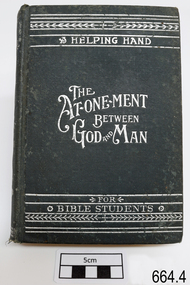
Book - Reference Religious Ideology, Charles Taze Russell, Millennial Dawn Vol 4 The Atonement of Man, 1905
... ...Bible Studies...His religious calling began in the early 1870s when, after attending an Adventist meeting, he started holding his own independent Bible study groups to re-examine scripture without denominational creeds. ...His religious calling began in the early 1870s when, after attending an Adventist meeting, he started holding his own independent Bible study groups to re-examine scripture without denominational creeds. ...Millennial Dawn, Vol. 4 (The Atonement of Man) was published in 1905 by the Watch Tower Bible & Tract Society and is a central text in the history of modern American millenarianism. The subject book was originally published in 1886 under the title The Plan of the Ages, and later re-titled The Divine Plan of the Ages as part of the Studies in the Scriptures series. Volume 1 lays out the foundational theological framework of Charles Taze Russell's religious movement. The book argues that God operates through distinct chronological "dispensations" or ages, such as the Patriarchal Age, the Jewish Age, and the Gospel Age, leading up to the "Millennial Age". Its primary themes include the harmonising of the scriptures while attempting to systematically reconcile Old and New Testament prophecies.Millennial Dawn Vol 4 (The Atonement of Man) Author: Charles Taze Russell Publisher: Watch Tower Bible & Tract Society. Allegheny, PA USA 1905 Date: 1905 Further Information: Blue hard cover book with white text to lettering and front board edge pattern designnon-fictionMillennial Dawn, Vol. 4 (The Atonement of Man) was published in 1905 by the Watch Tower Bible & Tract Society and is a central text in the history of modern American millenarianism. The subject book was originally published in 1886 under the title The Plan of the Ages, and later re-titled The Divine Plan of the Ages as part of the Studies in the Scriptures series. Volume 1 lays out the foundational theological framework of Charles Taze Russell's religious movement. The book argues that God operates through distinct chronological "dispensations" or ages, such as the Patriarchal Age, the Jewish Age, and the Gospel Age, leading up to the "Millennial Age". Its primary themes include the harmonising of the scriptures while attempting to systematically reconcile Old and New Testament prophecies.flagstaff hill, warrnambool, shipwrecked-coast, flagstaff-hill, flagstaff-hill-maritime-museum, maritime-museum, shipwreck-coast, millennial dawn vol 1 the plan of the ages, book, religious works, watch tower bible & tract society, charles taze russell, jehova witness, bible studies -
 Marysville & District Historical Society
THE TRIANGLE NEWS-VOL 5 NO 22-JULY 18 1980
... ...bible studies...marysville victoria australia thank you for sale meetings birth kinder roster bible studies think it over anglican church wanted:district commissioner guides & brownies photographer marysville buxton district angling club ironing done help the football club social committee mountain views home improvements centre baby sitting community care centre birthday greetings an honor roll golf news healesville preschool committee letter marysville tourist & progress association indoor bowls cross country ski gear hire THE TRIANGLE NEWS-VOL 5 NO 22-JULY 18 1980 ...marysville, victoria, australia, thank you, for sale, meetings, birth, kinder roster, bible studies, think it over, anglican church, wanted:district commissioner guides & brownies, photographer, marysville buxton district angling club, ironing done, help the football club social committee, mountain views home improvements centre, baby sitting, community care centre, birthday greetings, an honor roll, golf news, healesville preschool committee letter, marysville tourist & progress association, indoor bowls, cross country ski gear hire -
 Mont De Lancey
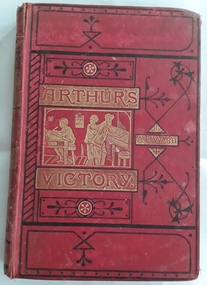
Book, Sunday School Union, Arthur's Victory, 1873
... Sabbath schools are a weekly bible study and song service run by Seventh Day Adentist Churches....Sabbath schools are a weekly bible study and song service run by Seventh Day Adentist Churches. religious stories school stories stories for boys A story depicting life in the C19th and schools. ...A story depicting life in the C19th and schools. Arthur is a kid thoughtful pupil who goes through many trials and tribulations as he manages life each school day. Strong religious themes throughout to help with character development of boys who read this story.Small red cloth covered hardcover book for children with gold imprint picture of boys at school sitting at a desk in a classroom. The title and author are in red with a gold background. There are black lined patterns of fleur de lis on the front cover as well. Full page black and white illustrations are throughout as well as floral decorations at the top of each we chapter. Illuminated style lettering is used for the first word of each chapter. Gold edging to the pages and a printed coloured Presented To, page is at the front of the book. The back cover has a fleur de lis symbol in the middle. This is a fine book depicting the world of the C19th. It is believed to be published in 1873. 174p.fictionA story depicting life in the C19th and schools. Arthur is a kid thoughtful pupil who goes through many trials and tribulations as he manages life each school day. Strong religious themes throughout to help with character development of boys who read this story. religious stories, school stories, stories for boys -
 Flagstaff Hill Maritime Museum and Village
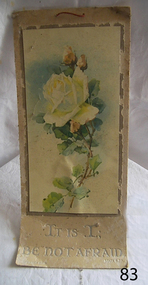
Artwork, other - Card, 1890s
... Quote is from the Bible John 6:20, these cards were often sent as gifts or used in bible studies at Sunday schools around the 1890s to teach religion. ...Quote is from the Bible John 6:20, these cards were often sent as gifts or used in bible studies at Sunday schools around the 1890s to teach religion. ...Quote is from the Bible John 6:20, these cards were often sent as gifts or used in bible studies at Sunday schools around the 1890s to teach religion. They were produced by various companies at this time and known as "Heidelberg cards" from the Heidelberger Druckmaschinen company in Germany that produces catalogues, calendars, posters, and labels to this day.Item is significant as it shows an early example of religious teaching aid from the late Victorian era and gives a snapshot into social life of the time.Card with Bible quotation 'It Is I' Be Not Afraid' with a picture of a roseflagstaff hill, warrnambool, shipwrecked coast, flagstaff hill maritime museum, maritime museum, shipwreck coast, flagstaff hill maritime village, great ocean road, card, bible verse -
 Mont De Lancey
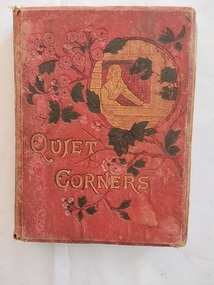
Book, Howe Benning, Quiet Corners - an American Tale, c1882
... Sabbath schools are a weekly bible study and song service run by Seventh Day Adentist Churches....Sabbath schools are a weekly bible study and song service run by Seventh Day Adentist Churches. ...The book is an example of a story dealing with a girl's (Margaret) life in America which is readable, pleasing and instructive, without the ordinary excitement of a love story. It has strong religious themes. It hopes that in many 'quiet corners" of our native land it may help to develop the spirit of self-sacrifice and true Christian thought for others.A very damaged, stained red antique hardcover book for girls with the title printed in gold lettering in the middle of the front cover. There is a gold outlined drawing of a girl sitting looking out of a window. There are red flowers and green leaves decorating the cover. The spine has the title printed in gold letters with red flowers and green leaves.On the front right side end paper is an inscription for a Sabbath School award dated 1882. The frontispiece balck and white illustration is of a girl sitting at a table at a fair. Tissue paper protects it. The title page has the title, author Howe Benning as well as publisher details. 296Pp. Throughout are black and white illustrations. There are four pages at the back are lists of Recent Gift Books published by the Religious Tract Society. The spine is broken from the pages.fictionThe book is an example of a story dealing with a girl's (Margaret) life in America which is readable, pleasing and instructive, without the ordinary excitement of a love story. It has strong religious themes. It hopes that in many 'quiet corners" of our native land it may help to develop the spirit of self-sacrifice and true Christian thought for others.religious stories, family life fiction, stories for girls -
 Eltham District Historical Society Inc
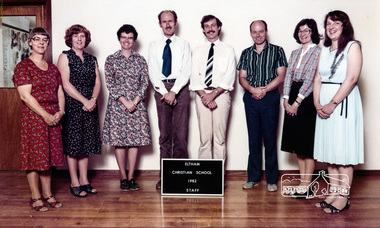
Photograph, Eltham Christian School, staff, 1982, 1982
... L-R: Adelaide Wilson (Teacher’s Aide), Chris Field (Craft), Helen Hillas (Primary Teacher), Chris Trinham (Pastor and Bible Studies), Gavin Phillips (Secondary Teacher), Alan Field (Electives), Anne Wilson (Secretary), Glenda Watts (Typing) From an album featuring a series of photographs (some cropped) from a magnetic photo album relating to the staff, students and activities of the Eltham Christian School which operated as part of the Eltham Christian Church at Nyora Road, Eltham. ...L-R: Adelaide Wilson (Teacher’s Aide), Chris Field (Craft), Helen Hillas (Primary Teacher), Chris Trinham (Pastor and Bible Studies), Gavin Phillips (Secondary Teacher), Alan Field (Electives), Anne Wilson (Secretary), Glenda Watts (Typing) From an album featuring a series of photographs (some cropped) from a magnetic photo album relating to the staff, students and activities of the Eltham Christian School which operated as part of the Eltham Christian Church at Nyora Road, Eltham. ...L-R: Adelaide Wilson (Teacher’s Aide), Chris Field (Craft), Helen Hillas (Primary Teacher), Chris Trinham (Pastor and Bible Studies), Gavin Phillips (Secondary Teacher), Alan Field (Electives), Anne Wilson (Secretary), Glenda Watts (Typing) From an album featuring a series of photographs (some cropped) from a magnetic photo album relating to the staff, students and activities of the Eltham Christian School which operated as part of the Eltham Christian Church at Nyora Road, Eltham. See also entries for each photograph.colour photographeltham christian school, nyora road, adelaide wilson, chris field, helen hillas, chris trinham, gavin phillips, alan field, anne wilson, glenda watts -
Glen Eira Historical Society
Newsletter - Caulfield Evangelical Methodist Church
... One photo is if the Hawthorn Road building being demolished in September 1977. 4/ An undated 2 page publicity sheet for the church titled '10 Years' which inlcudes a black and white photo of the Methodist Church building in Glenhuntly Road about 1894.Also includes one website printout with church service times, meetings and bible study times. Dated 26/06/2012. 5/Photocopy of 'Caulfield Contact 23/07/1987 page 10 which has an article titled '10th Anniversary of Church' about this Church with a more expansive photo of the Glenhuntly Road church building circa 1894....One photo is if the Hawthorn Road building being demolished in September 1977. 4/ An undated 2 page publicity sheet for the church titled '10 Years' which inlcudes a black and white photo of the Methodist Church building in Glenhuntly Road about 1894.Also includes one website printout with church service times, meetings and bible study times. Dated 26/06/2012. 5/Photocopy of 'Caulfield Contact 23/07/1987 page 10 which has an article titled '10th Anniversary of Church' about this Church with a more expansive photo of the Glenhuntly Road church building circa 1894. ...This folder contains newsletters, articles and publicity about this Church: 1/Nine church newsletters dated from 1977 to 1978 including 2 editions of the Flame Vol No 9 June 1978 and Vol 1 No 10 July 1978. Newsletters document church meetings, clubs, congregation and home fellowship and also news of parishioners overseas. 2/Two undated publicity flyers. 3/One copy of the Evangelical Church Life September 1978 Vol 1 No 1 which includes photos and an article about this Church. One photo is if the Hawthorn Road building being demolished in September 1977. 4/ An undated 2 page publicity sheet for the church titled '10 Years' which inlcudes a black and white photo of the Methodist Church building in Glenhuntly Road about 1894.Also includes one website printout with church service times, meetings and bible study times. Dated 26/06/2012. 5/Photocopy of 'Caulfield Contact 23/07/1987 page 10 which has an article titled '10th Anniversary of Church' about this Church with a more expansive photo of the Glenhuntly Road church building circa 1894.caulfield evangelical methodist church, st giles presbyterian church, caulfield presbyterian church, caulfield continuing methodist church, st giles continuing presbyterian church, 'the flame', lamellah street, caulfield, wright graeme, hawthorn road, neerim road, wright heather, macdonald bell j, bell margaret, bell don, simmons des, beer david, continuing methodist church, simmons gwen, beer grace -
 Eltham District Historical Society Inc
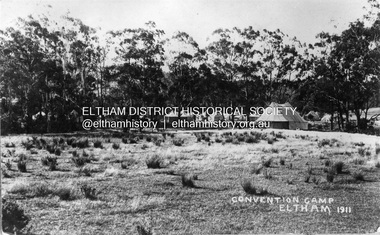
Photograph, Eltham - Convention Camp, 1911
... it is believed that the convention camp was for young people for the purpose of Christian fellowship, bible study and worship. Other activities included local hikes. ...it is believed that the convention camp was for young people for the purpose of Christian fellowship, bible study and worship. Other activities included local hikes. ...Tents set up along the Diamond Creek on a property that would become "Willandra," a poultry farm and then in 1956, an aged care facility and residence known as Judge Book Village. It is located west of the railway line, north of the railway station in Eltham on Diamond Street. it is believed that the convention camp was for young people for the purpose of Christian fellowship, bible study and worship. Other activities included local hikes. A report in the Evelyn Observer on Friday, January 6, 1911, p2 noted: "ELTHAM. The holiday season brought out lots of visitors to our beauty spot. The visitors booked to Eltham on Boxing-Day numbered about 1900, and New Year's Day (Monday) some 1500. The threatening aspect of the weather on the morning of the 2nd and no doubt deterred many from venturing out. Fine weather has prevailed throughout, and the chief sufferers are those who catered for hot, thirsty crowds and did not find them so bent on ices and fluid refreshments as is usual at this time of the year. Campers have been strongly in evidence. One especially large camp of Christian enthusiasts being located near the station with dining booth, gospel tent, cooking range, etc., all complete, numbering some twenty tents. These good folk evidently intend to make the best of both worlds, but some of their negro camp meeting methods appear to have shocked the sensibilities of sober-going folk. With the exception of a slight ruction on the railway platform on Monday night, which will probably be aired in the local court, the holiday makers as a whole were very orderly." This photo forms part of a collection of photographs gathered by the Shire of Eltham for their centenary project book, "Pioneers and Painters: 100 years of the Shire of Eltham" by Alan Marshall (1971). The collection of over 500 images is held in partnership between Eltham District Historical Society and Yarra Plenty Regional Library (Eltham Library) and is now formally known as 'The Shire of Eltham Pioneers Photograph Collection.' It is significant in being the first community sourced collection representing the places and people of the Shire's first one hundred years.Digital imagesepp, shire of eltham pioneers photograph collection, eltham, convention camp, judge book village, tents, diamond creek (river), camping, christian camp, boxing day -
 Cockatoo History & Heritage Group
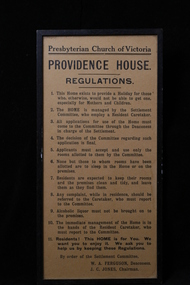
Regulations, Providence House Regulations, Cockatoo Victoria
... It was also used, at different times, for kindergarten groups and in 1955 for a girls Bible Class for Easter “studies, fun and fellowship.”...It was also used, at different times, for kindergarten groups and in 1955 for a girls Bible Class for Easter “studies, fun and fellowship.” Cockatoo had several guest houses which took paying guests. ...The Presbyterian Church owned three lots of land bounded by Pakenham Road and the northern side of Dorchester Road, between 1927 and 1964. Providence House opened in 1927 as a peaceful country rest home for “tired mothers” from the inner suburbs, and their children. It was also used, at different times, for kindergarten groups and in 1955 for a girls Bible Class for Easter “studies, fun and fellowship.”Cockatoo had several guest houses which took paying guests. Providence House did not charge fees, but is the best-documented of the large houses which provided accommodation.Framed regulations for the Presbyterian Church of Victoria's Providence House in Cockatoo.providence house, cockatoo victoria, presbyterian church, regulations, -
 Cockatoo History & Heritage Group
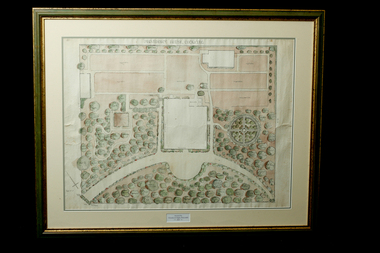
Landscape Plan, Providence House Cockatoo, 1930's
... It was also used, at different times, for kindergarten groups and in 1955 for a girls Bible Class for Easter “studies, fun and fellowship.”...It was also used, at different times, for kindergarten groups and in 1955 for a girls Bible Class for Easter “studies, fun and fellowship.” Cockatoo had several guest houses which took paying guests. ...The Presbyterian Church owned three lots of land bounded by Pakenham Road and the northern side of Dorchester Road, between 1927 and 1964. Providence House opened in 1927 as a peaceful country rest home for “tired mothers” from the inner suburbs, and their children. It was also used, at different times, for kindergarten groups and in 1955 for a girls Bible Class for Easter “studies, fun and fellowship.”Cockatoo had several guest houses which took paying guests. Providence House did not charge fees, but is the best-documented of the large houses which provided accommodation.Framed landscape design plan under glass, with detailed plant listings. Original watercolourDonated by Victoria & Digby Newcombe 2003presbyterian church, rest home, landscape plan, garden design, cockatoo victoria, providence house, black n.c, -
 Uniting Church Archives - Synod of Victoria
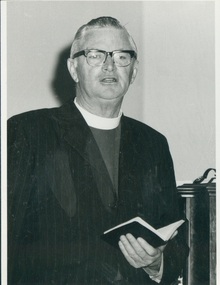
BW photo, Undated
... He kept in touch with CMS, he went to church, he met with missionaries, he led Bible studies in his home as long as he was able. ...He kept in touch with CMS, he went to church, he met with missionaries, he led Bible studies in his home as long as he was able. ...STANWAY, ALFRED (b. 9 Sept 1908; d. Melbourne, Vic, 27 June 1989). Anglican bishop, missionary. Stanway grew up in the Wimmera district of western Victoria, and left school when 14 years old. He found work in Melbourne, trained as an accountant, and at the age of 20, held a responsible position with a publishing company. This background, allied with an uncommon flair for figures and finance, was to stand him in good stead throughout his life. But he had little knowledge and no experience of the grace of God until 29 July 1928. At the Evening Service in the parish church of Fairfield on 29 July, he heard the Rev C H Nash (q.v.) preach a sermon which led to his conversion. Within two years he made up his mind to become a missionary and began night studies in order to matriculate. He entered Ridley College in March 1932 to prepare for ordination undertaking week-end duties as a catechist at Deer Park and St Albans. He joined the CMS League of Youth, became chairman, and gathered a fine band of young people many of whom were to become missionaries. He was closely involved with the Belgrave Heights Convention (then at Upwey) and established a League of Youth camp on the site. All his energies were thrown into the task of building up its members in personal holiness and vigorous evangelism. Stanway was ordained in St Paul's Cathedral, Melbourne on St Thomas Day 1934 and was placed in charge of the Old Mission Church of St James and St John, Melbourne. The duties were light enough to allow him to enrol in the Melbourne Teachers College and to complete the Diploma in Teaching. On 26 January 1937, he sailed for Africa to become a missionary in the Anglican Diocese of Mombasa, which at that time embraced the whole of Kenya. He was sent to the hot coastal town of Kaloleni as principal of a Secondary Boys School. Before he left Melbourne, he had become engaged to Marjory Harrison: she followed him to Africa and their marriage took place in Mombasa Cathedral in June 1939. He remained at Kaloleni until 1944 when he was transferred to the inland station of Maseno where all his gifts were to be deployed as rural dean of Nyanza. His oversight of some 500 village churches as well as a widespread primary school system was so efficient that in 1948 he was appointed archdeacon of Kenya with his home and office in Nairobi. As secretary of the African Church Council and of the African Education Board, he was responsible for all African work in the diocese. His contacts with government ministers and public servants were of first class significance at the time when the cry of Uhuru and the demand for independence was travelling throughout the colonial world. On 2 Feb 1951, Alfred Stanway was consecrated in Westminster Abbey as the third Anglican Bp of Central Tanganyika. This Diocese was the special sphere of the CMS Australia, and he already knew most of the missionary personnel. He brought with him the understanding and experience of one who had fully shared the lot and problems of a district missionary, but he came to the diocese at a time when it had yet to recover from its losses in personnel and finance as a result of the war. His immediate task was to provide the impetus of fresh leadership and a long-term overall policy. His aim from-the outset was to build up a strong autonomous church with its own indigenous pastorate. With the whole-hearted confidence of the home base, he was able to enlist the service of new missionaries. He saw a great increase in the number of African clergy and he encouraged village evangelists to open new fields of work. Simple structures were built as new churches at the rate of two a week, week in and week out, year by year. He worked hard to meet the need for Christian literature, bookshops, adult literacy and theological training. He opened Bible schools for village evangelists and sent suitable clergy overseas for further studies. He encouraged initiative in others, helped them to find and use their talents, and gave them his unstinted confidence and support. Fresh finance was required for new ventures. This led him to travel widely in Germany and America, where he raised large funds for these projects. Mackay House was built in Dodoma as the central administrative base for the diocese, hospitals such as those at Mvumi and Hombolo were modernised or established, schools were built and upgraded. In keeping with his vision for ultimate leadership by African personnel, he consecrated Yohana Omari in 1955 as his assistant, he was the first national to become a bp in East Africa. Bp Stanway then set on foot the long and complicated process for the division of his sprawling diocese. In 1963, the diocese of Victoria Nyanza came into being; in 1965, that of Morogoro; in 1966, that of Western Tanganyika. Yet in 1971, his own diocese of Central Tanganyika, though greatly reduced in size, had more churches and more clergy than in its undivided state in 195 l. Stanway then played a leading part in the formation of the Province of Tanzania in 1970, with an African abp as metropolitan. A year later, after 35 years in East Africa and 20 years as bishop of Central Tanganyika, he resigned. His leadership and achievements throughout those years had placed him in the front rank as a great missionary statesman. Stanway had returned to Melbourne at the time when his resignation took effect in August 1971. His early love for Ridley College reasserted itself and he went into residence as deputy principal under the Rev Dr Leon Morris. He was put in charge of chapel worship and the pastoral oversight of the students. All his gifts and experience were called into play as he sought to guide and encourage those who were on the threshold of their ministry. The whole bent of his heart was to foster the spiritual life and missionary calling of those whose hearts the Lord had touched. It was during those years that his life-long zeal for the spread of the gospel through Christian literature had its ultimate flowering. It had begun in his Nairobi days with a small church bookstall, this had developed into a major book-shop in the heart of the city. Then in Dodoma he had established the Central Tanganyika Press in order to promote the publication and distribution of Christian literature at all levels. He had marked out Kevin Engel, trained him, and launched him on the international scene. Hence it was natural that in Melbourne he and Kevin Engel should found the Australian Christian Literature Society. But his time at Ridley College was not to last. Unknown to him, the Rev J R W Stott had put his name forward as that of a person who could head a new school of theology in the United States to provide a sound training for evangelical ordinands. Such a task would have been formidable enough for a younger man who had grown up in America. How could an Australian who had spent half his life in Africa hope to succeed in a venture of that kind in America? How could one who had been a missionary, not a theologian, found a new school to train men for ordination? Nevertheless he rose to the challenge. In Sept 1975, he and Mrs Stanway left Melbourne for Sewickly, an outer suburb of Pittsburg, with the promise of three years' service. He had to start from scratch. He found a house to live in, but there was no land for the school, no funds in hand, no staff yet appointed, no students, and no buildings. His drive, his infections enthusiasm, and his flair for practical enterprise carried the day. One by one, obstacles were overcome and support grew in volume and strength. Twelve months after his arrival, in Sept 1976, the Trinity Episcopal School for Ministry was opened with three staff members, seventeen students, and the goodwill of the whole American Episcopal Church to win. During the next two years, the school took shape and was firmly established. Bp Stanway left an indelible stamp on every aspect of its life and work, its spiritual tone and ideals, its financial and administrative principles. He had inspired widespread support among evangelical episcopalians and had imparted a strong sense of divine guidance and purpose. The council would gladly have extended his term in office beyond three years, but at 75 years of age he knew that his health had begun to fail. When he finally relinquished his office in Nov 1978, he could look back on those three years as the crown of his ministry. It is not too much to say that his name was even more highly honoured and revered in the Trinity School of Ministry than in his own dearly loved Africa. His return to Melbourne led to quiet retirement at Mount Waverley where he settled down to a long battle with the ever worsening effects of Parkinson's Disease. The slow loss of physical capacity and the ultimate failure in powers of speech were a great trial, but he never complained. His faith was summed up in his brief reply when he was asked why he had not prayed for healing: 'What God allows, I accept'. That acceptance was without reserve; his testimony was never brighter. His mental powers were undiminished and his spiritual concerns were as wide as ever. He kept in touch with CMS, he went to church, he met with missionaries, he led Bible studies in his home as long as he was able. Africa was always in his heart, news from Sewickly always gave him great pleasure. He had left a mark for God on three great continents and his death left sad but thankful hearts in them all. It was the close of a life in which he had felt that he could never do enough for God who had done so much for him. One of Bp Stanway's sayings was 'when the Holy Spirit takes hold of you, anything can happen'. So it was in his case. He was very human, with his full share of human foibles and frailties. He had a great zest for life and an endless fund of stories drawn from his own experience. He was himself the subject of many stories, some true, others legendary. His vibrant personality always seemed to fill the house where he was, his presence could not be overlooked. His own home was one in which Mrs Stanway had a paramount influence. She was a trained teacher, a skilled artist, a born hostess and a first-class linguist. They had no children of their own, but were devoted Godparents and always deeply interested in the children of missionaries. Home life allowed him to relax in a serene and contented atmosphere and to exercise his gifts for friendship and hospitality. He was always on the watch for souls, a person-to-person evangelist par excellence. He was a man of faith and prayer who dared to believe in the God of the impossible. His love for Africa, his total dedication as a missionary; his gifts as a soulwinner; his genius for finance; his shrewd practical initiatives, and his statesmanlike vision were outstanding characteristics. But great or small, all his gifts were laid out in the service of the gospel, and that service marked him out as one of the most remarkable Australian missionaries of his generation. M L Loane, Men to Remember (Sydney, 1987) Rev. Alfred Stanway is standing with open book in hand, dressed in clerical garb.Bishop Alfred Stanwaybishop alfred stanway -
 Flagstaff Hill Maritime Museum and Village
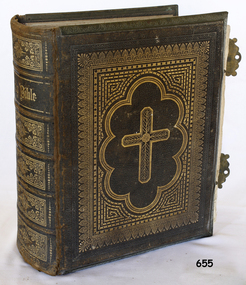
Book - Reference/ Religious Study, James Semple, The Holy Bible, Old & New Testaments, c. 1875
... The Holy Bible, Old & New Testaments Book Reference/ Religious Study James Semple Rev. ...This edition is part of what Bible bibliographers classify as the Haydock Quarto Series. It uses the Douay Rheims version (the standard English translation of the Latin Vulgate for Roman Catholics) and is heavily updated with extensive annotations. The subject volume is a large, decorative family Bible. Bibles of this style were peak Victorian subscription publishing, and publishers like Semple typically issued these in unbound parts or sold them via travelling canvassers, bound in heavy, blind stamped or gilt leather meant to serve as a visual centerpiece in a Victorian home.Hard cover book: Bible, Old & New Testaments Editor: Rev. George Leo Haydock Publisher: James Semple, 7 Stirling Road, Glasgow Date: 1875 Further Information: Brown leather bound with extensive gilt pattering to Spine and Front Board, Cross icon to front board and brass book clasps to corners.non-fictionThis edition is part of what Bible bibliographers classify as the Haydock Quarto Series. It uses the Douay Rheims version (the standard English translation of the Latin Vulgate for Roman Catholics) and is heavily updated with extensive annotations. The subject volume is a large, decorative family Bible. Bibles of this style were peak Victorian subscription publishing, and publishers like Semple typically issued these in unbound parts or sold them via travelling canvassers, bound in heavy, blind stamped or gilt leather meant to serve as a visual centerpiece in a Victorian home.flagstaff hill, warrnambool, shipwrecked-coast, flagstaff-hill, flagstaff-hill-maritime-museum, maritime-museum, shipwreck-coast, flagstaff-hill-maritime-village, the holy bible the old testament and the new testament, bible, book, religion, holy bible, rev geo leo haydock, latin vulgate, family bible -
Marysville & District Historical Society
THE TRIANGLE NEWS-VOL 5 NO 36-NOVEMBER 14 1980
... ...women's bible study luncheon...marysville victoria australia wanted for sale donations to triangle wirrianda appaloosa stud black spur inn hotel healesville chiropractic centre 21 today think it over marysville newsagency wanted hand crafts golf associates plant demonstration alberto's circus fire brigade l.a. meeting senior citizens mt margaret speed road christ church ladies' guild tennis junior youth club football women's bible study luncheon community care centre marysville & district football club narbethong ball swimming club carols by candlelight THE TRIANGLE NEWS-VOL 5 NO 36-NOVEMBER 14 1980 ...marysville, victoria, australia, wanted, for sale, donations to triangle, wirrianda appaloosa stud, black spur inn hotel, healesville chiropractic centre, 21 today, think it over, marysville newsagency, wanted hand crafts, golf associates, plant demonstration, alberto's circus, fire brigade, l.a. meeting, senior citizens, mt margaret speed road, christ church ladies' guild, tennis, junior youth club, football, women's bible study luncheon, community care centre, marysville & district football club, narbethong ball, swimming club, carols by candlelight -
Marysville & District Historical Society
THE TRIANGLE NEWS-VOL 5 NO 37-NOVEMBER 21 1980
... ...kyb women's bible study...marysville victoria australia councillor haycraft resigns thanks football club tv translator for marysville community care centre cubs & parents birthday party interruption to electricity supply christ church ladies' guild senior citizens congratulations think it over uniting church historical society photographer carols by candlelight s.e.s. news narbethong ball tonight wirrianda appaloosa stud for sale junior cricketers wanted pottery kyb women's bible study christ church marysville wirreanda committee free to good home cricket marysville life saving & swimming club for hire grader wanted labour THE TRIANGLE NEWS-VOL 5 NO 37-NOVEMBER 21 1980 ...marysville, victoria, australia, councillor haycraft resigns, thanks football club, tv translator for marysville, community care centre, cubs & parents, birthday party, interruption to electricity supply, christ church ladies' guild, senior citizens, congratulations, think it over, uniting church, historical society, photographer, carols by candlelight, s.e.s. news, narbethong ball tonight, wirrianda appaloosa stud, for sale, junior cricketers, wanted, pottery, kyb women's bible study, christ church marysville, wirreanda committee, free to good home, cricket, marysville life saving & swimming club, for hire grader, wanted labour -
 Ballarat Clarendon College
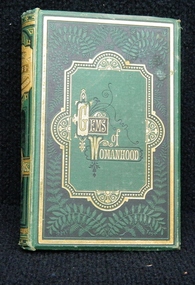
Book, Gall & Inglis, Gems of womanhood, 1870
... bible. Fanny enrolled in Clarendon Ladies' College in 1882 along with her sisters Agnes Williamson Nicol and Katy Beatrice Nicol. In the original register the father's name is listed as James and he was a produce merchant who resided at 119 Lydiard Street, North Ballarat. This book was donated to the school library in 1978 by Fanny's niece. Presbyterian educators placed great value on a classical education matched with diligence in study ...This book was awarded to Fanny Nicol in 1882 for special prize for bible. Fanny enrolled in Clarendon Ladies' College in 1882 along with her sisters Agnes Williamson Nicol and Katy Beatrice Nicol. In the original register the father's name is listed as James and he was a produce merchant who resided at 119 Lydiard Street, North Ballarat. This book was donated to the school library in 1978 by Fanny's niece.Presbyterian educators placed great value on a classical education matched with diligence in study. Book prizes were highly regarded and academic success admired. In the school’s early years prizes were ordered direct from London and had the school crest embossed in gold on the front or back cover. Many of the prizes given in early years were returned to the school to equip the Weatherly Library when it opened in 1936.Green cloth cover with ornate gilt decorations on cover, back and spine; gilt edges; color illustrations, slight foxing on pages, 314 p. Book plate inside front cover: CLARENDON LADIES' COLLEGE,/ BALLARAT./ Special prize./ Bible/ Awarded to/ Fanny Nicol./ 19th December, 1882.fanny-nicol, 1882, book-prize, clarendon-ladies'-college, agnes-williamson-nicol, katy-beatrice-nicol, james-nicol. -
 Ballarat Clarendon College
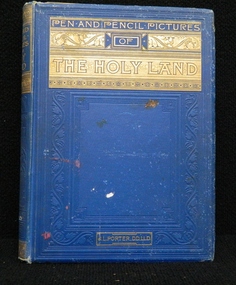
Book, T Nelson and Sons, Pen and pencil pictures of the holy land, Prior to the book prize given at Christmas, (1890s?)
... study. Book prizes were highly regarded and academic success admired. In the school’s early years prizes were ordered direct from London and had the school crest embossed in gold on the front or back cover. Many of the prizes given in early years were returned to the school to equip the Weatherly Library when it opened in 1936. book-prize clarendon-ladies'-college Book plate inside front cover: Clarendon Ladies' College,/ BALLARAT,/ First PRIZE./ Bible-Class I/ AWARDED TO/ R. ...The person to which this book prize has been awarded has been erased from the book plate.Presbyterian educators placed great value on a classical education matched with diligence in study. Book prizes were highly regarded and academic success admired. In the school’s early years prizes were ordered direct from London and had the school crest embossed in gold on the front or back cover. Many of the prizes given in early years were returned to the school to equip the Weatherly Library when it opened in 1936.Bound in blue cloth with gilt decoration and script on the front cover and spine. Gilt edges on paper, black and white illustrations throughout with one fold out color illustration. Slight detached spine with several detached pages.330 p.Book plate inside front cover: Clarendon Ladies' College,/ BALLARAT,/ First PRIZE./ Bible-Class I/ AWARDED TO/ R. KENNEDY,/ Principal/ December.book-prize, clarendon-ladies'-college -
 Ballarat Clarendon College
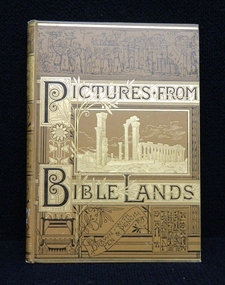
Book, The Religious Tract Society, Pictures from bible lands, Prior to the book prize given on December, 1895
... Bible. May entered Clarendon Ladies' College in 1891. On the original register father's name is listed as William and the residence as Neil St, Ballarat. Presbyterian educators placed great value on a classical education matched with diligence in study. ...This book was awarded to May Adelaide Anstis in 1895 for first prize in Bible. May entered Clarendon Ladies' College in 1891. On the original register father's name is listed as William and the residence as Neil St, Ballarat.Presbyterian educators placed great value on a classical education matched with diligence in study. Book prizes were highly regarded and academic success admired. In the school’s early years prizes were ordered direct from London and had the school crest embossed in gold on the front or back cover. Many of the prizes given in early years were returned to the school to equip the Weatherly Library when it opened in 1936. Bound in brown cloth with gilt and black illustrations on front cover and spine. Floral end papers, gilt edges, black and white illustrations throughout, foxing on pages. 214 p.Book plate inside front cover: Clarendon Ladies' College,/ BALLARAT./ First PRIZE./ Bible-Class II./ AWARDED TO/ May Adelaide Anstis/ R. Kennedy,/ PRINCIPAL./ December, 1895. "Clarendon Presbyterian ladies' college" stamped on fly leaf and title page. Book plate on fly leaf: Clarendon Presyterian/ Ladies' College/ Ballarat/ college crest/ Presented by:/ Miss Kimberly/ Date: 30/11/61may-adelaide-anstis, book-prize, 1895, clarendon-ladies'-college, william. -
 Ballarat Clarendon College
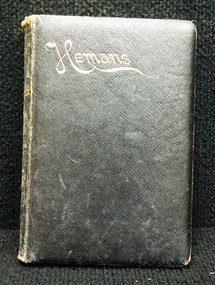
Book, Frederick Warne and Co, The poetical works of Mrs. Hemans, Prior to the book prize given on December, 1896
... bible. Nellie enrolled in Clarendon Ladies' College in April of 1896 (D.O.B. 3/6/1978). In the original registry it states that father's name is George Browning, occupation Ironmonger and the residence as 98 Neil Street Ballarat. Nellie had a sister, Sarah Bertha Matthews (D.O.B 31/12/1883) who enrolled in the school on 8/2/1898. Presbyterian educators placed great value on a classical education matched with diligence in study ...Nellie May Matthews received this book prize in 1896 for first prize in bible. Nellie enrolled in Clarendon Ladies' College in April of 1896 (D.O.B. 3/6/1978). In the original registry it states that father's name is George Browning, occupation Ironmonger and the residence as 98 Neil Street Ballarat. Nellie had a sister, Sarah Bertha Matthews (D.O.B 31/12/1883) who enrolled in the school on 8/2/1898.Presbyterian educators placed great value on a classical education matched with diligence in study. Book prizes were highly regarded and academic success admired. In the school’s early years prizes were ordered direct from London and had the school crest embossed in gold on the front or back cover. Many of the prizes given in early years were returned to the school to equip the Weatherly Library when it opened in 1936.Bound in black soft calf with gilt inscription on front and spine. Black end papers, red/gilt edges, black and white illustrations throughout, very slight foxing on pages, slight open tear on top of spine. 708 p.Book plate inside front cover: Clarendon Ladies' College/ BALLARAT./ First Prize./ Bible-Class III/ Awarded to/ Nellie May Matthews./ MRS. KENNEDY, / PRINCIPAL. /DECEMBER 1896nellie-may-matthews, book-prize, clarendon-ladies'-college, 1896, george-browning, 98-neil-street-ballarat, sarah-bertha-matthews -
 Flagstaff Hill Maritime Museum and Village
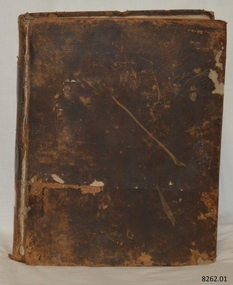
Book - Reference Bible, Matthew Henry, An Exposition of The Old and New Testament Vol 1, 1790
... Henry’s Exposition is one of the most influential English-language biblical commentaries, shaping Protestant piety, preaching, and Bible study for centuries. It represents a major effort of pastoral exegesis in the late Puritan/early Evangelical era and has had a long-lasting impact on English-speaking biblical interpretation. ...The subject volume one is part of a six-volume set. It is a verse-by-verse or section-by-section commentary on the Bible, and the aim of the volumes is to explain the text of the Bible. In volume one, it concentrates on explaining Genesis through to Deuteronomy, with practical applications and theological reflections. Henry’s aim was to illuminate Scripture for lay readers and ministers, emphasising practical piety and sound doctrine. The work is characteristic for its devotional tone combined with doctrinal notes.An Exposition of The Old and New Testament Vol 1 Author: Matthew Henry Publisher: Bell and Bradfute, Dickson and M'Cleish Date: 1790 Further Information: Badly worn brown hardcover and spine. The spine has a Library label with an inscription. non-fictionThe subject volume one is part of a six-volume set. It is a verse-by-verse or section-by-section commentary on the Bible, and the aim of the volumes is to explain the text of the Bible. In volume one, it concentrates on explaining Genesis through to Deuteronomy, with practical applications and theological reflections. Henry’s aim was to illuminate Scripture for lay readers and ministers, emphasising practical piety and sound doctrine. The work is characteristic for its devotional tone combined with doctrinal notes.flagstaff hill, warrnambool, shipwrecked coast, flagstaff hill maritime museum, maritime museum, shipwreck coast, flagstaff hill maritime village, great ocean road, book, pattison collection, warrnambool library, warrnambool mechanics’ institute, ralph eric pattison, corangamite regional library service, warrnambool city librarian, mechanics’ institute library, victorian library board, warrnambool books and records, warrnambool children’s library, matthew henry, an exposition of the old and new testament vol 1, bell and bradfute, dickson and m'cleish -
Glenelg Shire Council Cultural Collection
Newspaper - Newspaper Cuttings - found in William Marshall's bible, c. 1930
... Series of newspaper cuttings and notes of sermons and Gospel study found in William Marshall's bible....bible (3756), Isaiah XXX. Series of newspaper cuttings and notes of sermons and Gospel study found in William Marshall's bible. ...Found in pages of William Marshall's bible (3756), Isaiah XXX.Series of newspaper cuttings and notes of sermons and Gospel study found in William Marshall's bible. -
Glenelg Shire Council Cultural Collection
Newspaper - Newspaper cuttings found in William Marshall's Bible, Portland, 1930s
... Found in pages of William Marshall's bible (3756), Isaiah XXX. religion bible sermon Series of newspaper cuttings and notes of sermons and Gospel study. ...Found in pages of William Marshall's bible (3756), Isaiah XXX.Series of newspaper cuttings and notes of sermons and Gospel study.religion, bible, sermon -
Glenelg Shire Council Cultural Collection
Newspaper - Newspaper - Cuttings and notes of sermons and gospel, 1930s
... bible (3756), Isaiah XXX. Series of newspaper cuttings and notes of sermons and Gospel study. ...Series of newspaper cuttings and notes of sermons and Gospel study. -
Glenelg Shire Council Cultural Collection
Newspaper - Newspaper cuttings of Sermons and Gospel Study, c. 1930
... bible (3756), Isaiah XXX. Series of newspaper cuttings and notes of sermons and Gospel study. ...Series of newspaper cuttings and notes of sermons and Gospel study. -
 Warrnambool and District Historical Society Inc.
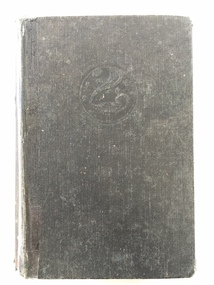
Book, Hodder and Staughton, The New Testament A New Translation - Moffatt, 1934
... The new testament is the second part of the Bible and records the teachings of Christ through the four gospels as well as the Acts of the Apostles and letters of St Paul as well as book of Revelations. It is commonly used as a book of inspiration and study...The new testament is the second part of the Bible and records the teachings of Christ through the four gospels as well as the Acts of the Apostles and letters of St Paul as well as book of Revelations. It is commonly used as a book of inspiration and study ...The new testament is the second part of the Bible and records the teachings of Christ through the four gospels as well as the Acts of the Apostles and letters of St Paul as well as book of Revelations. It is commonly used as a book of inspiration and study within all Christian Churches. this is a new translation by James Moffatt. This particular copy was presented to James Cook in 1940 by the Hamilton Church of Christ Sunday School. The Cook family was also connected with the Warrnambool Church of Christ.This item has only a tenuous connection to Warrnambool and its history but is retained because of its connection to the Cook family.Dark grey cloth covered card cover with symbol of lamp in circle on front cover. Title in red on spine of book. 388 pagesPresented to James Cook from the Church of Christ Sunday School Hamilton February 1940warrnambool, church of christ sunday school, cook family, james cook -
 Bendigo Historical Society Inc.
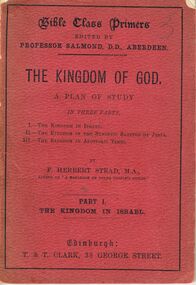
Book - THE KINGDOM OF GOD
... A plan of Study in 3 parts. Bible class Primers edited by professor Salmond, D.D.. ...A plan of Study in 3 parts. Bible class Primers edited by professor Salmond, D.D.. ...Book, Les Gillies Collection, A small red soft covered book titled '' The Kingdom Of God''. A plan of Study in 3 parts. Bible class Primers edited by professor Salmond, D.D.. Aberdeenthe name John Aitken on first pageles gilles, john aithen, kingdom of god -
 Uniting Church Archives - Synod of Victoria
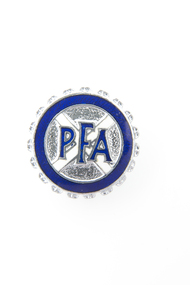
Badge - Lapel badge, Presbyterian Fellowship Association
... Its objectives were "to present to youth the Gospel of Jesus as good news for them, the community and mankind, and as a call to vigorous and faithful activity for Christ's Kingdom in collaboration with all who seek that Kingdom. to help them understanding of the life and teaching of Jesus Christ through study of the Bible and other sources of inspiration. ...Its objectives were "to present to youth the Gospel of Jesus as good news for them, the community and mankind, and as a call to vigorous and faithful activity for Christ's Kingdom in collaboration with all who seek that Kingdom. to help them understanding of the life and teaching of Jesus Christ through study of the Bible and other sources of inspiration. ...B006.1 associated with St George's PFA, St Kilda. Membership of the PFA was symbolised by the wearing of the badge. Badges were received by new members only at a special Badge Presentation Service. The letters "PFA" stand out clearly on the badge with the letter "F" the largest because Christian Fellowship is central - with God and and one another. Around the letters is a ring of blue. A ring is an emblem of love and blue traditionally stands for truth of loyalty. Behind the letters are a white St Andrew's cross. Around the edge of the badge are serrations which point outwards and symbolise the reaching out of the Fellowship to the world. The aim of the PFA was "to unite youth in the fellowship of service of the Kingdom of God." Its objectives were "to present to youth the Gospel of Jesus as good news for them, the community and mankind, and as a call to vigorous and faithful activity for Christ's Kingdom in collaboration with all who seek that Kingdom. to help them understanding of the life and teaching of Jesus Christ through study of the Bible and other sources of inspiration. To assist youth to grow to full and true maturity by helping to meet their spiritual needs in physical, mental and social realms. To unite the youth of the Presbyterian Church into a Fellowship of worship, study, recreation and service directed toward the achievement of these objectives." Source: "PFA Handbook", 1960.Seven Presbyterian Fellowship Association round blue and white enameled lapel badges. B006.1 PFA lapel sterling silver badge.PFApresbyterian fellowship association -
 Mont De Lancey
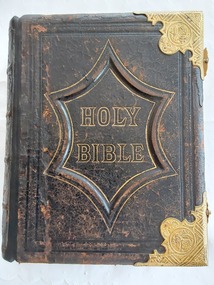
Book, Rev. John Brown, Brown's Self-Interpreting Family Bible, late 1800's
... Bibles Religious books Religion Illustrated late Victorian family Bible— the beloved King James text, augmented by the late Revd John Brown of Haddington’s comprehensive Bible study aids— with a total of 36 plates (25 in color) handsomely bound. ...Illustrated late Victorian family Bible— the beloved King James text, augmented by the late Revd John Brown of Haddington’s comprehensive Bible study aids— with a total of 36 plates (25 in color) handsomely bound. First published in 1611, the King James Version of the Bible has exercised an incalculable impact on piety, language and literature throughout the English-speaking world. "Other translations may engage the mind, but the King James Version is the Bible of the heart" (Campbell, 275). It is probably the text most commonly found in decorative family Bibles such as this one, which has a total of 36 plates, including an engraved title page, a 12-page family register, the Lord's Prayer, two maps and nine other plates all printed in color. The Rev. John Brown of Haddington was "a tirelessly faithful pastor"—"For eight months of the year he delivered a lecture, two sermons, and an exercise each Sunday"—and also a prolific author. He is best remembered for his Self-Interpreting Bible, first published 1778, which became "as familiar in Presbyterian households as John Bunyan's Pilgrim's Progress and Thomas Boston's Human Nature in its Fourfold State" (DNB). Without Apocrypha. After page 302 at the end of the Old Testament is a highly colourful and decorative page of 'The Lord's Prayer' after which is a separate New Testament title page.Brown's Self-Interpreting Family Bible. London: John G. Murdoch, circa 1875. Thick folio, full dark brown morocco, beveled edges, all edges gilt, brass trim, clasps and catches. The title, Holy Bible is printed in an indented star shaped decorative surround, around the edges of the letters in the middle of the front cover. The spine has four bands across it with Holy Bible printed in gold lettering at the top. The beautifully coloured Title Page is very decorative all over with tan, pale green, dark green and white patterns. Opposite is a black and white plate depicting Moses in his basket in the bulrushes with his mother hiding behind him. There is a plain black and white title page too with full details, including publisher and other details. At the front, information about the Reverend John Brown is included over several pages as well as details of his Monument Inscription in Haddington Churchyard 19th June A.D. 1787, aged 65 years. Following this is an Introduction to the Right Understanding of the Oracles of God. There are many black and white, plus coloured plates included throughout the Bible. Pp. 1123 (Bible) At the back are many additional inclusions: Alphabetical Index, A Collection of names given to Jesus Christ and others, The Psalms of David in Metre, Hymns and Passages of Scripture Paraphrased. In all a most complex Bible for the family.non-fictionIllustrated late Victorian family Bible— the beloved King James text, augmented by the late Revd John Brown of Haddington’s comprehensive Bible study aids— with a total of 36 plates (25 in color) handsomely bound. First published in 1611, the King James Version of the Bible has exercised an incalculable impact on piety, language and literature throughout the English-speaking world. "Other translations may engage the mind, but the King James Version is the Bible of the heart" (Campbell, 275). It is probably the text most commonly found in decorative family Bibles such as this one, which has a total of 36 plates, including an engraved title page, a 12-page family register, the Lord's Prayer, two maps and nine other plates all printed in color. The Rev. John Brown of Haddington was "a tirelessly faithful pastor"—"For eight months of the year he delivered a lecture, two sermons, and an exercise each Sunday"—and also a prolific author. He is best remembered for his Self-Interpreting Bible, first published 1778, which became "as familiar in Presbyterian households as John Bunyan's Pilgrim's Progress and Thomas Boston's Human Nature in its Fourfold State" (DNB). Without Apocrypha. After page 302 at the end of the Old Testament is a highly colourful and decorative page of 'The Lord's Prayer' after which is a separate New Testament title page. bibles, religious books, religion
