
Showing 34 items matching "black coal in victoria"
-
 Bendigo Historical Society Inc.
Journal - Kairn Collection: Mining and Geological Journal, July 1939
... ...black coal in victoria...Bendigo mining gold mining black coal in victoria graptolites Harcourt quarry gold extraction cyanide process On front cover in blue biro ' D. ...Sixty eight page journal. On front cover: 'Mining & Geological Journal, Government of Victoria, Department of Mines., July 1939, No. 1. Black and white image of oil drill in Gippsland on right hand side of cover. Article, page 17, 'Axedale Mine, Axedale'. Pages 21 to 23: ''Notes on the Bendigo Goldfield', by J.J. Caldwell, District Geologist, shows a longitudinal section of a portion of the Sheepshead line of reef; transverse section of the New Chum and North Deborah syncline reefs. Article page 25: 'Bendigo (N. 2) District' J.B. Justice, Inspector.On front cover in blue biro ' D. (illegible) Bacchus Marsh 053 672341'bendigo, mining, gold mining, black coal in victoria, graptolites, harcourt quarry, gold extraction, cyanide process -
Lakes Entrance Historical Society
Book, Vines, Jack, Coal Mining Heritage Study, 2008
... A comprehensive study of black and brown coal mining in Victoria, from earliest discovery of coal deposits in Australia, to the vast coal fields of the Latrobe Valley, Victoria, where extraction is by open cut engineering....Engineering Mines and Mining A comprehensive study of black and brown coal mining in Victoria, from earliest discovery of coal deposits in Australia, to the vast coal fields of the Latrobe Valley, Victoria, where extraction is by open cut engineering. ...A comprehensive study of black and brown coal mining in Victoria, from earliest discovery of coal deposits in Australia, to the vast coal fields of the Latrobe Valley, Victoria, where extraction is by open cut engineering.engineering, mines and mining -
 Federation University Historical Collection
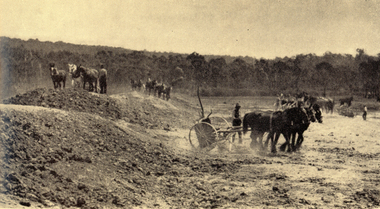
Book, Yallourn, 10/1962
... Many factors have contributed to this growth, bu the one of greatest importance is the vast wealth of easily extractable brown coal in the Latrobe Valley which is the source of Victoria's electricity and a major part of its solid fuel. ... " yallourn connolly open cut power station kernot coal briquette lyle monash yallourn open cut yallourn power station yallourn briquette works morwell open cut hazelwood brown coal gippsland horses turning sod White and green soft covered book of 34 pages with black & white and coloured illustrations. ...In the foreword the Chairman and General Manager, W.H. Connolly, wrote: "Australia's progress since the Second World War has been remarkable - and nowhere more so than in Victoria. Although the smallest pf the mainland States, Victoria is today the most highly industrialised, the second most populous and the most rapidly developing State in the Commonwealth. Many factors have contributed to this growth, bu the one of greatest importance is the vast wealth of easily extractable brown coal in the Latrobe Valley which is the source of Victoria's electricity and a major part of its solid fuel. ... "White and green soft covered book of 34 pages with black & white and coloured illustrations. The book includes starts with an historical section, and includes information the open cut, Yallourn Power Station, Yallourn Briquette Works, the town, Morwell Open Cut, and includes a map of the Latrobe Valley Brown Coal resources.yallourn, connolly, open cut, power station, kernot, coal, briquette, lyle, monash, yallourn open cut, yallourn power station, yallourn briquette works, morwell open cut, hazelwood, brown coal, gippsland, horses, turning sod -
 Federation University Historical Collection
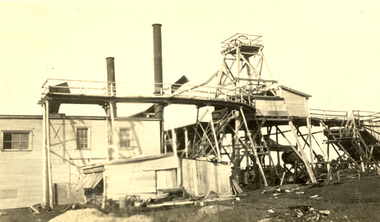
Photograph, Lal Lal Coal and Iron Mine, Victoria, 1923
... Coal Mine, 1923. Two black and white photographs of the Lal Lal Coal Mine. .1) A man, Bill Thomas of Talbot, stands high on a timber construction. .2) A mine site with poppet head and two chimneys. Lal Lal Coal and Iron Mine, Victoria ...Lal Lal Coal Mine, 1923. Two black and white photographs of the Lal Lal Coal Mine. .1) A man, Bill Thomas of Talbot, stands high on a timber construction. .2) A mine site with poppet head and two chimneys..1) verso: Lal Lal Coal and [Iron?] Mine 1,000 ton hopper or brown coal Designed and Built by D. Mather 1923 [15?] miles of sapplings in the building [Ci?] called and drying [oval] 120' long 45' x 20' wide Bill Thomas shown in this photo, from Talbot.lal lal, lal lal coal mine, donald mather, mather, bill thomas, talbot, mining -
 The Beechworth Burke Museum
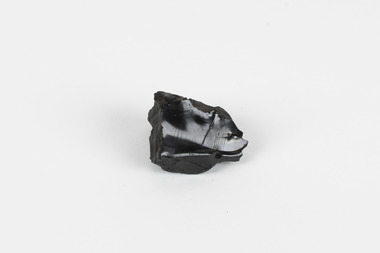
Geological specimen - Anthracite crystal, Unknown
... Geological Specimen geology Geology Collection Burke Museum Beechworth indigo shire geological mineralogy victoria Alfred Selwyn Anthracite A hand-sized highly metamorphosed coal mineral with a black/steel-grey shiny metallic lustre. ...Anthracite typically occurs in geologically deformed areas due to extreme heating – with temperatures ranging from 170 to 250 °C – caused by igneous intrusions or high geothermal gradients. It is most commonly found in northeastern Pennsylvania in the United States; however, smaller amounts are also found in Australia, China, eastern Ukraine, South Africa, western Canada, and other countries. This specimen was recovered from Tasmania and is 85-95% carbon.Anthracite is the mineral name for hard coal and is the least plentiful of all coal types. It is clean to the touch and, when polished, is used for decorative purposes. Before natural gas and electricity, anthracite was used for domestic heating as it produces little dust, burns slowly, and gives off a minor amount of smoke. However, it is also limited in abundance and expensive. This specimen is part of a larger collection of geological and mineral specimens collected from around Australia (and some parts of the world) and donated to the Burke Museum between 1868-1880. A large percentage of these specimens were collected in Victoria as part of the Geological Survey of Victoria that begun in 1852 (in response to the Gold Rush) to study and map the geology of Victoria. Collecting geological specimens was an important part of mapping and understanding the scientific makeup of the earth. Many of these specimens were sent to research and collecting organisations across Australia, including the Burke Museum, to educate and encourage further study.A hand-sized highly metamorphosed coal mineral with a black/steel-grey shiny metallic lustre.geological specimen, geology, geology collection, burke museum, beechworth, indigo shire, geological, mineralogy, victoria, alfred selwyn, anthracite -
 The Beechworth Burke Museum
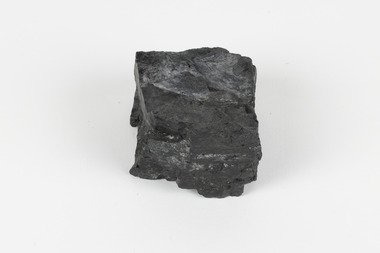
Geological specimen - Bituminous Coal, Unknown
... black coal, this specimen exhibits a high carbon content, ranging from 76-86%. It also holds a relatively high energy density (27 MJ/kg) meaning that it releases significant amounts of energy when burned. Bituminous coal is most commonly used for electricity generation, as well as in the production of steel. This particular piece of coal was collected as part of the Geological Survey of Victoria...black coal, this specimen exhibits a high carbon content, ranging from 76-86%. It also holds a relatively high energy density (27 MJ/kg) meaning that it releases significant amounts of energy when burned. Bituminous coal is most commonly used for electricity generation, as well as in the production of steel. This particular piece of coal was collected as part of the Geological Survey of Victoria ...Bituminous coal is the most common type of coal, abundantly found in ancient coal deposits which can be dated back millions of years. Often referred to as soft or black coal, this specimen exhibits a high carbon content, ranging from 76-86%. It also holds a relatively high energy density (27 MJ/kg) meaning that it releases significant amounts of energy when burned. Bituminous coal is most commonly used for electricity generation, as well as in the production of steel. This particular piece of coal was collected as part of the Geological Survey of Victoria in the nineteenth century. It originates from Cape Paterson, a seaside village located in South Gippsland, Victoria (located on Bunurong Country). The discovery of bituminous coal in this locality was first made in 1826 by explorer William Hovell. More discoveries were gradually made over the following decades and in 1859 the Victorian Coal Company commenced the first active coal mining operations in the state by sinking a number of shafts and bores near the area of Cape Paterson. Evidence of this coal-focused past can be found today at the State Coal Mine Museum in the nearby town of Wonthaggi. This specimen is significant as it was collected from the locality of Cape Paterson in Victoria, an area that has since become historically instrumental in the mining of coal and other substances in the state of Victoria. This specimen is part of a larger collection of geological and mineral specimens collected from around Australia (and some parts of the world) and donated to the Burke Museum between 1868-1880. A large percentage of these specimens were collected in Victoria as part of the Geological Survey of Victoria that begun in 1852 (in response to the Gold Rush) to study and map the geology of Victoria. Collecting geological specimens was an important part of mapping and understanding the scientific makeup of the earth. Many of these specimens were sent to research and collecting organisations across Australia, including the Burke Museum, to educate and encourage further study. A solid hand-sized piece of bituminous coal with a shiny black-grey surface and jagged edges.Existing Label: BITUMINOUS COAL / Locality: Cape / Patterson, VIC. burke museum, beechworth, geological, geological specimen, state coal mine museum, wonthaggi coal mine, victorian coal company, bituminous coal, coal victoria, coal energy generation, william hovell, cape paterson, coal specimen -
 Mission to Seafarers Victoria
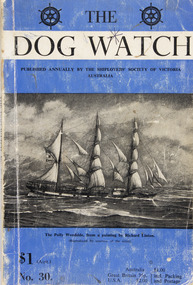
Journal (item) - Periodicals-Annual, Shiplovers' Society of Victoria, The Annual Dog Watch
... victoria dog watch polly woodside Contents Foreword - Commodore Dacre H. D. Smyth, R.A.N. - 7 Editorial - Pondering on Polly - 9 Progress Of The "Polly Woodside" - J. F. Yuncken - 13 Nearly Another "Birkenhead" - E. J. Batten - 21 Pawn Of The Storm - N. S. Smith - 27 The "Golden Plover" - I. L. Barton - 35 The "Brier Holme" - Ross Osmond - 43 The "Joseph H. Scammell" - A. D. Long - 47 A Western Port Boatman - Arthur Woodley - 51 Apology To A Freighter - C. E. Bonwick - 52 When Ships Burned Coal -- The 'Black ...This journal provides the reader with glimpses of the adventures and hardships of a seaman's life. Many of the stories are of sailing ships.Contributes to our knowledge of the importance of shipping and places on record those stories of the sea which would otherwise be lost.Contents Foreword - Commodore Dacre H. D. Smyth, R.A.N. - 7 Editorial - Pondering on Polly - 9 Progress Of The "Polly Woodside" - J. F. Yuncken - 13 Nearly Another "Birkenhead" - E. J. Batten - 21 Pawn Of The Storm - N. S. Smith - 27 The "Golden Plover" - I. L. Barton - 35 The "Brier Holme" - Ross Osmond - 43 The "Joseph H. Scammell" - A. D. Long - 47 A Western Port Boatman - Arthur Woodley - 51 Apology To A Freighter - C. E. Bonwick - 52 When Ships Burned Coal -- The 'Black Gang' - E. Carpenter - 53 From The Galley -- Fried Chicken - R.G.E. - 57 Just a Bit Outside The Law - Captain C. Meyer - 59 More Of Pearling Off The ARU Islands - Capt. W. J. Cowling - 63 A Medal Well Earned - L. A. Marchant - 70 The Tale Of The "Komet" - Harrow Morgan - 72 A Passage From England To Australia in the "Gauntlet" - Sven Tvermoes - 79 A Tug Of The Past - H. R. Watson - 94 Commodore Beal To The Rescue - Capt. F. K. Klebingat - 98 The Peacock From The Sea - J. M. MacKenzie - 106 The Man From Timbuctoo - L. de Neumann - 110 H.M.A.S. "Tingira" - D. C. Ricketts - 112 Inverneill At Iquiqui 1912 - Major M. H. O. Forbes - 116 The "Bear" - S. A. E. Strom - 121 Book Reviews - - 125 Glossary - - 128 More After Thoughts - W. F. Cook - 129sailing ships, steamships, shipping, seafaring life, shiplovers' society of victoria, dog watch, polly woodside -
 The Beechworth Burke Museum
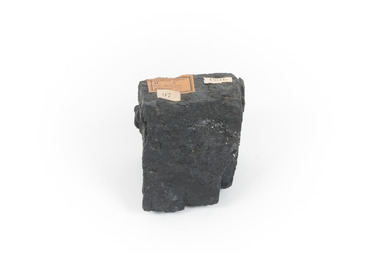
Geological specimen - Black Coal
... Victoria. Coal is a sedimentary rock which is composed of peat after it has been exposed over millions of years. This is an example of Australian black coal which is used as either thermal or coking coal for electricity generation or manufacturing processes. ...Victoria. Coal is a sedimentary rock which is composed of peat after it has been exposed over millions of years. This is an example of Australian black coal which is used as either thermal or coking coal for electricity generation or manufacturing processes. ...This specimen was recovered from Wonthaggi in Victoria. Coal is a sedimentary rock which is composed of peat after it has been exposed over millions of years. This is an example of Australian black coal which is used as either thermal or coking coal for electricity generation or manufacturing processes. It is predominantly composed of Carbon which is 'C' on the periodic table of elements. This early example of a coal sample, shows the important role that coal played/plays in Australia's energy generation and manufacturing processes. This specimen is part of a larger collection of geological and mineral specimens collected from around Australia (and some parts of the world) and donated to the Burke Museum between 1868-1880. A large percentage of these specimens were collected in Victoria as part of the Geological Survey of Victoria that begun in 1852 (in response to the Gold Rush) to study and map the geology of Victoria. Collecting geological specimens was an important part of mapping and understanding the scientific makeup of the earth. Many of these specimens were sent to research and collecting organisations across Australia, including the Burke Museum, to educate and encourage further study.Small piece of black coal with museum original labelGeological survey / R..... S...../ Locality Cape Patterson coal specimen, burke museum, geological survey of victoria, geological specimen, geology -
 Federation University Historical Collection
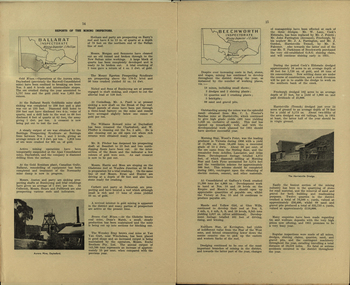
Booklet - Report, J.J. Gourley (Government Printer), Department of Mines Annual Report, 1950, c1950
... j.g. gouley mining coal gold silver geology boiler inspection leasing gold buyers act lilydale fireclay harrietville dredge aurora mine daylesford williams reward mine daylesford strangways dredge north deborah mine bendigo statistics bendigo mine department of mines victoria annual report statistics relating to mining industry Thirty six page foolscap booklet with some black and white photographic image. ...Thirty six page foolscap booklet with some black and white photographic image. It includs statistics relating to the mining industry. Images include Limestone Quarry at Cave Hill, Lilydale; Golden Retriever nuggett; The Wedderburn Dog nuggett; Moning Star Mine, Wood's Point; shallow drilling; penicillin tanks; Mines Department Laboratory; Charging; Aurora Mine, Daylesford; Hattietville Dredge; North Deborah Mine, Bendigo; Central Victorian Dredge, Strangwaysj.g. gouley, mining, coal, gold, silver, geology, boiler inspection, leasing, gold buyers act, lilydale, fireclay, harrietville dredge, aurora mine daylesford, williams reward mine daylesford, strangways dredge, north deborah mine bendigo, statistics, bendigo mine, department of mines victoria, annual report, statistics relating to mining industry -
 Federation University Historical Collection
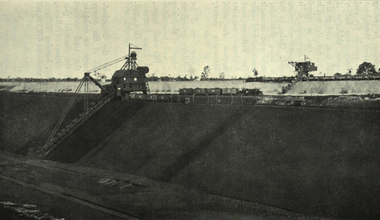
Photograph - black and white, State Electricity Commission, Excavating Brown Coal at open-cut, Yallourn
... Photograph included in book "Victoria: Gold and Minerals" issued by Mines Department Victoria, 1935 victoria excavating dredge brown coal yallourn Photograph Excavating Brown Coal at open-cut, Yallourn Photograph - black and white State Electricity Commission ...Photograph included in book "Victoria: Gold and Minerals" issued by Mines Department Victoria, 1935Photographvictoria, excavating, dredge, brown coal, yallourn -
 Federation University Historical Collection
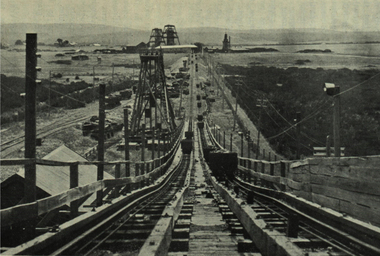
Photograph - black and white, State Coal Mine at Wonthaggi showing the Conveyor System
... Photograph included in book "Victoria: Gold and Minerals" issued by Mines Department Victoria, 1935 victoria brown coal wonthaggi coal mine conveyor system mining Photograph State Coal Mine at Wonthaggi showing the Conveyor System Photograph - black and white ...Photograph included in book "Victoria: Gold and Minerals" issued by Mines Department Victoria, 1935Photographvictoria, brown coal, wonthaggi, coal mine, conveyor system, mining -
 Flagstaff Hill Maritime Museum and Village
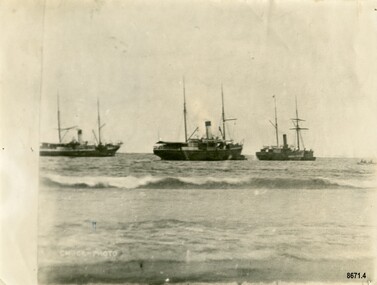
Photograph - Steamers - Julia Percy, Dawn and Coorong, Chuck Photo Ballarat, Circa 1885
... Black Watch" who had abandoned ship after it began quickly taking on water. The crew (six men) were able to get away in a small boat with a compass, chart and few candles. They were "excessively cold from exposure to the weather" when the S. S. Coorong picked them up. In 1877 the Coorong ran aground when entering the Outer Harbour at Adelaide (but was not damaged) and in 1882 it was stranded (for a short time) near Curdies Inlet (Victoria) with some slight damage to its bottom plates. Note - A ship with the same name "Coorong" (a coal...Black Watch" who had abandoned ship after it began quickly taking on water. The crew (six men) were able to get away in a small boat with a compass, chart and few candles. They were "excessively cold from exposure to the weather" when the S. S. Coorong picked them up. In 1877 the Coorong ran aground when entering the Outer Harbour at Adelaide (but was not damaged) and in 1882 it was stranded (for a short time) near Curdies Inlet (Victoria) with some slight damage to its bottom plates. Note - A ship with the same name "Coorong" (a coal ...This photograph was one of ten photographs donated to Flagstaff Hill Maritime Museum and Village by Fred Trewartha. Frederick John Fox Trewartha (Fred) was a well-known Warrnambool businessman. He was born in Beeac near Geelong in 1920 and came to Warrnambool with his family as a very young child. He was apprenticed to his father John, as a saddler and later opened his own shop on Raglan Parade. He then moved into working with tarpaulins and canvases for the trucking industry. Fred was keenly interested in photography (and was a member of the Warrnambool Cine Club), yachting and boat building. He kept his yacht moored at Port Fairy for many years and participated in sailing events locally and interstate. He also built boats with his sons. He had the opportunity to meet many older sailors and it's thought this photo (and others in the set) may have been given to him by one of these men. Fred Trewartha died in 2016 in Warrnambool. Shipping was the cheapest and most practical means of carrying produce and goods during the period 1840-1890. Regular domestic steamer services commenced in the Warrnambool district in the late 1850’s and by 1870 the passenger trade was booming. Four coastal traders made regular stops at Warrnambool in the 1880's - S. S. Julia Percy, S. S. Dawn, S. S. Nelson and S. S. Casino. The S.S. Julia Percy (later named Leeuwin) was an iron passenger-cargo steam ship built in 1876. At one point in time the Julia Percy would sail from Warrnambool to Melbourne every Friday and return from Melbourne to Warrnambool every Tuesday. The cost of a return ticket for a Saloon Fare was £1.0.0. The Julia Percy was built in Glasgow by Thomas Wingate & Company, Whiteinch, in 1876 for the Warrnambool Steam Packet Company, which commissioned it for trade in Victoria’s western district. It was first registered in Warrnambool, Victoria in 1876. Two steamships, the Julia Percy and the Nelson, collided on 25th December 1881. The Julia Percy was at that time owned by its first owners, the Warrnambool Steam Packet Company, and she sailed under the command of Captain Chapman. It had left Melbourne the evening of 24th December, with about 150 passengers, sailing in fine weather through Port Phillip Heads around 9pm. It was headed for Warrnambool, Belfast (now named Port Fairy) and Portland. The Julia Percy was off Apollo Bay when Captain Chapman was woken by the ship’s whistle after midnight, the steamer Nelson being on a collision course with the Julia Percy. The Nelson struck Julia Percy midship. Boats were lowered from the ship (apart from a damaged lifeboat) and about 30-40 of the passengers boarded the Nelson. The engine room and the forehold were checked and found clear of water. The company manager, Mr. Evans, had been on the Nelson, so he boarded and inspected the Julia Percy and the decision was made to continue on to Warrnambool with the passengers as there appeared to be no immediate danger. However, Captain Thomas Smith said the Nelson was taking on water, so Julia Percy followed it for about an hour towards Melbourne on standby in case of need. Then Julia Percy turned around towards Warrnambool again. Shortly afterwards the Nelson turned to follow her, the ships stopped and passengers were returned to Julia Percy, and three from Julia Percy boarded the Nelson. Both ships proceeded on their way. Julia Percy passed Cape Otway light afterwards, signaling that there had been a collision. It was discovered later that one of the passengers was missing, then thought to have boarded the Nelson but later thought to have fallen into the sea and drowned while trying to jump from Julia Percy to Nelson. There had been 3 tickets purchased under the same name of that passenger “Cutler”; a father, son and friend named Wordsworth, which had caused quite some confusion. No further mishap occurred to either ship and both the Julia Percy and the Nelson reached their destinations safely. An enquiry was instigated by the Victoria Steam Navigation Board regarding the cause of the accident between the two steamships, in connection with the death of Cutler who was supposed to have lost his life by the collision. The enquiry resulted in Captain Thomas Smith having his master's certificate suspended for six months. The Julia Percy changed hands several times. Its next owner was the Western Steam Navigation Co (1887), managed by Mr. T.H. Osborne (the company’s office was on the corner of Timor and Liebig Streets - its north-western wall is now part of the current Warrnambool Regional Art Gallery.) The Melbourne Steamship Co became the next owners (1890), followed by William Howard Smith and Sons (1901) for use in Queensland coastal trades and then it was bought by George Turnbull in 1903 and used for local mail contract in Western Australia. The Julia Percy was sold to the Melbourne Steamship Company Ltd. (1906) and re-named the “Leeuwin” but continued in her Western Australian coastal run. It was converted into a coal hulk in Melbourne in 1910 as a result of damaged caused when it was driven against the jetty at Dongara during a gale. The ship was eventually dismantled and scuttled off Port Phillip Heads on 28 December 1934. The steamship "Dawn" was a 522-ton coastal trader built in 1876 and the vessel operated around the Victorian west coast from 1877 until 1898 for the Portland & Belfast Steam Navigation Co. sailing between Melbourne and Portland, via Warrnambool. The vessel was then owned in October 1885 by the renamed company, Belfast & Koroit Steam Navigation Co., until March 1896 when its ownership moved to W Howard Smith & Sons Ltd. This Melbourne company used the ship to service most ports around Australia. Captain F. Chapman took over from Captain Jones and served on the SS Dawn from 1898 until 1900 when he took command of the SS Casino. On September 4th 1880, the three masted clipper ship, "Eric the Red" struck Otway Reef, near Cape Otway. The S. S. Dawn, under the command of Captain Jones, was returning to Warrnambool from Melbourne, its sailing time different to its usual schedule. The provedore of the Dawn, Benjamin Lear, heard cries of distress coming through the portholes of the saloon. He gave the alarm and the engines were stopped. Cries could be heard clearly, coming from the land. Captain Jones sent out crew in two boats, and fired off rockets and blue lights to illuminate the area. They picked up the three survivors who were in the long boat from "Eric the Red". Two men were picked up out of the water, one being the owner’s son who was clinging to floating kerosene boxes. At daylight the Dawn then rescued the 18 men from the floating portion of the deckhouse, which had drifted about 4 miles from where they’d struck the reef. Shortly after the rescue the deckhouse drifted onto breakers and was thrown onto rocks at Point Franklin, about 2 miles east of Cape Otway. Captain Jones had signalled to Cape Otway lighthouse the number of the Eric the Red and later signalled that there was a wreck at Otway Reef but there was no response from the lighthouse. The captain and crew of the Dawn spent several more hours searching unsuccessfully for more survivors, even going back as far as Apollo Bay. On board the Dawn the exhausted men received care and attention to their needs and wants, including much needed clothing. Four men (three crew and one passenger) died. A week after the shipwreck, the Australian Government had also conveyed its thanks to the Captain and crew of the S.S. Dawn - “Captain Griffith Jones, S.S. Dawn, The Hon. Mr Clark desires that the thanks of the Government should be conveyed to you for the prompt, persevering and seamanlike qualities displayed by you, your officers and crew in saving the number of lives you did on the occasion referred to. The Hon. The Commissioner has also been pleased to award you a souvenir in commemoration of the occasion, and a sum of 65 pounds to be awarded to your officers and crew according to annexed scale. I am, &c, W Collins Rees, for and in the absence of the Chief Harbour Master.” The Awards are as follows: - Crew of DAWN'S lifeboat-Chief Officer, Mr G. Peat, 15 pounds; boat's crew-G. Sterge, A.B., 5 pounds; T. Hammond, A.B., 5 pounds; J. Black, A.B., 5 pounds; H. Edwards, A.B., 5 pounds. Dinghy's Crew-Second Officer, Mr Christie, 10 pounds; boat's crew -F. Lafer, A.B., 5 pounds; W. Johnstone, A.B., 5 pounds; Mr Lear, provedore, 5 pounds; Mr Dove, purser, 5 pounds. Captain Jones receives a piece of plate. (from “Wreck of the ship Eric the Red” by Jack Loney). Medals of Bravery were awarded to the Captain and crew of the S.S. Dawn by the President of the United States, through the Consul-general (Mr Oliver M. Spencer), in July 1881 “ … in recognition of their humane efforts in rescuing the 23 survivors of the American built wooden sailing ship, the Eric the Red, on 4th September 1880.” The men were also presented with substantial monetary rewards and gifts. The city of Warrnambool’s care of the survivors was also mentioned by the President at the presentation, saying that “the city hosted and supported the crew ‘most graciously’. The Medal of Bravery awarded to Nelson Johnson is in the collection at Flagstaff Hill Maritime Museum and Village in Warrnambool. Prior to 1882, and the arrival of the S. S. Casino, the "Dawn" was the only steamer to be able to navigate up the Moyne River at Port Fairy and unload at the wharf. The other regular steamers had to anchor in the bay instead. In February 1891 (as reported in The Age newspaper) the "Dawn" became the first vessel to berth alongside the newly completed Warrnambool Breakwater. The occasion was celebrated with a number of prominent townspeople assembling on board to "participate of a glass of wine". In 1895 the owners of the S.S. Dawn, the Portland and Belfast Steam Navigation Co., wound up and sold out to the Belfast Company who took over the Dawn for one year before selling it to Howard Smith. It took over the Melbourne to Warrnambool run in 1906 when the S. S. Flinders was sold. The S. S. Dawn was condemned and sunk in Suva in 1928. The State Library of Victoria has a lithograph in its collection depicting the steamer Dawn and the shipwrecked men, titled. "Wreck of the ship Eric the Red, Cape Otway: rescue of the crew by the Dawn". The third ship depicted in the photograph was thought to be the S. S. Coorong but there was a question mark next to its name. The photograph was thought to have been taken in 1885 and it's possible the S.S. Coorong was working in Clarence River, N. S. W. by this time. The steamer "Coorong" was built in 1862 by J. G. Lawrie of Glasgow. It was an "iron screw" steamer of 304 tons. It had many owners including Joseph Darwent of Adelaide (1863 - 1871), McMeckan Blackwood and Company, Melbourne (1871 - 1877), Mount Gambier Steamship Company Ltd. (1877 - 1881). William Whineham, Port Adelaide (1882), John See and Company, Sydney (1884 - 1892) and the North Coast Steam Navigation Company Ltd, Sydney (1892 - 1910). In 1911 it was hulked in Sydney Harbour and in 1921 it was being used as a coal hulk at Sydney. It had been originally imported into South Australia for the Port Augusta trade (primarily transporting goods needed by the early settlers) however the owners recognized that it had too much space for that purpose, so it was moved to work on the Adelaide to Melbourne line. Its passenger accommodation was enlarged and it enjoyed a "first class reputation" and by 1874 had made 313 voyages between Melbourne and Adelaide. Its captains included Captain McLean, Captain Ashton and Captain Dowell. In 1867, when 25 miles west of Cape Otway, while travelling from Adelaide to Melbourne, it came across the crew of the schooner "Black Watch" who had abandoned ship after it began quickly taking on water. The crew (six men) were able to get away in a small boat with a compass, chart and few candles. They were "excessively cold from exposure to the weather" when the S. S. Coorong picked them up. In 1877 the Coorong ran aground when entering the Outer Harbour at Adelaide (but was not damaged) and in 1882 it was stranded (for a short time) near Curdies Inlet (Victoria) with some slight damage to its bottom plates. Note - A ship with the same name "Coorong" (a coal carrying barque) was often on the Newcastle / Wollongong to Adelaide route also stopped several times in Warrnambool in the mid 1880's. The photograph has the label "Chuck Photos" printed on the front. Thomas Foster Chuck (born 1826 in London) was a photographer and entrepreneur who arrived in Victoria in 1861. The following year he produced and toured a "Grand Moving Diarama" of dramatic painted scenes from the Burke and Wills expedition. By 1866 he had established a photography studio in Daylesford and later he returned to Melbourne where he opened a studio in the Royal Arcade. In 1874 a collection of Chuck's photographs won a gold medal at the Annual International Exhibition in London. Throughout the 1870's he took over 700 individual photographs of prominent citizens for his historical photographic montage titled "Historical Pictures of the Explorers and Early Colonists of Victoria" which is now in the collection of the National Library of Australia. By 1888 he had sold his Melbourne studio and had established a studio in Ballarat (with his son Thomas Henry Chuck). In 1886 they produced an album titled "Warrnambool and District 1886, Western Hotel - J. Fox proprietor" containing over sixty large photographs of local coastal scenes and seascapes, for the use of patrons of the Western Hotel. This photo (of the three steamers in Lady Bay) was taken at this time and is in the album. Thomas Chuck died on December 7th, 1898, in Albert Park, Melbourne and his son Thomas Henry continued to operate the photography studio in Ballarat into the 1920's.This photograph is a significant record of several of the well-known coastal traders (S. S. Julia Percy, S. S. Dawn and possibly S. S. Coorong) that sailed along the southwest coast of Victoria for many years - transporting goods and passengers between Melbourne and Warrnambool in the 1880's. They are also significant in the role they played in the history of Warrnambool and the other coastal ports they visited as well as being examples of the dangers and hazards associated with navigating the waters along the southern coast of Australia. It is also a good example of a photograph taken by a well-known and significant photographer of that era.Black and white photograph of three steam ships anchored in Lady Bay, Warrnambool. They each have a funnel and two masts and are side on to the beach. A small rowboat with a crew can be seen on the far right. The words "CHUCK-PHOTO" are on the bottom left of the photograph. On the back of the photograph is the name and telephone number of the donor (handwritten in black ball point pen) and the names of the three steamships and date written in uppercase letters in dark blue ink. There is a four-figure number stamped in the centre of the back.Front - "CHUCK-PHOTO" Back - Name of donor and telephone number "6944" "JULIA PERCY, DAWN & KOORONG(?) IN LADY BAY 1885"flagstaff hill maritime museum and village, warrnambool, great ocean road, fred trewartha, s. s. julia percy, s. s. dawn, s. s. nelson, s. s. casino, leeuwin, steamer, steamship, coastal trader, warrnambool steam packet company, captain chapman, victorian steam navigation board, western steam navigation company, melbourne steamship company, william howard smith and sons, portland and belfast steam navigation company, w howard smith and sons ltd, eric the red, captain jones, medal of bravery, rescue, moyne river, warrnambool breakwater, lady bay, s. s. coorong, mount gambier steamship company, black watch, thomas foster chuck, chuck photos, chuck photography -
 City of Moorabbin Historical Society (Operating the Box Cottage Museum)
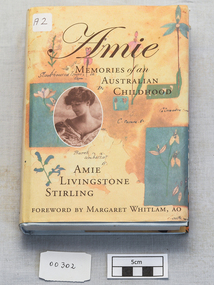
Book, Stirling, Amie Livingstone, Amie, Memories of an Australian Childhood, 1980
... Victoria and in 1880s and '90s. About her father James Stirling, the famous coal-mining pioneer and geologist. Her grand-daughter Linda Harrison compiled her writings and added stories from her later life in Paris and North Africa On spine - ' AMIE: MEMORIES OF AN / AUSTRALIAN CHILDHOOD/ AMIE / LIVINGSTON / STIRLING / Black Inc. ...Amie Livingston Stirling 1880-1945 recorded her memories of growing up in Omeo, Elwood and San Remo in Victoria and in 1880s and '90s. About her father James Stirling, the famous coal-mining pioneer and geologist. Her grand-daughter Linda Harrison compiled her writings and added stories from her later life in Paris and North Africa274 p. : ill., ports., tables ; Pale blue hardback book of the childhood memories of Amie Livingston Stirling1880- 1945, compiled by her grand-daughter Linda Harrison in1980 non-fictionAmie Livingston Stirling 1880-1945 recorded her memories of growing up in Omeo, Elwood and San Remo in Victoria and in 1880s and '90s. About her father James Stirling, the famous coal-mining pioneer and geologist. Her grand-daughter Linda Harrison compiled her writings and added stories from her later life in Paris and North Africastirling james, reid elizabeth, early settlers, pioneers, surveyors, geologists, gippsland, omeo, elwood, melbourne, victoria, geelong, mining, botany, von mueller baron, elster creek, brighton, moorabbin, howitt alfred william, murray r a f, goodsir agnes, amie stirling -
 City of Moorabbin Historical Society (Operating the Box Cottage Museum)
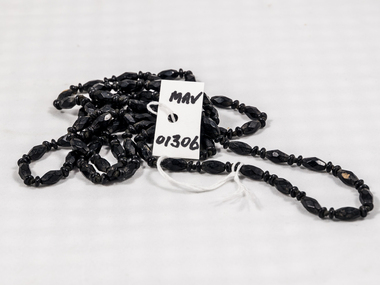
Jewellery, jet necklace, c1880
... Jet became popular in the Victorian era for mourning jewellery, which became fashionable after the death of Queen Victoria's husband Prince Albert in 1861. Jet is a dense black fossilized wood, almost like coal, and very light in weight. ...Jet became popular in the Victorian era for mourning jewellery, which became fashionable after the death of Queen Victoria's husband Prince Albert in 1861. Jet is a dense black fossilized wood, almost like coal, and very light in weight. ...Jet became popular in the Victorian era for mourning jewellery, which became fashionable after the death of Queen Victoria's husband Prince Albert in 1861. Jet is a dense black fossilized wood, almost like coal, and very light in weight. It is easy to cut, so carved well. It became popular in the Victorian era for mourning jewellery, which became fashionable.This jet necklace is typical of the mourning jewellery worn by early settler women in Moorabbin Shire c1900A continuous circular, long, black necklace with small jet beads.Nonejewellery, mourning wear, jet stone, queen victoria fashion, early settlers, pioneers, black clothing, moorabbin mirror, bader fran, rietman august, rennick stefanie, resin jewellery, -
 Flagstaff Hill Maritime Museum and Village
Horse Brass
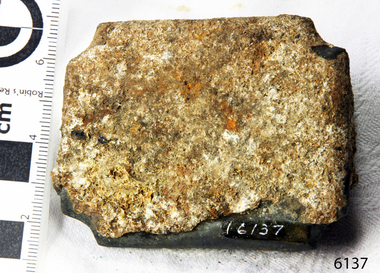
... It is historically significant for representing aspects of Victoria’s shipping history and for its association with the shipwreck and the ship, which was designed to be fastest and most luxurious of its day Warrnambool Shipwrecked-coast Flagstaff-Hill Flagstaff-Hill-Maritime-Museum Maritime-Museum Shipwreck-coast Flagstaff-Hill-Maritime-Village Schomberg Shipwrecked-artefact Clipper ship Black Ball line 1855 shipwreck Aberdeen clipper ship Captain Forbes Peterborough shipwreck SS Queen horse harness horse brass Rectangular horse harness brass plate. Plate has a concave corner. 2½" x 2". Large lump of concretion on back of plate with possibly coal ...When the ship Schomberg was launched in 1855, she was considered the most perfect clipper ship ever to be built. James Blaine’s Black Ball Line had commissioned her to be built for their fleet of passenger liners. At a cost of £43,103, the Aberdeen builders designed her to sail faster than the quick clippers designed by North American Donald McKay. She was a three masted wooden clipper ship, built with diagonal planking of British oat with layers of Scottish larch. This luxury vessel was designed to transport emigrants to Melbourne in superior comfort. She had ventilation ducts to provide air to the lower decks and a dining saloon, smoking room, library and bathrooms for the first class passengers. At the launch of Schomberg’s maiden voyage, her master Captain ‘Bully’ Forbes, drunkenly predicted that he would make the journey between Liverpool and Melbourne in 60 days. Schomberg departed Liverpool on 6 October 1855 with 430 passengers and 3000 tons cargo including iron rails and equipment intended the build the Geelong Railway and a bridge over the Yarra from Melbourne to Hawthorn. The winds were poor as Schomberg sailed across the equator, slowing her journey considerably. She was 78 days out of Liverpool when she ran aground on a sand-spit near Peterborough, Victoria, on 27 December; the sand spit and the currents were not marked on Forbes’s map. Overnight, the crew launched a lifeboat to find a safe place to land the ship’s passengers. The scouting party returned to Schomberg and advised Forbes that it was best to wait until morning because the rough seas could easily overturn the small lifeboats. The ship’s Chief Officer spotted SS Queen at dawn and signalled the steamer. The master of the SS Queen approached the stranded vessel and all of Schomberg’s passengers were able to disembark safely. The Black Ball Line’s Melbourne agent sent a steamer to retrieve the passengers’ baggage from the Schomberg. Other steamers helped unload her cargo until the weather changed and prevented the salvage teams from accessing the ship. Local merchants Manifold & Bostock bought the wreck and cargo, but did not attempt to salvage the cargo still on board the ship. They eventually sold it on to a Melbourne businessman and two seafarers. After two of the men drowned when they tried to reach Schomberg, salvage efforts were abandoned.32 In 1975, divers from Flagstaff Hill, including Peter Ronald, found an ornate communion set at the wreck. The set comprised a jug, two chalices, a plate and a lid. The lid did not fit any of the other objects and in 1978 a piece of the lid broke off, revealing a glint of gold. As museum staff carefully examined the lid and removed marine growth, they found a diamond ring, which is currently on display in the Great Circle Gallery.33 Flagstaff Hill also holds ship fittings and equipment, personal effects, a lithograph, tickets and photograph from the Schomberg. Most of the artefacts were salvaged from the wreck by Peter Ronald, former director of Flagstaff Hill. The Schomberg, which is on the Victorian Heritage Register (VHR S612), has great historical significance as a rare example of a large, fast clipper ship on the England to Australia run, carrying emigrants at the time of the Victorian gold rush. She represents the technical advances made to break sailing records between Europe and Australia. Flagstaff Hill’s collection of artefacts from the Schomberg is significant for its association with the shipwreck. The collection is primarily significant because of the relationship between the objects, as together they have a high potential to interpret the story of the Schomberg. It is archaeologically significant as the remains of an international passenger Ship. It is historically significant for representing aspects of Victoria’s shipping history and for its association with the shipwreck and the ship, which was designed to be fastest and most luxurious of its day Rectangular horse harness brass plate. Plate has a concave corner. 2½" x 2". Large lump of concretion on back of plate with possibly coal embedded. Front is encrusted. Recovered from the wreck of the Schomberg. warrnambool, shipwrecked-coast, flagstaff-hill, flagstaff-hill-maritime-museum, maritime-museum, shipwreck-coast, flagstaff-hill-maritime-village, schomberg, shipwrecked-artefact, clipper ship, black ball line, 1855 shipwreck, aberdeen clipper ship, captain forbes, peterborough shipwreck, ss queen, horse harness, horse brass -
Phillip Island and District Historical Society Inc.
Reports, c 1890
... Report of Board appointed to enquire into the claims of Richard Davis of Cape Paterson to the reward of £1,000 offered by the Government in the year 1952 to the discoverer of "an available coal field" in the colony of Victoria. Local History DOCUMENTS Reports Coal Mines Westernport Coal Black and white type print. ...Report of Board appointed to enquire into the claims of Richard Davis of Cape Paterson to the reward of £1,000 offered by the Government in the year 1952 to the discoverer of "an available coal field" in the colony of Victoria.Report - Richard Davis and the first Western port coal.local history, documents, reports, coal mines, westernport coal, black and white type print., miss elms san remo, richard davis -
 Flagstaff Hill Maritime Museum and Village
Coal
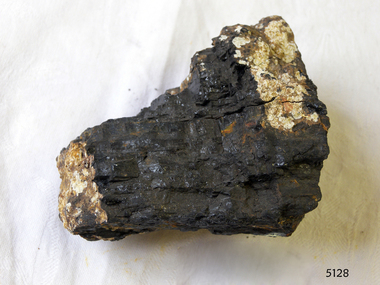
... It is historically significant for representing aspects of Victoria’s shipping history and for its association with the shipwreck and the ship, which was designed to be fastest and most luxurious of its day Warrnambool Flagstaff-Hill Flagstaff-Hill-Maritime-Museum Maritime-Museum Shipwreck-coast Flagstaff-Hill-Maritime-Village Schomberg Shipwrecked-artefact Clipper ship Black Ball line 1855 shipwreck Aberdeen clipper ship Captain Forbes Peterborough shipwreck SS Queen coal Piece of coal recovered from the wreck of the Schomberg. ...When the ship Schomberg was launched in 1855, she was considered the most perfect clipper ship ever to be built. James Blaine’s Black Ball Line had commissioned her to be built for their fleet of passenger liners. At a cost of £43,103, the Aberdeen builders designed her to sail faster than the quick clippers designed by North American Donald McKay. She was a three masted wooden clipper ship, built with diagonal planking ofBritish oak with layers of Scottish larch. This luxury vessel was designed to transport emigrants to Melbourne in superior comfort. She had ventilation ducts to provide air to the lower decks and a dining saloon, smoking room, library and bathrooms for the first class passengers. At the launch of Schomberg’s maiden voyage, her master Captain ‘Bully’ Forbes, drunkenly predicted that he would make the journey between Liverpool and Melbourne in 60 days. Schomberg departed Liverpool on 6 October 1855 with 430 passengers and 3000 tons cargo including iron rails and equipment intended the build the Geelong Railway and a bridge over the Yarra from Melbourne to Hawthorn. The winds were poor as Schomberg sailed across the equator, slowing her journey considerably. She was 78 days out of Liverpool when she ran aground on a sand-spit near Peterborough, Victoria, on 27 December; the sand spit and the currents were not marked on Forbes’s map. Overnight, the crew launched a lifeboat to find a safe place to land the ship’s passengers. The scouting party returned to Schomberg and advised Forbes that it was best to wait until morning because the rough seas could easily overturn the small lifeboats. The ship’s Chief Officer spotted SS Queen at dawn and signalled the steamer. The master of the SS Queen approached the stranded vessel and all of Schomberg’s passengers were able to disembark safely. The Black Ball Line’s Melbourne agent sent a steamer to retrieve the passengers’ baggage from the Schomberg. Other steamers helped unload her cargo until the weather changed and prevented the salvage teams from accessing the ship. Local merchants Manifold & Bostock bought the wreck and cargo, but did not attempt to salvage the cargo still on board the ship. They eventually sold it on to a Melbourne businessman and two seafarers. After two of the men drowned when they tried to reach Schomberg, salvage efforts were abandoned.32 In 1975, divers from Flagstaff Hill, including Peter Ronald, found an ornate communion set at the wreck. The set comprised a jug, two chalices, a plate and a lid. The lid did not fit any of the other objects and in 1978 a piece of the lid broke off, revealing a glint of gold. As museum staff carefully examined the lid and removed marine growth, they found a diamond ring, which is currently on display in the Great Circle Gallery.33 Flagstaff Hill also holds ship fittings and equipment, personal effects, a lithograph, tickets and photograph from the Schomberg. Most of the artefacts were salvaged from the wreck by Peter Ronald, former director of Flagstaff Hill. The Schomberg, which is on the Victorian Heritage Register (VHR S612), has great historical significance as a rare example of a large, fast clipper ship on the England to Australia run, carrying emigrants at the time of the Victorian gold rush. She represents the technical advances made to break sailing records between Europe and Australia. Flagstaff Hill’s collection of artefacts from the Schomberg is significant for its association with the shipwreck, The collection is primarily significant because of the relationship between the objects, as together they have a high potential to interpret the story of the Schomberg. It is archaeologically significant as the remains of an international passenger Ship. It is historically significant for representing aspects of Victoria’s shipping history and for its association with the shipwreck and the ship, which was designed to be fastest and most luxurious of its day Piece of coal recovered from the wreck of the Schomberg. Artefact Reg No S/99. warrnambool, flagstaff-hill, flagstaff-hill-maritime-museum, maritime-museum, shipwreck-coast, flagstaff-hill-maritime-village, schomberg, shipwrecked-artefact, clipper ship, black ball line, 1855 shipwreck, aberdeen clipper ship, captain forbes, peterborough shipwreck, ss queen, coal -
 Bendigo Military Museum
Photograph - Army Survey Regiment – Regimental Training, c1960s
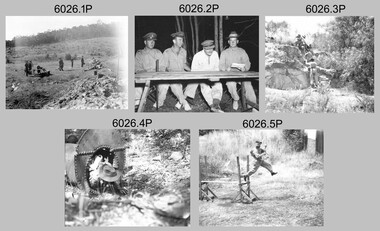
... Victoria. There is no explanation on the meaning of the annotation on back of the last photograph. Royal Australian Survey Corps RASvy Army Survey Regiment Army Svy Regt Fortuna ASR .1) to .7) annotated on back “Regimental Training” .8) annotated on back “Fatted Pig-Coal Lift-Western Mines” This is a set of photographs of Army Survey Regiment personnel undertaking regimental training in the 1960s. All eight photographs were printed on photographic paper and are part of the Army Survey Regiment’s Collection. The photographs were scanned at 300 dpi. .1) to .7) Photo, black ...These photographs of RASvy personnel from the Army Survey Regiment undertaking regimental training lack any annotation that could identify names, dates and locations. The training was possibly conducted at Balcombe and Dromana, located on the Mornington Peninsula, Victoria. There is no explanation on the meaning of the annotation on back of the last photograph.This is a set of photographs of Army Survey Regiment personnel undertaking regimental training in the 1960s. All eight photographs were printed on photographic paper and are part of the Army Survey Regiment’s Collection. The photographs were scanned at 300 dpi. .1) to .7) Photo, black & white, Regimental Training .8) Photo, black & white, possibly Regimental Training.1) to .7) annotated on back “Regimental Training” .8) annotated on back “Fatted Pig-Coal Lift-Western Mines”royal australian survey corps, rasvy, army survey regiment, army svy regt, fortuna, asr -
 Kiewa Valley Historical Society
Photograph Junction Dam, Photo Junction Dam and Bogong Village in Background, circa 1950s
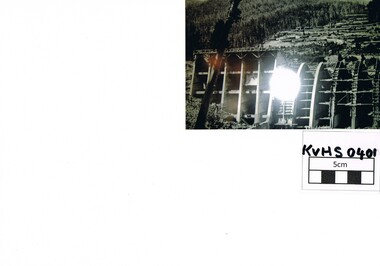
... Victoria and New South Wales. This program was initiated to supply electricity to the major southern Australian cities of Adelaide, Melbourne and Sydney. It was thought that these developments would reduce, if not eliminate, the requirement for coal driven power stations. However time has demonstrated that these power stations have not matched the demand required by the industries and the populations of the major urban and cities. dam construction bogong village alpine development Junction Dam Back of photo is printed " Kodak XtraLite II paper Black and white photo of original photo with a flashlight reflection in the bottom centre. ...This item clearly shows the conditions covering both working conditions and housing in the construction of the Junction Dam in the 1940s. Working conditions were extreme and health and safety legislation was at its infancy. The residential buildings were intended to last only for the period of construction, however greater demand for longevity as a tourist haven prevailedThis photo of the construction of the Junction Dam, with The Bogong village as backdrop, details the harsh conditions faced by construction workers, building dams and villages to accommodate workers in the 1940s to the 1950s. Australia at this period in time, experienced a surge of population (influx of World War II refugees), which was the catalyst for developing and undergoing an enormous hydroelectricity program for the Alpine regions, both in Victoria and New South Wales. This program was initiated to supply electricity to the major southern Australian cities of Adelaide, Melbourne and Sydney. It was thought that these developments would reduce, if not eliminate, the requirement for coal driven power stations. However time has demonstrated that these power stations have not matched the demand required by the industries and the populations of the major urban and cities.Black and white photo of original photo with a flashlight reflection in the bottom centre. The photo is on Kodak XtraLife II paper. The paper is semi gloss.This photo is of the construction of the Junction Dam Wall with the Bogong Townshiip in the background.Back of photo is printed " Kodak XtraLite II paperdam construction, bogong village, alpine development, junction dam -
 Kiewa Valley Historical Society
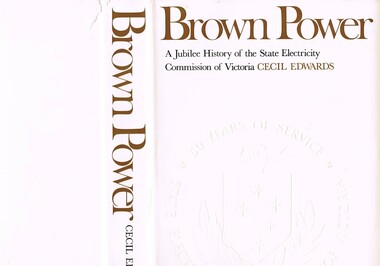
Book - Reference S.E.C. History x4, Brown Power A Jubilee History of the State Electricity Commission of Victoria, first published 1969
... After the war, post 1945, the demand for a continual power supply, not affected by seasonal coastal flooding was together with a lower cost of hydro electricity power the major incentive for the Victoria Government of the day to proceed (in the 1940s) with The Kiewa Hydro Electricity Scheme. In 1946 Victorian government sought greater independence from the New South Wales black coal supplies....After the war, post 1945, the demand for a continual power supply, not affected by seasonal coastal flooding was together with a lower cost of hydro electricity power the major incentive for the Victoria Government of the day to proceed (in the 1940s) with The Kiewa Hydro Electricity Scheme. In 1946 Victorian government sought greater independence from the New South Wales black coal supplies. ...Although this book revolves around the supply of power(Electricity) from brown coal it does cover the period 1937 onwards when the Kiewa Hydro Electricity Scheme was first mooted. This area was believed to be far away from aerial bombardment should the coastal power stations be attacked by air in World War II(1939 -1945). After the war, post 1945, the demand for a continual power supply, not affected by seasonal coastal flooding was together with a lower cost of hydro electricity power the major incentive for the Victoria Government of the day to proceed (in the 1940s) with The Kiewa Hydro Electricity Scheme. In 1946 Victorian government sought greater independence from the New South Wales black coal supplies.The significance of this book to the Kiewa Valley and its outlying regions is that it details why the development of an Alpine region was and now still is pocketed with a European flavour both in buildings and in town vegetation(trees and flowers). European (post World War II refugees) where attracted to these alpine areas not only for hard labouring positions but also for their technical skills and some street names offer a distinct European lineage rather than convict or of earlier English settler. The construction phase accommodation continued after completion of the Kiewa Hydro Electricity Scheme to become popular venues for an increasing winter tourism industry. This book has a brown hard cover encapsulated by a cream sleeve with brown and black print. On the front of the sleeve is an embossed circular motif with centre piece S.E.C. emblem and around this the words "50 YEARS OF SERVICE" and below this" STATE ELECTRICITY COMMISSION OF VICTORIA". The book contains 313 double sided pages of black print and black and white photographs.On front of paper sleeve "Brown Power A Jubilee History of the State Electricity Commission of Victoria Cecil Edwards". On the second page, below the Title "Brown Power" there is a pasted, printed presentation certificate, with the S.E.C. emblem and these printed words " Presented by the Chairman and Commissioners to A.G. MILLIST, ESQ. in recognition of long and valued service with the Commission"electricity, victorian power supplies, hydro electricity, brown coal, cecil edwards -
 Victorian Interpretive Projects Inc.
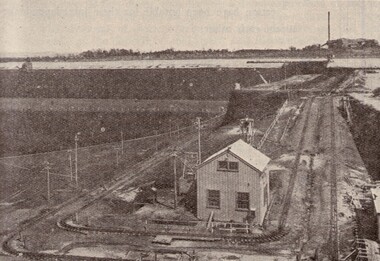
Image, Yallourn, 1934
... The coal from this open-cut mine is used to generate electricity for the State of Victoria. in 1934 two thousand miles of high tension transmission lines conveyed energy from a system of inter-linked power stations to the whole Melbourne metropolitan area, as well as to nearly 170 rural centres. Yallourn electricty power coal open-cut dredge Black ...The coal from this open-cut mine is used to generate electricity for the State of Victoria. in 1934 two thousand miles of high tension transmission lines conveyed energy from a system of inter-linked power stations to the whole Melbourne metropolitan area, as well as to nearly 170 rural centres. Black and white image of the western end of the Yallourn open-cut in 1934. the bucket dredge on surface is reaching down 90 feet, on which level there is another similar dredge going down another 90 feet to the bottom of the 180 foot seam.yallourn, electricty, power, coal, open-cut, dredge -
Port Melbourne Historical & Preservation Society
Document - Calendar 2020, Historic Port Melbourne - a then and now calendar 2020, September 2019
... Researched, written and designed by Pat GRAINGER and PMHPS members State Savings Bank of Victoria Morley's Coal Depot Pier Hotel Starbucks Coffee Gasometer HMAS Lonsdale The Bethel Turnbull Furniture Warehouse Tjngari Built Environment Swallow & Ariell Ltd Henry DAVENPORT Perce McGuire WHITE Perce WHITE Ronald 'Bunna' WALSH Religion - Anglican (Holy Trinity) Joshua Brothers Distillery Fox and Hay Mission to Seafarers Fishermans Bend Spider Web Nightclub Business and Traders Theresa CLAY Johnny Allsorts Pawnbroker Sandridge Lagoon John Bichard GRUT Maskell & McNab Memorial "Historic Port Melbourne - a then and now calendar 2020" Produced by PMHPS. Black ...Researched, written and designed by Pat GRAINGER and PMHPS members"Historic Port Melbourne - a then and now calendar 2020" Produced by PMHPS. Black and white photo on cover of wagons loaded with a shipment from Swallow & Ariell 1915 PMHPS logo at bottom left corner.state savings bank of victoria, morley's coal depot, pier hotel, starbucks coffee, gasometer, hmas lonsdale, the bethel, turnbull furniture warehouse, tjngari, built environment, swallow & ariell ltd, henry davenport, perce mcguire white, perce white, ronald 'bunna' walsh, religion - anglican (holy trinity), joshua brothers distillery, fox and hay, mission to seafarers, fishermans bend, spider web nightclub, business and traders, theresa clay, johnny allsorts pawnbroker, sandridge lagoon, john bichard grut, maskell & mcnab memorial -
 Kiewa Valley Historical Society
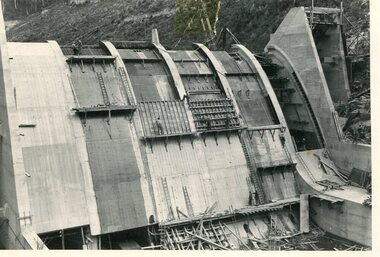
Photo - Junction Dam Construction, Circa 1940's
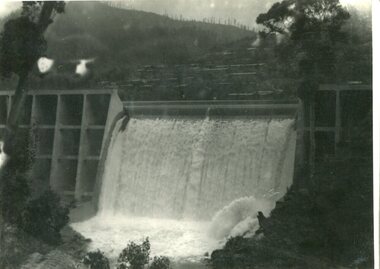
... Victoria and New South Wales. This program was initiated to supply electricity to the major southern Australian cities of Adelaide, Melbourne and Sydney. It was thought that these developments would reduce, if not eliminate, the requirement for coal driven power stations. However time has demonstrated that these power stations have not matched the demand required by the industries and the populations of the major urban and cities. Junction Dam Bogong SECV Black ...Junction (Lake Guy) Dam is a 'slab and buttress' type wall. A timber frame is built and then filled with concrete. The first batch of concrete was placed in September, 1940. By June, 1941 the buttresses were finished to a height safe from floods and in October of that year a flood of 2,800 cusecs occurred but with only slight damage to the installations. Industrial trouble caused some delays but there was also slow progress on the part of the contractor and the work was taken over by the S.E.C., terminating the contract. The dam was completed in March, 1944. A walkway was made through the dam wall. Lake Guy was named after Mr. L.T. Guy who was the Resident engineer, in charge of construction work and associated activities on the Kiewa Area from 1939 to November 1946Photos of the construction of the Junction Dam detail the harsh conditions faced by construction workers, building dams and villages to accommodate workers in the 1940s to the 1950s. Australia at this period in time, experienced a surge of population (influx of World War II refugees), which was the catalyst for developing and undergoing an enormous hydroelectricity program for the Alpine regions, both in Victoria and New South Wales. This program was initiated to supply electricity to the major southern Australian cities of Adelaide, Melbourne and Sydney. It was thought that these developments would reduce, if not eliminate, the requirement for coal driven power stations. However time has demonstrated that these power stations have not matched the demand required by the industries and the populations of the major urban and cities.Black and white photograph of Junction Dam constructionjunction dam, bogong, secv -
 Kiewa Valley Historical Society
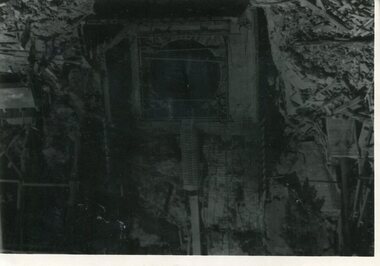
Photo - Junction Dam Diversion Tunnel
... Victoria and New South Wales. This program was initiated to supply electricity to the major southern Australian cities of Adelaide, Melbourne and Sydney. It was thought that these developments would reduce, if not eliminate, the requirement for coal driven power stations. However time has demonstrated that these power stations have not matched the demand required by the industries and the populations of the major urban and cities. Bogong SECV Junction Dam Lake Guy Handwritten on back - Junction Dam Diversional Tunnel Black ...Junction (Lake Guy) Dam is a 'slab and buttress' type wall. A timber frame is built and then filled with concrete. The first batch of concrete was placed in September, 1940. By June, 1941 the buttresses were finished to a height safe from floods and in October of that year a flood of 2,800 cusecs occurred but with only slight damage to the installations. Industrial trouble caused some delays but there was also slow progress on the part of the contractor and the work was taken over by the S.E.C., terminating the contract. The dam was completed in March, 1944. A walkway was made through the dam wall. Lake Guy was named after Mr. L.T. Guy who was the Resident engineer, in charge of construction work and associated activities on the Kiewa Area from 1939 to November 1946.Diversion dams are installed to raise the water level of a body of water to be redirected. The redirected water is used for hydro electric power generation. A diversion tunnel is usually bored through solid rock next to the dam site to bypass the dam construction site. The dam is built while the river flows through the diversion tunnel.Photos of the construction of the Junction Dam detail the harsh conditions faced by construction workers, building dams and villages to accommodate workers in the 1940s to the 1950s. Australia at this period in time, experienced a surge of population (influx of World War II refugees), which was the catalyst for developing and undergoing an enormous hydroelectricity program for the Alpine regions, both in Victoria and New South Wales. This program was initiated to supply electricity to the major southern Australian cities of Adelaide, Melbourne and Sydney. It was thought that these developments would reduce, if not eliminate, the requirement for coal driven power stations. However time has demonstrated that these power stations have not matched the demand required by the industries and the populations of the major urban and cities.Black and white photograph of Junction Dam diversion tunnel at Bogong VillageHandwritten on back - Junction Dam Diversional Tunnelbogong, secv, junction dam, lake guy -
 Kiewa Valley Historical Society
Photograph - Junction Dam spilling
... Victoria and New South Wales. This program was initiated to supply electricity to the major southern Australian cities of Adelaide, Melbourne and Sydney. It was thought that these developments would reduce, if not eliminate, the requirement for coal driven power stations. However time has demonstrated that these power stations have not matched the demand required by the industries and the populations of the major urban and cities. Bogong Junction Dam Lake Guy SECV Handwritten in pencil - Junction Dam spilling Black ...Junction (Lake Guy) Dam is a 'slab and buttress' type wall. A timber frame is built and then filled with concrete. The first batch of concrete was placed in September, 1940. By June, 1941 the buttresses were finished to a height safe from floods and in October of that year a flood of 2,800 cusecs occurred but with only slight damage to the installations. Industrial trouble caused some delays but there was also slow progress on the part of the contractor and the work was taken over by the S.E.C., terminating the contract. The dam was completed in March, 1944. A walkway was made through the dam wall. Lake Guy was named after Mr. L.T. Guy who was the Resident engineer, in charge of construction work and associated activities on the Kiewa Area from 1939 to November 1946Photos of the construction of the Junction Dam detail the harsh conditions faced by construction workers, building dams and villages to accommodate workers in the 1940s to the 1950s. Australia at this period in time, experienced a surge of population (influx of World War II refugees), which was the catalyst for developing and undergoing an enormous hydroelectricity program for the Alpine regions, both in Victoria and New South Wales. This program was initiated to supply electricity to the major southern Australian cities of Adelaide, Melbourne and Sydney. It was thought that these developments would reduce, if not eliminate, the requirement for coal driven power stations. However time has demonstrated that these power stations have not matched the demand required by the industries and the populations of the major urban and cities.Black and white photograph of Junction Dam spilling at Bogong VillageHandwritten in pencil - Junction Dam spillingbogong, junction dam, lake guy, secv -
 Ballarat Tramway Museum
Document - Report, Parliament of Victoria, "The Yallourn coal reserves", May 1971
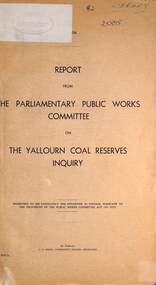
... coal power supply power engineering Has the markings of the State Transport Library. Foolscap report - 6 sheets + 3 folded sheets, stapled on the left hand side and bound with black tape. "The Yallourn coal reserves" Document Report Parliament of Victoria ...Report looked into the future of the Yallourn Township. Has a brief history of the location, the SEC power generation and its relationship the history of Vitoria. Lists the parliamentary inquiry board members, the witnesses, a table of the community organisations based at Yallourn township, coal reserves and costs. The Parliamentary Committee recommended that the SEC proposal be followed, that is close the township and mine the coal reserves that were under the township. Dated May 1971.Yallourn and other mines provided the brown coal for Ballarat B Power station and power Ballarat's tramways.Foolscap report - 6 sheets + 3 folded sheets, stapled on the left hand side and bound with black tape.Has the markings of the State Transport Library.yallourn, secv, brown coal, power supply, power engineering -
 Ballarat Tramway Museum
Photograph - Geelong tram 22, damaged following an accident
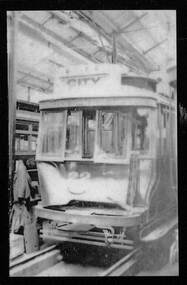
... coal? See Reg Item 7750 which shows possibly the actual event on 9-2-1927. Yields information on the nature of damage following a collision with another vehicle. The body of the tramcar is preserved by the Tramway Museum Society of Victoria at Bylands See https://tmsv.org.au/gallery/fleet/geelg22.htm Geelong tramways Pengelley accidents tram 22 trams Copy photograph on black plastic type backing with black edges of Geelong tramcar No. 22, damaged following an accident. ...Shows the results of an accident, possible at the same time of a photograph in the collection of an AEC solid tyre truck carrying sacks of coal? See Reg Item 7750 which shows possibly the actual event on 9-2-1927.Yields information on the nature of damage following a collision with another vehicle. The body of the tramcar is preserved by the Tramway Museum Society of Victoria at Bylands See https://tmsv.org.au/gallery/fleet/geelg22.htmCopy photograph on black plastic type backing with black edges of Geelong tramcar No. 22, damaged following an accident. geelong, tramways, pengelley, accidents, tram 22, trams -
Clunes Museum
Book, GRIFFIN PRESS, Up from the Underworld - Coalminers and Community in Wonthaggi 1909-1968
... Coalmining Wonthaggi 1909-1968 1909-1968 ANDREW REEVES COAL MINING Black coal mining in Victoria Australia Signed by Andrew Reeves "4 Joe 2021" PAPERBACK WITH MUSTARD COLOURED COVER AND IMAGE OF A PAINTING "MINERS WORKING IN WET CONDITIONS PAINTED BY NOEL COUNIHAN,165 pages Up from the Underworld - Coalminers and Community in Wonthaggi 1909-1968 Book BOOK GRIFFIN PRESS ANDREW REEVE ...Black coal mining in Victoria AustraliaPAPERBACK WITH MUSTARD COLOURED COVER AND IMAGE OF A PAINTING "MINERS WORKING IN WET CONDITIONS PAINTED BY NOEL COUNIHAN,165 pagesnon-fictionBlack coal mining in Victoria Australia1909-1968, andrew reeves, coal mining -
 Lakes Entrance Historical Society
Photograph - Workmen at gas works Bairnsdale Victoria, 1935 c
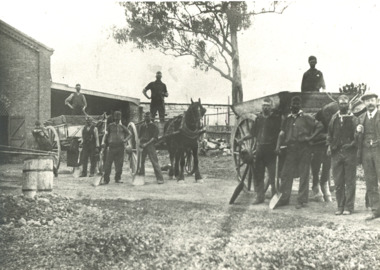
... Black and white photograph of workmen Rod McNamara, Peter Taylor, Rocky McNamara in drays, Arthur McNamara Tom McNamara Snr Mr Carusso Manager standing at gas works with horses, drays and shovels for moving coal Bairnsdale Victoria...Gas works closed in 1959 due to wide use of bottle gas after seventy years Businesses Social History Black and white photograph of workmen Rod McNamara, Peter Taylor, Rocky McNamara in drays, Arthur McNamara Tom McNamara Snr Mr Carusso Manager standing at gas works with horses, drays and shovels for moving coal Bairnsdale Victoria Workmen at gas works Bairnsdale Victoria Photograph Workmen at gas works Bairnsdale Victoria ...Gas works closed in 1959 due to wide use of bottle gas after seventy yearsBlack and white photograph of workmen Rod McNamara, Peter Taylor, Rocky McNamara in drays, Arthur McNamara Tom McNamara Snr Mr Carusso Manager standing at gas works with horses, drays and shovels for moving coal Bairnsdale Victoriabusinesses, social history -
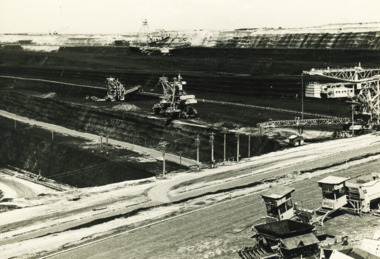 Lakes Entrance Historical Society
Photograph - Coal Mine Morwell 1970, State Electricity Commission
... Black and white phoptograph of works in progress at the open cut brown coal mine at Morwell Victoria...Mines and Mining Black and white phoptograph of works in progress at the open cut brown coal mine at Morwell Victoria Photograph Coal Mine Morwell 1970 State Electricity Commission ...Black and white phoptograph of works in progress at the open cut brown coal mine at Morwell Victoriamines and mining
