
Showing 67 items matching "borneo campaign"
-
 Warrnambool RSL Sub Branch
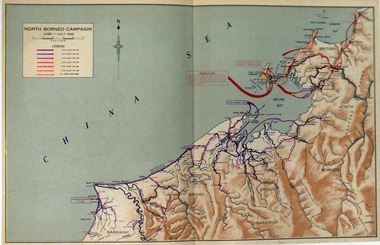
Map, NORTH BORNEO CAMPAIGN. June-July 1945
... NORTH BORNEO CAMPAIGN. June-July 1945...Colour. NORTH BORNEO CAMPAIGN. June-July 1945 Map ...Paper. Colour. Different coloured arrows show troop movements in Brunei and Labuan Islandmap ww2. north borneo -
 Dandenong/Cranbourne RSL Sub Branch
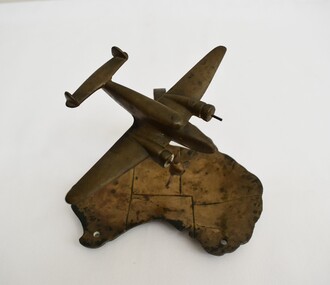
Memorabilia - Brass map of Australia with plane flying over
... ...Borneo Campaign...Memorabilia Ashtray is map of Australia S/W Pacific area Borneo Campaign None PV-1 Fighter/Bomber flying over Australia Memorabilia Brass map of Australia with plane flying over. ...MemorabiliaAshtray is map of AustraliaPV-1 Fighter/Bomber flying over AustraliaNones/w pacific area, borneo campaign -
 Bendigo Military Museum
Map - MAPS, ISLANDS WW2, Post 1945
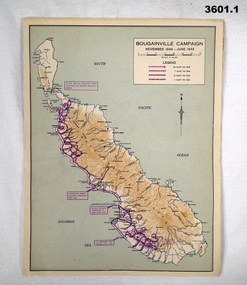
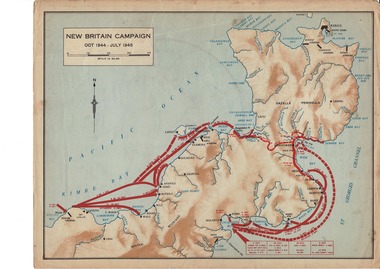
... .1) Coloured paper map of Bougainville Campaign, New Britain Campaign & Aitape - Wewak Campaign. .2) Coloured paper map of Tarakan Campaign, Balikpapin Campaign & North Borneo Campaign....Maps bouganville tarakan islands .1) Coloured paper map of Bougainville Campaign, New Britain Campaign & Aitape - Wewak Campaign. .2) Coloured paper map of Tarakan Campaign, Balikpapin Campaign & North Borneo Campaign. Map MAPS, ISLANDS WW2 ...Items were owned by William John GARLAND, 5th Army Troop. Illustrated information of the named campaigns of 1944-45..1) Coloured paper map of Bougainville Campaign, New Britain Campaign & Aitape - Wewak Campaign. .2) Coloured paper map of Tarakan Campaign, Balikpapin Campaign & North Borneo Campaign.maps, bouganville, tarakan, islands -
 Lara RSL Sub Branch
Map, World War 2 Borneo Area, 1945
... Map 1 Centre section opened - North Borneo Campaign June - July 1945. Closed Side 1 - Tarakan Campaign 1 May - 21 June 1945. ...Military maps of Australian Campaigns in the Borneo area World War 2 Borneo New Britain Bougainville Wewak Maps WW2 Map 1 Centre section opened - North Borneo Campaign June - July 1945. ...Military maps of Australian Campaigns in the Borneo area World War 2paper coloured maps from unknown bookMap 1 Centre section opened - North Borneo Campaign June - July 1945. Closed Side 1 - Tarakan Campaign 1 May - 21 June 1945. Side 2 Balikpapan Campaign July 1945 Map 2 Centre section opened - Aitape-Wewak Campaign Nov 1944 - Aug 1945. Closed Side 1 Bougainville Campaign Nov 1944 - June 1945 New Britain Campaign Oct 1944 - July 1945borneo new britain bougainville wewak maps ww2 -
 Wangaratta RSL Sub Branch
Photograph
... The Battle of Tarakan was the first stage in the Borneo campaign of 1945. It began with an amphibious landing by Australian forces on 1 May, code-named Operation Oboe One. ...The Battle of Tarakan was the first stage in the Borneo campaign of 1945. It began with an amphibious landing by Australian forces on 1 May, code-named Operation Oboe One. ...The Battle of Tarakan was the first stage in the Borneo campaign of 1945. It began with an amphibious landing by Australian forces on 1 May, code-named Operation Oboe One. While the battle ended with success for the Allied forces over the Japanese defenders, this victory is generally regarded as having not justified its costs. 225 Australian soldiers of the 26th Brigade, 9th Division, 2nd Australian Imperial Force were once buried here. They were killed in the Battle of Tarakan (1 May - 21 June 1945) or died due to their wounds until 15 August 1945.The 2/24th Battalion was an infantry battalion of the Australian Army, which served during World War II .A unit of all-volunteers, it was formed in July 1940 from primarily Victorian volunteers and was known as "Wangaratta's Own" because of the time the battalion spent in the town during its formative period prior to deployment overseas. It served in North Africa in 1941–1942 as part of the 26th Brigade, which was assigned to the 7th Division, before being reassigned to the 9th Division. In early 1943, the battalion returned to Australia and later took part in campaigns against the Japanese in New Guinea in 1943–1944 and Borneo in 1945, before being disbanded in 1946. The 2/24th suffered the highest number of casualties of any 2nd AIF infantry battalion. The Unit was granted the Freedom of the City by the Rural City of Wangaratta in 1996 and one of the first, if not the first, to receive this type of honour. Reproduced black and white photograph of a monument/cenotaph and lawn grave sites with white crosses.Handwritten on rear - Tarakan Cemetery2/24th battalion, wangaratta, tarakan -
 Bendigo Military Museum
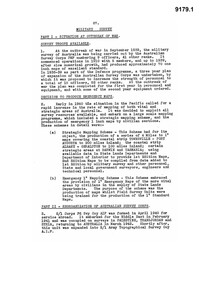
Administrative record - Australian Survey Corps - Outbreak of WWII through to 1945, Australian Survey Corps, August 1945
... Part 4 New Guinea and Borneo Campaigns, Formations and Survey Units Under Command. ...Part 4 New Guinea and Borneo Campaigns, Formations and Survey Units Under Command. ...This is an important record detailing the Military Survey Situation in Australia before and after WWII. Because of its importance, the entire five page document has been reproduced. The document is written in four parts: Part 1 Situation at the start of War and Survey Troops available. Part 2 Reorganisation of Australian Survey Corps, Liaison with American Forces, Training and Equipment. Part 3 Map Situation at 31 August 1945, Maps published by Australian Units, Distribution of Maps, Map Records and Air Photos. Part 4 New Guinea and Borneo Campaigns, Formations and Survey Units Under Command. 5 x A4 photocopied pages of typed text, stapled top LH corner. Pages are numbered 87 to 91. The entire document has been reproduced.royal australian survey corps, rasvy, fortuna, army survey regiment, army svy regt, asr -
 Wangaratta RSL Sub Branch
Photograph
... September 30,1945 - The official dedication service and unveiling of the Cenotaph at Tarakan War Cemetery The Battle of Tarakan was the first stage in the Borneo campaign of 1945. It began with an amphibious landing by Australian forces on 1 May, code-named Operation Oboe One. ...September 30,1945 - The official dedication service and unveiling of the Cenotaph at Tarakan War Cemetery The Battle of Tarakan was the first stage in the Borneo campaign of 1945. It began with an amphibious landing by Australian forces on 1 May, code-named Operation Oboe One. ...September 30,1945 - The official dedication service and unveiling of the Cenotaph at Tarakan War Cemetery The Battle of Tarakan was the first stage in the Borneo campaign of 1945. It began with an amphibious landing by Australian forces on 1 May, code-named Operation Oboe One. While the battle ended with success for the Allied forces over the Japanese defenders, this victory is generally regarded as having not justified its costs. 225 Australian soldiers of the 26th Brigade, 9th Division, 2nd Australian Imperial Force were once buried here. They were killed in the Battle of Tarakan (1 May - 21 June 1945) or died due to their wounds until 15 August 1945.The 2/24th Battalion was an infantry battalion of the Australian Army, which served during World War II .A unit of all-volunteers, it was formed in July 1940 from primarily Victorian volunteers and was known as "Wangaratta's Own" because of the time the battalion spent in the town during its formative period prior to deployment overseas. It served in North Africa in 1941–1942 as part of the 26th Brigade, which was assigned to the 7th Division, before being reassigned to the 9th Division. In early 1943, the battalion returned to Australia and later took part in campaigns against the Japanese in New Guinea in 1943–1944 and Borneo in 1945, before being disbanded in 1946. The 2/24th suffered the highest number of casualties of any 2nd AIF infantry battalion. The Unit was granted the Freedom of the City by the Rural City of Wangaratta in 1996 and one of the first, if not the first, to receive this type of honour. Reproduced black and white photograph of monument/cenotaph and catafalque party2/24th battalion, tarakan, cenotaph -
 Eltham District Historical Society Inc
Negative - Photograph, Looking northeast from Eltham-Yarra Glen Road towards the Eltham War Memorial Tower, Kangaroo Ground, 1998c
... Further wreaths were added subsequent to this image in time for the 2001 Reembrance Day service to commemorate the men from th shire who had fallen in the Malayan, Korean, Borneo and Vietnam campaigns....Further wreaths were added subsequent to this image in time for the 2001 Reembrance Day service to commemorate the men from th shire who had fallen in the Malayan, Korean, Borneo and Vietnam campaigns. Eltham-Yarra Glen Road, Garden Hill, Kangaroo Ground, Memorial Park, Shire of Eltham War Memorial Tower, War Memorial Tower Kodak Gold 100-5 Roll of 35mm colour negative film, 8 strips and associated 10 x 15 cm colour print Looking northeast from Eltham-Yarra Glen Road towards the Eltham War Memorial Tower, Kangaroo Ground Negative Photograph ...On November 11th 1926 the Shire of Eltham War Memorial Tower at Kangaroo Ground was opened. It is regarded as one of Melbourne’s most outstanding lookout towers. It commands a magnificent 360 degree panorama from Kinglake across the Diamond Valley to Macedon and the You Yangs. It is built on a peak which was once a volcano, 237 metres above sea level. After World War one a memorial cairn was erected on the site, and in 1925 a committee of public-minded citizens began to plan for a tower. Many generous donations of material and money were forthcoming so that in 1926 the Governor General Lord Stonehaven was able to unveil the plaque before a crowd of 500 people There was some concern in the 1960s when the Forests Commission wanted to build a firespotters cabin on the top. At first R.S.L. branches opposed the idea, but it was realised that this use could combine with its use as a tourist attraction, and would ensure its maintenance for the future. Today the Kangaroo Ground tower provides one of the best views around Melbourne and is a fitting memorial to those who died in two world wars. From: Historic items for Diamond Valley Community Radio September 1990 (EDHS collection) On November 8th, 1951, the memorial was re-dedicated by the Governor of Victoria, Sir Dallas Brooks with the addition of the names of men from the Shire of Eltham who fell in the Second World War. Further wreaths were added subsequent to this image in time for the 2001 Reembrance Day service to commemorate the men from th shire who had fallen in the Malayan, Korean, Borneo and Vietnam campaigns.Roll of 35mm colour negative film, 8 strips and associated 10 x 15 cm colour printKodak Gold 100-5eltham-yarra glen road, garden hill, kangaroo ground, memorial park, shire of eltham war memorial tower, war memorial tower -
 Eltham District Historical Society Inc
Photograph, View from the Shire of Eltham War Memorial Tower, Memorial Park, Garden Hill, Eltham-Yarra Glen Road, Kangaroo Ground, 8 July 1994, 08/07/1994
... Further wreaths were added subsequent to this image in time for the 2001 Reembrance Day service to commemorate the men from th shire who had fallen in the Malayan, Korean, Borneo and Vietnam campaigns....Further wreaths were added subsequent to this image in time for the 2001 Reembrance Day service to commemorate the men from th shire who had fallen in the Malayan, Korean, Borneo and Vietnam campaigns. Garden Hill, Kangaroo Ground, kangaroo ground memorial, Memorial Park, Shire of Eltham War Memorial Tower, war memorial Fuji 100 Roll of 35mm colour negative film, 4 strips View from the Shire of Eltham War Memorial Tower, Memorial Park, Garden Hill, Eltham-Yarra Glen Road, Kangaroo Ground, 8 July 1994 Photograph Photograph ...On November 11th 1926 the Shire of Eltham War Memorial Tower at Kangaroo Ground was opened. It is regarded as one of Melbourne’s most outstanding lookout towers. It commands a magnificent 360 degree panorama from Kinglake across the Diamond Valley to Macedon and the You Yangs. It is built on a peak which was once a volcano, 237 metres above sea level. After World War one a memorial cairn was erected on the site, and in 1925 a committee of public-minded citizens began to plan for a tower. Many generous donations of material and money were forthcoming so that in 1926 the Governor General Lord Stonehaven was able to unveil the plaque before a crowd of 500 people There was some concern in the 1960s when the Forests Commission wanted to build a firespotters cabin on the top. At first R.S.L. branches opposed the idea, but it was realised that this use could combine with its use as a tourist attraction, and would ensure its maintenance for the future. Today the Kangaroo Ground tower provides one of the best views around Melbourne and is a fitting memorial to those who died in two world wars. From: Historic items for Diamond Valley Community Radio September 1990 (EDHS collection) On November 8th, 1951, the memorial was re-dedicated by the Governor of Victoria, Sir Dallas Brooks with the addition of the names of men from the Shire of Eltham who fell in the Second World War. Further wreaths were added subsequent to this image in time for the 2001 Reembrance Day service to commemorate the men from th shire who had fallen in the Malayan, Korean, Borneo and Vietnam campaigns.Roll of 35mm colour negative film, 4 stripsFuji 100garden hill, kangaroo ground, kangaroo ground memorial, memorial park, shire of eltham war memorial tower, war memorial -
 Eltham District Historical Society Inc
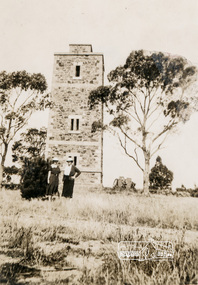
Photograph, Shire of Eltham War Memorial, Memorial Park, Garden Hill, Eltham-Yarra Glen Road, Kangaroo Ground, c.1936, 1936c
... Further wreaths were added subsequent to this image in time for the 2001 Reembrance Day service to commemorate the men from th shire who had fallen in the Malayan, Korean, Borneo and Vietnam campaigns. ...Further wreaths were added subsequent to this image in time for the 2001 Reembrance Day service to commemorate the men from th shire who had fallen in the Malayan, Korean, Borneo and Vietnam campaigns. Garden Hill, Kangaroo Ground, kangaroo ground memorial, Memorial Park, Shire of Eltham War Memorial Tower, war memorial Sepia photograph showing two ladies standing in front of the tower Shire of Eltham War Memorial, Memorial Park, Garden Hill, Eltham-Yarra Glen Road, Kangaroo Ground, c.1936 Photograph Photograph ...On November 11th 1926 the Shire of Eltham War Memorial Tower at Kangaroo Ground was opened. It is regarded as one of Melbourne’s most outstanding lookout towers. It commands a magnificent 360 degree panorama from Kinglake across the Diamond Valley to Macedon and the You Yangs. It is built on a peak which was once a volcano, 237 metres above sea level. After World War one a memorial cairn was erected on the site, and in 1925 a committee of public-minded citizens began to plan for a tower. Many generous donations of material and money were forthcoming so that in 1926 the Governor General Lord Stonehaven was able to unveil the plaque before a crowd of 500 people There was some concern in the 1960s when the Forests Commission wanted to build a firespotters cabin on the top. At first R.S.L. branches opposed the idea, but it was realised that this use could combine with its use as a tourist attraction, and would ensure its maintenance for the future. Today the Kangaroo Ground tower provides one of the best views around Melbourne and is a fitting memorial to those who died in two world wars. From: Historic items for Diamond Valley Community Radio September 1990 (EDHS collection) On November 8th, 1951, the memorial was re-dedicated by the Governor of Victoria, Sir Dallas Brooks with the addition of the names of men from the Shire of Eltham who fell in the Second World War. Further wreaths were added subsequent to this image in time for the 2001 Reembrance Day service to commemorate the men from th shire who had fallen in the Malayan, Korean, Borneo and Vietnam campaigns. Sepia photograph showing two ladies standing in front of the towergarden hill, kangaroo ground, kangaroo ground memorial, memorial park, shire of eltham war memorial tower, war memorial -
 Eltham District Historical Society Inc
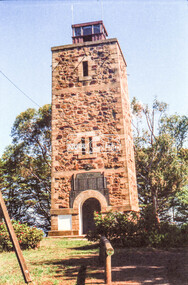
Negative - Photograph, Russell Yeoman, Shire of Eltham War Memorial, Memorial Park, Garden Hill, Eltham-Yarra Glen Road, Kangaroo Ground, c.1980
... Further wreaths were added subsequent to this image in time for the 2001 Reembrance Day service to commemorate the men from th shire who had fallen in the Malayan, Korean, Borneo and Vietnam campaigns....Further wreaths were added subsequent to this image in time for the 2001 Reembrance Day service to commemorate the men from th shire who had fallen in the Malayan, Korean, Borneo and Vietnam campaigns. Garden Hill Kangaroo Ground kangaroo ground memorial Memorial Park Shire of Eltham War Memorial Shire of Eltham War Memorial Tower war memorial Kangaroo Ground Relief Committee Kodak Safety 5035 Roll of 35mm colour negative film, 2 strips Kodak Safety 5035 Colour print (x1) Shire of Eltham War Memorial, Memorial Park, Garden Hill, Eltham-Yarra Glen Road, Kangaroo Ground Negative Photograph Russell Yeoman ...Shire of Eltham War Memorial Tower at Kangarooo Ground; view from the east and close up of entrance including Honour Roll. On November 11th 1926 the Shire of Eltham War Memorial Tower at Kangaroo Ground was opened. It is regarded as one of Melbourne’s most outstanding lookout towers. It commands a magnificent 360 degree panorama from Kinglake across the Diamond Valley to Macedon and the You Yangs. It is built on a peak which was once a volcano, 237 metres above sea level. After World War one a memorial cairn was erected on the site, and in 1925 a committee of public-minded citizens began to plan for a tower. Many generous donations of material and money were forthcoming so that in 1926 the Governor General Lord Stonehaven was able to unveil the plaque before a crowd of 500 people There was some concern in the 1960s when the Forests Commission wanted to build a firespotters cabin on the top. At first R.S.L. branches opposed the idea, but it was realised that this use could combine with its use as a tourist attraction, and would ensure its maintenance for the future. Today the Kangaroo Ground tower provides one of the best views around Melbourne and is a fitting memorial to those who died in two world wars. From: Historic items for Diamond Valley Community Radio September 1990 (EDHS collection) On November 8th, 1951, the memorial was re-dedicated by the Governor of Victoria, Sir Dallas Brooks with the addition of the names of men from the Shire of Eltham who fell in the Second World War. Further wreaths were added subsequent to this image in time for the 2001 Reembrance Day service to commemorate the men from th shire who had fallen in the Malayan, Korean, Borneo and Vietnam campaigns.Roll of 35mm colour negative film, 2 strips Kodak Safety 5035 Colour print (x1)Kodak Safety 5035garden hill, kangaroo ground, kangaroo ground memorial, memorial park, shire of eltham war memorial, shire of eltham war memorial tower, war memorial, kangaroo ground relief committee -
 Eltham District Historical Society Inc
Negative - Photograph, Russell Yeoman, Shire of Eltham War Memorial, Memorial Park, Garden Hill, Eltham-Yarra Glen Road, Kangaroo Ground, c.1980
... Further wreaths were added subsequent to this image in time for the 2001 Reembrance Day service to commemorate the men from th shire who had fallen in the Malayan, Korean, Borneo and Vietnam campaigns....Further wreaths were added subsequent to this image in time for the 2001 Reembrance Day service to commemorate the men from th shire who had fallen in the Malayan, Korean, Borneo and Vietnam campaigns. garden hill, kangaroo ground, kangaroo ground memorial, memorial park, shire of eltham war memorial tower, war memorial Garden Hill Kangaroo Ground kangaroo ground memorial Kangaroo Ground Relief Committee Memorial Park Shire of Eltham War Memorial Tower war memorial Shire of Eltham War Memorial Kodak Safety 5035 Roll of 35mm colour negative film, 2 strips Colour print (x1) Shire of Eltham War Memorial, Memorial Park, Garden Hill, Eltham-Yarra Glen Road, Kangaroo Ground Negative Photograph Russell Yeoman ...Shire of Eltham War Memorial Tower at Kangarooo Ground; view from the east and close up of entrance including Honour Roll. On November 11th 1926 the Shire of Eltham War Memorial Tower at Kangaroo Ground was opened. It is regarded as one of Melbourne’s most outstanding lookout towers. It commands a magnificent 360 degree panorama from Kinglake across the Diamond Valley to Macedon and the You Yangs. It is built on a peak which was once a volcano, 237 metres above sea level. After World War one a memorial cairn was erected on the site, and in 1925 a committee of public-minded citizens began to plan for a tower. Many generous donations of material and money were forthcoming so that in 1926 the Governor General Lord Stonehaven was able to unveil the plaque before a crowd of 500 people There was some concern in the 1960s when the Forests Commission wanted to build a firespotters cabin on the top. At first R.S.L. branches opposed the idea, but it was realised that this use could combine with its use as a tourist attraction, and would ensure its maintenance for the future. Today the Kangaroo Ground tower provides one of the best views around Melbourne and is a fitting memorial to those who died in two world wars. From: Historic items for Diamond Valley Community Radio September 1990 (EDHS collection) On November 8th, 1951, the memorial was re-dedicated by the Governor of Victoria, Sir Dallas Brooks with the addition of the names of men from the Shire of Eltham who fell in the Second World War. Further wreaths were added subsequent to this image in time for the 2001 Reembrance Day service to commemorate the men from th shire who had fallen in the Malayan, Korean, Borneo and Vietnam campaigns.Roll of 35mm colour negative film, 2 strips Colour print (x1)Kodak Safety 5035garden hill, kangaroo ground, kangaroo ground memorial, memorial park, shire of eltham war memorial tower, war memorial, garden hill, kangaroo ground, kangaroo ground memorial, kangaroo ground relief committee, memorial park, shire of eltham war memorial tower, war memorial, shire of eltham war memorial -
 Eltham District Historical Society Inc
Photograph, Shire of Eltham War Memorial, Memorial Park, Garden Hill, Eltham-Yarra Glen Road, Kangaroo Ground, c.1936
... Further wreaths were added subsequent to this image in time for the 2001 Reembrance Day service to commemorate the men from th shire who had fallen in the Malayan, Korean, Borneo and Vietnam campaigns....Further wreaths were added subsequent to this image in time for the 2001 Reembrance Day service to commemorate the men from th shire who had fallen in the Malayan, Korean, Borneo and Vietnam campaigns. Garden Hill Kangaroo Ground Kangaroo Ground Memorial Tower Shire of Eltham War Memorial Tower shire of eltham war memorial War Memorial Black and white photograph showing front angle view of tower and old watchbox on top Shire of Eltham War Memorial, Memorial Park, Garden Hill, Eltham-Yarra Glen Road, Kangaroo Ground, c.1936 Photograph Photograph ...Showing front angle view of tower and old fire watchbox on top On November 11th 1926 the Shire of Eltham War Memorial Tower at Kangaroo Ground was opened. It is regarded as one of Melbourne’s most outstanding lookout towers. It commands a magnificent 360 degree panorama from Kinglake across the Diamond Valley to Macedon and the You Yangs. It is built on a peak which was once a volcano, 237 metres above sea level. After World War one a memorial cairn was erected on the site, and in 1925 a committee of public-minded citizens began to plan for a tower. Many generous donations of material and money were forthcoming so that in 1926 the Governor General Lord Stonehaven was able to unveil the plaque before a crowd of 500 people There was some concern in the 1960s when the Forests Commission wanted to build a firespotters cabin on the top. At first R.S.L. branches opposed the idea, but it was realised that this use could combine with its use as a tourist attraction, and would ensure its maintenance for the future. Today the Kangaroo Ground tower provides one of the best views around Melbourne and is a fitting memorial to those who died in two world wars. From: Historic items for Diamond Valley Community Radio September 1990 (EDHS collection) On November 8th, 1951, the memorial was re-dedicated by the Governor of Victoria, Sir Dallas Brooks with the addition of the names of men from the Shire of Eltham who fell in the Second World War. Further wreaths were added subsequent to this image in time for the 2001 Reembrance Day service to commemorate the men from th shire who had fallen in the Malayan, Korean, Borneo and Vietnam campaigns.Black and white photograph showing front angle view of tower and old watchbox on topgarden hill, kangaroo ground, kangaroo ground memorial tower, shire of eltham war memorial tower, shire of eltham war memorial, war memorial -
 Eltham District Historical Society Inc
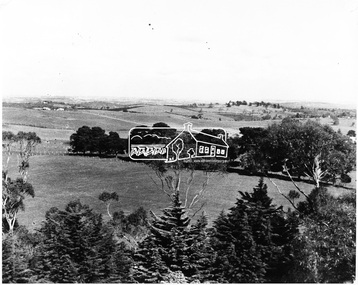
Photograph, View of Kangaroo Ground District from War Memorial Tower, 16 November 1951, 16 Nov. 1951
... Further wreaths were added in time for the 2001 Reembrance Day service to commemorate the men from th shire who had fallen in the Malayan, Korean, Borneo and Vietnam campaigns....Further wreaths were added in time for the 2001 Reembrance Day service to commemorate the men from th shire who had fallen in the Malayan, Korean, Borneo and Vietnam campaigns. This photo forms part of a collection of photographs gathered by the Shire of Eltham for their centenary project book,"Pioneers and Painters: 100 years of the Shire of Eltham" by Alan Marshall (1971). ...View from Shire of Eltham War Memorial tower at Garden Hill, Kangaroo Ground, probably taken shortly after the memorial's re-dedication held 8 Nov. 1951. On November 11th 1926 the Shire of Eltham War Memorial Tower at Kangaroo Ground was opened. It is regarded as one of Melbourne’s most outstanding lookout towers. It commands a magnificent 360 degree panorama from Kinglake across the Diamond Valley to Macedon and the You Yangs. It is built on a peak which was once a volcano, 237 metres above sea level. After World War one a memorial cairn was erected on the site, and in 1925 a committee of public-minded citizens began to plan for a tower. Many generous donations of material and money were forthcoming so that in 1926 the Governor General Lord Stonehaven was able to unveil the plaque before a crowd of 500 people There was some concern in the 1960s when the Forests Commission wanted to build a firespotters cabin on the top. At first R.S.L. branches opposed the idea, but it was realised that this use could combine with its use as a tourist attraction, and would ensure its maintenance for the future. Today the Kangaroo Ground tower provides one of the best views around Melbourne and is a fitting memorial to those who died in two world wars. From: Historic items for Diamond Valley Community Radio September 1990 (EDHS collection) On November 8th, 1951, the memorial was re-dedicated by the Governor of Victoria, Sir Dallas Brookes with the addition of the names of men from the Shire of Eltham who fell in the Second World War. Further wreaths were added in time for the 2001 Reembrance Day service to commemorate the men from th shire who had fallen in the Malayan, Korean, Borneo and Vietnam campaigns.This photo forms part of a collection of photographs gathered by the Shire of Eltham for their centenary project book,"Pioneers and Painters: 100 years of the Shire of Eltham" by Alan Marshall (1971). The collection of over 500 images is held in partnership between Eltham District Historical Society and Yarra Plenty Regional Library (Eltham Library) and is now formally known as the 'The Shire of Eltham Pioneers Photograph Collection.' It is significant in being the first community sourced collection representing the places and people of the Shire's first one hundred years.Digital image 120 format B&W negative B&W Print 12.5 x 17.5 cmsepp, shire of eltham pioneers photograph collection, kangaroo ground, garden hill, kangaroo ground tower, lookout, memorial park, panorama, shire of eltham war memorial, view, vista -
 Lara RSL Sub Branch
Book, Australia in the War of 1939-1945 - The Final Campaigns Volume VII by Gavin Long, 1963 - first published
... World War II List of Events from September 1944 to September 1945 A book in a series of WWII books which includes maps, photographs, illustrations, order of battles, POWs in Cowra, Historical WWII record of the final campaigns gavin long corowa pows bougainville final campaigns army tarakan borneo balikpapan slater's knoll stretcher bearers of the 2/23rd Australia in the War of 1939-45 ARMY The Final Campaigns LONG Australian War Memorial. ...World War II List of Events from September 1944 to September 1945 A book in a series of WWII books which includes maps, photographs, illustrations, order of battles, POWs in Cowra,Historical WWII record of the final campaignsAustralia in the War of 1939-1945 - The Final Campaigns Maps, Photographs, IllustrationsAustralia in the War of 1939-45 ARMY The Final Campaigns LONG Australian War Memorial.gavin long, corowa pows, bougainville, final campaigns, army, tarakan, borneo, balikpapan, slater's knoll, stretcher bearers of the 2/23rd -
 Shepparton RSL Sub Branch
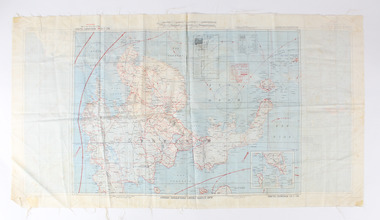
Escape Map Cloth, July 1944
... Silk escape map issued to Allied Airmen during World War 11 for the Pacific campaigns A silk escape map including detail of tides and winds was relevant to air force personnel in Pacific regions during WW2. world war ii second world war silk escape map pacific conflict AAF Cloth Cart- Philippine Series Prepared under the direction of the Commanding General, Army Air Forces, by the aeronautical Chart Service, Washington DC July 1944 Coloured Cloth Escape Map of Side A : No. C44 North Borneo ...Silk escape map issued to Allied Airmen during World War 11 for the Pacific campaignsA silk escape map including detail of tides and winds was relevant to air force personnel in Pacific regions during WW2. Coloured Cloth Escape Map of Side A : No. C44 North Borneo Side B: No C43 Mindanao Island SCALE: 1:1,000,000; Wind and Current markings; AAF Cloth Cart- Philippine Series Prepared under the direction of the Commanding General, Army Air Forces, by the aeronautical Chart Service, Washington DC July 1944world war ii, second world war, silk escape map, pacific conflict -
 Geelong RSL Sub Branch
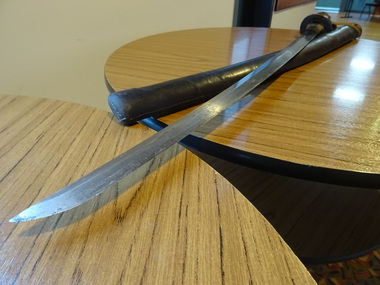
History - 2/6 Independent Company, The Purple Devils, Syd Trigellis-Smith
... The 2/6th served in four major campaigns - Kokoda, Buna, Markham-Ramu and Borneo and was involved in the Battle of Kaiapit. ...The 2/6th served in four major campaigns - Kokoda, Buna, Markham-Ramu and Borneo and was involved in the Battle of Kaiapit. ...The 2/6th Commando Squadron (Australia) was one of 12 independent companies or commando squadrons raised by the Australian Army during WW2. The 2/6th served in four major campaigns - Kokoda, Buna, Markham-Ramu and Borneo and was involved in the Battle of Kaiapit. Late in the WW2 hostilities 2/6th Commando Squadron was at Balikpapan and attached to 25th Brigade to provide support to the Brigade - reconnaissance patrols, fighting patrols, ambushes and humanitarian assistance to local inhabitants. The 2/6th Commando Squadron was disbanded in 1946. The Sword returned to Australia with a member of 2/6th Commando Squadron VX132826 W G H Burrell. The Book Purple Devils was written by Syd Trigellis Smith in his retirement, he had served during WW2 with 2/2 Field Regiment in New Guinea.VX132826 W G H Burrell served with the AIF during WW2 in New Guinea and posted to 2/6th Commando Squadron and was on Borneo and at Balikpapan. George Burrell was able to being back the sword at the end of hostilities. The Book the Purple Devils is the 2/6th Commando Squadron history as interpreted by Syd Trigellis Smith.Book Purple Devils by Syd Trigellis, Smith, a Japanise Sword - steel blade encased in a leather scabbard and the military history of VX132826 W G H Burrell who served with 2/6 th Commando Squadron.The Book - Purple Devils, a History of 2/6 Australian Commando Squadron, ISBN 064607125-4. vx132826 w g h burrell, ww2, new guinea, 2/6th commando sqn, gunto sword, purple devils -
 Australian Commando Association - Victoria
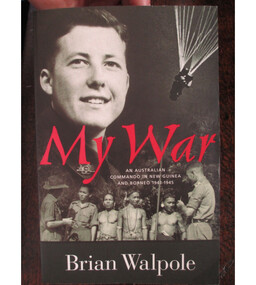
Book, My War: An Australian Commando in New Guinea and Borneo 1943 to 1945
... Borneo during WW2. Brian was a commando with the Australian 2/3 Independent Company. He went to New Guinea in January 1943 and remained until the fall of the Japanese base at Salamaua in September. He fought on the Bobdubi Ridge. His commanding officer was the well-regarded George Warfe, whose portrait was sketched by war artist Ivor Hele. Brian blazed a trail through the New Guinea jungle which appears on some maps as Walpole’s Track, discovering and naming the ambush site Goodview Junction. Soon afterwards (July 1943) Goodview Junction was the scene of a key campaign...Borneo during WW2. Brian was a commando with the Australian 2/3 Independent Company. He went to New Guinea in January 1943 and remained until the fall of the Japanese base at Salamaua in September. He fought on the Bobdubi Ridge. His commanding officer was the well-regarded George Warfe, whose portrait was sketched by war artist Ivor Hele. Brian blazed a trail through the New Guinea jungle which appears on some maps as Walpole’s Track, discovering and naming the ambush site Goodview Junction. Soon afterwards (July 1943) Goodview Junction was the scene of a key campaign ...Brian Walpole, the author, was a Australian Commando and special operations operative behind enemy lines in New Guinea and Borneo during WW2. Brian was a commando with the Australian 2/3 Independent Company. He went to New Guinea in January 1943 and remained until the fall of the Japanese base at Salamaua in September. He fought on the Bobdubi Ridge. His commanding officer was the well-regarded George Warfe, whose portrait was sketched by war artist Ivor Hele. Brian blazed a trail through the New Guinea jungle which appears on some maps as Walpole’s Track, discovering and naming the ambush site Goodview Junction. Soon afterwards (July 1943) Goodview Junction was the scene of a key campaign victory which contributed to George Warfe being awarded the Military Cross.Brian’s Special Operations training mostly took place at Careening Bay (Western Australia) and Fraser Island (Queensland). He arrived in Borneo at the time of the 9th Division’s landing at Labuan Island, and took part in two SRD operations – Colt and Semut 3. After the surrender, Walpole's work continued as many of the Japanese did not recognise the surrender and continued to fight on. Brian relates how on the 14th of September 1945 while still an operative in SRD he was able to save POWs from certain death and after a firefight arrested 10 Japanese soldiers at Simanggang Borneo. He was alone and had been assisted in the battle by 20 headhunters from the jungles along the Rejang River. One of the people saved was a young nurse in her 20s, Lena Ricketts. ww2, australian special operations, australian commando, new guinea, borneo, world war ii -
 Bendigo Military Museum
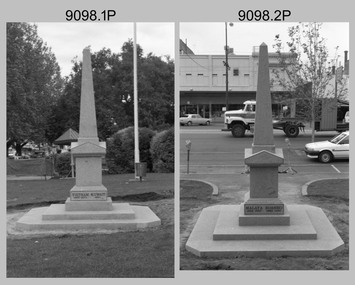
Photograph - Post- WW1 Campaigns Monument, Soldiers Memorial Institute Bendigo, 1992
... The following tributes are inscribed on the four sides of the grey granite obelisk – Front of monument: THIS MONUMENT HAS BEEN ERECTED BY THE CITIZENS OF BENDIGO & DISTRICT AS A TRIBUTE TO THE MEN & WOMEN WHO SERVED THEIR COUNTRY IN ALL CAMPAIGNS SINCE THE GREAT WAR 1914 – 1918. WORLD WAR II 1939 – 1945, MALAYA 1948 – 1960. Back of monument: BORNEO 1962– 1966. ...The following tributes are inscribed on the four sides of the grey granite obelisk – Front of monument: THIS MONUMENT HAS BEEN ERECTED BY THE CITIZENS OF BENDIGO & DISTRICT AS A TRIBUTE TO THE MEN & WOMEN WHO SERVED THEIR COUNTRY IN ALL CAMPAIGNS SINCE THE GREAT WAR 1914 – 1918. WORLD WAR II 1939 – 1945, MALAYA 1948 – 1960. Back of monument: BORNEO 1962– 1966. ...This is a set of six photographs of the Grey granite monument located at the front of the Soldiers Memorial Institute Military Museum, 37-39 Pall Mall, Bendigo taken in November 1991. The following tributes are inscribed on the four sides of the grey granite obelisk – Front of monument: THIS MONUMENT HAS BEEN ERECTED BY THE CITIZENS OF BENDIGO & DISTRICT AS A TRIBUTE TO THE MEN & WOMEN WHO SERVED THEIR COUNTRY IN ALL CAMPAIGNS SINCE THE GREAT WAR 1914 – 1918. WORLD WAR II 1939 – 1945, MALAYA 1948 – 1960. Back of monument: BORNEO 1962– 1966. Left side of monument: KOREA 1950 – 1953. Right side of monument: VIETNAM 1962 – 1973, KUWAIT 1991. Refer to item 8245.2 for more information on the planning processes prior to construction. This set of six photographs of the monument located at the front of the Soldiers Memorial Institute Military Museum, 37-39 Pall Mall, Bendigo was taken in November 1992. The black and white photographs are on 35mm negative film and scanned at 2400 dpi. They are part of the Army Survey Regiment’s Collection. .1) to .6) - Photo, black & white, 1992, Soldiers Memorial Institute Post- WW1 Campaigns Monument. ‘New RSL War Monument Nov 1992’ is annotated on the negative sleeve.rasvy, army survey regiment, army svy regt, fortuna, royal australian survey corps, soldiers memorial institute military museum -
 Waverley RSL Sub Branch
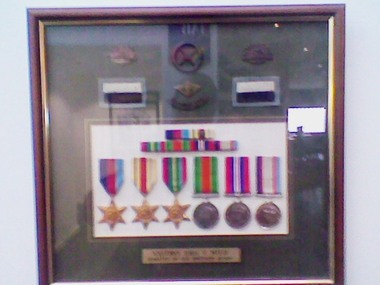
Medal set Framed
... Borneo and Darwin. Pte. Eric Wild D.O.B. 30/09/1909 enlisted in Windosr Vic. 27/05 1940. and served with the 16RWAR. until his discharge 27/10/1944, at which time he had been assigned to 2/2 Army Fld. Wshops. He saw service in Africa and the Pacific 16 RWAR Campaign ...During WWII the Batallion fought in Syria, New Guinea,Borneo and Darwin. Pte. Eric Wild D.O.B. 30/09/1909 enlisted in Windosr Vic. 27/05 1940. and served with the 16RWAR. until his discharge 27/10/1944, at which time he had been assigned to 2/2 Army Fld. Wshops. He saw service in Africa and the Pacific 16 RWAR Campaign WWII North Africa 1941, Syria, Syrian Frontier, The Litani, Sidon, Wadi Zeini, Damour, South West Pacific 1942 - 1945, Kokoda Trail, Isurava, Eora Creek, Templetons Crossing, Efogi-Menari, Ioribaiwa, Buna-Gona, Gona, Liberation of Australian New Guinea, Ramu Valley, Shaggy Ridge, Borneo, Balikpapan, WaitavoloMedal set 1939-45 star, Africa star,Pacific Star,Defence Medal,War Medal 1939-45 and Australian Service Medal 1939-45.Also patches for 16 RWAR Awarded to Wild, Eric Vincent VX 17865 2/2 Field Workshop16 rawr, wild eric vincent -
 Monbulk RSL Sub Branch
Book, Australian War Memorial, The final campaigns, 1966
... World War 1939-1945 - Australian involvement World War 1939-1945 - Campaigns - South West Pacific Australian involvement in the final campaigns in Bouganville, New Guinea and Borneo Index, ill, maps, p.667. ...Australian involvement in the final campaigns in Bouganville, New Guinea and BorneoIndex, ill, maps, p.667.non-fictionAustralian involvement in the final campaigns in Bouganville, New Guinea and Borneoworld war 1939-1945 - australian involvement, world war 1939-1945 - campaigns - south west pacific -
 Kyneton RSL Sub Branch
Framed print, 3rd Battalion Royal Australian Regiment
... Battle Honours of 3rd Battalion 1948 Japan 1950, Korea, Malaya, Borneo, Vietnam (with dates) Black frame with glass, logo of 3rd Battalion RAR surrounded by campaigns. 3rd Battalion Royal Australian Regiment Framed print ...Battle Honours of 3rd BattalionBlack frame with glass, logo of 3rd Battalion RAR surrounded by campaigns.1948 Japan 1950, Korea, Malaya, Borneo, Vietnam (with dates) -
 Wangaratta RSL Sub Branch
Photograph, C1940
... In early 1943, the battalion returned to Australia and later took part in campaigns against the Japanese in New Guinea in 1943–1944 and Borneo in 1945, before being disbanded in 1946. ...Members of the 2/24th Battalion marching in Wangaratta. The Unit was raised in Wangaratta in July 1940 and the photograph was taken in late 1940 prior to overseas deployment to the middle east during WW2The 2/24th Battalion was an infantry battalion of the Australian Army, which served during World War II .A unit of all-volunteers, it was formed in July 1940 from primarily Victorian volunteers and was known as "Wangaratta's Own" because of the time the battalion spent in the town during its formative period prior to deployment overseas. It served in North Africa in 1941–1942 as part of the 26th Brigade, which was assigned to the 7th Division, before being reassigned to the 9th Division. In early 1943, the battalion returned to Australia and later took part in campaigns against the Japanese in New Guinea in 1943–1944 and Borneo in 1945, before being disbanded in 1946. The 2/24th suffered the highest number of casualties of any 2nd AIF infantry battalion. The Unit was granted the Freedom of the City by the Rural City of Wangaratta in 1990 and one of the first, if not the first, to receive this type of honour. Reproduced photograph of soldiers marching along street lined with parked vehiclesHandwritten on rear - 2/24th Marching in Wangaratta late 19402/24th battalion, wangaratta, ww2 -
 Wangaratta RSL Sub Branch
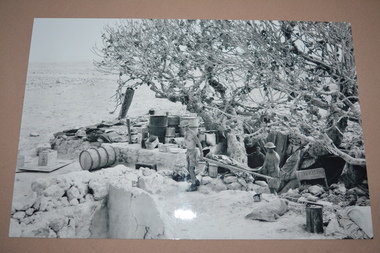
Photograph, c1941
... In early 1943, the battalion returned to Australia and later took part in campaigns against the Japanese in New Guinea in 1943–1944 and Borneo in 1945, before being disbanded in 1946. ...The famous Tobruk Fig Tree was named because it marked the entrance to a network of underground caves used to treat wounded soldiers. It became known as the Fig Tree Hospital. The caves became a place where wounded soldiers could be stabilized before being transferred to the Australian General Hospital. The Fig Tree was the only feature in an otherwise barren desert and an easy target for German artillery who heavily shelled the site for several hours per day. A cutting from the tree was brought back to Australia and planted at Melbourne's Shrine of Remembrance.The 2/24th Battalion was an infantry battalion of the Australian Army, which served during World War II .A unit of all-volunteers, it was formed in July 1940 from primarily Victorian volunteers and was known as "Wangaratta's Own" because of the time the battalion spent in the town during its formative period prior to deployment overseas. It served in North Africa in 1941–1942 as part of the 26th Brigade, which was assigned to the 7th Division, before being reassigned to the 9th Division. In early 1943, the battalion returned to Australia and later took part in campaigns against the Japanese in New Guinea in 1943–1944 and Borneo in 1945, before being disbanded in 1946. The 2/24th suffered the highest number of casualties of any 2nd AIF infantry battalion. The Unit was granted the Freedom of the City by the Rural City of Wangaratta in 1996 and one of the first, if not the first, to receive this type of honour. Reproduced black and white photograph of four soldiers under large tree - one soldier in dugout under tree watching two stretcher bearers carry out wounded soldierHandwritten on rear - Fig Tree Tobruk 2/24th battalion, fig tree, tobruk -
 Wangaratta RSL Sub Branch
Photograph, c1941
... In early 1943, the battalion returned to Australia and later took part in campaigns against the Japanese in New Guinea in 1943–1944 and Borneo in 1945, before being disbanded in 1946. ...Unit colour patches on uniforms indicate soldiers are members of the 2/24th Battalion.The 2/24th Battalion was an infantry battalion of the Australian Army, which served during World War II .A unit of all-volunteers, it was formed in July 1940 from primarily Victorian volunteers and was known as "Wangaratta's Own" because of the time the battalion spent in the town during its formative period prior to deployment overseas. It served in North Africa in 1941–1942 as part of the 26th Brigade, which was assigned to the 7th Division, before being reassigned to the 9th Division. In early 1943, the battalion returned to Australia and later took part in campaigns against the Japanese in New Guinea in 1943–1944 and Borneo in 1945, before being disbanded in 1946. The 2/24th suffered the highest number of casualties of any 2nd AIF infantry battalion. The Unit was granted the Freedom of the City by the Rural City of Wangaratta in 1996 and one of the first, if not the first, to receive this type of honour. Reproduced black and white photograph of group of armed soldiers at rest in open barren landscape Stamped on rear - resting en route2/24th battalion, wangaratta, middle east -
 Wangaratta RSL Sub Branch
Photograph, c1941
... In early 1943, the battalion returned to Australia and later took part in campaigns against the Japanese in New Guinea in 1943–1944 and Borneo in 1945, before being disbanded in 1946. ...image of soldiers wearing shorts loading stretcher into rear of vehicle most likely taken during the middle east campaign in 1941 one of whom is possibly Francis Williams VX 34295 of the 2/24th Battalion.The 2/24th Battalion was an infantry battalion of the Australian Army, which served during World War II .A unit of all-volunteers, it was formed in July 1940 from primarily Victorian volunteers and was known as "Wangaratta's Own" because of the time the battalion spent in the town during its formative period prior to deployment overseas. It served in North Africa in 1941–1942 as part of the 26th Brigade, which was assigned to the 7th Division, before being reassigned to the 9th Division. In early 1943, the battalion returned to Australia and later took part in campaigns against the Japanese in New Guinea in 1943–1944 and Borneo in 1945, before being disbanded in 1946. The 2/24th suffered the highest number of casualties of any 2nd AIF infantry battalion. The Unit was granted the Freedom of the City by the Rural City of Wangaratta in 1996 and one of the first, if not the first, to receive this type of honour. Reproduced black and white photograph of seven soldiers of which four are loading a stretcher into rear of vehicle.Handwritten on rear - Tobruk 1941 Left Francis William ? ???2/24th battalion, tobruk, ww2, middle east -
 Wangaratta RSL Sub Branch
Photograph, c1941
... In early 1943, the battalion returned to Australia and later took part in campaigns against the Japanese in New Guinea in 1943–1944 and Borneo in 1945, before being disbanded in 1946. ...Black and white image of large sign in the desert/barren location. Sign reads DO NOT LEAVE YOUR VEHICLE UNATTENDED IN ALEXANDRIA, OR IT MAY BE STOLEN.The 2/24th Battalion was an infantry battalion of the Australian Army, which served during World War II .A unit of all-volunteers, it was formed in July 1940 from primarily Victorian volunteers and was known as "Wangaratta's Own" because of the time the battalion spent in the town during its formative period prior to deployment overseas. It served in North Africa in 1941–1942 as part of the 26th Brigade, which was assigned to the 7th Division, before being reassigned to the 9th Division. In early 1943, the battalion returned to Australia and later took part in campaigns against the Japanese in New Guinea in 1943–1944 and Borneo in 1945, before being disbanded in 1946. The 2/24th suffered the highest number of casualties of any 2nd AIF infantry battalion. The Unit was granted the Freedom of the City by the Rural City of Wangaratta in 1996 and one of the first, if not the first, to receive this type of honour. Reproduced black and white photograph of large warning sign in English in open barren landscape.2/24th battalion, ww2, middle east, alexandria -
 Wangaratta RSL Sub Branch
Photograph
... In early 1943, the battalion returned to Australia and later took part in campaigns against the Japanese in New Guinea in 1943–1944 and Borneo in 1945, before being disbanded in 1946. ...On 4 April 1935 the ship was launched by Elizabeth, Duchess of York, one of the daughters of the Earl of Strathmore, soon to become queen. In 1938 the ship brought the Australian cricket team, including Don Bradman, to England for the 1938 Ashes series On 31 March 1940, the vessel was requisitioned by the Ministry of War Transport, and served as a troop ship, with no major incidents in that role during the rest of the Second World War. The 2/24th Battalion raised in Wangaratta in July 1940 sailed for the Middle East on the troopship RMS "Strathmore" arriving in Palestine in December 1940.The 2/24th Battalion was an infantry battalion of the Australian Army, which served during World War II .A unit of all-volunteers, it was formed in July 1940 from primarily Victorian volunteers and was known as "Wangaratta's Own" because of the time the battalion spent in the town during its formative period prior to deployment overseas. It served in North Africa in 1941–1942 as part of the 26th Brigade, which was assigned to the 7th Division, before being reassigned to the 9th Division. In early 1943, the battalion returned to Australia and later took part in campaigns against the Japanese in New Guinea in 1943–1944 and Borneo in 1945, before being disbanded in 1946. The 2/24th suffered the highest number of casualties of any 2nd AIF infantry battalion. The Unit was granted the Freedom of the City by the Rural City of Wangaratta in 1996 and one of the first, if not the first, to receive this type of honour. Reproduced photograph of ship at seaStrathmore carried 2/242/24th battalion, wangaratta, rms strathmore, ww2 -
 Wangaratta RSL Sub Branch
Photograph
... In early 1943, the battalion returned to Australia and later took part in campaigns against the Japanese in New Guinea in 1943–1944 and Borneo in 1945, before being disbanded in 1946. ...SATTELBERG AREA, NEW GUINEA. 1943-11-15. A PATROL OF THE 2/24TH. AUSTRALIAN INFANTRY BATTALION LEAVING THE BATTALION LINES. SHOWN ARE: VX14320. PRIVATE A. W. M. CORCORAN. (1) VX75910 PRIVATE N. W. JONES. (2) VX33860 LIEUTENANT J. H. CAPLE. (3) VX75647 PRIVATE P. L. MATHIESON. (4) VX31579 CORPORAL R. W. WEBB. (5) VX75207 PRIVATE D. N. MUIR. (6) NX73554 PRIVATE H. T. ROCHE. (7) VX76785 PRIVATE R. W. RICE. (8)The 2/24th Battalion was an infantry battalion of the Australian Army, which served during World War II .A unit of all-volunteers, it was formed in July 1940 from primarily Victorian volunteers and was known as "Wangaratta's Own" because of the time the battalion spent in the town during its formative period prior to deployment overseas. It served in North Africa in 1941–1942 as part of the 26th Brigade, which was assigned to the 7th Division, before being reassigned to the 9th Division. In early 1943, the battalion returned to Australia and later took part in campaigns against the Japanese in New Guinea in 1943–1944 and Borneo in 1945, before being disbanded in 1946. The 2/24th suffered the highest number of casualties of any 2nd AIF infantry battalion. The Unit was granted the Freedom of the City by the Rural City of Wangaratta in 1990 and one of the first, if not the first, to receive this type of honourReproduced black and white photograph of armed soldier on patrol in jungle terrain2/24th battalion, new guinea, ww2
