
Showing 3379 items matching "buildings of the time."
-
 Buninyong & District Historical Society
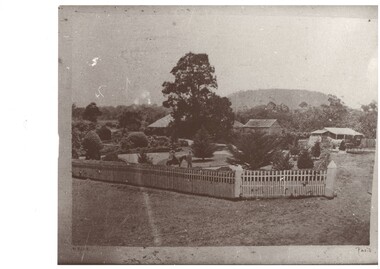
Photograph - Mount Buninyong Homestead front view, with part of gardens, The Scott Family's first home in Buninyong
... Buildings of the time....Buildings of the time. Garden layout. Horse riding Horse and buggy. ...buildings of the time., garden layout., horse riding, horse and buggy., mount buninyong -
 Bendigo Historical Society Inc.
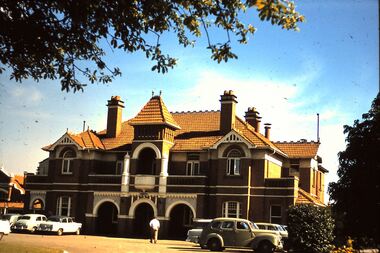
Slide - FLEMING COLLECTION: 1950S BENDIGO SLIDE, 1950s
... Bendigo 1950s. Building unknown at this time...Bendigo 1950s. Building unknown at this time....BUILDINGS Bendigo 1950s. Building unknown at this time SPEX a Lego Product Bendigo 1950s. ...Bendigo 1950s. Building unknown at this time.SPEX a Lego Productbuildings, bendigo 1950s. building unknown at this time -
 Wodonga & District Historical Society Inc
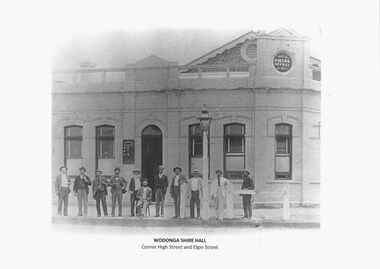
Photograph - Wodonga Civic Buildings Over Time
... A series of photographs depicting the different buildings used to house the Wodonga Council and Civic buildings over time....Wodonga Civic buildings Wodonga Council Shire of Wodonga Rural City of Wodonga A series of photographs depicting the different buildings used to house the Wodonga Council and Civic buildings over time. Wodonga Civic Buildings Over Time Photograph Wodonga Civic Buildings Over Time ...Wodonga Shire was created in 1876 when the colonial government agreed to ratepayers' petitions to have their part of the local government district severed from the Yackandandah Shire to form a new municipality. After meeting for 14 years in rented remises, in the Prince of Wales Hall, Wodonga Council built its first Shire Hall on the corner of High and Elgin Streets in 1890. The date on the façade of the building, 1876, represents the date of the formation of the Shire. In 1957 the second Shire Office was built in Woodland Grove by A.B. and M. A. Chick. These offices were considered more than adequate for future needs. The façade featured floor to ceiling windows and several different meeting rooms in addition to the council chamber, which featured an impressive “horse shoe” table. It also included a kitchen equipped with modern fittings and a President’s room. In the late 1960s the area between Hovell and Havelock Streets as far as Jack Hore Place was zoned for civic purposes. In 1969 plans for a civic centre providing a library, theatre and senior citizens’ rooms. It was opened on 22 April 1971. In 1973, the Council engaged Bruce Marshall to design new offices beside the Civic Centre. Jennings Industries were contracted to complete the offices. The Governor, Sir Henry Winneke, laid the foundation stone of the new offices on 10 March 1976. The Civic Centre was demolished in 2011 to make may for a new $10 million community and entertainment centre which opened in August 2012.These photos are significant because they depict the different buildings which have housed the centre of local government in Wodonga since its inception as an independent shire in 1876.A series of photographs depicting the different buildings used to house the Wodonga Council and Civic buildings over time.wodonga civic buildings, wodonga council, shire of wodonga, rural city of wodonga -
 Kilmore Historical Society
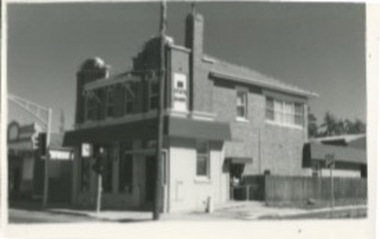
Photograph, 27 Sydney Street
... The occupants of the building at the time of the photograph was the State Bank. ...The occupants of the building at the time of the photograph was the State Bank. ...14cm x 9cm black and white photograph of the building at 27 Sydney Street. The occupants of the building at the time of the photograph was the State Bank. Double story building with a semi-rendered facade and a medium toned brick building, with a wooden fence on the side. There is a side access ramp, and an analog clock on the front of the building.Written on the building: 27 Syd SSB IIIbank, state bank, banks and banking -
 Wodonga & District Historical Society Inc
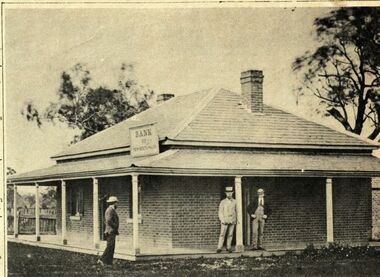
Photograph - Bank of New South Wales, Wodonga
... A series of photos both black and white and coloured which document changes in the former Bank of New South Wales building in Wodonga over time....Wodonga businesses Banking Wodonga Bank NSW Wodonga Businesses High Street Wodonga Photo 1: On sign above verandah "BANK of NEW SOUTH WALES" Photo 2: On sides of building and above door: "BANK OF NEW SOUTH WALES" Photo 3: Above door: "HIRE/ VIDEO MADNESS/ SALES" Photo 4: Above door: "WODONGA TRAVEL" A series of photos both black and white and coloured which document changes in the former Bank of New South Wales building in Wodonga over time. Bank of New South Wales, Wodonga Photograph Bank of New South Wales, Wodonga ...The first Bank of New South Wales building in Wodonga was located in a small cottage. The branch opened on 7 May 1872. At first it was conducted as an agency of the Beechworth branch. In October 1872 premises in Sydney road were purchased from Mr P. L. M. S. Chauncy for £650. When the bank commenced in the cottage the first account was opened in the name of Hillerman & Co, storekeepers, Wodonga. Another early account was in the name of William Huon, squatter of de Kerilleau, Wodonga. On 9 July 1873, the agency was converted into full branch under the management of Mr. Joseph Belcher. Other early accounts included Cronin & Callaghan, storekeepers; John Bassett Jnr, shoemaker; John Jennings, contractor; Ah Soon, tobacco grower, Kergunyah; John de Corney Ireland, collector of customs; Andrew Kyle, fellmonger; Rowan Lockhead, accountant; Alexander McKay, publican; George Pollard, farmer; Thomas Street, farmer; and Edmund Uren, gentleman, Buninyong. Organisations banking at the branch included Wodonga Building Society, 1873; Wodonga Mechanics Institute 1875; Wodonga Band Fund 1882; Talgarno Athenaeum, 1888; Talgarno Butter & Cheese Factory 1892; Wodonga Federation League 1893; Wodonga Brass Band 1895; Wodonga Benevolent Society 1895; Wodonga Fire Brigade 1897; Wodonga Rifle Club and Wodonga Racing Club in 1899 and Kiewa Polo Club in 1900. There were also numerous lodge and church accounts. The cottage was later renovated with a porch added in 1889 and an extension to the residence in 1898. The original house was eventually demolished to make way for a new bank and manager’s residence in Sydney Road in 1906. That building was again remodelled in 1969. It became a branch of the WESTPAC bank when the Bank of NSW and CBA Bank joined to become the Westpac Banking Corporation in 1982. After the building ceased operation as a bank, it has been the home to several businesses including a video store, a travel agency and a clothing store.These images have local significance as they record changes to a building which filled an important role in the commercial life of Wodonga.A series of photos both black and white and coloured which document changes in the former Bank of New South Wales building in Wodonga over time.Photo 1: On sign above verandah "BANK of NEW SOUTH WALES" Photo 2: On sides of building and above door: "BANK OF NEW SOUTH WALES" Photo 3: Above door: "HIRE/ VIDEO MADNESS/ SALES" Photo 4: Above door: "WODONGA TRAVEL"wodonga businesses, banking wodonga, bank nsw wodonga, businesses high street wodonga -
 Bendigo Historical Society Inc.
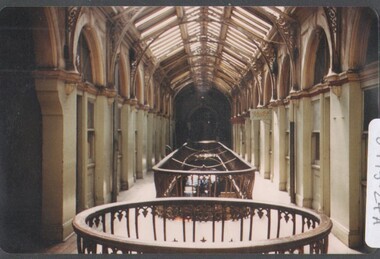
Photograph - ESTELLE HEWSTON COLLECTION: TWO PHOTGRAPHS OF BENDIGO STOCK EXCHANGE PALL MALL, August/September 1987
... Elaborate metalwork on balustrade. 24B Outside of the Beehive Building at the time of closure August/September 1987. ...Elaborate metalwork on balustrade. 24B Outside of the Beehive Building at the time of closure August/September 1987. ...Two colour photographs of the Bendigo Stock Exchange building Pall Mall, Bendigo Stock Exchange closed Aug / Sept 1987 24A Inside of the Bendigo Stock Exchange building approximately 1990. Elaborate metalwork on balustrade. 24B Outside of the Beehive Building at the time of closure August/September 1987. Street is Pall Mall. Photograph given to Carol H by Edith Lunn.Estelle Hewstonbeehive, stock exchange -
 Freemasons Victoria - Gordon Lodge, 99
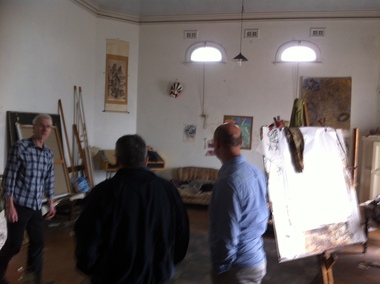
Original Gordon Lodge lodge-room 1886
... Below is a newspaper article from the North Melbourne Advertiser (Vic: 1873 - 1894) for Friday 22 April 1887 that describes the architecture of the building at the time of its completion. From some of the details included in the article it is obvious that the journalist who wrote the article was a Freemason. ...Below is a newspaper article from the North Melbourne Advertiser (Vic: 1873 - 1894) for Friday 22 April 1887 that describes the architecture of the building at the time of its completion. From some of the details included in the article it is obvious that the journalist who wrote the article was a Freemason. ...A picture of the original Gordon Lodge lodge-room of 1886 - room currently in use by the Lodge's artist-in-residence. Below is a newspaper article from the North Melbourne Advertiser (Vic: 1873 - 1894) for Friday 22 April 1887 that describes the architecture of the building at the time of its completion. From some of the details included in the article it is obvious that the journalist who wrote the article was a Freemason. THE MASONIC HALL ASCOT VALE North Melbourne Advertiser (Vic. : 1873 - 1894) Friday 22 April 1887 THE MASONIC HALL ASCOT VALE The now Masonic Hall, Ascot Vale, the foundation stone of which was laid by the Worshipful Master of the Gordon Lodge (Bro, W. F. Lamonby) in October last has just been completed, and will be formally opened: with grand Masonic ball on the 13th prox. The hall stands on a fine block of land having a frontage of 50ft to the Maribyrnong road by a depth of 130 ft., and is built of brick and cement on a most substantial foundation of bluestone. The Tuscan style of architecture has been adopted with the most successful result, and the front design which is especially handsome, includes four massive pilasters with frieze architrave and enriched cornice, forming the entablature of the order,- and giving a most imposing appearance. The front door, over which are the masonic emblems, is seven feet wide, and two escape doors made to open outwards in compliance with the Central Board of Health regulations are also provided, in case of emergency. In the vestibule is a very fine elliptic arch with keystone enriched with fruit, and the whole floor, 9ft. 6in. wide, is laid with Cawkwell's encaustic tyles. On the right, of tile vestibule is a commodious committee room 22ft. by 12ft 6in with side entrance for members, so that in case the main hall is engaged no inconvenience need be caused. On the left is the Secretary's room, and off this again is a staircase cellar. The vestibule is well lighted with two exceedingly pretty chandeliers, which have a very pleasing effect and give it a nice bright appearance ascending a handsome staircase leading from the vestibule the upper storey is reached, and here everything is splendidly arranged, especially 'the Lodge Room, which is a model of neatness and of comfort. The dimensions are 28ft. x 22ft 6in. with an elevation of 17ft. 6in. to the beautiful cove ceiling, which is quite a work of art. At the east end of the room on a raised dais is the master's chair with the masonic emblems, and neat forms of polished kauri are placed at the sides for members, about 150 of whom can be accommodated. The lighting and ventilation have both been well attended to and all is very complete. The main hall is 75ft. by 35 ft. with a stage 15ft. deep, leaving the auditorium 60ft. x 35ft. with a seating capacity about 600. Round the walls up to 6ft 6in. is a handsome dado in Portland cement and above it are panelled Tuscan pilasters to the entablature, architrave enriched frieze and medallion cornice forming the main cornice to the hall. Immediately inside the cornice is a sunken panel all-round the ceiling relieved with ornamental outlet ventilators. There are twelve large windows, six on each aide, and the sashes, skirting boards, and doors throughout the building are beautifully painted in imitation of grained cedar. Two enormous gas reflectors, each for 50 lights are suspended from the ceiling and besides these, four elegant hanging chandeliers for lighting up the proscenium, and back of the stage, under which is a storeroom for seats, &c, when the hall is required for a ball. The floor is made of kauri, secretly nailed, and is beautifully finished off. At the back of the stage are two lavatories and ladies and gentlemen's dressing rooms, between which are a connecting passage for a call boy. Outside is a capital asphalted yard, and the other usual conveniences on an improved plan. There is a right-of-way asphalted on each side of the building, and a large lamp is to be placed opposite the main entrance to light up the front. Everything that forethought and ability could suggest to make the hall comfortable and popular has been done, and it now only remains for the public to avail themselves of the advantages offered them by the enterprising Company. The cost of the building and furniture, including a magnificent piano, was £2,500, and the land £300. Mr J. C. M. Cowan, of Ascot Vale, is the architect, and Messrs Parker and Pater, of South Melbourne, the contractors. The plastering was done by Mr I Nicholas, of Murray Street, Moonee Ponds, who is also entitled to great praise for his splendid workmanship. Mr Cowan has been most assiduous and particular in seeing that his instructions were carried out to his satisfaction, and the result must be exceedingly gratifying to him and to the directors. The Masonic hall is only one of the many buildings erected by Mr Cowan in this district, among the others being the well known residences of Meessrs. J. Levy, Mooneo Street; W. Murphy, Eglington street; G. Groube, Maribyrnong street; C. A. Arvier, Moonee Ponds ; and F. Paul, Mount Alexander road. It may also be mentioned that Mr Cowan generously presented the plans for the now local fire brigade tower which is acknowledged to be one of the strongest and most graceful around Melbourne, The new Masonic Hall does infinite credit to the borough, and in accommodation, design, and comfort it is not surpassed by any similar building of the kind outside the city. -
 Peterborough History Group
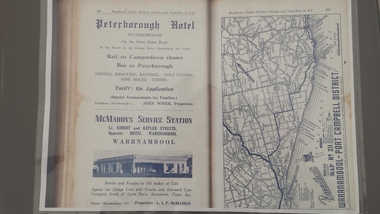
Book - Broadbents Map Warrnambool - Port Campbell district
... Advertisement for the significant local building of the time for the Peterborough Hotel. Also contains detailed map of the local roads....Advertisement for the significant local building of the time for the Peterborough Hotel. Also contains detailed map of the local roads. ...Advertisement for the significant local building of the time for the Peterborough Hotel. Also contains detailed map of the local roads.The Peterborough Hotel was a significant local building until it burned down in the 1960's.A4 copy of a Broadbent Map which includes an advertisement for the Peterborough Hotel. Approx 1950-1960.peterborough hotel, broadbents guide, peterborough hotel advertisment, john wiber, james irvine -
 Ballarat Tramway Museum
Photograph - Digital image, W. J. Llewelyn, 29/11/1970 12:00:00 AM
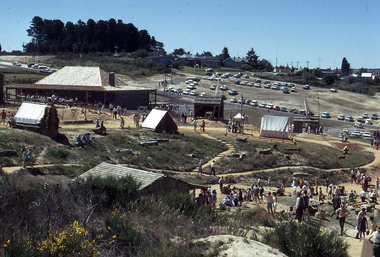
... Llewelyn. .1 - Looking across to the car park over the tents as the main Park entry building of the time. .2 - crowed on the hill looking toward the Main Street and associated buildings. .3 - view from the Poppet Mine head back northwards to the car park. ...Llewelyn. .1 - Looking across to the car park over the tents as the main Park entry building of the time. .2 - crowed on the hill looking toward the Main Street and associated buildings. .3 - view from the Poppet Mine head back northwards to the car park. ...Set of three colour digital images taken of the opening of Sovereign Hill Historical Park 29/11/1970 by W. J. Llewelyn. .1 - Looking across to the car park over the tents as the main Park entry building of the time. .2 - crowed on the hill looking toward the Main Street and associated buildings. .3 - view from the Poppet Mine head back northwards to the car park. Date obtained from https://en.wikipedia.org/wiki/Sovereign_Hill (accessed 11-6-2017)trams, tramways, sovereign hill, opening, civic functions -
 Melbourne Tram Museum
Document - Preston Workshops, Public Transport Corporation (PTC), Emergency Evacuation Plan", Oct. 1994
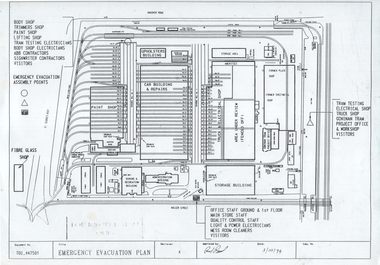
... Plan dated 3/10/1994 shows the layout of the Preston Workshops tracks, buildings at the time and emergency evacuation assembly points. ...Plan dated 3/10/1994 shows the layout of the Preston Workshops tracks, buildings at the time and emergency evacuation assembly points. ...Plan dated 3/10/1994 shows the layout of the Preston Workshops tracks, buildings at the time and emergency evacuation assembly points. At the time operated by the Public Transport Corporation with ABB Contractors and Goninan Tram Project Offices. Document Number T01_447501.Yields information about the layout of Preston Workshops in 1994.Photocopy of an A4 plan or document.tramways, trams, preston workshops, floor plans, track plans -
 Whitehorse Historical Society Inc.
Ceramic - Tile, 1950s
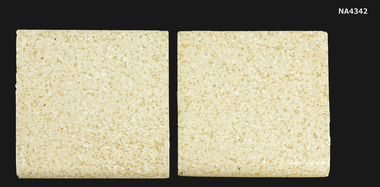
... Collected by donor from Site of Tessellated Tile Company buildings at time of demolition....Collected by donor from Site of Tessellated Tile Company buildings at time of demolition. ceramics earthenware Cream Speckled Tesselated Tile C. 1950. ...Collected by donor from Site of Tessellated Tile Company buildings at time of demolition.Cream Speckled Tesselated Tile C. 1950. Made by the Australian Tesselated Tile Company, Mitcham.ceramics, earthenware -
 Streatham and District Historical Society
Picture, Streatham Hall
... Shows the structure and building mateials of the time. Demonstrats the need for social acivities and the need for a venue for that to happen....Shows the structure and building mateials of the time. Demonstrats the need for social acivities and the need for a venue for that to happen. ...Shows the structure and building mateials of the time. Demonstrats the need for social acivities and the need for a venue for that to happen.Demonstrates the buildings that were lost during the 1977 fires the burnt most of Streatham down.A square Black & white photo of the Streatham Hall taken from the front incluing a side angle as well. Itis a single story weatherboard structure with two doors and four windows in view.In green ink stamped on back "317"weatherboard, buildings, hall, community, streatham, structures, social, activities -
 Melbourne Tram Museum
Postcard - Collins St at Elizabeth St - John Hinde Studios - W2 class trams, John Hinde Studios, early 1970's
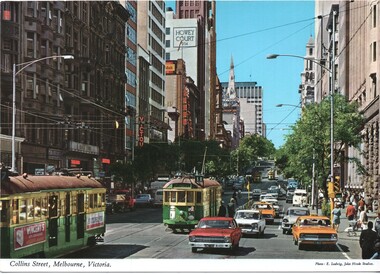
... Postcard looking east along tree lined Collins St from Elizabeth Street with many now demolished buildings in the view. Buildings at the time include Block Court, Victour, Kodak, Souther Cross, Howey Court. ...Postcard looking east along tree lined Collins St from Elizabeth Street with many now demolished buildings in the view. Buildings at the time include Block Court, Victour, Kodak, Souther Cross, Howey Court. ...Postcard looking east along tree lined Collins St from Elizabeth Street with many now demolished buildings in the view. Buildings at the time include Block Court, Victour, Kodak, Souther Cross, Howey Court. Trams in the view are W2 224, W2 253 (Spencer Street Route 11) and three other W2 class trams. Appears to be an Inspector standing at the west end of the Safety Zone.Yields information about Collins Street early 1970s and the motor car traffic.Postcard - Collins St at Elizabeth St - John Hinde Studios 2 AUS 34trams, tramways, safety zones, traffic, w2 class trams, tram 224, tram 253, victour, kodak, block court, collins st -
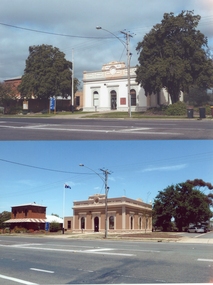 Stawell Historical Society Inc
Photograph, Stawell Shire Hall -- Before and After colour photos of the Shire Hall, one photograph taken in 2011
... Two Stawell Shire Hall colour photos showing the changes over time to the landscape around the Shire building. In 2011 the two Norfolk Island hibiscus trees were removed. ...Two colour photographs of Stawell Shire Hall showing how the landscape around the building has changed over time. In 2011 the Norfolk Island Hibiscus trees were removed. ...In the photo with the trees removed the building is painted a brown colour and has the Australian flag flying on the flag post. stawell Two colour photographs of Stawell Shire Hall showing how the landscape around the building has changed over time. In 2011 the Norfolk Island Hibiscus trees were removed. ...Two Stawell Shire Hall colour photos showing the changes over time to the landscape around the Shire building. In 2011 the two Norfolk Island hibiscus trees were removed. In the photo with the trees removed the building is painted a brown colour and has the Australian flag flying on the flag post. Two colour photographs of Stawell Shire Hall showing how the landscape around the building has changed over time. In 2011 the Norfolk Island Hibiscus trees were removed. The building was painted white in one photo and when the trees removed painted a brown colour similar to the initial brick of the building. stawell -
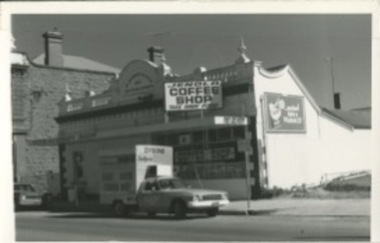 Kilmore Historical Society
Photograph, 61-63 Sydney Street
... 13.5cm x 9cm black and white photograph of 61-63 Sydney Street. The building is, at the time of the photo, occupied by a Toy and Craft Shop and "Jenola Coffee Shop" which advertises take away food and free delivery. ...Storefronts Shopfronts Retail stores Cafes Coffee shops Written on the back: 61-63 021 13.5cm x 9cm black and white photograph of 61-63 Sydney Street. The building is, at the time of the photo, occupied by a Toy and Craft Shop and "Jenola Coffee Shop" which advertises take away food and free delivery. ...Was the building of Morrissey Butchers which was established in 1865.13.5cm x 9cm black and white photograph of 61-63 Sydney Street. The building is, at the time of the photo, occupied by a Toy and Craft Shop and "Jenola Coffee Shop" which advertises take away food and free delivery. Out the front of the building there is a "Dyons small goods" vehicle parked. There is a cigarette advertisement on the side of the building.Written on the back: 61-63 021storefronts, shopfronts, retail stores, cafes, coffee shops -
Federation University Historical Collection
Film - Microfilm Rolls, Microfilm of the Ballarat School of Mines Minute Books, 1870- 1883, 12/2020
... Rogers suggested that an effort should be made to obtain from the Government a lease of teh Old Court House at a pepper corn rent. The building at that time being out of repait and not used by the Government ......Rogers suggested that an effort should be made to obtain from the Government a lease of teh Old Court House at a pepper corn rent. The building at that time being out of repait and not used by the Government ... ...The Ballarat School of Mines was established in 1870, the first of its kind in Australasia. It later became a part of the University of Ballarat , then Federation University Australia.A roll of microfilm containing digitised images of each page of the first four Ballarat School of Mines Minute Books. 26 October 1870 ... The originl intention of the founders of the School - as per resolution of the Mining Bord was to hold the School at the Mechanics Institite Ballaarat and to have special rooms in that building set apart for this purpose. The reasons for this was that the Mechanics Institute had already rooms which could be used for these purposes and the pupils had easy access to the Libary and Museum belonging to that instituions, but after more mature consideration it was deemed advisabke to establish an indpependent institution and obtain a seperate buidling for the School. His Honor J.W. Rogers suggested that an effort should be made to obtain from the Government a lease of teh Old Court House at a pepper corn rent. The building at that time being out of repait and not used by the Government ...ballarat school of mines, minute books, annual report, microfilm, former ballarat circuit court, redmond barry, james flude, mining laboratory, james bickett, william stawell, judge rogers, constitution, mining board of ballarat, duncan gillies, william mclennan, ballarat mechanics' institute, judge warrington rogers, pepper corn rent, harrie wood, professor mccoy, james mcculloch, john alexander macpherson, williammclellan, master, arithmatic, mensuration, surveying, drawing, book-keeping, algebra, euclid, mining, chemistry, somerville learmonth, somerville livingstone learmonth, robert lewis, j.m. bickett, walter cotchett, usher, john cumming, philip russell, andrew anderson, a.h. king, william robertson, band of hope and albion consols, robert gibbs'james mcdowall, r.w. newman, jphn edward bakman, thomas gray, borough council of clunes, h.r. caselli, henry richards caselli, borough council of ballarat west, f.c. downes, l.s. christie, j.d. wanliss, francis summers, thomas whitelaw, h.b. de la poer wall, library donations, roderick murchison, robert brough smyth, museum donation, j.e. crocker, p.c. fitzpatrick, opening address, j.f. usher, edwin trenery, c.s. reeves, t.d. wanliss, john edward bathman, architect, robert davidson -
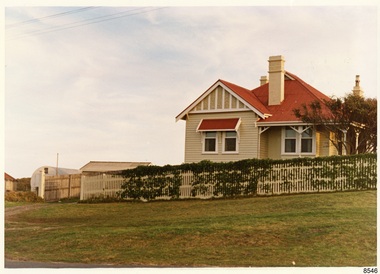 Flagstaff Hill Maritime Museum and Village
Photograph - Historical, Flagstaff Hill, Harbourmaster’s Quarters, 1970s
... On the left of the red roofed residence are iron buildings used, at the time, by the Lands Department. ...On the left of the red roofed residence are iron buildings used, at the time, by the Lands Department. ...The photograph shows a cottage, Harbourmaster’s quarters that still stands on the east of the Lady Bay Lighthouse and Historic Precinct at Flagstaff Hill in Warrnambool. The name was changed to the Lighthouse Lodge, and today guests can stay at the property. This photograph, a print, is one of a set of five that show the site of Flagstaff Hill. It is presumed to have been taken by John Lindsay, Founding Director of Flagstaff Hill Maritime Museum and Village. One of the photographs in the set has the pencil inscription "Photo J Lindsay". It was taken in the early 1970s during the initial stages of the development of Flagstaff Hill as a Museum and Maritime Village. The photographs belonged to the donor's grandparents, who lived in the Warrnambool district of Allansford/Naringal. The photograph is a record of the site and surrounds of Flagstaff Hill Maritime Museum and Village before its development and opening in 1975. It shows the cottage on the east of the Lighthouse Complex,. The building is now known as Lighthouse Lodge. The photograph is significant for recording the location and condition of the residence on the Hill.Coloured photograph, glassy print, one of a set of five. Photograph shows the cream timber cottage, Harbourmaster’s quarters to the east of the lighthouse complex at Flagstaff Hill, Warrnambool. On the left of the red roofed residence are iron buildings used, at the time, by the Lands Department. The photograph's paper has the printer's watermark on the back. The early 1970s photograph is presumed to have been by John Lindsay, Warrnambool.Label on the back: "WOODEN RESIDENCE TO THE EAST OF THE PROPERTY / The gun emplacements are immediately behind, and the iron huts to the left rear of the residence are used by the Lands Department who plan to vacate, for other premises."flagstaff hill, flagstaff hill maritime museum and village, warrnambool, maritime museum, maritime village, great ocean road, shipwreck coast, 1970s, photograph, flagstaff hill site, john lindsay, cannon emplacement, residence, wooden residence, timber residence, iron huts, lands department, light keeper -
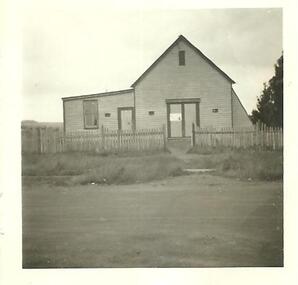 Streatham and District Historical Society
Picture, Streatham Hall
... This shows the typical building structures of the time period. As the population grows in the area the need for a community meeting place becomes a requirement for the community. ...This shows the typical building structures of the time period. As the population grows in the area the need for a community meeting place becomes a requirement for the community. ...This shows the typical building structures of the time period. As the population grows in the area the need for a community meeting place becomes a requirement for the community. Local community rely on each other for company, support and social engagements.This building demonstrats the needs of the local community and the population in and around Streatham in 1888.Square picture in black and white showing the Streatham Hall. The picture is a shot of the front of a single storey weatherboard building with two doorways and one window in view. There is a picket fence running across the front of the building,Back: Stamped in green ink "317"building, rural, streatham, structures, areas, materials -
 Sunbury Family History and Heritage Society Inc.
Photograph, Former Sunbury Methodist Church
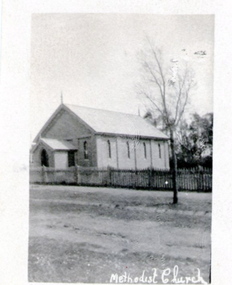
... Andrews Uniting Church have been the owners of this building since that time. ...Andrews Uniting Church have been the owners of this building since that time. Methodist Church Methodism Barkly Street Harker Street Uniting Church A non-digital black and white photograph of a little Church building with the words Methodist Church written across the bottom of the image. ...The church in the photograph is the former Methodist Church which is on the NW corner of Barkly and Harker Streets in Sunbury. It was built on land donated by Thomas Woods at Lot 14 Barkly Street, where in 1870 a small weatherboard building was built. In 1879 John Browning gifted land at 13 Barkly Street for the building of a new brick church on that site. The brick church continued to be a place of worship until the June 1977 when the Presbyterian, Methodist and Congregational churches came together and worshipped as the Uniting Church. St. Andrews Uniting Church have been the owners of this building since that time. A non-digital black and white photograph of a little Church building with the words Methodist Church written across the bottom of the image.methodist church, methodism, barkly street, harker street, uniting church -
 Melbourne Tram Museum
Photograph - Black & White Photograph/s, Tramway Museum Society of Victoria (TMSV), c1975
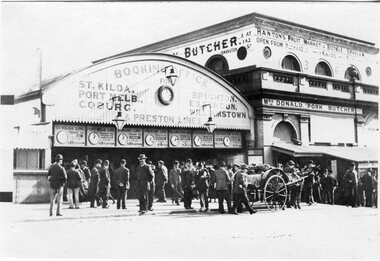
... This is the former Swanston Street entrance to Flinders Street Railway Station between the rail bridge and the market building. There are various time clocks, Mrs. Donald Butcher and Hantons Fruit Market and bicycle stables on the adjacent building....This is the former Swanston Street entrance to Flinders Street Railway Station between the rail bridge and the market building. There are various time clocks, Mrs. Donald Butcher and Hantons Fruit Market and bicycle stables on the adjacent building. ...Black & White Photograph of a postcard made by the TMSV Sales of Flinders St Railway Station 1890 - see https://en.wikipedia.org/wiki/Flinders_Street_railway_station#/media/File:Old_Flinders_Street_Station.jpg - dates the photo as 1890. This is the former Swanston Street entrance to Flinders Street Railway Station between the rail bridge and the market building. There are various time clocks, Mrs. Donald Butcher and Hantons Fruit Market and bicycle stables on the adjacent building.trams, tramways, flinders st, railways, vr, flinders st station, swanston st -
 Warrnambool and District Historical Society Inc.
Souvenir - Warrnambool 150th Anniversary Commemorative Calendar, 1997, 1997
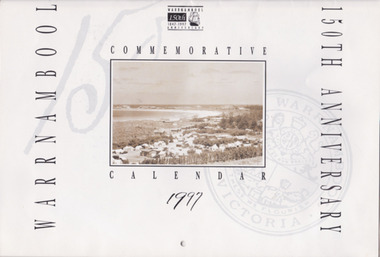
... It has a range of photographs which depict buildings and streetscapes over that time....It has a range of photographs which depict buildings and streetscapes over that time. Gives a good coverage of history in Warrnambool from 1847 to 1997 warrnambool warrnambool 150th anniversary commemorative calendar warrnambool photographs 150th Anniversary Calendar. 20 pages with historic photos throughout, with detailed description of all. ...This calendar is a memento of the 150th anniversary of the settlement of Warrnambool. It has a range of photographs which depict buildings and streetscapes over that time.Gives a good coverage of history in Warrnambool from 1847 to 1997150th Anniversary Calendar. 20 pages with historic photos throughout, with detailed description of all. Black print, sepia photos warrnambool, warrnambool 150th anniversary, commemorative calendar, warrnambool photographs -
 Harcourt Valley Heritage & Tourist Centre
concrete blocks, 1914
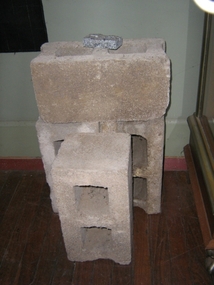
... Principal output was concrete drainage tiles for use in district orchards but concrete blocks were also produced for construction of homes and commercial buildings. At a time of rapid expansion of the orchards this industry provided a vital piece of orchard infrastructure, mostly buried and not now visible but nevertheless a very important feature of the valley’s horticultural industry.. ...Principal output was concrete drainage tiles for use in district orchards but concrete blocks were also produced for construction of homes and commercial buildings. At a time of rapid expansion of the orchards this industry provided a vital piece of orchard infrastructure, mostly buried and not now visible but nevertheless a very important feature of the valley’s horticultural industry.. ...Charles Seelenmeyer conducted Concrete Utilities Limited (Harcourt Cement Pipe Factory). Operated in Harcourt circa 1914 to 1930 in premises situated opposite the ANA Hall on what is now the road reserve. Principal raw material was sand from the adjacent waterway ( Barkers Creek.) Principal output was concrete drainage tiles for use in district orchards but concrete blocks were also produced for construction of homes and commercial buildings. At a time of rapid expansion of the orchards this industry provided a vital piece of orchard infrastructure, mostly buried and not now visible but nevertheless a very important feature of the valley’s horticultural industry.. Homes built with these concrete blocks are a distinct part of Harcourt’s housing stock. Harcourt Cement Pipe Co was an example of local initiative to solve a local problem using local materials. A collection of 4 concrete building blocks -
 Warrnambool and District Historical Society Inc.
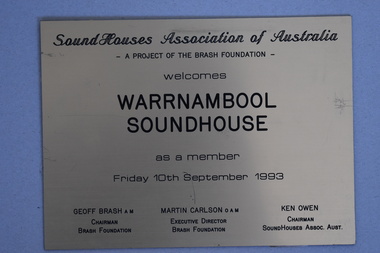
Plaque, Warrnambool Soundhouse, 1983
... This plaque comes from the Warrnambool SoundHouse building in Timor Street, Warrnambool. The Warrnambool SoundHouse was one of the Australian SoundHouses foundations which were established to promote music in schools. ...This plaque comes from the Warrnambool SoundHouse building in Timor Street, Warrnambool. The Warrnambool SoundHouse was one of the Australian SoundHouses foundations which were established to promote music in schools. ...This plaque comes from the Warrnambool SoundHouse building in Timor Street, Warrnambool. The Warrnambool SoundHouse was one of the Australian SoundHouses foundations which were established to promote music in schools. It was sponsored by Brash’s Music Store in Melbourne but when the Brash company ceased business in 1998 the funding for the Warrnambool SoundHouse stopped and the foundation closed. Thi plaque is retained as a memento of the Warrnambool SoundHouse foundation which promoted music in the local schools in the 1980s and 90s. This is a gold-coloured metal plaque with black printing. The back edges have had adhesive on them to affix the plaque to a door or wall. ‘SoundHouses Association of Australia welcomes Warrnambool SoundHouse as a member Friday 10th September 1983’warrnambool soundhouse -
 Linton and District Historical Society Inc
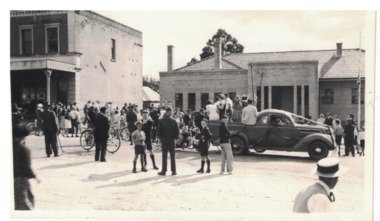
Photograph, Centenary Celebrations Procession, Linton, 1939
... The upper level of this building was at one time (post WWI-early 1920s) used as a hospital. ...The upper level of this building was at one time (post WWI-early 1920s) used as a hospital. ...This photograph was taken during Linton's centenary celebrations at the end of 1939. The double storey building on the left is Criterion House, originally a draper's store. The upper level of this building was at one time (post WWI-early 1920s) used as a hospital. The building on the right is the Grenville Shire Offices, built 1938/39 and only recently opened.Black and white image of a crowd of men, women and children plus a motor vehicle, motorcycle and bicycle outside buildings in Sussex Street, Linton. The car has been decorated with streamers. centenaries, centenary celebrations, hospitals, motorcycles, cars, bicycles, grenville shire offices, criterion house -
 Eltham District Historical Society Inc
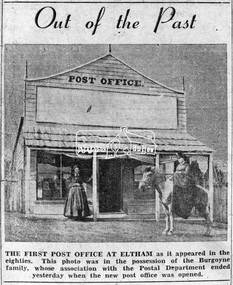
Photograph, Eltham - The first Post Office at Eltham, c.1875
... It is possible these modifications were made to the building at the time of the telegraph line connection. ...It is possible these modifications were made to the building at the time of the telegraph line connection. ...Copy of newspaper article (Jan. 1958): "Out of the Past" "The first post office at Eltham as it appeared in the eighties (sic). This photo was in the possession of the Burgoyne family, whose association with the Postal Department ended yesterday when the new post office was opened." The article indicates the photo is from the 1880s however it actually pre-dates the connection of the Electric Telegraph line in 1877 - most likely early 1870s. The Telegraph Office was opened Thursday, June 7, 1877 and the lines were connected to the building above the awning near where the lower corner of the large sign is. A similar image of the building dated circa 1888 (EDHS_00139) shows the telegraph line connection. The awning has also been updated with corrugated iron in lieu of bark shingles and the false facade above the awning removed. It is possible these modifications were made to the building at the time of the telegraph line connection. This photo forms part of a collection of photographs gathered by the Shire of Eltham for their centenary project book,"Pioneers and Painters: 100 years of the Shire of Eltham" by Alan Marshall (1971). The collection of over 500 images is held in partnership between Eltham District Historical Society and Yarra Plenty Regional Library (Eltham Library) and is now formally known as the 'The Shire of Eltham Pioneers Photograph Collection.' It is significant in being the first community sourced collection representing the places and people of the Shire's first one hundred years.Digital imagesepp, shire of eltham pioneers photograph collection, eltham, post office -
 Sunbury Family History and Heritage Society Inc.
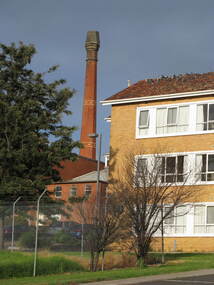
Photograph, Sarah Dunn, 2020
... The three story cream brick building was built some time in the late 1950s and it was the Nurses' Quarters until the Asylum closed down in 1992....The three story cream brick building was built some time in the late 1950s and it was the Nurses' Quarters until the Asylum closed down in 1992. ...The two buildings were within the former Sunbury Asylum. The red brick older building with the tall chimney was the Boiler House which supplied hot water and heating throughout the Asylum complex .It was built in the 1920s. The three story cream brick building was built some time in the late 1950s and it was the Nurses' Quarters until the Asylum closed down in 1992.A coloured photograph of a red brick building with a tall chimney and a cream brick 1950s style three storey building with a tiled roof. sunbury, sunbury asylum, nurses' quarters, boiler house -
 Bendigo Historical Society Inc.
Drawing - Fortuna - Drawing Presented to Brian McLachlon, abt 2000
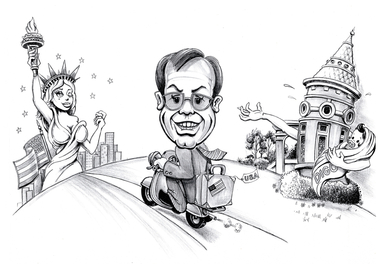
... The relationship between mining and domestic areas and the. close proximity of the two is considered rare to Australian domestic building of that time....The relationship between mining and domestic areas and the. close proximity of the two is considered rare to Australian domestic building of that time. The primary building on the site is the Fortuna Villa. ...Theodore Ballerstedt originally purchased the Fortuna site from the Crown in 1857. The firstimprovements at Fortuna were undertaken by the Ballerstedt family and consisted of a small mill and house. At the peak of the mining era (c.1860s) Fortuna was central to the deep alluvial gold mining operations of Bendigo. In 1871 Theodore Ballerstedt sold the house, mine and associated works to George Lansell 'The Quartz King'. During his time at Fortuna, Lansell owned 13 mines and directed a further 73 in Bendigo. Fortuna was occupied by the Department of Defence from 1942 and was compulsorily acquired for Army use in 1957. Since that time Fortuna has been occupied by the Army and other various Defence organisations. During Defence's ownership, additional buildings were constructed and existing buildings were modified for re-use. In 1992 Defence purchased the adjoining undeveloped property, commonly known as the Bush Block. This parcel of land adjoins the main Fortuna landholding. It is approximately 0.8 hectares in size and is predominately covered in vegetation regrowth. Heritage investigations note that the uniqueness of Fortuna lies in the mixture of architectural styles of the Villa. The relationship between mining and domestic areas and the. close proximity of the two is considered rare to Australian domestic building of that time. The primary building on the site is the Fortuna Villa. With the wealth Lansell generated from gold mining he funded the continuous expansion of the Villa and surrounding grounds. The Villa is built in a number of architectural styles, namely Victorian Italianate and Victorian Free Classical, with Federation influences. The surrounding landscape featured up to seven decorative lakes in the early 1870s, including one larger lake which still remains today. The former lakes were originally used as disposal points for tailings produced in the gold processing activities at the site. Heritage investigations note that the uniqueness of Fortuna lies in the mixture of architectural styles of the Villa. The relationship between mining and domestic areas and the. close proximity of the two is considered rare to Australian domestic building of that time.Fortuna - Drawing Presented to Brian McLachlon This item contains the following documents: 11217.77a Six copies Black and White drawing by Jason Nickson (cleaner) presented to Brian McLachlon on his transfer to the USA. Drawing shows Brian on a motor bike being farewelled by the Fortuna Villa (holding a baby named DIGO) and welcomed by the Statue of Liberty and the US flagnon-fictionbendigo, fortuna, george lansell, jason nickson fortuna cleaner, brian mclochlon fortuna -
Bendigo Historical Society Inc.
Plan - Fortuna - Survey Unit Layouts, April 1982
... The relationship between mining and domestic areas and the. close proximity of the two is considered rare to Australian domestic building of that time....The relationship between mining and domestic areas and the. close proximity of the two is considered rare to Australian domestic building of that time. The primary building on the site is the Fortuna Villa. ...Theodore Ballerstedt originally purchased the Fortuna site from the Crown in 1857. The firstimprovements at Fortuna were undertaken by the Ballerstedt family and consisted of a small mill and house. At the peak of the mining era (c.1860s) Fortuna was central to the deep alluvial gold mining operations of Bendigo. In 1871 Theodore Ballerstedt sold the house, mine and associated works to George Lansell 'The Quartz King'. During his time at Fortuna, Lansell owned 13 mines and directed a further 73 in Bendigo. Fortuna was occupied by the Department of Defence from 1942 and was compulsorily acquired for Army use in 1957. Since that time Fortuna has been occupied by the Army and other various Defence organisations. During Defence's ownership, additional buildings were constructed and existing buildings were modified for re-use. In 1992 Defence purchased the adjoining undeveloped property, commonly known as the Bush Block. This parcel of land adjoins the main Fortuna landholding. It is approximately 0.8 hectares in size and is predominately covered in vegetation regrowth. Heritage investigations note that the uniqueness of Fortuna lies in the mixture of architectural styles of the Villa. The relationship between mining and domestic areas and the. close proximity of the two is considered rare to Australian domestic building of that time. The primary building on the site is the Fortuna Villa. With the wealth Lansell generated from gold mining he funded the continuous expansion of the Villa and surrounding grounds. The Villa is built in a number of architectural styles, namely Victorian Italianate and Victorian Free Classical, with Federation influences. The surrounding landscape featured up to seven decorative lakes in the early 1870s, including one larger lake which still remains today. The former lakes were originally used as disposal points for tailings produced in the gold processing activities at the site. Heritage investigations note that the uniqueness of Fortuna lies in the mixture of architectural styles of the Villa. The relationship between mining and domestic areas and the. close proximity of the two is considered rare to Australian domestic building of that time.Fortuna - Survey Unit Layouts This item contains the following documents: 11217.84a Layout of workspace and equipment used by the Army Survey Group 11217.84b Layout of workspace and equipment used by the Army Survey Group 11217.84c Layout of workspace and equipment used by the Army Survey Groupnon-fictionbendigo, fortuna, george lansell -
Lakes Entrance Historical Society
Plan - Floor Plan Club Hotel, 1984
... It was the oldest building in Lakes Entrance at that time....It was the oldest building in Lakes Entrance at that time. Hotels plans Businesses Construction Floor plan for main building and out building of Club Hotel Lakes Entrance Victoria Plan Floor Plan Club Hotel ...Floor plan for main building and out building of Club Hotel Lakes Entrance Victoriahotels, plans, businesses, construction -
 Ballarat Tramway Museum
Photograph - Black & White Photograph/s, 5/09/1971 12:00:00 AM
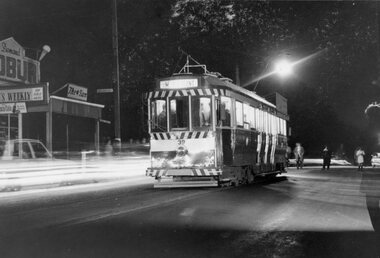
... Has a number of people in the background, and the Milk bar at the terminus with the Robur, The Sun and Women's Weekly magazine advertisements on the building. Photographer unknown at the time of cataloguing. ...Has a number of people in the background, and the Milk bar at the terminus with the Robur, The Sun and Women's Weekly magazine advertisements on the building. Photographer unknown at the time of cataloguing. ...Yields information about the last tram to depart from the Mt Pleasant terminus at the time of the closure of the tram line in Sept. 1971.Black and white photograph of Ballarat No. 39 at the Mt Pleasant terminus on 5/9/1971, last tram to leave the terminus before the line closed. Has a number of people in the background, and the Milk bar at the terminus with the Robur, The Sun and Women's Weekly magazine advertisements on the building. Photographer unknown at the time of cataloguing. See Reg Item 2908 for a Courier Article.On rear in ink "TS(2)" and in pencil "Mt Pleasant, last car WO 39 5-9-71" and pencil marks showing how the photo is to be cropped for publication.tramways, trams, last tram, closure, mt pleasant, tram 39
