
Showing 83 items matching "chinese market gardeners"
-
 Bendigo Historical Society Inc.
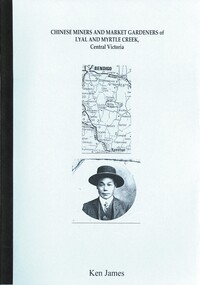
Book - CHINESE MINERS AND MARKET GARDENERS OF LYAL AND MYRTLE CREEK, 2005
... CHINESE MINERS AND MARKET GARDENERS OF LYAL AND MYRTLE CREEK...Chinese miners... market gardeners...CHINESE MINERS AND MARKET GARDENERS OF LYAL AND MYRTLE CREEK - 62 pages with photos, illustrations and maps...HISTORY chinese miners/lyal and myrtle cree Chinese miners market gardeners Lyal Creek Myrtle Creek. ...CHINESE MINERS AND MARKET GARDENERS OF LYAL AND MYRTLE CREEK - 62 pages with photos, illustrations and mapsKen Jameshistory, chinese miners/lyal and myrtle cree, chinese miners, market gardeners, lyal creek, myrtle creek. -
 Ringwood and District Historical Society
Mixed media - Video, RDHS Guest Speaker Presentation - "Chinese Market Gardeners and Miners of Central Victoria" - Ken James
... RDHS Guest Speaker Presentation - "Chinese Market Gardeners and Miners of Central Victoria" - Ken James...Recorded July, 2023 (Video is available for viewing at Ringwood & District Historical Society Archives by appointment) RDHS Guest Speaker Presentation - "Chinese Market Gardeners and Miners of Central Victoria" - Ken James Mixed media Video ...Digitised video (2.07GB) Duration: 50 minutes. Recorded July, 2023 (Video is available for viewing at Ringwood & District Historical Society Archives by appointment)Ken James is a prolific historical writer and is a regular to our Society's meetings. In this presentation, Ken talks about another book he is writing, involving the Chinese community in the small town of Lyal, between Castlemaine and Heathcote. In 1861, there were more than 24,000 Chinese immigrants on the goldfields of Ararat, Ballarat, Beechworth, Bendigo, Castlemaine and Maryborough. The Chinese were particularly industrious, with techniques that differed widely from the Europeans. This and their physical appearance and fear of the unknown led them to being persecuted in a racist way that would be regarded as untenable today. -
 Warrnambool and District Historical Society Inc.
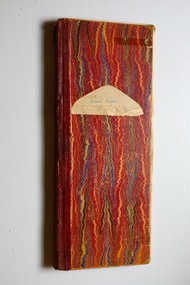
Administrative record - Debtors' Ledger, early 20th century
... Warrnambool Chinese Market Gardeners...Many of the debtors are Chinese, mostly working as market gardeners in the north Warrnambool area and the debts usually concerned rents and the supply of agricultural items such as chaff. ...Warrnambool Chinese Market Gardeners Warrnambool Chinese Debtor's Ledger C.L. ...This ledger contains details of debts owed by people in the Warrnambool district. It dates from 1906 to 1916. The compiler of the ledger is unknown. Many of the debtors are Chinese, mostly working as market gardeners in the north Warrnambool area and the debts usually concerned rents and the supply of agricultural items such as chaff. These Chinese, many of whom came from the Victorian goldfields, operated market gardens and businesses in the town of Warrnambool from the 1870s to the 1930s or 40s.This ledger is of interest because of the names of people listed as debtors and in particular the names of Chinese working in the district. The ledger is thus a valuable research tool. This is a ledger with a thick card cover in a mottled pattern in red, black, blue and yellow colours The spine, which has some damage, is covered in a maroon coloured leather. The pages are ruled with red lines and the entries are handwritten in ink. There are some loose pages.Debtor's Ledger C.L.warrnambool chinese market gardeners, warrnambool, chinese -
 City of Moorabbin Historical Society (Operating the Box Cottage Museum)
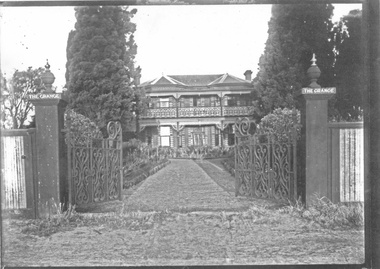
Photograph - 3 black & white Photographs, 'The Grange' ( 'Baydon Hill' ) Moorabbin, c 1920
... ...chinese market gardeners...Mr Harold James Healey purchased the property in c1920 and leased a portion to a Chinese market gardener. Later with his sons he established a profitable Plant Nursery that they managed for 42years. ...'The Grange ' was a 2 storey home built 1857 by Mr Charles Tuck, originally named 'Baydon Hill', at 1011 Nepean Highway, Moorabbin ( South Brighton). Mr Charles Tuck was Veterinary Surgeon from Baydon Hill, Wiltshire, England, who migrated to Australia c1850. He married his cousin Miss Jan Chaudler in Melbourne in1853. He was at the Ballarat gold-fields at the time of the riots and then they settled in South Brighton (later Moorabbin) and built a large Georgian styled home called 'Baydon Hill'. The Tucks had a large family - 9 children. Charles enjoyed a prosperous Veterinary Practice as his advice was needed for stock purchases by the farmers / settlers. Charles died in 1893 and Jane left the property c 1903 and died at Blackburn in 1928. The House had 5 owners, the last being the Healey family c1920 and at some stage the name was changed to 'The Grange' and the gates shown were installed. The Healey Family were also prosperous in developing vegetables and flower seeds and seedlings. 'The Grange' was sold to Moorabbin City Council 1972 and then used by the City of Moorabbin Historical Society for meetings and storage of historical material. It was demolished amidst considerable controversy 1983 and the Moorabbin Police Station was built on the site. ( S.T.Mulvany, Grand-daughter of Charles Tuck 26/7/1974)The Grange was a significant property 1853 -1983 in Moorabbin. It was built by Mr Charles Tuck 1857and in1900 extended from Point Nepean Road to South Road - 10acres. Mr Harold James Healey purchased the property in c1920 and leased a portion to a Chinese market gardener. Later with his sons he established a profitable Plant Nursery that they managed for 42years. Keith Healey, a son, remodelled the house extensively mid 20thC. The Moorabbin City Council purchased it in 1972 for $255,000 and it was demolished amid controversy 1983. The Moorabbin Police Station is built on the site.3x black and white photographs of the property at 1011 Nepean Highway Moorabbin built by Mr Charles Tuck c1853 known as 'The Grange'. Originally it was named 'Baydon Hill' because he migrated from Baydon Hill, Wiltshire, England c1850. PHOTOGRAPHS: c 1880, 1920 and 1950 showing the original and later additions made to the property by some of the 5 owners. PLAN: Proposed Alterations & Additions to 'The Grange" brick and stone residence for Mr K Healy Dack & Armstrong, Home & Industrial Designers 12 Station Street, Moorabbin. c1950sWritten in pencil on back a) " This Photo donated by Mr Neil Follett - at the time it came into his possession he had a photography studio in Cheltenham. Photographer unknown"; Folio 6 b) The Grange c 1950 Folio 6/10 c) 'Baydon Hill' ( alias "The Grange" ) / Donated by Mrs Elsa Jones, daughter of Leslie Stephen Tuck, youngest son of Charles Tuck Folio 6 /18tuck charles, tuck jane, veterinary surgeons, livestock, market gardeners, early settlers, dendy's special survey, brighton, moorabbin, ballarat, gold diggings, horses, chickens, cattle, bullocks, flower shows, fruit garden, mulvaney s. t., healey haold james, healey keith, moorabbin city council, chinese market gardeners, plant nursery, tuck leslie stephen, jones elsa -
 City of Moorabbin Historical Society (Operating the Box Cottage Museum)
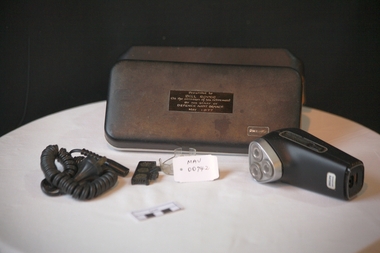
Personal Effects. 'Philips" electric Shaver, c1977
... roper arthur leopold, ripponlea, chinese market gardeners...As a child he went with his father Arthur Leopold Roper to purchase vegetables from the Moorabbin Chinese market gardeners at the Hotham St. / Nepean Highway corner. c1920 . ...Established in 1891 in Eindhoven, the Netherlands, Philips & Co. was founded to meet the growing demand for light bulbs following the commercialization of electricity. Science and technology underwent tremendous development in the 1940s and 1950s, with Philips Research inventing the rotary heads that led to the development of the Philishave electric shaver, and laying down the basis for later ground-breaking work in transistors and integrated circuits.Philishave was the brand name for the electric shavers manufactured by the Philips Domestic Appliances and Personal Care unit of Philips They used the Philishave brand name for their shavers from 1939 to 2006. The Philishave shaver was invented by Philips engineer Alexandre Horowitz, who used rotating cutters instead of the reciprocating cutters that had been used in previous electric shavers. The shaver was introduced in 1939, though initial production was limited due to the outbreak of World War II. A more ergonomic egg-shaped single-head model was introduced in 1948 and was designed by US industrial designer Raymond Loewy. Global sales increased markedly after a double-head model was introduced in 1951. As a spin off from the light bulb and research is the dynamo-powered bicycle lamp. Its rotating power system inspires the Philishave triple head electric razor. A triple-head model was test marketed in Australia and New Zealand in 1956, but would not be introduced globally until 1966. The brand name Philishave was phased out in 2006 so shavers now bear only the Philips name. Mr Alfred William ( Bill ) Roper, 1913 - 1996 grew up in Ripponlea, ( East St Kilda ) Victoria. As a child he went with his father Arthur Leopold Roper to purchase vegetables from the Moorabbin Chinese market gardeners at the Hotham St. / Nepean Highway corner. c1920 . Bill served in WW2 in New Guinea and post war was Army Auditor, Victoria Barracks, St Kilda Road Melbourne. His staff presented this 'Philishave upon his retirement and he used it until his death1996. He lived in Carlton, Belgrave, Ascot Vale, South Yarra, East St Kilda and moved to Bentleigh in 1987.A ‘Philishave’ triple head electric razor , with cord, head protector and cleaning brush in a hinged plastic case The case has compartments, for Razor and cord, that are lined with a mustard coloured, soft, synthetic material .Case top PHILIPS ; inside EXCLUSIVE PHILISHAVE Razor Handle front PHILIPS / PHILISHAVE; back Type HP 1121/ 110-130V/ 220-240 V / PHILIPS Shield / ? Shield / BS 3456 / V 75255 / MADE IN HOLLAND Nameplate Presented to / BILL ROPER / On the occasion of his retirement / BY THE STAFF OF / DEFENCE AUDIT BRANCH / May 1977 philishave, royal philips electric company, razors, electric razors, bentleigh, moorabbin, market gardeners, st kilda markets, world war 2 1939-1945, department of defence melbourne, melbourne, roper alfred william, roper arthur leopold, ripponlea, chinese market gardeners -
 City of Moorabbin Historical Society (Operating the Box Cottage Museum)
Newsletter - City of Moorabbin Historical Society Jun 2011, June 2011
... methodist mission to chinese market gardeners...The Blackman family were early settlers in Moorabbin Shire. city of moorabbin historical society stanley helen melbourne moorabbin brighton cheltenham ormond bentleigh mckinnon market gardeners pioneers early settlers moorabbin shire box cottage museum city of moorabbin box william glen eira city council museums australia victoria knott peta church of christ cheltenham baptist church presbyterian church. salvation army jasper road point nepean road brewer’s road redmore rev. james methodist mission to chinese market gardeners blackman nance lydia street bentleigh CITY of MOORABBIN HISTORICAL SOCIETY / JUNE 2011 NEWSLETTER 5 x A4 paper printed on 1 side Issue 22 of the bi-monthly, City of Moorabbin Historical Society Newsletter produced by Society member and Secretary, Mrs Helen Stanley in June 2011. ...The City of Moorabbin Historical Society was formed c 1960 by a group of Moorabbin residents who were concerned that the history of the area should be preserved. A good response to a call for items related to the historical area of Moorabbin Shire brought donations of a wide variety of artefacts which are now preserved by the current members of CMHS at Box Cottage Museum . Helen Stanley, Secretary of CMHS, began producing a Newsletter for members in April 2007 to provide current information and well researched items of historical interestHelen Stanley has produced a bi-monthly Newsletter, 2007 - 2013, for the members of the City of Moorabbin Historical Society that contains well researched interesting historical items, notification of upcoming events, current advice from Royal Australian Historical Society , Museums Australia Victoria and activities of Local Historical Societies. The Newsletter is an important record of the activities of the CMHS. Mrs Nance Blackman’s notes in 1978 for the Centenary of The Cheltenham Church of Christ.. The Blackman family were early settlers in Moorabbin Shire. 5 x A4 paper printed on 1 side Issue 22 of the bi-monthly, City of Moorabbin Historical Society Newsletter produced by Society member and Secretary, Mrs Helen Stanley in June 2011. Notice of meeting June 26th and CMHS members exhibited some artefacts at the ‘Fun4over50’s’ event at Kingston (Moorabbin ) Town Hall June 5th. Glen Eira City Council Building Dept. Officers inspected erosion along the North side of the Barn floor, members have planted seedlings in the garden and Helen and Joan are entering data about our ‘Collection’ onto the MAV website while Jim Dale has photographed some of the farm machinery. Small paragraphs about early local Religious groups – Salvation Army, Methodist and Presbyterian Ministries – with 2 photocopied photographs. Helen also provides the notes penned by Mrs Nance Blackman in 1978 for the Centenary of The Cheltenham Church of Christ. CITY of MOORABBIN HISTORICAL SOCIETY / JUNE 2011 NEWSLETTER city of moorabbin historical society, stanley helen, melbourne, moorabbin, brighton, cheltenham, ormond, bentleigh, mckinnon, market gardeners, pioneers, early settlers, moorabbin shire, box cottage museum, city of moorabbin, box william, glen eira city council, museums australia victoria, knott peta, church of christ cheltenham, baptist church, presbyterian church. salvation army, jasper road, point nepean road, brewer’s road, redmore rev. james, methodist mission to chinese market gardeners, blackman nance, lydia street bentleigh -
 City of Moorabbin Historical Society (Operating the Box Cottage Museum)
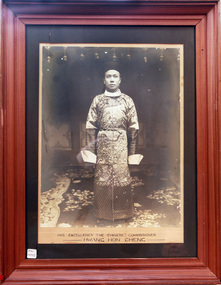
Photograph - Chinese Commissioner, Hwang Hong Cheng,1906, 1902
... ...chinese market gardeners...Many of the Chinese workers did not purchase land instead their main aim was to obtain enough money for their family and return to China. There were a few still managing market gardens around East Bentleigh until the 1950’s, by which time they were highly regarded by the general community. moorabbin bentleigh ormond brighton gold rush chinese immigration chinese market gardeners markets cheltenham cabinet makers early settlers pioneers market gardeners , hwang hon cheng, leong lan fun, peking china, Melbourne His Excellency the Chinese Commissioner / Hwang Hong Cheng, A large photograph of His Excellency the Chinese Commissioner , Hwang Hong Cheng, in a wooden frame c1906 Photograph Chinese Commissioner, Hwang Hong Cheng,1906 ...His Excellency, Hwang Hon Cheng, from Peking, China, visited Australia from 1906 -1907 as Chinese Commissioner in response to an urgent petition from well respected Chinese business leaders, The 1906 Petition was sent to the Chinese Ambassador in Britain requesting the appointment of a Chinese Consular Representative in Australia to ease the escalating Discrimination and address the Immigration Restrictions in Australia. Hwang Hon Cheng visited Brisbane, Sydney, Melbourne , Adelaide and Hobart and after reviewing his recommendations Britain agreed to the appointment of the first Chinese Consul-General to Australia. In 1908 Mr Leong Lan Fun, Taotal of Swatow was appointed Consul-General for the Commonwealth with his headquarters in Melbourne. Animosity, suspicion and misunderstanding had existed between Chinese and European settlers since the Gold Rush of 1850’s. Language, customs, frugality and mostly their ability to obtain profit from crops seen as uneconomical by Europeans eg parsley, garlic and salad vegetables. Many of the Chinese workers did not purchase land instead their main aim was to obtain enough money for their family and return to China. There were a few still managing market gardens around East Bentleigh until the 1950’s, by which time they were highly regarded by the general community. A large photograph of His Excellency the Chinese Commissioner , Hwang Hong Cheng, in a wooden frame c1906His Excellency the Chinese Commissioner / Hwang Hong Cheng, moorabbin, bentleigh, ormond, brighton, gold rush, chinese immigration, chinese market gardeners, markets, cheltenham, cabinet makers, early settlers, pioneers, market gardeners, , hwang hon cheng, leong lan fun, peking china, melbourne -
Warrnambool and District Historical Society Inc.
Functional object - Notebook, 1940s
... Warrnambool Chinese market gardeners...This notebook is of considerable interest as a memento of the Chinese market gardener community in Warrnambool and of Gat Sing and his family Gat Sing and family Warrnambool Chinese market gardeners Gat Sing This is a notebook with blank pages held in a brown leather folder by a brown cord. ...As this notebook has the name 'Gat Sing' on the last page it is presumed that it belonged to Charles Gat Sing. He had a market garden on Mortlake Rd, Warrnambool in the first half of the 20th century. He initially lived in a hessian-lined hut but later built a weatherboard house. He married Nellie Leeong Sen in 1928 and they had two children, Ruth and Nancy. The family were well-known and respected in the Warrnambool community. Gat Sing died in 1944 and his wife died in 1989. Two of the receipts in the notebook are made out to Ruth Gat Sing and it is possible the notebook belonged to her, following the death of her father.This notebook is of considerable interest as a memento of the Chinese market gardener community in Warrnambool and of Gat Sing and his familyThis is a notebook with blank pages held in a brown leather folder by a brown cord. There is a brown ribbon on the outside of the folder for enclosing the notebook therein. The front cover has an insert folder for storing papers and the back cover has insert folders for cards, tickets and stamps. The notebook has a mottled cover, mostly in the green shades. There is a folded section at the side to enclose a pencil. There are three loose receipts in the notebook. Gat Singgat sing and family, warrnambool chinese market gardeners -
 City of Moorabbin Historical Society (Operating the Box Cottage Museum)
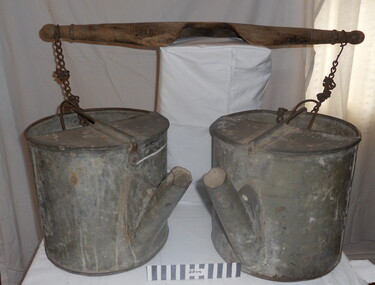
Tool - Chinese Market-Gardener's Watering-Cans
... Chinese market-gardener’s watering-cans on a wooden yoke. ... Chinese market-gardener’s watering-cans suspended by chains on a wooden yoke. ...Chinese market-gardener’s watering-cans on a wooden yoke. ...Chinese market-gardener’s watering-cans on a wooden yoke. This item was authenticated by the Bendigo Historical Society, and is said to be quite rare. It consists of two large galvanized watering-cans each with a pouring spout, suspended by chains from a well-used wooden yoke. The cans would each have been filled with water, then carried a distance into the market garden and used to water crops. The cans and yoke alone are very heavy, one can only imagine how heavy they were when filled with water.As profits from the gold-fields petered out the Chinese immigrants, (nearly all single men), were forced to seek other occupations. Many moved into furniture building in the East Melbourne area, whilst others went into market gardening . A significant number of Chinese men, realising the potential of the sandy, fertile soil, with a good supply of water, in the Shire of Moorabbin, leased tracts of land in that area to establish a market garden and grow produce for the increasing population of MelbourneAfter the Dendy Special Survey in1841in Brighton, Victoria, the first sale of Crown Land, taking in the whole Shire of Moorabbin, occurred in 1852. These allotments of land were eagerly bought up - some by speculators - although many were either worked by the owner, or leased out as market gardens and "fruit gardens", (orchards). Chinese market-gardener’s watering-cans suspended by chains on a wooden yoke. This item was authenticated by the Bendigo Historical Society, and is said to be quite rare. It consists of two large galvanized watering-cans each with a pouring spout, suspended by chains from a well-used wooden yokebrighton, gardeners, bentleigh, orchards, vegetables, dendy henry, market gardens, chinese settlers, pioneers moorabbin, water wells, creeks -
 Ballarat Heritage Services
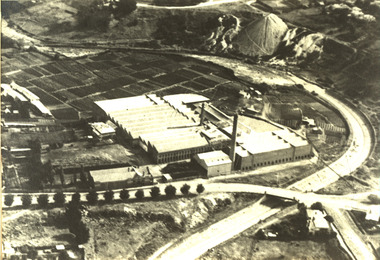
Photograph - Photograph - Black and White, Ballarat Woollen Mill, Sunnyside Corner
... Black and White image of the Ballarat Woollen Mill, Sunnyside Corner, Mount Pleasant. Chinese market gardens are evident....Chinese market gardens are evident. Ballarat Woollen Mill, Sunnyside Corner Photograph Photograph - Black and White ...Black and White image of the Ballarat Woollen Mill, Sunnyside Corner, Mount Pleasant. Chinese market gardens are evident.ballarat woollen mill, sunnyside woollen mill, chinese market gardens, mount pleasant, ballarat -
 Bendigo Historical Society Inc.
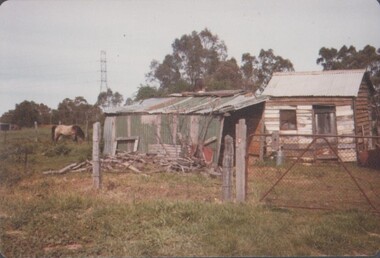
Photograph - CHINESE MARKET GARDEN AND POMOLO TREE, 1980
... 3881A Old Chinese Market Gardener's Dwelling, Oak Street, Golden Square, September 1980 3881B Chinese Pomolo Tree, Bridge Street, Bendigo, 1980...Chinese of Bendigo market gardens Pomolo tree 3881A Old Chinese Market Gardener's Dwelling, Oak Street, Golden Square, September 1980 3881B Chinese Pomolo Tree, Bridge Street, Bendigo, 1980 Photograph CHINESE MARKET GARDEN AND POMOLO TREE ...3881A Old Chinese Market Gardener's Dwelling, Oak Street, Golden Square, September 1980 3881B Chinese Pomolo Tree, Bridge Street, Bendigo, 1980chinese of bendigo, market gardens, pomolo tree -
Glen Eira Historical Society
Document - Lees Family
... ... Chinese Community... Market Gardeners...Lees Mary Slab Huts Lees Joseph Lees Joe East Bentleigh School Primary Schools Ring Catherine Ring Kate Stables Lees Bill Lees Tom Lees James Henry Lees Jim Ormond State School Wagons Cruickshanks Nursery Nurseries Church of Christ Ormond Carlton Street Lees Street Ring Charles Rout Charlotte Horse Racing Lees George Lees Stan Crop Production Nicholson Street Lees Street Cowie William Lees Leonard William Lees Len Lees Vera Lees Linda Doris Lees Jack Allen Lees Vera Victoria McKinnon Cricket Club Sporting Clubs Bentleigh Club Masonic Lodge Thomas Street Edwards George Nurserymen Chinese Community Market Gardeners J.H. Lee and Sons Lee Floss Lees Iris Centre Road Bent Thomas Document Lees Family ...A seven page reprinted article by Jan Rigby, on the Lees Family, who were early pioneers, and pioneer market gardeners in McKinnon and Bentleigh 1850-2003. Includes footnotes and references author Jan Rigby used for her research.lees family, pioneers, market gardens, mckinnon, bentleigh, lees jack allan, briggs vera victoria, lees james henry, tobin linda doris, mcclelland vera auraria, lees leonard william, rigby jan, lees james, lees william, bentleigh, jasper road, centre road, harwood j., branbury thomas, mckinnon road, wheatley road, mckinnon railway, east bentleigh, convicts, crop production, farmers, vineyards, viticulture, bent james, mckinnon road, elster creek, hellins edward, inns, gardeners arms, brighton cemetery, cemeteries, guerin mary, quirk michael, quirk patrick, quirk catherine, quirk daniel, quirk edward, quirk daniel snr., lees mary, slab huts, lees joseph, lees joe, east bentleigh school, primary schools, ring catherine, ring kate, stables, lees bill, lees tom, lees james henry, lees jim, ormond state school, wagons, cruickshanks nursery, nurseries, church of christ, ormond, carlton street, lees street, ring charles, rout charlotte, horse racing, lees george, lees stan, crop production, nicholson street, lees street, cowie william, lees leonard william, lees len, lees vera, lees linda doris, lees jack allen, lees vera victoria, mckinnon cricket club, sporting clubs, bentleigh club, masonic lodge, thomas street, edwards george, nurserymen, chinese community, market gardeners, j.h. lee and sons, lee floss, lees iris, centre road, bent thomas -
 Bendigo Historical Society Inc.
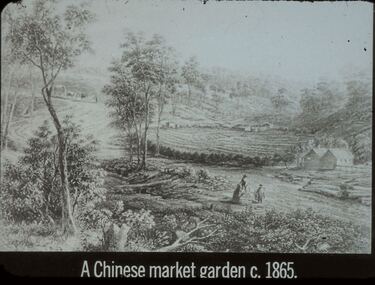
Slide - DIGGERS & MINING. THE CHINESE ON THE GOLD FIELDS, c1865
... Slide: View of a Chinese market garden including buildings and gardeners . ...Slide: View of a Chinese market garden including buildings and gardeners . ...Diggers & Mining. The Chinese on the Gold Fields. Slide: View of a Chinese market garden including buildings and gardeners . Titled: A Chinese marker garden c.1865. Markings: 8. Used as a teaching aid.hanimounteducation, tertiary, goldfields -
 Bendigo Historical Society Inc.
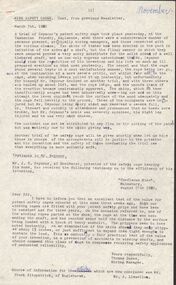
Document - MINE SAFETY CAGES & FEDDER DUSTER
... Fedder Duster was a Chinese Market Gardener who was forced off his garden lease. ...Fedder Duster was a Chinese Market Gardener who was forced off his garden lease. ...Three pages of extracts titled Mine Safety Cages, Old Bendigonians, memories of 'Fedder Duster', a Chinese Market Gardener; and a book review. The Safety Cage was an invention to stop the cage falling down the shaft if the rope gave way. Fedder Duster was a Chinese Market Gardener who was forced off his garden lease. His name was Ah Louey. The Book Review was 'Land, Labour and Gold' or Two Years in Victoria, with visits to Sydney and Van Diemen’s Land, by William Howitt.document, names of bendigo pioneers, mine safety cages & fedder duster, tasmanian foundry, mr j h seymour, dr stewart, conflecua mine malmsbury, thomas dunne, mr frank fitzpatrick, mr a llewellun, old bendigonians, mr john robshaw, mr hugh mcdevitt, alexander bayne, mr f sciallero, camp reserve, art gallery, hon. w i winter-irvine, george avery fletcher, great central goldfield, dear old bendigo 1892, fedder duster, mrs chancellor, ah louey, market gardener, mr curnow, technical school art class, bendigo benevolent home, joch, land labour and gold 1855, two years in victoria with visits to sydney and van diemen's land, william howitt, lowden publishing co, government camp, stars & stripes of america, odd fellows, freemasons, miss f kingerlee -
 City of Moorabbin Historical Society (Operating the Box Cottage Museum)
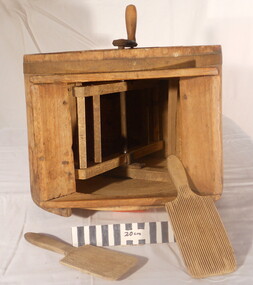
Functional object - Butter churn domestic, circa 1800s
... An unsigned note states it was used by a Chinese market-gardener’s family. From the mid 1800s into the1900s, there were numbers of Chinese market gardeners working in Bentleigh, Moorabbin, Mc Kinnon, and Cheltenham in the Shire of Moorabbin. ...An unsigned note states it was used by a Chinese market-gardener’s family. From the mid 1800s into the1900s, there were numbers of Chinese market gardeners working in Bentleigh, Moorabbin, Mc Kinnon, and Cheltenham in the Shire of Moorabbin. ...Circa late 1800s. Wooden domestic butter-churn. This is a paddle churn, a barrel that contains a paddle, which is operated by a handle. The paddle churned the butter inside the container when the handle was turned. Early settlers had to be self sufficient, growing their own vegetables, making tools and clothing and usually had a house cow to produce their milk supply. An unsigned note states it was used by a Chinese market-gardener’s family. From the mid 1800s into the1900s, there were numbers of Chinese market gardeners working in Bentleigh, Moorabbin, Mc Kinnon, and Cheltenham in the Shire of Moorabbin. After the sale of land following 'Dendy's Special Survey' 1841 many Chinese settlers rented allotments and established market gardens in the area and sold their produce to the increasing population of Melbourne at the markets in St Kilda and Melbourne.Circa late 1800s. Wooden domestic butter-churn consisting of a wooden barrel with a lid and a crank that manually turned a paddle inside to separate the butter fat from the butter milk 'BUTTER CHURN' written in chalk undated, unsignedchinese, melbourne, brighton, moorabbin, butter, cows, milk, pioneers, dairy, settlers, fruit, bentleigh, markets, mckinnon, cheltenham, vegetables, dendy henry -
 Bendigo Historical Society Inc.
Document - GARDEN GULLY UNITED MINE - GARDEN GULLY UNITED FIRE
... Second report mentions hose stretched over Mt Korong Rd being run over by Chinese market gardeners and others making the leaky hose leak all the more. ...Second report mentions hose stretched over Mt Korong Rd being run over by Chinese market gardeners and others making the leaky hose leak all the more. ...Hand written notes on the fire at the Garden Gully United Mine 29/3/1911. Two reports from the Bendigo Advertiser 29 and 30 March 1911. First report battery watchman John Davey saw nothing unusual, then later saw the reflection of fire in the engine house. Second report mentions hose stretched over Mt Korong Rd being run over by Chinese market gardeners and others making the leaky hose leak all the more. Cages only travelled a short distance after the ropes broke. Unemployment after air compressors ruined by the fire. Written on the back: Some Facts and Figures - The Bendigo Goldfield has had its good and bad years. Yields ranged from 475, 857 ozs in 1852 and 451,588 ozs in 1856 to 168,990 ozs in 1878 and 148,700 -mine, gold, garden gully united mine, garden gully united mine, garden gully united fire, bendigo advertiser 29-30/3/1911, john davey -
 City of Moorabbin Historical Society (Operating the Box Cottage Museum)
Tool - Farm Machinery, Horse-drawn Plough Potato Digger, c1900
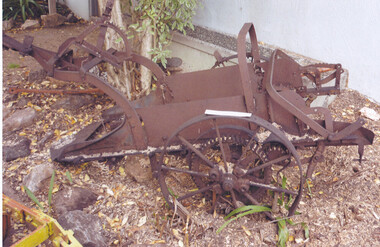
... market gardeners were so keen to be the first to market, (and get the most money), that they dug their potatoes "green" (or new). The only downside of this practice was that these early potatoes had to be handled with extreme care as their skins were very loose, and came off easily - so decreasing their profits.As well as taking their produce to the Melbourne and St Kilda markets, they also sent produce off to Sydney markets. It is interesting to note that a group of Chinese...market gardeners were so keen to be the first to market, (and get the most money), that they dug their potatoes "green" (or new). The only downside of this practice was that these early potatoes had to be handled with extreme care as their skins were very loose, and came off easily - so decreasing their profits.As well as taking their produce to the Melbourne and St Kilda markets, they also sent produce off to Sydney markets. It is interesting to note that a group of Chinese ...Circa late 1800s early 1900s a horse-drawn plough, potato digger, is one example of the implements that were widely used by early market gardeners in the Shire of Moorabbin. The flat plate, seen to the right of the photo, dug down into the ground below the potatoes and "scooped" them up. Behind the plate, two driving chains on cogs, (these chains are missing from our exhibit), then "rocked' the dug potatoes to loosen the soil from the "spuds". The potatoes were then harvested by hand. Very large tracts of land in the Shire of Moorabbin were planted with potatoes. Harvesting commenced in October, into November and on into December. Potatoes were a necessary food staple. The market gardeners were always in a rush to be first to get their potatoes to market, and hence the best price. Some market gardeners were so keen to be the first to market, (and get the most money), that they dug their potatoes "green" (or new). The only downside of this practice was that these early potatoes had to be handled with extreme care as their skins were very loose, and came off easily - so decreasing their profits.As well as taking their produce to the Melbourne and St Kilda markets, they also sent produce off to Sydney markets. It is interesting to note that a group of Chinese market gardeners were the first to access the Sydney market. .Following the 'Dendy's Special Survey' 1841 and the Crown Land Sale of 1852, land allotments were sold to pioneer settlers who established market gardens in the area of Moorabbin Shire. During the 1850s gold-rush population boom the number of market gardeners increased significantly spreading throughout the Moorabbin Shire. Potatoes were considered a staple foodstuff, so crops were regularly sown throughout the whole Moorabbin area. Circa late 1800s early 1900s. A horse-drawn plough potato digger is an example of the machines used by early market gardeners in Moorabbin Shiremelbourne, sydney, markets, vegetables, potato, dendy henry, st kilda, market gardeners, gold rush, moorabin, chinese gardeners, ploughs -
Tatura Irrigation & Wartime Camps Museum
Photographs Loaned, Charlie Hogan Estate photos
... Georgie Hing, thought to have been the Chinese market gardener at the Whim Inn corner, and who was killed while riding his bike....Georgie Hing, thought to have been the Chinese market gardener at the Whim Inn corner, and who was killed while riding his bike. ...Photos loaned for copying. Collection of photos loaned from Estate of Charlie Hogan.|Photo 1.Mick Hogan; Mrs. Hogan & Charlie Hogan.|Photo 2. Nora Keane whose mother was a Hogan.|Photo 3. Mick Hogan & Thomas Flanagan snr,, Hilston, early 1900s.|Photo 4. Ray Glover; Norm Doncon, Charlie Hogan &Tom Cornish.|Photo 5. Ray Glover; Bill Mitchell &Tom Hunter.|Photo 6. James & Annie Brady. James son ofJames & Julia. Annie, dau. of Thomas & Annie Hogan.|Photo 7. Jack O'Toole & Charlie Hogan.|Photo 8. Georgie Hing, thought to have been the Chinese market gardener at the Whim Inn corner, and who was killed while riding his bike.|Photo 9. Hogan Street building of Stan Tudor & Kilpatrick & McLellan, stock and station agent. Building now owned by Dawes & Vary, Solicitors.|Photo 10 & 11. Tatura Coursing Club 1926. St. Ledger Plumpton Coursing won by Ryan Bros.|Photo 12 & 13. In two halves. Rodney Irrigation Trust Commissioners and staff, possibly in front of original Tatura Mechanics Institute building. (Mick Cussen third from left seated; Thomas Hogan white beard seated with legs crossed. Billie Wilson snr. standing at rear left side.)|Photo 14. Group in front of Catholic church, c. 1925, boy on left thought to be Charlie Hogan. -
 City of Moorabbin Historical Society (Operating the Box Cottage Museum)
Photograph, B&W, Eliza Box Gurr 1850 - 1911, c1880
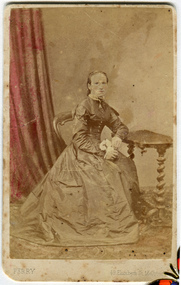
... market garden. George died from Tetanus following an infected broken leg caused by falling from his dray in 1867. Eliza Box married Jabez Gurr in 1876 a Wheelwright and had 1 son Tasman who died 1889 aged 5 years. Jabez Gurr born 1831 Essex England came to Tasmania, Australia with his parents Henry b 1797 and Mary Ann Taylor-Gurr b 1819 and 6 siblings on the SS ”Charles Kerr” 1835. Jabez married Priscilla Thompson in 1854 in Tasmania. Eliza and Jabez were devout Christians and set up a night school teaching English to the Chinese...market garden. George died from Tetanus following an infected broken leg caused by falling from his dray in 1867. Eliza Box married Jabez Gurr in 1876 a Wheelwright and had 1 son Tasman who died 1889 aged 5 years. Jabez Gurr born 1831 Essex England came to Tasmania, Australia with his parents Henry b 1797 and Mary Ann Taylor-Gurr b 1819 and 6 siblings on the SS ”Charles Kerr” 1835. Jabez married Priscilla Thompson in 1854 in Tasmania. Eliza and Jabez were devout Christians and set up a night school teaching English to the Chinese ...Eliza Box was born in Withyham, Sussex England 1850 and came to Australia with her parents George and Mary Cripps - Box and siblings. George Box 1808-1867 of Sussex England, married Mary Cripps in 1831 -1856 and with 3 three of their 4 four sons and 3 three of their 4 four daughters left Liverpool in the Sailing Ship 'Atlanta' in March 1856 to begin a new life in Melbourne, Victoria , Australia. Their baby daughter Cecilia Lydia died a few days later. Caroline Box, the eldest daughter, remained in England working as a cook until she joined the family in Australia in 1863. William Box 1834-1902, the eldest son of George Box, married Elizabeth Avis 1833- 1914 and they resided in Box Cottage 1865 -1914 where they established a market garden and raised 13 children. William and Elizabeth had emigrated in 1854 so George worked on their market garden before setting up in Patterson Road. Sadly Mary drowned in a water hole only 4 months after their arrival in Brighton. It is supposed that Elizabeth helped George raise the children while he established his market garden. George died from Tetanus following an infected broken leg caused by falling from his dray in 1867. Eliza Box married Jabez Gurr in 1876 a Wheelwright and had 1 son Tasman who died 1889 aged 5 years. Jabez Gurr born 1831 Essex England came to Tasmania, Australia with his parents Henry b 1797 and Mary Ann Taylor-Gurr b 1819 and 6 siblings on the SS ”Charles Kerr” 1835. Jabez married Priscilla Thompson in 1854 in Tasmania. Eliza and Jabez were devout Christians and set up a night school teaching English to the Chinese market gardeners of Bentleigh.. After Tasman died they sold their house and went to China as missionaries where Eliza’s niece, Rebecca ‘Faith’ Box Viloudaki was also a missionary. On their return from China they lived in Prahran.. They are buried in Brighton Cemetery with their son Tasman. Box Cottage Museum, a reconstruction of an early settler hut, is named after the Box family who resided there 1865 -1913 . William Box who, with his wife Elizabeth Avis Box and 13 children, lived and farmed on the block of land in Jasper Road, East Brighton ( now McKinnon / Ormond) that was part of the Henry Dendy Special Survey 1841. George Box 1808-1867 migrated in 1856 and worked with his son William Box until he established a market garden in Patterson Rd . East Brighton ( now Bentleigh). Eliza Box Gurr was the daughter of George and Mary Box. A black and white photograph of Eliza Box 1850 - 1911 who married Jabez Gurr 1831- 1903FERRY 49 Elizabeth St. Melbourne -
 Flagstaff Hill Maritime Museum and Village
Functional object - Water standpipe, Langlands Bros. & Co, 1880-1893
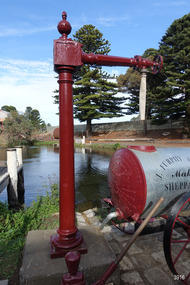
... It was originally located in Warrnambool, on the hillside at the corner of Mickle Crescent and Banyan Street, providing water for the Chinese Market Gardens below, on the flats. It was removed from this location on May 2nd, 1979, with the intention to relocate it at the new Flagstaff Hill Maritime Museum & Village. ...It was originally located in Warrnambool, on the hillside at the corner of Mickle Crescent and Banyan Street, providing water for the Chinese Market Gardens below, on the flats. It was removed from this location on May 2nd, 1979, with the intention to relocate it at the new Flagstaff Hill Maritime Museum & Village. ...This water standpipe is believed to be the only one of its kind in working order. It was originally located in Warrnambool, on the hillside at the corner of Mickle Crescent and Banyan Street, providing water for the Chinese Market Gardens below, on the flats. It was removed from this location on May 2nd, 1979, with the intention to relocate it at the new Flagstaff Hill Maritime Museum & Village. The standpipe lay in storage for years until the Warrnambool Company, Chemblast, offered to restore it for use as a working display. The display was officially opened on March 31, 2014. The water from the adjacent lake is drawn out with a hand operated water pump, and goes up into the standpipe, where flows through the canvas hose and into the top of the Furphy Farm Water Cart. The display is a visual acknowledgement of the years served by Flagstaff Hill volunteer and Friends of Flagstaff Hill Chairperson, Bob Crossman. Warrnambool’s early settlers had no water supply prior to the mid-1850s. They relied on rain water tanks, domestic wells and springs. The town experienced a huge, destructive fire in William Bateman Jnr. & Co.’s large produce store in November 1856, which highlighted the need for both a fire brigade and a good supply of water. In 1863 a volunteer fire brigade was established. In August 1880 the town celebrated the installation of its first water standpipe on the corner of Liebig and Timor streets. The water was pumped from springs at Cannon Hill through the connected pipeline to the standpipe, then distributed to households via horse and cart. Each of the licenced cart drivers were compelled by Council regulations to keep their carts full from sunset to sunrise, ready to cart water to outbreaks of fire. They received a fee for this service. In 1893 the town installed a water supply, sourced from the Merri River, stored in a reservoir basin and tower in north Liebig Street, and distributed throughout the town in a system of pipes. By late 1939 a reticulated supply was installed, with the water piped in under the Otway Scheme. Standpipes are still used in modern times in rural and remote areas for homes, farms, stock, agriculture and firefighting. Many commercial or government owned standpipes are metered, charging a fee for the quantities of water supplied. This water standpipe was made by Langlands Foundry Co. Limited, Melbourne, which was establish in 1842. It was Melbourne’s first foundry and iron shipbuilder, and one of the largest employers in Victoria at the time. Langlands was known for its high quality workmanship and wide range of goods for mining, engineering, marine, railway and other industrial uses. The company made the first cast bell, the first lamp posts in the colony, and the boiler for the first Australian train. In the 1860s it produced cast iron pipes for the Board of Works, which laid the pipes for Melbourne’s first reticulated water supply. The firm was bought by Austral Otis Co. in 1897.This water standpipe is significant historically as it is believed to be the only one of its type in working condition. The standpipe is significant for being manufactured by early colonial firm Langlands Foundry of Melbourne, which was known for high quality, cast iron products. The firm made the boiler for the first Australian train, assembled the first Australian paddle steamer and made the first Australian cast bell and lamp posts. Langlands was one of the largest employers in Victoria at the time. The standpipe is significant historically as it represents the evolution of water supply services in Australia. Standpipe; vertical cast iron water pipe, painted crimson, fixed in position, tapering inward from the round base to the rectangular joint near the finial on top. A hexagonal pipe extends at right angles from the joint, with an outlet fitting and flow-controlling wheel on the end. A length of canvas hose hangs from the outlet fitting. Inscriptions are on one face of the joint. The standpipe was made by Langlands Foundry Company of Melbourne. Embossed “LANGLANDS FOUNDRY CO. / LIMITED / ENGINEERS / MELBOURNE”warrnambool, flagstaff hill maritime museum, maritime museum, shipwreck coast, flagstaff hill maritime village, great ocean road, flagstaff hill, standpipe, stand-pipe, water standpipe, fire standpipe, firefighting equipment, water supply equipment, chinese market gardens, banyan street, liebig street, water tower, bateman’s fire, working display, water supply, town water, rural water, reticulated water, cannon hill spring, merri river, otway water, water carters, horse and cart water supply, volunteer fire brigade, langlands foundry, early melbourne, iron works, bob crossman, late 19th century water supply -
 The Beechworth Burke Museum
Audio - Oral History, Jennifer Williams, Mr Horace Monshing, 6th July 2000
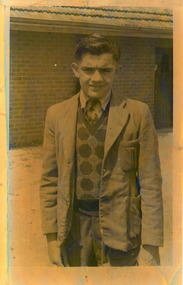
... Chinese goldminers to live in Beechworth. While Peter, who was originally from Hong Kong, was not a particularly successful goldminer, he was a very talented gardener, and made his living growing a market garden and selling the produce. ...Chinese goldminers to live in Beechworth. While Peter, who was originally from Hong Kong, was not a particularly successful goldminer, he was a very talented gardener, and made his living growing a market garden and selling the produce. ...Horace Monshing was born in Beechworth in 1935. In this oral history, he relates his understanding of the life of his Grandfather, Peter Monshing (Munshing), as a Chinese immigrant to Australia in the mid-nineteenth century, as well as his life as the last descendent of Chinese goldminers to live in Beechworth. While Peter, who was originally from Hong Kong, was not a particularly successful goldminer, he was a very talented gardener, and made his living growing a market garden and selling the produce. He died in 1947 in his nineties, in the same year that Horace and his parents moved to Myrtleford. Horace relates the discrimination he faced as a child based on his grandfather’s ethnicity, as well as how his grandmother, mother and wife have all faced discrimination for marrying into a family with a Chinese name. This oral history recording was part of a project conducted by Jennifer Williams in the year 2000 to capture the everyday life and struggles in Beechworth during the twentieth century. This project involved recording seventy oral histories on cassette tapes of local Beechworth residents which were then published in a book titled: Listen to what they say: voices of twentieth century Beechworth. These cassette tapes were digitised in July 2021 with funds made available by the Friends of the Burke. Mr Horace Monshing’s account of his life in Beechworth and Myrtleford and the local area during the 20th century, as well as his understanding of his grandfather, Peter Monshing’s life as a Chinese immigrant in the mid-nineteenth century, is historically and socially significant to the cultural heritage of the region, especially as it relates to Chinese settlers in the region. He details the discrimination he and his family have faced as the result of being related to a Chinese immigrant, as well as describing his life in general. This oral history account is socially and historically significant as it is a part of a broader collection of interviews conducted by Jennifer Williams which were published in the book 'Listen to what they say: voices of twentieth-century Beechworth.' While the township of Beechworth is known for its history as a gold rush town, these accounts provide a unique insight into the day-to-day life of the town's residents during the 20th century, many of which will have now been lost if they had not been preserved. This is a digital copy of a recording that was originally captured on a cassette tape. The cassette tape is black with a horizontal white strip and is currently stored in a clear flat plastic rectangular container. It holds up 45 minutes of recordings on each sideMr Horace Monshing / peter monshing, peter munshing, horace monshing, monshing, munshing, beechworth chinese community, chinese immigration, chinese community, chinese miners, immigration, gold rush immigration, beechworth goldfield, marketing and promoting agricultural products, market garden, garden, racism, discrimination, oral history, jennifer williams, myrtleford, eurobin, beechworth primary school, beechworth state school., school, listen to what they say: voices of twentieth century beechworth, listen to what they say, burke museum -
 The Beechworth Burke Museum
Photograph, 1999
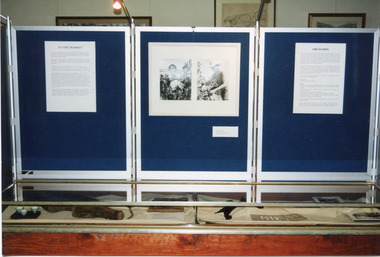
... Market' and 'Orchards'; the accompanying text cannot be read. The two accompanying photographs depict a man and woman picking fruit. This photograph is of social significance to Burke Museum and the Beechworth community, documenting an exhibition, The Harvest, held in 1999 to communicate the importance of agricultural development, specifically of orchards, in the area. The expansion of vineyards and horticulture in the Beechworth district followed gold rush prosperity in the mid-1850s, with nearly ninety acres of gardens and small farms under vineyards by 1865. There were 400 Chinese ...This photograph features three display board sections showing information and photographs from 'The Harvest' exhibition inside the Burke Museum at Beechworth in 1999. The boards are titled 'To the Market' and 'Orchards'; the accompanying text cannot be read. The two accompanying photographs depict a man and woman picking fruit.This photograph is of social significance to Burke Museum and the Beechworth community, documenting an exhibition, The Harvest, held in 1999 to communicate the importance of agricultural development, specifically of orchards, in the area. The expansion of vineyards and horticulture in the Beechworth district followed gold rush prosperity in the mid-1850s, with nearly ninety acres of gardens and small farms under vineyards by 1865. There were 400 Chinese market gardeners and hawkers in the area in 1868. The growth of agriculture in the Ovens district in the mid -1860s led to advocacy by local farmers for the extension of railway infrastructure from Melbourne to improve access to distant markets.Colour rectangular photograph printed on matte AGFA photographic paper.Obverse: TO THE MARKET / ORCHARDS/ Reverse: 2856beechworth, burke museum, promoting settlement, living in country towns, making regional centres, preserving traditions and commemorating, farming and agriculture, orchards, exhibitions, burke museum exhibitions, fruitpicking, building local economies, transforming land, victorian agricultural history, marketing and promoting agricultural products, growing fruit and vegetables, the harvest exhibition, harvests, vineyards, victorian gold rush towns -
Federation University Historical Collection
Booklet, Open Monument, Ballarat, 2015
... The monument will consider this context as an open historical event, specific to Ballarat, and encourage future generations to relate to new understandings of this period in Ballarat's history. chinese mining multicultural immigration tong way goon joss house embroidery billy butterfly chinese market gardens red lion hotel ah soon, mayor of main road chinese herbalist yee lee james hong cheok cheong hong john ah loo wathawurrung robe lowe kong meng louis ah mouy tongway gallipoli william lung Soft covered booklet of 41 pages covering the Open Monument by John Young. ...Soft covered booklet of 41 pages covering the Open Monument by John Young. 'Open Monument' comprises 2 artworks: A 33 laser-etched granite paneled work, 'transculture', and 'Timeline' which extends of 40 metres and depicts the major contributions of the Chinese community in Ballarat, every decade from 1850 until the present. The timeline then folds out with anticipation to 2070. Each page describes aspects of the monument and the Chinese influence. An timeline of Chinese influence is given at the back of the book.non-fictionchinese, mining, multicultural, immigration, tong way, goon, joss house, embroidery, billy butterfly, chinese market gardens, red lion hotel, ah soon, mayor of main road, chinese herbalist, yee lee, james hong, cheok cheong hong, john ah loo, wathawurrung, robe, lowe kong meng, louis ah mouy, tongway, gallipoli, william lung -
 City of Moorabbin Historical Society (Operating the Box Cottage Museum)
Functional object - Medical Equipment, china bed-pan, c1910-1940
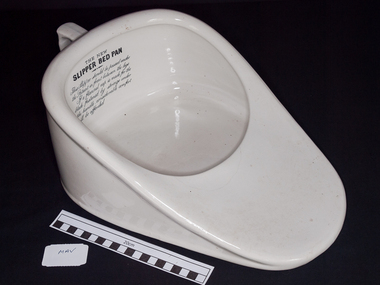
... This porcelain 'New Slipper' bed pan was used early 20thC. toilets invalids cummerford family moorabbin bentleigh cheltenham early settlers market gardeners Inside back 'The New Slipper bed pan should be passed under the patient in front between the legs. If a flannel cap is made for the blade, fastened by string to the handle, considerable comfort will be affected." on base 'F Large" A white china ...A bedpan is a receptacle used for the toileting of a bedridden patient in the home or in a hospital and are usually made of a metal, glass, or plastic . A bed pan can be used for both urinary and faecal discharge. This porcelain 'New Slipper' bed pan was used early 20thC.A white china bed-pan with handle at centre back 'The New Slipper'Inside back 'The New Slipper bed pan should be passed under the patient in front between the legs. If a flannel cap is made for the blade, fastened by string to the handle, considerable comfort will be affected." on base 'F Large"toilets, invalids, cummerford family, moorabbin, bentleigh, cheltenham, early settlers, market gardeners -
 City of Moorabbin Historical Society (Operating the Box Cottage Museum)
Functional object - Gold Mining, prospector's "rocker", c1870
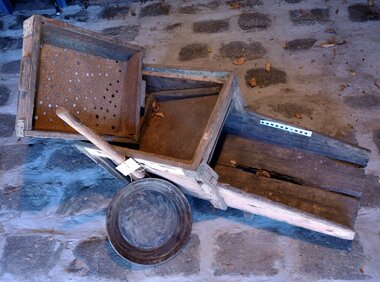
... market gardens and supply food to the ever increasing population of Melbourne. This gold prospector's 'cradle' is hand made and typical of those used by many hopeful Moorabbin Shire pioneers as they abandoned their market gardens to try their luck at finding gold in the Ballarat and Bendigo minefields c1850 moorabbin brighton market gardens pioneers early settlers fruit vegetable ballarat bendigo gold mining gold prospedtors gold rush were j. b. irish immigrants chinese immigrants gold panning gold digger This gold miner's rocker is very old, and very well-used. ...Gold was discovered in Victoria c1850 and people came from all over the world to seek their fortune at Ballarat and Bendigo and surrounding gold fields. This large wooden rocking- box or cradle was used by gold prospectors. A handle on the rocker is pushed back and forth, as the miner put gravel into the top part and finer and heavier particles dropped through a screen, helped along by buckets of water. The bottom part of the device had slats, that caught the heavier metals. After many shovel loads of gravel were pushed through the rocker, the miner would then use his gold pan to sort out the heavy minerals to find gold. Most of the pioneer settlers in Moorabbin Shire left the area to try their luck at gold mining and there was a desperate shortage of workers to maintain the market gardens and supply food to the ever increasing population of Melbourne.This gold prospector's 'cradle' is hand made and typical of those used by many hopeful Moorabbin Shire pioneers as they abandoned their market gardens to try their luck at finding gold in the Ballarat and Bendigo minefields c1850This gold miner's rocker is very old, and very well-used. It is a large wooden rocking- box or cradle used by gold prospectors. A handle on the rocker is pushed back and forth, as gravel is put in the top part of the box so that finer and heavier particles drop through a screen.. The bottom part of the device had slats, that caught the heavier metals. i.e gold particles. The water passed through the shute at the base back into the creek or river.moorabbin, brighton, market gardens, pioneers, early settlers, fruit, vegetable, ballarat, bendigo, gold mining, gold prospedtors, gold rush, were j. b., irish immigrants, chinese immigrants, gold panning, gold digger -
 City of Moorabbin Historical Society (Operating the Box Cottage Museum)
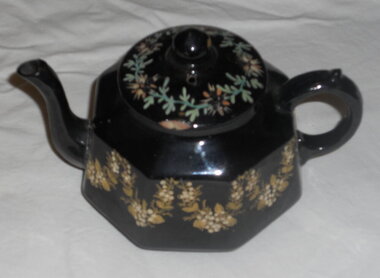
Domestic object - Kitchen Equipment, Tea Pot, Between 1885 and 1905 after which the backstamp changed to G & S LTD
... china it produced for the domestic English market and for export to Australia, Canada, New Zealand and the United States. Grove & Stark were taken over by Meakin early 20thC The Mark could also be Gibson & Sons (Ltd), were notably manufacturers of earthenware Burslem, Stoke-on-Trent. Founded around 1885 and traded until the mid 1970's. They were previously Gibson, Sudlow & Co. crockery earthenwarre gibson & son ltd grove & stark ltd pioneers early settlers bentleigh market gardeners ...Earthenware is lightly fired, readily absorbs water if not glazed, and does not allow light to pass through it. Coarse earthenware is made from clay and grog (ground up fired pot). There are two main types of glazed earthenware: One is covered with a transparent lead glaze; when the earthenware body to which this glaze is applied has a cream colour, the product is called creamware. The second type, covered with an opaque white .in glaze, is variously called tin-enamelled, or tin-glazed, earthenware, majolica, faience, or delft. G&S marking could be Grove & Stark, Longton, England (1871-1884). In the 19th century, J. & G. Meakin ,1851 based in Hanley, Stoke-on-Trent, Staffordshire, was known for the vast quantities of cheap ironstone china it produced for the domestic English market and for export to Australia, Canada, New Zealand and the United States. Grove & Stark were taken over by Meakin early 20thC The Mark could also be Gibson & Sons (Ltd), were notably manufacturers of earthenware Burslem, Stoke-on-Trent. Founded around 1885 and traded until the mid 1970's. They were previously Gibson, Sudlow & Co. Manufactured between 1885 to 1905. Small earthen-ware, black-glazed tea-pot. 8 sided. The body of the tea-pot is decorated with hand-painted gold flowers and raised cream flowers. The lid is also hand -painted with green leaves and flowers. This floral pattern is named "Garland" The lid is not of the same pattern as the base. The spout was broken when brush tailed possum entered Cottage via chimney 27/4/2014. Can be repairedOn the base of the tea-pot. Makers Mark is G & S. "Garland". (Pattern), Rg. No. 175153. Also 'Made in England'. Under glaze there is the word: England.crockery, earthenwarre, gibson & son ltd, grove & stark ltd, pioneers, early settlers, bentleigh, market gardeners, moorabbin, cheltenham, pottery, stoke- on - trent, england, longton, burslem, wedgwood -
 City of Moorabbin Historical Society (Operating the Box Cottage Museum)
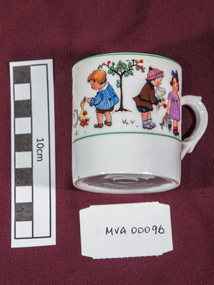
Domestic object - Kitchen Equipment, crockery child's cup, Circa 1950-1960
... market gardeners Stamped made in Czechoslovakia. Colourful transfer-printed decoration of children playing with a selection of toys. Small white child's china ...Small white child's china cup with handle, c 1950 -60. Colourful transfer-printed decoration of children playing with a selection of toys. Possibly part of child's tea-set.Stamped made in Czechoslovakia. Colourful transfer-printed decoration of children playing with a selection of toys.ornaments, kitchen equipment, crockery, chinaware, czechoslovakia, early settlers, pioneers, moorabbin, bentleigh, cheltenham, ormond, market gardeners -
 City of Moorabbin Historical Society (Operating the Box Cottage Museum)
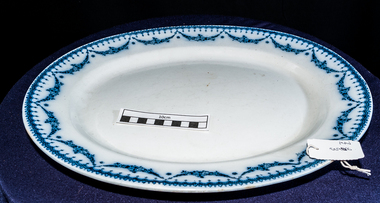
Kitchen Equipment, meat platter 'CETEM WARE', c1930
... Many of the factory’s workers were called up for military service, and wartime restrictions prevented decorative ware being produced for the home market. china pottery cetem ware maling pottery co ltd. maling william maling christopher thompson ford mary newcastle upon tyne uk crockery north hylton sunderland uk moorabbin bentleigh market gardeners early settlers cheltenham world war 11 1939-45 cooking On base ; CETEM WARE / over a Castle / EMPIRE / Rd No 519757 A larger oval china platter with blue garland around the rim ‘ CETEM WARE’ EMPIRE c1930 Kitchen Equipment, meat platter 'CETEM WARE' Mayling Pottery Pty Ltd CETEM pty ltd ...The Maling Pottery of Newcastle upon Tyne, England, was in production from 1762 to 1963. In its heyday it claimed to be the biggest pottery in the world. The first Maling pottery was established at North Hylton, near Sunderland, in 1762 by William Maling. William’s descendants who moved to the Newcastle area and built a succession of larger works. The last of these – the Ford B pottery – was begun in 1878 and occupied a 14 acre site... Maling’s stock in trade was everyday white ware – marmalade jars for Keillers and Coopers, crockery for railways, shipping lines and hotels, and a huge variety of domestic kitchenware. With a significant export trade in the 1920s they had showrooms in Australia, New Zealand and Denmark. Mary Ford, daughter of an Edinburgh glass manufacturer, married Christopher Maling. Christopher Thompson Maling’s initials form one of the company’s early factory marks – the letters CTM inscribed vertically inside a triangle. The Maling name (which had first appeared with the castle mark in the 1920s) and extended to the trade name “Cetem Ware” when the company adopted its well known trademark of a castle in the early years of this century. The “Cetem” name continued to be used into the 1930s. the Maling name continued to be used as a trademark until the factory finally closed in 1963 The outbreak of World War 11 in 1939 marked the beginning of a long decline. Many of the factory’s workers were called up for military service, and wartime restrictions prevented decorative ware being produced for the home market.A larger oval china platter with blue garland around the rim ‘ CETEM WARE’ EMPIRE c1930 On base ; CETEM WARE / over a Castle / EMPIRE / Rd No 519757 china, pottery, cetem ware, maling pottery co ltd., maling william, maling christopher thompson, ford mary, newcastle upon tyne uk, crockery, north hylton sunderland uk, moorabbin, bentleigh, market gardeners, early settlers, cheltenham, world war 11 1939-45, cooking -
 City of Moorabbin Historical Society (Operating the Box Cottage Museum)
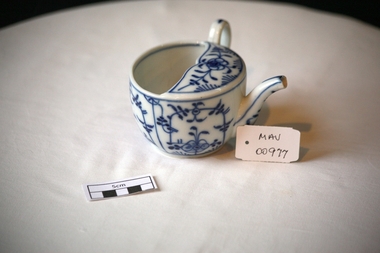
Medical Equipment, porcelain invalid feeding cup, 19thC
... These cups were apparently offered as accessory pieces to many regular china patterns. pharmacy medicine melbourne early settlers market gardeners moorabbin bentleigh cheltenham nursing invalid feeding invalid cookery porcelain Base : m 8. ...These unusual china cups with elongated spouts were created in the days before drinking straws were common. Liquids and broth were fed through the spout to adults who were sick and could not take solid food, or to infants. The alternate name for these cups is “pap feeder.” Recipes for pap usually called for bread, flour and water. A more nourishing mixture “panada” was a pap base with added butter and milk, or cooked in broth as a milk substitute. Variations on the ingredients included Lisbon sugar, beer, wine, raw meat juices. These cups were apparently offered as accessory pieces to many regular china patterns.A white porcelain invalid or baby feeding cup decorated with a blue floral ( onion ) pattern. The cup has a spout , strainer, side handle and ‘spill-proof’ guard c19thCBase : m 8.pharmacy, medicine, melbourne, early settlers, market gardeners, moorabbin, bentleigh, cheltenham, nursing, invalid feeding, invalid cookery, porcelain -
 City of Moorabbin Historical Society (Operating the Box Cottage Museum)
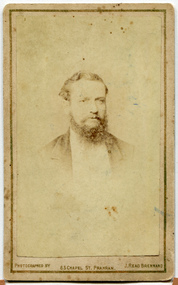
Photograph, B&W, John Box 1841 - 1913, c1900
... He lived and worked on his fathers market garden in East Brighton ( now Bentleigh) for several years and then rented a property in Tucker Road in 1862. John married Martha Sheldrake and they had 10children. Rebecca Anne b 1863 was in the first party from Australia to go to the China...market gardener in East Brighton now Bentleigh. He married Martha Sheldrake and they had 10 children. The eldest daughter Rebecca was a Methodist Missionary in China and Alonzo, their 9th child, served in the Army WW1 at Gallipoli, France and Flanders. ...John Box 1841 - 1914, the 4th son of George and Mary Box, was born in Withyham, Sussex England and came to Australia in 1856 with his parents. He lived and worked on his fathers market garden in East Brighton ( now Bentleigh) for several years and then rented a property in Tucker Road in 1862. John married Martha Sheldrake and they had 10children. Rebecca Anne b 1863 was in the first party from Australia to go to the China Inland Mission in 1890 and was known as 'Faith' because of her evangelical zeal. The Mission Post was invaded by the Boxers during the Rebellion 1900-01and she was moved to the safety of Shanghai by Nicholas Viloudakia, a Greek silk merchant whom she later married. Rebecca sent the bolt of hand embroidered silk material to her brother Alonzo for his marriage to Mary Closter. Mary Box nee Closter's Wedding Dress is on display at Box Cottage Museum . Martha Sheldrake died 1895 and John married Eleanor Rushall b1866 and they had 3 children. John was well respected in the community and was a Methodist lay preacher. John Box is the brother of William Box who, with his wife Elizabeth Box, lived in Box Cottage . John Box was a pioneer market gardener in East Brighton now Bentleigh. He married Martha Sheldrake and they had 10 children. The eldest daughter Rebecca was a Methodist Missionary in China and Alonzo, their 9th child, served in the Army WW1 at Gallipoli, France and Flanders. Rebecca sent the hand embroidered Chinese silk material for the Wedding Dress worn by Mary Closter at her marriage to Alonzo Box 1918. After Martha died he married Eleanor Rushall and they had 3 children. John was well respected by the community and also a Methodist lay preacher. Box Cottage Museum, a reconstruction of an early settler hut, is named after the Box family who resided there 1865 -1913 . William Box who, with his wife Elizabeth Avis Box and 13 children, lived and farmed on the block of land in Jasper Road, East Brighton ( now McKinnon / Ormond) that was part of the Henry Dendy Special Survey 1841. Inscribed in Album “ The early photos in this album were found by Mr (Laurie) Lewis when he was demolishing the Old Box Cottage. He gave them to Mrs Avis Box Eldridge who in turn gave them to me. They were not identified. I believe they rightly belong in the Cottage. I have attempted to identify them and present them in a way they can be preserved as a historical record of the era.” A B Leigh A black and white professional photograph of John Box c1880Photographed by J. Read Brennand / 83 Chapel St. Prahranbox william, box elizabeth, box george, box john, sheldrake martha, box alonzo, box mary, box rebecca, rushall eleanor, moorabbin, bentleigh, brighton, ormond, market gardeners, pioneers, early settlers, withyham sussex england, boxer rebellion 1900, methodist chinese missionary, methodist china inland mission, shanghai china, silk merchants, mary box wedding dress
