
Showing 11 items matching "chinese mining community"
-
 The Beechworth Burke Museum
Photograph, c1900
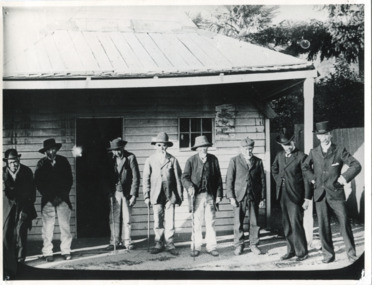
... ...Chinese mining community...This black and white photograph taken c1900 at a camp in Beechworth, depicts the last six survivors of the Beechworth Chinese mining community. The two men standing on the far right are believed to be local Beechworth men. ...This black and white photograph taken c1900 at a camp in Beechworth, depicts the last six survivors of the Beechworth Chinese mining community. The two men standing on the far right are believed to be local Beechworth men. ...This black and white photograph taken c1900 at a camp in Beechworth, depicts the last six survivors of the Beechworth Chinese mining community. The two men standing on the far right are believed to be local Beechworth men. The man second-from-right is believed to be George Young, a Chinese Presbyterian catechist whose task was to fulfil the Church's remit to evangelise the Chinese population. Beechworth became home to one of the largest Chinese communities in Australia after the 1857 Buckland Riots pushed Chinese miners from their claims and they were forced to relocate their camps. Under the Protectorate system, the Chinese were required to live in camps on the outskirts of town and were subject to many additional controls and regulations. Chinese miners continued to form a large part of the Beechworth population, and surrounds, until gold ran out at the turn of the century.This photograph is historically significant for its association with the development of Victoria through the discovery of gold and the first wave of free Chinese immigration to Australia as part of the 1850s gold rush. This photograph is also of social significance for its association with the history of the Chinese community in Beechworth, and the adversity faced by Chinese immigrants during the gold rush as part of a system of Chinese protectorates and segregated camps enforced by the Victorian Government in response to the hostility and violence directed at the Chinese during this period. Black and white rectangular photograph (copy) on matte photographic paper unmountedReverse: Chinese / BMM2676 / 84-79-1 / 1998.00059 / 'UNITED SHIRE OF BEECHWORTH / SHIRE SECRETARY'beechworth, chinese camp, beechworth chinese camps, 1900s beechworth, ovens goldfield, chinese mining community, beechworth presbyterian church -
 Federation University Historical Collection
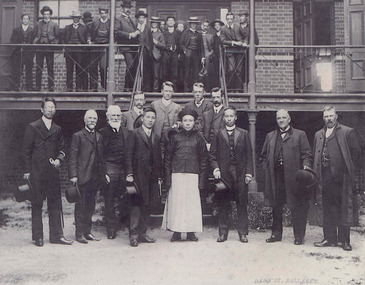
Photograph, Visit of the Chinese Commissioner to the Ballarat School of Mines, 13 November 1906, 23/11/1906 (exact)
... Chinese consulates in the Commonwealth. He visited Ballarat at the request of Ballarat’s Chinese community. The newspaper reported that it was hoped the Commissioner would visit the Ballarat School of Mines “where the knowledge he would get would probably be of the utmost usefulness in the development of the great resources of China.” The Commissioner was accompanied by interpreter Ah Ket (Melbourne barrister and solicitor), and met by members of Ballarat’s Chinese community, including Dr Wong Chock Son. Apparently the Chinese Commissioner wanted to visit SMB because of its international fame relating to education in mining...Chinese consulates in the Commonwealth. He visited Ballarat at the request of Ballarat’s Chinese community. The newspaper reported that it was hoped the Commissioner would visit the Ballarat School of Mines “where the knowledge he would get would probably be of the utmost usefulness in the development of the great resources of China.” The Commissioner was accompanied by interpreter Ah Ket (Melbourne barrister and solicitor), and met by members of Ballarat’s Chinese community, including Dr Wong Chock Son. Apparently the Chinese Commissioner wanted to visit SMB because of its international fame relating to education in mining ...The Chinese Imperial Commissioner, Hwang How Cheng, visited Australia at the request of the Chinese Emperor for the purpose of establishing Chinese consulates in the Commonwealth. He visited Ballarat at the request of Ballarat’s Chinese community. The newspaper reported that it was hoped the Commissioner would visit the Ballarat School of Mines “where the knowledge he would get would probably be of the utmost usefulness in the development of the great resources of China.” The Commissioner was accompanied by interpreter Ah Ket (Melbourne barrister and solicitor), and met by members of Ballarat’s Chinese community, including Dr Wong Chock Son. Apparently the Chinese Commissioner wanted to visit SMB because of its international fame relating to education in mining. From the SMB Letter book (Cat. No. 436) comes the following which suggests the Commissioner was based in Adelaide) '17th November 1906 His Excellency, Hwang How Cheng Chinese Commission Adelaide May it please your Excellency By this post I have the pleasure in forwarding for your Excellency's kind acceptance (and one for Mr. When) copies of the photograph taken of your recent visit to the School of Mines. I trust they will serve a pleasing memento of what, I hope, was a pleasant visit to our Golden City. Yours Faithfully Fredk Martell Director' The visit was reported in the Ballarat Star in 14 November 1906:- The Chinese Imperial Commissioner, Hwang Hon Cheng, who recently arrived in Victoria on behalf of the Chinese Government, paid a visit to Ballarat last evening, and was entertained by his fellow countrymen at a dinner at the Bow Leong rooms, Main street. The commissioner, who came up by the express, was accompanied by his secretary and Mr Ah Ket, the well-known Chinese barrister, of Melbourne; but some disappointment was expressed by the fact that he did not wear his official robes, being attired in the more sombre European dress. Mr W. D. M’Kee presided at the dinner, on the invitation of the Bow Leong Society, and in addition to representative Chinese residents, three were also present the mayor of the city (Cr. J. J. Brokenshire), Crs. R. Pearse, G. Crocker (City), J. R. Elsworth, A. Mackenzie, J. A. M’Neil, A. Levy, G. Bunting, F. Penhalluriack (Town), Col. Williams, Mr. J. Gent, Messrs. F. J. Martell (director of the School of Mines), A. W. Hager (president of the Orphan Asylum), A. Kenny (superintendent), R. G. Fitzgerald (clerk of courts at Ballarat East), J. Trethowan, A. A. Buley, Serg Dalton, and others. Apologies were received from the mayor of the town Revs. J. West Lau, Dr Cairns, Hon. J. Y. M’Donald, L. Lederman, C. C. Shoppee and others. The gathering was a very cordial one, and the hospitality of the Chinese was greatly appreciated. After the loyal toasts, “The King” and “The Emperor of China,” had been honoured, the chairman extended a hearty welcome on behalf of the society and others to the commissioner. Mr M’Kee said he was privileged to speak in behalf of the Chinese. There was a warm feeling of friendship between them and himself, and his services were always at their command. If he were in China he would desire that a similar compliment would be extended to him. They were all pleased the Emperor of China had sent the commissioner to establish consulates in Australia with a view of the empire understanding the feelings of Australasia better than they did at present. He hoped the commissioner would have opportunity of visiting some of their industries, as they desired him to gain all the scientific and practical knowledge of those industries that he could. The toast of “The Commissioner” was proposed by Col. Williams who expressed pleasure at the visit of a gentleman of education and attainments to look into the condition of the scions of China in Australia. He hoped the commissioner would carry away a correct impression. In Australia they had nothing to conceal; they hoped to be understood. (Applause.) No intelligent man had the temerity to condescend to patronise China, one of the richest countries in the world, with a civilisation dating back thousands of years. In the matter of population alone it was equal to one-third of the world. They heard a lot about the “awakening of China.” They hoped it would be humane, just, and considerate if it had power. He hoped the commissioner would be satisfied with what he saw. The law of filial relation to the children was strictly observed in China, and he did not know whether it would not be a good thing if they had a little more of that religion here. It would be a fair thing to tell the commissioner that while he might inquire into the labour laws, the basis of these laws was not a desire to oppress but to enable every man to obtain the same conditions they expected from their own people. If he gained that impression he felt they would be fairly treated. (Applause.) Mayor Brokenshire supported the toast. They had, he said, in the Chinese a most law-abiding people. Their behaviour was an example to the British citizens. They were quiet, inoffensive men, and they toiled hard, even on Sundays. (Laughter.) Mr Ah Ket; That is what the government does with the railway employees. (Laughter.) The Commissioner replied through Mr Ah Ket, who in a graceful speech acknowledged the toast. The commissioner had, he said been delighted with what he had seen of the country – he believed it to be one of the finest in the world – and he greatly appreciated the hospitality extended to him. (Applause.) The Chairman proposed the toast of “The health of Mr Ah Ket,” and paid a tribute to his ability. It was satisfactory to see that he had risen to such a position, and it might be that in the future he would be asked to occupy a position on the bench. (Applause.) Mr Ah Ket, in response, said he had not come prepared to make a speech. He had come to Ballarat to have a quiet evening with his friends, and as soon as he arrived he had been whirled away in a motor car to a place where he found an aggregation of East and West. He was pleased to see them commingled at the festive board. That suggested the idea that East and West could meet together without friction. Misunderstandings arose only because men were superficial. If they threw off outer garments they would know each other better. He looked forward to the time when nations would understand each other. It was by an interchange of visits that such things could be accomplished, and nations would then live at peace with each other. (Applause.) Other toasts were also honored. Twelve men pose for a photograph on the stairs of a building at the Ballarat School of Mines. Back row left to right: A.D. Gilchrist (Prof. of Engineering), B. Whittington (Mathematics, Physics), Thomas S. Hart (Prof. of Geology and Mining), J.M. Sutherland (Electrical Engineering) Front row left to right: Dr Wong Chock Son (Ballarat), Fred. J. Martell, Alfred Mica Smith, Ah Ket esq (Melbourne Barrister), His Excellency Hwang How Cheng (Chinese Commissioner), Wen Esq (Secretary), Alderman Grase (mayor of Brisbane), Grase Esq (Ballarat).ballarat school of mines, alfred mica smith, fred martell, j m sutherland, a d gilchrist, b whittington, thomas hart, wong chock son, ah ket, hwang how cheng, chinese, chinese commissioner, international, new classrooms, administration building, a building -
 The Beechworth Burke Museum
Audio - Oral History, Jennifer Williams, Dr Roy Phillips, 8th October 2000 (exact date unclear)
... Beechworth Yackandandah Wangaratta mining dredging 1910s 1920s 1930s Chinese community Typhoid Lake Kerferd Reminiscences Memories Childhood Lake Sambell Alcoholism New Year Celebrations Transport Horses Foresters Lodge Oddfellows Lodge Funeral Practices Child-rearing practices Star Hotel The Rock Racism Chinese Dragon Benevolent Society Star Lane Coach Building Factory Outdoor concerts Gold Jimmy Ingram Kelly Gang Kelly Family Churches Catholic Methodist Protestant Anglican Confuscionist Buddhism Women's Christian Temperance Association Hotels Twentieth Century Coronation of King George IV Echo Point The Echo Tippany Cat Marbles Children's games Cornish Cornwall Listen to what they say oral history Dr Roy Phillips / This is a digital copy of a recording that was originally captured on a cassette tape. ...Roy Phillips was born in 1907 in Yackandandah and moved with his family to Beechworth when he was five years old. His father was involved in dredging operations at Lake Sambell but his parents also had other family living in Beechworth, with whom they lived. Dr Phillips tells vivid stories about life in Beechworth in the first half of the Twentieth Century, from the daily lives of young children of the time to the town's relationship to the local Chinese community. He discusses features of the landscape such as 'The Rock' at which community concerts were held and 'The Echo' (an echo-sounding point over a nearby gully) which he states are no longer used in the same way. He also discusses changing community attitudes to various issues, for example, 'not being coddled' as a child but living in a town with very strict rules about people of different religions mingling. This oral history recording was part of a project conducted by Jennifer Williams in the year 2000 to capture the everyday life and struggles in Beechworth during the twentieth century. This project involved recording seventy oral histories on cassette tapes of local Beechworth residents which were then published in a book titled: Listen to what they say: voices of twentieth century Beechworth. These cassette tapes were digitised in July 2021 with funds made available by the Friends of the Burke.Dr Roy Phillips' account of his life in Beechworth in the early part of the 20th Century is historically and socially significant to the cultural heritage of the region. He describes town life from a child's point of view during a time of transition to life after the Gold Rush era, including social tensions existing between cultural groups such as the Chinese community and European-heritage townspeople and between people of different religious groups in Beechworth. This oral history account is socially and historically significant as it is a part of a broader collection of interviews conducted by Jennifer Williams which were published in the book 'Listen to what they say: voices of twentieth-century Beechworth.' While the township of Beechworth is known for its history as a gold rush town, these accounts provide a unique insight into the day-to-day life of the town's residents during the 20th century, many of which will have now been lost if they had not been preserved.This is a digital copy of a recording that was originally captured on a cassette tape. The cassette tape is black with a horizontal white strip and is currently stored in a clear flat plastic rectangular container. It holds up 40 minutes of recordings on each side.Dr Roy Phillips /beechworth, yackandandah, wangaratta, mining, dredging, 1910s, 1920s, 1930s, chinese community, typhoid, lake kerferd, reminiscences, memories, childhood, lake sambell, alcoholism, new year celebrations, transport, horses, foresters lodge, oddfellows lodge, funeral practices, child-rearing practices, star hotel, the rock, racism, chinese dragon, benevolent society, star lane coach building factory, outdoor concerts, gold, jimmy ingram, kelly gang, kelly family, churches, catholic, methodist, protestant, anglican, confuscionist, buddhism, women's christian temperance association, hotels, twentieth century, coronation of king george iv, echo point, the echo, tippany cat, marbles, children's games, cornish, cornwall, listen to what they say, oral history -
 The Beechworth Burke Museum
Photograph, Late 1800s
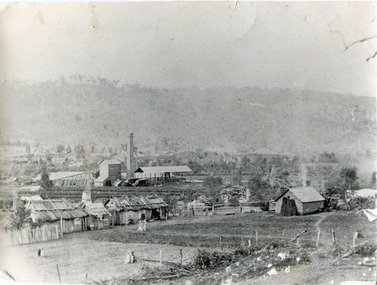
... Chinese migrant community and the measures taken to separate them from the rest of the predominantly white community. It also reflects the gold-rush period and one of the first draws to Australia due to its mineral wealth. Chinese Camp Beechworth Houses Immigrants Gold Mining ...This photograph was taken during the late 1800s at the Chinese camp at Beechworth, Victoria. It was in camps such as these that many would-be gold miners made their home after arriving in Australia from across Asia. After arriving in South Australia where there was no poll-tax required of migrants as was the norm in Victoria and New South Wales, those looking to settle on the gold fields walked en mass overland for hundreds of kilometres before arriving in destinations such as Beechworth. Due to widespread prejudice against Chinese gold diggers they were forced to live separate from the town and developed enclaves much like the one depicted in the photograph. As the years progressed the Chinese camp began to construct more permanent structures and included temples of worship, shops and separate burial grounds. This photograph demonstrates the early multi-cultural aspects of Australia and Victoria during the late 1800s. It also showcases pressures and prejudices specific to the Chinese migrant community and the measures taken to separate them from the rest of the predominantly white community. It also reflects the gold-rush period and one of the first draws to Australia due to its mineral wealth. Black and white rectangular photograph developed on paperObverse: None Reverse: From the/Chinese Camp/84-80-1/1997-3221chinese camp, beechworth, houses, immigrants, gold mining, gold rush, late 1800s, chinese, asia -
 Federation University Historical Collection
Booklet, Open Monument, Ballarat, 2015
... The monument will consider this context as an open historical event, specific to Ballarat, and encourage future generations to relate to new understandings of this period in Ballarat's history. chinese mining multicultural immigration tong way goon joss house embroidery billy butterfly chinese market gardens red lion hotel ah soon, mayor of main road chinese herbalist yee lee james hong cheok cheong hong john ah loo wathawurrung robe lowe kong meng louis ah mouy tongway gallipoli william lung Soft covered booklet of 41 pages covering the Open Monument by John Young. 'Open Monument' comprises 2 artworks: A 33 laser-etched granite paneled work, 'transculture', and 'Timeline' which extends of 40 metres and depicts the major contributions of the Chinese community ...Soft covered booklet of 41 pages covering the Open Monument by John Young. 'Open Monument' comprises 2 artworks: A 33 laser-etched granite paneled work, 'transculture', and 'Timeline' which extends of 40 metres and depicts the major contributions of the Chinese community in Ballarat, every decade from 1850 until the present. The timeline then folds out with anticipation to 2070. Each page describes aspects of the monument and the Chinese influence. An timeline of Chinese influence is given at the back of the book.non-fictionchinese, mining, multicultural, immigration, tong way, goon, joss house, embroidery, billy butterfly, chinese market gardens, red lion hotel, ah soon, mayor of main road, chinese herbalist, yee lee, james hong, cheok cheong hong, john ah loo, wathawurrung, robe, lowe kong meng, louis ah mouy, tongway, gallipoli, william lung -
 Bendigo Historical Society Inc.
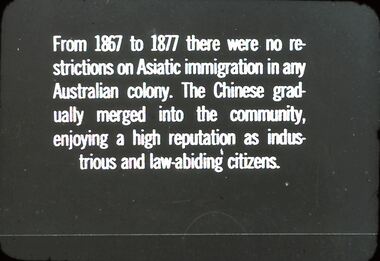
Slide - DIGGERS & MINING. THE CHINESE ON THE GOLD FIELDS, c1867
... Mining. The Chinese on the Gold Fields. Slide: From 1867 to 1877 there were no restrictions on Asiatic immigration in any Australian colony. The Chinese gradually merged into the community...Mining. The Chinese on the Gold Fields. Slide: From 1867 to 1877 there were no restrictions on Asiatic immigration in any Australian colony. The Chinese gradually merged into the community ...Diggers & Mining. The Chinese on the Gold Fields. Slide: From 1867 to 1877 there were no restrictions on Asiatic immigration in any Australian colony. The Chinese gradually merged into the community, enjoying a high reputation as industrious and law-abiding citizens. Markings: 4. Used as a teaching aid.hanimounteducation, tertiary, goldfields -
 Bendigo Historical Society Inc.
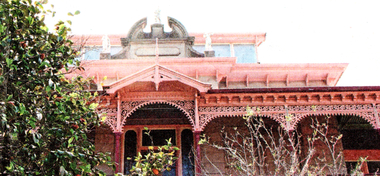
Newspaper - Fortuna Articles - "Time to Honour Pioneers", May 01 2009
... Chinese Museum in Bendigo. The author urges the community to preserve and showcase the stories, artifacts, and memorabilia of all Bendigo’s pioneers, emphasizing the importance of remembering the city’s immigrant past. Beverley Carter is the author of the document and is introduced as a retired secondary school teacher, part-time journalist, reviewer, and editor. She is a member of Bendigo's Lansell family and is currently writing a comprehensive history of her family, covering their European and English origins and their role in Bendigo's development. Carter's 'Fortuna Glimpses' series focuses on the life of mining...Chinese Museum in Bendigo. The author urges the community to preserve and showcase the stories, artifacts, and memorabilia of all Bendigo’s pioneers, emphasizing the importance of remembering the city’s immigrant past. Beverley Carter is the author of the document and is introduced as a retired secondary school teacher, part-time journalist, reviewer, and editor. She is a member of Bendigo's Lansell family and is currently writing a comprehensive history of her family, covering their European and English origins and their role in Bendigo's development. Carter's 'Fortuna Glimpses' series focuses on the life of mining ...Germans were the third largest ethnic group on the Bendigo goldfields in the mid-19th century, numbering 2,000–3,000 by 1860. Many were experienced miners from the Harz mountains and led the development of quartz mining at Sandhurst. Christopher Ballerstedt, a German miner, established a successful quartz mining operation and built Fortuna Villa, later sold to George Lansell. Other notable German names include Wittscheibe, Koch, Killian, Ketterer, Roeder, and Mueller, who contributed to mining and local society. German architects, especially William Vahland, played a major role in shaping Bendigo’s architecture, including work on Fortuna Villa. Germans contributed to Bendigo’s cultural life, with several daughters of German-born residents achieving international fame as opera singers. The community was active in commerce, wine production, trades, and professions (e.g., priests, chemists, mayors). Despite some families anglicizing their names during World War I, many German surnames remain prominent in Bendigo. The document advocates for greater recognition of German pioneers, suggesting Fortuna Villa as a venue for a museum or display to celebrate their legacy, inspired by the example of the Chinese Museum in Bendigo. The author urges the community to preserve and showcase the stories, artifacts, and memorabilia of all Bendigo’s pioneers, emphasizing the importance of remembering the city’s immigrant past. Beverley Carter is the author of the document and is introduced as a retired secondary school teacher, part-time journalist, reviewer, and editor. She is a member of Bendigo's Lansell family and is currently writing a comprehensive history of her family, covering their European and English origins and their role in Bendigo's development. Carter's 'Fortuna Glimpses' series focuses on the life of mining magnate George Lansell and his home, Fortuna Articles - "Time to Honour Pioneers" May 01 2009 The Bendigo Advertiser by Bevely Carter, picture by Julian Prowd This item contains the following: 11217.39a Colour Photo of Fortuna. 11217.39b Part of Page 17 - "Time to Honour Pioneers"non-fictionbendigo, fortuna, george lansell, beverley carter -
 Bendigo Historical Society Inc.
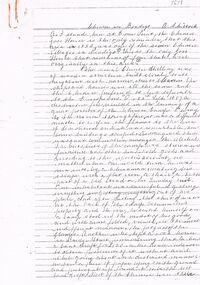
Document - HANDWRITTEN PAPER: CHINESE IN BENDIGO BY A CHITTOCK
... Mining early Chinese history Emu Point Chinese Joss House White Hills Cemetry Bendigo Chinese Association. A. Chittock Handwritten paper ''Chinese in Bendigo'' by A Chittock (no date or other details). Covers aspects such as fire in the Chinese Camp; disappearance of Constable Ryan; author's memories of kiln/ Bridge St/ nurseries; attitudes to Chinese; 1854 threat in Bendigo to the Chinese (Panton/McLachlan/Denovan);Chinese activities in community (Easter Fair); Bibliography. ...Handwritten paper ''Chinese in Bendigo'' by A Chittock (no date or other details). Covers aspects such as fire in the Chinese Camp; disappearance of Constable Ryan; author's memories of kiln/ Bridge St/ nurseries; attitudes to Chinese; 1854 threat in Bendigo to the Chinese (Panton/McLachlan/Denovan);Chinese activities in community (Easter Fair); Bibliography.A. Chittockbendigo, mining, early chinese history, emu point, chinese joss house, white hills cemetry, bendigo chinese association. -
 Bendigo Historical Society Inc.
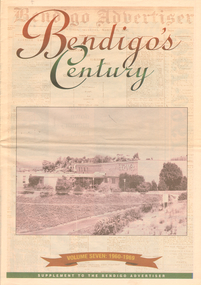
Newspaper - LONG GULLY HISTORY GROUP COLLECTION: BENDIGO'S CENTURY VOLUME SEVEN: 1960 - 1969
... Dispensary Gillies Famous Pies William Basil Ashman Golden Gate Hotel Grieves Family Bendigo Town Hall Mr R R Anderson Mr E H Brown Cr Neville Oliver Cr Tom Flood Traffic Commission Lansell FAmily ABEV-1 Bendigo Ordnance Factory ACTU Bendigo Trades Hall Council The Ramsay Report Bendigo Benevolent Home Bendigo Home and Hospital for the Aged Princess Theatre Amoco Lake Eppalock Bendigo Training Prison Bendigo Police Station Lock-up Shamrock Hotel Rifle Brigade Hotel Hopetoun Hotel ANZ Bank Marong Shire Offices Sir Rohan Delacombe St Paul's Church Que O'Hoy Waldron Family Windermere Hotel Aids & Appliance Shop Anne Caudle Centre E C Thompson Mayfair Hams Sandhurst Guest House Lyric Theatre Chinese Joss House Ordnance Factory Sir John Jenson Bridge Street Chinese Quarter Bendigo City Hall Cr R F Turner Cr Tom Flood Victorian Inland Meat Authority New Zealand Insurance Co Mrtropolitan Security Service Bendigo Easter Fair Society Golden Square High School Eaglehawk High School Bendigo Technical College Mr Ralph W Birrell Bendigo Fountain Plaza The Bethlehem Home for the Aged Dick Hazeldene Victorian Egg Board Bendigo United Cricket Club South Bendigo United Cricket Club Western Mining Corporation Les Priest Alexandra Fountain Bendigo Advertiser Cr W Cambridge Bendigo Council Eaglehawk Council Strathfieldsaye Shire Huntly Shire Marong Shire David Thomas Senator John Gorton Bendigo's College of Advanced Education Bank of New South Wales Harp and Shamrock Hotel The Honorable Leslie William Galvin Kurmala Cain Government Hanro Knitting Mills Myer Store Sidney Myer Davey Brothers Grocery Store National Trust Myer Emporium Myer's Ltd Cox Bros (Australia) Ltd Dame Merlyn Myer Baillieu Myer Frank Greenaway Institute of Technology Gas & Fuel Corporation Bendigo Railway Station ANZ Bank City Family Hotel TAB Branch Senior Constable Alfred Herbert Wright Senior Constable Allan Raymond Brown Victorian Football League Bendigo Police Barracks Camp Hill State School State Electricity Commission The Country Party The Labor Party Transport Regulation Board Stuart Anderson Grose FAmily Jean Theodore De Ravin Kyneton Shire Sir William McDonald Mines Department The Loddon Hospitals Region group Laundry and Central Linen Service Kevin Wynne Albert Vivian Gray Bradford Cotton Mills Ltd Bradmill Industries Ltd Victoria Hill Bendigo and District Tourist Association Professor Brian Lewis Melbourne University Victorian Chinese Community Loong Sun Loong Stafford Ellinson Coles' Store North Deborah Mining Company NL Noel Beaton MHR Durham Ox Hotel Taylor Family Supplement to the Bendigo Advertiser, December 15, 1999 Volume Seven: 1960-1969 titled Bendigo's Century. ...Supplement to the Bendigo Advertiser, December 15, 1999 Volume Seven: 1960-1969 titled Bendigo's Century. The front has a photo of the BCV 8 Studio. Contains photos and local news, council matters, planning, Who's Who, Weather, Sport and Business and some Advertisements. Photos include Early stages in the construction of the Eppalock tower and bridge pillars, Christine Wiseman, TV8's first news reader Ron Alderton, Dr Albert L Beischer, Advertiser buiding, fire at the Advertiser building, Oscar Flight, Bendigo Town Hall, William Basil Ashman, Lake Eppalock, Premier Henry Bolte, Que O'Hoy, Sandhurst Guest House, The Lyric Theatre, E C Thompson, The elm tree in Market Square, Leslie Galvin, The original Myer Store, The Joss House, Sidney Myer, Bendigo Police Barracks, Bunratty Castle, Albert Vivian Gray, The Victoria Hill site, Architects drawing of the new council administrative offices and Noel Beaton MHR.bendigo, history, long gully history group, the long gully history group - bendigo's century volume seven: 1960 - 1969, bendigo advertiser, bcv 8, eppalock dam, premier henry bolte, the criterion hotel, mccarthy family, teachers training college, bendigo original teachers college, long gully state school, stramit, bendigo university site committee, mrs christine wiseman, bendigo city council, the broadcasting control board, general television pty ltd, bendigo central victoria telecasters pty ltd, mr davidson, bennett's arcade, woolworth's, white hills swimming pool, herb elliott, sailor's guide, toni riley pharmacies, rising sun hotel, ron alderton, dr albert l beischer, channel 8, melbourne herald, 3bo, bendigo advertiser officeslyceum theatre, junior technical school white hills, mount alvernia hospital, most reverend dr b d stewart, sisters of the franciscan missionaries of the divine motherhood, lazarus family, bendigo's tramways, state electricity commission, george pethard, lance pethard, bendigo advertiser fire 29/7/1962, riverine herald, the herald and weekly times, bendigo art gallery, oscar flight, hollands foundry, eaglehawk u.f.s. dispensary, gillies famous pies, william basil ashman, golden gate hotel, grieves family, bendigo town hall, mr r r anderson, mr e h brown, cr neville oliver, cr tom flood, traffic commission, lansell family, abev-1, bendigo ordnance factory, actu, bendigo trades hall council, the ramsay report, bendigo benevolent home, bendigo home and hospital for the aged, princess theatre, amoco, lake eppalock, bendigo training prison, bendigo police station lock-up, shamrock hotel, rifle brigade hotel, hopetoun hotel, anz bank, marong shire offices, sir rohan delacombe, st paul's church, que o'hoy, waldron family, windermere hotel, aids & appliance shop, anne caudle centre, e c thompson, mayfair hams, sandhurst guest house, lyric theatre, chinese joss house, ordnance factory, sir john jenson, bridge street chinese quarter, bendigo city hall, cr r f turner, cr tom flood, victorian inland meat authority, new zealand insurance co, mrtropolitan security service, bendigo easter fair society, golden square high school, eaglehawk high school, bendigo technical college, mr ralph w birrell, bendigo fountain plaza, the bethlehem home for the aged, dick hazeldene, victorian egg board, bendigo united cricket club, south bendigo united cricket club, western mining corporation, les priest, alexandra fountain, bendigo advertiser, cr w cambridge, bendigo council, eaglehawk council, strathfieldsaye shire, huntly shire, marong shire, david thomas, senator john gorton, bendigo's college of advanced education, bank of new south wales, harp and shamrock hotel, the honorable leslie william galvin, kurmala, cain government, hanro knitting mills, myer store, sidney myer, davey brothers grocery store, national trust, myer emporium, myer's ltd, cox bros (australia) ltd, dame merlyn myer, baillieu myer, frank greenaway, institute of technology, gas & fuel corporation, bendigo railway station, anz bank, city family hotel, tab branch, senior constable alfred herbert wright, senior constable allan raymond brown, victorian football league, bendigo police barracks, camp hill state school, state electricity commission, the country party, the labor party, transport regulation board, stuart anderson, grose family, jean theodore de ravin, kyneton shire, sir william mcdonald, mines department, the loddon hospitals region group laundry and central linen service, kevin wynne, albert vivian gray, bradford cotton mills ltd, bradmill industries ltd, victoria hill, bendigo and district tourist association, professor brian lewis, melbourne university, victorian chinese community, loong, sun loong, stafford ellinson, coles' store, north deborah mining company nl, noel beaton mhr, durham ox hotel, taylor family -
 City of Ballarat
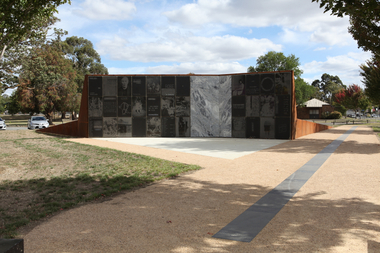
Artwork, other - Public Artwork, Open Monument by John Young, 2015
... Chinese family memories of Ballarat from the goldrush forward. The 33 marble laser-etched panels include found images and texts mounted on a modernist metal architectural feature holding back a grassed hill landscape. Within the side walkway of gravel and composite stone is an etched of local activities relating to the Chinese community achievements that can be added to by the community. Open Monument is of aesthetic and historical significance to the people of Ballarat open monument chinese chinese history ballarat goldfields china ballarat goldfields john young chinese mining ...Open Monument is a contemporary artwork acknowledging the history of Chinese people in Ballarat. The Chinese diaspora was global and many Chinese people came to Ballarat and the Victorian Goldfields. The work details some of the personal Chinese family memories of Ballarat from the goldrush forward. The 33 marble laser-etched panels include found images and texts mounted on a modernist metal architectural feature holding back a grassed hill landscape. Within the side walkway of gravel and composite stone is an etched of local activities relating to the Chinese community achievements that can be added to by the community.Open Monument is of aesthetic and historical significance to the people of BallaratArchitectural artwork consisting of large marble panels on a corten steel frame imbedded into a grassed mount.Inscription on plaque: Open Monument 無極紀念碑 / Artist: John Young / Officially Launched by Mr Yumin Song / Chinese Consul-General to Victoria / 6th September 2015 / Open Monument unearths stories of the Chinese diaspora in Ballarat, a name which means/ “resting place” to the traditional custodians - the Wadawurrung and Dja Dja Wurrung people./ The monument comprises of two artworks: Transculture, a granite-panelled work, evoking stories of alternative worldviews, / modernity, leisure and toil. Whilst Timeline traces the major contributions of the Chinese community in Ballarat, every decade / from the 1850s until the present. The timeline then folds out to 2170, anticipating imaginary future contributions. / The monument is open to future interpretations of this history. / I thank you for visiting and acknowledging the contributions and memories that meant so much to / those who have gone before us./ - John Young Zerunge / Patron: Mr Henry Thai OAM JP / President of Ballarat Chinese / Community Association Inc / The following generous donors to this project are acknowledged with gratitude/ City of Ballarat Sovereign Hill Museum Association Inc. Ballarat Chinese Community Association Inc. Mr Henry Thai OAM JP & Mrs Sandra Thai Mrs Shirley Doon & Family in memory of Harry Doon Chinese Masonic Association Inc. Mr Mean Te and Mrs Meng Khun Mr Jack Nguyen MA JP & Mrs My Tang Mr Tony and Mrs Elise Yu Mr Chang Zhen Zhen & Family Australian Lian Jiang Association The Federation of Chinese Associations Vic The Leesoon Family Mr Stephen K.F Ng OAM JP Dr Che Sam Lo MD phD JP OAM Elderly Chinese Home Inc. The Federation of Chinese Org from VN Cambodian and Lao Association of Vic. Inc. Bright Moon Buddhist Society Nam Pon Soon Club House See-Yup Society Mr Peter Chong Wai Lo Mr Qing Song Lin Mr Binh Quoc Mao & Mrs Thuy Cam Thai Mr Alexander Mao Mr Yuet Lung Kwok JP Mr Tai The Tran Mr Phillip K. L. Tran Mr William K. L. Tran Mr Quang Khon Tran JP Mr Kouy Taing Mrs Kieng Hor Lou Mr Bill Chang Piu Au Mr Maurice Kwok Leong Mrs Eunice J. Leong Mr Vi Minh Tran JP Mr Frank Cheng Mr David Cheng Mr William Thai Mr Lizhen Lin Mr Phillip Richard Thai Mr Hoan Ping Kow Mrs Xao Nhu Kow Mr Huy Thai Mr Yun Kuen Lo Mr Chiu Yip & Mrs Yuan Han Cho Mrs Jacqueline Louise Thai Greenwood Mr Joe Hap Chi Chao & Mrs Rosana Wei Ning Chao Charity & Multi Art Association of Victoria Inc. Mr Billy Cai Miss Nikki Cai Miss Su-Ling & Miss Lily Mays-Doon Mr Anthony Doon Mr H J Moy & Family Chinese Australian Cultural Society Ballarat Inc open monument chinese, chinese history ballarat goldfields, china, ballarat, goldfields, john young, chinese, mining, multicultural, immigration, tong way, goon, joss house, embroidery, billy butterfly, chinese market gardens, red lion hotel, ah soon, mayor of main road, chinese herbalist, yee lee, james hong, cheok cheong hong, john ah loo, wathawurrung, robe, lowe kong meng, louis ah mouy, tongway, gallipoli, william lung -
 Ballarat Heritage Services
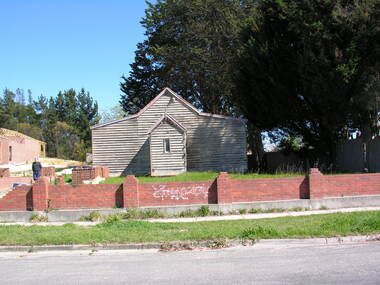
Photograph - church, Former Joseph Street Paton Memorial Presbyterian Church, Canadian, 2008, 26 /04/2008
... chinese Colour photograph of a weatherboard church in Joseph Street, Canadian. In 1937 this church was under the control of St. John's Peel-street, Ballarat. Members of the congregation: * Mrs. Amor - A foundation member. * Thomas Clarke and Isabella Clarke (formerly Ross) lived next door and according to family members "had a lot to do with the church". * Mrs McGowan - a founder of the church * Mrs. J. P. Murray founded the church to mission to the needs of the busy mining community ...The Jubilee of this church was held in 1933. "Paton Memorial Presbyterian Church. BALLARAT, Sunday Jubilee celebrations of the Paton Memorial Presbyterian Church were well attended in the week end. A basket picnic on Saturday at Eureka Stockade reserve was followed at night by a social gathering, at which a birthday cake was cut by Mrs. Amor, a foundation member. On Sunday special services were led by Rev. J. A. Moscript, assisted by the young men of St. John's Church. The church was originally founded, by the late Mrs. J. P. Murray to mission to the needs of the busy mining community which existed in Canadian in early years." (The Age, 06 November 1933.) PATON MEMORIAL CHURCH - An interesting tree-planting ceremony was performed in the grounds of the Paton Memorial Church on Saturday lost. Trees were put in by the scholars of the Sunday school to commemorate the enlistment of all the boys who had in any way been connected with the church. Sunday school, and Young Men's Club. The Mayor (Cr Levy) spoke in terms of praise of the lads who had enlisted to fight for right against might and the tyranny of Prussian militarism. The Hon. R. McGregor MLA., and the Revs. A. H. Moore and W. Rowlands were among those present. on also Mesdames J. P. Murray and McGowan, two of the founders of the church. During the afternoon Cr Levy planted a tree in honor of Mrs Murray. Afternoon tea was served by the ladies of the congregation. (The Age, 06 November 1933.) This church was in the middle of a Chinese neighbourhood, and the 1800s the leprosarium was in the vicinity. This bhurch was demolished not long after this photo was taken. Colour photograph of a weatherboard church in Joseph Street, Canadian. In 1937 this church was under the control of St. John's Peel-street, Ballarat. Members of the congregation: * Mrs. Amor - A foundation member. * Thomas Clarke and Isabella Clarke (formerly Ross) lived next door and according to family members "had a lot to do with the church". * Mrs McGowan - a founder of the church * Mrs. J. P. Murray founded the church to mission to the needs of the busy mining community which existed in Canadian in early years. joseph street ballarat, joseph street canadian, former joseph street paton memorial presbyterian church, ballarat, church, weatherboard church, presbyterian church, paton memorial church, clayton hill, claytons hill, leprosarium, chinese
