
Showing 5886 items matching "city road"
-
 Melbourne Tram Museum
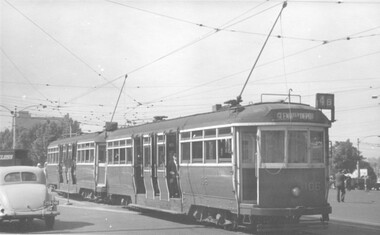
Photograph - Black and White - L106 St Kilda Road at City Road, John Alfred, Nov. 1954
... Black and White - L106 St Kilda Road at City Road......City Road...Photo shows L class 106 and possibly 105 at the intersection of City Road and St Kilda Road. ...Photograph - Black and White - L106 St Kilda Road at City Road. Printed on satin paper....Photograph - Black and White - L106 St Kilda Road at City Road. Printed on satin paper. Photograph Black and White - L106 St Kilda Road at City Road John Alfred ...Photo shows L class 106 and possibly 105 at the intersection of City Road and St Kilda Road. Yields information about the use of the L class tram in Melbourne during the mid 1950sPhotograph - Black and White - L106 St Kilda Road at City Road. Printed on satin paper.Has details on rear in ink and John Alfred Stamp. Dated Nov. 1954.tramways, l class, tram 106, st kilda road, city road, trams, route 4b -
 Bendigo Historical Society Inc.
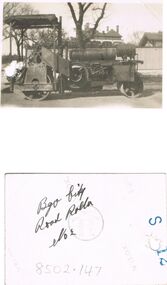
Photograph - BILL ASHMAN COLLECTION: BENDIGO CITY ROAD ROLLER
... BILL ASHMAN COLLECTION: BENDIGO CITY ROAD ROLLER...... Bendigo City Road Roller No 2...Small black and white photo of Bendigo City Road Roller No 2. Name written on the back....SCIENCES Instruments - general scalebuoy Bill Ashman Collection - Correspondence Bendigo City Road Roller No 2 Small black and white photo of Bendigo City Road Roller No 2. ...Small black and white photo of Bendigo City Road Roller No 2. Name written on the back.sciences, instruments - general, scalebuoy, bill ashman collection - correspondence, bendigo city road roller no 2 -
 Bendigo Historical Society Inc.
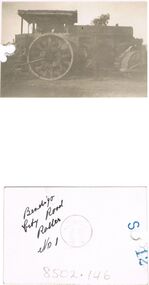
Photograph - BILL ASHMAN COLLECTION: BENDIGO CITY ROAD ROLLER
... BILL ASHMAN COLLECTION: BENDIGO CITY ROAD ROLLER...... Bendigo City Road Roller No 1...Small dull black photo of the Bendigo City Road Roller No 1. Name written on the back....SCIENCES Instruments - general scalebuoy Bill Ashman Collection - Correspondence Bendigo City Road Roller No 1 Small dull black photo of the Bendigo City Road Roller No 1. ...Small dull black photo of the Bendigo City Road Roller No 1. Name written on the back.sciences, instruments - general, scalebuoy, bill ashman collection - correspondence, bendigo city road roller no 1 -
 Port Melbourne Historical & Preservation Society
Photograph - Grades 2,3,4 City Road Primary School, South Melbourne, 1931
... Grades 2,3,4 City Road Primary School, South Melbourne......city road primary school...Lasercopy of photo loaned by Doug McKenzie: grades 2, 3, 4, City Road Primary School (South Melbourne)1931...education - primary schools joyce bennett mckenzie city road primary school Lasercopy of photo loaned by Doug McKenzie: grades 2, 3, 4, City Road Primary School (South Melbourne)1931 Photograph Grades 2,3,4 City Road Primary School, South Melbourne ...Lasercopy of photo loaned by Doug McKenzie: grades 2, 3, 4, City Road Primary School (South Melbourne)1931education - primary schools, joyce bennett mckenzie, city road primary school -
 Melbourne Tram Museum
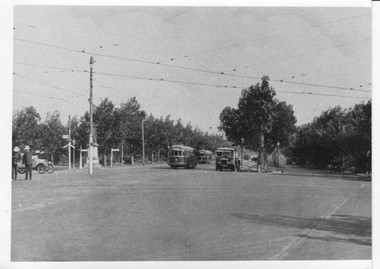
Photograph - W trams and bus at City Road, St Kilda Road intersection, c1926
... W trams and bus at City Road, St Kilda Road intersection......City Road...Photograph looks southward along St Kilda Road from its intersection with City Road and Alexander Avenue, but trees obscure the view towards the Shrine of Remembrance, which may be under construction (1927-34). ...Photograph W trams and bus at City Road, St Kilda Road intersection ...Photograph looks southward along St Kilda Road from its intersection with City Road and Alexander Avenue, but trees obscure the view towards the Shrine of Remembrance, which may be under construction (1927-34). Tram rails and overhead can be seen turning from St Kilda Road into City Road. Several W class trams and a tramways Thornycroft "J" bus can be seen. The bus appears to be broken down with the bonnet raised with at least two employees standing beside the vehicle. Two policemen in white helmets stand in the intersection controlling traffic.Yields information about early electric trams on St Kilda Road Black and white print with no note.alexander ave, trams, tramways, w class, st kilda road, city road, mmtb buses, thornycroft -
 Melbourne Tram Museum
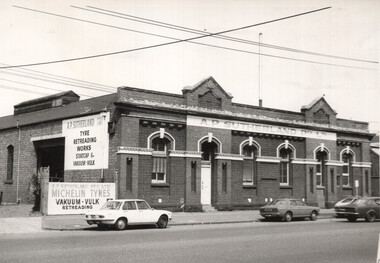
Photograph - City Road South Melbourne cable tram engine house, 1960s
... City Road South Melbourne cable tram engine house......City Road...Photos shows the exterior of the former cable tram engine house at 357 City Road South Melbourne. It operated from 1890 to 1937. ...Photos shows the exterior of the former cable tram engine house at 357 City Road South Melbourne. It operated from 1890 to 1937. ...Photos shows the exterior of the former cable tram engine house at 357 City Road South Melbourne. It operated from 1890 to 1937. At the time the building was occupied by A P Sutherland, tyre retreaders. Has an advert for Michelin tyres. Photo early 1960s based on the motor vehicles, photographer unknown. Following a fire in the building it was redeveloped as offices with the facade remaining in position.Yields information about the appearance the former South Melbourne cable tram engine house.Black and white print with a plain back. Second copy has notes on rear and a letraset label on base."South Melbourne Cable tram engine house C Cibson Photo" in ink on rear.tramways, cable trams, engine houses, south melbourne, city road -
 Melbourne Tram Museum
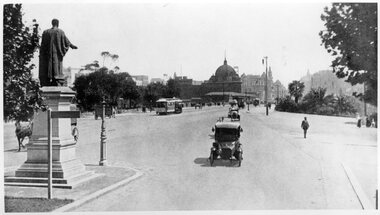
Photograph - Black and White - St Kilda Road near City Road
... Black and White - St Kilda Road near City Road...Road widened after crossing Princes Bridge. Has the Edmund Fitzgibbon monument on the left. One cable tram set is making its way into the City. ...Set of two black and white photographs of" .1 - St Kilda Road near City Road looking north - with Edmund FitzGibbon monument .2 - looking south...Tramways trams cable cars Flinders Street station St Kilda Road Princes Bridge Monuments Edmund Fitzgibbon Set of two black and white photographs of" .1 - St Kilda Road near City Road looking north - with Edmund FitzGibbon monument .2 - looking south Photograph Black and White - St Kilda Road near City Road ...Photo 1 - looking north from the point where St Kilda Road widened after crossing Princes Bridge. Has the Edmund Fitzgibbon monument on the left. One cable tram set is making its way into the City. Has Flinders St Station in the background, along with a number of motor cars and one horse drawn vehicle behind the monument and another behind a sign. In the far distance is an advertisement for The Herald newspaper. Photo 1910c Photo 2 - looking south from near the end of the bridge, with seven cable cars in the view, along with motors cars and two horse drawn vehicles. Government House can be seen on the left horizon.Yields information about St Kilda Road c1910.Set of two black and white photographs of" .1 - St Kilda Road near City Road looking north - with Edmund FitzGibbon monument .2 - looking southtramways, trams, cable cars, flinders street station, st kilda road, princes bridge, monuments, edmund fitzgibbon -
 Melbourne Tram Museum
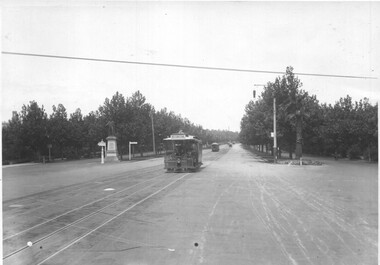
Photograph - St Kilda and City Road intersection - cable trams, C J Frazer, 1910s
... St Kilda and City Road intersection - cable trams...The photo shows the intersection of St Kilda Road and City Road, looking south, with several cable trams in the view. ...The photo shows the intersection of St Kilda Road and City Road, looking south, with several cable trams in the view. ...The photo shows the intersection of St Kilda Road and City Road, looking south, with several cable trams in the view. The first tram has the destination fo North Carlton. There are no motor cars in the view. In the background on the eastern median strip is the statue of Edmund FitzGibbon, former City of Melbourne Town Clerk, which was unveiled in 1908. See reference.Yields information about St Kilda Road prior to conversion to electric trams.Black and white photograph with photographer's stamp on the rear.Has the stamp of C J Fraser's on the rear with address.tramways, st kilda road, cable trams -
 Melbourne Tram Museum
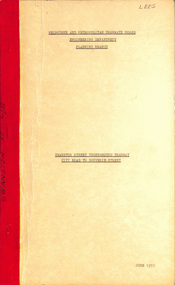
Document - Report, Melbourne & Metropolitan Tramways Board (MMTB), "Swanston Street Underground Tramway City Road to Bouverie Street", Jun. 1972
... "Swanston Street Underground Tramway City Road to Bouverie Street"...Report - Foolscap, card covers, red binding strip, 12 sheets + 4 drawings (fold out), titled "Swanston Street Underground Tramway City Road to Bouverie Street", detailing the proposal, including costs, issues, drains, obstructions. ..."Swanston Street Underground Tramway City Road to Bouverie Street" Document Report Melbourne & Metropolitan Tramways Board (MMTB) ...Report - Foolscap, card covers, red binding strip, 12 sheets + 4 drawings (fold out), titled "Swanston Street Underground Tramway City Road to Bouverie Street", detailing the proposal, including costs, issues, drains, obstructions. Includes cross sections of the tunnels and notes on public access. Dated June 1972. Drawings not scanned.Has "Lees" in ink on top right hand corner.trams, tramways, underground tramways, swanston st, reports, new tramways -
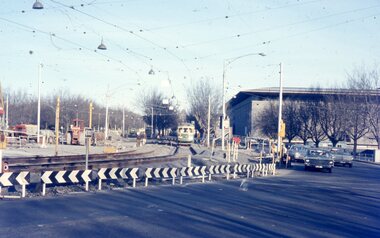 Melbourne Tram Museum
Photograph - Two colour slides - St Kilda Road Trackworks, 1-8-1970
... ...City Road...Set of two colour slides showing the intersection of St Kilda Road, City Road and Sturt Street. City Road at the start of work to lower City Road under St Kilda Road. ...Set of two Anscochrome colour slides, of trackwork to place City Road under St Kilda Road. .1 - SW6 959 on St....Set of two colour slides showing the intersection of St Kilda Road, City Road and Sturt Street. City Road at the start of work to lower City Road under St Kilda Road. ...Set of two colour slides showing the intersection of St Kilda Road, City Road and Sturt Street. City Road at the start of work to lower City Road under St Kilda Road. The tracks along Sturt Street had been diverted by Nolan Street (now Southbank Blvd). The photo shows that only one of the tracks had been brought into use, the other still under construction. Photography by Warren Doubleday.Yields information on the start of the works to lower City Road under St Kilda Road 1-8-1970Set of two Anscochrome colour slides, of trackwork to place City Road under St Kilda Road. .1 - SW6 959 on St.-Kilda Road deviation - shows the Arts Centre and the scale of the deviation. The former tracks into City Road and Sturt Street can be seen in the foreground. .2 - SW6 878 - shows the Arts Centre, YMCA building the intersection with City Road and Sturt Street Has photographers slide numbers on each slide.trackworks, sturt st, sw6 class, tram 959, tram 878, tramways, track, city road, st kilda road, trams -
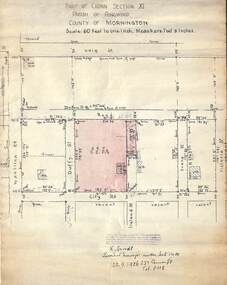 Ringwood and District Historical Society
Document, 1926 Land Survey drawing of the area surrounding 1-5 City Road, Ringwood
... 1926 Land Survey drawing of the area surrounding 1-5 City Road, Ringwood...Hand-drawn survey of what is now 1-5 City Road, Ringwood. Drawn by K Arndt, licensed surveyor, 237 Queen Street, Melbourne Tel 5118 on 25 September 1926. ...Hand-drawn survey of what is now 1-5 City Road, Ringwood. Drawn by K Arndt, licensed surveyor, 237 Queen Street, Melbourne Tel 5118 on 25 September 1926. ...Drawing on parchmentHand-drawn survey of what is now 1-5 City Road, Ringwood. Drawn by K Arndt, licensed surveyor, 237 Queen Street, Melbourne Tel 5118 on 25 September 1926. The block of land in question was 2 roods, 21 and 8/10 perches in size. The location was between Haig Street in the north, City Road in the south, Wantirna Road in the west and Victoria Road in the east. The Good Shepherd Retirement Village (Lutheran) now occupies the land. The drawing shows a number of existing weatherboard houses, fences and frontage sizes. A number of named roads were defined but no longer exist, these were Duffy Street (to the west), Evans Street (east) and Victoria Street (further east). Ireland Street still exists in the south. -
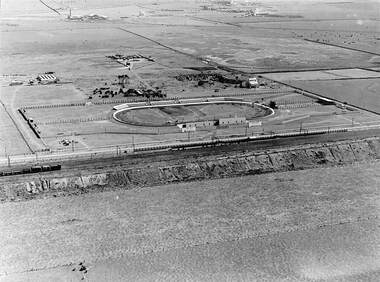 Sunshine and District Historical Society Incorporated
Photograph - White City Sunshine Road (Now Olex Cables)
... White City Sunshine Road (Now Olex Cables)...White City Sunshine Road now Olex Cables...Whitecity Sunshine Road Tottenham White City Sunshine Road now Olex Cables Two black & white aerial photographs of the White City Grey Hound Track Photograph White City Sunshine Road (Now Olex Cables) ...White City Sunshine Road now Olex Cableswhitecity, sunshine road, tottenham -
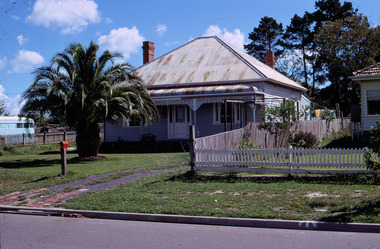 Ringwood and District Historical Society
Photograph, North side of City Road, Ringwood 1969
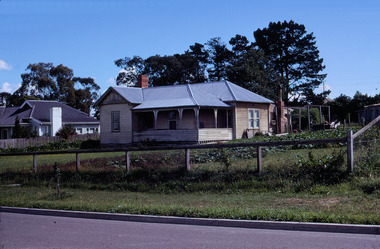
... North side of City Road, Ringwood 1969...Written by Michael Anderson on RDHS Facebook on March 2016 CITY ROAD, RINGWOOD 1959 My family moved to City Road in 1959. ...Written by Michael Anderson on RDHS Facebook on March 2016 CITY ROAD, RINGWOOD 1959 My family moved to City Road in 1959. ...Written by Michael Anderson on RDHS Facebook on March 2016 CITY ROAD, RINGWOOD 1959 My family moved to City Road in 1959. At that time, it was a narrow rutted dirt road, with a large drain running on the northern side, and a wide nature strip complete with big wattle trees on the southern side, ideal for playing cricket and other games. There was no Salvation Army Citadel, nor was there a Lutheran Church. As you proceed from Wantirna Road towards Jubilee Park, there were no houses on the right hand side at all until you reached our house, 14 City Road, which at the time was Lot 51. On the corner where the Lutheran Church now stands, there was an old rusty farm gate, attached to a very weathered wooden post. This indicated that at some stage, City Road had been a private road. This rusty old gate was never closed, but it was a remnant of bygone days. Ireland St, Regina St, and Greenwood Avenue south of Haig Street were all narrow dirt roads as well. Jubilee Park Oval was fairly new, and there was no grandstand. The players and staff had to make do with a small wooden building that looked like a garden shed. Just beyond the southern end of the oval were growing many wild pumpkins, and I understand that the land had been a rubbish tip in the not so distant past. The park also had a couple of tennis courts. There was no road from Jubilee Park to Reilly St, and Reilly St didn't go all the way through from Wantirna Road to Great Ryrie St. It was broken by a creek. Aquinas College was an orchard. As you proceed up City Road from Wantirna Road, The Salvation Army church is on the left corner. The Hobbs family lived on that corner, in an old house on a block which was bordered by a huge hedge. The house next door in Wantirna Road, which is also Salvation Army land now, was owned by the Bayliss family. Mrs Bayliss was a teacher at Ringwood High. The first house in City Rd proper was at no. 1 to 5. The Roberts family lived there in an old weatherboard house on an acre of land. Mr Roberts was a carpenter who had built our house at No. 14, and he lived there with his wife and two sons, Graeme and Max. Eventually, they wanted more space, so they moved to the acre. Next door to the Roberts was Ted O'Regan at no. 7 to no. 9. He appears to have been a widower, and he lived by himself in an old wooden house which was surrounded by a large veranda on about 2/3 acre. Next door to Ted O'Regan lived his brother Jack O'Regan at no. 11 on about 1/2 acre, with his wife Edna, his son Alan, and his Daughter Judith. Barney Meadows lived on about 1/2 acre at no. 13. Barney was an old widower, and his front garden had a huge palm tree in it. Next to Barney lived the Reeves at no. 15, and finally there was the McDonald family at no. 17, which is on the corner of Regina St. From then on, City Rd, was a bush block down to Greenwood Ave, and the bush continued up Greenwood Ave to the Williams house, one house block from Haig St. On the right hand side of City Road it was all paddock to Ireland St, and another paddock which ended at our house was over the other side of Ireland St. Both paddocks were developed in about 1961/62, and there are about 12 houses there now, plus the Lutheran Church. When we first moved there, there was a horse and a cow grazing in the paddock beside our house. For the first couple of years, there was a huge bonfire in "our" paddock to mark Guy Fawkes day. It was a lot of fun, although I concede that it might have been a tad dangerous, with 3d. bungers and all that! Next door to us at no. 16 was the Goessling family. From now on the house blocks were normal sized. The Goesslings had one baby girl who was about 9 months old when we first moved in, but they ended up with 4 kids, all of whom would be middle aged now. They were observant Lutherans, but they were there before the church. Next door to the Goesslings at no. 18 was the Weir family on the corner of Regina St. On the other side of Regina St. at no. 20 was the Gowland family, and the last house in the street at no. 22 was owned by Arthur Johnston and his family. Arthur was an Ambulance Driver. Of course, many other people moved in and moved out in all those years. There was one particularly bad week for the street in June 1969. My brother Peter was killed in a work accident on Saturday 7th June. The next Wednesday 11th June Ted O'Regan, who lived diagonally opposite us died. Then on the next Saturday the 14th June, Ted Bell, who lived next door to us at no. 12 died from a heart attack at the age of 47. Three deaths in one week was a bit too much. It was eerie! Our old house is still standing, but I doubt for much longer. It was bought by people who wanted to develop it. Their plans were knocked back, so they sold it again. I would bet that in the not too distant future the house will be a piece of history. City Road was a paradise for kids when we moved in. We had lived in the inner suburbs, so the space and freedom were amazing for us "city slickers." I don't know where you could move to now if you wanted to bring up your children in a similar environment. Somehow, I don't think it would be possible. -
 Ringwood and District Historical Society
Photograph, City Road – North Side. Owned by E A (Ted) O’Regan on 23 March 1969
... City Road – North Side. Owned by E A (Ted) O’Regan on 23 March 1969...Written by Michael Anderson on RDHS Facebook on March 2016 CITY ROAD, RINGWOOD 1959 My family moved to City Road in 1959. ...Written by Michael Anderson on RDHS Facebook on March 2016 CITY ROAD, RINGWOOD 1959 My family moved to City Road in 1959. ...Written by Michael Anderson on RDHS Facebook on March 2016 CITY ROAD, RINGWOOD 1959 My family moved to City Road in 1959. At that time, it was a narrow rutted dirt road, with a large drain running on the northern side, and a wide nature strip complete with big wattle trees on the southern side, ideal for playing cricket and other games. There was no Salvation Army Citadel, nor was there a Lutheran Church. As you proceed from Wantirna Road towards Jubilee Park, there were no houses on the right hand side at all until you reached our house, 14 City Road, which at the time was Lot 51. On the corner where the Lutheran Church now stands, there was an old rusty farm gate, attached to a very weathered wooden post. This indicated that at some stage, City Road had been a private road. This rusty old gate was never closed, but it was a remnant of bygone days. Ireland St, Regina St, and Greenwood Avenue south of Haig Street were all narrow dirt roads as well. Jubilee Park Oval was fairly new, and there was no grandstand. The players and staff had to make do with a small wooden building that looked like a garden shed. Just beyond the southern end of the oval were growing many wild pumpkins, and I understand that the land had been a rubbish tip in the not so distant past. The park also had a couple of tennis courts. There was no road from Jubilee Park to Reilly St, and Reilly St didn't go all the way through from Wantirna Road to Great Ryrie St. It was broken by a creek. Aquinas College was an orchard. As you proceed up City Road from Wantirna Road, The Salvation Army church is on the left corner. The Hobbs family lived on that corner, in an old house on a block which was bordered by a huge hedge. The house next door in Wantirna Road, which is also Salvation Army land now, was owned by the Bayliss family. Mrs Bayliss was a teacher at Ringwood High. The first house in City Rd proper was at no. 1 to 5. The Roberts family lived there in an old weatherboard house on an acre of land. Mr Roberts was a carpenter who had built our house at No. 14, and he lived there with his wife and two sons, Graeme and Max. Eventually, they wanted more space, so they moved to the acre. Next door to the Roberts was Ted O'Regan at no. 7 to no. 9. He appears to have been a widower, and he lived by himself in an old wooden house which was surrounded by a large veranda on about 2/3 acre. Next door to Ted O'Regan lived his brother Jack O'Regan at no. 11 on about 1/2 acre, with his wife Edna, his son Alan, and his Daughter Judith. Barney Meadows lived on about 1/2 acre at no. 13. Barney was an old widower, and his front garden had a huge palm tree in it. Next to Barney lived the Reeves at no. 15, and finally there was the McDonald family at no. 17, which is on the corner of Regina St. From then on, City Rd, was a bush block down to Greenwood Ave, and the bush continued up Greenwood Ave to the Williams house, one house block from Haig St. On the right hand side of City Road it was all paddock to Ireland St, and another paddock which ended at our house was over the other side of Ireland St. Both paddocks were developed in about 1961/62, and there are about 12 houses there now, plus the Lutheran Church. When we first moved there, there was a horse and a cow grazing in the paddock beside our house. For the first couple of years, there was a huge bonfire in "our" paddock to mark Guy Fawkes day. It was a lot of fun, although I concede that it might have been a tad dangerous, with 3d. bungers and all that! Next door to us at no. 16 was the Goessling family. From now on the house blocks were normal sized. The Goesslings had one baby girl who was about 9 months old when we first moved in, but they ended up with 4 kids, all of whom would be middle aged now. They were observant Lutherans, but they were there before the church. Next door to the Goesslings at no. 18 was the Weir family on the corner of Regina St. On the other side of Regina St. at no. 20 was the Gowland family, and the last house in the street at no. 22 was owned by Arthur Johnston and his family. Arthur was an Ambulance Driver. Of course, many other people moved in and moved out in all those years. There was one particularly bad week for the street in June 1969. My brother Peter was killed in a work accident on Saturday 7th June. The next Wednesday 11th June Ted O'Regan, who lived diagonally opposite us died. Then on the next Saturday the 14th June, Ted Bell, who lived next door to us at no. 12 died from a heart attack at the age of 47. Three deaths in one week was a bit too much. It was eerie! Our old house is still standing, but I doubt for much longer. It was bought by people who wanted to develop it. Their plans were knocked back, so they sold it again. I would bet that in the not too distant future the house will be a piece of history. City Road was a paradise for kids when we moved in. We had lived in the inner suburbs, so the space and freedom were amazing for us "city slickers." I don't know where you could move to now if you wanted to bring up your children in a similar environment. Somehow, I don't think it would be possible. -
 Ringwood and District Historical Society
Map, Subdivision Plan - 8 residential allotments south of City Road on Wantirna Road, Ringwood, Victoria - (Undated - circa 1950s)
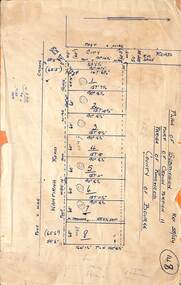
... Subdivision Plan - 8 residential allotments south of City Road on Wantirna Road, Ringwood, Victoria - (Undated - circa 1950s)...Subdivision Plan - 8 residential allotments south of City Road on Wantirna Road, Ringwood, Victoria - (Undated - circa 1950s) Map ...Hand-drawn map on cardboard backing.Part of Crown Portion 11, Parish of Ringwood, County of Bourke. Some allotments include real estate sales notations. (North arrow incorrectly points east.) -
 Bendigo Historical Society Inc.
Tool - LIMESTONE WATER FILTER. W.M. WHITES
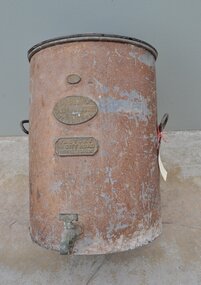
... Another Contains the label ' Factory City Road, South Melbourne'. The metal tank has two brown handles and a brass tap at the base. ...W.M.Whites, City Road, South Melbourne...Whites W.M.Whites, City Road, South Melbourne Limestone water Filter. ...Limestone water Filter. Approx 800mm x 400mm. Three Brass labels on the outside. One contains the label 'No. 0'. Another circular plague contains the lettering. 'W.M.Whites Melbourne- Patent - Rapid Limestone Filter' . Another Contains the label ' Factory City Road, South Melbourne'. The metal tank has two brown handles and a brass tap at the base. Inside is a spherical limestone ball with a rod through the centre.W.M.Whites, City Road, South Melbournewater filter, limestone water filter, w.m. whites -
 Bendigo Historical Society Inc.
Document - A WEE BOOK ABOUT WEE GEORGIE
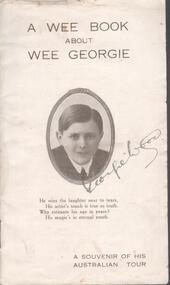
... Anderson and Sons Pty Ltd Print, 63 City Road, Melbourne. The program is autographed by George Wood. ...Anderson and Sons Pty Ltd Print, 63 City Road, Melb....Anderson and Sons Pty Ltd Print, 63 City Road, Melb. A Wee Book about Wee Georgie, a Souvenir of his Australian Tour. ...A Wee Book about Wee Georgie, a Souvenir of his Australian Tour. The embodiment of Peter Pan. J. L. Anderson and Sons Pty Ltd Print, 63 City Road, Melbourne. The program is autographed by George Wood. Tour took place between c1905 and 1920.J. L. Anderson and Sons Pty Ltd Print, 63 City Road, Melb.program, theatre, a wee book about wee georgie -
 Melbourne Tram Museum
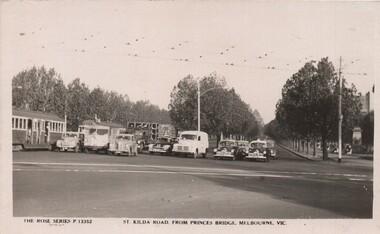
Postcard, Rose Stereograph Co, "St Kilda Road, from Princes Bridge Melbourne Vic", c1950
... ...City Road...On the far right is Sloss Street. It ran between City Road and Maffra Street parallel to St. Kilda Road. ...Trams tramways Princes Bridge City Road St Kilda Road W2 class Rose Series Sloss St On the rear has the stamp of Graeme S Breydon - see image i2. ...Postcard - Black and White - Rose Series P13352, titled "St Kilda Road, from Princes Bridge Melbourne Vic", featuring a traffic in St Kilda Road, all stopped (by a traffic policeman) at the intersection with City Road - has 7 motor vehicles all neatly stopped in a line and two tramcars (W2). Includes three black and white taxis - tow of the FJ Holden type. The City Road tram tracks are in the foreground. On the far right is Sloss Street. It ran between City Road and Maffra Street parallel to St. Kilda Road. Removed in the 1960’s as part of the Art Centre development. On the rear - has a divided back, and "A Real Photograph" " & Produced in Australia".On the rear has the stamp of Graeme S Breydon - see image i2.trams, tramways, princes bridge, city road, st kilda road, w2 class, rose series, sloss st -
 Melbourne Tram Museum
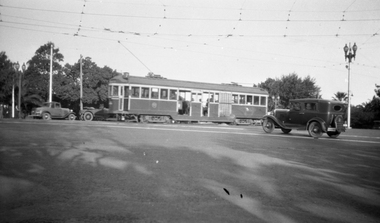
Negative, Wal Jack collection, c1930
... ... City Road...Black and white negative from Wal Jack collection of W2 255 or 355 in St Kilda Road Melbourne at junction with City Road, with route number 7 showing. Photo c1930. ...Trams tramways St Kilda Road City Road Route 7 W2 class tram 255? tram 355? ...Black and white negative from Wal Jack collection of W2 255 or 355 in St Kilda Road Melbourne at junction with City Road, with route number 7 showing. Photo c1930. Photo may not be by Wal Jack as a size that he did not use.trams, tramways, st kilda road, city road, route 7, w2 class, tram 255?, tram 355? -
 Melbourne Tram Museum
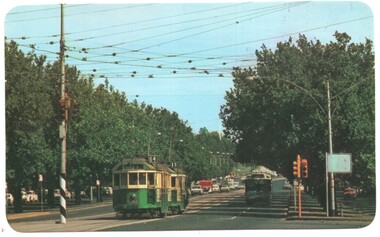
Postcard, Valentine's, W2 584 St Kilda Road, late 1960's
... ... City Road...Postcard - Valentine - colour - with rounded edges of W2 584 (City Route 64) followed by another W2 (Route 19) northbound St Kilda Road at the City Road intersection. ...Trams tramways St Kilda Road City Road W2 class tram 584 Postcard - Valentine - colour - with rounded edges of W2 584 (City Route 64) followed by another W2 (Route 19) northbound St Kilda Road at the City Road intersection. ...Postcard - Valentine - colour - with rounded edges of W2 584 (City Route 64) followed by another W2 (Route 19) northbound St Kilda Road at the City Road intersection. Note the traffic lights on the centre of the road pole. Divided back type, card number LV 019.trams, tramways, st kilda road, city road, w2 class, tram 584 -
 Melbourne Tram Museum
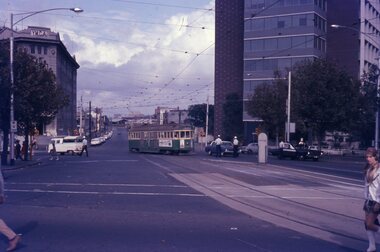
Slide - Set of 6, Warren Doubleday, 9/03/1970
... ... City Road... Photographs taken on 9-3-1970 of the shunting of trams for the Moomba Parade in Sturt St and City Road, prior to the deviation of the tracks to go around the Arts Centre. .1 - W2 631 in turning into City Road from Sturt St .2 - W2 629 turning from St Kilda Road, in to City Road .3 - W2 639 and 550 in Sturt St .4 - W2 550 - route 64, City in Sturt St .5 - W2 629,SW6 898 and 322, Sturt St. .6 - W2 641, 387 and others Sturt St....Photographs taken on 9-3-1970 of the shunting of trams for the Moomba Parade in Sturt St and City Road, prior to the deviation of the tracks to go around the Arts Centre. .1 - W2 631 in turning into City Road from Sturt St .2 - W2 629 turning from St Kilda Road, in to City Road .3 - W2 639 and 550 in Sturt St .4 - W2 550 - route 64, City in Sturt St .5 - W2 629,SW6 898 and 322, Sturt St. .6 - W2 641, 387 and others Sturt St. ...Photographs taken on 9-3-1970 of the shunting of trams for the Moomba Parade in Sturt St and City Road, prior to the deviation of the tracks to go around the Arts Centre. .1 - W2 631 in turning into City Road from Sturt St .2 - W2 629 turning from St Kilda Road, in to City Road .3 - W2 639 and 550 in Sturt St .4 - W2 550 - route 64, City in Sturt St .5 - W2 629,SW6 898 and 322, Sturt St. .6 - W2 641, 387 and others Sturt St.Yields information about the use of Sturt St during closure of St Kilda Road for events and the City Road track prior to its deviation around the Arts Centre.Set of 6 Colour slides- Anscochrome plastic mount.Has slide number written on itemtrams, tramways, city road, sturt st, moomba, parades, st kilda road, w2 class, tram 629, tram 639, tram 550, tram 898, tram 322, tram 641, tram 387, sw6 class, tram 631 -
 Melbourne Tram Museum
Negative, Wal Jack, 11/03/1962 12:00:00 AM
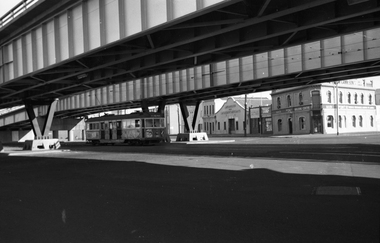
... ... City Road...Black and white negative, by Wal Jack, of W5 684, West Coburg Route 55 inbound passing under the Kingsway over bridge and about to cross City Road. The bridge was opened to traffic during 1961. ...Trams tramways Kingsway City Road West Coburg Route 55 W5 class tram 684 Black and white negative, by Wal Jack, of W5 684, West Coburg Route 55 inbound passing under the Kingsway over bridge and about to cross City Road. ...Black and white negative, by Wal Jack, of W5 684, West Coburg Route 55 inbound passing under the Kingsway over bridge and about to cross City Road. The bridge was opened to traffic during 1961. In the background is the Main Point Building Centre, a shop advertising Turf Cigarettes, J McCann Lime and Cement.trams, tramways, kingsway, city road, west coburg, route 55, w5 class, tram 684 -
 Flagstaff Hill Maritime Museum and Village
Leisure object - Smoker's Items, 1940s
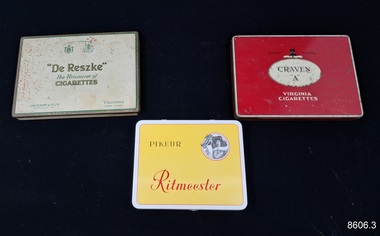
... ...City Road, Mornington Crescent, London, NW1, UK ...These cigarette and cigar tin boxes belonged to Dr.William Roy Angus, Surgeon and Oculist. They were donated to Flagstaff Hill Maritime Village by his daughter, Bernice McDade. They are part of the “W.R. Angus Collection” that includes historical medical equipment, surgical instruments and material once belonging to Dr Edward Ryan and Dr Thomas Francis Ryan, (both of Nhill, Victoria) as well as Dr Angus’ own belongings. The Collection’s history spans the medical practices of the two Doctors Ryan, from 1885-1926 plus that of Dr Angus, up until 1969. ABOUT THE “W.R. ANGUS COLLECTION” Doctor William Roy Angus M.B., B.S., Adel., 1923, F.R.C.S. Edin.,1928 (also known as Dr Roy Angus) was born in Murrumbeena, Victoria in 1901 and lived until 1970. He qualified as a doctor in 1923 at University of Adelaide, was Resident Medical Officer at the Royal Adelaide Hospital in 1924 and for a period was house surgeon to Sir (then Mr.) Henry Simpson Newland. Dr Angus was briefly an Assistant to Dr Riddell of Kapunda, then commenced private practice at Curramulka, Yorke Peninsula, SA, where he was physician, surgeon and chemist. In 1926, he was appointed as new Medical Assistant to Dr Thomas Francis Ryan (T.F. Ryan, or Tom), in Nhill, Victoria, where his experiences included radiology and pharmacy. In 1927 he was Acting House Surgeon in Dr Tom Ryan’s absence. Dr Angus had become engaged to Gladys Forsyth and they decided he would take time to further his studies overseas in the UK in 1927. He studied at London University College Hospital and at Edinburgh Royal Infirmary and in 1928, was awarded FRCS (Fellow from the Royal College of Surgeons), Edinburgh. He worked his passage back to Australia as a Ship’s Surgeon on the on the Australian Commonwealth Line’s T.S.S. Largs Bay. Dr Angus married Gladys in 1929, in Ballarat. (They went on to have one son (Graham 1932, born in SA) and two daughters (Helen (died 12/07/1996) and Berenice (Berry), both born at Mira, Nhill ) Dr Angus was a ‘flying doctor’ for the A.I.M. (Australian Inland Ministry) Aerial Medical Service in 1928 . The organisation began in South Australia through the Presbyterian Church in that year, with its first station being in the remote town of Oodnadatta, where Dr Angus was stationed. He was locum tenens there on North-South Railway at 21 Mile Camp. He took up this ‘flying doctor’ position in response to a call from Dr John Flynn; the organisation was later known as the Flying Doctor Service, then the Royal Flying Doctor Service. A lot of his work during this time involved dental surgery also. Between 1928-1932 he was surgeon at the Curramulka Hospital, Yorke Peninsula, South Australia. In 1933 Dr Angus returned to Nhill where he’d previously worked as Medical Assistant and purchased a share of the Nelson Street practice and Mira hospital from Dr Les Middleton one of the Middleton Brothers, the current owners of what was once Dr Tom Ryan’s practice. Dr L Middleton was House Surgeon to the Nhill Hospital 1926-1933, when he resigned. [Dr Tom Ryan’s practice had originally belonged to his older brother Dr Edward Ryan, who came to Nhill in 1885. Dr Edward saw patients at his rooms, firstly in Victoria Street and in 1886 in Nelson Street, until 1901. The Nelson Street practice also had a 2 bed ward, called Mira Private Hospital ). Dr Edward Ryan was House Surgeon at the Nhill Hospital 1884-1902 . He also had occasions where he successfully performed veterinary surgery for the local farmers too. Dr Tom Ryan then purchased the practice from his brother in 1901. Both Dr Edward and Dr Tom Ryan work as surgeons included eye surgery. Dr Tom Ryan performed many of his operations in the Mira private hospital on his premises. He too was House Surgeon at the Nhill Hospital 1902-1926. Dr Tom Ryan had one of the only two pieces of radiology equipment in Victoria during his practicing years – The Royal Melbourne Hospital had the other one. Over the years Dr Tom Ryan gradually set up what was effectively a training school for country general-practitioner-surgeons. Each patient was carefully examined, including using the X-ray machine, and any surgery was discussed and planned with Dr Ryan’s assistants several days in advance. Dr Angus gained experience in using the X-ray machine there during his time as assistant to Dr Ryan. Dr Tom Ryan moved from Nhill in 1926. He became a Fellow of the Royal Australasian College of Surgeons in 1927, soon after its formation, a rare accolade for a doctor outside any of the major cities. He remained a bachelor and died suddenly on 7th Dec 1955, aged 91, at his home in Ararat. Scholarships and prizes are still awarded to medical students in the honour of Dr T.F. Ryan and his father, Dr Michael Ryan, and brother, John Patrick Ryan. ] When Dr Angus bought into the Nelson Street premises in Nhill he was also appointed as the Nhill Hospital’s Honorary House Surgeon 1933-1938. His practitioner’s plate from his Nhill surgery states “HOURS Daily, except Tuesdays, Fridays and Saturday afternoons, 9-10am, 2-4pm, 7-8pm. Sundays by appointment”. This plate is now mounted on the doorway to the Port Medical Office at Flagstaff Hill Maritime Village, Warrnambool. Dr Edward Ryan and Dr Tom Ryan had an extensive collection of historical medical equipment and materials spanning 1884-1926 and when Dr Angus took up practice in their old premises he obtained this collection, a large part of which is now on display at the Port Medical Office at Flagstaff Hill Maritime Village in Warrnambool. During his time in Nhill Dr Angus was involved in the merging of the Mira Hospital and Nhill Public Hospital into one public hospital and the property titles passed on to Nhill Hospital in 1939. In 1939 Dr Angus and his family moved to Warrnambool where he purchased “Birchwood,” the 1852 home and medical practice of Dr John Hunter Henderson, at 214 Koroit Street. (This property was sold in1965 to the State Government and is now the site of the Warrnambool Police Station. ). The Angus family was able to afford gardeners, cooks and maids; their home was a popular place for visiting dignitaries to stay whilst visiting Warrnambool. Dr Angus had his own silk worm farm at home in a Mulberry tree. His young daughter used his centrifuge for spinning the silk. Dr Angus was appointed on a part-time basis as Port Medical Officer (Health Officer) in Warrnambool and held this position until the 1940’s when the government no longer required the service of a Port Medical Officer in Warrnambool; he was thus Warrnambool’s last serving Port Medical Officer. (The duties of a Port Medical Officer were outlined by the Colonial Secretary on 21st June, 1839 under the terms of the Quarantine Act. Masters of immigrant ships arriving in port reported incidents of diseases, illness and death and the Port Medical Officer made a decision on whether the ship required Quarantine and for how long, in this way preventing contagious illness from spreading from new immigrants to the residents already in the colony.) Dr Angus was a member of the Australian Medical Association, for 35 years and surgeon at the Warrnambool Base Hospital 1939-1942, He served as a Surgeon Captain during WWII1942-45, in Ballarat, Victoria, and in Bonegilla, N.S.W., completing his service just before the end of the war due to suffering from a heart attack. During his convalescence he carved an intricate and ‘most artistic’ chess set from the material that dentures were made from. He then studied ophthalmology at the Royal Melbourne Eye and Ear Hospital and created cosmetically superior artificial eyes by pioneering using the intrascleral cartilage. Angus received accolades from the Ophthalmological Society of Australasia for this work. He returned to Warrnambool to commence practice as an ophthalmologist, pioneering in artificial eye improvements. He was Honorary Consultant Ophthalmologist to Warrnambool Base Hospital for 31 years. He made monthly visits to Portland as a visiting surgeon, to perform eye surgery. He represented the Victorian South-West subdivision of the Australian Medical Association as its secretary between 1949 and 1956 and as chairman from 1956 to 1958. In 1968 Dr Angus was elected member of Spain’s Barraquer Institute of Barcelona after his research work in Intrasclearal cartilage grafting, becoming one of the few Australian ophthalmologists to receive this honour, and in the following year presented his final paper on Living Intrasclearal Cartilage Implants at the Inaugural Meeting of the Australian College of Ophthalmologists in Melbourne In his personal life Dr Angus was a Presbyterian and treated Sunday as a Sabbath, a day of rest. He would visit 3 or 4 country patients on a Sunday, taking his children along ‘for the ride’ and to visit with him. Sunday evenings he would play the pianola and sing Scottish songs to his family. One of Dr Angus’ patients was Margaret MacKenzie, author of a book on local shipwrecks that she’d seen as an eye witness from the late 1880’s in Peterborough, Victoria. In the early 1950’s Dr Angus, painted a picture of a shipwreck for the cover jacket of Margaret’s book, Shipwrecks and More Shipwrecks. She was blind in later life and her daughter wrote the actual book for her. Dr Angus and his wife Gladys were very involved in Warrnambool’s society with a strong interest in civic affairs. Their interests included organisations such as Red Cross, Rostrum, Warrnambool and District Historical Society (founding members), Wine and Food Society, Steering Committee for Tertiary Education in Warrnambool, Local National Trust, Good Neighbour Council, Housing Commission Advisory Board, United Services Institute, Legion of Ex-Servicemen, Olympic Pool Committee, Food for Britain Organisation, Warrnambool Hospital, Anti-Cancer Council, Boys’ Club, Charitable Council, National Fitness Council and Air Raid Precautions Group. He was also a member of the Steam Preservation Society and derived much pleasure from a steam traction engine on his farm. He had an interest in people and the community He and his wife Gladys were both involved in the creation of Flagstaff Hill, including the layout of the gardens. After his death (28th March 1970) his family requested his practitioner’s plate, medical instruments and some personal belongings be displayed in the Port Medical Office surgery at Flagstaff Hill Maritime Village, and be called the “W. R. Angus Collection”.The W.R. Angus Collection is significant for still being located at the site it is connected with, Doctor Angus being the last Port Medical Officer in Warrnambool. The collection of medical instruments and other items and equipment is culturally significant, being a historical example of medicine from the late 19th to mid-20th century. Dr Angus assisted Dr Tom Ryan, a pioneer in the use of X-rays and in ocular surgery.Three metal square boxes with lids, once containing cigarettes or cigars from variuos tobacco companies.Box 1: 'Pikeur Ritmeester. 20 Cigars. Made in Holland.' and Cavalier with Horse logo. Box 2: 'Cork Tipped, Trade Mark, Craven A Virginia Cigarettes. 50 Craven A Cork Tipped. ' and cat logo. Box 3: 'By Special Appointment. De Reske. The Aristocrat of Cigarettes. J Millhoff & Co Ltd Piccadiily W.' Virginias Ivory Tipped. Sole Distibutors Godfrey Phillips Ltd London & Melbourne.' and two logos.flagstaff hill maritime museum and village, great ocean road, shipwreck coast, smoking, cigars, cigarettes, pikeur, ritmeester, craven a, de reszke, millhoff -
 Orbost & District Historical Society
bottle, Iona Products
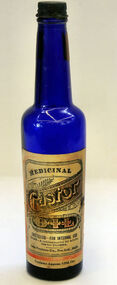
... 63 City Road (Princes Bridge) , Melbourne, Victoria, Australia ...Castor oil is a vegetable oil obtained by pressing the seeds of the castor oil plant and is an age-old remedy that has been in and out of the spotlight for thousands of years. Castor oil has had many varied uses including as a medicine.Mothers used to feed it to their children as a relief for tummy aches. When taken orally, castor oil was reported helped ease the pain of constipation and mild diarrhea.This item reflects an era when almost every home had a bottle of castor oil in the medicine cabinet.Tall blue castor oil bottle still with black and white label and screw top metal lid. Half full. On the label are dosage instructions and contents.Front- label "Iona Products Co Pty Ltd Melb" Under - 227bottle glass container castor-oil medical -
 Orbost & District Historical Society
book, 1850's
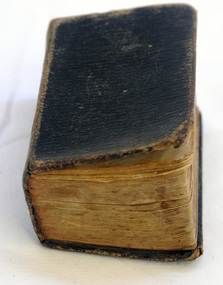
... 14 City Road, London, England ...A very small book with a black leather cover. It contains Methodist hymns. The book was authored by Rev. John Wesley.In front - indecipherable - date only - 1858 -
 Orbost & District Historical Society
magazines/booklets, Our Land/Our Century, 1999
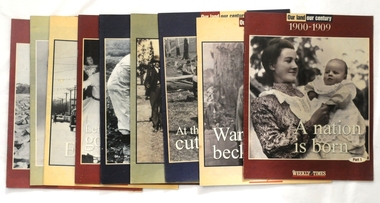
... 40 City Road, Southbank, Melbourne, Victoria, Australia ...The Weekly Times was first published on September 11, 1869. In September 1875, The Weekly Times absorbed two other Melbourne-based rural publications, the Economist and Town and Country.In 1892 the Daily Telegraph company sold its buildings and mastheads to the Herald group, which has published The Weekly Times continuously since. In 1902 The Herald and Standard Newspaper Company Ltd changed its name to the present Herald and Weekly Times. These booklets were published as souvenir magazines to "celebrate 100 years on the land". These magazines are records of the rural history of Victoria.Nine of ten Weekly Times souvenir booklets/magazines titled Our Land, Our Century 1900-1999: Celebrating 100 Years on the Land. They contain pictures and stories of events related to rural Australia. Each edition covers ten years from 1900 -1989. The issue, 1990 -1999 is missing.magazine weekly-times souvenir rural-history -
 Orbost & District Historical Society
magazines in folder, Our Land Our Century 1900-1999, 1999
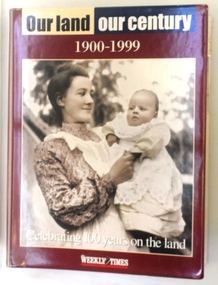
... 40 City Road , Southbank, Melbourne, Victoria, Australia ...The Weekly Times was first published on September 11, 1869. In September 1875, The Weekly Times absorbed two other Melbourne-based rural publications, the Economist and Town and Country.In 1892 the Daily Telegraph company sold its buildings and mastheads to the Herald group, which has published The Weekly Times continuously since. In 1902 The Herald and Standard Newspaper Company Ltd changed its name to the present Herald and Weekly Times. These booklets were published as souvenir magazines to "celebrate 100 years on the land". They had ten parts published weekly from September 15 - November 17 1999. These magazines are records of 20th century rural history of Victoria. Ten magazines inside a hard plastic covered folder. They are Weekly Times souvenir booklets/magazines titled "Our Land, Our Century 1900-1999: Celebrating 100 Years on the Land". They contain pictures and stories of events related to rural Australia. Each edition covers ten years from 1900 -1989. -
 Warrnambool and District Historical Society Inc.
Book, Good Words, 1880s
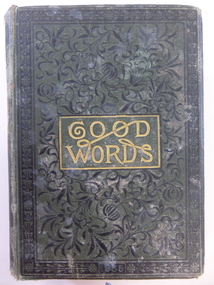
... City Road, London, England ...This book, published in England, has been awarded as a school prize in 1887. Woodford School, No. 648, was an early National School which commenced in a house in 1854. In 1872 a sandstone building was erected. The school still operates. James Craig was the Head Master of Woodford School from 1884 to 1889. His wife was the Work Mistress of the school and both were involved in community affairs, particularly in regard to the Presbyterian Church and the local Mechanics’ Institute. Annis Morgan was born at Woodford to Jenkin and Mary Morgan in 1874. She would have been about 13 at the time she received the prize book. Annis (Ann) married Alan Patterson in 1897. This book is of considerable significance as it is connected with the history of Woodford, the Woodford school, the teacher, James Craig, the pupil, Annis Morgan and her family. This is a hard cover book of 812 pages The cover is black with an engraved ornamental pattern and edging and gold printing in the title on the cover and the spine. There is gilt edging on the pages. There is a bookplate on the inside front cover and one or two pages at the beginning are missing. The book contains many black and white illustrations with the first one covered by a piece of tissue (now blotched). The book contains poetry, short stories (some serialized) and some factual writing suitable for older children and adults. The cover is stained and somewhat faded and is ragged at the edges.Bookplate: ‘State School No. 648 Woodford, Fifth Class, presented to Annis Morgan, Christmas 1887, Jas. Craig, Head Teacher’. Stamp inside first page: ‘Warrnambool & District Historical Society WB 196’ history of woodford, woodford state school, annis morgan, james craig -
 Warrnambool and District Historical Society Inc.
Book, History of India, 1870s and 1880s
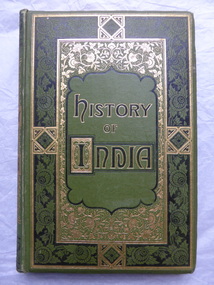
... City Road and Ivy Lane , London, England ...These books appear to have been published in successive years as the inscription on one is 1875 and the contents of another deals with the history of India in 1878. The owner of the volumes was William Cassady (1824-1885).In 1846 he settled near the Merri River in the district that is today the Cassady's Bridge area in Caramut Road, Warrnambool. The property was called "Boughton". He married Elizabeth Anderson in 1857 and they had eleven children surviving to adulthood.These volumes are of antiquarian interest as they are an attractive example of the type of books owned by early settlers in the Warrnambool district. The activities of the British in India would have been of interest to settlers in other parts of the British Empire at that time. The books are also of interest as they belonged to William Cassady, a prominent early settler in the west Warrnambool area.There are three volumes in five parts. The hard cover books have green covers and elaborate scrolls and decorations on the front covers and spines. The title lettering on the front covers is in black and gold. Each volume has several pages of black and white illustrations (steel engravings)at the front of the books, all with protective tissue paper. Some of the tissue paper is torn or missing. There are several coloured maps. The pages are gilt- edged. The third book has the top part of the spine and binding torn away. The inscription in Book Four is written in black ink.William Cassady, Boughton 1875william and elizabeth cassady, boughton -
 Ambulance Victoria Museum
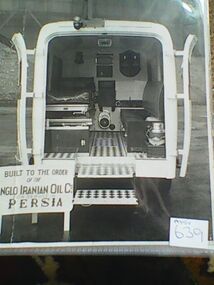
Photograph, Ambulance, Lomax Ambulances, December 1937
... City Road, Manchester, England ...Black and white photograph of ambulance interior viewed from open back doorsBUILT TO THE ORDER OF THE ANGLO IRANIAN OIL CO. FOR SERVICE IN PERSIAlomax ambulances
