
Showing 19 items matching "colossal"
-
 Linton and District Historical Society Inc
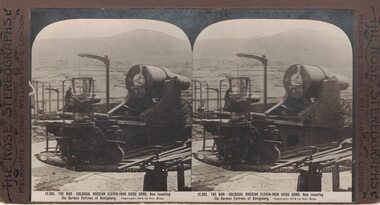
Stereograph, The Rose Stereographs, Melbourne, Sydney, Wellington and London, 12,925 The War, Colossal Russian Eleven-Inch Siege Guns, Copyright 1914
... 12,925 The War, Colossal Russian Eleven-Inch Siege Guns..."12,925. THE WAR - COLOSSAL RUSSIAN ELEVEN-INCH SIEGE GUNS. Now investing / the German Fortress of Konigsberg."...Stereographs "12,925. THE WAR - COLOSSAL RUSSIAN ELEVEN-INCH SIEGE GUNS. Now investing / the German Fortress of Konigsberg." ...One of two sets of stereographs donated by the O'Beirne family along with a stereoscope for viewing (Stereoscope is Registration no. 2014-51).A man stands to the left of a very large armament that can be rotated on a large turntable. A small type of crane is to the left of the gun which would have been used to load the shells into the breech of the gun. Hills in background."12,925. THE WAR - COLOSSAL RUSSIAN ELEVEN-INCH SIEGE GUNS. Now investing / the German Fortress of Konigsberg."stereographs -
 Linton and District Historical Society Inc
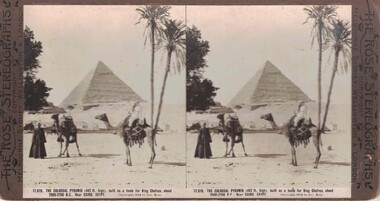
Stereograph, The Rose Stereographs, Melbourne, Sydney, Wellington and London, 17,019 The Colossal Pyramid, Cairo, Egypt, Copyright 1914
... 17,019 The Colossal Pyramid, Cairo, Egypt...17,019. THE COLOSSAL PYRAMID (447 ft. high), built as a tomb for King Chefren, about / 2900-2700 B.C., Near CAIRO, EGYPT....Stereographs 17,019. THE COLOSSAL PYRAMID (447 ft. high), built as a tomb for King Chefren, about / 2900-2700 B.C., Near CAIRO, EGYPT. ...One of two sets of stereographs donated by the O'Beirne family along with a stereoscope for viewing (Stereoscope is Registration no. 2014-51).Stereograph of two black and white images. Images show two men with camels and palm trees in the foreground. A pyramid is in the background.17,019. THE COLOSSAL PYRAMID (447 ft. high), built as a tomb for King Chefren, about / 2900-2700 B.C., Near CAIRO, EGYPT.stereographs -
 Robin Boyd Foundation
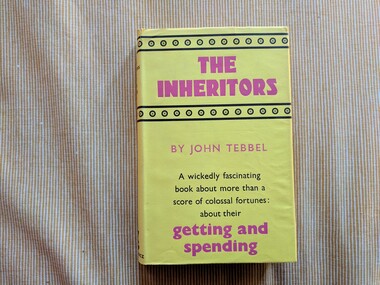
Book, John Tebbel, The Inheritors : A wickedly fascinating book about more than a score of colossal fortunes: about their getting and spending, 1962
... The Inheritors : A wickedly fascinating book about more than a score of colossal fortunes: about their getting and spending...American history United States Capitalism Walsh St library Hardcover w/Dust Jacket The Inheritors : A wickedly fascinating book about more than a score of colossal fortunes: about their getting and spending Book John Tebbel Lowe and Brydone Ltd. ...Hardcover w/Dust Jacketamerican history, united states, capitalism , walsh st library -
 Williamstown High School
Goodbye card 1988
... Large Hallmark Colossals greeting card with full colour cover and greeting inside. ...The Finn Koren Collection. williamstown high school music performances hallmark geelong grammar scott wilson See images attached of student messages inside card. Large Hallmark Colossals greeting card with full colour cover and greeting inside. ...Messages to Scott Wilson's Williamstown High School band from students at Geelong Grammar, where the band performed in 1988.The Finn Koren Collection.Large Hallmark Colossals greeting card with full colour cover and greeting inside. See images attached of student messages inside card.williamstown high school, music, performances, hallmark, geelong grammar, scott wilson -
 Bendigo Historical Society Inc.
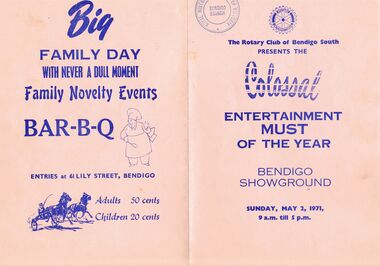
Document - COLOSSAL, BENDIGO SHOWGROUNDS, 2 May, 1971
... ...Colossal...Colossal, Bendigo Showground. Entertainment Must of the Year. ...EVENT Social rotary club of bendigo south Colossal Bendigo Showground. Entertainment Must of the Year. ...Colossal, Bendigo Showground. Entertainment Must of the Year. Sunday, May 2, 1971, 9am till 5pm. Presented by the Rotary Club of Bendigo South. Something new for Bendigo. Horses! Ponies! Draughts and Trotters! Mounted by Leading Melbourne & Local Jockeys including E Byrne and T McGinley. All competing for scores of prizes. Enter Now For: Cohn's 50-Mile Endurance Ride $350 Prize Money. With a Special Section for Ponies to carry 8 stone 7lbs. Also: A Prize for the most heavily-sponsored rider. Open Pony Club Gymkana (9am to 5pm) Excellent Trophies and Prizes. Trotting Trials and Finals (1pm to 4pm) Draught Horse Derby. Big Family Day with never a dull moment family novelty events Bar-B-Q Entries at 61 Lily Street, Bendigo. Adults 50 cents Children 20 centsevent, social, rotary club of bendigo south, colossal, bendigo showground. entertainment must of the year. sunday, may 2, 1971, rotary club of bendigo south. new for bendigo. horses! ponies! draughts and trotters! mounted by leading melbourne & local jockeys including e byrne and t mcginley. scores of prizes. cohn's 50-mile endurance ride $350 prize. special section for ponies to carry 8 stone 7lbs. prize for the most heavily-sponsored rider. open pony club gymkana trotting trials and finals draught horse derby. family day family novelty events bar-b-q entries at 61 lily street, bendigo. adults 50 cents children 20 cents -
 Ballarat Heritage Services
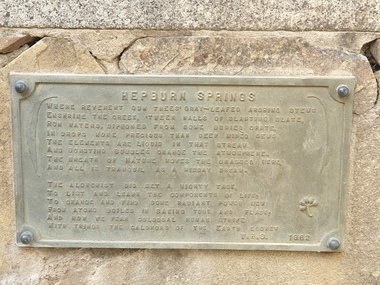
Photograph, Clare Gervasoni, Plaque at Locarno Springs, Hepburn Mineral Springs, 24/09/2019
... The alchemist did set a mighty task, to list an learn the components of life, To change and find some radiant power new from atoms boiled in baking tube ad flask, and now we fear colossal human strife with things the caldrons of the Earth Eschew W.H.S. 1962...The alchemist did set a mighty task, to list an learn the components of life, To change and find some radiant power new from atoms boiled in baking tube ad flask, and now we fear colossal human strife with things the caldrons of the Earth Eschew W.H.S. 1962 Plaque at Locarno Springs, Hepburn Mineral Springs Plaque at Locarno Springs, Hepburn Mineral Springs Photograph Clare Gervasoni ...Plaque at Locarno Springs, Hepburn Mineral SpringsHEPBURN SPRINGS Where reverent gum trees gray-leaved aroming stems Enshrine the greem 'tween walls of slanting slate, Run waters, sihones from some buried grate, In drops more precious than deep mined gems. The elements are liquid in that stream and bursting bubbles charge the atmosphere The breath of nature moves the grasses here, and all is tranquil as a midday dream. The alchemist did set a mighty task, to list an learn the components of life, To change and find some radiant power new from atoms boiled in baking tube ad flask, and now we fear colossal human strife with things the caldrons of the Earth Eschew W.H.S. 1962hepburn springs, whs, mineral springs reserve, locarno spring -
 Bendigo Symphony Orchestra Inc.
Programme (Item), Beever, Kristen, Resurrection, November 2024
... Witness the symphony on a colossal scale: ten trumpets, ten horns, two sets of timpani and an organ are just the beginning of Mahler’s mighty orchestration. ...Witness the symphony on a colossal scale: ten trumpets, ten horns, two sets of timpani and an organ are just the beginning of Mahler’s mighty orchestration. ...This program was given to attendees at the Bendigo Symphony Orchestra and Gisborne Singers performance on 24th November 2024 In a thrilling conclusion to their 2024 concert season, Bendigo Symphony Orchestra present Mahler’s Symphony No. 2 ‘The Resurrection’ – a transcendent journey from darkness to light. Witness the symphony on a colossal scale: ten trumpets, ten horns, two sets of timpani and an organ are just the beginning of Mahler’s mighty orchestration. And after the success of 2022’s inaugural Symphonia Choralis festival, BSO are once again partnering with the Gisbourne Singers to bring this glorious work to life. “Why have you lived? Why have you suffered? Is it all some huge, awful joke? We have to answer these questions somehow if we are to go on living – indeed, even if we are only to go on dying!” Written in a letter to a friend, these are the questions Mahler hoped to answer with this symphony. While epitomising the emotion and drama of the Romantic era, the work also anticipates the radical advances of the 20th century. Beginning with a steely funeral march, Mahler spins German folk-song and klezmer-inspired flourishes through four stunning movements, culminating in a sublime hymn of resurrection. This symphony explores life and death on a cosmic scale, and showcases Mahler’s rich technicolour writing and flair for dramatic narrative. “The whole thing sounds as though it came to us from some other world. I think there is no one who can resist it. One is battered to the ground and then raised on angel’s wings to the highest heights.” Be swept away by an eternal masterpiece.MAHLER SYMPHONY NO. 2 RESURRECTION Sunday 24th November 2024, 2.30pm Ulumbarra Theatre, Bendigo Luke Severn Chief Conductor Nicole Marshall Guest Conductor Merlyn Quaife AM Soprano Liane Keegan Contralto Gustav MAHLER Symphony No. 2 in C minor, ‘Resurrection’ I. Totenfeier: Allegro maestoso (25’) II. Andante moderato (12’) III. In ruhig fließender Bewegung (12’) IV. Urlicht (6’) V. Finale: Im Tempo des Scherzos (37’)bendigo symphony orchestra, luke severn, regional victorian orchestra, performance, gisborne singers -
 Flagstaff Hill Maritime Museum and Village
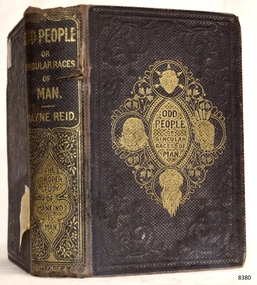
Book - Anthropological Travelogue/Fictional, Captain Mayne Reid, Odd People being A Popular Description of Singular Races of Man, 1860
... Poe heavily admired Reid, describing him as "a colossal plagiarist" but also "a colossal genius" and "a teller of tales which cannot be told too often." ...Poe heavily admired Reid, describing him as "a colossal plagiarist" but also "a colossal genius" and "a teller of tales which cannot be told too often." ...Odd People: Being a Popular Description of Singular Races of Man (1860) is an interesting piece of 19th-century literature. The book was written by Captain Thomas Mayne Reid (1818–1883), a Scots-Irish American novelist and adventurer. He was immensely popular in the mid-to-late 19th century for his boys' adventure novels, tales of the American West, and travelogues. The true first edition was published in London by Routledge, Warne & Routledge in 1860. In the United States, it was published around the same time (1860/1861) by Ticknor and Fields in Boston, and later editions were retitled The Man-Eaters and Other Odd People. The book is an early work of popular ethnology and anthropology, written for a general audience and heavily marketed toward young readers and armchair travelers of the Victorian era.Book, brown covers, embossed with borders and patterns and gilt decoration and titles. The book includes illustrations. Handwritten inscription on the front paste-down page. The opposite page has a stamped and a handwritten inscription. The book was presented as a prize to a Latin student at the National School, Warrnambool in 1861. Title: Odd People being a Popular Description of Singular Races of Man. Alternate title: Odd People or Singular Races of Man Author: Captain Mayne Reid Publisher: Routledge Warne & Routledge, London Date: 1860 Further information: additional text on the spine reads 'A Proper Study of Mankind is Man'fictionOdd People: Being a Popular Description of Singular Races of Man (1860) is an interesting piece of 19th-century literature. The book was written by Captain Thomas Mayne Reid (1818–1883), a Scots-Irish American novelist and adventurer. He was immensely popular in the mid-to-late 19th century for his boys' adventure novels, tales of the American West, and travelogues. The true first edition was published in London by Routledge, Warne & Routledge in 1860. In the United States, it was published around the same time (1860/1861) by Ticknor and Fields in Boston, and later editions were retitled The Man-Eaters and Other Odd People. The book is an early work of popular ethnology and anthropology, written for a general audience and heavily marketed toward young readers and armchair travelers of the Victorian era.shipwrecked-coast, flagstaff-hill, flagstaff-hill-maritime-museum, warrnambool, maritime-museum, shipwreck-coast, flagstaff-hill-maritime-village, shipwrecked-artefact, book, odd people, captain mayne reid, national school warrnambool., daniel b sellers, classic fiction, the proper study of mankind is man, singular races of man, , routledge warne and routledge, latin student -
 Charlton Golden Grains Museum Inc
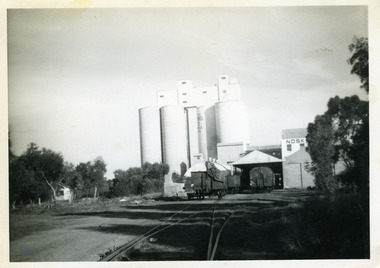
Photograph, c.1960
... In the record-breaking 1968 season, the mill received a colossal wheat intake of **695,000 bushels**. ...In the record-breaking 1968 season, the mill received a colossal wheat intake of **695,000 bushels**. ...Noske's mill in mid 1960s. Noske's Flour Mill, with its commanding presence and towering silos, has long **dominated the Charlton skyline** and remains a significant landmark, even though it no longer mills flour. The mill's history is deeply intertwined with the development of Charlton and the grain industry of the surrounding district. The foundation for the mill's presence was laid in 1919 when Messrs Noske Bros. Pty. Ltd., already owning mills in Horsham, Nhill, and Murray Bridge, acquired G. H. Foreman’s Mill located by the Avoca River. The founder, **T. J. Noske**, was an early pioneer of flour exporting, expanding his milling business after unexpectedly acquiring the Horsham mill. ### A State-of-the-Art Operation The original mill by the river operated until August 1926 before being closed and dismantled. Plans were well underway for a **new, state-of-the-art mill** to be located at the former Cobb and Co site. In 1927, the new mill began operation. It was one of the largest in the state, boasting a capacity of three tons of flour per hour, a 250 h.p. diesel engine, and three initial silos. The mill quickly gained a reputation for **excellence** for both its design and its flour, which was sold successfully in local and overseas markets. ### Periods of Expansion and Trial The mill continued to grow, reflecting the importance of the local agricultural industry. Between 1940 and 1941, **nine new silos** were built, adding bulk receival points. In the record-breaking 1968 season, the mill received a colossal wheat intake of **695,000 bushels**. However, the mill also faced setbacks. On January 21, 1949, disaster struck when a **large fire** erupted in the storage shed, which contained 500 tons of bagged flour ready for export and new flour bags. The blaze was so intense that smoke was visible as far away as Wycheproof, and it threatened to destroy the entire mill. Thanks to the monumental efforts of the Charlton, St. Arnaud, Wycheproof, and Wedderburn Brigades, who ran the main pump almost continuously for 26 hours, the damage was contained, though the estimated loss was a substantial £60,000. ### Transformation of the Site At its peak, the mill was a major employer, providing work for approximately 65–70 men. But after over 45 years of operation, flour production at the mill ceased on October 25, 1973. Noske Industries Ltd. sought to adapt, converting the operation to a less successful stock feed production centre. In 1977, the **Grain Elevators Board** took over the site as a grain receival depot, building a large elevator tower that surpassed the height of the original buildings. The site eventually returned to private hands and, since 2000, has been owned and operated as a primary grain receival site for **GrainCorp**, cementing its continued, vital role in Charlton's agricultural life.Black and white photograph with white border.charlton, business, noske's, flour mill -
 Charlton Golden Grains Museum Inc
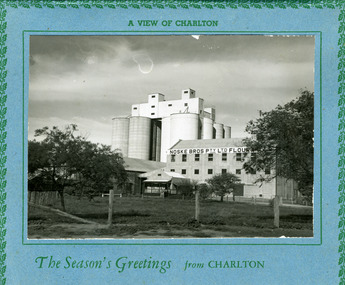
Postcard, A view of Charlton. The seasons greeting from Charlton, c.1946
... In the record-breaking 1968 season, the mill received a colossal wheat intake of **695,000 bushels**. ...In the record-breaking 1968 season, the mill received a colossal wheat intake of **695,000 bushels**. ...Eight silos added in 1940s. Noske's Flour Mill, with its commanding presence and towering silos, has long **dominated the Charlton skyline** and remains a significant landmark, even though it no longer mills flour. The mill's history is deeply intertwined with the development of Charlton and the grain industry of the surrounding district. The foundation for the mill's presence was laid in 1919 when Messrs Noske Bros. Pty. Ltd., already owning mills in Horsham, Nhill, and Murray Bridge, acquired G. H. Foreman’s Mill located by the Avoca River. The founder, **T. J. Noske**, was an early pioneer of flour exporting, expanding his milling business after unexpectedly acquiring the Horsham mill. ### A State-of-the-Art Operation The original mill by the river operated until August 1926 before being closed and dismantled. Plans were well underway for a **new, state-of-the-art mill** to be located at the former Cobb and Co site. In 1927, the new mill began operation. It was one of the largest in the state, boasting a capacity of three tons of flour per hour, a 250 h.p. diesel engine, and three initial silos. The mill quickly gained a reputation for **excellence** for both its design and its flour, which was sold successfully in local and overseas markets. ### Periods of Expansion and Trial The mill continued to grow, reflecting the importance of the local agricultural industry. Between 1940 and 1941, **nine new silos** were built, adding bulk receival points. In the record-breaking 1968 season, the mill received a colossal wheat intake of **695,000 bushels**. However, the mill also faced setbacks. On January 21, 1949, disaster struck when a **large fire** erupted in the storage shed, which contained 500 tons of bagged flour ready for export and new flour bags. The blaze was so intense that smoke was visible as far away as Wycheproof, and it threatened to destroy the entire mill. Thanks to the monumental efforts of the Charlton, St. Arnaud, Wycheproof, and Wedderburn Brigades, who ran the main pump almost continuously for 26 hours, the damage was contained, though the estimated loss was a substantial £60,000. ### Transformation of the Site At its peak, the mill was a major employer, providing work for approximately 65–70 men. But after over 45 years of operation, flour production at the mill ceased on October 25, 1973. Noske Industries Ltd. sought to adapt, converting the operation to a less successful stock feed production centre. In 1977, the **Grain Elevators Board** took over the site as a grain receival depot, building a large elevator tower that surpassed the height of the original buildings. The site eventually returned to private hands and, since 2000, has been owned and operated as a primary grain receival site for **GrainCorp**, cementing its continued, vital role in Charlton's agricultural life.Large landscape black and white photo set on a blue card backing. The card has a green holly leaf pattern embossed on the edge.A view of Charlton. The Season's Greetings from Charlton.charlton, noske bros, noske's, flour mill -
 Charlton Golden Grains Museum Inc
Photograph, Charlton Shire, Charlton Flour Mill, c.1987
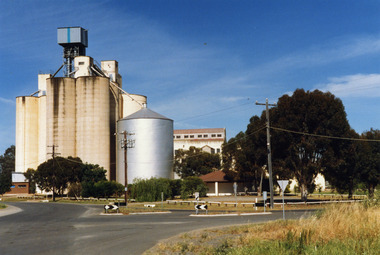
... In the record-breaking 1968 season, the mill received a colossal wheat intake of **695,000 bushels**. ...In the record-breaking 1968 season, the mill received a colossal wheat intake of **695,000 bushels**. ...A previous mill had operated in Charlton by Mr. W.E. Foreman on the banks of the Avoca River and was acquired in 1919 by Noske Bros. The present Flour Mill was built by Noske Bros and opened in May 1927. It was taken over by the Grain Elevator Board in the 1970s. Noske's Flour Mill, with its commanding presence and towering silos, has long **dominated the Charlton skyline** and remains a significant landmark, even though it no longer mills flour. The mill's history is deeply intertwined with the development of Charlton and the grain industry of the surrounding district. The foundation for the mill's presence was laid in 1919 when Messrs Noske Bros. Pty. Ltd., already owning mills in Horsham, Nhill, and Murray Bridge, acquired G. H. Foreman’s Mill located by the Avoca River. The founder, **T. J. Noske**, was an early pioneer of flour exporting, expanding his milling business after unexpectedly acquiring the Horsham mill. ### A State-of-the-Art Operation The original mill by the river operated until August 1926 before being closed and dismantled. Plans were well underway for a **new, state-of-the-art mill** to be located at the former Cobb and Co site. In 1927, the new mill began operation. It was one of the largest in the state, boasting a capacity of three tons of flour per hour, a 250 h.p. diesel engine, and three initial silos. The mill quickly gained a reputation for **excellence** for both its design and its flour, which was sold successfully in local and overseas markets. ### Periods of Expansion and Trial The mill continued to grow, reflecting the importance of the local agricultural industry. Between 1940 and 1941, **nine new silos** were built, adding bulk receival points. In the record-breaking 1968 season, the mill received a colossal wheat intake of **695,000 bushels**. However, the mill also faced setbacks. On January 21, 1949, disaster struck when a **large fire** erupted in the storage shed, which contained 500 tons of bagged flour ready for export and new flour bags. The blaze was so intense that smoke was visible as far away as Wycheproof, and it threatened to destroy the entire mill. Thanks to the monumental efforts of the Charlton, St. Arnaud, Wycheproof, and Wedderburn Brigades, who ran the main pump almost continuously for 26 hours, the damage was contained, though the estimated loss was a substantial £60,000. ### Transformation of the Site At its peak, the mill was a major employer, providing work for approximately 65–70 men. But after over 45 years of operation, flour production at the mill ceased on October 25, 1973. Noske Industries Ltd. sought to adapt, converting the operation to a less successful stock feed production centre. In 1977, the **Grain Elevators Board** took over the site as a grain receival depot, building a large elevator tower that surpassed the height of the original buildings. The site eventually returned to private hands and, since 2000, has been owned and operated as a primary grain receival site for **GrainCorp**, cementing its continued, vital role in Charlton's agricultural life. Colour photograph of Charlton Flour Mill and silos. Intersection of Kaye & Davies Streets in the foreground. One large silver silo and three taller greyish concrete silos to the left. Three other cream coloured silos behind. There are pipes and sheds on top of the silos. There is a cream single story building to the right of the silver silo and a multi-storey building behind with eight window in the upper level. There is a small red brick building on the far left of the photo.w.e. foreman, noske bros, flour mill charlton, business, industry -
 Charlton Golden Grains Museum Inc
Photograph - Lithograph, Rider & Mercer, Views of Charlton
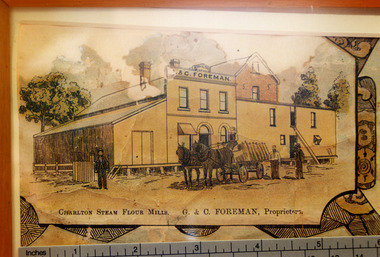
... In the record-breaking 1968 season, the mill received a colossal wheat intake of **695,000 bushels**. ...In the record-breaking 1968 season, the mill received a colossal wheat intake of **695,000 bushels**. ...Close up photograph of part of the Charlton Lithograph showing the Charlton Steam Power Flour Mill of G & C Foreman. Located in on the bank of the Avoca river. The mill owners attempted to dam the river during the 1870s. The mill was built in 1876 as recorded by the local traveling correspondent . Foreman's flour mill established 1876 at the west end of High Street. Sold to Norske in 1925. Replaced by Noske's Flour Mill on Kays Street in 1927. Noske's Flour Mill, with its commanding presence and towering silos, has long **dominated the Charlton skyline** and remains a significant landmark, even though it no longer mills flour. The mill's history is deeply intertwined with the development of Charlton and the grain industry of the surrounding district. The foundation for the mill's presence was laid in 1919 when Messrs Noske Bros. Pty. Ltd., already owning mills in Horsham, Nhill, and Murray Bridge, acquired G. H. Foreman’s Mill located by the Avoca River. The founder, **T. J. Noske**, was an early pioneer of flour exporting, expanding his milling business after unexpectedly acquiring the Horsham mill. ### A State-of-the-Art Operation The original mill by the river operated until August 1926 before being closed and dismantled. Plans were well underway for a **new, state-of-the-art mill** to be located at the former Cobb and Co site. In 1927, the new mill began operation. It was one of the largest in the state, boasting a capacity of three tons of flour per hour, a 250 h.p. diesel engine, and three initial silos. The mill quickly gained a reputation for **excellence** for both its design and its flour, which was sold successfully in local and overseas markets. ### Periods of Expansion and Trial The mill continued to grow, reflecting the importance of the local agricultural industry. Between 1940 and 1941, **nine new silos** were built, adding bulk receival points. In the record-breaking 1968 season, the mill received a colossal wheat intake of **695,000 bushels**. However, the mill also faced setbacks. On January 21, 1949, disaster struck when a **large fire** erupted in the storage shed, which contained 500 tons of bagged flour ready for export and new flour bags. The blaze was so intense that smoke was visible as far away as Wycheproof, and it threatened to destroy the entire mill. Thanks to the monumental efforts of the Charlton, St. Arnaud, Wycheproof, and Wedderburn Brigades, who ran the main pump almost continuously for 26 hours, the damage was contained, though the estimated loss was a substantial £60,000. ### Transformation of the Site At its peak, the mill was a major employer, providing work for approximately 65–70 men. But after over 45 years of operation, flour production at the mill ceased on October 25, 1973. Noske Industries Ltd. sought to adapt, converting the operation to a less successful stock feed production centre. In 1977, the **Grain Elevators Board** took over the site as a grain receival depot, building a large elevator tower that surpassed the height of the original buildings. The site eventually returned to private hands and, since 2000, has been owned and operated as a primary grain receival site for **GrainCorp**, cementing its continued, vital role in Charlton's agricultural life.Colour photo taken of a small portion of the Charlton Lithograph. Showing the Charlton Steam Flour Mill of G. C. Foreman.Charlton Steam Flour Mills. G & C Foreman proprietors.lithograph, business, industry, charlton, flour mill, noske bros, foreman -
 Charlton Golden Grains Museum Inc
Photograph, c.1948
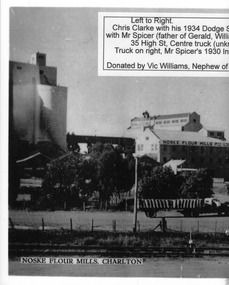
... In the record-breaking 1968 season, the mill received a colossal wheat intake of **695,000 bushels**. ...In the record-breaking 1968 season, the mill received a colossal wheat intake of **695,000 bushels**. ...Black and white photo copied and enlarged from small photo which was part of a set produced in c.1948. Chris Clarke with his 1934 Dodge semi trailer and W Spicer in his 1930 International truck line up to unload wheat at Noske's mill. Noskes flour mill built in 1927 with extra silos added in 1940's.Photo enlarged by Vic Williams of Bendigo nephew of Chris Clarke transport driver. Noske's Flour Mill, with its commanding presence and towering silos, has long **dominated the Charlton skyline** and remains a significant landmark, even though it no longer mills flour. The mill's history is deeply intertwined with the development of Charlton and the grain industry of the surrounding district. The foundation for the mill's presence was laid in 1919 when Messrs Noske Bros. Pty. Ltd., already owning mills in Horsham, Nhill, and Murray Bridge, acquired G. H. Foreman’s Mill located by the Avoca River. The founder, **T. J. Noske**, was an early pioneer of flour exporting, expanding his milling business after unexpectedly acquiring the Horsham mill. ### A State-of-the-Art Operation The original mill by the river operated until August 1926 before being closed and dismantled. Plans were well underway for a **new, state-of-the-art mill** to be located at the former Cobb and Co site. In 1927, the new mill began operation. It was one of the largest in the state, boasting a capacity of three tons of flour per hour, a 250 h.p. diesel engine, and three initial silos. The mill quickly gained a reputation for **excellence** for both its design and its flour, which was sold successfully in local and overseas markets. ### Periods of Expansion and Trial The mill continued to grow, reflecting the importance of the local agricultural industry. Between 1940 and 1941, **nine new silos** were built, adding bulk receival points. In the record-breaking 1968 season, the mill received a colossal wheat intake of **695,000 bushels**. However, the mill also faced setbacks. On January 21, 1949, disaster struck when a **large fire** erupted in the storage shed, which contained 500 tons of bagged flour ready for export and new flour bags. The blaze was so intense that smoke was visible as far away as Wycheproof, and it threatened to destroy the entire mill. Thanks to the monumental efforts of the Charlton, St. Arnaud, Wycheproof, and Wedderburn Brigades, who ran the main pump almost continuously for 26 hours, the damage was contained, though the estimated loss was a substantial £60,000. ### Transformation of the Site At its peak, the mill was a major employer, providing work for approximately 65–70 men. But after over 45 years of operation, flour production at the mill ceased on October 25, 1973. Noske Industries Ltd. sought to adapt, converting the operation to a less successful stock feed production centre. In 1977, the **Grain Elevators Board** took over the site as a grain receival depot, building a large elevator tower that surpassed the height of the original buildings. The site eventually returned to private hands and, since 2000, has been owned and operated as a primary grain receival site for **GrainCorp**, cementing its continued, vital role in Charlton's agricultural life.Black and white photo copied and enlarged from small photo.charlton, flour mill, noske's, noske bros -
 Charlton Golden Grains Museum Inc
Photograph, c.1948
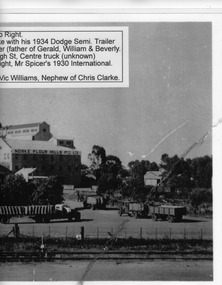
... In the record-breaking 1968 season, the mill received a colossal wheat intake of **695,000 bushels**. ...In the record-breaking 1968 season, the mill received a colossal wheat intake of **695,000 bushels**. ...Black and white photo copied and enlarged from small photo which was part of a set produced in c.1948. Chris Clarke with his 1934 Dodge semi trailer and W Spicer in his 1930 International truck line up to unload wheat at Noske's mill. Noskes flour mill built in 1927 with extra silos added in 1940's. Photo enlarged by Vic Williams of Bendigo nephew of Chris Clarke transport driver. Noske's Flour Mill, with its commanding presence and towering silos, has long **dominated the Charlton skyline** and remains a significant landmark, even though it no longer mills flour. The mill's history is deeply intertwined with the development of Charlton and the grain industry of the surrounding district. The foundation for the mill's presence was laid in 1919 when Messrs Noske Bros. Pty. Ltd., already owning mills in Horsham, Nhill, and Murray Bridge, acquired G. H. Foreman’s Mill located by the Avoca River. The founder, **T. J. Noske**, was an early pioneer of flour exporting, expanding his milling business after unexpectedly acquiring the Horsham mill. ### A State-of-the-Art Operation The original mill by the river operated until August 1926 before being closed and dismantled. Plans were well underway for a **new, state-of-the-art mill** to be located at the former Cobb and Co site. In 1927, the new mill began operation. It was one of the largest in the state, boasting a capacity of three tons of flour per hour, a 250 h.p. diesel engine, and three initial silos. The mill quickly gained a reputation for **excellence** for both its design and its flour, which was sold successfully in local and overseas markets. ### Periods of Expansion and Trial The mill continued to grow, reflecting the importance of the local agricultural industry. Between 1940 and 1941, **nine new silos** were built, adding bulk receival points. In the record-breaking 1968 season, the mill received a colossal wheat intake of **695,000 bushels**. However, the mill also faced setbacks. On January 21, 1949, disaster struck when a **large fire** erupted in the storage shed, which contained 500 tons of bagged flour ready for export and new flour bags. The blaze was so intense that smoke was visible as far away as Wycheproof, and it threatened to destroy the entire mill. Thanks to the monumental efforts of the Charlton, St. Arnaud, Wycheproof, and Wedderburn Brigades, who ran the main pump almost continuously for 26 hours, the damage was contained, though the estimated loss was a substantial £60,000. ### Transformation of the Site At its peak, the mill was a major employer, providing work for approximately 65–70 men. But after over 45 years of operation, flour production at the mill ceased on October 25, 1973. Noske Industries Ltd. sought to adapt, converting the operation to a less successful stock feed production centre. In 1977, the **Grain Elevators Board** took over the site as a grain receival depot, building a large elevator tower that surpassed the height of the original buildings. The site eventually returned to private hands and, since 2000, has been owned and operated as a primary grain receival site for **GrainCorp**, cementing its continued, vital role in Charlton's agricultural life.Black and white photocharton, business, noske bros, flour mill -
 Eltham District Historical Society Inc
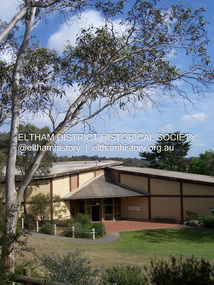
Photograph - Digital Photograph, Marguerite Marshall, Eltham Community and Reception Centre, 2 October 2006
... As a result the mud-bricks were redesigned to reduce their weight and were laid back-to-back to produce a wall of normal thickness.3 The centre’s massive timber frame is reminiscent of timber bridge construction, with infill panels of mud-brick.4 In accord with the rustic style are colossal rough-sawn posts, bolts and steel brackets. ...As a result the mud-bricks were redesigned to reduce their weight and were laid back-to-back to produce a wall of normal thickness.3 The centre’s massive timber frame is reminiscent of timber bridge construction, with infill panels of mud-brick.4 In accord with the rustic style are colossal rough-sawn posts, bolts and steel brackets. ...The Eltham Community and Reception Centre was Australia's first public mud-brick building. Commissioned in 1977 by Eltham Shire Council, led by Shire president (and architect) Robert Marshall, architects Whitford and Peck were asked to design a multipurpose facility in mud-brick and timber. The official opening was performed by the Hon. R.J. Hamer; E.D., M.P., Premier of Victorai on Saturday, April 22, 1978. Architects: Whitford & Peck Pty Ltd Quantity Surveyor: D.J. Cant & Associates Structural Civil Engineers: Charlett & Moore Pty Ltd Landscape: Peter Glass, Dennis Edwards Mech Elec: Lobley Treidel & Partners Pty Ltd Acoustics: Riley Barden & Kirkhope Builder: L.U. Simon Pty Ltd Covered under Heritage Overlay, Nillumbik Planning Scheme. Published: Nillumbik Now and Then / Marguerite Marshall 2008; photographs Alan King with Marguerite Marshall.; p177 The Wiggles performed there, so has the ABC’s Play School. New citizens have made their vows, volunteers have been honoured, school children have performed, weddings celebrated and people mourned at funerals. Since 1978 the Eltham Community and Reception Centre at the corner of Pitt Street and Main Road, has provided a beautiful and quintessential Eltham environment for people from all over Melbourne. Recognised as Australia’s first public mud-brick building, the centre was built partly on the site of the parsonage of the former Methodist Church (now the Uniting Church).1 Commissioned by the Eltham Council headed by President Robert Marshall, architects Whitford and Peck were asked to design a multipurpose facility in mud-brick and timber. Following public consultation, it was agreed to build a centre for dances, exhibitions, films, plays or concerts. The results – at a cost of around $620,000 – captured the Eltham rustic style. The building – in soft tones of mud-brick and timber and immense floor-to-ceiling windows – overlooks the Diamond Creek and sporting fields. Eltham’s strong artistic heritage is reflected in the centre. Although the lighting is not ideal for a gallery and labels cannot be placed on walls, the centre hosts the Nillumbik Art Awards and displays around ten to 20% of the Nillumbik Shire Art Collection, usually for around a year at a time.2 On permanent display, close to the entrance, is local artist Clifton Pugh’s White Choughs in the Landscape. Further to the right is the Walter Withers Gallery, named after a local member of the Heidelberg School of artists. As part of the Eltham Gateway opposite the Eltham Hotel, the centre stands on what was once part of the Eltham Town Centre along this section of Main Road, then known as Maria Street. On the same site once stood the house and flour mill owned by Henry Dendy, best known as the founder of Brighton, although he lived longer in Eltham. Beside the drive is a wheel-rim tool with accompanying plaque, illustrating a technology important during the horse-powered age and now almost completely gone, as has the blacksmith’s shop that had housed it nearby. The implement is a platform for fitting iron tyres to the wooden rims of cartwheels. Beneath it is a capsule placed in 1985 to commemorate Victoria’s 150 years, which is to be opened in 2035. Although the plants, forming part of the landscaping by Peter Glass and Denis Edwards, are largely indigenous and other native species, some exotic plants are protected as an important link with the site’s past. Planted at the front around 1920, is a large Peppercorn tree with two joined trunks growing from the base, and close by is a Bhutan Cypress (Cupressus torulosa). Three other Peppercorn trees fringe the drive. The building includes two halls – the larger seating 250 people – and a large foyer overlooking trees and ovals. Both halls have retractable rear walls providing varying spaces as required, and guests can use several external decks. A site for outdoor theatre has been carved out of the natural slope outside the entrance. The Bricklayers Union refused to use the traditional mud-bricks, which weigh more than 22kg. As a result the mud-bricks were redesigned to reduce their weight and were laid back-to-back to produce a wall of normal thickness.3 The centre’s massive timber frame is reminiscent of timber bridge construction, with infill panels of mud-brick.4 In accord with the rustic style are colossal rough-sawn posts, bolts and steel brackets. The combination of mud-brick, exposed feature timber framing and creative design in this centre, characterises Eltham’s innovative buildings and the social movement behind them from the 1940s to the 1970s.This collection of almost 130 photos about places and people within the Shire of Nillumbik, an urban and rural municipality in Melbourne's north, contributes to an understanding of the history of the Shire. Published in 2008 immediately prior to the Black Saturday bushfires of February 7, 2009, it documents sites that were impacted, and in some cases destroyed by the fires. It includes photographs taken especially for the publication, creating a unique time capsule representing the Shire in the early 21st century. It remains the most recent comprehenesive publication devoted to the Shire's history connecting local residents to the past. nillumbik now and then (marshall-king) collection, eltham community and reception centre, mudbrick construction -
 Monbulk RSL Sub Branch
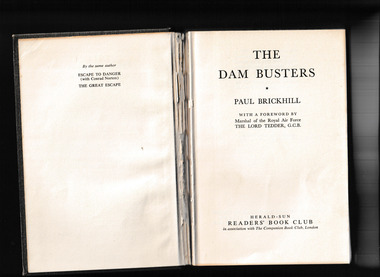
Book, Paul Brickhill, The dam busters, 1953
... World war 1939-1945 - Aerial operations - Britain Dam buster raid - Germany On 17 May 1943, nearly 350 million tons of water crashed into the valleys of the Ruhr when the Lancaster bombers of 617 Squadron breached the giant Moehne and Eder Dams with colossal ‘blockbuster’ bombs. The Dam Busters tells the story of the raid and the squadron of fearless airmen who carried it through. ...On 17 May 1943, nearly 350 million tons of water crashed into the valleys of the Ruhr when the Lancaster bombers of 617 Squadron breached the giant Moehne and Eder Dams with colossal ‘blockbuster’ bombs. The Dam Busters tells the story of the raid and the squadron of fearless airmen who carried it through. Again and again, the crews of 617 Squadron Bomber Command used their flying skills, their tremendous courage and Barnes Wallis’ highly accurate bouncing bombs to deal devastating blows to Nazi Germany.Ill, p.287.non-fictionOn 17 May 1943, nearly 350 million tons of water crashed into the valleys of the Ruhr when the Lancaster bombers of 617 Squadron breached the giant Moehne and Eder Dams with colossal ‘blockbuster’ bombs. The Dam Busters tells the story of the raid and the squadron of fearless airmen who carried it through. Again and again, the crews of 617 Squadron Bomber Command used their flying skills, their tremendous courage and Barnes Wallis’ highly accurate bouncing bombs to deal devastating blows to Nazi Germany. world war 1939-1945 - aerial operations - britain, dam buster raid - germany -
 Monbulk RSL Sub Branch
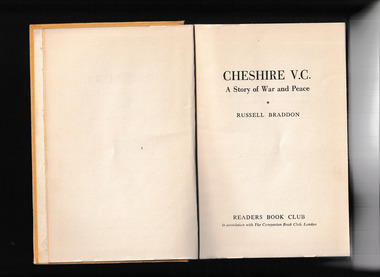
Book, Readers book club, The dam busters, 1954
... world war 1939 – 1945 – britain – aerial operations - europe royal air force - 617 squadron On 17 May 1943, nearly 350 million tons of water crashed into the valleys of the Ruhr when the Lancaster bombers of 617 Squadron breached the giant Moehne and Eder Dams with colossal ‘blockbuster’ bombs. The Dam Busters tells the story of the raid and the squadron of fearless airmen who carried it through. ...On 17 May 1943, nearly 350 million tons of water crashed into the valleys of the Ruhr when the Lancaster bombers of 617 Squadron breached the giant Moehne and Eder Dams with colossal ‘blockbuster’ bombs. The Dam Busters tells the story of the raid and the squadron of fearless airmen who carried it through. Again and again, the crews of 617 Squadron Bomber Command used their flying skills, their tremendous courage and Barnes Wallis’ highly accurate bouncing bombs to deal devastating blows to Nazi Germany.Ill p.254.non-fictionOn 17 May 1943, nearly 350 million tons of water crashed into the valleys of the Ruhr when the Lancaster bombers of 617 Squadron breached the giant Moehne and Eder Dams with colossal ‘blockbuster’ bombs. The Dam Busters tells the story of the raid and the squadron of fearless airmen who carried it through. Again and again, the crews of 617 Squadron Bomber Command used their flying skills, their tremendous courage and Barnes Wallis’ highly accurate bouncing bombs to deal devastating blows to Nazi Germany.world war 1939 – 1945 – britain – aerial operations - europe, royal air force - 617 squadron -
 Bass Coast Shire Council - Robert Smith Collection
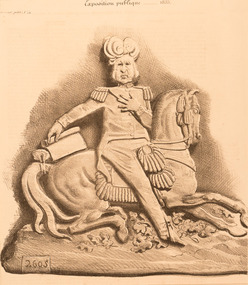
Artwork, other - 157 Modele colossal de pain d'epices 9 April 1833, Honore Daumier
... French 1808 - 1879 Lithograph Honore Daumier Artwork, other 157 Modele colossal de pain d'epices 9 April 1833 ...French 1808 - 1879Lithograph -
![Artwork, other - One of two Colossal Statues of Rameses II [Ozymandias] Entrance to the Temple of Luxor, from Egypt and the Holy Land 1842 - 1849, David Roberts [after by Louis Haghe]](/media/collectors/5f33390821ea670db8ae2a22/items/5fb5be8d3bd21c2294d1eb0b/item-media/5fdaaac59c62551d20561824/item-fit-380x285.jpg?cb=6) Bass Coast Shire Council - Robert Smith Collection
Bass Coast Shire Council - Robert Smith CollectionArtwork, other - One of two Colossal Statues of Rameses II [Ozymandias] Entrance to the Temple of Luxor, from Egypt and the Holy Land 1842 - 1849, David Roberts [after by Louis Haghe]
... Cut from Book David Roberts [after by Louis Haghe] Artwork, other One of two Colossal Statues of Rameses II [Ozymandias] Entrance to the Temple of Luxor, from Egypt and the Holy Land 1842 - 1849 ...Cut from Book
